Tag Archives: Poultry Vet

A Whole Lot of Chicks and a Brownie Sundae

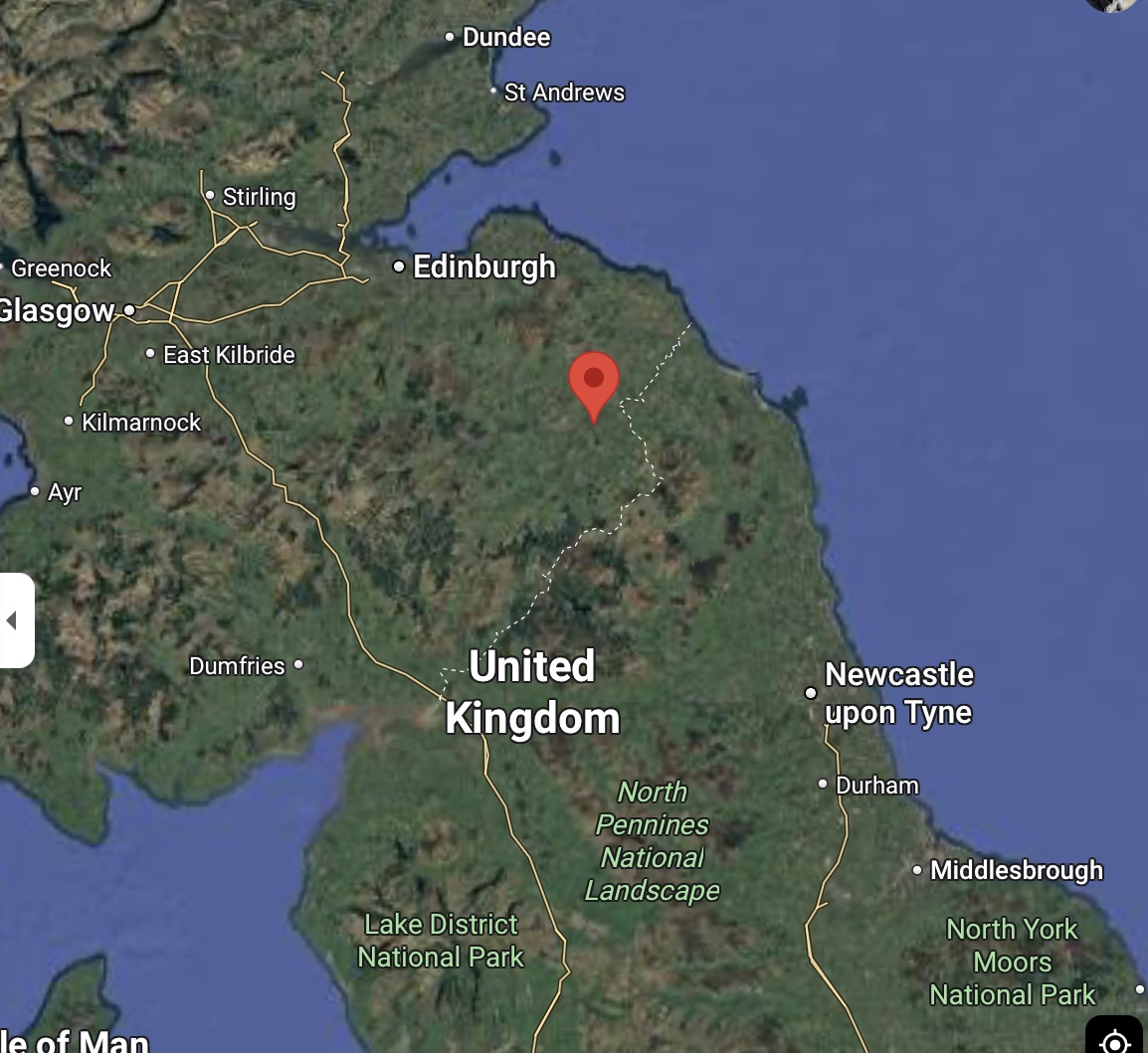
It’s been a good week. I stayed in Dumfries last weekend and, on Monday morning, I visited a farm that was only half an hour away. Ben accompanied me on the visit. It’s a farm that has just moved over to pullet rearing, so taking on chicks that will ultimately become laying hens. They come to the farm shortly after hatching and will be there until they’re around 15 weeks old. Then they will move on to a new farm.
Newly hatched chicks are gorgeous and these were too. They were in a Landmeco rearing system. They are currently running around the area which will eventually be a raised platform for them to jump on and off. For now, what will eventually be ramps to run up and down, are raised up as fences, so they are in a small, raised enclosure, with heat lamps and food and drinkers. By the time they are 15 weeks, they will have the whole barn. They really do grow fast!

On Wednesday , following up on another case from two weeks ago, I managed to get hold of the vet that works in an abattoir in Yorkshire, where a client with layers sent his flock after the end of their laying period. There had been higher mortality than he was used to (though he was still within normal levels) and I wanted to see if we could pinpoint what was happening. Unfortunately there was no stand-out cause highlighted, though in another way that’s good, because most of his birds were healthy. Having spoken to Naomi, I have recommended to him that he might need to give them extra calcium and vitamin D support later in their lay. Creating eggs, especially at high levels, uses a lot of calcium. Anyway, I will speak to him next week about what we found (or didn’t) and take it from there. I will do another visit when he gets new hens in, which probably won’t be until September. There’s a rhythm to poultry practice, and cycles for the clients which will be the heartbeat of much of my work.

I was due a visit near York yesterday and Ben suggested I could travel South on Thursday, so I arranged a visit to the APHA lab at Penrith to meet the vets who will be doing some of the pathology for my clients. We do a lot of post mortems in the practice (and on the farms too) but sometimes it’s important to get an outside opinion, especially in difficult or rapidly evolving cases. You perhaps have already picked up on the fact that a lot of my job is finding out why chickens or hens are dying. Very often, there are no signs of illness, or they go downhill so fast that, by the time you can see something is up, it’s already too late.

My patch is to be in Cumbria, so it makes sense for my clients to take samples to Penrith. There’s also a pathologist working there who spent a long time in poultry practice. I think he also gave a talk at the Poultry Health and Welfare course I attended last year. I will need to double check my notes. Anyway, it was good to meet them, have a coffee and see around the lab. Having a wider network of specialists I can talk to, whose knowledge is complementary to mine is something I am aiming for. The more I learn, the better I can serve my clients and help their birds to have a better life.

Friday’s visit was to more pullet chicks. The visit went well. Unlike Monday’s farm, where the farmers are just starting out with pullets, this was a farm with an experienced manager, though the sheds were older, which can bring its own problems. The guidance there was more about technicalities such as reducing the humidity in one of the sheds, which is at the wetter end of the farm. Like us, birds feel the heat more when the air is damp and humid. More ventilation is usually the answer, but it has to be balanced because the birds shouldn’t be in a draft. Building good barns is a very skilled operation.

As regular readers will know, I’m still based mostly in Dunfermline at the moment, though the aim has always been for me to return to Dumfries and work from home. There are a few barriers to that, the main one remaining being that my laptop still can’t access the practice database. Nonetheless, things are moving on, and for Friday’s visit, I drove the practice van instead of my car. I got to the farm okay, having basically ignored the screen in the van’s central console, that was asking me if I wanted to know more and set up an account. Rather than trying to do it as I left the farm (hardly good to be found at the end of the road, trying to work out how to use the equipment) I decided to stop for some lunch along the way and try after I’d eaten.

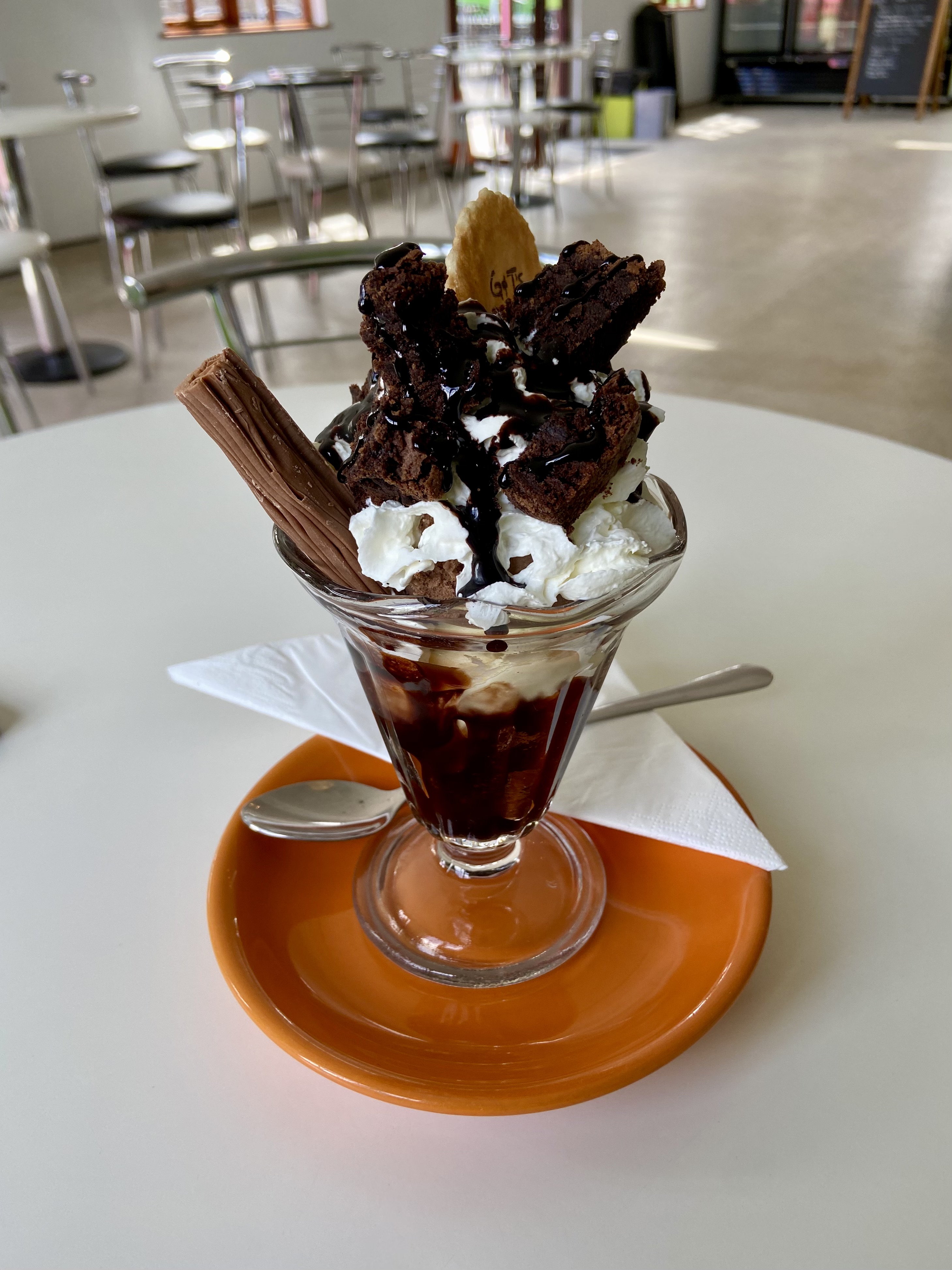
I stopped at a cafe called G&T Ice Creams, but when I asked about ordering food, I was told the lunchtime service was over and I now had a choice of coffee and cakes, or ice cream. With Fat Friday in mind, I decided on a lunch of Brownie Sundae and did not regret my choice at all.

It was only when I got back into the van, that I accepted it was time to bite the bullet and explore the van’s interface. I started out with the tutorials, which didn’t seem that helpful, so I moved on to setting up a profile. It asked me to connect my phone, so I toggled the Bluetooth on my Samsung work phone (another piece of equipment I’m still trying to work out) and paired them. To my delight, the screen then paired with my phone and the Google navigation map was suddenly there, on the screen in the van.

I had managed to switch from Classic FM to Smooth Radio in the morning and for a few minutes, I drove blissfully through the heart of the Dales guided by an easy to follow map, with Berlin’s Take My Breath Away soothing my ears. It was lovely until I glanced at the dashboard to check my speed and saw the figure 80. For a second, I felt consternation. It was only a small road. How could I be going so fast without realising? My brain then connected the dots and worked out that my speed wasn’t the problem. The switch to my phone had somehow changed the dashboard from mph to kmph.
I drove on for a few minutes, thinking I could manage. 80 was, I knew, 50mph as that was the national speed limit in Norway, but as I entered a village and it quickly moved to 40, then 20, I realised I was going to have to try to work out how to change it back.

Of course, many computer complications can be sorted out by asking Google how to fix them. Back on my trusty Apple phone (I know how to work that one) I quickly found out how to toggle from km to m, but by the time I’d done that, somehow Smooth Radio was gone and I was being offered a podcast called “Democracy Now”. This wasn’t quite the soothing background sound I was looking for. It was around this time that Eleanor (Inchcolm’s receptionist) called me and asked me if I could do a farm visit in Jedburgh on Monday. After mentally adjusting my calendar again (no point in going north, only to drive south again) I agreed and the call ended.

Eleanor then sent a message with the details, and it was at that point that the van, or maybe the Samsung, started talking to me. Its offer to read me the message didn’t go that great. After I’d agreed to hear it, it told me the message consisted only of a photo. But while it was listening, I thought I would seize the moment, so I asked it to play Smooth Radio. It agreed that it could carry out my request, but asked if I wanted Smooth Radio via Spotify or YouTube or various other channels I’d never heard of.

While I was still contemplating the idea of listening to Smooth Radio through Spotify, the conversation ended and by the time I spoke to the van (or more likely the Samsung) again, it had stopped listening. I carried on through various picturesque towns, such as Pateley Bridge and Grassington. Their narrow streets required all my concentration anyway. It was only when I passed by Airton and got out onto the open roads of the moors above Settle that I decided that, rather than trying to get Smooth Radio via Spotify, I could go directly to Spotify itself and play something I really wanted to hear.

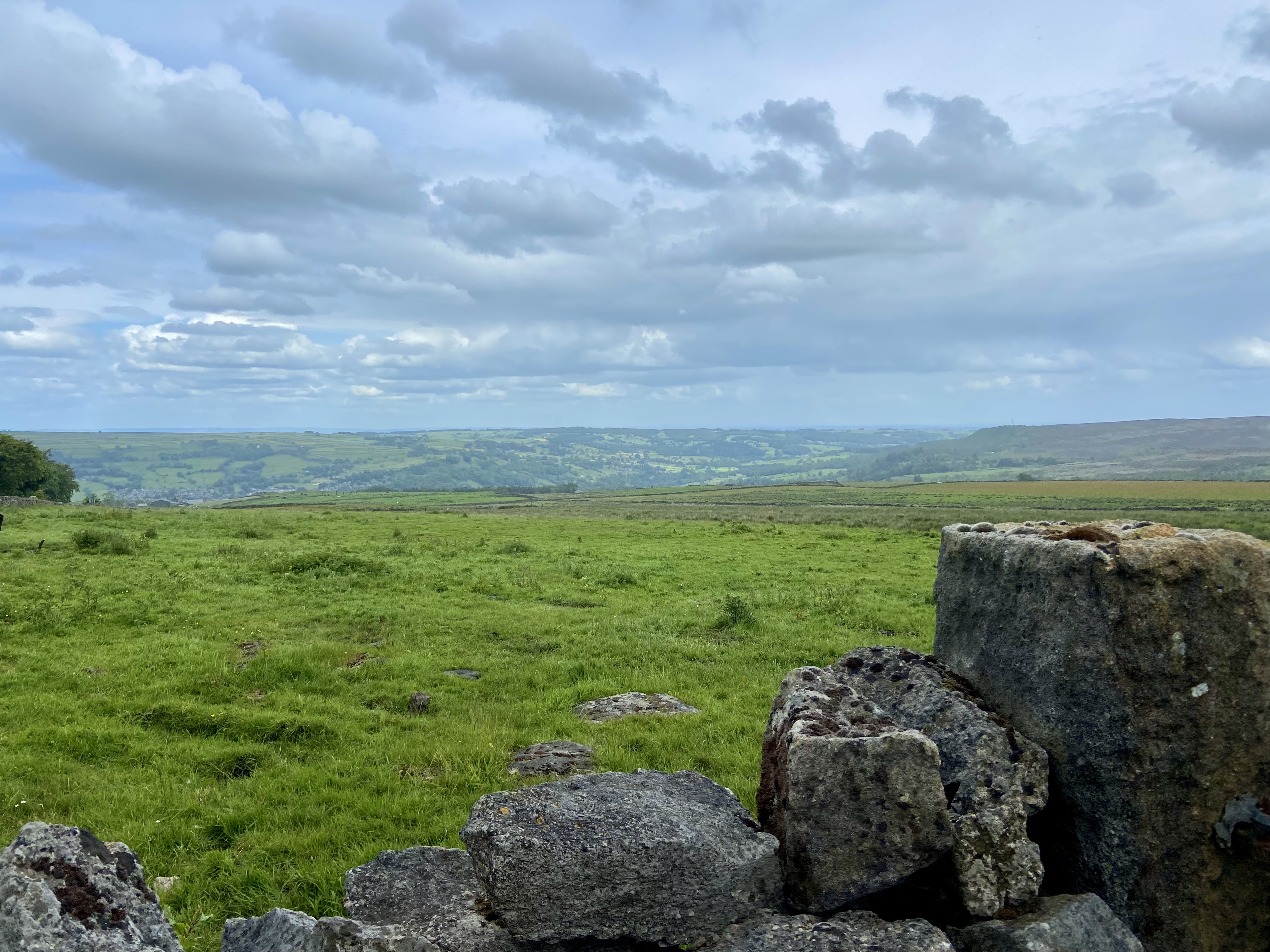
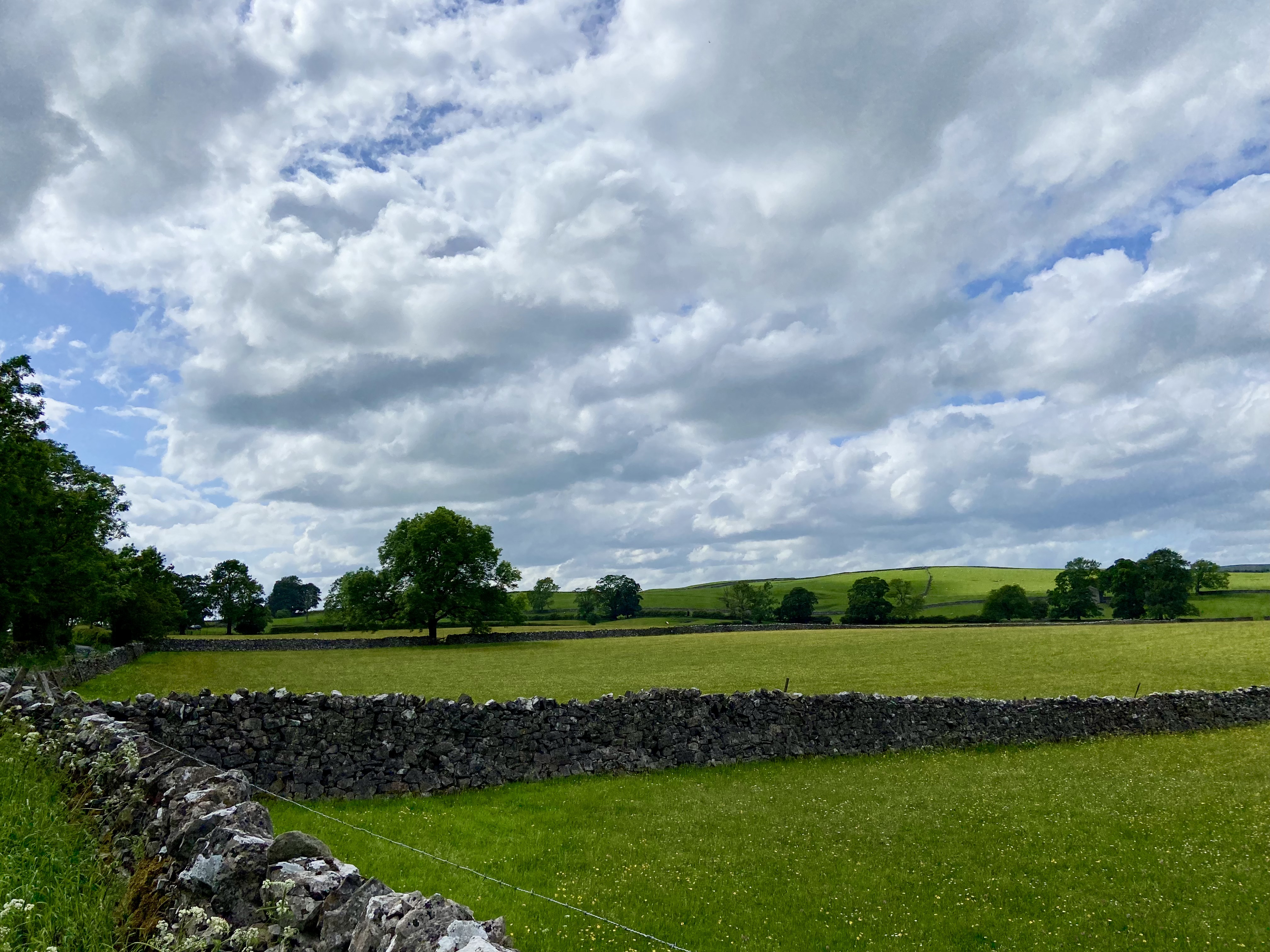
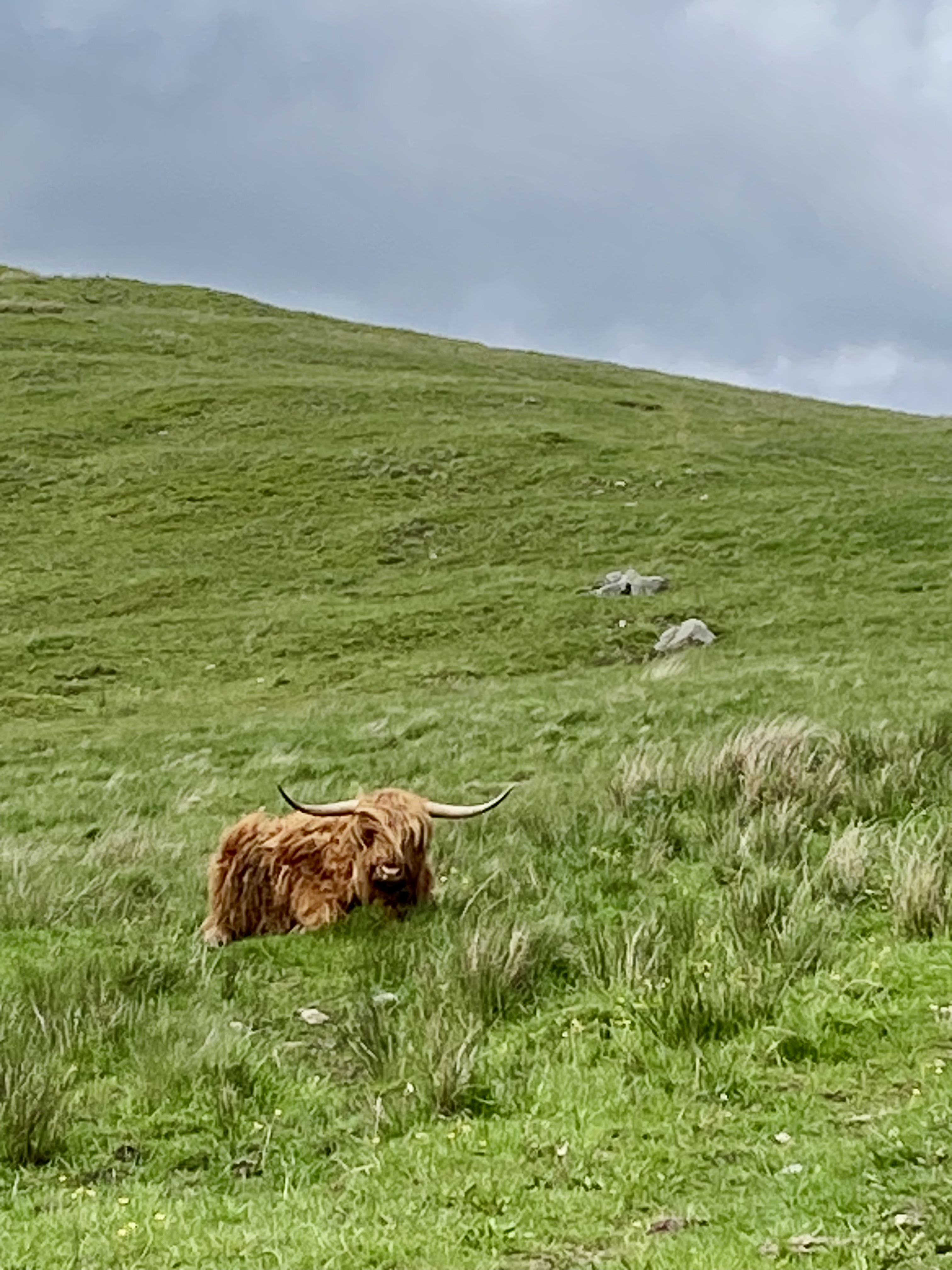
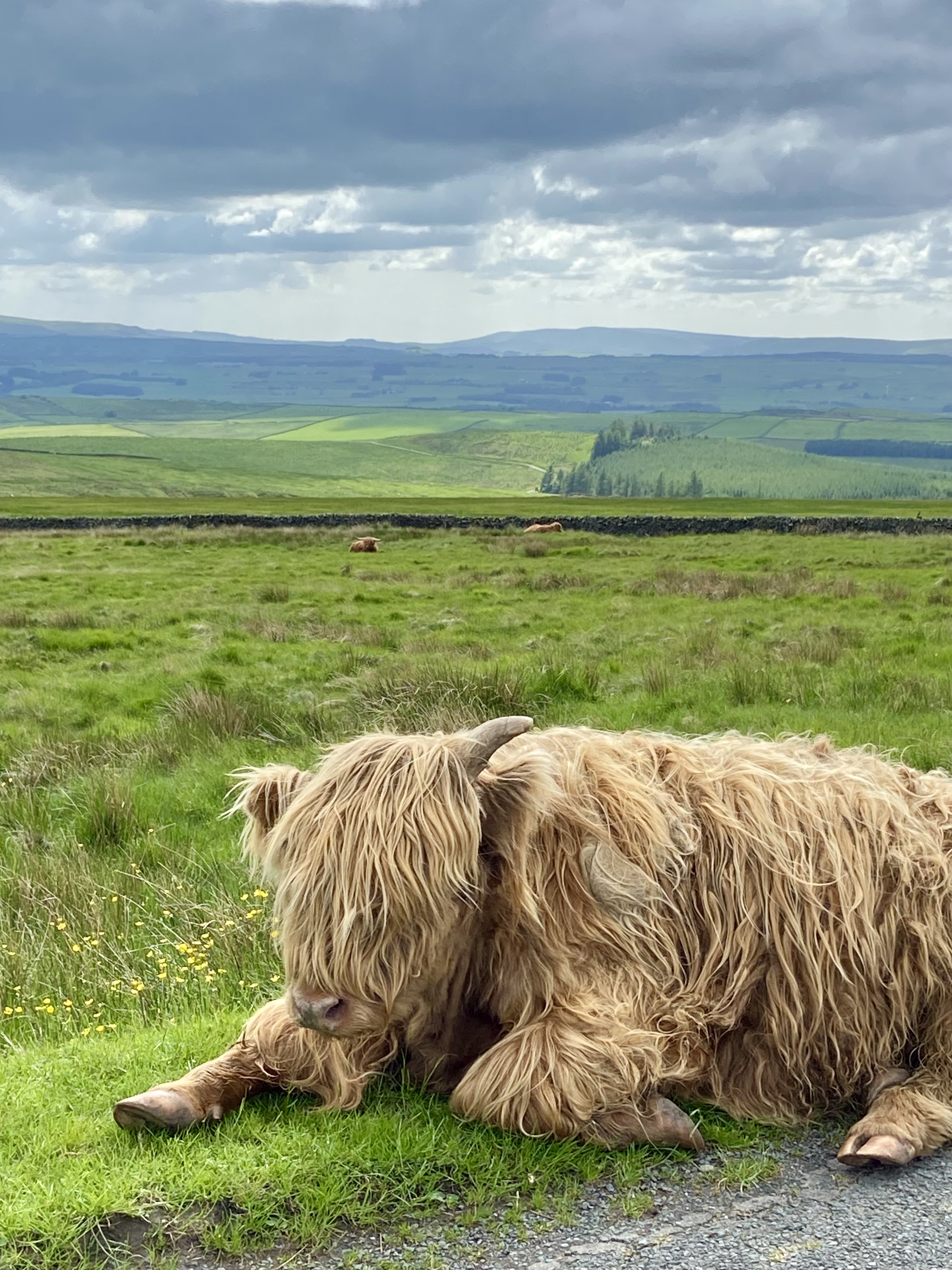
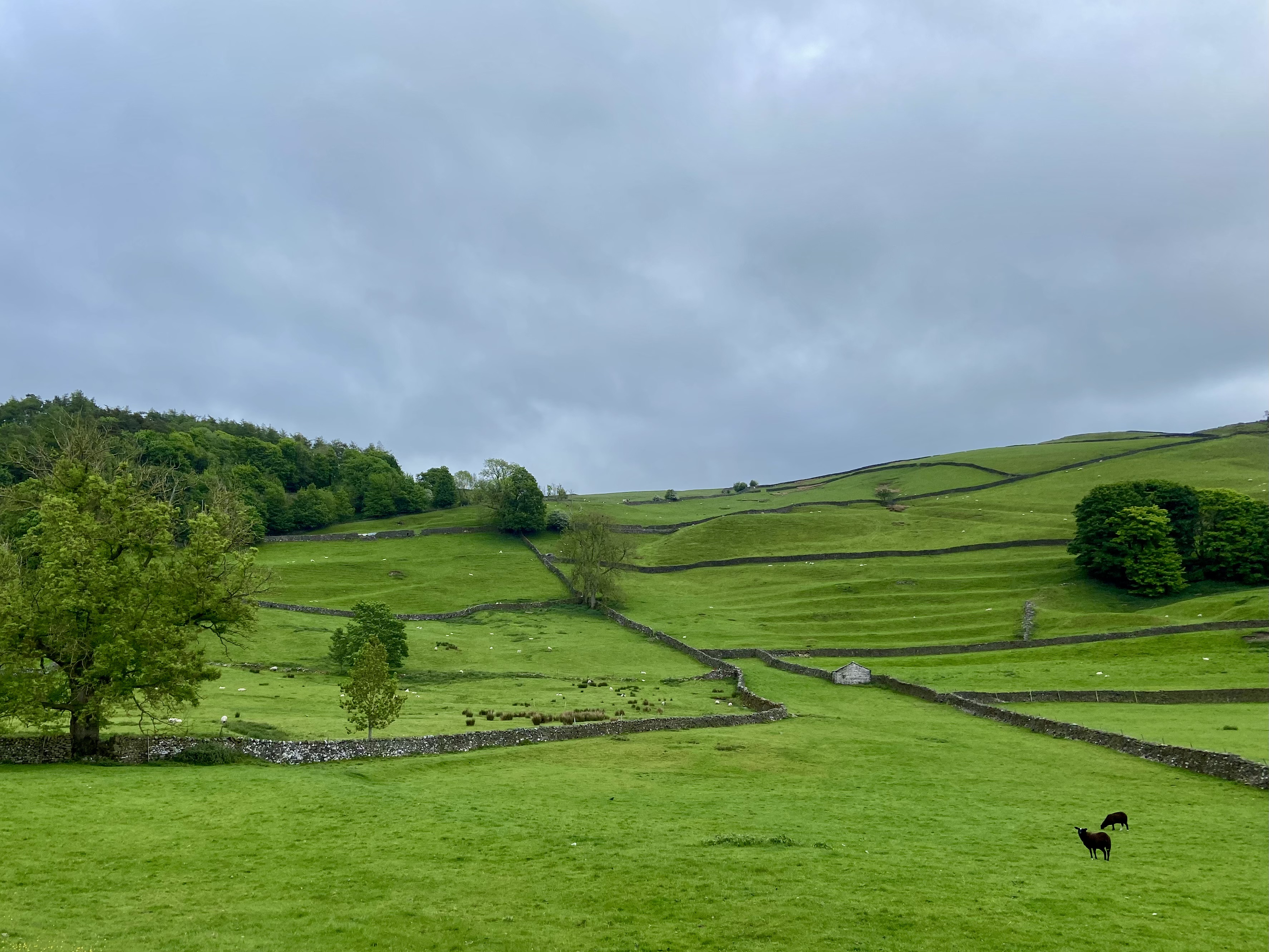
There were some risks in that. On several occasions, while trying to adjust things, I had lost the reassuring map, but realistically at this point, I probably knew the way home anyway. And so, as I drove across the wonderful moor, with its Highland cattle and vistas over Wharfdale and Ribblesdale (I think – sounds Herriotesque and therefore good anyway) I did so, with map intact, listening to Lewis Capaldi’s, “Stay Love,” a wonderful return to form from him, that perfectly suited the scenery.

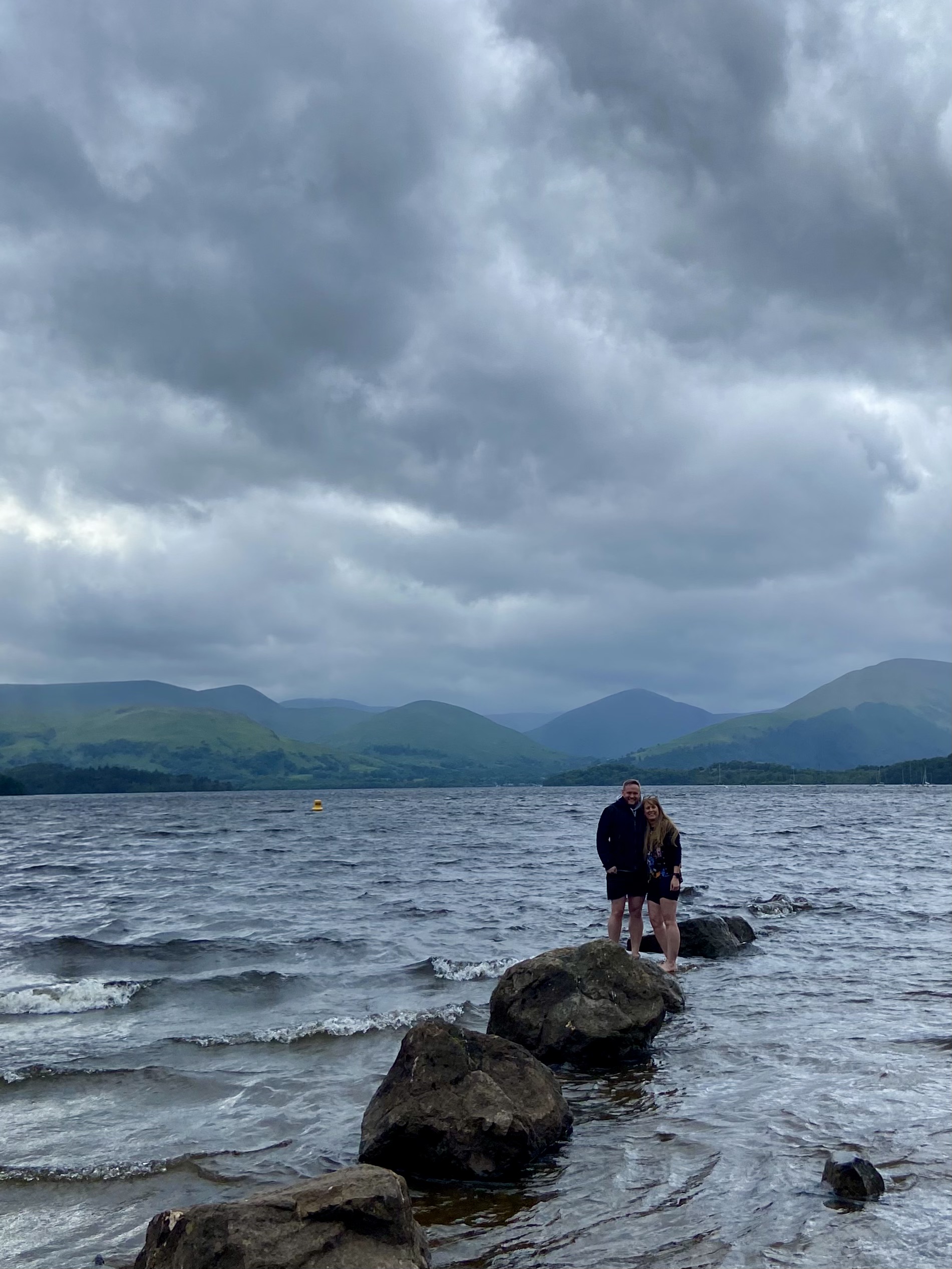
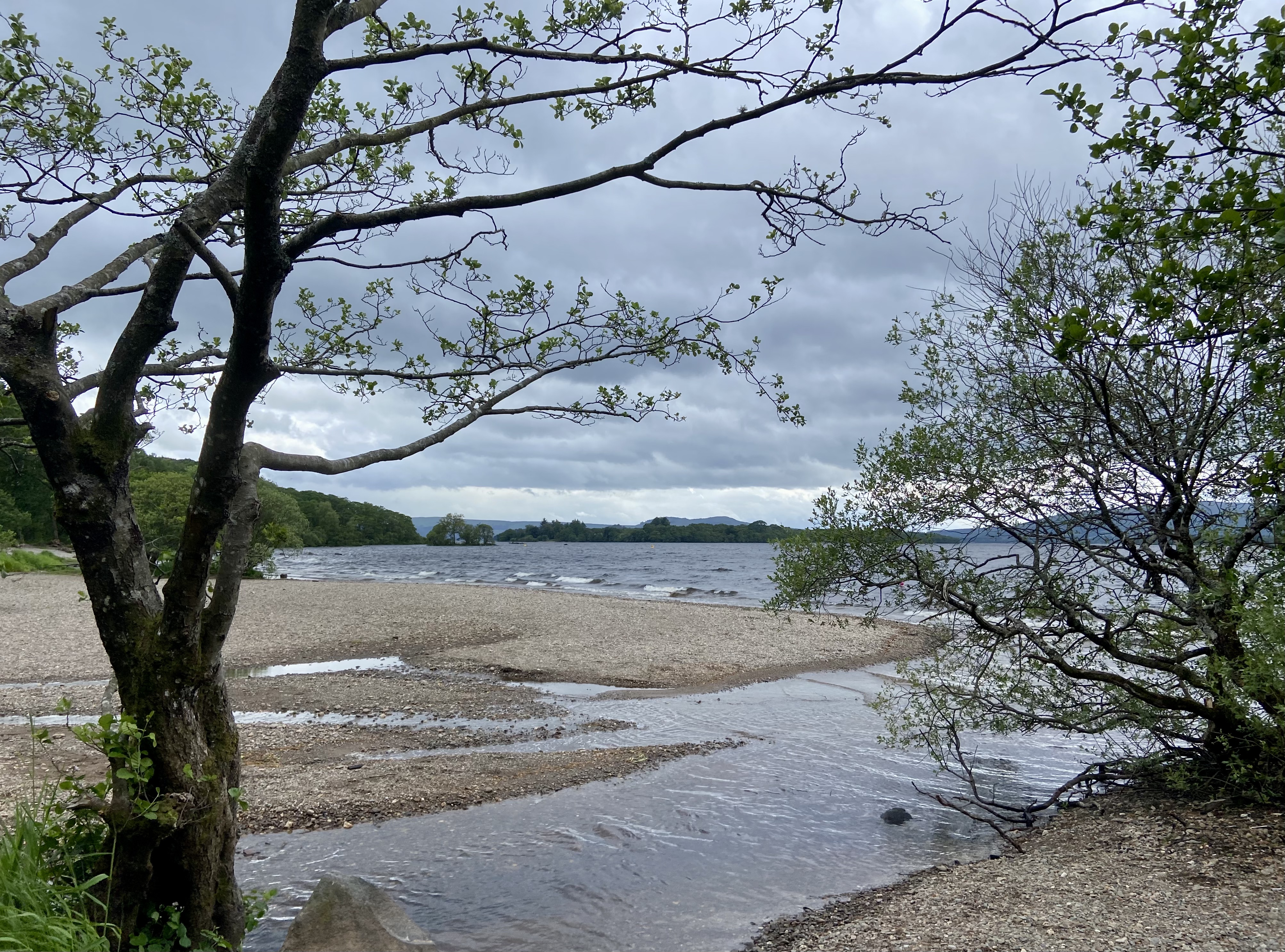
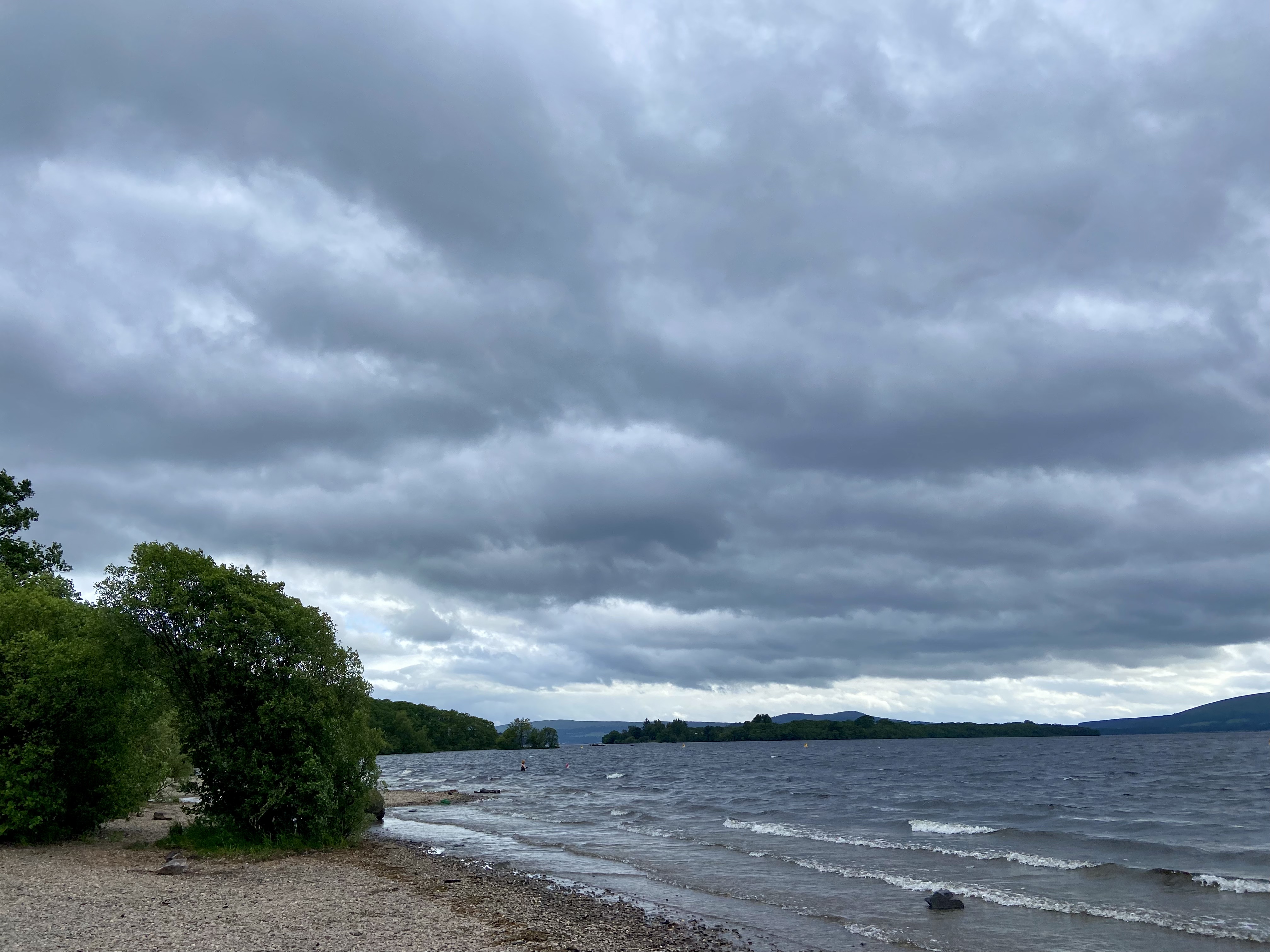
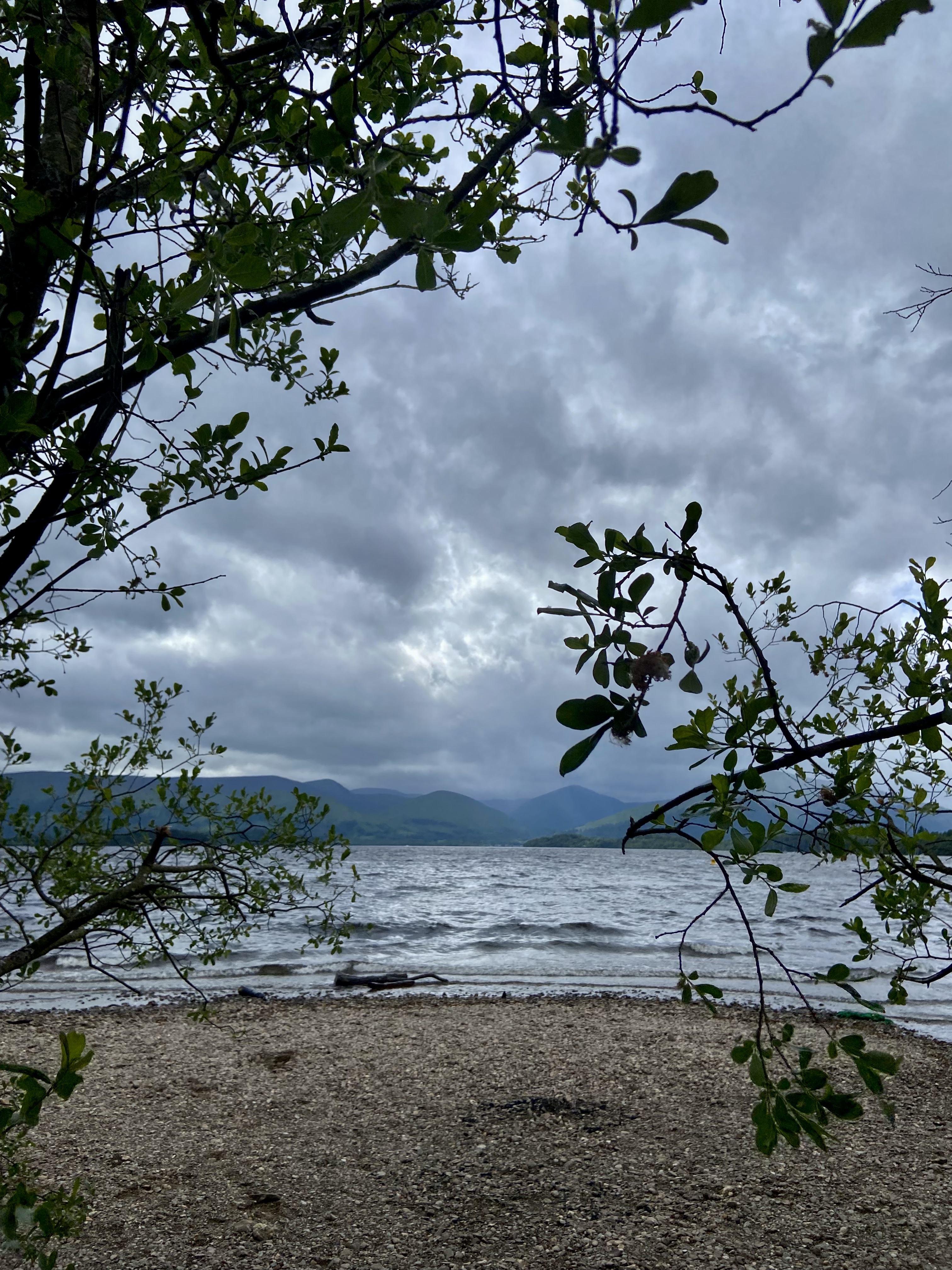
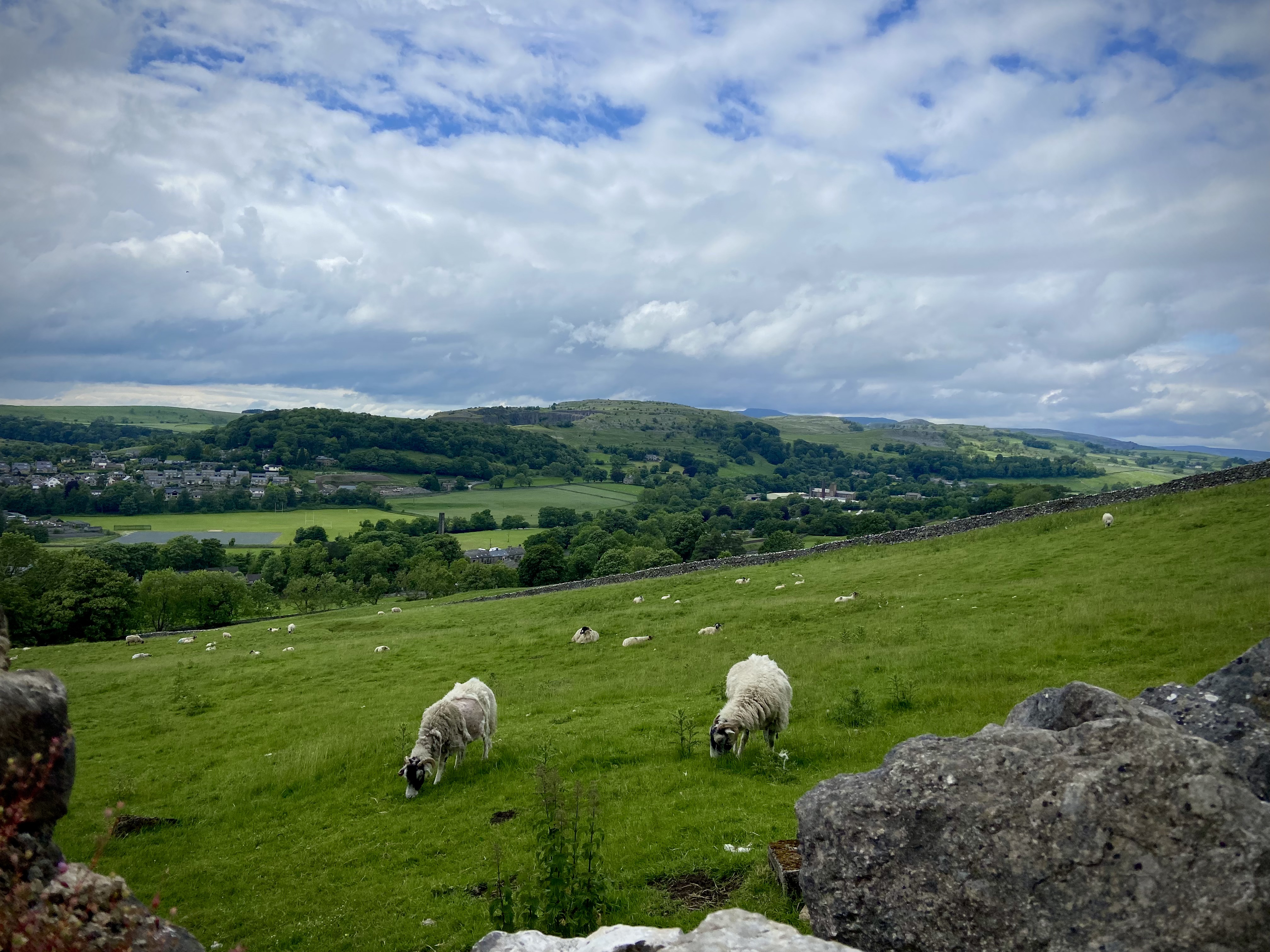
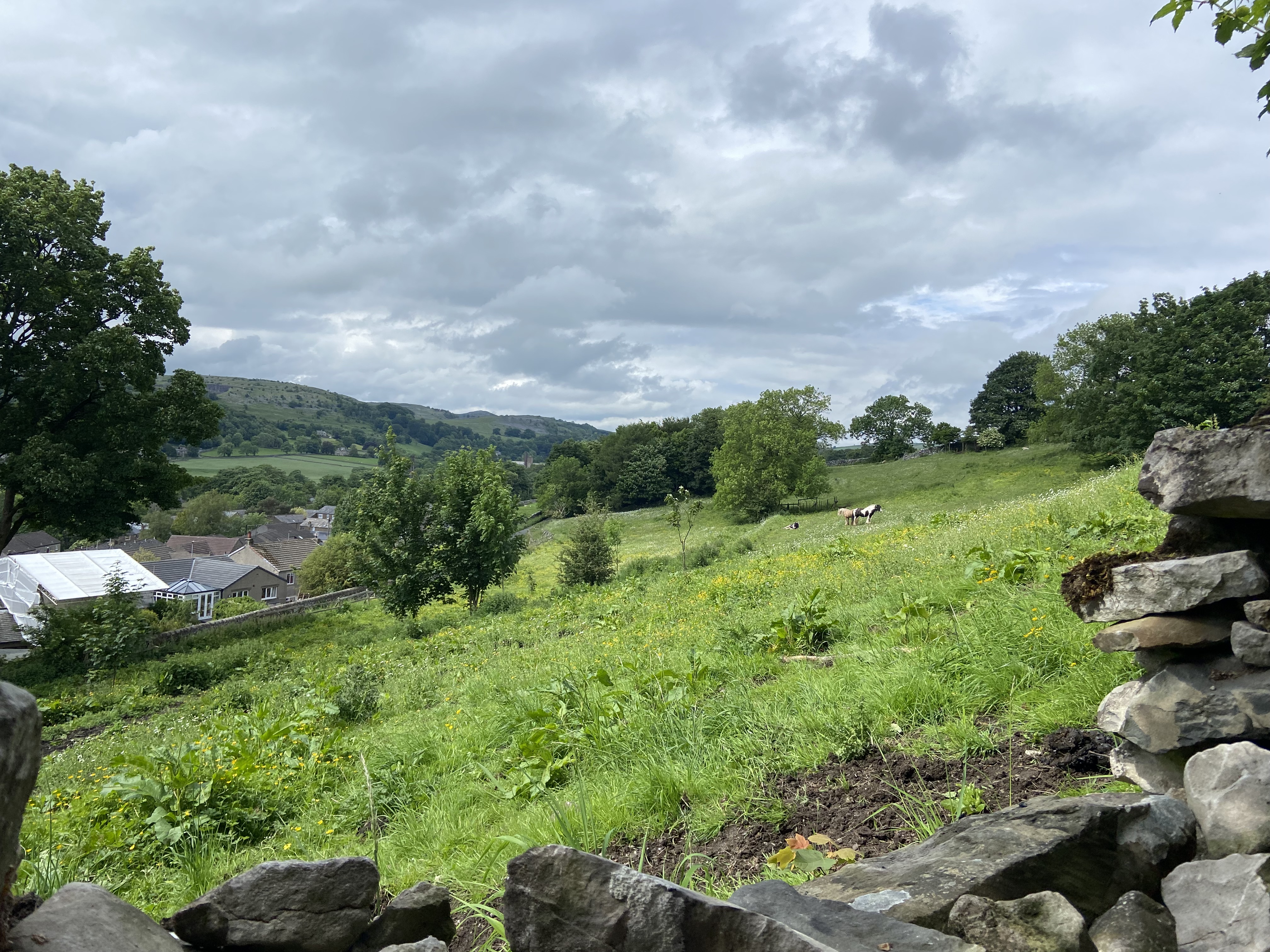
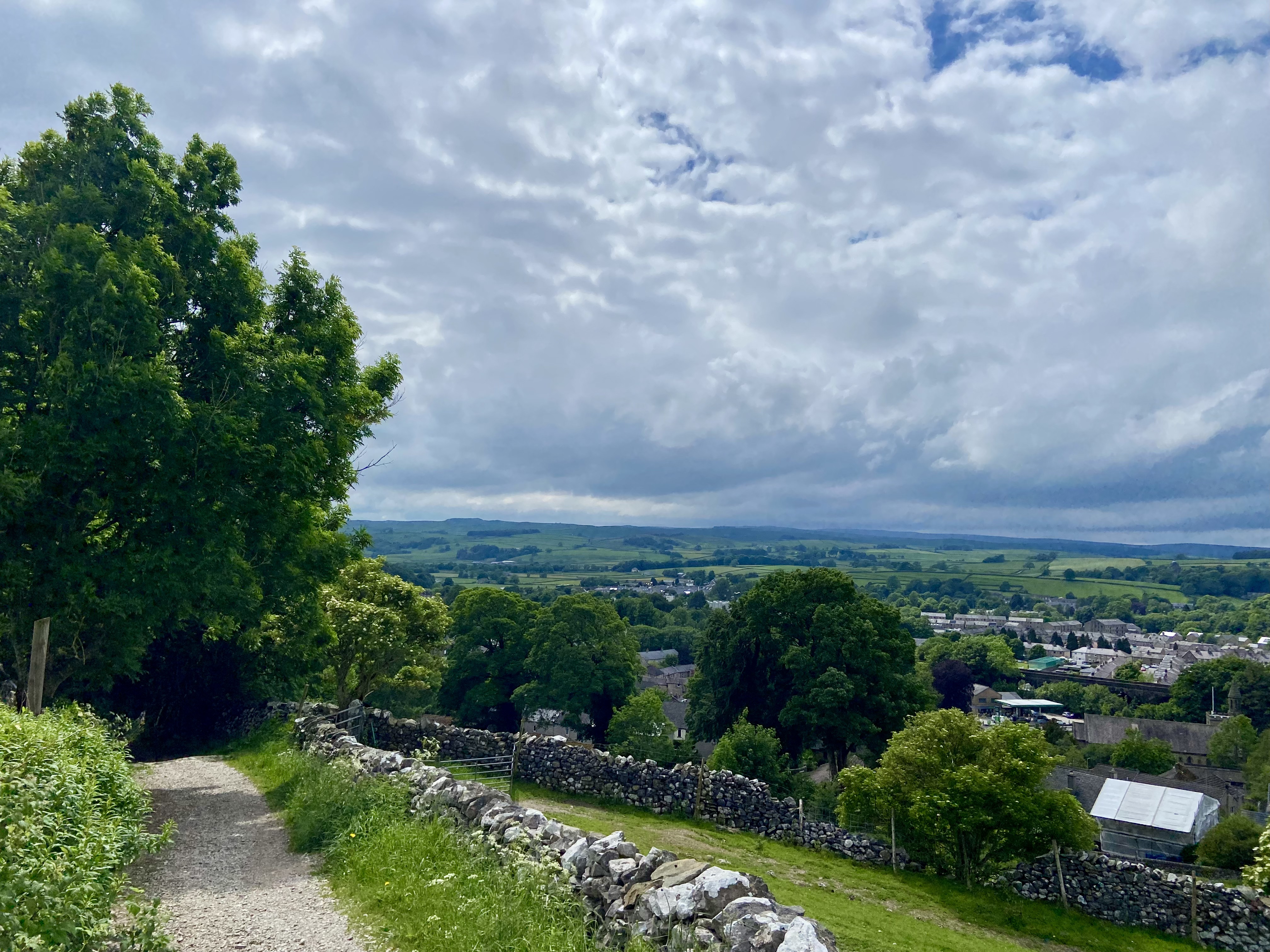
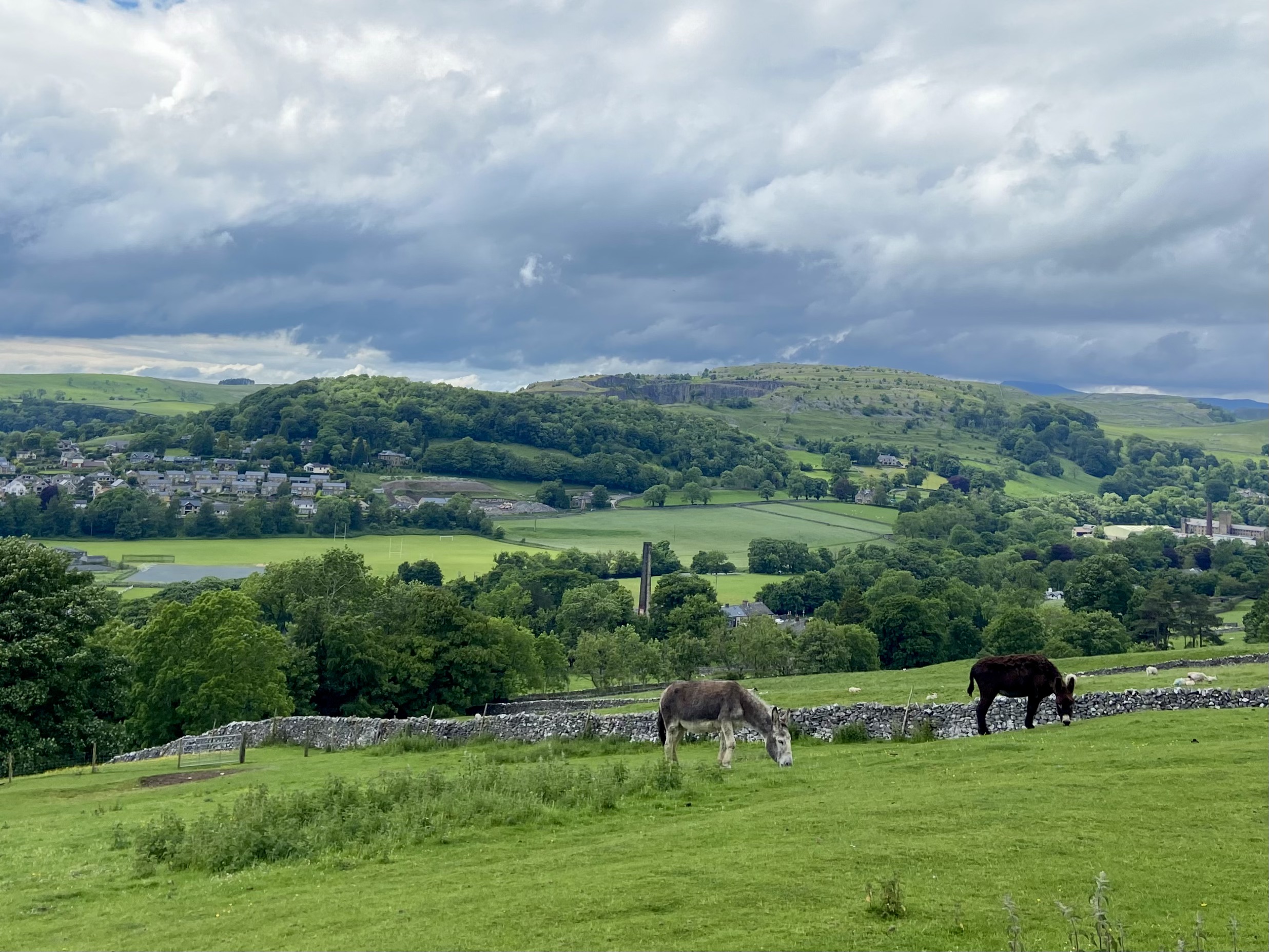
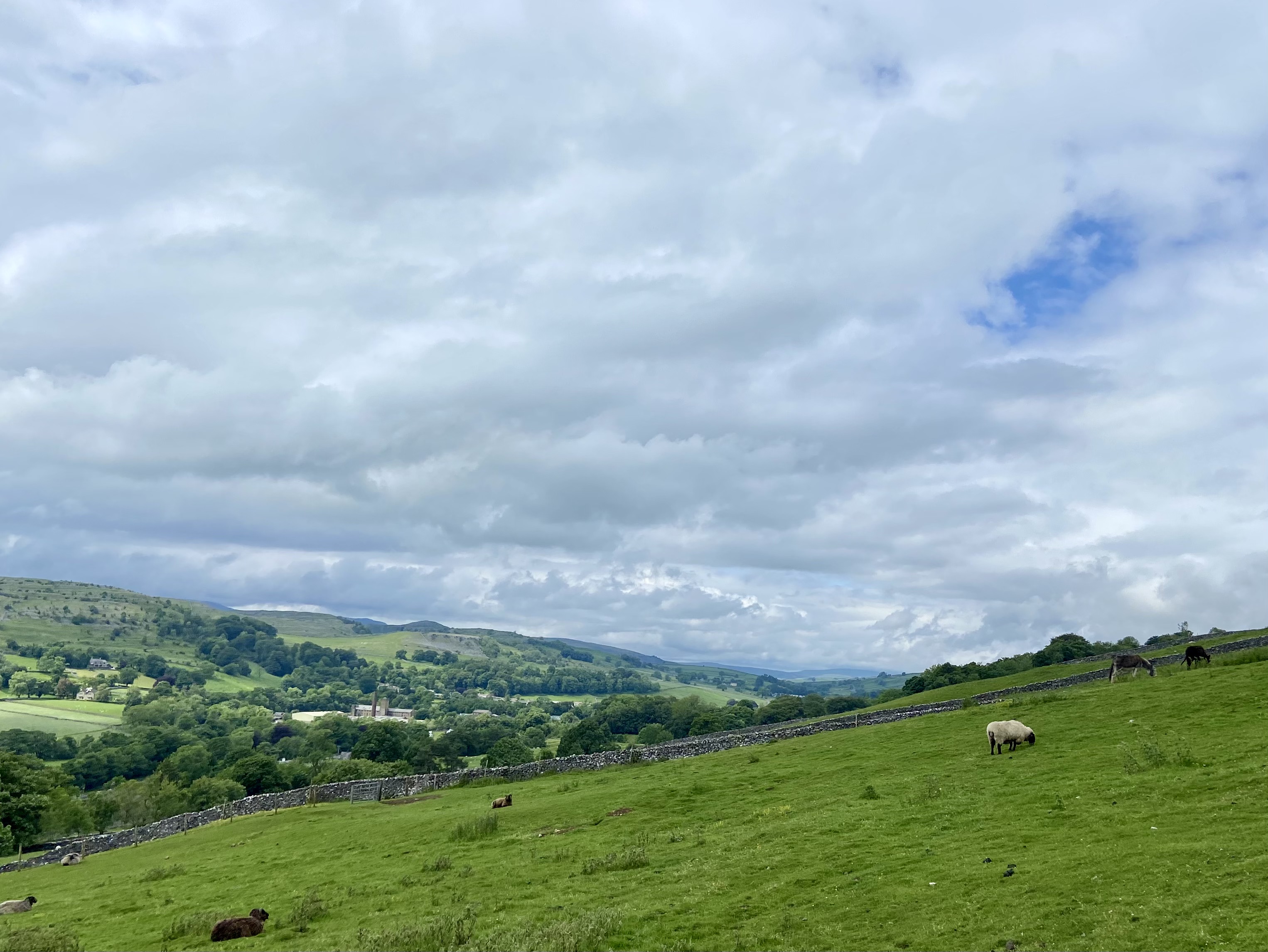
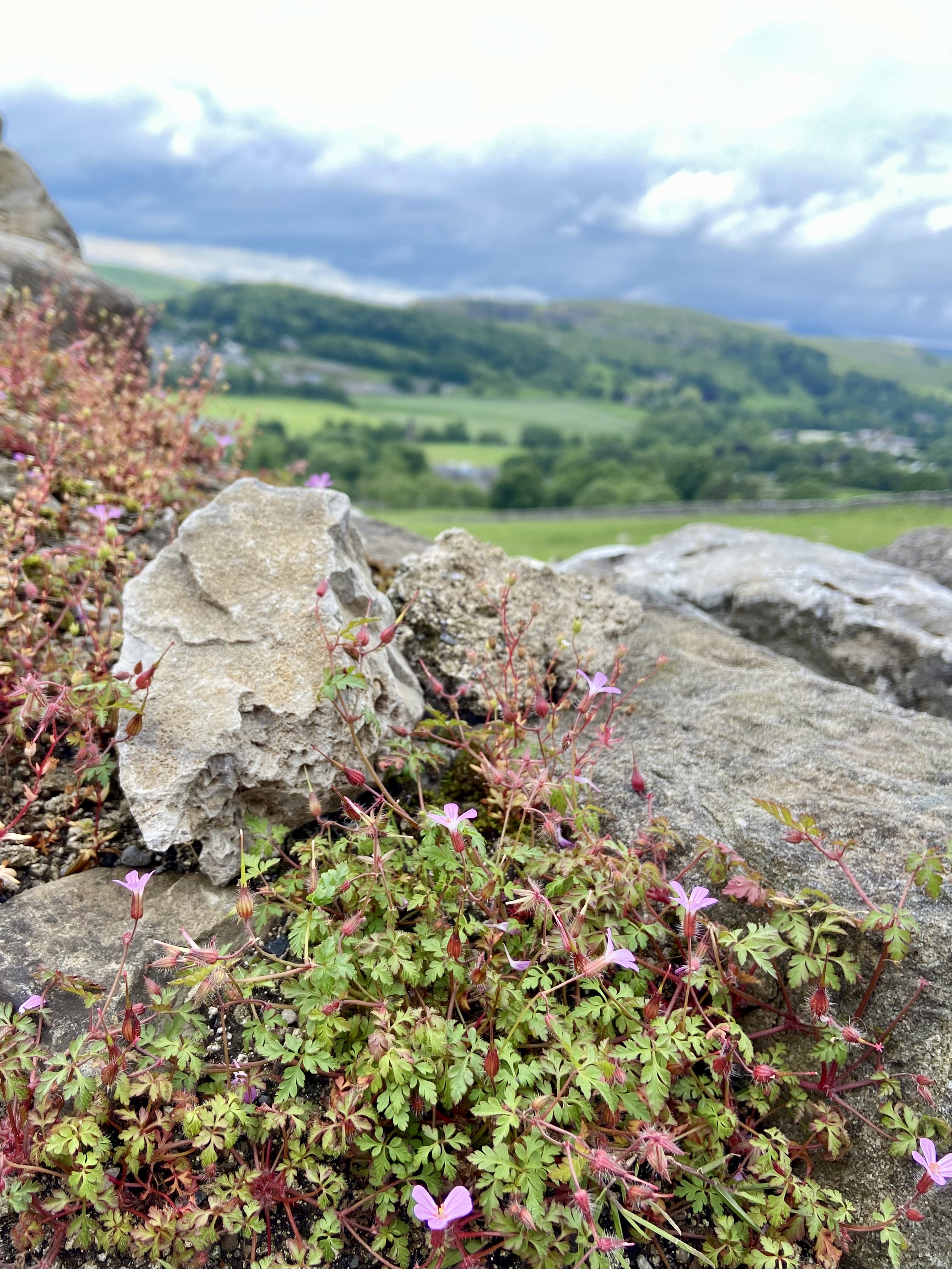
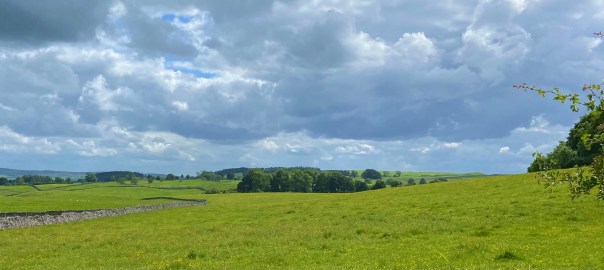
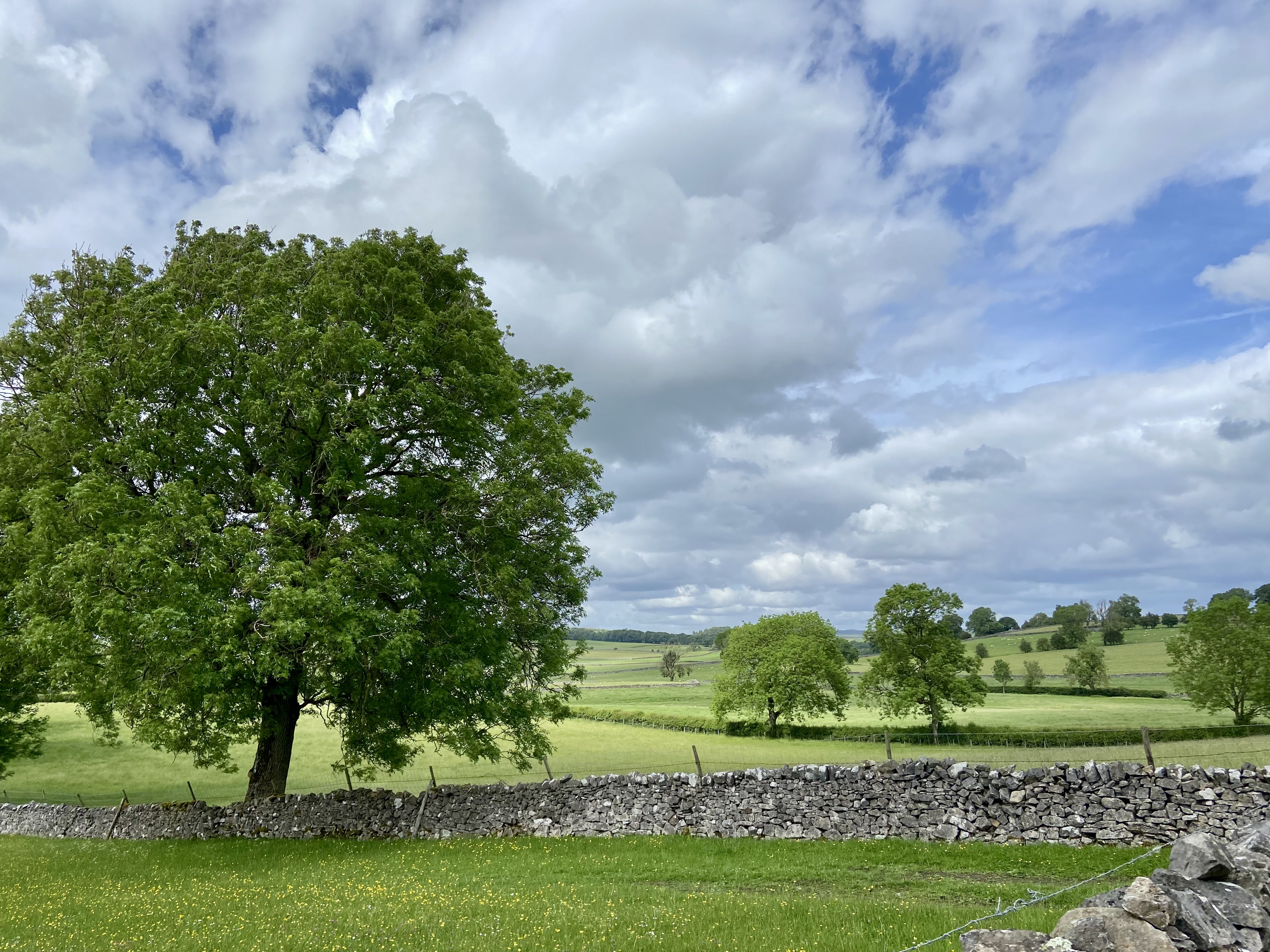
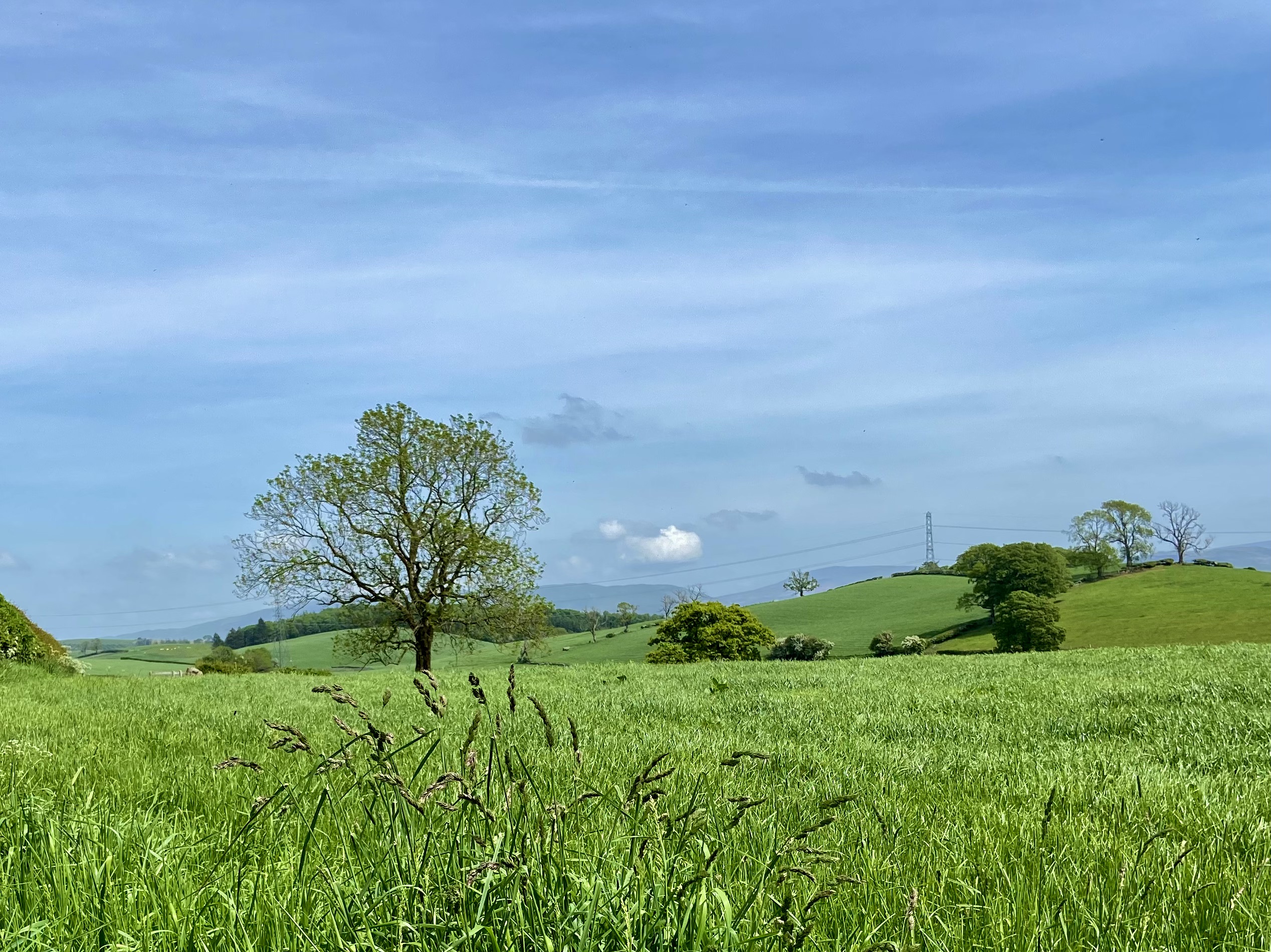
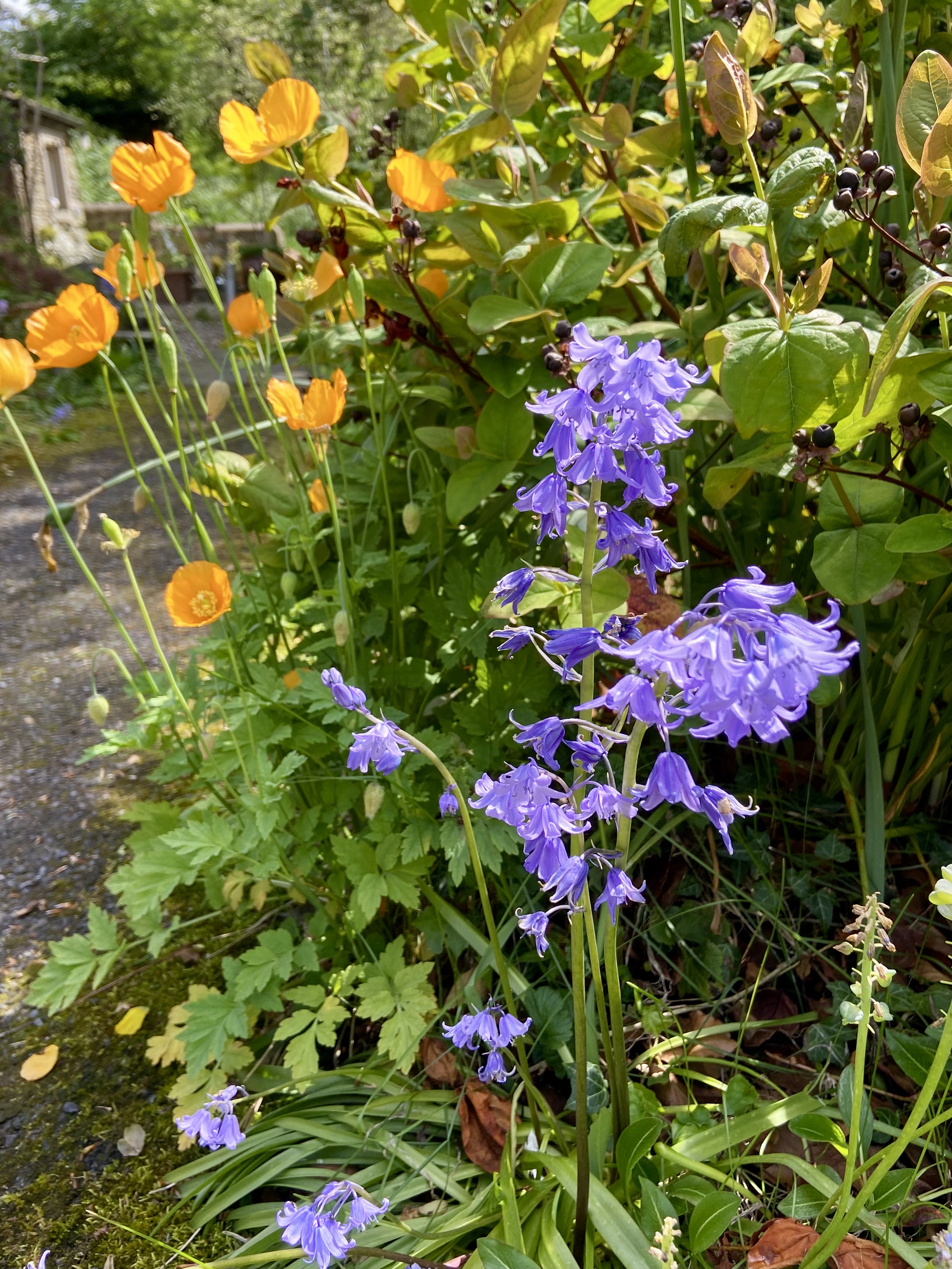
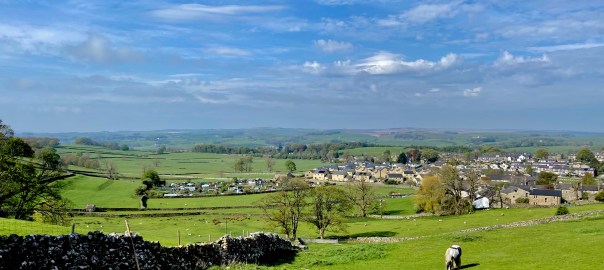
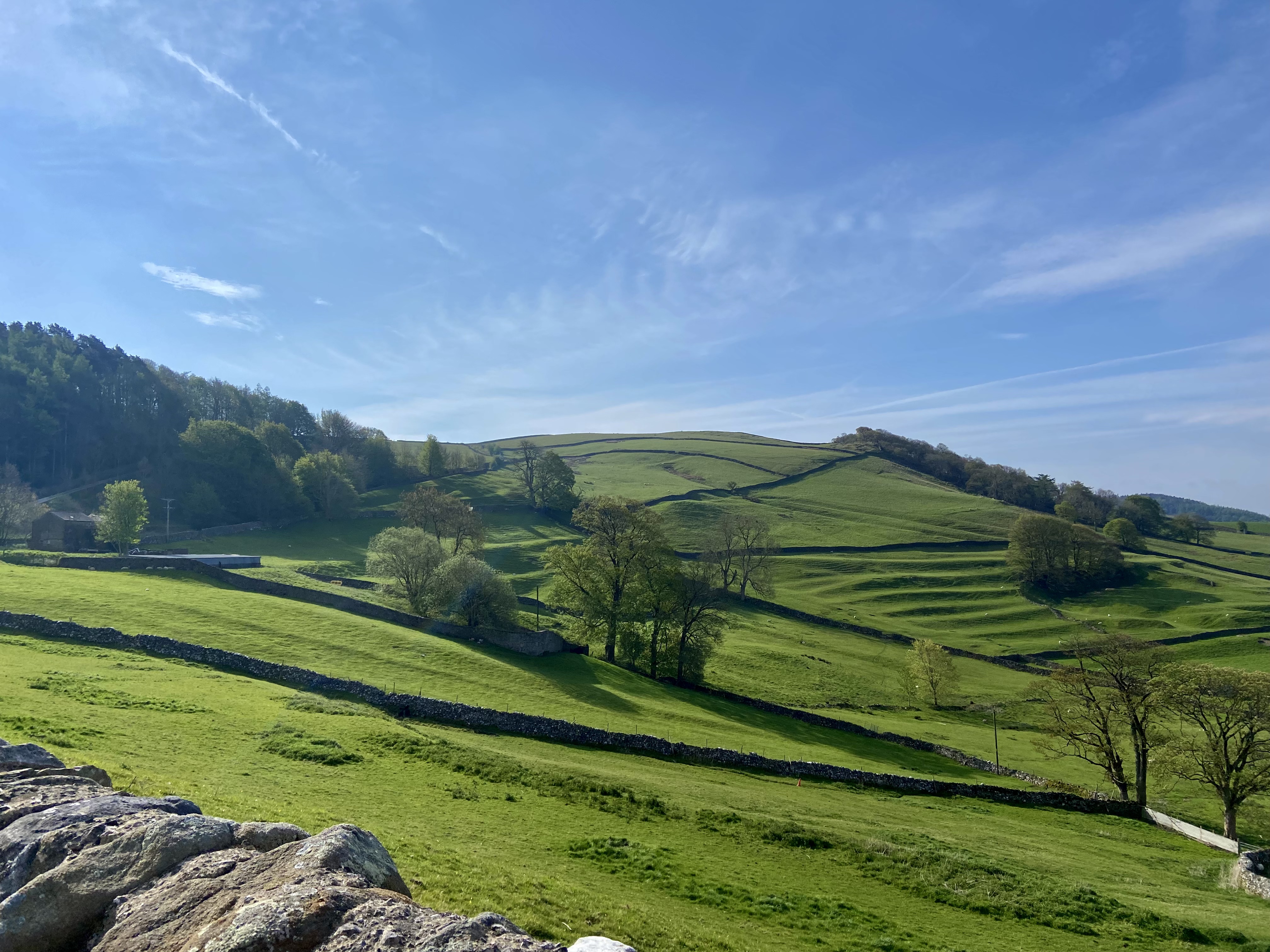
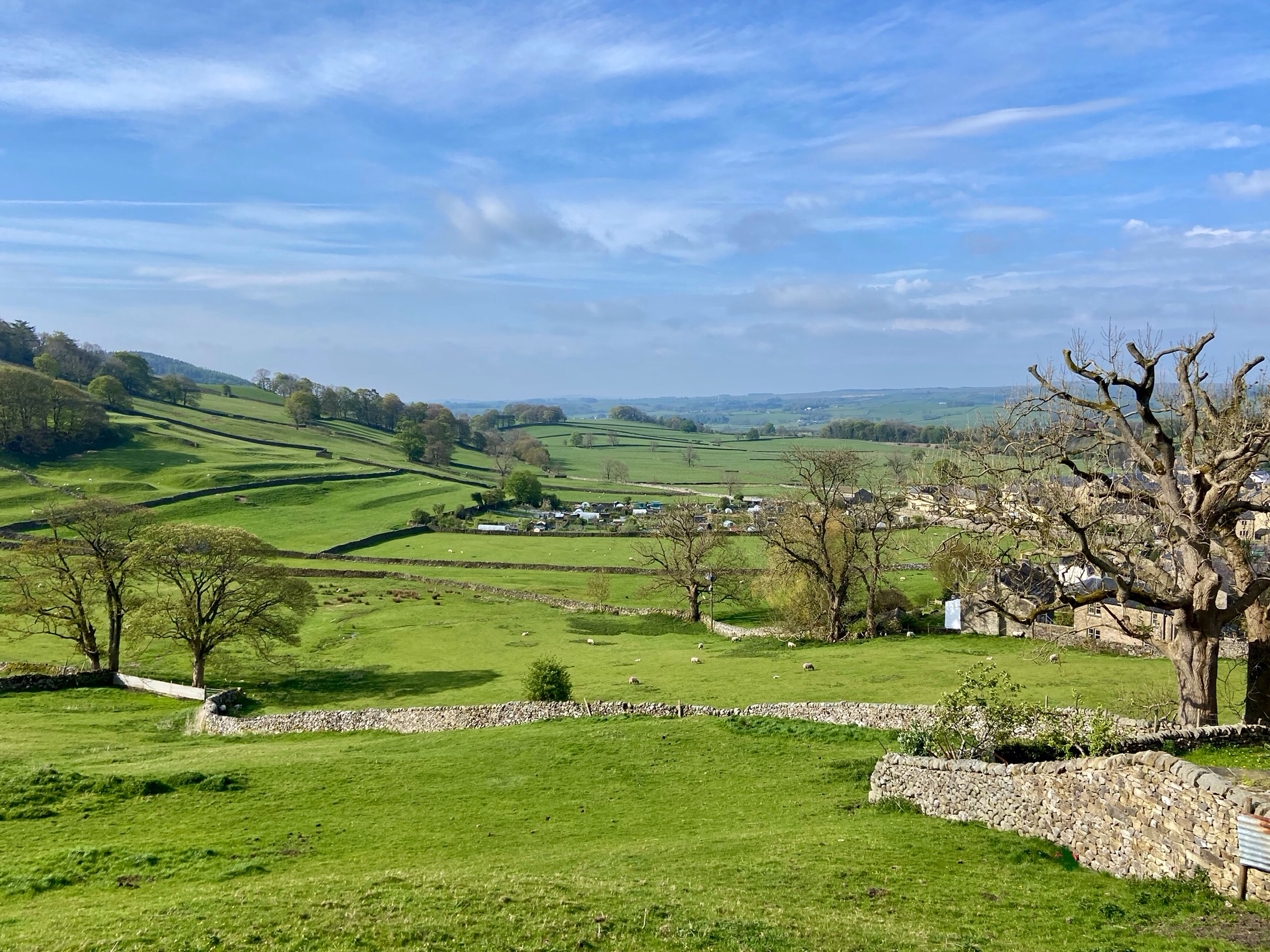
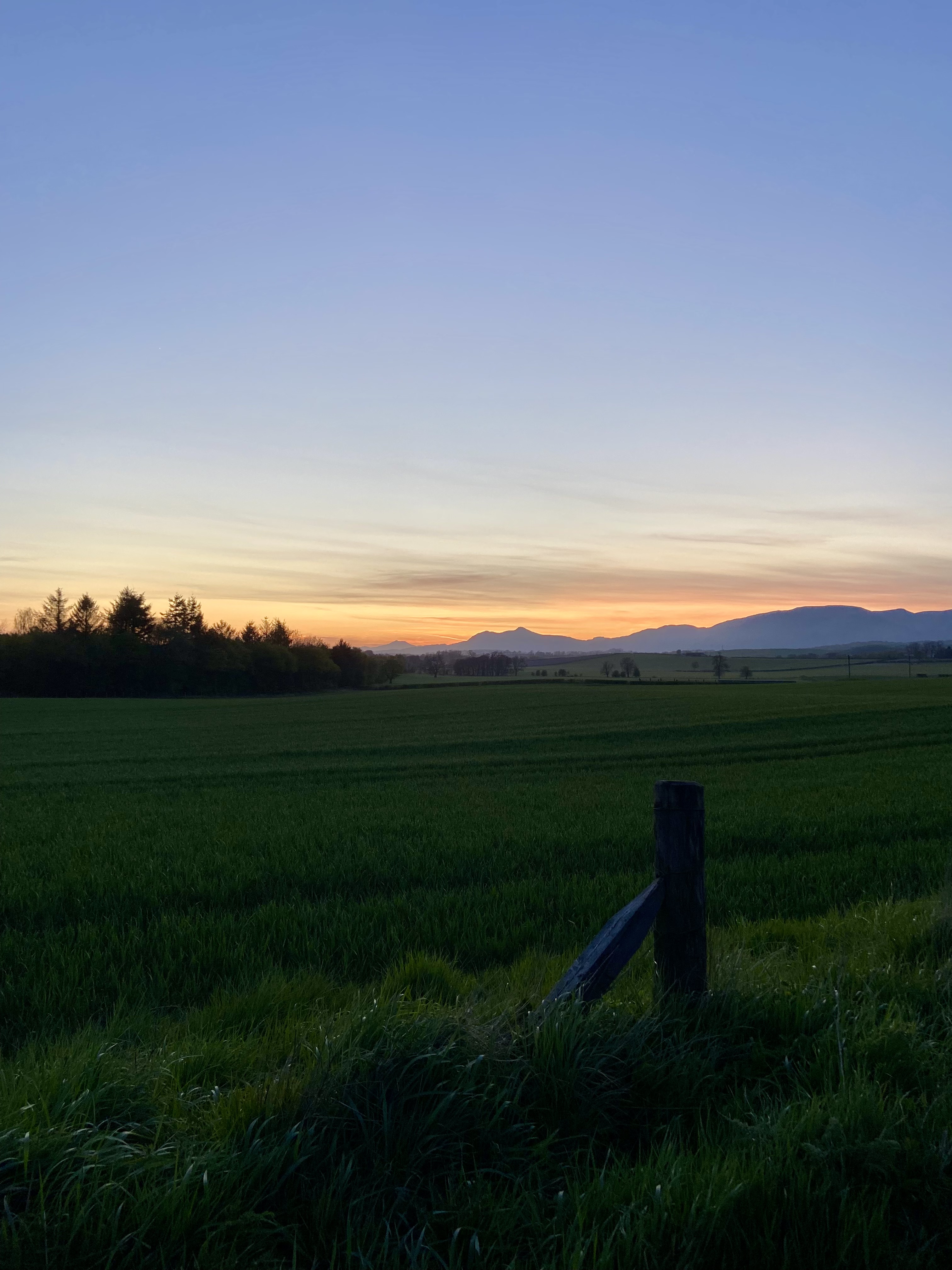
Anyway, it’s time to go now, but I will leave you with some photos from yesterday’s journey. Thanks for reading and I hope you have a good week.

A Return to Blackbird Lane

I’m back in Dumfries for the weekend. I came down to get a prescription and to get my glasses fixed. I’ve returned home a couple of times now and it’s been a quiet reminder of how peaceful it is here. Sometimes I miss being married and I absolutely miss the Arctic days when all my adult offspring returned home (thanks Covid) but there is a lot of peace to be found in the solitary life I’ve carved out here and Blackbird Lane is an integral part of that.

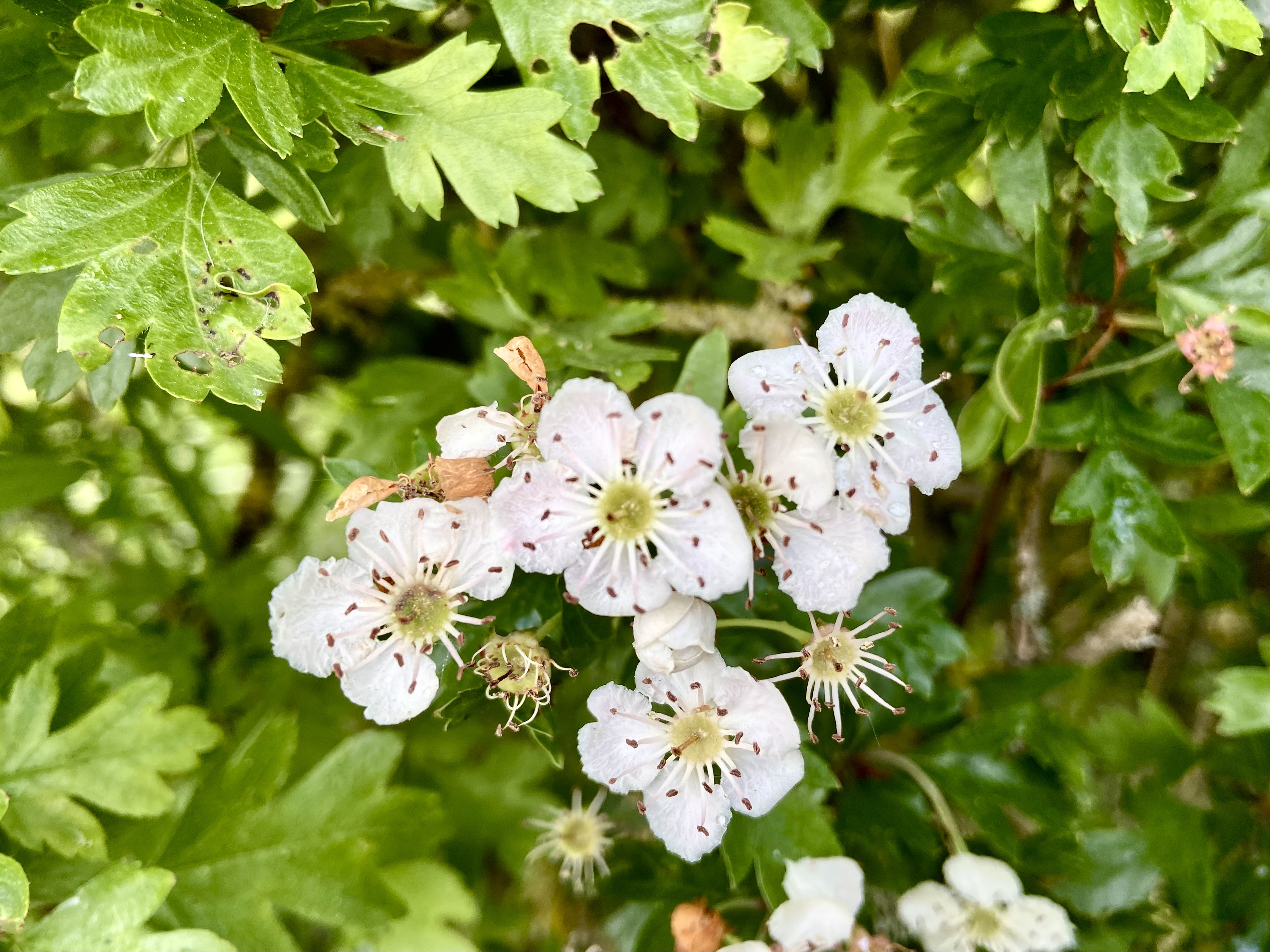
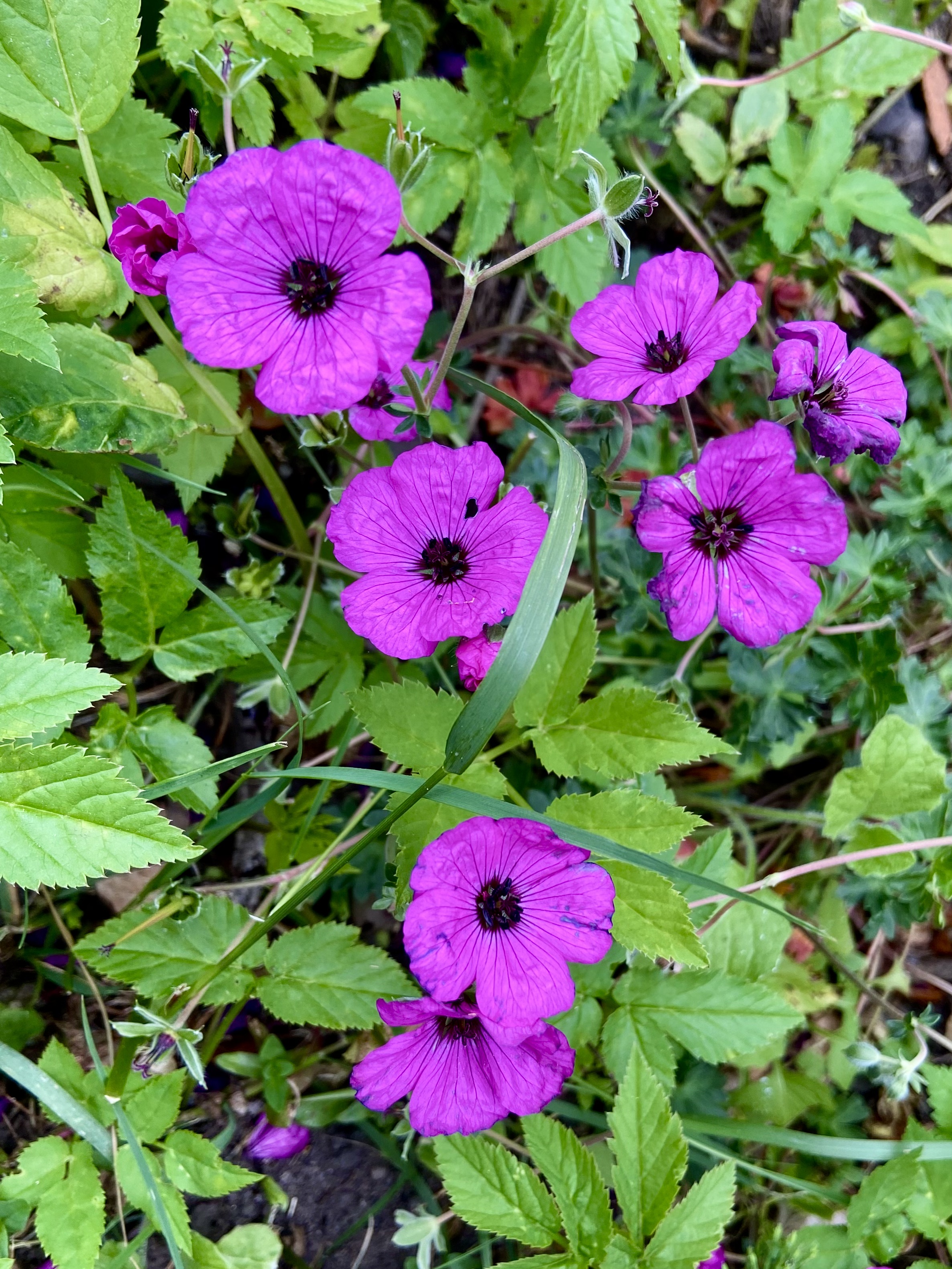
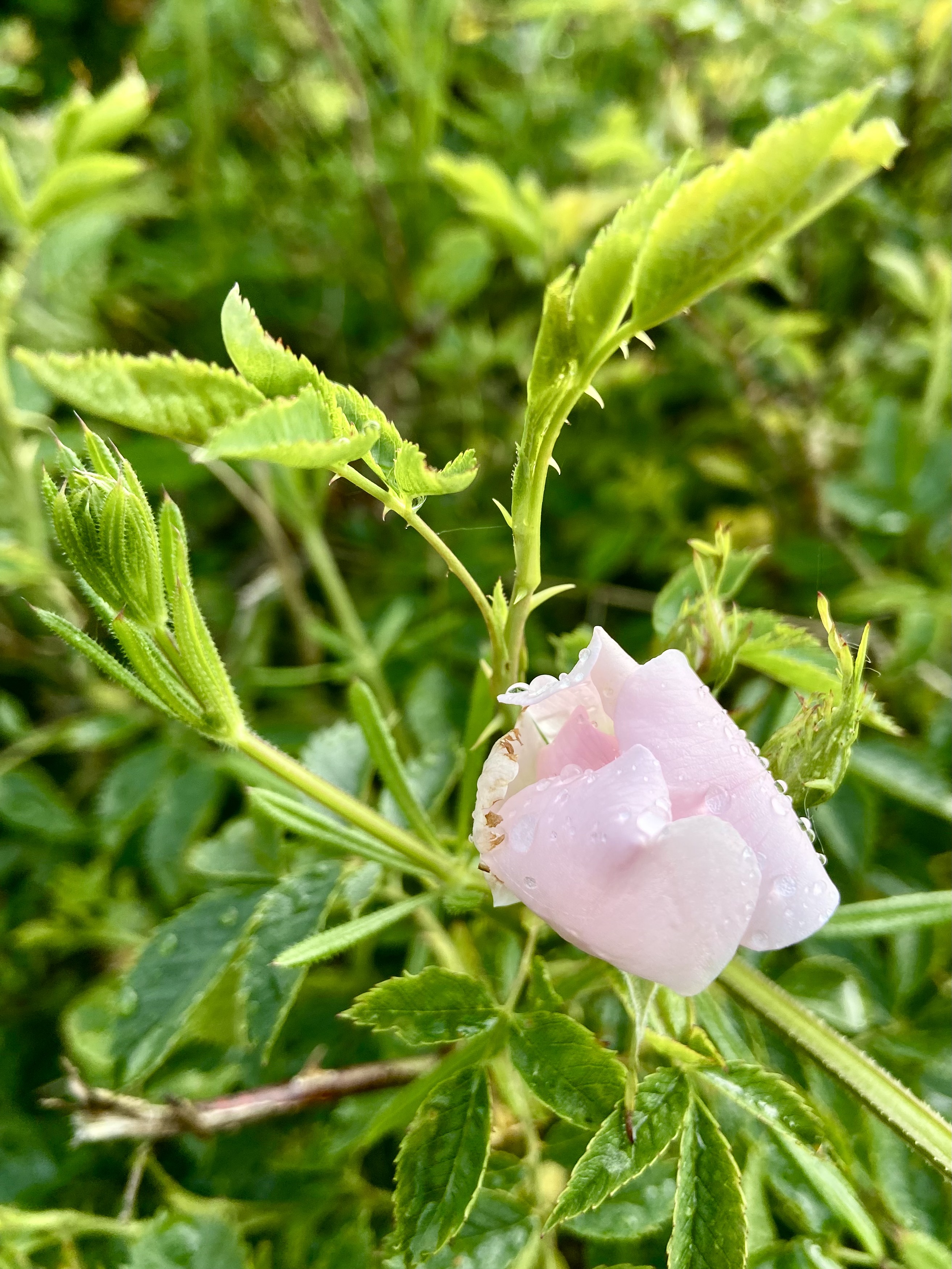
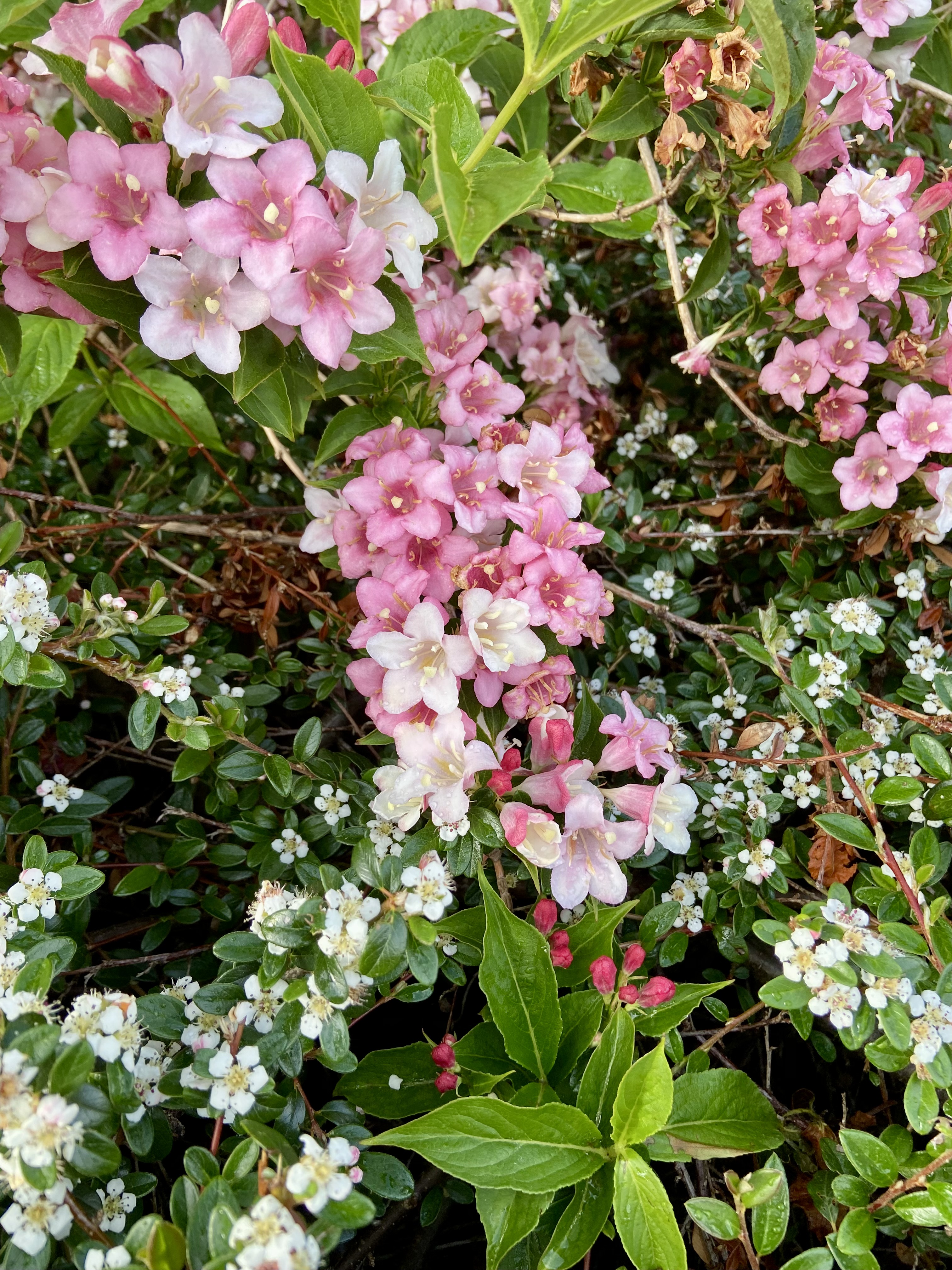
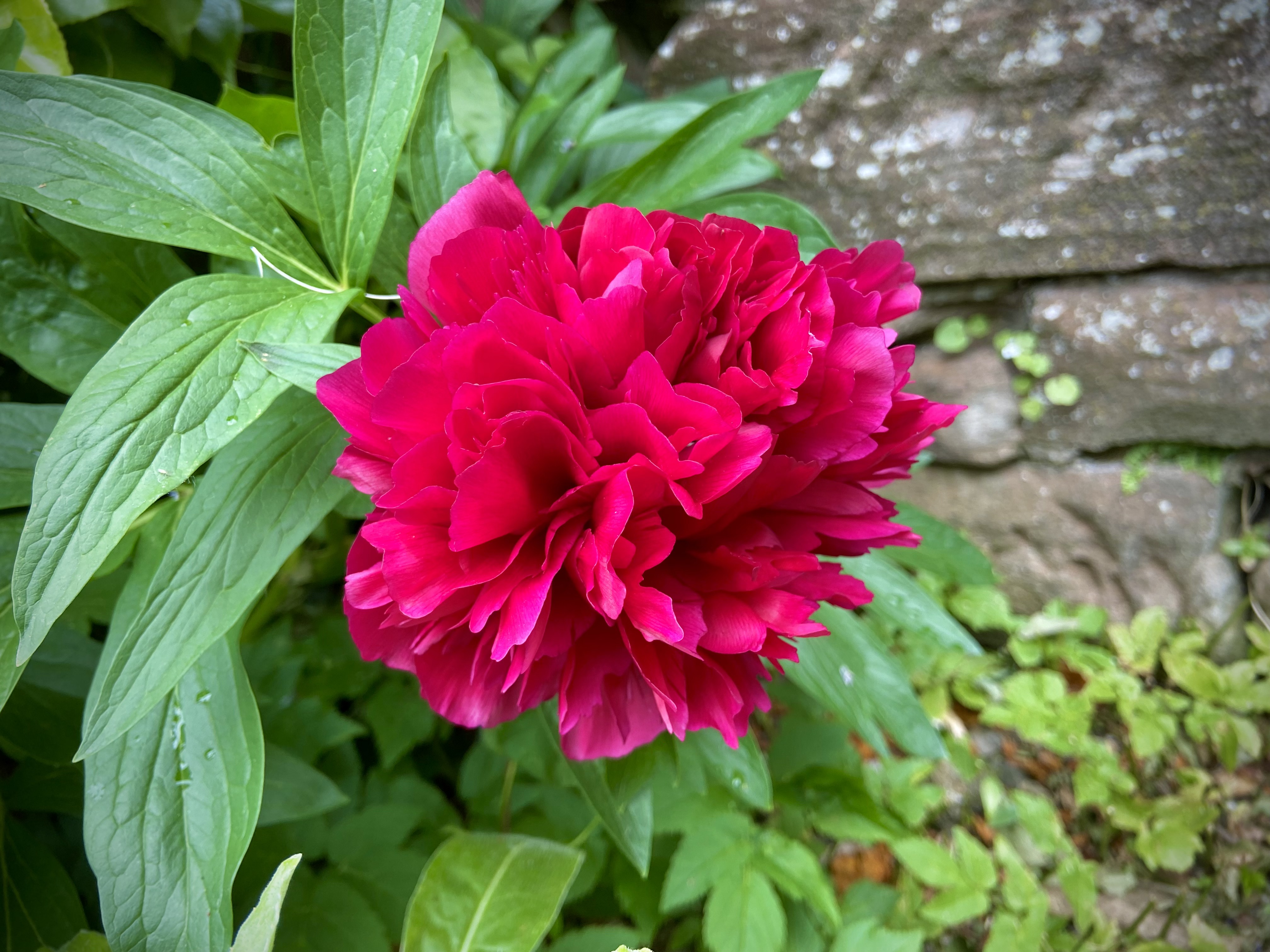
Triar and I walked down there yesterday afternoon. The warmth of the day had been cooled by a rain shower, which had left behind it the scent of damp earth. Early summer has filled it with vibrant green leaves and dancing insects. There were flowers too. Lots of them, hiding among the hawthorne and standing tall in gardens.

Triar came with me into the optician’s. I had lost a nose pad from my glasses a couple of weeks back. Working in Dunfermline, in an office in an industrial estate, with a half-hour commute at each end of a nine to five day, doesn’t make it easy to get the little things done that I would have done at lunch time in Dumfries. Anyway, Triar loves going into Frances Dunne’s. The entire staff come out a coo over how cute he is, with at least two of them petting him at any given time. He takes it as his due with a wildly wagging tail and the kind of writhing ecstasy that only a truly happy dog can bring.

It’s been a decent enough week at work. I was out with Ben at the start of the week and with Naomi at the end. She and I had a trip down to Carlisle to see some laying hens. She weighed some of them using some very natty scales and her extensive experience was obvious. She showed me where red mite hide and pointed out some maintenance issues that I might not have picked up on.

Red mites are evil little critters. They hide under the edges of the nest boxes and when the poor hens go in to lay at night, they sneak out and bite them. With a really bad infestation, not only do you get problems with itching and feather plucking, but the birds can actually become anaemic. The little horrors breed quickly in warm weather as well, so the last few days will have sent them into overdrive.

It’s one thing spraying your hen house if you have a few chickens in the garden. You can put the birds outside the house, wash down their shed and apply treatment. It’s quite another trying to eradicate them from a large shed, where the birds are mid-season in lay. There’s no way you can move them all out to clean down their shed. There are treatments that go in the drinking water, but they need to be used responsibly. As we’ve seen with antibiotics, the overuse of any drugs can render them less effective over time.

This does also raise some questions about free range. A lot of my job now is about biosecurity. The high value flocks I used to visit with APHA used almost no medicines in their birds. As part of my check, I would look at their medicines book. Many of them had no entries for years and that was broadly because the outside world was strictly kept out. Staff showered as they entered and left, and when inside, you wore only clothing and footwear supplied to you by the company. The clothing didn’t leave the building either, but was washed on site.

But if you open the doors and let the hens outside, you can’t protect them from anything. Wild birds fly in, bringing everything from red mite to avian influenza. While I have loved visiting some of our farms and seeing hens scratching around on grass, under trees, there is a balance to be struck. Sickness also causes welfare issues.

So life in the poultry world is the same as all other areas of life. A balance must be struck between aspects of freedom and safety. It crossed my mind as I wrote this, that one of the things I have already learned about my new industry is how many vaccinations are used in laying hens. Most are given early in life, so that the hens remain healthy throughout their laying time. In fact, I did think about calling this post, “Anti-vaxxers shouldn’t eat eggs,” but perhaps that isn’t the audience I want to attract!

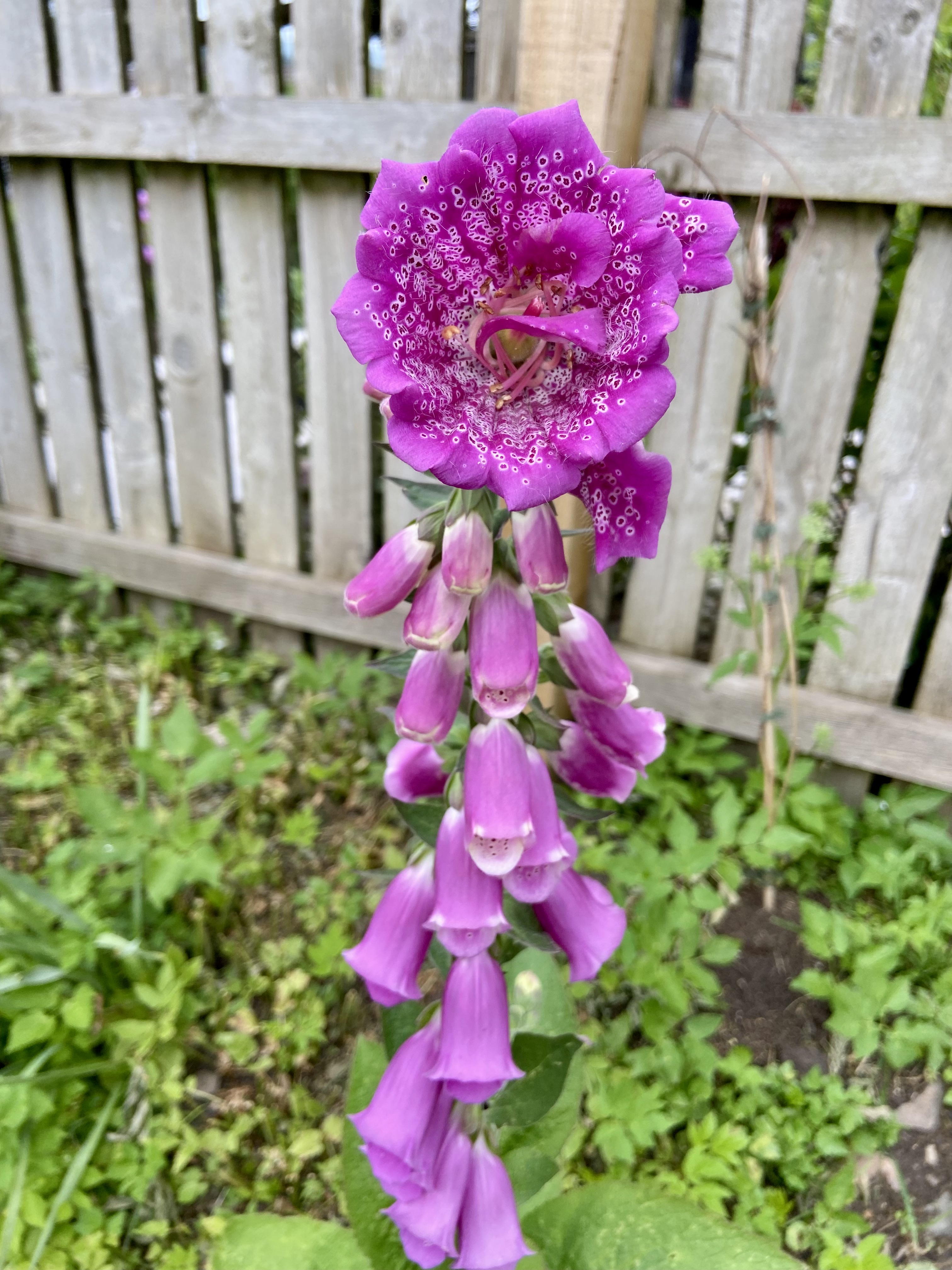
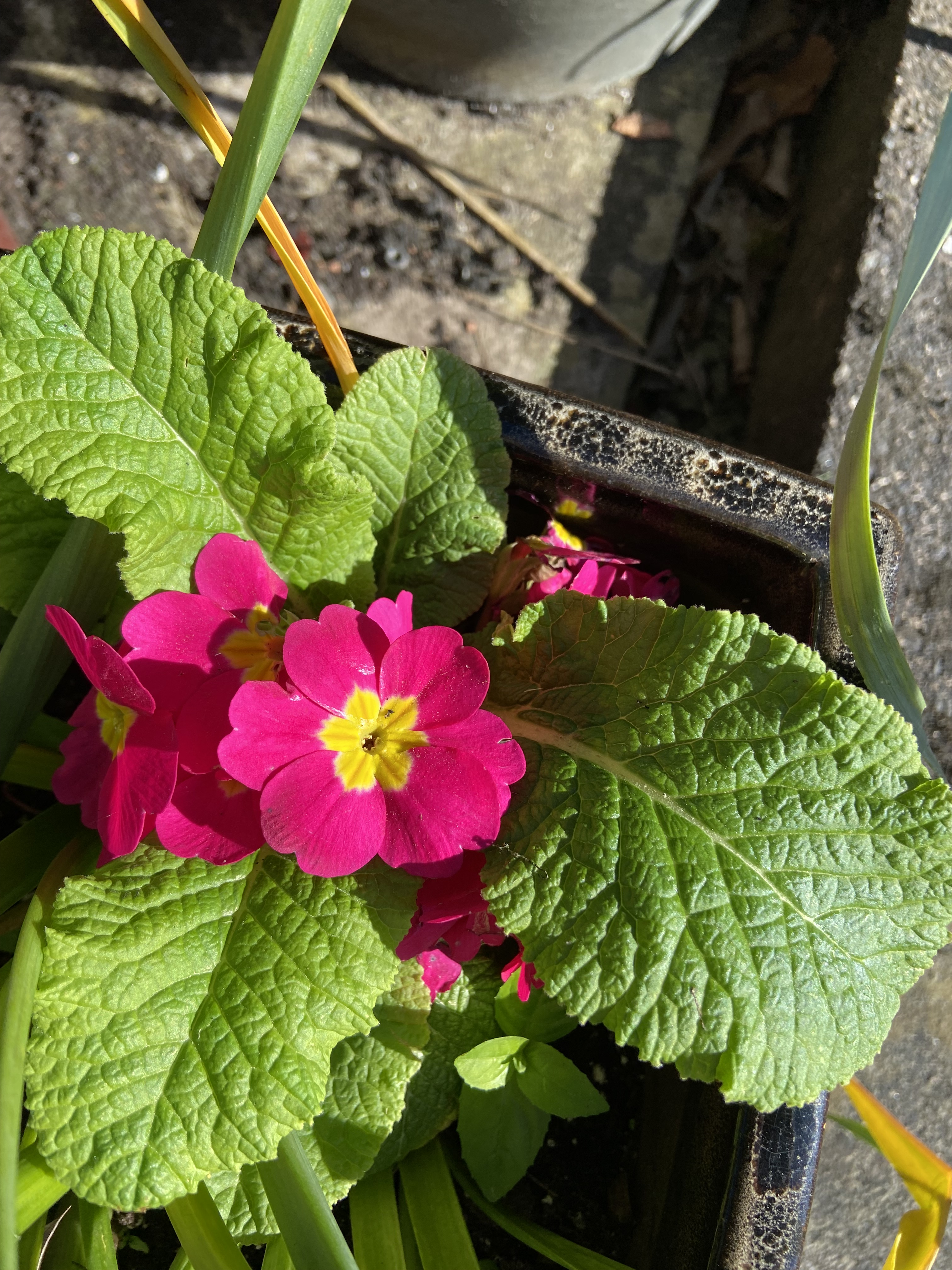
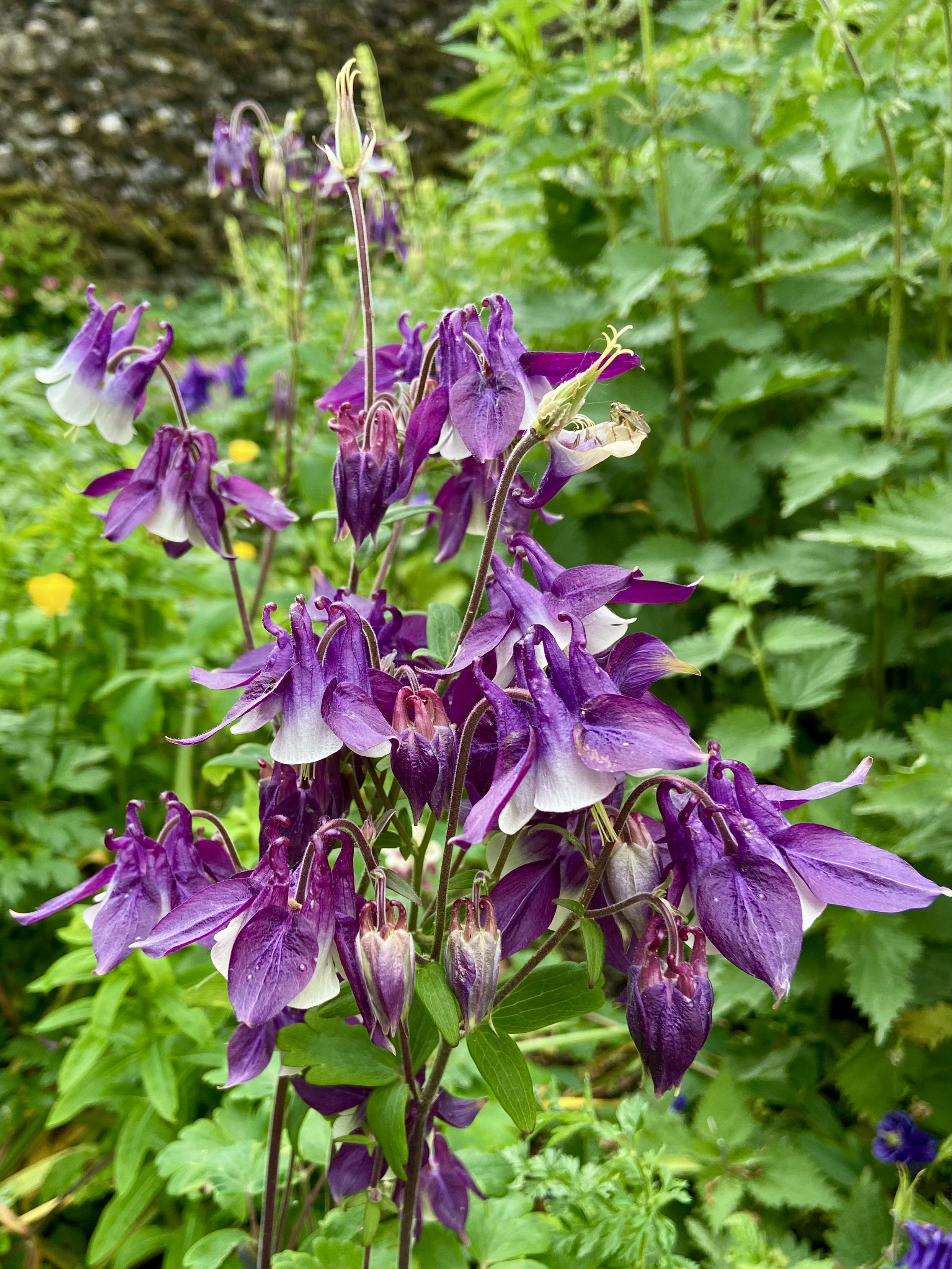
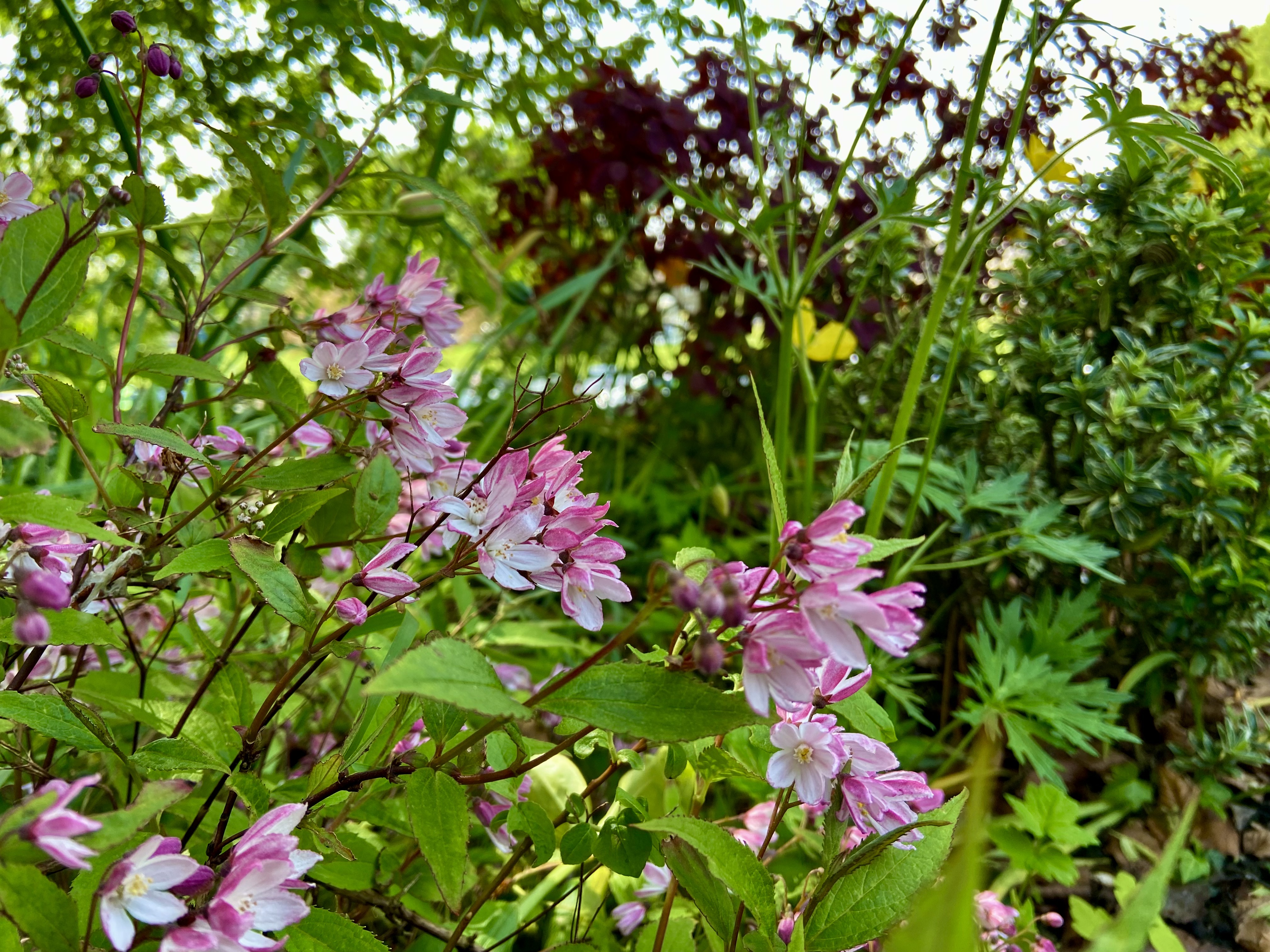
I will leave you with more flowers. These are in my garden. Thanks for reading and I hope you have a lovely week.

Foxes and Hens


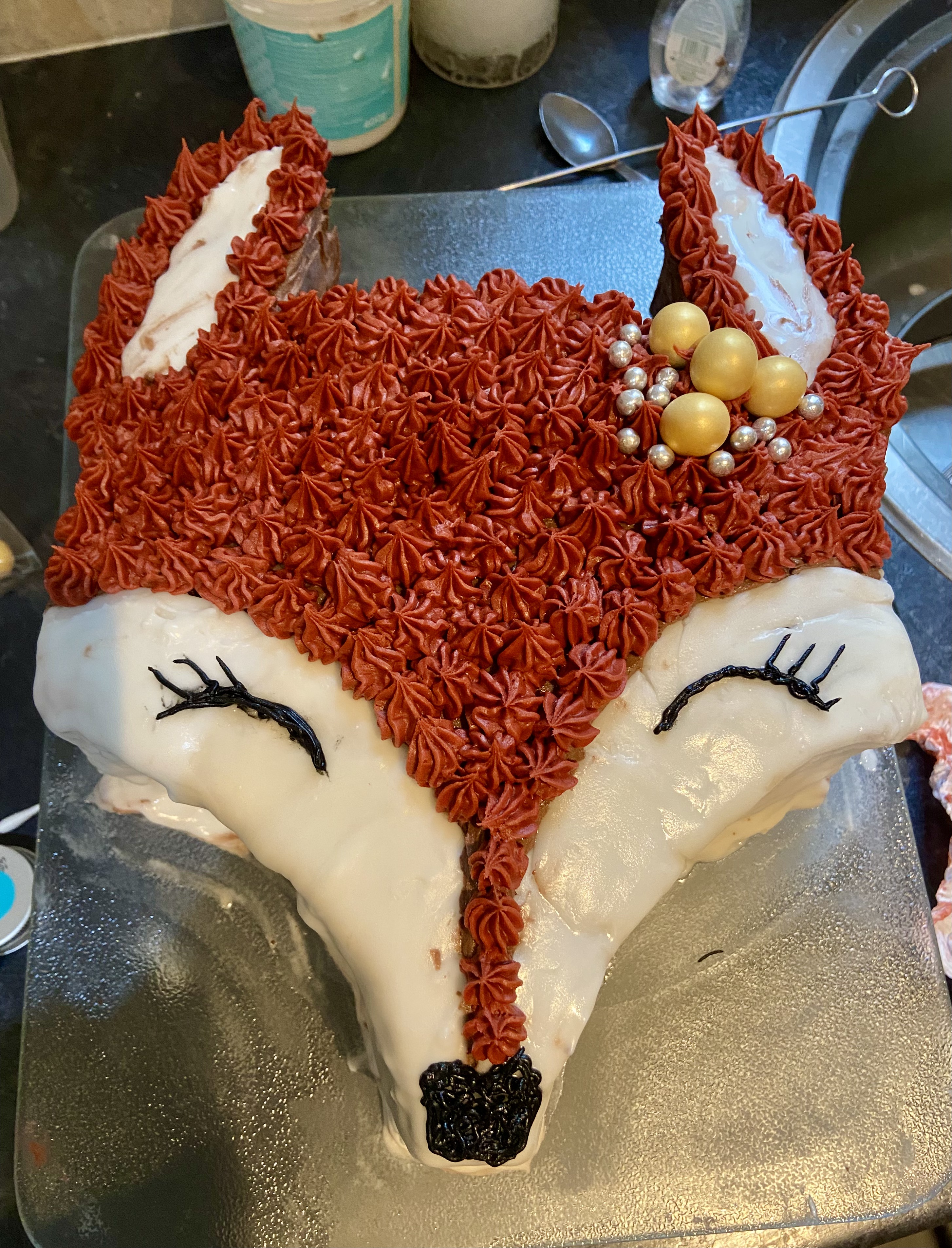
I went to my first ever Eurovision party last weekend. Coincidentally, it was Lissie’s birthday. Lissie had children at the same time as Valerie and me and she’s also Christadelphian. I remember her children as toddlers, so it was lovely to meet them now they’re young adults. Val and I (well mostly Val) made a birthday cake. I definitely need to get some icing/piping equipment so I can do this again!

Eurovision was as mad as it usually is. We had Prosecco and strawberries along with pizza and other munchies, but the highlight was Valerie doing the Bangaranga dance around the living room with Lissie’s son, Jonathan.

I came to Yorkshire on Tuesday night. Mum and I had dentist appointments on Wednesday, so I now have lovely, clean teeth and no fillings, which is always a relief. Ben was on holiday, so he had passed an APHA pre movement blood test and flock inspection on to me for Friday. That was in Penrith, so rather than going back to Dunfermline on Thursday (a crazy amount of driving) I asked whether I could have some visits in Cumbria for Thursday. He gave me two more visits to do, so I had a pleasant couple of days, meeting new clients and looking at their chickens and hens.

My knowledge is still patchy, but what I do have is a new set of eyes and an interest in problem solving, so I hope that I will be able to bring something new to the farmers in my region. I also just like talking to people, and farmers are some of the best. Ben had told me one of the farm managers talked to her hens. My immediate reaction was that she and I would get on well and meeting her didn’t change that opinion. I have promised to take her some chicken pens next time I go, so I’d better put some aside before they all disappear.

Yesterday was a beautiful warm day. It really felt like summer for the first time this year. Driving through the Dales was just an added benefit.

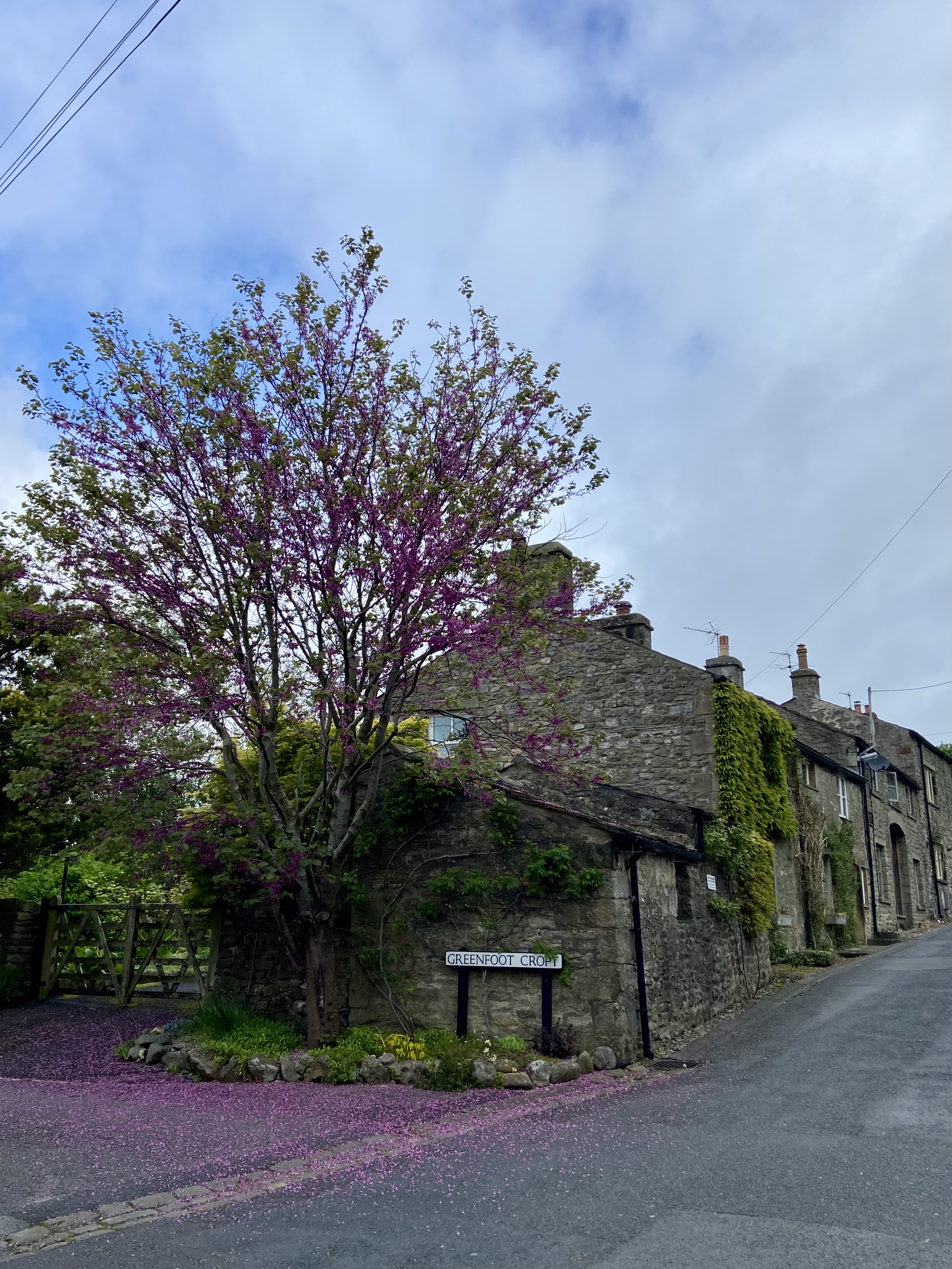
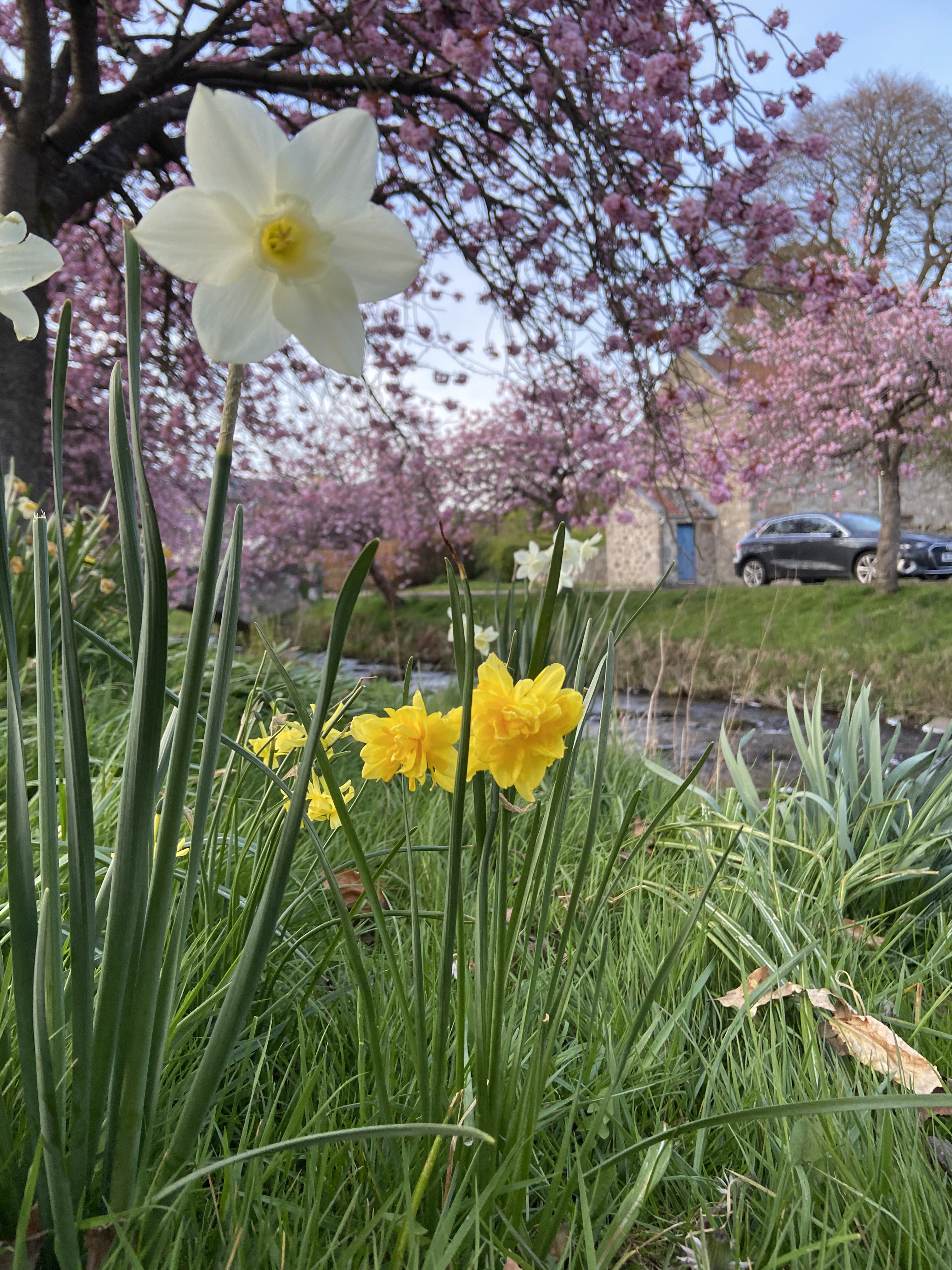
Today, I walked Triar around Settle. As always, at this time of year, it is filled with flowers. Mum, Dad, Triar and I then walked to The Folly for coffee and cake. I had an almond croissant. Very nice, though the coffee was so hot, I didn’t even try to drink it until I’d finished the croissant. I know some people prefer their coffee piping hot, but I prefer mine to be drinkable as soon as I get it.

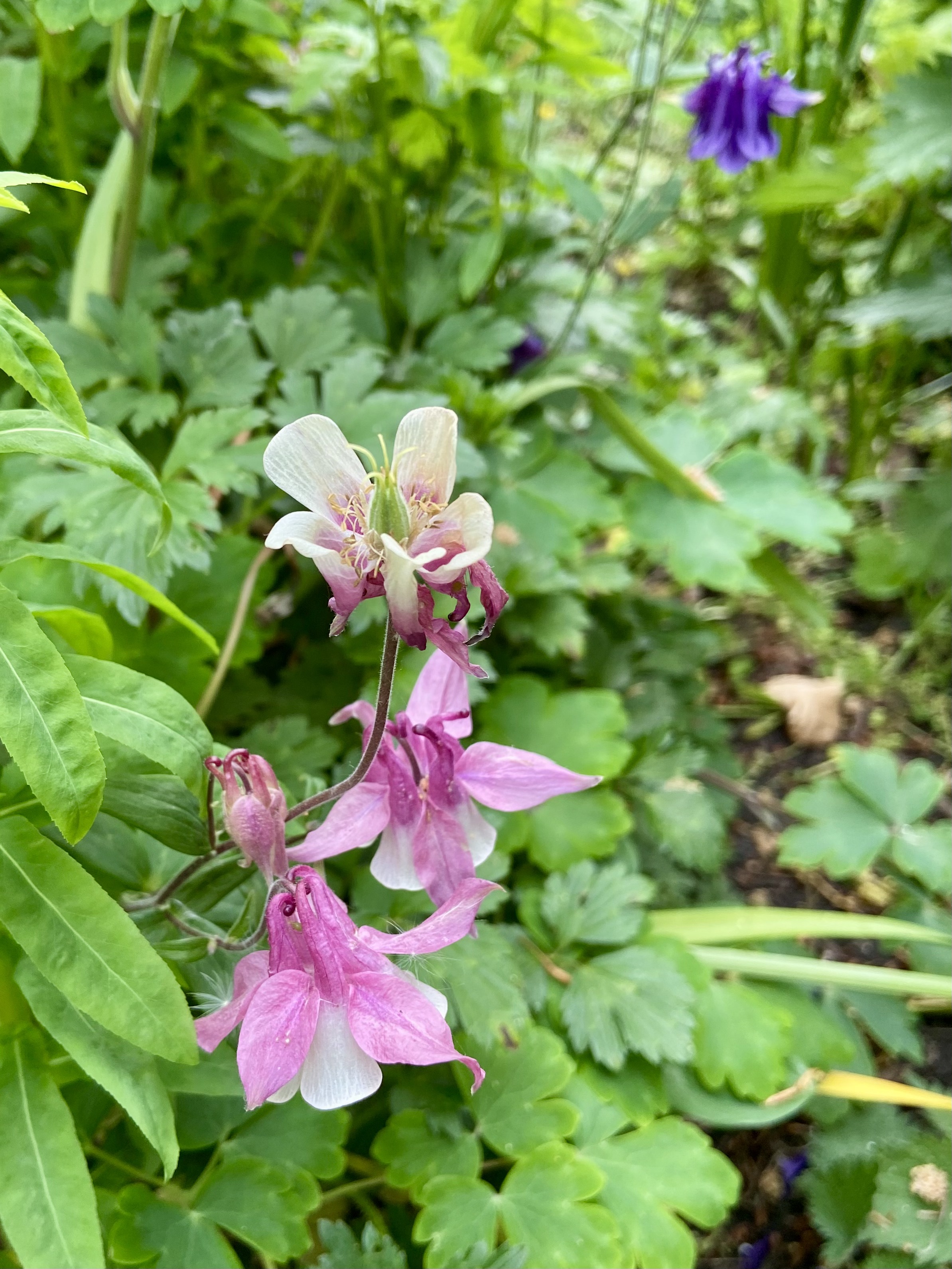
Anyway, I shall leave you with some photos from my morning dog walk. Hope you have a good week and thanks for reading.

Project Ground Elder and Logic Puzzles

It’s been a month now since I started working at Inchcolm Vets as a poultry vet. I’ve learned an enormous amount already, but as I’m still based in Dunfermline, it’s also been a month since I’ve been living at home. This week however, on Thursday, my much delayed carpets were laid and so I spent Wednesday and Thursday nights in Dumfries.

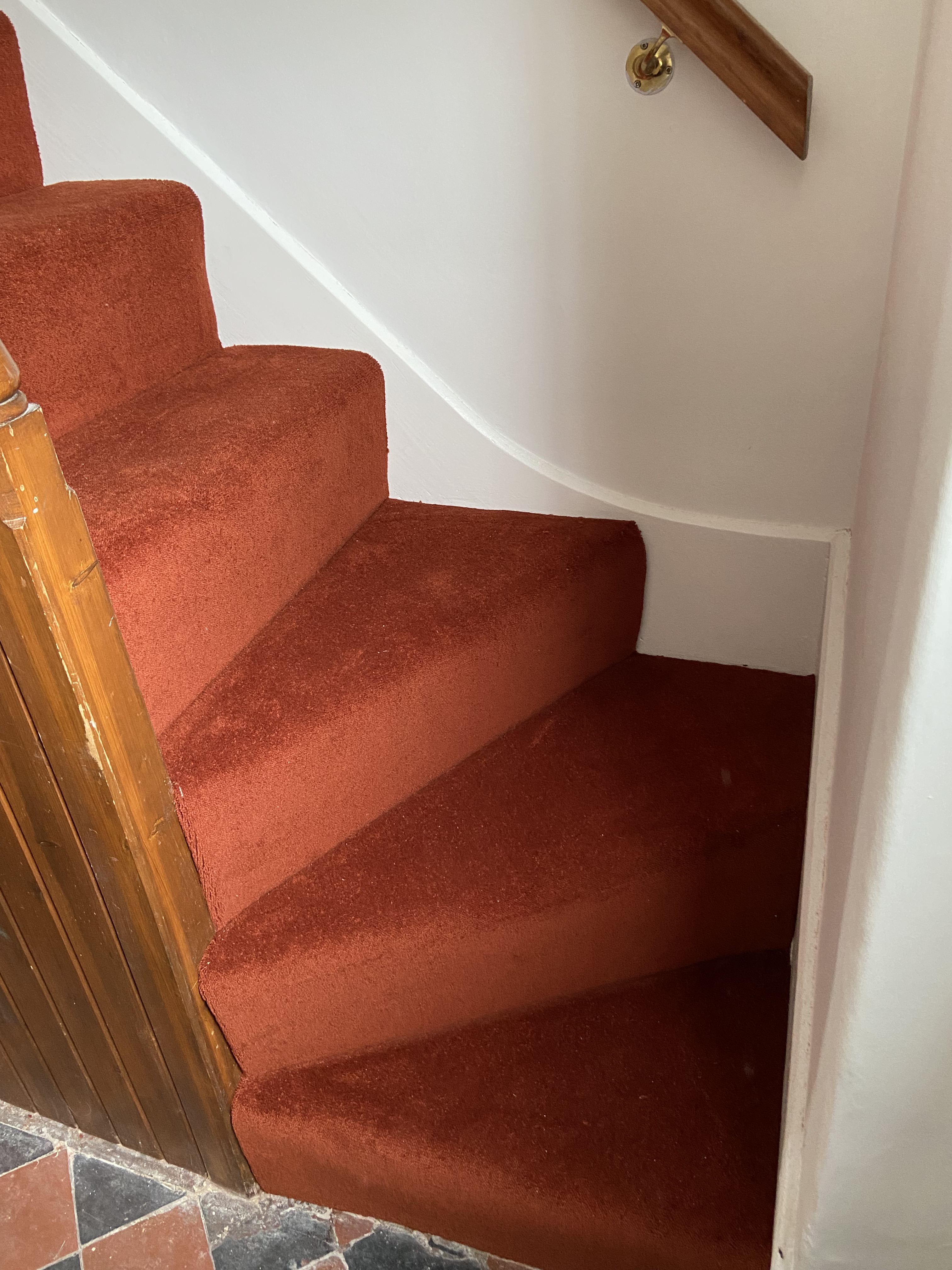
I’m very pleased with the carpets. The stairs and one of the bedrooms are now resplendently burnt orange. I may shortly be open for visitors again, assuming I actually move back there some time (working, linked up laptop still required).

But rather than spending time in the house, I spent most of my time doing a quick garden tidy. Of the three terraces, I’m only marginally in control of the top one. Ecologists recommending letting gardens run wild would be proud of me. My neighbours, perhaps not so much. Anyway, as well as strimming and mowing the lawn (which, by the way, was ominously white in patches, due to an excess of dandelion seeds) I planted some plants I had bought with Valerie a couple of weeks back.

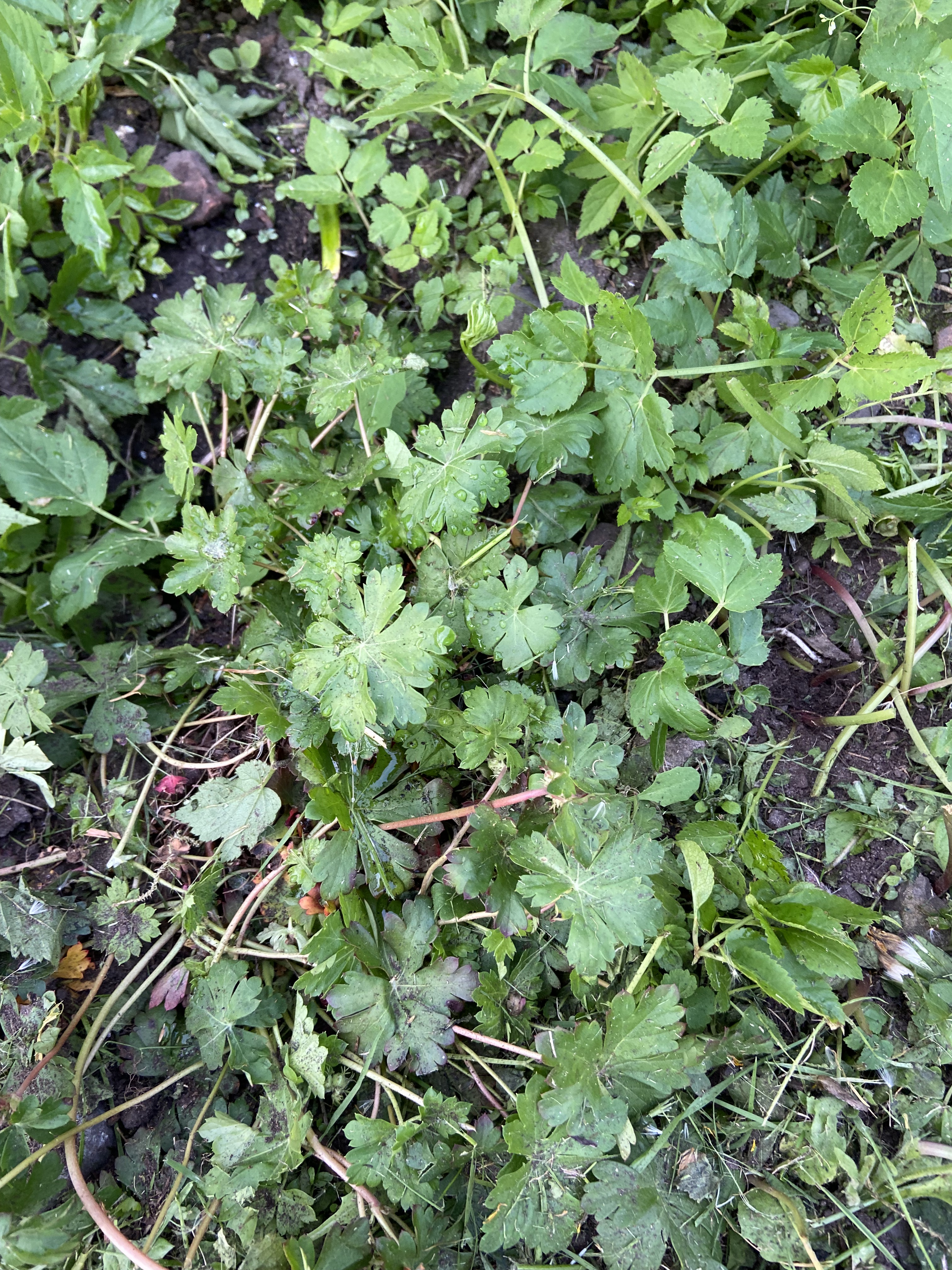
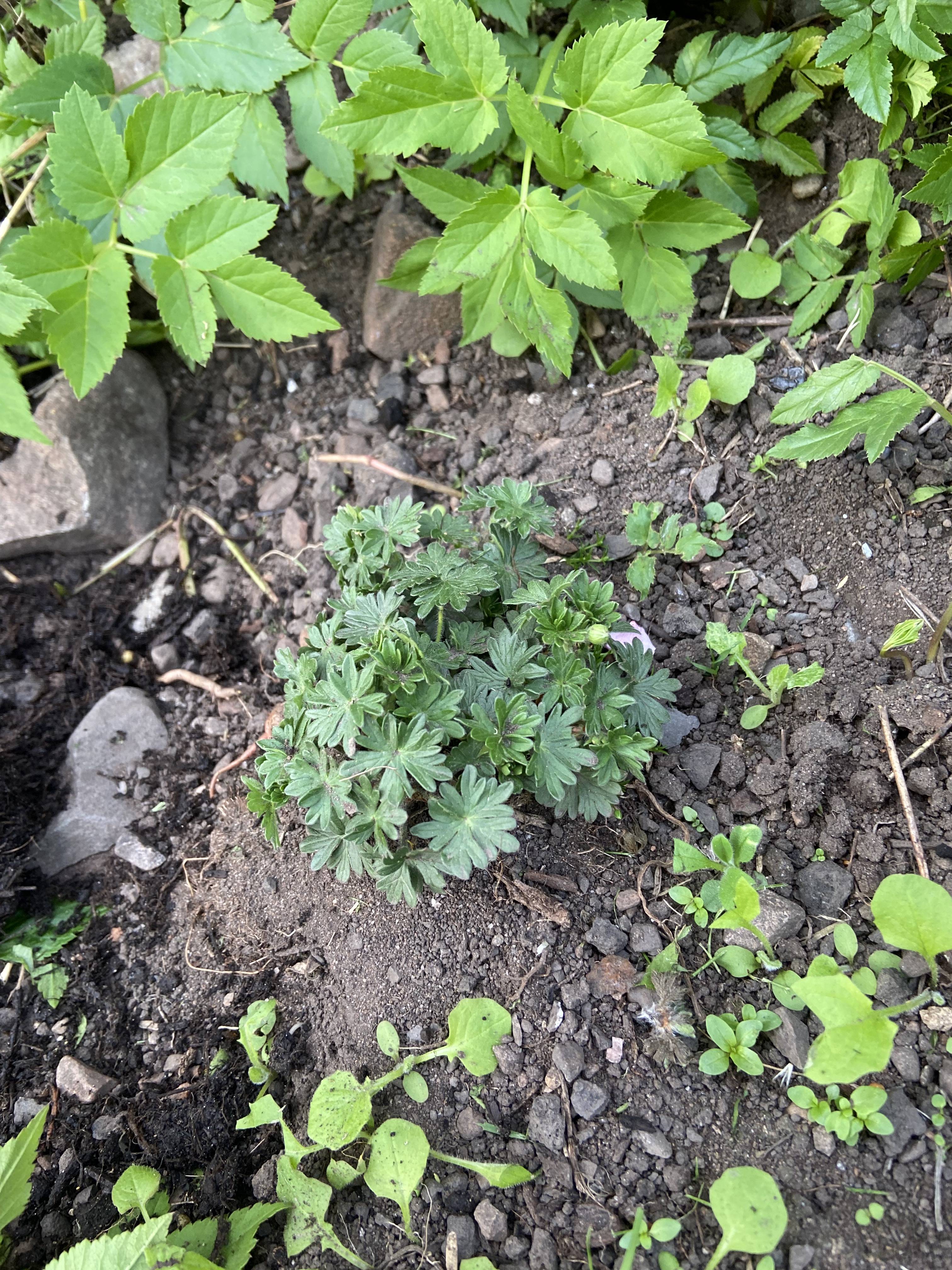
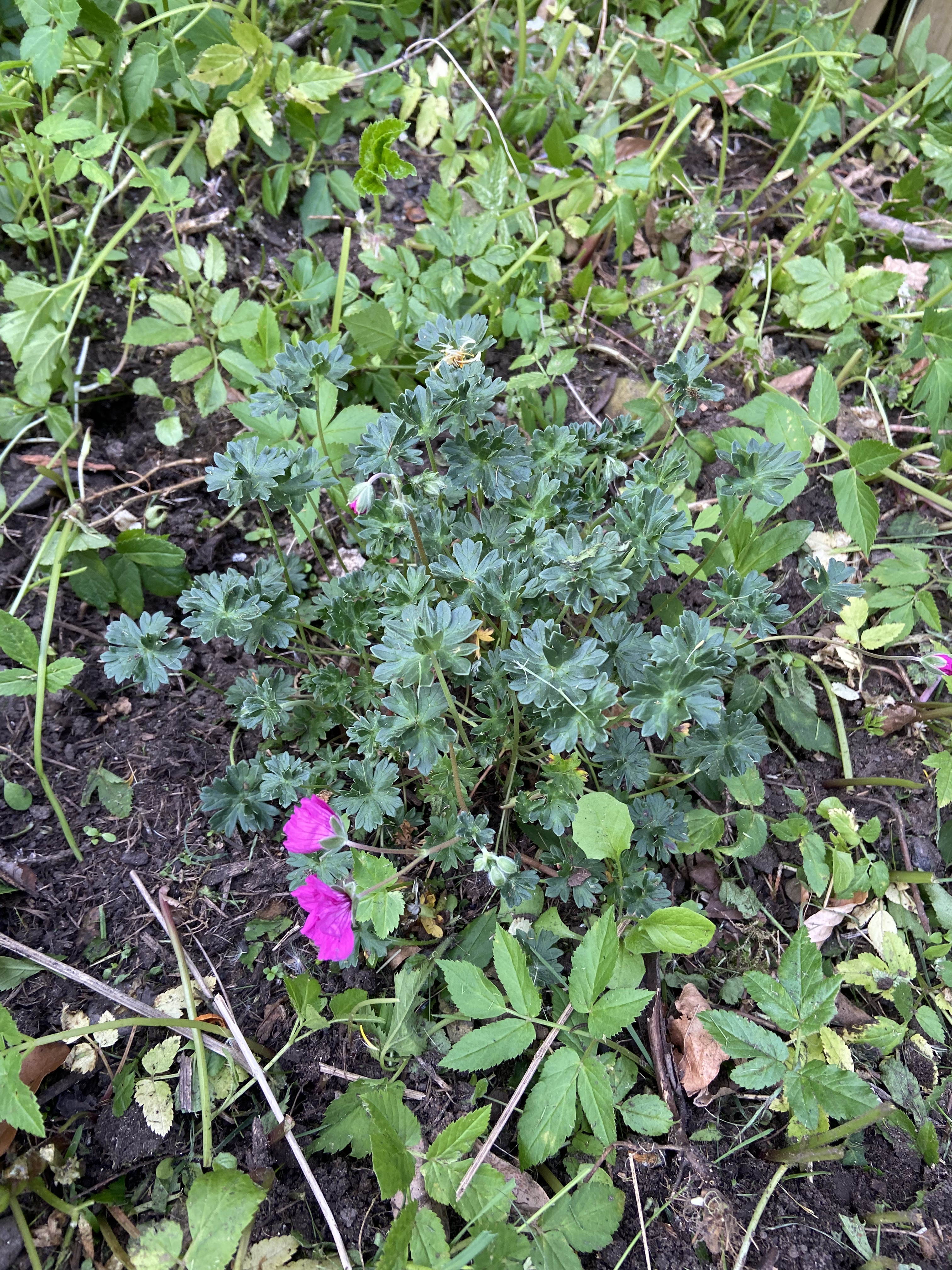
Regular readers will remember that, back in March, I dug quite a bit of ground elder out of a smallish flowerbed that had become over (and very much under) run. Post Different

Inevitably, given I hadn’t finished digging it all out (and anyway, removing it all is almost impossible) a lot of it had regrown. I had planted some geraniums, in an attempt to compete with the ground elder and, pleasingly, they seem to be surviving and one even has some small flowers on it.

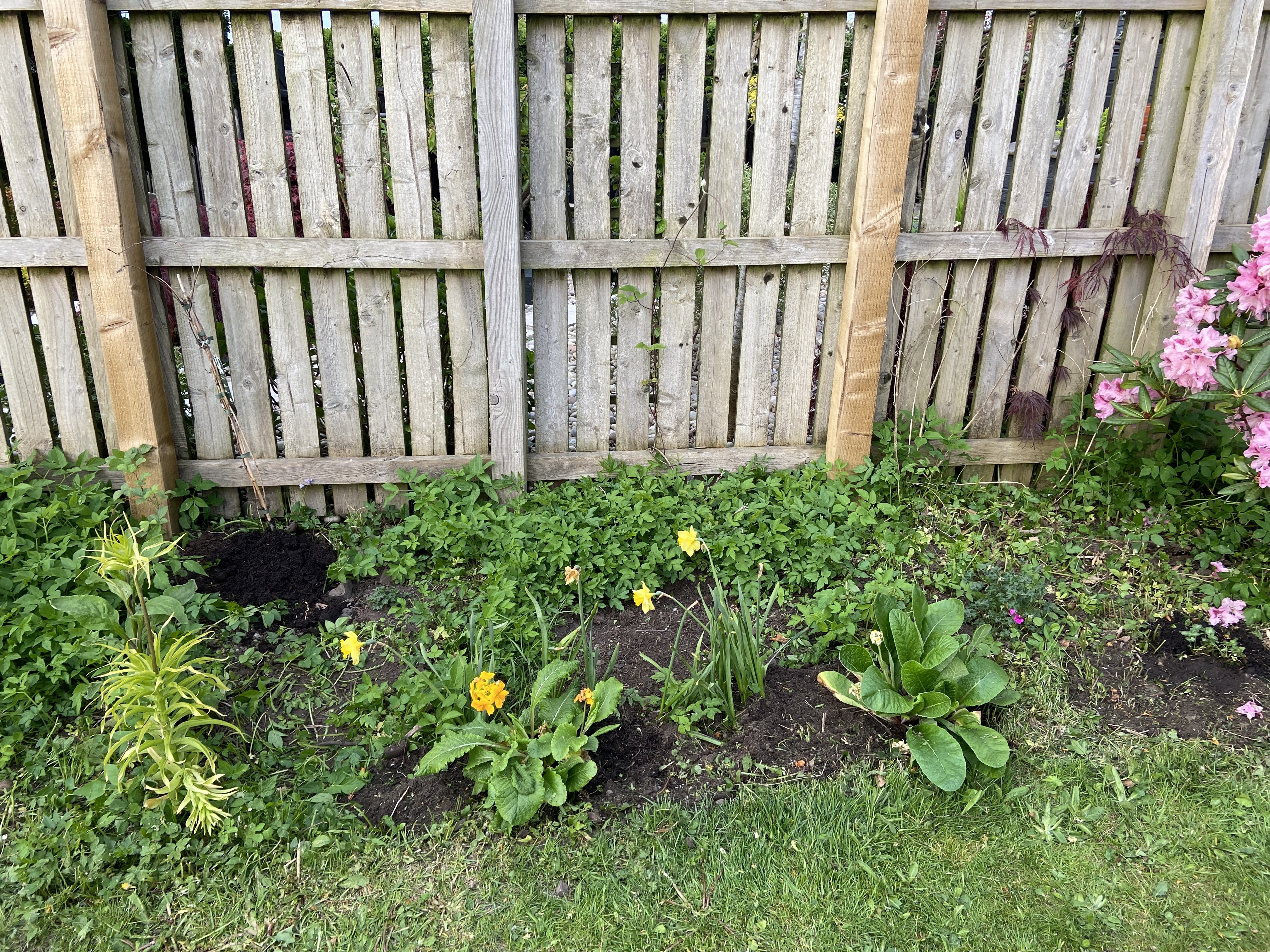
Anyway, I dug out some more and planted my new plants, watered them well, and now have abandoned them to their fate. Only time will tell!
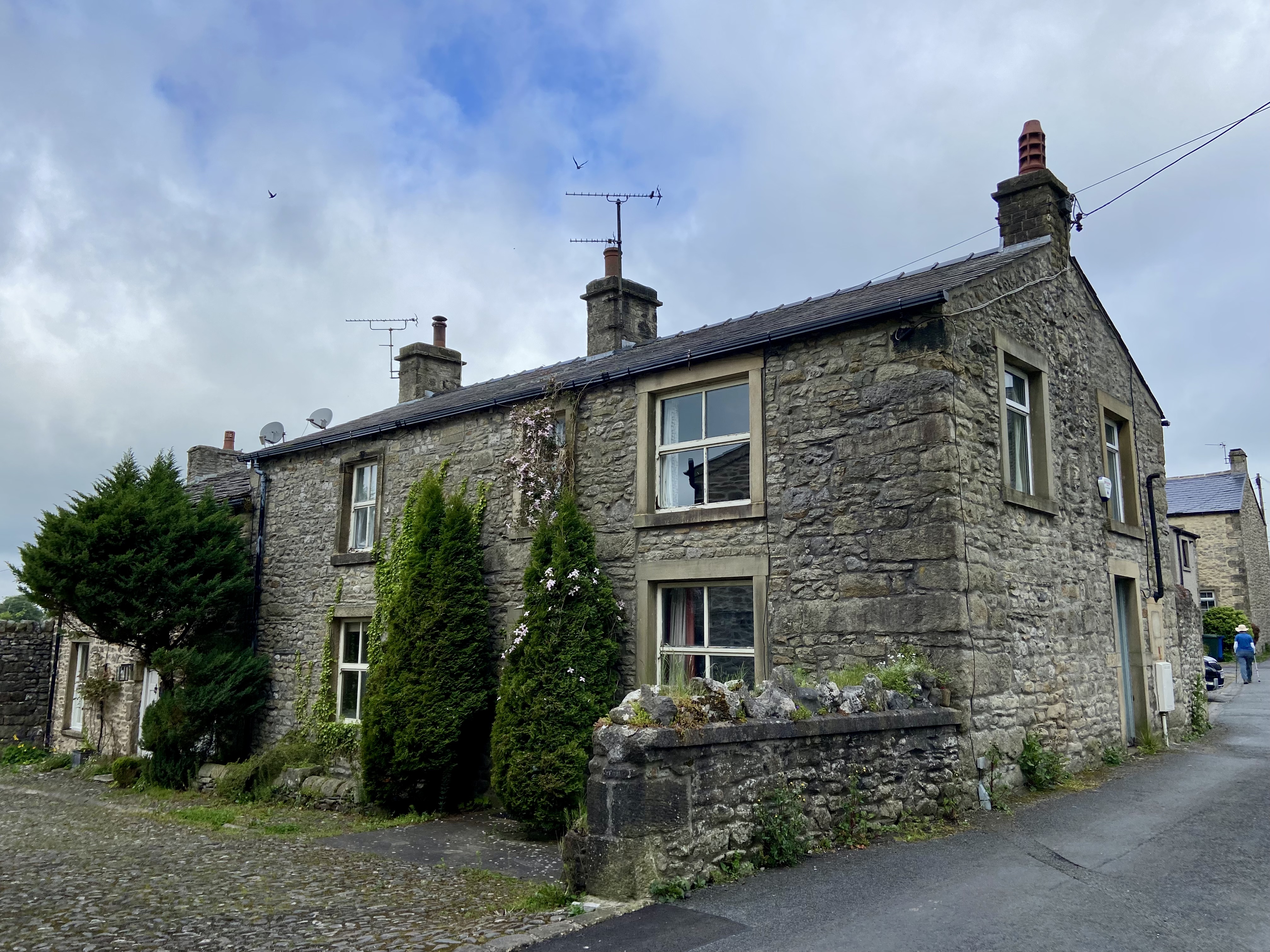
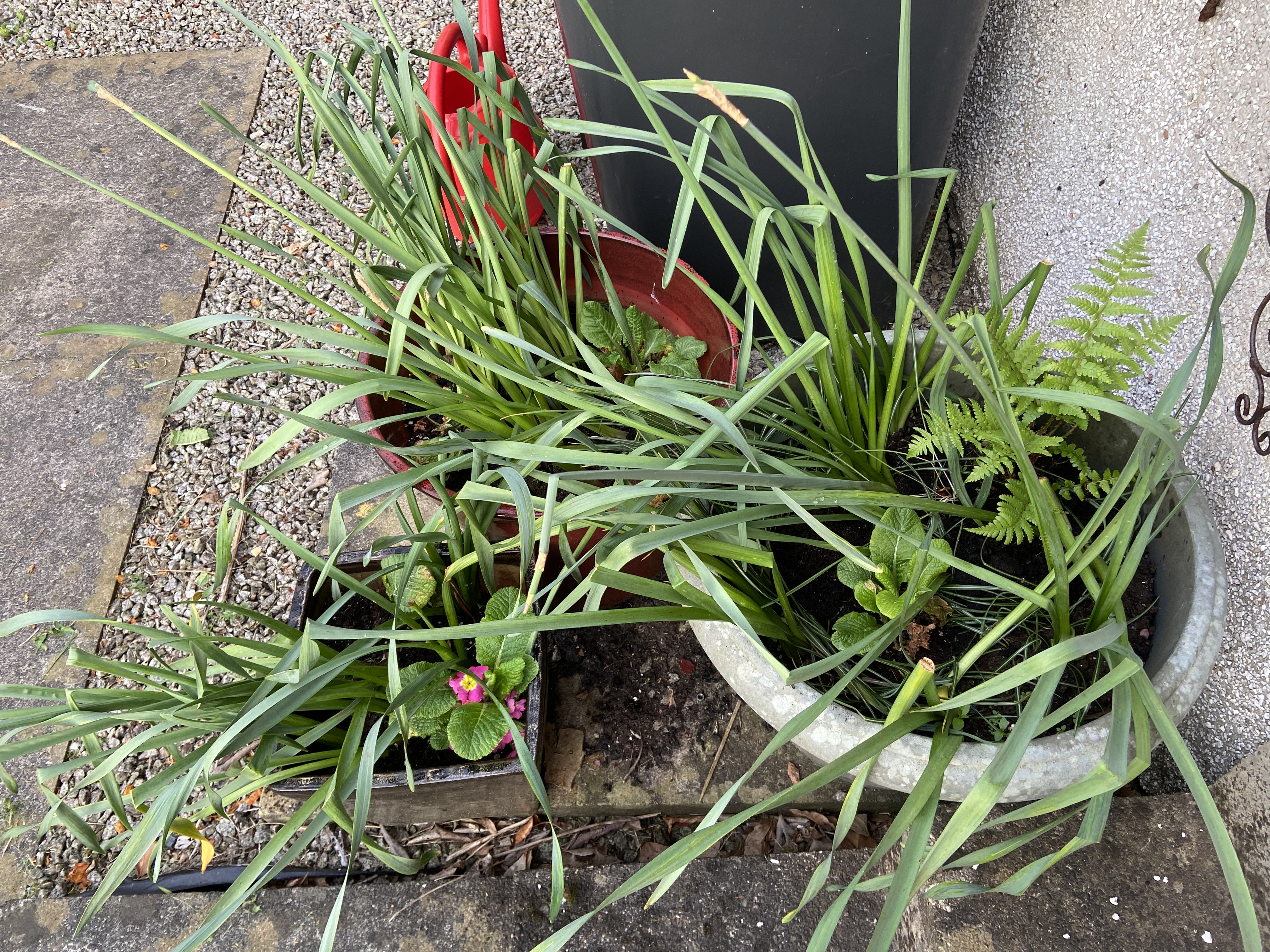
I also planted some small plants in the three pots by the back door. Currently these are still dominated by the daffodil leaves. There’s a woman at the other end of the street, who has two beautiful planters that she maintains year round, with plants of differing heights and colours, as well as gorgeous flowers. Maybe one day, I will learn too, but currently, mine look like this.

Learning to garden at 57 is fun. Better late than never!
Poultry vetting is also all new, albeit with a lot of background knowledge. I’ve only been out to one farm this week, but I thought, as I prepared for my visit, that most of my cases are going to be complex logic puzzles. When I was working with APHA, I often felt I was dealing with farmers who were probably having the worst day of their farming career and, though this week’s case probably wasn’t that bad, it was still severe.

There had been masses of deaths in a newly placed flock of broilers (rapidly maturing chickens, bred for meat). They started to die, in huge numbers, soon after being placed in the shed. There were three sheds on the farm. Two of the sheds were filled with perfectly healthy, fast growing chicks. The third was a disaster zone.

I read up on possible causes before going there. It seemed there were two likely scenarios. One was that the eggs were infected and the poor chicks had arrived loaded with bacteria they were never going to survive. The second was that, for some reason, the chicks had failed to find the water drinkers or had otherwise not managed to drink. My job then was to find out whether either of these fit. If not, it would be much more complicated, but that would be a whole new story.

The first thing I asked on arriving was who had been looking after the chicks over the weekend when they arrived. Ben (one of Inchcolm’s partners, alongside Eduardo) had told me it was not uncommon, after a weekend, for farmers to report a problem, only to discover that the weekend worker had failed to follow the normal routines and had missed a feed, or similar. With birds that grow so fast, it doesn’t take much to disrupt them.

That was quickly ruled out. The farmer had been caring for all three sheds himself. Nothing had gone wrong. Preparation for all three sheds had gone to plan. The sheds had been preheated to 30°C as they should. Water lines and drinkers had been checked. Feed had been provided appropriately so that it was easy for the chicks to find.

I double checked the water intake, which the farmer records daily. Though the chicks in shed 3 had drunk a little less than the other two, they hadn’t drunk significantly less. With the water theory ruled out, I had to check the evidence related to problems at the hatchery the chicks came from. If the chicks in sheds 1 and 2 were from the same batch, then it was more likely to be something that happened after they arrived.

But the evidence there was clear. Sheds 1 and 2 were from different parent flocks. The birds in shed 3 were from parents which were 26 weeks old. 1 and 2 were from rather older parents. Quite apart from the possibility of infection, chicks from younger parents are harder to look after as they are a little slower to regulate their body temperature (see how much there is to learn here!).

So before I even went into the sheds, or saw a single chick, I already had a lot of clues as to where the problem probably lay. And when I went into the sheds, they were lovely, clean and warm. The chicks were well spread out, which means they are not too hot and not too cold. The litter underfoot was dry: no sign of catastrophic water leaks or flooding. Everything was still pointing to infection.

I did a post-mortem on six birds and the signs were obvious. These tiny chicks showed all the signs of severe infection. Given they had started to die so soon after they arrived, it was almost certainly a problem in the hatchery. The farmer had done everything he could, but the whole thing had been horribly put in train before the chicks were delivered.

I wanted bacteriology done, but I wasn’t going back to Inchcolm for over 24 hours, so I popped into the SRUC lab in Dumfries when I got back. I had hoped they could do bacteriology on some samples I had taken. However, after speaking to one of the vets there, it seemed it would be much better for the farmer to take some birds into the APHA lab in Penrith. This was actually a better solution as, if the farmer wanted to claim compensation from the hatchery (which I hope he does) then an independent assessment would be massively helpful.

The vets at Penrith were super-helpful. I arranged for the farmer to drop off chicks on Thursday and they rang me with preliminary results on the same day, then sent a preliminary report yesterday. It confirmed my finding – that these poor chicks were overwhelmed with infection, likely E. coli.

This isn’t a happy story. I hadn’t just read up on the investigation. I’d also read up on treatment and the reality is, that for tiny chicks like these, where they were infected while still in the egg, there’s nothing you can really give that helps. Ben had given antimicrobials as soon as the problem raised its head and I left a vitamin B supplement to try to help, but really the improvements needed are in the hatchery.
Both Eduardo and Ben had told me this when I first arrived. If the UK broiler industry really wants to cut down on antimicrobial use, then the improvements need to start there. In my first few weeks, almost all the problems I have seen have involved birds that arrived on the farm already infected. Whether anything can be done about that is another story, but I am already thinking about possibilities. I have come from Norway, where almost no antibiotics are used in poultry production, so it isn’t impossible.

Ah well. Tilting at windmills is something to be done while I’m still new to all this. I don’t have many tools, but my mind is already working on it. I’m wondering whether APHA might have some levers. Nothing wrong with giving it a try. Meanwhile, my poor farmer is the one weathering the storm.

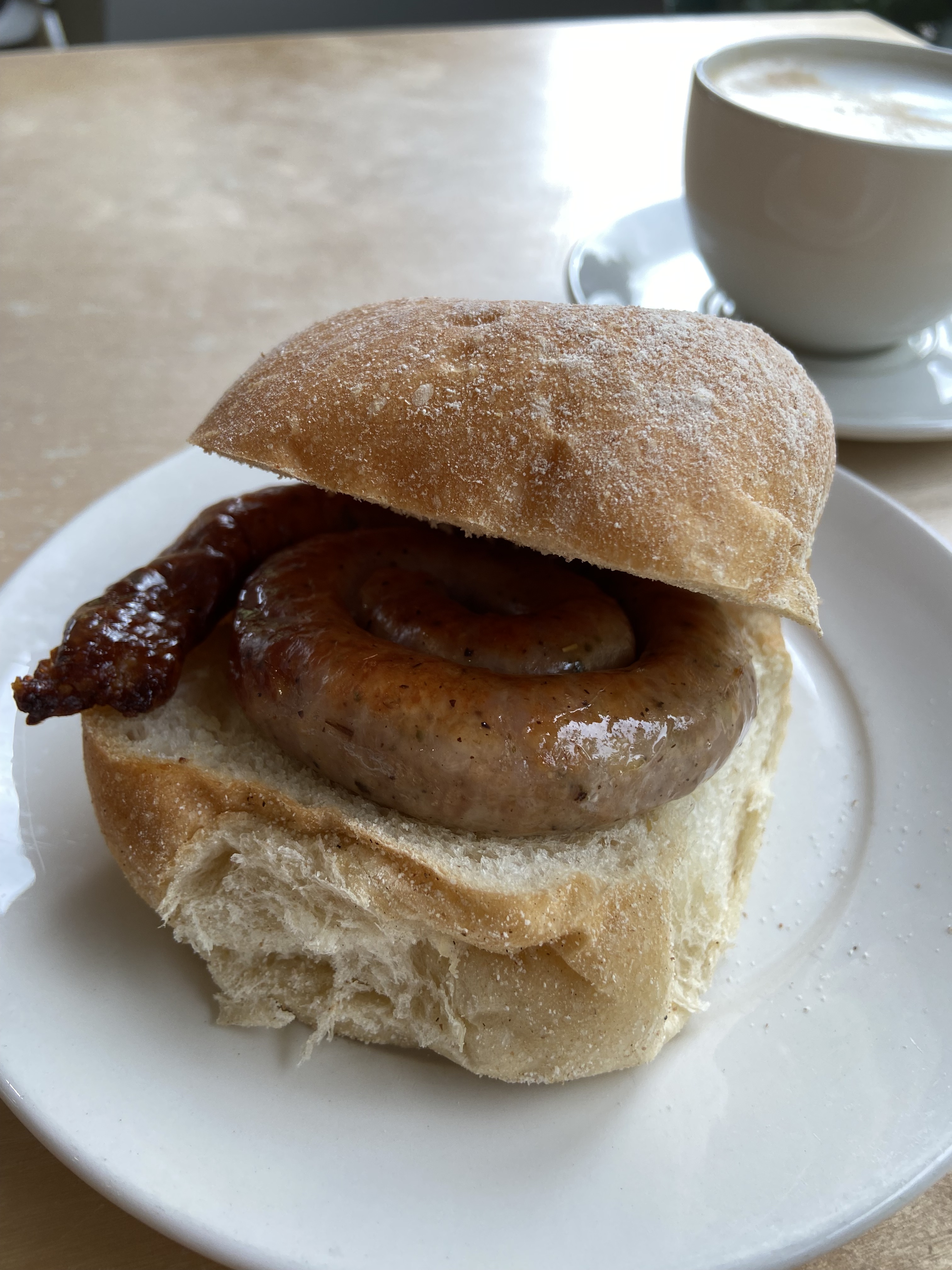
I will leave you with a picture of the delicious Cumberland sausage in a roll I had at Cairn Lodge Services on my travels. There’s something very satisfying about putting a spiral sausage in a roll. It’s much less likely to fall out than two traditional sausages.

Thanks for reading and I hope you have a good week.


Not Too Flat

I was bursting with excitement when I wrote my last post. So much so that this week’s might seem flat in comparison. It’s also lacking in food photos, though we did have KFC last night, which was delicious, but not very photogenic.

I was planning to go to Dumfries today. It feels rather odd to have deserted my little witchy house for so long. I’ve bought flowers in pots and a couple of shrubs for my recalcitrant ground elder flowerbed and the lawn must be getting overgrown, but I’ve chosen to stay at Valerie’s in Airth, partly because it’s more restful and partly because it’s a long drive, fuel is expensive and I’m whacking miles on my car like never before with a thirty minute daily commute. There’s a reason I bought a house four minutes from my previous office.

Last weekend, Mum and I finally got her old house into shape for selling. The garden still needed a tidy and some cleaners were going in, but all the boxes were cleared and it all looked neat and in good order. As we stood in the kitchen at the end, I apologised to her and said I hoped I hadn’t made her feel too hen-pecked. She told me that conversations among her generation frequently included comparative discussions on how much their offspring heckle them. Apparently I was relatively moderate! Who knew?

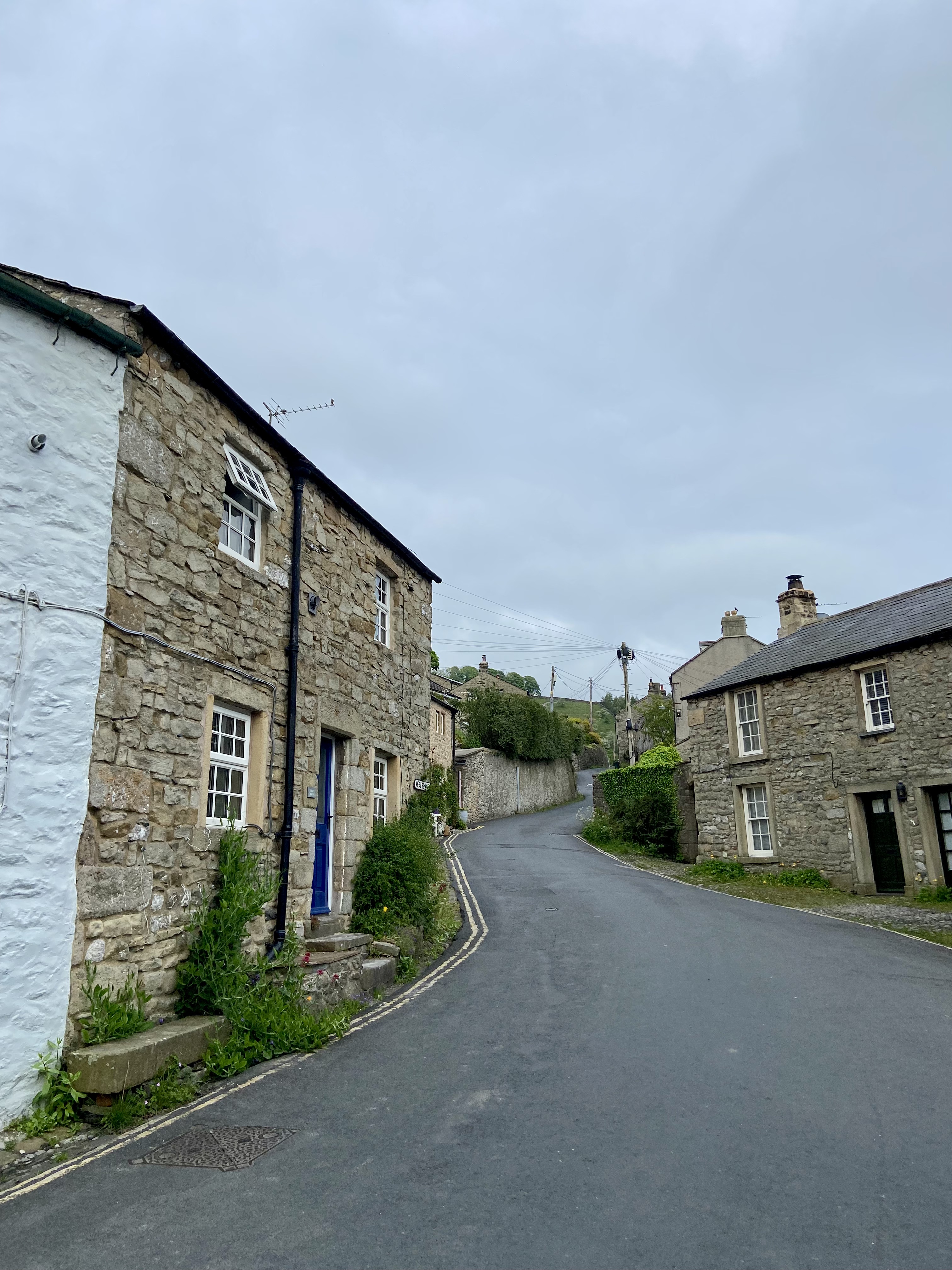
I did find the energy on Sunday morning to take Triar out from the centre of Settle and up through the steep lanes and picturesque cottages to the edge of the fells. The photo at the top of the page is from that walk. It was a beautiful morning.

Work has been all about paperwork this week, with no new flights of fancy. I have courses to do so I can be an “Official Veterinarian” – ironically some of it is the kind of work I was doing at APHA where I began doing that work before I had any qualifications. Yesterday morning, realising my Avian Influenza (AI) course had expired quite some time ago, I pinged off an email to the OV team, then received a phone call to say I couldn’t retake the course because I would have to sit the Essential Skills course.

I was confused by this news. I completed Essential Skills in November 24, a year into my two and a half year APHA career. Before that, I had what were called, “grandfather rights”, which meant that, in essence, APHA accepted I had enough experience to do the work without having completed the course. The qualification has to be repeated every four years and therefore runs out in November 28. I have already signed up for three export courses, in my new job, that I can’t use without it because I don’t have an OV stamp. I had the APHA equivalent, but handed it back on leaving.

I queried it. Of course I did, because it’s insane! I’ve actually been doing AI work at intense APHA, report case levels. I was told that a Vet Lead would have to be consulted. I asked if it would be one of the Scotland Vet Leads, thinking I could simply call one of them and ask them to confirm, but apparently it’s a special, OV Vet Lead, so I couldn’t. Maybe it’s some crazy idea, so a private practice can’t benefit from employing an ex APHA vet to do their OV work, but really? It’s not saving the public purse anything. I very much doubt APHA are about to be reimbursed for the unused two and a half years and for me, it will mean wading through around 8 hours worth of turgid information to sit an exam, which is often unrelated to said turgid information. At least it’s in English and not Norwegian, which is about the only good thing I can say about it.

I also spend some time editing the Broiler Vet Policy. Every one of our farms has to have a Vet Policy each year (to do with legislation – I must read that part again – good to know why I’m doing things). Having completed it, it transpires there is more than one broiler policy. That was the version for farmers in the Red Tractor scheme. There’s another for those without, and that’s before we get onto the pullets and layers and whatever other kinds of flocks we cover. It’s a useful exercise for me, and for the practice. I found at least one reference to 2013 RSPCA welfare standard revisions. The last revision was last year and I don’t know how many there have been in between, but it looks as if my editing and page-numbering skills, honed through writing Hope Meadows (and other unpublished work) will be almost as useful as my client and veterinary skills!

Monday is a bank holiday (hooray!) so next week is a four day week. I have to be in Dumfries on Thursday because someone is coming to fit carpets. I also have to pick up a painting I took for reframing, tidy the garden, move the remaining boxes upstairs and generally pick up the strands of my Dumfries life again, even if only temporarily. Life is rushing in unexpected directions at the moment.

I’m loving it here in Airth and Dunfermline. I currently can’t return properly to Dumfries for work as I still don’t have access to the practice database on my laptop. Nor am I completely sure which clients will be “mine” or how I will structure my visits. All clients need at least one visit per year, to coincide with the issuing of the Vet Policy, so once I have a list, I can start to work through that. Those visits will be done alongside any diagnostic visits, requested by farmers when there is a problem.

I did get some nice work news this week. The aggressive birds I visited last week have stopped pecking each other so much. Thanks go to Naomi for that one, with her excellent information on the destressing of high performance laying hens. I thought I knew quite a lot about bird welfare, but nowhere near what she knows. I love learning though, so by the time I take on a few more cases, I will have soaked up that information and will hand it out as if I’ve known it for years. Really, that is the core of successful veterinary work, at least in the farming sector.

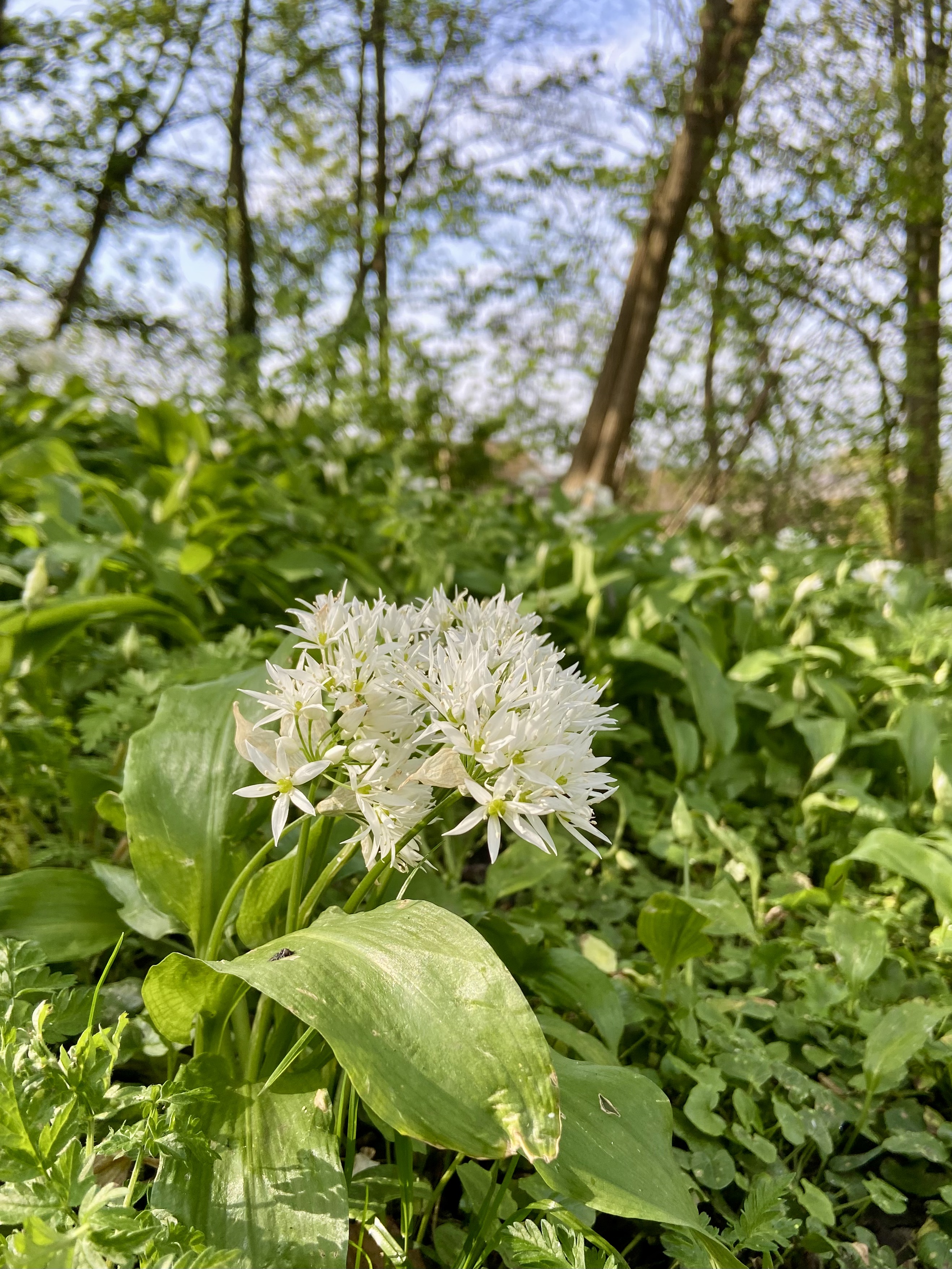
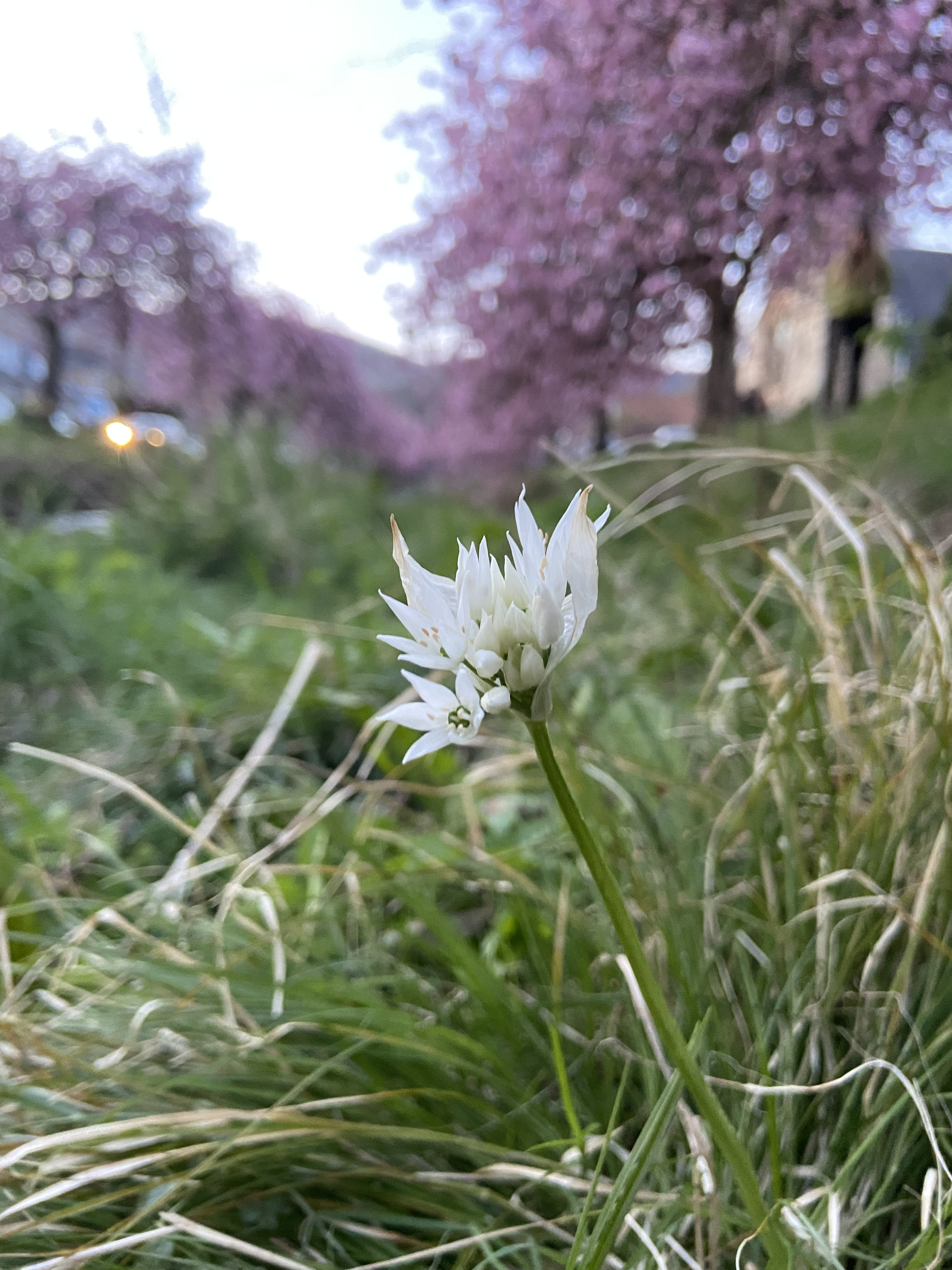
Anyway, I will leave you with a picture of wild garlic, growing near my parents’ house. It appears to have outcompeted the bluebells and it’s almost as lovely, though the aroma is quite different! Thanks for reading and I hope you have a lovely week.

Fabulous Food and Fat Friday

The remainder of my weekend in Armagh was very pleasing. Lara and I went to the Titanic Museum in Belfast. It would have been more enjoyable if six coach parties hadn’t been trying to look at the exhibits at the same time as us, but it was still interesting. They had all the witness statements from survivors on a huge wall. I only read a couple, but would be interested to read more. I expect I can find them somewhere online, if ever I have the time and inclination simultaneously!

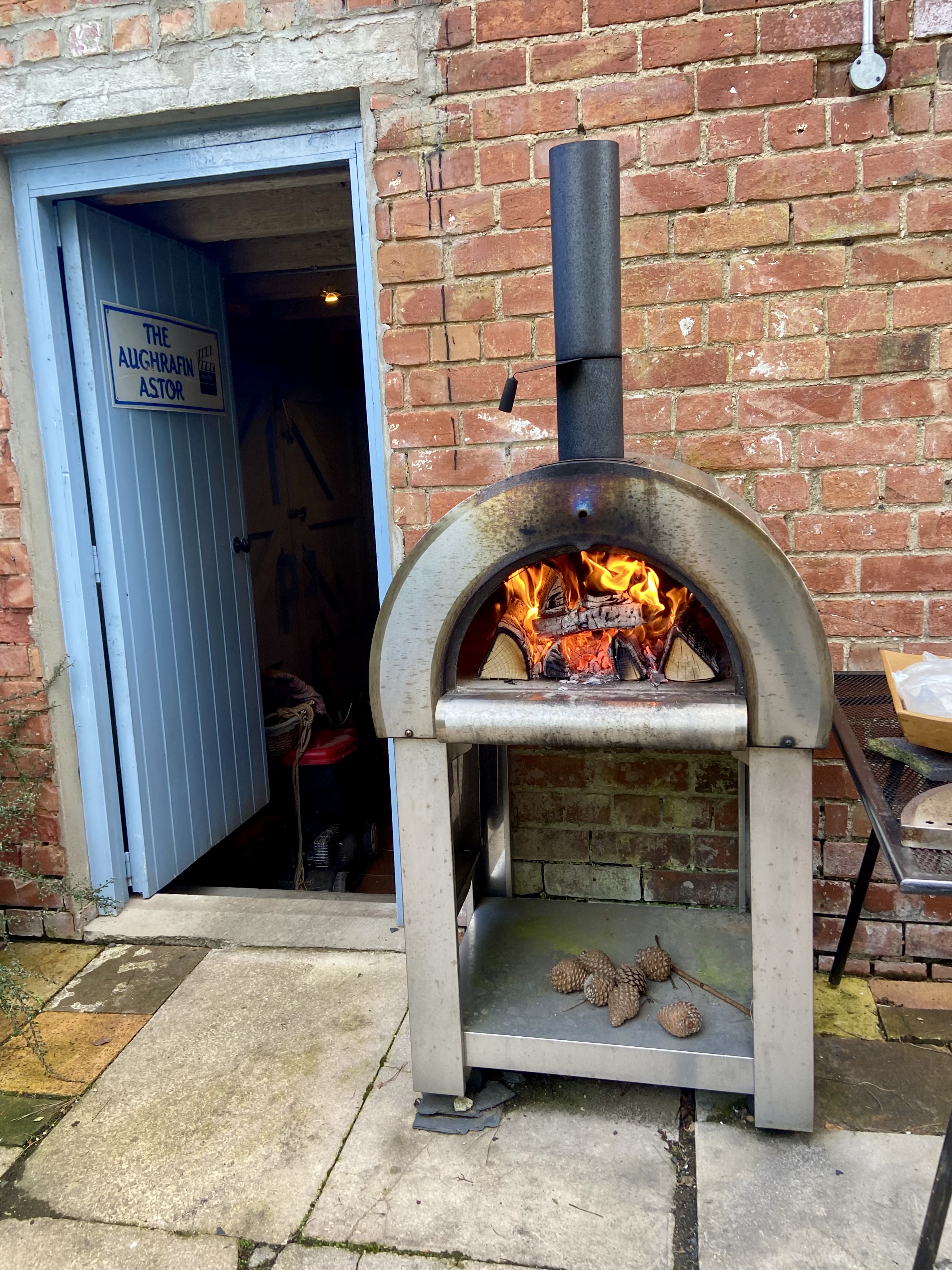
In the evening, Lara introduced me to her pizza oven. Rather like the rambling, Victorian house, the garden and something I want to call the Mews (a lane round to some ramshackle garages – though those belonging to Lara and Mark have been rebooted, as it were) feel like a pleasant wander through a slightly overgrown past. The neighbours garden is filled with forget-me-nots. The yard where the pizza oven resides is overlooked by vines growing up the ancient wall and an apple tree (I think) festooned with multicoloured Christmas lights.

The blue door in the photo, as you might expect, leads to a room with a drum kit and a jukebox. Up a vertical ladder, in the roof space, is a miniature cinema. What a delightful house to grow up in!

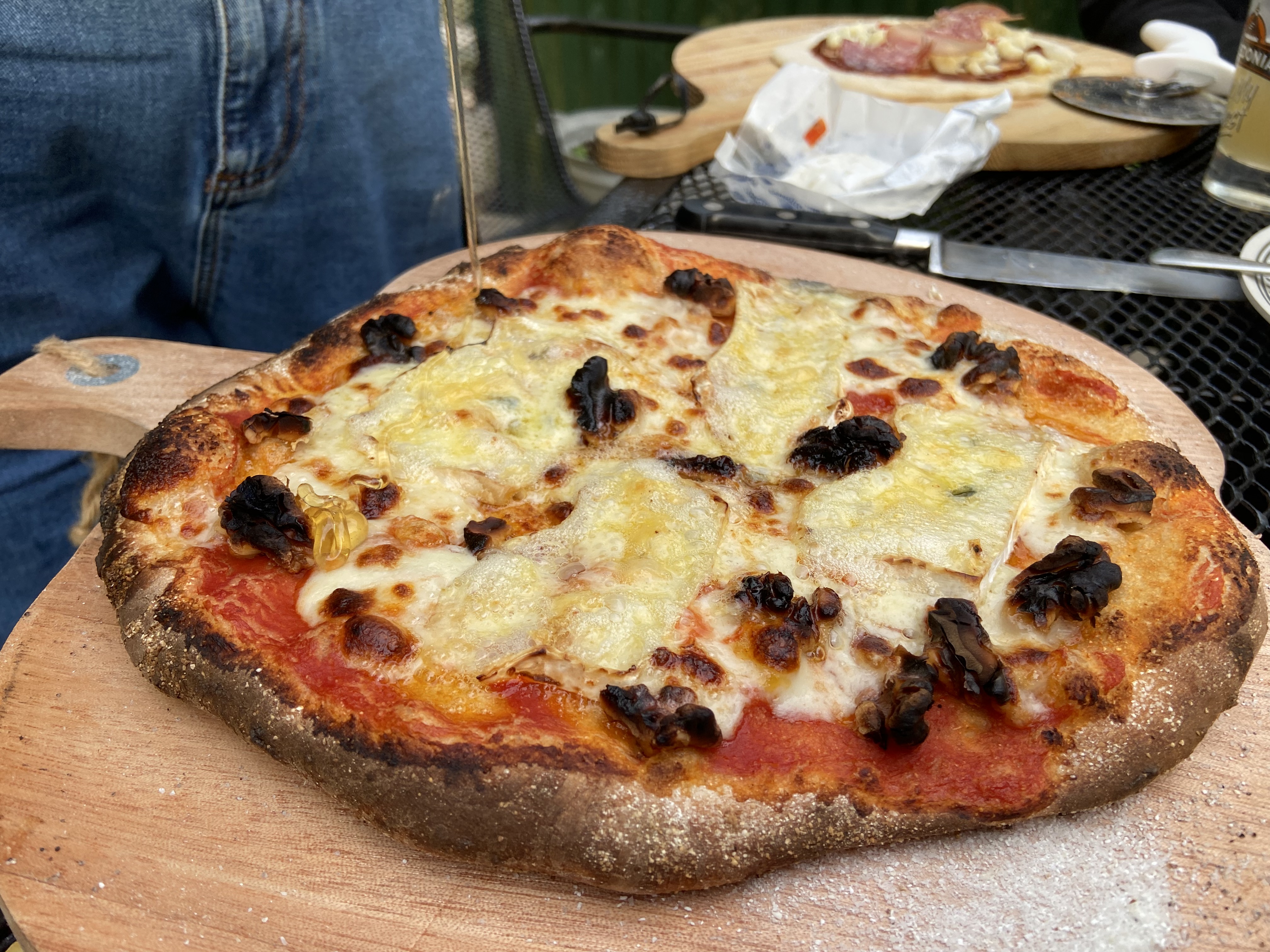
The pizzas were predictably wonderful. Lara and I had bought toppings on our way back from Belfast. I’d suggested blue cheese with walnuts and honey, so with a creamy chunk of Cambazola and a handful of nuts, this one tasted wonderful.

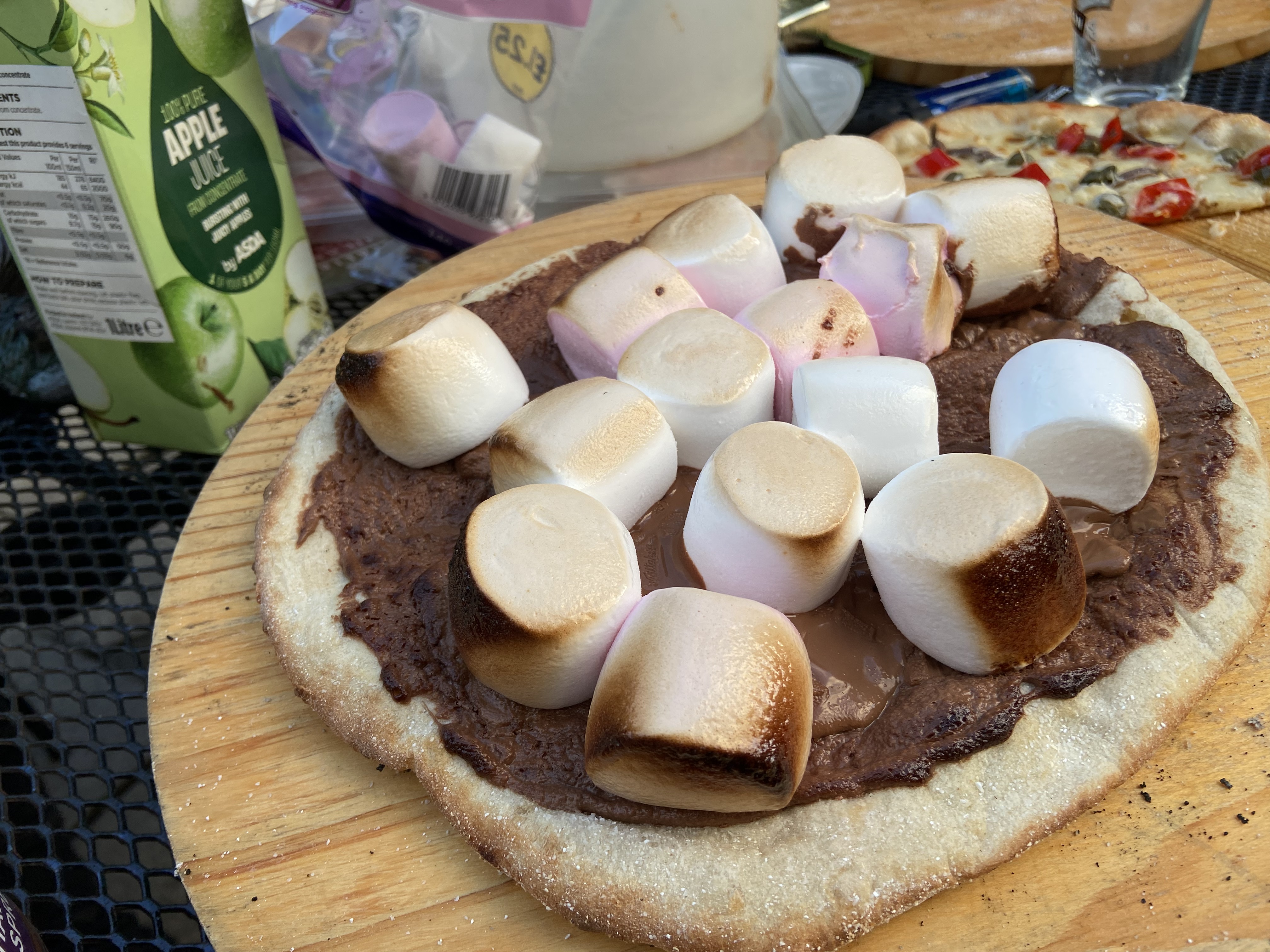
More contentious, though equally delicious was the chocolate pizza Lara put together for dessert. She tells me she had to perfect the technique, which involves partially cooking the base first, then adding Nutella and chocolate, cooking some more, then adding the marshmallows for a final toasting. The result was a wonderful, melting concoction, not too sweet: utterly delicious.

I returned to Airth on Sunday night with a promise that I would return. Lara is arranging a McGonagall night as a kind of Scots Poetry balance to Burns night. I agreed to do a reading, though I will probably want to go with one of the more traditional Silvery Tay poems.

Sunday night was also punctuated by an unexpected call from my new boss, Eduardo. I told him about blogging yesterday afternoon and his response was, “Make me famous!” He’s kind of the opposite if a shrinking violet, so that wasn’t too much of a surprise. He cautioned me about client confidentiality and I assured him that I understood and respect that concept completely. Anyway, back to Sunday night.

He texted me just as I was leaving the airport, asking for a chat about Cumbria. I wanted to drive back with a clear mind, so I drove all the way to the edge of Airth, then pulled into the road to Airth Castle and called him. With hindsight, I think he was hoping I would volunteer to do it myself on Monday, but I missed that nuance and we discussed possibly going together on a different day. Anyway, a few seconds after ringing off, I got a text asking me to go solo. Slightly daunting I thought, but never having been one to shy away from a challenge, I agreed to meet him in the morning at the practice to collect kit and discuss approach, then I would do the call in the afternoon.

So much for all the promised training and expected introductions. First flights are always an adventure. I looked at the chickens, then carried out some post-mortems. It involved a lot of glove changes as I was taking photographs throughout. The liver and kidneys looked very odd, but I didn’t know what that indicated. I have a lot of useful and relevant experience, but once I was finished, I had to send the pictures to my other new boss. He asked me, “Do you understand what you are seeing?” Honesty is always the best policy, so I simply said, “No.”

Apparently my distinctive photos were enough for distance diagnosis. The birds had adenovirus. Back at the office, a treatment regime was assembled and sent out, while I washed my hands on the farm and discussed the fact that I would find out about cleaning regimes (and adenovirus) and would get back to them with the information the next day.

I learned a few things that day, other than about adenovirus. The most obvious one was that medicines are sent out from the clinic at around three thirty in the afternoon, so if I want farmers to get their treatment the same day, I either need to correctly predict what I need and take it with me, or I need to complete my visit before the three thirty deadline.

I must confess that, on the way back up the road, I sighed rather as I passed Gretna and realised that, instead of the thirty minute drive home, there were still two hours of motorway driving ahead of me. I sent Valerie my ETA and drove on.

Speaking to a friend on Tuesday evening, we discussed the fact that, in so many jobs, thorough training is offered along with mentoring and introductions. What actually happens is that something crops up and you are asked to go out because it’s busy and afterwards, there is no reversion to the plan. Once you’re out there, that’s it. This prediction proved correct as when I went in on Wednesday, I was asked to go out to two more cases. I can’t say I have any regrets. At 23 years old, the first time I stepped solo into veterinary work, I didn’t know if I would cope. At 57, it’s difficult to hold me back. I love fieldwork and I learn by doing. I’ll not forget what adenovirus looks like, which is just as well as I saw it again on Wednesday. There’s still a long way to go, but I love the journey. A steep learning curve (and the expansion of the mind that accompanies it) fills me with joy.

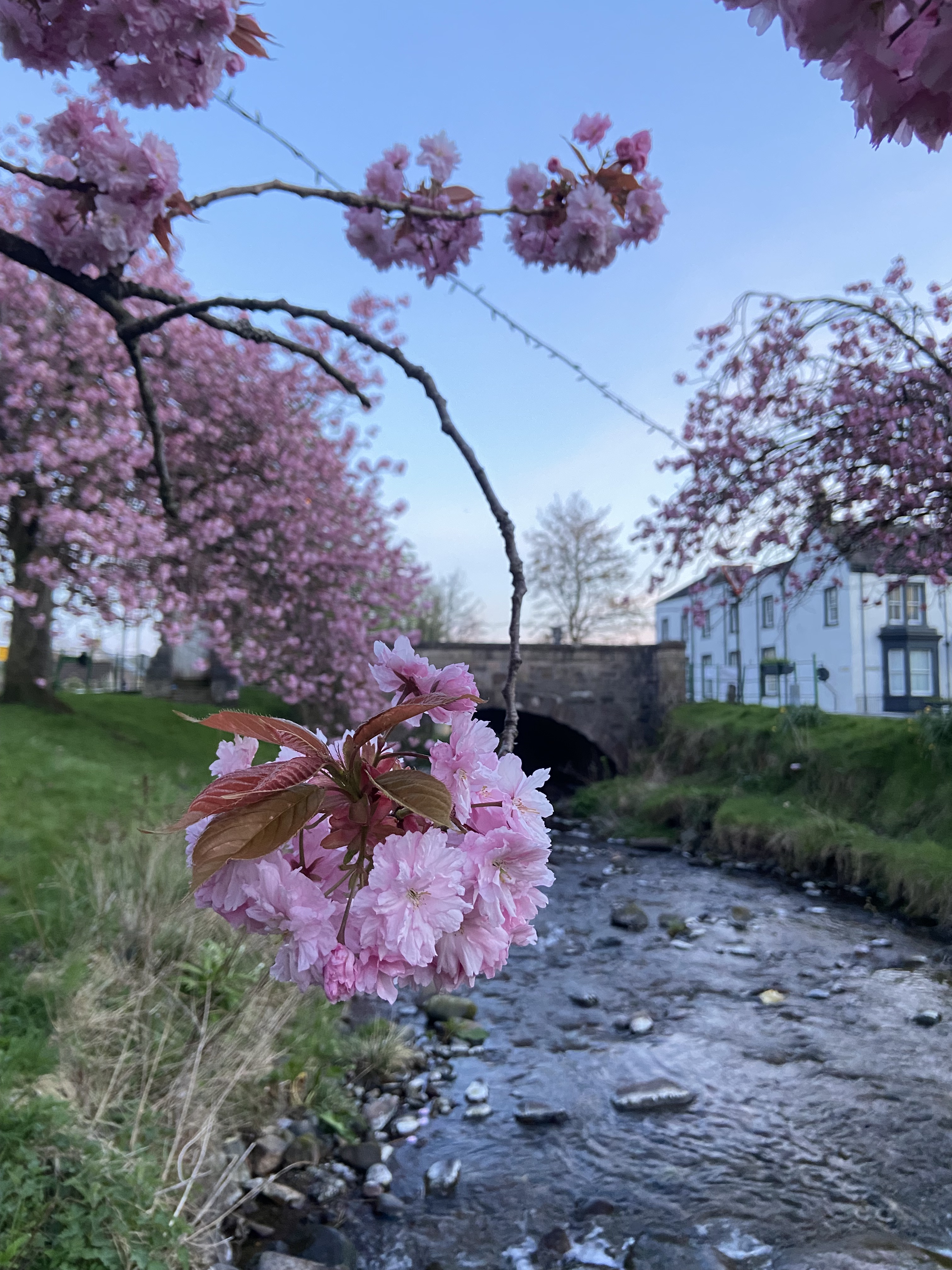
On Thursday evening, after a twelve hour day on Wednesday, I was exhausted, but Valerie persuaded me out for a fish and chip supper beside the cherry blossom trees in Dollar. What a magical evening, sitting on a picnic rug, shaded by trees, listening to the calming flow of the water.

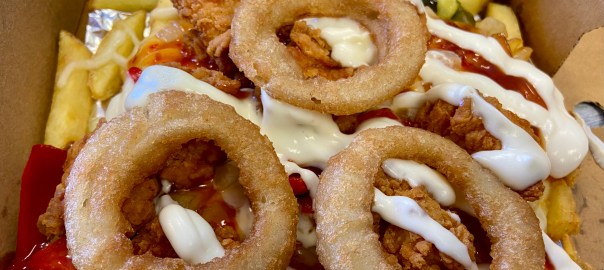
Back in the office on Friday, I also told Naomi and Eleanor that I write a blog. They agreed it was fine with them. They’ve made me feel wonderfully welcome, so I’m glad it’s okay. There are a couple more people to ask, but hopefully I can do that next week. Naomi, as well as being a whizz on the topic of stressed hens does Fat Friday in the office. The photo at the top of the page was yesterday’s loaded fries. They were indeed, extremely loaded, as you see! I showed Val the picture and she says I have to order some and bring them back to eat one evening. That will definitely not be any hardship (assuming they do food in the evenings).

Anyway, after all that food, I’m looking forward to a weekend in Settle. Who knows what that will hold. In the meantime, thanks for reading and I hope you have a good week.

Poultry Vet

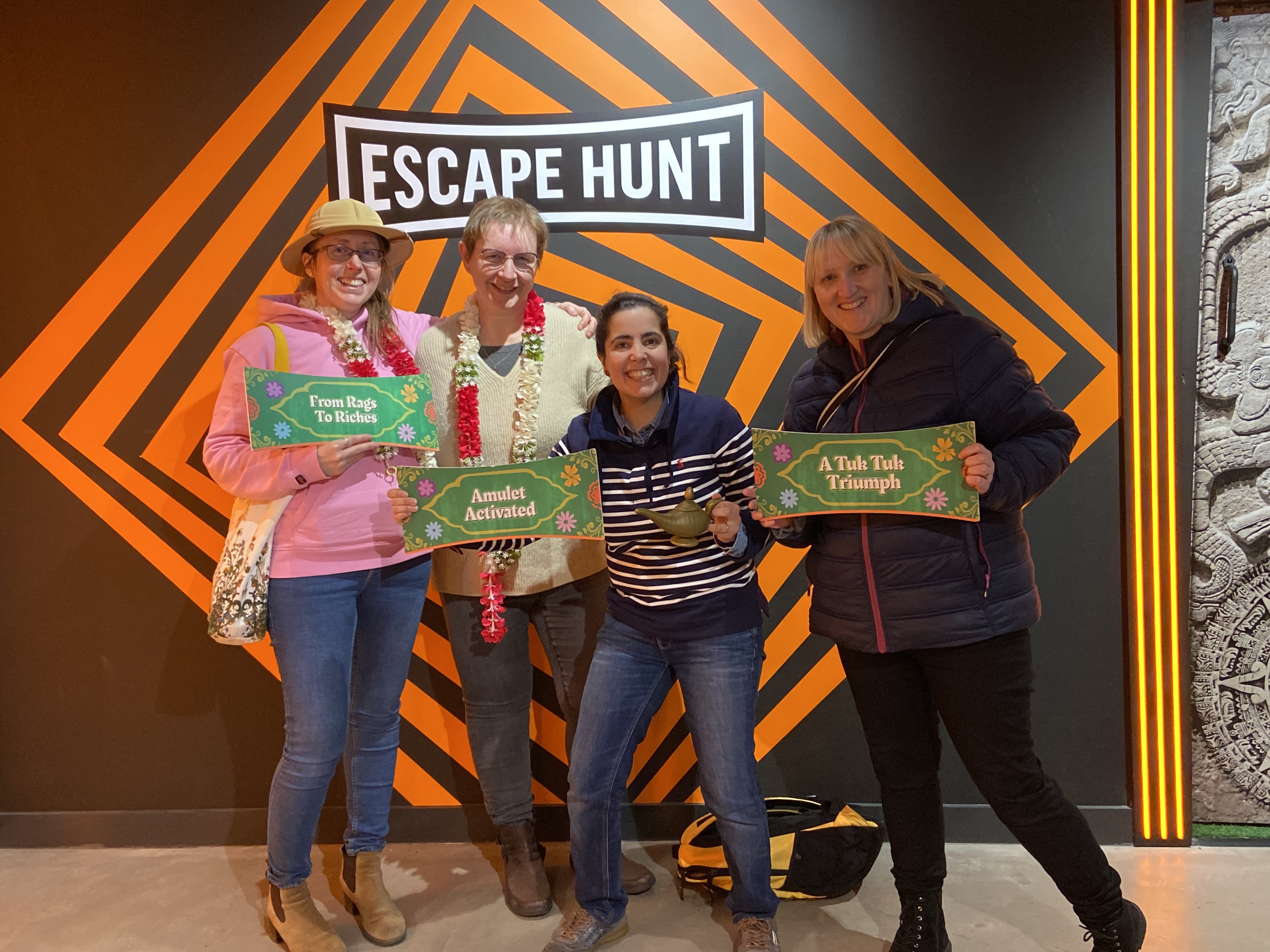
It’s important to start at the beginning, or maybe the end, so the first triumph of the week, and the last from my old job, was that our team of intrepid APHA vets did manage to escape from the India room at Escape Hunt in Glasgow. We did so with less than four minutes to spare, but this was a deadline we didn’t want to miss. I am going to miss my colleagues enormously, but Josephine agreed that I can continue to be invited to the quarterly Escape Escapades, so that is something to look forward to.

Storm Dave hit while I was traveling home. Donna had kindly taken Triar in for the afternoon and I arrived in their living room so soaked that I couldn’t even stay for a cuppa, which was probably a first for me. I was very happy that she and Will had taken Triar in though. The bus to Glasgow was very late in both directions and it would have been a long day for him on his own.

I went to the dawn communion service at church on Sunday, which was beautiful. When I was younger, Christmas was always a deeply happy occasion, but Easter has a quiet solemnity and depths of pain and joy which suit the older me. I am incredibly grateful to Fran, the minister, for the hard work she puts in to all these occasions, when most of us get to rest. That said, slightly to my shock after years in Norway, most of the shops seemed to be open, even on Easter Sunday. The UK has become a deeply secular country, where Christian rest days and marking the seasons are becoming things of the past and instant gratification is the order of the day. I don’t feel this is a change for the better. In Norway, almost everything bar the emergency services, is shut over Easter and everyone seems to manage.

Triar and I then travelled down to Yorkshire. I suppose, given what I just said about it not being necessary for everything to be open, it’s a bit hypocritical that I stopped off and enjoyed a coffee at Killington Lake services. That said, had it not been open, I would have taken a flask. It was a beautiful day for travel.

I spent the first part of the week with Mum and Dad. We’re making good progress on getting the old house ready for going on the market. As well as box clearing, I did some painting as well, mostly on the ceiling of the room with Dad’s model railway in it, which was stained where there had been a leak in the roof, which is now fixed. So now I know about special paint for covering stains. It’s never too late to learn about DIY. I need to learn about hanging heavy mirrors next, but that’s for another day.

On Thursday, I started my new job. I’m now in the slightly complicated situation where I can’t write too much as I haven’t run the fact that I write a blog past any of them yet. The daughter of the senior partner has told him I’ve written some books. Apparently she’s reading them, which is lovely. I’m still incredibly proud of the work Vicky and I put into writing them.

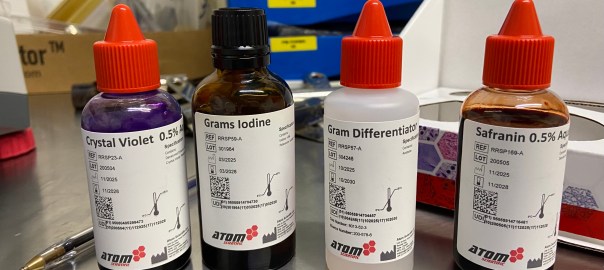
But everything so far about my new job seems almost uncannily positive. Both partners have outlined their hopes for what I will become and it seems to draw perfectly on all the varied experiences I’ve had through my career. It’s like they looked at my CV and everything I have done is relevant and of use. I feel almost as if I am falling into a place that was almost carved out for me, but they also want me to make the carving out all my own as well. There’s another new vet who has recently started. She is learning all about the lab work and has already begun to teach me. The stains at the top of the page are for identifying bacteria. I haven’t used them since I was at vet school, more than 30 years ago. The other staff have also given me a warm welcome. They all have their own place in the practice and a lot to teach me about poultry and how everything works. I am looking forward to getting to know them better.

But this blog entry will end as it began, with my old APHA colleagues. For all the seeming promise of my new job, I am really going to miss them. Love to all of you.

And to all my readers, regular and new, thanks for reading. I hope you have a lovely weekend.