Tag Archives: Chickens

Project Ground Elder and Logic Puzzles

It’s been a month now since I started working at Inchcolm Vets as a poultry vet. I’ve learned an enormous amount already, but as I’m still based in Dunfermline, it’s also been a month since I’ve been living at home. This week however, on Thursday, my much delayed carpets were laid and so I spent Wednesday and Thursday nights in Dumfries.

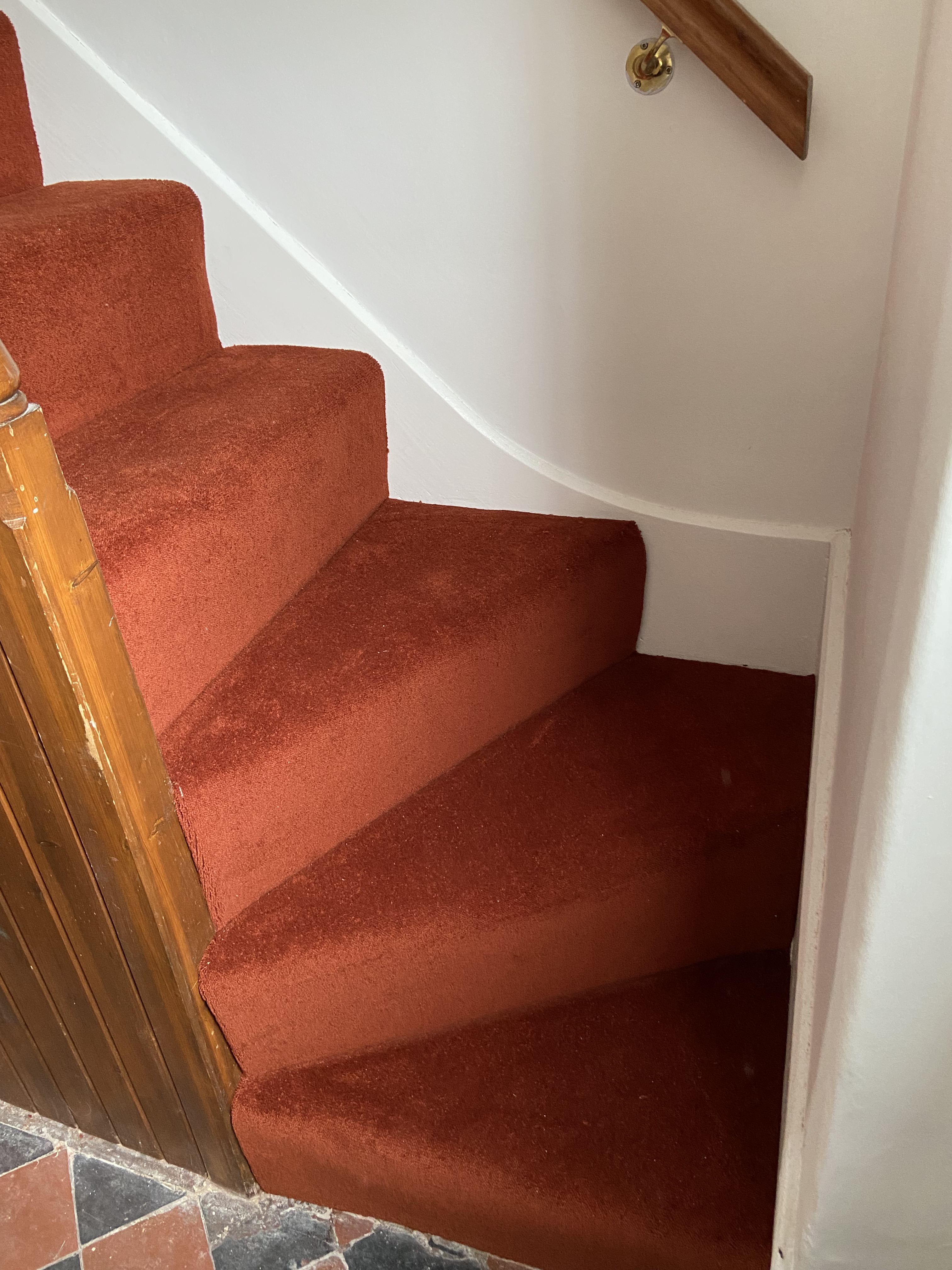
I’m very pleased with the carpets. The stairs and one of the bedrooms are now resplendently burnt orange. I may shortly be open for visitors again, assuming I actually move back there some time (working, linked up laptop still required).

But rather than spending time in the house, I spent most of my time doing a quick garden tidy. Of the three terraces, I’m only marginally in control of the top one. Ecologists recommending letting gardens run wild would be proud of me. My neighbours, perhaps not so much. Anyway, as well as strimming and mowing the lawn (which, by the way, was ominously white in patches, due to an excess of dandelion seeds) I planted some plants I had bought with Valerie a couple of weeks back.

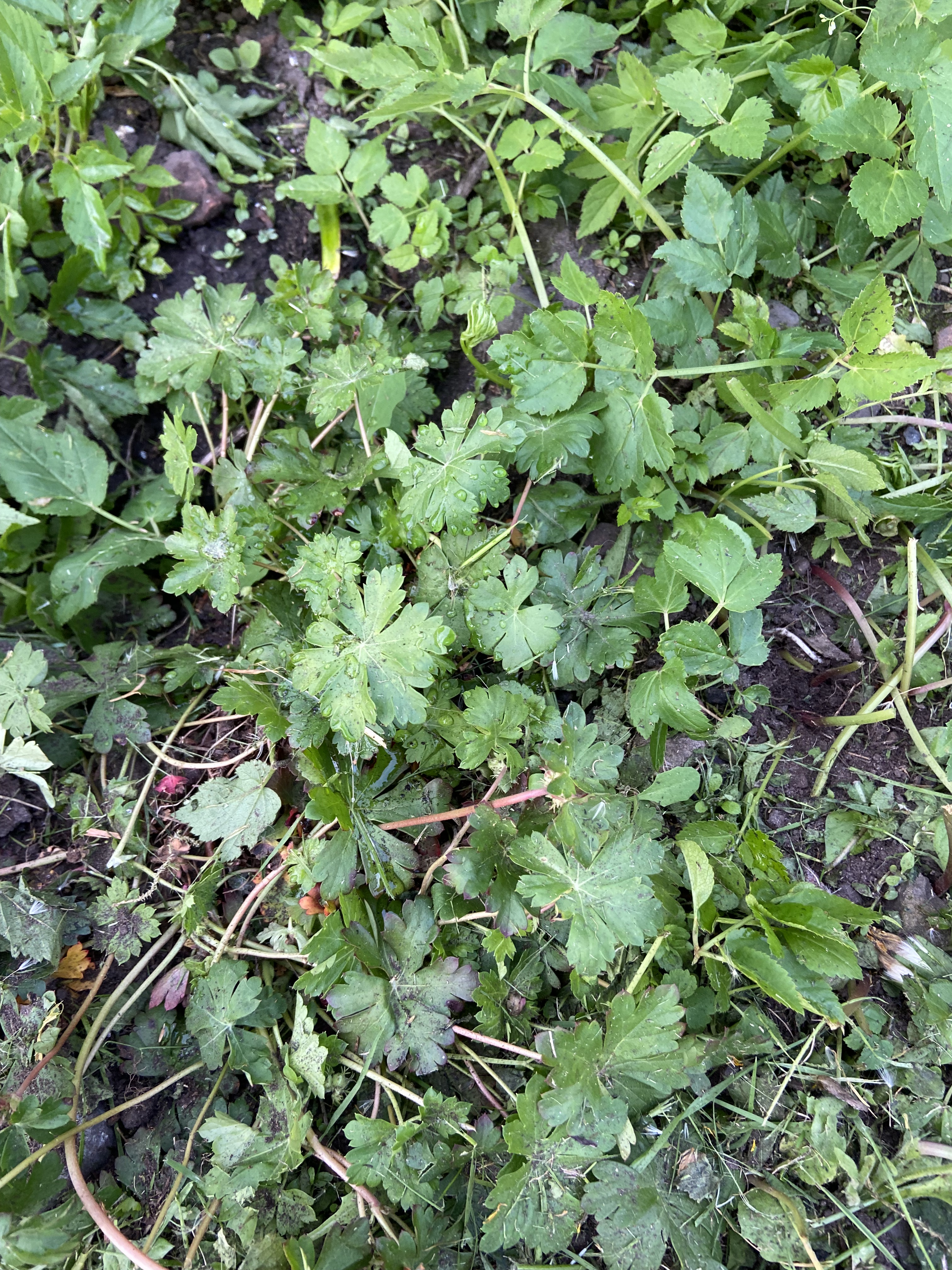
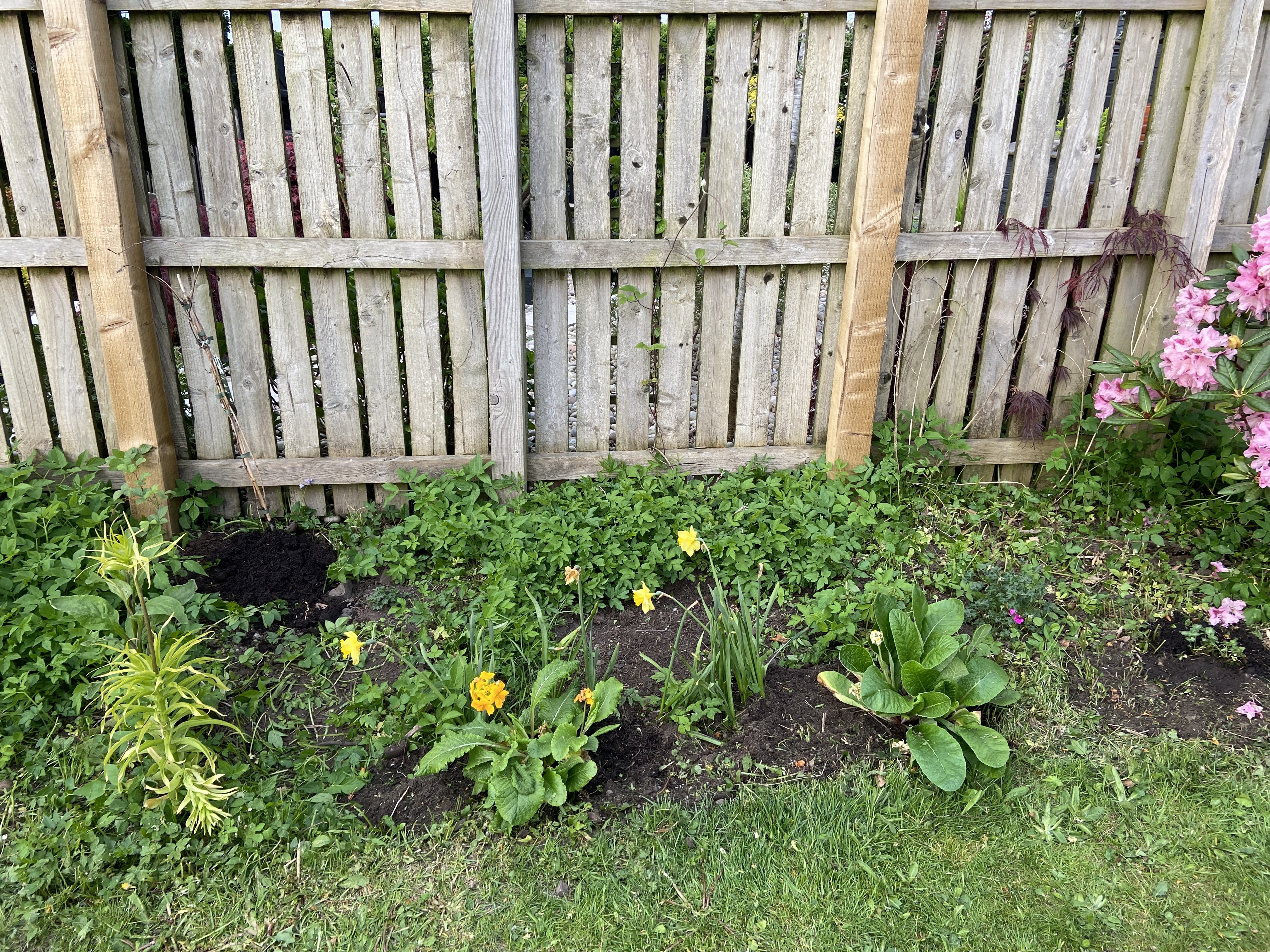
Regular readers will remember that, back in March, I dug quite a bit of ground elder out of a smallish flowerbed that had become over (and very much under) run. Post Different

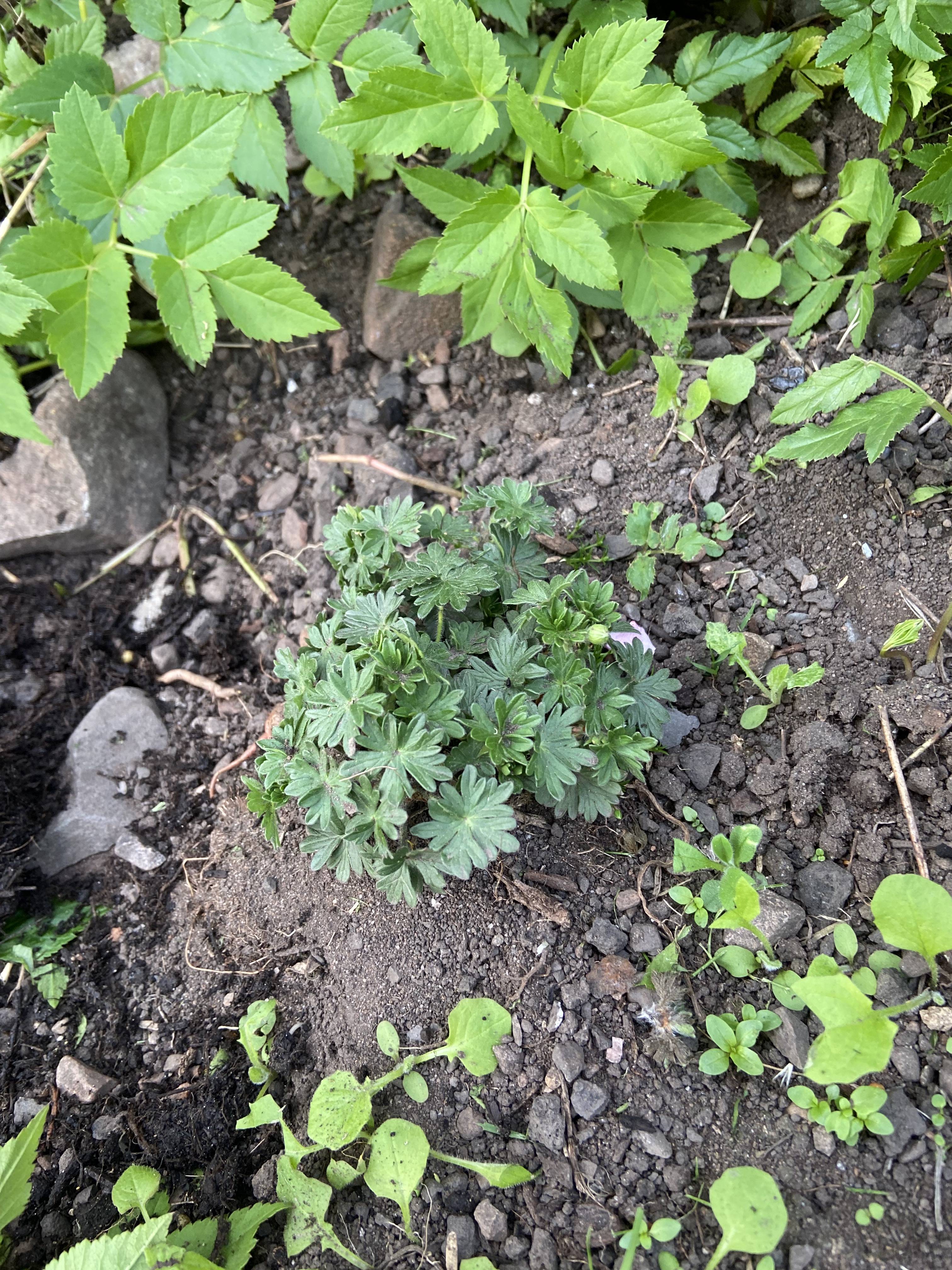
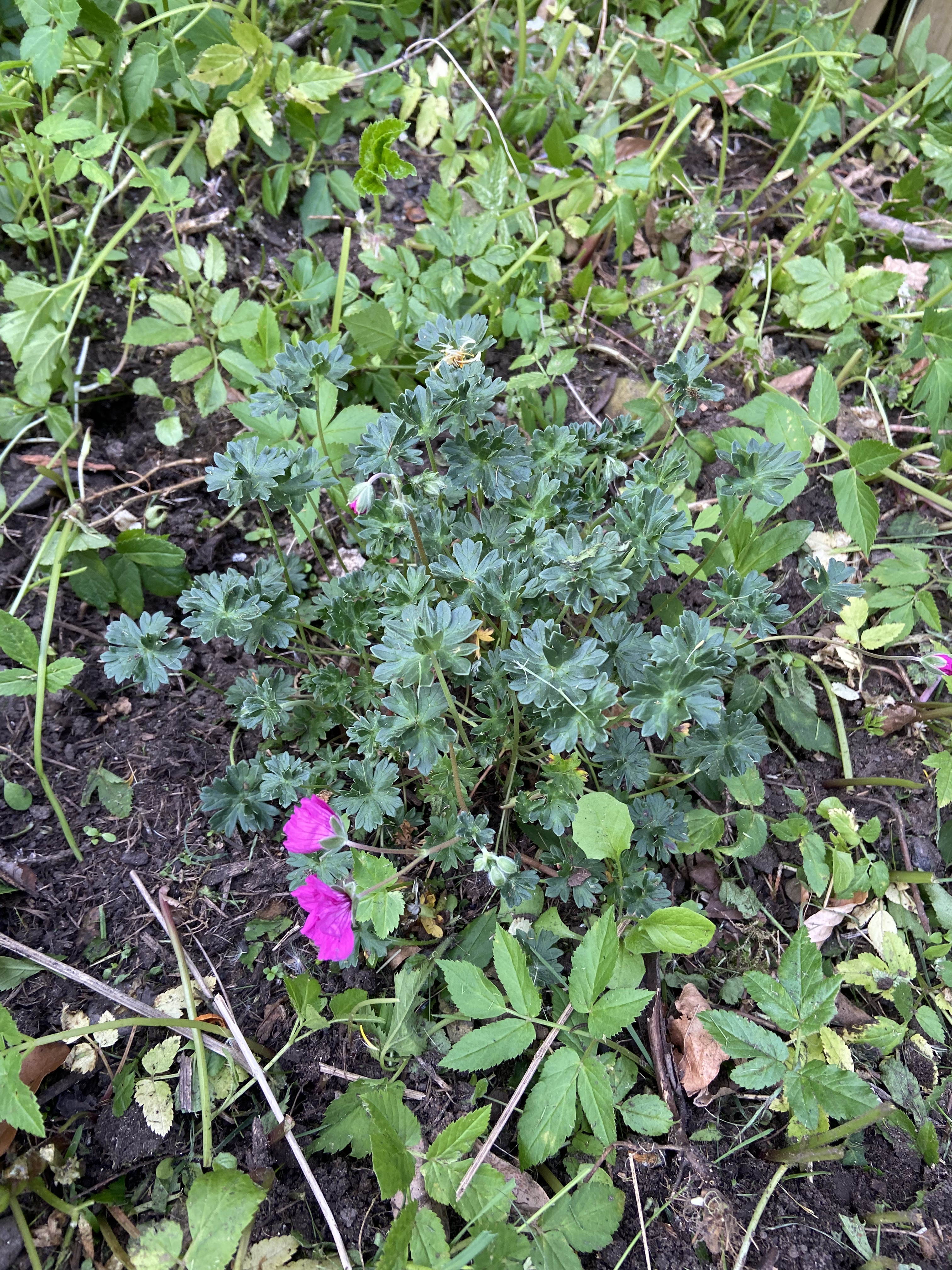
Inevitably, given I hadn’t finished digging it all out (and anyway, removing it all is almost impossible) a lot of it had regrown. I had planted some geraniums, in an attempt to compete with the ground elder and, pleasingly, they seem to be surviving and one even has some small flowers on it.

Anyway, I dug out some more and planted my new plants, watered them well, and now have abandoned them to their fate. Only time will tell!

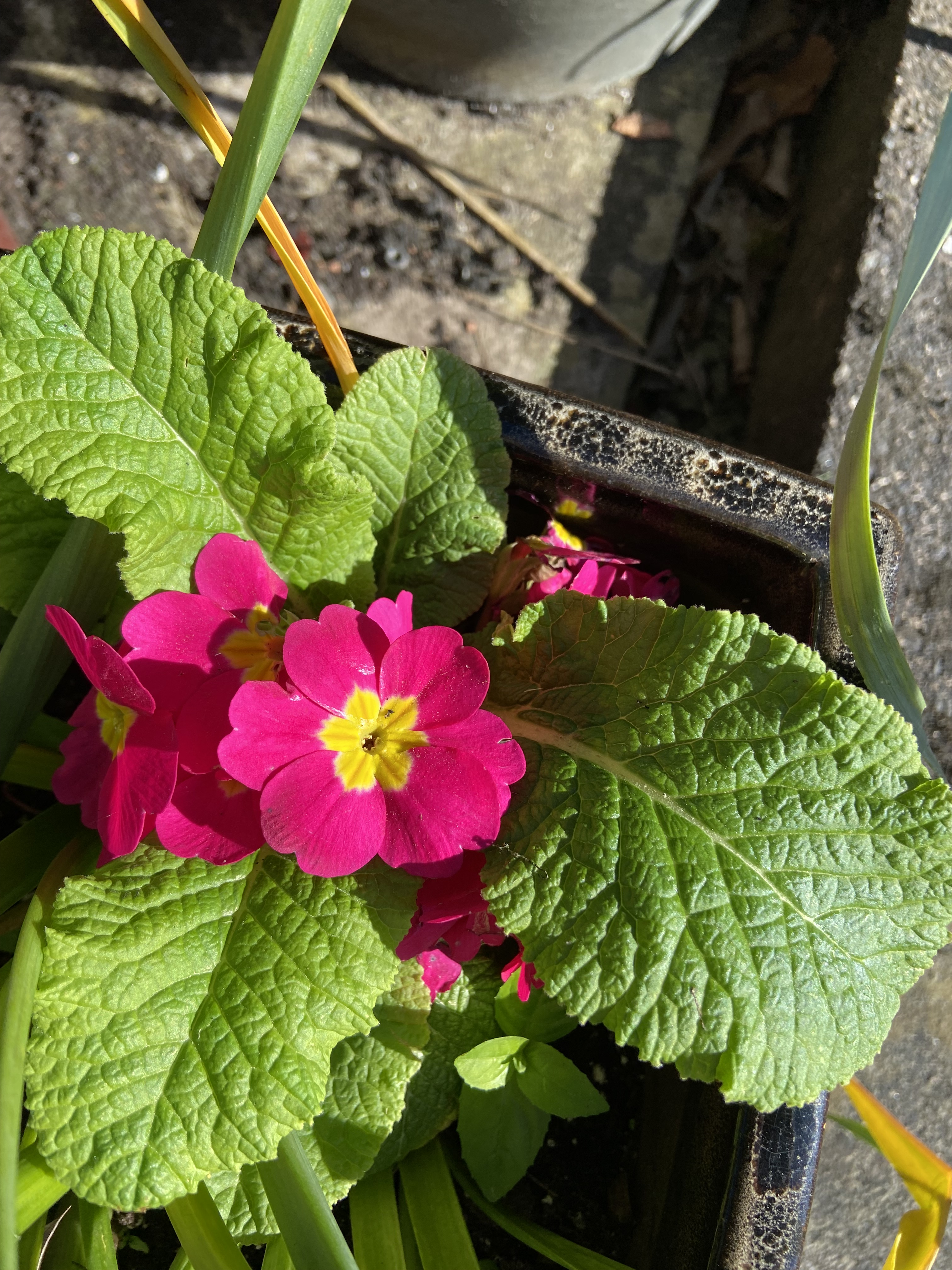
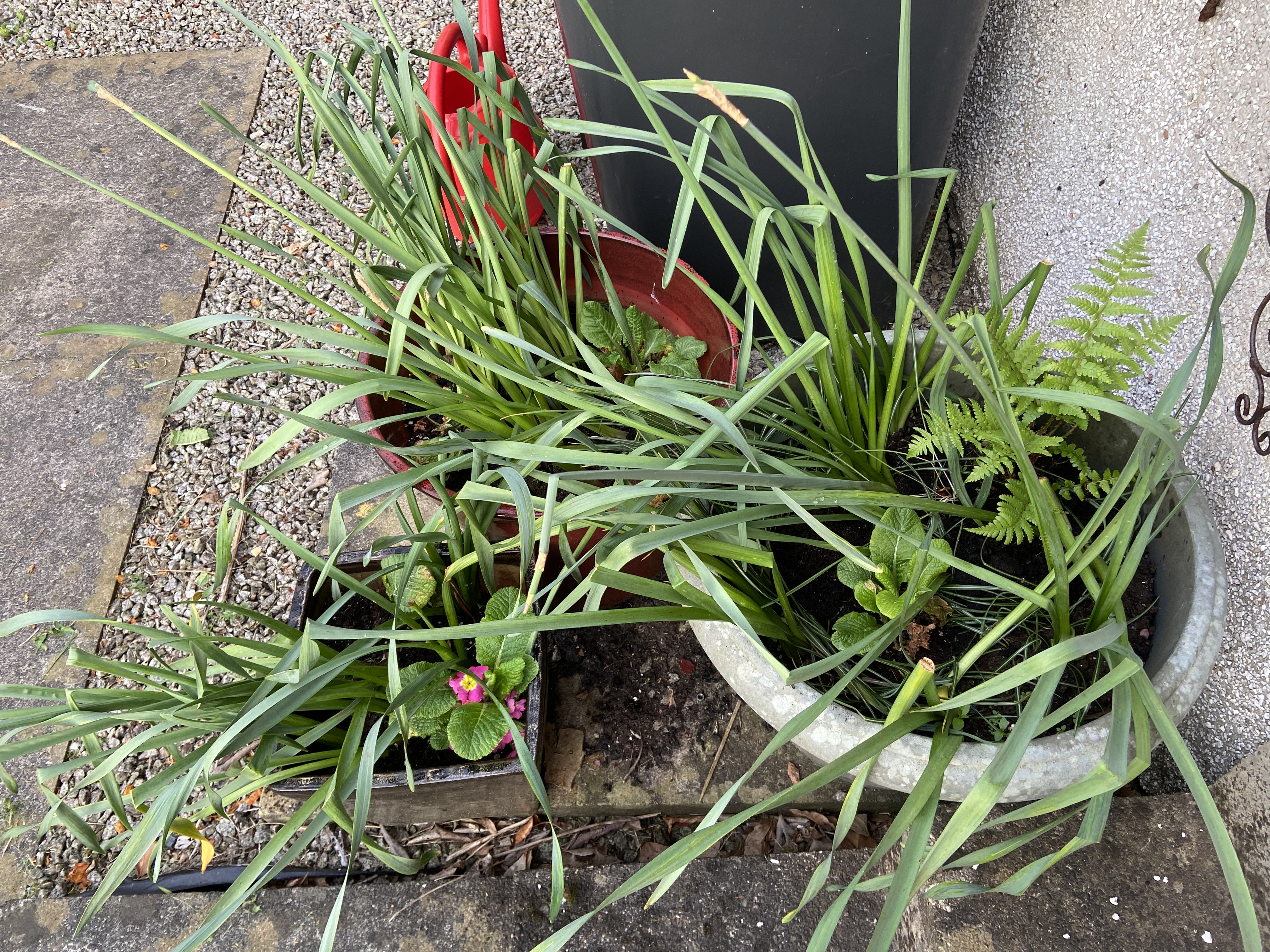
I also planted some small plants in the three pots by the back door. Currently these are still dominated by the daffodil leaves. There’s a woman at the other end of the street, who has two beautiful planters that she maintains year round, with plants of differing heights and colours, as well as gorgeous flowers. Maybe one day, I will learn too, but currently, mine look like this.

Learning to garden at 57 is fun. Better late than never!

Poultry vetting is also all new, albeit with a lot of background knowledge. I’ve only been out to one farm this week, but I thought, as I prepared for my visit, that most of my cases are going to be complex logic puzzles. When I was working with APHA, I often felt I was dealing with farmers who were probably having the worst day of their farming career and, though this week’s case probably wasn’t that bad, it was still severe.

There had been masses of deaths in a newly placed flock of broilers (rapidly maturing chickens, bred for meat). They started to die, in huge numbers, soon after being placed in the shed. There were three sheds on the farm. Two of the sheds were filled with perfectly healthy, fast growing chicks. The third was a disaster zone.

I read up on possible causes before going there. It seemed there were two likely scenarios. One was that the eggs were infected and the poor chicks had arrived loaded with bacteria they were never going to survive. The second was that, for some reason, the chicks had failed to find the water drinkers or had otherwise not managed to drink. My job then was to find out whether either of these fit. If not, it would be much more complicated, but that would be a whole new story.

The first thing I asked on arriving was who had been looking after the chicks over the weekend when they arrived. Ben (one of Inchcolm’s partners, alongside Eduardo) had told me it was not uncommon, after a weekend, for farmers to report a problem, only to discover that the weekend worker had failed to follow the normal routines and had missed a feed, or similar. With birds that grow so fast, it doesn’t take much to disrupt them.

That was quickly ruled out. The farmer had been caring for all three sheds himself. Nothing had gone wrong. Preparation for all three sheds had gone to plan. The sheds had been preheated to 30°C as they should. Water lines and drinkers had been checked. Feed had been provided appropriately so that it was easy for the chicks to find.

I double checked the water intake, which the farmer records daily. Though the chicks in shed 3 had drunk a little less than the other two, they hadn’t drunk significantly less. With the water theory ruled out, I had to check the evidence related to problems at the hatchery the chicks came from. If the chicks in sheds 1 and 2 were from the same batch, then it was more likely to be something that happened after they arrived.

But the evidence there was clear. Sheds 1 and 2 were from different parent flocks. The birds in shed 3 were from parents which were 26 weeks old. 1 and 2 were from rather older parents. Quite apart from the possibility of infection, chicks from younger parents are harder to look after as they are a little slower to regulate their body temperature (see how much there is to learn here!).

So before I even went into the sheds, or saw a single chick, I already had a lot of clues as to where the problem probably lay. And when I went into the sheds, they were lovely, clean and warm. The chicks were well spread out, which means they are not too hot and not too cold. The litter underfoot was dry: no sign of catastrophic water leaks or flooding. Everything was still pointing to infection.

I did a post-mortem on six birds and the signs were obvious. These tiny chicks showed all the signs of severe infection. Given they had started to die so soon after they arrived, it was almost certainly a problem in the hatchery. The farmer had done everything he could, but the whole thing had been horribly put in train before the chicks were delivered.

I wanted bacteriology done, but I wasn’t going back to Inchcolm for over 24 hours, so I popped into the SRUC lab in Dumfries when I got back. I had hoped they could do bacteriology on some samples I had taken. However, after speaking to one of the vets there, it seemed it would be much better for the farmer to take some birds into the APHA lab in Penrith. This was actually a better solution as, if the farmer wanted to claim compensation from the hatchery (which I hope he does) then an independent assessment would be massively helpful.

The vets at Penrith were super-helpful. I arranged for the farmer to drop off chicks on Thursday and they rang me with preliminary results on the same day, then sent a preliminary report yesterday. It confirmed my finding – that these poor chicks were overwhelmed with infection, likely E. coli.

This isn’t a happy story. I hadn’t just read up on the investigation. I’d also read up on treatment and the reality is, that for tiny chicks like these, where they were infected while still in the egg, there’s nothing you can really give that helps. Ben had given antimicrobials as soon as the problem raised its head and I left a vitamin B supplement to try to help, but really the improvements needed are in the hatchery.
Both Eduardo and Ben had told me this when I first arrived. If the UK broiler industry really wants to cut down on antimicrobial use, then the improvements need to start there. In my first few weeks, almost all the problems I have seen have involved birds that arrived on the farm already infected. Whether anything can be done about that is another story, but I am already thinking about possibilities. I have come from Norway, where almost no antibiotics are used in poultry production, so it isn’t impossible.

Ah well. Tilting at windmills is something to be done while I’m still new to all this. I don’t have many tools, but my mind is already working on it. I’m wondering whether APHA might have some levers. Nothing wrong with giving it a try. Meanwhile, my poor farmer is the one weathering the storm.

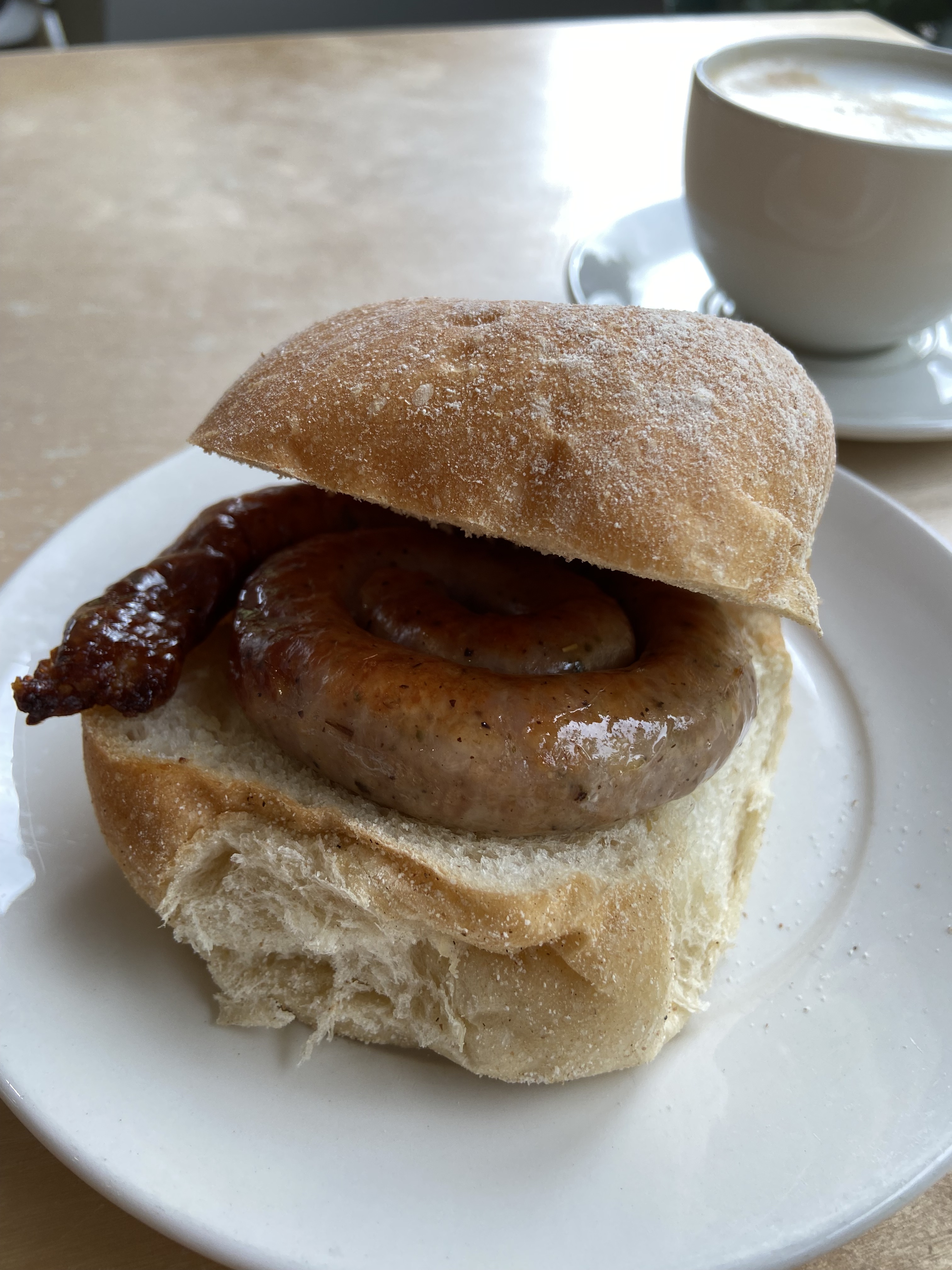
I will leave you with a picture of the delicious Cumberland sausage in a roll I had at Cairn Lodge Services on my travels. There’s something very satisfying about putting a spiral sausage in a roll. It’s much less likely to fall out than two traditional sausages.

Thanks for reading and I hope you have a good week.

Moving On

Last week on my two day holiday, I spent my time in Dunfermline, as I mentioned last week. What I didn’t say was that I was visiting a vet practice to see if I wanted to work there. The practice works with poultry, which is an area that has interested me for a while. I prefer production animal medicine over treating pets and, much as I love cows, I don’t think I’m up to calving them at three in the morning any more.

I must say, I immediately felt at home there, with the people and the set up. It felt friendly, busy enough to be interesting, but not manic, and they had a Nespresso-type coffee machine and two kinds of milk. The last point may sound a bit of an odd thing to focus on, but from past experience, the best practice I ever worked in had a coffee percolator which was permanently in action. The boss there cared enough about sitting down with a good cup of coffee that he went a step further than most places to make sure everyone benefited.

Handing my notice in was sad though. I’ve been very happy working for APHA in recent months. Ironic as it has been so busy that it has been almost impossible to keep up, but I’ve been working almost exclusively on TB and bird flu, which I enjoy a lot more than imports and by-products, or even welfare. Not really surprising as working with sick animals was what I trained for, all those years ago. I will also miss the team I’ve been working with and my line manager and vet advisor, who have both gone the extra mile to look after me. I’ve also already booked lunch with Scott, one of the Local Authority inspectors I worked with often. Having carefully built up all these relationships, now I am about to let them all go. I guess the ones worth having will continue and erstwhile colleagues may become long-term friends.

Things are moving on in the house too. After over a year of living in a building site, the end looks to be near. My first approach to a carpet shop resulted in a quotation for carpets (two bedrooms and stairs) of £6,500. I said I would go back and look at other carpets, but instead, I am trying another shop. Someone will come round to measure up on Monday and I’m hoping for a price that doesn’t involve going deeply into debt. The young man giving me the high quotation didn’t seem to have any idea that the price was ridiculous. Nor did he make any alternative suggestions or offer any help. Perhaps he thought I was ridiculous because I wanted to order in a carpet I’d found online, rather than in their store, but he certainly isn’t a natural salesman and he lost me as a customer.

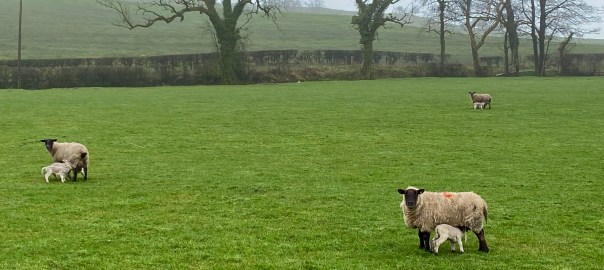
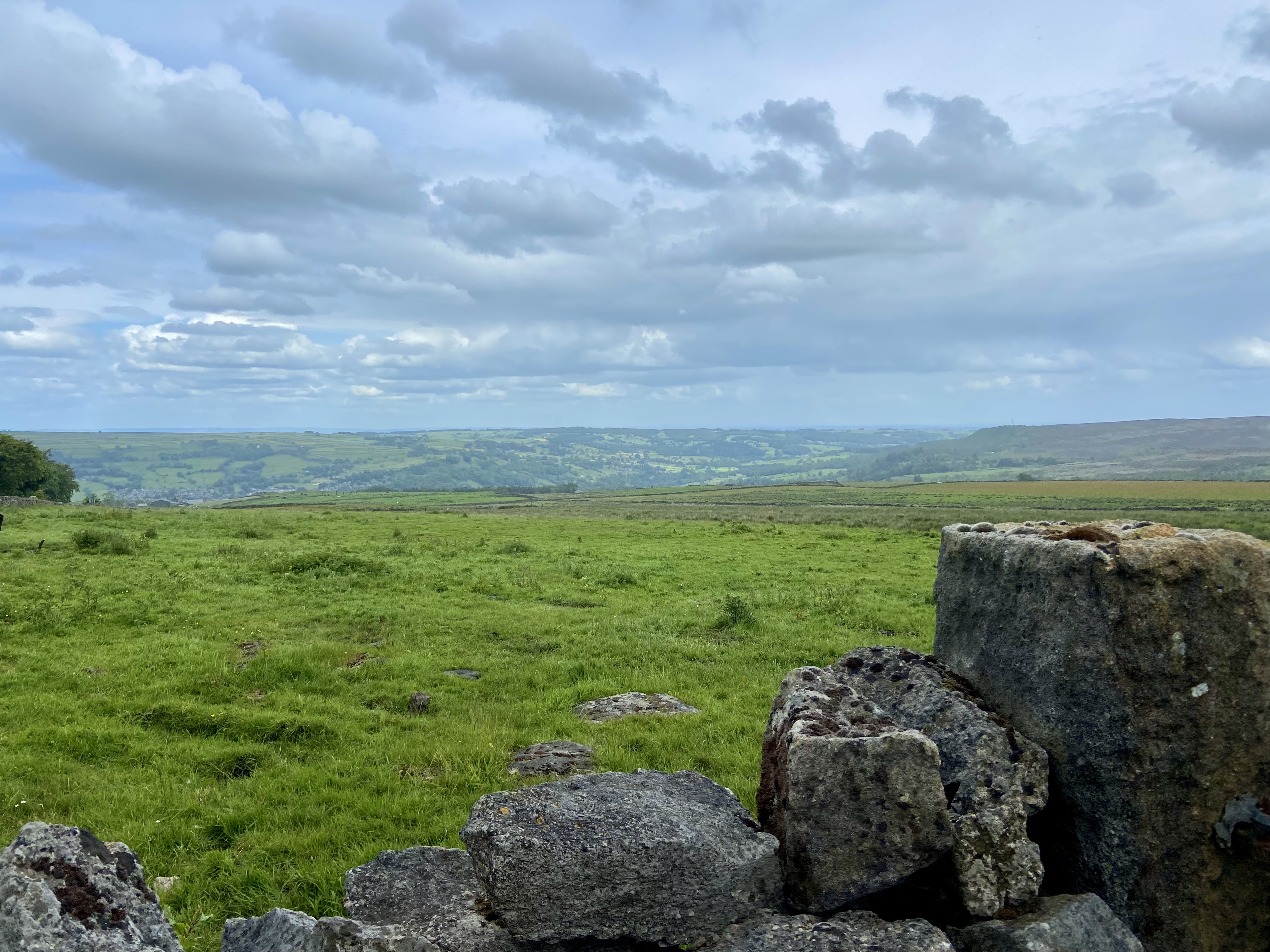
The picture at the top of the page is of newborn lambs I saw when out on a visit this week. I’d been out examining some cattle for signs of bluetongue, while an AHO learned to blood sample. Those blood sampling training visits are probably the thing I will miss most. Getting to drive around beautiful areas of farming country has always been one of the major benefits of veterinary work. My new patch as a poultry vet is likely to be mostly in Cumbria, so hopefully there will be new photo opportunities! The area round Dumfries is beautiful, but gently rolling, which requires more photographic skills than I possess.

Anyway, that’s all for this week. I hope you will continue to join me in my new adventure, which will begin after Easter. Thank you for reading and I hope you have a good week.
Royal Highland Show

It’s been a busy week. On Monday, I made a revisit to a welfare case, Tuesday and Wednesday were spent catching up on paperwork and courses that I should have completed as well as having an appointment with a doctor from occupational health. Thursday I was third duty vet and yesterday, I inspected a chicken farm with a colleague up north of Ayr.

As some of you will know, I had some major neurological issues between 2017 and 2019. These mostly cleared up after I started physiotherapy and had some coincidental corticosteroid injections for a seemingly unrelated issue. I never received a diagnosis, but the problems I had still recur when I’m very tired, and I still tire very easily. My line manager referred me to occupational health as this means that coping with duty vet on top of my day to day work is currently too much.

The doctor has recommended that, though I will still cover nights and weekends, I will be temporarily relieved of the daytime tasks until I am more familiar with what needs to be done. She also recommended I should go to my GP and get myself rechecked. I imagine that could be a long job, involving lots of tests, quite likely with the same end result, but I will keep you posted.

With all that said, I was incredibly touched that another colleague from Lauder, who I’d never met before, invited me to come and do my first ever stint as third duty vet with her and doing it with someone else in the room with me, who was perfectly willing to help, was altogether a different experience. It might be difficult to organize for new starters to do this, partly because so many people still work from home, post Covid, but it would prevent a lot of anguish. So many people I have spoken to describe being in tears when they are stuck on duty vet that I have also reported it as a health and safety issue, but the reality is, we are understaffed and there’s not much that can be done.

Anyway, the best day of last week at work, was actually Sunday. I travelled through to the edge of Edinburgh on Saturday night, and at 07:45 on Sunday morning, I reported for duty as one of the official APHA vets at the Royal Highland Show.

Our routine remit didn’t sound too onerous. We were asked to walk round all the animals once to check on health and welfare. There were other vets at the show to deal with any front line injuries or illnesses. I did read our contingency plans before I went, which detailed what we must do in the event of a foot and mouth outbreak and other unpleasant scenarios, but fortunately none of them happened and instead, it was a lovely day out. The rest of this post then, is going to be taken up with photos from the show. I hope you enjoy them.

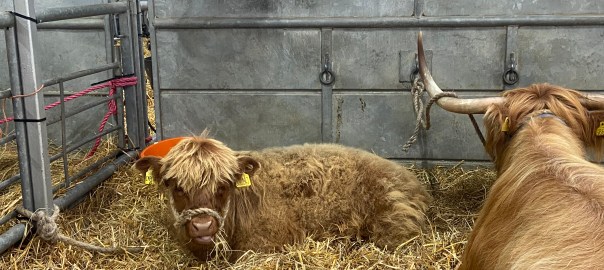
Quite appropriately, the most heavily featured breed in my photos is Highland Cattle. The amount of work it must take to have them clean and tidy for the ring is phenomenal. I chanced upon a young woman wielding a long hairdryer on hers and asked if I could take photos and she agreed.

I also loved the belted Galloways.

Though it must be a lot of work to present such beautifully turned out stock, the Highland Show is a real, family event. Again, I asked if I could take a photo, but here, the whole family were gathered around a calf that was being preened.

The Holsteins, for some reason, are shaved all over, before going in the ring. I watched someone carefully running their clippers along the spine, leaving some of the standing up hair, working to get a perfectly straight line, to give the best effect. I didn’t photograph that one, but it was interesting to compare the slimline, dairy cattle with the sturdy beef cattle. For obvious reasons, one of those is bred to not put on any flesh, but to direct energy into milk production, the other is bred to have as much meat as possible. I saw a breed that I hadn’t come across before – the British Blue – which has double muscles. I give you a baby Holstein, then a rump comparison, Jersey dairy cattle, vs a British Blue.


There were even more breeds of sheep. I don’t have so many photos of them, but I was struck by the fluffy cuteness of these black nose sheep.

And these fabulous horns.

There were ponies and heavy horses…

And right away, at the far end of the show, there were goats, alpacas and chickens.

All in all, checking out all the animals was a very long walk and by the end of the day, I had covered twelve kilometers. I felt very pleased though, at having such a wonderful day out as part of my job. I hope you enjoyed the picture and I will see you all again next week.

Very Expensive Chicken

This week, my fellow senior veterinary inspector, C, took me out on some chicken visits. I guess I may have a poultry vet or two among my readers, but in general, beyond occasional pictures of huge chicken sheds on the news, and the understanding that all chickens came from an egg, most people have probably never thought about where all those chickens come from.

Back in Norway, I worked for a while in a chicken slaughterhouse and I did visit a few broiler units in Norway (a broiler is a chicken specifically raised for meat). During those visits I had to put on protective clothing over my own. This consisted of a full disposable overall with a hood, Wellington boots that were kept inside the shed and a face mask. Biosecurity is very important in any large flock of birds as infections like chicken flu or salmonella can move quickly through a flock with devastating effects.

What I didn’t know then was that the broilers I saw were the end result of an extensive, highly controlled breeding program that took three to four years from start to finish. Obviously I was aware that all the tiny chicks that come onto a broiler unit were bred somewhere, but I hadn’t realized how complicated the process was.


Logically, those broilers must have parents that are used for breeding and egg production, not meat and those flocks are parent flocks. Go back another layer and there are grandparent flocks, then another to the great grandparent flocks. Beyond that there is one final layer – the pedigree or pure line stock, and these are the birds from which all the chicken on your table are originally bred.

Those pedigree stock represent many years of careful genetic selection, which was initially aimed at increasing production levels, but animal welfare is being taken more into account now. When you’re rearing so many birds for food, there’s an extent to which each individual animal doesn’t have much significance, unlike in a small dairy, for example, where the farmer probably knows each individual animal very well. That means that welfare considerations are generally taken at a flock level and breeding birds that stay healthy has to be an important part of that.

As you can probably imagine though, a shed full of those pedigree chickens would be extremely valuable in monetary terms, and even down the chain at the grandparent flock level, each individual chicken is worth a lot more than the birds I saw in those broiler units. The birds C took me out to see were part of a grandparent flock and the inspection was a routine inspection, not linked to any welfare concerns.

I thought the biosecurity with the broilers was good, but before visiting the grandparent unit, we had to answer a whole series of questions about how recently we’d been in contact with other birds and animals and whether we had any symptoms of illness. Any wrong answers and we would have been refused entry. After that, we had to go into a unit where we left all our own clothes at one side, showered thoroughly, then put on clothes that are only used inside the restricted areas of the unit. Even after that, as we entered each individual shed, we had to change boots again. Each shed has its own boots and we had to disinfectant our boots and hands at every stage as we moved in between the houses.

I found the whole process both interesting and exhausting. Taking long Wellington boots on and off and balancing as you step over a barrier to get into them is physically quite demanding, though I imagine it gets easier with practice. Anyway, the birds are valuable enough that I will have to do several visits with another vet before I am allowed out on my own.

I’ve been out on a lot of visits this week, most of them with C. I also had a day long course on statement writing, aimed at ensuring we were capable of writing reports that were high enough quality that if we were asked about them in a courtroom, we wouldn’t find ourselves having to answer complicated questions about how we had arrived at our conclusions that the animals were suffering. This is something I learned quite a lot about in Norway, so it was interesting to see how it all compared. It’s very important, for example, that you give concrete examples. It’s not enough to say that the farmer had allowed the animals to become thirsty. Rather you would include observations about whether there was any water available l whether it was clean, whether there were enough troughs or nipples feeders for all the animals to drink and state that when you did give the animals water, that they stood drinking for x amount of time. If you merely said they were thirsty, three years later, in court, when challenged how you knew, you could easily find yourself floundering to recall the specific details of how you drew that conclusion.
If anything, I’ve been a bit too busy this week. There is still a lot of basic information I need to learn and there are courses I need to take to learn some of the basics. Time management and making sure I understand the underlying principles and context is something I need to be aware of as there is an awful lot of work to get through, but I get frustrated when I try to do tasks and simply don’t have the knowledge I need to tackle them.

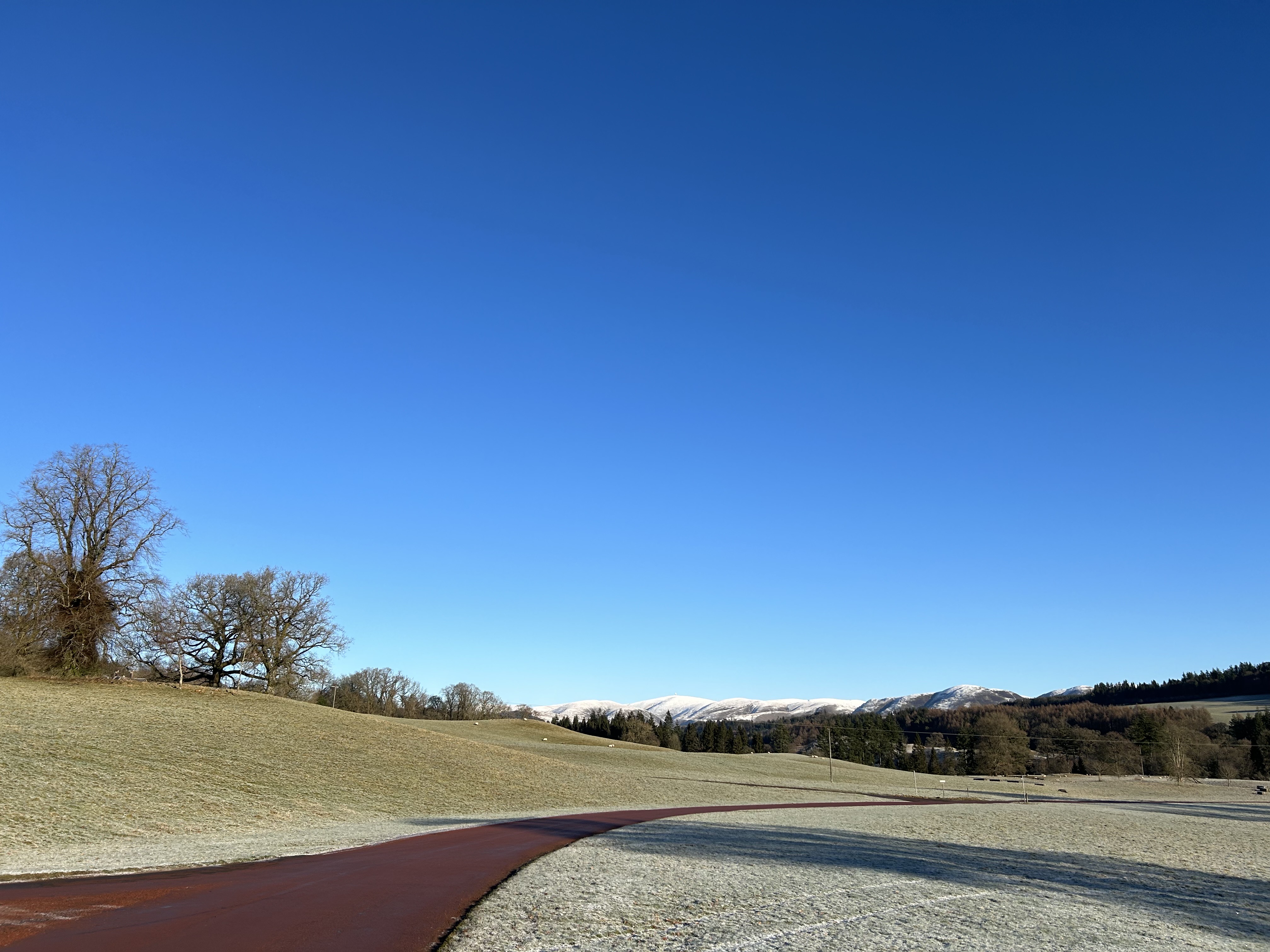
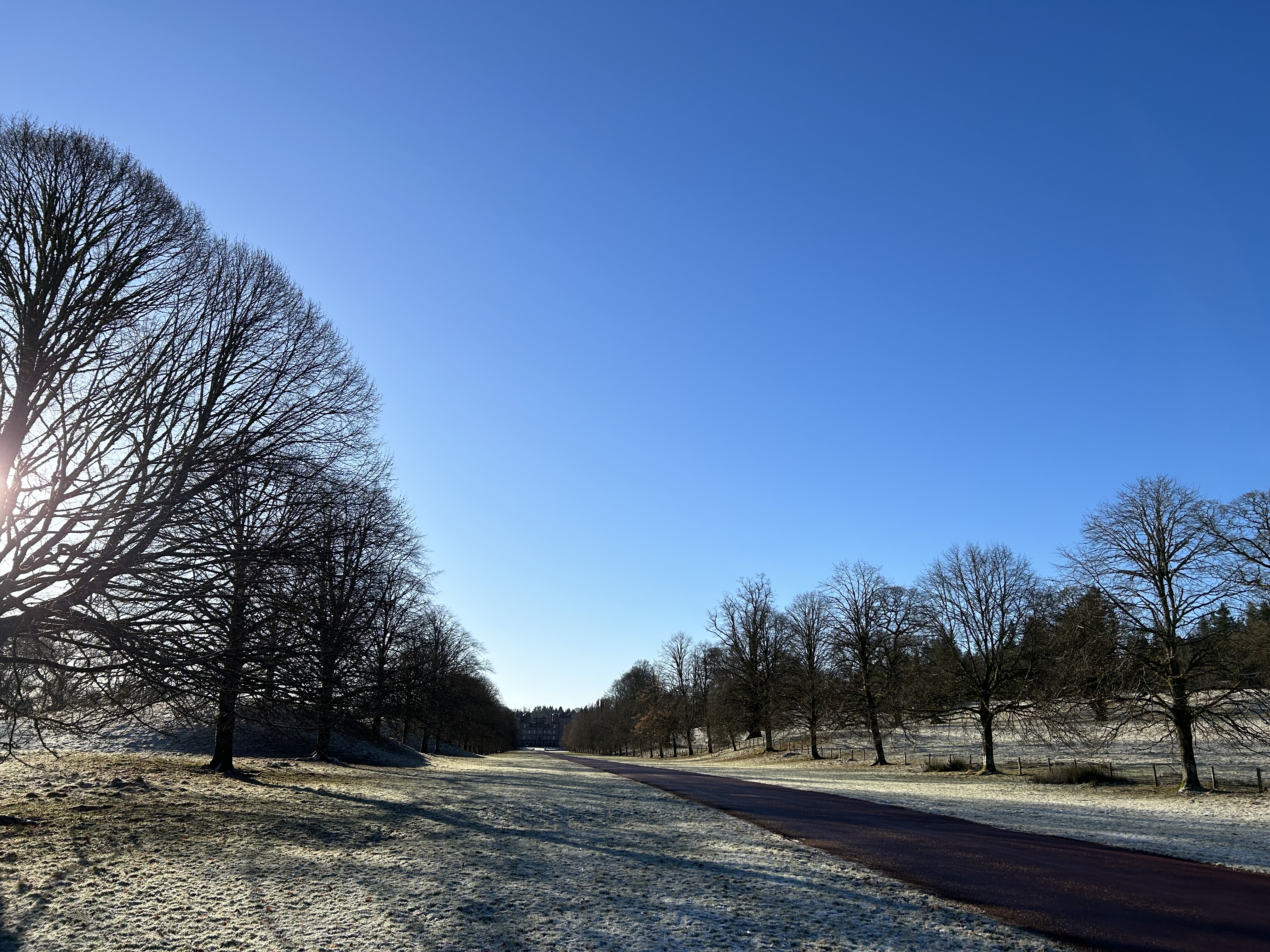
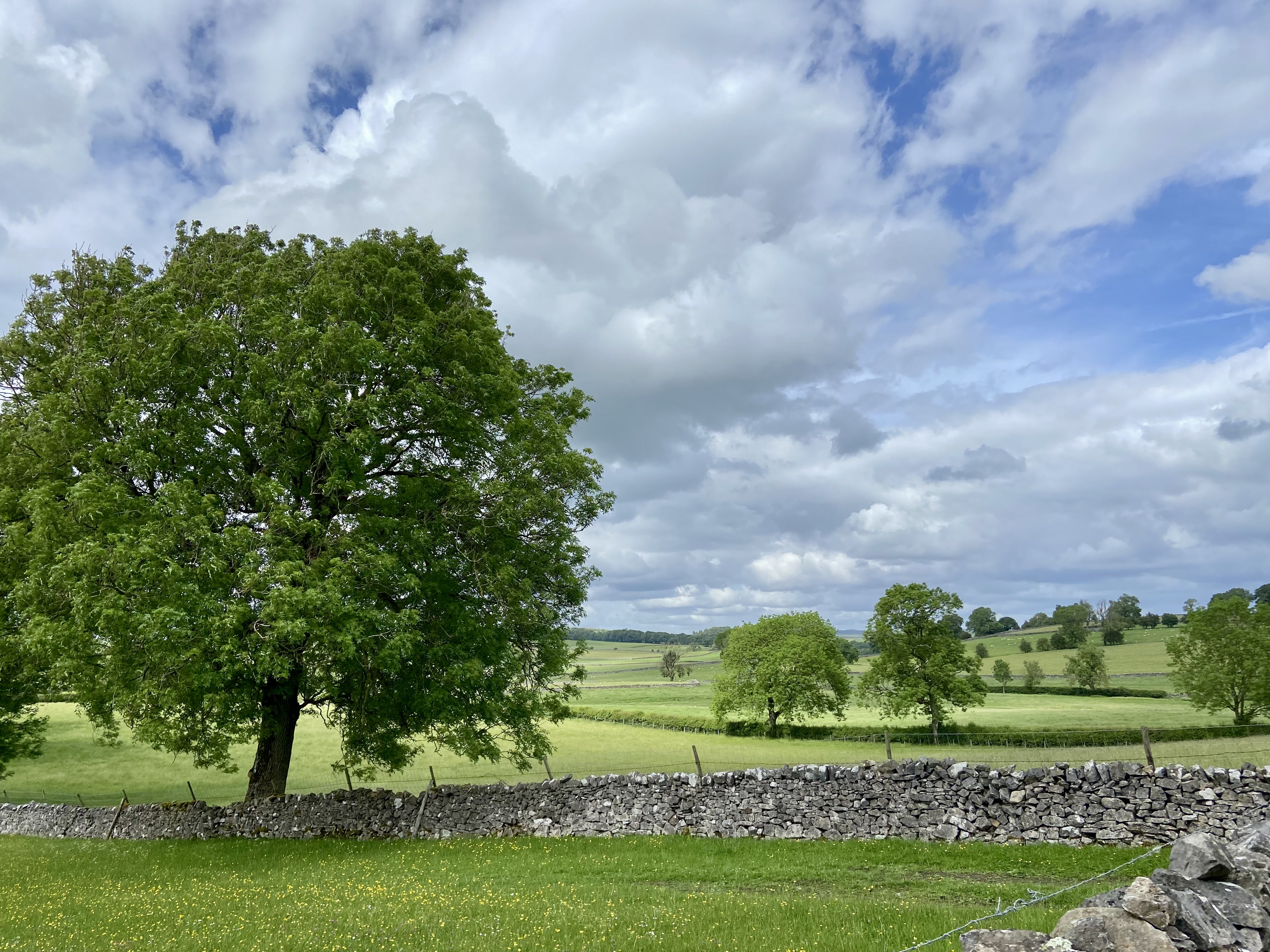
Still it’s all interesting and I know from experience that I will learn it all eventually. And there are some beautiful days and some wonderful scenery. C took me out on a visit and she took me into Drumlanrig Castle on the way there. She tells me there’s a good coffee shop there, but we didn’t have time when we passed through. We did have time to stop and take photos though! These grounds and trees are so British. For me it is wonderfully familiar. It was beautiful in Norway, but it was always wild in a way the great estates in the UK are not.

I was also reminded, as I basked in the frosty sunlight, that my friends and family in the far north may not have seen the sun yet this year. Polar night officially ended in Tromsø this week, but sometimes it can be days or even weeks before you catch that first, wonderful peek of the sun’s rays after a month and a half. Love to all my friends up there.

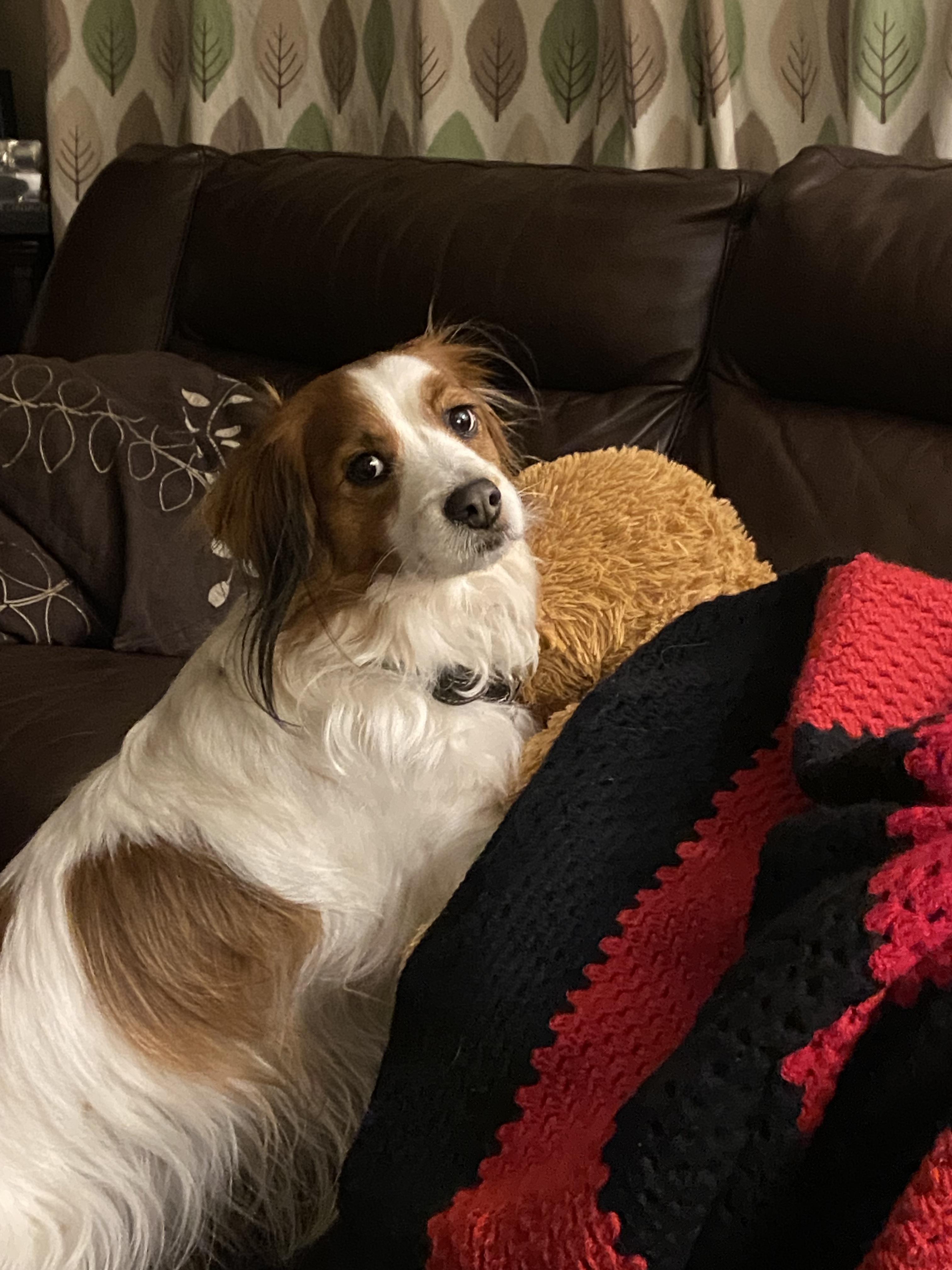
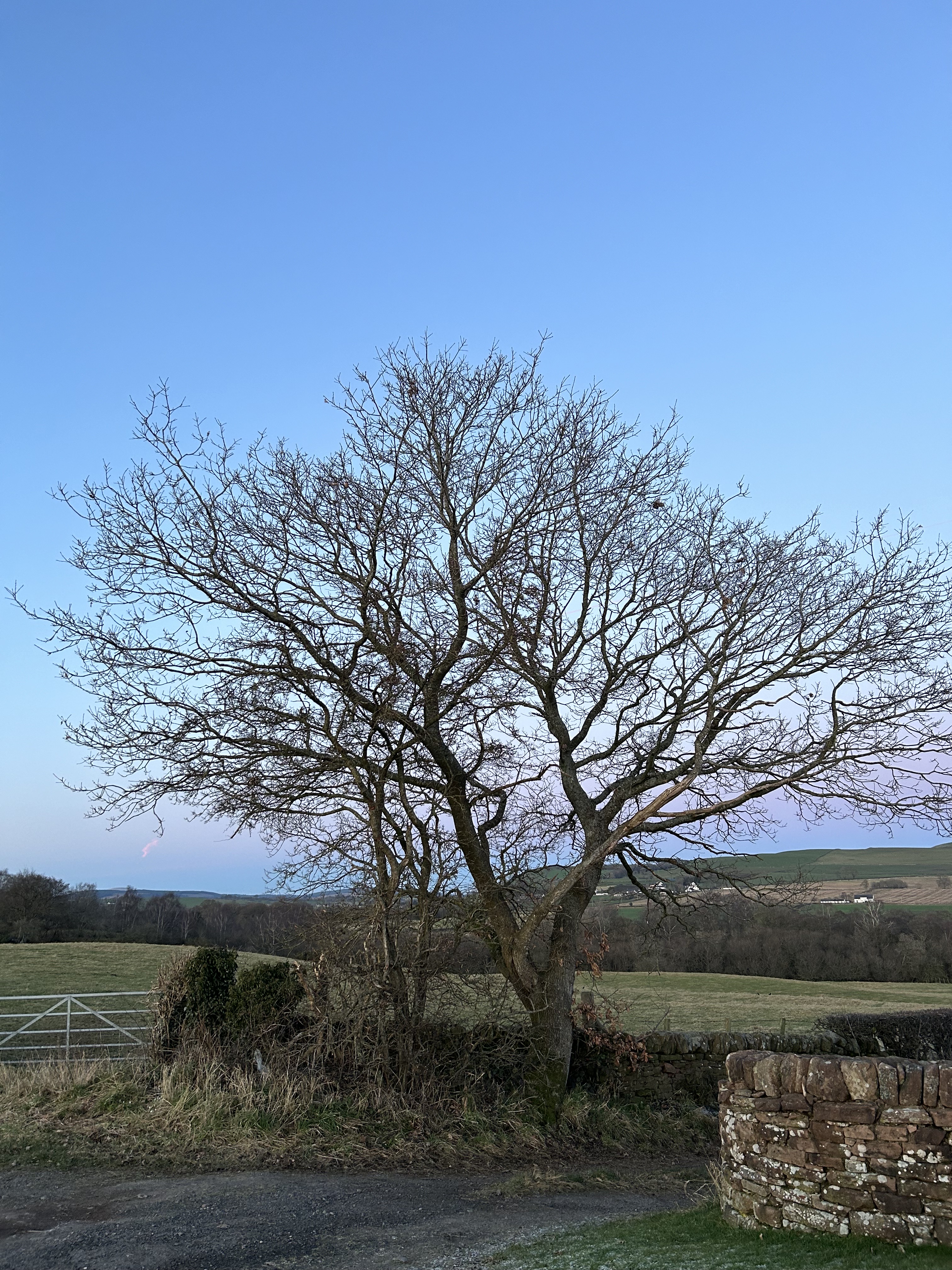
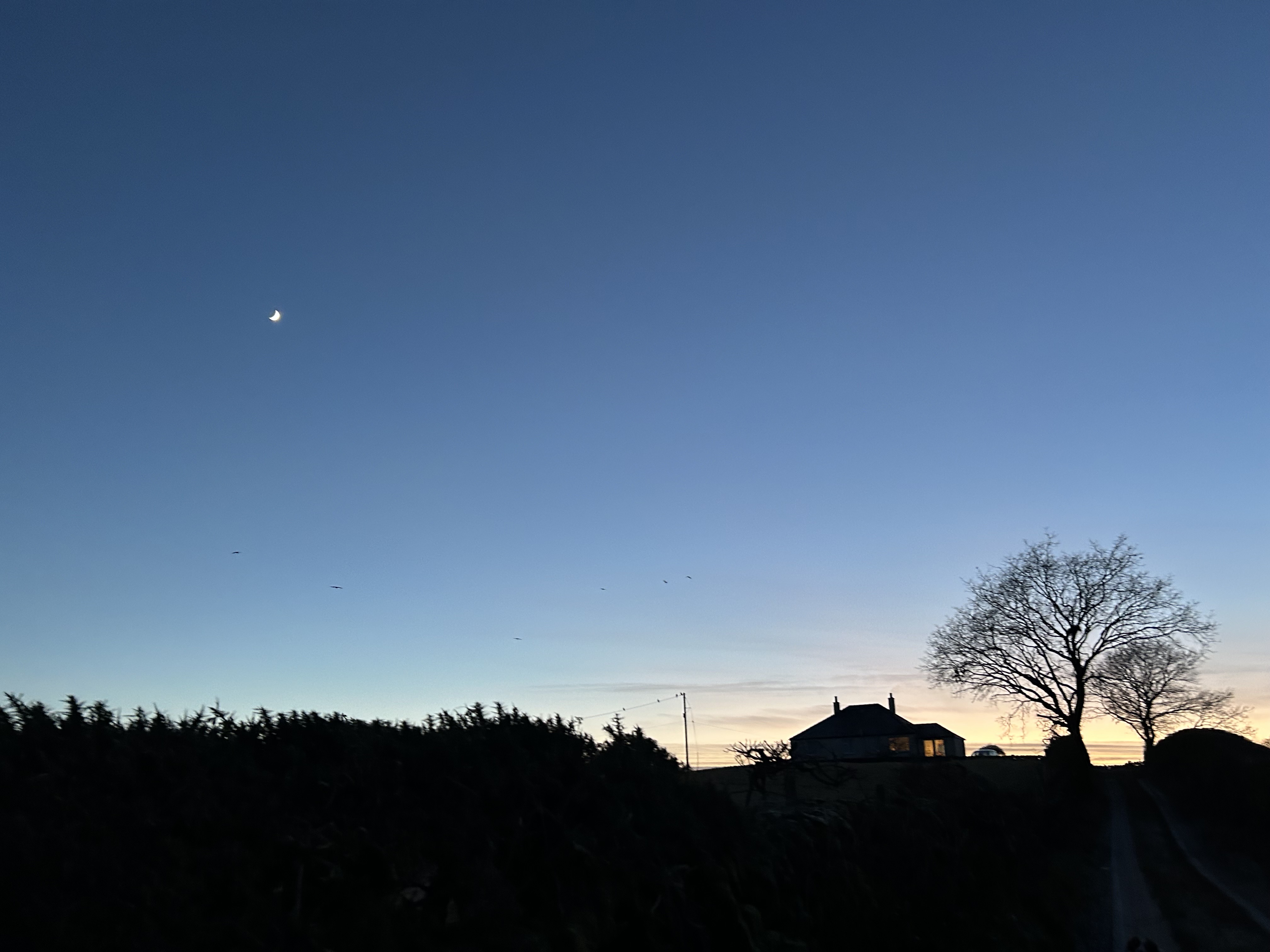
Anyway it’s late so I’m not going to write any more for now, though I am starting to progress through the process of buying a house here in Scotland. It’s quite different to the process in Norway and I will probably say more about that next week, but for now I’ll leave you with some photos from evening walks with Triar around the area where I’m currently living. Have a good week all!