
It’s been a month now since I started working at Inchcolm Vets as a poultry vet. I’ve learned an enormous amount already, but as I’m still based in Dunfermline, it’s also been a month since I’ve been living at home. This week however, on Thursday, my much delayed carpets were laid and so I spent Wednesday and Thursday nights in Dumfries.
I’m very pleased with the carpets. The stairs and one of the bedrooms are now resplendently burnt orange. I may shortly be open for visitors again, assuming I actually move back there some time (working, linked up laptop still required).
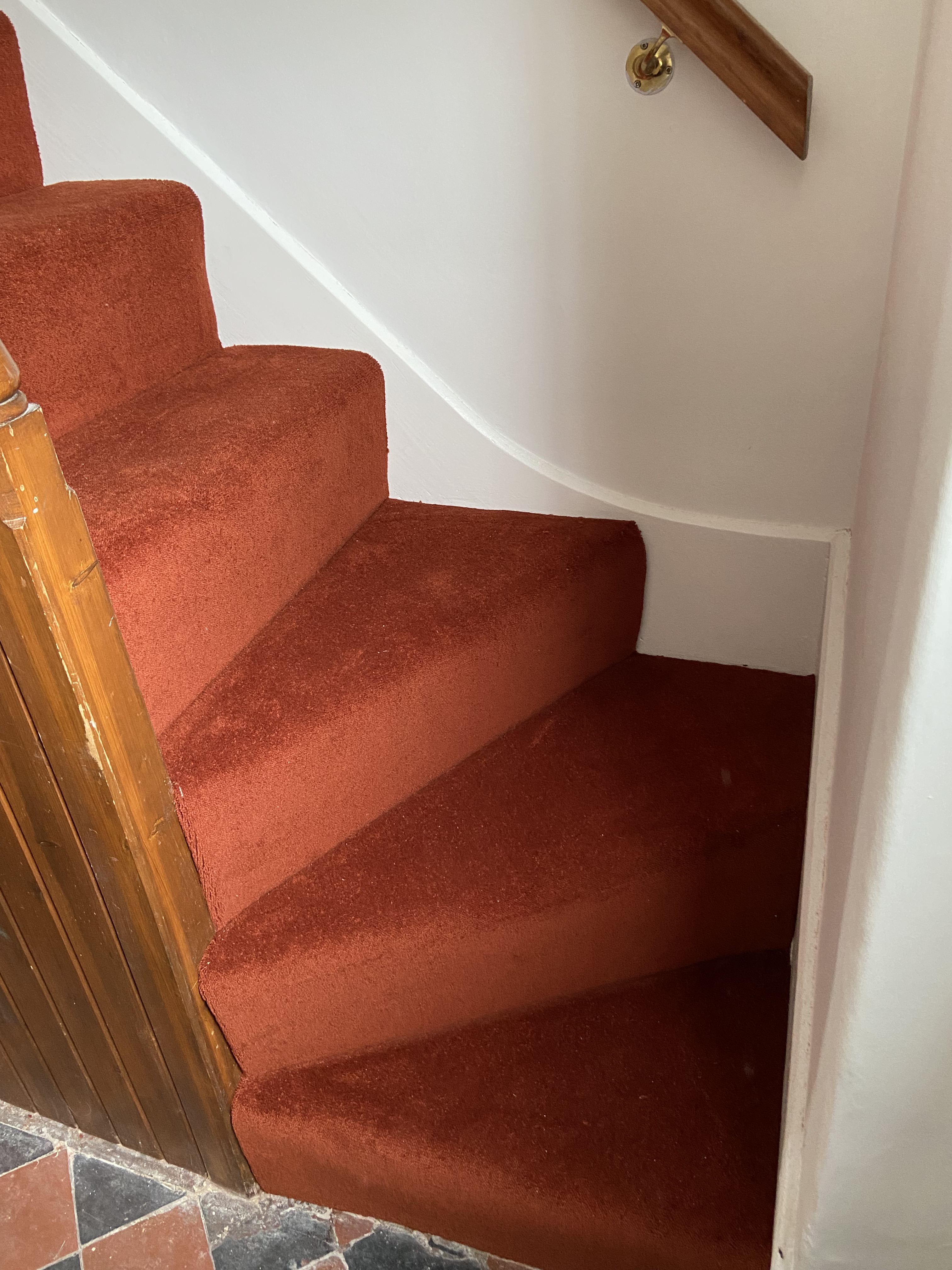
But rather than spending time in the house, I spent most of my time doing a quick garden tidy. Of the three terraces, I’m only marginally in control of the top one. Ecologists recommending letting gardens run wild would be proud of me. My neighbours, perhaps not so much. Anyway, as well as strimming and mowing the lawn (which, by the way, was ominously white in patches, due to an excess of dandelion seeds) I planted some plants I had bought with Valerie a couple of weeks back.
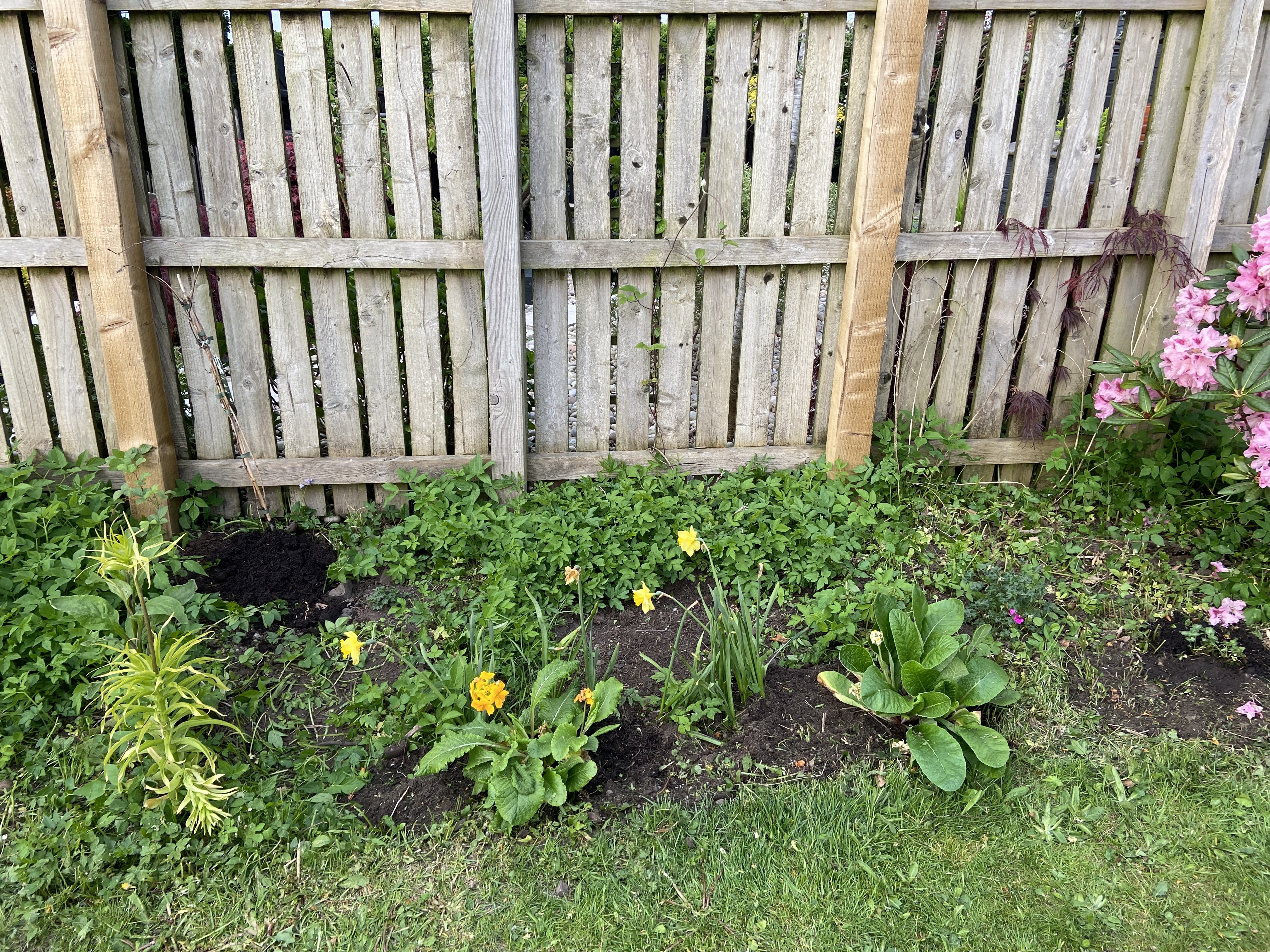
Regular readers will remember that, back in March, I dug quite a bit of ground elder out of a smallish flowerbed that had become over (and very much under) run. Post Different
Inevitably, given I hadn’t finished digging it all out (and anyway, removing it all is almost impossible) a lot of it had regrown. I had planted some geraniums, in an attempt to compete with the ground elder and, pleasingly, they seem to be surviving and one even has some small flowers on it.
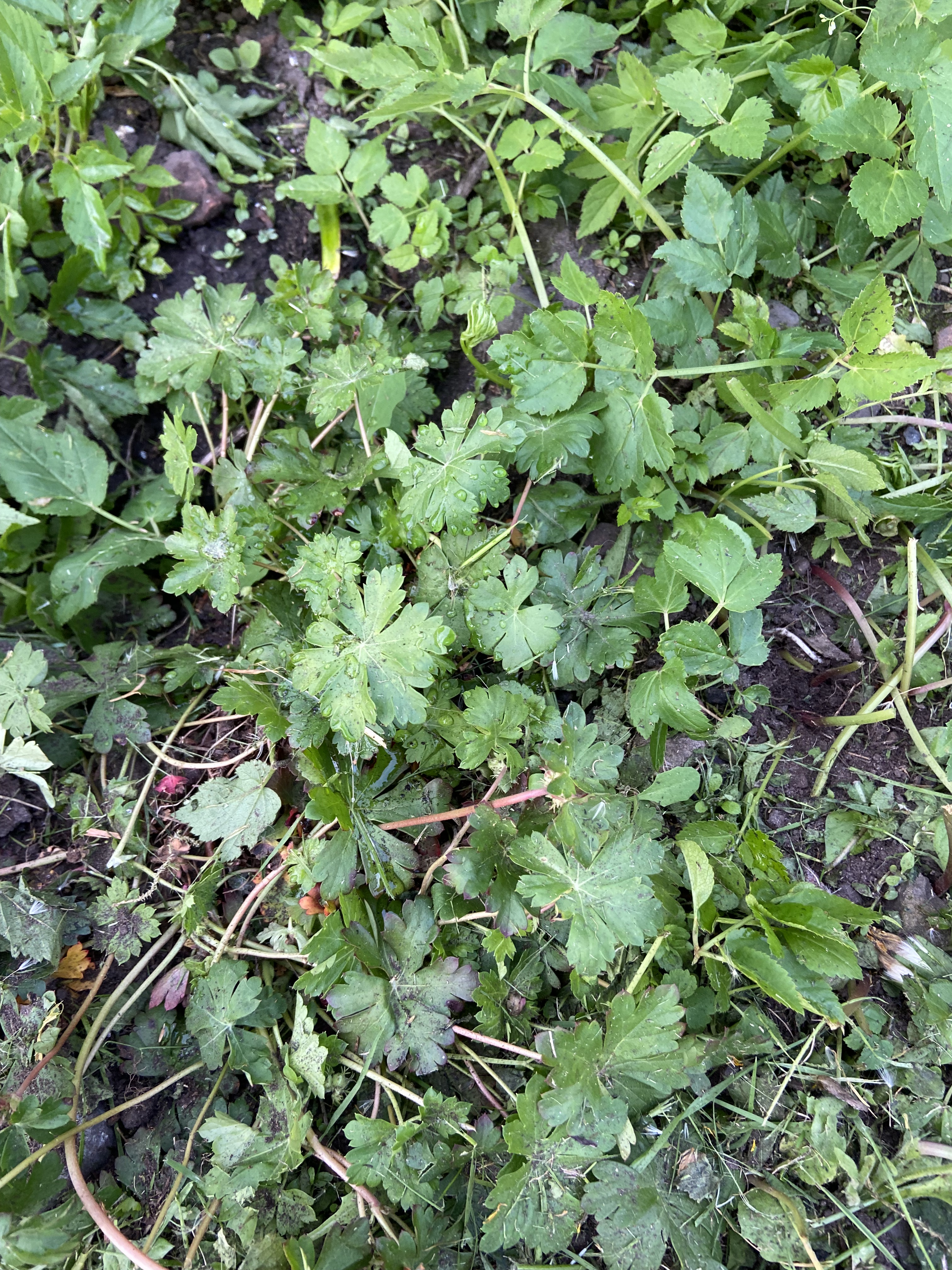
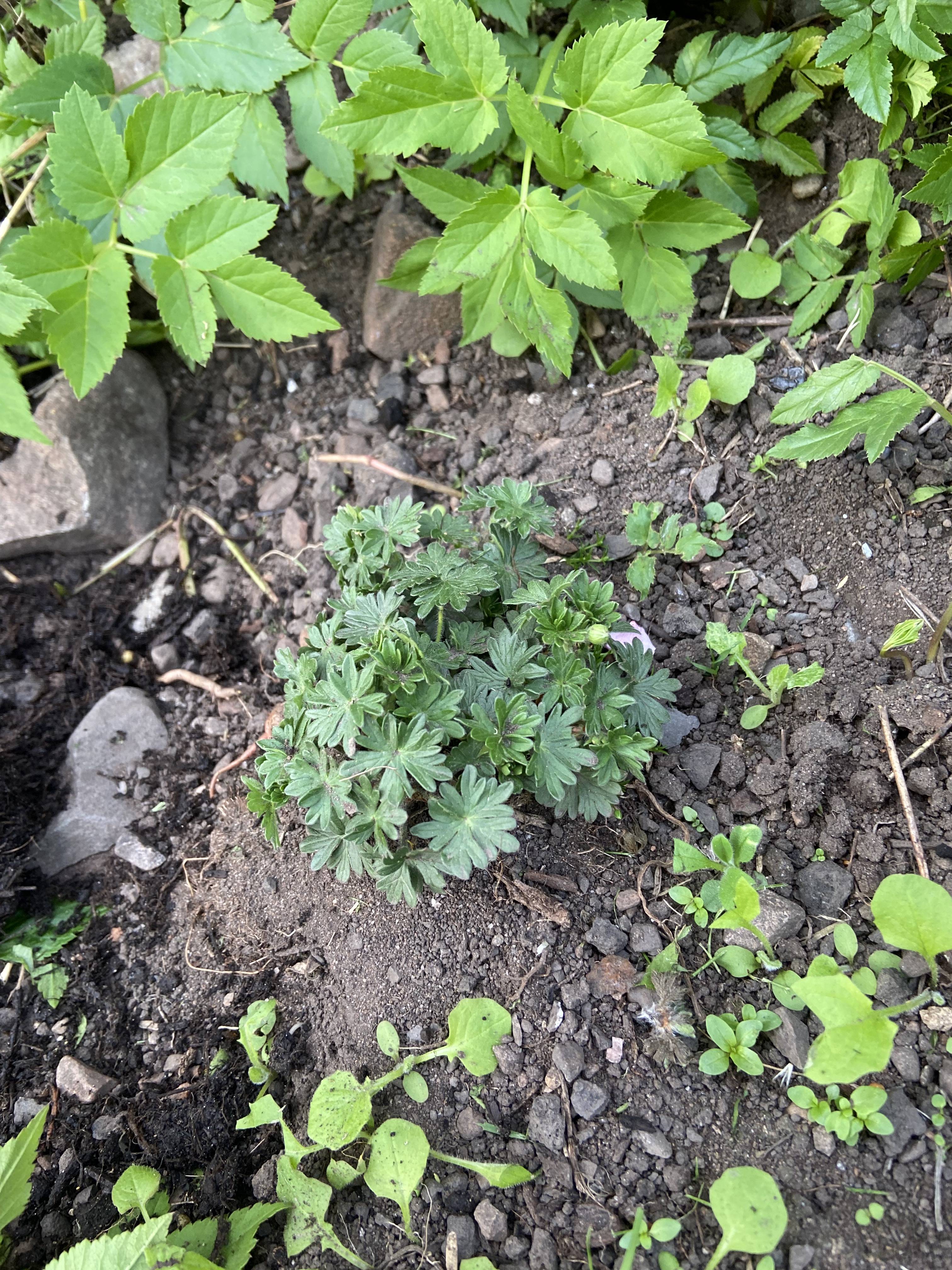
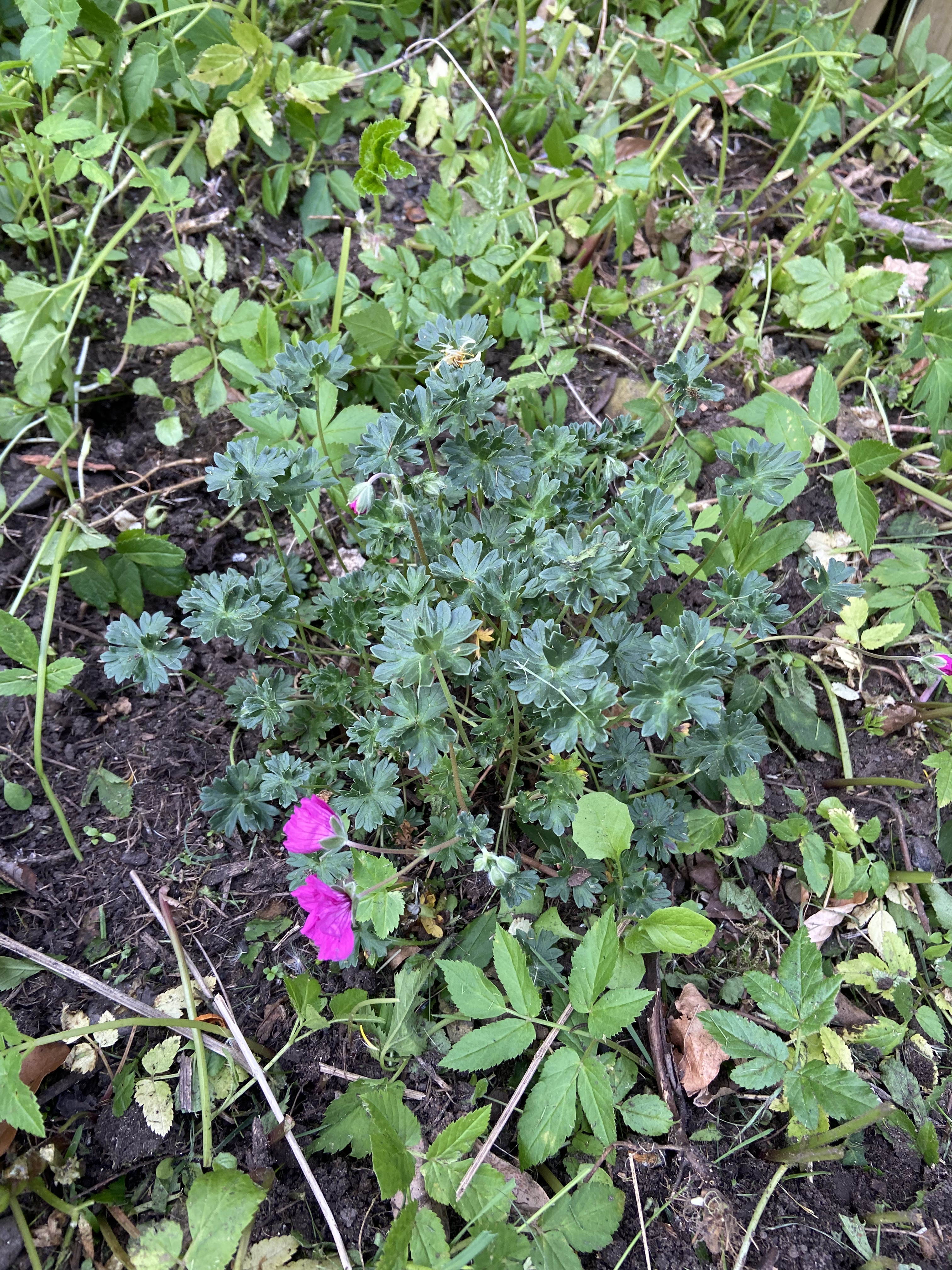
Anyway, I dug out some more and planted my new plants, watered them well, and now have abandoned them to their fate. Only time will tell!
I also planted some small plants in the three pots by the back door. Currently these are still dominated by the daffodil leaves. There’s a woman at the other end of the street, who has two beautiful planters that she maintains year round, with plants of differing heights and colours, as well as gorgeous flowers. Maybe one day, I will learn too, but currently, mine look like this.
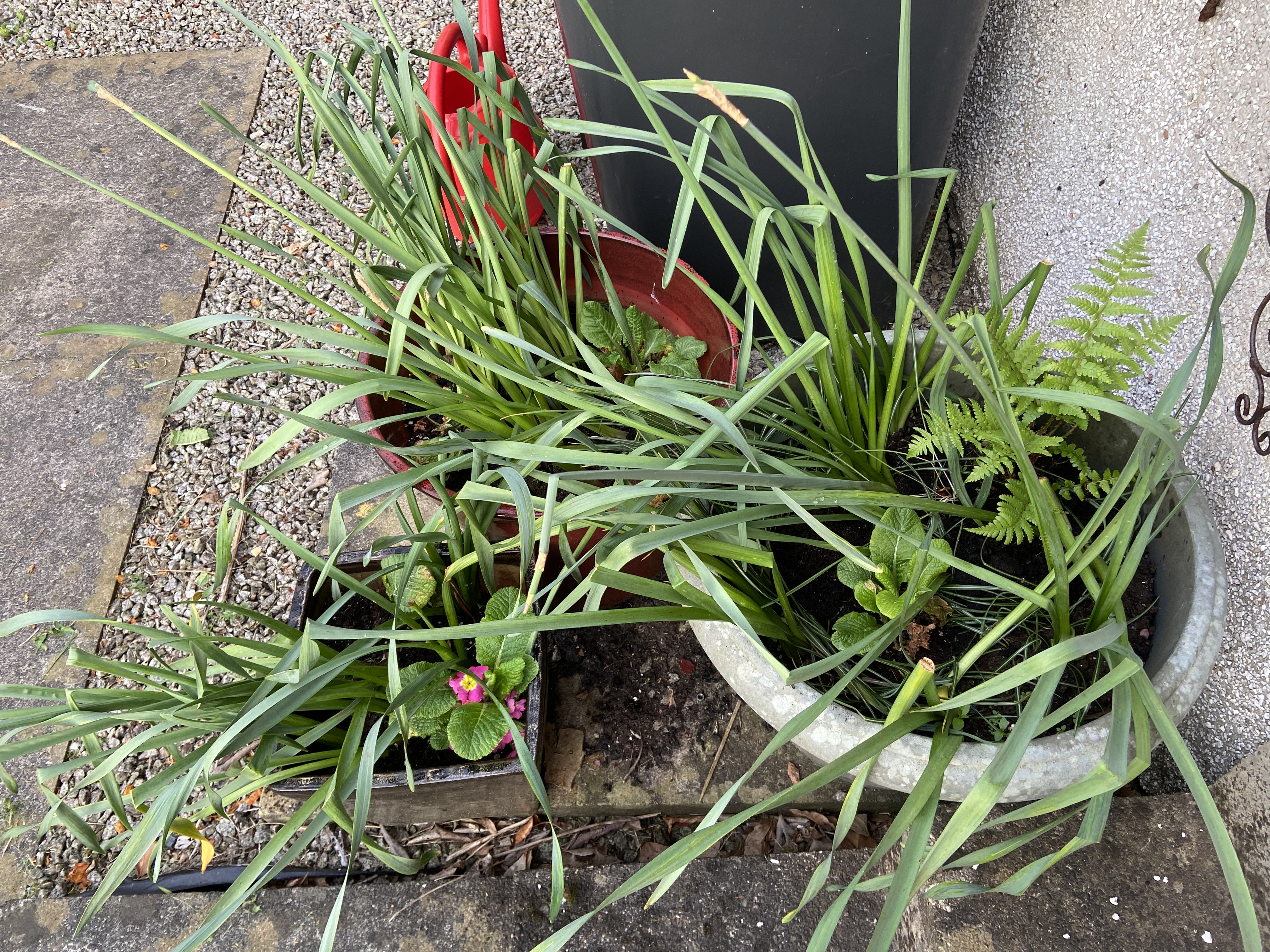
Learning to garden at 57 is fun. Better late than never!
Poultry vetting is also all new, albeit with a lot of background knowledge. I’ve only been out to one farm this week, but I thought, as I prepared for my visit, that most of my cases are going to be complex logic puzzles. When I was working with APHA, I often felt I was dealing with farmers who were probably having the worst day of their farming career and, though this week’s case probably wasn’t that bad, it was still severe.
There had been masses of deaths in a newly placed flock of broilers (rapidly maturing chickens, bred for meat). They started to die, in huge numbers, soon after being placed in the shed. There were three sheds on the farm. Two of the sheds were filled with perfectly healthy, fast growing chicks. The third was a disaster zone.
I read up on possible causes before going there. It seemed there were two likely scenarios. One was that the eggs were infected and the poor chicks had arrived loaded with bacteria they were never going to survive. The second was that, for some reason, the chicks had failed to find the water drinkers or had otherwise not managed to drink. My job then was to find out whether either of these fit. If not, it would be much more complicated, but that would be a whole new story.
The first thing I asked on arriving was who had been looking after the chicks over the weekend when they arrived. Ben (one of Inchcolm’s partners, alongside Eduardo) had told me it was not uncommon, after a weekend, for farmers to report a problem, only to discover that the weekend worker had failed to follow the normal routines and had missed a feed, or similar. With birds that grow so fast, it doesn’t take much to disrupt them.
That was quickly ruled out. The farmer had been caring for all three sheds himself. Nothing had gone wrong. Preparation for all three sheds had gone to plan. The sheds had been preheated to 30°C as they should. Water lines and drinkers had been checked. Feed had been provided appropriately so that it was easy for the chicks to find.
I double checked the water intake, which the farmer records daily. Though the chicks in shed 3 had drunk a little less than the other two, they hadn’t drunk significantly less. With the water theory ruled out, I had to check the evidence related to problems at the hatchery the chicks came from. If the chicks in sheds 1 and 2 were from the same batch, then it was more likely to be something that happened after they arrived.
But the evidence there was clear. Sheds 1 and 2 were from different parent flocks. The birds in shed 3 were from parents which were 26 weeks old. 1 and 2 were from rather older parents. Quite apart from the possibility of infection, chicks from younger parents are harder to look after as they are a little slower to regulate their body temperature (see how much there is to learn here!).
So before I even went into the sheds, or saw a single chick, I already had a lot of clues as to where the problem probably lay. And when I went into the sheds, they were lovely, clean and warm. The chicks were well spread out, which means they are not too hot and not too cold. The litter underfoot was dry: no sign of catastrophic water leaks or flooding. Everything was still pointing to infection.
I did a post-mortem on six birds and the signs were obvious. These tiny chicks showed all the signs of severe infection. Given they had started to die so soon after they arrived, it was almost certainly a problem in the hatchery. The farmer had done everything he could, but the whole thing had been horribly put in train before the chicks were delivered.
I wanted bacteriology done, but I wasn’t going back to Inchcolm for over 24 hours, so I popped into the SRUC lab in Dumfries when I got back. I had hoped they could do bacteriology on some samples I had taken. However, after speaking to one of the vets there, it seemed it would be much better for the farmer to take some birds into the APHA lab in Penrith. This was actually a better solution as, if the farmer wanted to claim compensation from the hatchery (which I hope he does) then an independent assessment would be massively helpful.
The vets at Penrith were super-helpful. I arranged for the farmer to drop off chicks on Thursday and they rang me with preliminary results on the same day, then sent a preliminary report yesterday. It confirmed my finding – that these poor chicks were overwhelmed with infection, likely E. coli.
This isn’t a happy story. I hadn’t just read up on the investigation. I’d also read up on treatment and the reality is, that for tiny chicks like these, where they were infected while still in the egg, there’s nothing you can really give that helps. Ben had given antimicrobials as soon as the problem raised its head and I left a vitamin B supplement to try to help, but really the improvements needed are in the hatchery.
Both Eduardo and Ben had told me this when I first arrived. If the UK broiler industry really wants to cut down on antimicrobial use, then the improvements need to start there. In my first few weeks, almost all the problems I have seen have involved birds that arrived on the farm already infected. Whether anything can be done about that is another story, but I am already thinking about possibilities. I have come from Norway, where almost no antibiotics are used in poultry production, so it isn’t impossible.
Ah well. Tilting at windmills is something to be done while I’m still new to all this. I don’t have many tools, but my mind is already working on it. I’m wondering whether APHA might have some levers. Nothing wrong with giving it a try. Meanwhile, my poor farmer is the one weathering the storm.
I will leave you with a picture of the delicious Cumberland sausage in a roll I had at Cairn Lodge Services on my travels. There’s something very satisfying about putting a spiral sausage in a roll. It’s much less likely to fall out than two traditional sausages.
Thanks for reading and I hope you have a good week.