After my second week of consulting, I’m starting to feel a lot more confident in what I can tackle. As I talk to the other vets about cases, the information they give me slots back into place, like the memory it is. It feels good, like pulling on an old familiar cardigan. Indeed, as I watched one of the other vets working with an animal that had been hit by a car and was struggling to breathe, some very specific memories began to surface.
From 2001 to 2004 (and occasionally after that) I worked as an emergency vet. We saw a whole lot of traumatized animals and dealt with a lot in respiratory distress and I got very good at it. At one time, on my computer, I wrote a flow chart about how to diagnose those cases. It requires minimal handling and movement, because they can be very fragile and you can tell a lot, simply by comparing different areas of the chest to see where there is silence instead of breathing sounds. For example, liquid in the chest (think blood) is likely only on one side and it flows to the bottom, whereas escaped gas may be higher up. I’ll need to see if I can find it.
There’s also a recent graduate and I feel very honoured because she sees me as competent enough to ask questions. That may sound daft, but only a few weeks ago, in Glasgow, I felt I could barely tackle anything. Now I take anything from the waiting list and cope, as I once did. Vets get very used to dealing with things, even when they’re not sure what’s going to crop up next. Anyway, in return, I ask the newish graduate things, because she has lovely, up-to-date knowledge. Working with new graduates is enjoyable and rewarding.
I have been swithering over what to do next, jobs wise. A long time ago, I thought I would enjoy locumming, but then I had a family and we moved to Norway. It never came to pass. Now I discover that I do, indeed, love it, yet at 57 and with a mortgage (and memories of health issues that would have required considerable time off) it feels risky. Returning to APHA with its pension and sick pay is obviously the safer option, and yet…
For now, I can put that decision off. Middlesbrough PDSA want to extend my four weeks until the end of the year and I’m inclined to accept. I’m also going to Norway, two weeks today, for two weeks with my lovely friend Shirley. There will be time away from it all and someone to talk to about the whole thing. And goodness knows, I’m lucky, at 57, to actually have options. I know many are not so fortunate.
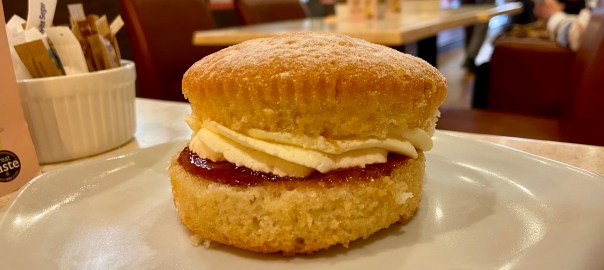
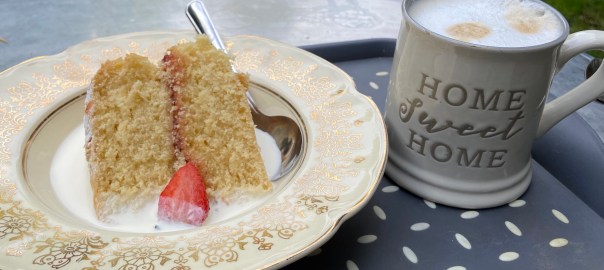
I’m back at Mum and Dad’s now for the weekend and went to Skipton yesterday in a hunt for some new winter boots. I didn’t find any (not much call for proper winter boots in the UK) but we did get coffee and a cake in Café Capo. Mine was the mini Victoria sponge at the top of the page. It was delicious and I spent every bite trying to work out whether the cream was butter icing (I don’t think so, it was too smooth and light) or whipped cream with something added. Again, I think not, because it was too dense. It may have been some kind of meringue buttercream, but I didn’t ask, so will never know! I would highly recommend it though, as I would their latte. Very creamy indeed!
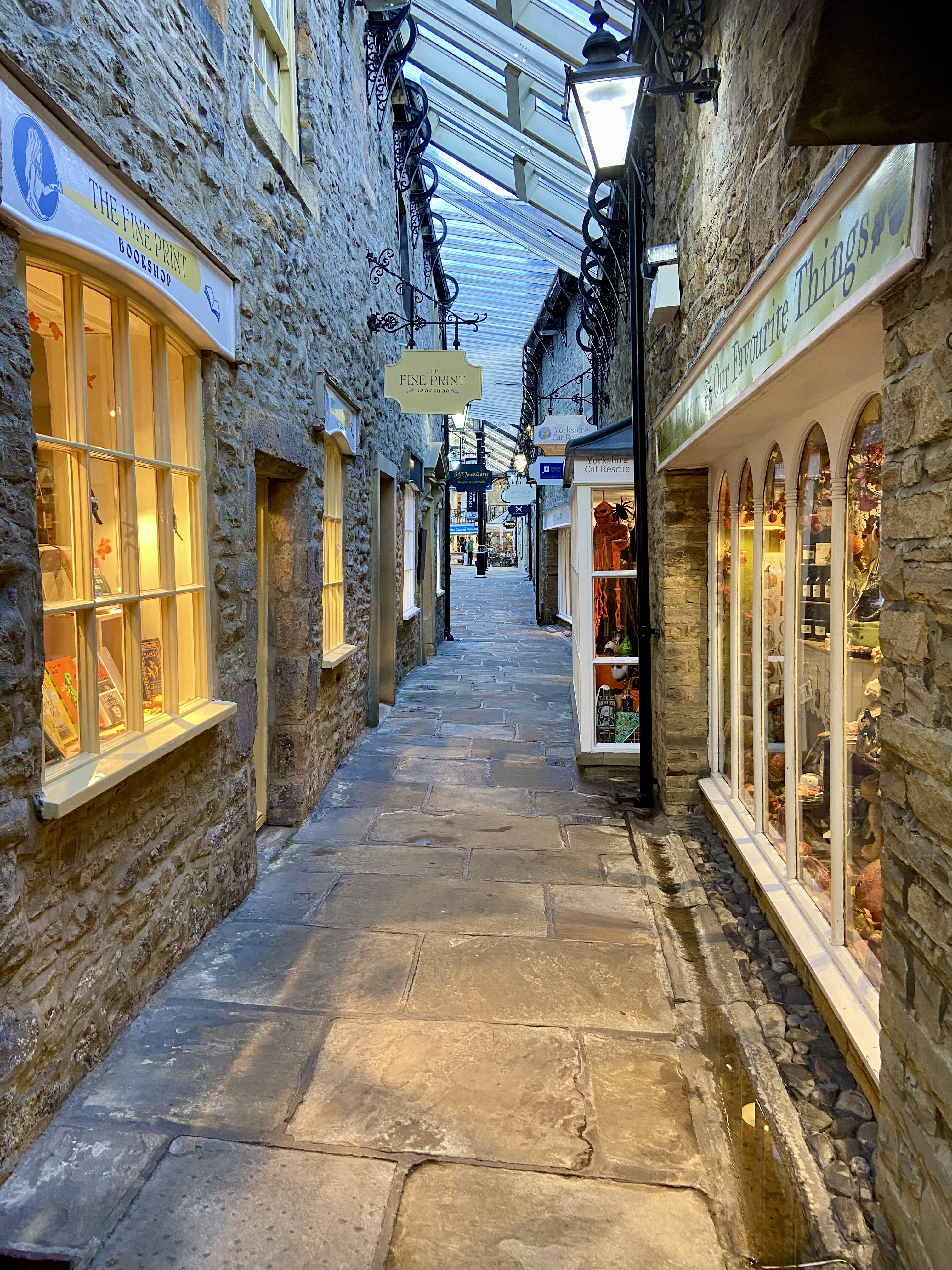
We walked back to the car via Craven Court shopping centre. I love it there. It feels a bit like walking through a Harry Potter set and I saw a couple of things in windows that I might go back and buy as Christmas presents, if I get the chance.
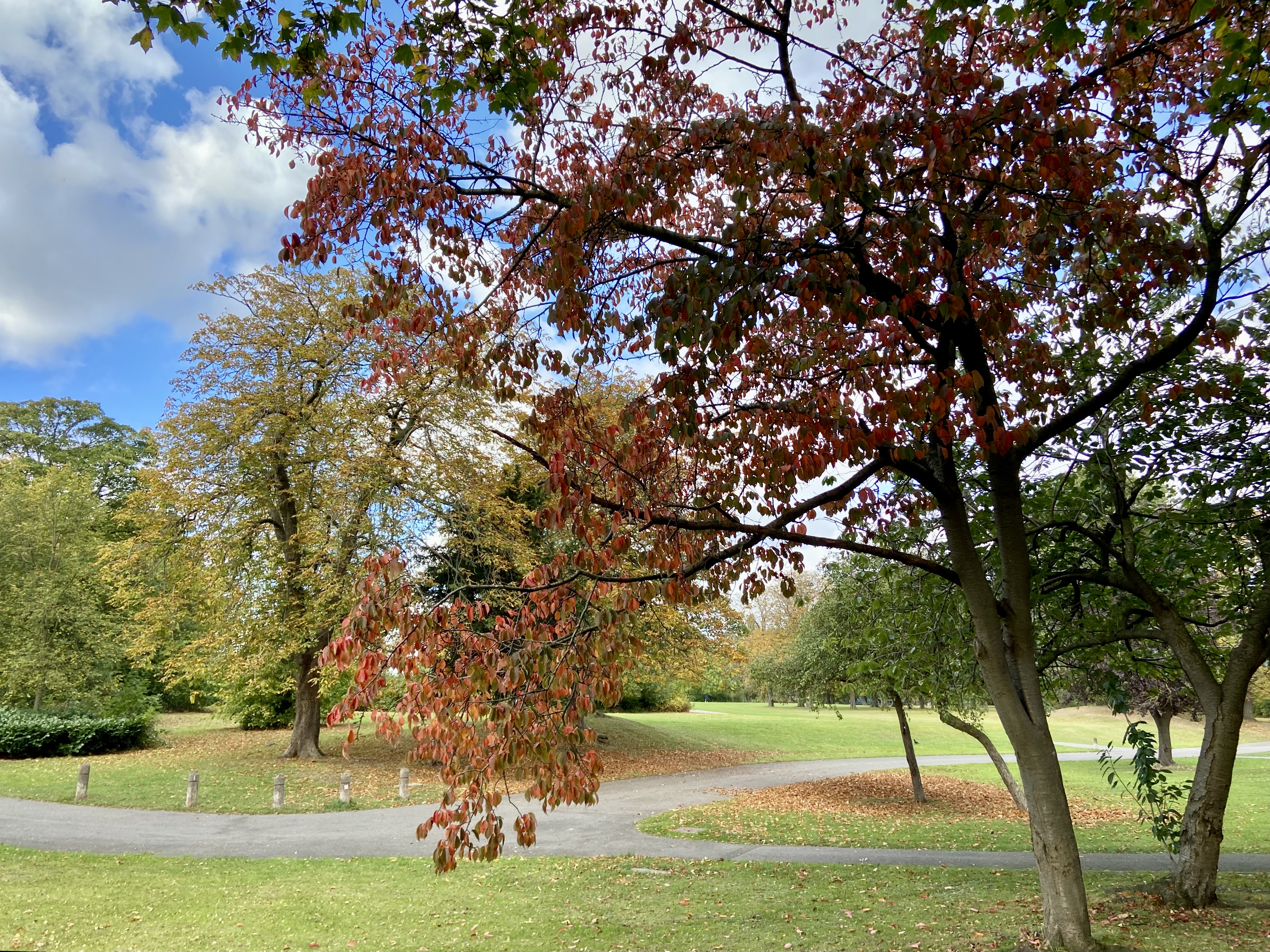
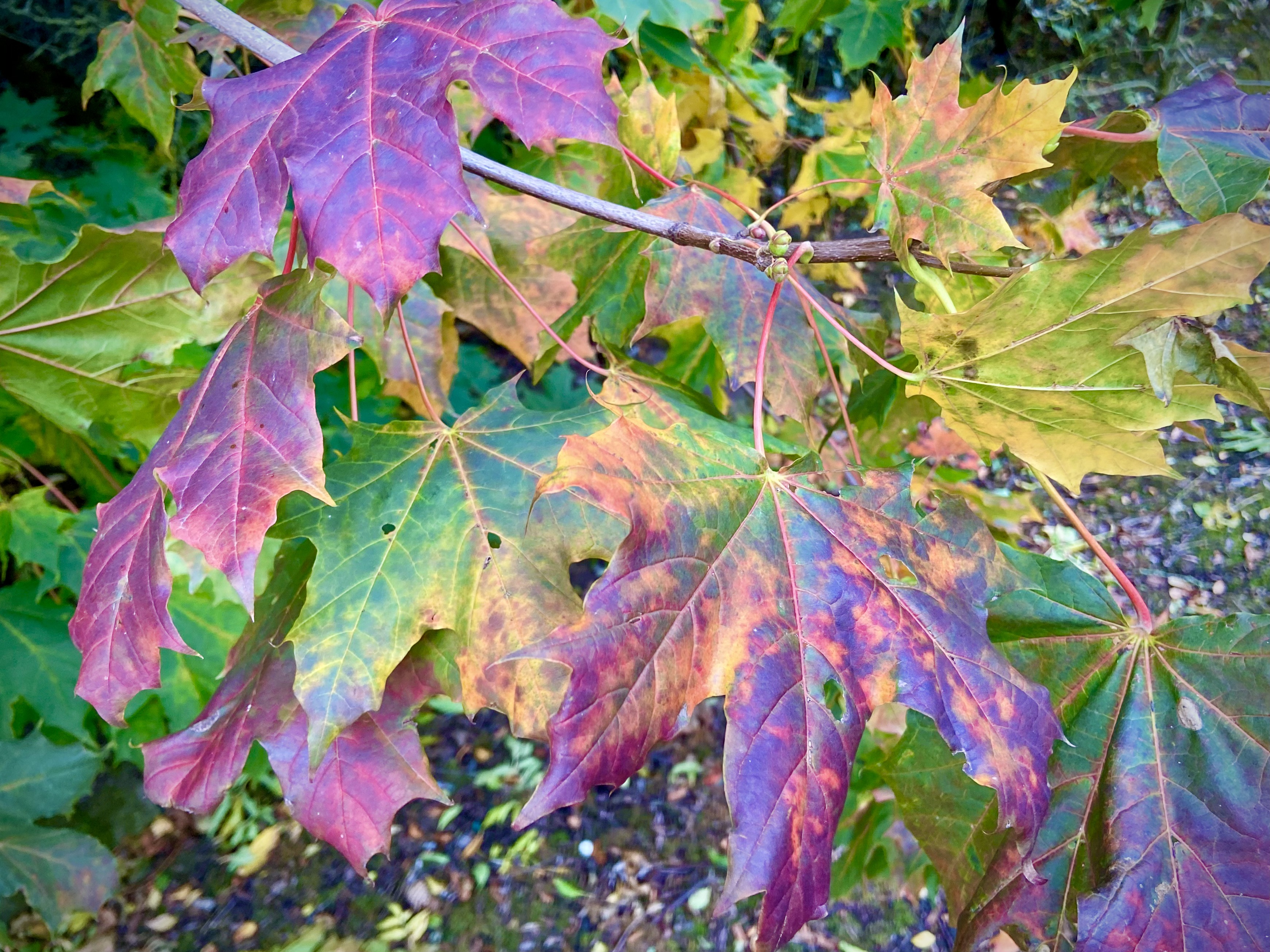
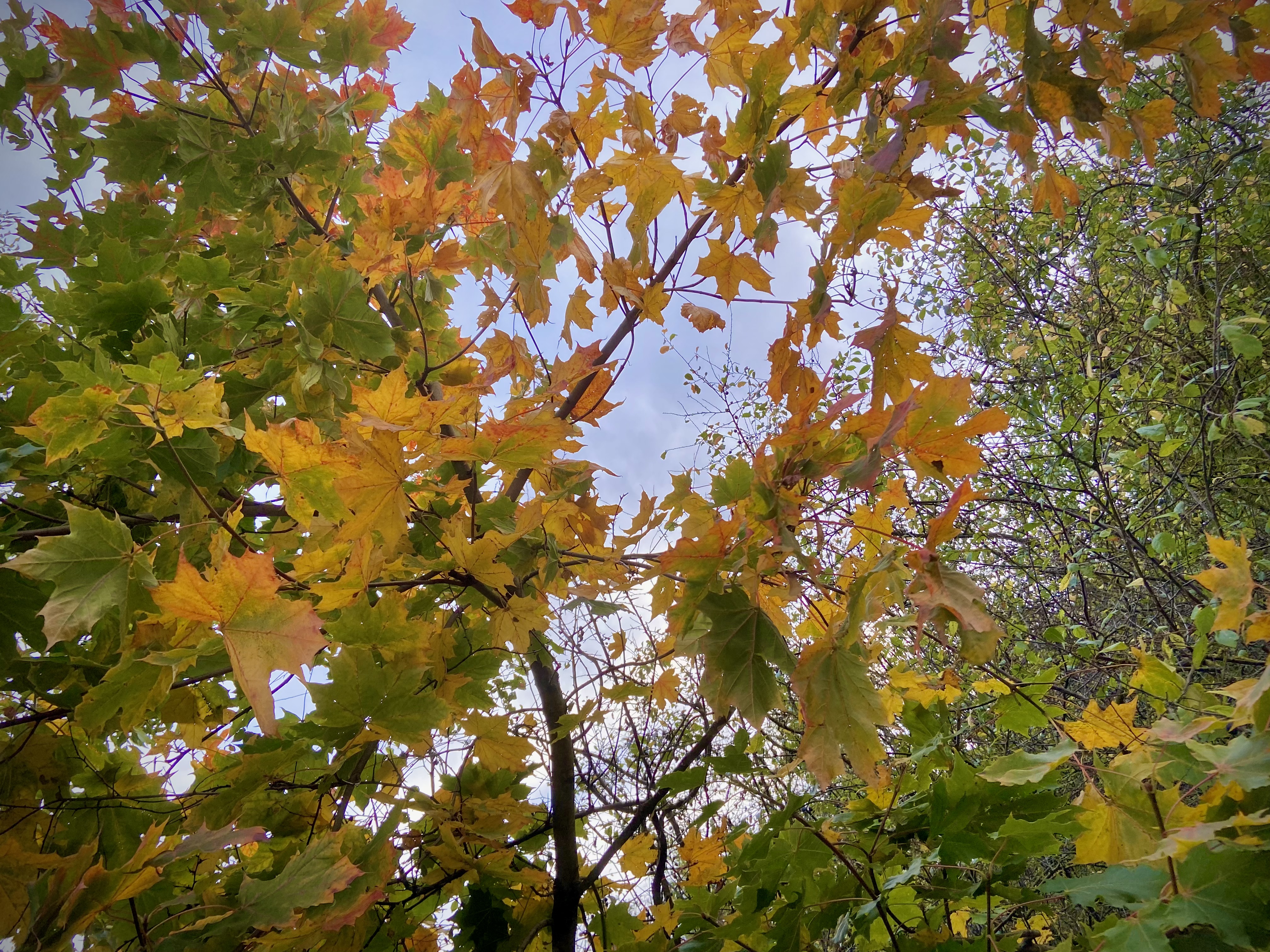
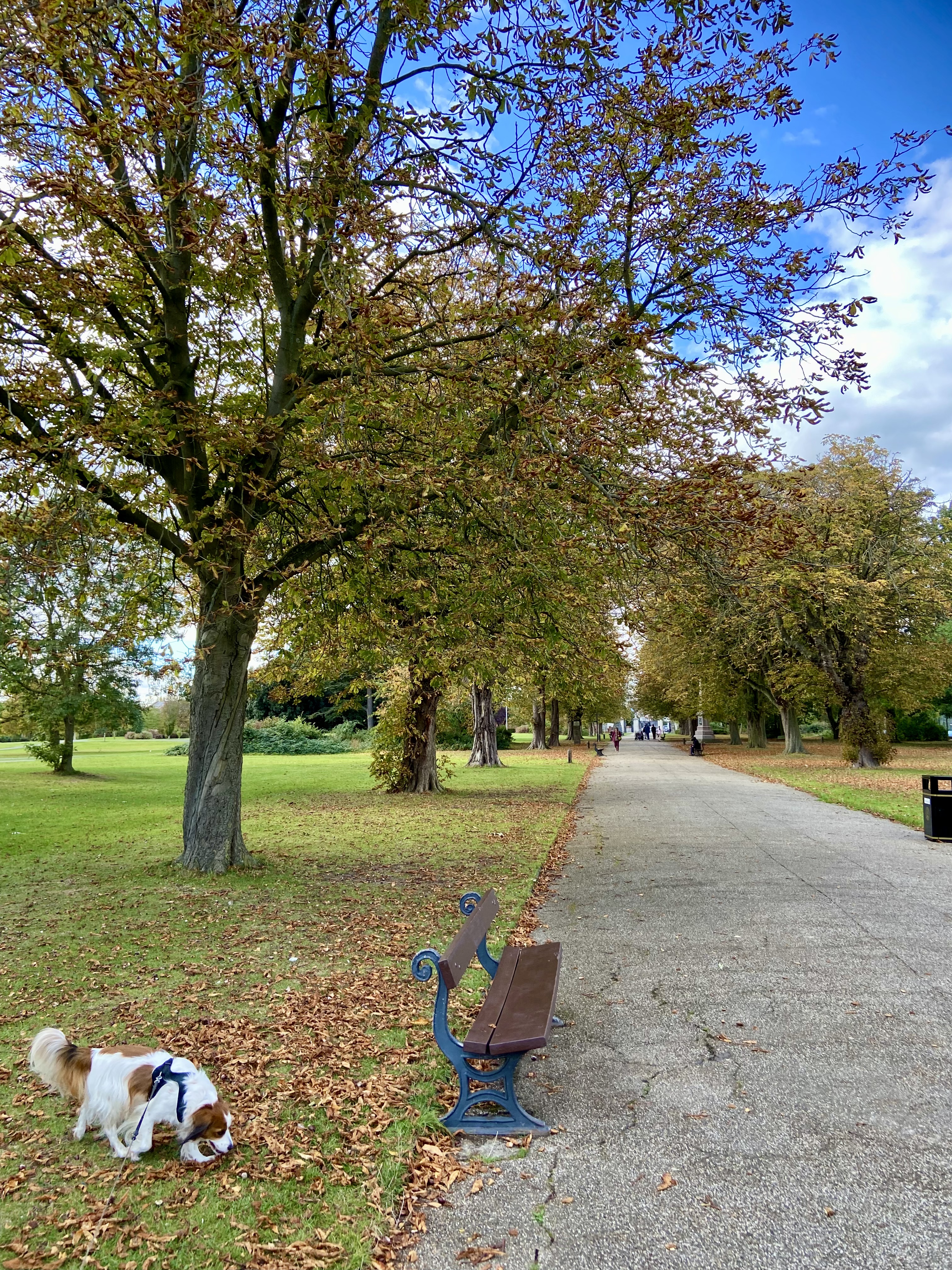
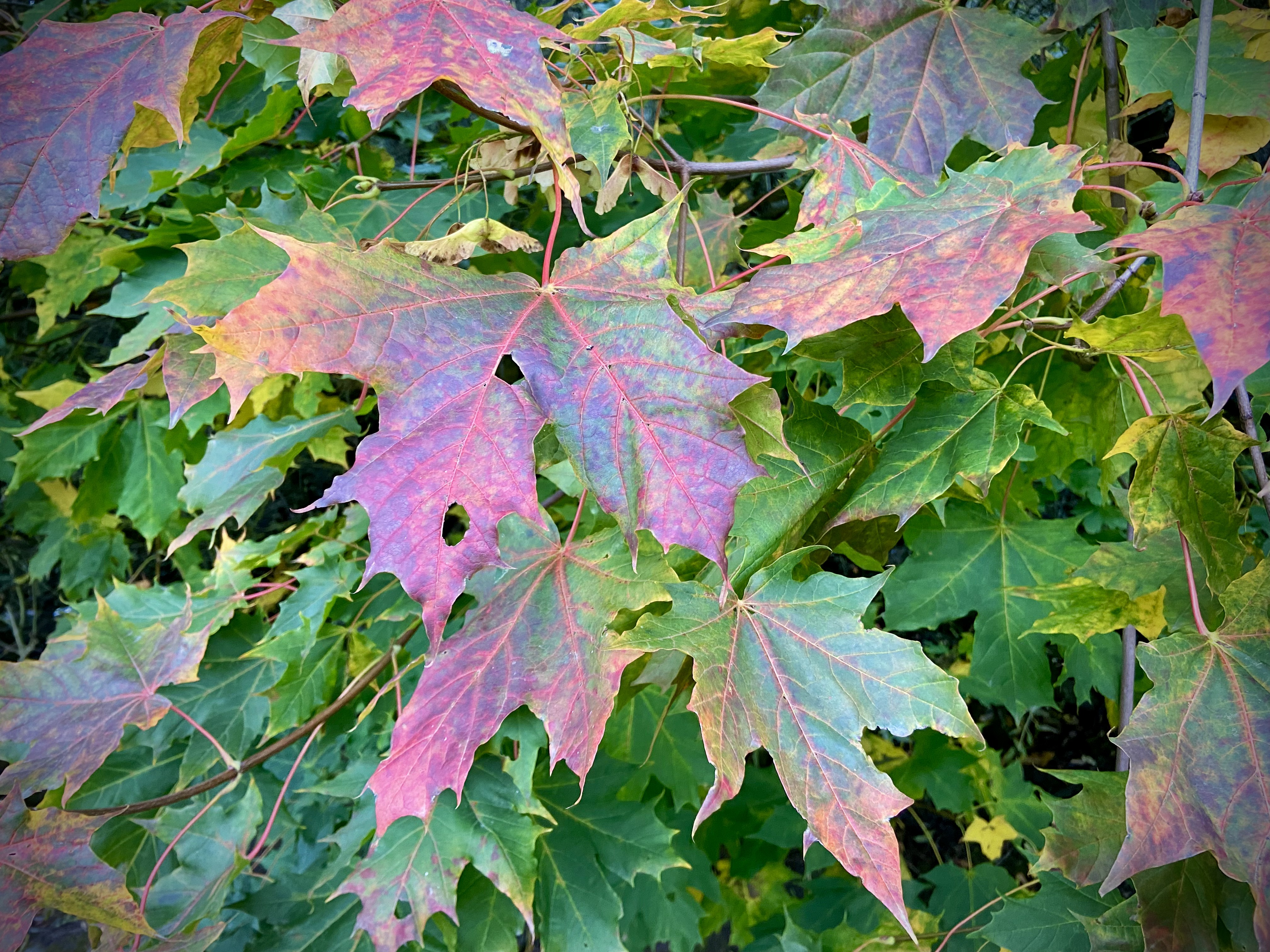
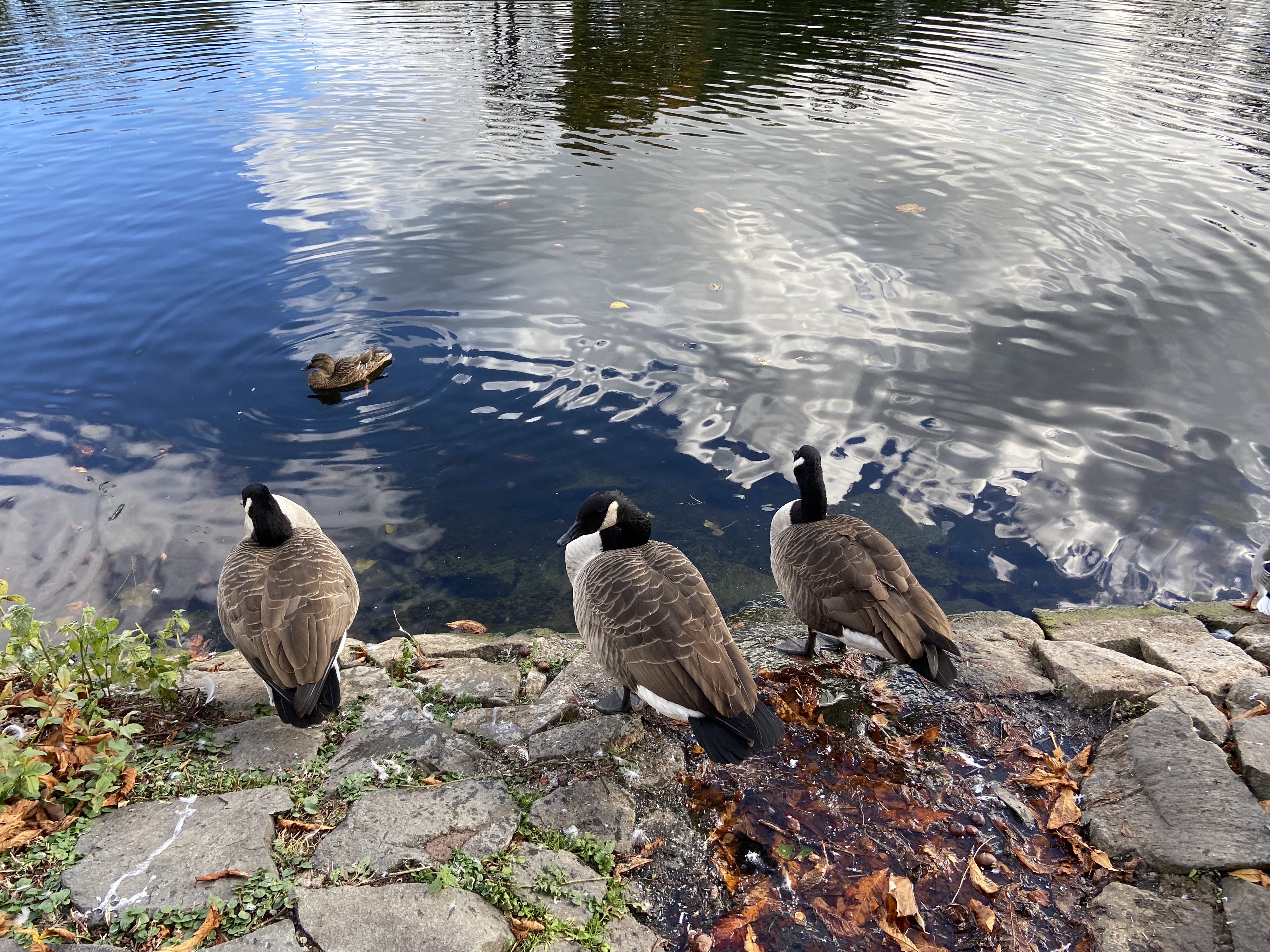
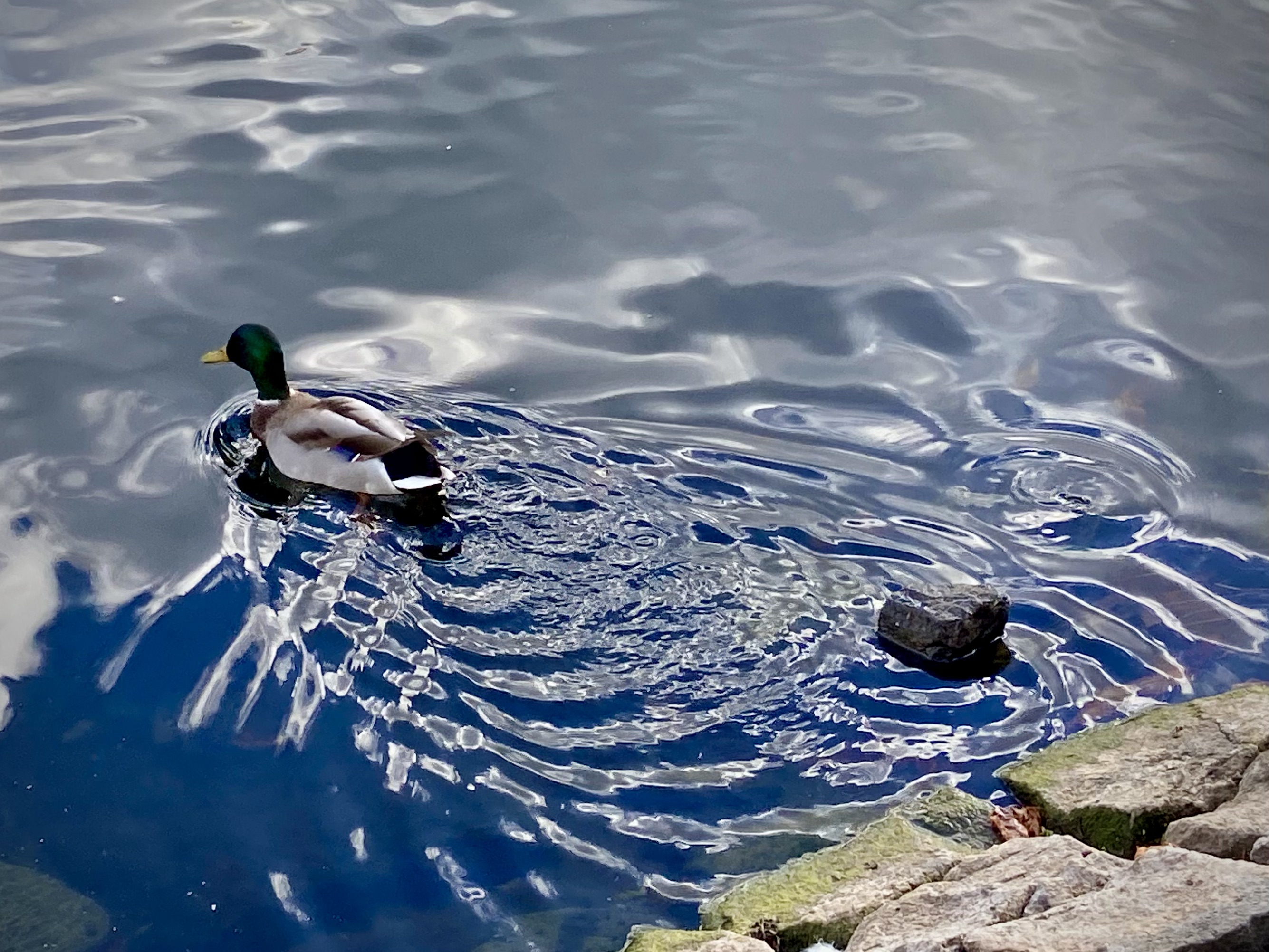
On Monday, I will return to Middlesbrough, but for now, I’m going to relax and maybe do some cooking. Being at Mum and Dad’s is always a good opportunity for a Sunday roast. Last Sunday, I took Triar for a walk after we discovered the gorgeous, Albert Park in Middlesbrough. There was a large pond and beautiful autumn trees, so I’ll leve you with some photos as usual. Thank you for reading and have a good week!
My first week at Middlesbrough PDSA is done. It’s interesting (for me) to compare this with my stint in Wolverhampton. While at work, I was busier. Consultations are intense, though I guess I’ve only worked four days and the first, spent operating, was relatively light. But the days are shorter: eight to four thirty or nine to five thirty, compared to nine am to seven in the evening. When the weekend arrived, as in Paisley, my first thought was, “where shall I go?” and not, as in Wolverhampton, “I need to rest.”
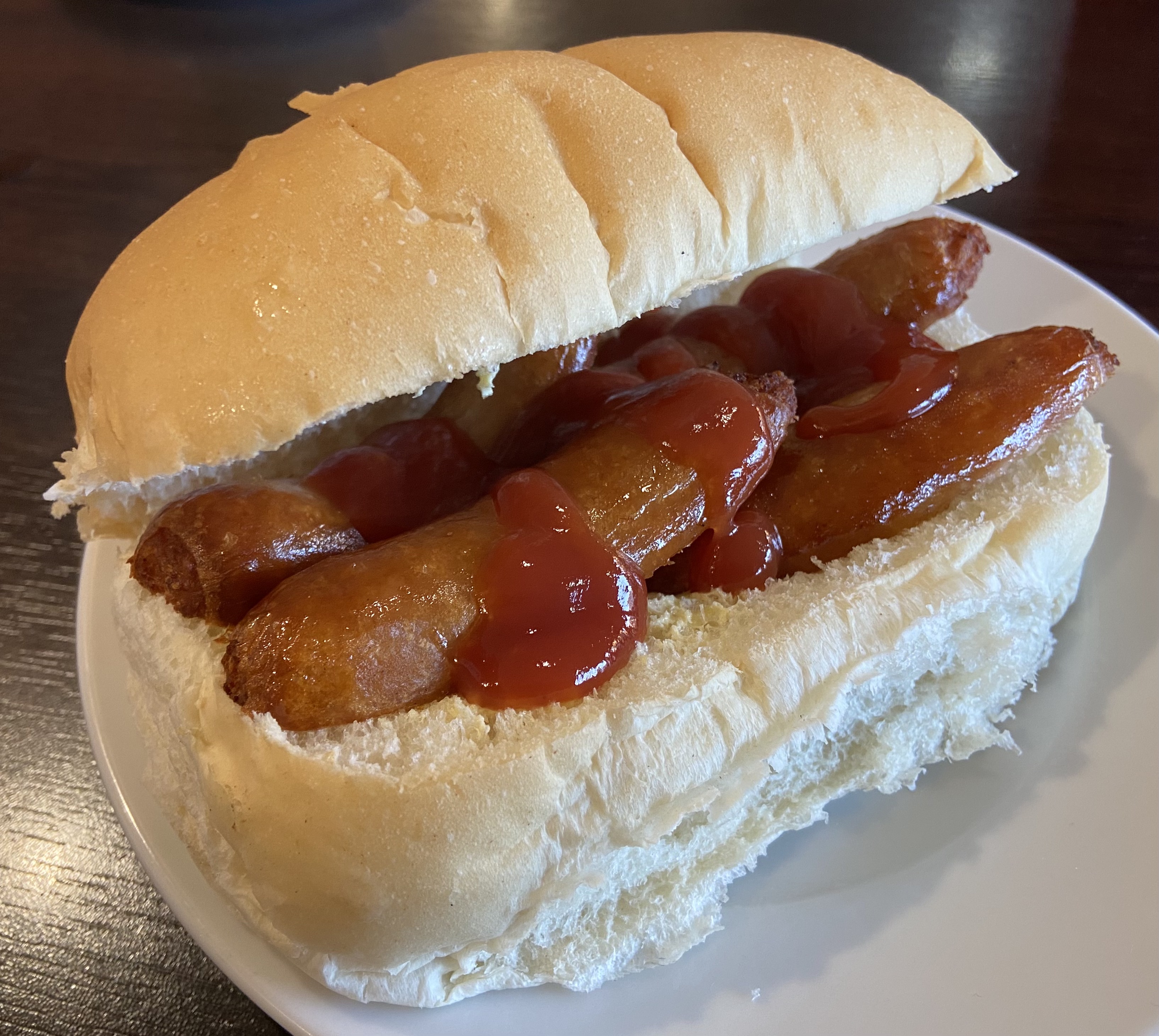
The result of that thought was that I should take Triar to the seaside. He loves a good beach. So on Saturday morning, after a delicious roll with sausages in the Norton Café, we set off towards Saltburn by the Sea.
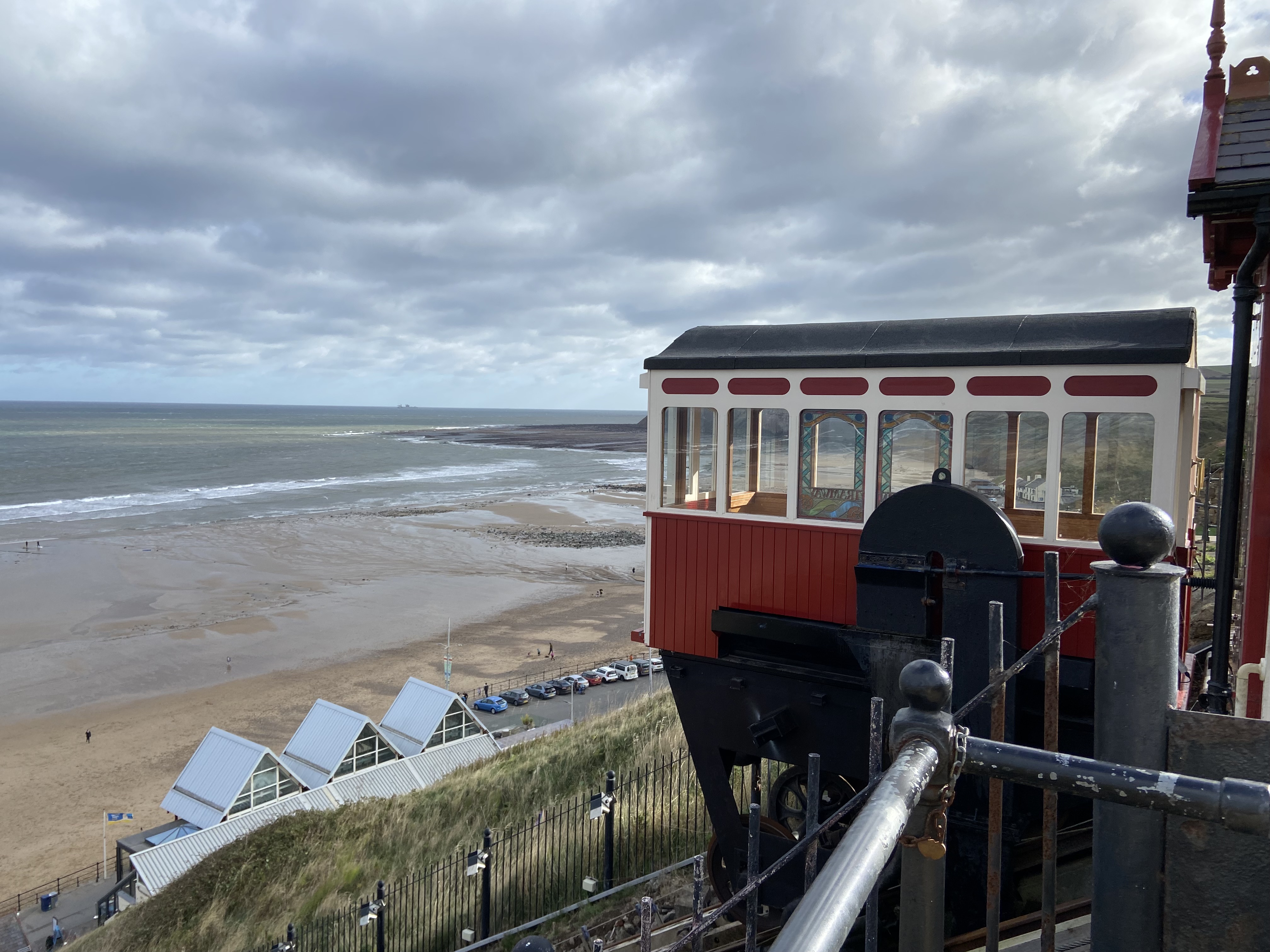
Saltburn is a fairly typical, if very well maintained, Victorian seaside town, which grew from a tiny smuggler’s hamlet on the shoreline, to an attractive holiday resort. The hamlet, consisting of the Ship Inn and a row of fisherman’s cottages, is still there. Had I read about it before going, I would have made the effort to walk along there, however I was distracted by a fascinating piece of Victoriana in the form of a steep, funicular railway or cliff lift, that was created to take visitors from the cliff top town, down to the beach and the pier.
It didn’t open until ten thirty, so Triar and I walked down the stairs to get to the beach. It was only when we got there, that Triar reminded me that Beaches are Ball Places. Back in the North of Norway, whenever we could get to a beach, he would play long-distance fetch, using one of those arm extenders to throw the ball. It was covid time and the beach was isolated, so normally we had the whole beach to ourselves.
Now, in Saltburn, he kept zooming off, looking round, then rushing back and looking at me with hopefully cocked ears. The saddest thing was that I had his ball in the car. I’d just forgotten to take it out. And there were a lot of steps to get back there. Eventually, he made do with zooming around and around, enjoying the sand under his paws. There was certainly plenty of it!
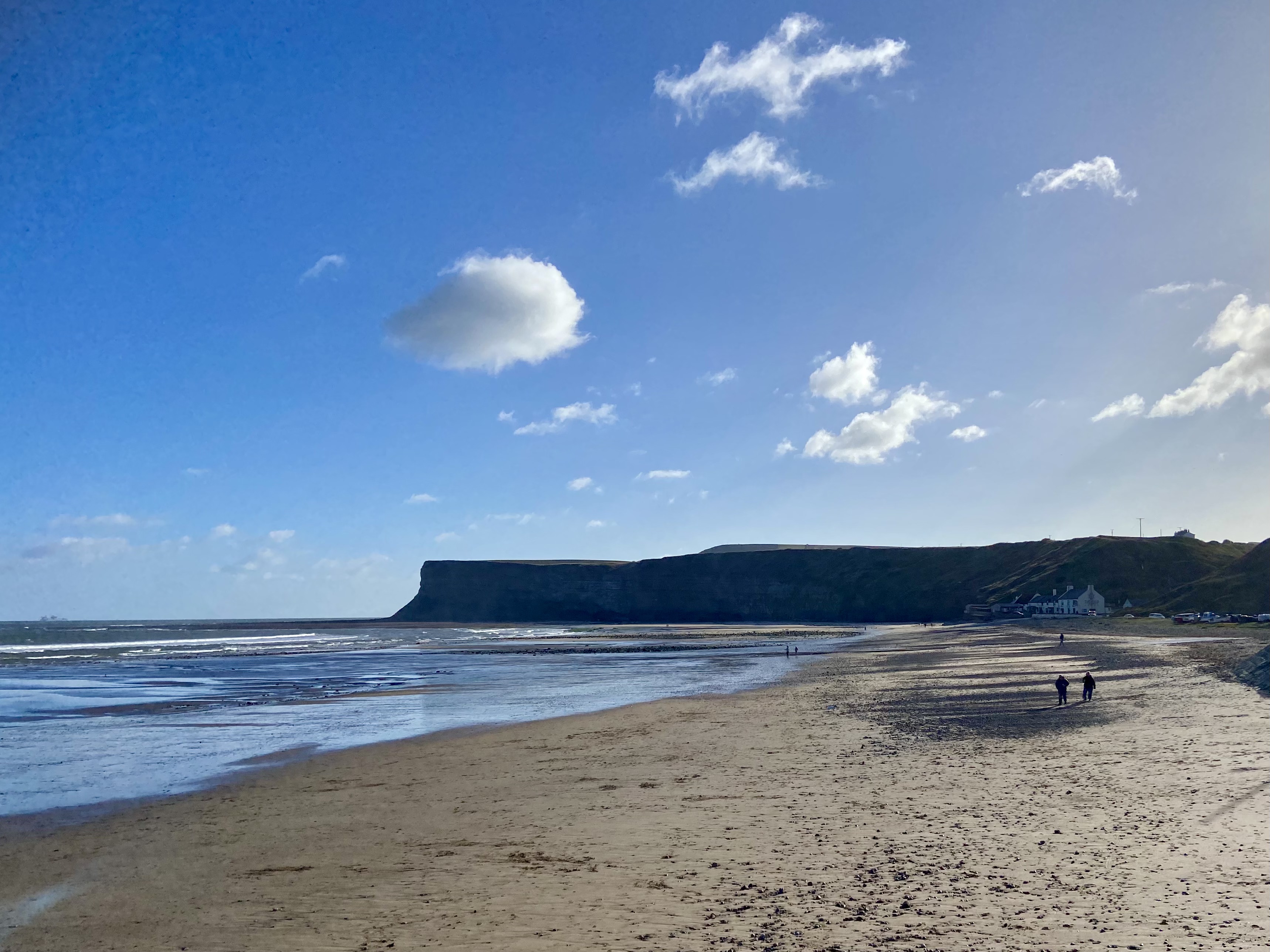
The Ship Inn is visible on the right of this photo of Saltburn Beach with the Huntcliff headland beyond
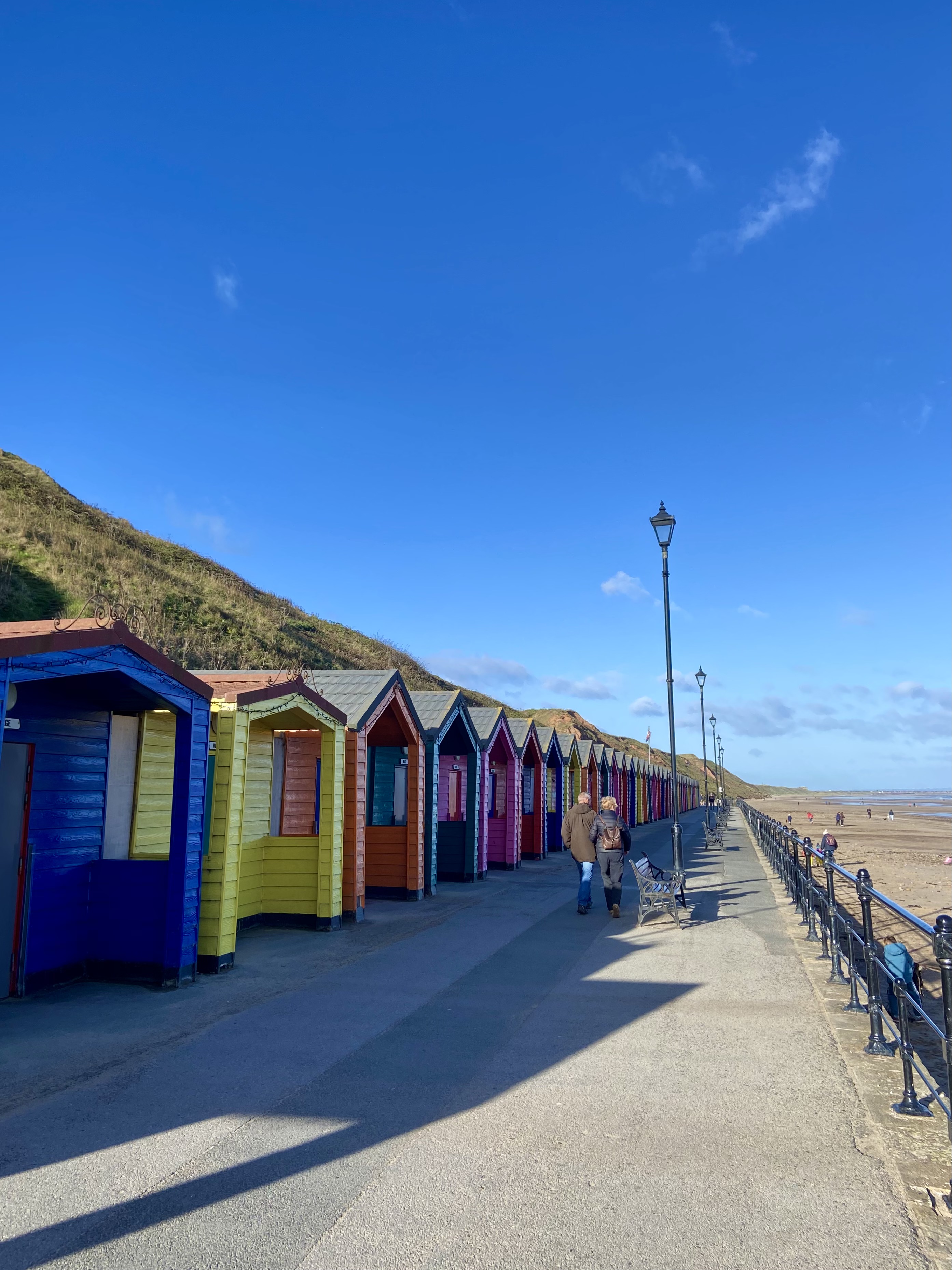
In the opposite direction, past the pier, we found a gorgeous row of traditional beach huts. These can still be hired out for the day, complete with seats and tea and coffee making facilities, though by now, we were out-of-season and so it was empty.
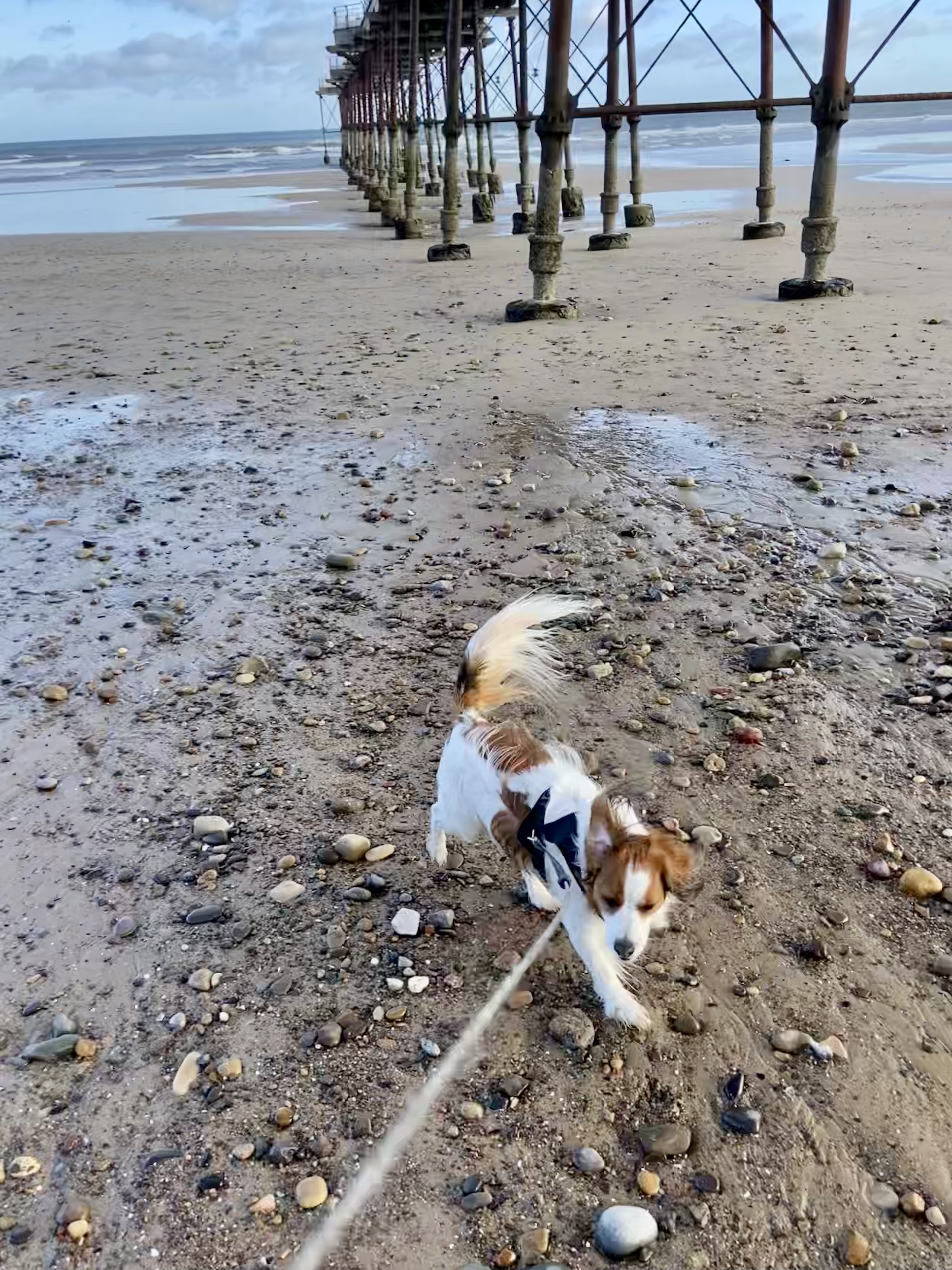
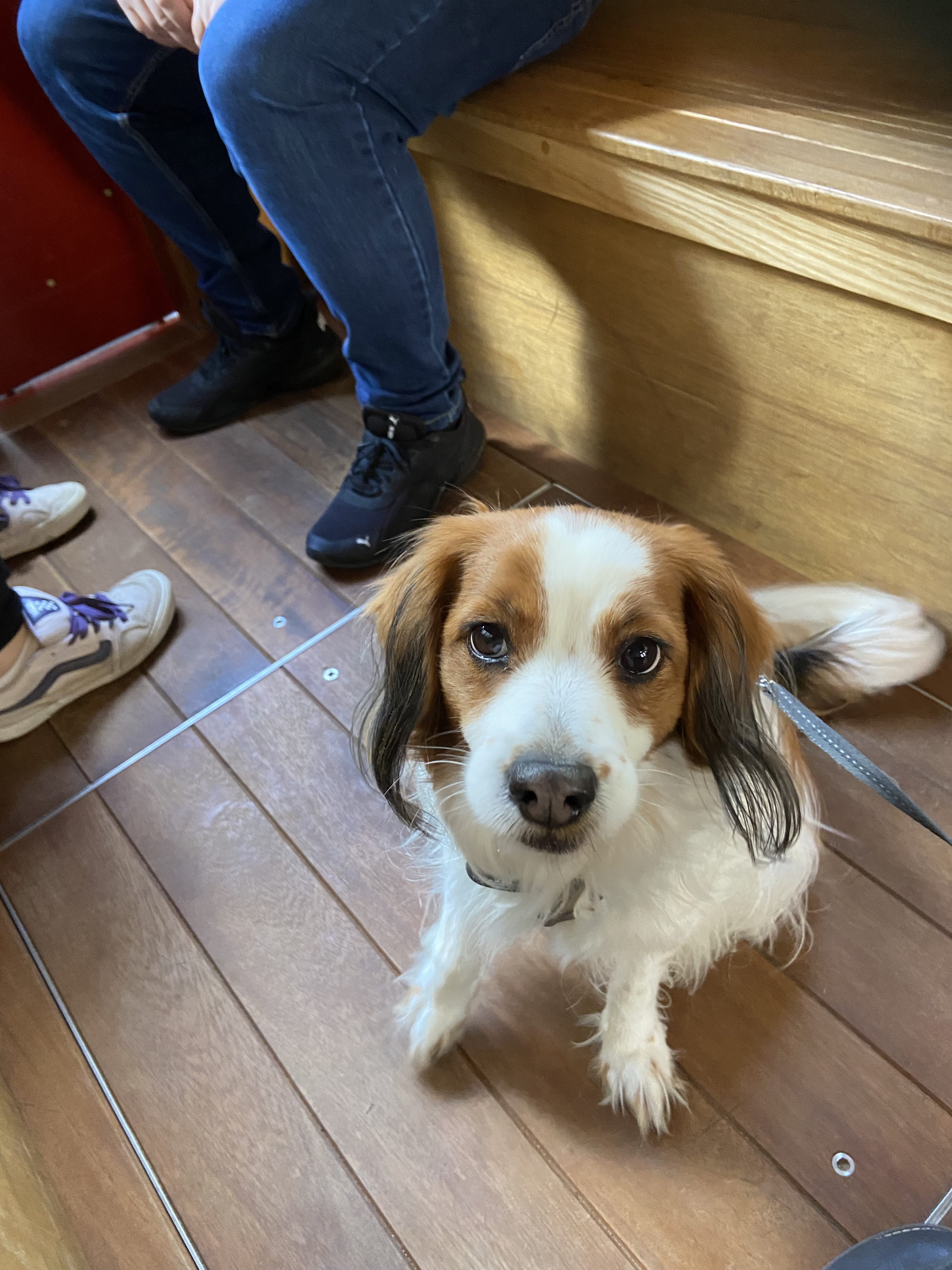
As you can see from Triar’s fur, the wind was bracingTraditional beach huts
We walked past the huts and a little way along the beach, then turned back to catch the Saltburn Tramway (as the funicular is called) back up to get to the car. I’d noted earlier that dogs cost 20p to take the lift, so for the princely sum of £2.20 we travelled back up the cliff face in style.
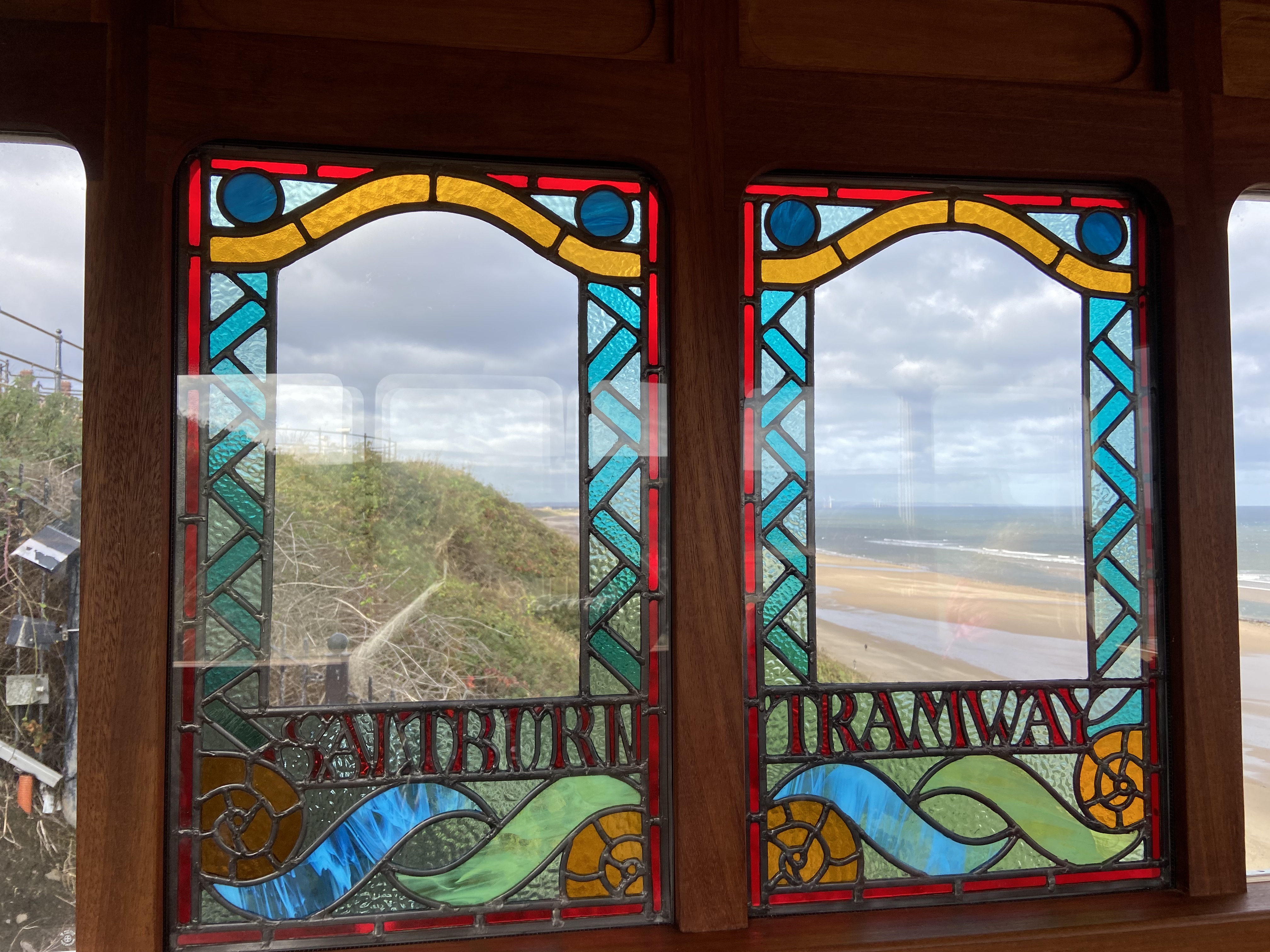
Triar in the lovely wooden tram carStained glass tram car window
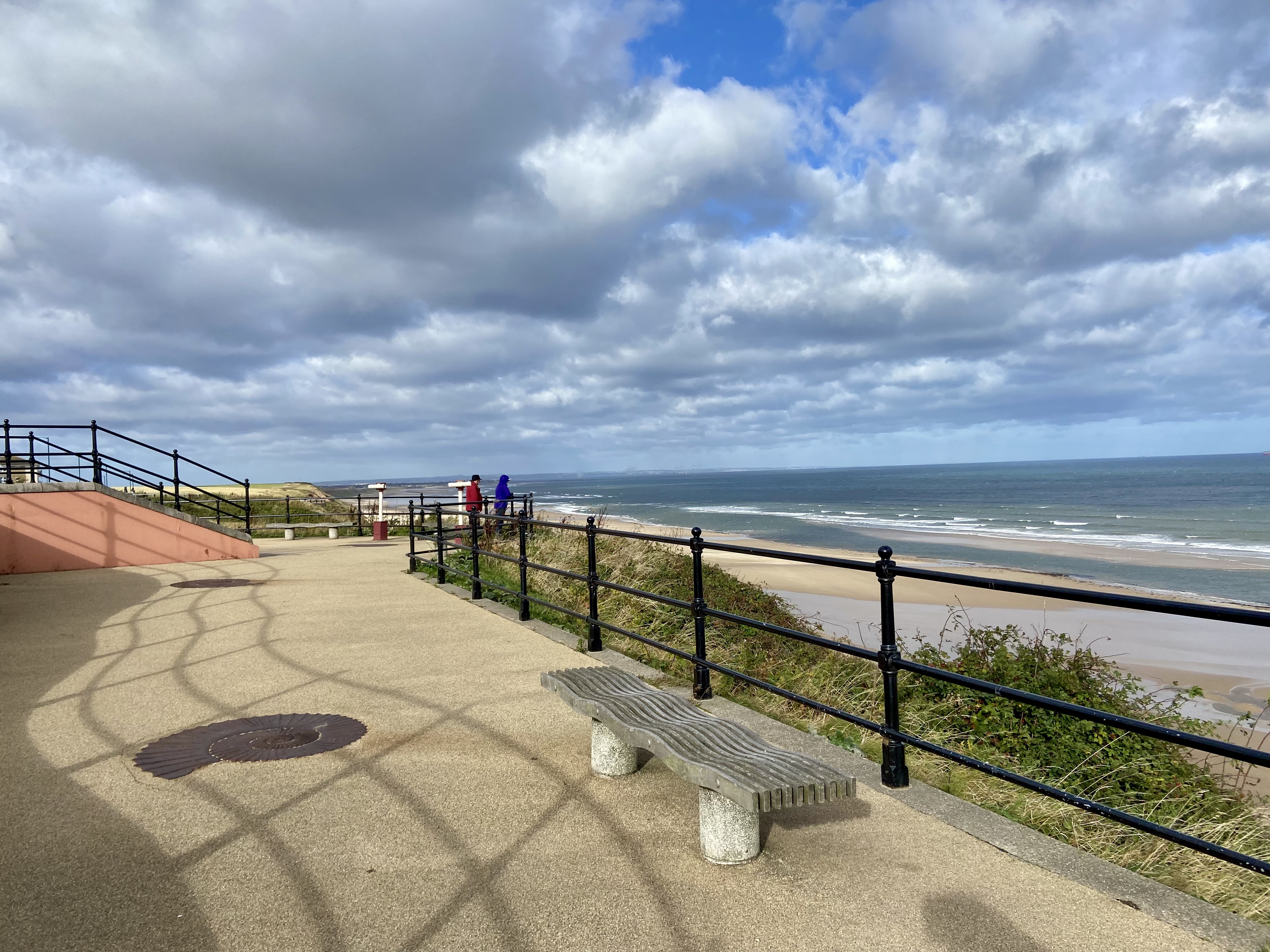
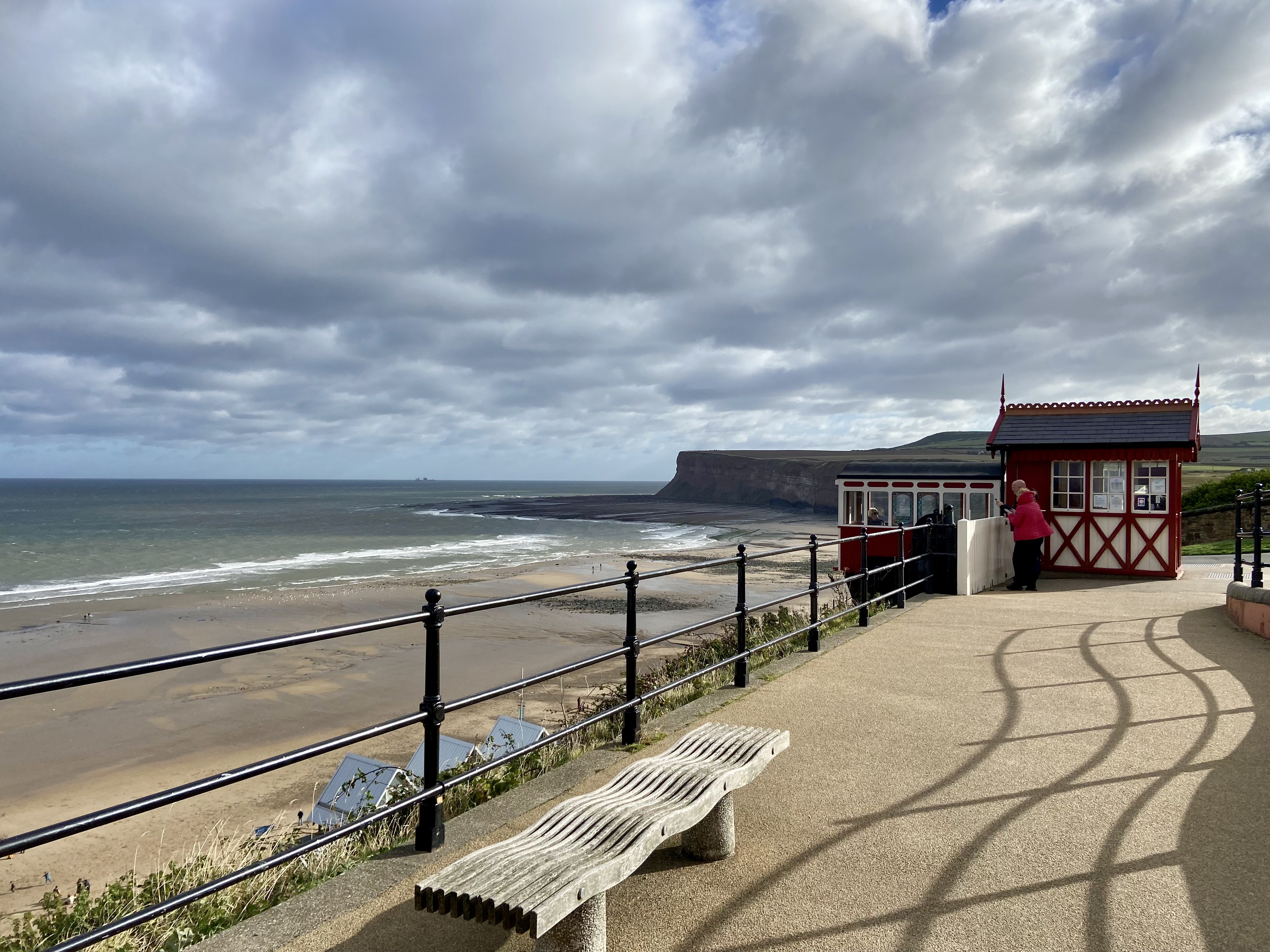
Back at the top, I noticed some very attractive, wavy benches, so I stopped for photos in both directions.
Looking west towards RedcarLooking east at the lift station, with Huntcliff beyond
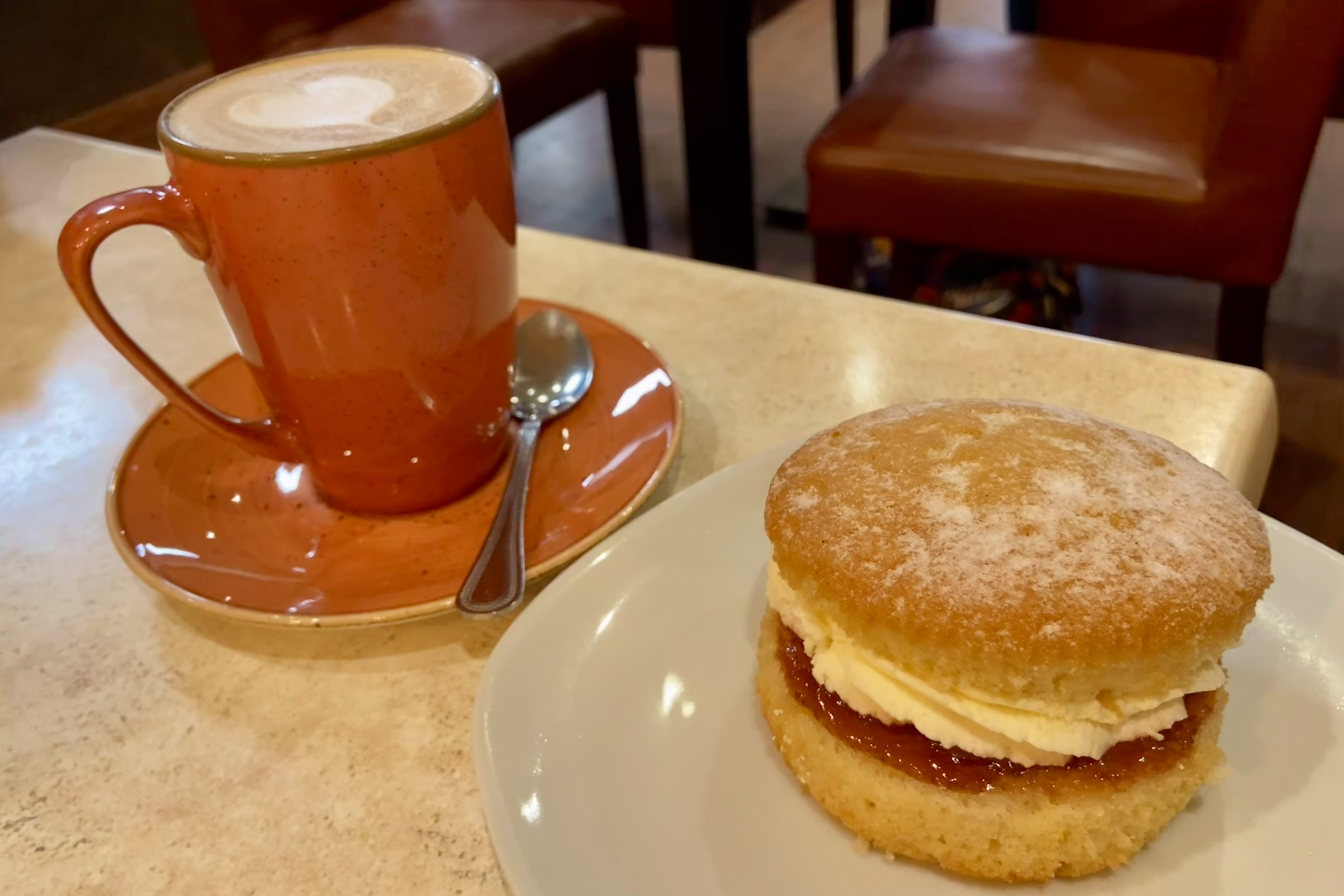
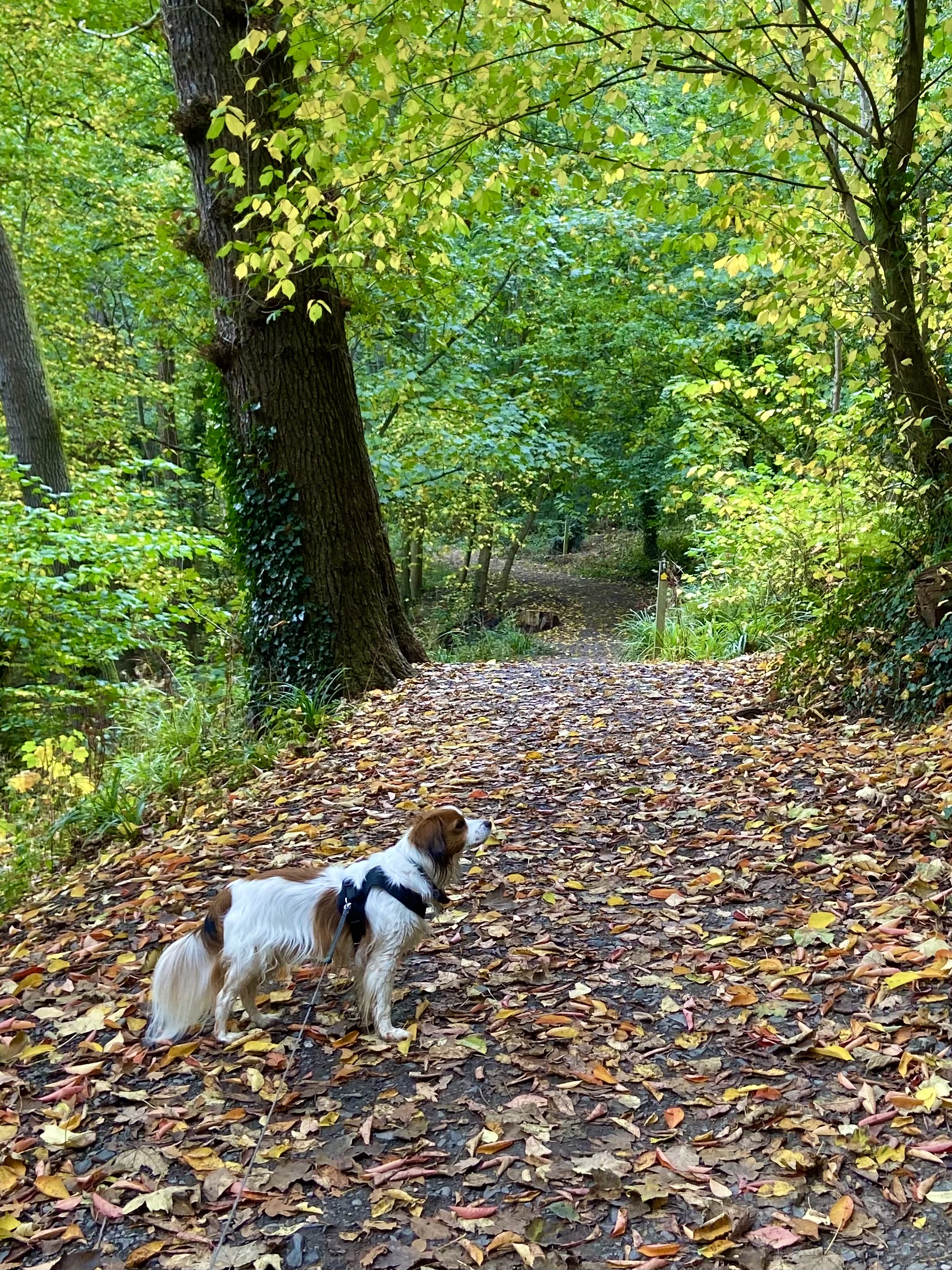
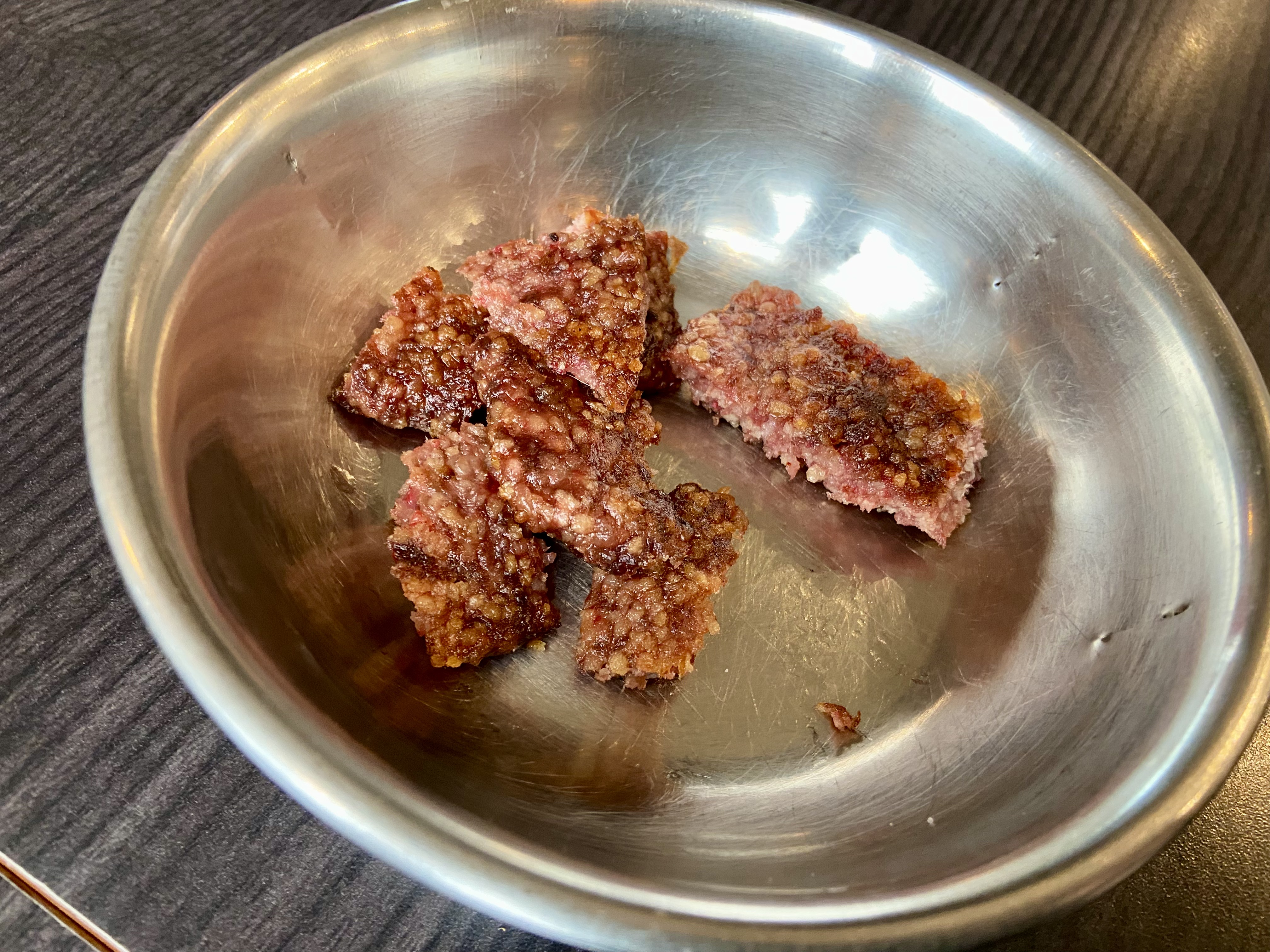
It was too early to return home, so I decided a bit more exploration was in order. I saw Saltburn Valley Garden Tearooms on the map, so I decided that was where we would go next. We drove along the front to the west, then stopped beside a gate into the woodland pathways that led down into the valley. Autumn is beginning and it was lovely, tramping through the fallen leaves. The tearoom itself is another bit of delicious Victoriana situated, as it is, beside an Italian Garden and near to Forest Halt – the end of the line for a miniature railway that runs from the beach in summer. I ate the very traditional Victoria Sponge in the photo at the top of the page and Triar was quite satisfied with the two dog biscuits he was provided, along with my coffee.
Having explored a bit of the railway line, and having watched Triar paddling happily in the stream, we headed back up, through the woods and to the car.
Triar, checking for squirrels
We got back to the caravan where we are staying fairly early and it’s fair to say, both Triar and I were exhausted. My only regret, as with Rothesay, is that we were at the seaside again, and still didn’t get fish and chips. There were cafés available, but there was so much cream with the sponge cake, that fitting in lunch would have been too much.
Caravan life is reasonably comfortable. We are here another week, before heading to Mum and Dad’s for a long weekend, after which we will be staying in a slightly more sophisticated apartment, based inside an actual building! I’ve enjoyed the tiny, cosy box bedroom and being lulled to sleep by the rain on the roof, but the chemical toilet at two am (I can use one inside the house during the day) and the relative lack of cooking facilities decided me against trying to book two weeks more here.
Anyway, I am looking forward to another operating day tomorrow. Not sure what the rest of the week will bring, but it’s been a fantastic weekend. Thank you for reading and I hope you have a good week!
It’s been a pleasant week in the Dales for me. I came down to take Dad for a doctor’s appointment on Monday, not knowing for sure when my next locum would begin. I’d been offered October at the PDSA in Middlesbrough, so I wasn’t sure how soon in October it would begin. Happily for me, it starts on Tuesday next week, so I’ve been wandering round Settle, drinking in the peace and beauty.
Th doctor dad saw was a haematologist. On top of various other problems, Dad’s red blood cell count and platelets are low, which means finding energy to move is very difficult. The doctor recommended taking a bone marrow biopsy, with the suggestion he might be able to use the hormone, haemapoetin. It’s a hormone that stimulates the bone marrow to work harder, thus hopefully resolving some of the problems. But to do that, he needed to do the biopsy first. O asked him if there was any chance of it being done this week, while I was down. He wasn’t optimistic, but happily, as I drove out of the hospital grounds, Dad got a phone call to say he’d been booked in on Wednesday.
So we went back on Wednesday and Dad let me come into the room for the procedure. He then proudly told the nurse and doctor I was a vet. I must admit, I was very touched by his obvious pride in me. Sometimes I forget what an achievement it was. The doctor was efficient in taking the sample and the nurse that accompanied us was reassuring throughout and I was glad for Dad, that it was done so quickly. Results will take a couple of weeks.
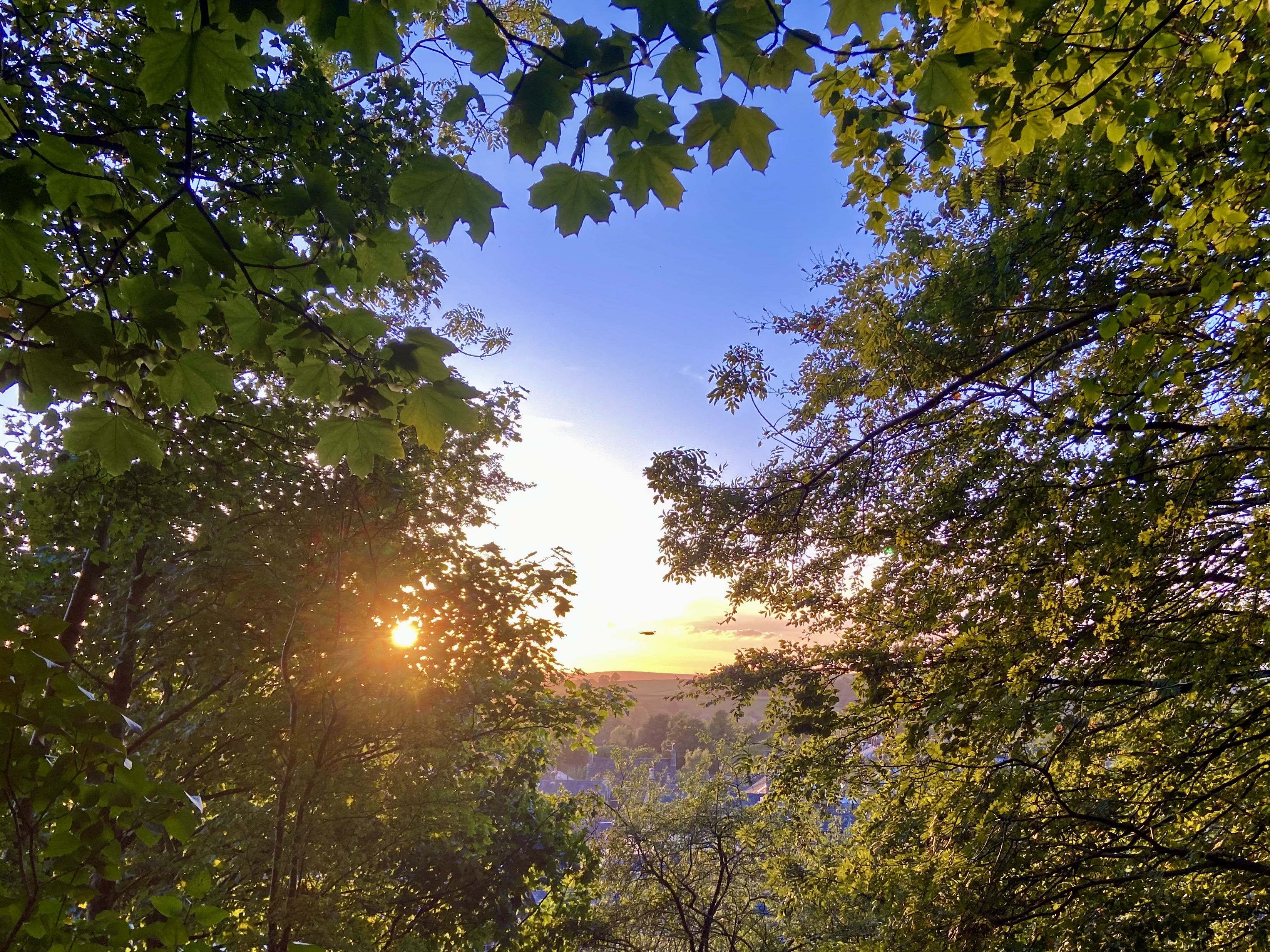
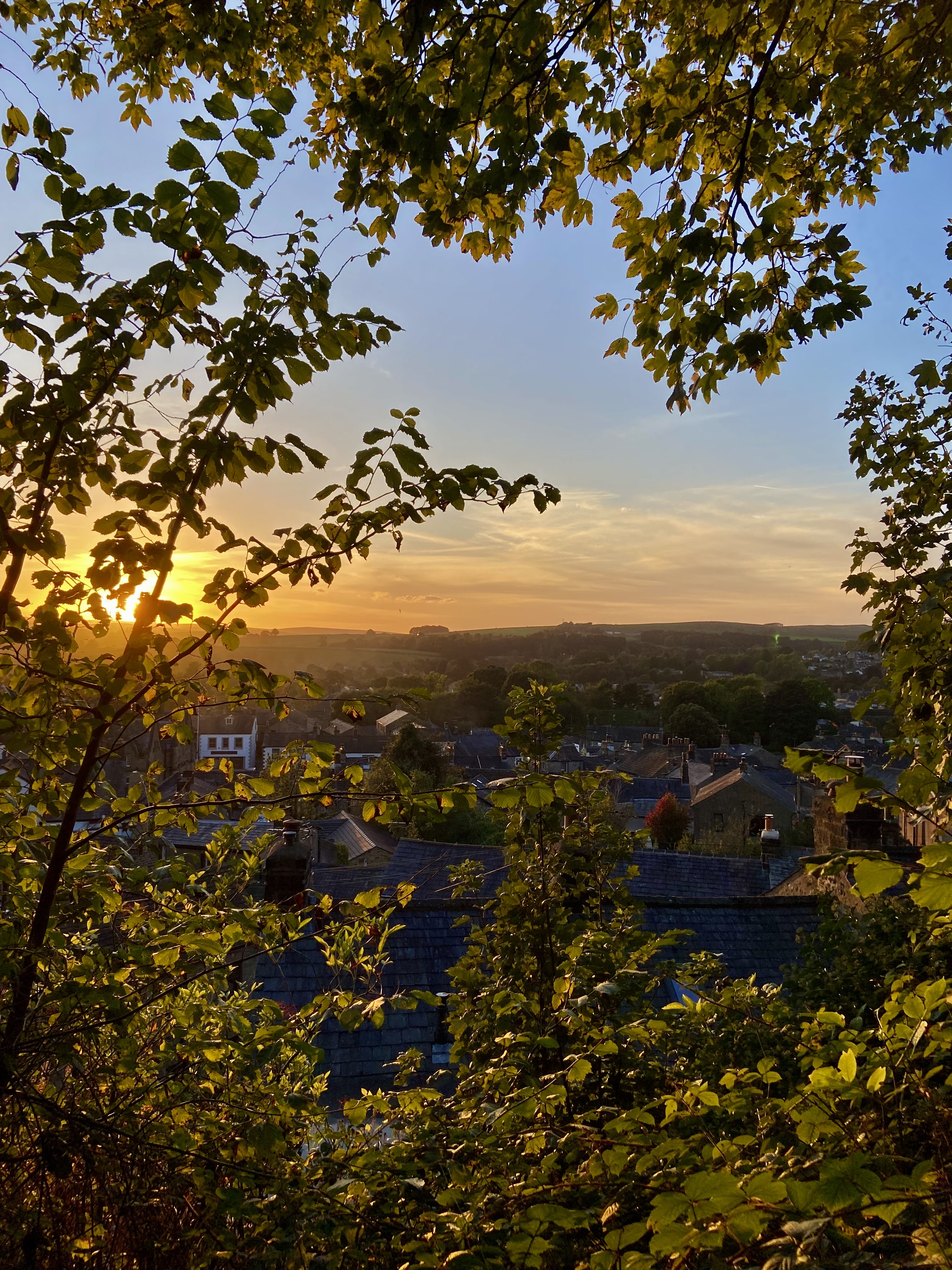
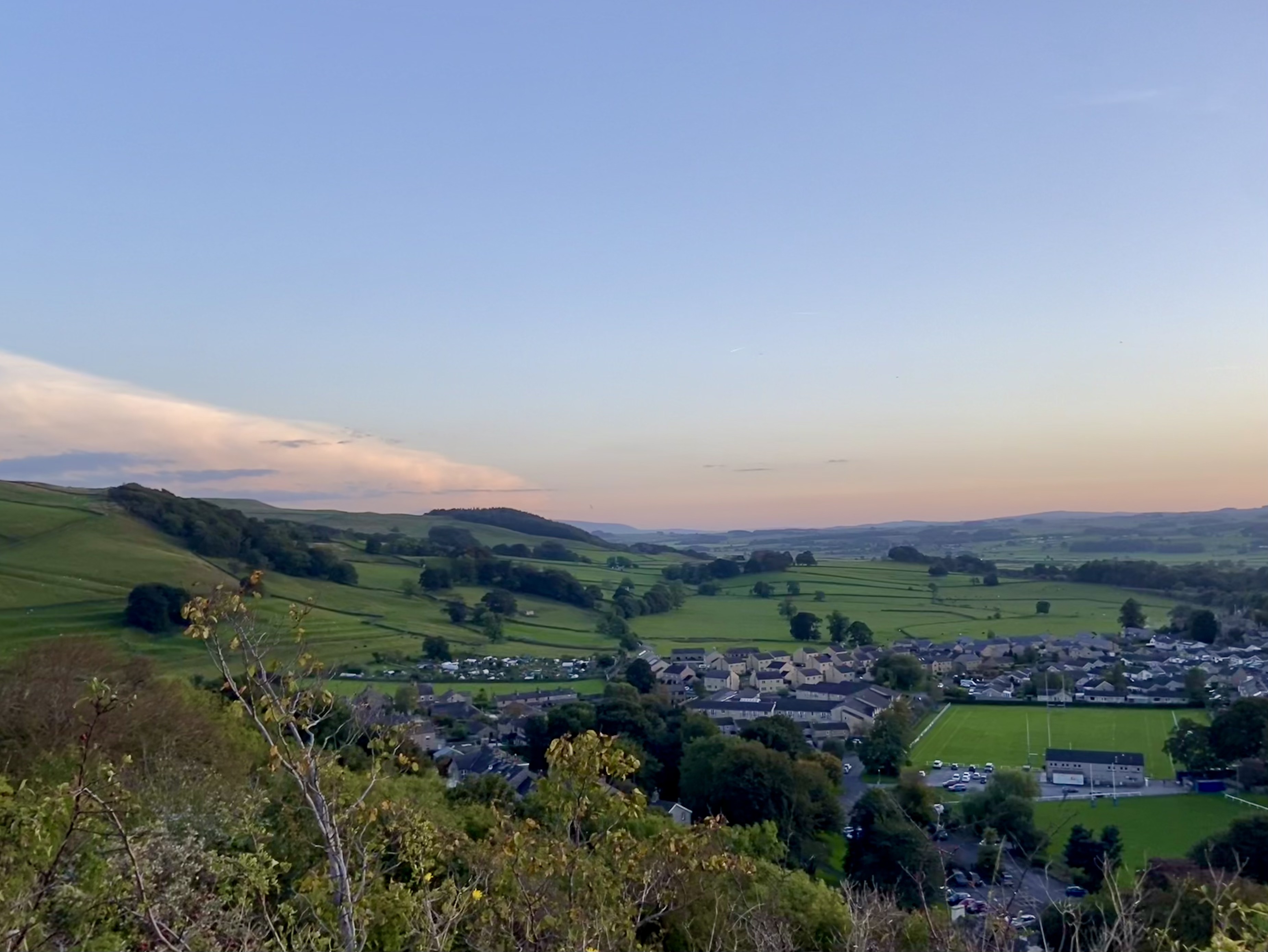
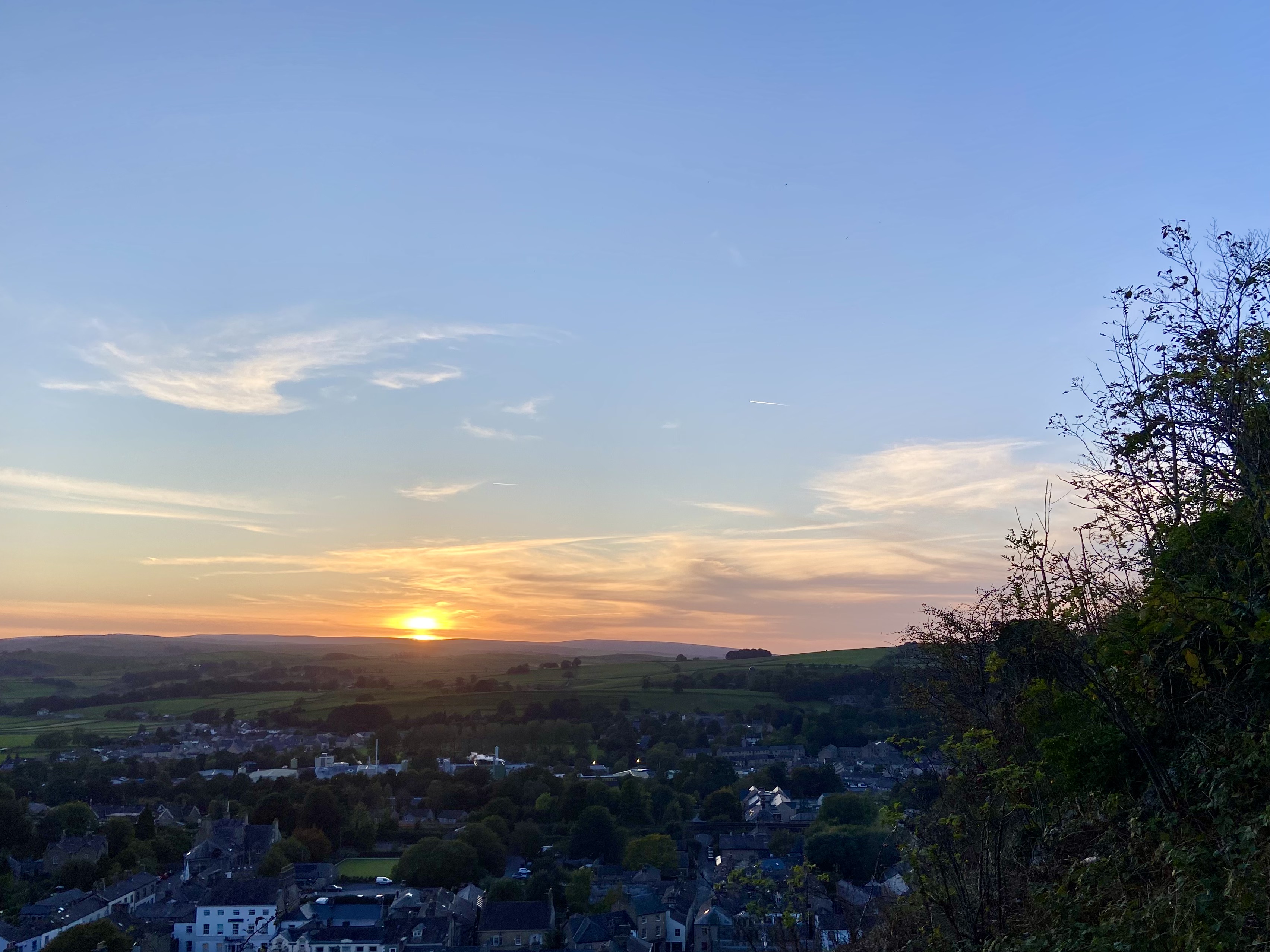
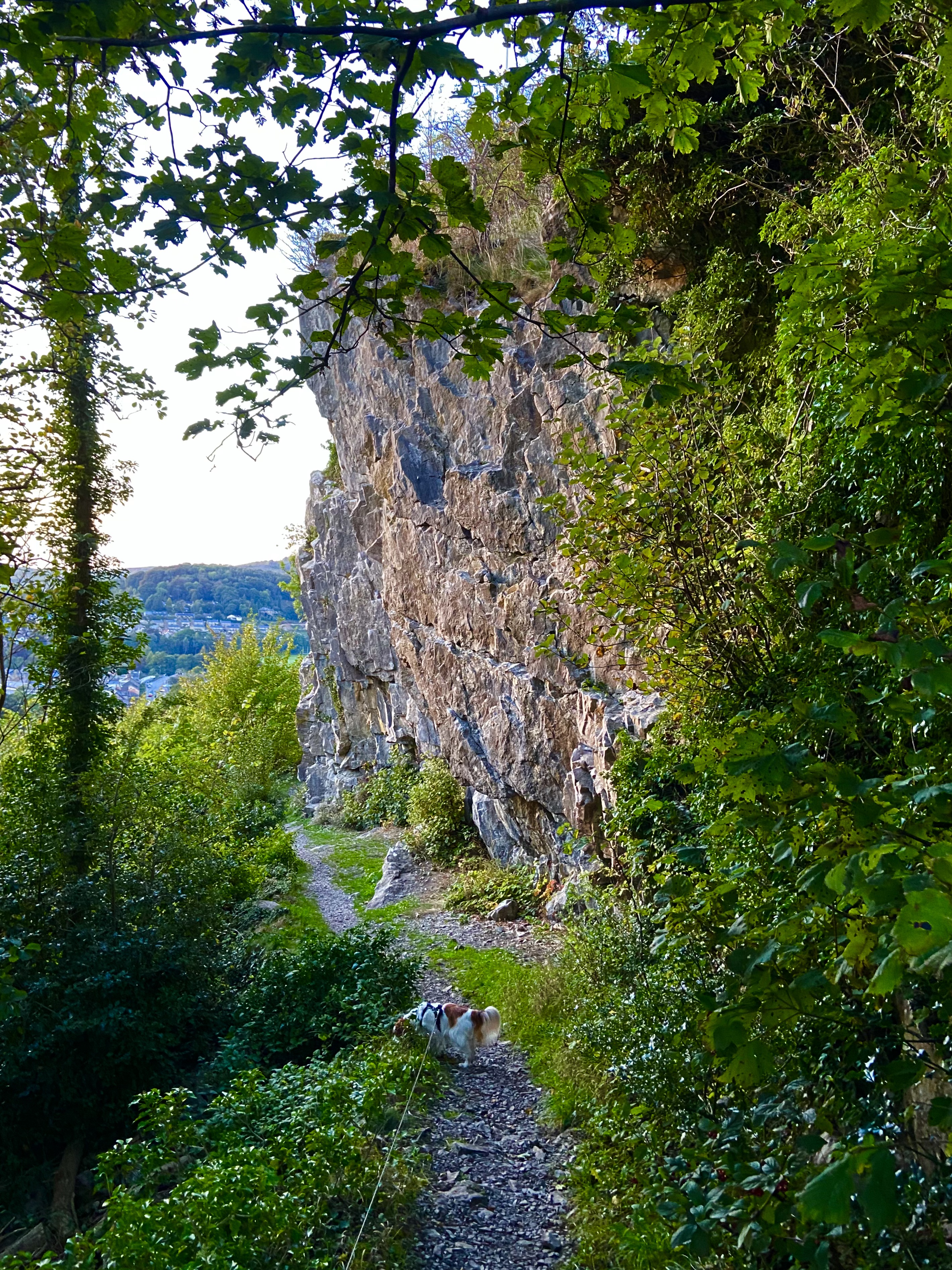
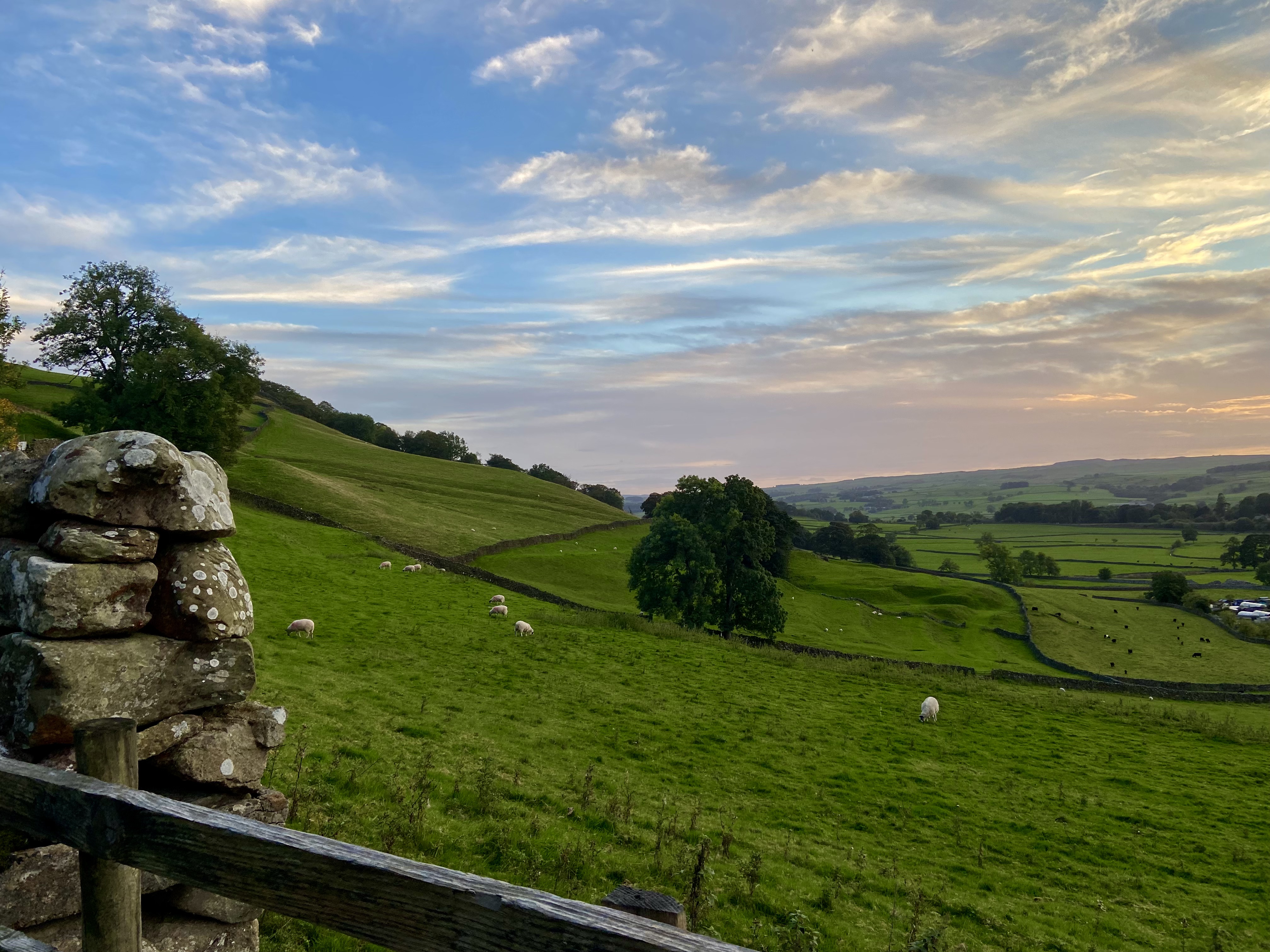
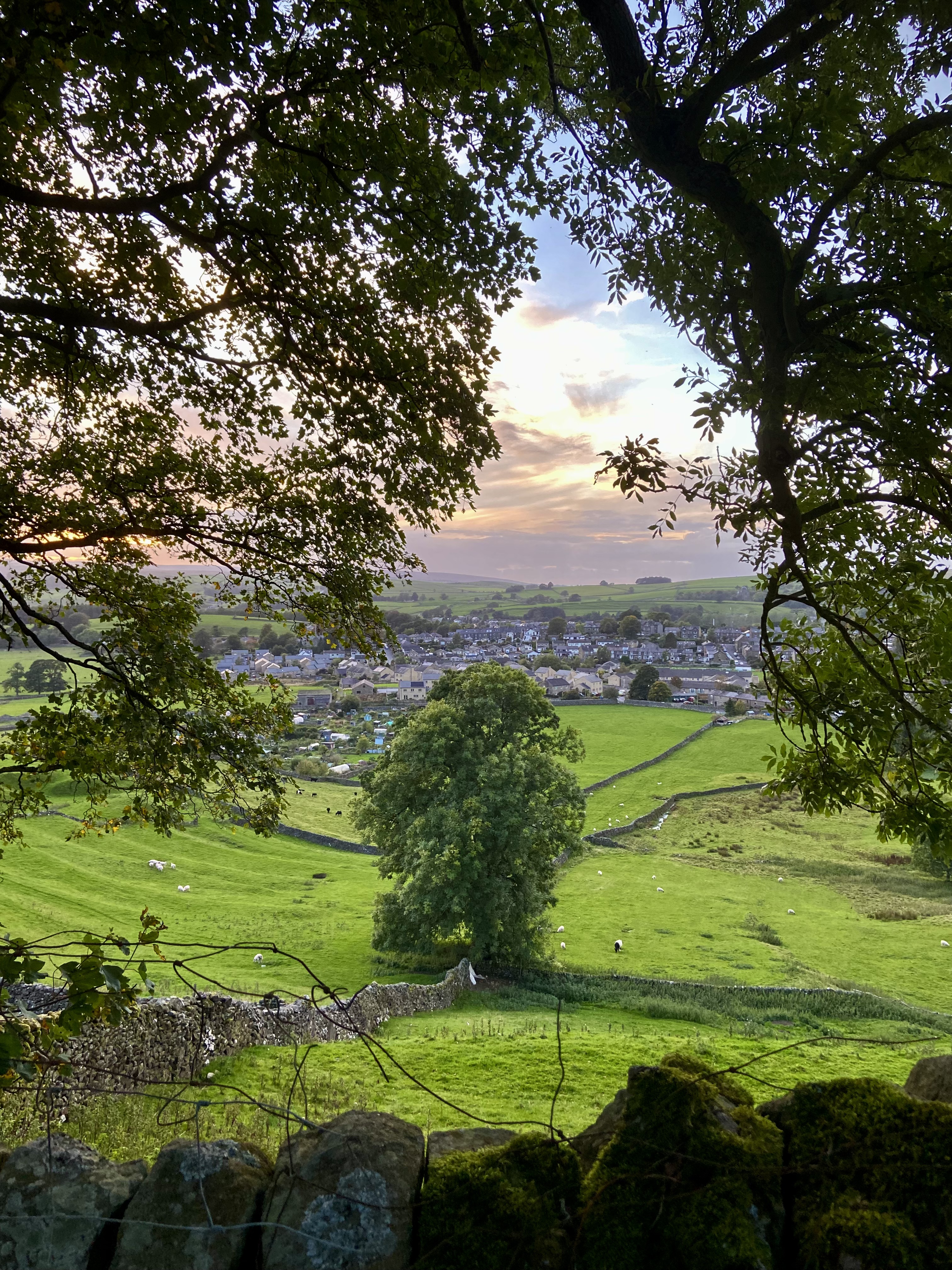
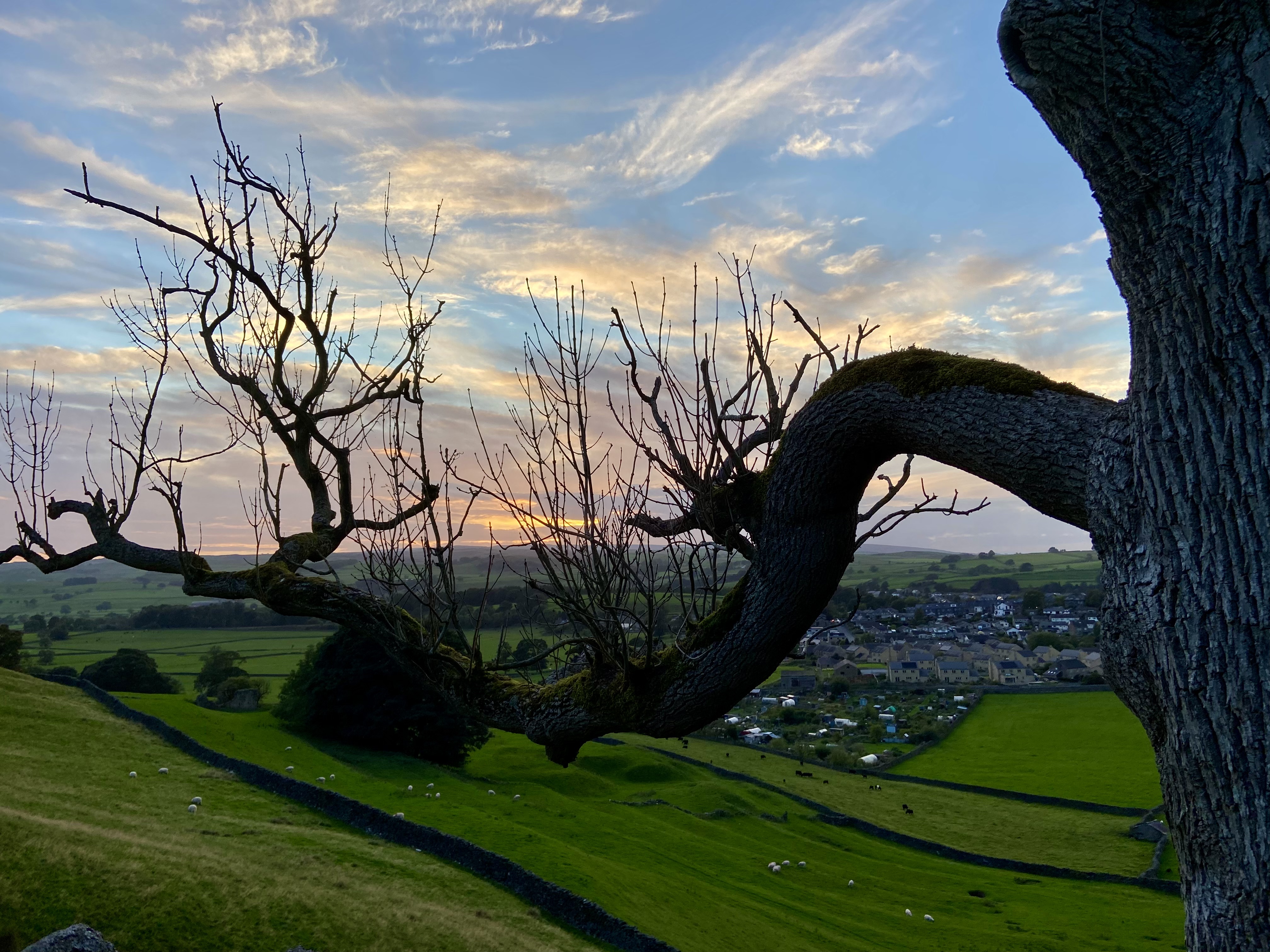
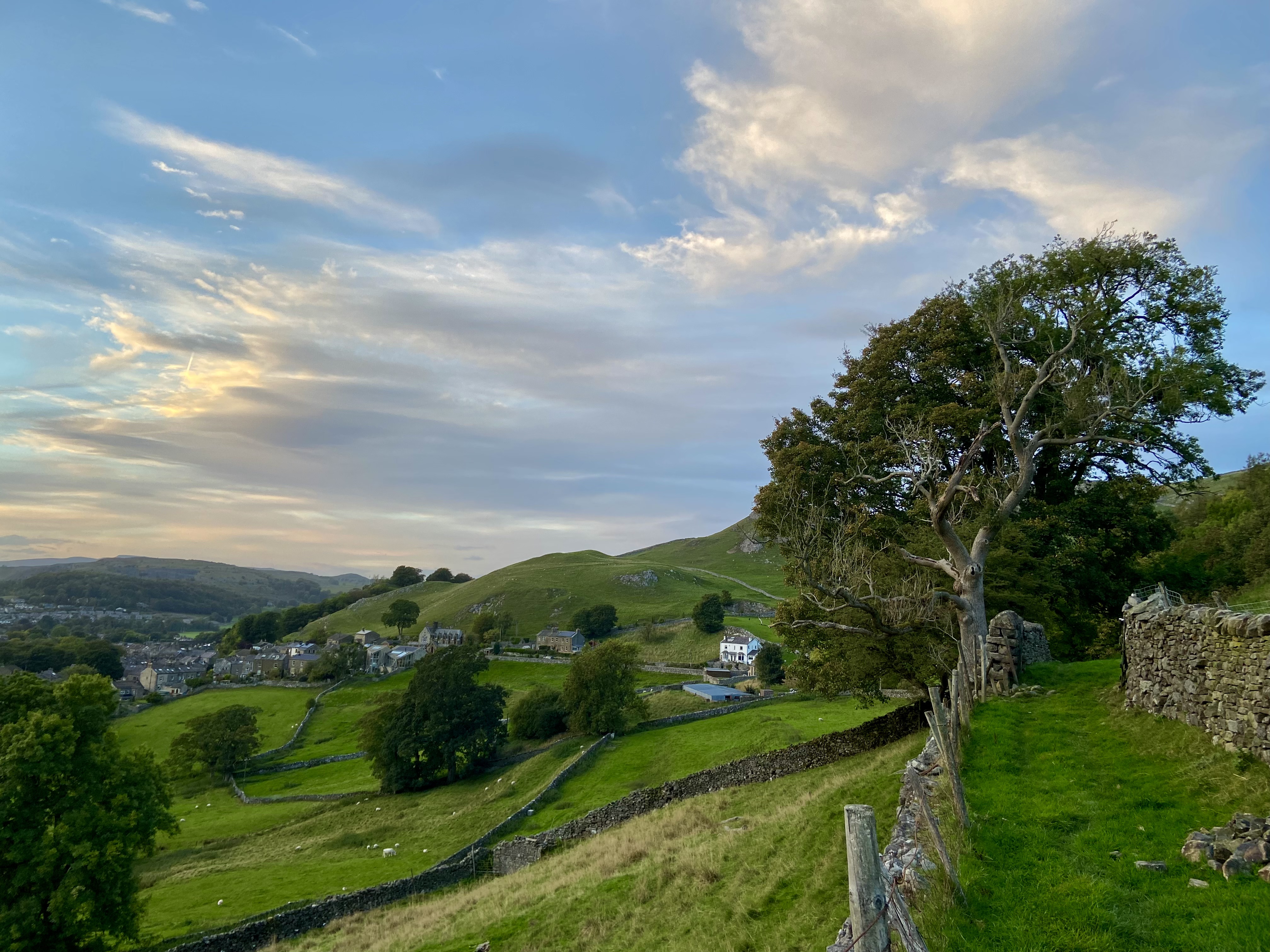
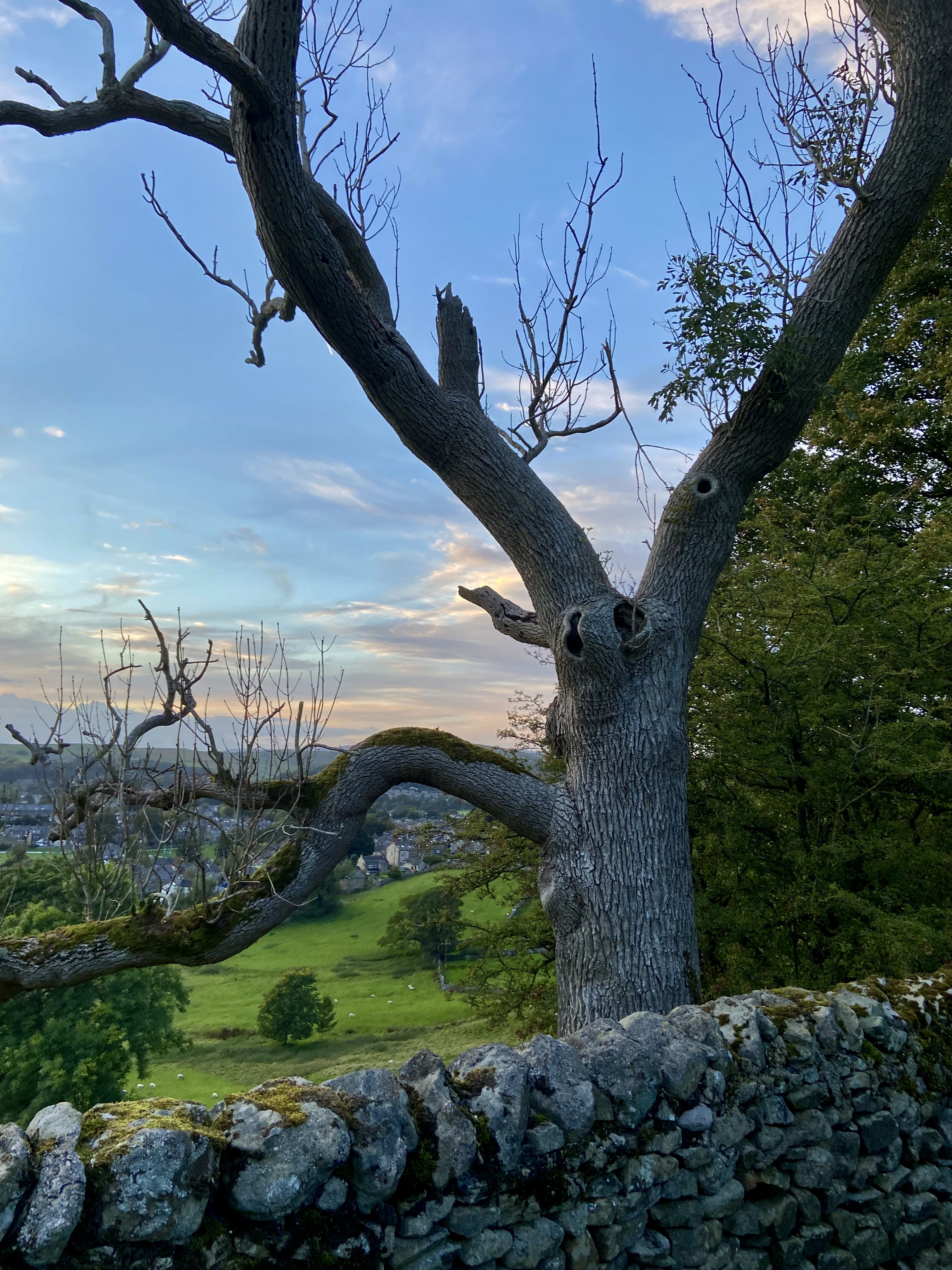
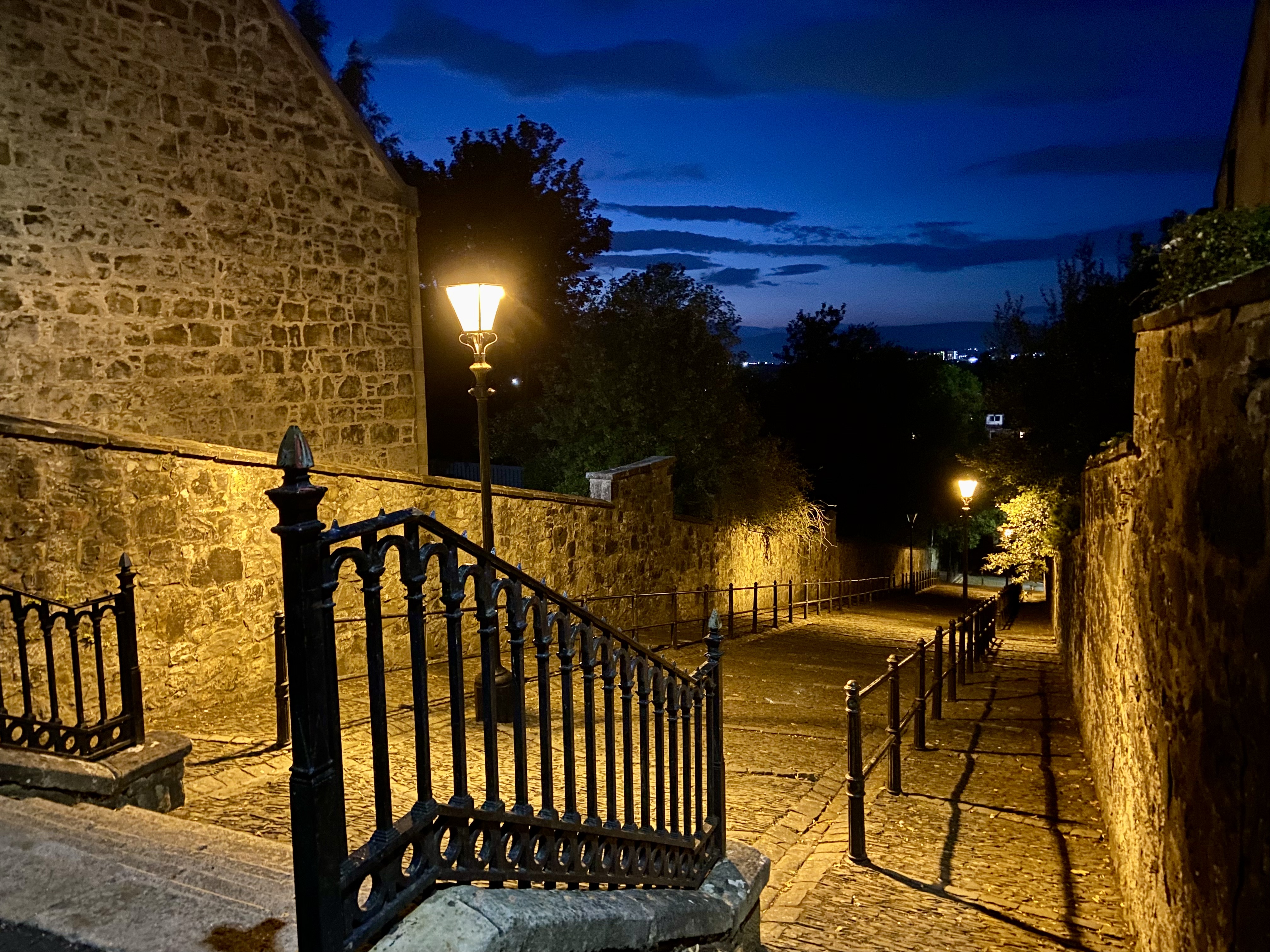
Other than that, I have been enjoying having company. I enjoy locumming and meeting new people, but a week of familiarity and family in between is a lovely contrast. The weather hasn’t been bad either, so Triar and I have been wandering a lot. The first walk, I was following the road, looking over the rooftops, when I passed the gateway that leads to Castleberg Crag and was tempted in. It was a beautiful evening and I thought the sunset might look even better from higher up the hillside. A short, steep walk was made more interesting, when Triar decided he was enjoying himself so much that it was time for zoomies. Still we made it to the flagpole in the still, evening air and it was definitely worth the effort.
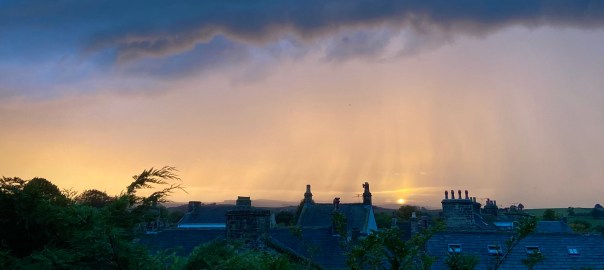
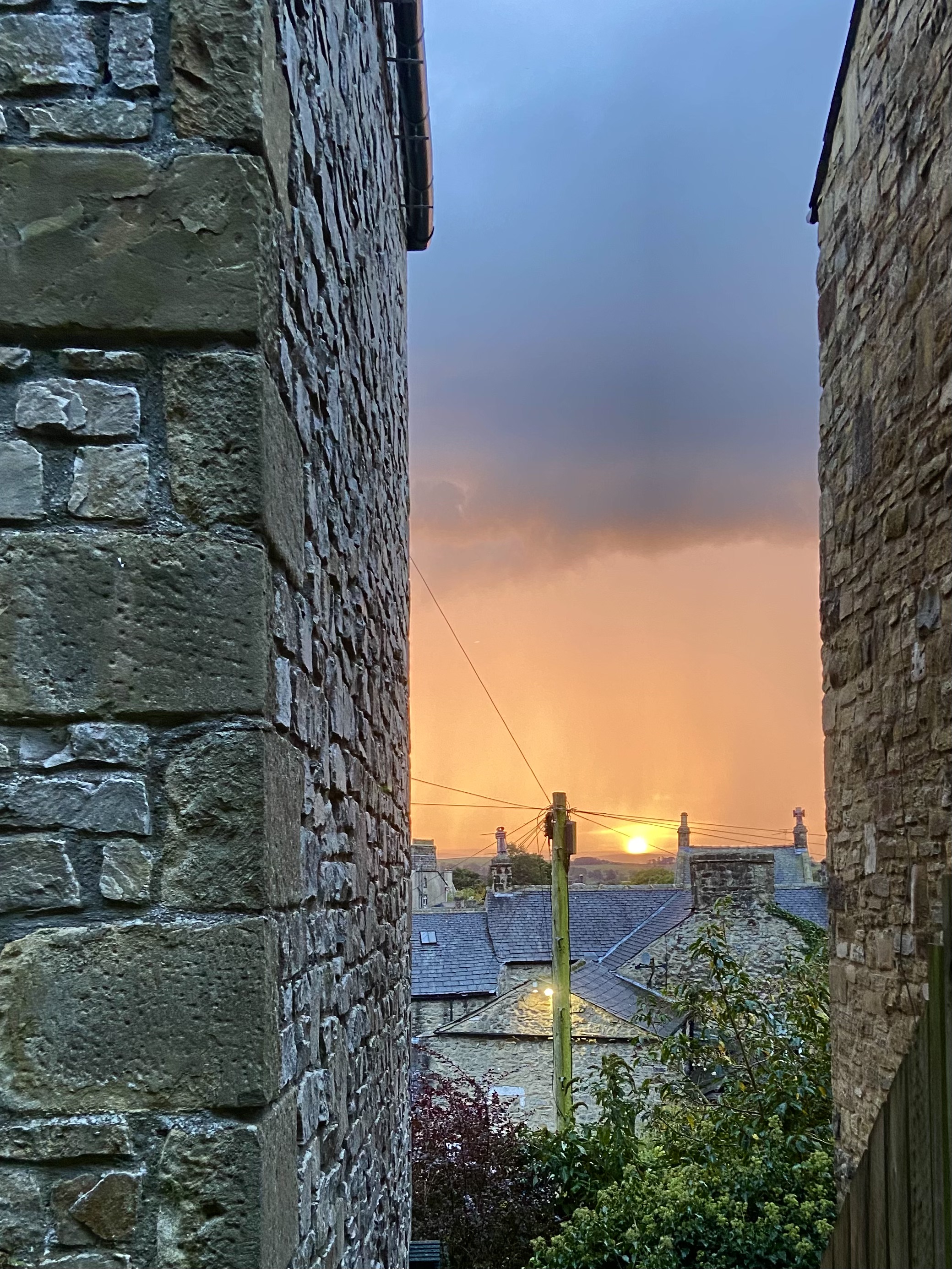
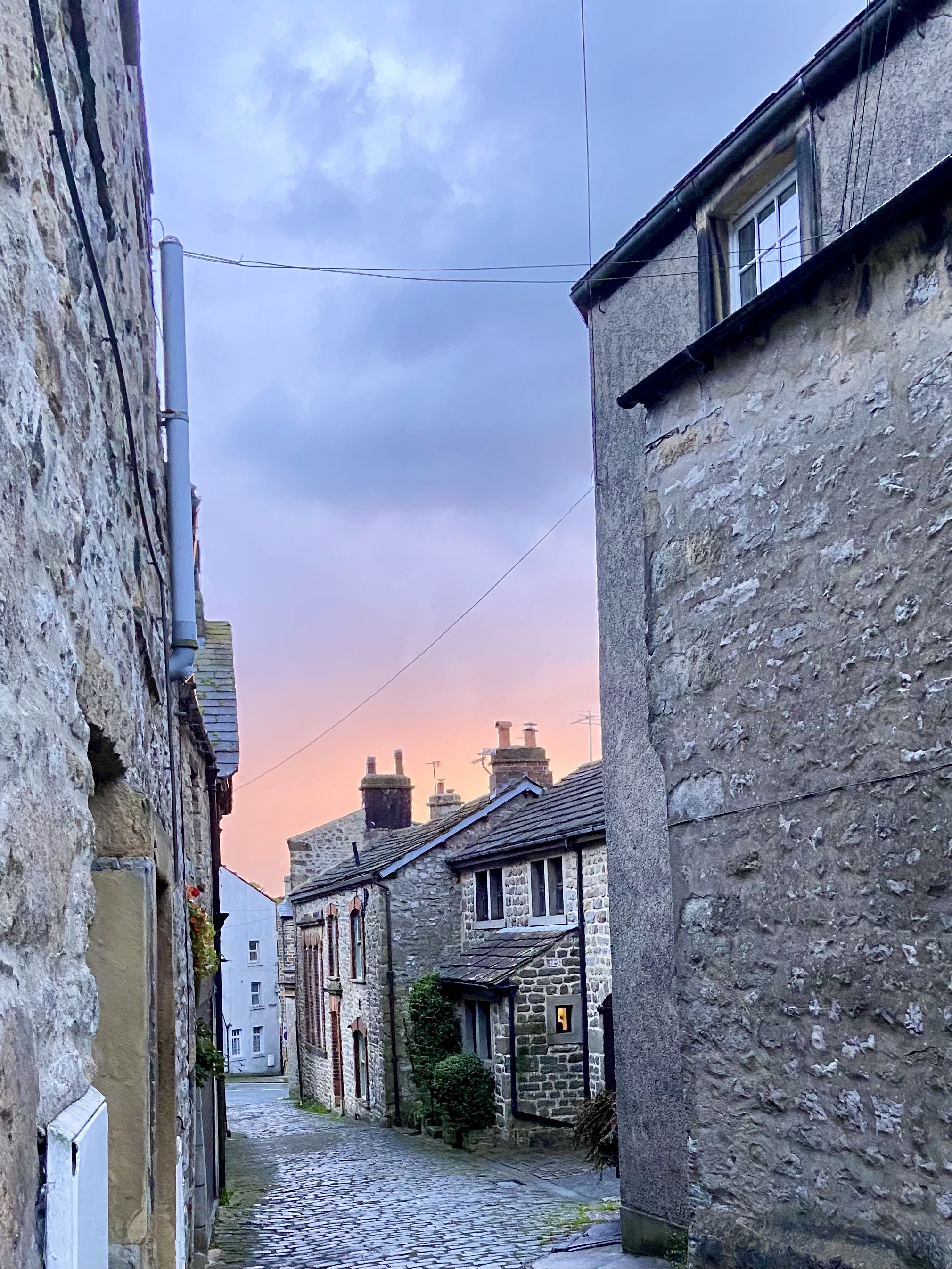
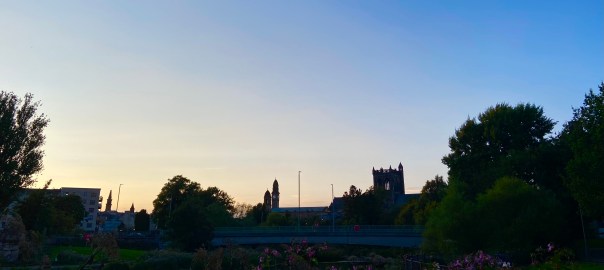
I was also engaged by the wonderful sunset between the rooftops and reflecting through the narrow lanes on another evening. The picture at the top of the page was taken on the same day. I think there’s rain streaking from the dark clouds above, through that deep orange glow.
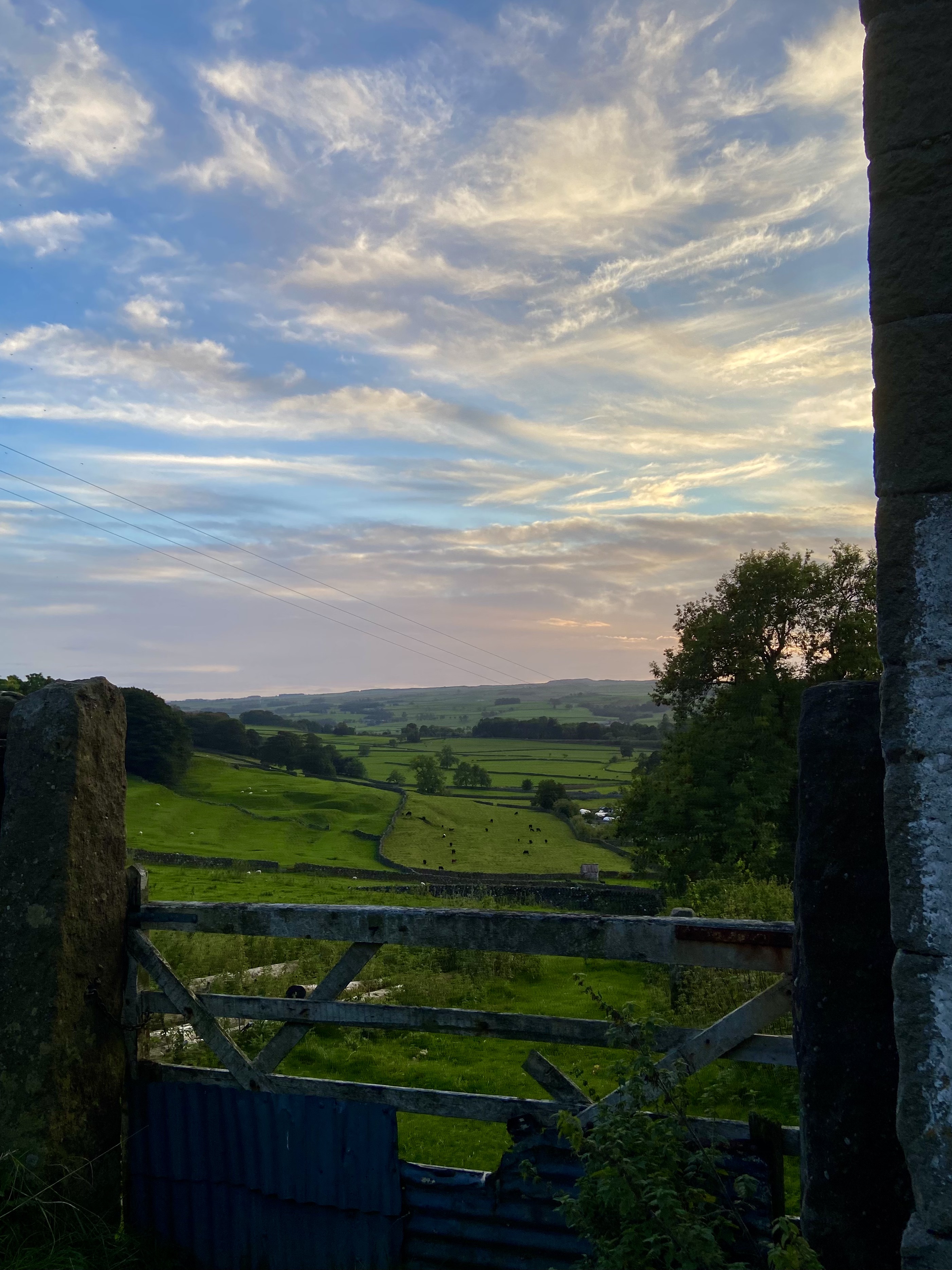
Another evening stroll took us up past the Pinfold (historically used in medieval and later times to impound stray livestock and animals until owners paid a fine to retrieve them) and out into the fields beyond. More wonderful views over Ribblesdale and the town.
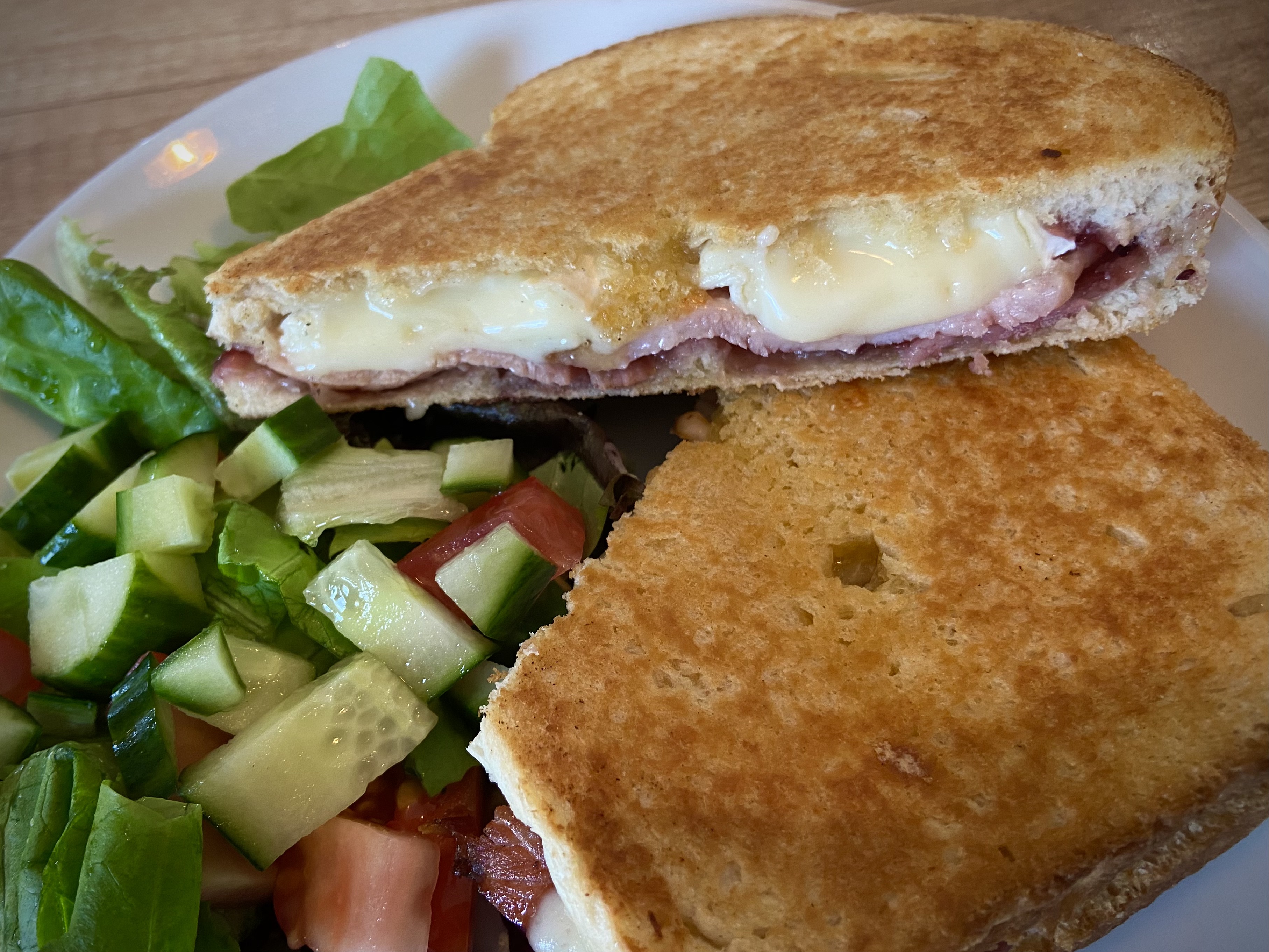
Mum and I went for a Country Harvest lunch yesterday. I had a Brie, bacon and cranberry toastie, which was predictably delicious.
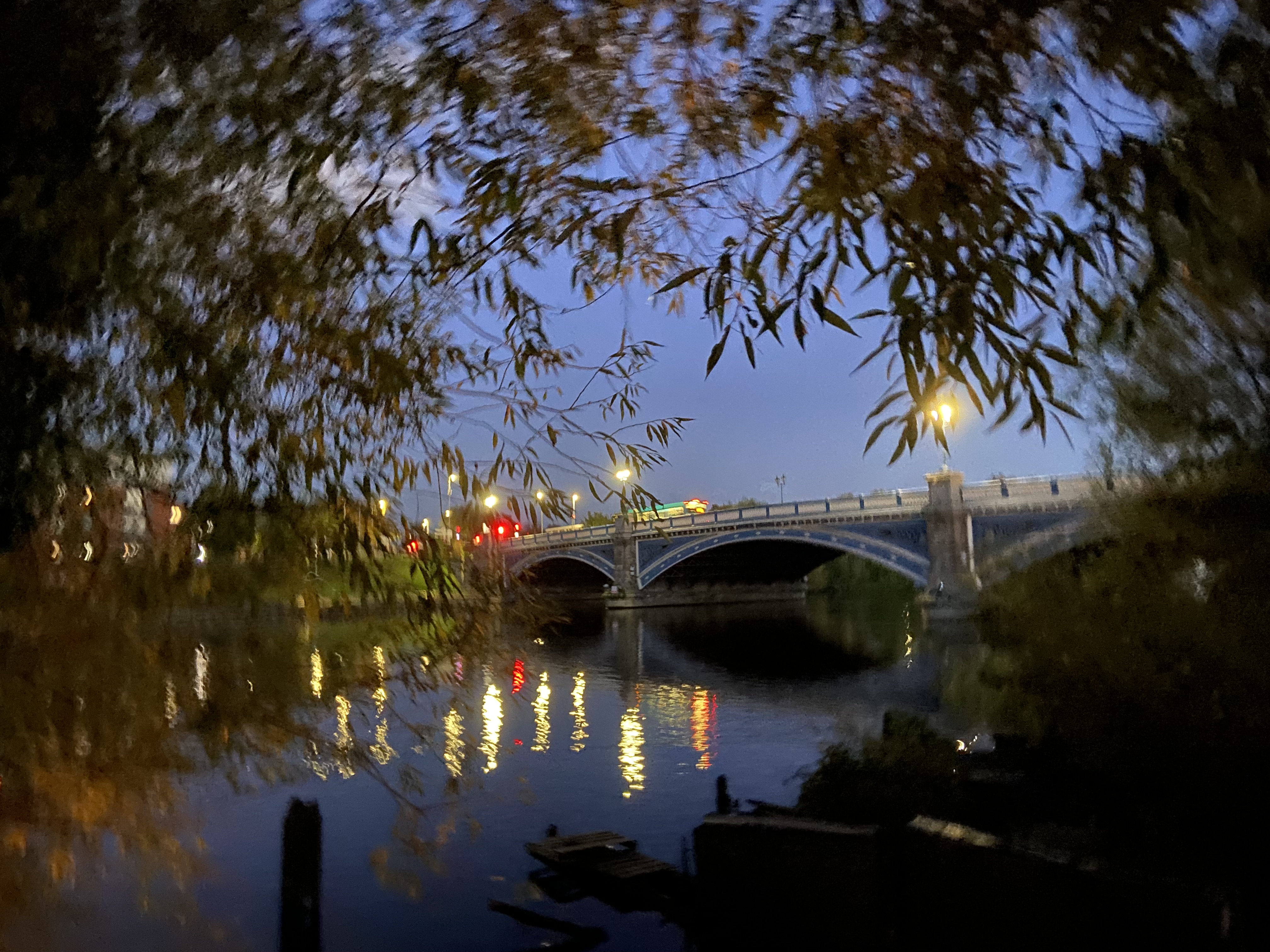
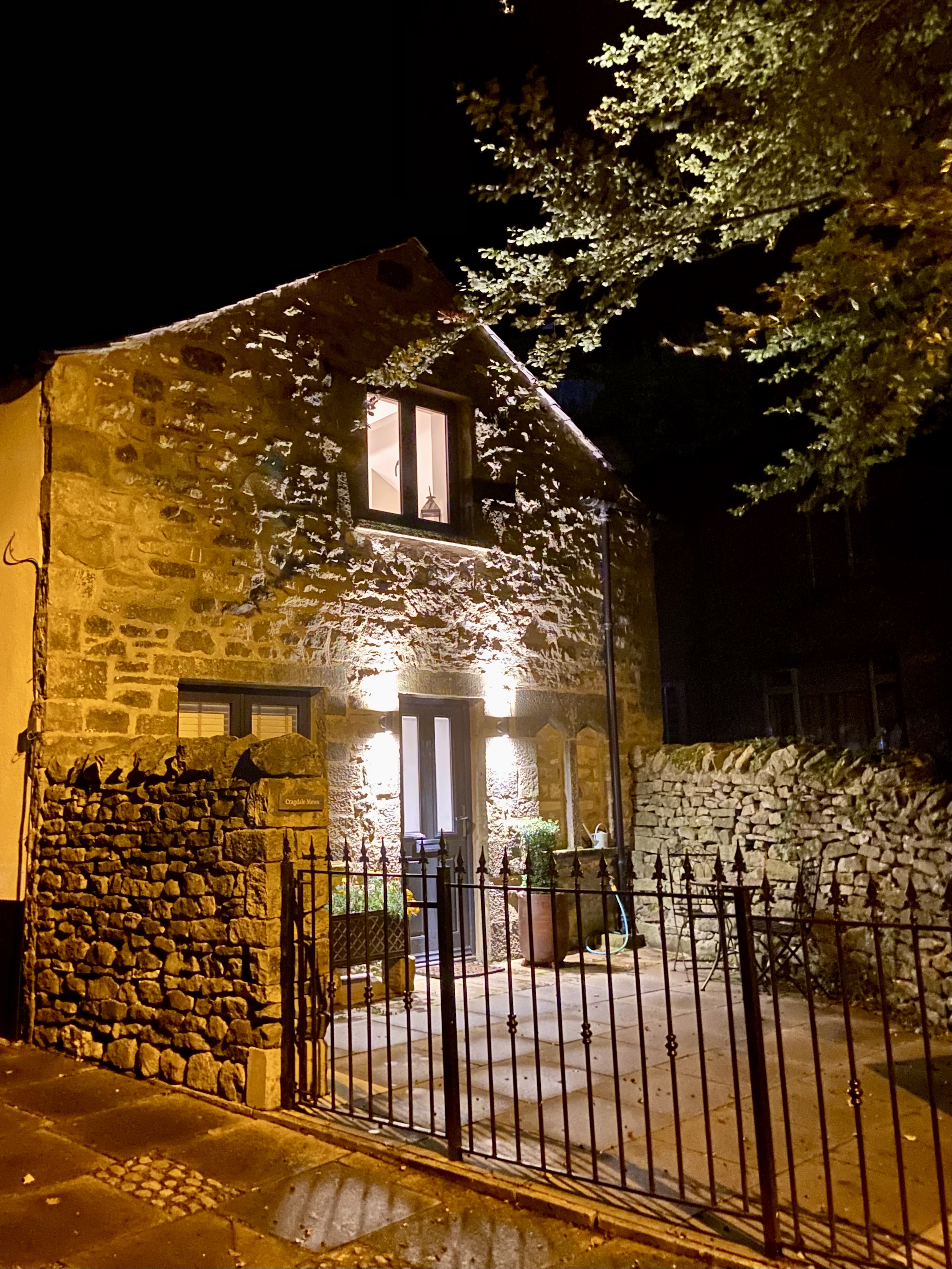
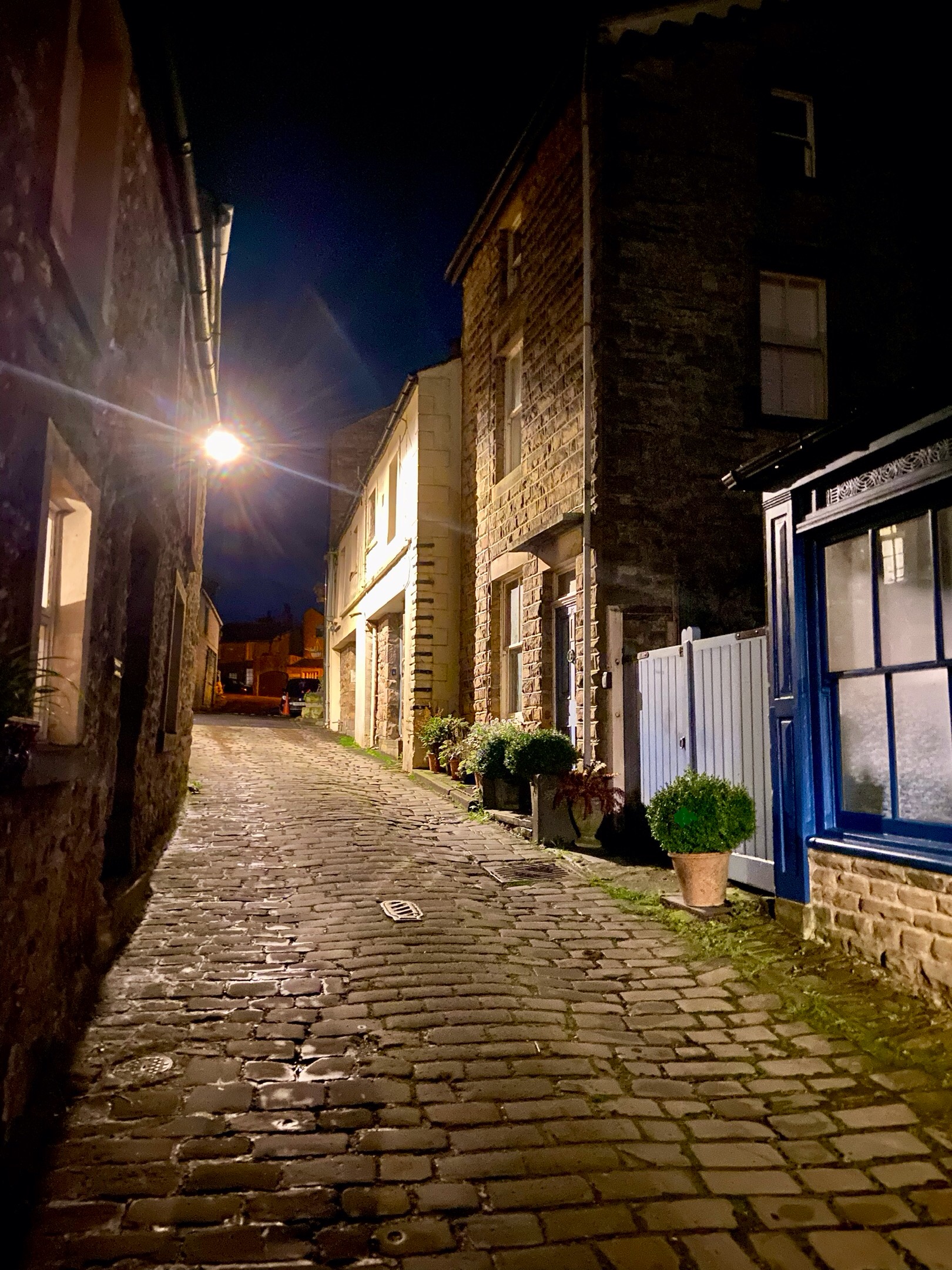
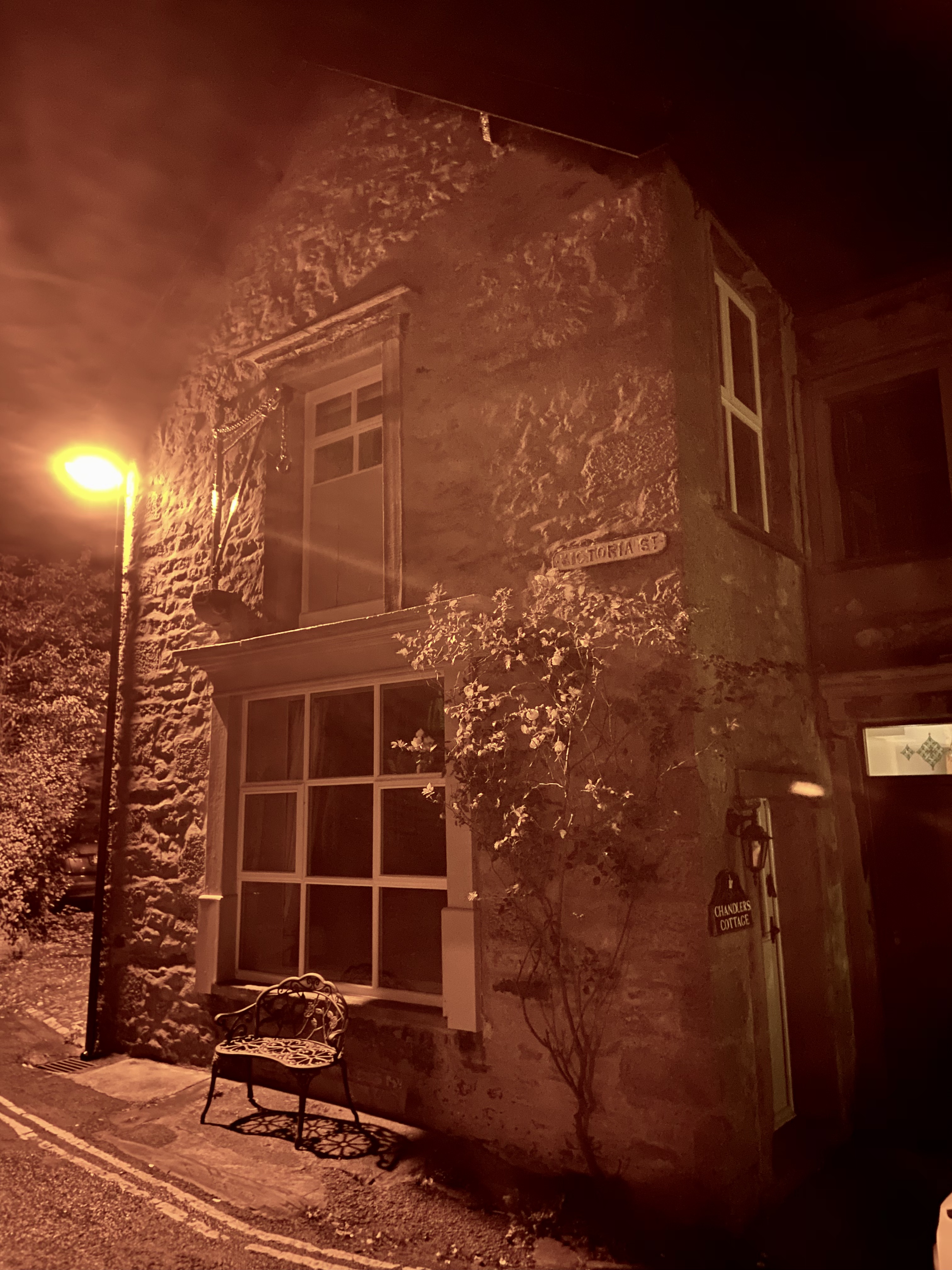
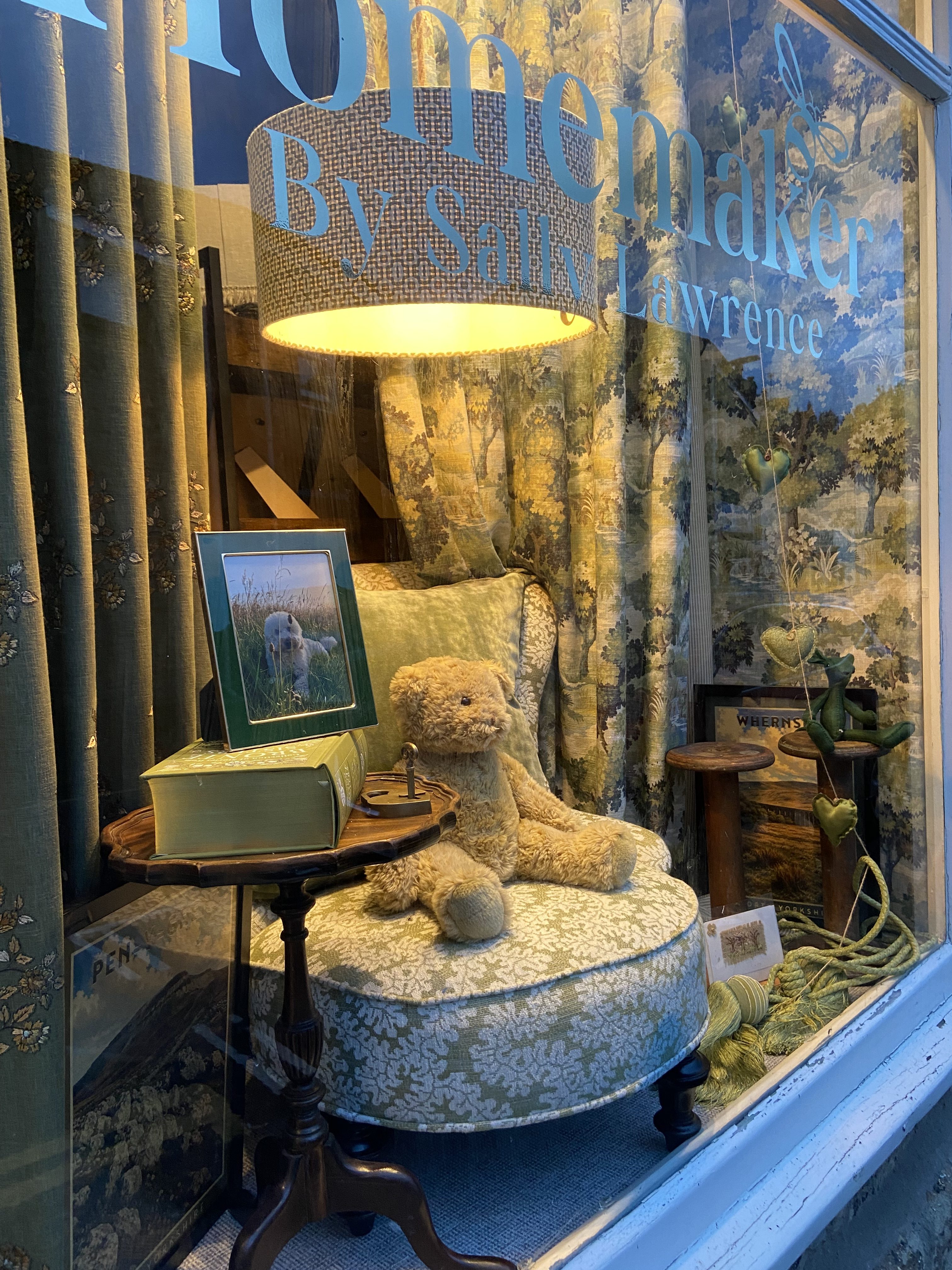
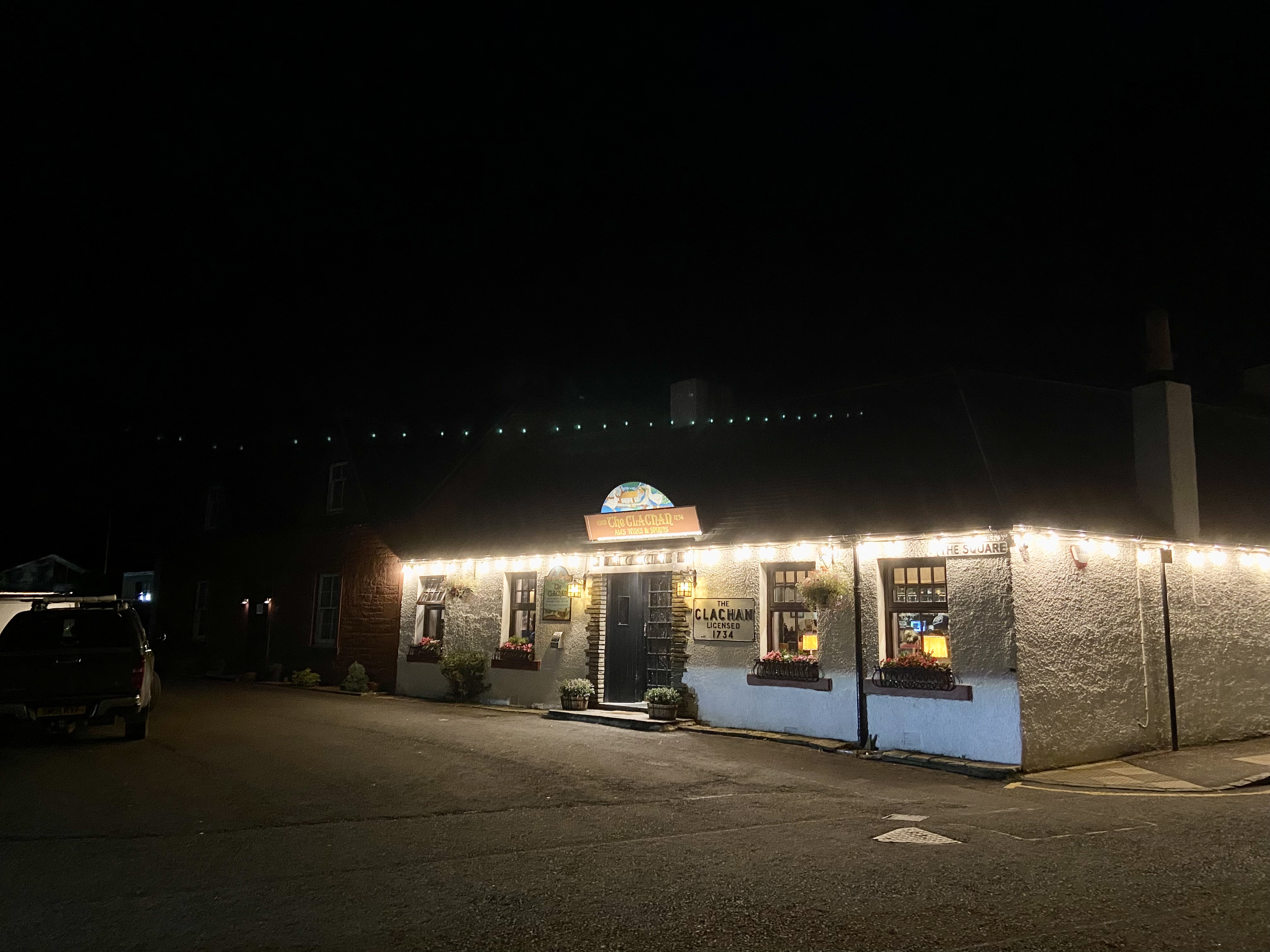
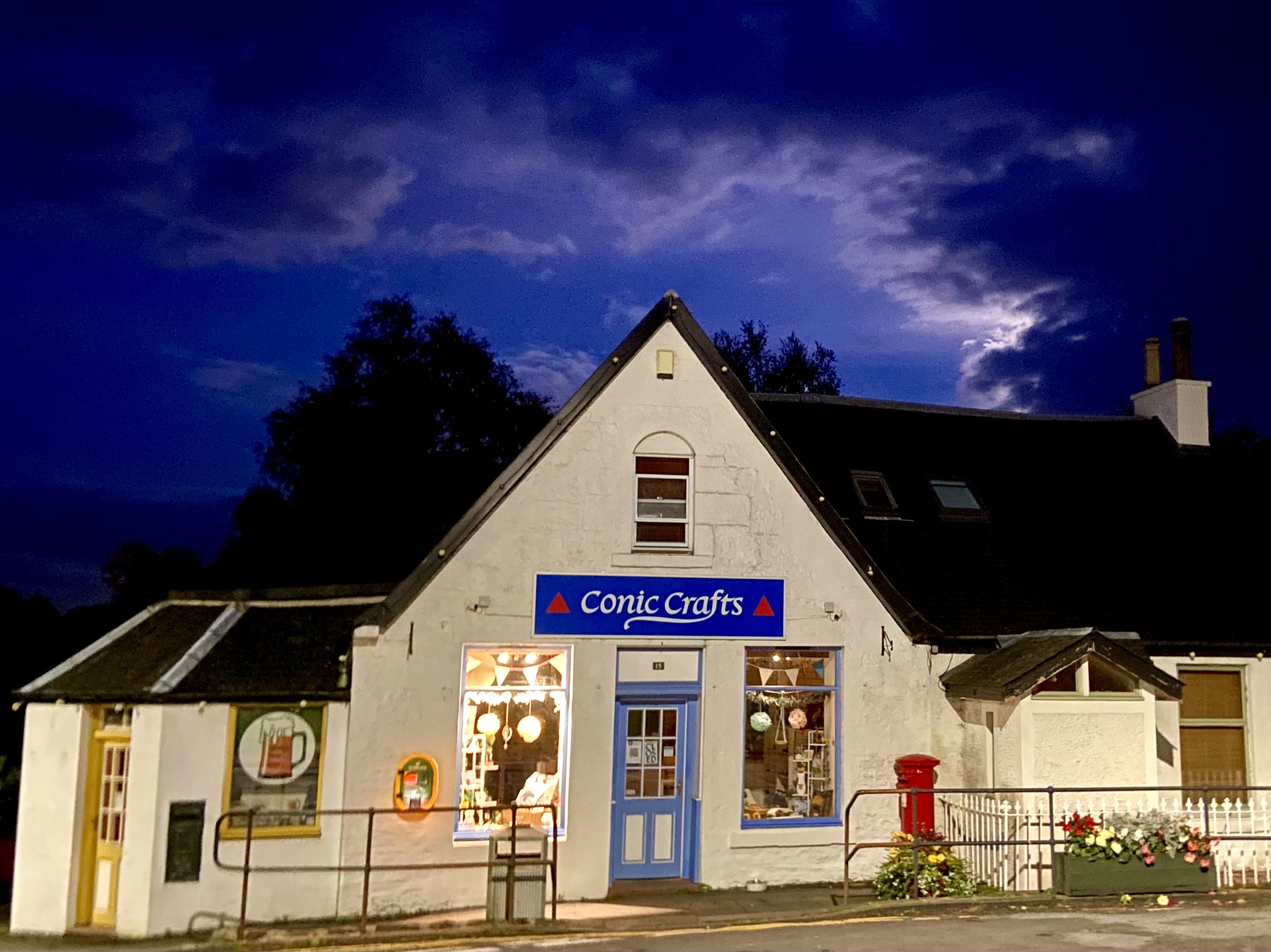
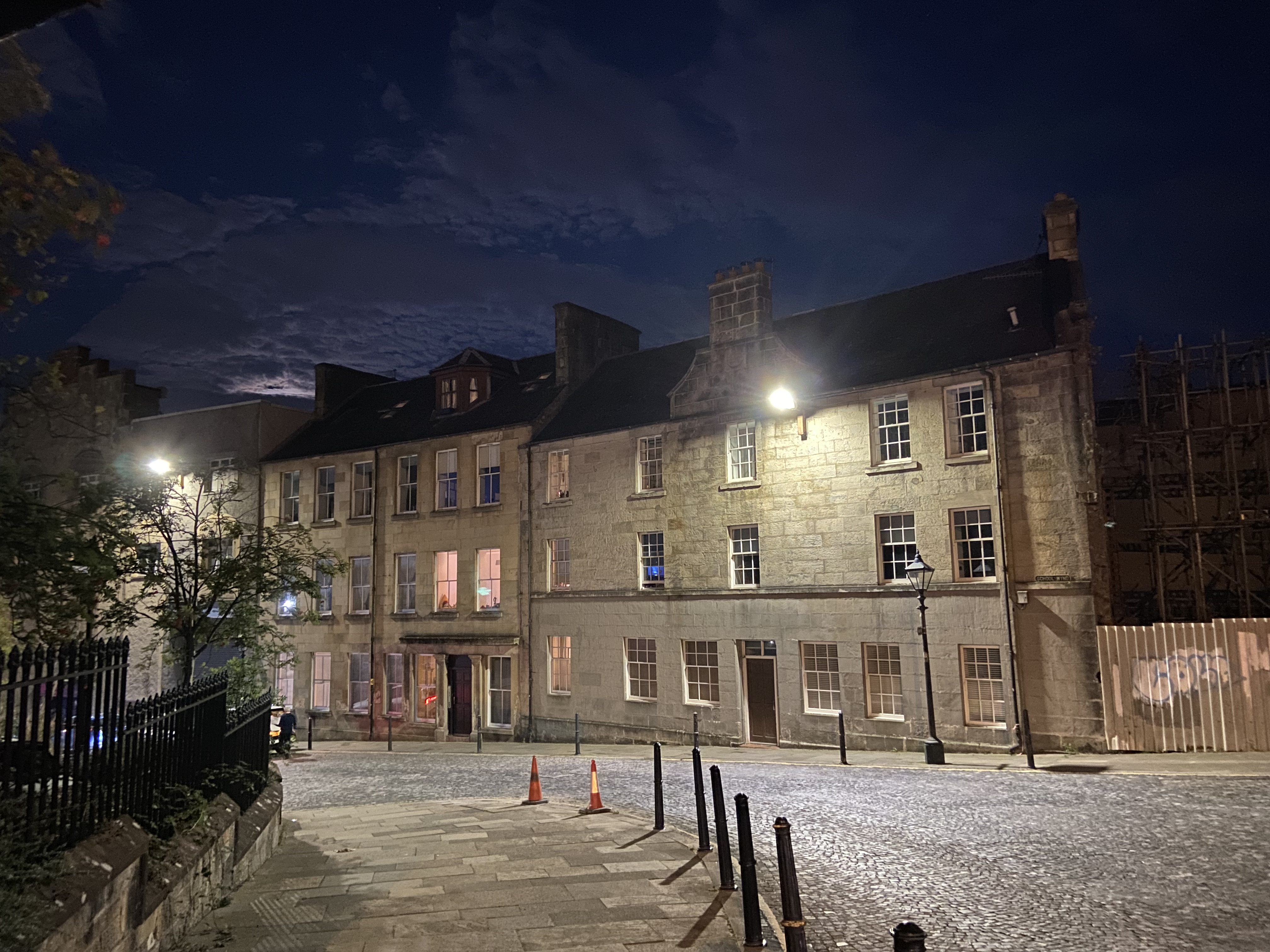
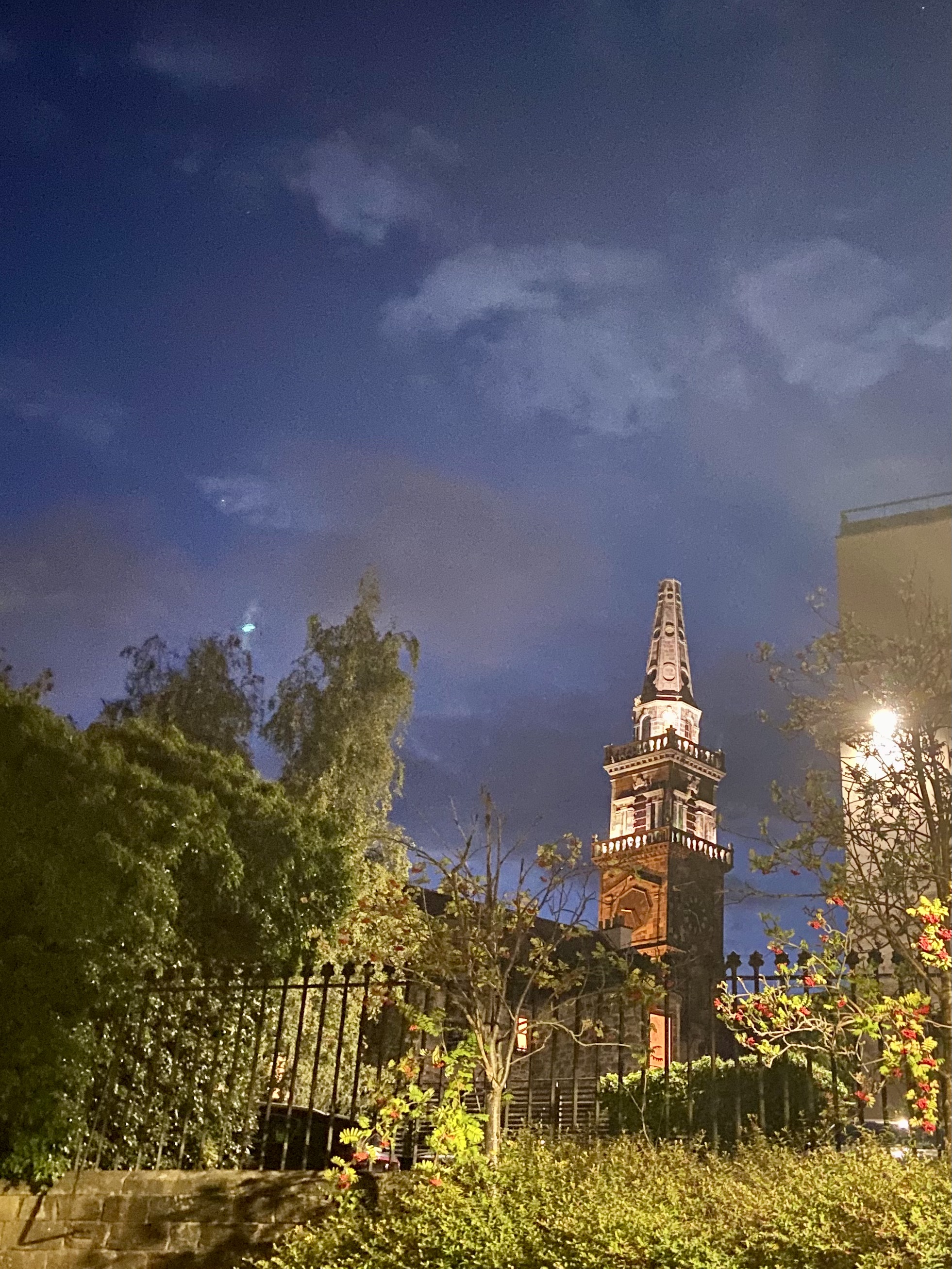
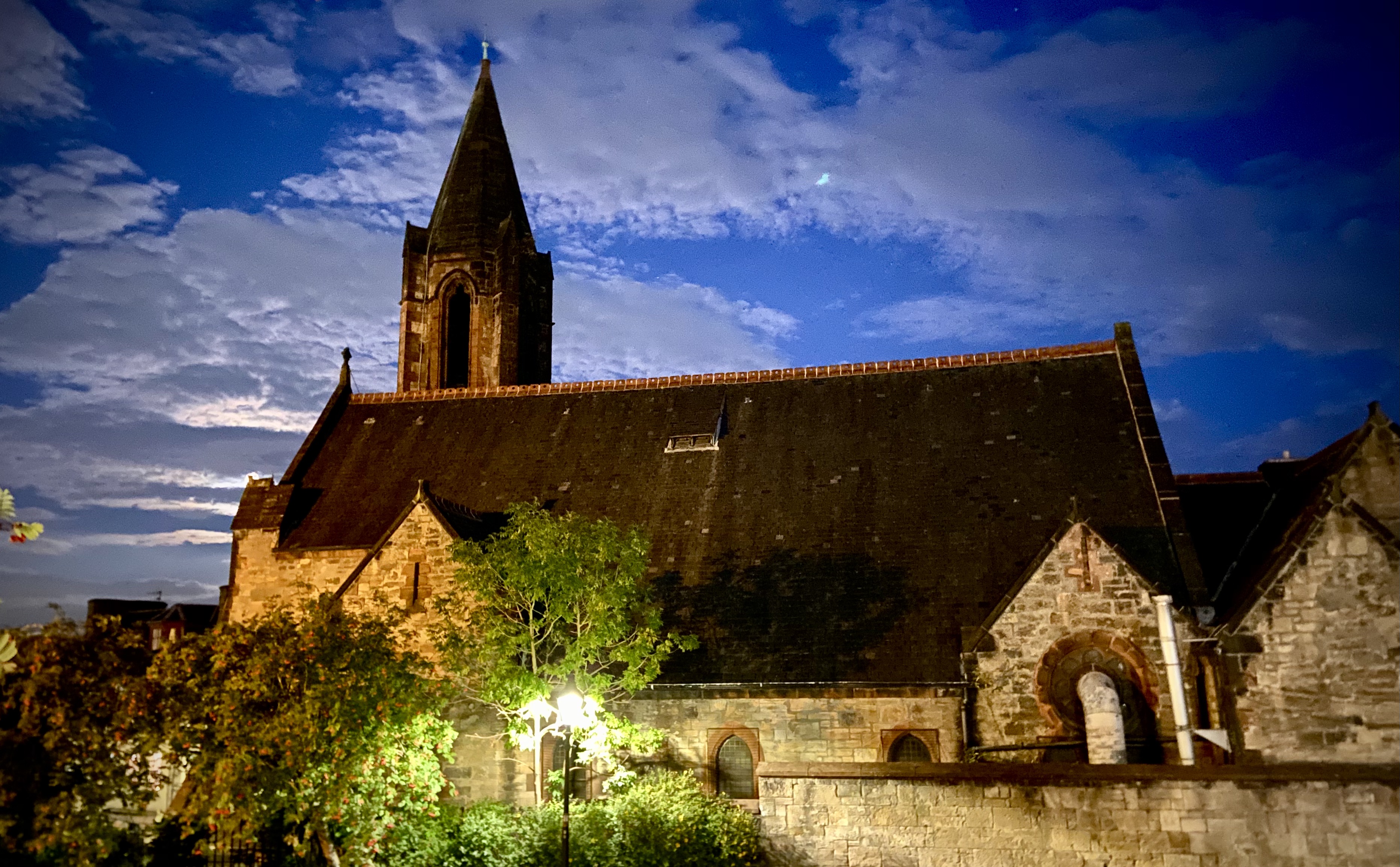
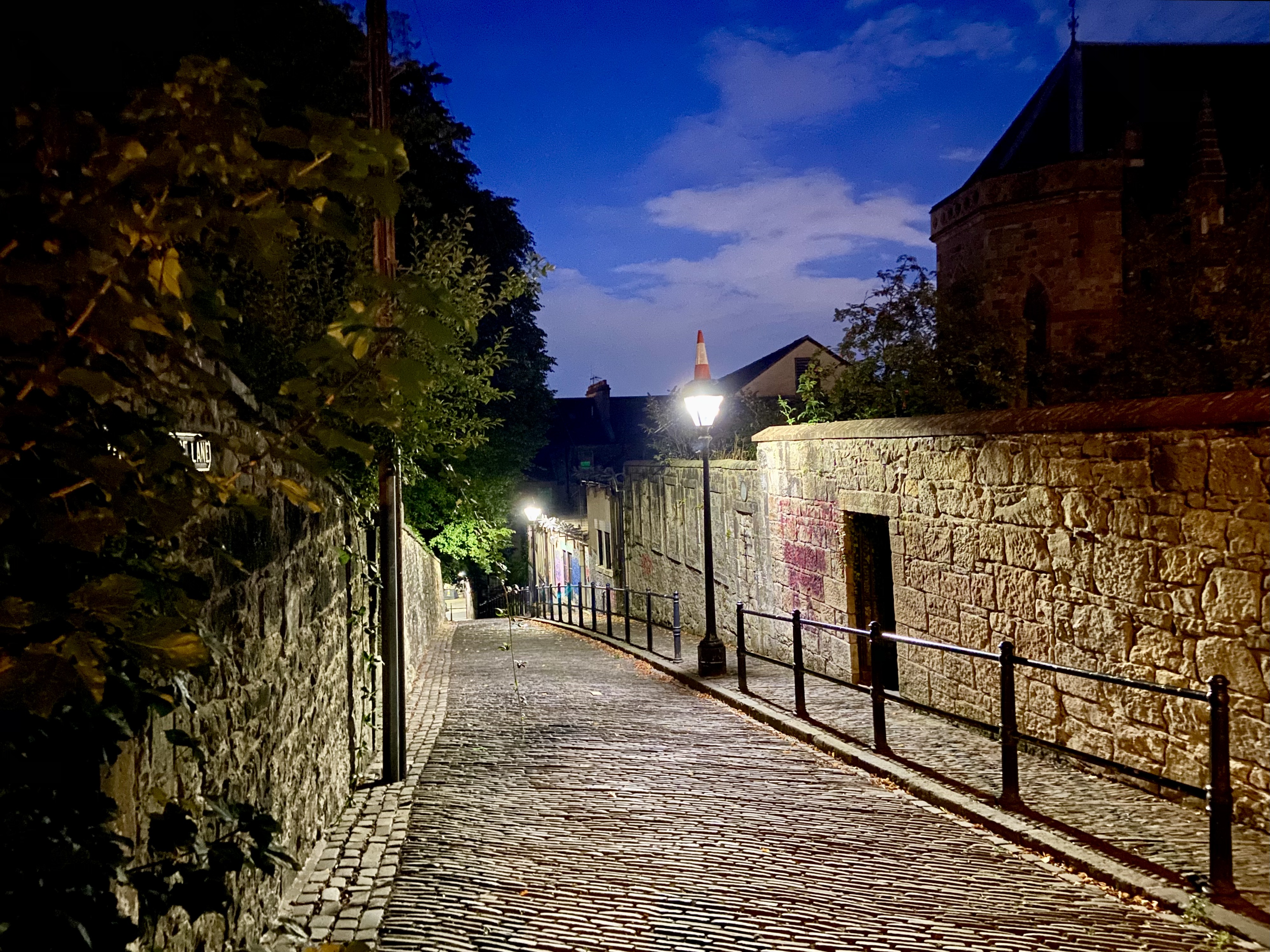
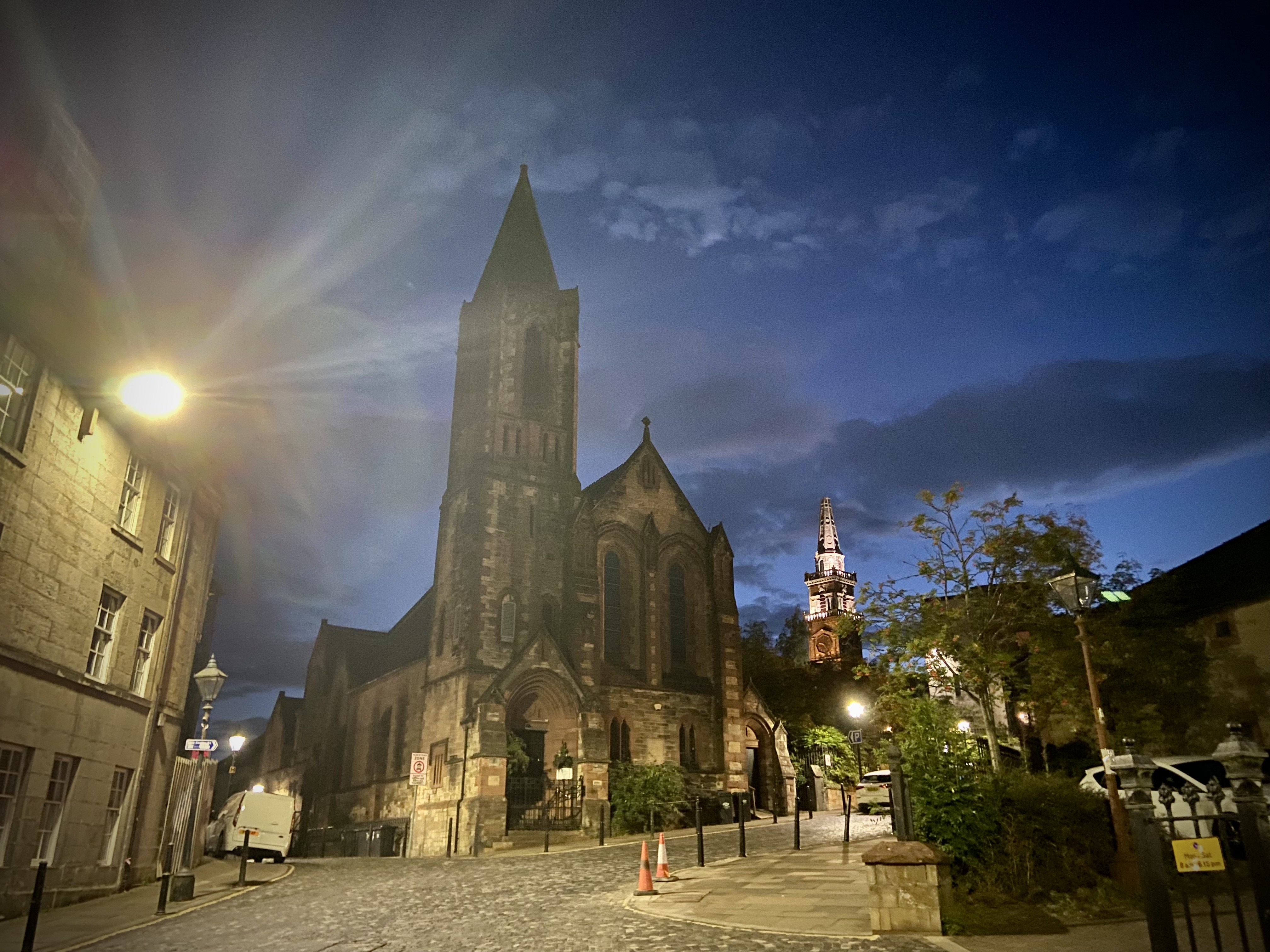
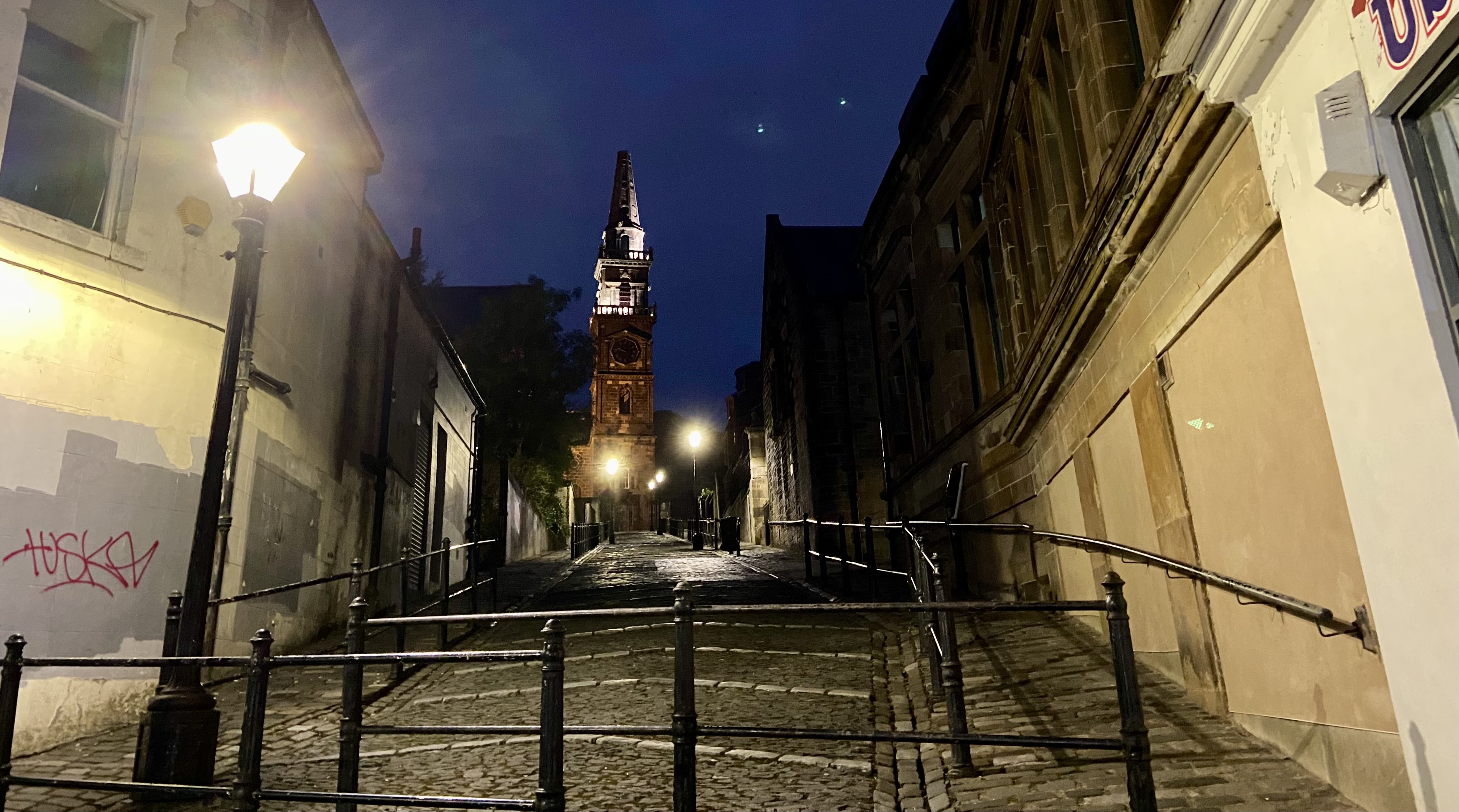
And last night, as the evening advanced and the autumn darkness fell over Settle, I took a couple of photos of the buildings under the streetlights as well as a shot of a cosy window display that I found irres. I will leave you with those as well as saying thanks for reading and I hope you have a good week.
I can’t quite decide whether I like locum life or not. On the one hand, I get to travel, which I’ve always loved. On the other, when I get back, I feel I should be building a home, but finding the energy to do so, in the brief bursts I’m there… well it just isn’t happening. This time was particularly bad. Having worked two intense weeks, then driven home without a good night’s sleep (workmen arrived outside the Wolverhampton flat to cut down a tree at 6am) it took me four days to get the energy together to even start walking Triar and cooking real food. Building furniture and working out how to hang a massive, brass, full length mirror on a (probably) lath and plaster wall – well I didn’t even come close.
That said, there were some good things. While I was away, I paid to have a tree in my garden chopped down. It was very close to a neighbour’s house and an obvious insurance risk. Apparently, this was a living Christmas tree someone had planted when it was small, but it grew into a potential problem. I also had the hedge chopped right back. I ran into the neighbour on Blackbird Lane and he offered to pay something towards the tree removal, but after a bit of discussion, he has agreed to looking into getting a fence put in, before the hedge grows back. This should, hopefully, make the garden borders dog proof. We also discussed the possibility of a gate into his garden. As I live in a terrace with no garden access except through the house, that would be amazing.
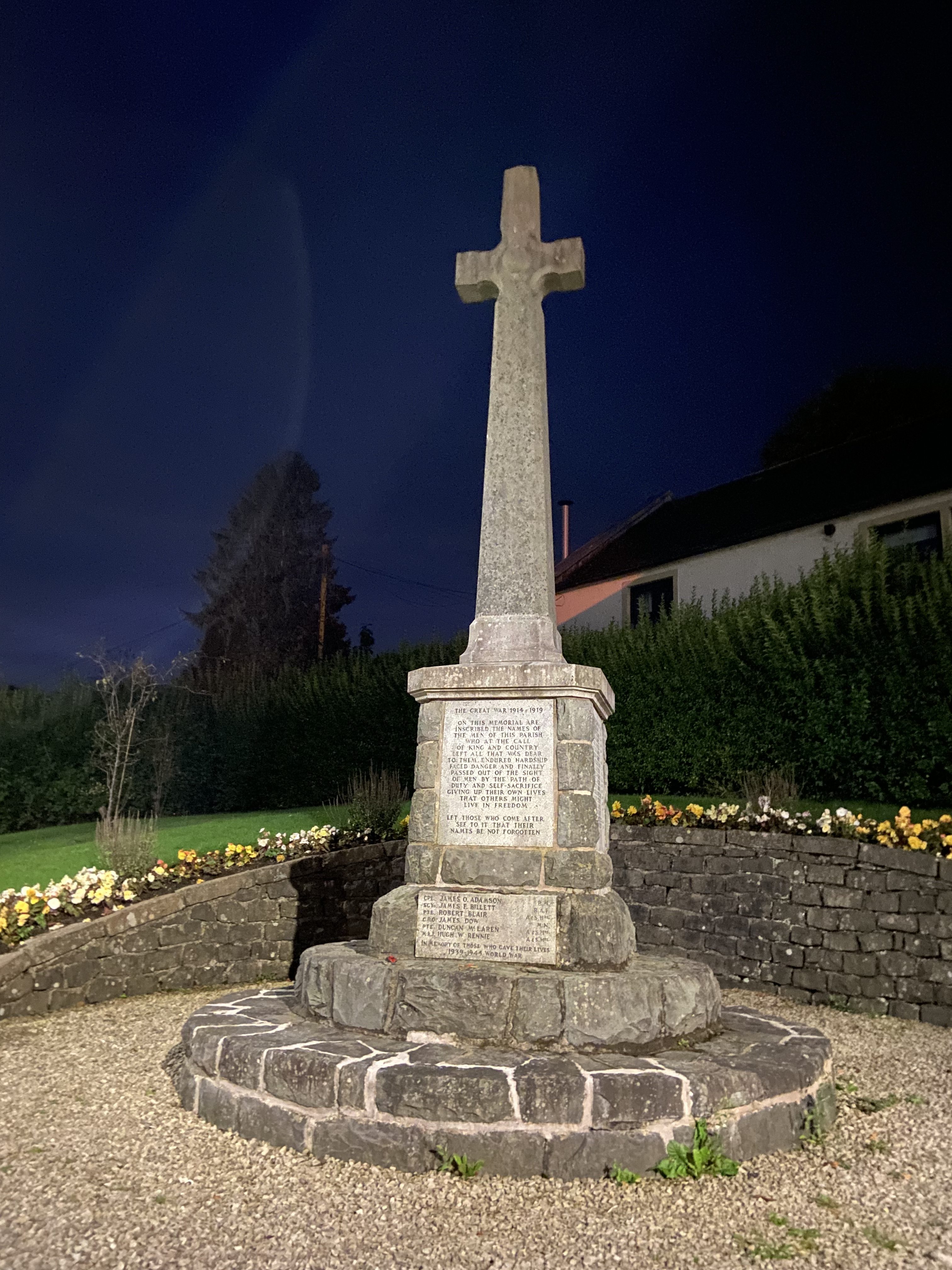
War memorial in Drymen, taken during Triar’s walk last night
I’ve also finally managed to get proof to the Norwegian Tax Department that I shouldn’t be paying national insurance in both Norway and the UK, which means they have given me some money back, with hopefully more to come. That means that, when I go on holiday in Norway, I don’t need to worry about how much it’s all costing.
I’m still waiting for APHA to check up on me, before they decide whether to take me back. I guess making the process so difficult is to deter me from doing the same again, but it does seem rather ridiculous. I had to send them proof of my address. One of the acceptable documents was a P45, so I sent them the P45 they sent me in April. I also had to give three referees, and two of those I gave were my mangers at APHA. They did all these checks before in 2023, so unless I have substituted an identical twin, the whole thing seems a bit over the top.
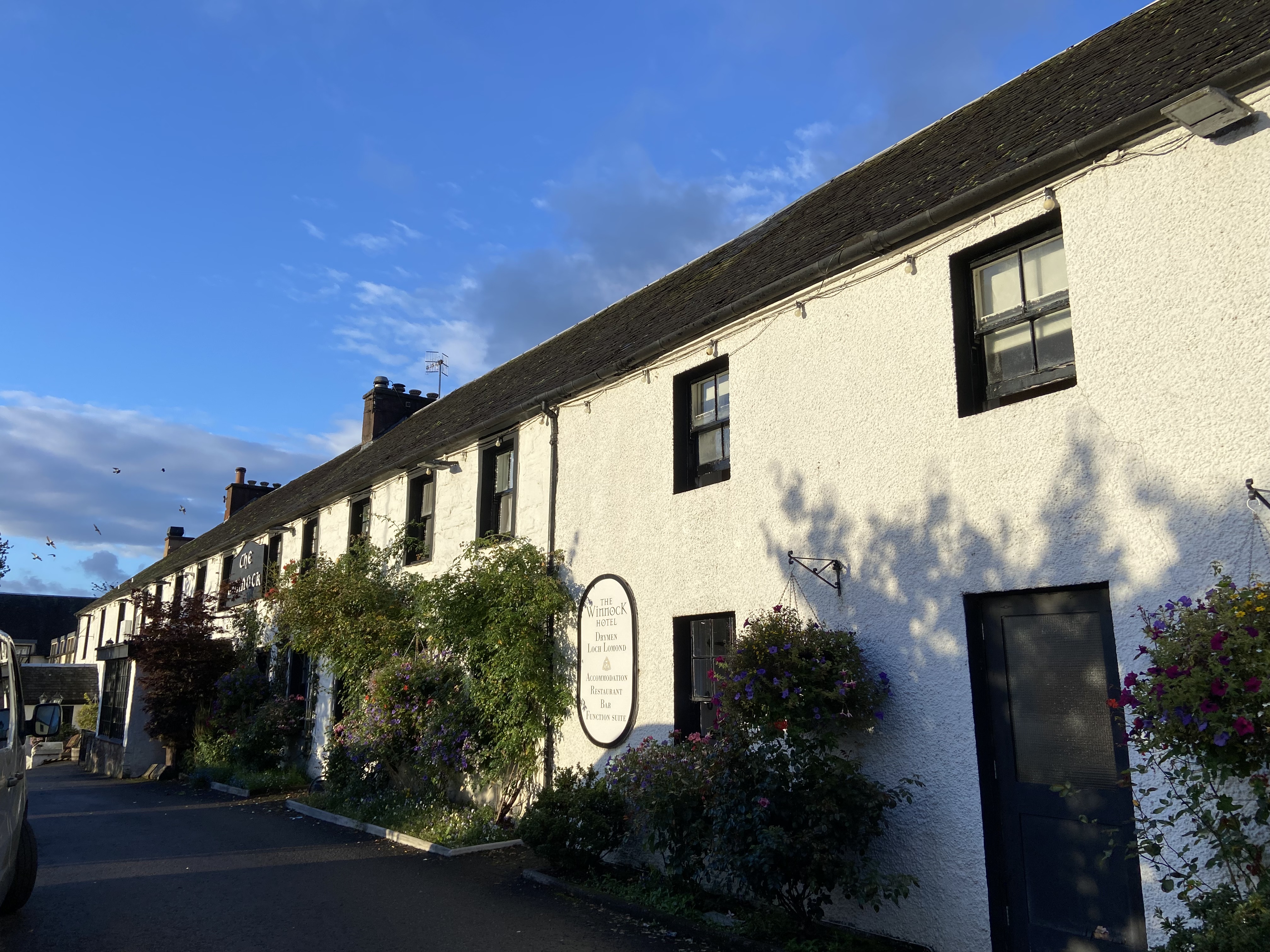
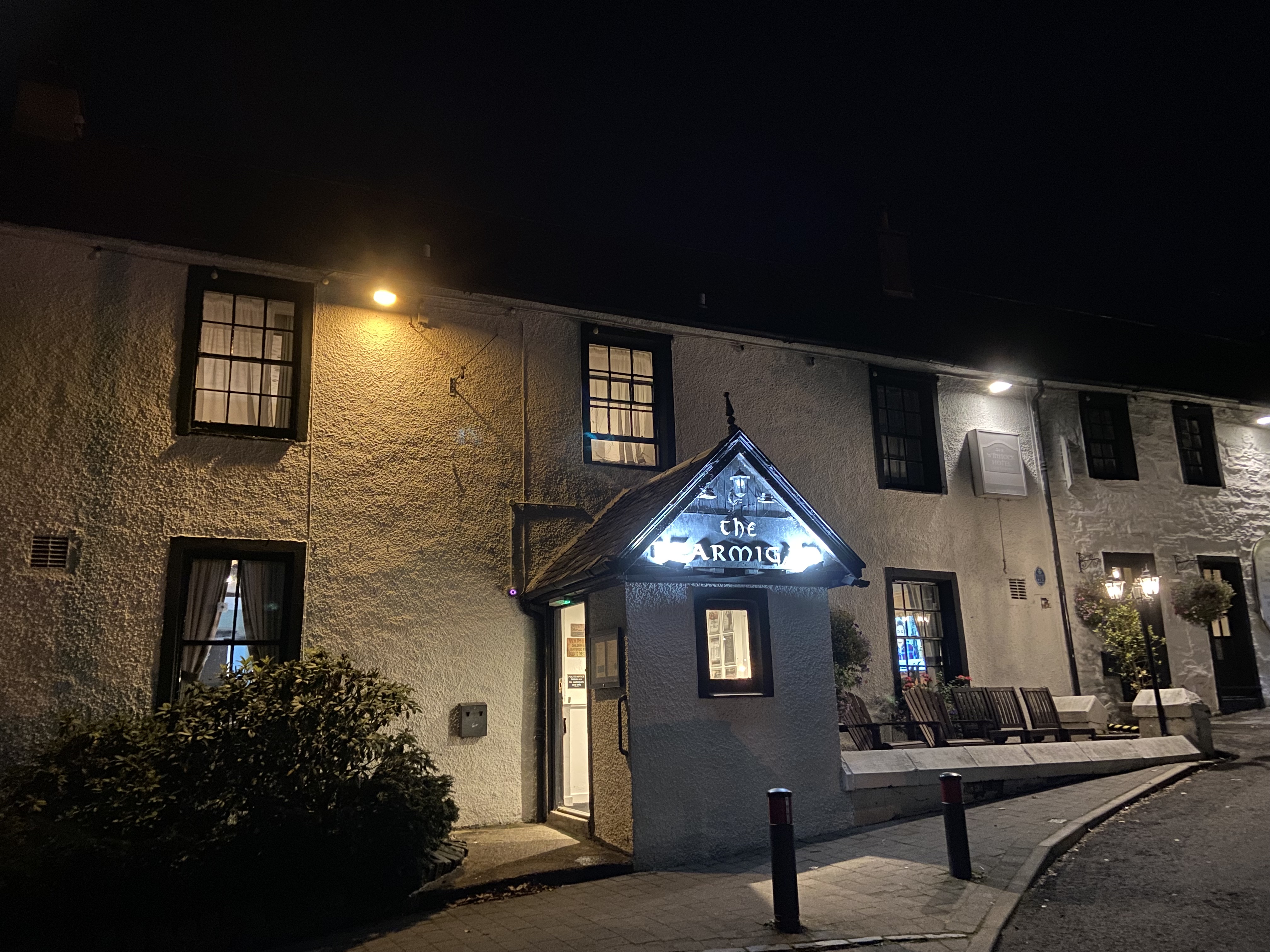
I’m now in a hotel in Drymen, an idyllic village in Central Scotland. Tonight I’ll be going to a ceilidh for the first time in years. It felt odd, driving to Drymen on my own. Charlie and I came here relatively often as his lovely Aunt Janet and Uncle David lived here. Janet and David had eight children and visiting them with ours was great. Nothing ever felt like it was too much trouble. It was sad to know they’re no longer there. I’m reaching the stage of life where so much has disappeared. It’s an odd feeling. Still, the ceilidh is to celebrate the marriage of Kyle and Candice. Kyle was at school with John and Anna when they were small and we lived in Airth. They are the next generation and I hope they have a wonderful life ahead of them.
After this, I’m heading to Yorkshire, to take Dad to a doctor’s appointment on Monday. After that, I’m probably going to be locumming in Middlesbrough and then may find myself heading straight to Norway. Packing yesterday was quite challenging and only time will tell whether the luggage I packed for a holiday in November (where there may be snow) was adequate.
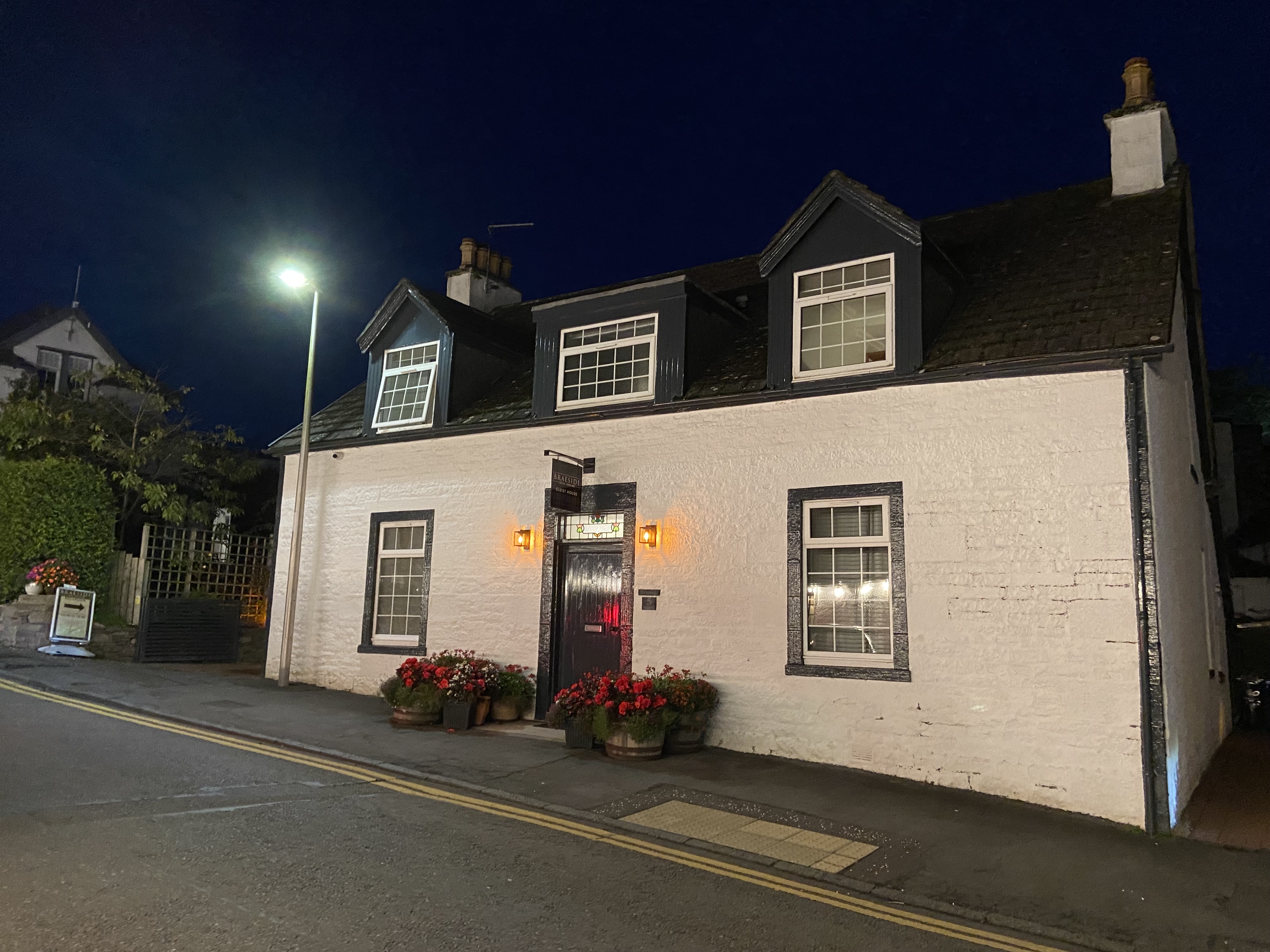
I haven’t many photos yet, though I’m in a beautiful part of Scotland. Hopefully next week, I will have more to share, but I took a few photos of the village last night and this morning, while walking Triar, which I will share with you. As ever, thanks for reading and I hope you have a good week.
For the last two weeks, Triar and I have been at Cavan Vets in Wolverhampton. I haven’t told them about this blog, but I have nothing but praise for the practice, so I hope they will forgive me for mentioning them without asking permission first.
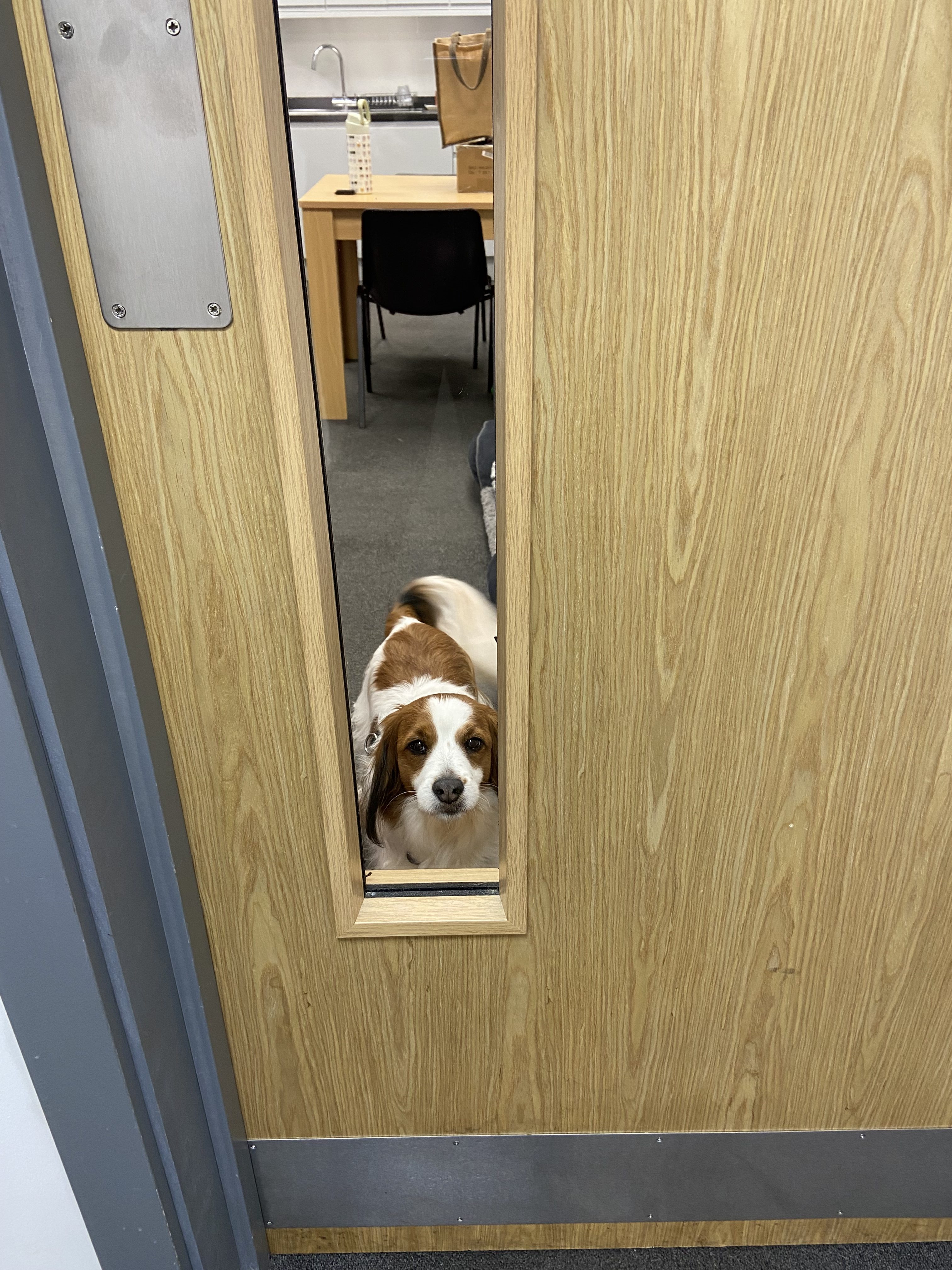
For me, it was a huge thing that Triar could come to work with me. The civil service don’t allow it and PDSA (understandably) didn’t have space for him, so it was a real treat to bring him with me and for him to be made so welcome. I was working from nine in the morning until seven at night, so he would have been alone for a very long time otherwise, even with a walk at lunchtime. Instead, he was spoiled rotten by all the nurses and receptionists and the lovely cleaner even took him out for walks, though she said he and Paddy (practice Labrador) often went in opposite directions.
As for me, I’ve learned a whole lot from two weeks of consulting. There are so many new drugs and preparations since I stopped working in small animal practice. Non-eating cats can get appetite stimulants, epileptic dogs on phenobarbitone can have liver supplements. One of the vets at Cavan is an eye specialist, so there were a lot of eye preparations I hadn’t come across before, as well as some I had forgotten. Dogs with dry eye are sometimes given Optimmune, which contains a cyclosporin, which helps in autoimmune conditions. That was available years ago, but I had forgotten about it. It’s of particular interest to me, as I have an early case of dry eye myself. It’s good to know that, if it worsens, there are more options than just tear replacement drops. I’d read that, in severe cases, saliva can be redirected through the tear ducts, but that sounds like it could come with some profound risks and problems, so it’s nice to be reminded that there are other steps before that one. Google isn’t always your friend when it comes to accurate understanding of your own medical conditions.
I did find myself feeling a bit like an imposter, particularly the first week. It was exacerbated by the fact that my client care soft skills and muscle memory remain intact. When you know how to wield a syringe to cause the least pain possible, it’s always seen as a valuable skill. I was however, shamed one day by a kitten. I’ve long prided myself on being able to tablet cats efficiently and have even added a little flourish, where I wash the tablet down with water from a syringe (few things feel worse than feeling a dry tablet stuck in your throat) but it all went to pieces when a cute, but feisty kitten managed, not only to get its claws on me, but even managed to bite me for good measure. Fortunately, there’s no sign of infection, but my pride received a bit of a battering as well as my fingers!
It was curiously restful working such long hours. I’ve a bad habit of rumination and there are things in life I regret, so only having time to walk Triar, eat, watch an episode of Ludvig and then drop into bed was actually good for me, if exhausting. Days split into 15 minute appointments (and the great company of the staff in any breaks) passed surprisingly quickly. Several staff said they wished I (and Triar) were staying and the feeling was mutual. I don’t think there will be any vet jobs going there though, even if I did want to move. Perhaps unsurprisingly, the veterinary staff have all been there a very long time.
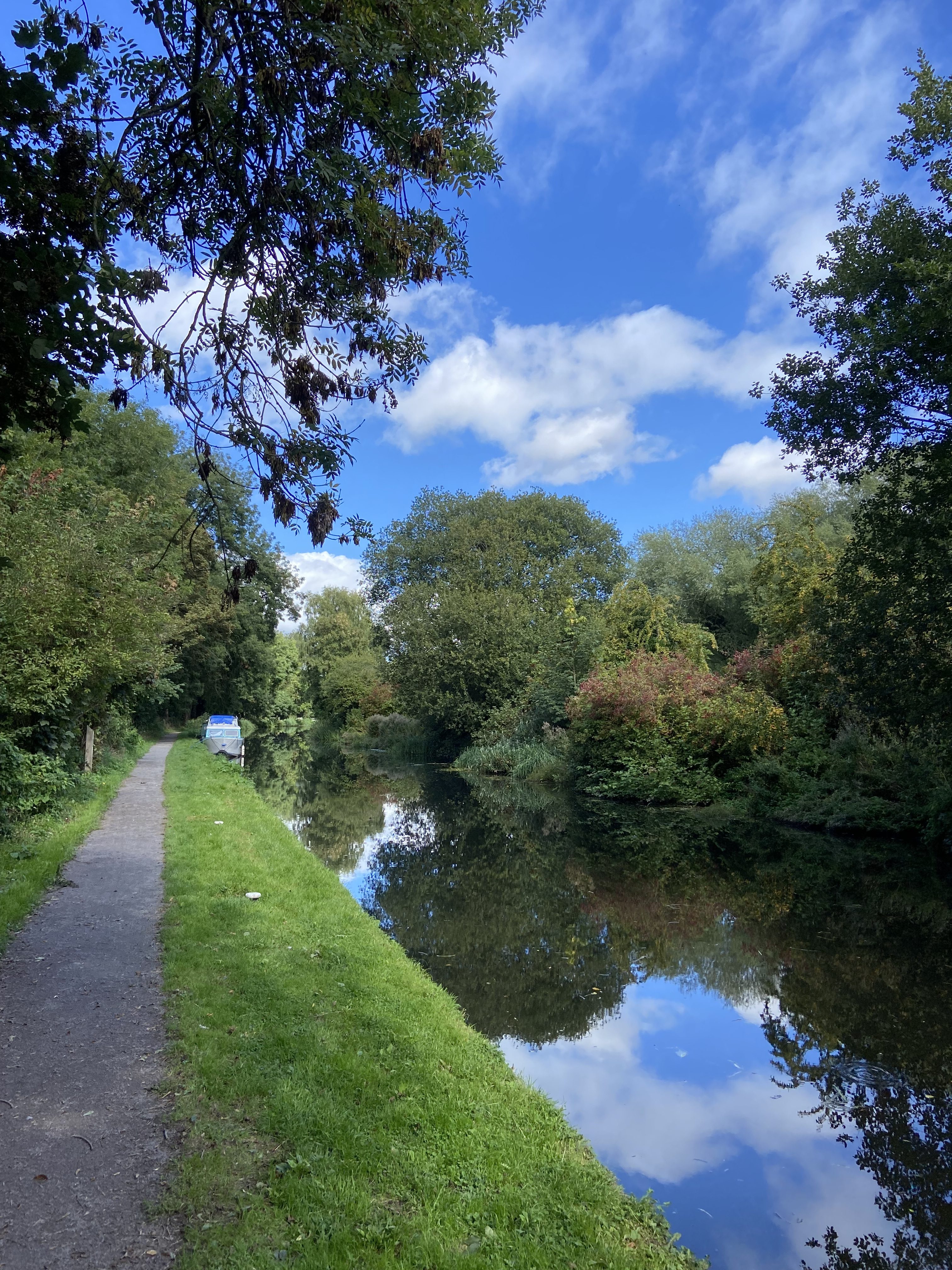
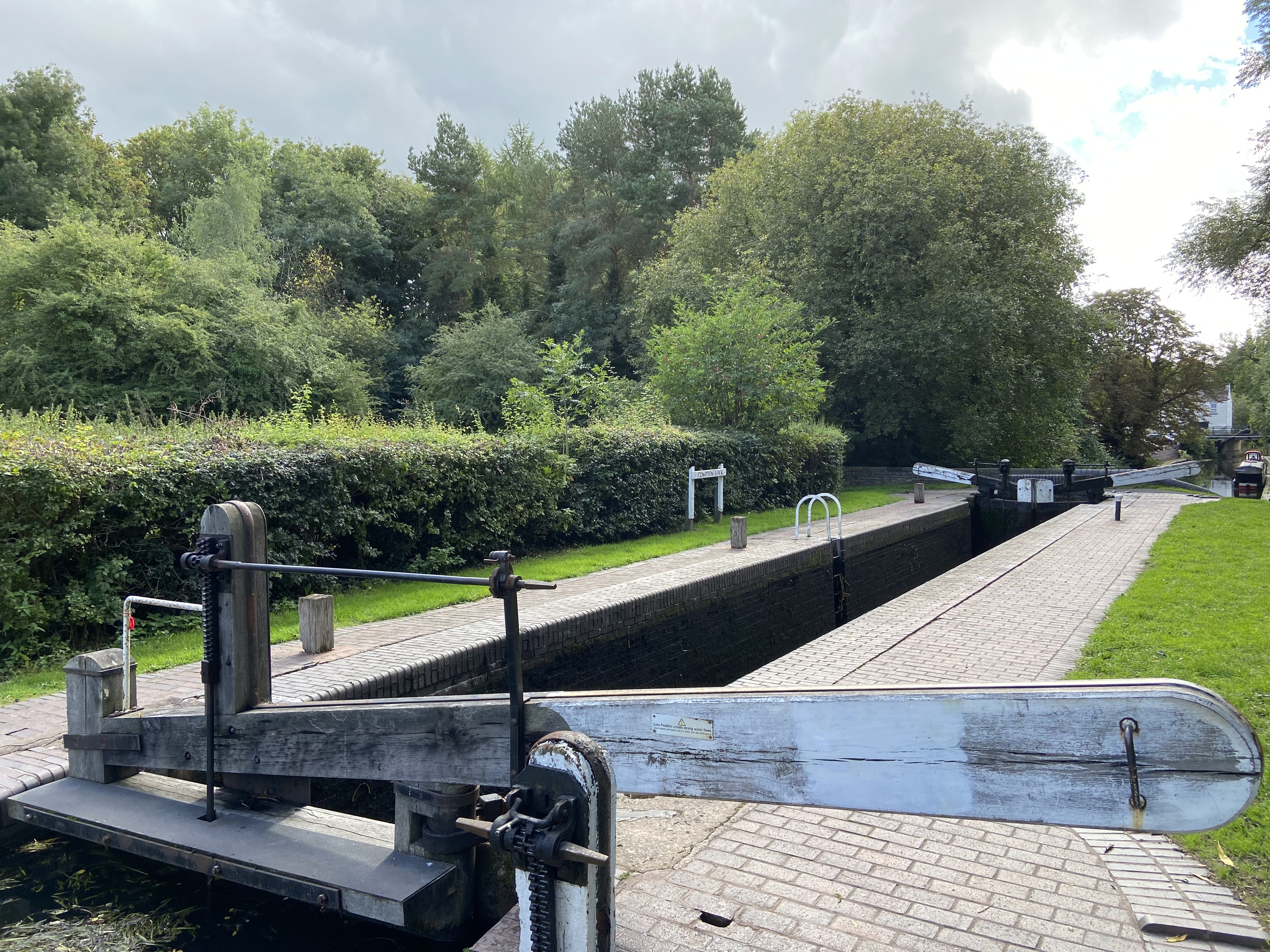
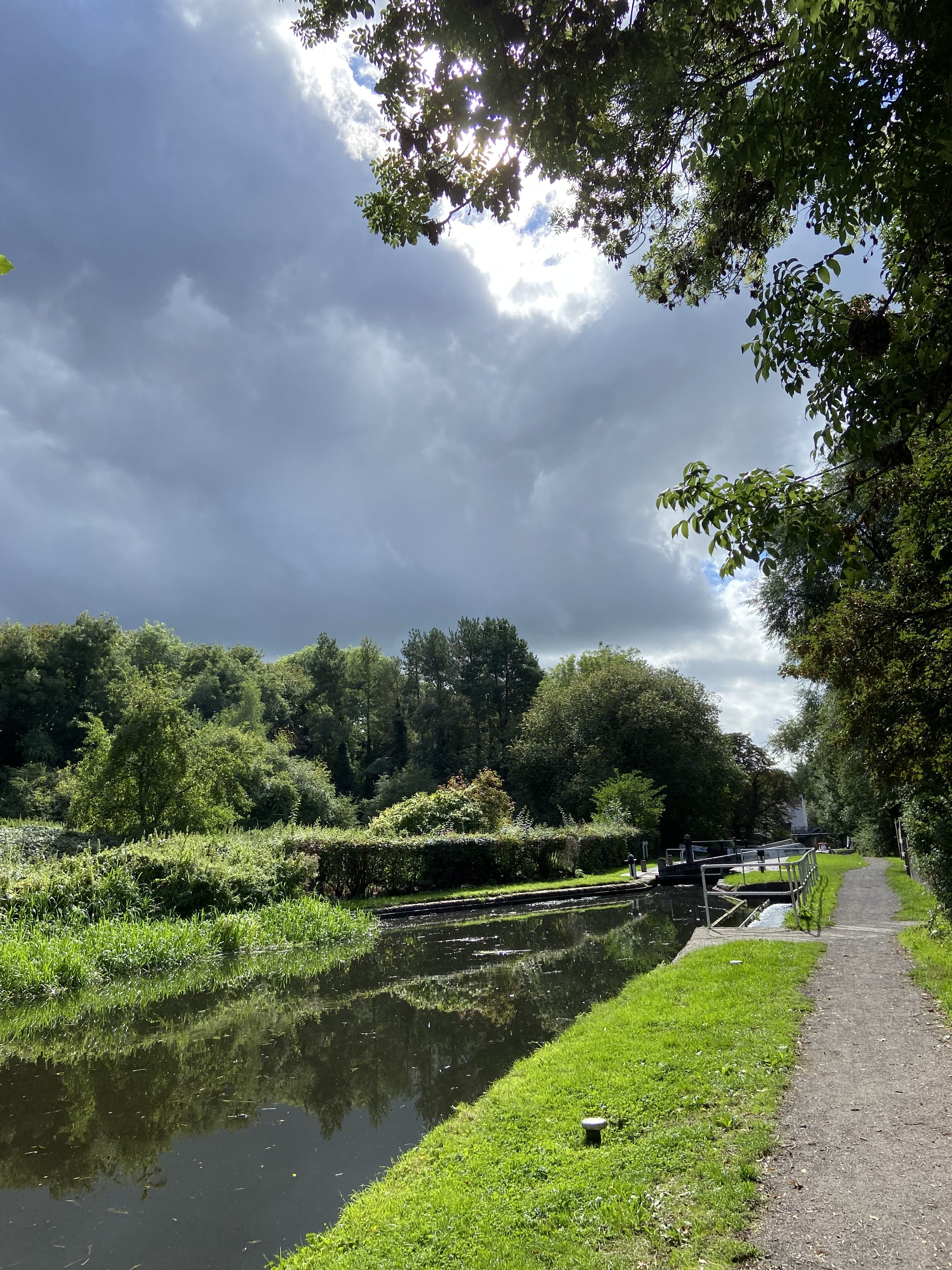
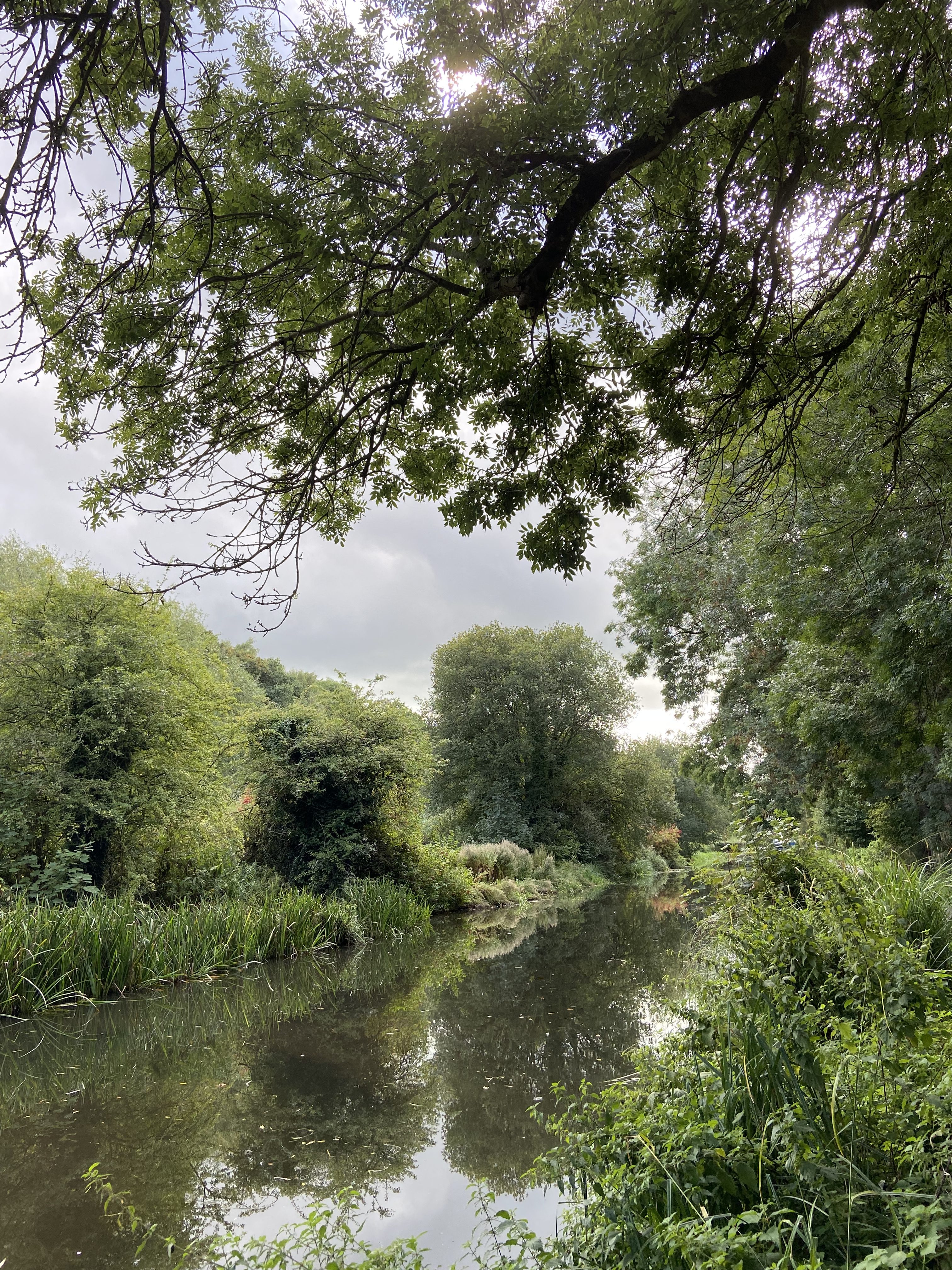
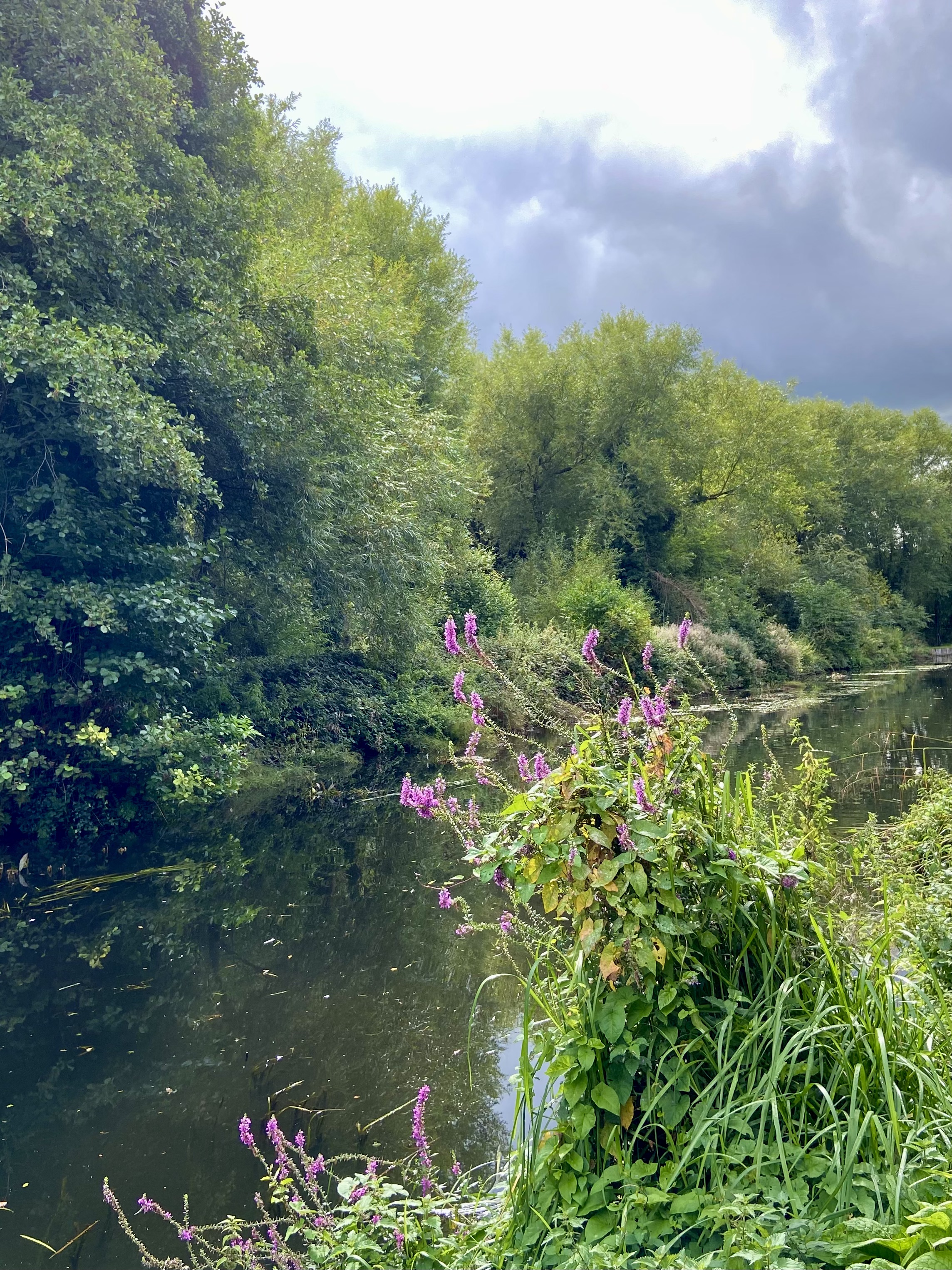
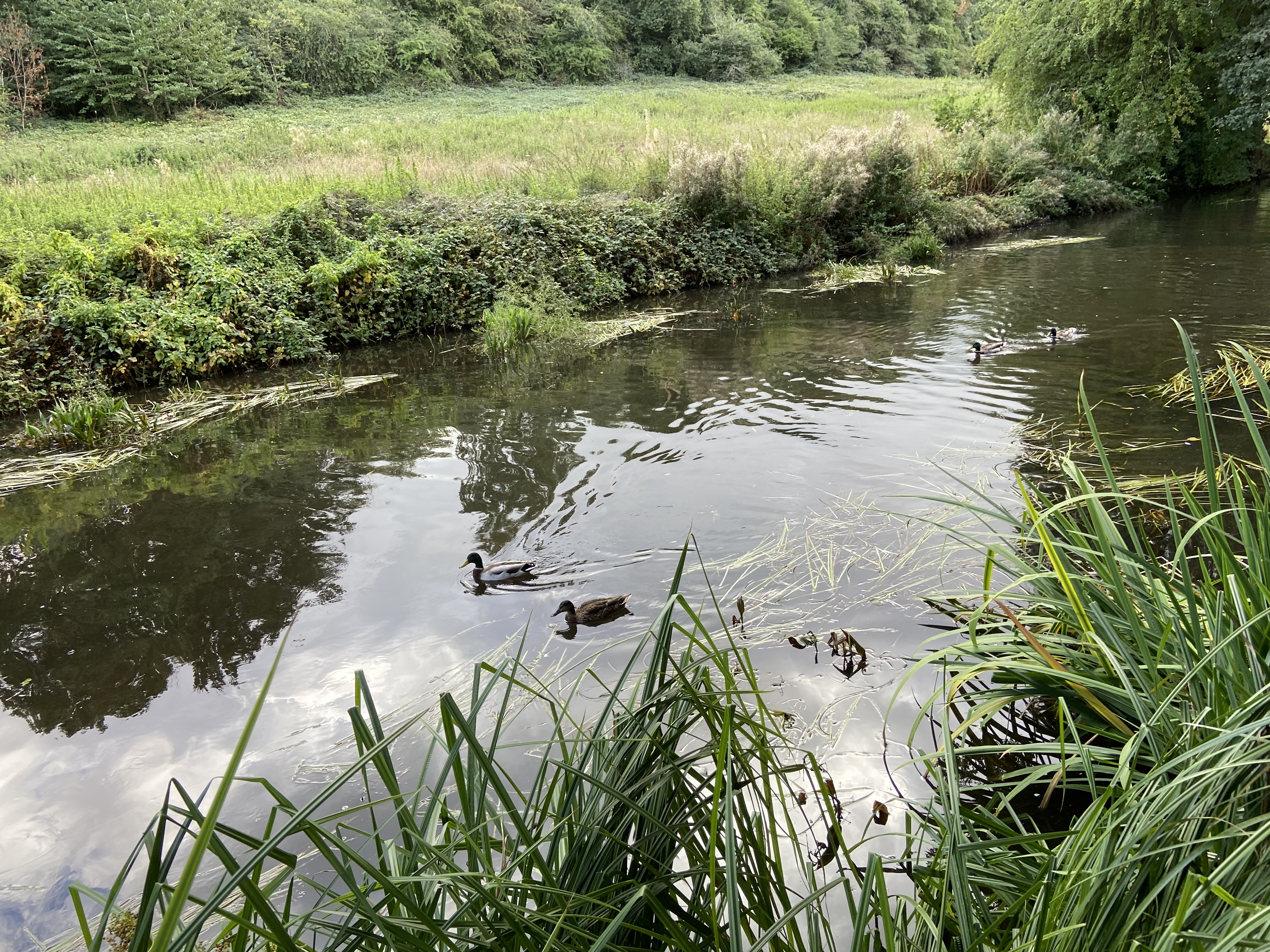
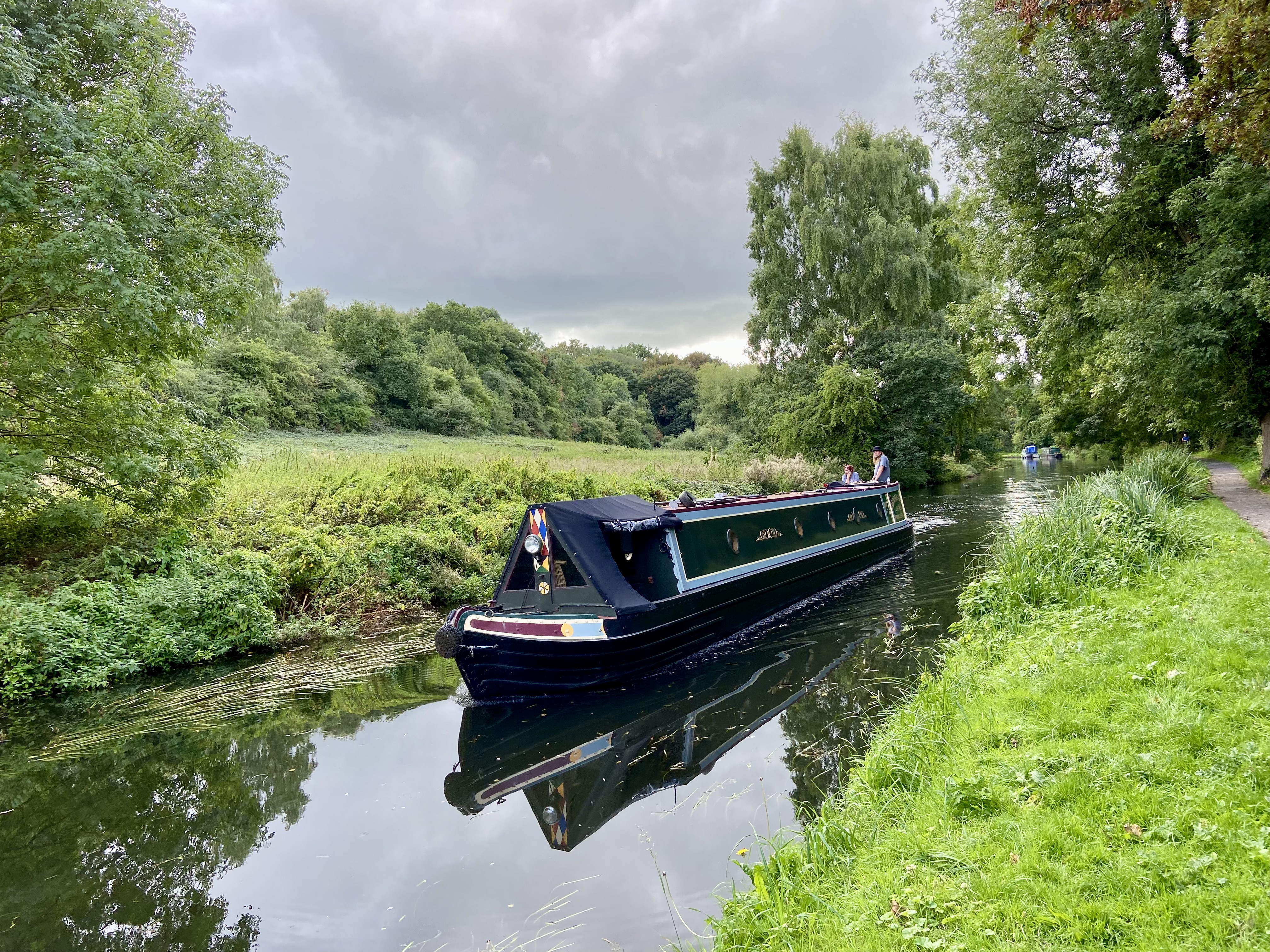
I didn’t have a whole load of energy for exploring last weekend, but I did discover that there was a disused railway line path in Tettenhall, near where I stayed, which ran close to the Staffordshire and Worcestershire Canal, through a nature reserve. Triar and I went for a walk there last weekend. I envied those in the narrowboats we saw. There are few things more relaxing than drifting through the countryside at 4mph.
So I will leave you with some photos from that walk. As usual, thanks very much for reading and I hope you have a good week.
So here I am in Wolverhampton, or rather, in a leafy suburb of the city. I’ve completed my first week at Cavan Vets in Bushbury and, on the whole, am feeling very content. I’m also sorely in need of a rest, having driven down last Sunday, then worked from nine in the morning until seven at night for the last five days.
I rejected another locum offer last week because of similarly long hours, though that one was also complicated by the fact that I was going to have to find (and fund) my own accommodation and the dates they offered were all over the place. I could only work part weeks in Glasgow because Lara very kindly let me stay in her flat. The practice where I’m currently locumming offered to pay for an apartment and, in the event, kindly found somewhere for me, which made the whole thing very straightforward.
It’s not like the PDSA. This is a private practice, where clients are paying for my time. I confess I felt a bit nervous at that the first couple of days. Imposter syndrome, if you like. But it’s amazing how things have slid back into place, some of them from more than twenty five years ago, which was the last time I worked in private general practice in the UK. And I love the animals, even the ones that are grumpy with me. Who can blame them? Vet clinics can be scary places, with needles and being poked and prodded, of falling asleep and waking up with a wound and a cone, of areas where your owner can’t come with you.
But the nurses and receptionists are lovely. Their love of animals shines through. The practice is full of waifs and strays, from Paddy the Labrador, who was taken on by the boss, to the black cat without a tail, who has a whole room to stretch out in while he waits to find a new owner. And for the two weeks we are here, Triar gets to be a practice dog as well. Monday morning, I left him in the apartment, but when I got to work, I was told he could come too. If he got on with Paddy, all well and good. If not, they’d find him a kennel. By Wednesday, he was dragging me in the door when he arrived. He and Paddy get on fine and he is spoiled rotten by almost everyone. For me, it’s just lovely to see him so well loved and looked after.
As for me, I’ve also been well looked after. The apartment is lovely and everyone has been very patient with all my questions and a few, odd areas of ignorance. When I qualified as a vet, the only flea treatment on offer that worked was Nuvan Top. You could spray a flea ridden animal and watch the fleas drop off. A few years later, the spot-ons arrived: the ones you put on the back of the neck, which killed fleas in the environment too. Now the treatments are all-singing-all-dancing, kill worms and fleas, ticks and mites. Some are still spot on, some are tablets, but there are a lot of choices and usually they are combined with worming treatments that you can’t use at the same time, due to crossover of the active ingredients. I’m still trying to get my head around all that. Still, I seems to have been keeping up so far with the appointments and am handling more complicated cases than I was at the PDSA.
It’s rather strange that I’m already half way through. The nurses will just get me trained up and then I’ll be off again. The practice is so lovely though, that I wonder what would have happened if I’d landed here years ago. Despite the long hours, I’m enjoying it immensely. For the first time, it crossed my mind that perhaps being a locum might be better than going back to APHA. That said, I’ve worked in quite a few practices over the years and the two I’ve been working in in recent weeks have been warm and welcoming places. I know not all are so harmonious.
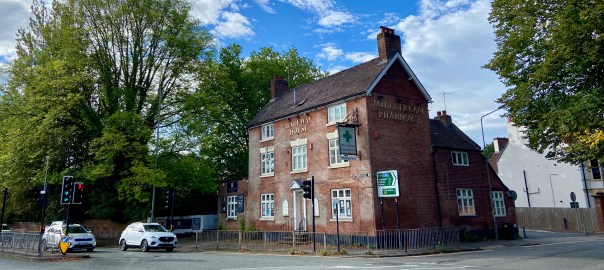
I feel a bit sad that I’m not likely to have time to explore Wolverhampton as I did Paisley, but my body is telling me I need to rest. I’ll see how I feel tomorrow, but I suspect a quiet day in will be in order, though I shall probably go to church and maybe try to find somewhere nice to walk Triar. I don’t have many photos. The one at the top of the page is Halfway House, at the intersection between Albert Street and Tettenhall Road, near where I am staying. It’s now a dental practice and pharmacy, though it used to be a pub and, before that, a staging post, which is what, to me, it looks like. It’s after the time of Jane Austen, but still easy to imagine travellers stopping there, back when the horse was the main means of transport and it took days, rather than hours, to get anywhere.
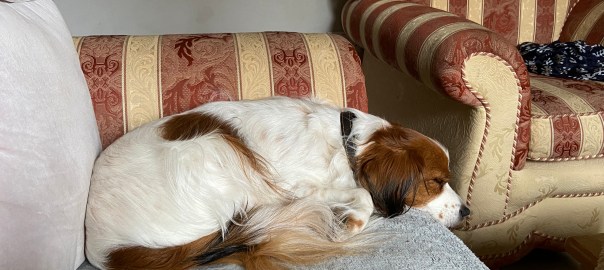
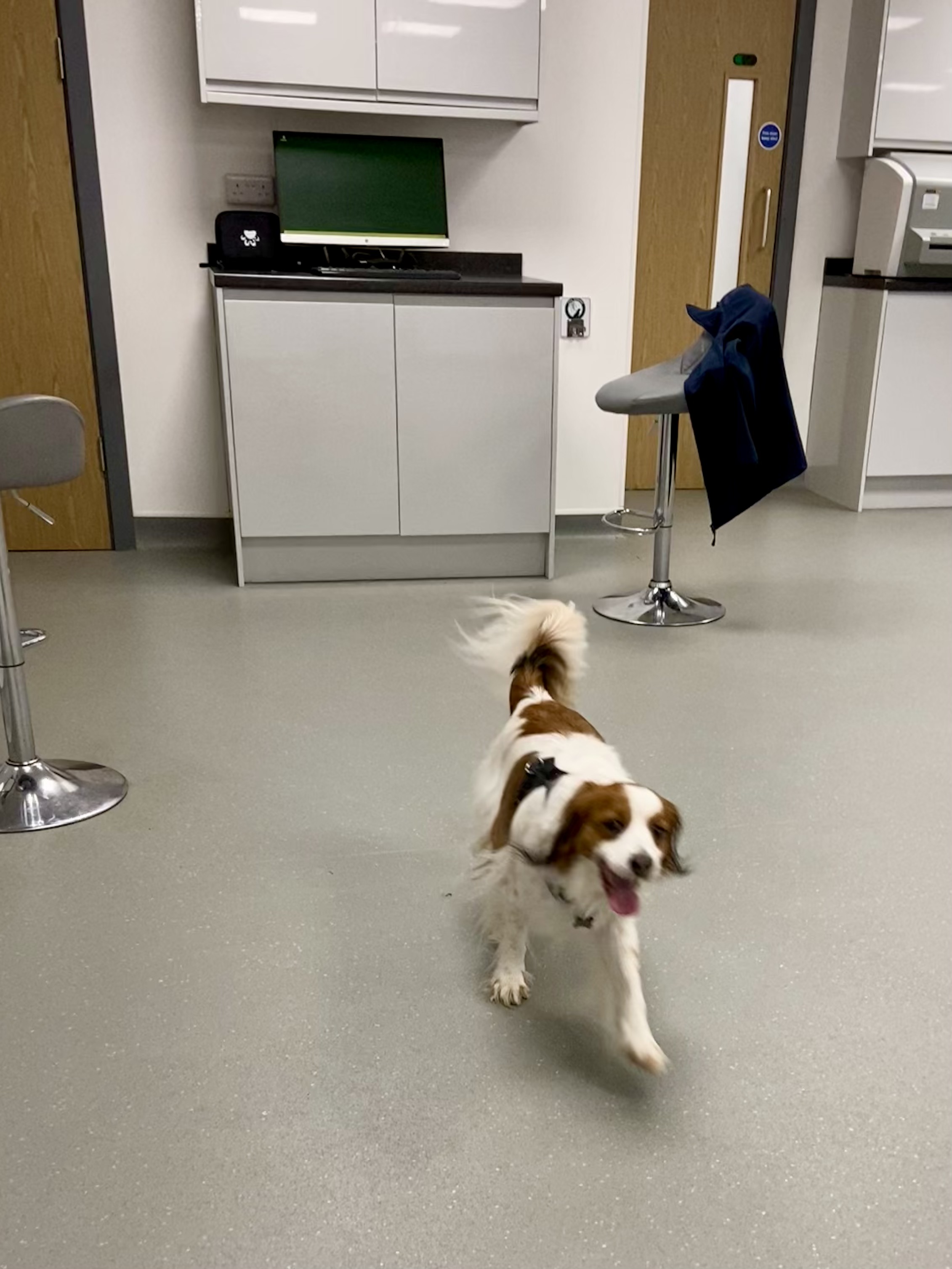
I’ll leave you with the few pictures I’ve taken while wandering round, as well as one of Triar in his new Practice Dog role. And now, I’m going to grab a coffee, then kick back and watch Ludwig on the TV. Triar is asleep on the sofa beside me. What better way to spend a day? Thank you for reading and I hope you have a good week.
I really should not make predictions, or indeed assume anything about what the future holds. My previous post started with a partial lament, that I might have done my last surgery, but the failure in my thinking was with the idea that the civil service might be in any kind of hurry to get me reinstated. I spoke to Dean (ex and hopefully future line manager at APHA) on Wednesday. The papers that were completed and sent off the week before, rather than being something final, were indeed only the preface to a possible eight week check of my suitability – a DBS check, if you like. Dean’s own line manager had indicated they hoped to have me back on board by the beginning of September, but it seems Dean’s “management of my expectations” (he suggested mid-October) is looking more likely.
I have suggested to them that I could locum for APHA in Dumfries in the meantime. After all, bluetongue and BSE are keeping them all busy, but I haven’t heard anything back about that, so rather reluctantly, I engaged with trying to find something else to do. After all, the mortgage isn’t going to pay itself. I was really hoping for another PDSA stint, and it was looking likely midweek. There was talk of possible positions in both Leeds and Bradford, either of which would have suited, due to the proximity to mum and dad and various relatives. I also talked to the senior vet in Margate. I quite fancied a trip to the seaside, though it would have introduced a major complication to my plan to attend Kyle and Candice’s ceilidh in Scotland in the last weekend in September. Margate to Scotland for a weekend would be quite a stretch.
Anyway, yesterday morning, while out on a Wildlife Farm Walk, I was called by one of the agents I’m in touch with. She offered me a two week stint in a private practice in Wolverhampton. She’d spoken to them about me and she, and they, seemed to think I would be a good fit. So in an unexpected turnaround, tomorrow I am off to the Midlands. One thing about my life at the moment – it’s never boring!
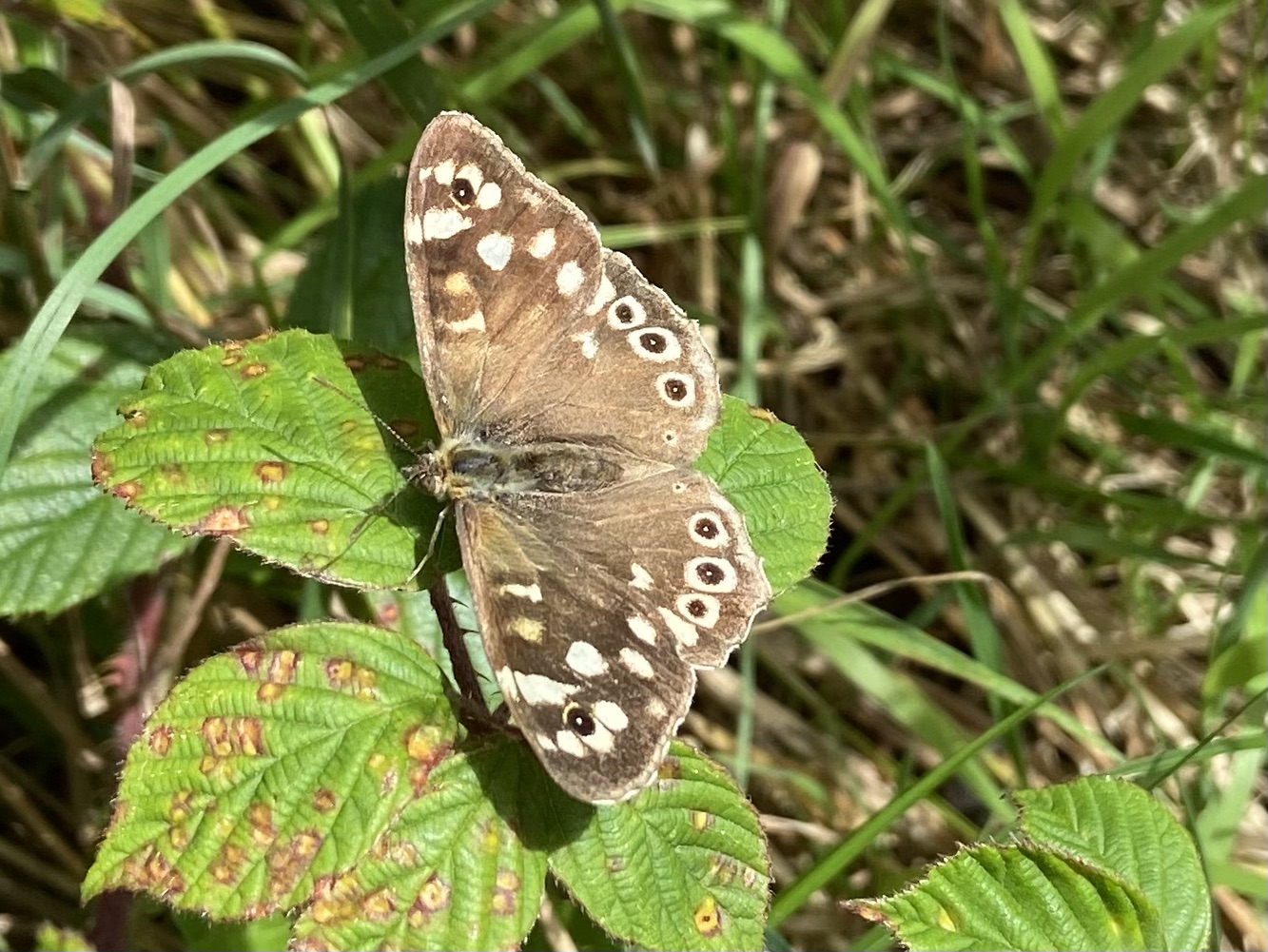
I have made the most of my week at home. It’s been a week of sunshine with torrential rain showers. Blackbird lane has been invaded by swallows, which swoop and twirl overhead, catching the autumn insects, while butterflies flit around the flowers and blackberries ripen in the hedgerows.
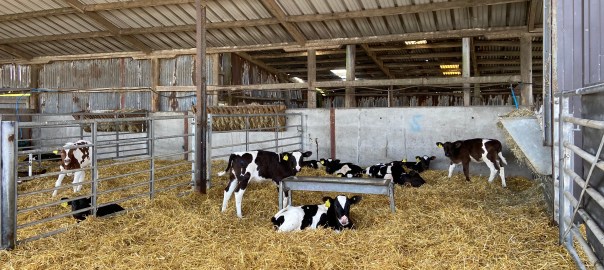
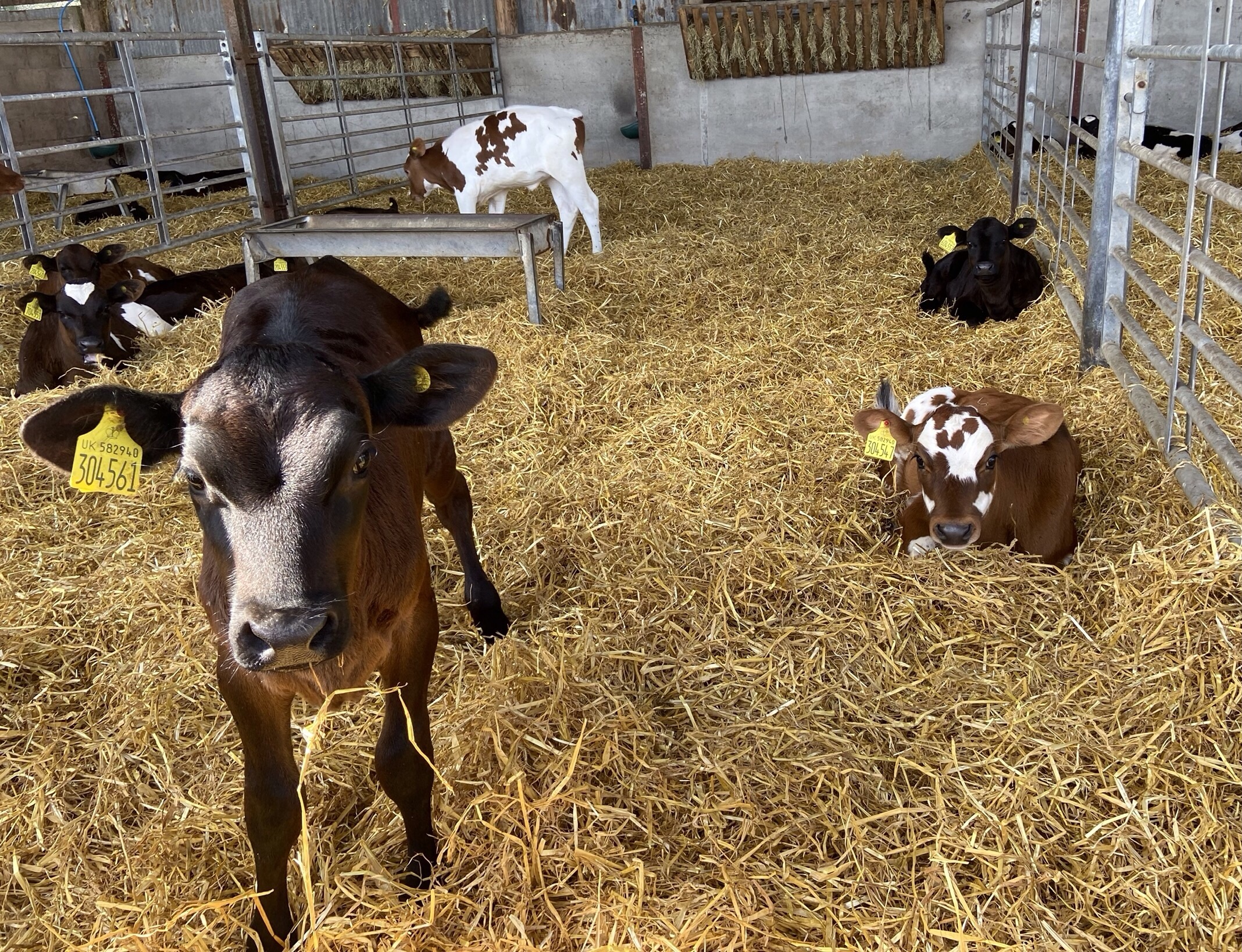
I found yesterday’s wildlife walk on Facebook. It was actually an educational walk on Torr Organic Dairy Farm. It was arranged by Scottish Agricultural College and was about organic farming and diversification, so I signed up, not knowing what to expect, but hoping for a pleasant walk. In the event, it was even better than I’d hoped for. There were a number of organic farmers there and I learned a lot from discussion about treatment of animals and preserving welfare in the absence of antibiotic use. APHA and DEFRA also have interests in sustainability and one health, as it pertains to the environment, so it turned into a truly useful day. On top of that, there were cute calves. There are few animals that I find more appealing than dairy calves, bedded on lots of clean straw, with their gentleness and inquisitive faces. Who could possibly resist?
Anyway, I think that’s enough for today. Next week, I should be writing this from an AirBnB in Wolverhampton. Another new place to explore.
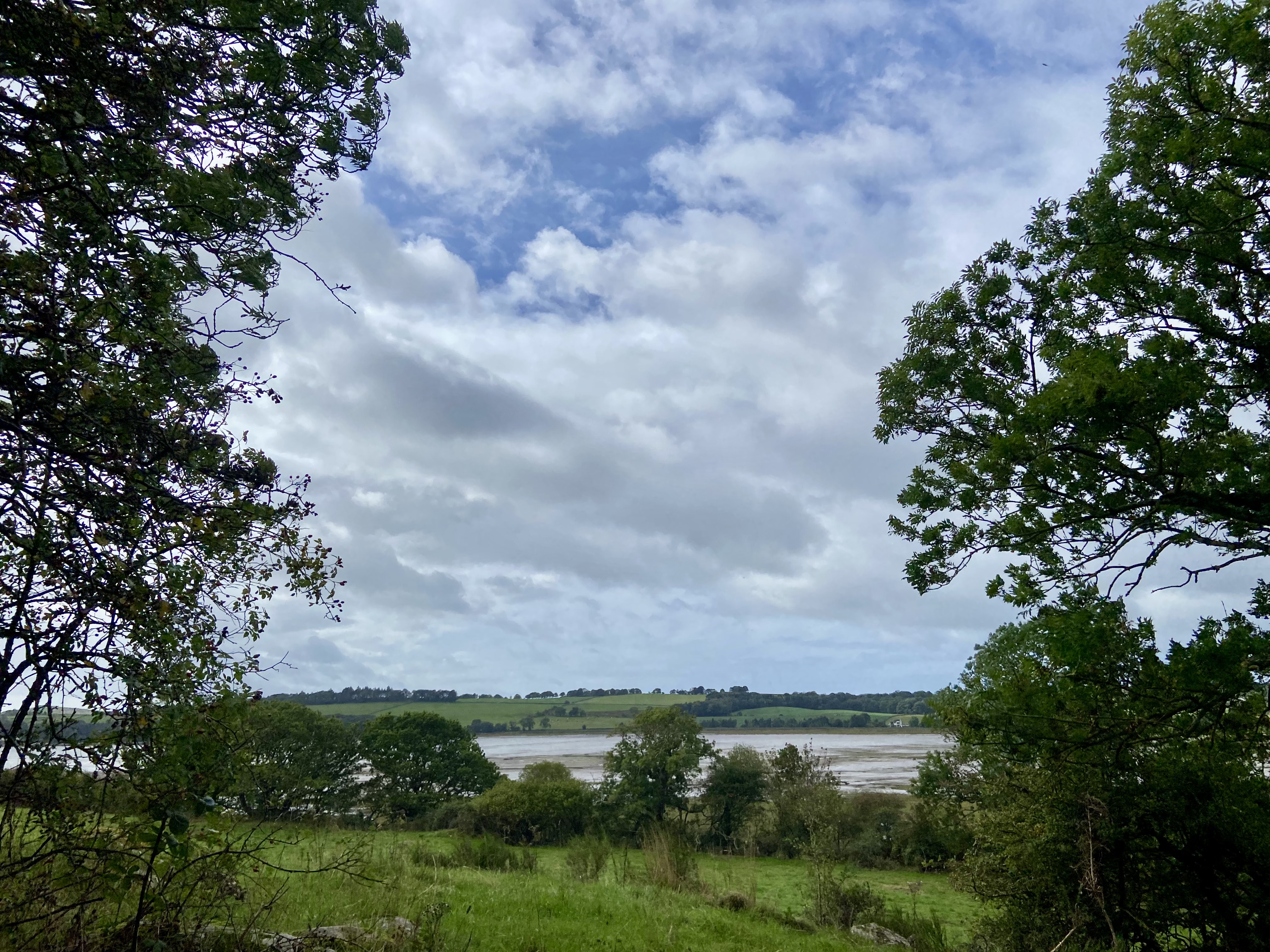
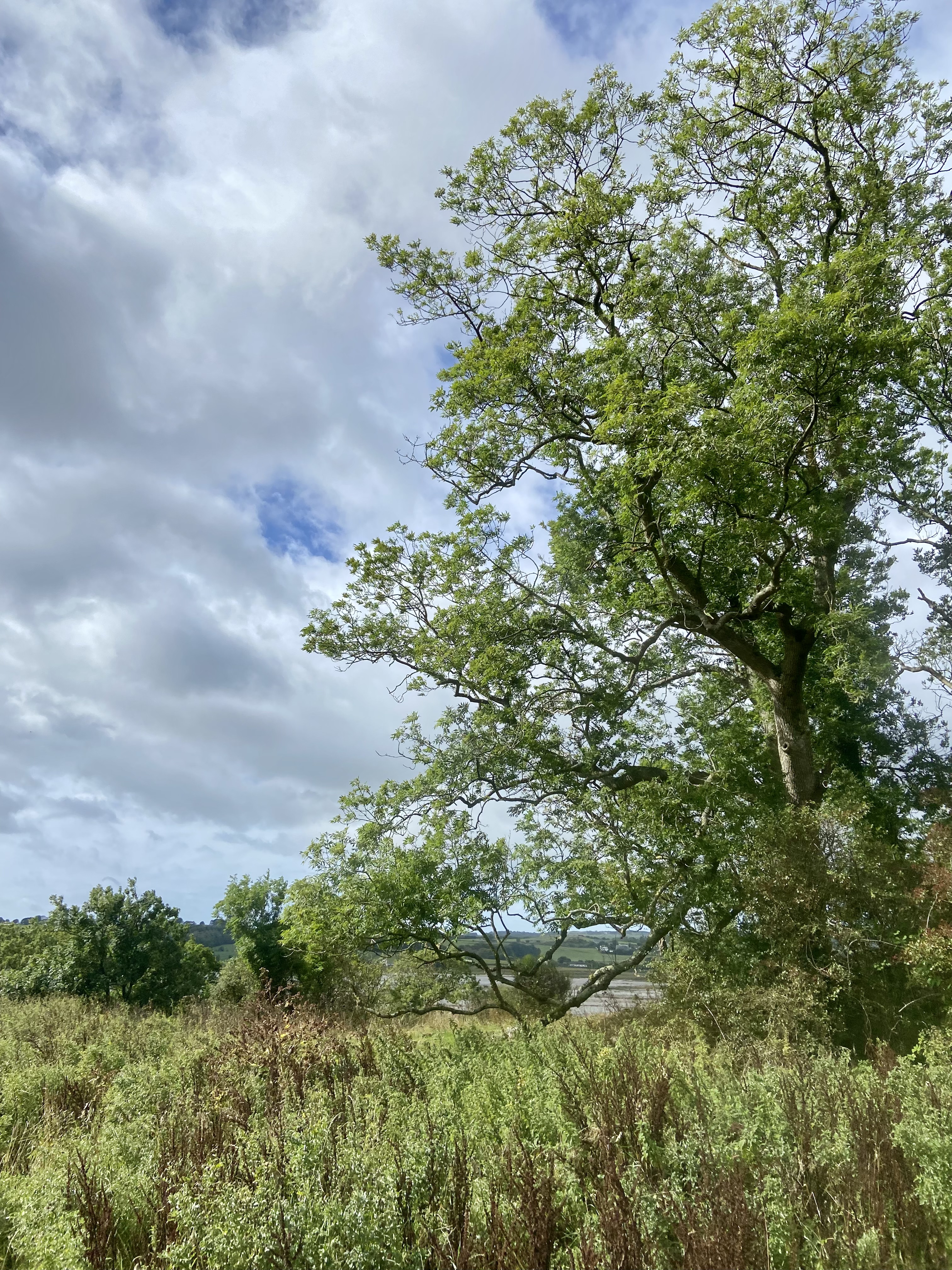
I’ll leave you with a couple of photographs from yesterday’s farm walk. In the meantime, thanks for reading and I hope you have a good week.
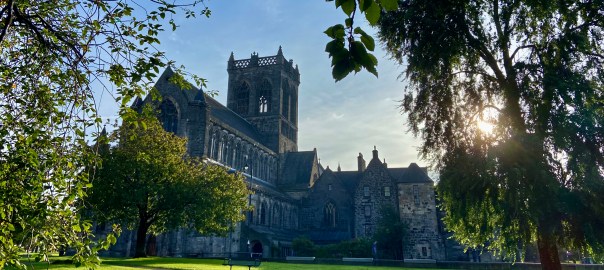
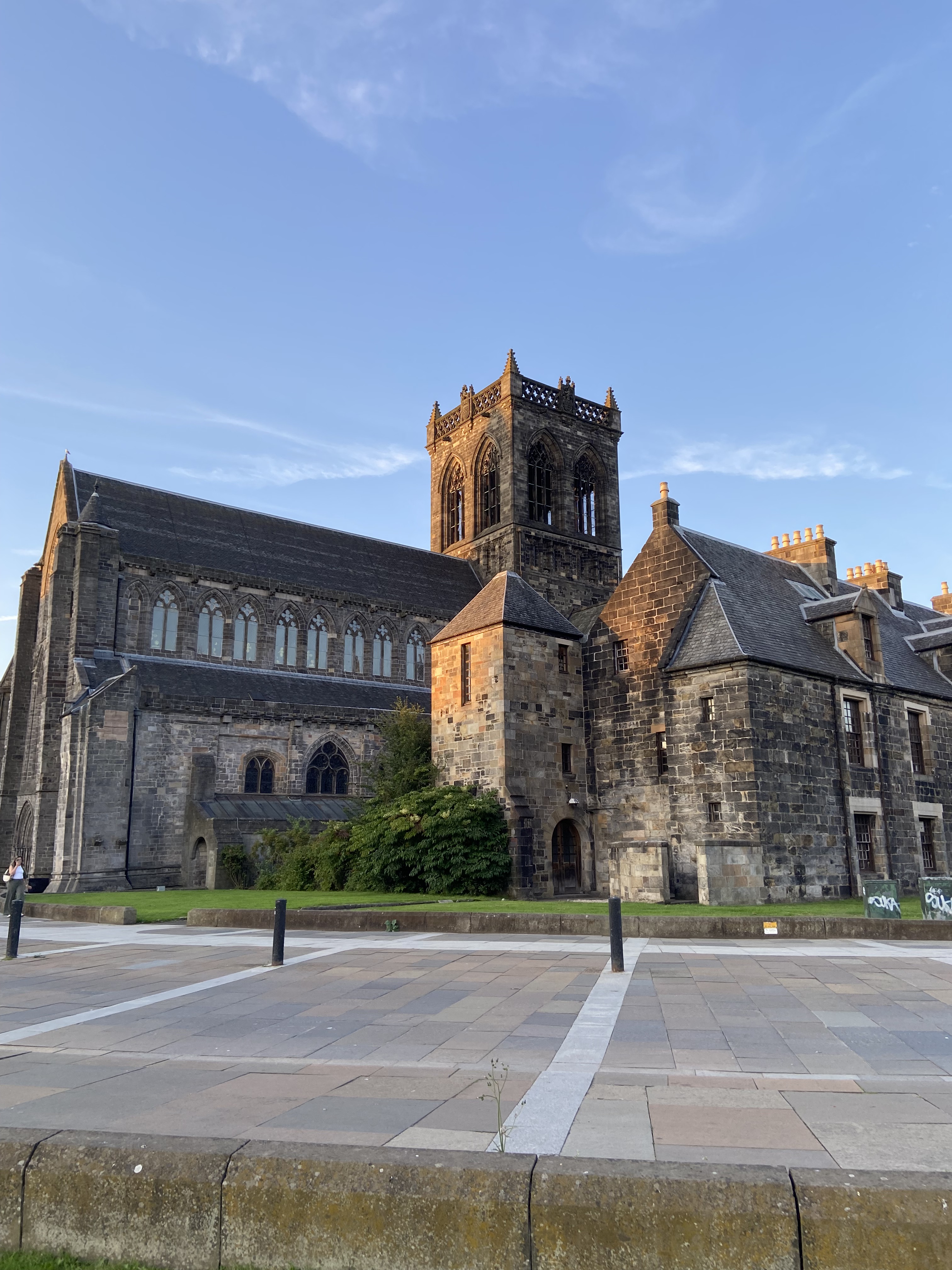
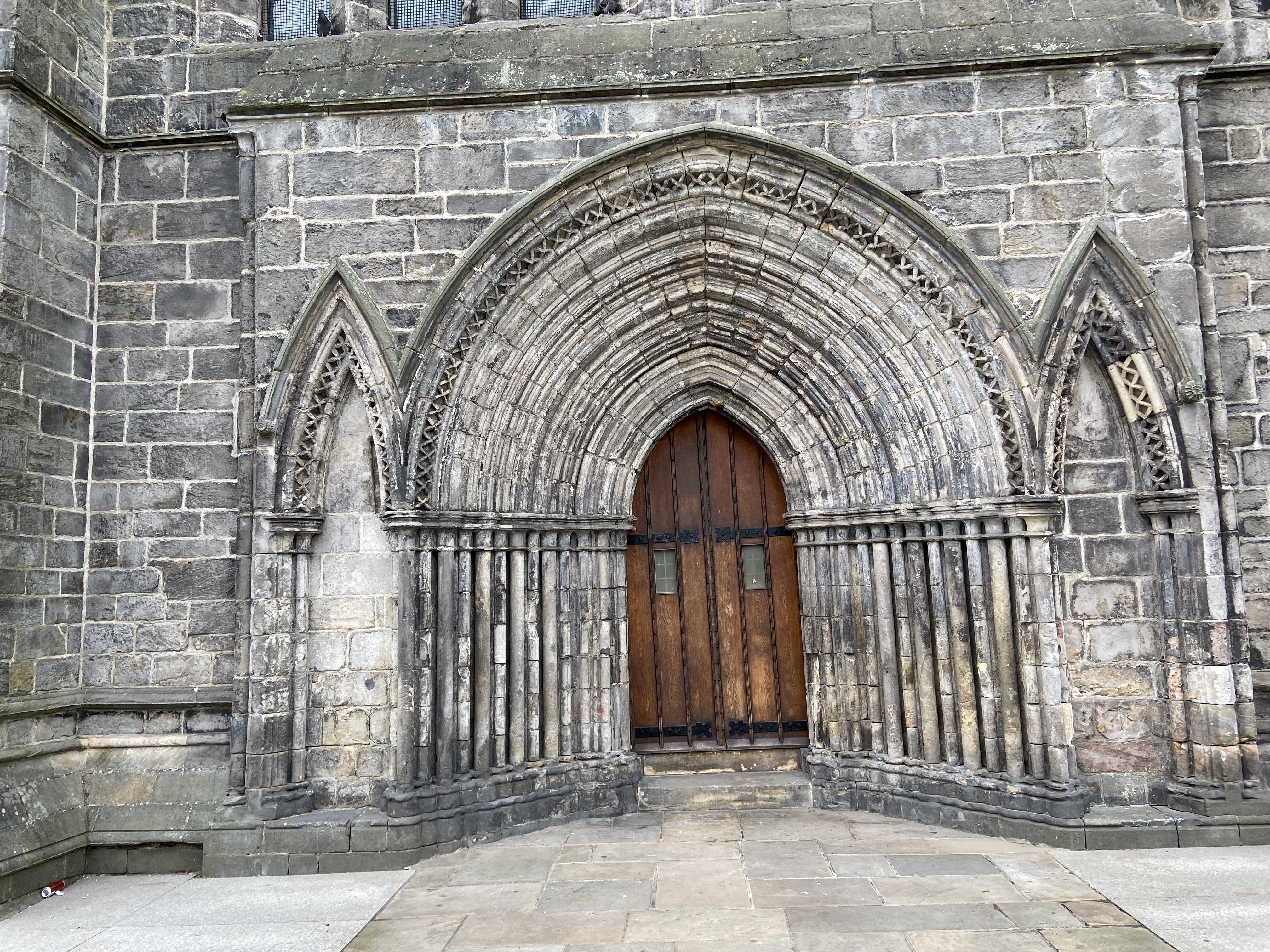
Another photo of Paisley Abbey to lead this entry. It looked so beautiful this morning as I was walking Triar along the riverside. He then led me straight to the Square Café Bistro, clearly reading my Saturday morning intention and thoroughly approving. It was a different lady this morning though, so he almost didn’t get his sausage and I had to order it. Fine by me, though it’s not a habit we are going to get into routinely!
Yesterday was my last day at the PDSA. I suspect there may have been another last – the last time I do surgery. I may be wrong, of course. Who knows what’s round the corner? But when I left Tu Dyreklinikk in Norway in 2016, that wasn’t a thought that crossed my mind. I finished what was possibly my last stint in small animal practice with a very odd case. A dog came in with a very unusual wound or sore on its hind end. I admitted it for sedation, but even once it was cleaned, it still looked strange. It might have been due to urine scalding, exacerbated by the fact the dog was wearing a nappy, but I’d never seen anything like it before and nor had the nurses or the other vets who had a look. It just goes to show that, as a vet, there’s always something you haven’t seen before, even after years and years in the job.
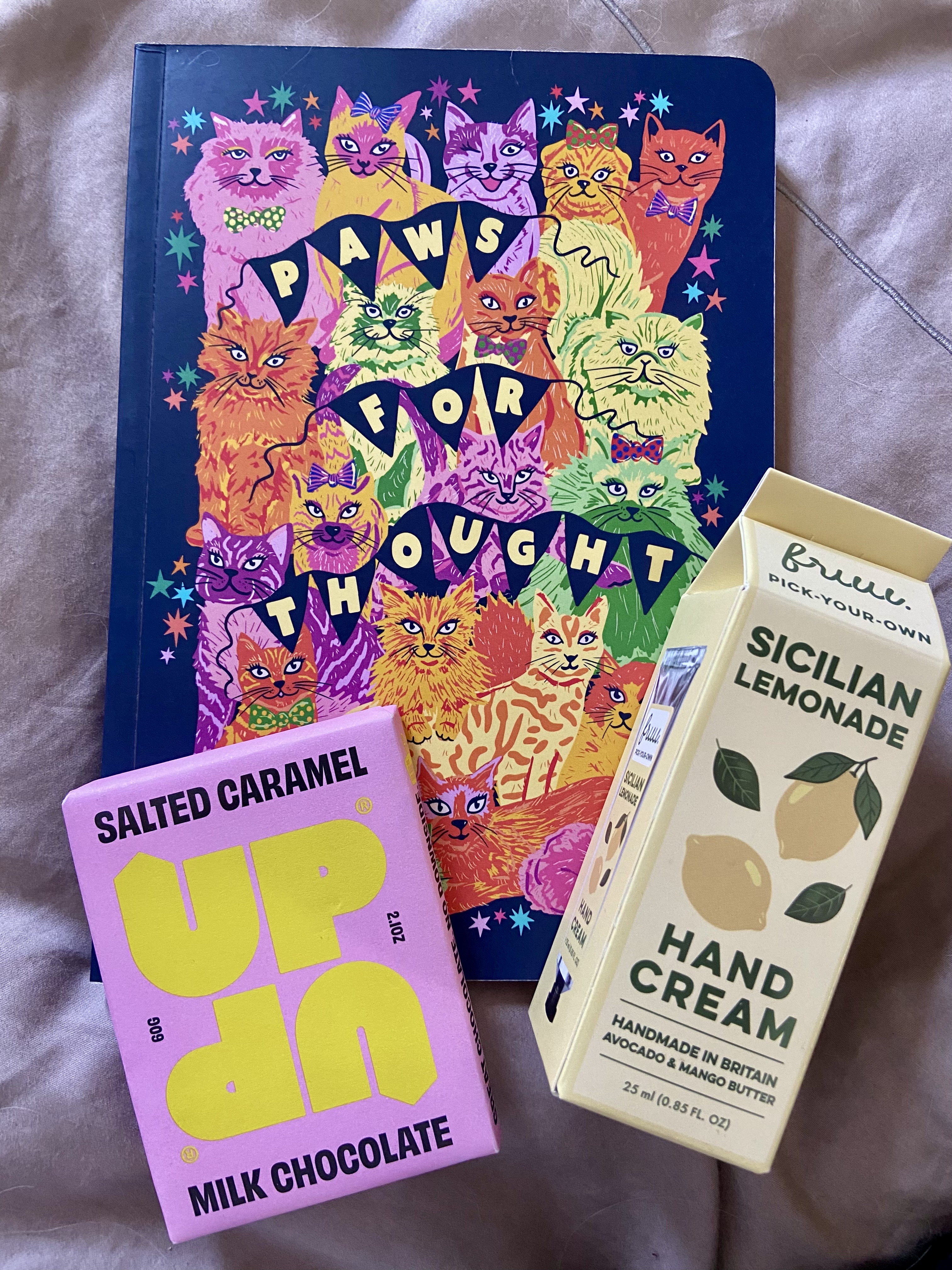
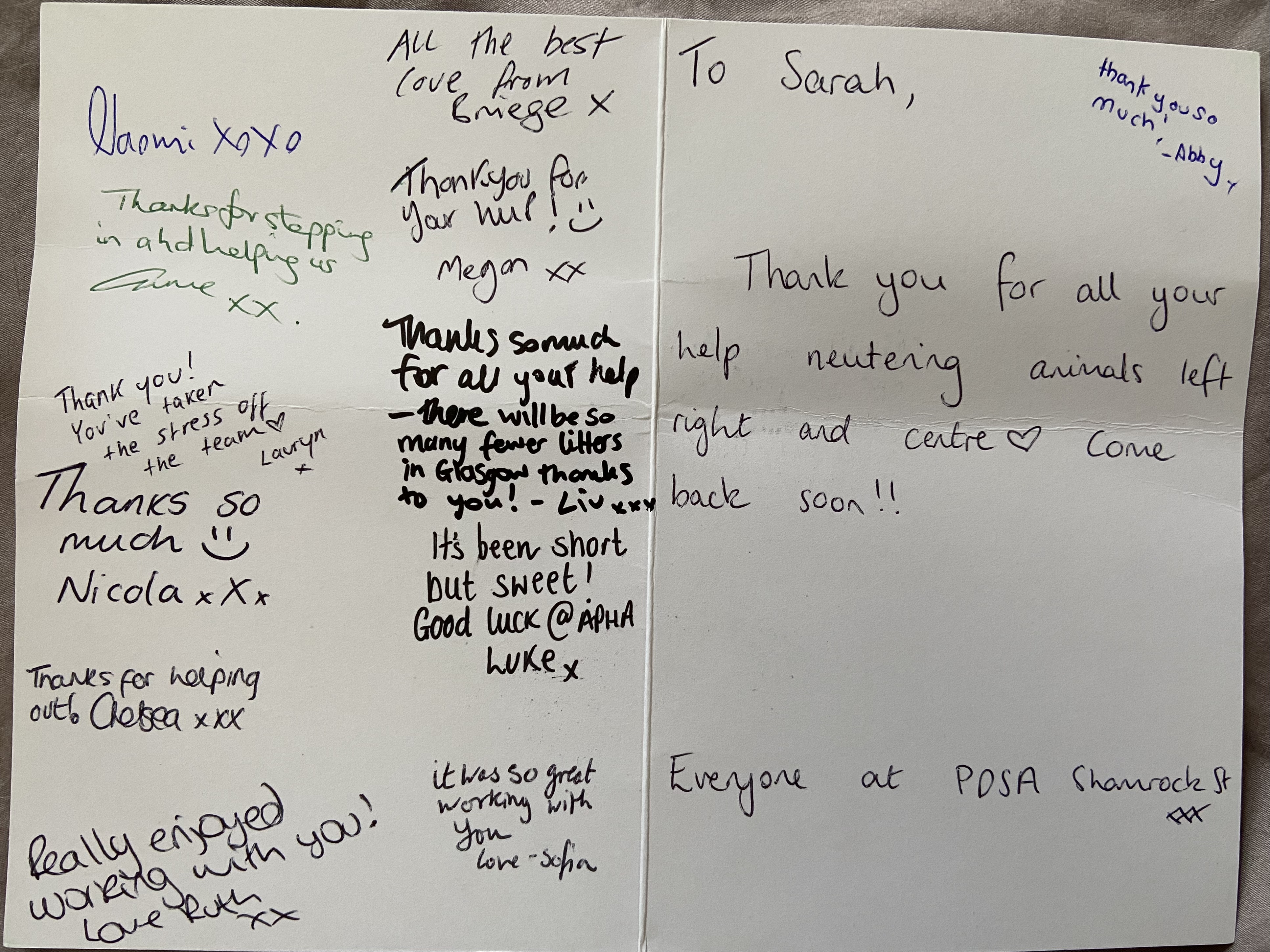
I was very touched to get a gift of a notebook with, “Paws for Thought,” on the front, as well as some hand cream and a small bar of chocolate. These were from Liv, the senior vet, who hoped the notebook would help inspiration strike (her wife is also an author), that the hand cream would sooth my skin after all the scrubbing up I’ve done and that the chocolate would give me a lift when I’m missing them. There was also a card, with messages from the staff, which were genuinely touching. The nurses I’ve worked most closely with said they enjoyed working with me and Lauryn said, “You’ve taken the stress off the team,” and if that is true, then I’m really happy. They’re a lovely group of people and there is a huge amount of work to do. If I’ve helped to reduce a big neutering backlog, that seems like a worthwhile achievement.
So what next is the question and the answer is, I don’t know. There are other small animal practices needing locums, but I really want to get back to APHA to help with the bluetongue effort. On top of that, there was a BSE case reported recently which was also in my region. I went into the Dumfries office on Thursday and found there were two vets working there from Inverness and one of the new team members from Kilwinning was there too. It’s not like I wouldn’t be useful, if only they could get me back on board.
In the meantime, APHA England told my agent that they were reluctant to take me on as a locum, lest I got too used to it and didn’t want to return to a permanent contract. I’ve offered to locum in Dumfries until my permanent job is confirmed (there’s no good reason to turn me down, but it’s not a done deal until the paperwork is signed) but that’s not happening either. The member of staff to whom I made the offer said, “oh but you’d have to be signed up with one of the companies that supply locums,” at which point, I must confess, I felt very frustrated, because everything is set up and ready to go on my side. I know they must be up to their eyes in report cases, but it’s just crazy that I’m here, with plenty of relevant experience, and raring to go, but nobody will take me on. The agent reapplied to APHA England on Friday as they’ve already been let down by some of the people they took on. Hopefully I should find out in the next week or two.
Anyway, here I am, still in Paisley and wondering what to do now. There’s nothing to keep me here, but nothing pressing to do at home either. Usually there’s somewhere I need to be, but now there isn’t. If I’d loads of money in the bank, I’d probably go away for a couple of nights, but due to some first-time locum fumbling, I’m not going to get paid for the last six week’s work until mid September. The mortgage and other payments are covered, but additional hotel fees, not so much.
When I arrived here in Paisley, it was not long past midsummer and it was light until eleven at night, but the days are getting shorter. The sun is just rising as I take Triar for his six am walk, but it’s dark now by nine thirty, when we go out in the evening. It feels a bit sad that I won’t see autumn here, but I look at the stone pavements and think how slippery they will be on icy winter days. If I was years younger, I think I would be tempted by city life and a permanent job at the PDSA, but the slower pace of Dumfries is calling. Anyway, I will leave you with some photos I took last night. If anything, the darkness enhances the old world feel of some of our haunts.
Thanks for reading and I hope you have a good week.
I have Gregg’s bakery to thank, this week, for sending me off on an adventure. I was working Monday, Tuesday and Friday. The job, with its intense neutering programme, and the commute, which includes a mile-long walk each way, is tiring enough, so I was looking forward to a quiet day off. Every morning, as I leave for work, I pass the Gregg’s bakery and I have been hankering after a latte and a warm croissant, so as I returned from taking Triar for his Wednesday morning walk, I decided this was the day.
I was stopped at the door by a sign that said, “No dogs except assistance dogs.” Don’t get me wrong, I accept the right of any food outlet or shop to exclude animals, but it put paid to my breakfast plan. Rather than take Triar back up to the flat, I decided to go and see whether the Square Café Bistro next to the Gilmour Street railway station did croissants instead. The word bistro always conjures up something slightly upmarket and perhaps a bit French, though Wikipedia tells me that a bistro, “in its original Parisian form, is a small restaurant serving moderately priced, simple meals in a modest setting.”
One of the things I am loving about Paisley is that it’s still a very real place. There’s no gentrification, despite the beautiful buildings. Every day, as I walk Triar, I meet different locals. Last night there were teenage girls on the park bench, swearing about effing boys. One evening there was a young woman who kept her hoodie up because “I’m banned from this area,” and often there are alkies sitting there, but they all take the time to tell me that Triar is a lovely dog. So the Square Café Bistro fits in perfectly as it is a fairly classic, Scottish greasy spoon, which does indeed sell, “moderately priced, simple meals in a modest setting.”
Reader, there were no croissants, but I decided to stay and have a square sausage in a roll, or a “roll and sausage” as it would more generally be described locally. I ordered a latte as well. Better still, the man behind the counter asked whether I’d like, “a wee sausage for the doggie as well?” Of course, I said yes. What arrived was a very decent, hearty breakfast with a good enough latte and a wee biscuit. I don’t think Triar could believe his luck though, when his breakfast arrived too.
When I went to pay I found, to my amazement, that my roll and latte were only £5.35. Triar’s sausage was on the house. I asked if I could add a tip on the card, as I had no cash, but the café owner turned it down. “We love our doggies here,” he said.
I was so cheered by this whole encounter, that I decided not to go back to the flat, but instead went to the station, next door, instead. The trains I take to get home to Paisley go to one of three different places; Gourock, Ayr and Wemyss Bay. I decided, without any particular reason, on Wemyss Bay. I assumed there might be a nice beach for Triar and I was aware that the railway station was worth a visit, which seemed enough.
I did rather question my decision while I was waiting for the train. I had no coat or bag, only the summer clothes I had been wearing to take Triar to the park, but the two flights of stairs up to the flat were enough to stop me going back. Triar was perfectly laid back as the trains came and went and when the time came to board, he jumped on willingly and we were committed.
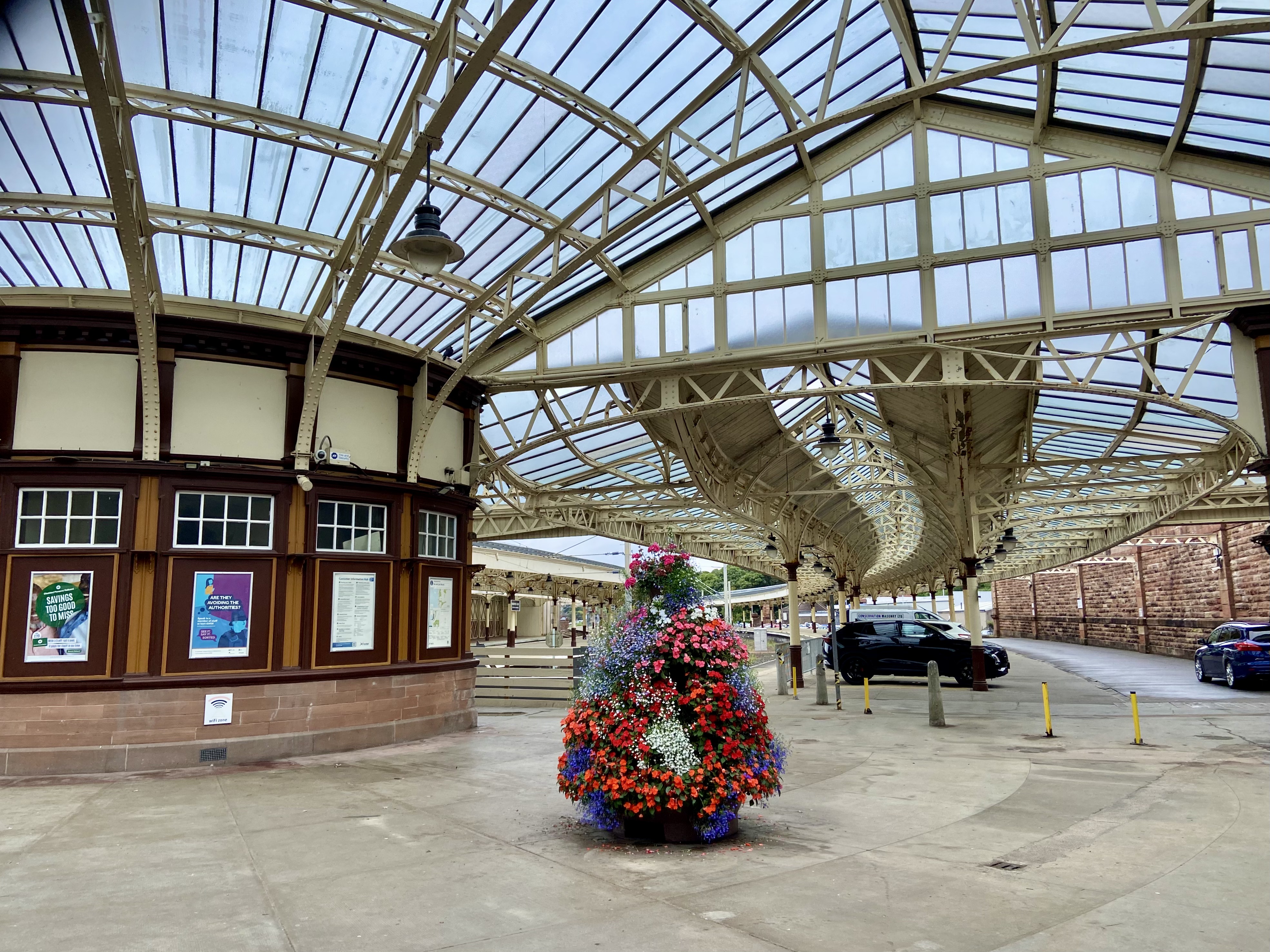
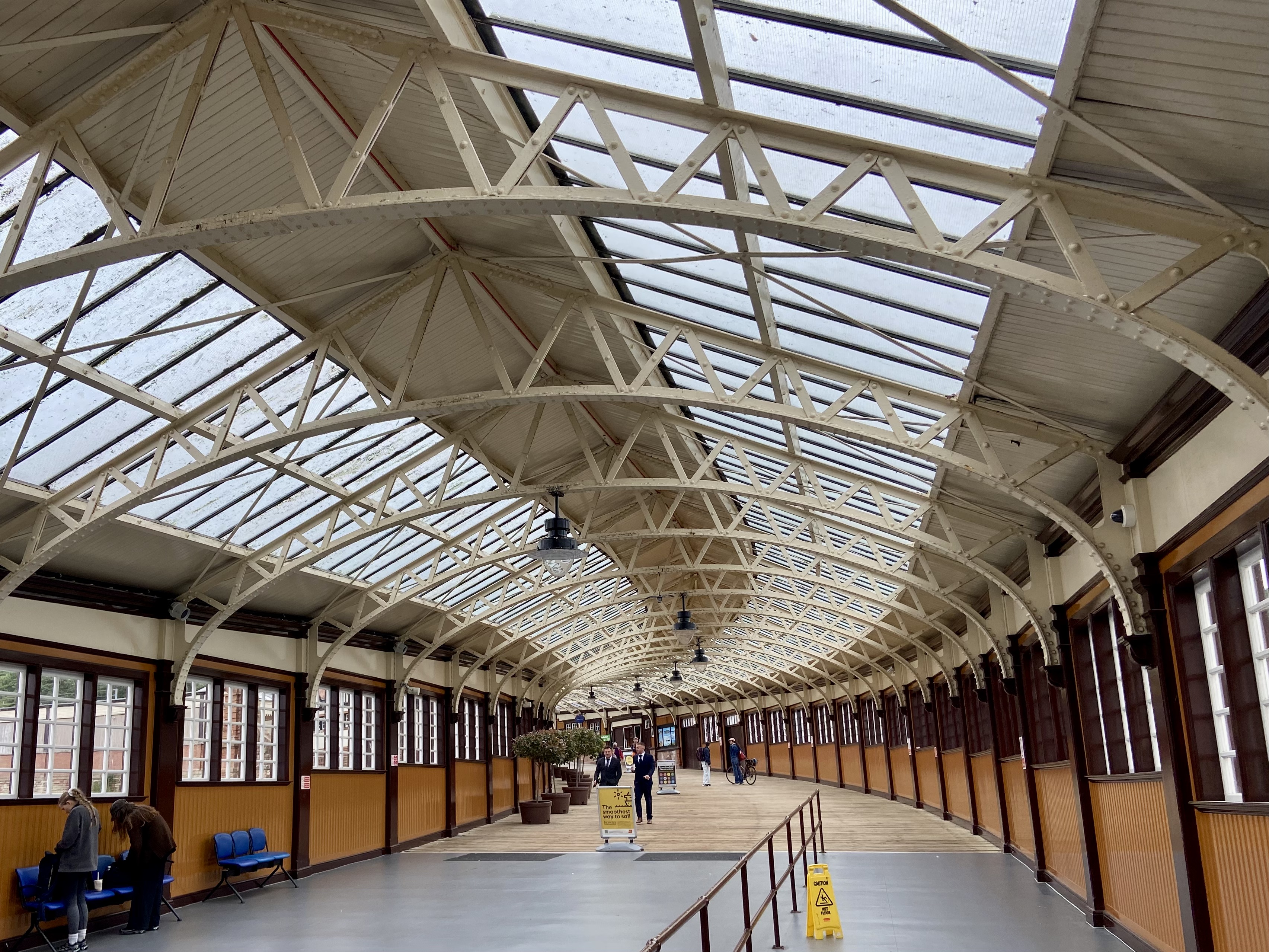
The station at Wemyss bay was indeed rather beautiful with its Edwardian curving, steel and glass design. I wish I had taken a better photo, but here is the one I took.
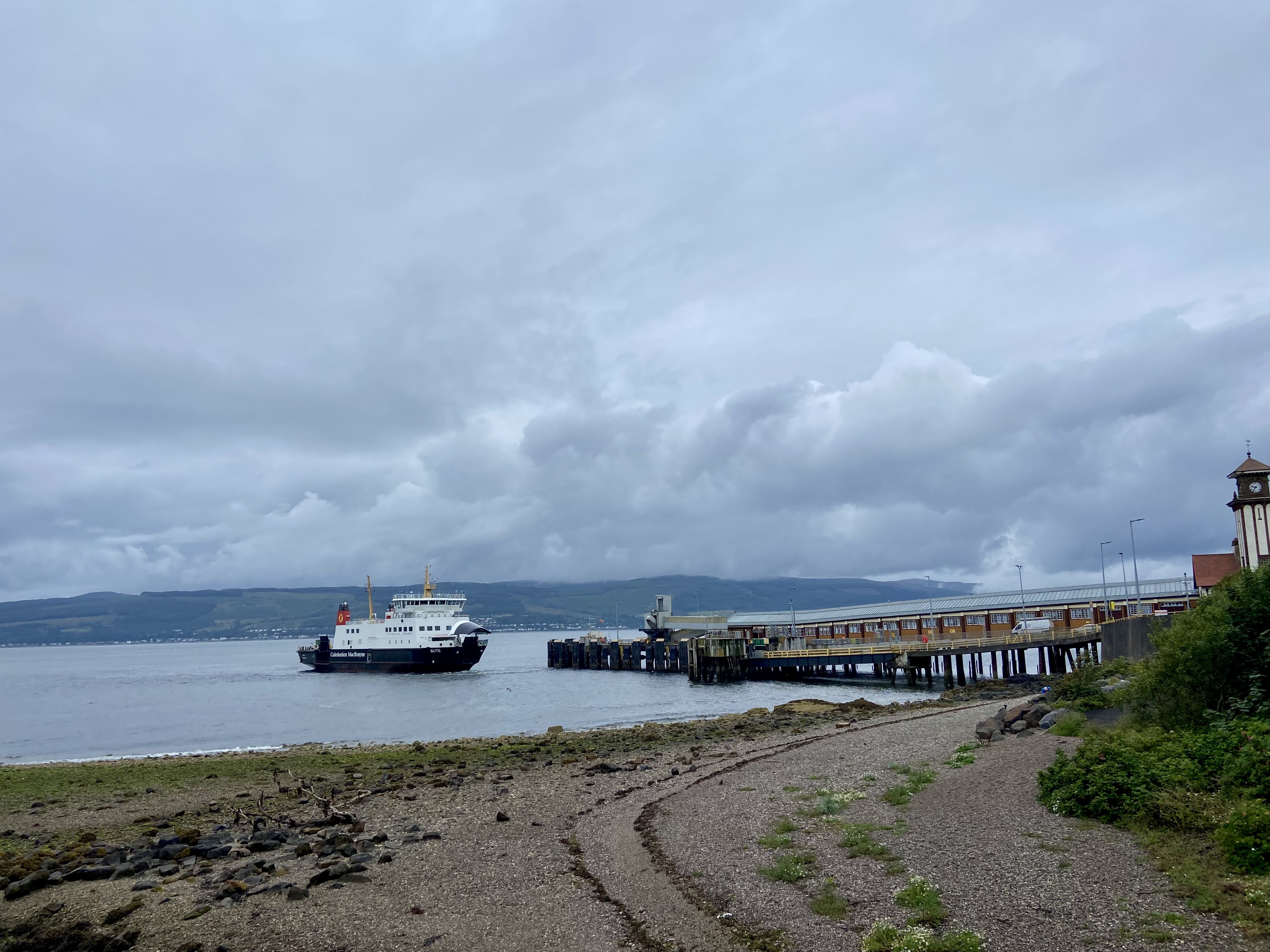
I was also intrigued to see that there was a wooden, covered walkway down to a ferry terminal as well. CalMac ferries could take me to Rothesay on the Isle of Bute. I could just imagine the Edwardian people in their beautiful clothes, taking the trains then walking right down to the ferry without even having to go outside. It was built nine years before Titanic sailed and fits well with that imagery.
Anyway, I decided we would go and explore Wemyss Bay before deciding whether to travel further, but when I got outside, there was very little of Wemyss Bay to be found. Perhaps, in turning right, we went the wrong way, but after a brisk walk along the shore line, I saw a boat coming in, so I decided to go and find out what was on offer.
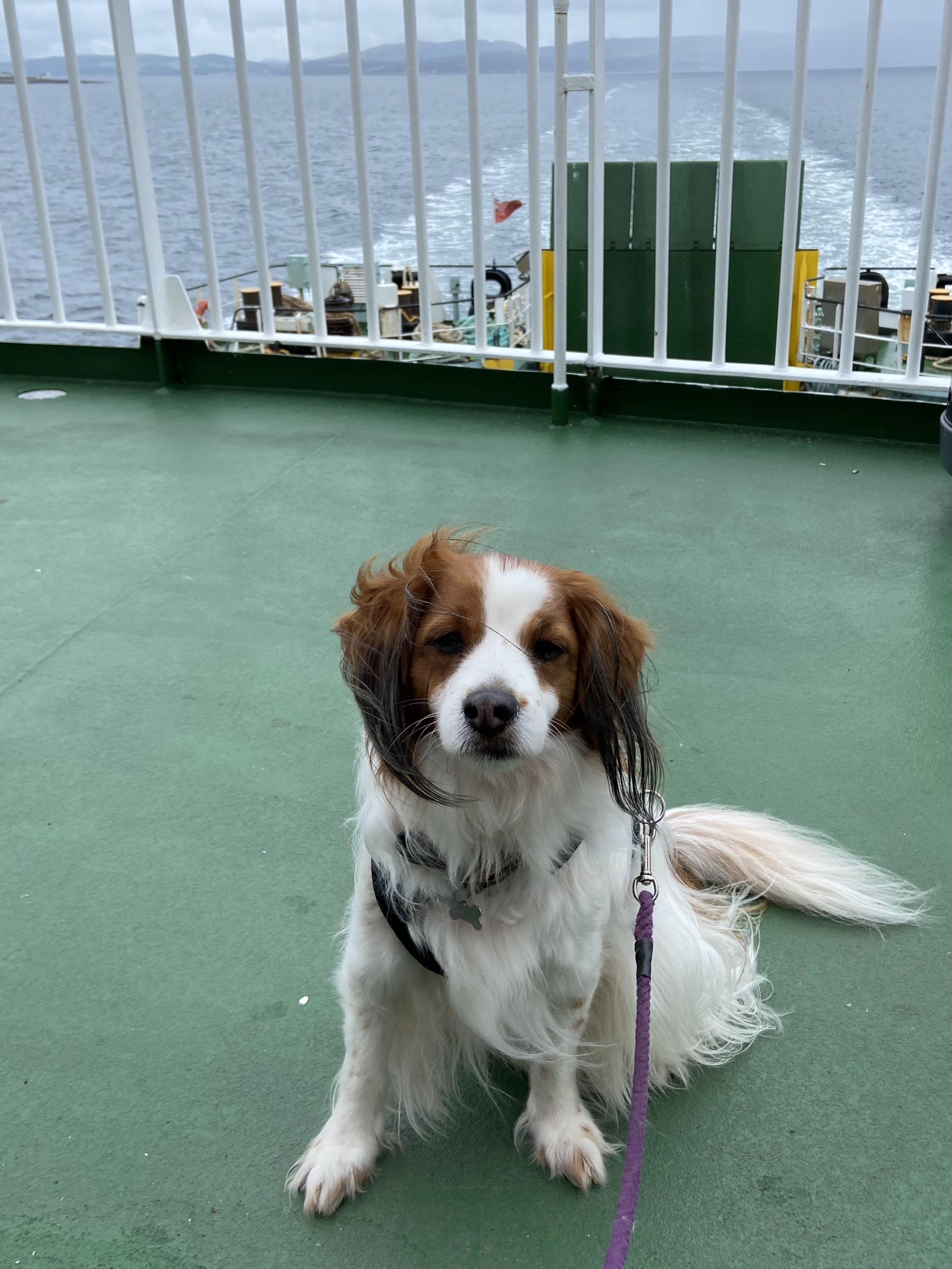
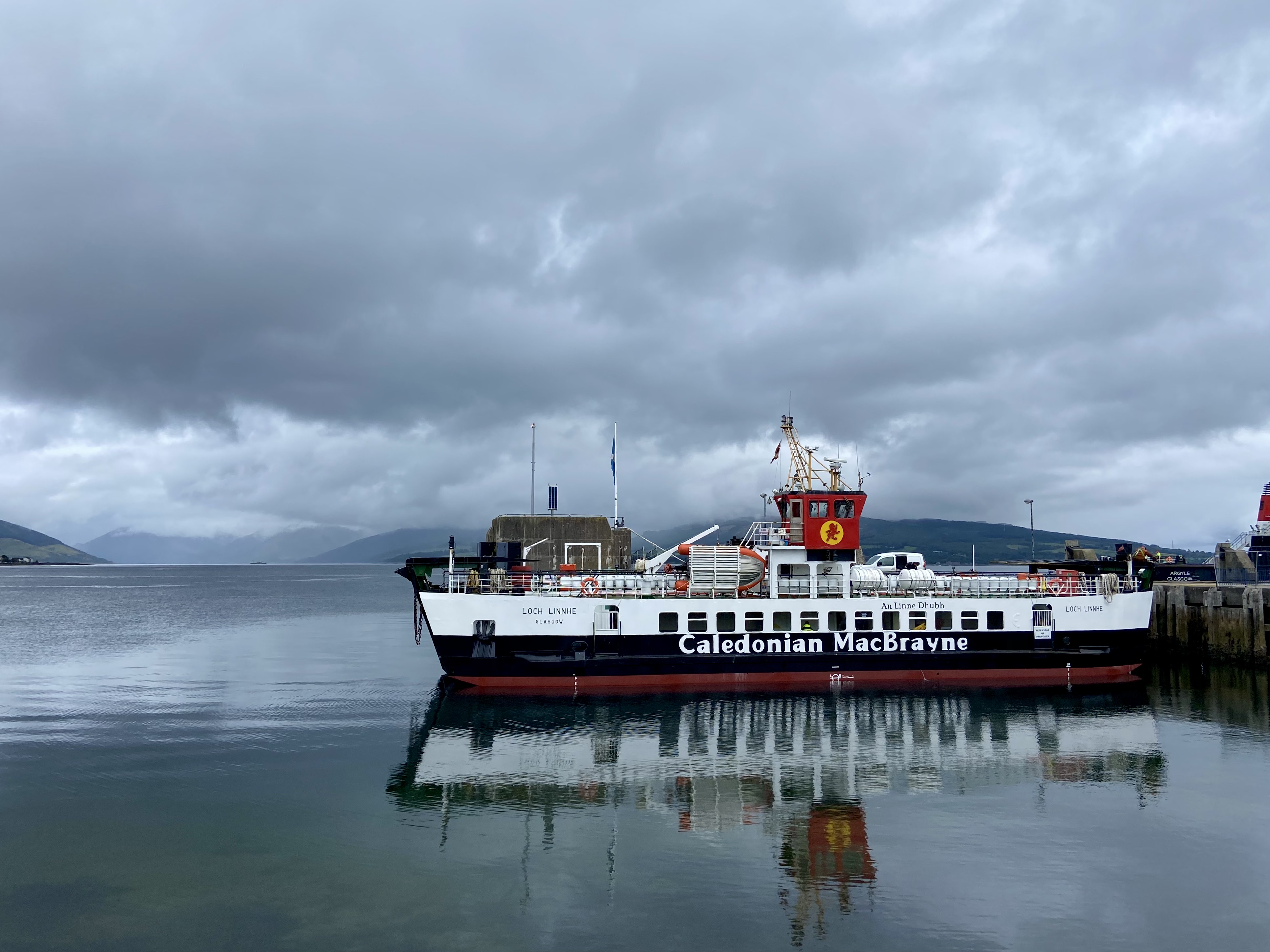
To my amazement, a ticket for me and Triar to go to Rothesay was only £8.70. Soon, we were enjoying the view as we left the mainland for the Isle of Bute. I think my parents went on holiday to Rothesay once, when young, and were not impressed. To be fair, it is a very quiet place, where tourism is probably the main business. For me, it was nice to be somewhere where, for much of the time, there was no car noise. It’s quite unusual in any town these days.
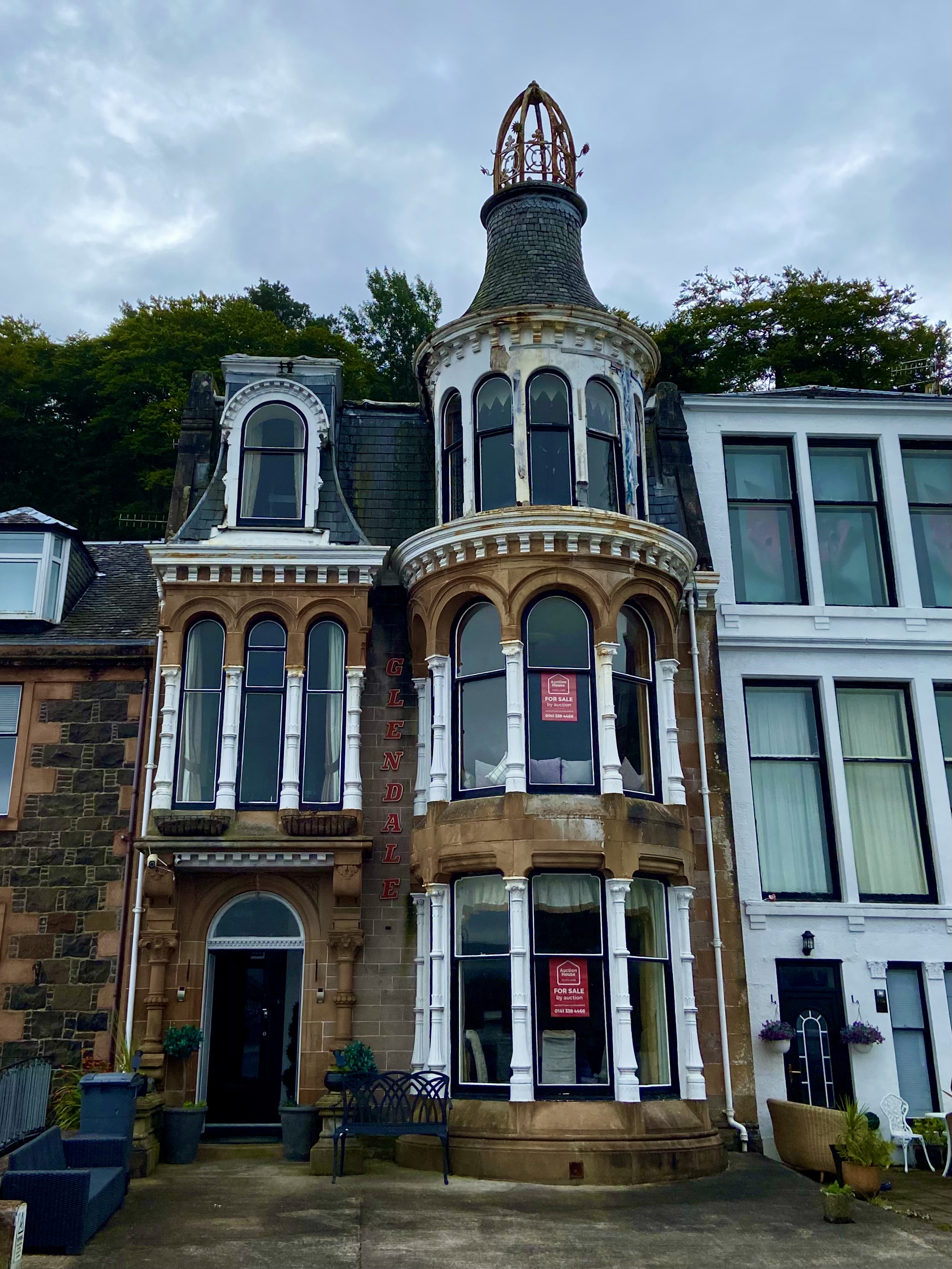
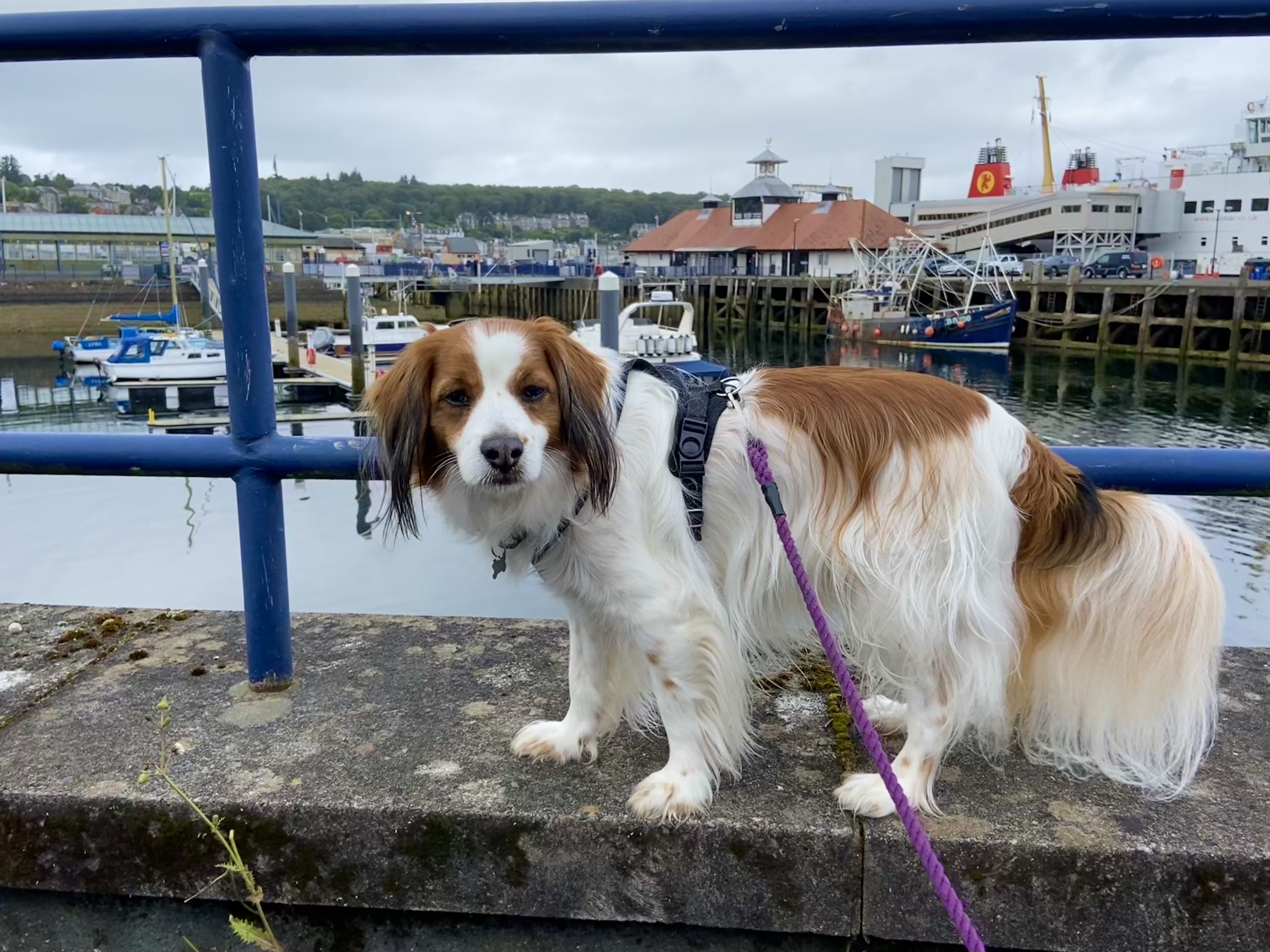
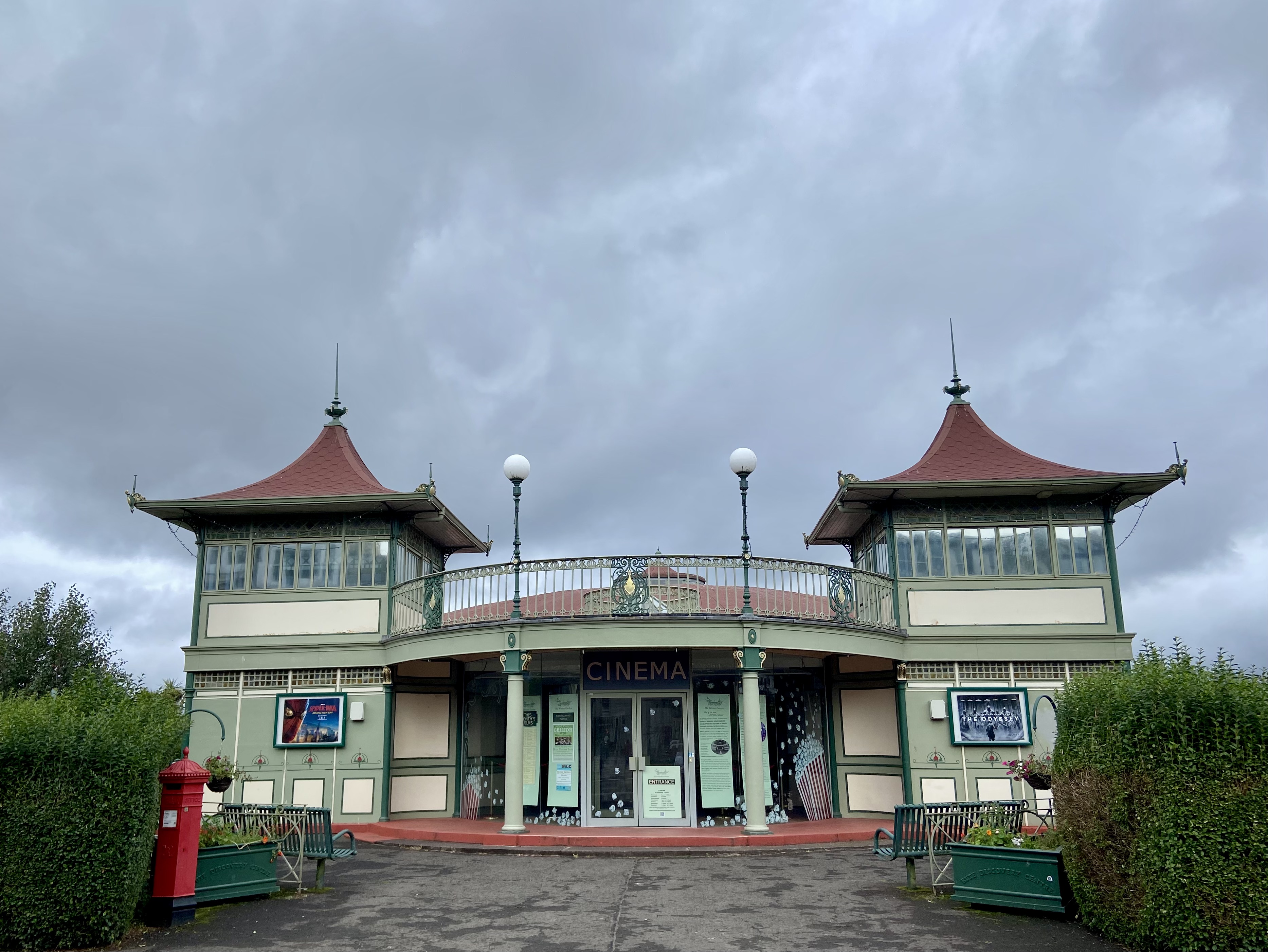
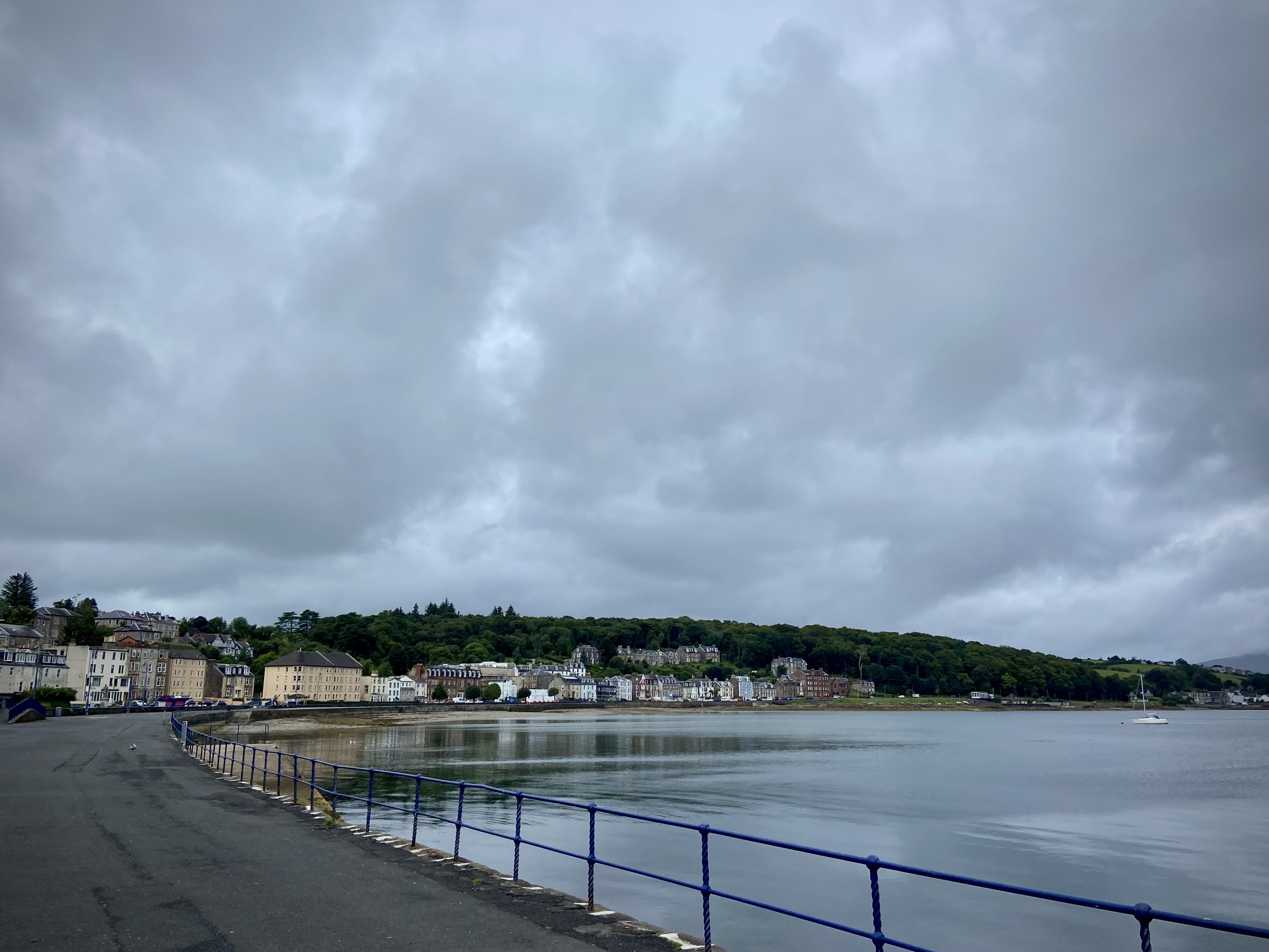
There were lovely views across the Firth of Clyde and a sleepy, Scottish town centre. I noticed a couple of hotels or guest houses for sale, including this one, which is a fascinating building, but I imagine getting someone out to fix the rather rusty cast iron crown on its turret might be quite costly.
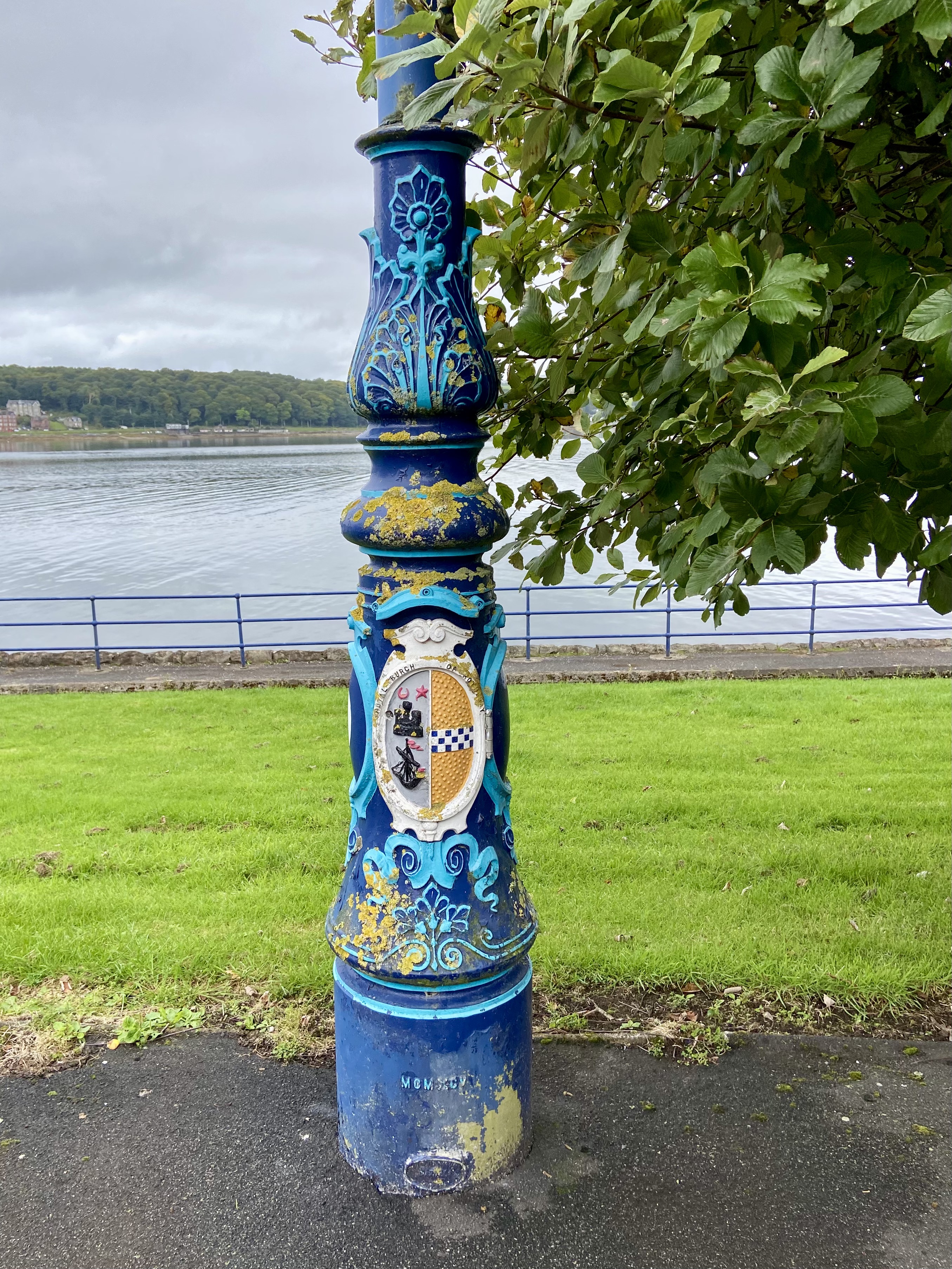
I took a photo of the lamp posts, which were ornate and had the Rothesay coat of arms, as well as being marked with a date in Roman numerals. I was somewhat amused when I worked out that the date was only 1995. I had fondly assumed they were much older!
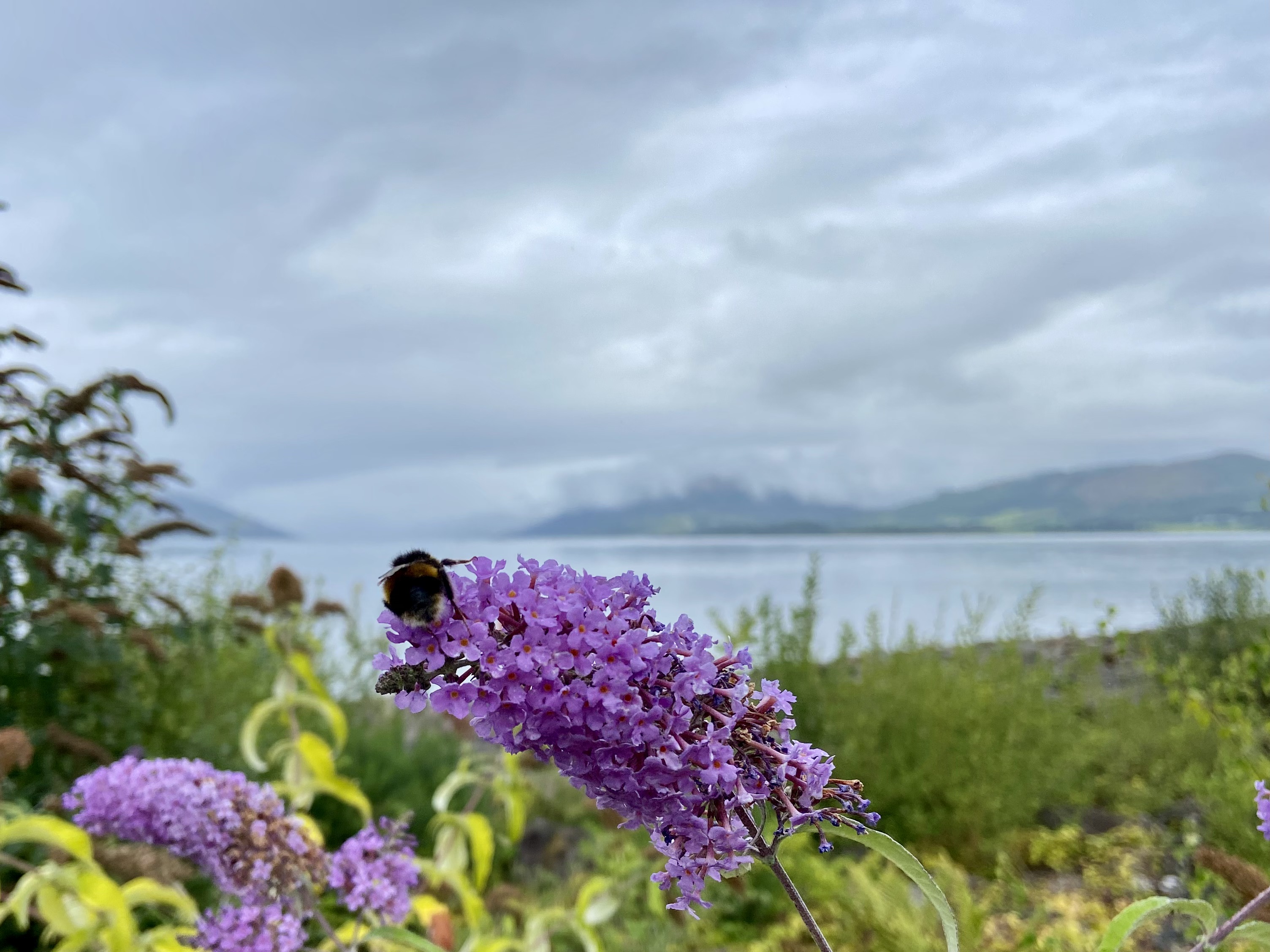
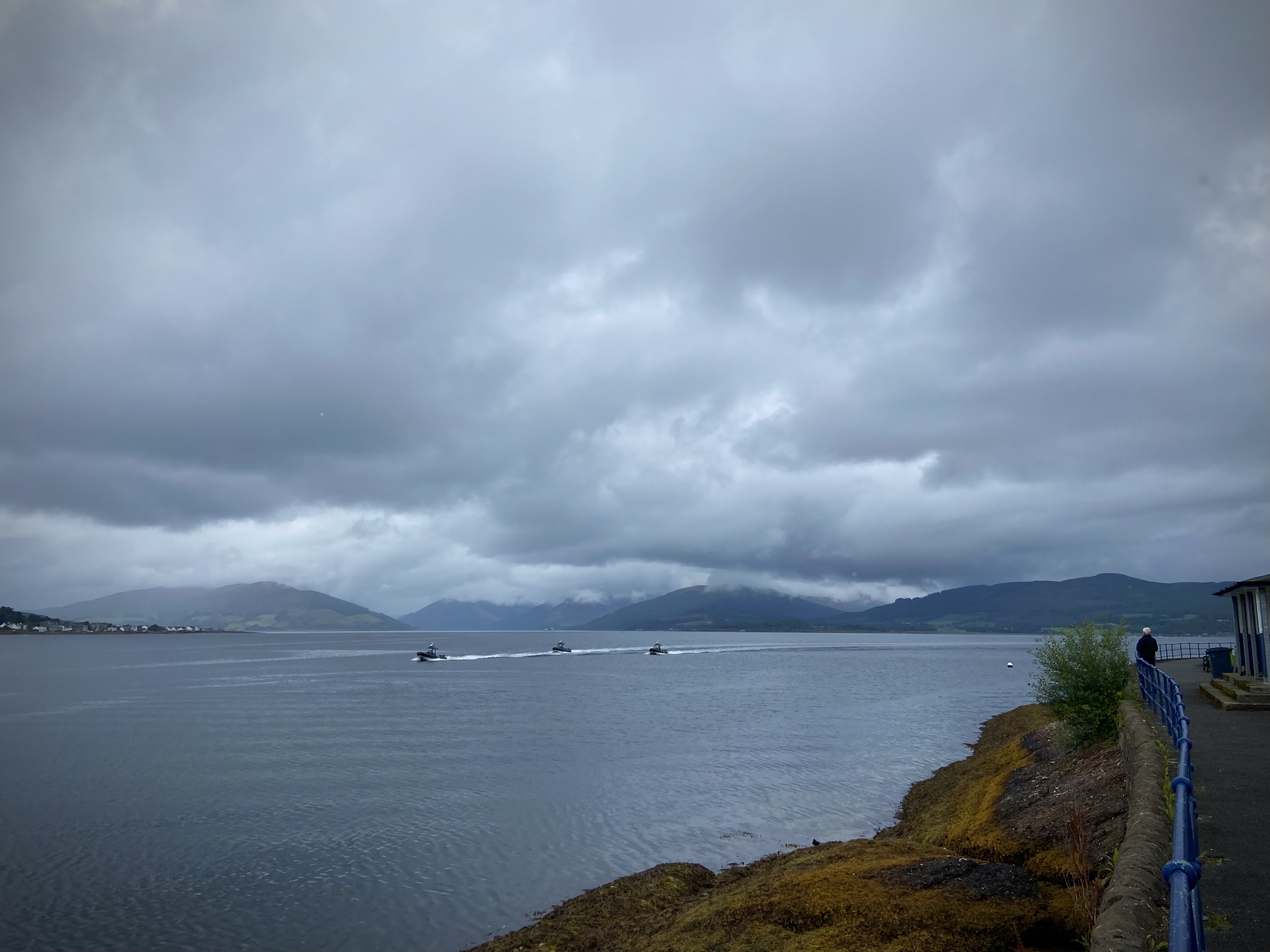
As you can see, it was a grey and cloudy day, but beautiful nonetheless with the heavy skies over the island scenery.
We arrived home tired, but happy and on Thursday, I did manage to rest, which was just as well as Friday’s neutering list consisted of two bitch spays (a German Shepherd and a Shih Tsu), two dog castrations, two cat castrations and three cat spays. Luckily, one of the cat spays didn’t arrive, but I didn’t get finished until ten to five, having worked more or less flat out all day. The nursing staff (and everyone, in fact) continue to make me feel welcome and useful and my surgical technique continues to improve. As far as I know, everything went safely home, despite the busy day.
Yesterday evening, I was genuinely exhausted, but Triar begged me for an evening walk and I’m very glad he did. It was a lovely sunny evening and I soon forgot my aching feet as I decided to explore in the direction of the river and the mill buildings I could see in the distance.
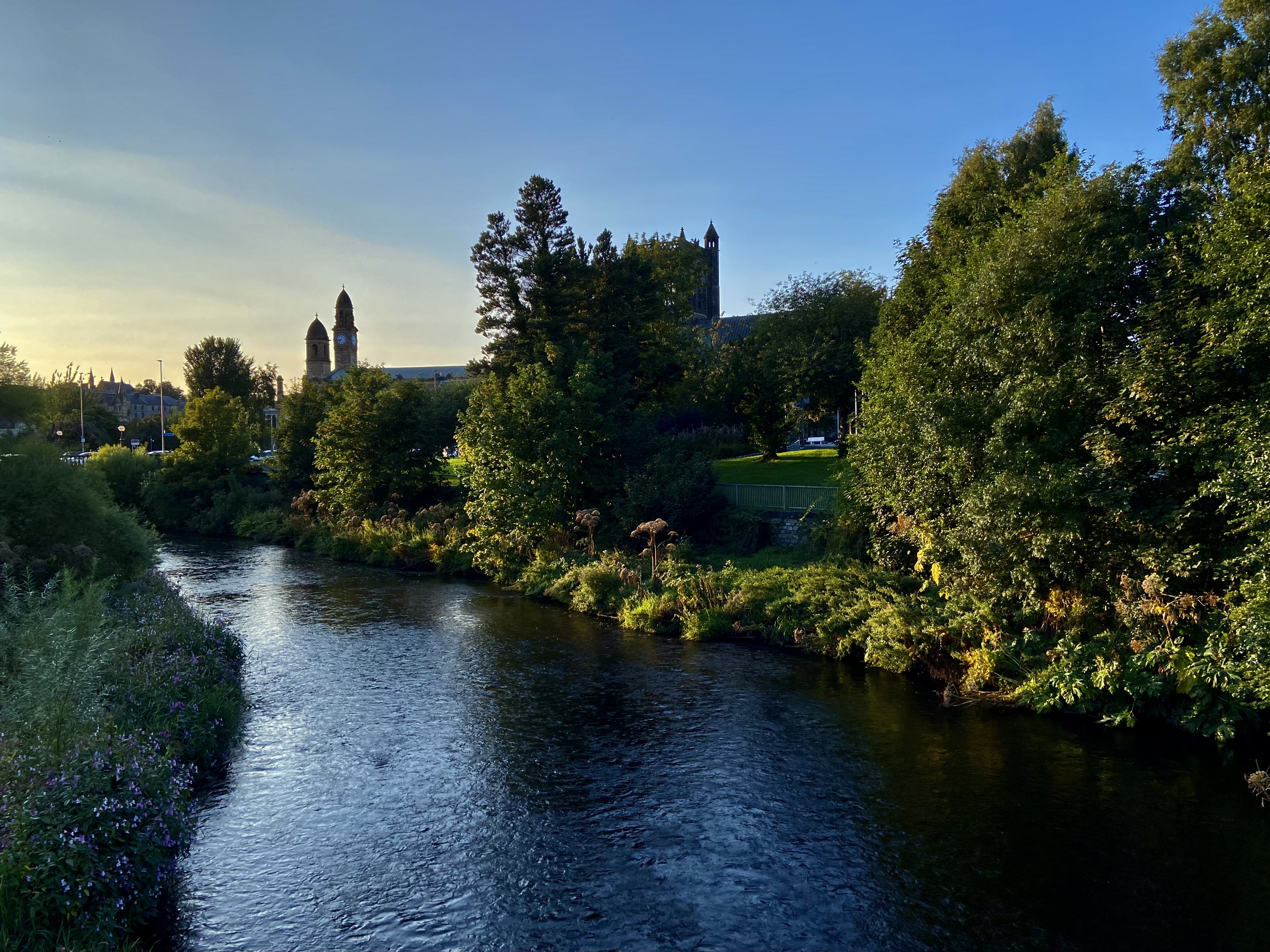
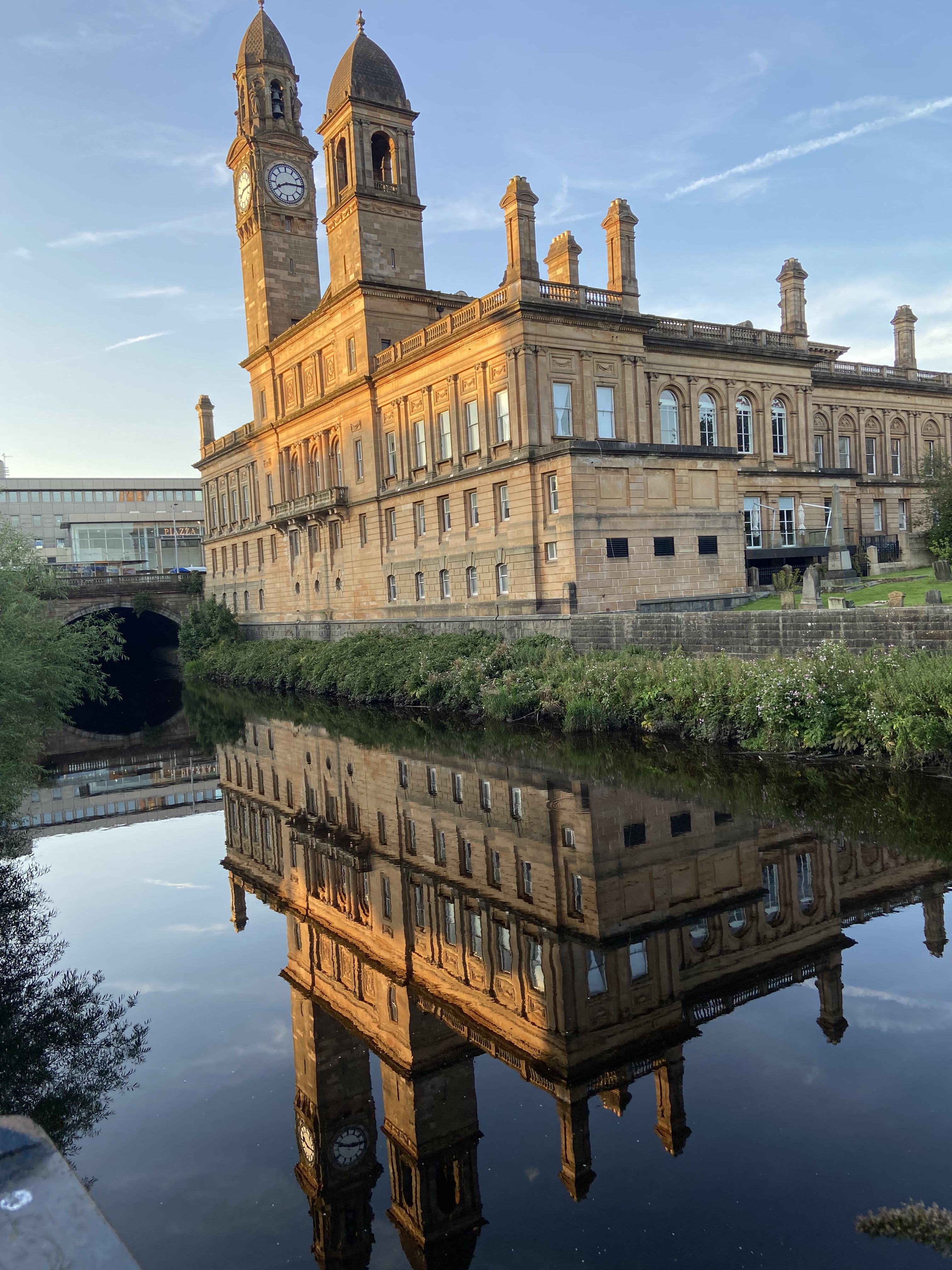
The White Cart river with the Town Hall towers and the Abbey in the background On the right is the Watermill Hotel.
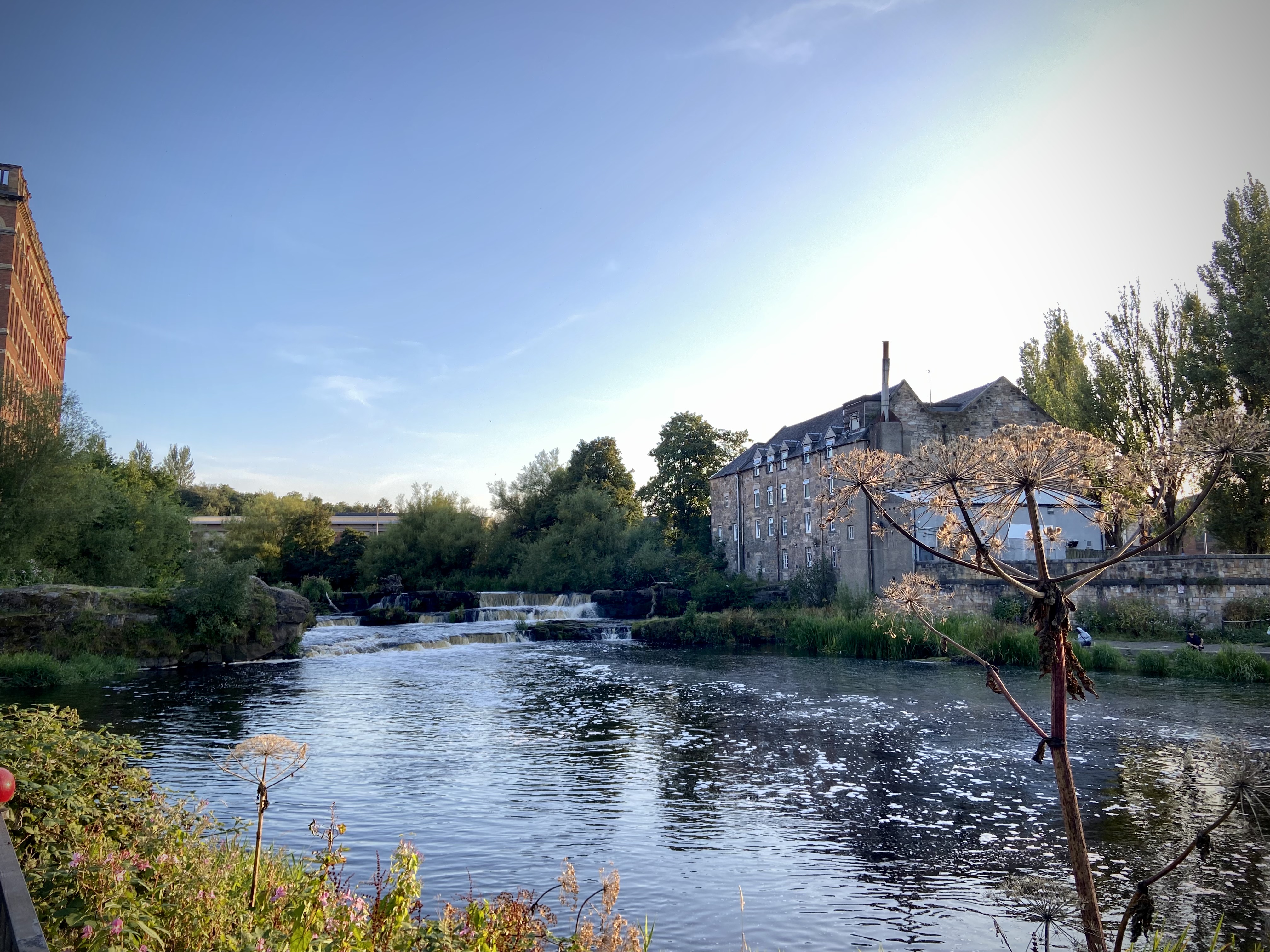
The 17th Century Watermill hotel used to be a flour mill, which made oatmeal and pea flour. As you can see, it backs onto the river. Rooms at the back must be filled with the sound of the waterfall, day and night.
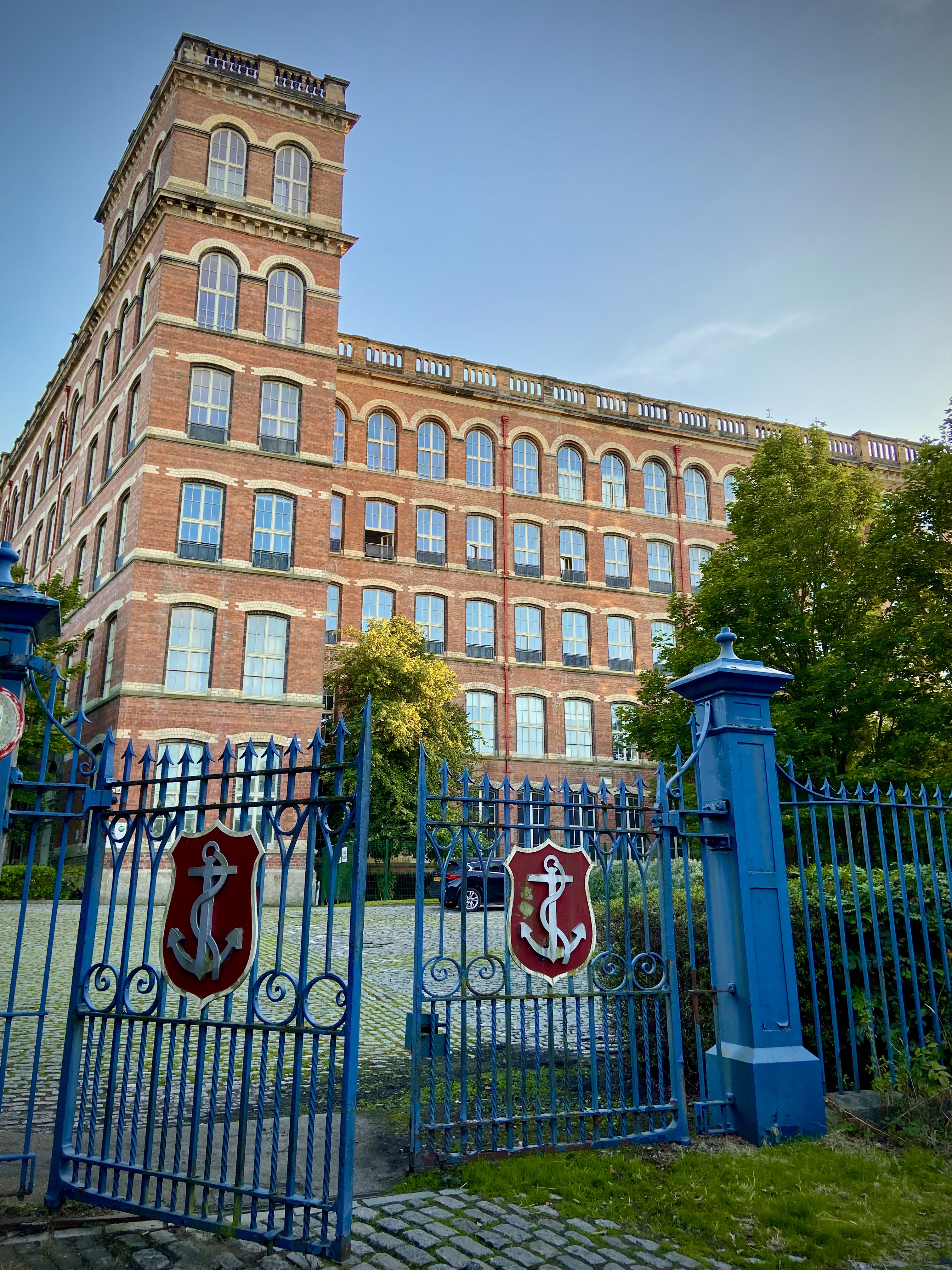
Across the river from the Watermill is the Anchor Mill building, which was built in 1886 and closed in the 1980s, then saved from dereliction and converted into apartments. This was the building that I saw that drew me to walk to this, traditionally more industrial part of Paisley.
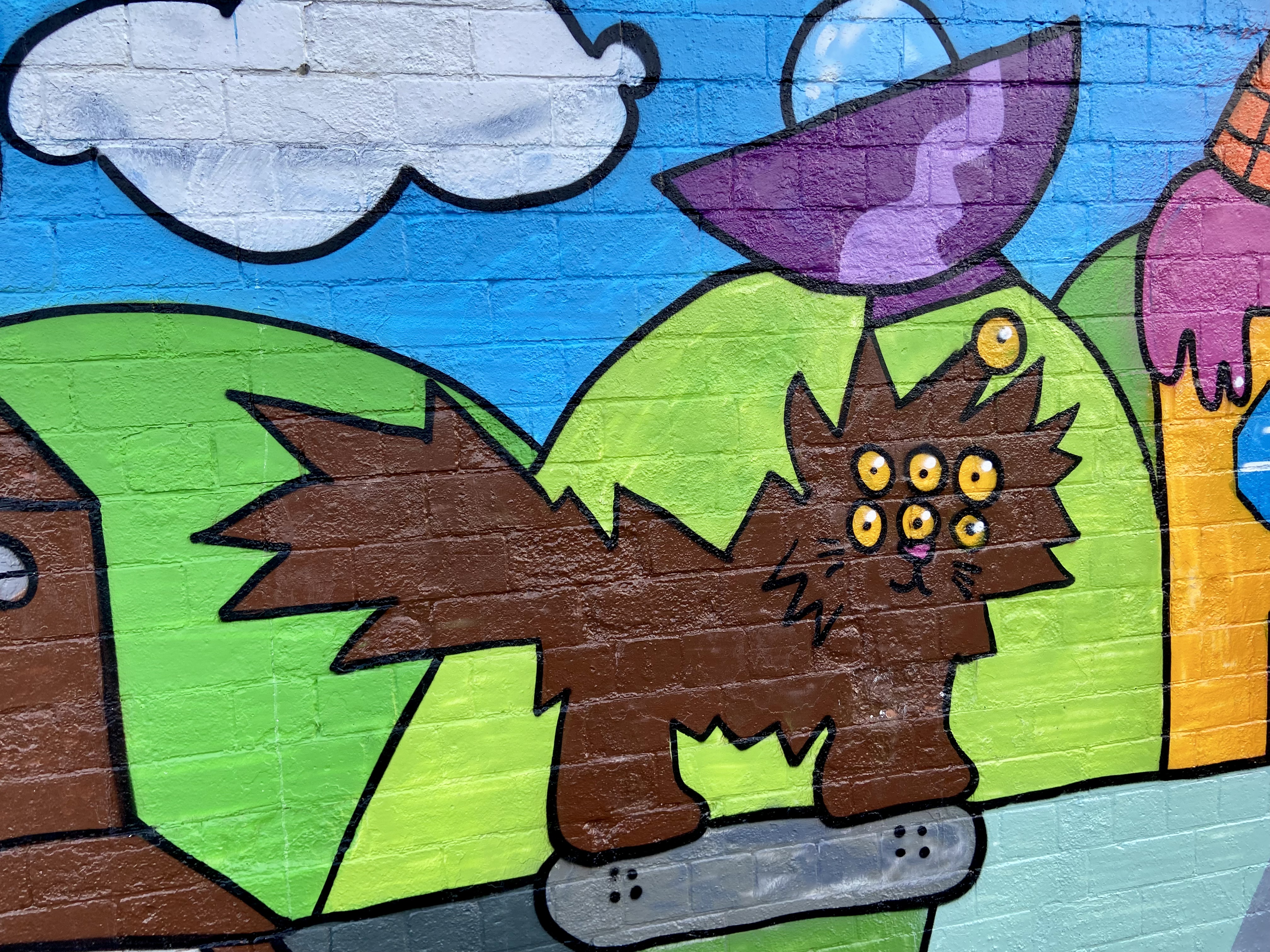
Seeing more brick towers, I walked further and came across a gorgeous mural. I should have taken more photos (and may go back) but I particularly loved this six (or seven?) eyed cat!
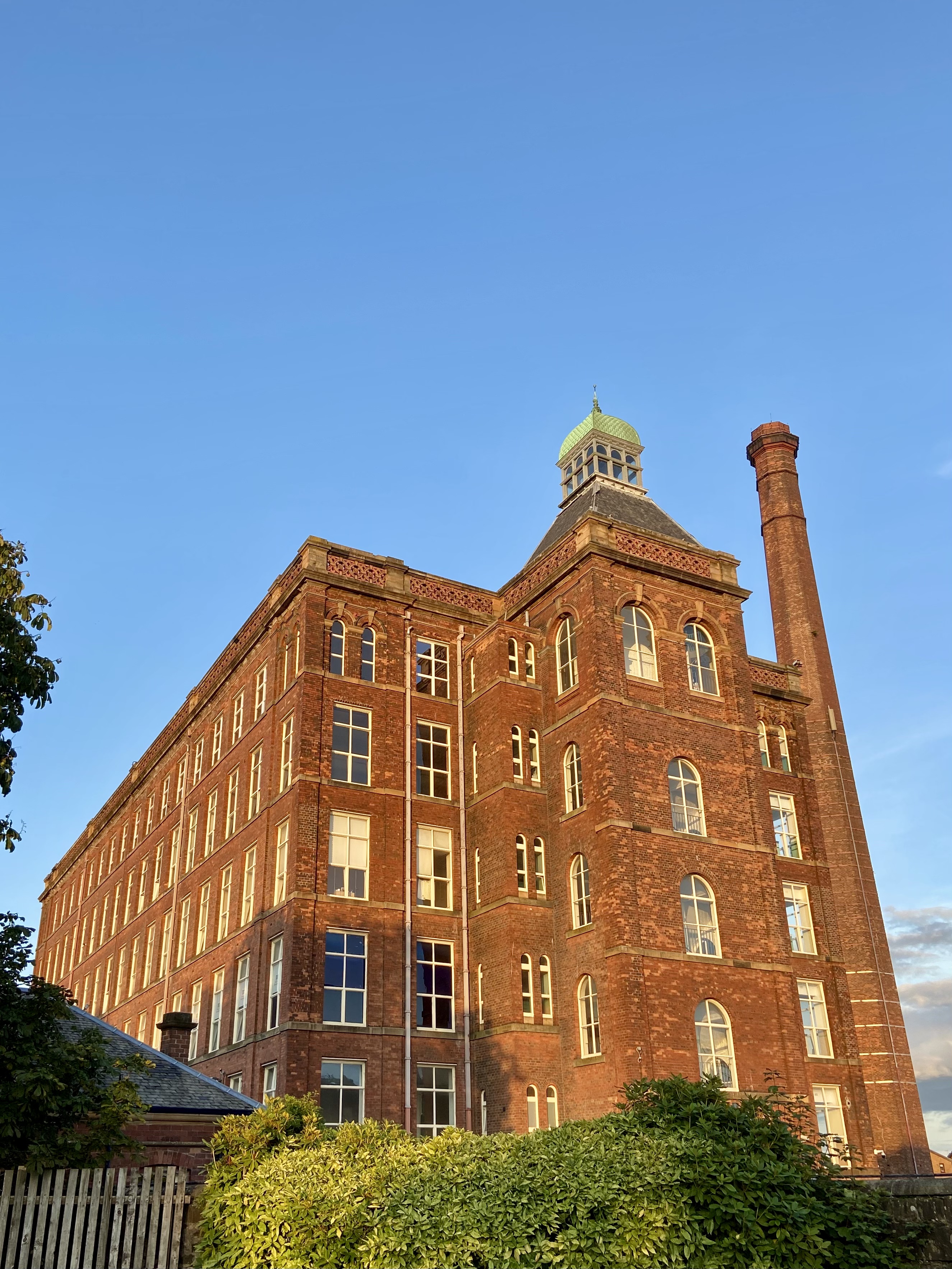
And this was the final identifiable mill I found: Mile End Mill with its magnificent chimney. As well as office space, it apparently houses a thread museum, which is only open on Saturdays and Wednesdays and, as I don’t have another Wednesday off, and this might be my last weekend on Paisley, I may have to make a decision shortly on whether to walk back there this afternoon!
The last photo I took on my evening walk is at the top of the page. I’ve been hoping to get a cityscape picture and I’m pleased with that one.
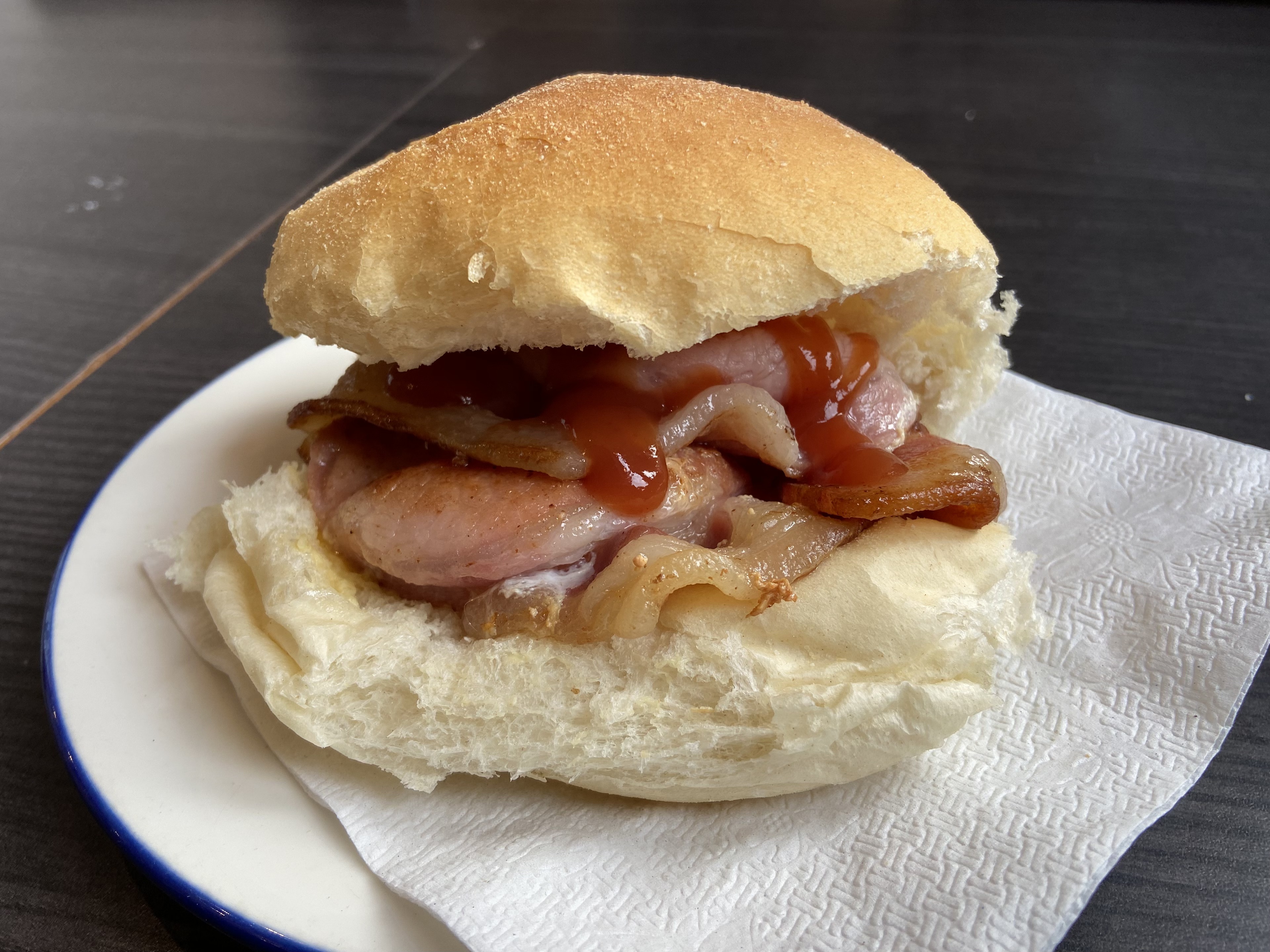
I went back to the Square Café Bistro this morning. The bacon roll I chose today didn’t disappoint and neither did Triar’s sausage. This time, I had planned better and had cash for a decent tip in my pocket. And if you’ve made it this far, through this long and winding post, I will say thanks for reading and I hope you have a good week.
One of my bitch spays bled on Monday. I had operated on her in the morning and was consulting when she was checked with ultrasound and taken back into theatre. Obviously these things are terrifying for the owner, but they are awful for the vet too. Which part of what I did went wrong? Will they find work so bad that they won’t feel safe with me working here? Will the poor animal die? It’s all my fault…
The realization that she was bleeding internally was also so late in the day, that I had to go home without knowing the outcome. Thankfully, the lovely vet who did the second surgery let me know just before 9pm that the bitch had been transferred to the overnight vets, so she had obviously survived the operation and was fit to be transferred, but I still didn’t sleep well.
I guess this is a particular peril of returning to something I haven’t done for a long time, but I have received incredible support from all the PDSA staff, as well as a vet friend. It was a very large dog and a breed which, so my vet friend tells me, are very prone to bleeding. To understand more, when vets do a spay operation, it’s necessary to tie off the fairly large blood vessels that supply the ovaries at one end of the uterus as well as the ones that supply the cervix and the uterus itself, at the other end.
Tying off the ovaries can be difficult because they are tied to the body wall by ligaments that attach high up near the spine and kidneys. These ligaments mean that you cannot easily get the ovary up to where you’ve made the incision, near the navel. They can be stretched a bit, but that carries its own risks. Anyway you can probably imagine, it’s easy to tie a knot round something when it’s clear of all obstacles. It’s much harder when bits of fat and other abdominal contents are all trying to get in on the act. You can’t afford for any of them to be caught in your knot. Your knot also has to be far enough away from where you eventually sever the artery, and tied tightly enough, that it can’t slide off.
But from what I understand, the main bleeding was from the other end of the uterus, down at the cervix. My ligature was still in place. I had stitched it in. She just bled past it or round it somehow. She was also bleeding a lot from other places, such as the layer under the skin. Some times, that’s just how it is.
Fortunately (to my huge relief) she lived. I am very grateful to the vet and nurse team that recognized there was a problem and fixed it, but it has shaken my confidence. I did two spays yesterday. The first went perfectly, I tied everything off without problems and the abdomen was dry with not a trace of blood. The second, which I had expected to be easier, was actually more difficult and the operation took a lot longer. I have modified my ligature technique and have learned to tie a self-tightening Miller’s knot. Even with that, I still stitched up that second spay with trepidation, but she went home fine, at the end of the day.
With time, it will all fade, but I can still remember, with horrible clarity, back in 1992 when a bitch I was spaying because she had pyometra (infection in the womb) bled out on the table. That one was my fault. I didn’t have enough experience back then and should have made sure someone was assisting me. I did learn a lot that day and my record from then till now has been good, partly because I’ve been careful and partly down to luck. This time round, it was a combination of things, but mostly just unfortunate. I will learn and move on, but this is one of the things that makes being a vet hard.
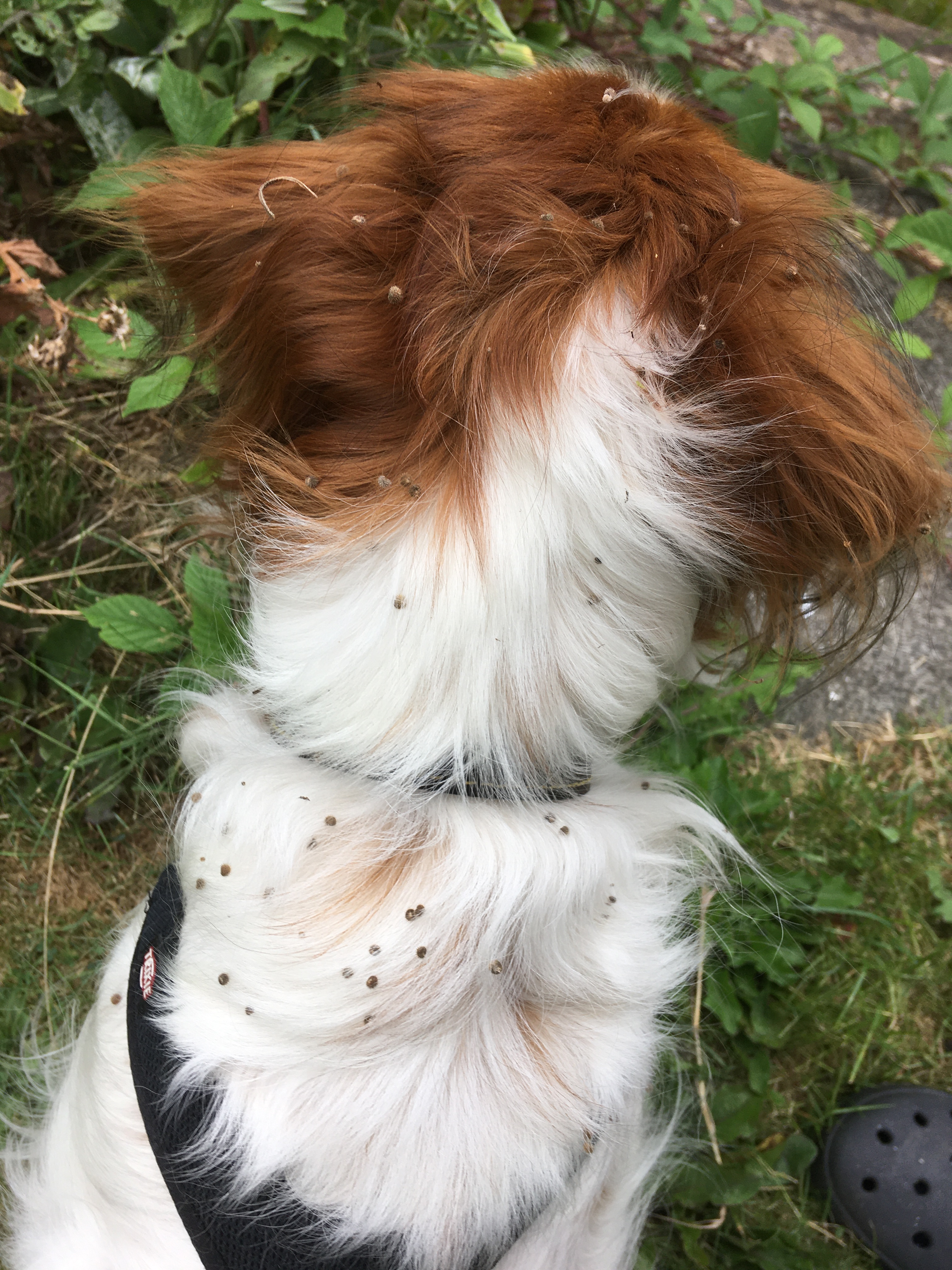
I haven’t done much this week, outside of work. Looking back through my photos, I see I took one of Triar last weekend. It’s not one of my usual shots of his shaggy, smiling face. It’s a shot of the back of his head and neck after he decided to explore a bush in my garden. I didn’t know there was Galium aparine under there, but I do now!
I guess if you’re reading this in a distant part of the world, you won’t have experienced the eclipse on Thursday. Not that it was worth noting in Paisley! It matched my memories of the one in (I think) 1999, which was another partial eclipse where I was. I’m sure seeing the real thing, where the sun is completely obscured, would be amazing, but on both occasions I’ve experienced, all that happened was that the light went a weird, dull grey colour for a while and that was that. Polar night is much more interesting, though I can see, as with the aurora, why our ancestors might have marveled or been afraid.
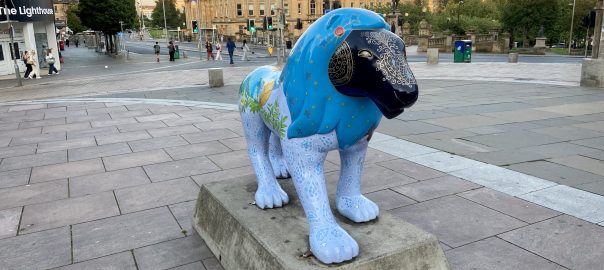
I’m thinking of visiting Crookston Castle today, after breakfast out, probably at Harry’s Fuel Bar. Hopefully next week at work will go smoothly, though as I said before, the staff could not have been more supportive and I am incredibly grateful for that. I will leave you with a few more photos from Paisley, taken as I wandered at different times of day. The picture at the top of the page is a lion from the 2016 exhibition, “Pride of Paisley”. I see it every time we walk to the grass in the morning.
Thank you for reading. I hope you have a good week.