Last week on my two day holiday, I spent my time in Dunfermline, as I mentioned last week. What I didn’t say was that I was visiting a vet practice to see if I wanted to work there. The practice works with poultry, which is an area that has interested me for a while. I prefer production animal medicine over treating pets and, much as I love cows, I don’t think I’m up to calving them at three in the morning any more.
I must say, I immediately felt at home there, with the people and the set up. It felt friendly, busy enough to be interesting, but not manic, and they had a Nespresso-type coffee machine and two kinds of milk. The last point may sound a bit of an odd thing to focus on, but from past experience, the best practice I ever worked in had a coffee percolator which was permanently in action. The boss there cared enough about sitting down with a good cup of coffee that he went a step further than most places to make sure everyone benefited.
Handing my notice in was sad though. I’ve been very happy working for APHA in recent months. Ironic as it has been so busy that it has been almost impossible to keep up, but I’ve been working almost exclusively on TB and bird flu, which I enjoy a lot more than imports and by-products, or even welfare. Not really surprising as working with sick animals was what I trained for, all those years ago. I will also miss the team I’ve been working with and my line manager and vet advisor, who have both gone the extra mile to look after me. I’ve also already booked lunch with Scott, one of the Local Authority inspectors I worked with often. Having carefully built up all these relationships, now I am about to let them all go. I guess the ones worth having will continue and erstwhile colleagues may become long-term friends.
Things are moving on in the house too. After over a year of living in a building site, the end looks to be near. My first approach to a carpet shop resulted in a quotation for carpets (two bedrooms and stairs) of £6,500. I said I would go back and look at other carpets, but instead, I am trying another shop. Someone will come round to measure up on Monday and I’m hoping for a price that doesn’t involve going deeply into debt. The young man giving me the high quotation didn’t seem to have any idea that the price was ridiculous. Nor did he make any alternative suggestions or offer any help. Perhaps he thought I was ridiculous because I wanted to order in a carpet I’d found online, rather than in their store, but he certainly isn’t a natural salesman and he lost me as a customer.
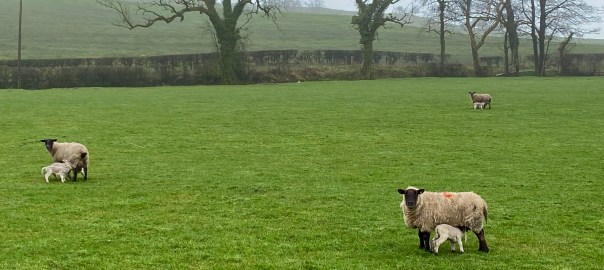
The picture at the top of the page is of newborn lambs I saw when out on a visit this week. I’d been out examining some cattle for signs of bluetongue, while an AHO learned to blood sample. Those blood sampling training visits are probably the thing I will miss most. Getting to drive around beautiful areas of farming country has always been one of the major benefits of veterinary work. My new patch as a poultry vet is likely to be mostly in Cumbria, so hopefully there will be new photo opportunities! The area round Dumfries is beautiful, but gently rolling, which requires more photographic skills than I possess.
Anyway, that’s all for this week. I hope you will continue to join me in my new adventure, which will begin after Easter. Thank you for reading and I hope you have a good week.
It feels like a long time since last weekend. Monday was a typically busy day with queries flying at my head from farmers who aren’t allowed to move their cattle as they are under movement restrictions. I was also chasing up information for a report about welfare in transport issues and (probably predictably) my oversight over bird-flu cleansing and disinfection needed rapid attention in the afternoon. It would have been easier if I hadn’t taken holiday on Tuesday and Wednesday, but I wanted to get my desk clear before leaving and I did.
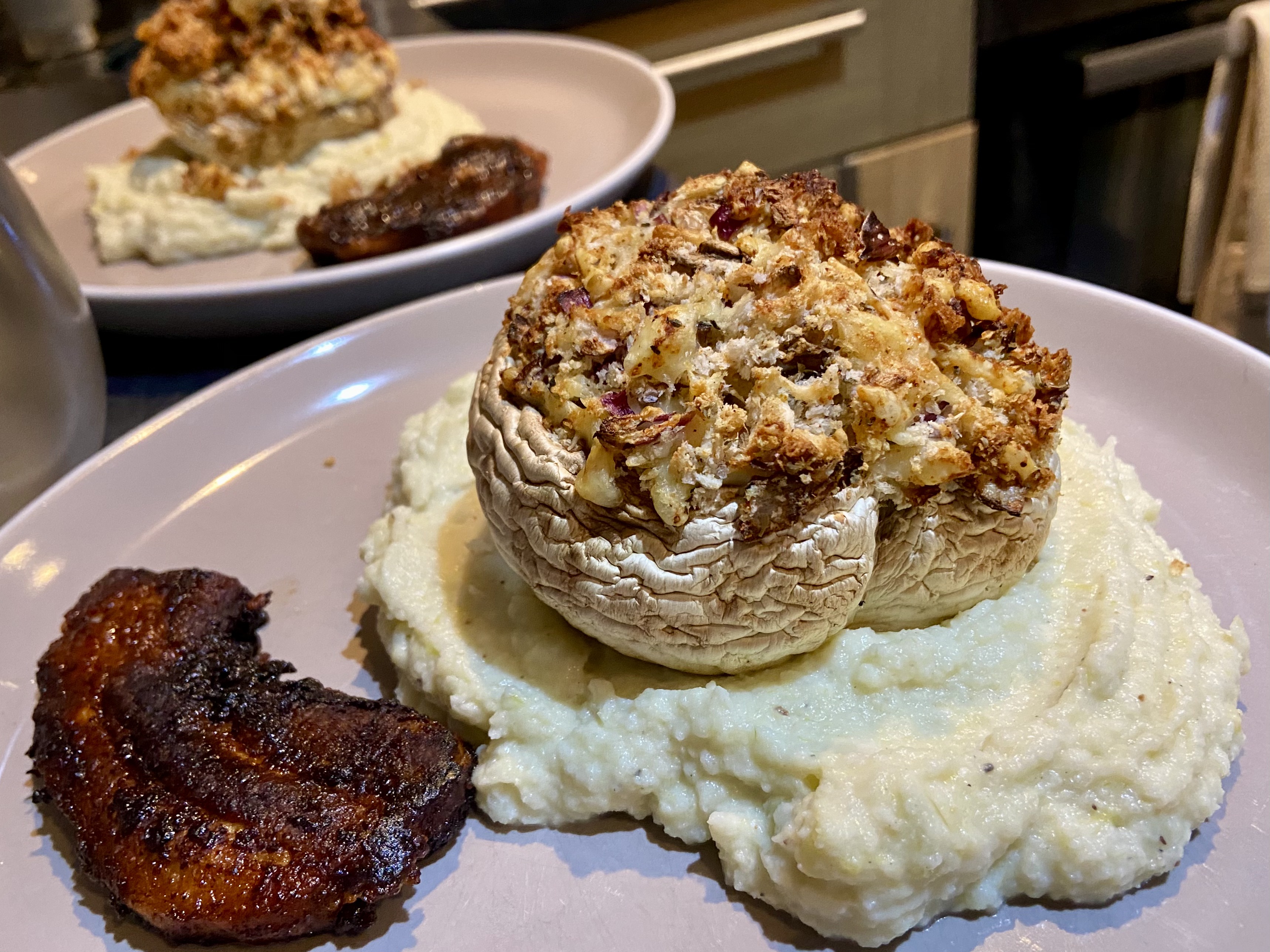
I spent Tuesday and Wednesday in Dunfermline. More about that next week, but I was lucky enough to stay with Valerie in Airth, from where it was only a half hour drive. We had planned to cook stuffed mushrooms when I was there at the weekend and we did that, using garlic and herb cream cheese with a crumb, cheese and onion topping. Cauliflower and leek purée made a wonderful accompaniment, with a slice of fried belly pork on the side. Delicious!
Thursday, I played catch-up and prepared for Friday’s Bluetongue tracing visit. They have found the virus in animals in Northern Ireland, so now we are testing cattle that might have been in contact several months ago. It was a gorgeous sunny day and, for the first time, I was out with my colleague Lisa as she trained a recently joined up Animal Health Officer to blood sample cattle. I had to do a clinical examination of them, while another vet from a local practice did a TB test. Happily they all looked fit and well. The farmer was lambing, so had to leave before I could present him with all the questions I need answers to to complete the predictable ream of paperwork, but I shall go back there on Monday and finish up.
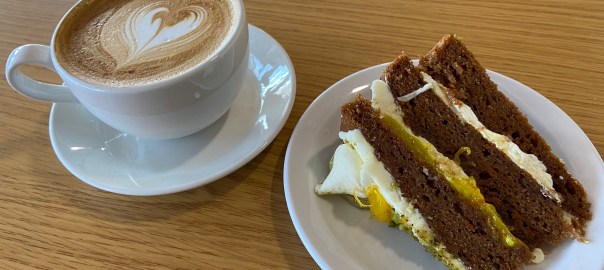
By the time we were done, I was very thirsty, so I decided to stop on the way back for a coffee from the garden centre where my card gets me free drinks. They have a selection of delicious looking cakes there and I hadn’t had any lunch. This time, my eye was caught by the cake at the top of the page. Described as an apple and carrot cake, with lemon icing and pistachio, I really thought I couldn’t go wrong. Moist carrot and apple cake, I thought, which would be tempered by delicious tart lemon to cut through any heaviness. Maybe the pistachio was a step too far, but such a delicious combination could surely not be spoiled, I thought.
I could not have been more wrong. My first advice would be never to buy the last slice of any cake. I’ve never experienced dry carrot cake, but somehow this one was dry enough to stick in the throat. The lemon icing and lemon curd, rather than being tangy, was cloyingly sweet. I genuinely took my first mouthful and thought I should leave the remainder, but if course, my finish-what’s-on-your-plate training kicked in. Reader, I ate the lot.
The last mouthful had something chewy in it, that I initially assumed was a thin slice of candied lemon. It took several minutes of chewing and a lot of hard swallowing, before I realized it was a slice of pretty much dried out apple, which still had the peel on. Driving on afterwards, I suffered some regrets at having wasted part of my precious calorie intake on something so grim, but the deed was done and … well I got over it. What else was there to do?
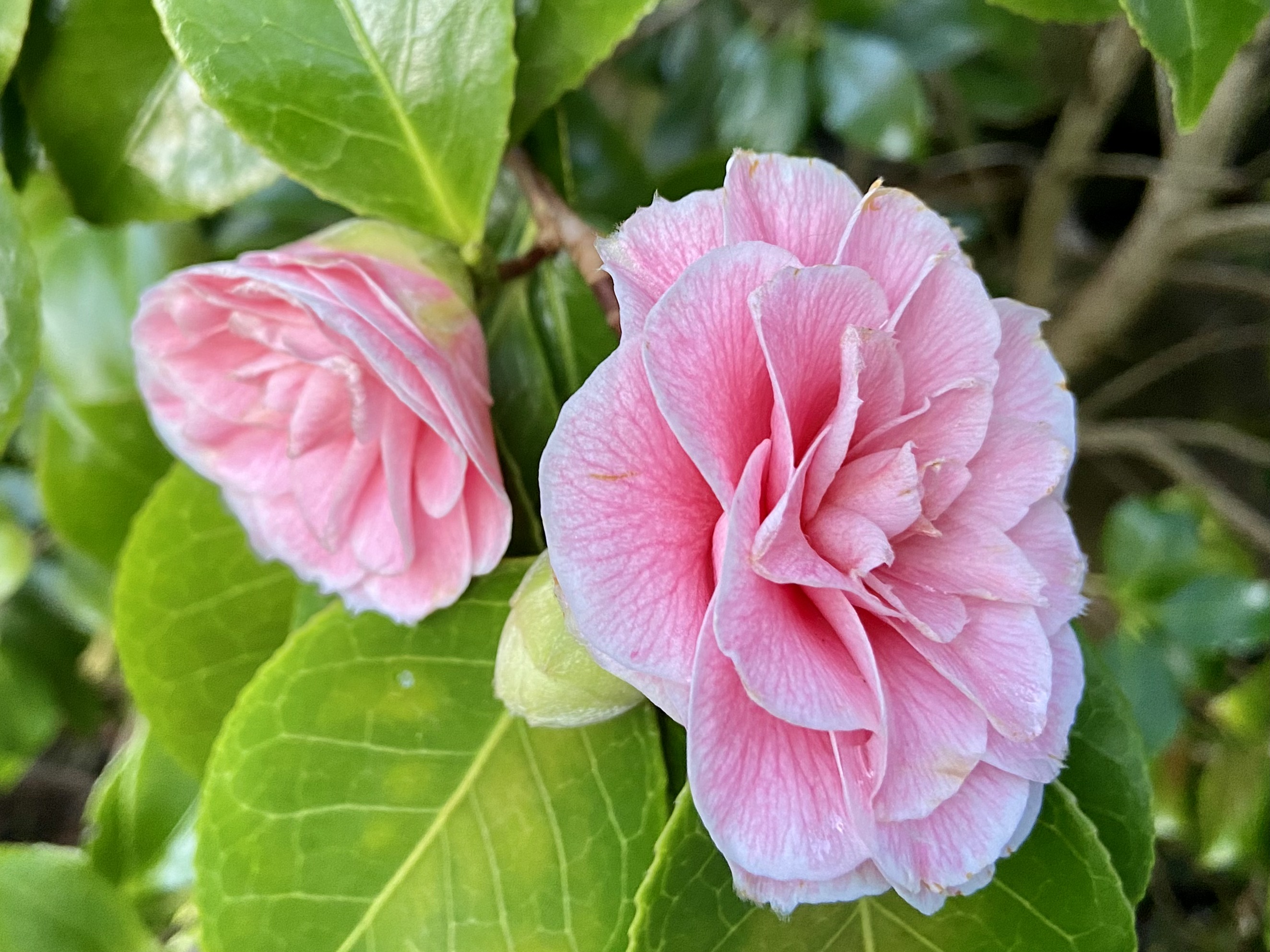
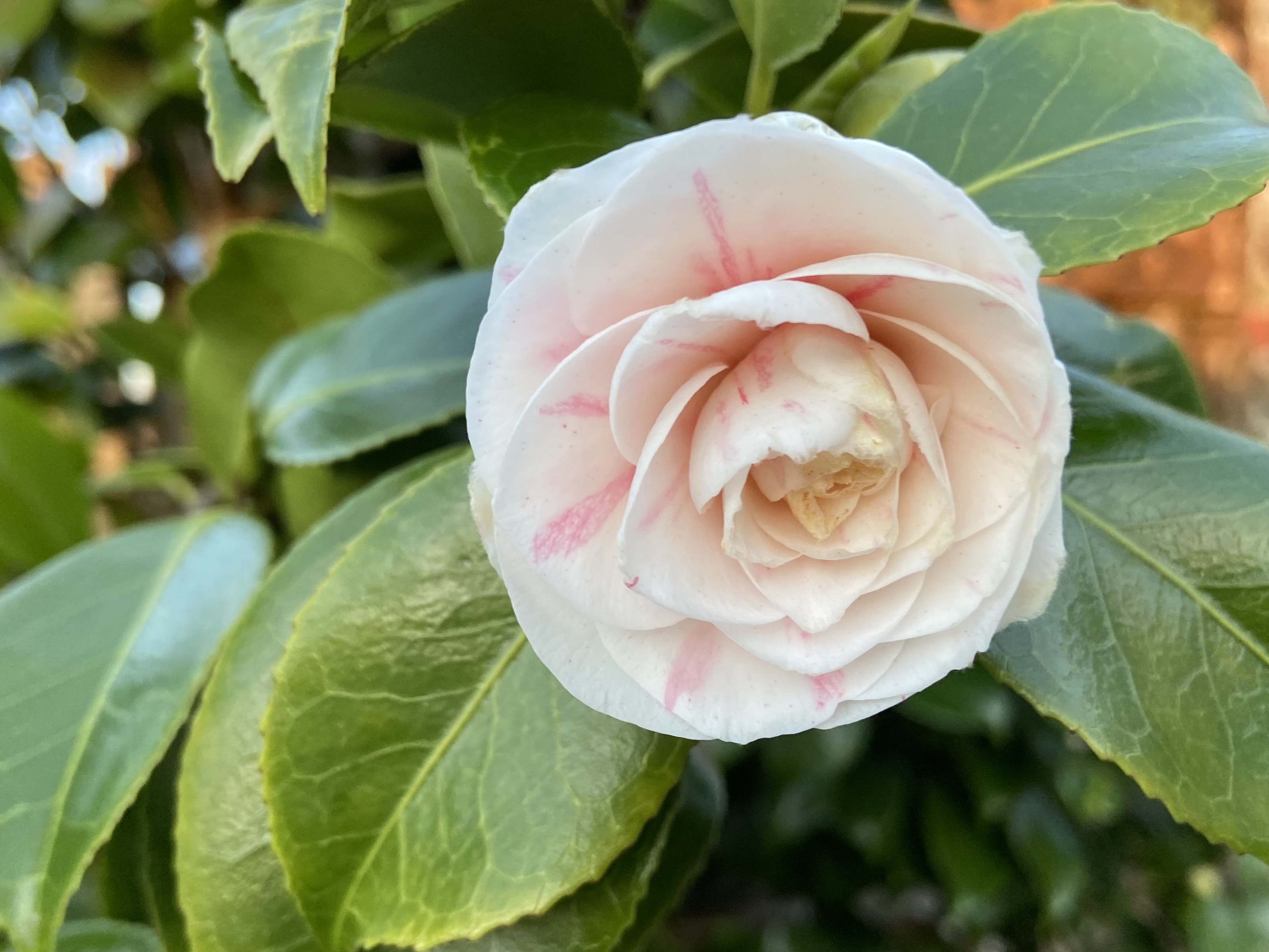
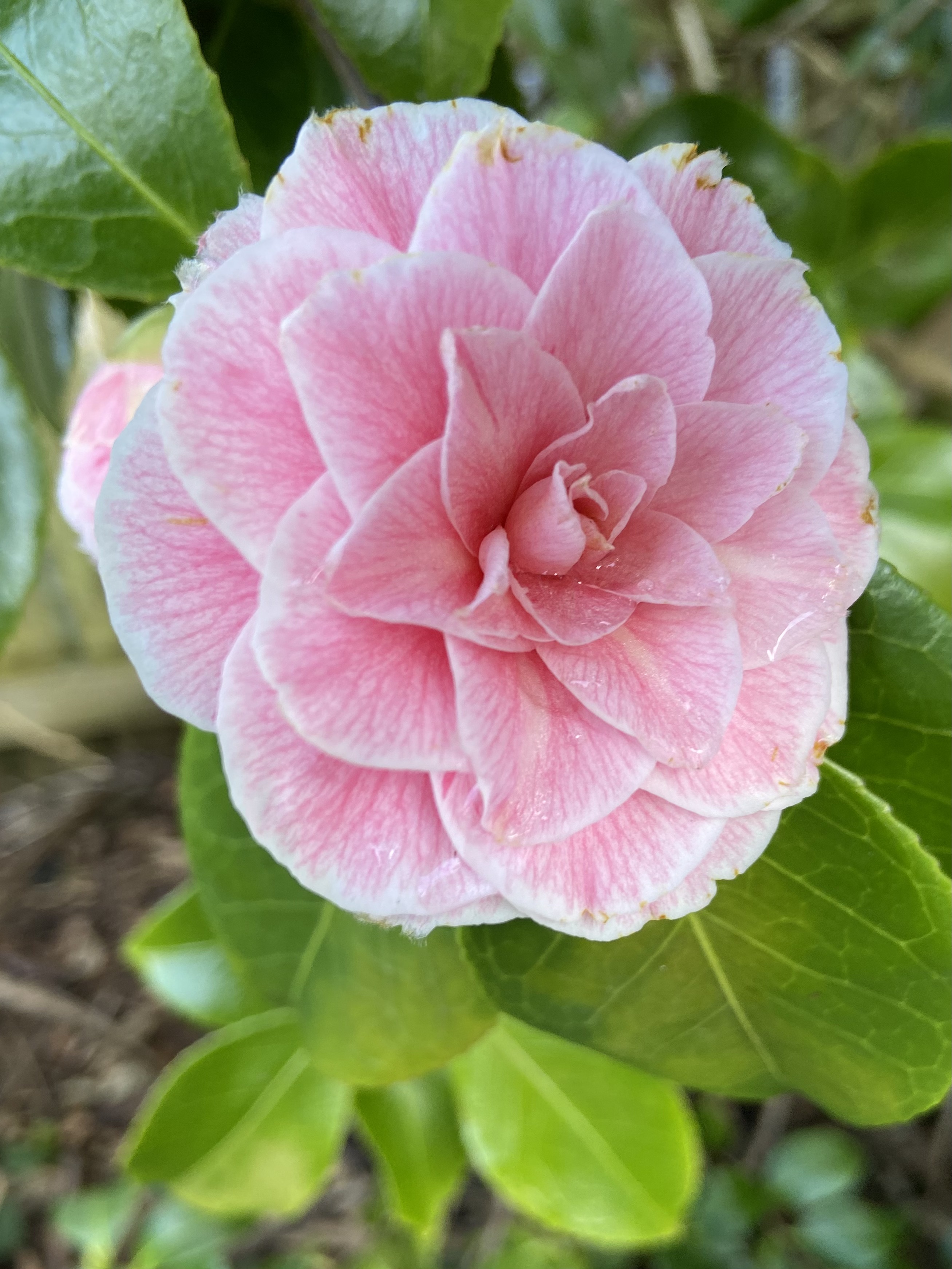
Spring is arriving properly in my garden. My camellia has so many buds on it that they are almost as prevalent as the leaves. The daffodils and crocuses are still glorious and I feel a warm glow when I look at them as I planted them in the autumn and this is my first real act of gardening. Today I have been out to try to buy some hardy geraniums which I hope will manage to compete with the overwhelming ground elder invasion in one of the flowerbeds.
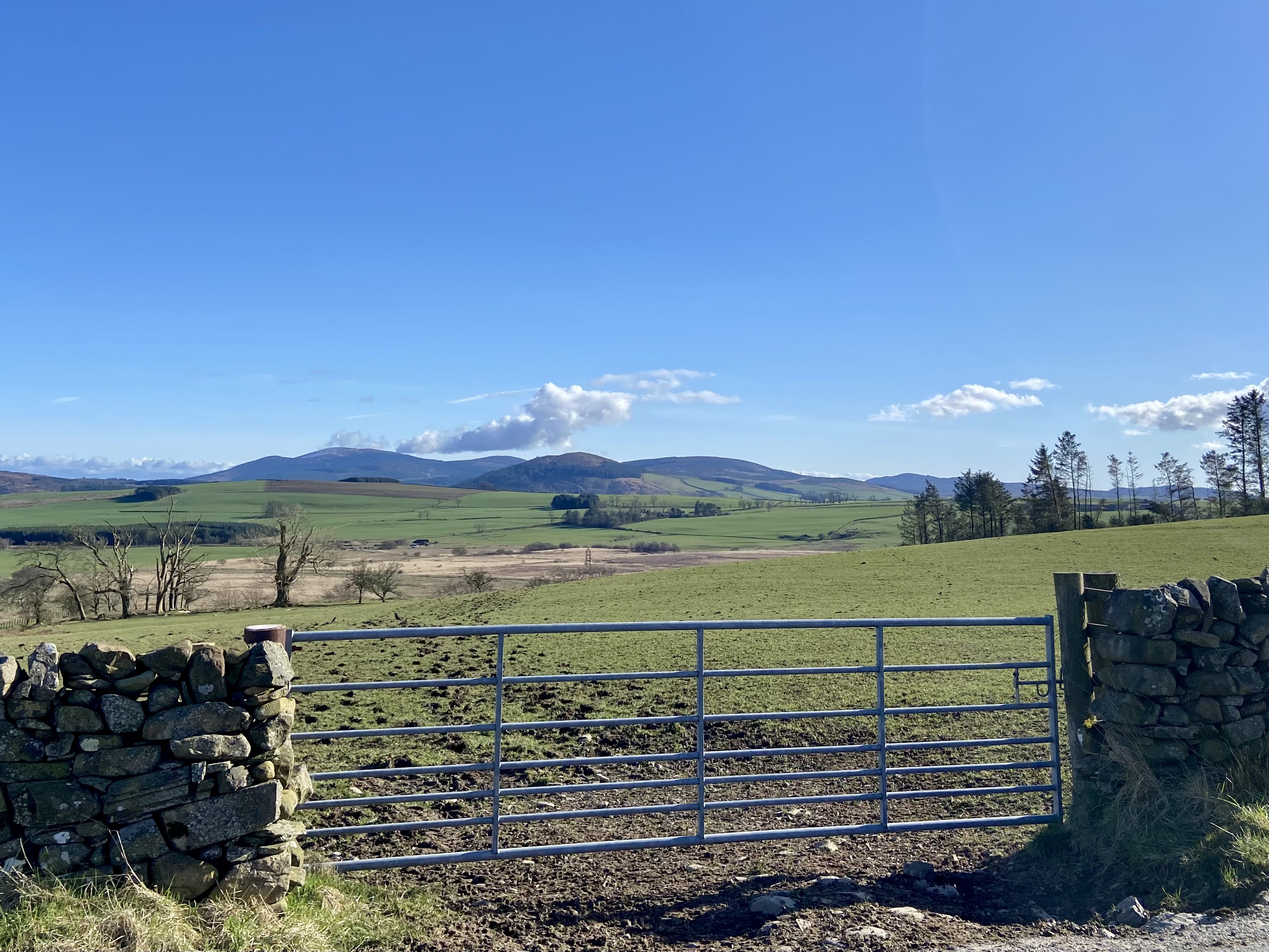
And now I’m back in Yorkshire for more house-move shuffling. One day we will get there, but for now, I will leave you with a typical scene from the gently rolling part of Dumfries and Galloway where I live. Have a lovely week all and thank you for reading.
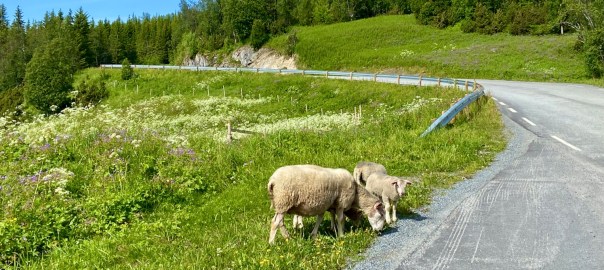
Firstly, a disclaimer. The sheep in the photo at the top of the page are random Norwegian sheep and are in no way related to any invest
Last week’s blog was a week late because I received a phone call as I was writing it. Two weeks ago, I was on call for the weekend and hoping to rest. Most on-call weekends are a matter of keeping your phone near you, maybe dealing with a request by a private vet for a case number so they can go out to test a cow that’s dropped dead to check it wasn’t anthrax or a similar request for itchy sheep that might have scab.
This time, to my surprise, I found my line-manager on the phone. “How would you feel about another report case?” he asked. Well how I felt was broadly irrelevant. I was the ready-to-go vet, so unless I was seriously unwell, it was my task to be handled, whatever it was. “Another AI?” I ventured.
”Um… no.” He paused. “We’ve been sent photos of lesions from some sheep’s tongues. They’re trying to decide whether to treat it as a bluetongue enquiry, or foot and mouth. This isn’t your official call, just a prewarning so you can start to prepare.”
Once the official call comes in, you are expected to be on the road within 30 minutes. In theory, everything should be in your car and you should be able to get in and go. In reality, there are things you might need for sampling that have to stay in the fridge in the lab at work. The buffer solution used for foot and mouth sampling is one of these, so I was glad for the heads up.
I admit, I did feel slightly breathless. Those living in the UK who are old enough to remember 2001 will recall the horrors unleashed on the country as whole farms and regions were forced to cull their livestock and burn them in the fields on horrific pyres of death. The recent, sporadic outbreaks in Europe mean we are on high alert. That the photographs sent in had the high heidyins in a nine am meeting discussing whether they dared risking treating it as “only” blue tongue felt quite significant.
I dressed and went into the office and started to gather paperwork. In theory, I should have paperwork for every eventually in my car, but having the appropriate papers to hand for setting up restrictions is useful. To my mild consternation, I found the main printer wasn’t working. Thanking my lucky stars that I wasn’t a newbie and knew how to work the secondary printer in the lab, I printed out what I thought I’d need.
I also threw a load of blood sampling equipment into my car. Better to have too many tubes than to create the necessity for someone else to come out and onto a farm with possible foot and mouth because you weren’t well enough prepared.
It was quite a long drive out to the farm. As I neared the farm, I slowed down to cast an eye over animals in the nearby fields. None were drooling or looking sick. A good start.
It had been confirmed that I was to treat it, for now, as bluetongue, but that foot and mouth was still there as a possibility. To explain the difference in requirements, because bluetongue is spread by midges, tramping on and off the farm with dirty boots and tyres isn’t so much of a worry. Not that I do that, but if I did, it’s not a disaster.
The restrictions served on the farmer are different too. Bluetongue restrictions only stop animals coming and going. Foot and mouth suspicions, like avian influenza suspicions, mean that every person and vehicle going on and off the farm has to have an individual license and any and all incursions are strictly limited to absolute necessities.
I arrived at the farm , put on paper suit and gloves and served the restrictions. It’s always the first thing to be done and having signed the form, I read out all the clauses that explained in full what was required. Next was history taking.
This is not like taking a history for a normal vet case, where you mostly want to know what has happened to the animal. For a notifiable disease investigation, by the time you are finished, you should have details of every movement on and off the farm within the last twenty one days. You have to assess whether there are any high risk factors. Are there rights of way and picnic sites where people might have fed the animals? Has anyone from the farm recently been on holiday to a different country? Are there stagnant ponds in the vicinity that might encourage midges? The factors, like everything else, vary with the disease suspected.
Having taken a careful history of the animals and the risk factors, I donned more layers of PPE and prepared to look at the animals. I knew, both by being told and by observation, that there were fields nearby that held another farmer’s cattle. I decided to walk up to look at them first. If it was something highly infectious, they might be showing signs too. Again the picture was reassuring. They were young stock from a dairy farm and could not have looked more healthy. They were eating as we approached, then lifted their heads to look at us. Not a nose lesion among them. Nolameness, no drooling. Bright eyes and shiny coats.
I was already, mentally, beginning to think foot and mouth was less likely. Obviously there were still the sheep to look at, but clinical signs in sheep can be subtle, cattle less so. These animals had been in relatively close contact, so by the time the mature mouth lesions were spotted in the sheep (with the caveat that it might have been caught early) I would expect to have seen some spread.
There were two groups of sheep – adults and lambs. The lesions in the photographs, nasty red eroded areas on the tongues, had both been from lambs. We therefore looked at the adult sheep first, partly to prevent any possible cross-infection, but also because a complete absence of problems there would go further towards ruling out foot and mouth. No reason why young sheep would be more severely affected than the old in a disease where neither group would have immunity.
What struck me again was that I was looking at a broadly healthy group of animals. There were 43 ewes and as I scanned their mouths, feet and udders (where possible) I saw nothing. Only bright, uncrusted eyes and alert ears. There were two that the farmer had noted had been getting thin for a while. We selected them out and I examined them more closely. Not a lesion in sight. Normal breathing, normal temperature. One was a bit dirty on her backside, but nothing to suggest foot and mouth or bluetongue.
We moved onto the lambs. This time, I decided we should examine all of them. There were thirty two in the group and the farmer caught each one and held them while their mouths and feet were inspected. In the end, there were four with tongue lesions, four with lesions around their lips and one with a sore area above its foot. None of the lambs with lesions was running a fever. I was strongly beginning to think that what we were dealing with was a severe case of orf – a pox virus that affects sheep and can infect humans who come in contact. It would be unusual to have tongue lesions, but not impossible.
Having taken history and examined the animals, it was time to decide where we were going to go with this. At one extreme, if I thought foot and mouth was still in the picture as a possibility, we would have to issue new restrictions as well as taking samples. I might well have to stay on the farm until it was ruled in or out. I’m still a bit sketchy on the details, though I had arranged for Triar to be looked after, just in case.
If I thought everything was ruled out, I would leave the farm with no tests done and hope I’d got it right. To do that, I’d need to be very certain. My gut feeling was that this was orf, based on the fact that it was only affecting the lambs. Orf is common and spreads in flocks to the new crop of animals born each year. Older animals can carry it, but usually have enough immunity that there are no clinical signs.
So on the grounds that only the lambs were affected and the adult ewes and neighbouring cattle were perfectly healthy, along with the fact that all the lesions were quite mature and I would have expected to see more early stage lesions (we have lectures about aging foot and mouth lesions) I felt confident enough to rule out foot and mouth (phew!). But could I rule out bluetongue too? I decided I couldn’t . After all, midges might well have selectively bitten the lambs with their thinner wool pelt. And orf might exist alongside bluetongue. The lip lesions could be orf and the tongue lesions something else.
And so, armed with my evidence, I called VENDU (the veterinary exotic notifiable disease unit) to tell them what samples I wanted to take. I have never been asked so many times and in so many different ways if I was sure, 100% certain, absolutely confident that I could rule out vesicular diseases like foot and mouth. At the start of the conversation I was using words like probably, but by the end, I was telling the, firmly that no, it was not foot and mouth.
So we tested the nine lambs for bluetongue: the four with mouth lesions, the four with lip lesions and the one with the foot. To cut a long story short, the test was negative, but most of Sunday was still spent on paperwork. I strongly suspect all the lesions were caused by orf: an unusual and interesting case all round and a good learning experience for me.
Lots of text so far and not many pictures, so I shall rectify that. Last weekend, I went to Drumlanrig Castle and met Sue (who used to locum with APHA) for a walk and for lunch. The gardens were beautiful.
At the start of this week, I was quite tense. I’ve explained before that I am trying to work towards a bonus payment, which requires a lot of hoop-jumping and I am attempting some of the hoops right at the last minute, given that the deadline for submitting my activities is Monday coming. On Tuesday last week, I was meant to be presenting training on Foot and Mouth Disease and an update on Bluetongue. On the morning of the presentation, I received a message to say it the meeting was cancelled. I confess, I was rather relieved, though hopefully it won’t undermine my case.
On Wednesday, I gave my Disease Risk Form training to some of the vets. It was given at our regional meeting and I fondly looked round the room at the three or four vets in attendance and thought there was nobody there that would worry me to present to.
When the time of the meeting arrived, Josephine, my veterinary mentor told me we were linking in by Teams, and slightly to my horror, I realized that there were vets at all levels, linking in from the whole of Scotland. Still, I didn’t have any time to worry, and apart from wishing I’d thought to bring a glass of water for my dry mouth, the whole thing went off pretty well.
I must say though, that Josephine herself had given some training on Bluetongue (the situation is unfolding fast – we’re trying to keep it out of Scotland) which she made much more fun than anything I have produced. As you can see below, the cow on the Lipton’s tea van is leaving England and crossing the yellow border into Scotland and we were learning about the special measures the farmer would have to undertake. Suffice to say, there won’t be a lot of English animals at Scottish shows this year and vice versa.
Not sure whose the Coke bottle is, but clearly it should really have been Irn Bru for the sake of consistency.
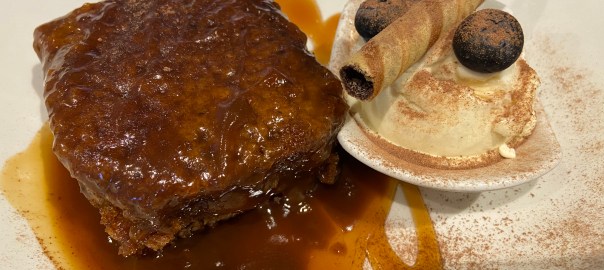
Wednesday night was the summer meal at my writing group in Lockerbie. The hotel we use does food and they are responsible for the sticky toffee pudding at the top of the page. As regular readers will know, I’m a bit of a foodie and the beef stroganoff, for my taste, had too much Dijon mustard, to the point where that was the principal flavour, but it was pleasant enough.
On Thursday morning I woke up feeling a bit more relaxed, with all my training done for now. I’ve mentioned before that I am reading the Bible and I have an app that gives me three readings each day, two from the Old Testament and one from the New. My first Old Testament reading was Samuel and I was bemused to read that, having stolen The Ark of the Covenant, the Philistines were blighted with “‘emerods in their secret parts”.
Of course, I had to look this up. There are sometimes words I don’t fully understand and sometimes I don’t check, but these emerods were coming up, over and over, and moreover, when the Philistines sensibly decided that the safest thing was to swiftly hand the Ark back to Israel, the priests and diviners told them they had to give it back with an offering that consisted of five golden mice and that they had to make images of their “emerods” from gold and hand over five of those as well.
So when I checked, it turns out that the word “emerods” is actually an old word for hemorrhoids. I must say, the Bible does throw up some truly bizarre things now and then! As it was my friend Valerie who encouraged me into the Bible reading, I tried to send her a message, “Golden hemorrhoids? I’ve heard it all now!” But having sent it, I realized a minute or two later that I had sent it instead to another friend. Fortunately, I managed to delete it before she saw it, but I had a laugh and shared that with Valerie too. Let’s face it, that would be quite a message to wake up to, without context or explanation!
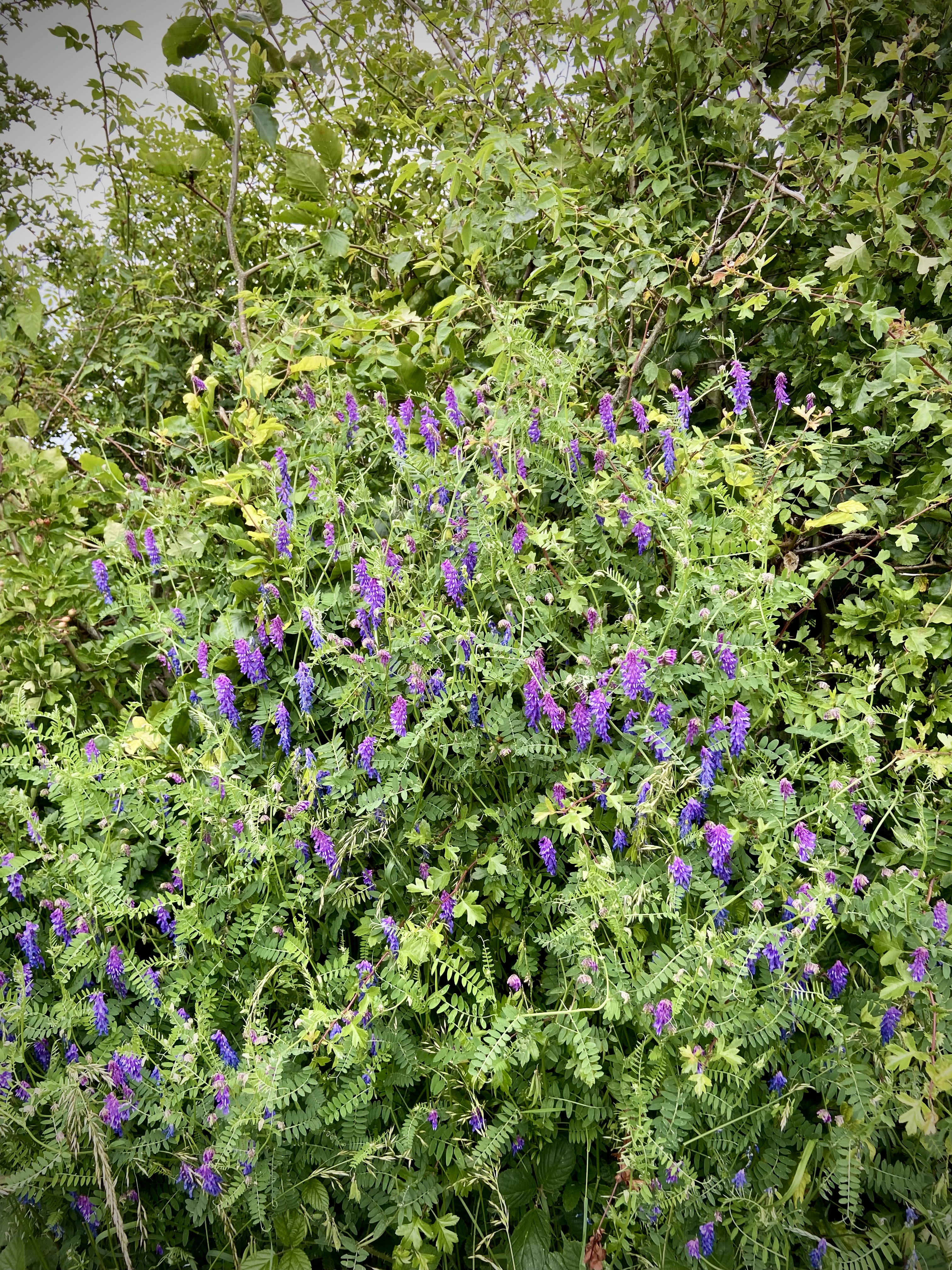
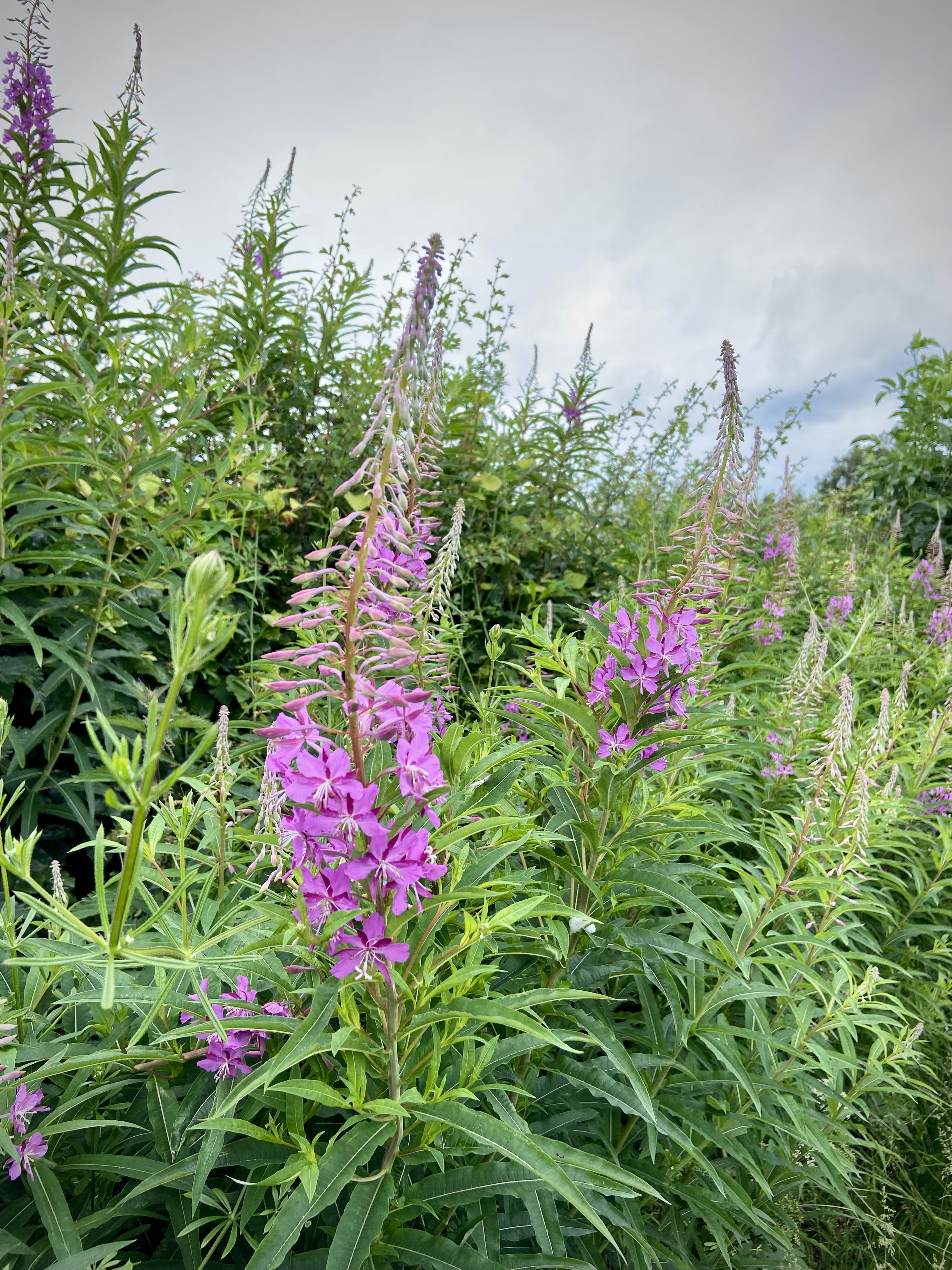
I shall leave you with a few, wonderfully overgrown pictures from Blackbird Lane. Thank you, as ever, for reading. Hope you have a good week.
It feels a long time ago now, but last weekend with Valerie and Charles was wonderful. Having slept well after hot chocolate laced with brandy in the hot tub with Valerie, we all headed out on a drive through Kippen to Fintry. It’s a beautiful area of Scotland and one with some special memories for me. Thirty five years ago, as a vet student, I saw practice in Kippen. It was there that I was first sent in to do a consultation on my own on a lovely grey rabbit. There was also a parrot in the waiting room that used to meow at the dogs, then tell them to shut up, if they started to bark.
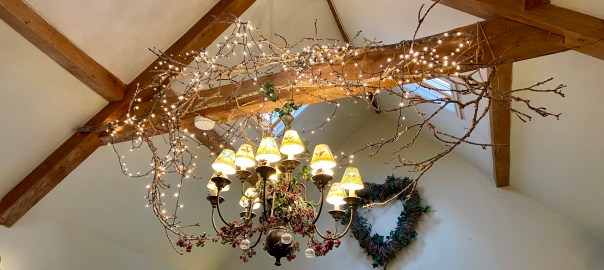
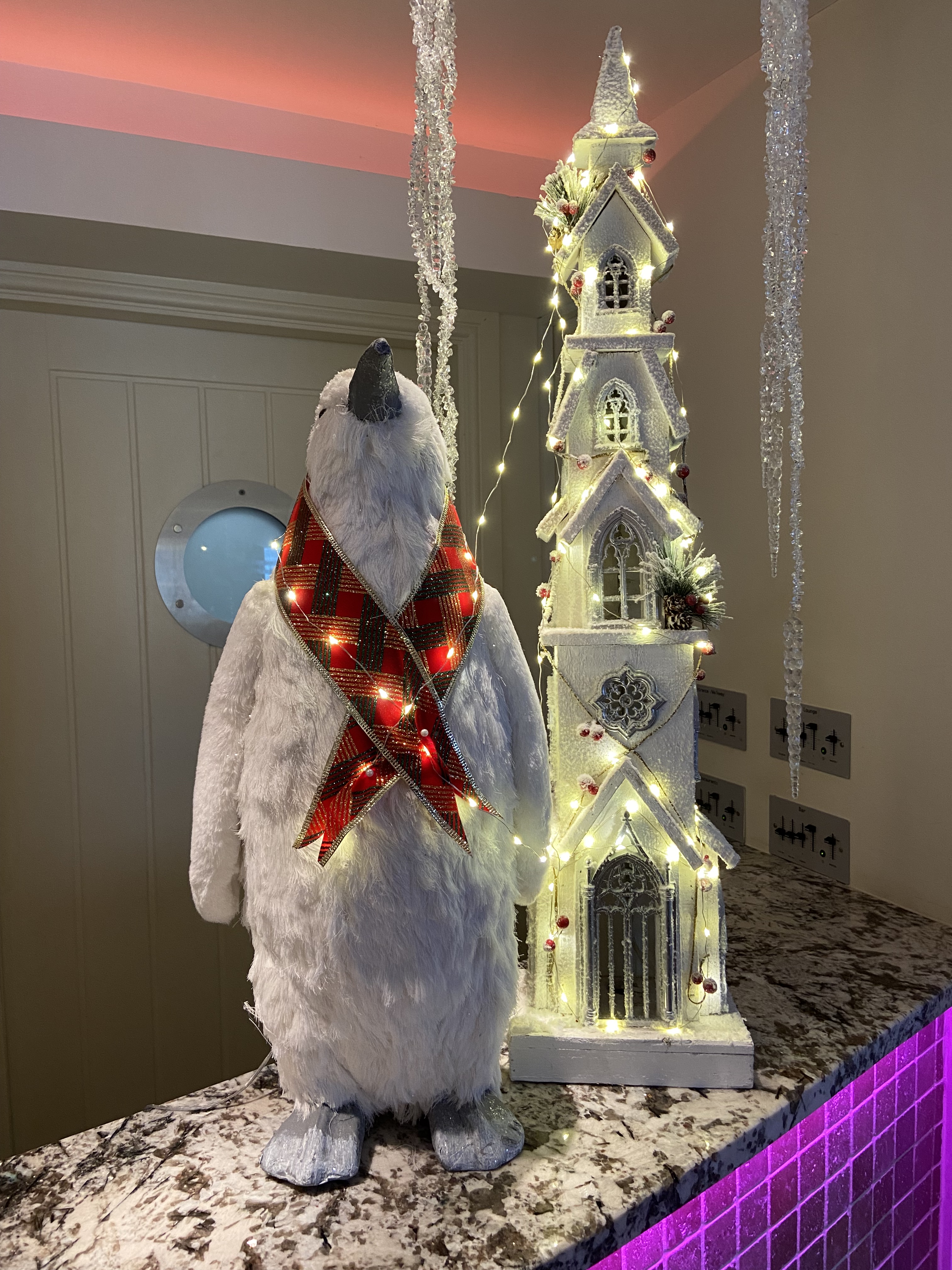
We stopped off at the Courtyard Cafe on Knockraich Farm for lunch. It was beautifully decorated for Christmas and the lights at the top of the page were above us as we dined. I had a ploughman’s lunch, followed by a mince pie with Bailey’s flavoured ice cream. It was delicious.
Having stopped off at Lidl, Valerie and I had another hot tub session m this time with gluhwein. The thought has just crossed my mind that I told mum yesterday that I barely drink alcohol, and now I’m making it sound as if we had a truly boozy weekend, but it was a lovely moment and the gluhwein was very reminiscent of Norwegian gløg. All it needed was some chopped nuts and raisins.
We went to the Christadelphian church service in Stirling on Sunday morning, where I was made to feel very welcome, as I have been on the other occasions I’ve attended. We stayed for a shared lunch and afterwards I rolled up my sleeves and did some of the washing up. I can feel a real sense of community there, which has been lost in many places, following Covid.
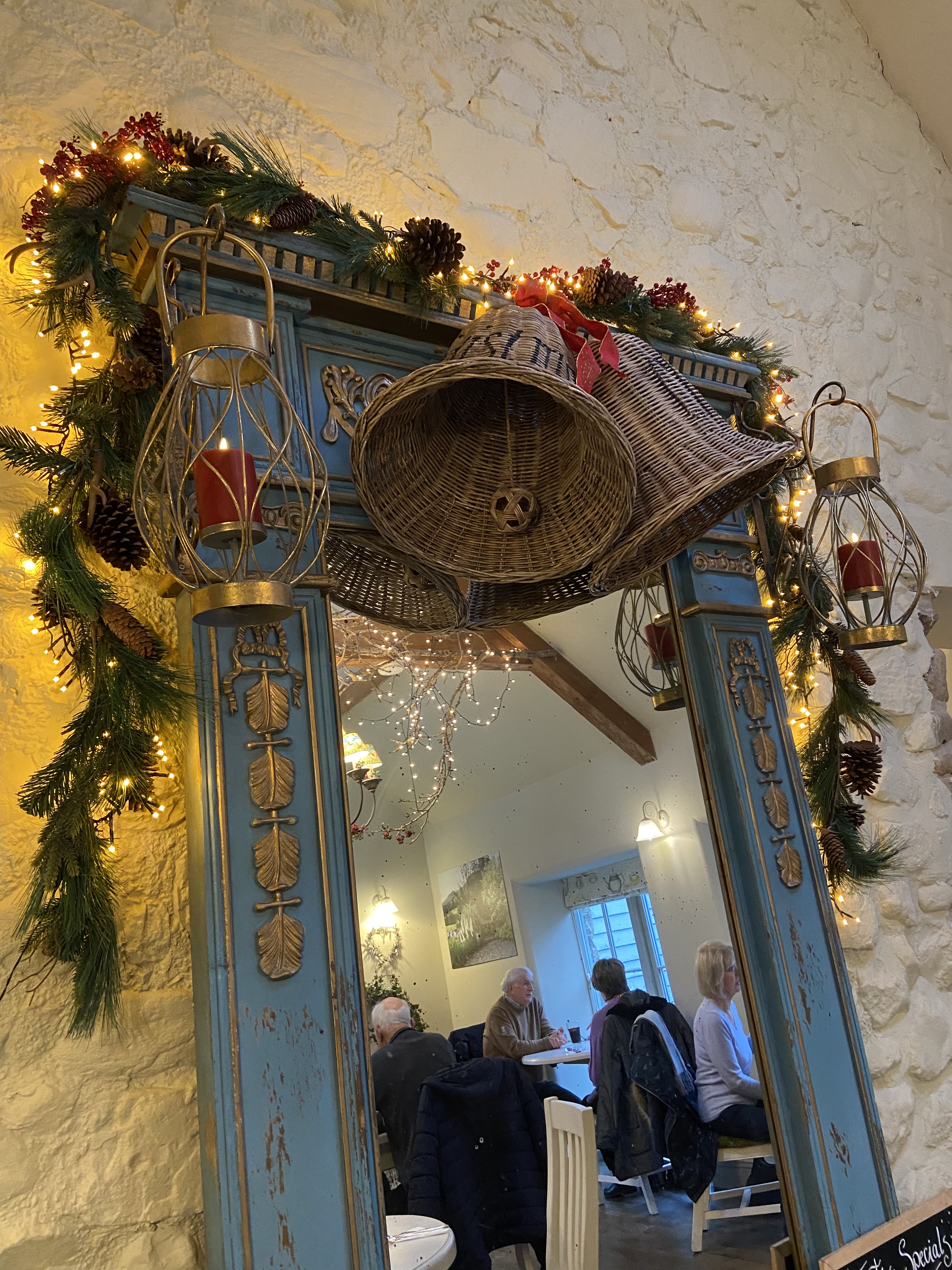
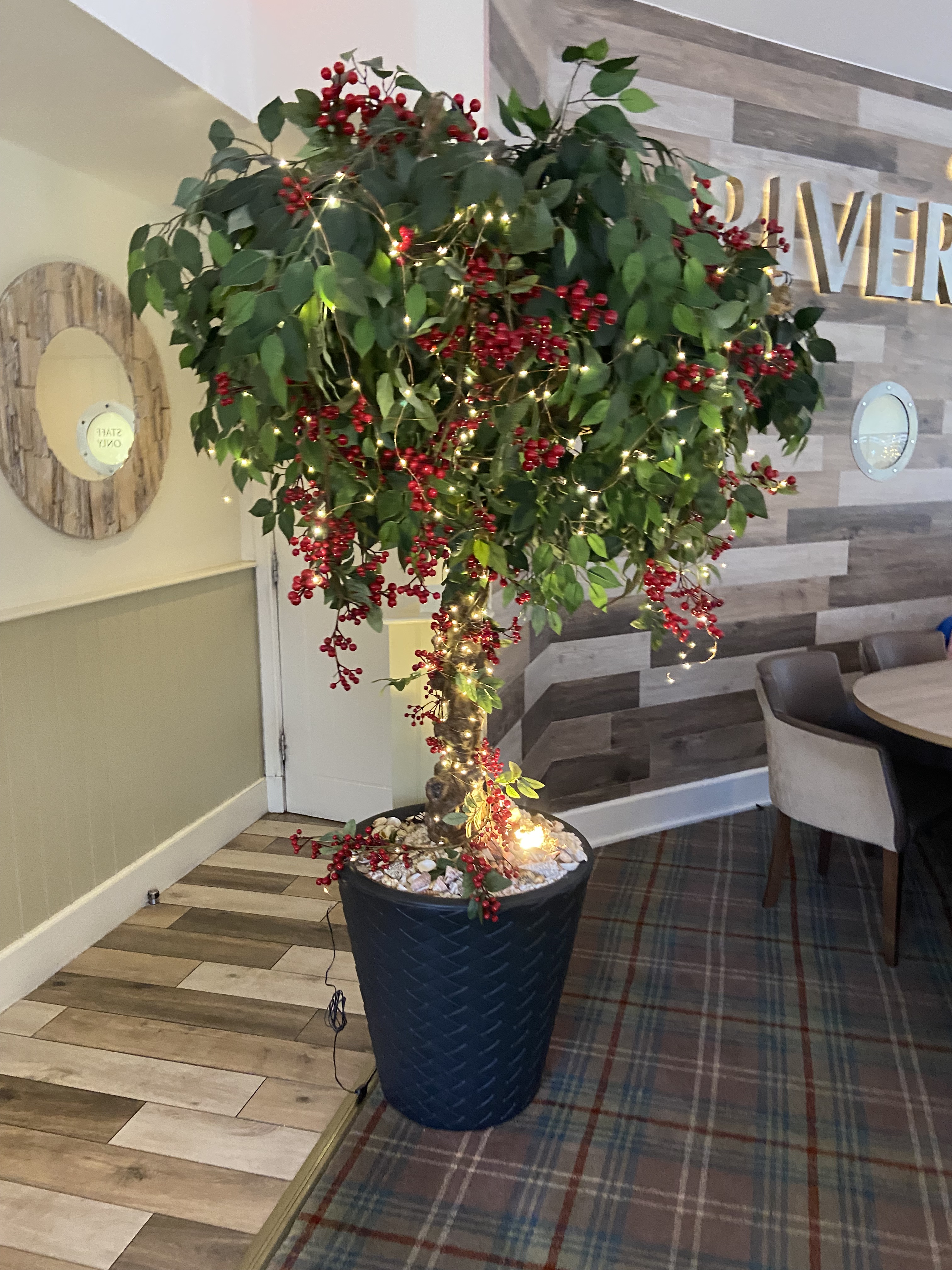
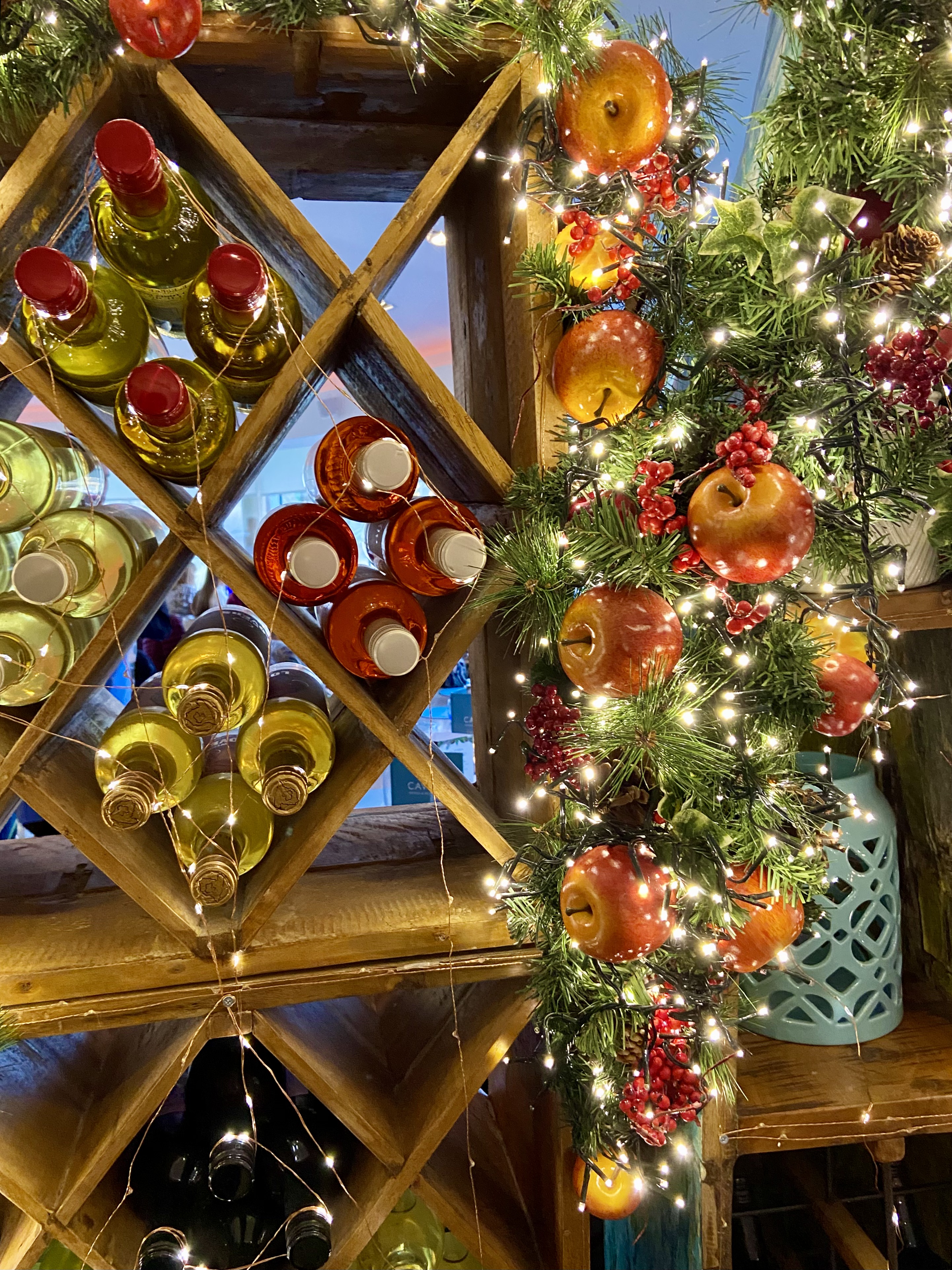
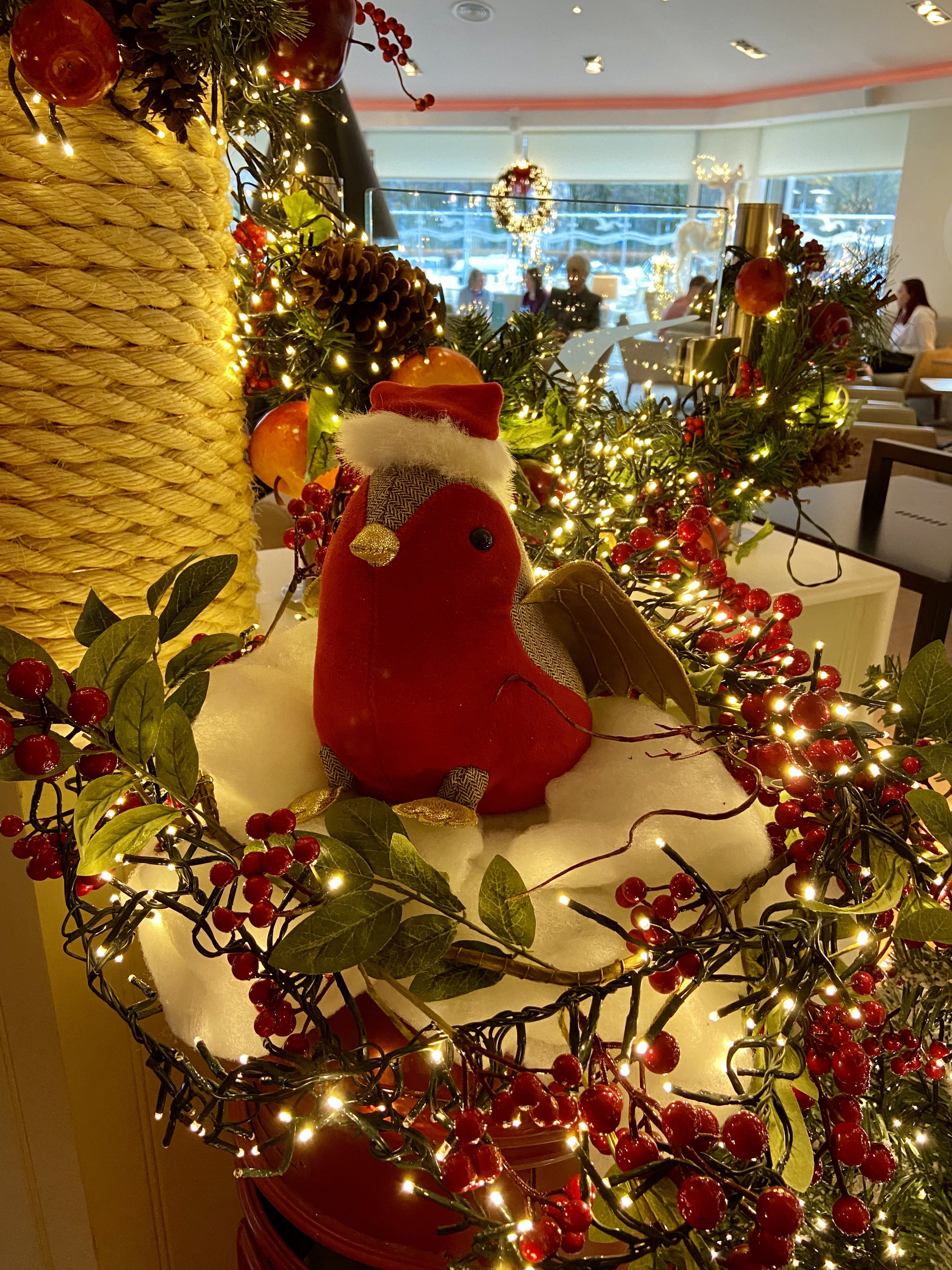
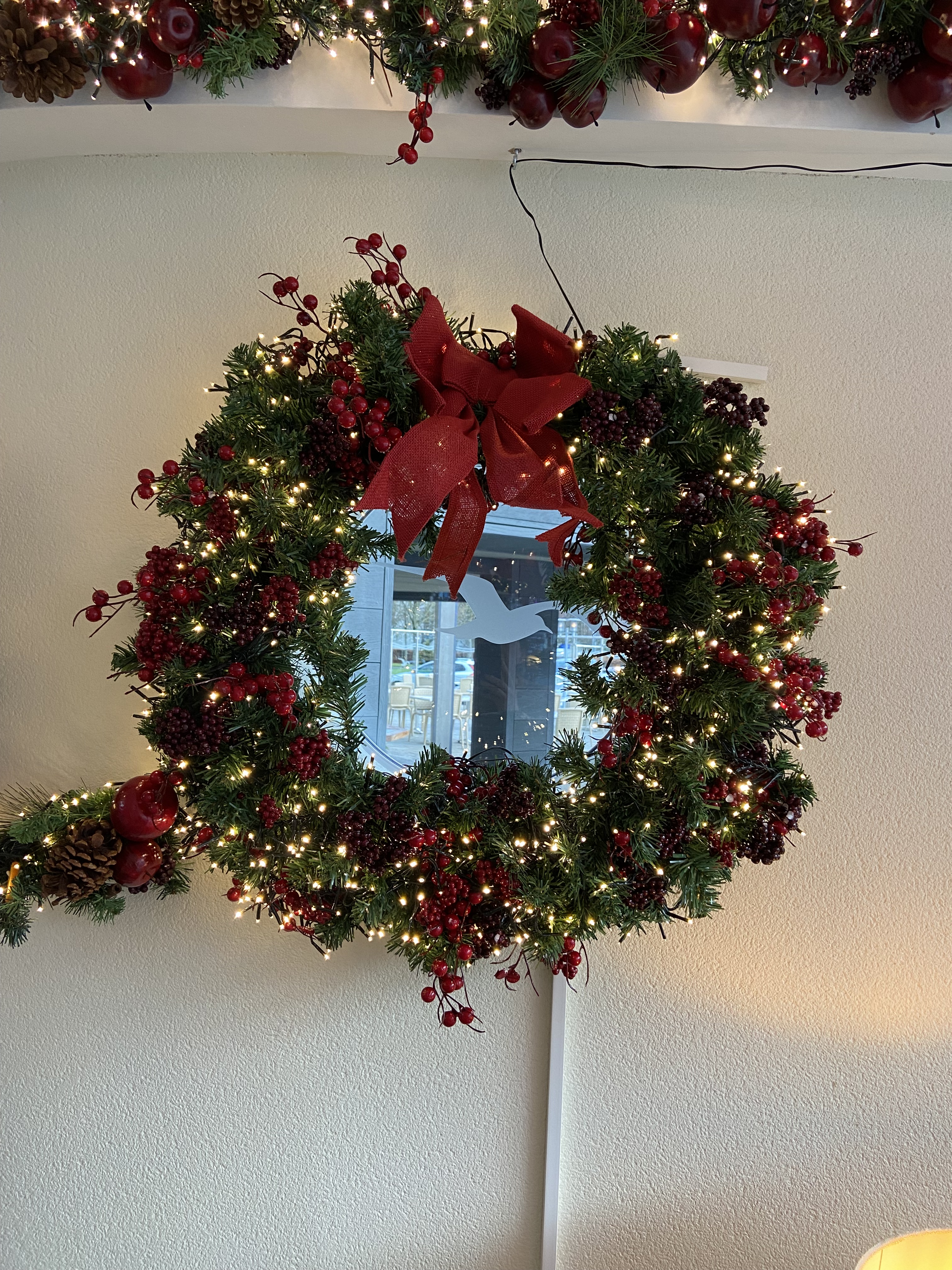
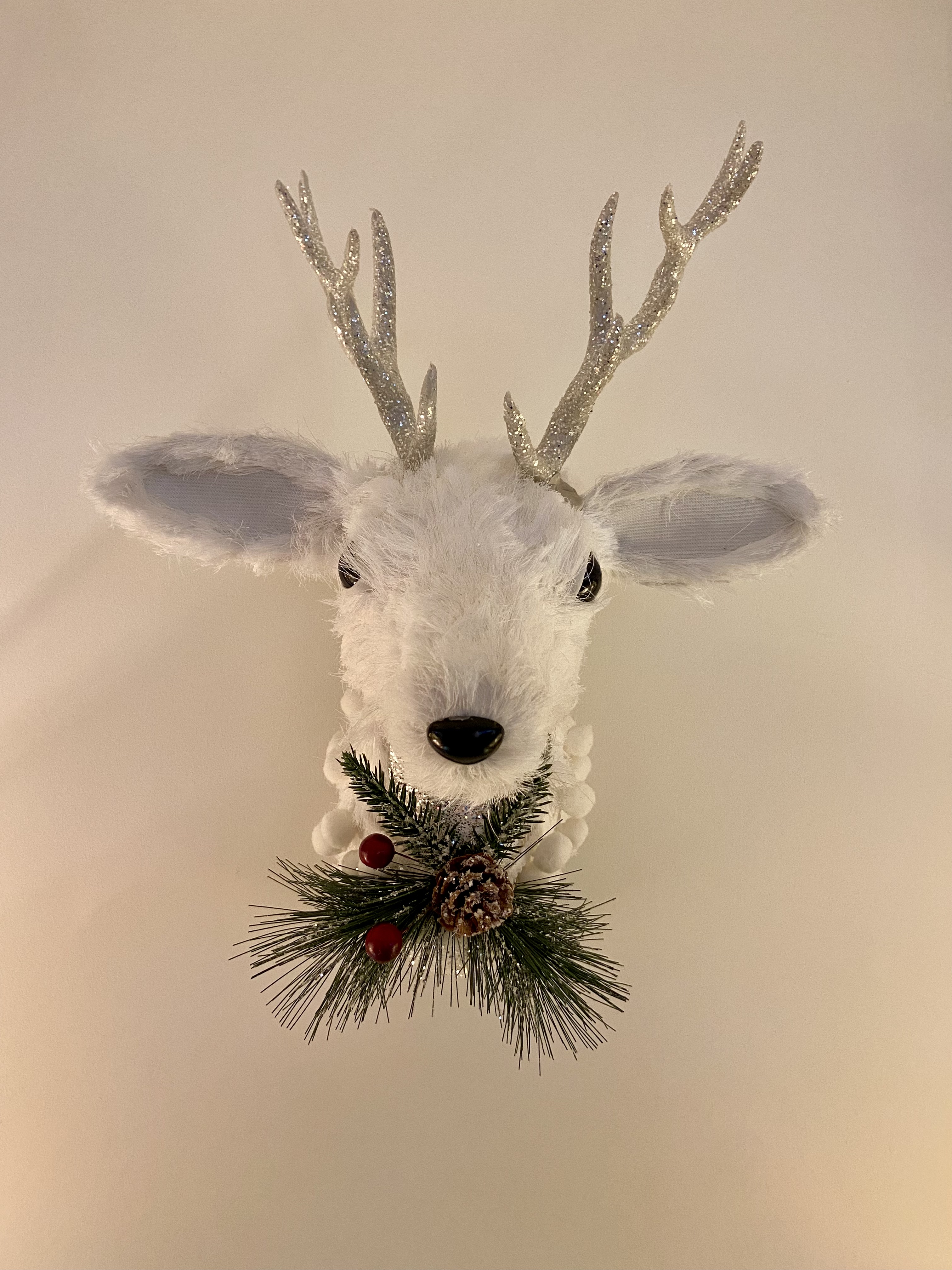
We headed off for a last coffee at the River House in Stirling. Valerie had promised me Christmas decorations and it didn’t disappoint. I love the contrast between the classic beauty of the Courtyard Cafe and the exuberant British, Nordic style decorations here below.
Back to work on Monday and a feeling of nervousness as I went out to blood sample some sheep that had moved from parts of England that are now under restrictions for Bluetongue. It’s too cold now for the mosquitoes that carry it to become infective, but the two sheep both came up a few months back, when the weather was warmer and before the restrictions were in place. Tracing a disease that isn’t spread by direct contact, and which may not show up for some months is a complicated business.
So far, it hasn’t been found up here, but we are staying vigilant. It had been a long time since I had taken blood samples from sheep, but the two visits went okay and I sent all the paperwork in by the next day. I haven’t heard back yet from the debriefing team, even though I spotted an error in one of the forms, so it will doubtless come winging back to me at some point. There are now confirmed cases of avian influenza down in Norfolk, so there could be busy times coming up.
Tuesday was an easier day; I visited a couple of vet practices. Most mixed vet practices in Scotland do some work for the government, checking for notifiable diseases like anthrax, brucellosis and TB. As part of my job, I go out and visit them, partly to check they have suitable equipment, but also for outreach. They are routinely out on many more farms than I am, and if they see anything that we could help with, I hope that they would feel that reaching out was possible. Vets used to work for the ministry for years, but now there’s a constant churning of staff and that continuity has been lost. Changing that will require the political will to improve and invest, so I’m not holding my breath, but in the meantime, I try to present a friendly face.
I also stopped off at ReadingLasses in Wigtown for a lunch of coffee and cake, with a good book to read. The cake was delicious, and this time I bought the book too.
And now, it’s the last weekend before Christmas and I’m going to spend some of it painting. The work on my house is progressing and, having painted the new shower room, the joiner came yesterday to fit the waterproof boards behind the shower. I made a start on one of the bedrooms last night. It still astonishes me how much of the paint sinks into the new plaster. It’s much harder work than normal painting, but also important to do a good job. Hopefully, in the not-too-distant future, I’ll be ready for visitors.
Anyway, I wish you all a peaceful and happy Christmas. Thanks for reading.
There were two beautiful mornings in Blackbird Lane the week before last that I want to share with you. I took the photo at the top of the page and the one below on Monday the 7th.
Mist hung above the fields, but the light was beautiful, catching the wonderful clarity of the raindrops, left there by a shower.
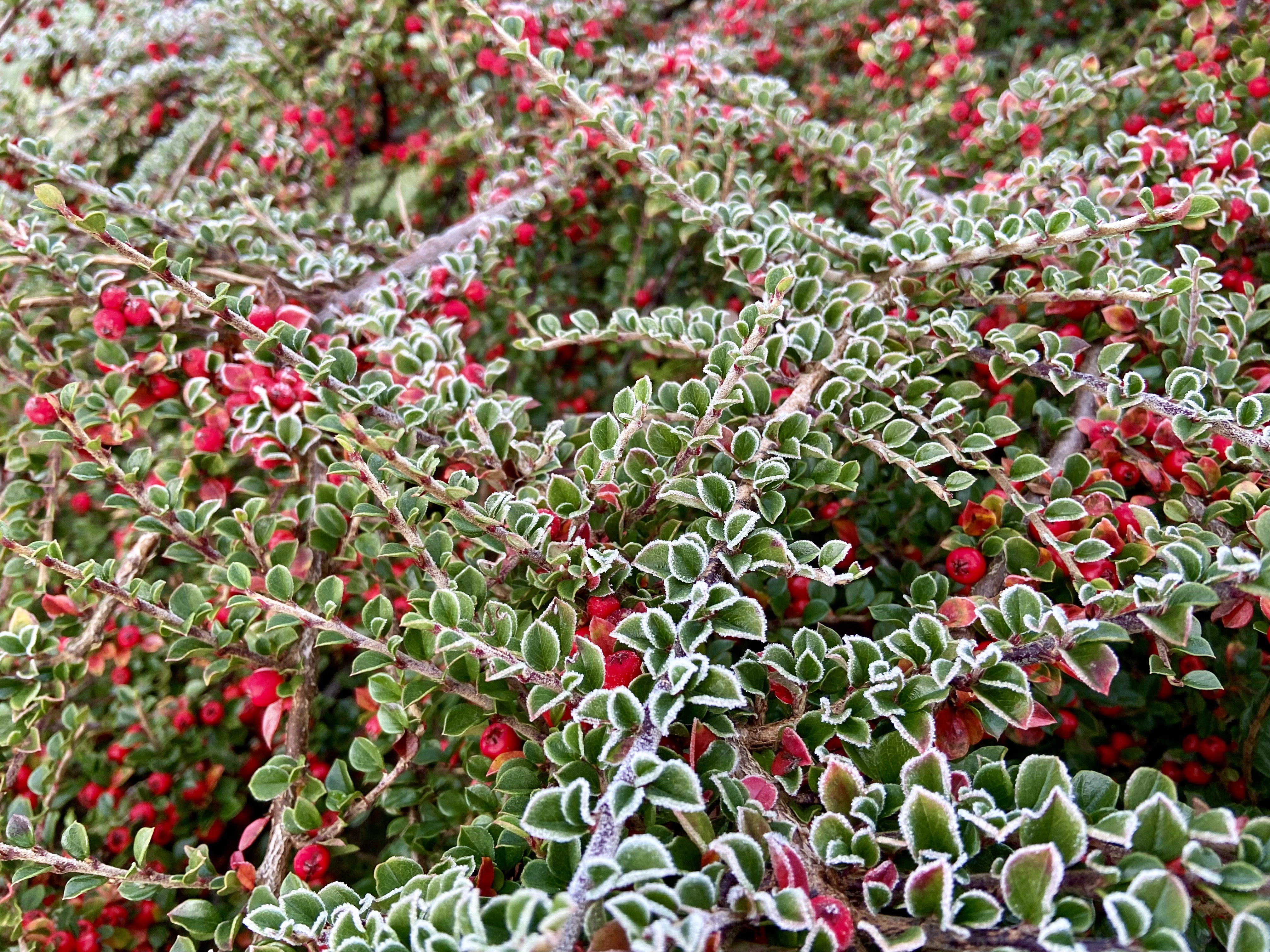
Four days later, it was frosty and again, I couldn’t resist taking photographs in the sparkling morning light.
I was taken out for a driver training course on the Thursday. The instructor asked why I was there. I must have triggered something when I answered some questions at work about my driving, but the only one I can think of was that I said I drive when I’m tired. If anyone working in field services (as I do) said they never drive when tired, they are not being entirely truthful. After a long day on a physical job on a farm, we all have to get home. That’s just how it is. Anyway I drove the instructor to Tebay service station and had a coffee and a pie, then drove her back. She says I’m a good driver, so no complaints about that one!
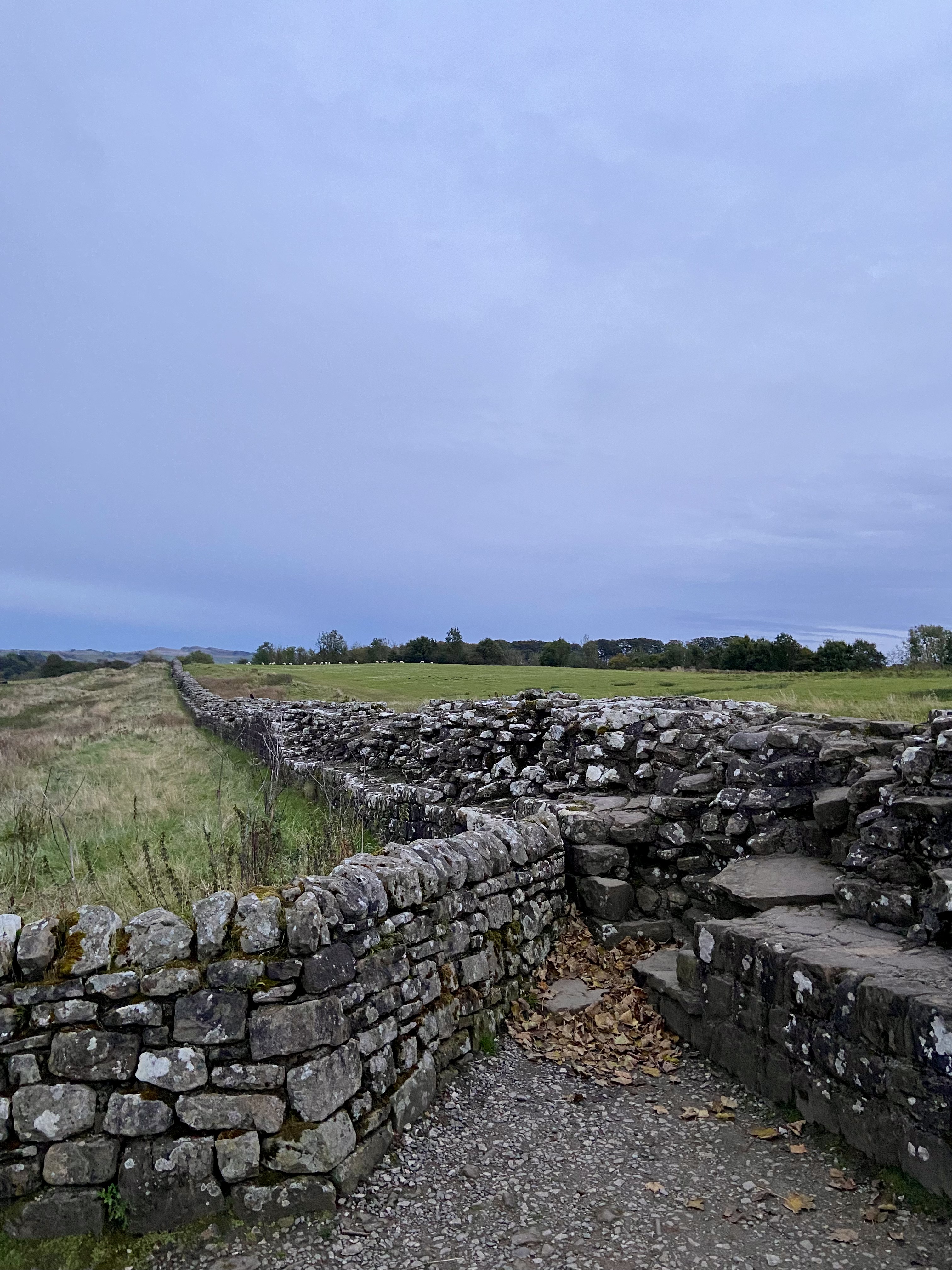
Last Sunday, I met an old friend from university and had a meal with him in Lockerbie. We then decided to go and look at a section of the west side of Hadrian’s wall, as it wasn’t too far away. It’s an impressive sight, even now: well constructed and taller than I am, so I couldn’t see over it. It was originally four metres high when it was built almost 2000 years ago. It must have been very commanding and Hadrian must have been very alarmed by all the evil Scots!
This week has been a real mixed bag. I was meant to be heading off to Bury St Edmunds today, to do some bluetongue surveillance, but on Tuesday, I was told that there was tracing work to be done here in Scotland and I couldn’t be spared. I was a bit frustrated as I was looking forward to getting away and doing some outbreak work.
The high point of my week was on Tuesday, when I visited a vet practice for a routine inspection over Wigtown way. It went well and I decided to spend lunchtime in a cafe in Wigtown called ReadingLasses. They had run out of soup and were only serving coffee and cake, so I chose a coffee and martini cake, which really was as delicious as it looks. Wigtown is also Scotland’s book town, as I’ve mentioned before, and as you can see in the photo below, and maybe guessed from its name, ReadingLasses was filled with books by and about women. I read the first two chapters of a book about crofting life with my cake and will definitely return for the following two next time I’m over that way.
Thursday wasn’t so good. I woke up and found that Triar’s breathing was not right. He was obviously struggling a bit, needing more effort to breathe out than was normal. I had woken at six and the vet didn’t open until 8:30 – he wasn’t bad enough to warrant an out of hours call – so I had a frightening couple of hours, during which my lovely friend Lara called me and calmed me down, talking through what to do.
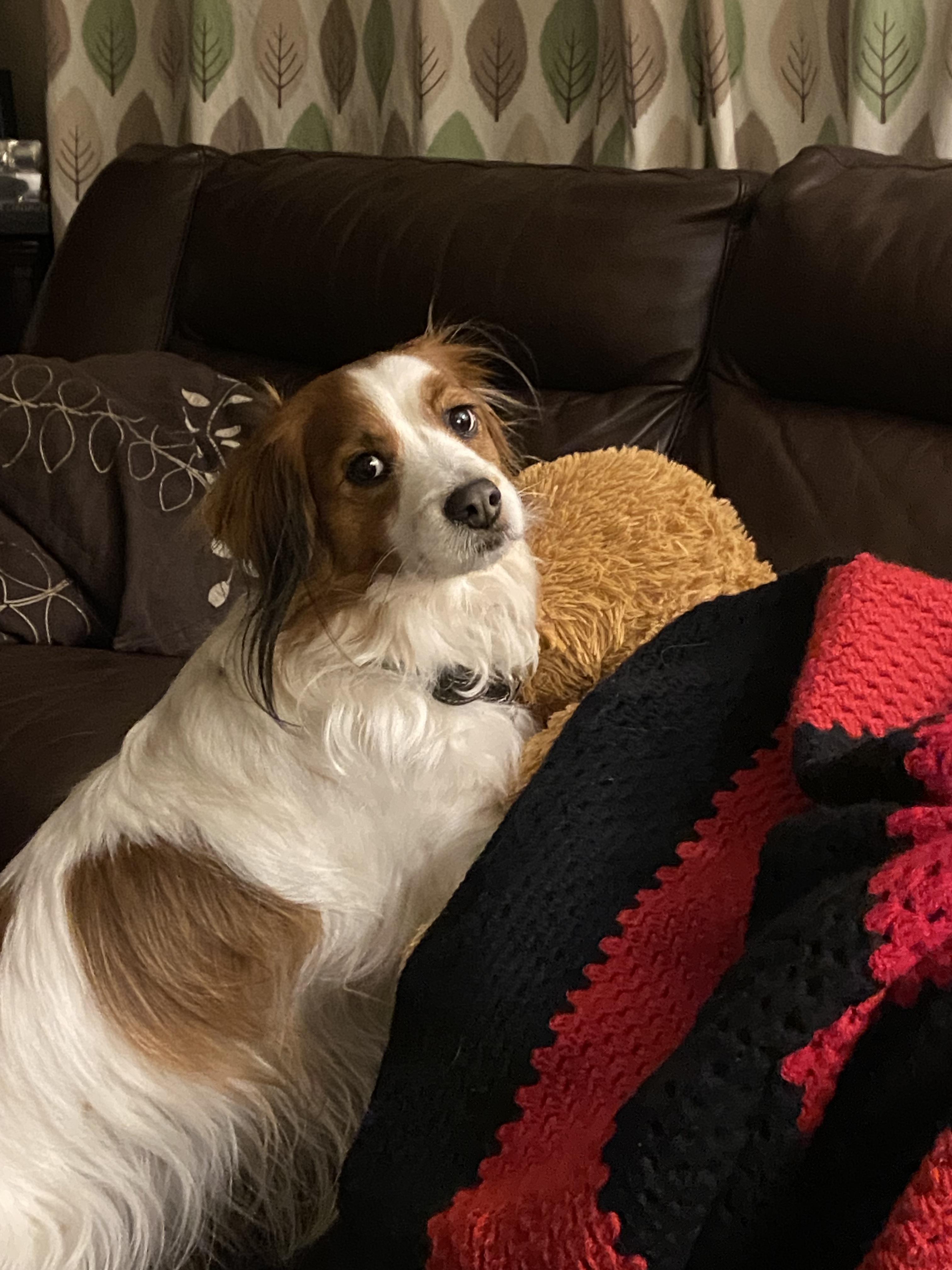
By some miracle, the vet Triar knows had an appointment at 8:45, so I rushed Triar there. I think he has some kind of inflammation in his lungs, or pneumonia, but don’t know what’s causing it. He’s had a steroid injection and is doing a bit better, but for now, I’m waiting and monitoring and hoping he goes in the right direction. Lung problems in dogs can be difficult to diagnose and treat. This is the one time I wish I was working in practice, as I would do way more tests, though of course that can also cause more problems. Patience is very hard though and the realization of how precious he is to me was brought home by the wave of emotion. I was no use for work on Thursday morning and fortunately, my manager was very understanding.
So after all, I am very grateful to not be heading off to Bury St Edmunds today. Triar and I will have a quiet weekend together. The weather warnings say there’s a storm on the way, so we will shelter together here and hope for better things next week.






















 A Vet’s Life