Tag Archives: Animal Welfare

Tuberculosis

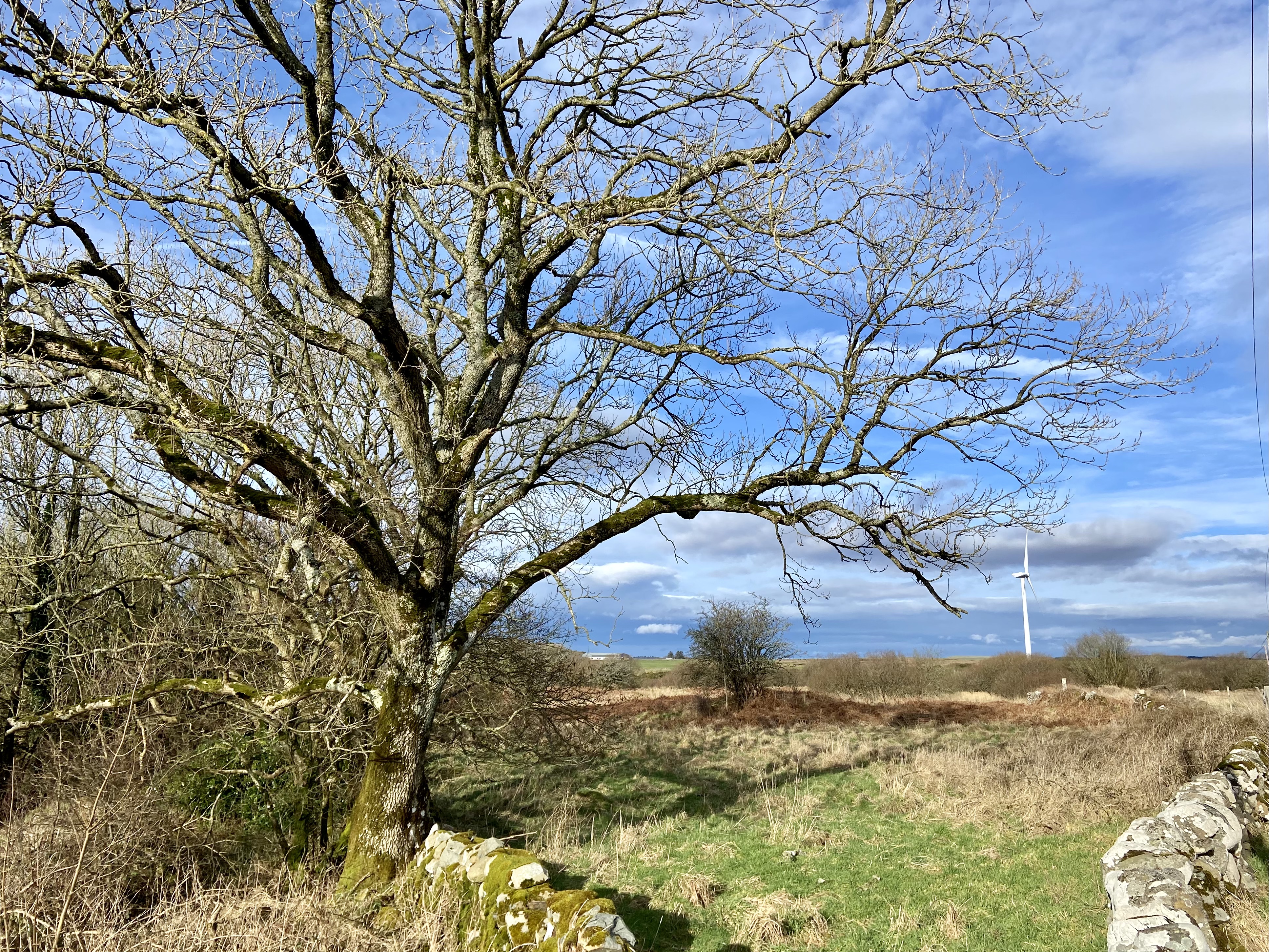
The rain is hurling itself against the window as I write this, having returned home after half a week in Stranraer. The wind there was relentless and felt like it was filled with icicles. Not quite the balmy, maritime climate I might have hoped for. Despite the chilly wind and the sleet that fell, the fields were still green and many animals are still outside. So different from the months of snow and ice in the far north. I finally found the time to take a few photos when I was out and about, which I’ll share in between the streams of reminiscence!

It was strange being back. A lot has changed in the last thirty years, although one thing that hasn’t changed much is the little lodge house I lived in back then. It now has oil central heating, where once the only warmth came from a coal fire, and the wheelie bins are out front, rather than tucked away at the back door, but other than that, it still looks much as it did when I lived there. I swore, after those eighteen months that I would never again accept a house without central heating.

The practice I worked in is long gone. The younger of my bosses sold it to the neighbouring practice (now Academy Vets) years ago. I went into Academy Vets as I had to chat to them about a case. I thought I didn’t know any of the staff, but I discovered that one of the senior vets had seen practice with me when he was a student, which illustrates how long ago it all was. My older boss is still around, apparently. Hopefully I can visit him, next time I’m over.

Simpson’s the bakers is still there on the main shopping street. I remember Anne, the kindest receptionist ever, asking if I wanted anything from Simpson’s at lunch time on an almost daily basis. I bought a sandwich: coronation chicken on white bread and they must still be using the same recipe as they used, all those years ago. It was as delicious as I remembered, though it now comes in plastic, where once it was in a white paper bag. The cakes haven’t changed either: very traditionally Scottish, all intensely sweet, no fresh cream and some very garish icing.

I was quite surprised (and rather saddened) by how unfamiliar a lot of it seemed, though I did keep tripping over memories over the course of a few days. I thought the Morrisons supermarket was new, but when I went in, it dawned on me that it was the precious supermarket that was built when I was there. It was Safeway when it arrived in town and was a wonderful addition. Before that, there was only a dim and narrow W.M. Low’s that I would walk around, looking for something for dinner, finding no inspiration. Morrison’s was closer to the centre than I remember and I don’t recall using a roundabout to get into it, but maybe I’ve just forgotten. A colleague who grew up in Stranraer reminded me that the old cattle market was knocked down to build it, and I do recall that as well, but only in the vaguest of ways.

Mostly I drove around, thinking how unfamiliar it all seemed, though when I drove away from Academy Vets (where we used to take dogs for x-rays as my practice didn’t have one) I knew exactly how to get to Lewis Street, where McTaggart and Williamson used to be, and for a few moments, I felt as if time had shifted.

Though my time in Stranraer wasn’t particularly happy, it is where I met Charlie. He took a job in my practice, having spent time as a student doing extramural studies around the corner in Academy Street. We were married twenty three years and have three wonderful children together, so it was a significant time in my life.

Anyway, enough reminiscing and back to the present. This week I have been learning about tuberculosis. It’s important that I do as I will be taking over several TB outbreak cases in just over a month’s time, when my Stranraer colleague goes on maternity leave. Although I’m learning a lot at high speed, I am now reaching the stage when I can see just how much I don’t know.

There’s an online course I need to take, as well as having time for the cases to be handed over. I am finding out where to look up case handling and I’ve an offer of help with the tracing and epidemiology, but I am still going to need a lot of guidance. Each case is different, depending on whether there were signs of TB found when an animal went to slaughter, or whether it was picked up during a skin test, and beyond that how exactly the case progresses, once a positive skin test occurs. There are a multitude of pathways, depending on those factors. I did the skin testing thirty years back, but there were no positive skin tests back then, so the rest is new to me.

Now in addition to skin tests, they can take blood tests and are beginning to understand some of the genetics. Tracing where it came from (and where it might have spread to) is now becoming more clear. You can sometimes tell where a strain might have come from, because it is genetically similar to a separate case. When I was testing, thirty years ago, there was no TB in the area. The aim is to return to that situation, but I think that will take a very long time, if it’s possible at all. Only time will tell.

Yesterday, R and I visited a farm where the investigation is just beginning. One of their cows had a small reaction to the injection during a routine skin test. When tested again, sixty days later, she reacted more. Now she will sadly be taken to slaughter, where they will check her for visible signs of TB and also do a PCR check, where they look for TB DNA. After that, whatever the result, the whole herd will have to be checked again. Until they get the all-clear, with no reactors, they cannot sell any of their animals, or move them off the farm, other than for slaughter. It’s a huge blow to any farmer to find out some of his cows will have to be culled and that there is disease in the herd that can spread to humans. I hope, for their sake, that the tests all come back clear.
I had left my car in a car park in the middle of nowhere while R took me to the farm, and on my return, I was quite surprised to see a van parked beside it. R headed off and to my surprise, the driver of the van came over to chat to me. He was wizened as if he had spent a lot of years battling the weather, but he seemed cheery as he told me he was a mole exterminator! He is seventy five, he said, and still tending to over seventy farms, though in his heyday, he cleared a hundred and twenty. I confess that it had never crossed my mind that the job of mole exterminator existed, but he seemed very upbeat about it and was obviously very efficient. It did cross my mind that perhaps I should consider a new career, but he said he thinks he has someone lined up to take over his patch when he finally gets too old.

Anyway, I’ll leave you with some food pictures. I ate every night in the North West Castle Hotel and would highly recommend it!

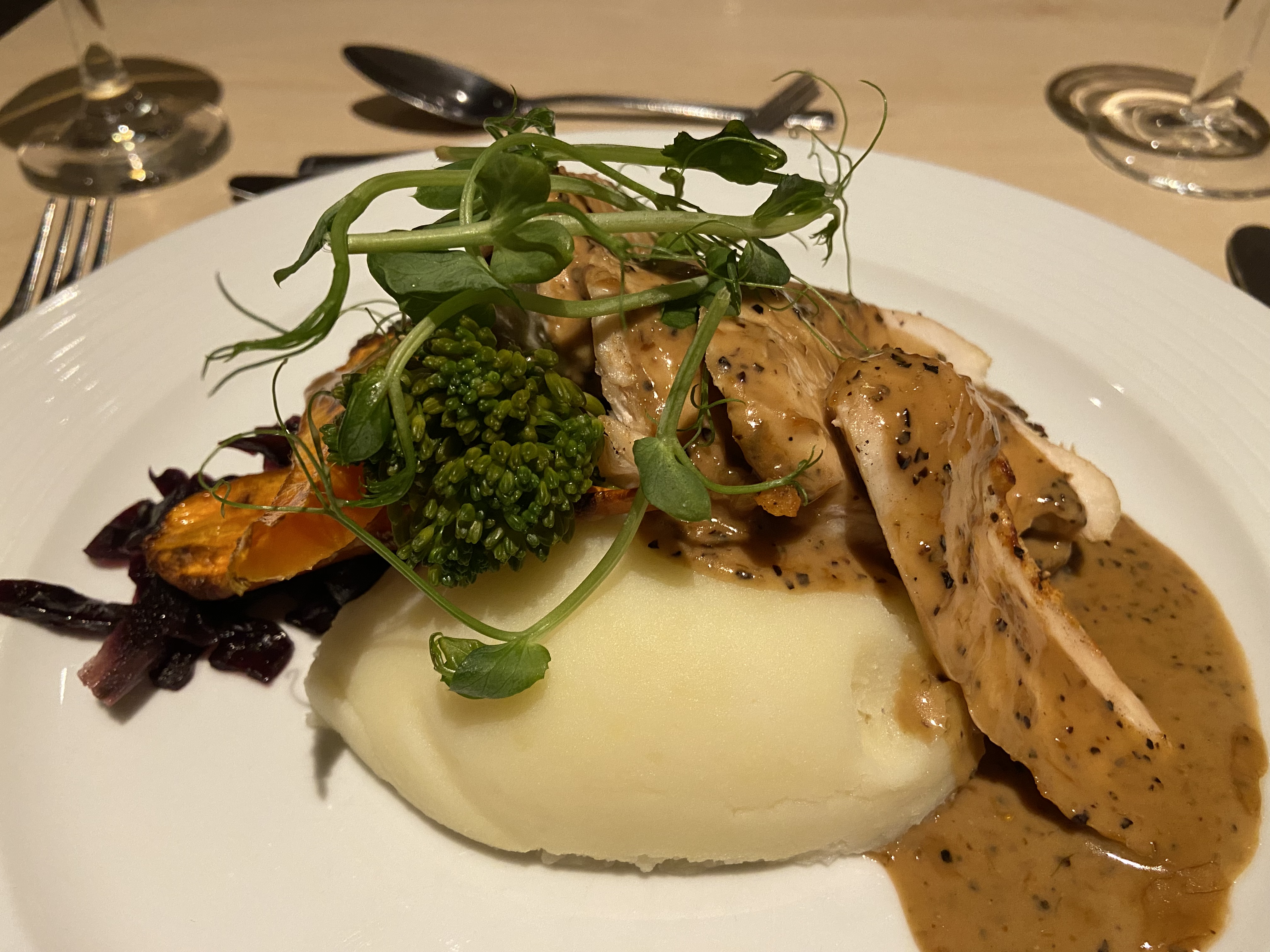
Sea bass with creamed potatoes, prawn and chive butter and seasonal vegetables
Breast of chicken with mash, haggis and peppercorn sauce

… and the piece de resistance…

Strawberry cheesecake

Delicious! See you next week.
Very Expensive Chicken

This week, my fellow senior veterinary inspector, C, took me out on some chicken visits. I guess I may have a poultry vet or two among my readers, but in general, beyond occasional pictures of huge chicken sheds on the news, and the understanding that all chickens came from an egg, most people have probably never thought about where all those chickens come from.

Back in Norway, I worked for a while in a chicken slaughterhouse and I did visit a few broiler units in Norway (a broiler is a chicken specifically raised for meat). During those visits I had to put on protective clothing over my own. This consisted of a full disposable overall with a hood, Wellington boots that were kept inside the shed and a face mask. Biosecurity is very important in any large flock of birds as infections like chicken flu or salmonella can move quickly through a flock with devastating effects.

What I didn’t know then was that the broilers I saw were the end result of an extensive, highly controlled breeding program that took three to four years from start to finish. Obviously I was aware that all the tiny chicks that come onto a broiler unit were bred somewhere, but I hadn’t realized how complicated the process was.


Logically, those broilers must have parents that are used for breeding and egg production, not meat and those flocks are parent flocks. Go back another layer and there are grandparent flocks, then another to the great grandparent flocks. Beyond that there is one final layer – the pedigree or pure line stock, and these are the birds from which all the chicken on your table are originally bred.

Those pedigree stock represent many years of careful genetic selection, which was initially aimed at increasing production levels, but animal welfare is being taken more into account now. When you’re rearing so many birds for food, there’s an extent to which each individual animal doesn’t have much significance, unlike in a small dairy, for example, where the farmer probably knows each individual animal very well. That means that welfare considerations are generally taken at a flock level and breeding birds that stay healthy has to be an important part of that.

As you can probably imagine though, a shed full of those pedigree chickens would be extremely valuable in monetary terms, and even down the chain at the grandparent flock level, each individual chicken is worth a lot more than the birds I saw in those broiler units. The birds C took me out to see were part of a grandparent flock and the inspection was a routine inspection, not linked to any welfare concerns.

I thought the biosecurity with the broilers was good, but before visiting the grandparent unit, we had to answer a whole series of questions about how recently we’d been in contact with other birds and animals and whether we had any symptoms of illness. Any wrong answers and we would have been refused entry. After that, we had to go into a unit where we left all our own clothes at one side, showered thoroughly, then put on clothes that are only used inside the restricted areas of the unit. Even after that, as we entered each individual shed, we had to change boots again. Each shed has its own boots and we had to disinfectant our boots and hands at every stage as we moved in between the houses.

I found the whole process both interesting and exhausting. Taking long Wellington boots on and off and balancing as you step over a barrier to get into them is physically quite demanding, though I imagine it gets easier with practice. Anyway, the birds are valuable enough that I will have to do several visits with another vet before I am allowed out on my own.

I’ve been out on a lot of visits this week, most of them with C. I also had a day long course on statement writing, aimed at ensuring we were capable of writing reports that were high enough quality that if we were asked about them in a courtroom, we wouldn’t find ourselves having to answer complicated questions about how we had arrived at our conclusions that the animals were suffering. This is something I learned quite a lot about in Norway, so it was interesting to see how it all compared. It’s very important, for example, that you give concrete examples. It’s not enough to say that the farmer had allowed the animals to become thirsty. Rather you would include observations about whether there was any water available l whether it was clean, whether there were enough troughs or nipples feeders for all the animals to drink and state that when you did give the animals water, that they stood drinking for x amount of time. If you merely said they were thirsty, three years later, in court, when challenged how you knew, you could easily find yourself floundering to recall the specific details of how you drew that conclusion.
If anything, I’ve been a bit too busy this week. There is still a lot of basic information I need to learn and there are courses I need to take to learn some of the basics. Time management and making sure I understand the underlying principles and context is something I need to be aware of as there is an awful lot of work to get through, but I get frustrated when I try to do tasks and simply don’t have the knowledge I need to tackle them.

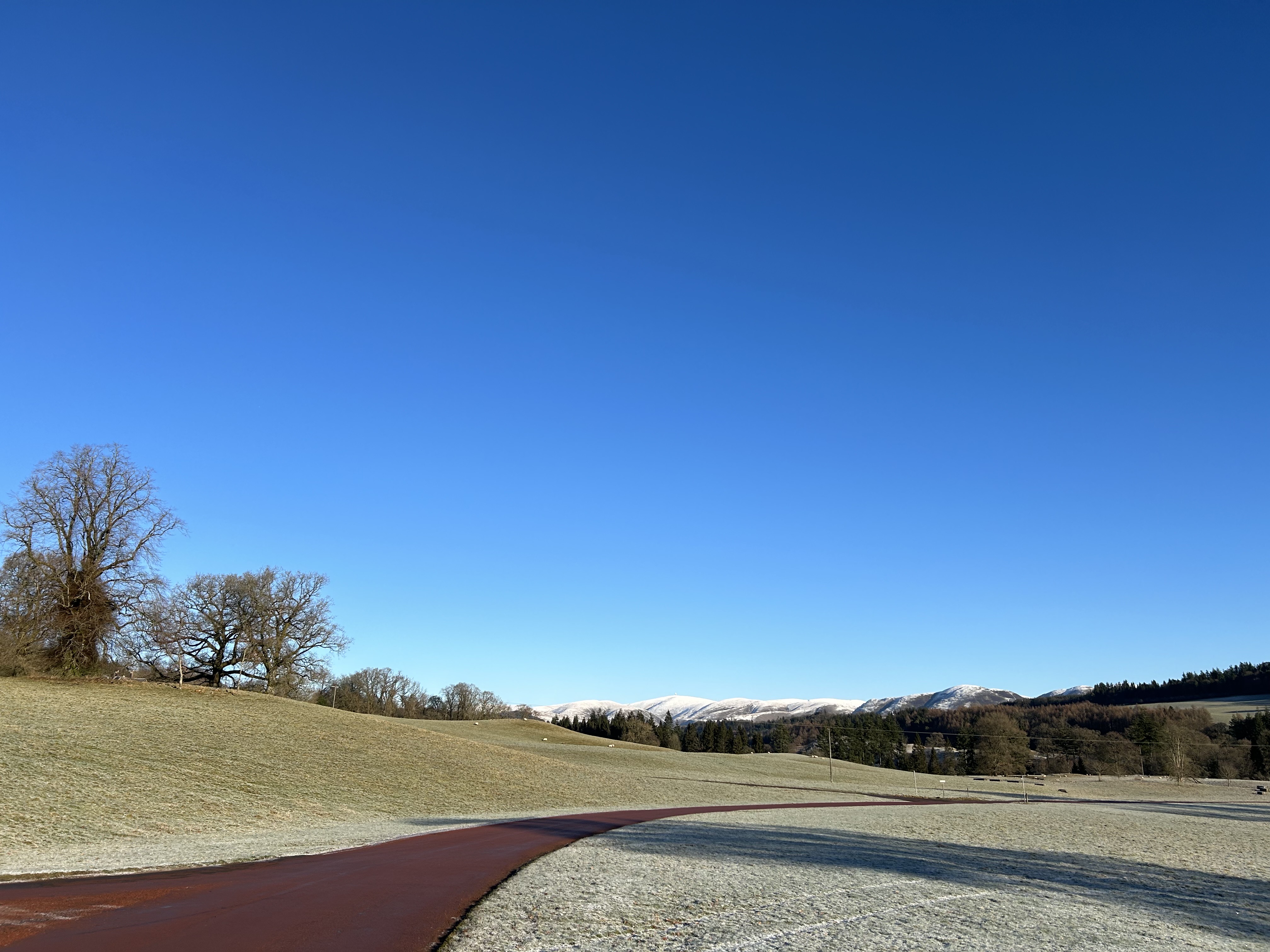
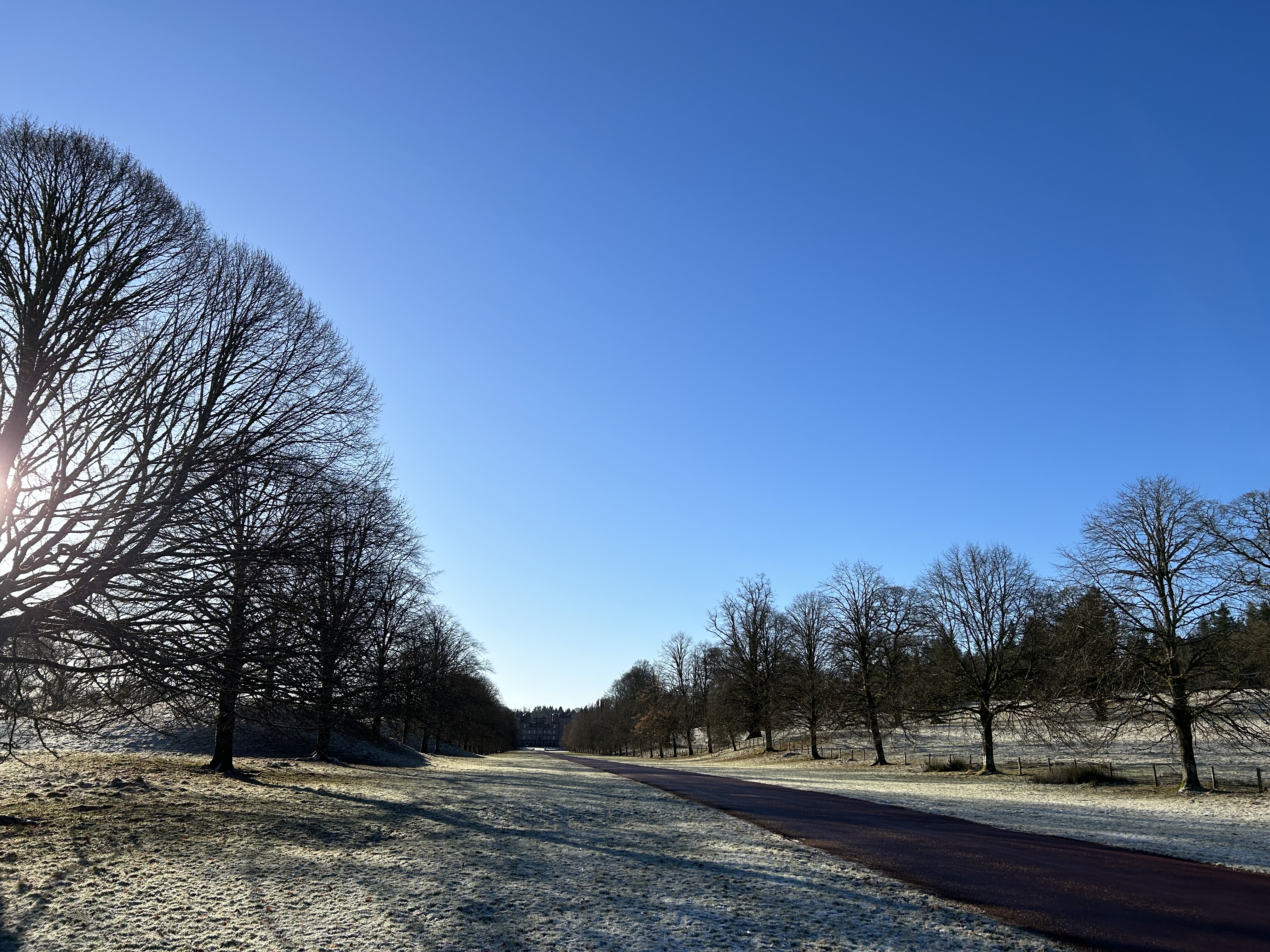
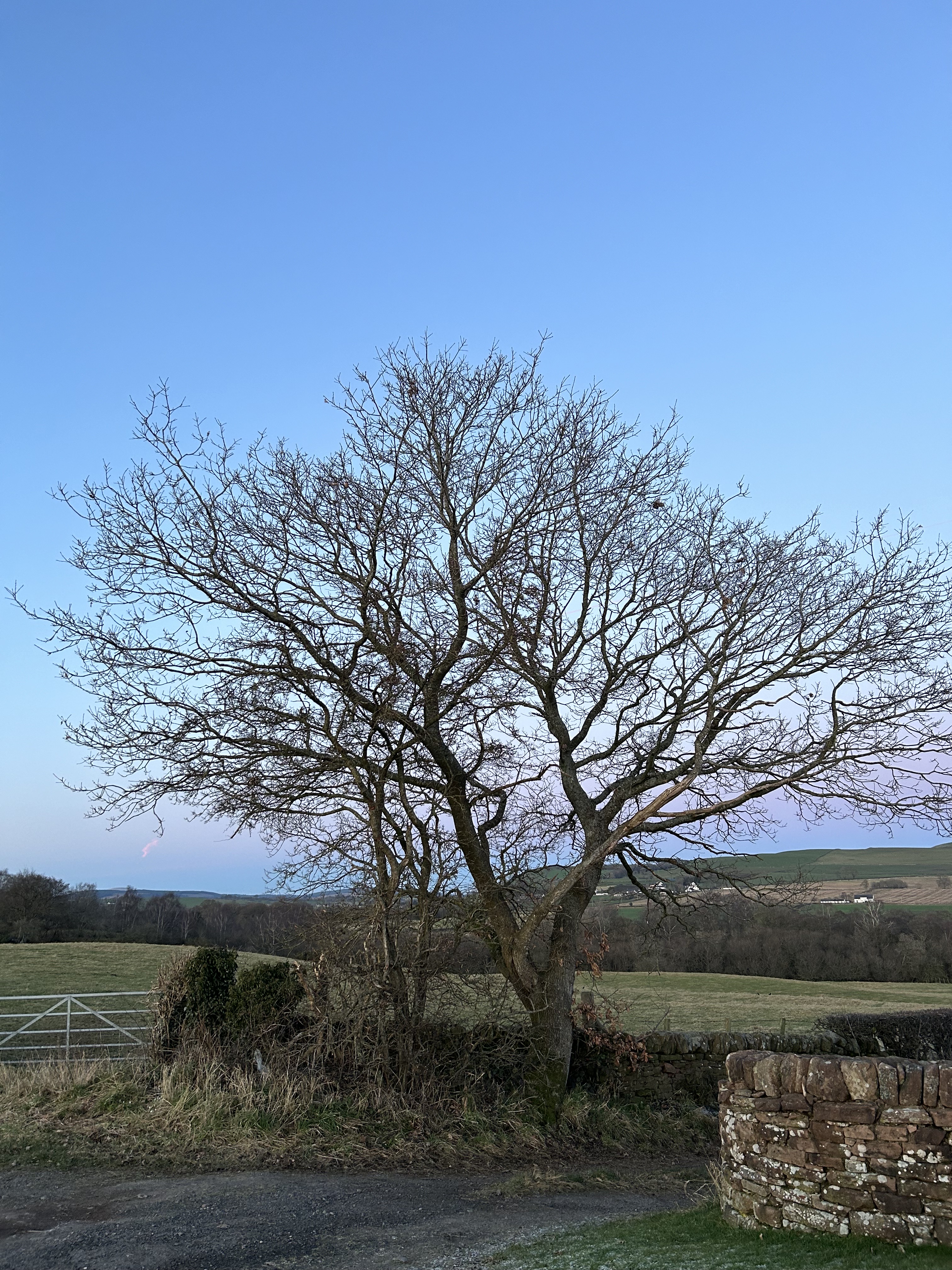
Still it’s all interesting and I know from experience that I will learn it all eventually. And there are some beautiful days and some wonderful scenery. C took me out on a visit and she took me into Drumlanrig Castle on the way there. She tells me there’s a good coffee shop there, but we didn’t have time when we passed through. We did have time to stop and take photos though! These grounds and trees are so British. For me it is wonderfully familiar. It was beautiful in Norway, but it was always wild in a way the great estates in the UK are not.

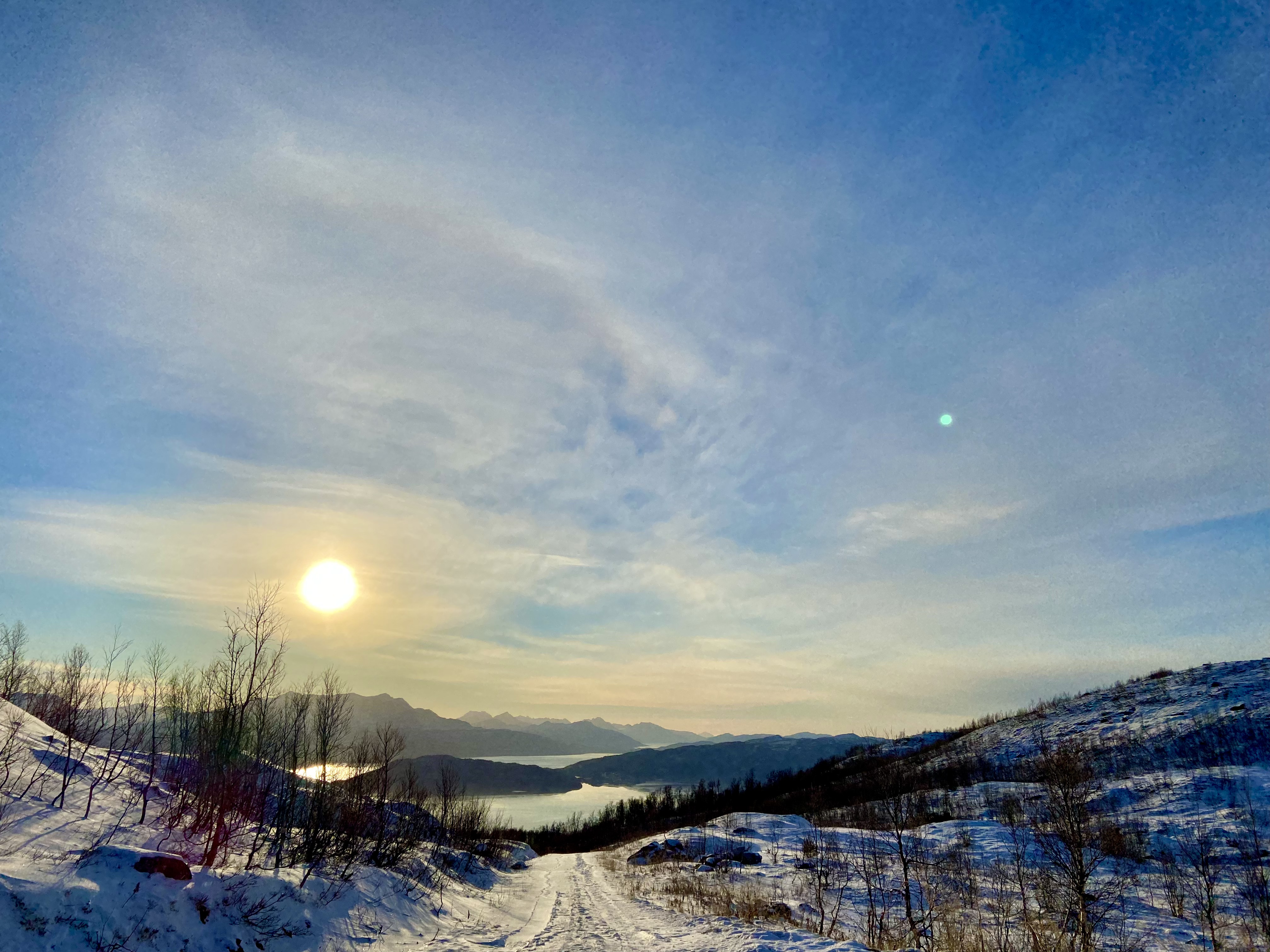
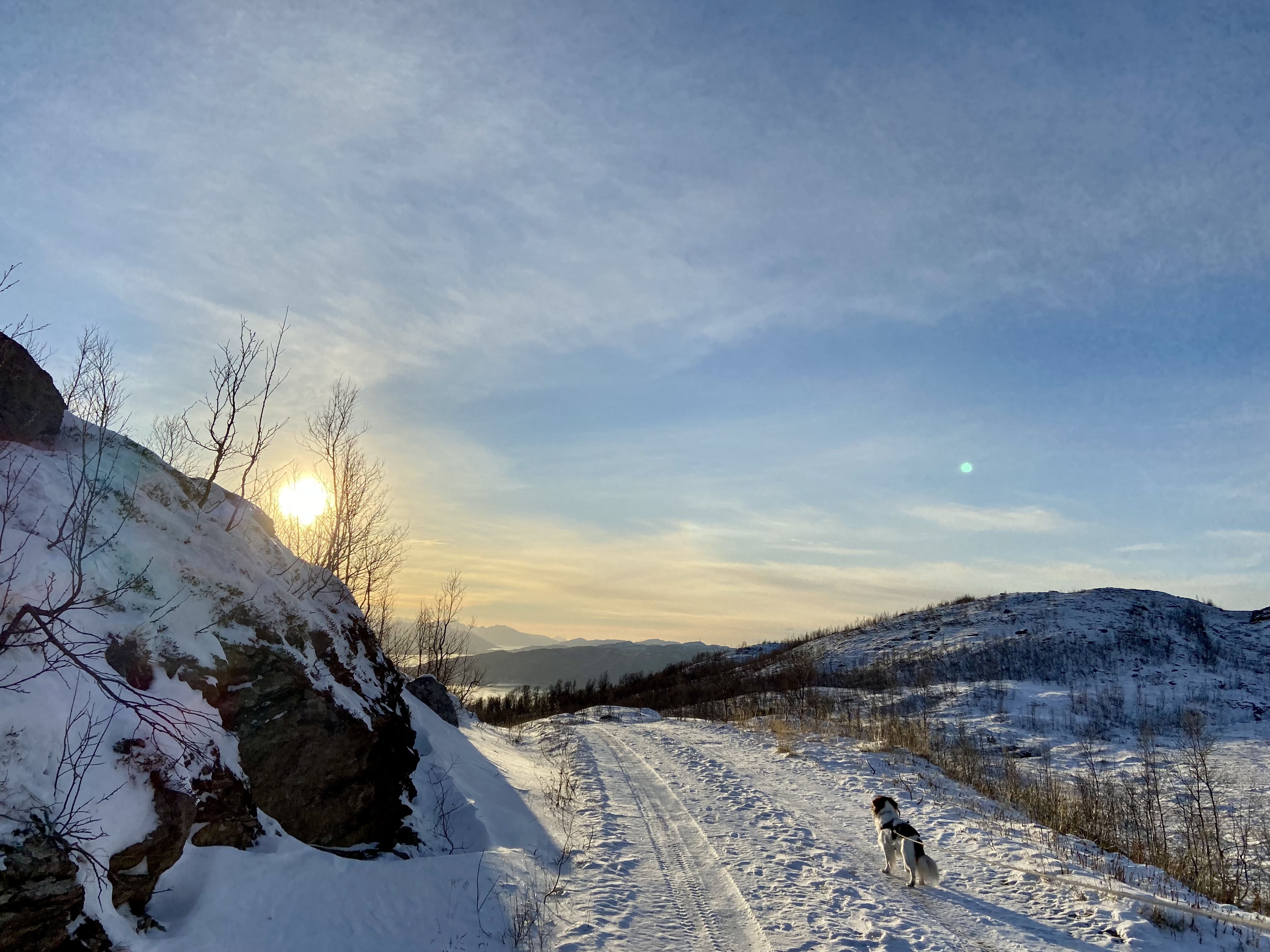
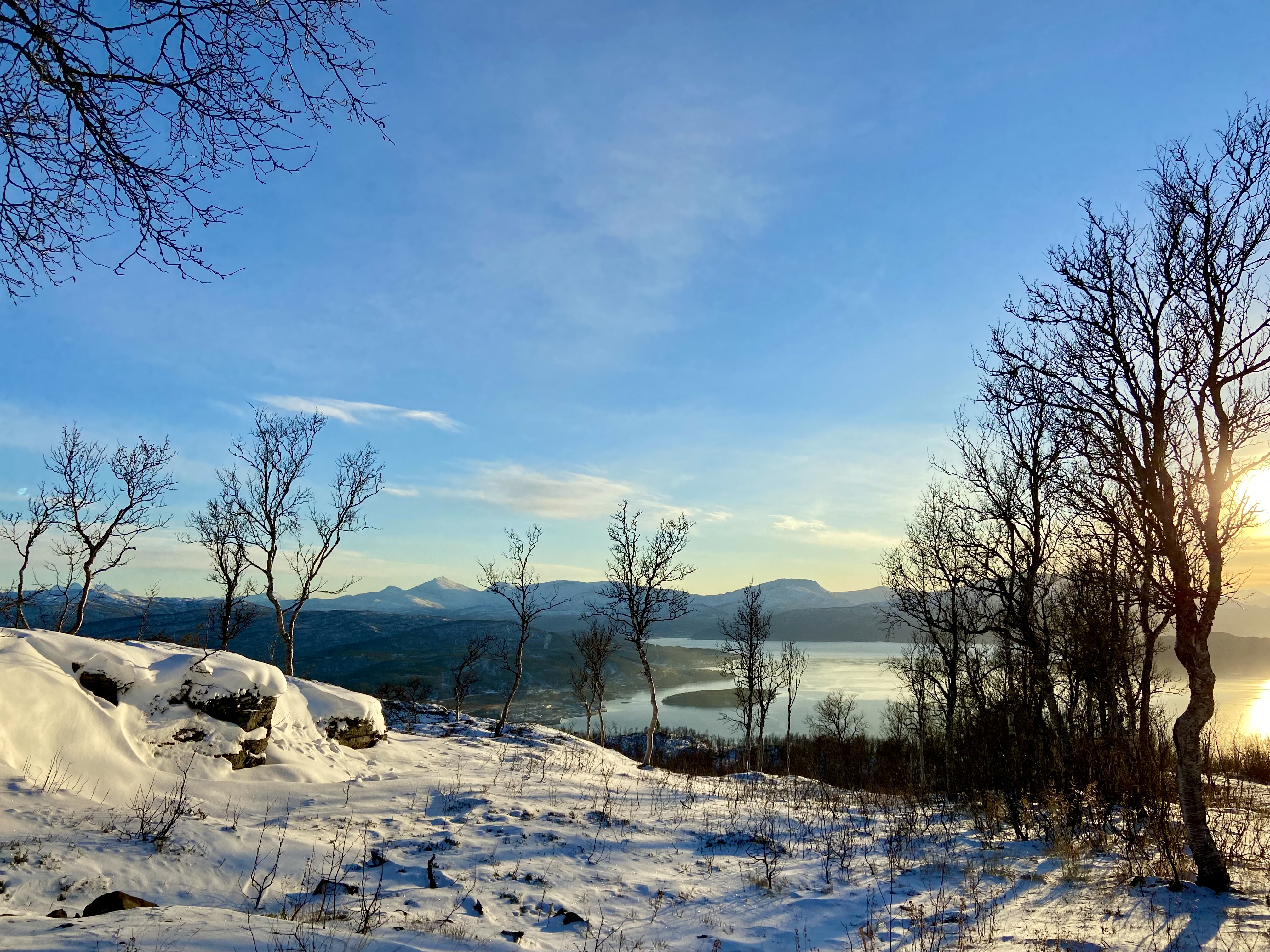
I was also reminded, as I basked in the frosty sunlight, that my friends and family in the far north may not have seen the sun yet this year. Polar night officially ended in Tromsø this week, but sometimes it can be days or even weeks before you catch that first, wonderful peek of the sun’s rays after a month and a half. Love to all my friends up there.

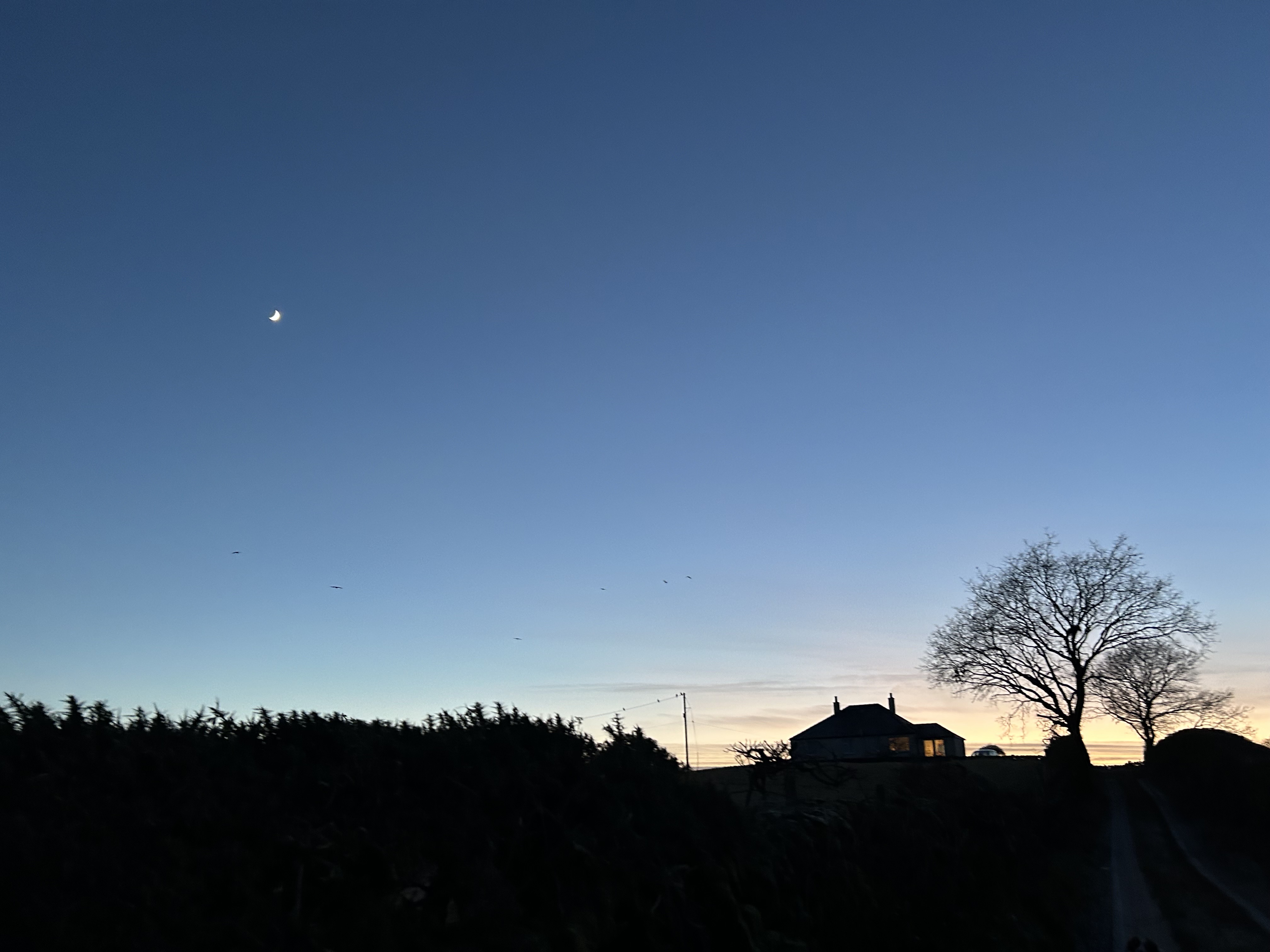
Anyway it’s late so I’m not going to write any more for now, though I am starting to progress through the process of buying a house here in Scotland. It’s quite different to the process in Norway and I will probably say more about that next week, but for now I’ll leave you with some photos from evening walks with Triar around the area where I’m currently living. Have a good week all!

A Latte with a View

A few more things have been sorted out this week. I checked my UK bank account last weekend and my first paycheck has arrived in the bank. That meant I could go into my local branch and set up a standing order for my rent. The teller did point out I could have done it online, and in time I will work on that because I know I’ll have to, but for now it’s a novelty to have an actual branch I can go into and people I can speak to that doesn’t involve a thirty hour drive to get there.

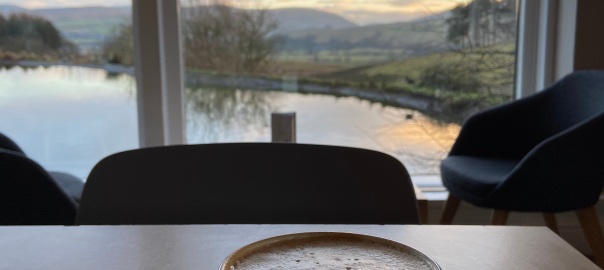
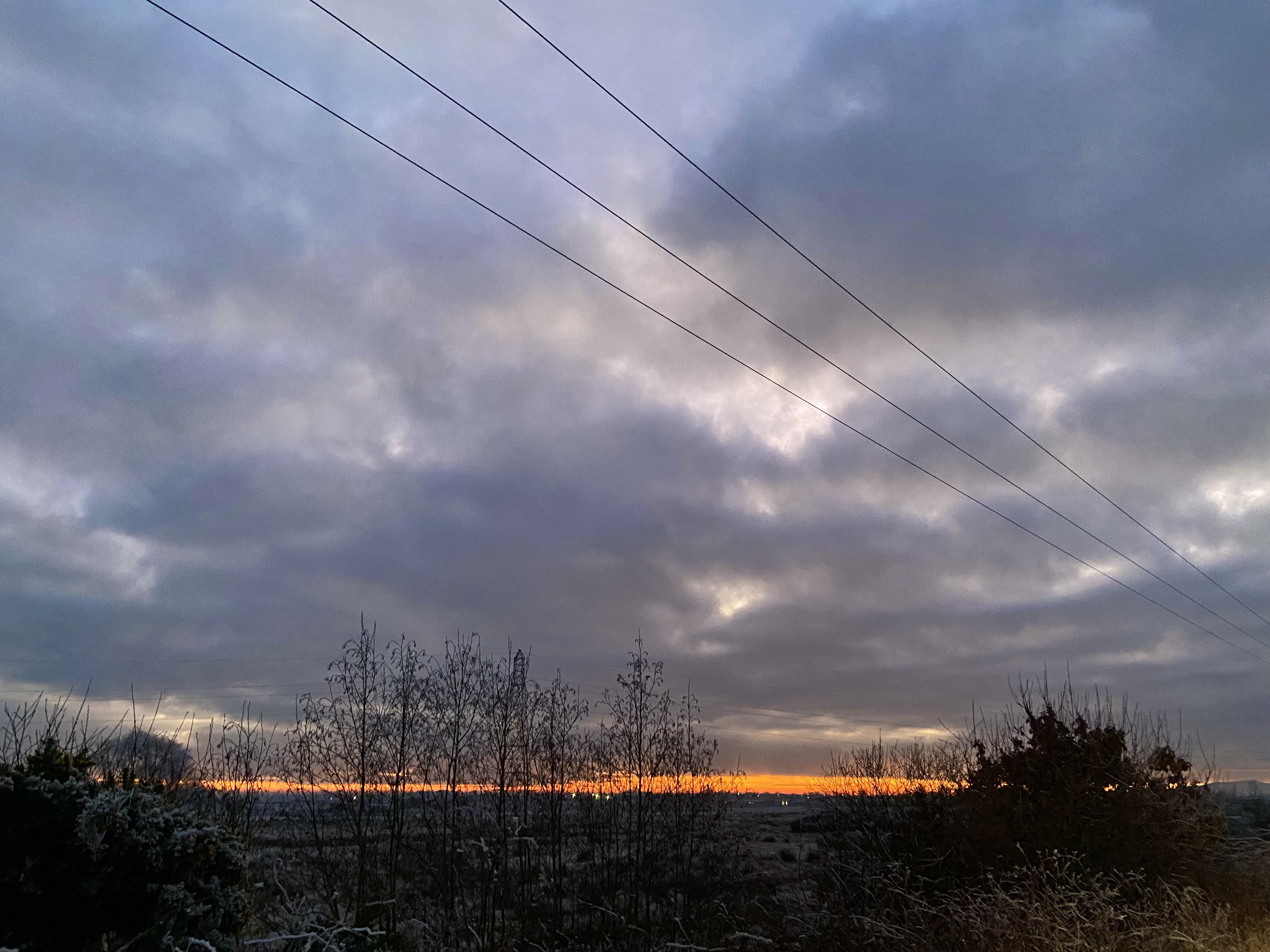
I’m enjoying the small things. I stopped at Tebay services on the way up the M6 and drank a coffee looking at the view. By the time I turned off the motorway and onto the A75, the sunset had turned into a line of liquid fire on the horizon, so I stopped for a moment and stepped out of the car into the frosty evening to capture it.

I completed my first welfare case at the beginning of the week. Hopping from tuft to tuft in a churned up field on a (fortunately) frosty morning taught me how unfit I am. The animals were in good order though, which is the most important thing. My colleague C came with me and she did something I had never once done in Norway, which was to ask the farmer if we could feed back our findings to the person who had complained.

So for the first time ever, I sent an e-mail message to the person who had sent in the report, explaining that what we had seen was normal for extensively farmed animals in Scotland. Muddy fields may not be ideal, but given the climate, they are inevitable and the animals are probably still better off outside. Housing them brings different problems. The law is different here regarding shelter. In Norway, some kind of building with walls on three sides was required. Here the shelter can be from dry stone walls, trees and features of the landscape and that is because the weather here is not so harsh.

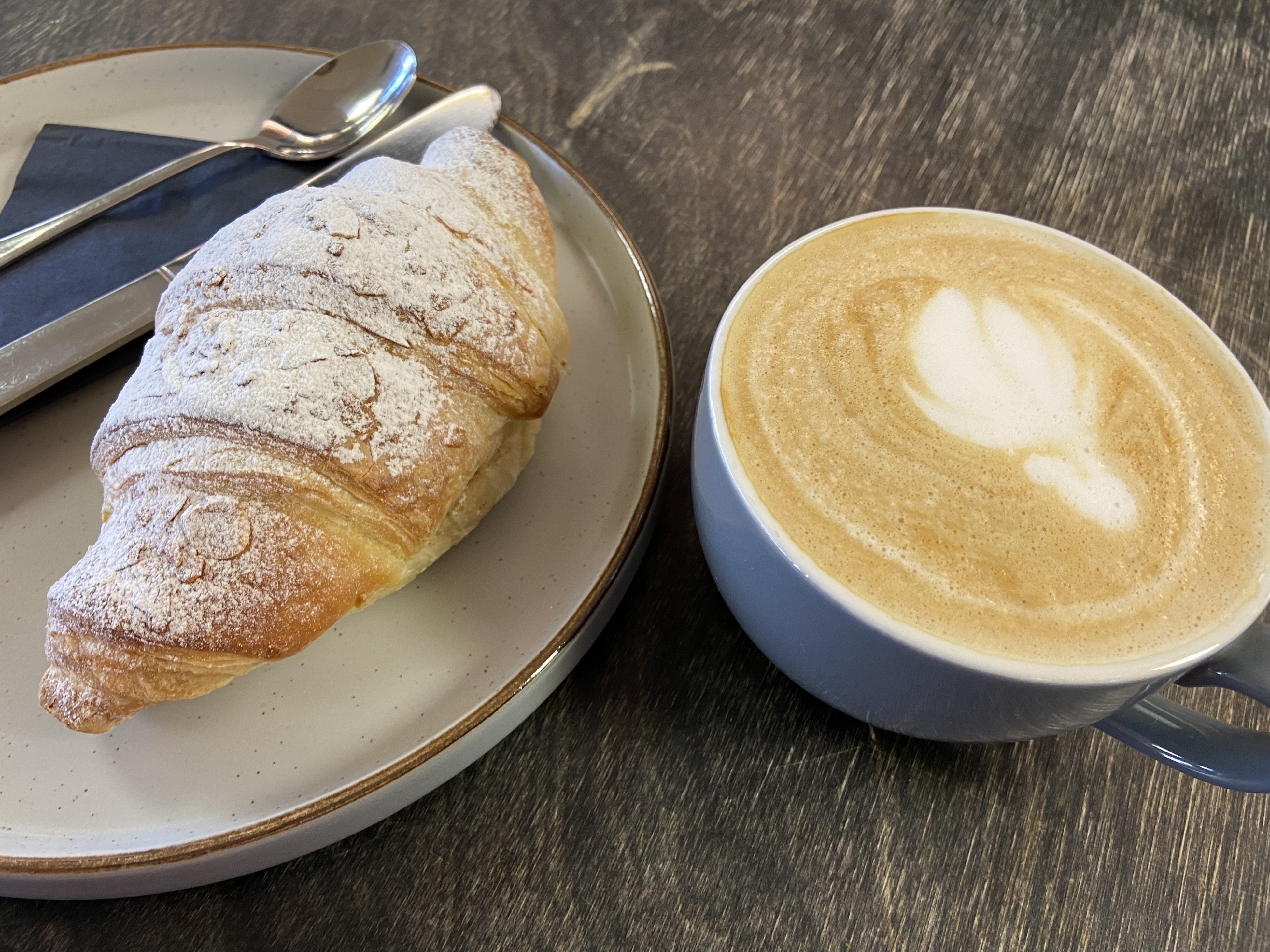
C has been taking me out and about and has also been taking me to a few local haunts for meals along the way. We’d headed out so early for my welfare visit that I hadn’t eaten breakfast. We stopped on the way back to the office and I had coffee and an almond croissant in The Frothy Bike Co. in Dumfries. I’ve never been in a combined bike shop and cafe before, but there’s a first time for everything!

I also did some socializing, meeting up with old friends and new. On Monday evening, I drove up to Larkhall to meet Lara. I worked with Lara before moving to Norway and though I we hadn’t met for years, she was with me online at various significant moments, including helping me to write during Covid and being with me on Facebook messenger as I shakily typed in my first bid on the house I bought. We took a punt on a bar I found on TripAdvisor – the Applebank Inn. The food was good, the company great. Hopefully there will be a repeat performance in due course.

I also attended a writers group on Wednesday. It’s six months since I did any writing other than this blog and I made a pact with someone else who was struggling to make a start before the next meeting in two weeks time.

Yesterday I finally got Wi-Fi at home, and along with it, Netflix. Last night, I binge watched Fool Me Once., though I haven’t reached the end. This weekend will be the first time I’ve stayed in Dumfries, rather than heading down to Yorkshire. I have made myself a shopping list, which includes items like measuring jugs and a chest of drawers. Half my life is still in boxes at the moment and I need to find a cooking and eating regime that works for one person. I suppose I’d better buy in a few stock food items as well. They keep threatening snow on the weather forecasts and though getting snowed in here is highly unlikely, I’d look a bit of a numpty if I moved down from the Arctic, only to go hungry in Southwest Scotland because I didn’t buy in a few cans of beans.

Have a good week and thanks for reading!

Into the Polar Night

Sunrise/sunset: Down all day

I’ve been laid low with a cold this week. Fortunately, I started feeling much better yesterday, but I was off work on Monday, then spent Tuesday, Wednesday and Thursday working from home.

I attended an online course over those three days, the subject being animal welfare during transport. It was an excellent course, Europe wide and run by the BTSF (Better Training for Safer Food) Academy . I was one of only two participants from Norway.

Transporting animals can cause huge welfare issues. Even for the relatively short journeys the animals take here when coming into the abattoir (transportation is limited to eight hours – it was quite eye opening how far some animals are being transported within and from the EU) there are significant welfare issues. It’s vital to keep on top of them, so if I’m taking part of the responsibility for that, which I hope I will be within the next year, I want to have as much knowledge as I can. Like the Arctic Council/One Health conference a couple of weeks back, this was also in English. They also gave pointers to several other groups with online information about animal welfare relating to European law (most of the Norwegian welfare rules are based around the EU rules) so I can hopefully engage in some very useful reading.

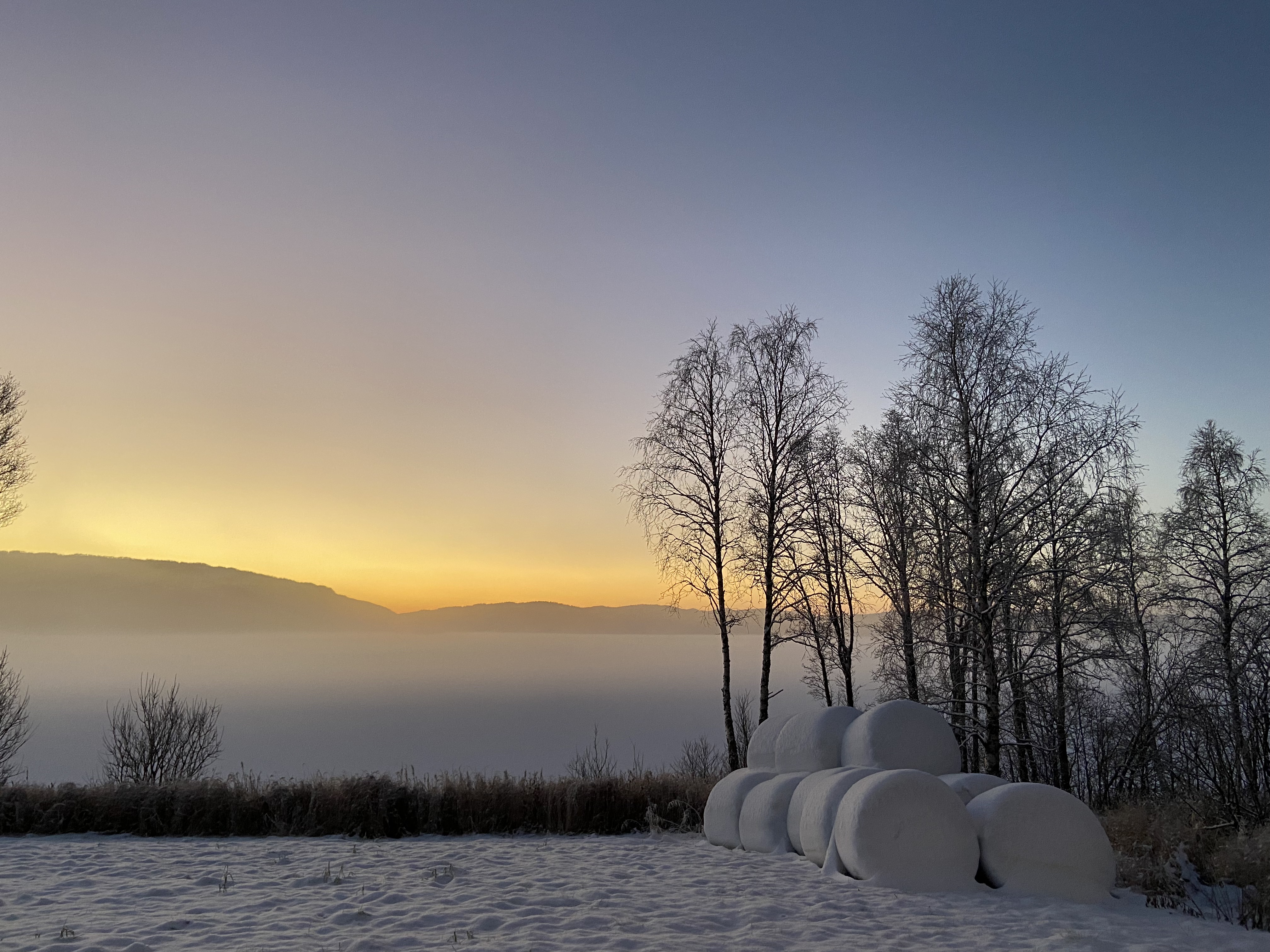
Driving from Bardufoss to Finnsnes – mist rising over the newly frozen lake

Next week is going to be very busy. There are some tough cases to catch up on and a couple of goat blood tests that have to be carried out before the end of the year, so I will be out on follow-up visits with Birgit and Thomas this week, as well as visiting some goats to test them for brucellosis (another infection that can pass between animals and people) along with (hopefully) finishing up some paperwork.

I hope that you have been enjoying the advent calendar. It’s difficult to know what to include, but hopefully there will be a mix of scenery and scenes that strike me as I go about my daily life here. My mum has sent me an online advent calendar from Jacquie Lawson which I am very much enjoying.

John has also paid for access to the Norwegian TV2 channel so that we can watch The Julekalender. The Julekalender is a Norwegian advent staple, very much loved here in Norway, but I’ve only seen snippets of it before. It was created in 1994 (following on from a Danish version in 1991) and an episode is broadcast each day in the lead up to Christmas. It tells the story of Nisser (elves) who were driven out of Norway to the US by some evil, vampire like beings called the Nåså. An elder Nisser (good old Gammel Nok) is dying as the key to the music box the keeps him alive is missing. He calls for three, brave, younger Nisser to find it. So far, we have seen these three brave elves returning from the US to Norway and finding an old Nisser cave. Their plane crashed and for some reason, they are carrying around the propeller (which is terribly bent) while speaking in Norwenglish, which is a wonderful blending of Norwegian and English, where the words and sentence structure are mangled together. Oh and they keep breaking into a catchy song about how hard it is to be a Nisserman, despite the fact that they spent much of the first two episodes sleeping. I’m quite glad I’ve been in Norway for fourteen years before seeing it. There are lots of Norwegian “in jokes” that need context. It’s set in Trondelag, for example, which is widely considered to be hillbilly country, or perhaps in terms of England, roughly equivalent to Norfolk. Anyway, I’m already looking forward to the next episode. It’s lovely to do things together in the lead up to Christmas.

Have a good week.

Triar is getting festive in his red, Christmas jumper

Troubled Waters

Sunrise/sunset: Up all day.

This is going to be a difficult post to write, not least because of all the things I can’t say. It’s been a long week, despite the fact that Thursday was a bank holiday in Norway. The case started last week with a phone call, took up most of my working hours this week, and doubtless will be going on for some time. As regular readers will know, I deal with animal welfare issues, and obviously that can sometimes be harrowing. Very occasionally, Mattilsynet’s employees have to deal with cases that are so tragic that it’s almost unbearable. Back when I started, I read a case so awful that just reading about it made me cry, and it took more than one session before I could read it right through to the end. I found myself hoping it would never happen on my watch, hoping that I could prevent it by listening to everything and acting fast, but despite all those thoughts, it happened anyway.

The police are involved, and so in a lot of ways, the case is currently out of my hands. My task (with others from Mattilsynet and Dyrevernnemda) has mostly been around collecting evidence. Thomas has taken charge, and for that I am eternally grateful. One of the oddest things has been the way the world just keeps going on. Summer is moving in and the world is filled with life and growth. I sat in the car, gazing out at a snow-capped mountain behind lime-green spring trees, as I took a break to drink some water and gather myself together between sessions in the barn. I could hear the birds singing and the gentle summer sound of sheep bells in the fields nearby and the only jarring note in the beautiful scene was the fluorescent yellow of the police car parked on the farm road in front of me.

Yesterday, I drove to Tromsø with some samples in the car and the world looked more beautiful than ever. The whole thing is surreal. Oddly enough, there was a jarring note along the way. As the sun heats up the world, the snow up on the mountains starts to melt. The water rushes down, faster and faster and I saw many swollen waterfalls cascading down the steep slopes that rose up, sometimes almost vertically from the roadside. They sparkled in the sunshine, clear water, rushing down to the sea. So when I saw what was almost a flow of mud flooding down a rock face, it gave me pause. It wasn’t a lot, but it was very different from all the other water I’d seen.

I live in a house in an area where there are obviously concerns about landslides. There are metal monitors sticking up out of the ground all along the road, and very close to the house I live in. I have read about possible warning signs, one of which was when muddy water is coming out of the ground. The problem with reading things online, as I know from working as a vet, is often one of scale and context. I think most people know that if you read about headaches online, you might easily conclude you have a brain tumour, when actually you’re stressed or dehydrated. I called a friend who is a geologist and asked if I could send a video for him to look at, but he advised me it was better to call the police and let them assess it. Better a warning for something not serious, than failing to warn when it was. Being on the other side of that equation, I know that there can sometimes be a danger in too many warnings as they can lead to complacency, but the possibility that there might be houses below was in my mind, and so I called the police and offered to send a video.

I then drove on, dropped off my evidence at the lab and checked my e-mails, only to find that the one I had sent to the police hadn’t gone. I must have taken down the address wrongly. I called my friend back – I had sent the video to him as well, but there was no reply. I had given the police the exact geolocation (thanks to a photo app that I use to record cases at work) but I had realised I had wrongly mentioned the E6, when I had left that and joined the E8. Where does public duty begin and end? Always a difficult question, and at the moment, my mind is unquiet enough to be clouding judgement. I was in Tromsø and it wasn’t far to the police station. Should I go in and correct what I had said and give them the picture and film I had taken?

Fortunately, my friend got back to me quite quickly. From a quick viewing of a four second film, he was able to tell me that the rock face itself had been blasted extensively, and was therefore probably solid, that the soil cover above the rock was thin, that the trees and plants looked young, so perhaps the land had undergone a slip only four or five years earlier and that the undergrowth was thick, which would help with stability. He said it was good to have reported it, as I had no way of knowing what was going on higher up the slope, and that it was better that it could be assessed by someone local, but that the location details I had given were probably good enough. He didn’t think there was a serious risk at the moment. How good it was to speak to someone with genuine knowledge. I was truly grateful and felt the extra weight lift from my mind.

I haven’t many photos, but I did take some driving home yesterday, including this one of a north of Norway traffic jam.

Reindeer crossing the E6 road south of Tromsø

I had thought of using it as the photo at the top of the blog, but it seems unfair to lure people in with a photo of something so cheery in a blog that’s filled with troubled thoughts, so I went with a calm picture of the late evening sun over Senja. I won’t be looking at that view for too much longer, and so it seems precious right now. The dissonant feelings grew as I listened to the news flash on the radio. “Police in are dealing with a case where more than seventy dead animals were found on a farm in Mid-Troms”. My case. My responsibility. Bad enough to make the national news.

I don’t know how to deal with these feelings, other than letting time pass. Bizarrely, I felt a sudden desire to play the piano, which I haven’t really done since I left home, thirty five years ago. There was an old music sheet in the piano stool at home. My parents hadn’t bought it, at least not directly. They bought a piano, with one of those old-fashioned stools where the seat lifted and the previous owners had left some music inside. “Drink to Me Only With Thine Eyes” was one of them and I wanted to play it again. It’s a beautiful song and easily arranged. My sister has the piano now, and though it was a long shot, I e-mailed her and asked if that old sheet music was still there. It was.

And so she scanned it and sent it and I went to the office and printed it out, and so I sat last night on the electric piano I bought for my son after we’d moved up here, and I played music from years ago, and somehow it was a comfort. My sister and I hadn’t spoken for ages, but now we are chatting again, and that’s a comfort too. I have a wonderful family, and in that I’m very lucky.

Anyway, there’s no good way to round this off, so I will leave it here for now. Sometimes life is difficult, but the sun comes out again. All I can do at the moment is gather the best evidence I can and help the police and hope that something good comes of all of this, which it might. There will probably never be a day when there isn’t some bastard who sees animal life as expendable and suffering as irrelevant, but all we can do is keep on fighting it, one case at a time. Thank you for reading.

Wet, Wet, Wet

Sunrise/sunset: Down all day.

I was sure we were going to have a white Christmas this year. There has been snow on the ground for weeks and the temperatures were securely in double minus figures, or so I thought. And then a day of rain appeared on my weather forecast app. The temperature was to bounce right up, round about the date that Anna was due to come home on Wednesday the 15th. When the first day appeared, I hoped they’d got it wrong. And the temperature wasn’t to go that high. Wholly possible they’d be out by a couple of degrees and we’d have snow instead.

But then another day of forecasted rain appeared and another. The temperature was higher too. This was the screenshot I sent to Anna last Sunday.

They don’t use much grit on the pavements and roads round here. Mostly they concentrate on keeping them relatively clear of snow. So when I went out on Wednesday morning and saw that the pavements, roads and carparks were densely strewn with the small stones they use in place of salt and grit, I knew that they thought that a major thaw was on the way. This was the carpark at work. They may not grit often, but when they do, they do a proper job!

Still, life had to go on. Monday and Tuesday this week were a little hair-raising. On the Friday of the week before, I felt like everything was well on track. I’d done three visits and written two reports. We have to send them past a colleague first for quality control and then an official quality control team checks them. After that, they go to my boss, who sends them out. These two reports were past the checks and I’d sent them to Hilde, so all I had left was one report to write. It was complicated and I would need help, but I had four days to do it. So when Line sent a shout out to see if someone could translate an official document from Norwegian to English, I said that I would be happy to do so. Kristen, my colleague in Storslett had got in first, but I indicated that if anything cropped up, I would be more than willing to step in.

My peace was slightly disturbed late on Friday afternoon when, for the first time ever, Hilde sent back my two reports for amendment. It didn’t sound like anything too major, but I had to include a short summary of what Gry had observed. Still, hopefully Thomas would help me with that.

So I wasn’t too worried when I opened up my case inbox on Monday morning. I had two reports to amend and the complicated case to write up, but I had until Thursday. But when I looked through the list, I saw another case had come in. Some cases you can leave for a few days. For example, if someone isn’t walking their dog often enough, it’ll probably be okay if you leave it a week or two. But if someone is leaving their animals outside in all kinds of weather, without food or water, then “It’ll be fine, I’ll leave it until after my holiday,” really isn’t an option. And of course, it was one of those cases.

To make matters worse, Kristen had bowed out of the translation. So now I had three reports, a new case, and a complicated document to wade through.

Thomas came to the rescue. He could fit in my new case on Tuesday, if I wanted. Hilde was on holiday by now and he was having to sort out all the paperwork around an outbreak of strangles in a horse in our region, but he could fit me in between that, a bunch of reindeer rampaging around a housing estate over Tromsø way, and a case of his own that he was tackling on Wednesday. He also found the time to help me sort out my two returned reports.

Anyway, all’s well that ends well. I stayed late on Monday evening to get the translation done. I asked Line to help me with my complicated case report and she made everything so wonderfully clear that by the time I sent it off for the first check with another colleague, there were almost no errors. Hooray for that! And to my relief, the case on Tuesday turned out to be much less complicated than I had feared. So I was able to collect Anna from the airport on Wednesday afternoon.

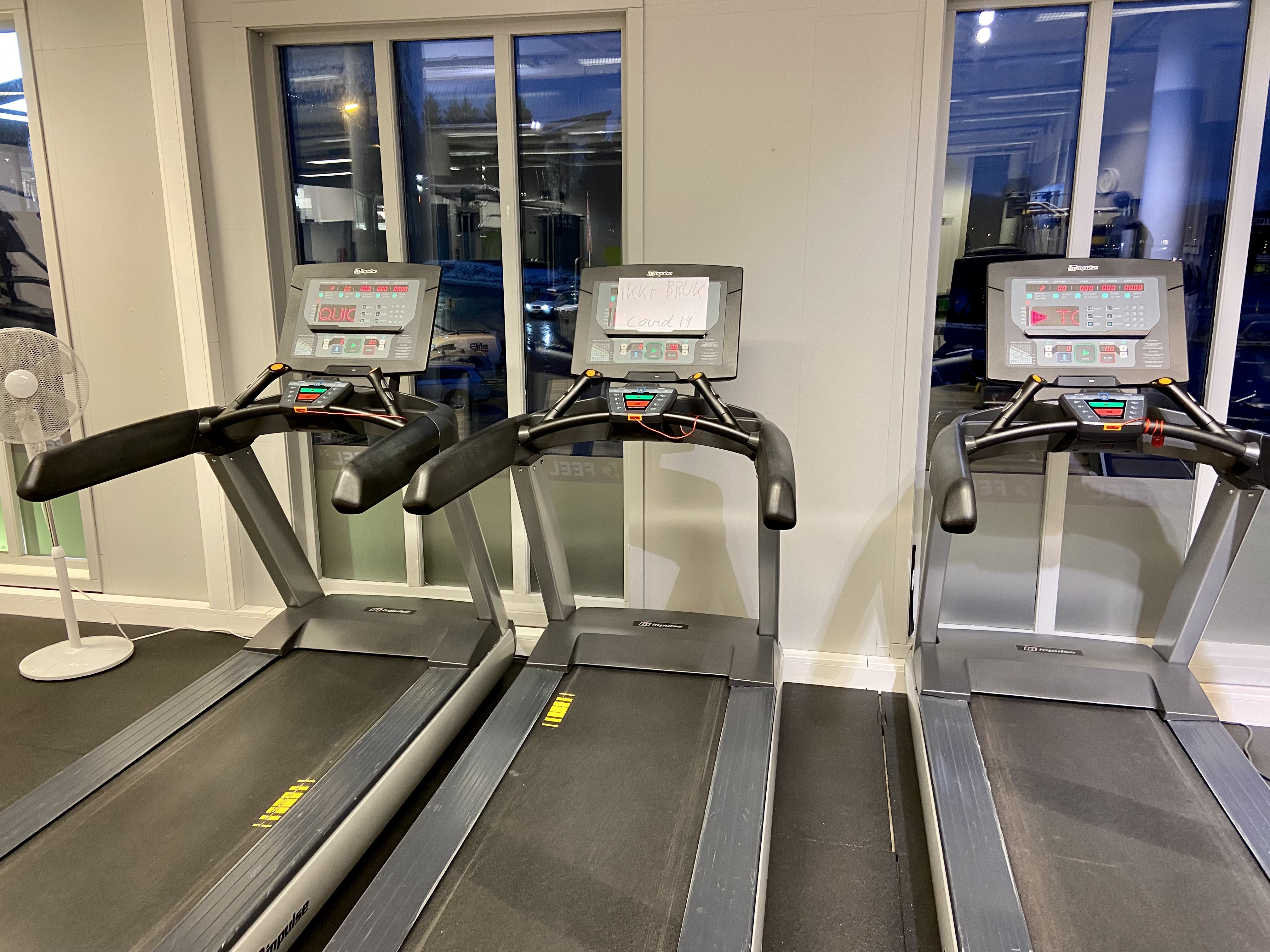
And all this was going on against the backdrop of increasing rumblings about locking down again due to Omicron. From next week, Andrew will be homeschooling. Working from home is now the norm again. And when I went to the gym, I was surprised to see notices on some of the running machines that said not to use them. For a bizarre moment, I wondered whether they had been contaminated somehow. Had someone with Covid used them? Should I leave quickly and rush home? And then I remembered that it was nothing to do with that. It was just a return to the stricter distancing rules. The machines were too close together. Similar notices will have reappeared on pub and restaurant seats and in the waiting room at the doctors. Life can continue for now… but don’t get too close.

So there are no lovely pictures of pink and blue skies this week. The garden is a muddy mess. There is a tiny ray of hope on the weather forecast. It’s to turn cold again from Monday and there might be a little snow on Wednesday. I live in hope! Even if it doesn’t snow, Anna got here safely from the UK. And I’m on holiday for a week and there are presents to wrap and cakes to make.

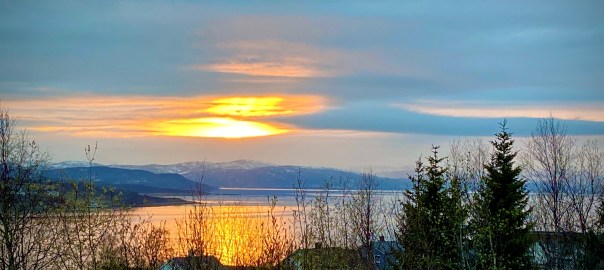
I’ll leave you with a picture I took on Thursday evening when I was out walking Triar. It had been raining, but the ground has had weeks to become very chilly and huge chunks of ice take a long time to disperse. The sky cleared briefly and the moon was shining through. I loved the way the blue moonlight gleamed on the frozen waterfall. Whatever the weather, there is always beauty to be found somewhere.

Welfare

Sunrise/sunset: Down all day.

I’m on holiday from Friday next week, so there is a sense of keeping going until then. I’m very much looking forward to it. The past week has been both busy and interesting though, and has opened up my mind to thoughts of how I might make a difference. It started out with a meeting on Monday of a group of people who want to try to improve animal welfare in our area by improving the lives of those who keep them. There used to be many more small scale farms in Norway. Lots of people followed a traditional way of life where they had a few animals that were out in the summer and housed in a barn near the house in winter time. It became more difficult to make a living from small scale farming, so increasingly people had to work alongside their animal commitments.

But keeping animals is a tie. It will be hard enough to find someone responsible to look after Triar and the guinea pigs when I go on holiday. Harder still to find someone to look after fifty or a hundred sheep, or a few cows, especially if they need milking. So the networks that farmers used to have, where there were neighbours nearby who could help out in a crisis have, to an extent, disappeared.

And it’s not just about the work. By their nature, farms are physically isolated. You need land around you to allow you to feed your flock or herd. There isn’t a pub culture in Norway, like there is in the UK, and even if there was, here in the north of Norway, the distances between towns can be huge. And so the meeting was about trying to build new networks to support those who remain.

The social side of my job is something that I find very interesting. Obviously there are many things that can drive animal welfare up or down, but mental health is definitely there among them. Thomas has told me about his involvement in one such case, where he arrived on a farm to find the owner had almost given up hope, and he was instrumental in helping him find a way through. And Thomas is rightly proud of having done that. But to help more people, we need to reach more of them.

The meeting ended with a plan for more meetings, but I was due to go out on a welfare visit with Gry from Dyrevernsnemda later in the week. Remembering the potential bomtur debacle from two weeks ago, I compiled a list of all the sheep and goat farms in the surrounding area.

We ended up visiting two farmers on the list, in addition to the welfare investigation. We carried “Skrapesjuketilsyn” where we discuss the symptoms of Scrapie and the monitoring systems in place to track it. One of the farmers was obviously very happy to see us. He knew Gry already (Gry is a key member of another farming network) but when I introduced myself and said I was from Scotland, he said how wonderful it was to have someone who wanted to come to the north of Norway and was interested in working with sheep welfare. I confess, I am filled with inspiration. I would love, as a Mattilsynet vet, to be a part of a network helping the local sheep farming community. But I do have to bear in mind the constraints of budget. Next week, or in the new year, I will have to have a chat with Hilde about what I can achieve within the current economic climate.

Tuesday was also one of those rather unusual Mattilsynet days. As regular readers will know, Mattilsynet runs the OK program, where we check food producing animal breeds for various infectious diseases and for foreign or banned substances. Ammar had planned to go out and get a urine sample from a cow, but he was unable to attend himself, so he rang me on Monday afternoon and asked me to step in. And so on Tuesday morning, I drove out to a farm and spent an hour in a byre behind a row of cows, waiting for one of them to oblige.

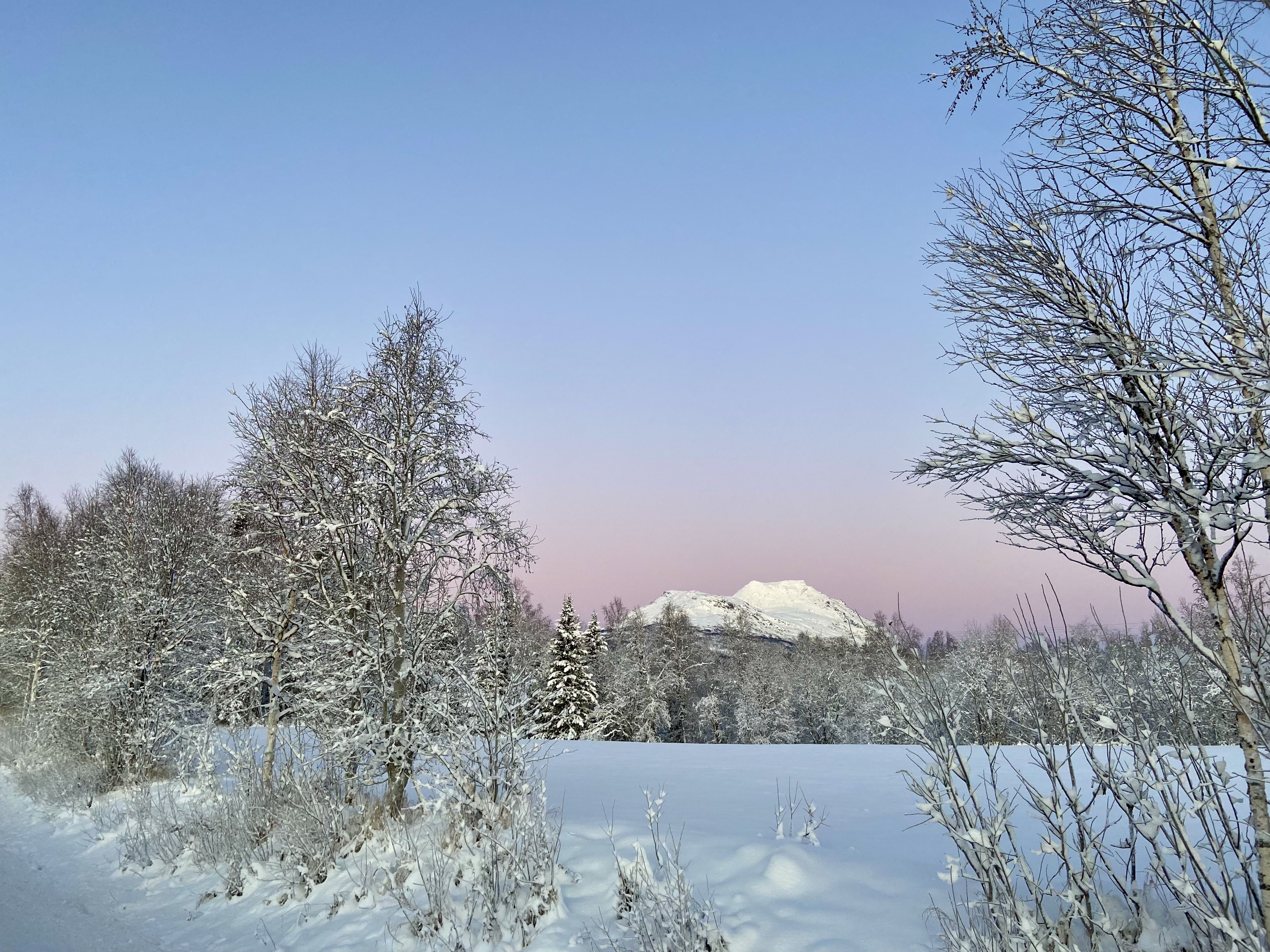
Polar night, snowy mountain under a blue and pink sky – taken on the drive out on Tuesday

There were a few false starts involved. Even the tamest cows are wary creatures when strangers come into their space. And of course, I was a stranger wearing a very odd blue overall and huge white boot covers with bows on them, so they were wary to begin with. One or two of them lifted their tails and started to pee, but as soon as I moved towards them, they gave me a very offended look and stopped again. Fortunately, I eventually managed it, but not without some very amused thoughts about the sheer glamour of my job. Since then Konstantin has told me there is a way to get the cows to urinate, so next time, perhaps I will be quicker, but either way, spending time around cows is something I very much enjoy, whatever the task.

The road to Bardufoss

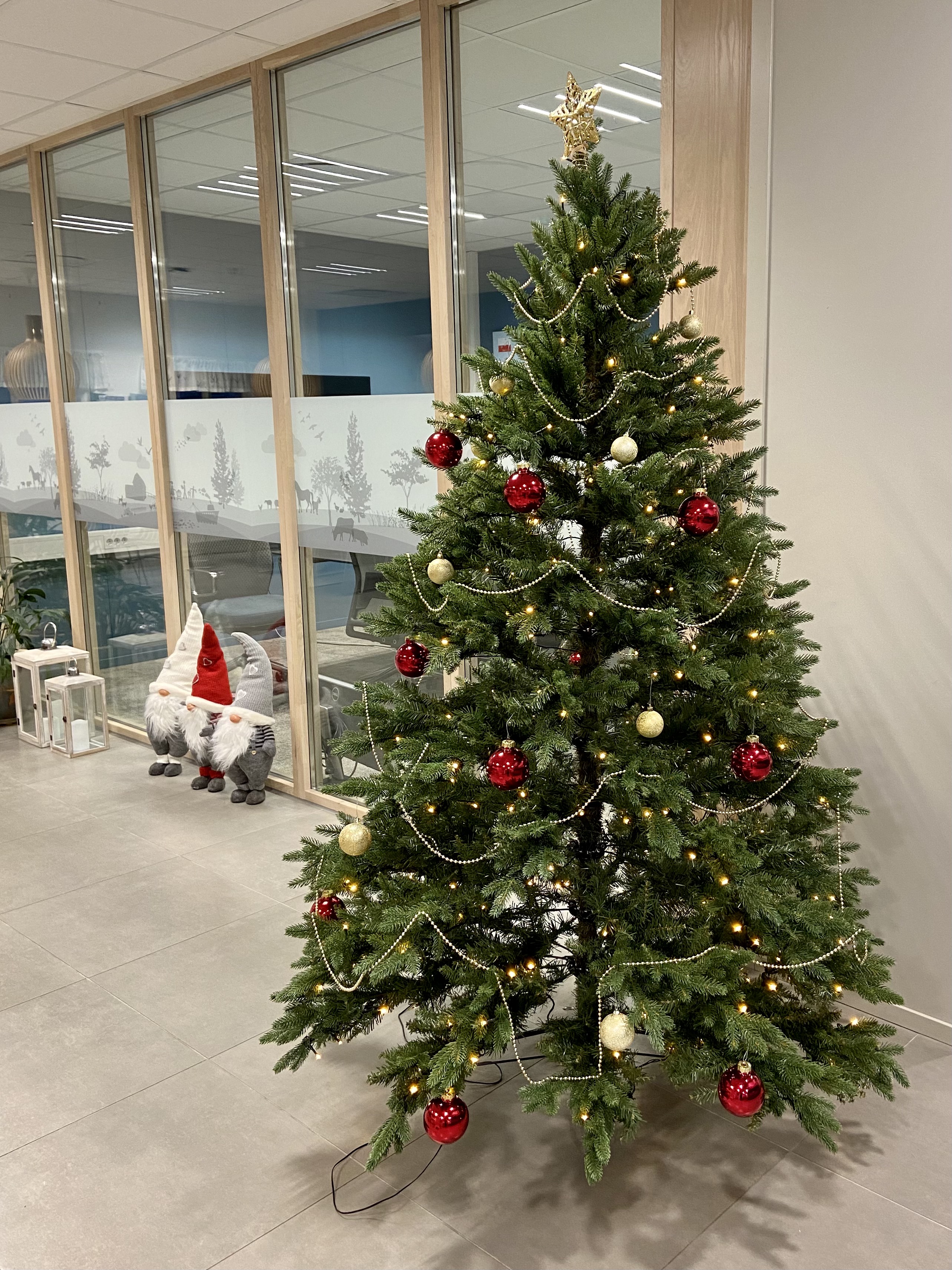
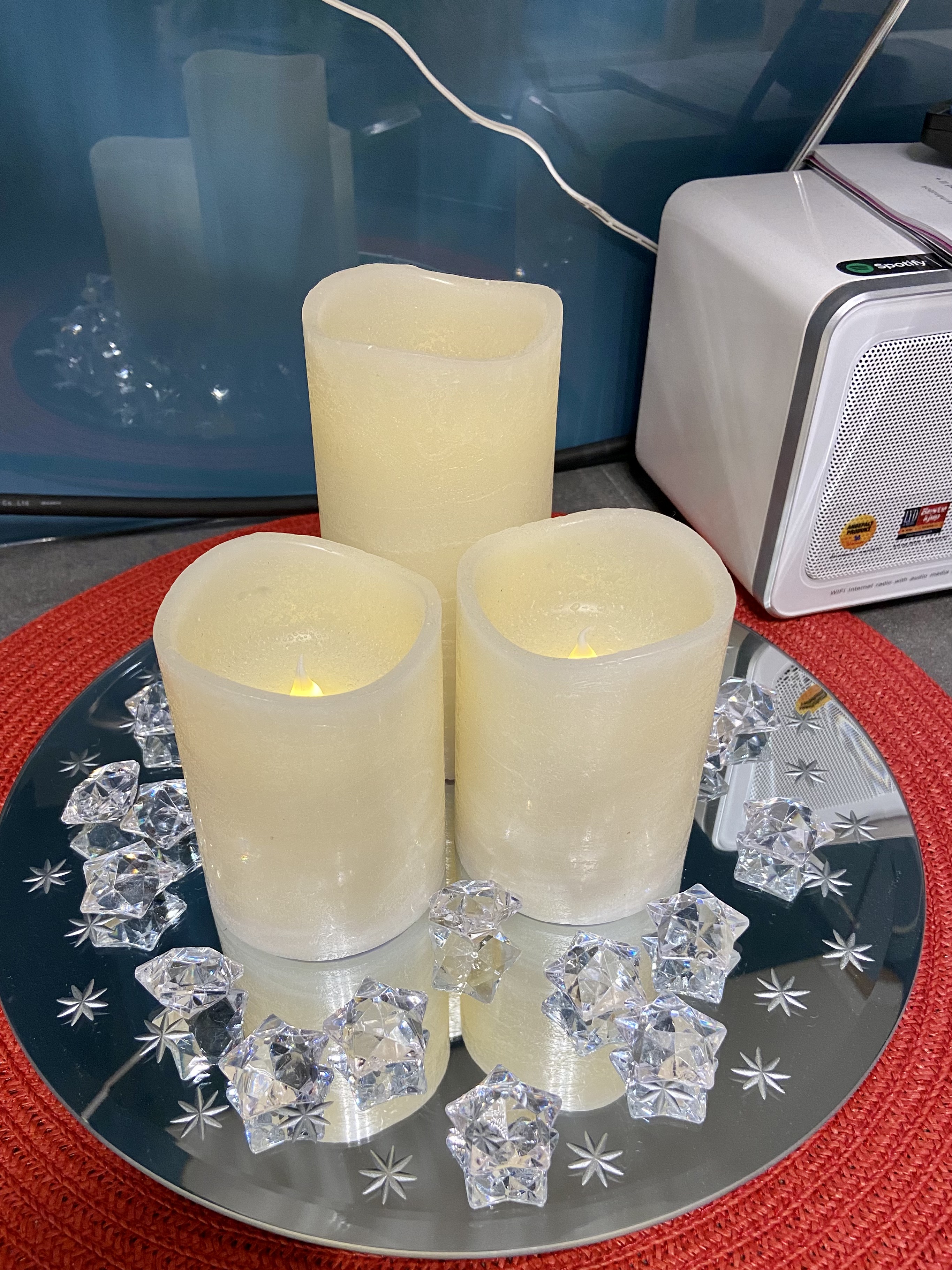
This week’s blog is a bit short as I have to go and collect John and bring him home, but I’ll leave you with a couple of pictures of the decorations that have gone up in our office. I hope you’ll join me for more advent pictures tomorrow.

Cool

Sunrise/sunset: 10:48/ 12:22. Daylength: 1hr34min

It’s been another week of changes. I had a busy schedule prepared, with two long-haul visits to hens to test them for salmonella on Monday and Wednesday, plus a trip in between to two sheep farms for routine scrapie inspections. I popped into the office on Sunday to check my e-mails. I’d been out with Birgit all day Friday, so I wanted to make sure nothing else had come in as I was due to set out early on Monday morning, so there would be no chance to check then.

It was bird flu that got in the way. Even though the outbreak is almost four thousand kilometres /two and a half thousand miles away, it had a knock on effect up here. At first I assumed it was some crazy blanket rule. To be fair, they’ve found bird flu in wild birds in other areas of Norway, but all of them a long way south of here. But it turns out that the problem lay in the lab. The same lab that would analyse our salmonella samples was currently working day and night checking for bird flu. So that was that.

Then came the news that one of the Tuesday visits had to be postponed as well. Had I been very organised, I would have found some additional farms to visit in case my one remaining farmer was out, but the rapid changes threw me and I didn’t even think about it until Tuesday morning, just as I was about to set out.

Because we are supposed to do most of our visits without advance warning, so there’s no chance the farmer can rush around tidying away the bodies, there’s always a risk that we can get there and find there’s nobody available. Indeed having a completely wasted journey is common enough to have its own name – Bom tur.

So far, I have never driven a bom tur, but as I set out on Tuesday, it crossed my mind this one could potentially be quite spectacular. My visit wasn’t especially important. Scrapie inspections are part of the annual OK program of routine visits to check for illnesses. We look at the sheep or goats and inform or remind the farmer of the clinical signs of scrapie (effectively the sheep version of BSE) and of the legal requirements around it, such as making sure all animals over a certain age that die on the farm are tested. It’s a useful tool for getting on the farms for a general check, but there’s nothing life or death about it.

The drive was close to two hours on snowy roads. The original day I’d planned actually had three visits, all in the same general direction, and the only one left was actually the furthest away. And I had Gry with me as I’m still green enough to find it really helpful to have someone else there with additional knowledge. Gry is a member of Dyrevernnemnda: experienced people who come out on welfare visits to offer their judgement from a different point of view than that of a vet.

So if I drove a bom tur, Mattilsynet would be paying me and Gry, as well as for the car and fuel, for carrying out a farm visit that wasn’t all that important in the grand scheme of things. Still, as I commented to Gry as we drove out, at least the scenery was pretty. In the event, the farmer and her partner were there and I felt very relieved as we sat in their kitchen and drank coffee. The sheep looked in great shape too. It always gives me a lift when I look at well-cared for animals.

Of course, bom turs are not always avoidable. You could visit several farms and find nobody at any of them. But next time I go, I’ll definitely make sure I have a few more options. I also thought that now I am a little more at home with carrying out inspections, I need to get more organised. We’re supposed to visit ten percent of our flocks each year, so that over ten years, we cover every single farm in our area. And to do that efficiently, I need to make a list of all the sheep and goat farms in our area, work out where they all are, and make a plan to ensure I can cover as many of them as I can.

Gry was a revelation as well. It was the first time I had been out with her and she told me so much about sheep farming in the north of Norway. Though they have fences around the property, it’s quite extensive and the sheep can wander off, high into the mountains. Occasionally they can get over or through the fences, and then come down into the wrong valley. When they come back in, the farmers have to go through them, checking all their ear tag numbers to make sure the sheep they’ve brought in belong to them, and also check whether any haven’t come home. It’s quite a big task, collecting them all in and then making sure they are sheared and ready for winter.

Having done the visits on Friday and Tuesday, I had two reports to write. Luckily, as both visits had been good, the reports were straightforward. The second sheep visit had been put off until Friday and that was successful too. For the second time this week, we were offered coffee. Coronavirus has meant that for the last year, there has been little coffee on offer, but as I sat down around the table with Gry and the farmer and his staff, I felt very much at home. Going in for coffee was always one of the high points of being a farm vet.

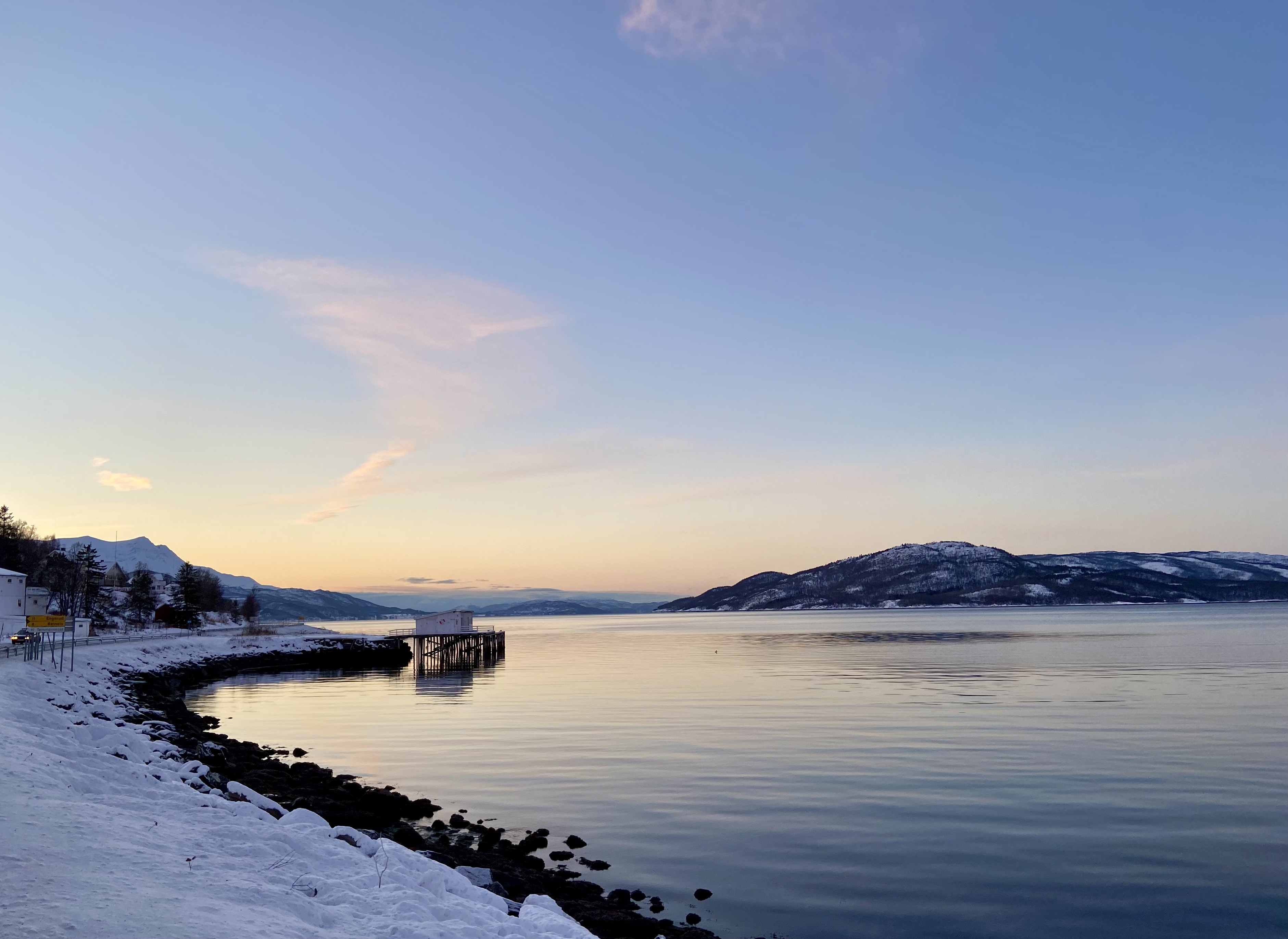
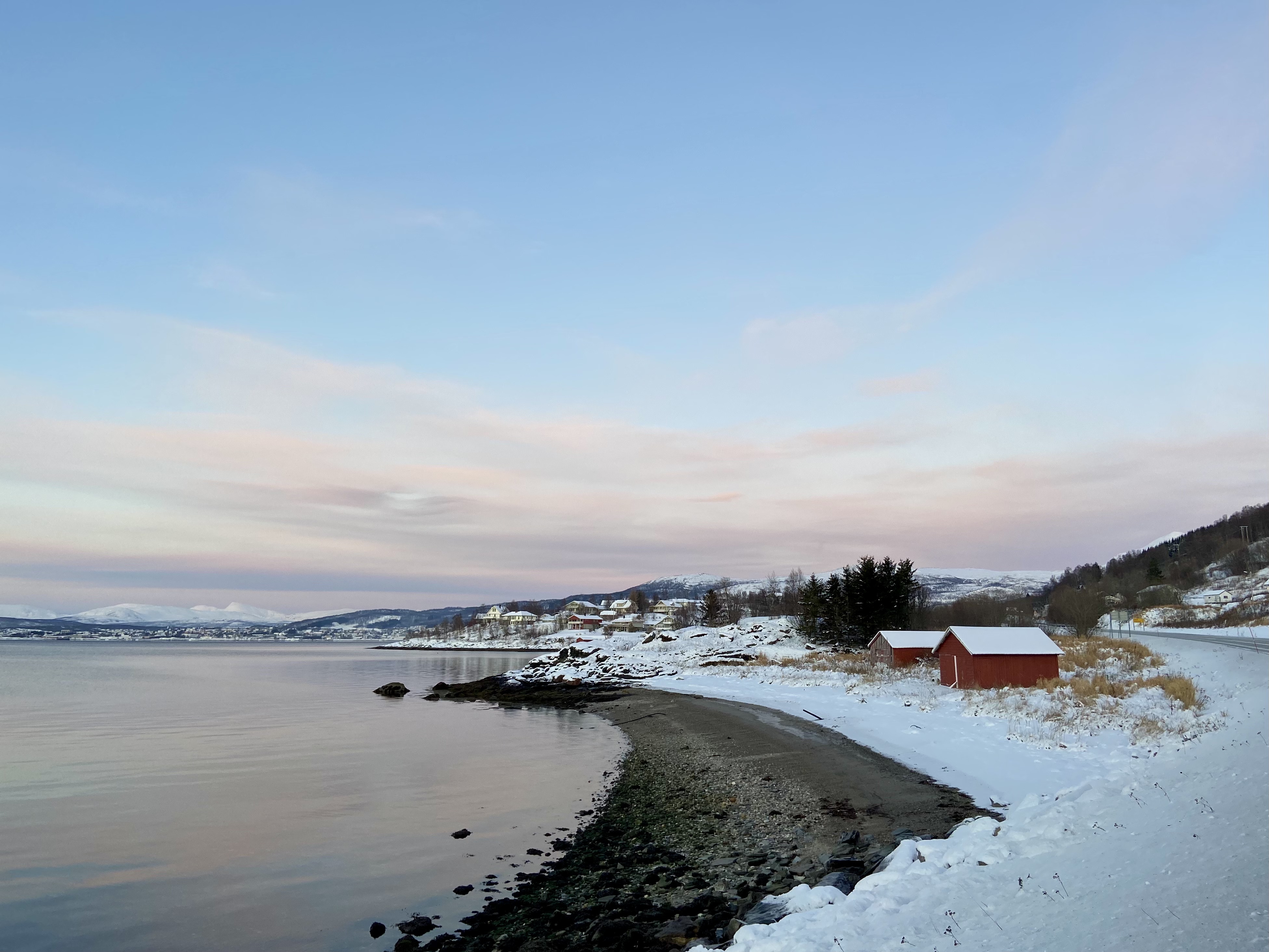
I took a couple of photographs on the way home on Friday, after I had dropped Gry off. The temperature has dropped suddenly here. It snowed last weekend and then fell away to between minus seven and minus fourteen. As usual when that happens, the sky is clear, and as the polar night approaches, the air becomes very clean and cold. The upper skies are a beautiful pale blue and close to the horizon, there is a pink tinge. It crossed my mind that although technically the polar night hasn’t quite arrived, I haven’t seen the sun for days. It’s probably already below the mountains.

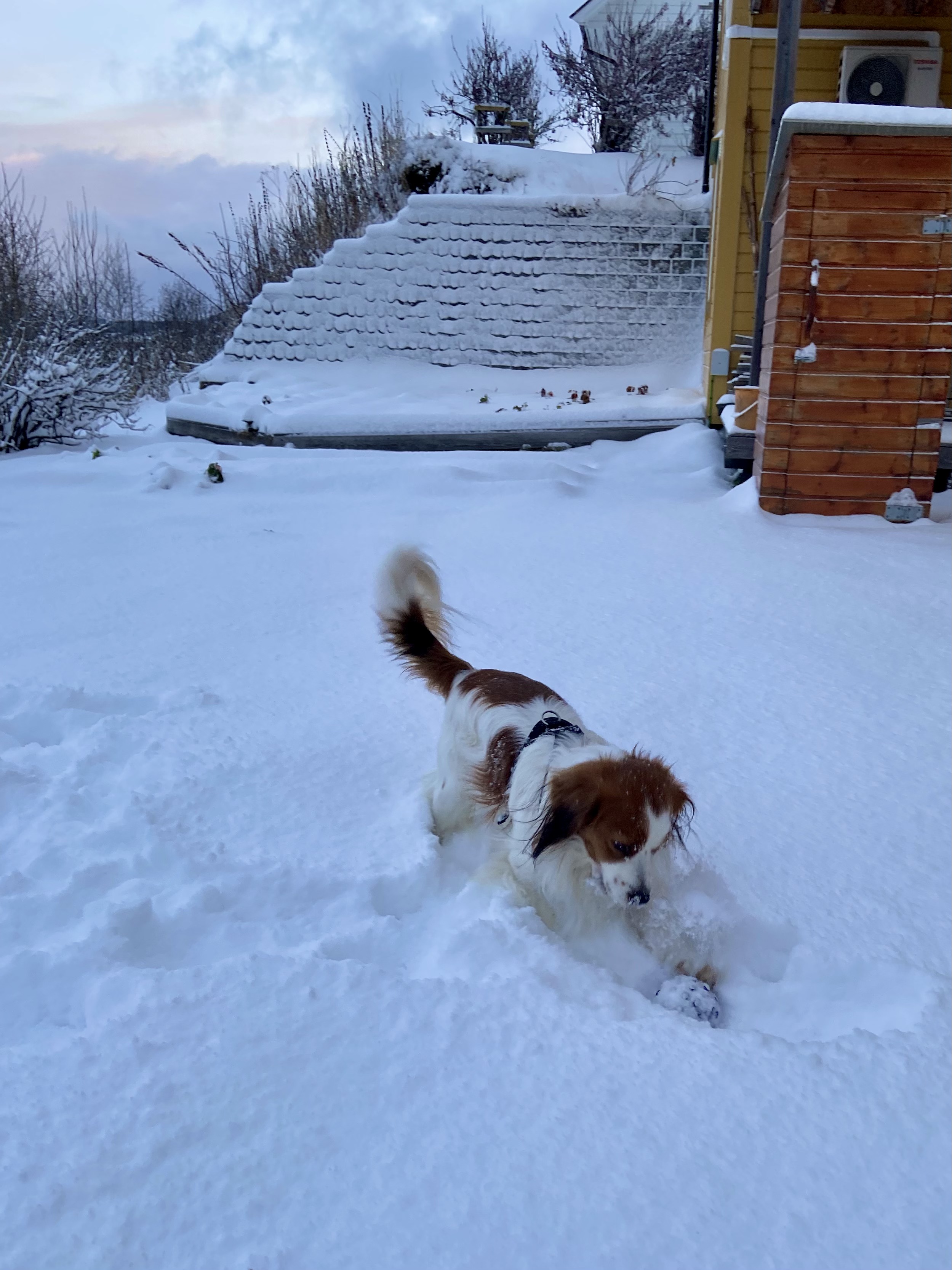
Triar is loving the snow and the cold weather. Sometimes he goes outside and zooms around, simply for the pleasure of running through the snow. Here he is in the garden playing with his ball.

There was one other piece of very good news, and that is that my friend who had been on the front line in diagnosing the bird flu outbreak is now fit and healthy again, and didn’t contract bird flu. I’m very relieved.

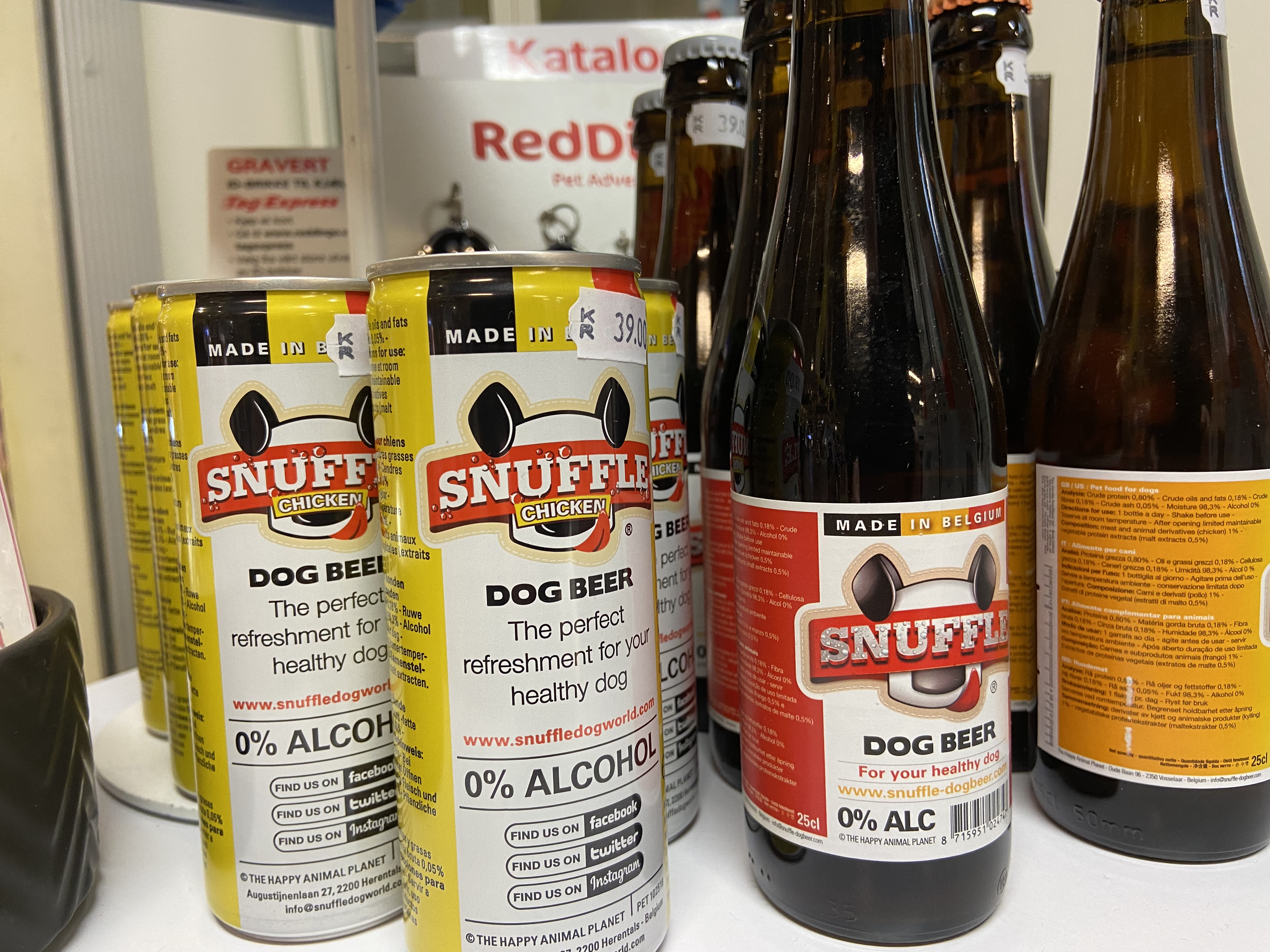
And finally, a completely random thing I found in the pet shop yesterday. I had noticed for the past couple of years that there are now advent calendars for pets, but now it seems that there is beer for dogs. Because what we really need is for Triar to be staggering around the house on Christmas day. Cheers!

Concerning Welfare

Sunrise/sunset: 09:01/ 16:00. Daylength: 6hr58min

Back in June I wrote a post about complaints from animal rights organisations about Mattilsynet: Trouble in Paradise. Last weekend on my Facebook feed, I found a post from a colleague with a link to a new article from NRK, Norway’s public services broadcaster. It contained the stories of whistleblowers from within Mattilsynet regarding the distress its inspectors are feeling about their inability protect the welfare of the animals they are supposed to oversee.

Link to article in Norwegian: We have to close our eyes to suffering animals. *See note below for translation tips

One of the things I have noticed in my job is that almost every other week, changes are introduced to policies and protocols. There’s a lot to learn in any role and a year in, I feel I’m still picking things up, which would be enough already without the feeling that anything I learn might shift again next week. Then there’s the “paperwork”. Most of it is digitalised now, but there is a whole load of report writing, which often takes up far more time than the actual visit.
I am catching up gradually with some of the politics, and it seems that the current concentration on bureaucracy relates to criticism from the official Norwegian Auditor General in 2019 regarding the poor quality of case processing. It was stated that Mattilsynet lacked good tools and systems to deal with the animal welfare supervision it had to carry out, and that the result was that serious breaches of the animal welfare laws were not being followed up. It also said that Mattilsynet employees were not using the tools they had to penalise those who broke the law, and that it took too long for those who didn’t take proper care of their animals to be banned.

There’s a certain irony to what is happening now as a result of these accusations. I haven’t been here long, but one of the major constraints is the computer system we have to work with when processing cases. We use a system called MATS. I don’t know how old it is, but it is so complicated to use that it slows everything down. It sets out protocols and you have to work through the elements in order and tick off certain actions before you can proceed to the next. So if I receive a message from the public regarding a concern about animal welfare, it comes to me in MATS. I have to process that message and work through various stages on a list, and then at some point I will come to the end of that segment and have to move onto the next.

Once you click through to the new section, you can’t go back and change anything in the previous section if you’ve made an error. Thomas always tells me I have to be very careful before I click onwards, and I often check with him. But as I am trying to stand on my own feet a bit more, there have been cases where I have got as far as writing a report or a response to an animal owner who has asked for permission for something, and then had to go right back to the beginning as I realised I had linked the case to the animal owner’s personal file, and not to their business, or some other easily made system error that cannot be rectified.

MATS is also clunky in other ways. Almost nothing is automatic. Before we leave the farm or home, following an inspection, we have to write a “receipt” with a summary of what we have checked and what our assessments were. This used to be on paper, but now most of them are sent electronically. So we type our observations into an app. This would be very useful if there was an integrated system. If the observations we recorded in the receipt were transmitted automatically into MATS, and then perhaps used in the report, then it would be truly useful. As it is, we have to open MATS and the receipt and copy and paste all the information from one to the other.

The report itself has to comply with strict parameters in how it is set out and before I can send it to the owner, I have to run it past a colleague, and then afterwards past a control team, all the time making amendments, and then often sending it back and forth multiple times until everyone is satisfied.

Instead of rebuilding the system, they are adding things like the receipt system (and another system that allows us to add photo evidence) before the problem of MATS has been addressed. It seems to me, that they are trying to tweak something that is so fundamentally flawed that they are actually making the situation worse instead of better.

Of course all of this really comes back down to funding and monitoring. The argument is that they can’t afford a new system, though not affording it is probably costing millions. I have watched similar events in the public sector in the UK. The health service and school systems have both wandered into this territory where funding is reduced, then criticisms are made, and rather than improving the situation, new systems for monitoring are introduced, which increase the workload in ways that do nothing to correct the problems, but increase the cost of the operation. That the Norwegian government is paying veterinary surgeons to copy-paste long lists of observations and check and recheck whether the reports we write comply exactly with a template, which could presumably be automatically applied if the will and funding was there, seems brainless to me.

In addition, there are certain routine visits we carry out, for example those to check the farmers are following the rules with regard to ear-marks, disease control and traceability. Common sense would suggest that if no breaches of the rules are discovered, the feedback report could be generated automatically. Not only would that save direct work for the vet who did the inspection, but it would sidestep all the report-checks for compliance and would ensure their other aim – that everyone is dealt with the same way, wherever they are in Norway – was met without any effort whatsoever. Reducing the time it takes to process cases would free up time so that we could carry out more inspections. It seems like the system is set up in a way that prevents us from doing the most fundamental part of the job, which should be getting out and checking whether the animals are okay.

Anyway, I’m not going to comment any more on this for now. Our area is actually better off than those in the report, for which I am grateful. The report mentions an area where the inspectors have been told they can’t take on any more cases until the old ones are cleared up and we haven’t reached that stage. Thomas often tells me of his frustration that we are firefighting cases, rather than preventing problems before they start. Because I’ve only been here a short time, I can’t compare it with how things used to be, but he feels things have become more difficult. I am also aware of how much Thomas takes on, in comparison with what I can do at the moment. Though I help as much as I can, I know he is taking responsibility for the worst problems, as I work to follow what he’s doing and ensure the case timelines are kept in order. I am learning a lot about how cases should be handled, but even writing up the timelines shows me how frustrating the system is. There has been a change in government in Norway and the new government is more left-leaning, so I can only hope that some of the budget cuts, that have been happening forever, start to be reversed.

*****

Though the snow has gone for now, it was beautiful while it lasted. Triar and I followed the same trail last Saturday as we had the week before. There were amazing views as I reached the higher ground and I went a little further than last time, though I think I was still only about halfway along the trail to the peak. I need to find someone to go with me before attempting the whole walk.

Looking back at the snowy trail up to Kistefjellet

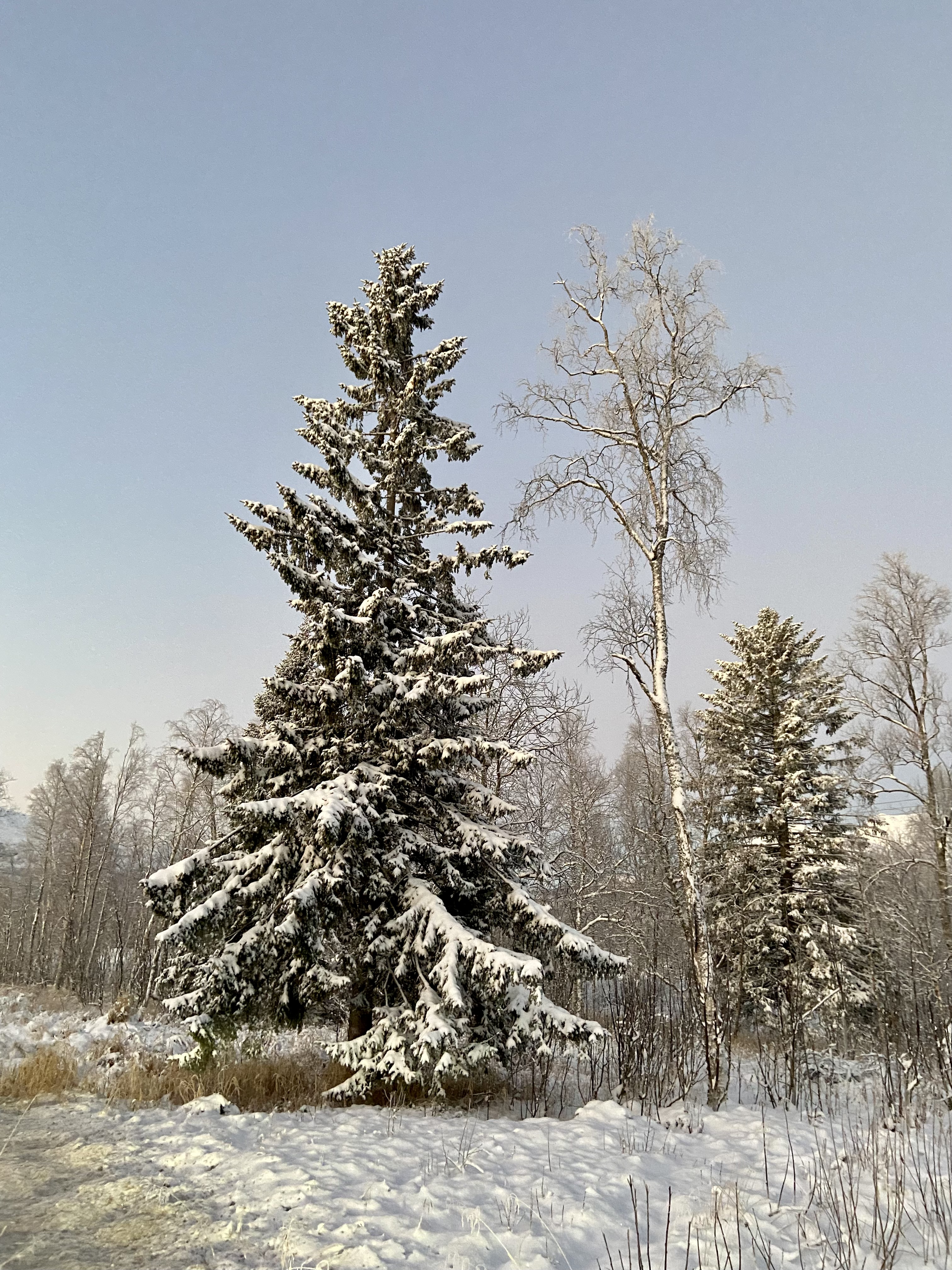
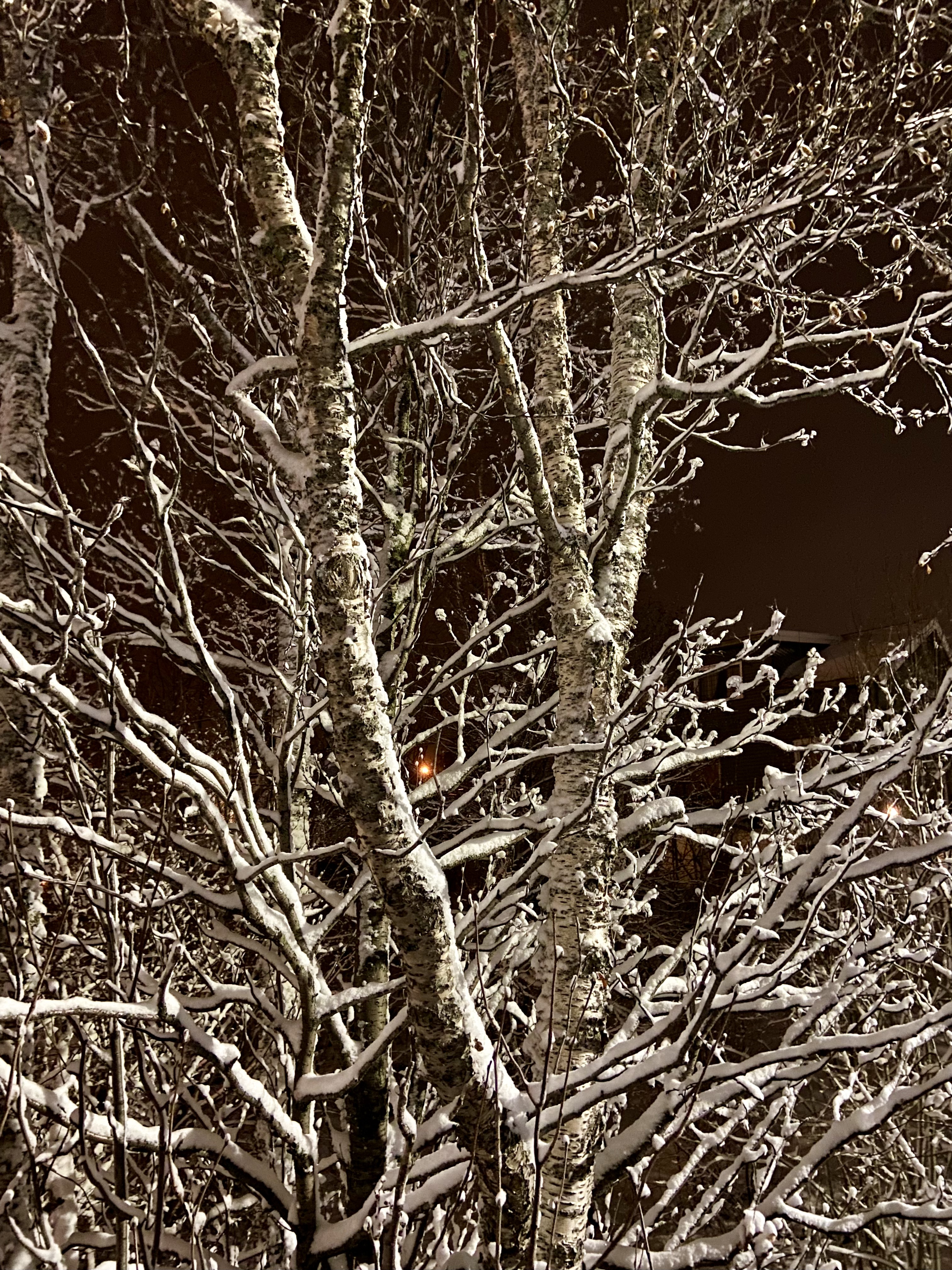
And on Tuesday evening, there was a snowstorm. Though it was windy, the temperature was around zero. When it’s really cold, the snow is powdery, and when the wind blows, it doesn’t stick to anything. But this snow stuck to everything. I went down into the town centre to get something, and had to stop to take photographs of the trees as they were so beautiful against the overcast sky and the streetlights.

I am looking forward to winter now. Though snow can be inconvenient, I still feel a childlike excitement when I wake up to find the world has turned white. And in a month, the polar night will be here. I hope you will follow and share it with me.

*If you want to read a Norwegian article in English (or any other language) you can paste the URL into Google Translate (set the languages at the top). A link will appear in the “Translation” side. If you click on the link, it should take you to a translated version of the article.

The Gathering Darkness

Sunrise/sunset: 06:13/ 19:08. Daylength: 12hr54min

I mentioned a couple of weeks back that it was not yet entirely dark, but from Thursday this week there has been full darkness for a short time each night. It’s hard to believe we’re already well into September. The sun is low in the sky for much of the day and the autumn equinox will soon be here.

I took that photo when I was out with Triar, and he very kindly posed for me on an upturned boat, that lies beside the narrow path we walked down.

I’m not sure what the boat is doing here, halfway up a rather steep hill, but I suspect it might be a remnant left over from a children’s play park. They quite often use old boats in playgrounds, when they are no longer any use for fishing.

Though it’s coming up for two years since I’ve been in the UK, I do like to follow what’s happening on social media. So I was interested to see, in the past couple of weeks, that the first mince pies have started to appear in shops over there. Mince pies are one of the Christmas foods I miss most. Of course I could make my own, but it’s nearly impossible to recreate the wonderful cool pastry and spiced mincemeat that you get in the shop bought version.

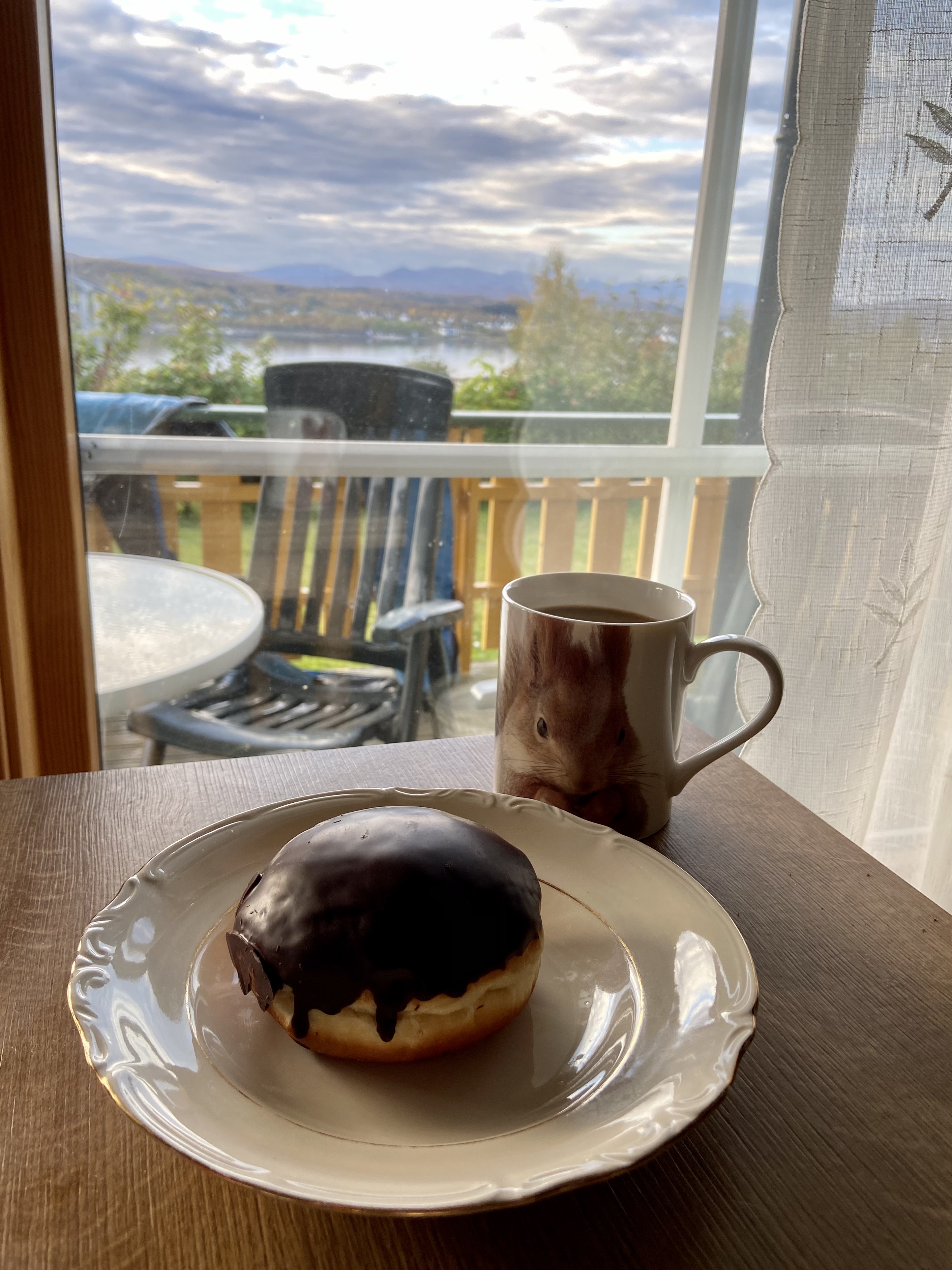
That said, I was pleased to see the return of mørketids boller to the shop I was in yesterday. Mørketid is Norwegian for polar night, which will not arrive until 30th November, so like the mince pies, they are a little early. But I love the seasonality of the foods in the shops here, and this one is specific to the north of Norway. They aren’t as good as mince pies. It’s really a doughnut with dark chocolate and vanilla filling (I have seen pictures with chocolate fillings, but have never located one). Very pleasant with a cup of coffee.

The shorter days at work also ended this week. For a few months in the summer, we work seven hour days, whereas in winter, we work seven and three quarter hours. The difference doesn’t sound much, but I was pleasantly surprised when it began, how much faster the working day passed. It’s a great perk to have shorter working days when the summer is so brief.

There are also some odd quirks in the working hours over Christmas and New Year and there was some discussion about this over morning coffee this week, when there was only me and two Norwegian colleagues present. For example, on New Year’s Eve, our official working day is only two hours. So if you have built up some time off in lieu (TOIL) then that is a good day to use it. If you take the day as holiday, it counts as a whole day off, regardless of how long or short the day is. So if you do that, you took off two hours when you could have taken almost eight if you’d chosen a different day.

I had been thinking about trying to take my one remaining holiday week between Christmas and New Year, but as most of the days then are only five hours, it is worth looking into taking them as TOIL instead. The only downside being that agreed holiday can’t be removed at the last minute, whereas agreed TOIL can.

There are a lot of differences from the UK in the Norwegian way of working, and it can be difficult to find all of them out. I should imagine it’s the same for anyone who lives in a culture they weren’t brought up in, but there are times when I have the feeling I am living in some kind of twilight zone, where all kinds of things are obscure. Nobody tells you about them as they assume everyone knows and of course, as you don’t know they exist, you don’t ask about them.

One thing that I do know about, that is definitely worse in Norway than the UK for permanent employees (and is illegal in EU countries) is that in your first year in any new job, you are not entitled to holiday pay. Last year I worked for Mattilsynet from August and so I was not entitled to any paid holiday at all from them. Technically, I received holiday pay from my last job when I left, but that was eaten up in the expenses of moving up here. This year, I only have ten days paid holiday. I can take unpaid holiday, but three weeks without pay would be quite a hit and I don’t really want to do it unless it’s unavoidable.

I’m not really sure why this rule persists. I believe it has been challenged in Denmark, which is in the EU, while Norway is technically not. But Norway does adhere to most of the other EU rules, as expected under the EEA agreement, so I am unsure why they have not implemented this one. For my part, it’s a bad rule. Given that the only “holiday” I had last year was taken up with driving up here, it feels like a long time since I’ve had a proper rest. It’s not as easy to bounce back at fifty two as it was when I was younger either. Roll on next year, when I will be back up to five weeks plus bank holidays again. I guess anyone from the US reading this might think I’m a wuss, but there it is!

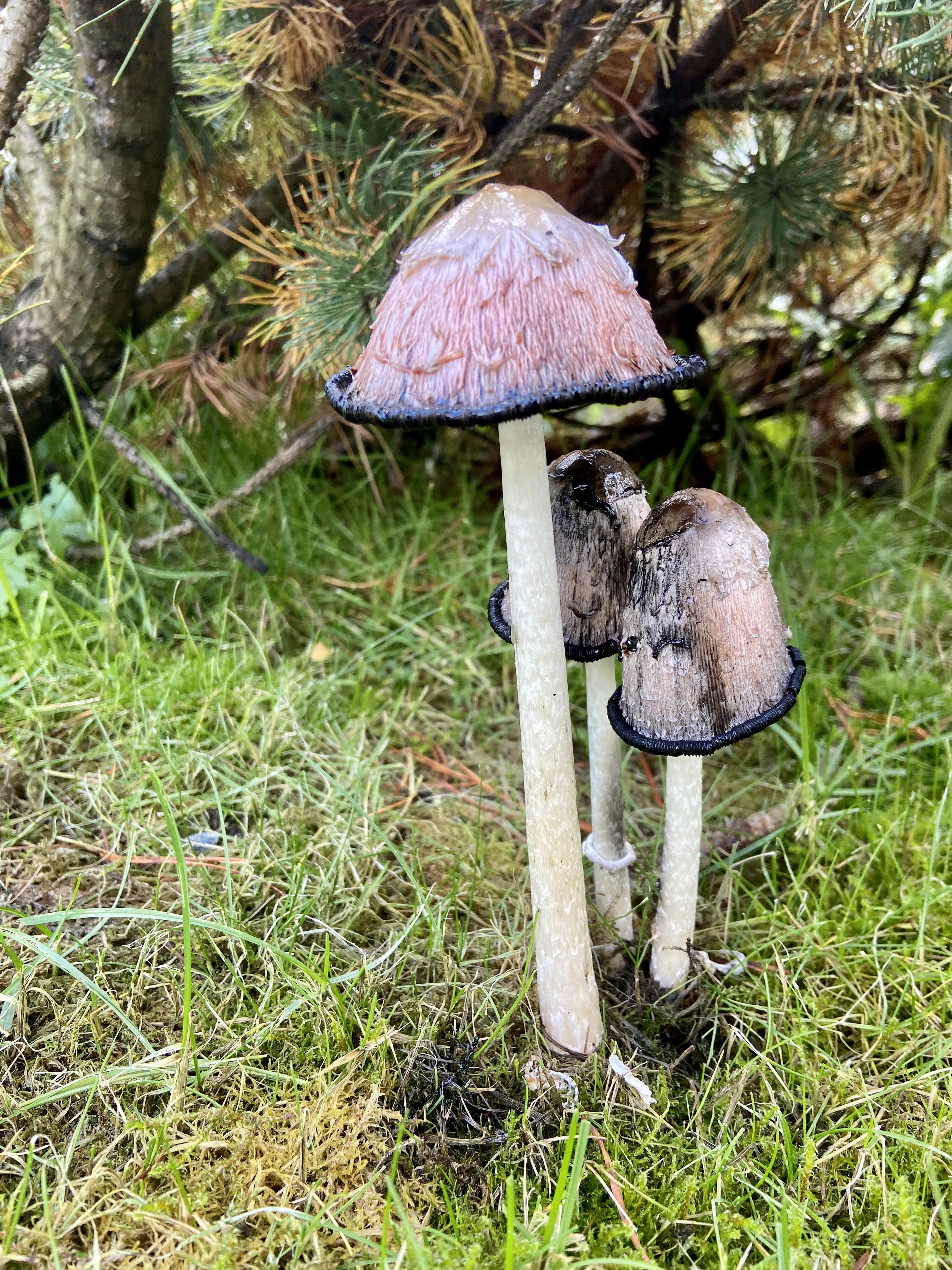
Fungi are odd things. A rather cute looking mushroom appeared one day under the hedge beside my driveaway. I took a few photos over several days. It looked tasty, and at the same time rather demure, with its closed head, all neat and dry. This was taken on the tenth of September and I think it had been there a few days. I assumed this was its final form. I rather liked it.

So I was bemused to come home on Wednesday to find it had seemingly doubled in height. The cup was now opened and its edge had a grim wet look to it! I guess it had to open as its spores must be inside, but any feelings I had that it might taste good disappeared instantly!

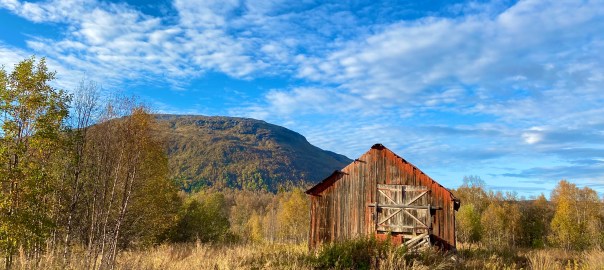
I will leave you with a couple of pictures from my drive home yesterday. There’s a falling down barn that I have been passing every time I drive to the abattoir. I decided I wanted to photograph it in the autumn of last year, but it was difficult to find anywhere to park, and then winter came and the parking possibilities reduced even further. It’s impossible to pull off the road when there’s a wall of scraped snow on either side. I drove past yesterday morning, when I didn’t have time, and thought that by the time I drove home again, the sun would have moved. But I had forgotten that the sun is now permanently in the south and doesn’t move so much from east to west as from south-east to south-west. So here it is in the autumn sun, in all its dilapidated glory. And I’ll throw in one of trees and snow topped mountains for good measure. Hope you enjoy them!