Tag Archives: Travel

Tripping

I finally made it out of bed on Monday, just in time to go back to work. By Tuesday, I was on the road again as I made my way to Edinburgh for a conference, where APHA staff from all over Scotland came together to meet and learn.

When I drove over to Stranraer, I was craving memories and was rather disappointed at the lack of familiarity. Although I grew up in Penicuik, which is not very far from Edinburgh, and that I went to university in Edinburgh, it hadn’t crossed my mind to hope for something similar. It hadn’t crossed my mind that our route wouldn’t take us on the featureless motorway network, but rather through a load of places that were embedded deeply from my childhood.

We passed through West Linton, then Carlops: familiar names and places from long ago. But it was when we reached Nine Mile Burn, where you can turn off to drive to Penicuik, that I had that sudden feeling of nostalgia.

My adult life has been interesting, but I was fortunate enough to have a very happy childhood. One of my sweetest memories is of climbing onto a low hanging tree bough and sitting in dappled sunlight with my friend, Sharon. We had been watching Robin of Sherwood, Sharon had pictures of Michael Praed on her wall and we were at the age when everything still seemed possible. If there was one moment in my life that I could go back and relive, I am fairly sure that would be the one I would choose as it is so unsullied. A young man fractured my mind at university and by the time I was 25 I’d had skin cancer twice and I think that’s why that memory of unsullied innocence is so precious. I’d love to relive it with Sharon, but she also got cancer and she didn’t make it.

Goodness, I hadn’t expected this to take such a sorrowful turn, but those sweet, sweet memories do come with a hefty dose of melancholy. Anyway, the road carried on past Nine Mile Burn and we passed Silverburn, where my parents once considered buying the farmhouse. It was run down then, but now looks very smart. And then the Pentland Hills were on my left and those really were my old stomping ground. I remember some names: Carnethy, Scald Law, East and West Kip. Scald law was the highest hill, but we more often walked up Carnethy, or took the path over between the hills to a wonderful waterfall, though I don’t remember its name.
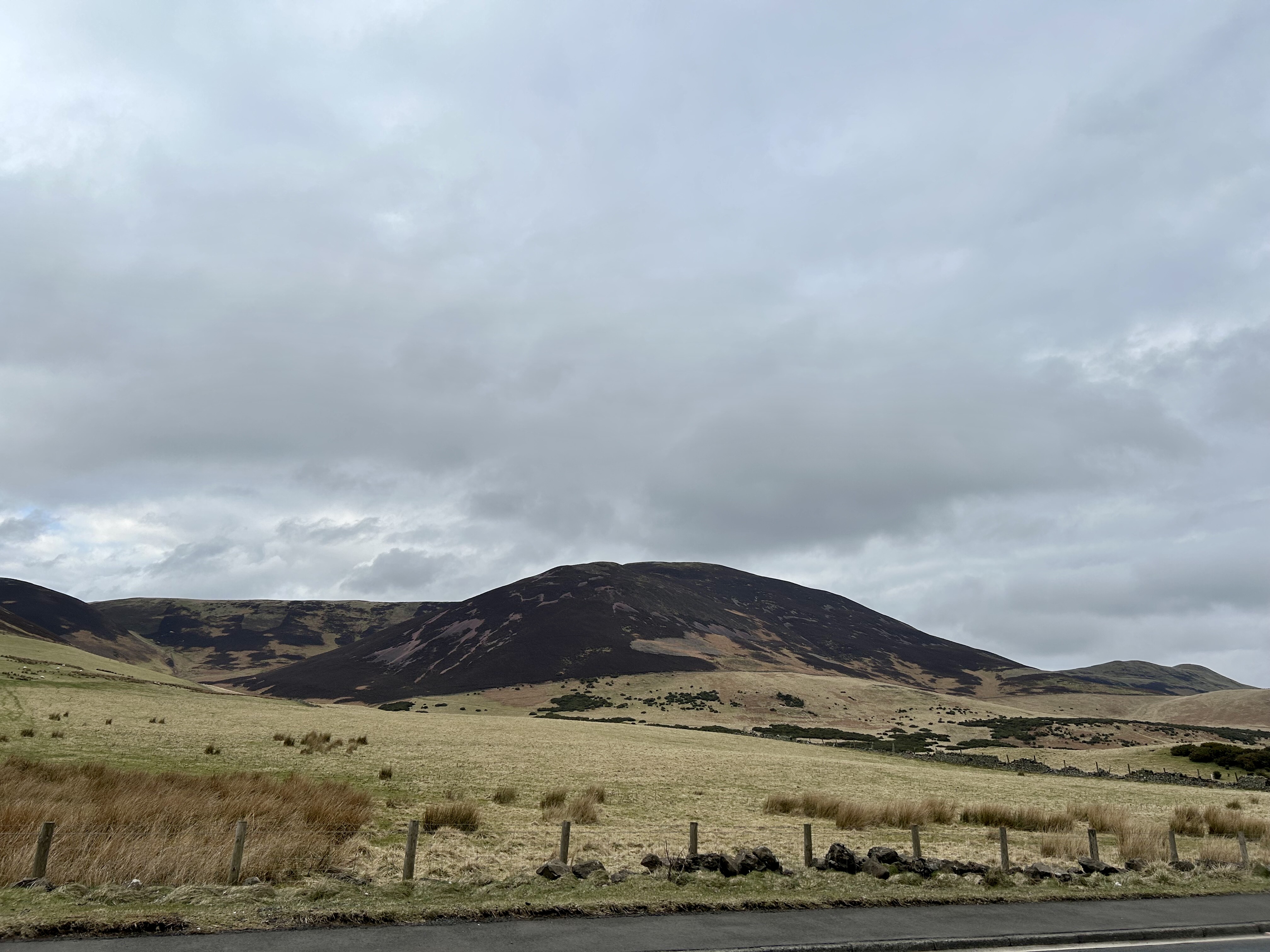
Pentland Hills – I think this one is Scald Law, but feel free to correct me!

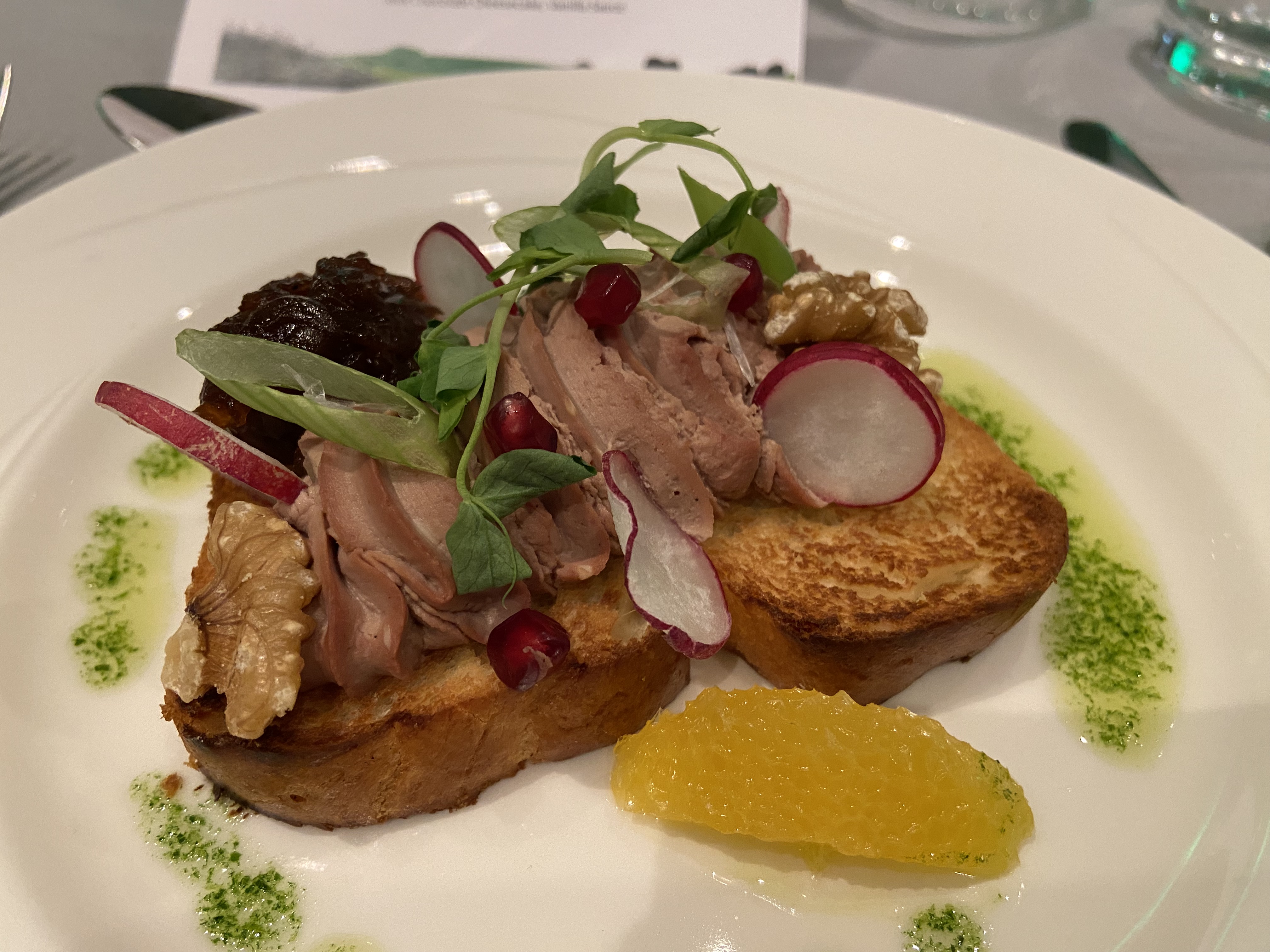
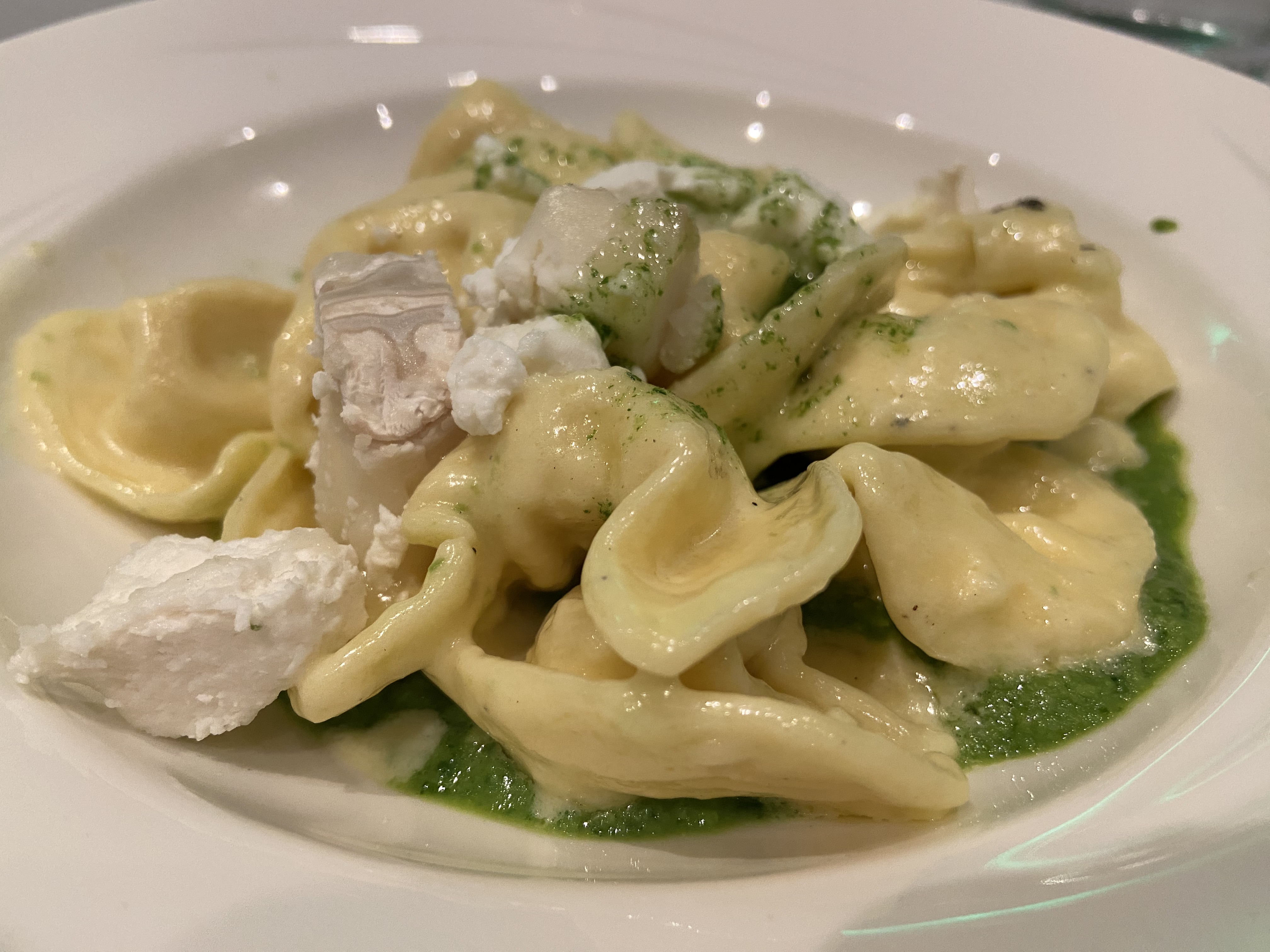
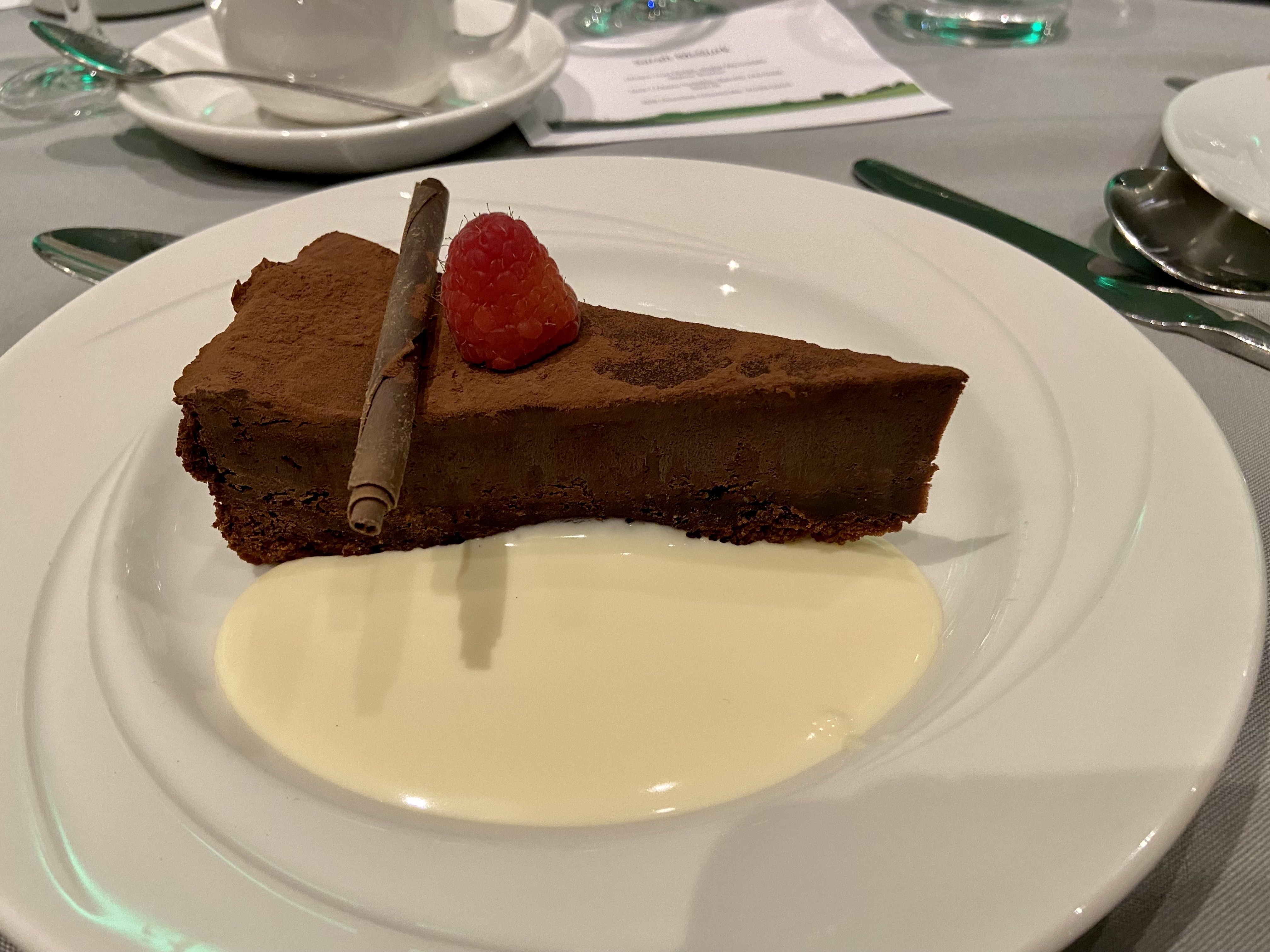
The hotel in Edinburgh was very pleasant, though very much a typical, identikit modern hotel, with no distinguishing features. I’m still at the stage where there’s lots to learn, so there was plenty of new information to pick up. I enjoyed the evening meal, although the milk chocolate cheesecake, which I expected to be a sweet and fluffy concoction was more like a dark chocolate brick of solidity that even I couldn’t finish.
The conference ran from lunchtime on Tuesday to lunchtime on Wednesday, then on Thursday I had to go to Ayr to have a mask-fitting appointment. This was to check whether I can use the FFP3 masks at work safely. This involved having a mask on, which was attached to a tube which monitored the air I was breathing, while performing various manoeuvres. As this involved marching on the spot, while moving my head around in various ways, and then counting out loud, while trying to breathe normally, it was quite a challenge, given that I am still coughing after being ill, but I survived without falling over, and now I am officially allowed to use a mask if I have to check out any sick chickens.

Much as I love travelling (especially those identikit hotels) and consider it a definite perk of my job, I am rather looking forward to next week, when the most distant visit I have booked in is to Castle Douglas.

I’ve probably gone a bit quiet about my house buying. Compared to an international move, it’s very low key, but I’m now at the stage when all the papers have to be signed, I have to show where the money for my deposit is coming from, and I have to arrange to shift my accounts with all my providers from one house to the other, while leaving an overlap as I don’t want to move everything on one single day. I’m quite excited about buying a house, but it doesn’t quite seem real yet, even though the intended date of exchange is less than two weeks away.

You know, I write these blogs mostly to keep in touch with people, but I sometimes think they will end up being a bit like a diary. Maybe one day in the future, I’ll look back and all the memories will come flooding back. My mind feels odd at the moment. Part of me is chugging onwards, being quite competent, learning lots of stuff, but it’s overlaid with a feeling of there being too much going on. It’s not perturbing me too much, but I do have a sense that there is chaos rushing all around me, while I just wander through it, waiting for everything to settle. I write this weekly and I can’t tell whether any of that feeling is coming across, or whether what I write is as scattergun as it sometimes feels. This week, I volunteered to work as a vet at the Royal Highland Show, and I can’t yet tell if that will turn out to be a marvellous opportunity or a daunting responsibility. Maybe both! Still, you know me. I tend to grab what comes my way and worry about the consequences later.

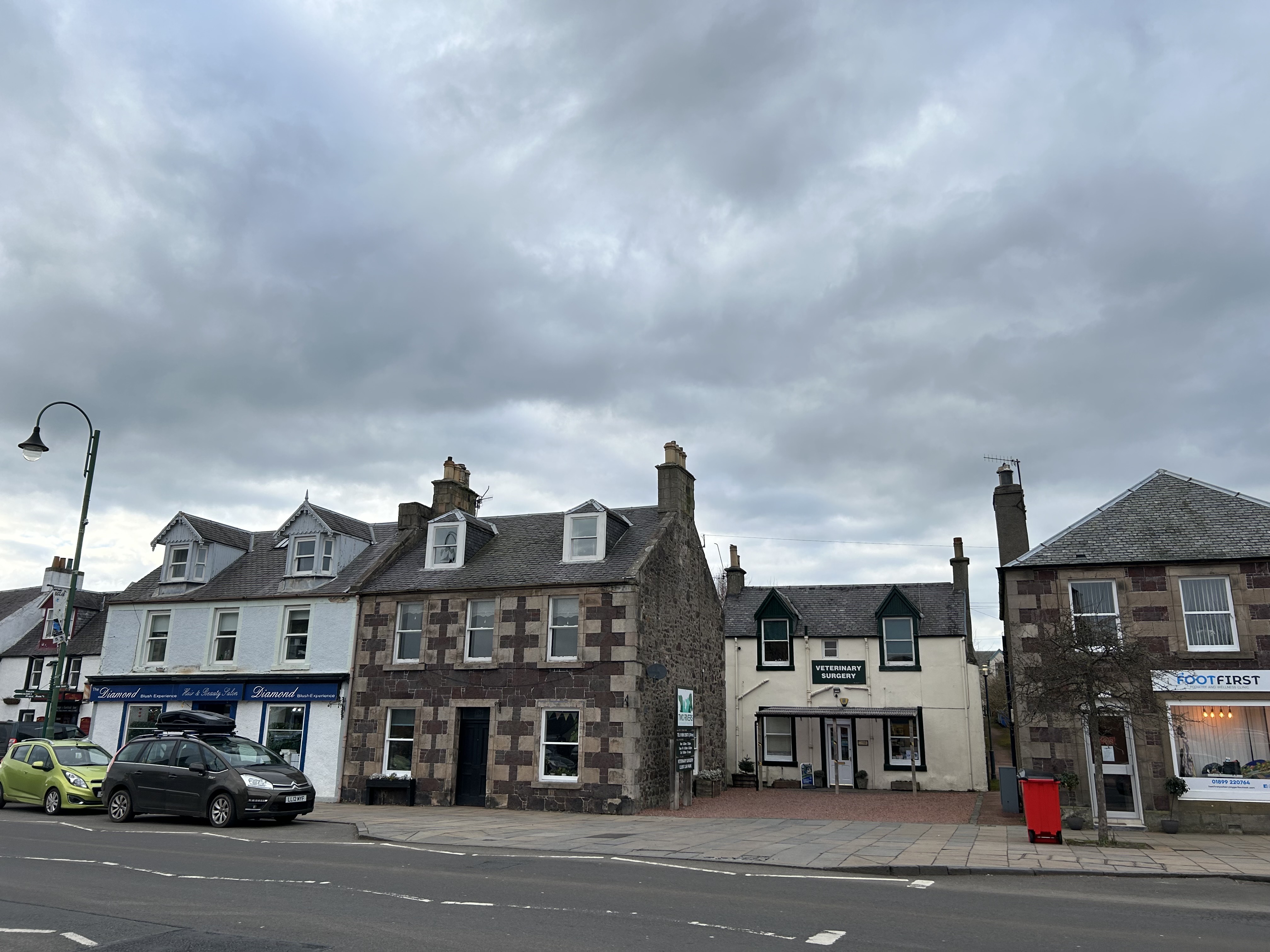
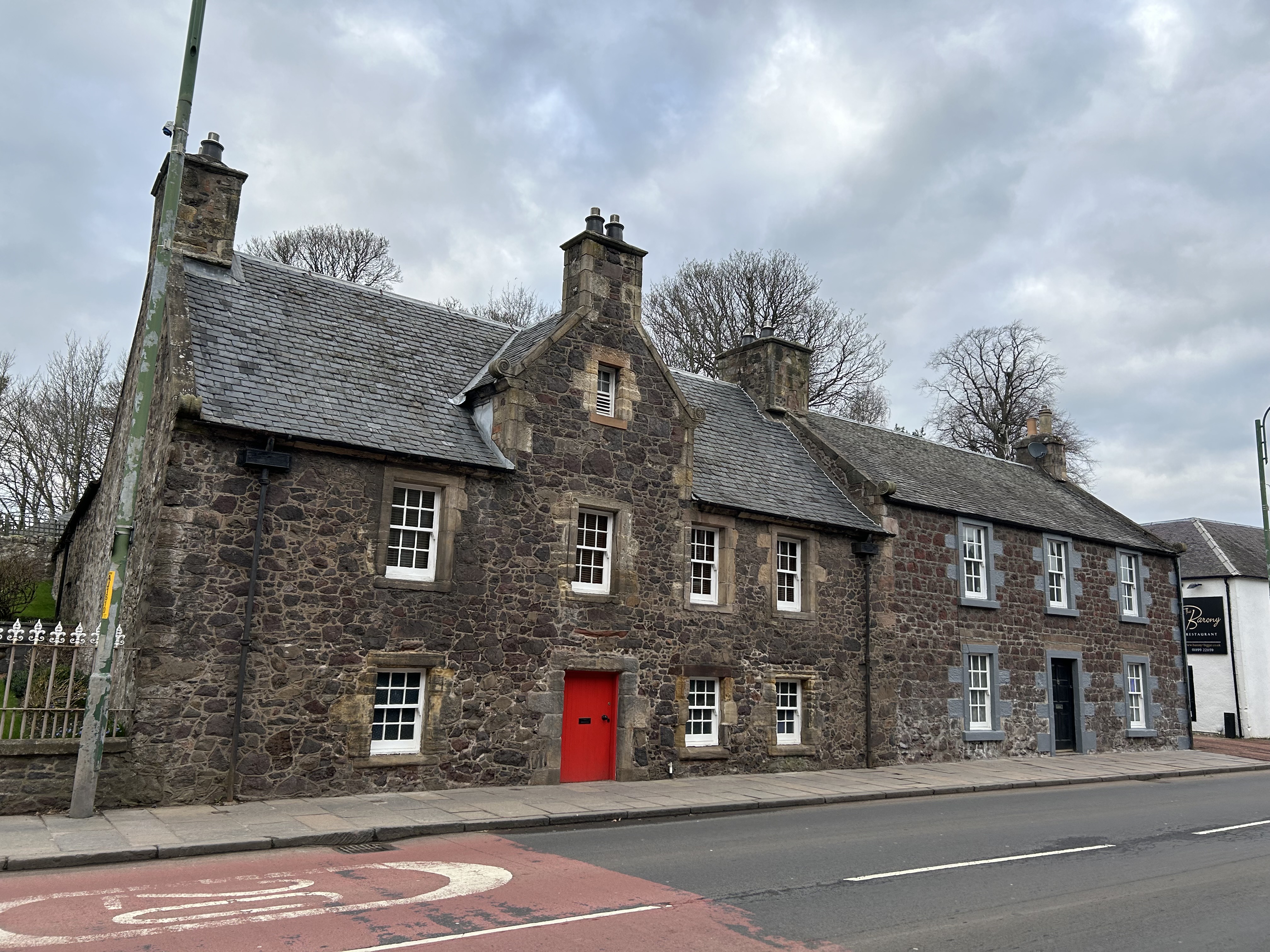
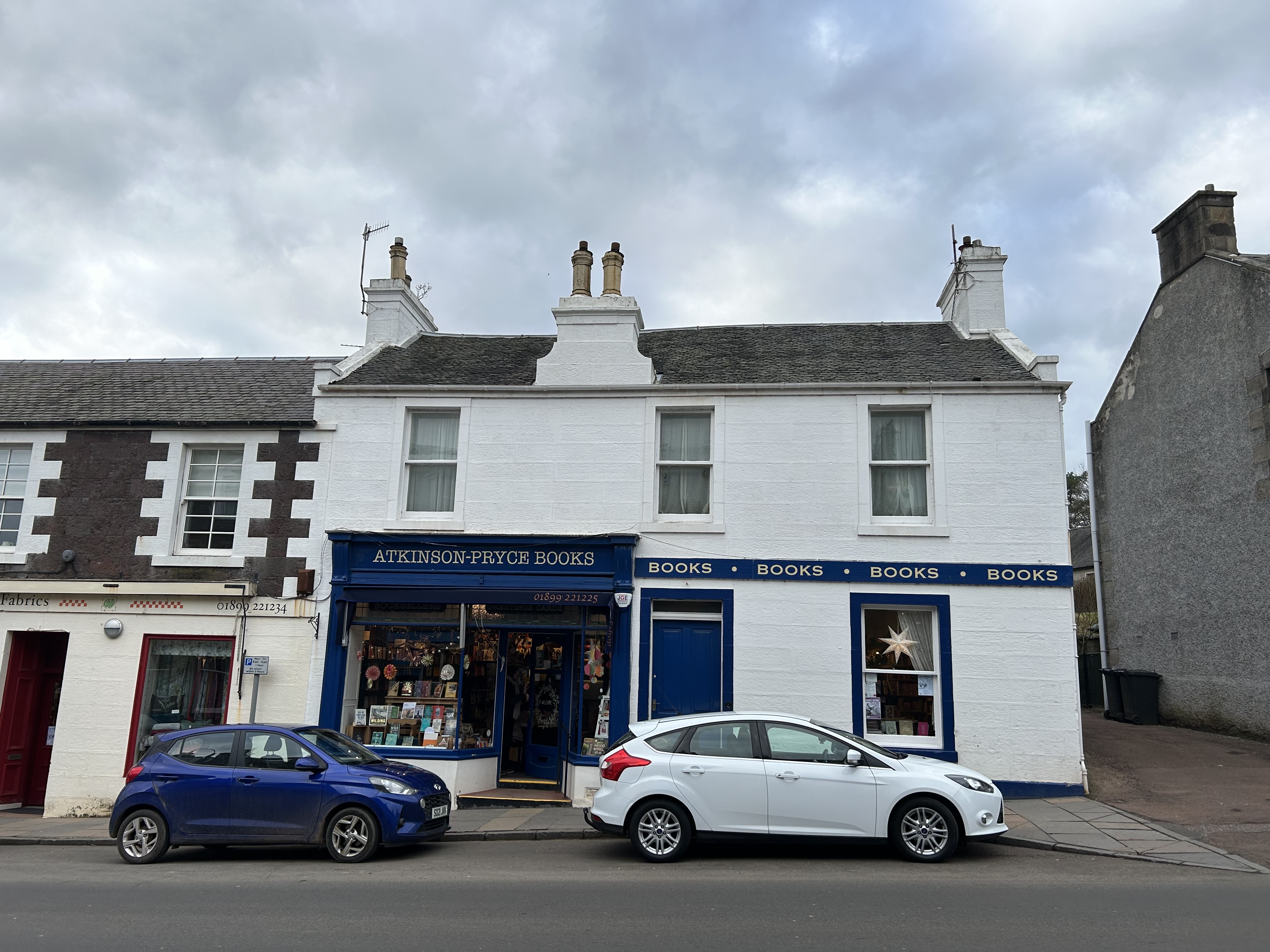
Anyway, as usual, thanks to anyone who made it this far. I hope you have a good week, and I will leave you with a couple of pictures of Biggar, where we went on school trips to the street museum. I was intrigued by the tiny scarlet door in the first building. I presume the road and pavement have been built up over the years, but anyone using that door would really have to watch their head! See you next week.
Offering

I’ve made a bid on a house. It’s a small, terraced cottage with two windows and a door at the front, but like most such cottages, which originally only had a couple of rooms, it’s been extended at the back and has bedrooms in the roof space. The main part of the house is old, with thick stone walls.

There seem to be a lot of houses Scotland where the fireplaces have been removed and this is one of them. There were originally fireplaces in both downstairs rooms. Presumably there was a time when real fires were considered too dirty and inconvenient and anyway, new build houses don’t have them, but after so many years in Norway, I would love to have a wood stove. It’s possible that there’s an intact chimney behind the blocked off fireplace, but equally possible there isn’t. That isn’t something the surveyor would look at. What I do find fascinating is that it’s now quite common to have an electric fire with an entire fake fireplace built in. They’re quite nice, but it’s kind of funny and sad and also a demonstration that the old fireplace was quite a focal point in any room that people sat in and a TV in the corner doesn’t quite hit the mark when it comes to making a room feel cosy.

I’m having to feel my way through the buying process. I’ve been away a long time, and like other things, the process has changed somewhat. Parts of it are still the same. Some houses are listed as “offers over” and a price. That was traditionally the initial move when selling a house in Scotland. The hope was that several people would be interested, at which point a “closing date” would be set. That was the date by which any bids had to be made. The bid had to be made by a solicitor and it was blind – nobody knew what anyone else was bidding, so if you really wanted the house, you had to make a high bid and hope for the best.

Houses that had been on the market a while and hadn’t sold with “offers over” could then be moved to a “fixed price”. That meant pretty much you knew where you were. You could bid that and it would be accepted or perhaps bid a little lower and might still be successful.

Fixed price seems to have disappeared now. I think I’ve only seen one house listed that way. Now there are two other standard wordings which are “offers in the region of” and “offers around”. There doesn’t seem to be much difference between those two, but quite a lot of houses seem to go on directly in those categories.

The one I’ve made a tentative bid on is “in the region of”. I say a tentative bid because at this stage, my solicitor is in a verbal negotiation with the estate agent (also a solicitor) about what the owner might accept. I assume I’m paying for the solicitor to carry out this discussion on my part, but that the full work of putting in an actual bid hasn’t started yet. In Norway , it was up to me to check out everything was all in order legally with the house I was buying. Here in Scotland it’s hers.

I’m glad though of this tentative bid system. When you want to buy a house with a closing date, you have to bid blind and with a popular house, there’s a good chance several people will have to pay their solicitor to do that work, with no house at the end of it. I think I liked the Norwegian bidding system better, though I do remember that momentous feeling of jumping in with a bid on my mobile phone, knowing that bid was legally binding if accepted. Using a solicitor puts a layer between me and the process that takes some of the pressure off.

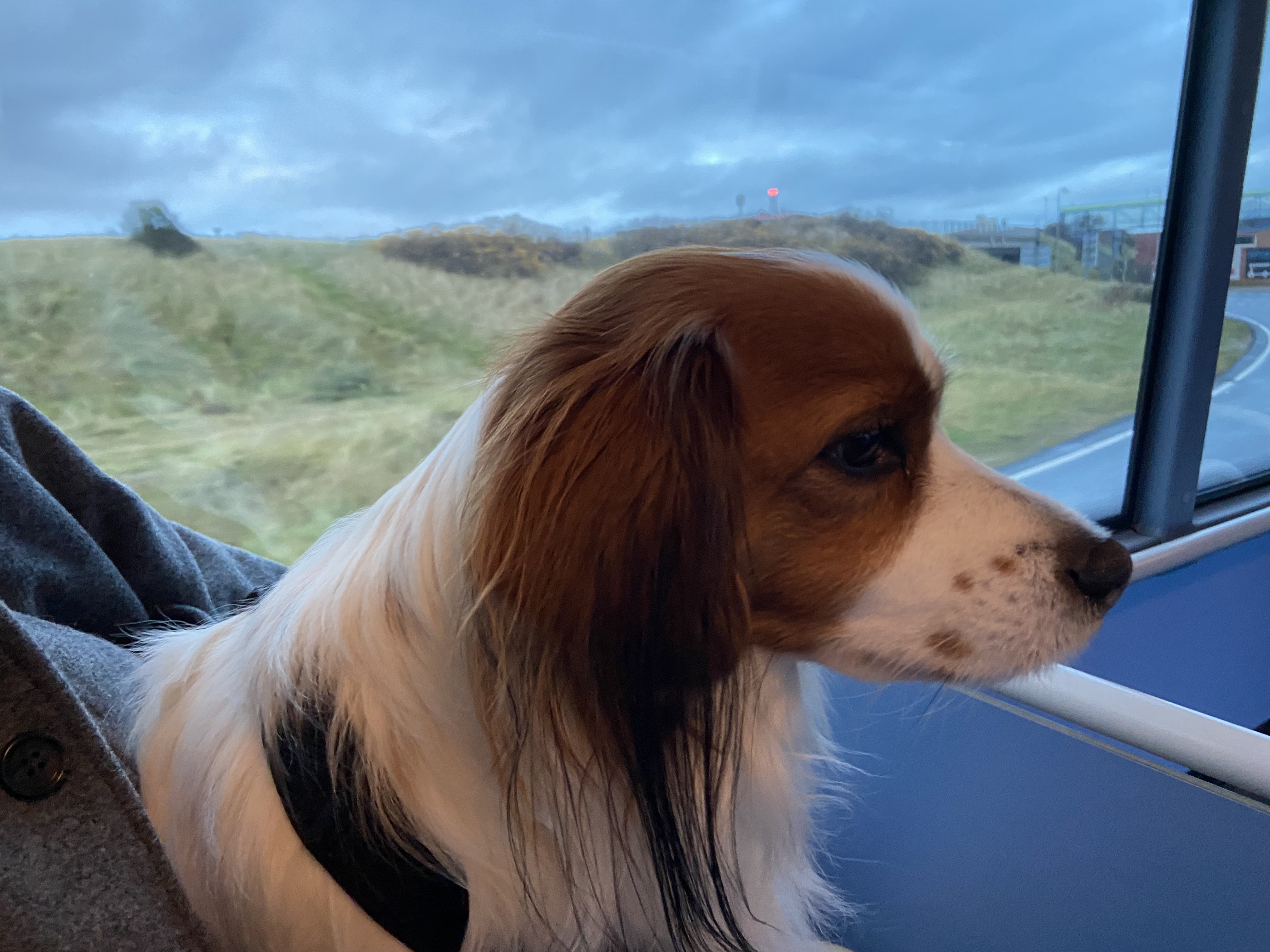
As you can probably see from the photos, Triar and I are taking a lot of walks at dawn and dusk. It’s nothing like as extreme as it was in Norway, but it’s good to see the days lengthening. C took me out on a welfare visit on Monday, albeit a very brief one. The report had come in from a vet at the slaughterhouse, which seems to be quite common here. For minor welfare issues at the abattoir in Norway, I’d probably have looked at the case myself, assessed whether I thought there was a significant problem and then dealt with it myself if it was something minor or if I thought an animal had been transported when it wasn’t fit.

Here in Scotland, those cases come to us for assessment of welfare on farm and the local authority decide whether the laws on transporting animals were breeched. Many of the animals also go through markets or are bought by dealers on their way to the slaughterhouse, which adds in another layer of complexity in the case and stress for the animal. When looking at a welfare case that went to market and was bought by a dealer who then sold it on to the slaughterhouse, you have to consider whether the market that sold that animal on and the person who bought it there ought to have spotted the problem. Also whether the issue worsened during that process. Much less complicated when it’s only down to the farmer who sent it and the driver who brought it.


Still, that case and another I dealt with myself have helped me get to grips with the system a little bit. I will probably be capable of managing minor cases myself quite shortly. Now I have to start to get to grips with dealing with tuberculosis investigations, which look equally complicated, perhaps more so. That’s something I haven’t been involved in at all in Norway, so it will be interesting to learn.

I should imagine it’s going to be mentally quite tough. The farms we visit will be dealing with confirmed outbreaks and though the aim is to get rid of a risky disease, telling a farmer that some of his animals will need to be culled, and sometimes many of them, isn’t going to be easy. TB is quite slow moving, but also near silent in the early stages. It can spread a long way before anyone picks up that it’s there. Still, trying to control notifiable diseases is a major part of my role and I’ve moved to an area of Scotland where the density of farms is relatively high. The important thing is to learn to do the job to the best of my ability. If the farmer is going through something tough, the last thing I want to do is add to his or her problems.

Thanks for reading. Have a good week!

Triar’s Travels

It was wonderful to catch up with a few people when I was in the Stavanger area again. I missed seeing my friend Lynn when I was down in at the end of August and we met up for coffee in Sandnes. Then my ex-boss Guro got in touch, so we went for a short walk together and ate delicious pumpkin soup that she brought. Guro also works for Mattilsynet in animal welfare and health, so it was interesting to compare notes about the tiny office in Finnsnes, compared to the much larger scale operation in Sandnes where she works.

We also celebrated Charlie’s birthday, on the 6th November, with food and cake.

It was lovely to catch up with people and also to eat cake, but most of this blog is going to be about our journey, and in particular about Triar. Back when he was younger, we worked hard trying to get him used to doing different things. We took him to the Christmas Marker in Egersund to get him used to crowds and into Stavanger on the train to dog-friendly coffee houses, where he learned to lie under the table while we ate.

But for the past three years, he’s lived a much more isolated life. Occasionally he went into eateries with us, but he never really settled and it was too inconvenient and expensive to be worth pursuing. The nearest train was a two hour drive away in Narvik and somehow, we never got round to taking him on the fast boat to Tromsø.

So I was interested to see how he would cope when he was thrown in at the deep end. The first leg of our journey was on the Fjord Line ferry that goes from Stavanger to Hirtshals in Denmark. We had a dog-friendly cabin, which was very comfortable. Fortunately, the weather could not have been much better and within minutes of boarding, Triar was feeling very relaxed.

Though I woke up a few times to find the boat gently rocking, Triar slept right through the night and seemed very cheery as we arrived in Denmark.

We had booked a taxi for 08:30 to take us from the dock to the railway station, but when I called the taxi firm, they said they had the booking marked for 09:00 and couldn’t get there sooner. Fortunately, there was a bus available, which we managed to hail, just as it was about to leave. We asked the driver whether we could bring the dog on board and he said of course we could.

Triar was such a good boy on the bus that the driver climbed out as he dropped us off to meet him properly. Triar can be a bit stand-offish with new people, but when the driver got down to his level and held out his hand, Triar did go up to him.

Soon we were on the train on the way to Hamburg, changing at Lindholm and Fredericia. We had a ticket for Triar, but the rules said that he had to stay on the floor. We had brought along some of his favourite toys and a chewy stick that Charlie had bought him. I was delighted to see how quickly he settled in.

Between Lindholm and Fredericia, he spent a good long spell chewing:

The Danish trains were very comfortable. On the last (and longest) leg of our journey, he was showing some signs of restlessness, but by the time we arrived in Hamburg, I was feeling very proud of how well he was coping.

The last leg was in a taxi, where he behaved impeccably, sitting at Anna’s feet on the floor. Indeed, he was much calmer than the taxi driver who, as well as making good use of his horn, ended the journey shouting at a woman who complained because he was blocking the cycle path outside the hotel.

Fortunately, the next leg of our train journey was a little shorter. I was thrown for a moment in the morning when I received an email with the words “Journey is cancelled” in large letters across the top. Fortunately it was only from Deutsche Bahn to say that the second train of the day, between Osnabrück Hbf and Amsterdam Centraal was not running. I had panicked for a moment, thinking it might have been the ferry crossing. Here Anna demonstrated the level headedness that had made me so glad when she accepted my invitation to come on this trip. Within moments, she had found information about alternative trains and we arrived in Amsterdam only half an hour later than originally planned.

Triar was mostly a star on the train. A lady with a toddler asked whether it would be okay for her daughter to be introduced to him. He has always been good with children, having spent his earliest days as a puppy with Wivek’s youngest daughter, Tiril, loving and hugging him regularly. Anna carefully controlled the situation, making sure Triar was sitting quietly and offering him food as the tiny girl stroked him quietly and gurgled with pleasure. Her mum made very sure her daughter was gentle and the whole thing went off very well. Triar seemed to enjoy it too.

Unfortunately, he did slightly blot his copybook a little later. Up until this point, he had remained perfectly calm, not moving a muscle, even when various guards came and stood right next to his head in their shiny black boots to inspect our tickets. But a woman came and stood right in front of him, and unlike the guards, she stared straight down at him. For the first and only time on our long journey, he stood up and lunged towards her, letting out a loud bark. Unsurprisingly, she quickly scurried away. I felt frustrated that we hadn’t controlled the situation better, but he had been so good up to this point that I hadn’t been expecting it. To my surprise, the woman with the baby girl still left her on the floor quite close to him and though we kept him on a fairly short lead, he settled back down and was well behaved for the remainder of the journey.

The last leg out to the AirBnB we had booked was on a jam-packed tram. Anna lifted him onto her knee and despite the crush of noisy people all around him, he lay in her arms and went to sleep.

All in all, the trip has gone very well so far. Though Triar looks incredibly sweet – so many people smile when they see him – he has a fairly typical Kooiker nature in that he can be wary of people he doesn’t know. We’ve been very isolated in our little snow-bound house and I’m going to contact a local trainer as soon as we get to Settle because we need to work again on his socialisation, both with people and with other dogs.

Most people probably saw a wonderfully calm, well behaved dog. I know I would have been impressed if I’d seen him as a stranger’s pet. I’m always impressed to see a relaxed dog on public transport. But that single moment with the lunge and the bark was a reminder of how quickly things could potentially go wrong. He’s never bitten anyone, but barking and lunging is alarming, particularly to anyone who’s scared of dogs.

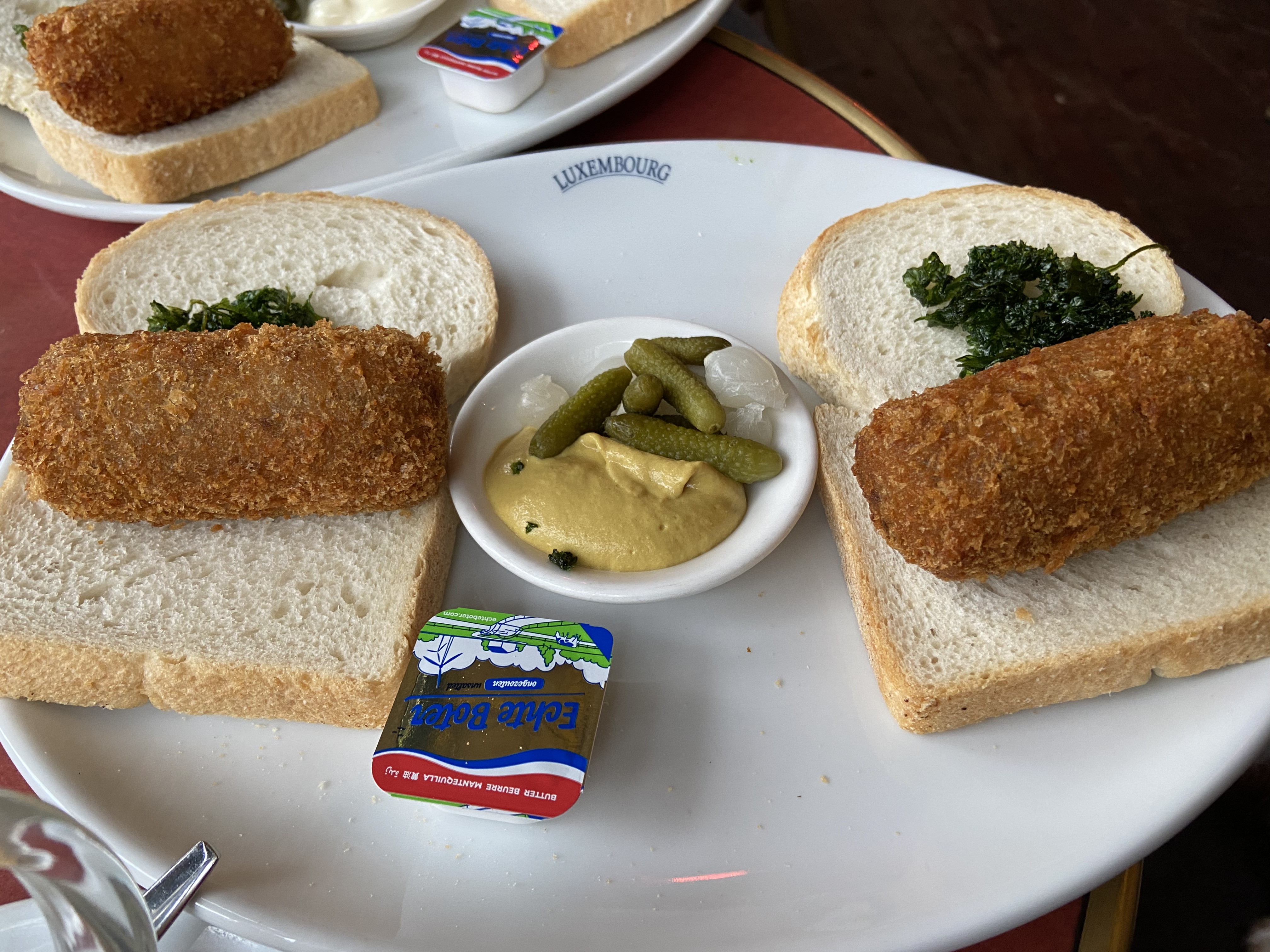
We spent yesterday walking around Amsterdam in the rain, stopping in a cafe to eat some traditional Dutch kroketter. I asked the restaurant owner if we could bring a dog in and he smiled and said that if it was a cute cuddly dog, it was welcome to come in.

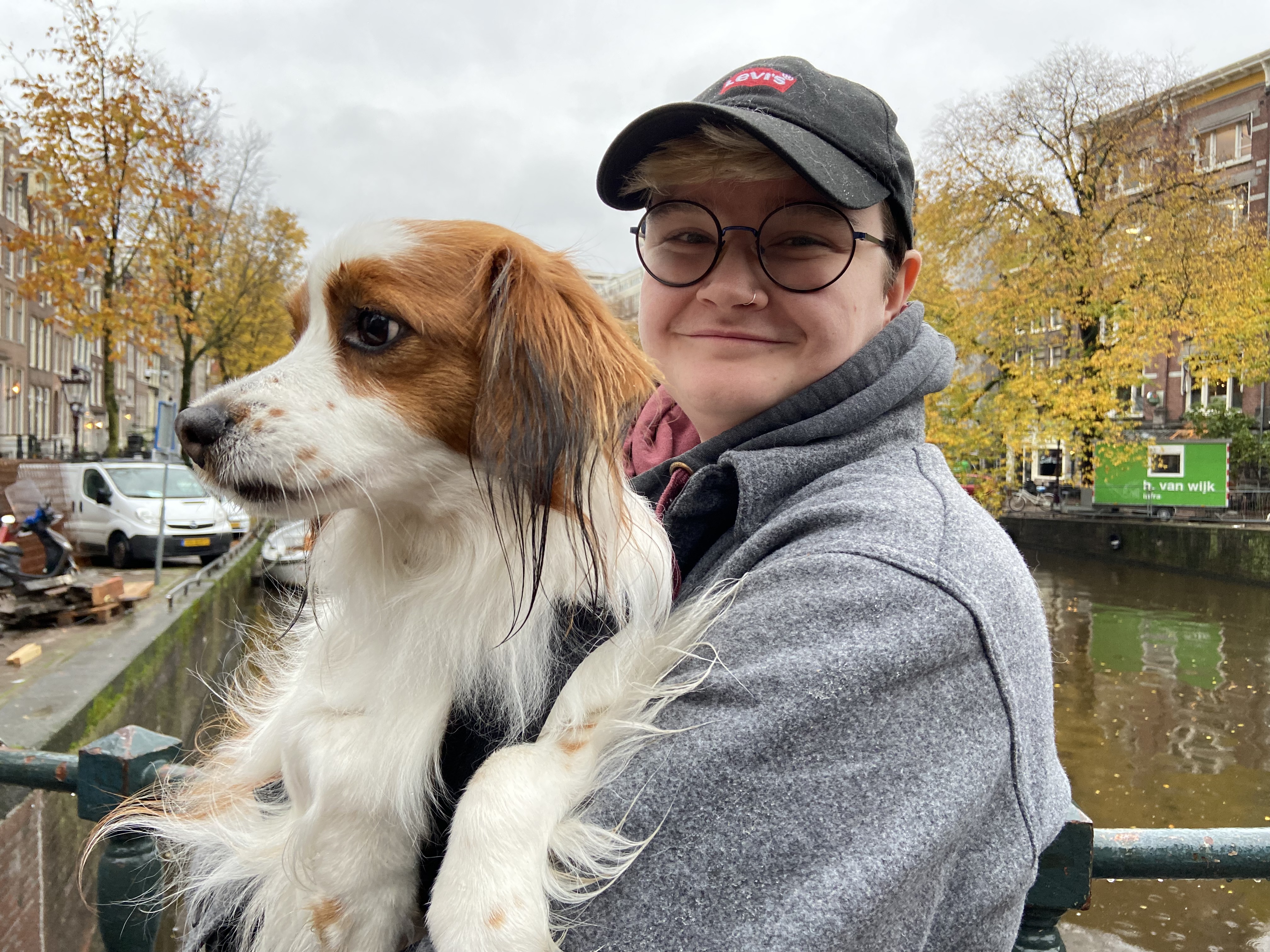
Here he is, under the table. I think he probably qualified, though fortunately none of the waiters put his cuddliness credentials to the test. He loves family cuddles, but there are limits!

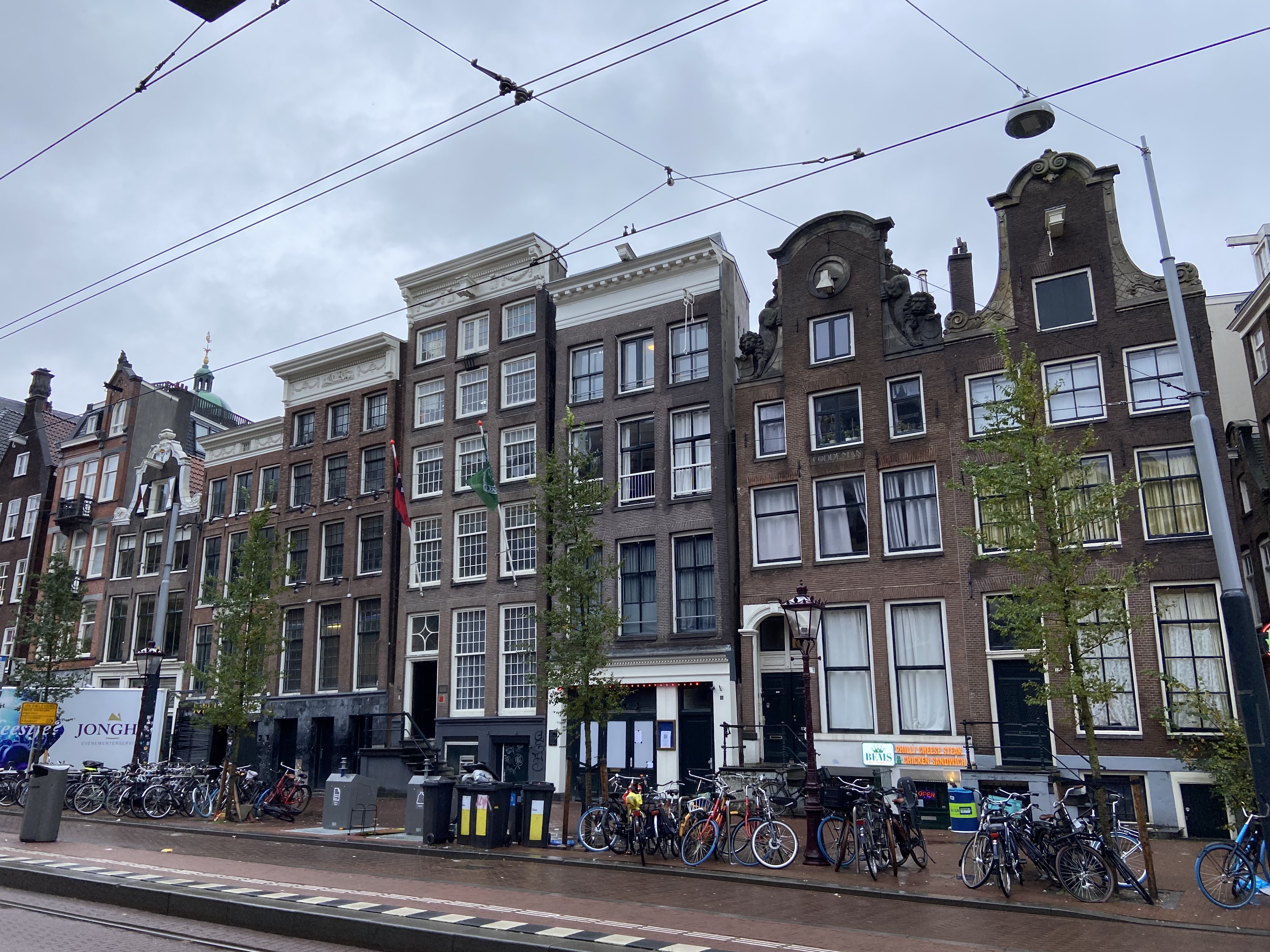
I would love to come back to Amsterdam for a longer holiday. It’s a very attractive city with its canals and distinctive town houses.

We also completed an essential task yesterday. Triar had to go to the veterinary clinic and take a worming tablet before he enters the UK. I think the vet was impressed with our organisational skills as we arrived with a lump of pâté wrapped in cheese and the tablet was very quickly dispatched. I was also relieved his microchip was still working. It was unlikely it would fail, just at this crucial moment, but if it did, it would be potentially disastrous. We’ve travelled from Norway, through Denmark and Germany to the Netherlands without any kind of passport check, but if Triar isn’t allowed into the UK, we couldn’t take him back to Norway either as the same, stricter rules apply in both places..

This evening we will set off on the last leg of our long journey. An overnight ferry will take us to Newcastle and so tomorrow, assuming all goes well with the UK customs, Triar and I will be starting our new life in the UK. I hope you’ll join us on our new adventure.

Farewell to Ice and Snow

Current Location: Ganddal, South-West Norway

Another emotional week, this week. If you’ve been following for a while, you will understand why I was nervous of handing over the house, more specifically the cleaning. Shirley, knowing all that history, volunteered to come and help me and was absolutely wonderful.

As a retired nurse, I thought that if there were any problems, she’d be a great witness. She is also an absolute whirlwind with a mop. I think she cleaned three rooms in the time it took me to get the bathroom sorted out. She also brought along a kettle and delicious biscuits and we sat and drank coffee, gazing out of the kitchen window at the snowy bulk of Fagerfjell (Mountain) that rises up behind the house. It was lovely to have some pleasant last memories after the furniture removal debacle!

My last two days at work were lovely. I was on the early shift, checking the live animals both days. I had quite forgotten that Tuesday was Halloween, so I was especially delighted to come back from the lairage to find that Trude had made our office really cosy with Halloween themed decorations, sweets, and a cake.

A few last memories of the lairage: there were wooly pigs there on my last day. Like many of the pigs, they were fast asleep when I arrived to look at them, so I took a photo. Actually, I think the black one facing me in the middle might have clocked me, but it’s a typically peaceful scene from the pig pens, albeit with extra wool!

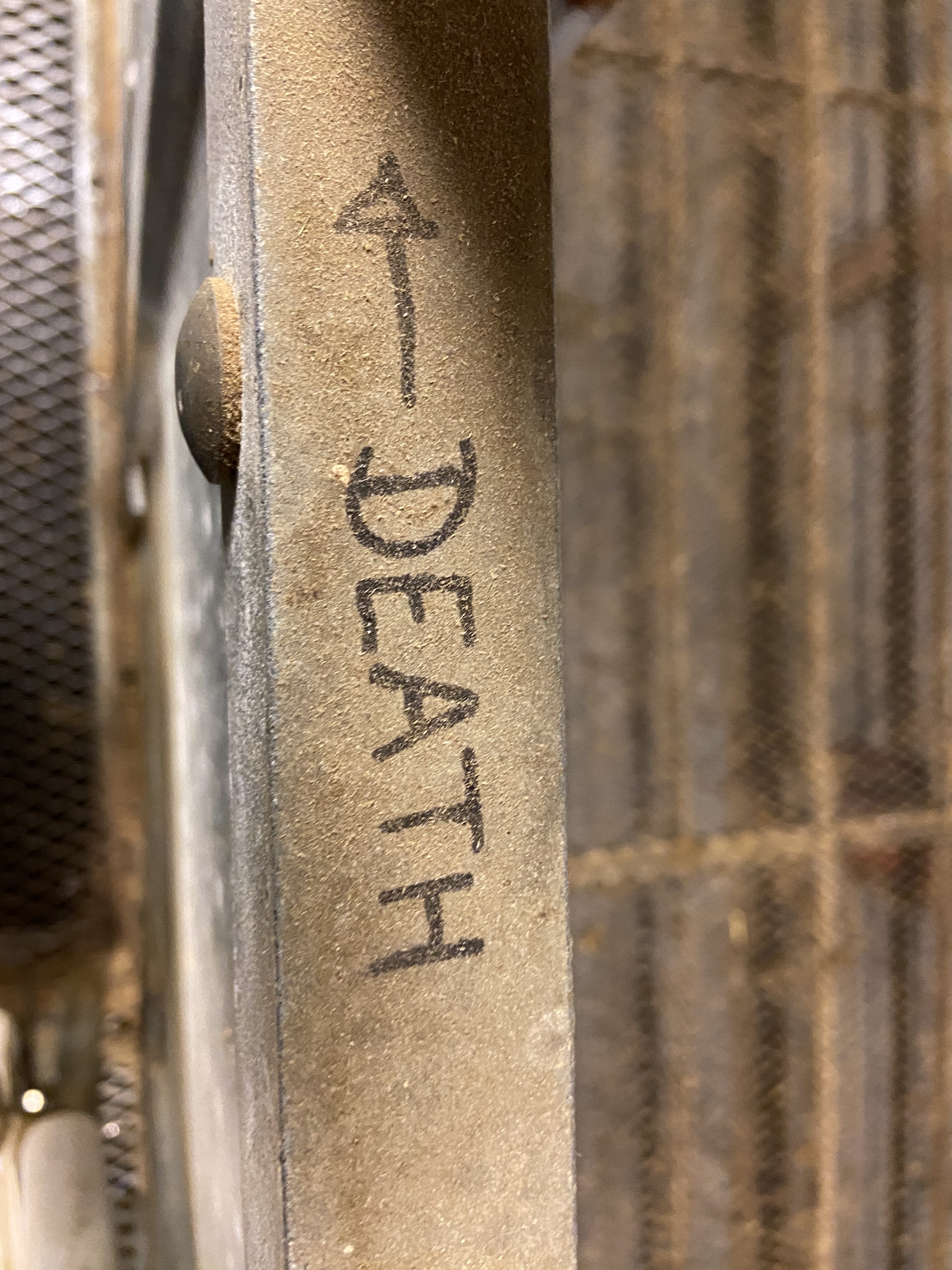
There are a couple of bits of grafitti that have amused me over the years. Someone with a dark sense of humour has added a direction marker for any poor sheep in the «cold lairage». Fortunately, with all the sheep being Norwegian, they won’t have understood it if they saw it.

And there is a cheerier message on the back of one of the gates we stand behind when the animals come in. There’s not too much danger from a flock of sheep, even if they do run straight over you, but there are also big bulls brought in on a regular basis, and then this i very relevant.

Translated, it says, «You are safe here, Amen». A very reassuring message.

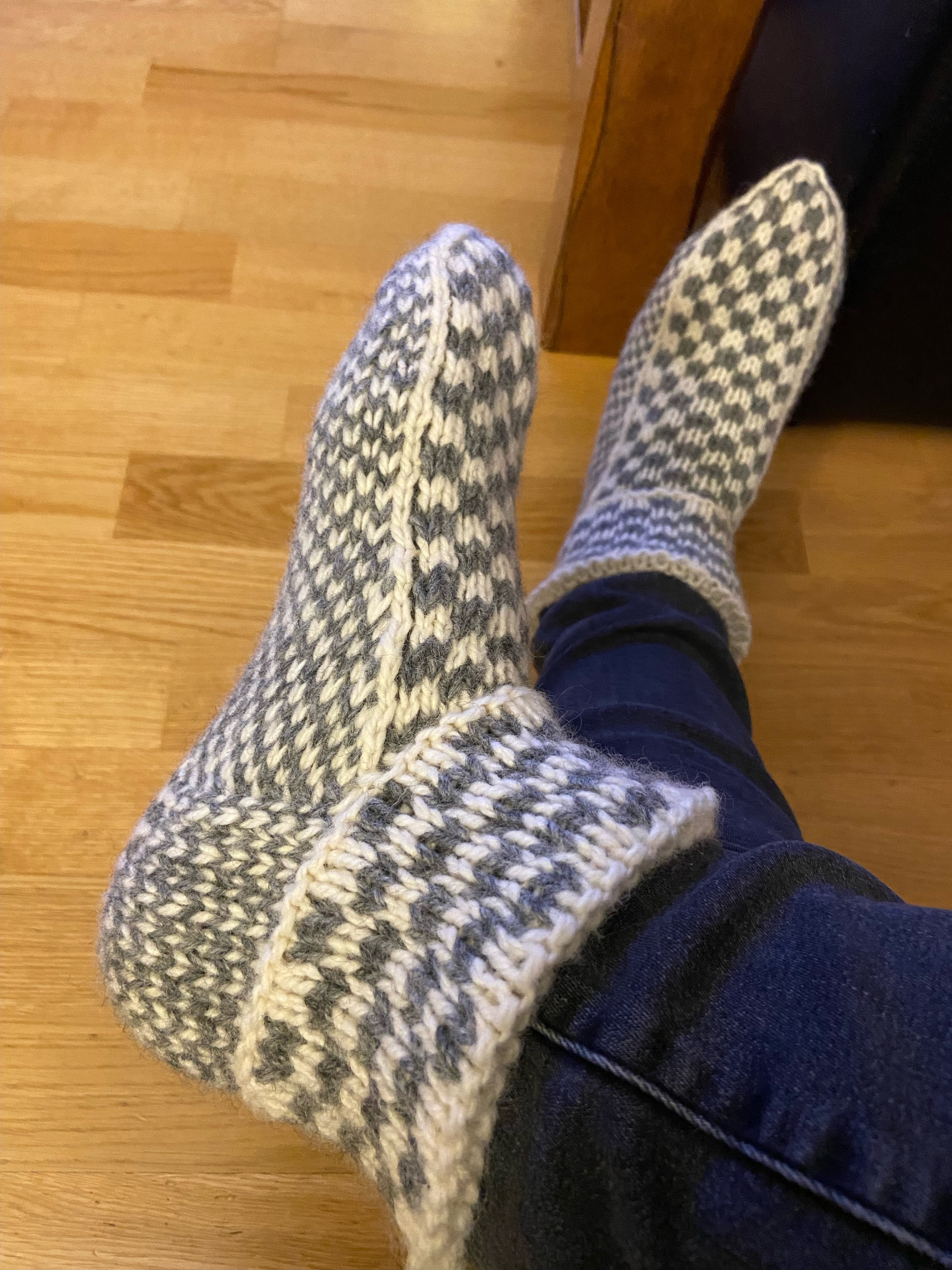
We had pizza together at lunch time and I spent the rest of the day showing Ingrid how to do a few last things. I also hugged almost everyone, which was lovely, given the restraints of Covid that were in place for so much of my first couple of years. I was also given some gifts, including a lovely pair of Målselv socks, which I can confirm are deliciously warm as well as very pleasing to look at.

The sale of the car to Kaj and later of the house, went through without a hitch. Both had originally been planned for 1st November, but as the house was ready before that, I handed over both sets of keys on the 31st and then drove to Tromsø with John. I had two nights in the lovely flat he and Yoana have rented. They’ve made it really cosy. I bought them a Nespresso machine as a housewarming present. Hopefully they’ll get a lot of use from it.

On Thursday morning, I walked through the snow to catch the bus that would take me to the airport. It was a beautiful day and I managed to capture a last photo of Tromsø as the plane took off.

It was a lot greener in Stavanger when I landed.

And of course, this lovely boy was waiting for me at the airport. It was wonderful to be reunited.

So now I am in Stavanger for a few days. Andrew came round on Thursday evening and yesterday and tonight Anna will be joining us. She will be coming with me on the next leg of my journey. We will take a boat from Stavanger to Hirtshals in Denmark on Tuesday evening.

And for regular readers, I have been asked to continue blogging by so many people that I will continue when I get to Scotland, so I hope you will all join me as I begin the next stage of my life as «The Vet Who Came In From The Cold».

Passing Through

This is going to be something of a scattergun post. I’m sitting in the SAS lounge in the international area of Oslo Airport, though not in the true inner sanctum of the Diamond and Gold cardholders. I bid for an upgrade (it seems several airlines do this now) and got it for my Oslo – Bardufoss flight. As upgrading that flight was cheaper than upgrading the Manchester – Oslo flight, I thought I’d be limited to the domestic lounge, but cheekily tried the international one and, to my surprise, was waved on through. There’s unlimited food in here, so with nine hours to kill, it’s probably cheaper than paying for a couple of meals and drinks.

Anyway, most of this post will be photographs from my holiday. I don’t have my computer, so I’m not going to type much, but I hope you enjoy a whizz through of a walk along Water Lane and a tour of Skipton Castle.

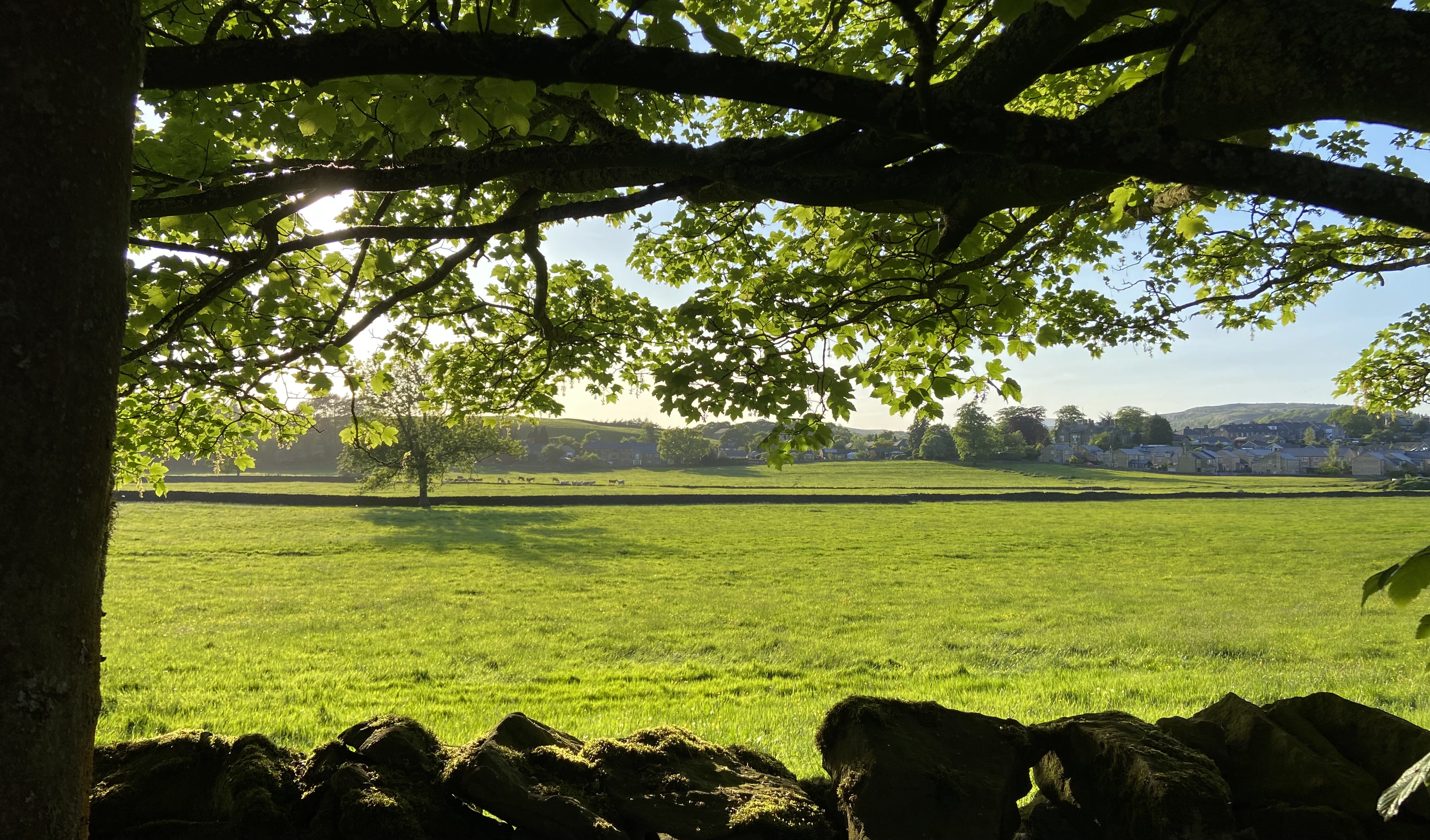
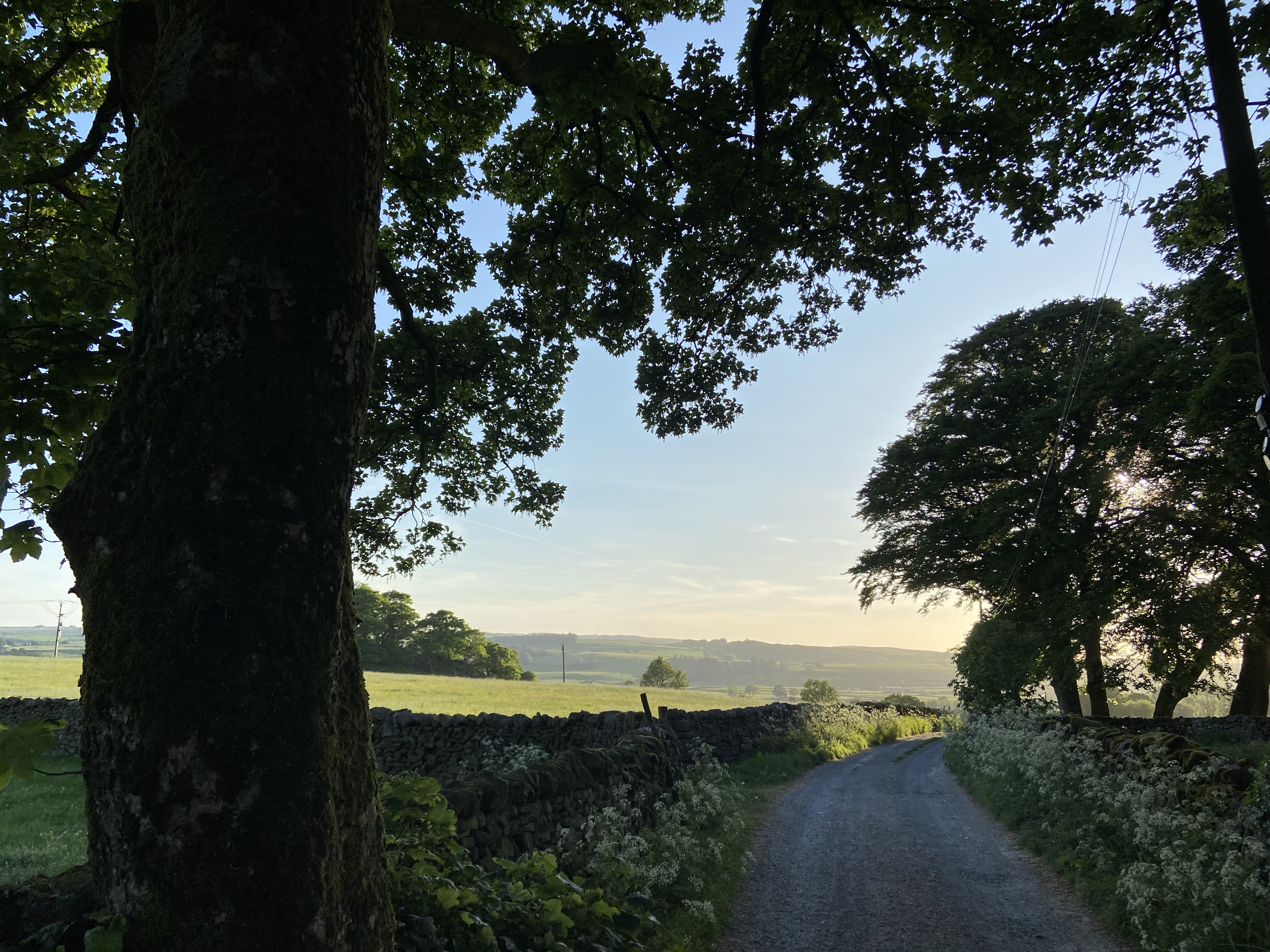
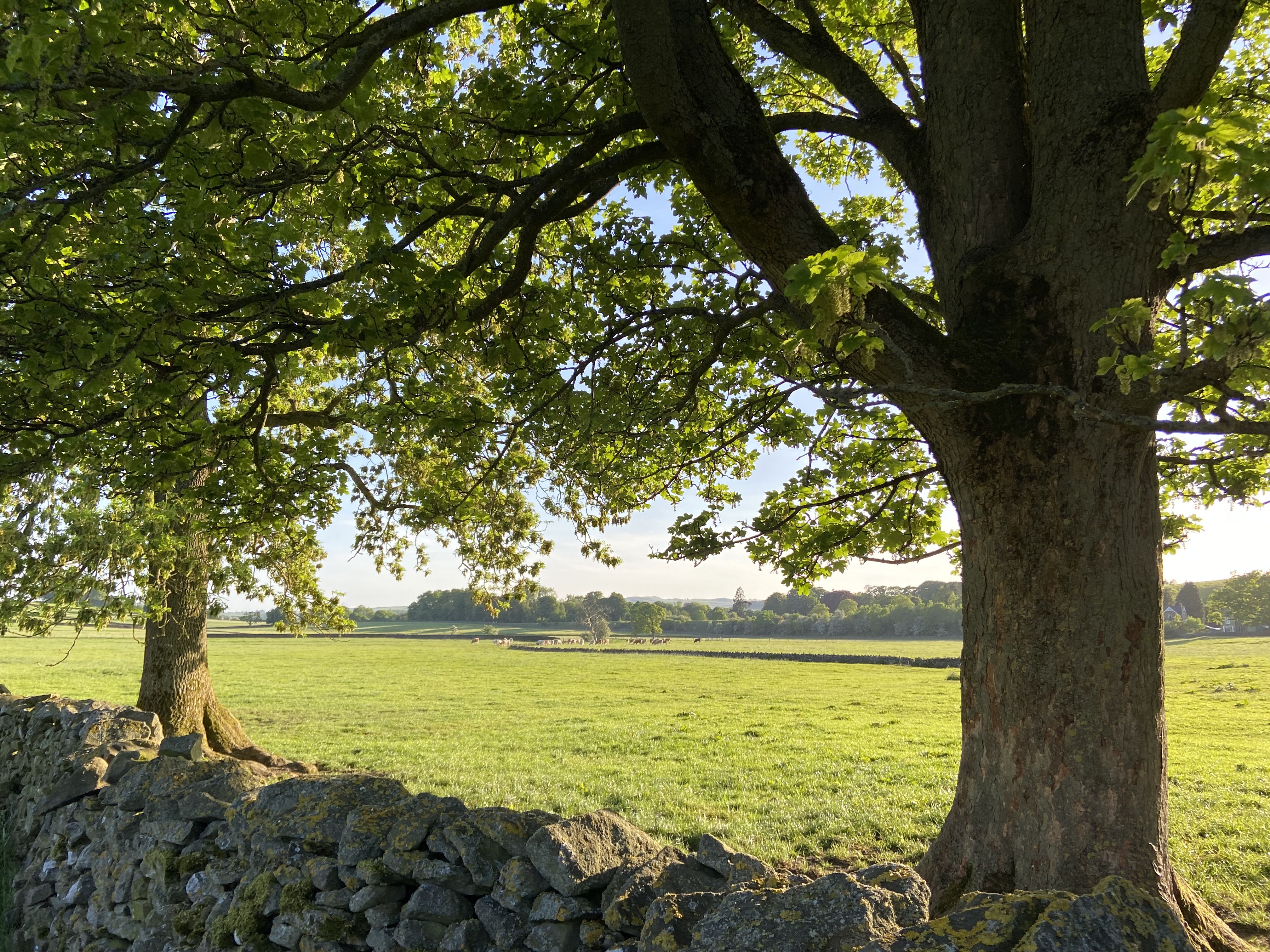
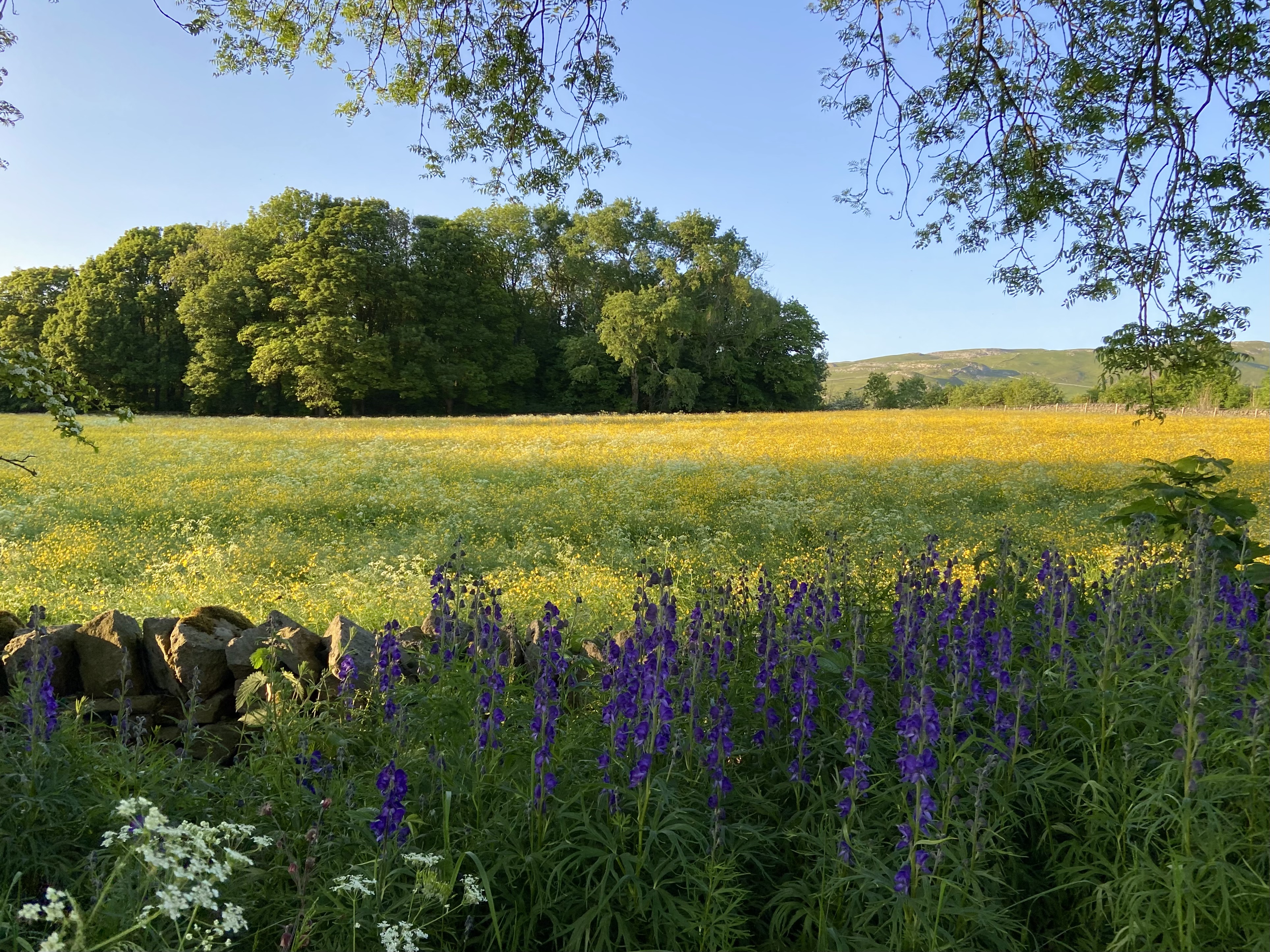
Firstly a walk with my dad. It was a gorgeous evening and we wandered across green fields and over stone stiles to get to the lovely, shadowed Water Lane.

There were birds singing in the trees, and though we didn’t see them, I stopped to identify some of them using the Merlin birdsounds app. There were chaffinches, blackbirds and a robin, which I wouldn’t have known without the app. I recommend downloading it, if you’ve ever wondered which bird was singing.

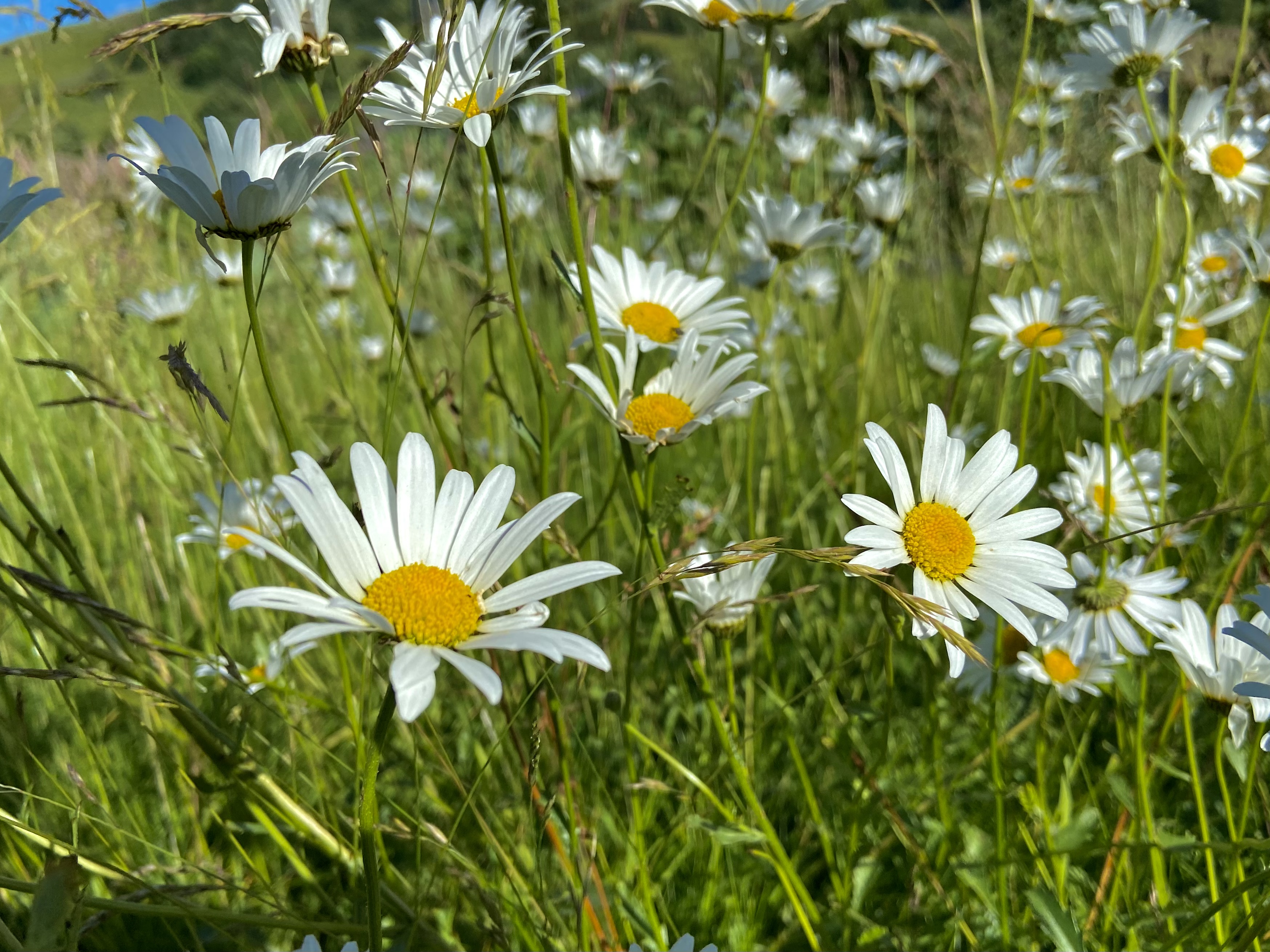
We left Water Lane and turned onto Lodge Road. So many flowers, though as a vet, I definitely wouldn’t recommend making hay or silage with all those buttercups.


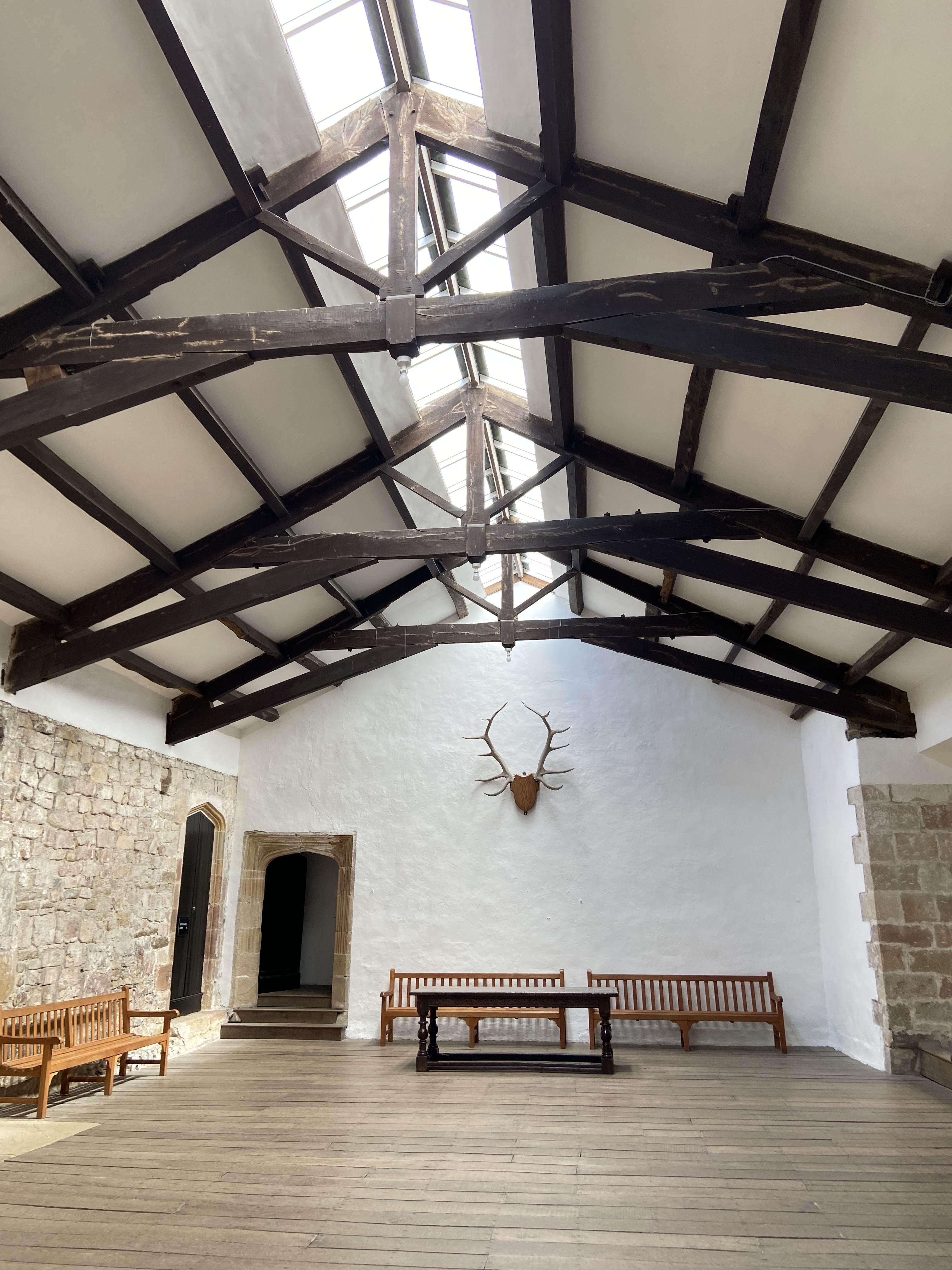
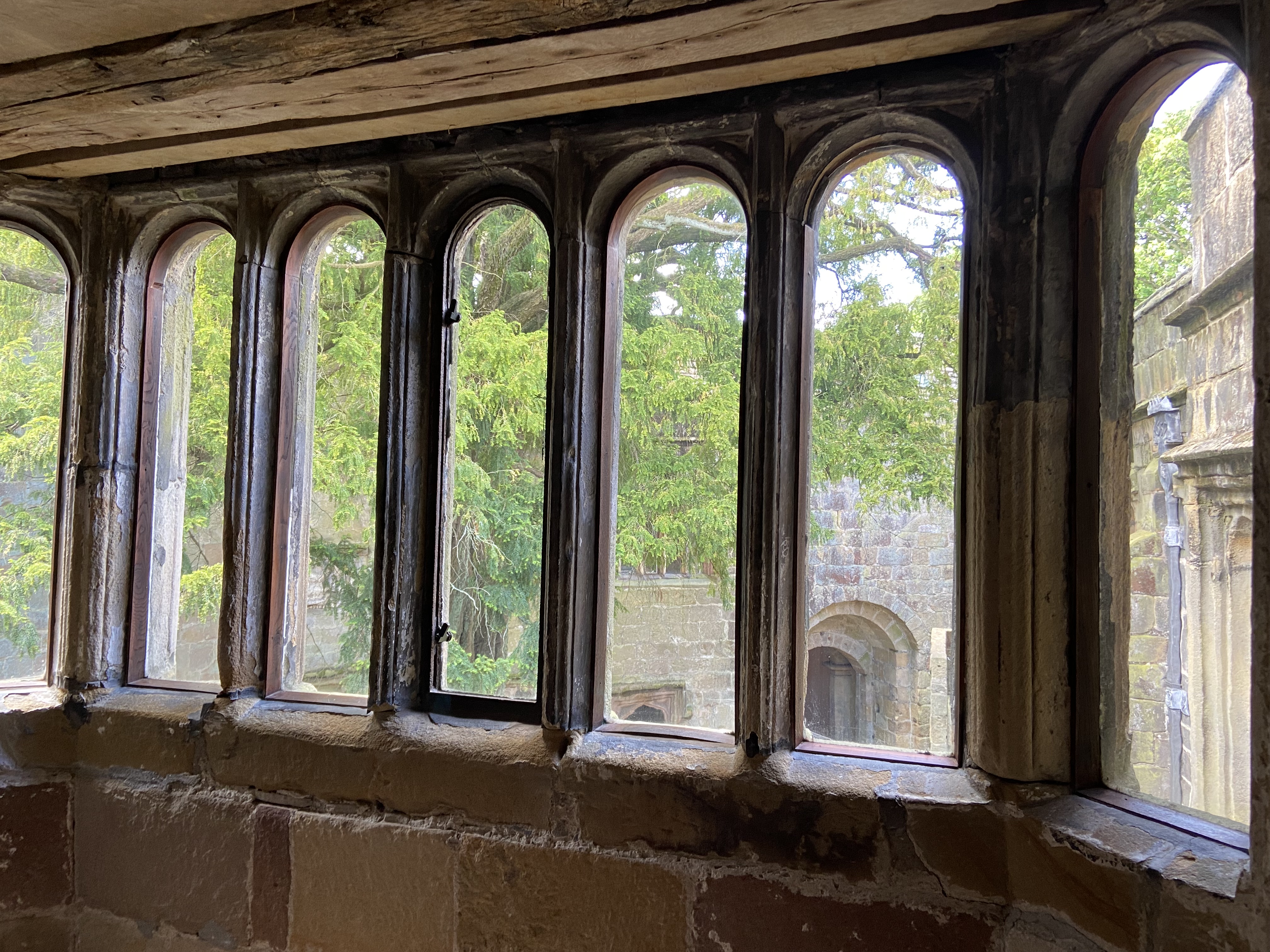
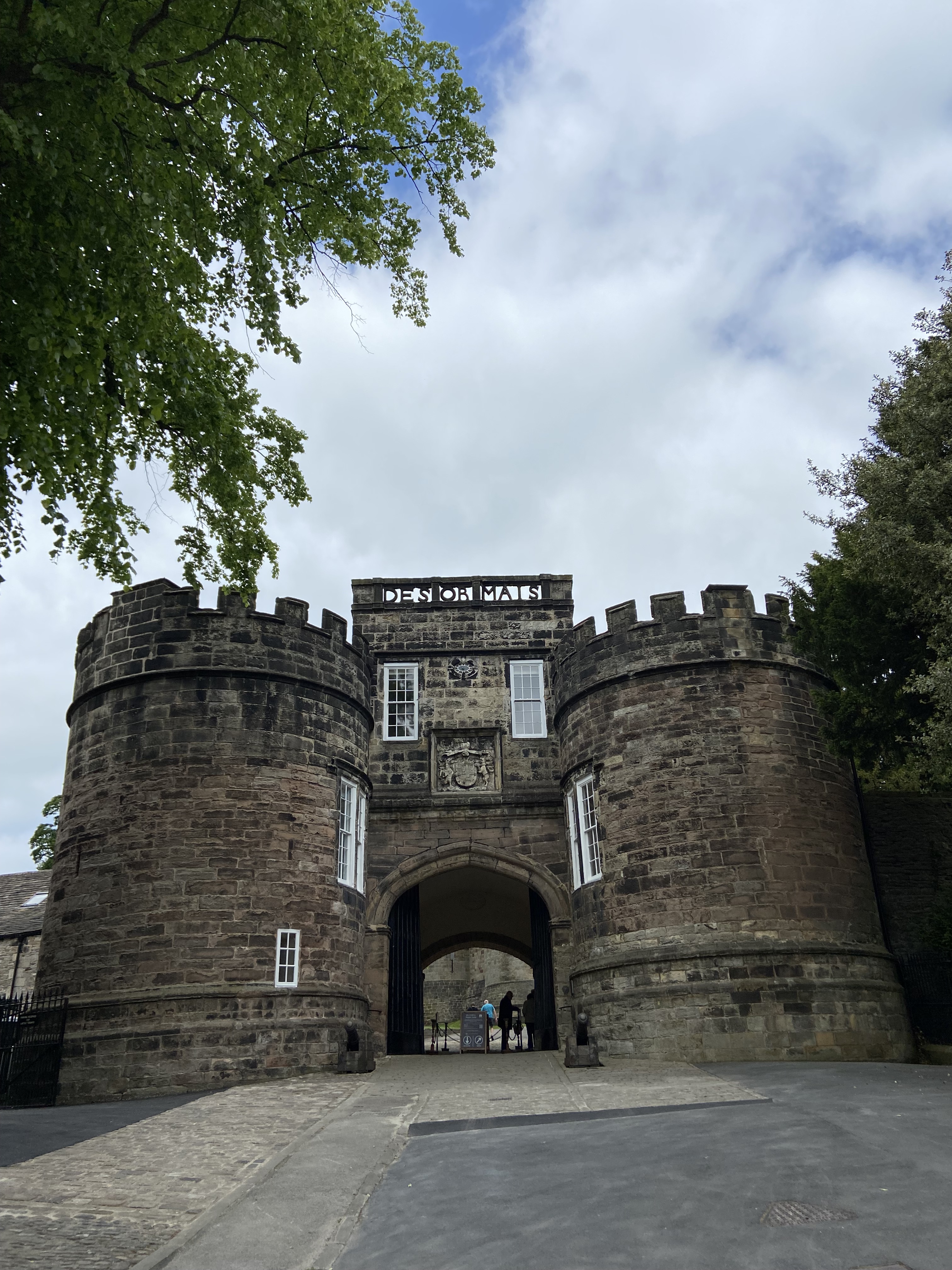
Skipton Castle was interesting. There are very few ancient buildings in Norway, due to the custom of building using wood. I love exploring old, stone buildings, especially in summer, when the thick walls and small windows make for cool, shady protection from the sun.

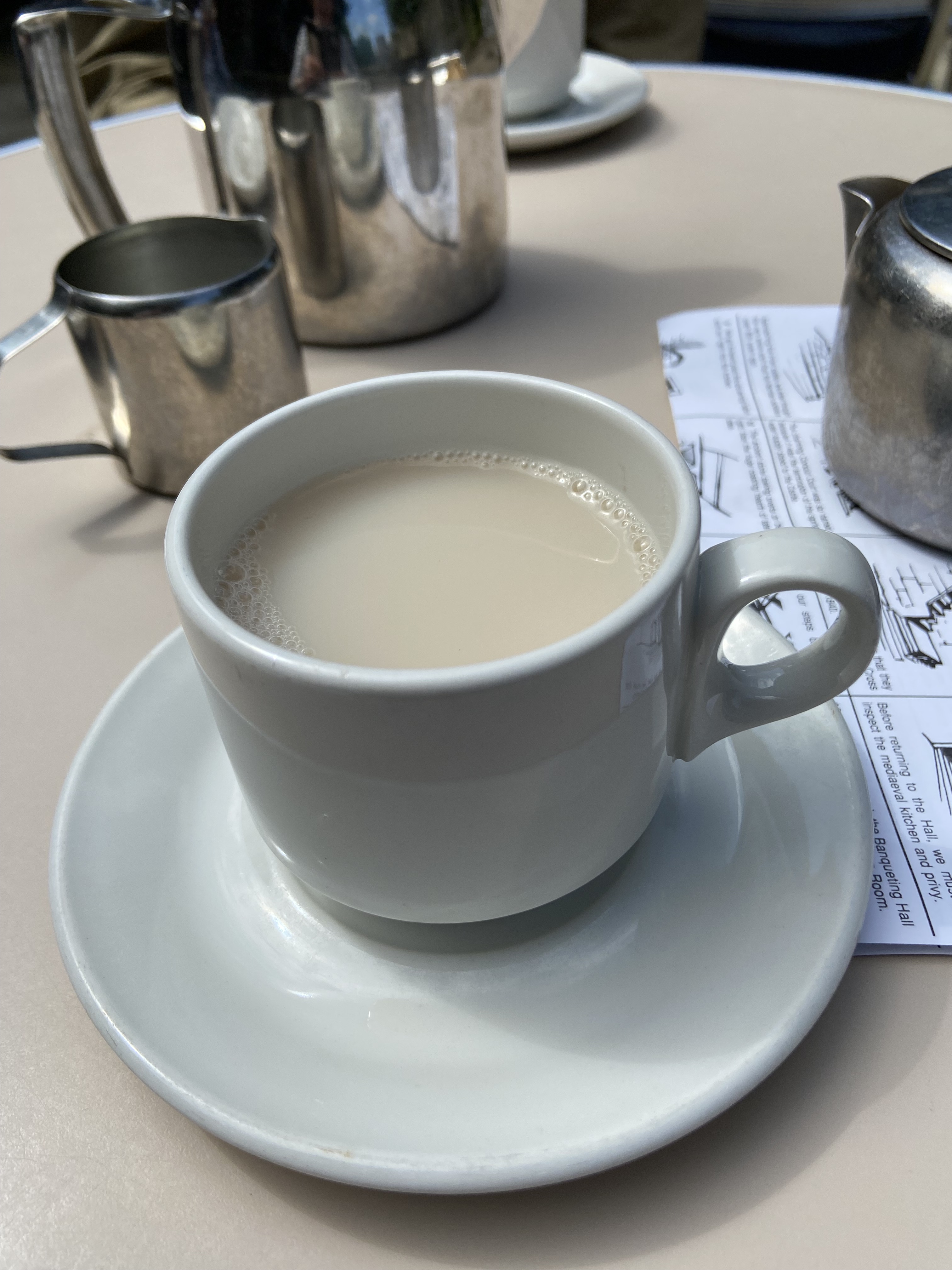
We stopped for a very English cup of tea in the Castle grounds. With hindsight, I should have stuck to plain Yorkshire Tea. Instead I plumped for Chai tea. I think there was a bit too much water for the single teabag…

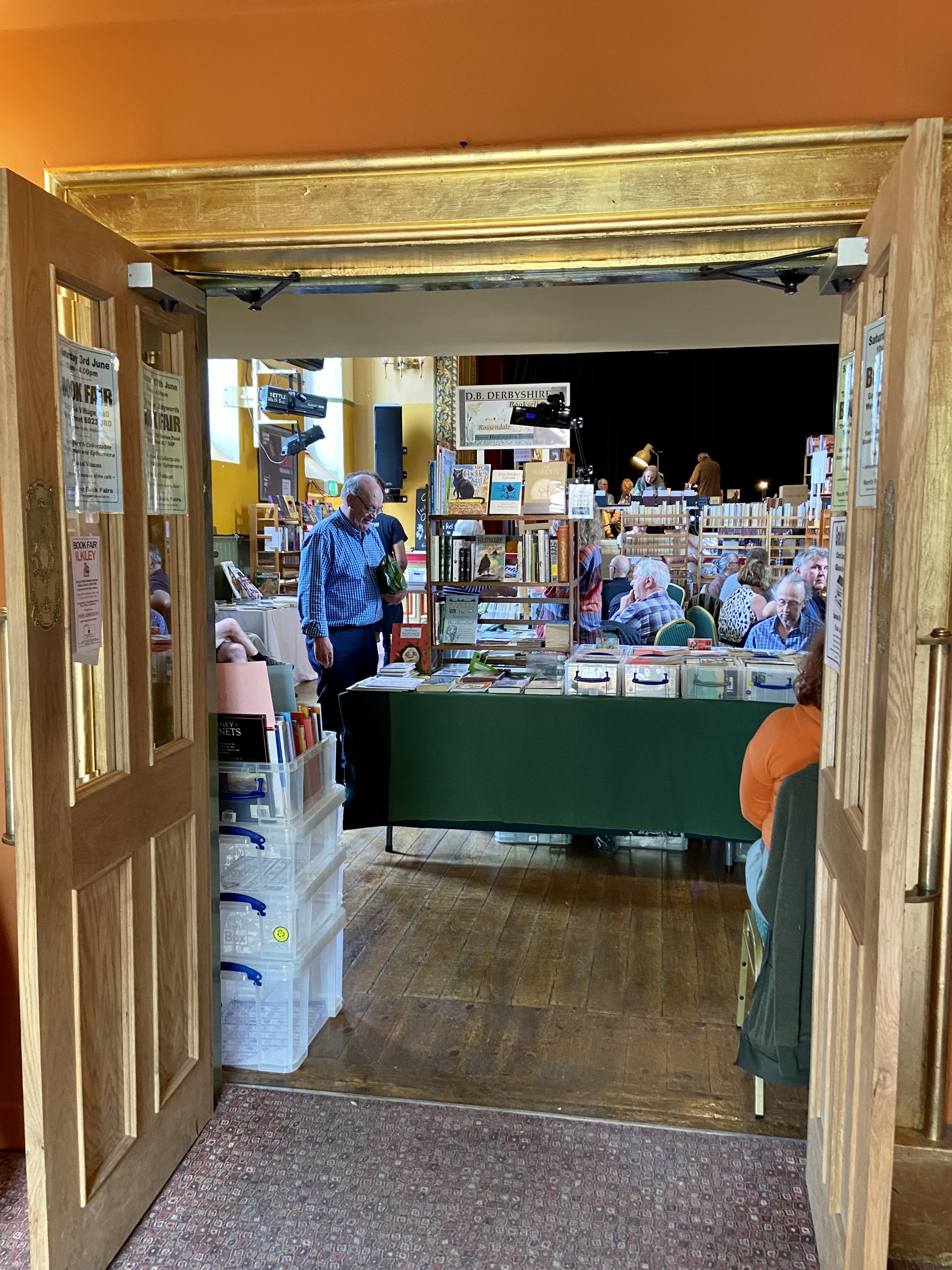
Add in a book fair:

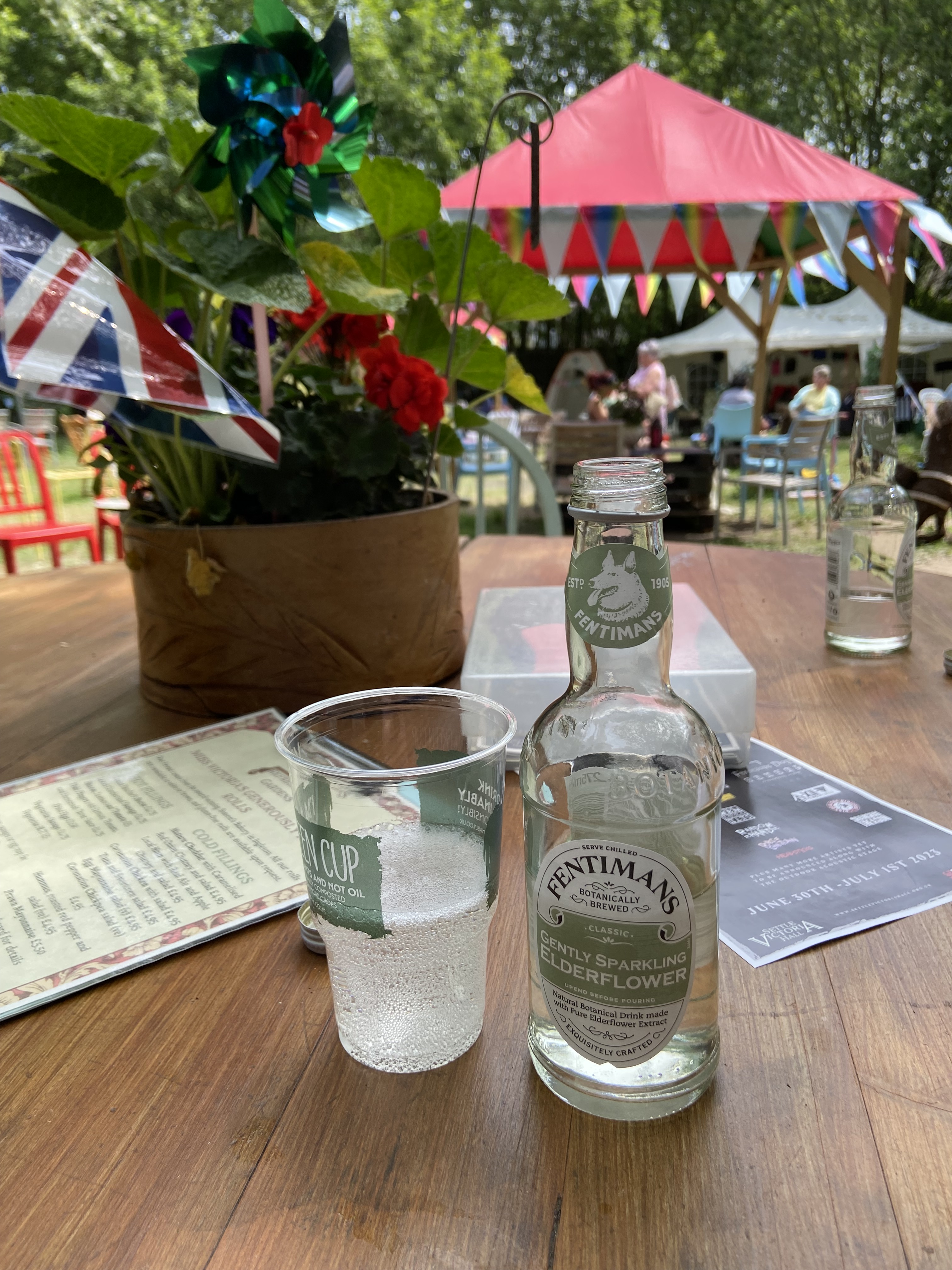
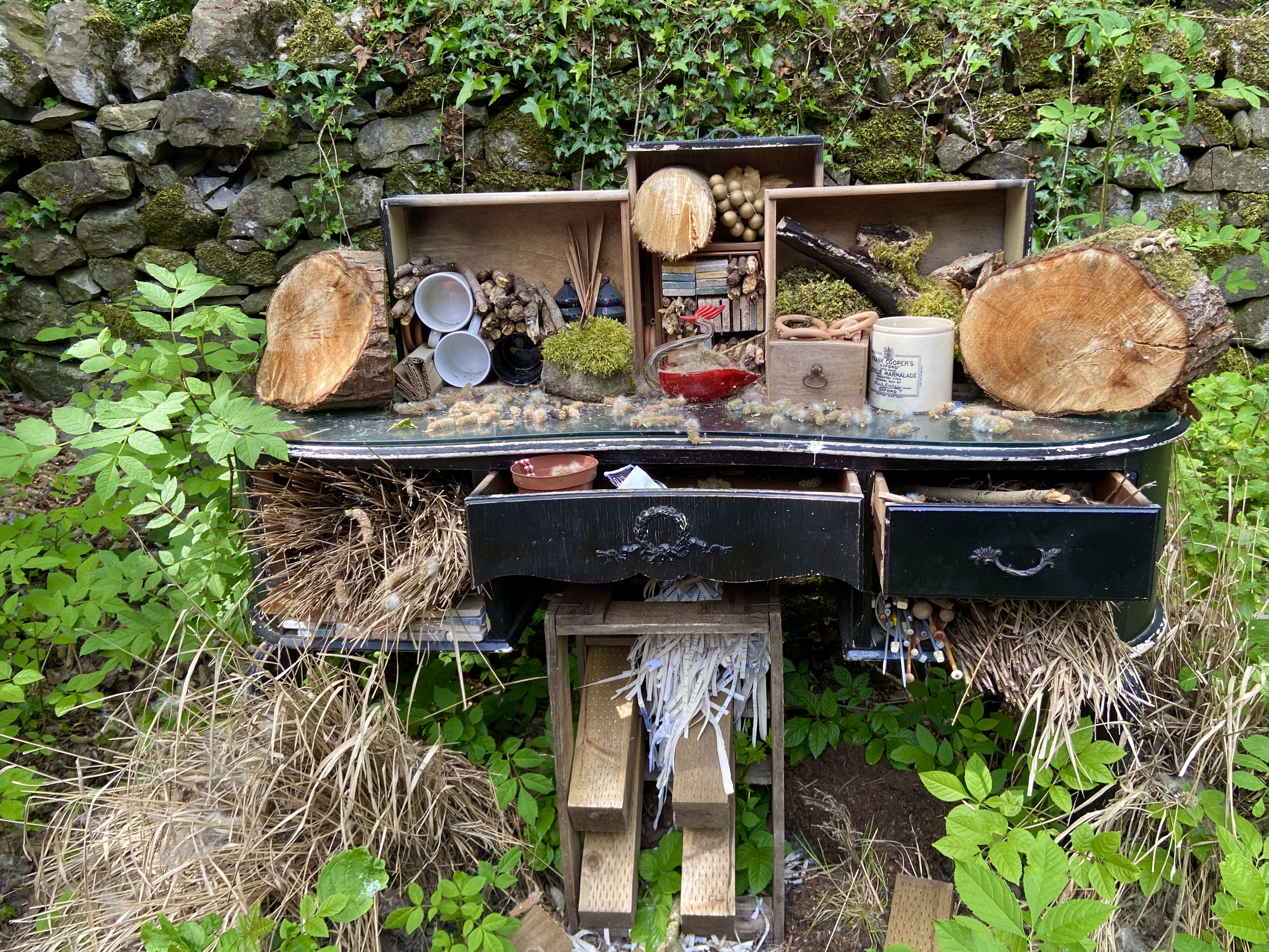
And some Elderflower Cordial (beside attractively presented bird and insect supplies) in the garden behind the Victoria Hall, where the book fair was held…

…I’ve really had a very pleasant week.
The Rest is History

Sunrise/sunset: Up all day.

It was hard leaving Yorkshire. I left just after midday last Saturday and the last few hours were melancholy. I travelled to Gatwick on the train: a frustrating journey as I misbooked my tickets on the Trainline App and though I realised my error moments after I had done it, it couldn’t be undone. And so I walked through Leeds station and watched an almost empty train to Kings Cross leave ten minutes after I arrived there, then travelled to York, where two more trains to the same destination left before the one I was booked onto pulled in. Still, I stayed overnight in a Premier Inn near the North Terminal and set off at a civilised time on Sunday morning to fly home.

That day’s journey was somewhat hair-raising. I flew from Gatwick to Bergen, then from Bergen to Tromsø. The original plan was that John was to collect me from the airport, but as he was stuck in the UK due to the SAS strike, I planned on getting a bus from the airport to the fast boat and taking the last boat of the day, which left Tromsø at 8pm. All the connections were a bit tight, but despite a couple of delays and an almost interminable wait, while they unloaded the baggage for four planes onto the two, smallish luggage carousels in Tromsø, I arrived safely at around 10pm. Just as well as I was due in the abattoir at 6am on Monday morning. Had I not made it, I would have been faced with the interesting dilemma of which of my colleagues might be willing to take the two and a half hour drive to Tromsø at an unspecified time on a Sunday evening.

It’s been a fairly typical summer week at work. I was at the abattoir Monday to Wednesday, then on Thursday I set to, tackling the six new cases I’ve been sent. Fortunately, the abattoir is closed next week, so hopefully I will get at least half of the investigations under way then, and keep my fingers crossed that I don’t get another six in the meantime. The good news is that Gry is sacrificing some of the first week of her holiday to come out with me.
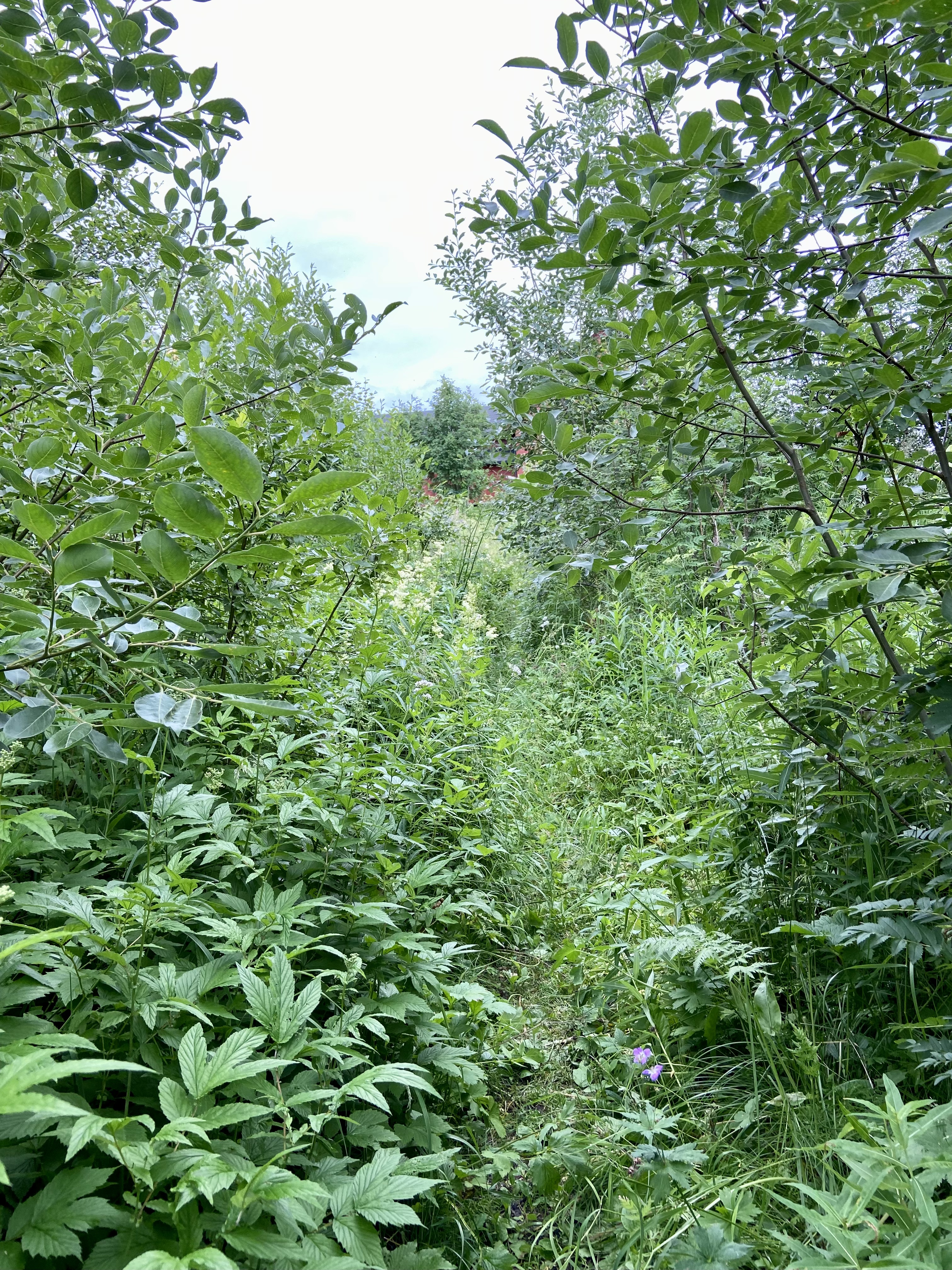
I haven’t been out and about too much this week, but Triar and I did take a tour down the pathway at the back of the house and round to the little harbour that lies near the bottom of the hill. I’ve commented before on the fact that most of the small paths are blocked in the winter due to the snow. When it’s a meter deep and regularly added to, they rapidly become impassable. But this is a land of extremes. While the long dark spell brings a blanket of white over the landscape, the light brings so much life that even the floors of dense pine forests are swathed in green. This was the path Triar and I took. The undergrowth is at shoulder height.
Rampant plants almost obscuring the path

And here’s Triar on the harbour wall.

Triar

Of course, all that growth means there are lots of insects. In particular, I love watching the bumble bees.

Bumble bee on a violet flower

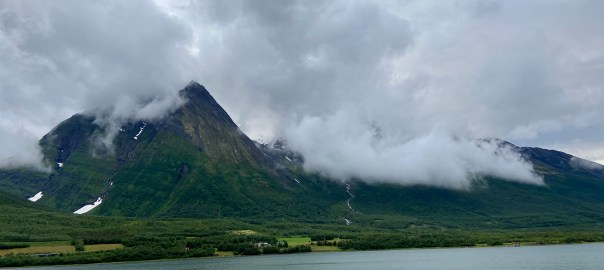
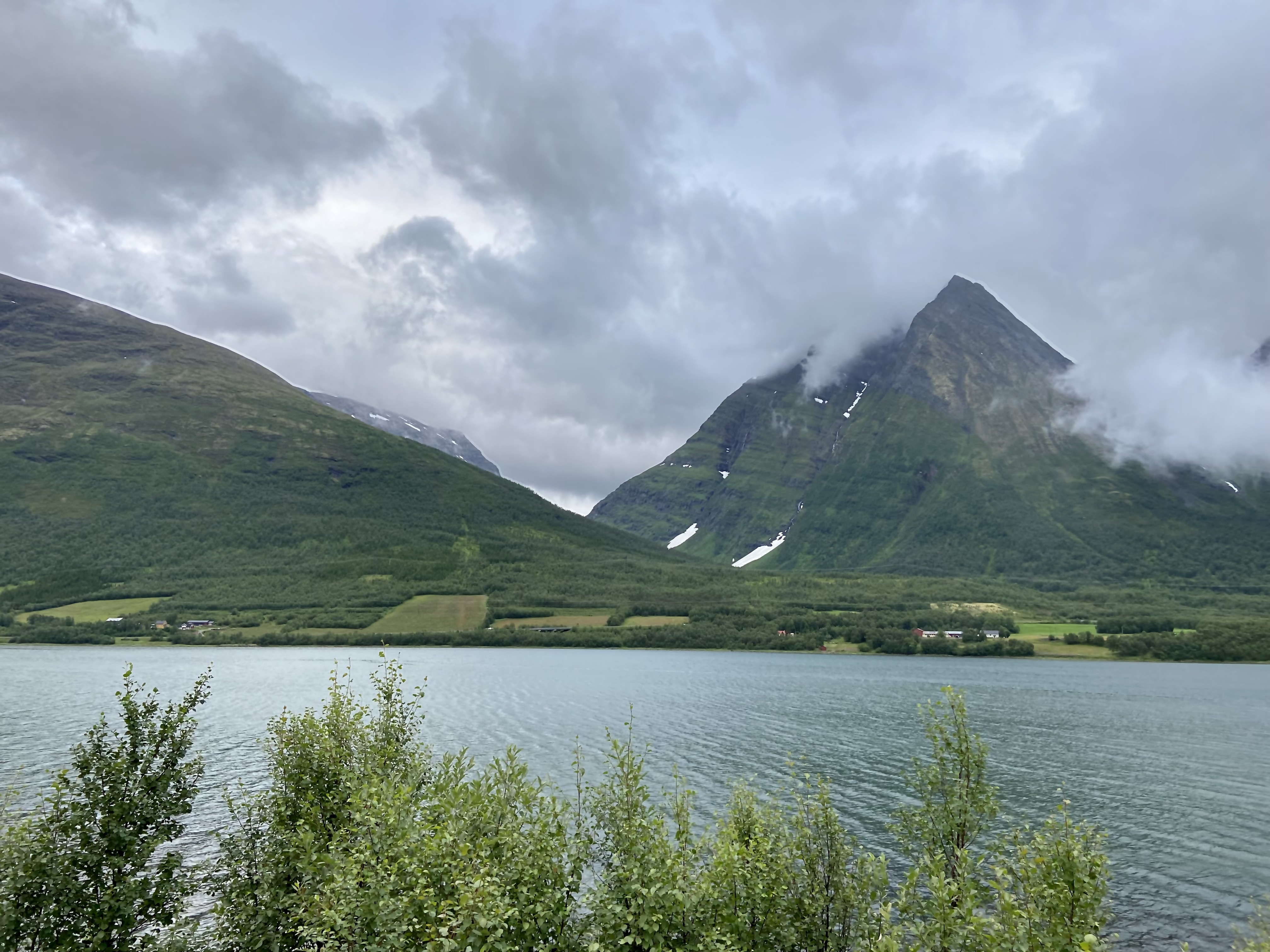
The last two photos are from a trip to collect John from the airport yesterday evening. I set off for Tromsø before his plane left Oslo and before the hour and a half delay was announced, so I took my time (and a small detour) driving up. The tops of the mountains were swathed in clouds, but now and then I would catch sight of a rocky peak.

Rocky peaks on the far side of a fjord

And as ever, where the mountains are so steep, there are stunning waterfalls along the roadside. Though technically today is the last day of 24 hour daylight, there was a brief period around 1am where it was definitely twilight. Due to the mountains, though the sun is still technically above the horizon, the reality is a little different.

And though it was hard leaving Yorkshire, and Mum and Dad, now I am back, I am not homesick. The week after next, I will get the keys to my new house, and then a whole new chapter will be beginning. Have a lovely week all!

Looped moving image of a waterfall

Narrow Lanes

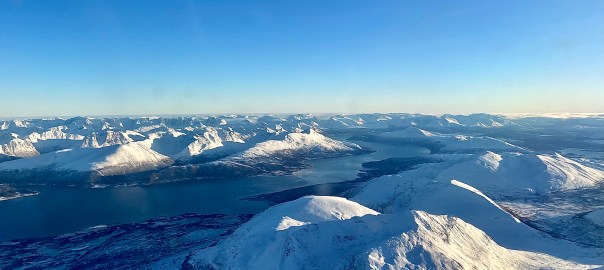
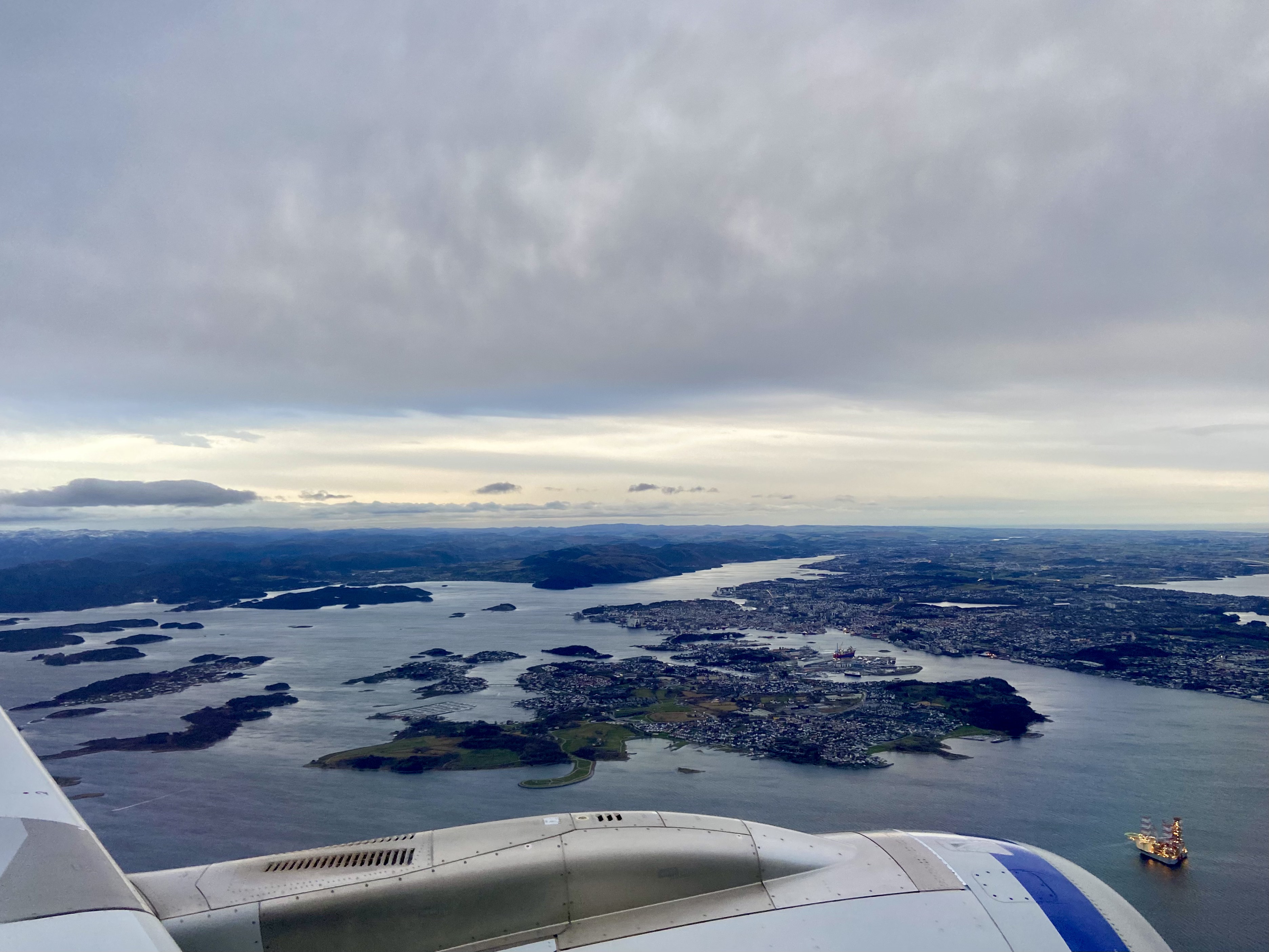
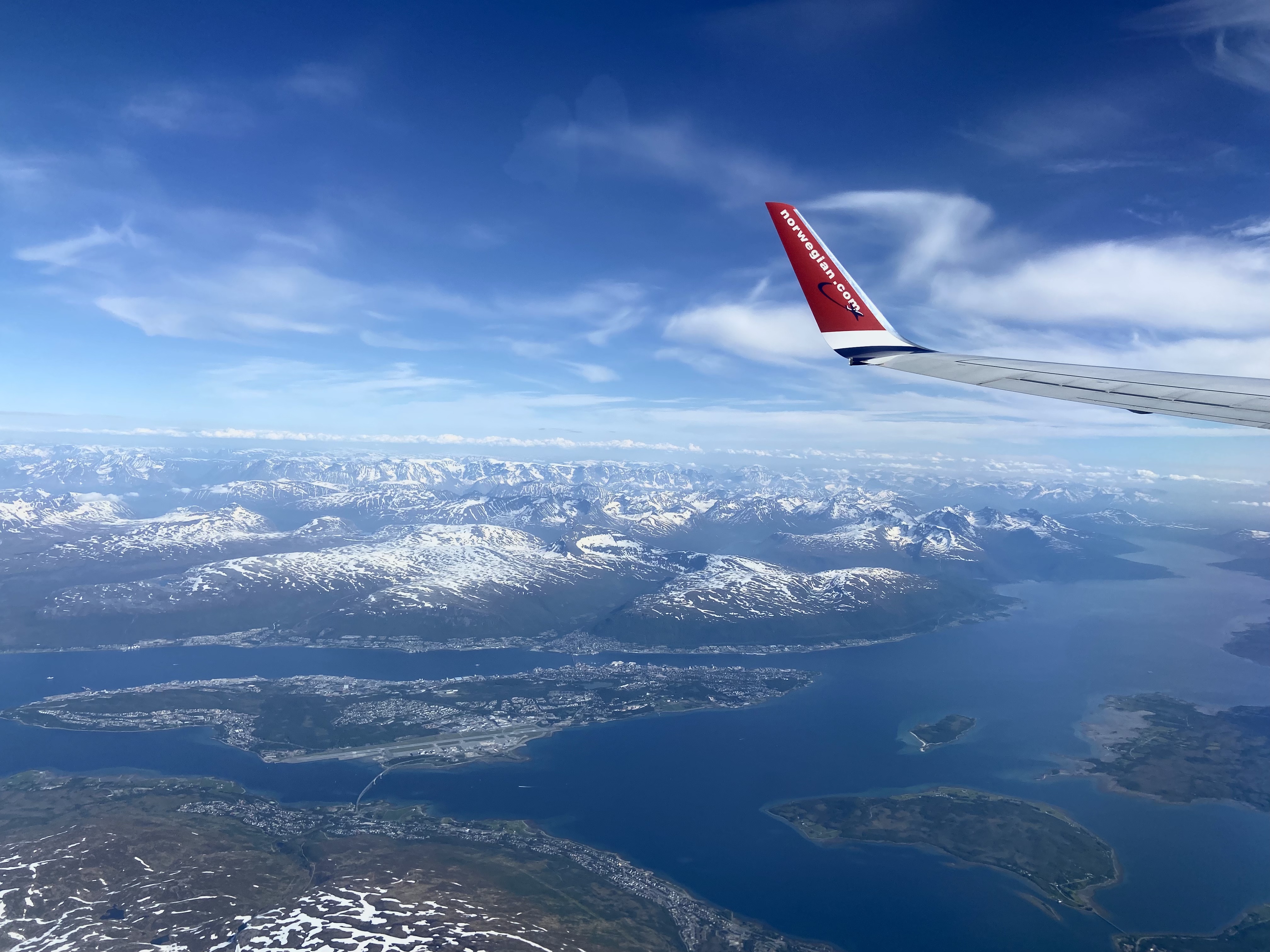
We flew out of Tromsø last Sunday. Despite the threat of strikes and potential airport chaos, for us everything went without a hitch. Flying out of Tromsø is spectacular. The island the city inhabits is still surrounded by snow-capped mountains.

Snow-capped mountain peaks and Tromsø from the air

Andrew and I arrived in Edinburgh in the evening, then the next day we took the train, via Carlisle, to Settle in the Yorkshire Dales. My dad met us as we climbed down onto the platform. It was both wonderful to see him after two and a half years, and jarring at the same time as he stood well back: the first time we’ve met and not hugged immediately in many years.

I had booked an AirBnb – an old workers’ cottage in Upper Settle. Our intention was to quarantine for a week before moving into my parents’ house, but our plans changed with the sad death of my mother-in-law. Instead of quarantining, Anna joined Andrew and me and we drove to Glasgow to attend her funeral two days ago.

Driving in the UK again was something of a challenge. When I bought my car two years ago in Norway, I went for a sturdy SUV. it had to be suitable for winter driving and potentially farm roads. I wasn’t looking for an automatic, but as luck had it, that was what I got. Mum and Dad’s manual, diesel Polo couldn’t be much different. Add in the fact that the national speed limit in Norway is 50mph and I hadn’t driven on the left for three years and starting out was something of a challenge. Our practice run into Skipton was … interesting! Sixty mph on the narrow, winding road seemed impossible. I kept slowing down to go through the towns and villages, only to realise I was already only doing forty. I was amused then, when Dad solemnly bade me not to drive too fast as I set off a couple of days later to drive to Glasgow.

John also flew over and joined us for the funeral, which was only very small, but which fortunately went well. He returned with us to Yorkshire, and so yesterday afternoon, for the first time in many years, John, Anna, Andrew and I all sat in my parents’ conservatory together.

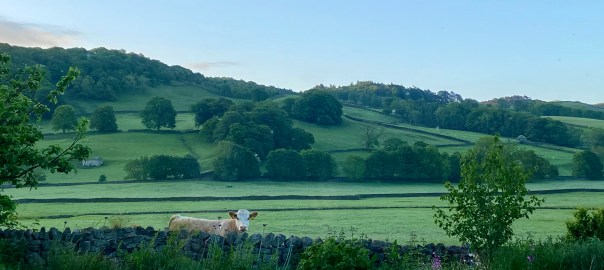
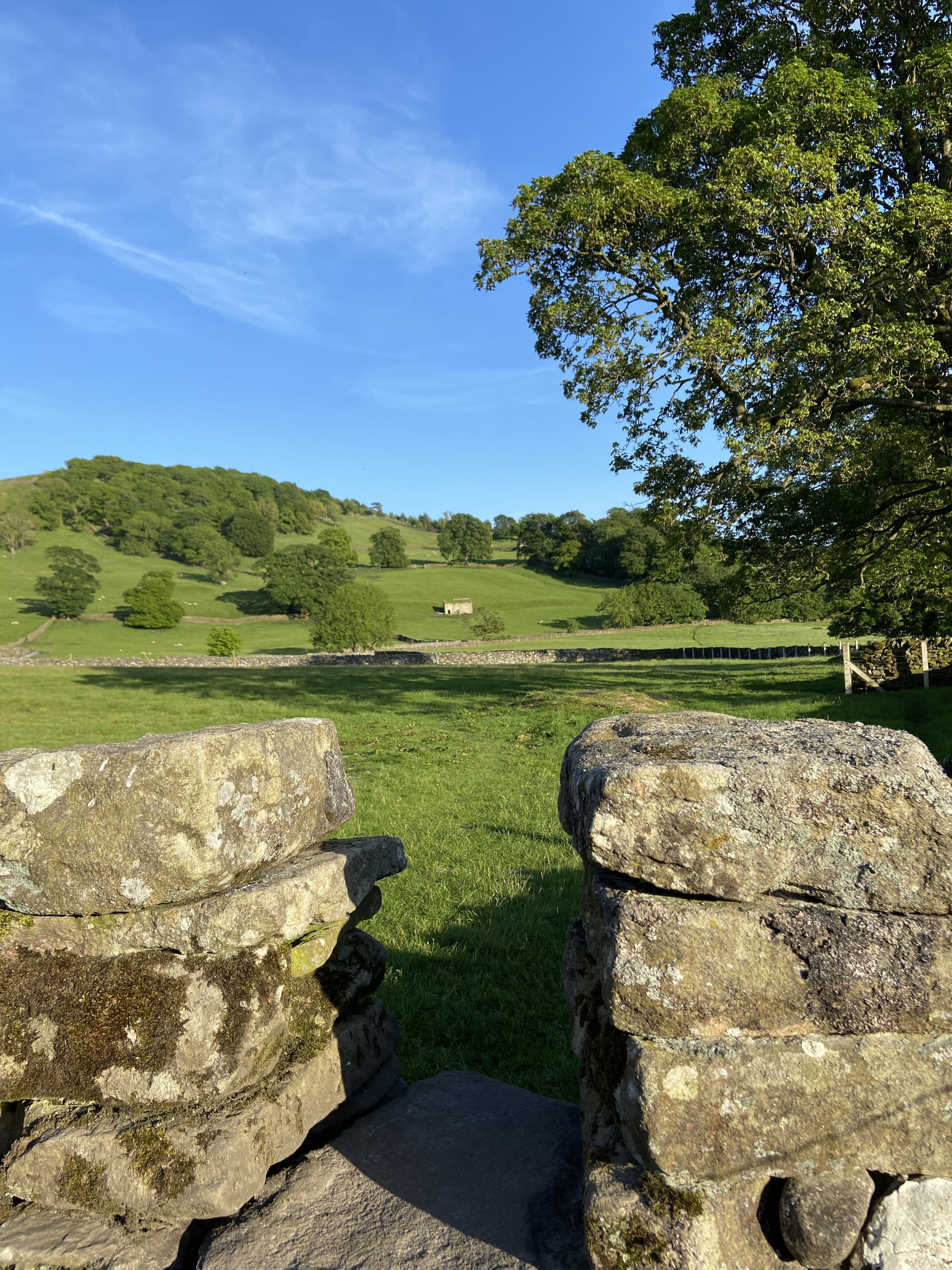
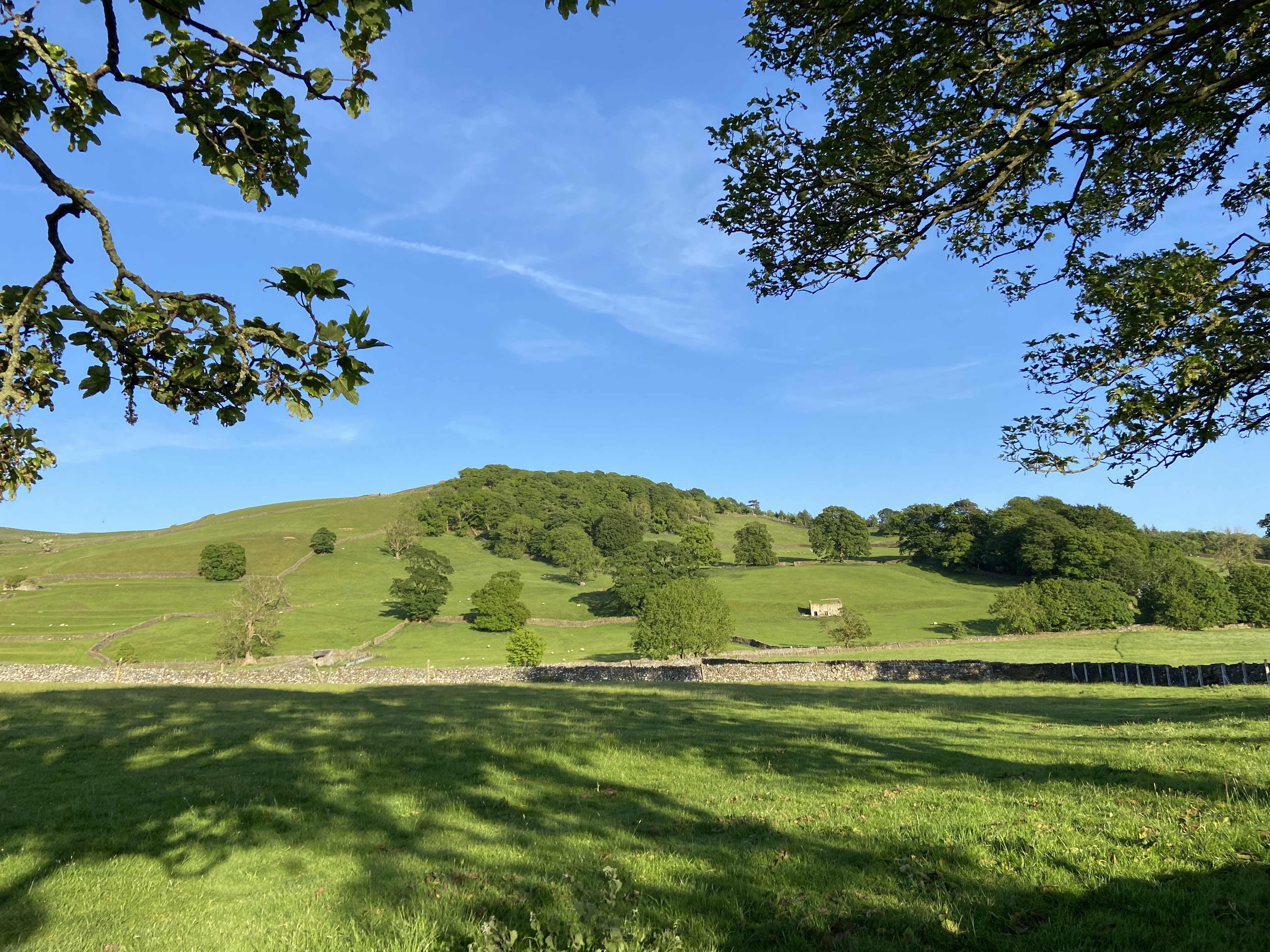
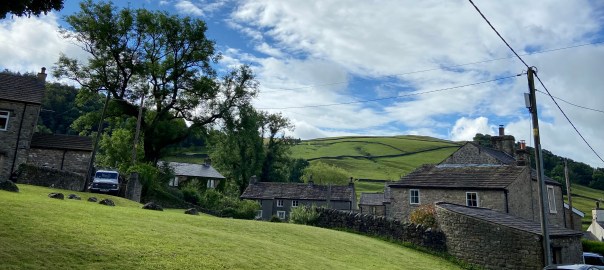
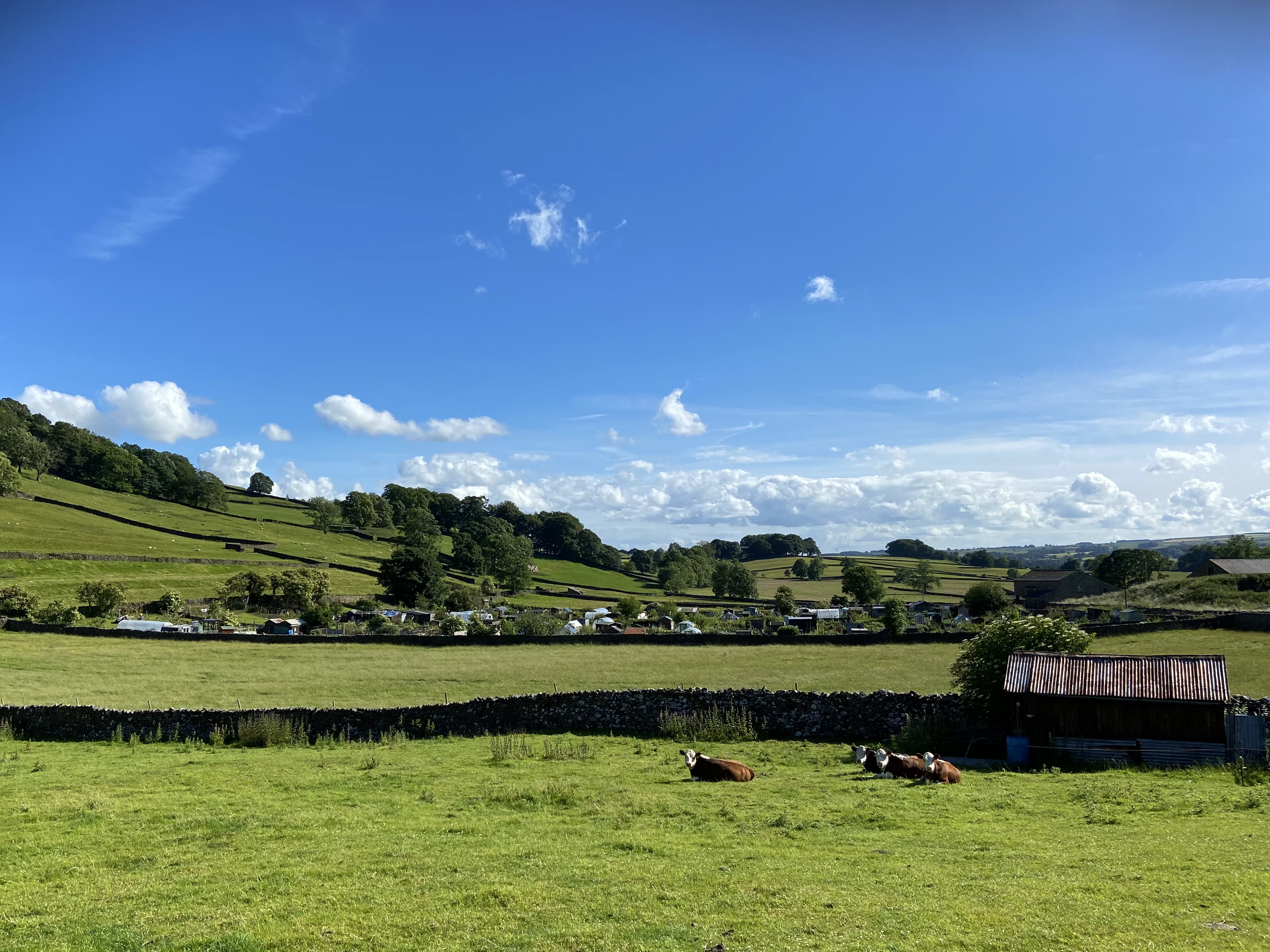
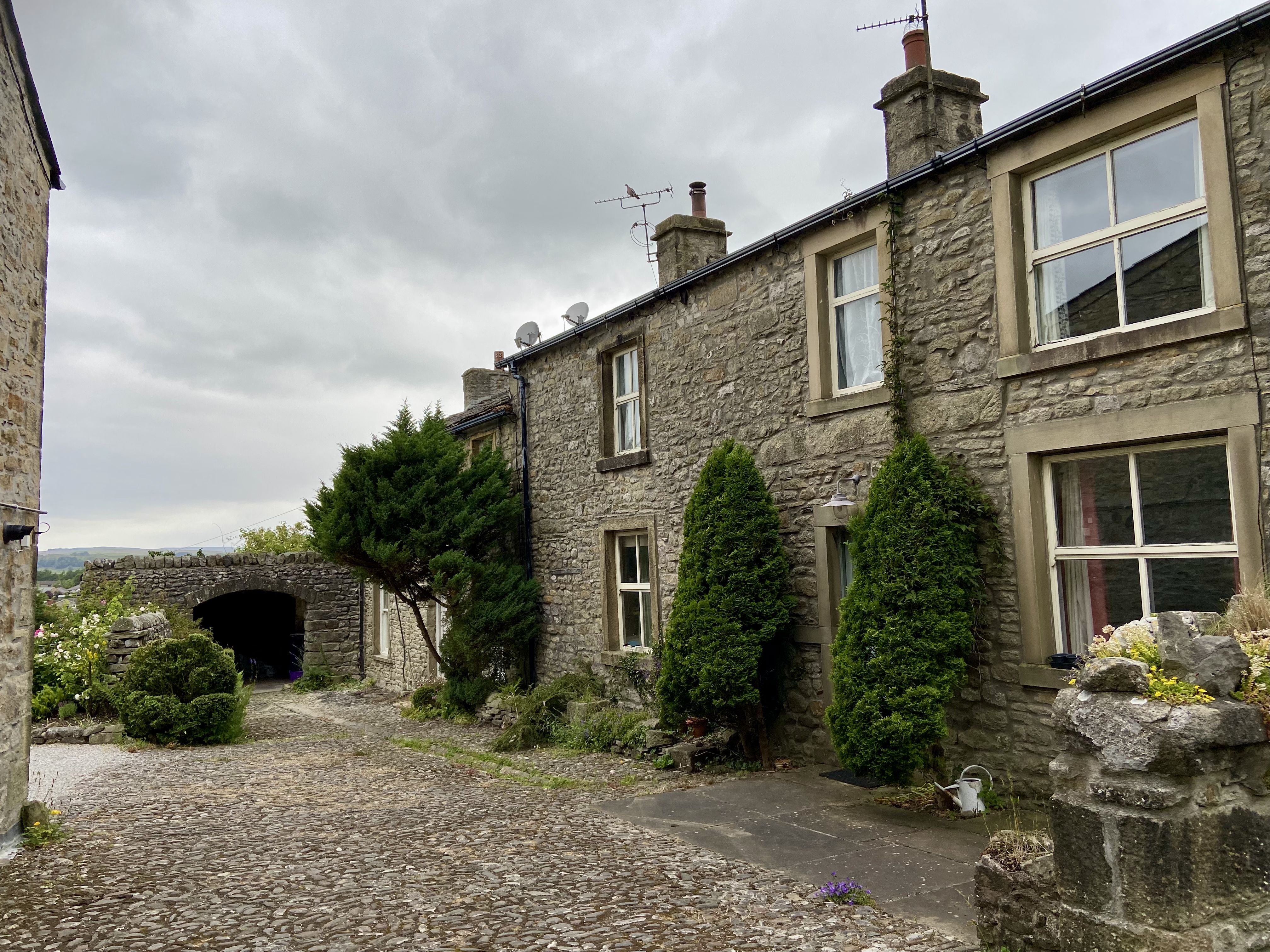
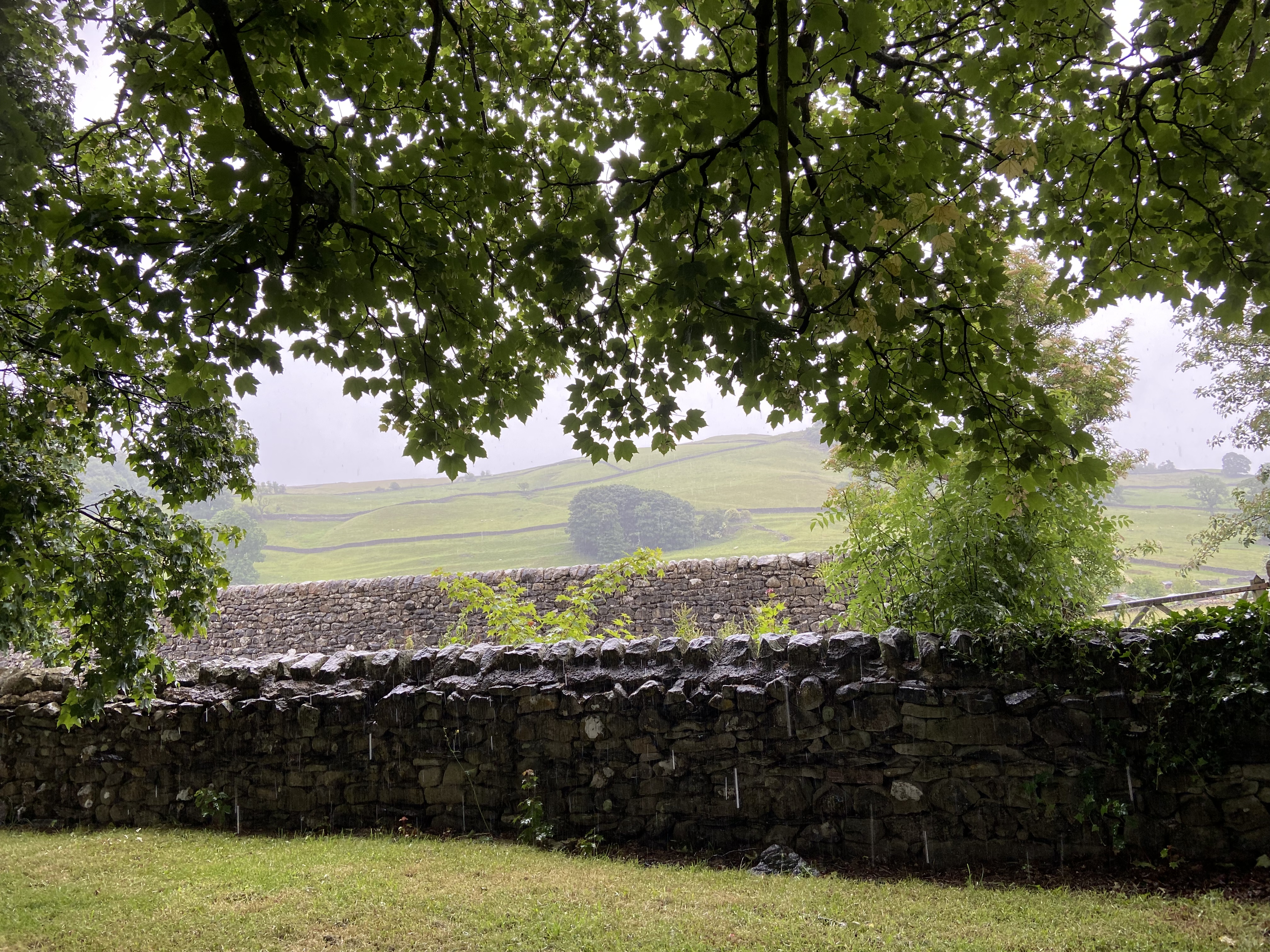
Though I was in the UK in spring, with Anna, it’s different being back in Yorkshire. The contrast with the northern Norway summer is striking. Where the growth around Troms is short-lived, wild and uncontrolled, here the green has a quiet maturity, with its dry stone walls climbing the fellsides and the clustered grey houses on steep lanes. The rest of this entry then, will be a few of the photographs I’ve taken this week, in sunshine and showers, both in my parents’ garden and as I’ve wandered round the town.

Green fields and drystone walls – view from Ingfield Lane
Dry stone walls and graceful trees

Lillehammer

Sunrise/sunset: 06:16/ 19:32. Daylength: 12hr53min

This week I have been to Lillehammer, to take part in Den norske veterinærforening‘s fagdager. Den norske veterinærforening is the vets’ union in Norway. Fagdager translates as “subject days” and this was a veterinary congress with lectures separated into different streams for vets working with pigs, horses, small animals and (for me the most important) veterinary public health.

It’s a very long time since I have been to such a big meeting, and it was my first time in Norway. There were about five hundred people there, so it was the biggest gathering I’ve been to in a while as well. Having recently had covid was actually a boon. Had I not had it, I would probably have been much more wary of picking it up. I should add that I’m feeling very much better, which is a huge relief.

The trip has led to something of a cascade of emotions. I couldn’t help reflecting on the fact that I knew almost nobody. The veterinary world is a small one, both in the UK and Norway. Back in the UK, I worked for Vets Now, who run emergency clinics in the UK, and for several years I worked at their head office, and had contact with vets and nurses all over the UK. I also worked in a few different places and knew people from university. If I attended a big meeting in the UK, there would probably be loads of people there to catch up with. There was a party night on Thursday, and all around me, other people were doing just that. There were also random outbreaks of singing, including the Norwegian Toasting Song, which I came across for the first time at the Christmas Julebord back when I was working at Tu veterinary clinic back in Rogaland. In fact the only person I did run into was Dagny – Scary Boss Lady from Tu – who gave me a cheerful hug, but was naturally catching up with lots of people herself.

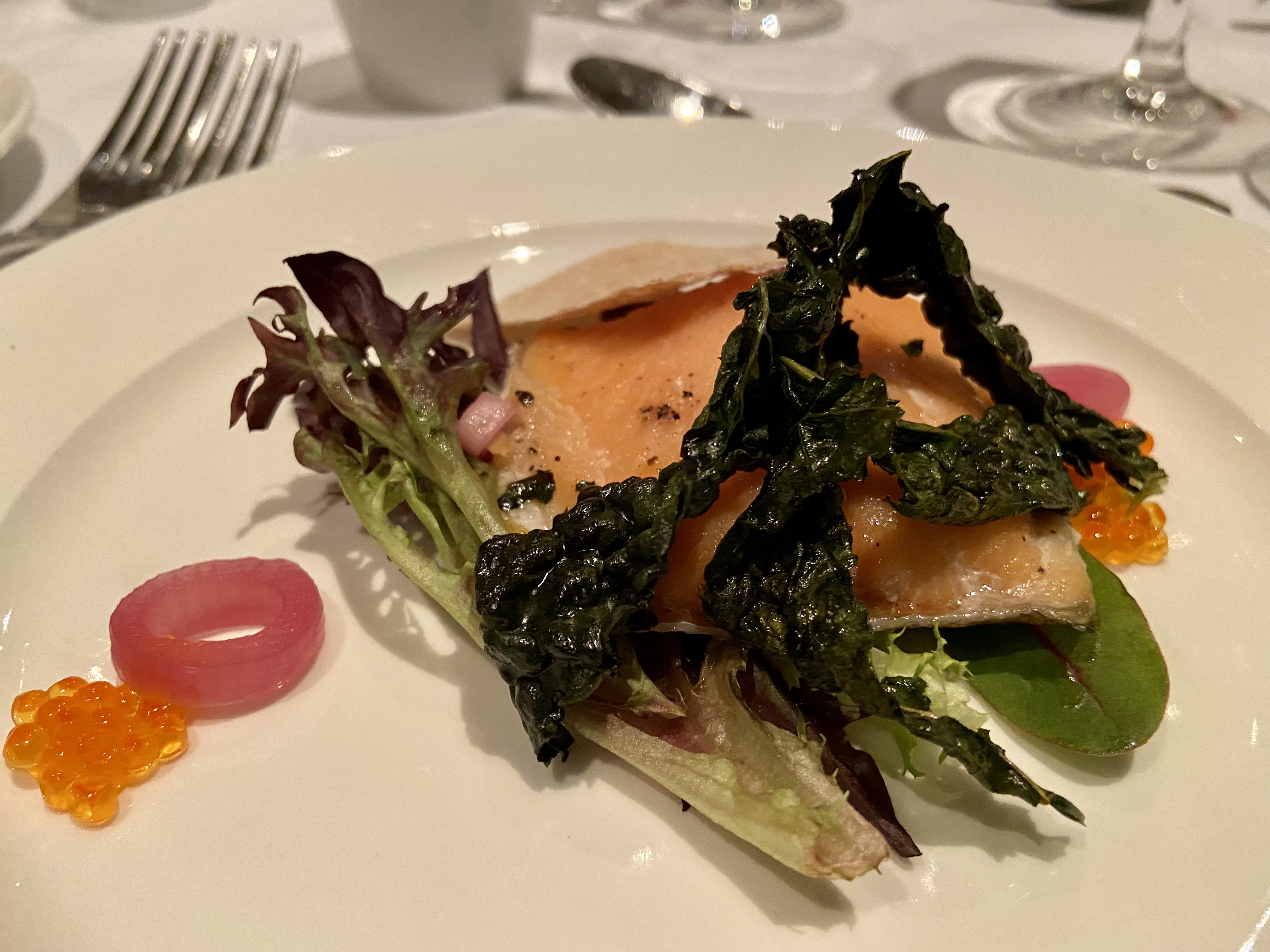
The food was good, though with five hundred people being served it took about three hours from the fish starter to the pannacotta dessert.

I travelled down with Astrid, who works in Storslett. We flew from Tromsø to Oslo and then got the train to Lillehammer. Both those things were something of a novelty, as was leaving northern Norway, which I haven’t done since moving here in August 2020. Coronavirus has turned me into something of a hermit. There was definitely a feeling of opening horizons, both from travelling, and from the lecture streams themselves.

One of the major themes in the veterinary public health stream was sustainability. I guess this might seem somewhat odd, as those two things don’t immediately appear to be strongly linked, but sustainability is something of a theme at the moment in farming, as it probably should be. The European Union is in the process of introducing its Farm to Fork Strategy (“aiming to make food systems fair, healthy and environmentally-friendly”) and because Norway is integrated with the EU (though not a member state) we will be taking on board some, if not all, of the new regulations and initiatives. Norway, as I have mentioned before, has more stringent rules on animal health and welfare than the EU, which it is unwilling to compromise to make food cheaper, or “competitive” as officials in the EU put it.

The most interesting lecture, from my point of view, was one which covered an interesting mix of discussion over the relative amounts spent preventing new variant CJD (BSE related prion disease) and coronavirus and whether insects might be integrated into the food chain in order to minimise the long term impact in the fight against BSE/prion disease.

Regarding the relative costs around the reactions to both diseases, it is difficult to estimate the price of lockdowns, but the argument was that the amount spent on fighting BSE was way over the top. Given the number of samples we take on sheep and cattle, but also on reindeer and even wild animals such as moose, the amount spent in the whole of the EU must be colossal. Given that there are still under 300 diagnosed cases of the new variant of CJD (which spread from BSE in cattle) in the world it does seem odd to still be spending so much. It can, of course, be argued that the campaign to prevent vCJD has been successful in terms of disease prevention. As always, it’s difficult to know, when looking at the cost of something where intervention HAS taken place, what the costs would have been had no actions been taken.

But the other side of this discussion was around the fact that the use of meat and bone meal from ruminants in food fed to other animals is still banned, and how these could possibly be used. The suggestion was made that perhaps what is currently mostly a waste product could potentially be used to feed insects, which would produce protein that could then be fed back into the food chain which is an interesting, if rather bizarre thought. We are living through astonishing times, where the world is changing incredibly fast, compared to what went on for probably thousands of years before the industrial revolution. Sometimes I wonder where it will end.

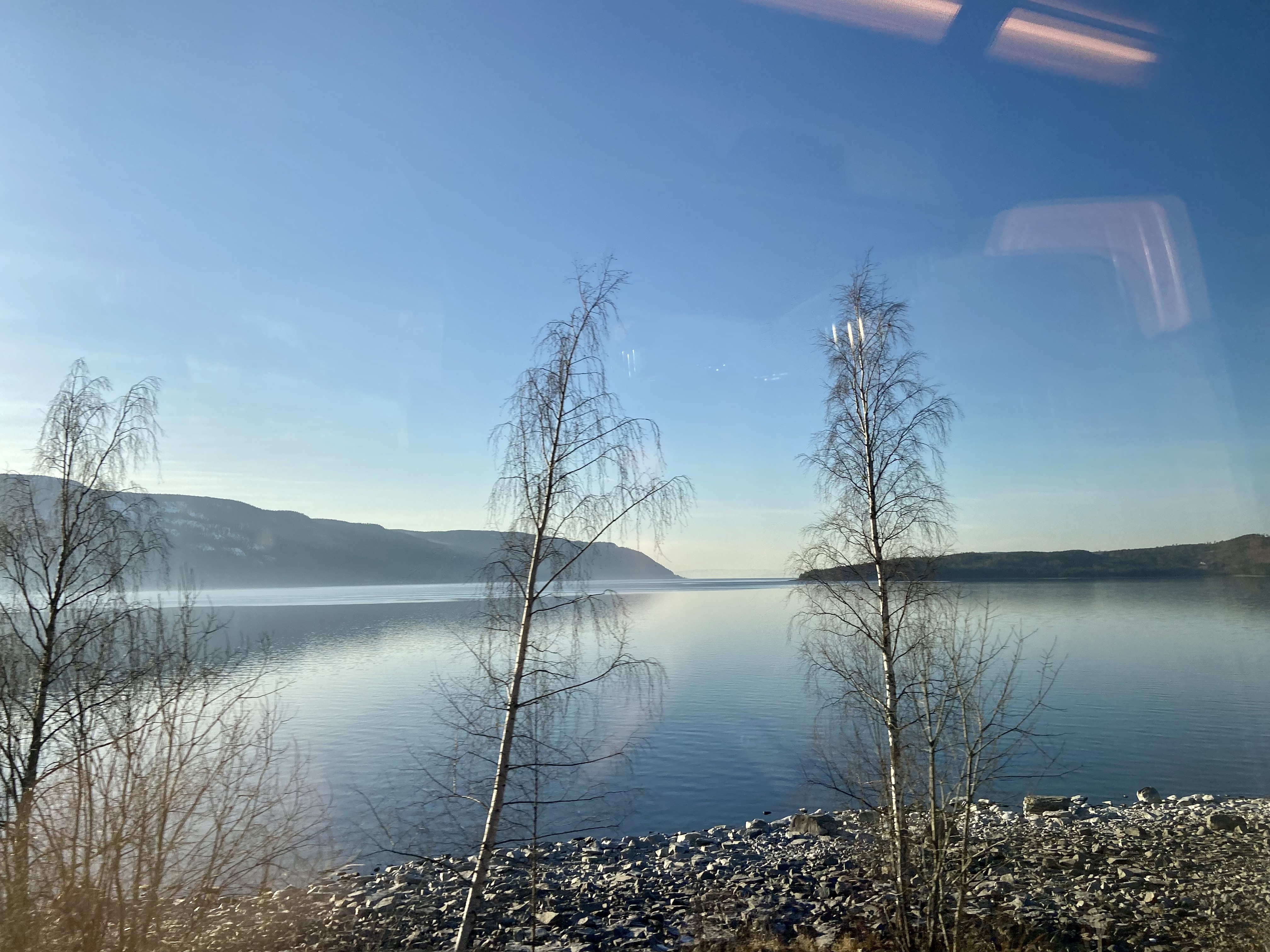
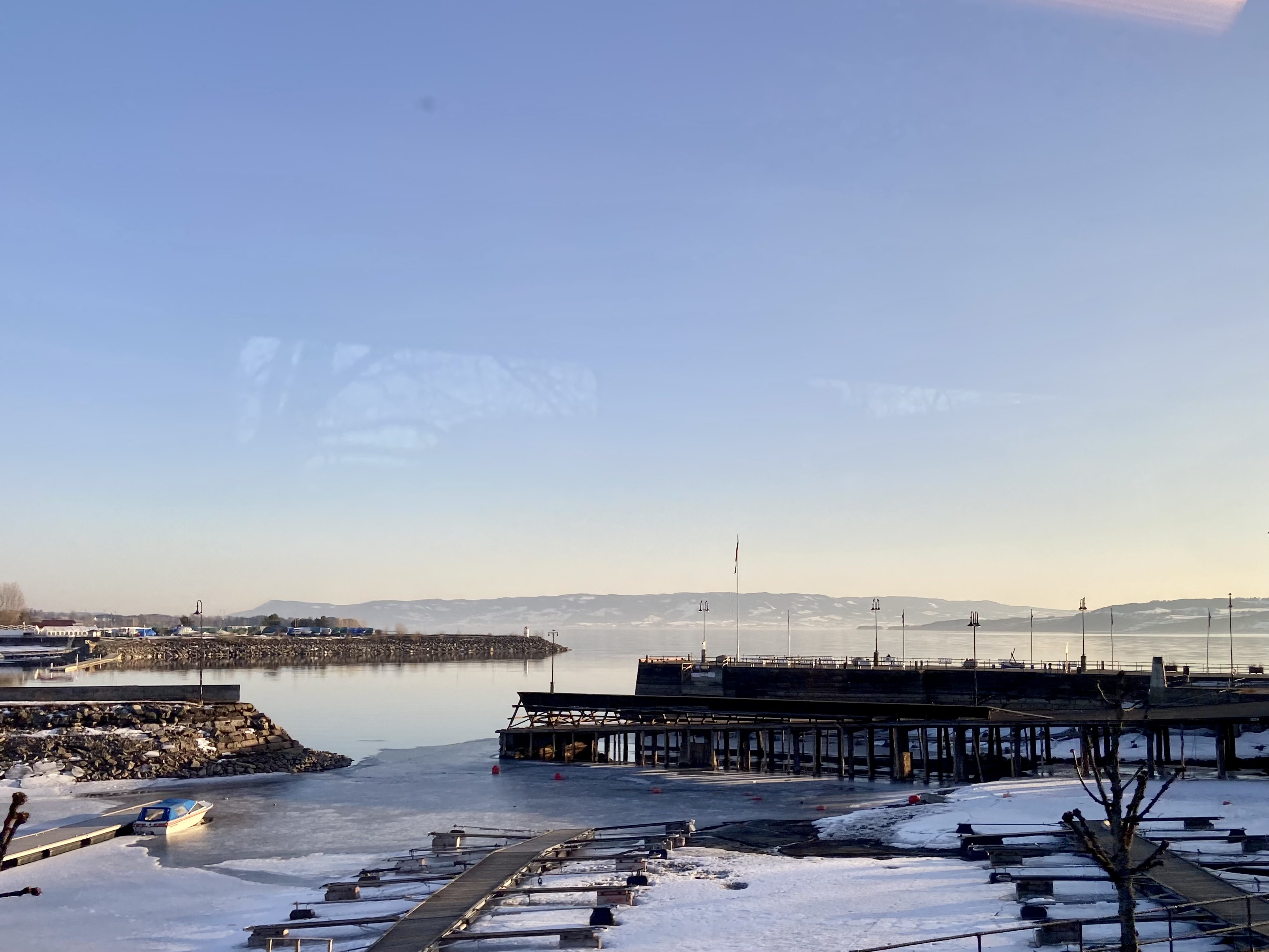
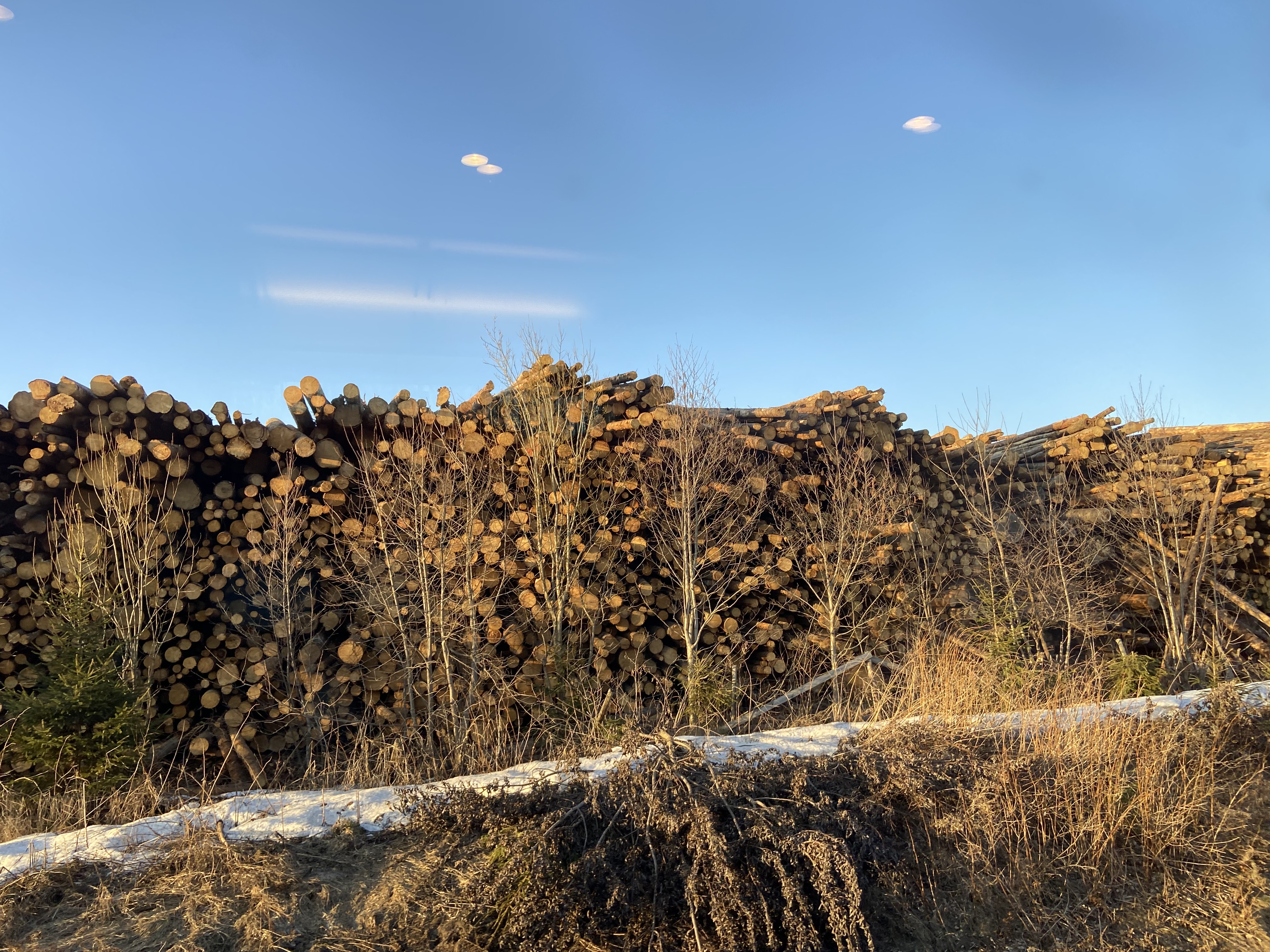
Anyway, back to the more mundane! I enjoyed the train journey from Oslo airport to Lillehammer. I took some photos from the train window. Apologies for the glass reflections. The days when you could open windows on long distance trains are long gone.

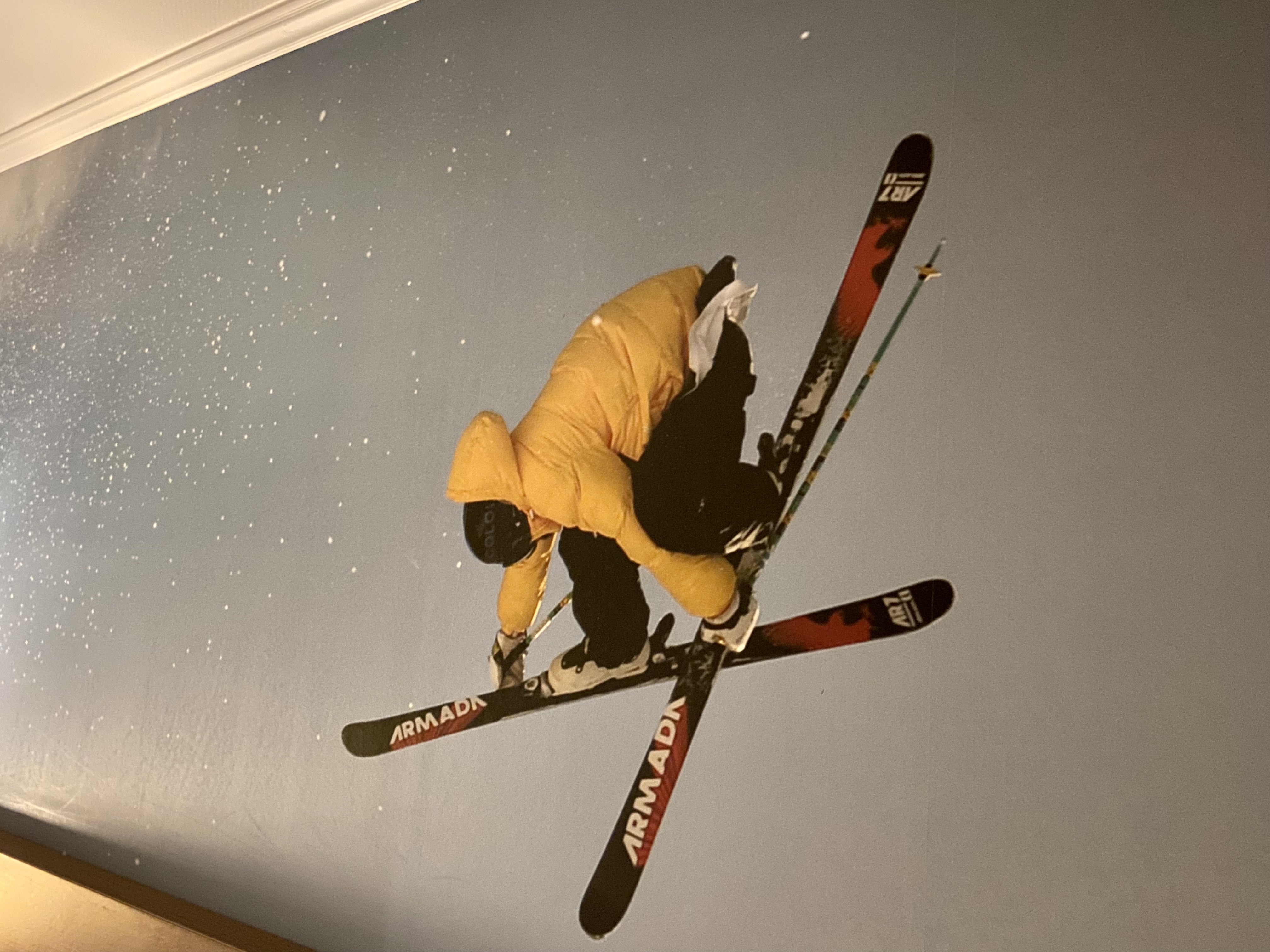
The hotel in Lillehammer was pleasant. I guess that if you’ve heard of Lillehammer, it’s probably because the Olympic Games were held there in 1994. I say the Olympics, because though in the UK and elsewhere, generally people refer to the Olympics and the Winter Olympics, here in Norway it’s the other way round. Here we have the Olympics and the Summer Olympics. Anyway, there was a ski jump just visible from the back of the hotel, and this chap was caught in an eternal gymnastic leap on my bedroom wall.

Picture of a ski gymnast on the hotel wall in Lillehammer

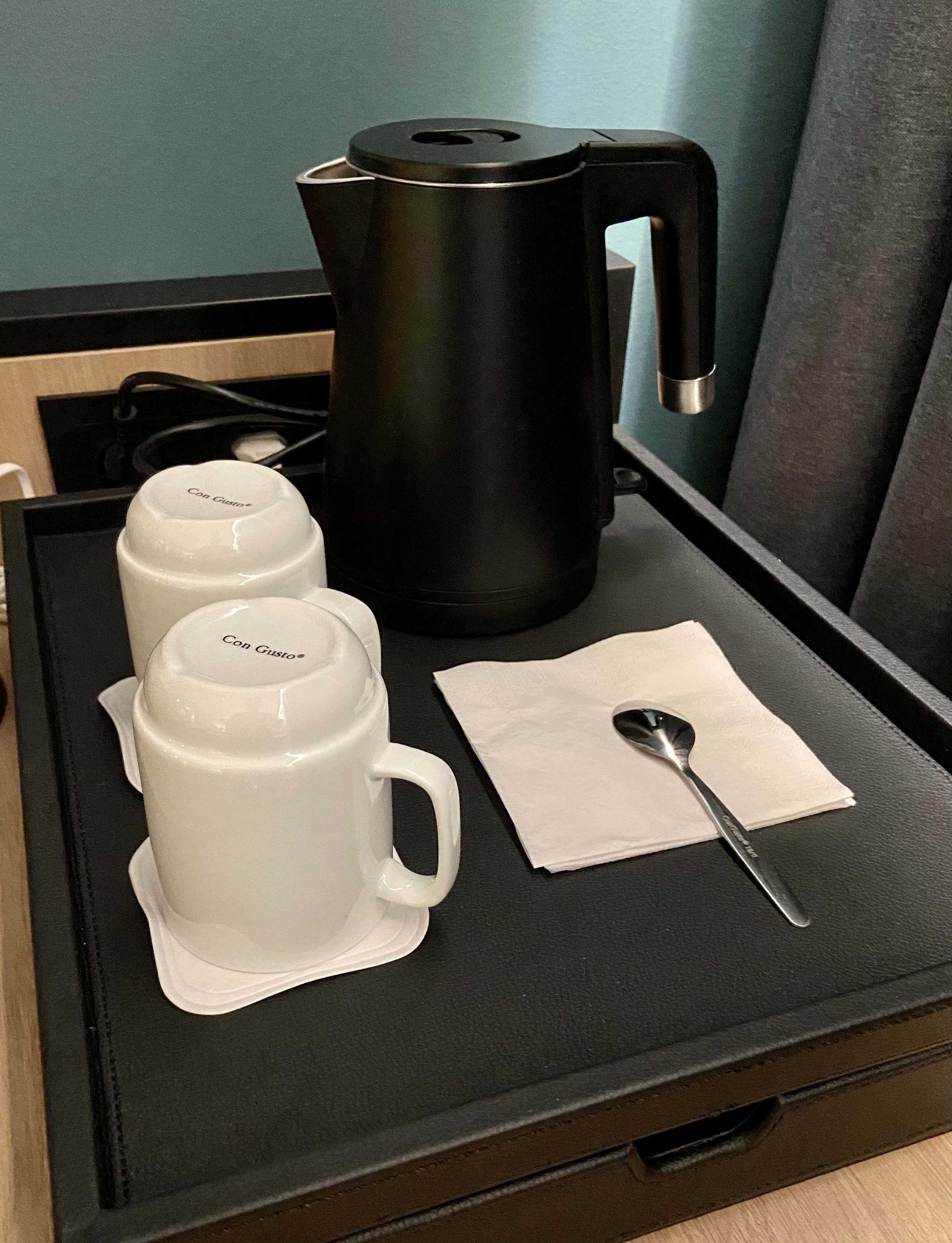
Because there were no flights back to Tromsø or Bardufoss on Friday evening, I spent the night in a hotel at Oslo Airport. I was greeted in the entrance by a red plastic moose in sunglasses, but the most pleasing sight greeted me in the room, and was much more down to earth. Most British hotels have a kettle in the room, but in Norway, it’s so rare that I actually took a photograph!

So now I am home, but going away has been a wonderful boost. Things are beginning to change and the world, which has felt closed in for the past two years, may be opening up again soon. And to that I say, bring it on!

Honningsvåg and Departure

Anna and I visited the small Nordkapp Museum on the afternoon of our last day in Honningsvåg. It concentrated mostly on relatively recent history, though it was fascinating to see that being close to the ocean meant that trade routes here allowed this distant arctic region to be colonised early as the ice from the last ice age retreated, long before other regions which nowadays would be considered as hubs for movement and trade.

There were one or two snippets about women, which interested me on a personal level. I am always fascinated by pioneering women. For example this small plaque celebrates the first local paper on Magerøya, which the notice tells us, was written by two ladies.

Witchcraft in the village of Kjelvik seems to have been more strongly ranged against men than women though. Interesting as in other parts of the world, it seems to have been women (and particularly older women) who were targeted.

There was a large exhibition about the war and its after effects. I was aware that the far northern regions of Norway were devastated at the end of the war when the Nazis retreated, and I had wondered whether Honningsvåg was so far away and so remote that it might have escaped being burned to the ground. It seems that it was not. Of course that makes sense. In these days, where road and air travel tend to dominate (at least in my mind) it requires a complete adjustment to understand that in both near and more distant history, boat travel was one of the most significant ways of transporting people and goods. This was especially true around Norway, but also as it connects more distant parts of the world. Of course many goods continue to be transported by boat, but it doesn’t predominate in the news unless something goes wrong. But any harbour town must have been particularly useful to any invading forces, and therefore at risk.

It seems all of Honningsvåg was burned with the exception of the church, which I regret not visiting. The rebuilding effort was rapid. Some had fled to caves in the hills, others returned from evacuation to start again, and those who did so apparently slept in the church.

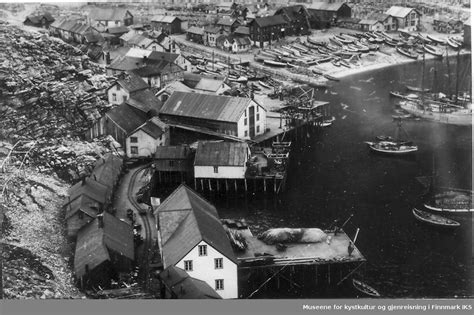
There was also a filmed interview with a man who had been born in Finnkongkeila, which was a busy Sami fishing village to the east of Magerøya. It too was razed in 1944, but due to the lack of road access, and because of the steep slopes that lay behind it with the high landslide risk, the Norwegian authorities decided it would not be rebuilt. The idea of having the place, where you had lived your whole life just disappear, burned and then gradually overtaken by nature, is so alien that I can scarcely imagine it. Here’s a photograph of Finnkongkeila before it disappeared.

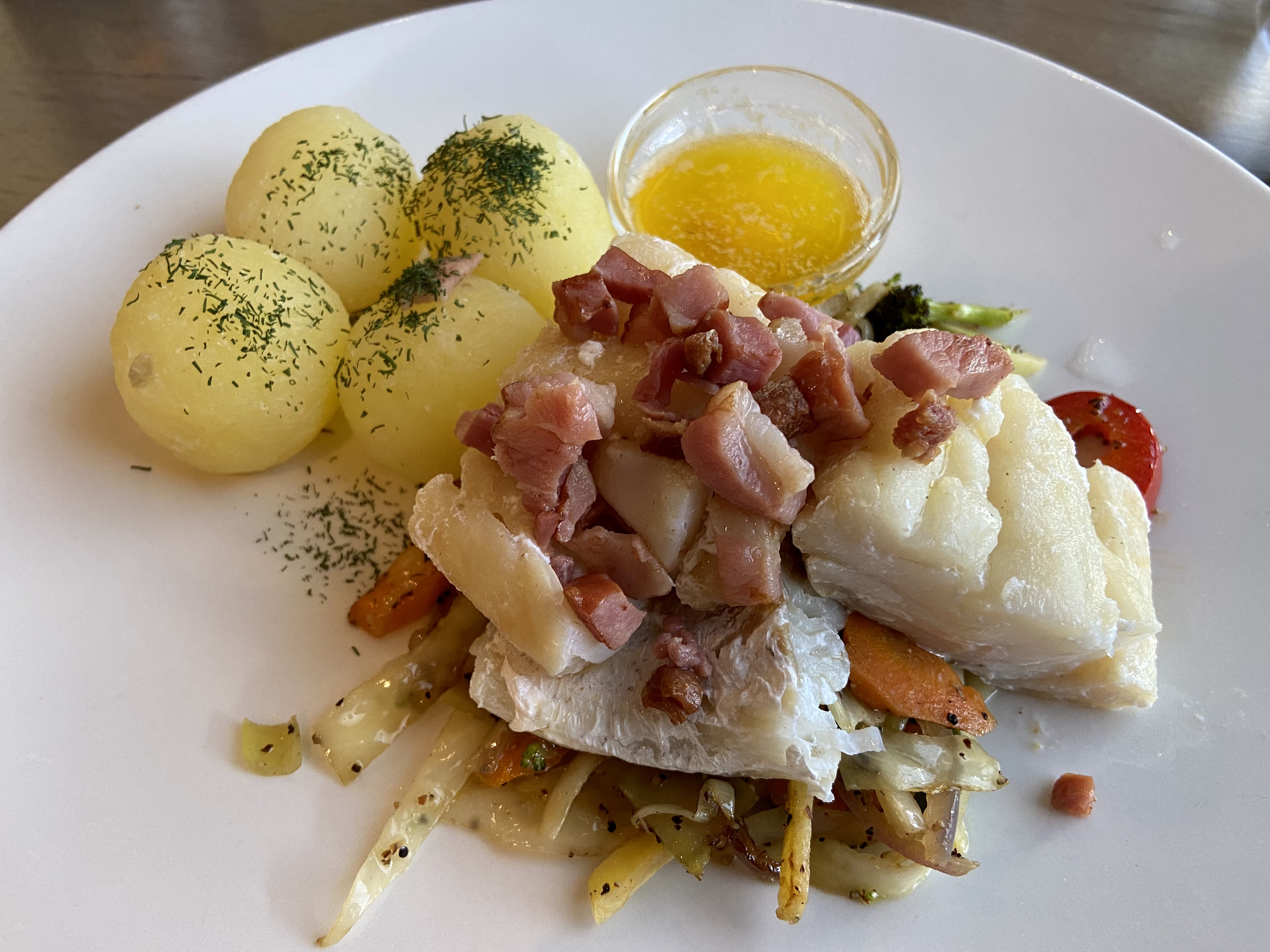
We also read a lot about the local fishing industry and the related trade in dried fish. I was interested to find out that though stockfish is dried and exported in huge quantities, the local dish is actually boknafisk, which is only semi-dried. I had noticed it on the menu in the restaurant we had eaten in the night before, and so of course I had to go back and try it. It was really very good.

I was going to write that our holiday disaster struck the next morning, but given what I’ve written about so far, I shall temper it to say that a mild bump in the road reared its head the next day. I had heard coughing from more than one other guest during breakfast the previous two mornings at the hotel. So it should perhaps not have come as a surprise when Andrew came to us first thing and told us he had a sore throat and perhaps the beginnings of a cough. I confess I wasn’t too much worried about his health (he’s been a school throughout the pandemic and we’ve been through several rounds of colds) but I was concerned about the logistics. Hotels in Norway are not cheap, and the idea of stopping and getting a test locally, then waiting for the results was not appealing. We were due to check out anyway, and so Anna and I went down to breakfast (and took Andrew up some very tasty chocolate croissants). We discussed the situation afterwards. Andrew was already feeling a bit better, and there was still a chance he was suffering only from a flare-up of his allergies and so we decided to head down to Alta to the cabin we had booked there, and then reassess the situation.

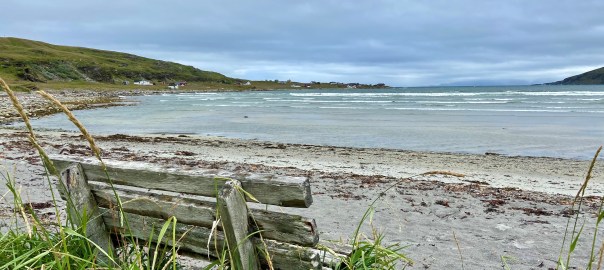
It was only three hours or so, but I was rather sad to be leaving Magerøya so soon. Andrew seemed to be feeling better and we stopped once or twice on the way to get some fresh air and enjoy the scenery. Triar went for a run on a little beach at Repvåg, where I found these two very weathered benches under the sullen sky.

And then we were back into the amazing slate-dominated landscape with its weathered stones, its disconcertingly angles layers jutting towards the sky .

The cabin in Alta was tolerably comfortable. It had a small TV tuned to the National Geographic channel with a sign that sternly informed us that we mustn’t touch the settings. By nightfall, it was obvious Andrew’s cough was not a resurgence of allergies, but definitely something more, and so we decided that we should try and get a test the next day, then find out whether we would be permitted to drive home, or should wait in the cabin until we got the results.

Friday then, was rather sad. We had arranged to have two nights in Alta as there were things we wanted to do there. Our neighbours had recommended the bathing park and I very much wanted to go and see the famous rock paintings and carvings. Instead, Andrew slept for much of the day, while Anna and I sat on poorly padded wooden benches and watched a series of documentaries about aeroplane crash investigations, airport drug smuggling and some rather Top Gearesque programmes about a man who refurbishes classic cars. The wifi was awful, so other pastimes were not really possible. I had hoped to write a blog update, but that wasn’t really possible. Anna and I did take Triar out for a walk in the (fungi-filled) woods, alongside a sortie to the shops and to a local takeaway but that was the extent of our day in Alta.

I was impressed with Alta’s coronavirus test station. Our local version involves going into an old school building, where masks are not compulsory, and standing in a queue of blue dots set two metres apart. I’ve long thought it must be a wonderful hub of infection as everyone who has a cold is meant to get tested. In Alta there’s a drive through tent outside the health centre and drive through we did, shouting replies to the man in protective clothing as Triar barked in Andrew’s ear from the back of the car. We asked about travel and he told us that so long as Andrew stayed isolated in the car and wasn’t too unwell, there was no reason not to head home the next day.

And so abandoning our possible plans for a last night in Vollan or possibly Tromsø (fortunately I had nothing booked as I was sure we would find something and wanted to keep things flexible) we made a run for home last Saturday. It was a six hour drive, and though we stopped to buy food and drinks from garages, we were not really able to take much of a break on the way. We stopped a few times to look at the scenery, which was dominated in part by the sheer numbers of berries growing on the ground and on the trees, and in part by the weather, which was mostly good overhead, but with glimpses of cloud capped mountain tops and distant rain-filled valleys.

I arrived home feeling tired with a rather dry throat. I was still hopeful that this might have been due to a long drive and the car’s air-conditioning, but I woke up on Sunday with a raging cold that has seen me spending most of this week in bed. Andrew’s Covid test was negative, as was mine, but I was definitely not able to go back to work. I’m still coughing away as I write this and feeling fragile, but I will try to work (from home) tomorrow and hopefully things will gradually return to normal. Anyway, I hope you have enjoyed the journey to the north with me. Next time we venture north I’d like to take more time to explore Alta and Magerøya, and perhaps go on a detour to Hammerfest and Karashok. There’s still so much of northern Norway left to explore!

Across the Lyngen Fjord

Yesterday was another of those gorgeous days of endless blue skies. Birgit and I drove south in the morning sunshine and then took the ferry across Lyngen Fjord.

Our destination was Lyngseidet in Lyngen Kommune. Though it is possible to drive round, it would take several hours. The crossing took about forty minutes and as well as taking photographs, Birgit and I bought drinks from the small cafe on board. I had a slightly surreal moment when I approached the lady behind the counter and she spoke to me in English. Given that I was wearing a Mattilsynet jumper with a Mattilsynet badge hanging from a Mattilsynet lanyard, and was waving a Norwegian credit card, I was slightly taken aback. Perhaps my face looked British, but I didn’t ask so I guess I’ll never know.

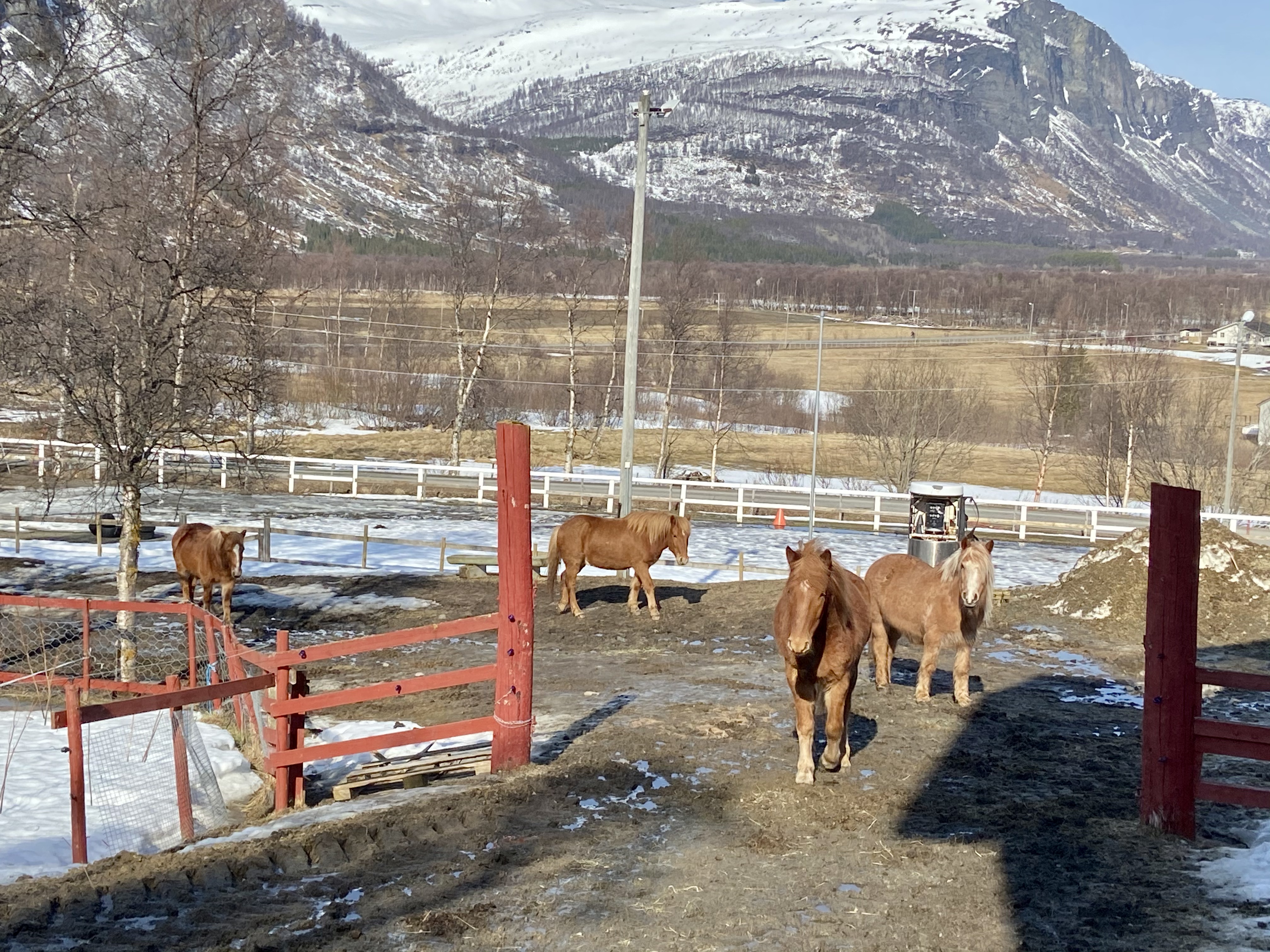
Birgit had planned two visits to blood sample goats, but there were some last minute cancellations and so we visited some sheep farms to check ear tags instead. I am taking a course at the moment on inspections, and so Birgit let me lead both of them. Better still on the first farm, as well as the sheep, the owner had some Lyngshest/Nordlandshest. These wonderful little Norwegian horses are immensely strong and hardy. Most of them are between 12.3 and 13.3 hands (130-140 cm) but Birgit assured me they can easily carry an adult’s weight. She had told me before we arrived about the little horses – she has some herself – and so when we had checked the sheep, I asked the farmer whether we could see them. He led us outside, and to my delight, he called them and they began slowly to walk towards us.

Despite being a little shy at first (he told us they were suspicious that we were vets) very soon we were making friends. Considering the bizarre protective clothing we wear, I think they were surprisingly courageous!

The second visit was great too. The farmer gave us a warm welcome and was very positive about having a visit from Mattilsynet. She seemed rightly proud of her mixed flock, half of them tiny Norsk Villsau (literally Norwegian wild sheep) the other half being the sturdier Norsk Kvit Sau, or White Sheep.

Once we were finished, we headed back to the village where we had landed. After stopping to take a photo of Lynseidet church with its friendly red roof and one of the irresistible mountain behind the Co-Op, we ate lunch outside on a scarlet-painted table beside the fjord. Birgit pointed out the curlews flitting over the water. The arrival of the curlews on their migration to the north means that spring has arrived, she told me. With the warm sun on my face, I could well believe it.

After that it was time for our return journey across the Fjord. As I looked back towards Lyngseidet, I was already making plans in my head to visit again in the summer. It will all look very different in a few weeks time when (most of) the snow has melted.

As we drove around, Birgit told me a bit about the local area. Norway has, of course, a great seafaring tradition. With its long coastline and sheltered fjords, it was the perfect place to create a trading hub. And here in the north, we are also very close to the Finnish, Swedish and Russian borders. She tells me that traders created their own language, which is a mixture of the various languages and dialects, so that they can all understand one another.

I had heard of the Sami before, but not of the Kven people. Descendants of Finns who moved to Norway in the 18th and 19th centuries, they too have their own language. So just as in Scotland, where many road sign have Gaelic alongside the English spelling and in Wales where Welsh names are shown, up here there are road signs with three different languages: Norwegian, Sami and Kvensk.

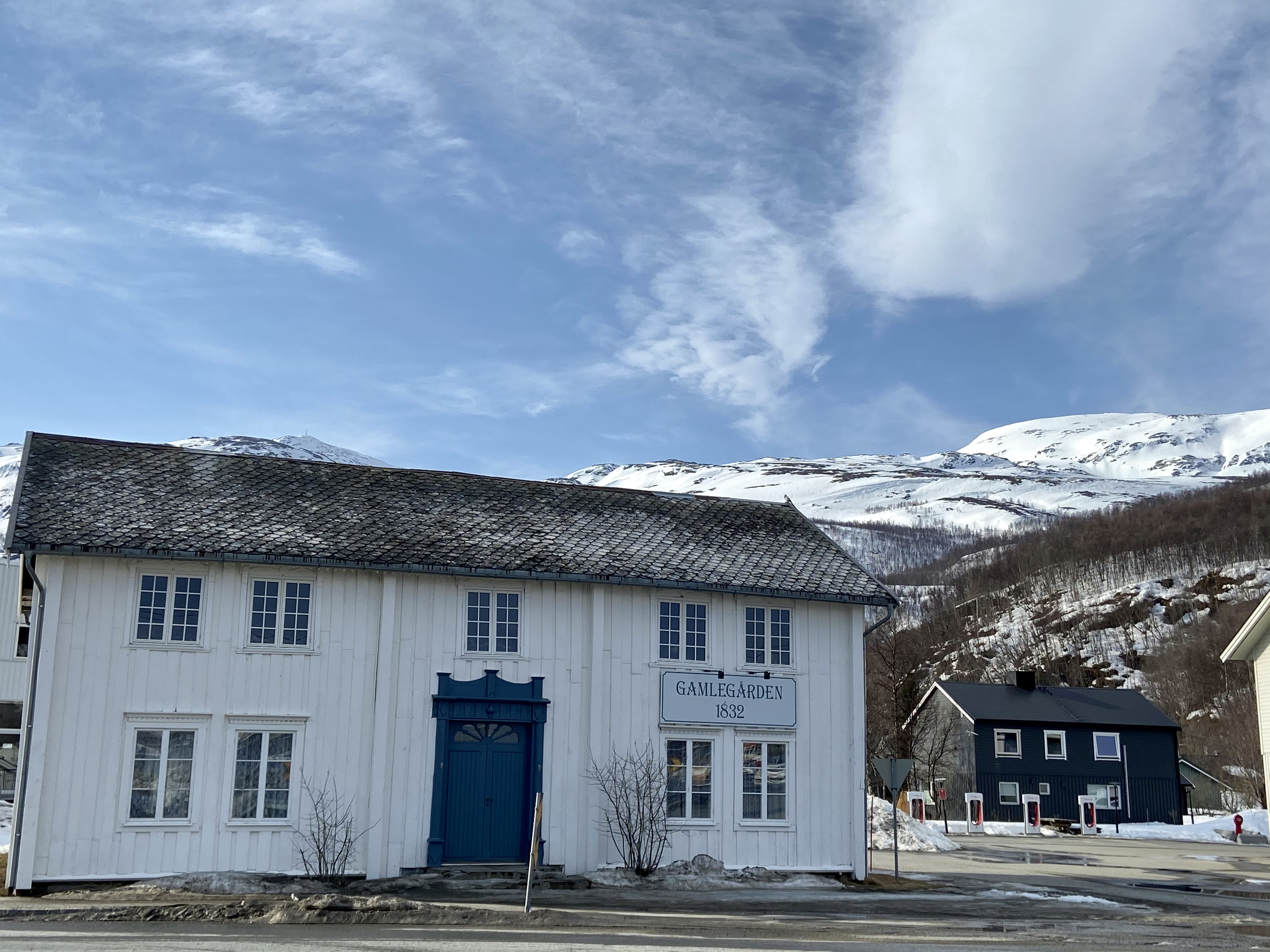
As we arrived back in Sørkjosen where I am staying, Birgit told me that the building opposite my hotel was one of the few in the area that was not burned down by the Germans as they retreated towards the end of the second world war. I had taken a picture of it in the morning as it was a beautiful old building.

And so, with all the new information whirling in my head, I stopped for a moment to look at the boats that were safely tide up in the harbour. Despite the desperate thought of past destruction, so far I have found nothing but peace and happiness here in Nordreisa.