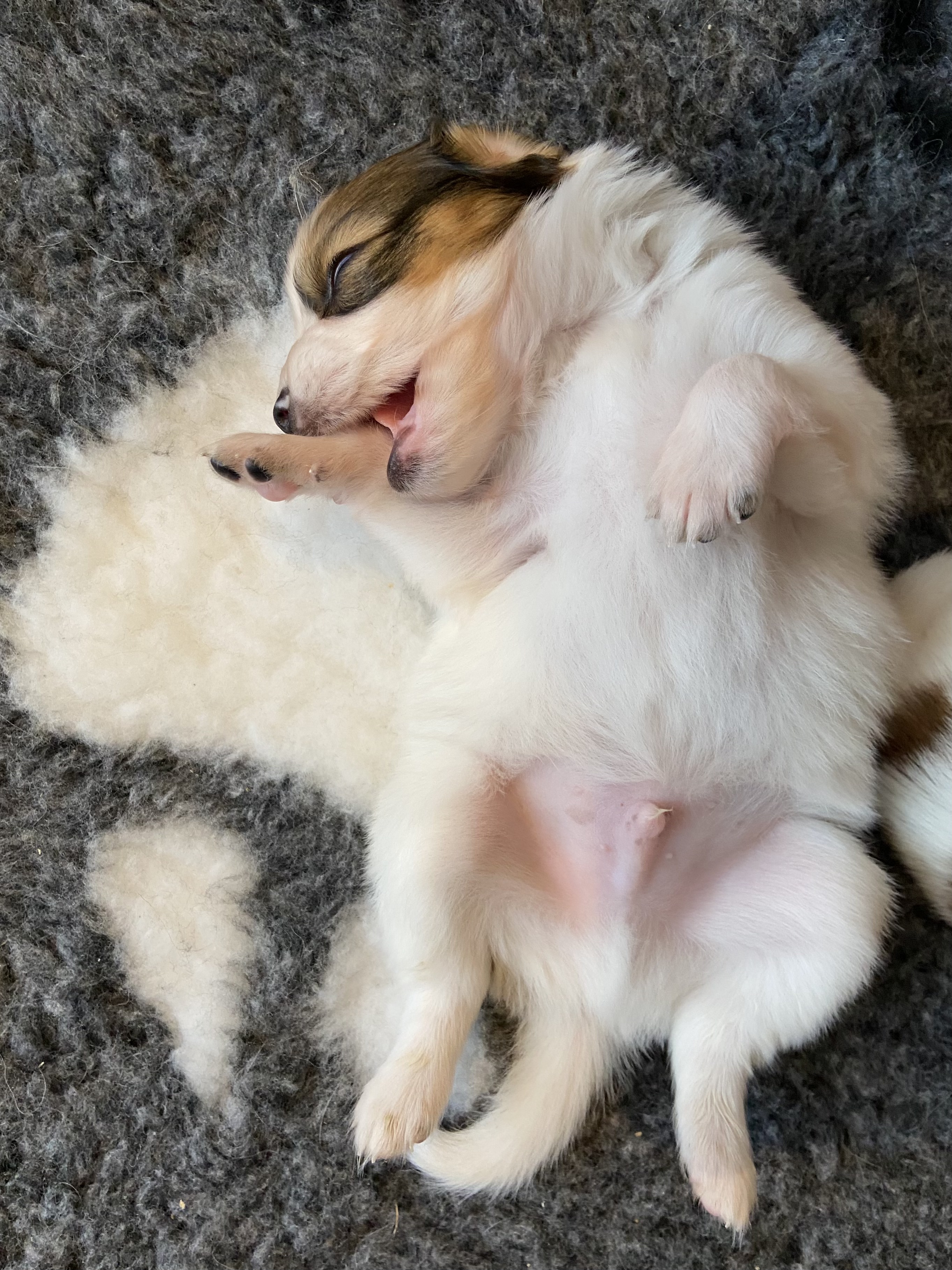
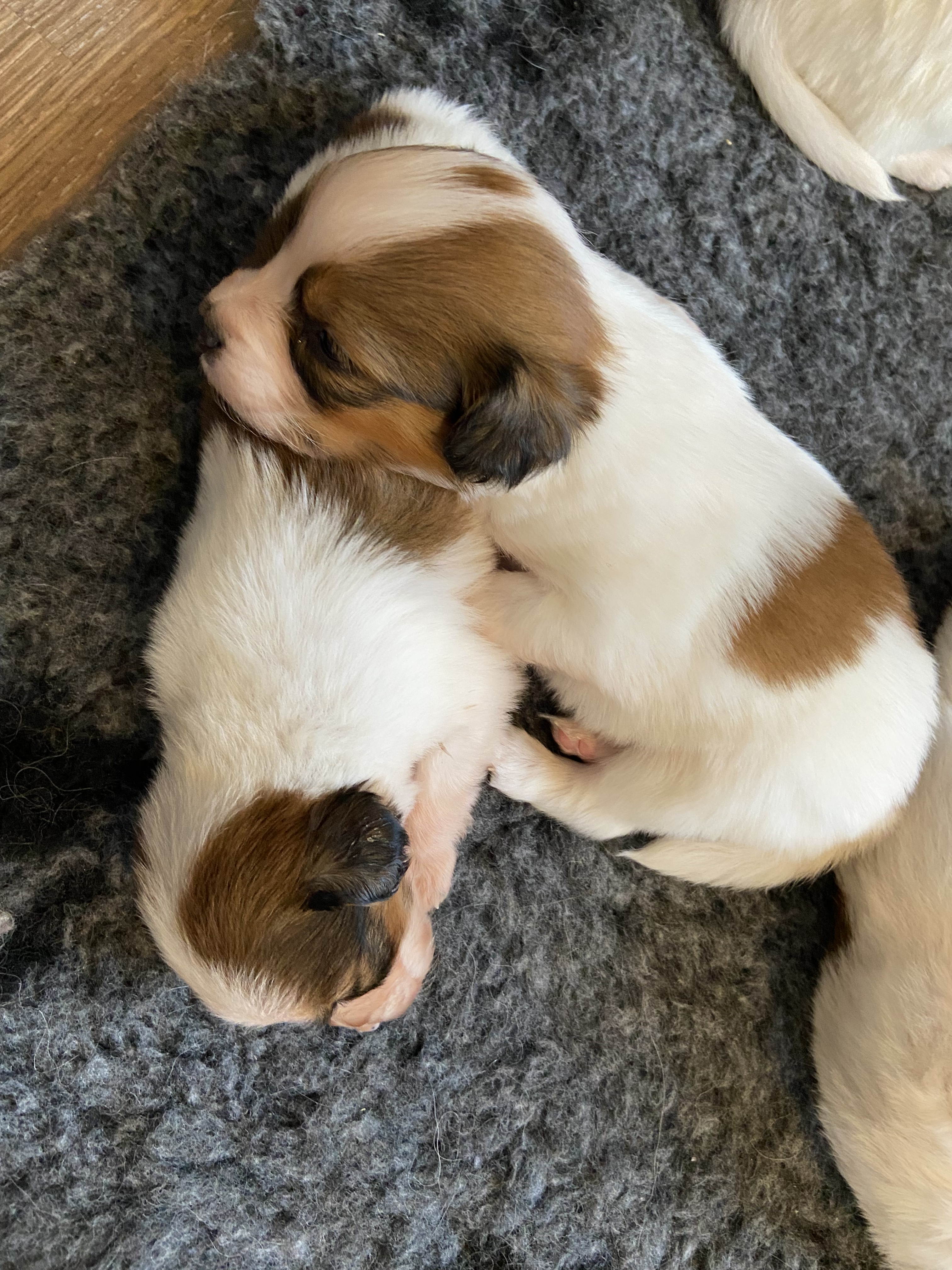
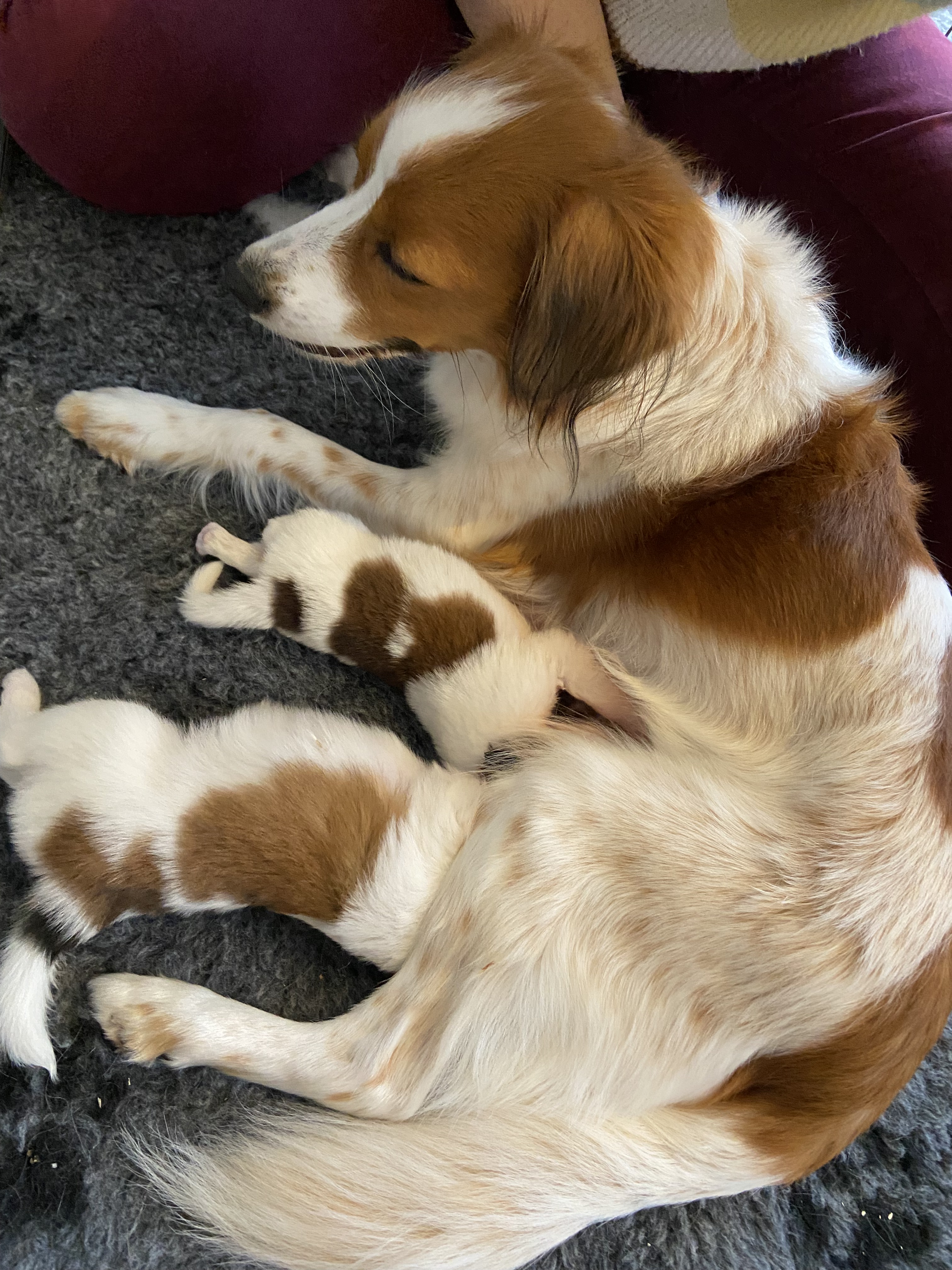
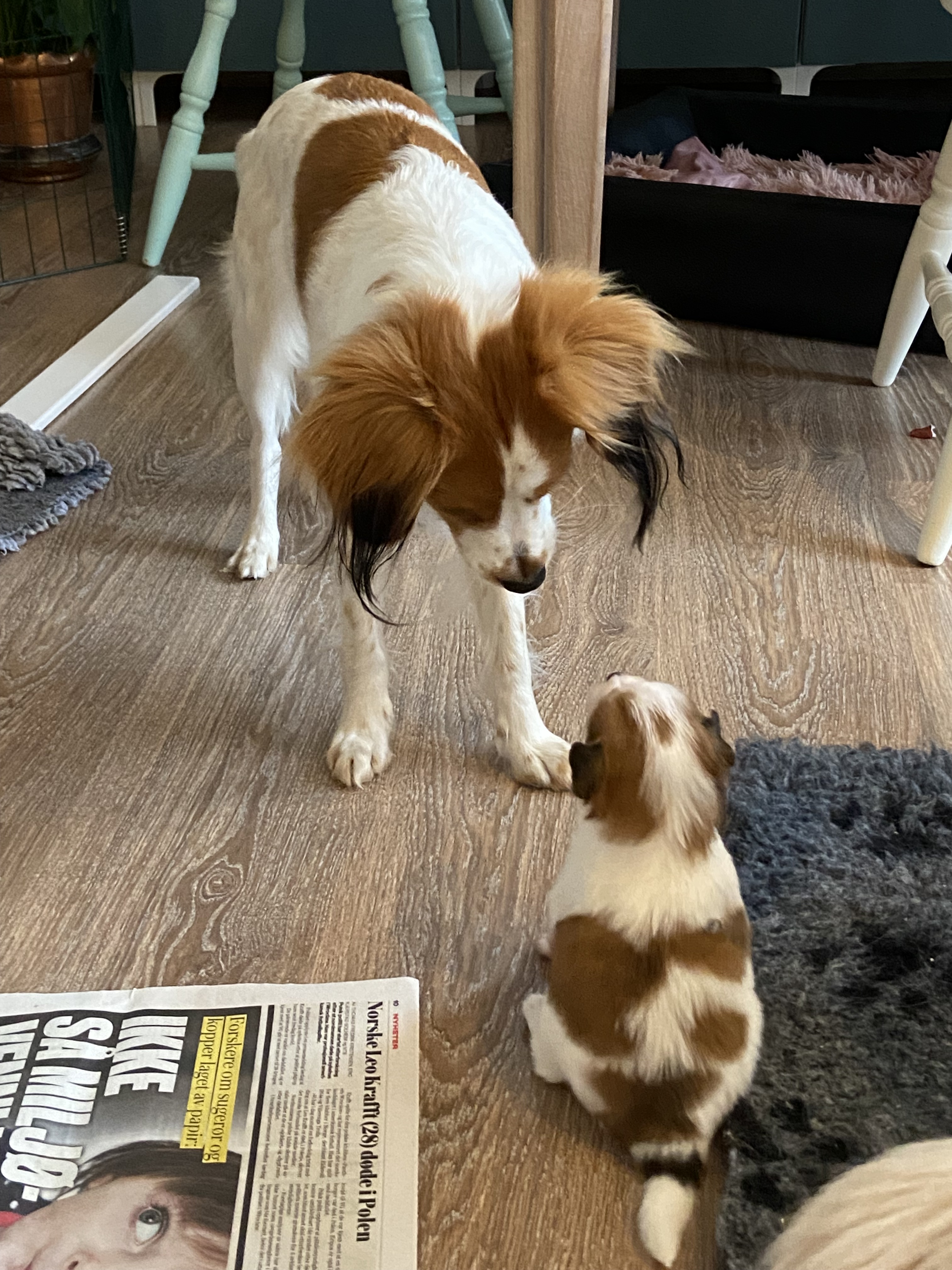
It was lovely being back in Stavanger. As well as catching up with family, I also visited Wivek, who owns Triar’s mum, Trifli. Trifli had another litter three weeks before our visit and the puppies are now on their feet and getting adventurous! The last picture here is of Triar’s half sister, Kløver, who seems fascinated with all these new friends!
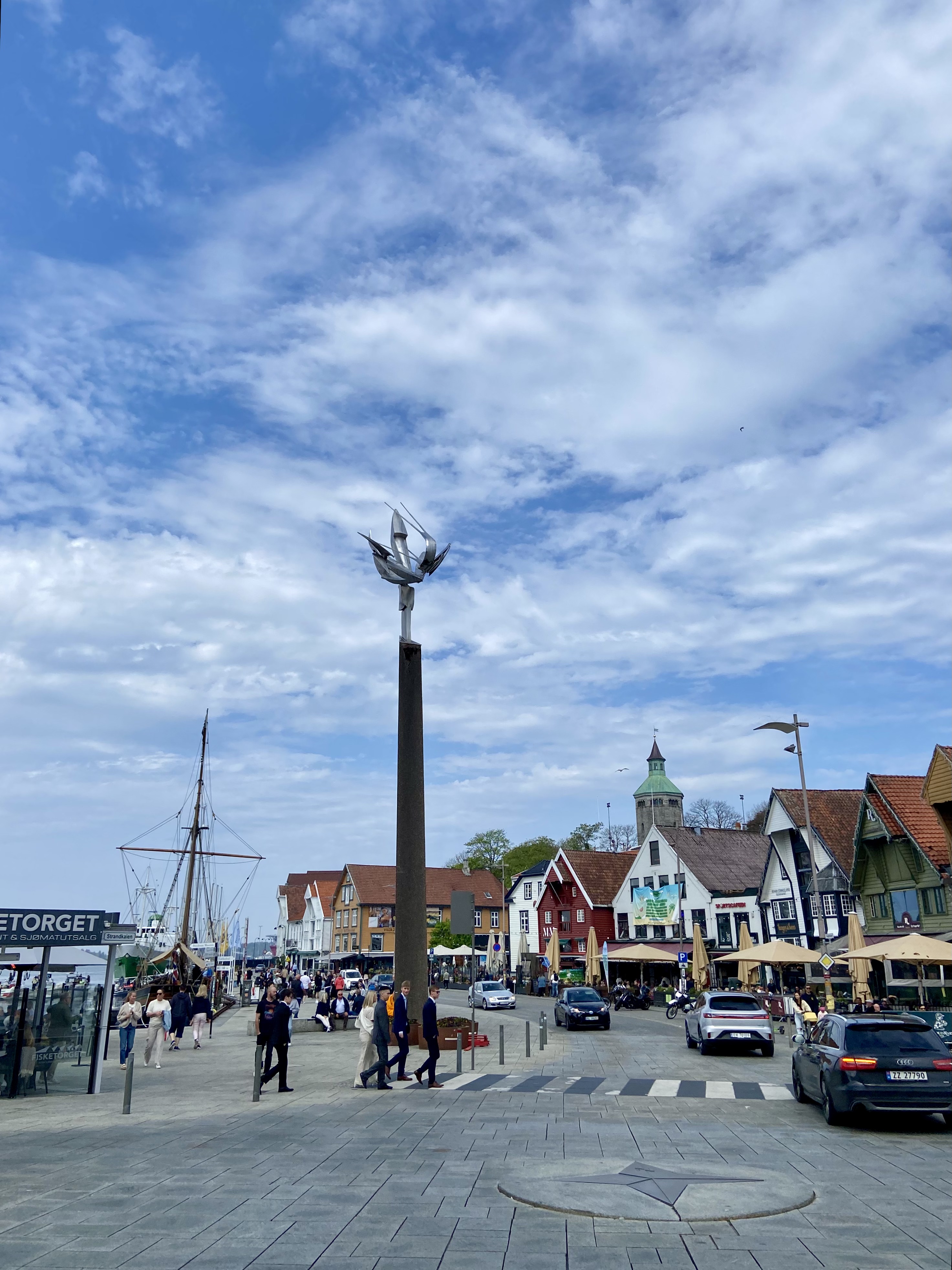
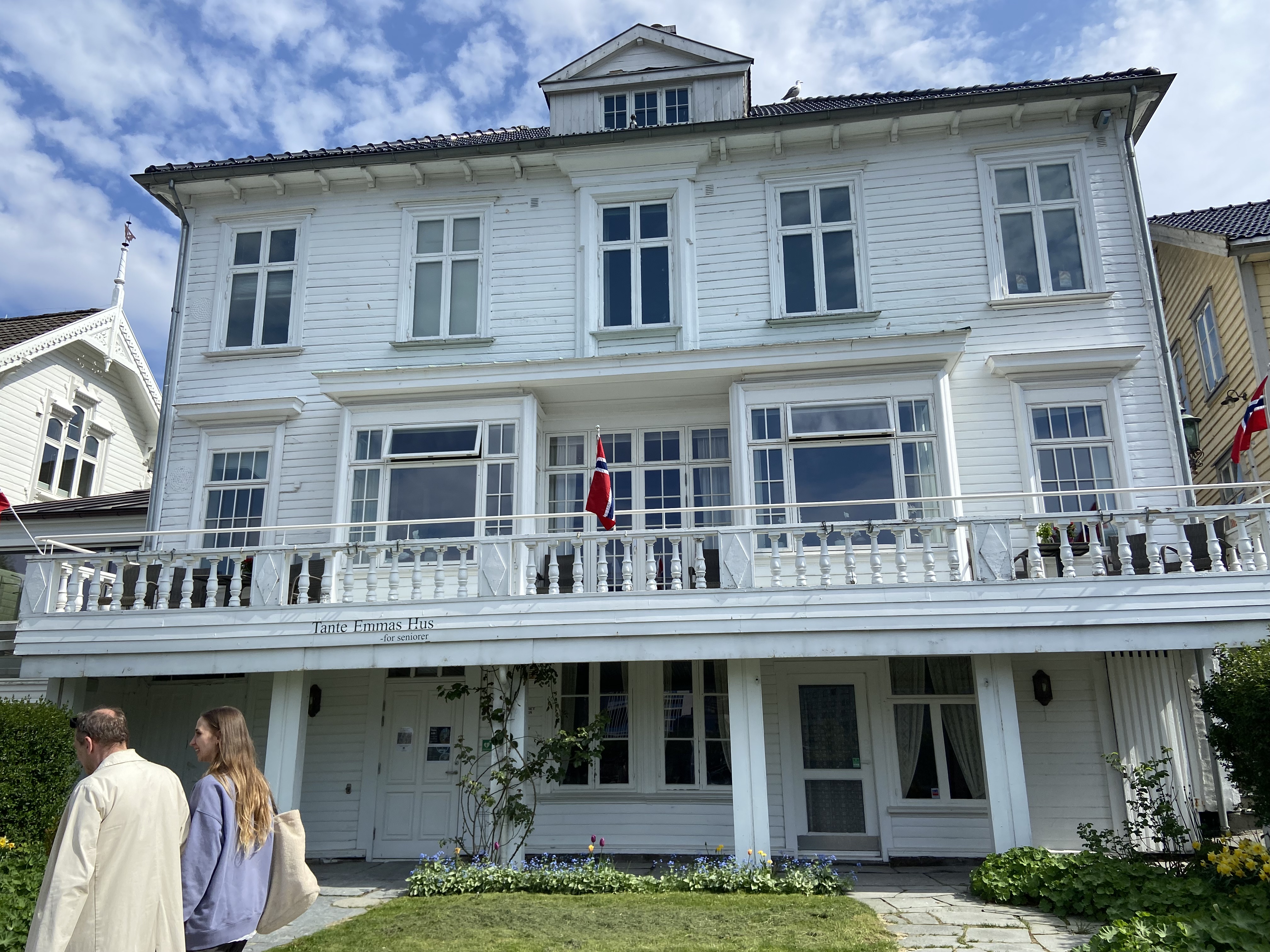
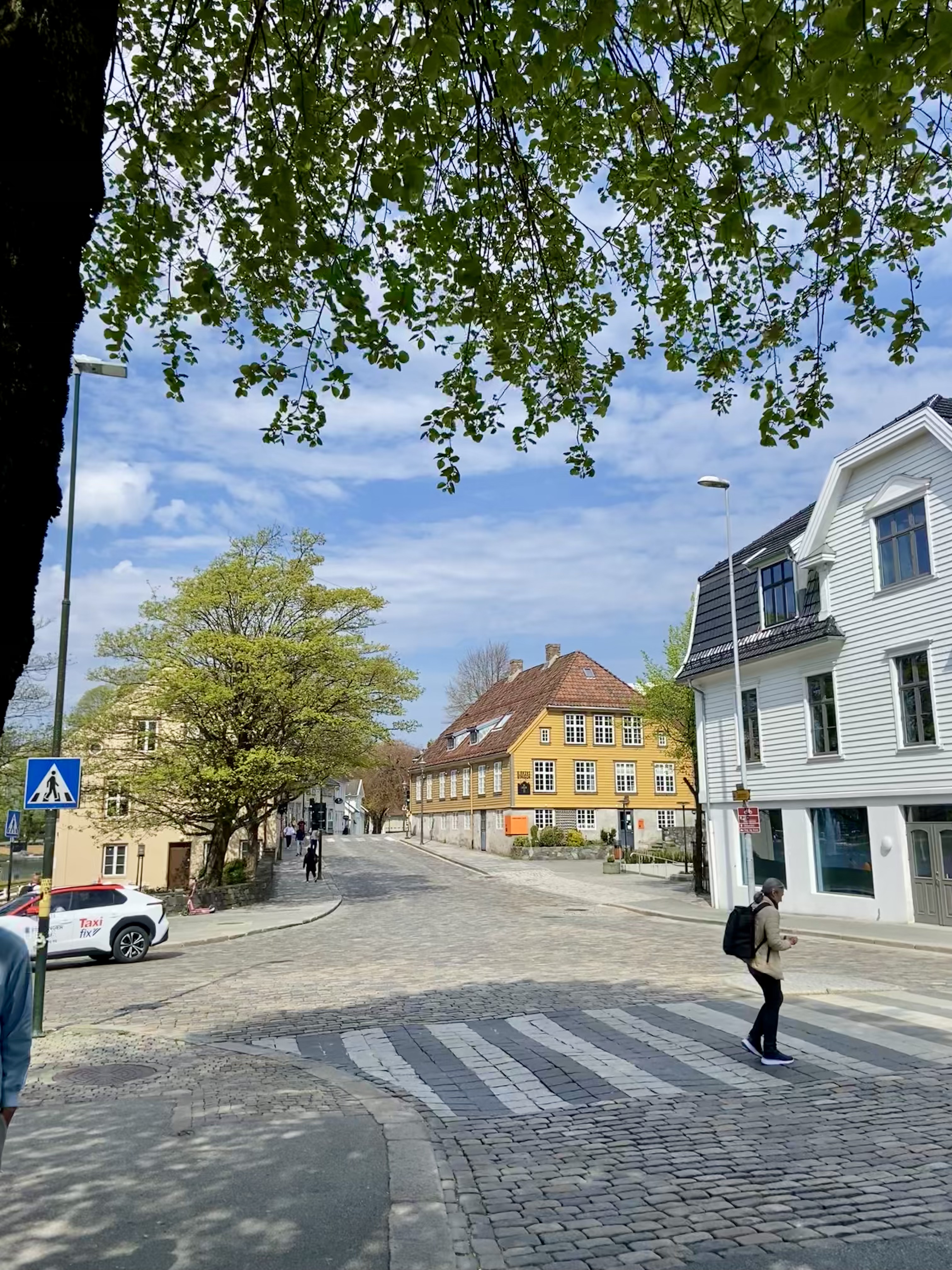
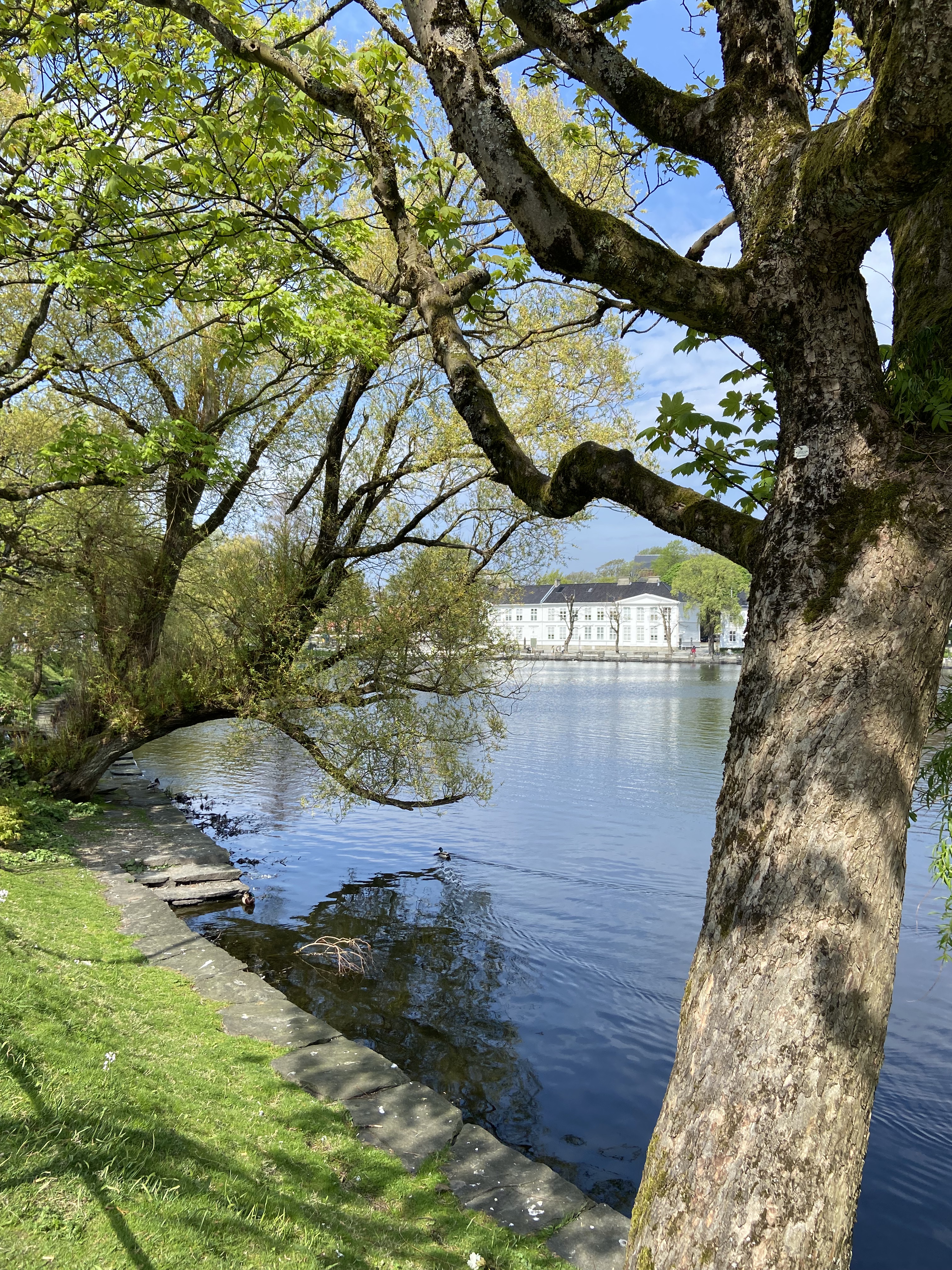
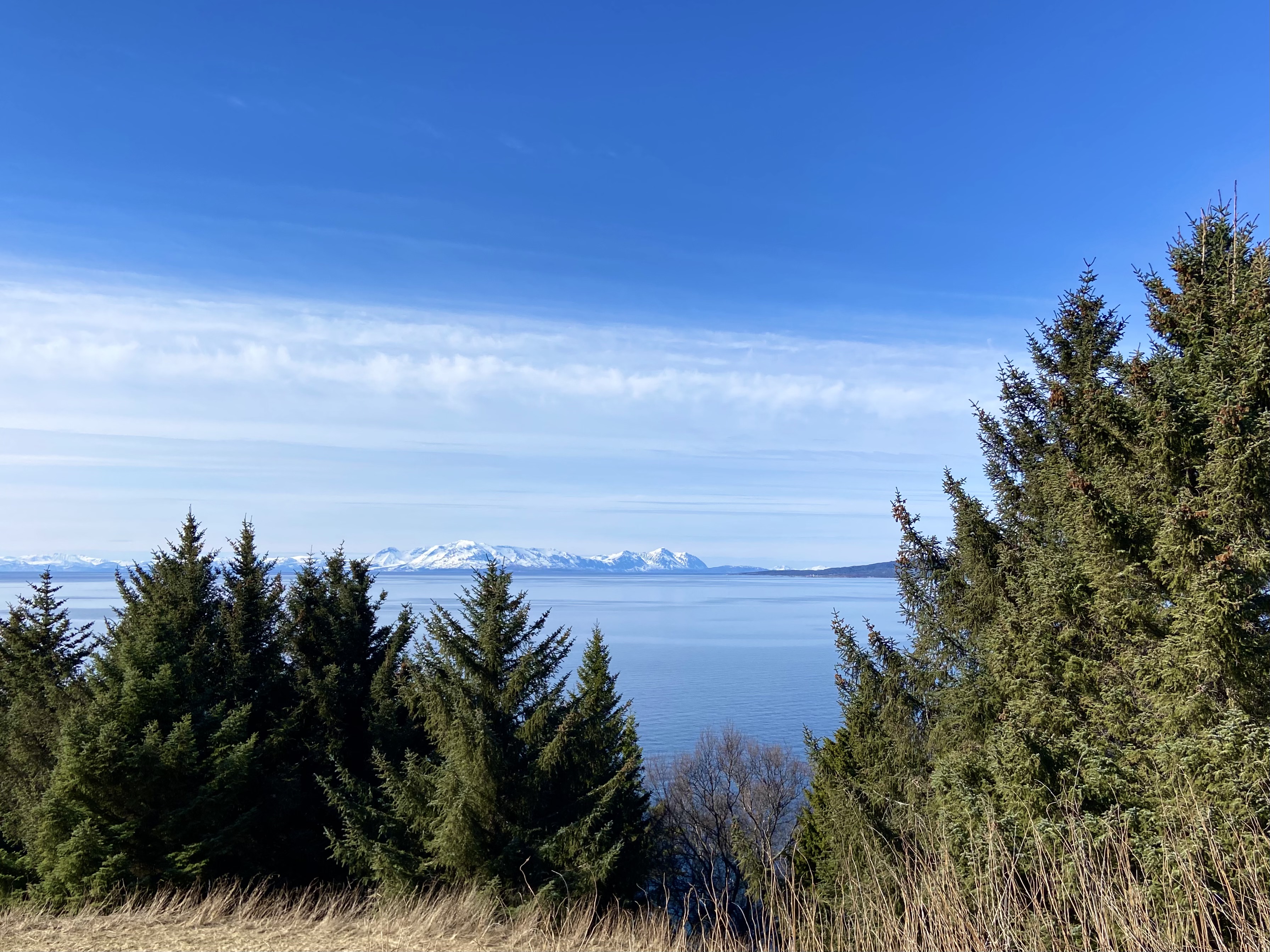
Stavanger looked beautiful under a clear blue sky. I have been very lucky with the weather, which is just as well as I couldn’t find my coat when I was packing. I thought I might have to buy a new one, but so far, I’ve got away with it!
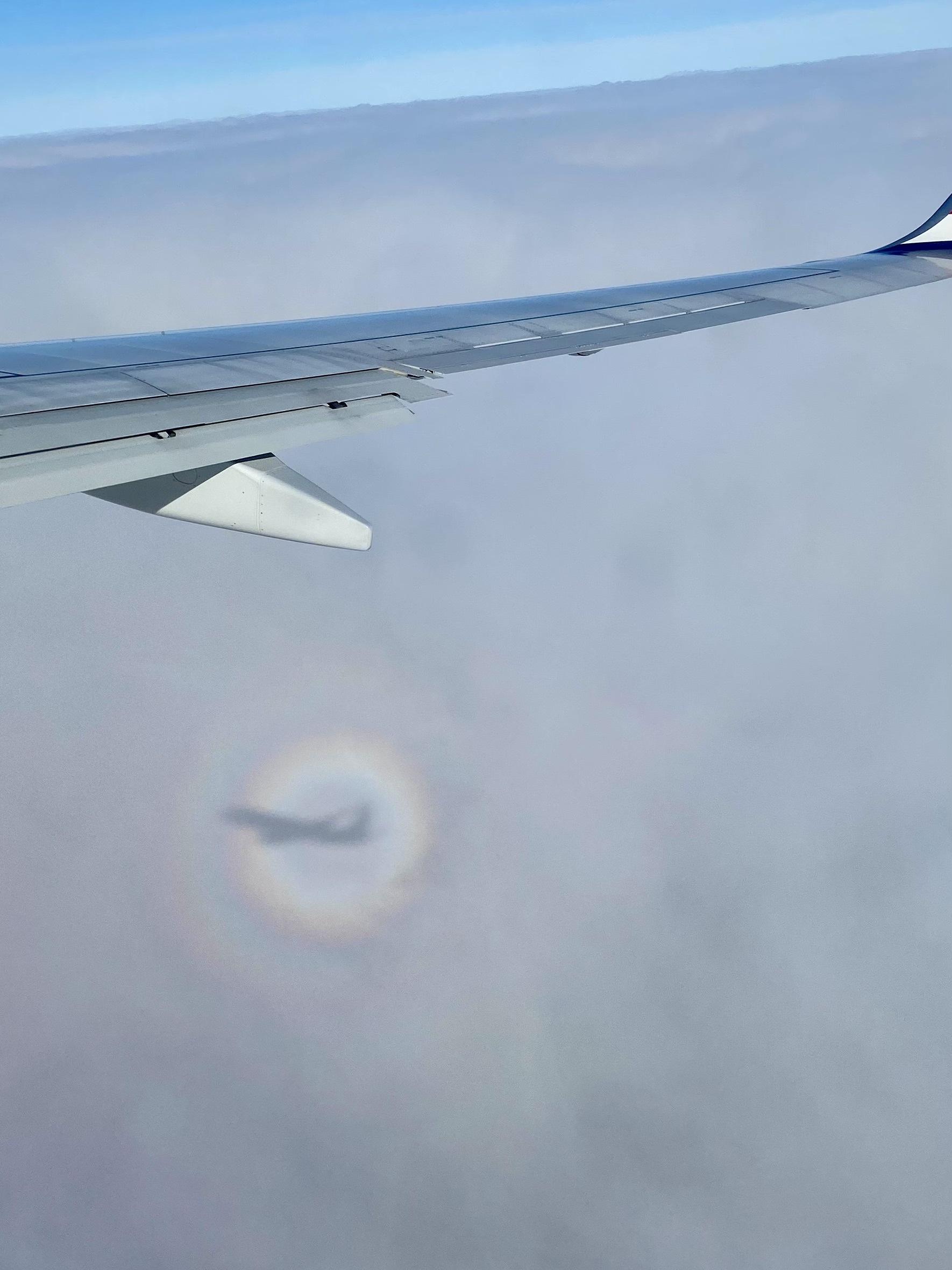
I came north on Monday. The stunning approach to Bardufoss, with its deep blue sea and snowy mountain ranges was a wonderful start to my Northern odyssey and though it clouded over as we neared our destination, I was treated to the sight of a «glory» which is a rainbow-surrounded shadow cast by the plane onto the cloud cover.
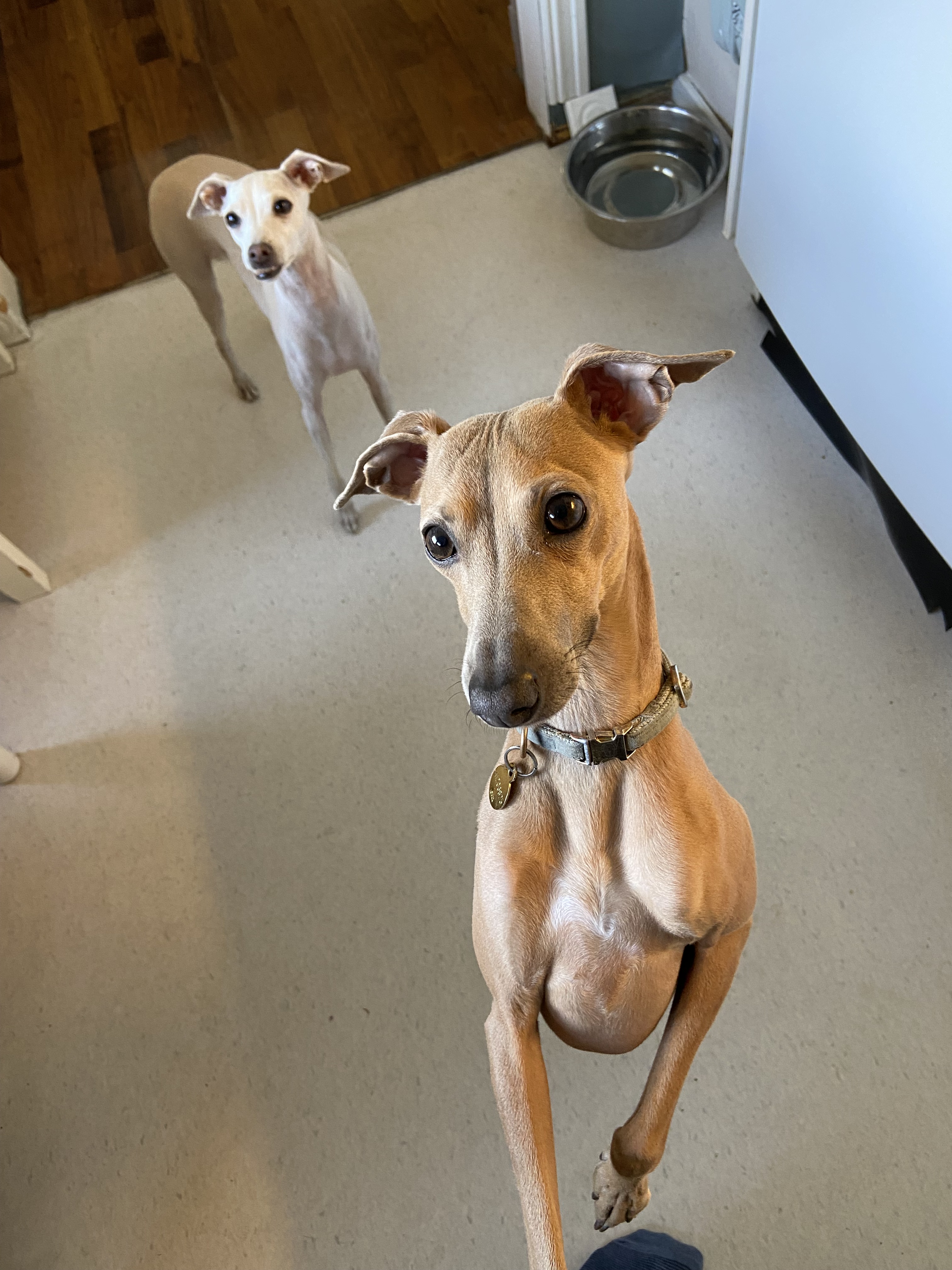
I have been staying with my lovely friend, Shirley, for the past few days. I met Shirley just over a year ago on the fast boat to Tromsø. Hearing people speaking English in this remote area of Norway is rare enough that I turned round to speak to her and her visiting friend, Linda, and we’ve never looked back. Coming back was like returning to a home from home, not least because of the lovely dogs she and her husband Kai own. Here they are: Bailey at the front and Alva in the background.
It’s been interesting coming back. The snow melted on the lower ground quite early this year, but it’s a week or two too early for the incredible summer growth to begin. When I lived here, it always seemed like the least beautiful time of year, with its dead-looking plants and grass, but driving through the valleys, past snowy peaks and still-frozen lakes, it was easy to see the beauty in the landscape, despite the dust that covers the roadsides when all the winter snow has melted away.
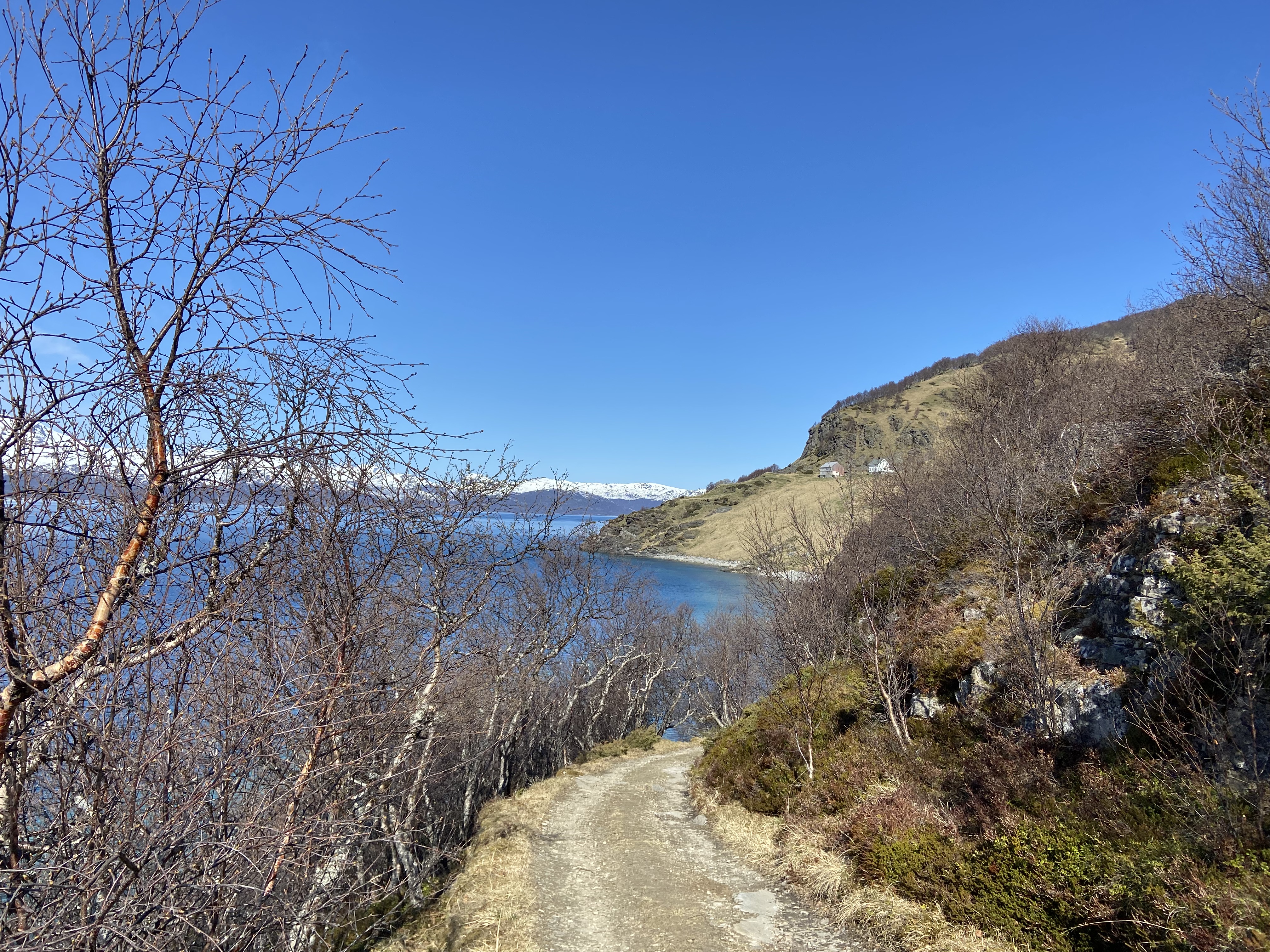
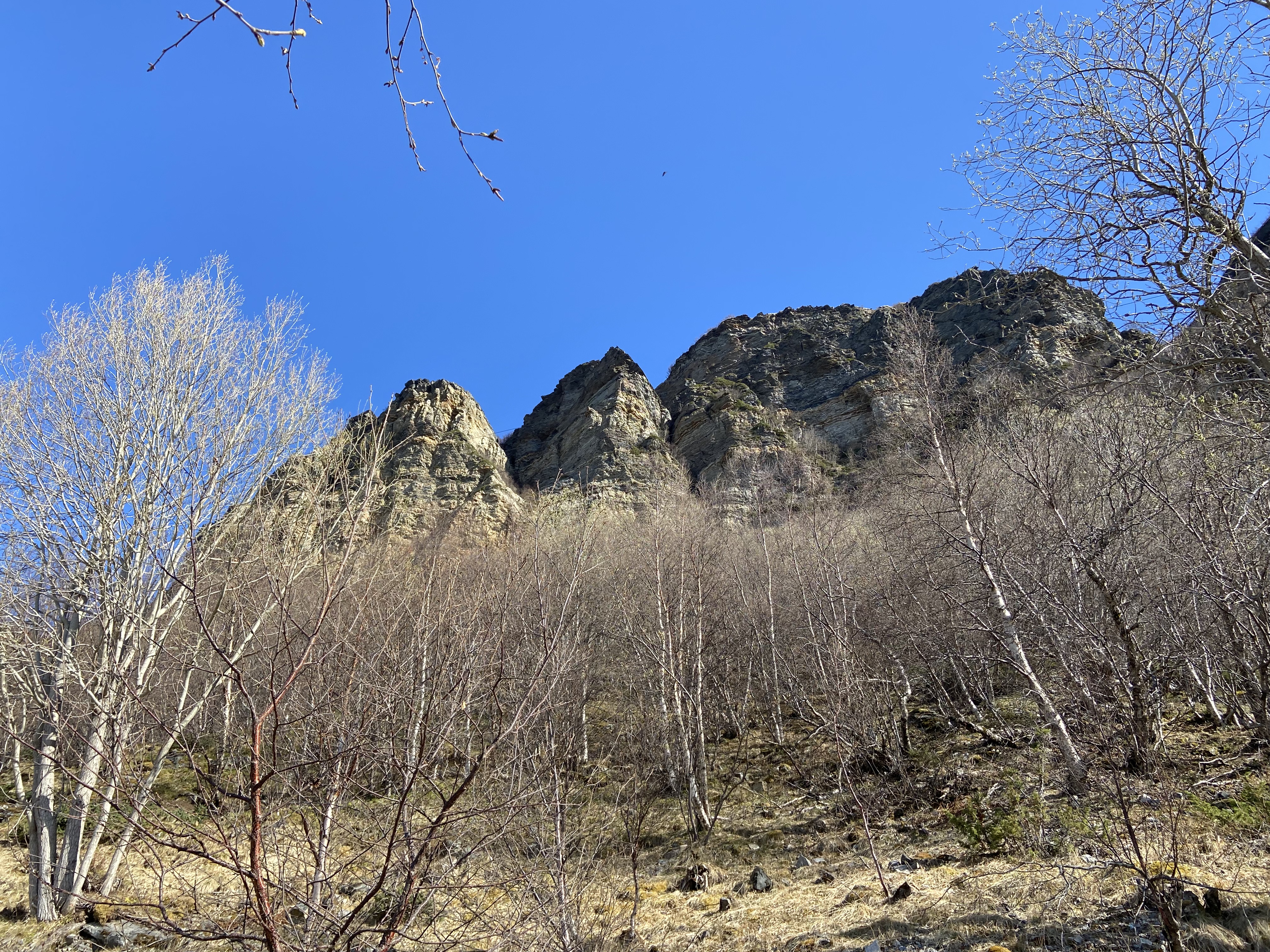
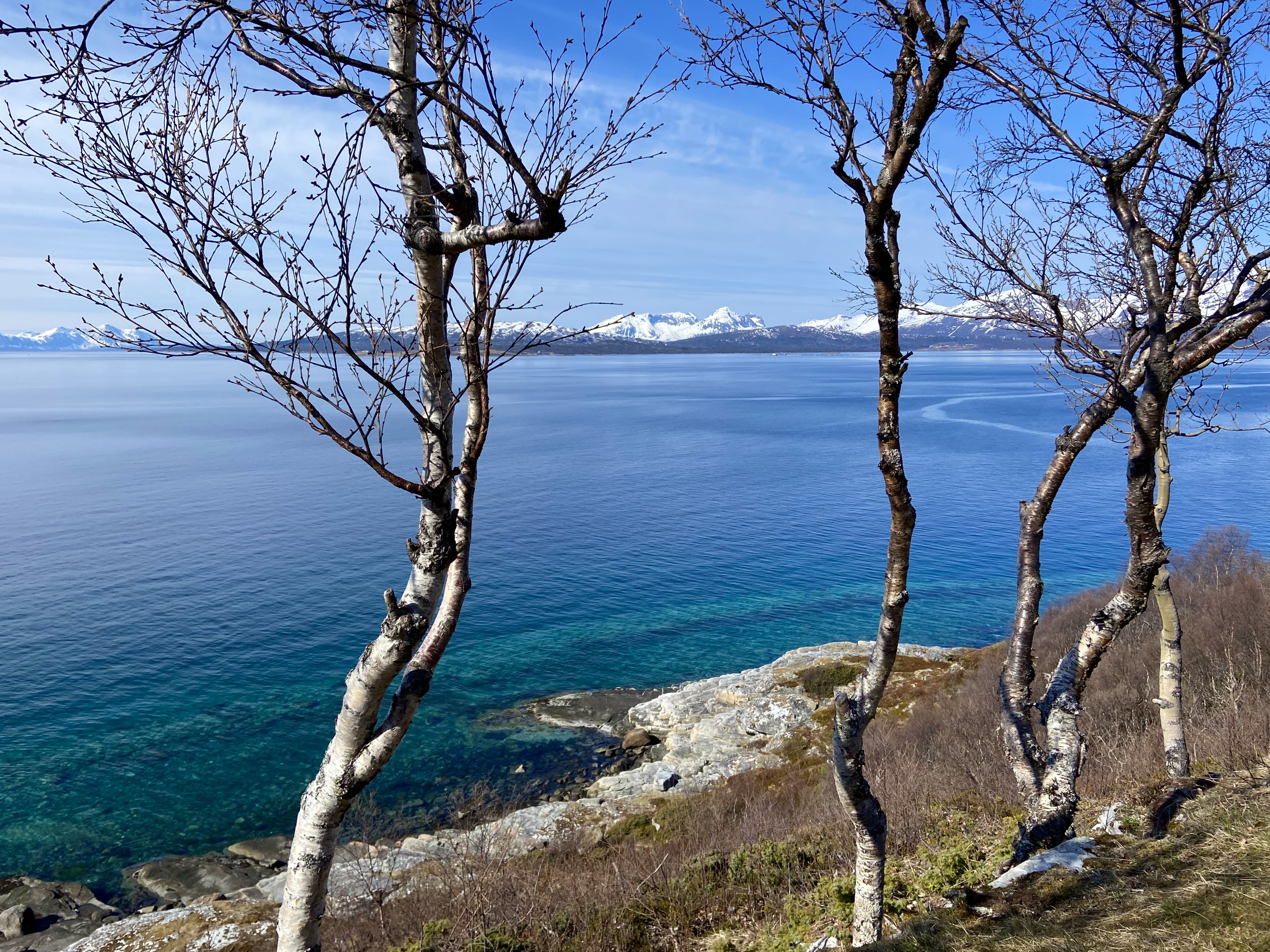
We’ve had a wonderful week of cooking together and wine with dinner, as well as UK comfort TV, like Heartbeat and Judge John Deed. We went on a trip to Dyrøya on Wednesday and walked for an hour along a track above the fjord, with views over to the mountains of Senja to one side and rocky peaks to the other. There was even a sea eagle soaring in the blue sky, far above our heads.
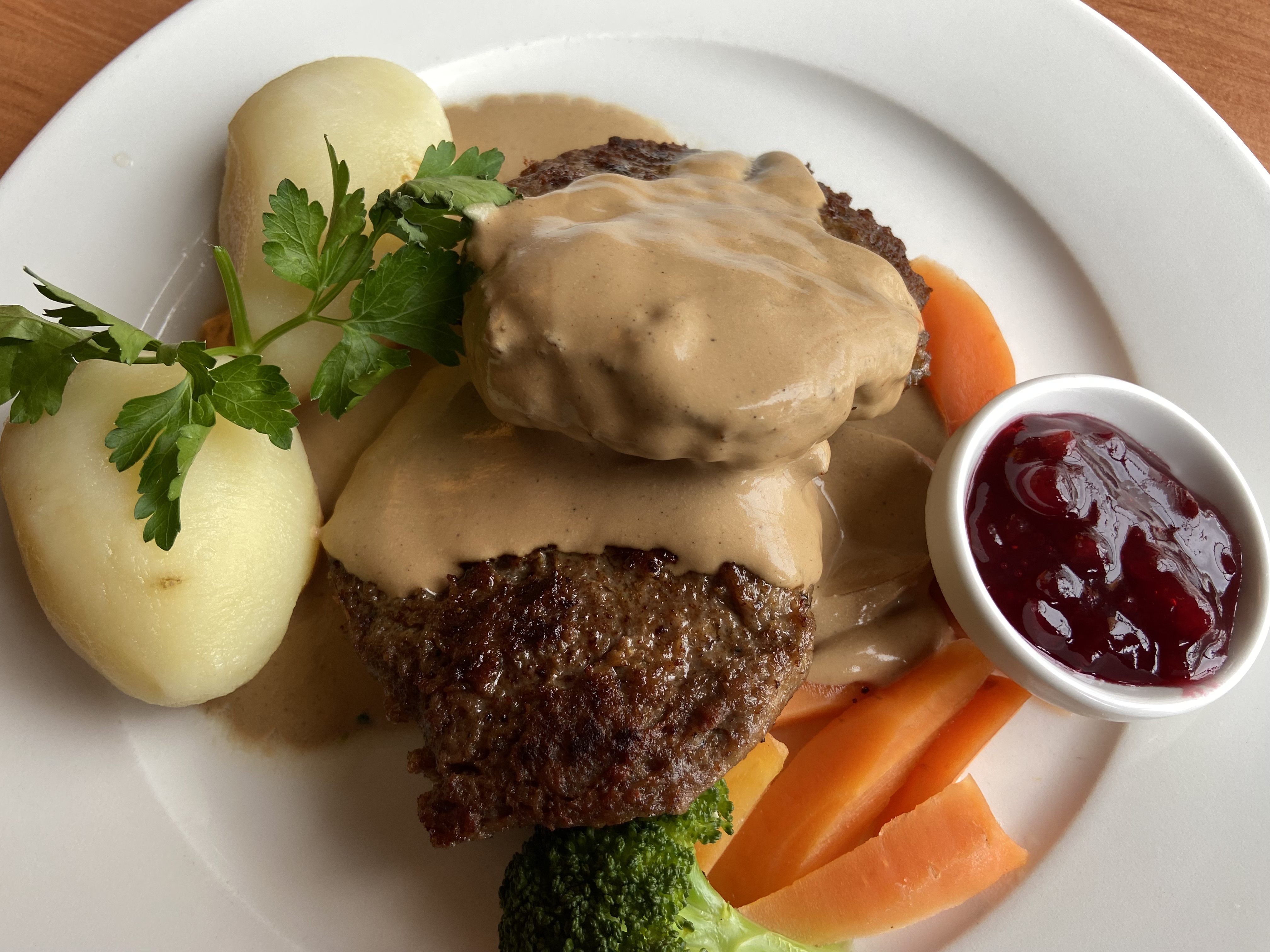
On Friday, we went to Senjastua, a restaurant on the edge of Stavanger, which serves traditional and modern Norwegian food. I chose reindeer karbonader, which came with boiled potatoes and cream sauce. It was the perfect end to a very enjoyable week.
In an hour or so, I am heading north again on the fast boat to Tromsø, where I will be visiting John and Yoana for a few days. Have a good week all and thanks for reading!
This weekend, I’m back in Stavanger. Having lived in Rogaland for twelve years, it all feels very familiar. Better still, Anna is with me and we’re visiting Andrew, whose year at school here is rapidly coming to an end. Today, we’re going to watch some of the films he’s made over the year, and (I think) do a session of singing with the students who have been studying music. We went to a great concert last night, put on by those students, so I hope it’s going to be a fun day.
I’ve quickly slid back into the Rogaland Rhythm. I may have taken too many pictures of food and drink, but that’s just the way it is! My first action at the airport, while waiting for the bus was to buy a hot dog. Norwegian hotdogs are the best. This one is a cheesy hotdog wrapped in bacon. Nam nam! as they say!
Having left a rather chilly Scotland after a long, wet winter and spring, I arrived to sun and twenty degree temperatures. Despite the heat, Anna and I went to one of our old haunts for breakfast. Steam does the best croissants and coffee!
We went for a stroll to the harbour, where a cruise ship dominated the landscape. They really do dwarf the buildings. In the background, there are a couple of oil rigs, presumably brought in for maintenance, and that’s very Stavanger too.
We stopped in a bar by the harbour and spent ten pounds on 400ml of lager! Sometimes you just have to go with it!
And then we had Funky Frozen Yogurt, or as it’s known in the McGurk family, Funky Zen Gurt, because when it first arrived in a shopping centre near us, the logo design highlighted those bits.
Anyway, that’s probably a reasonable summary of the last 36 hours and the crazy whirl since then punctuated, as you can see, by junk food. And now It’d better get up as we’re meeting Andrew in an hour. Have a good week all!
This has felt like the longest week yet. I was duty vet on Monday, Tuesday and Wednesday. At any given time, there are three vets covering direct enquiries in Scotland and these can vary hugely from issues that are directly relevant to other tasks we do (TB, welfare, notifiable or reportable disease, animal by-products) to enquiries that have effectively been sent to the wrong agency or department. For example at one point, I had a question about sheep scab (a reportable mite infestation) alongside another about some brown banded cockroaches that had been seen in a consignment of books brought in from India.
The first of those – the sheep scab – is absolutely our territory. That one I knew I would have to deal with from start to finish. The cockroaches? Really I am clueless. So the first part of my task was to working out which of the tasks was mine to complete and which should be forwarded on. As a complete novice, even making that decision isn’t straightforward. The two other vets on duty with me were busy with their own tasks. There’s a more senior vet on call, but that’s mostly for consultation on serious cases at nights or weekends.
I had thought, before I started, that it was only three days. How bad could it be? But by Monday lunchtime, I was overwhelmed. I was told to follow various checklists, but without prior understanding, they didn’t have enough detail. The instruction, “obtain owner or keeper’s e-mail so restrictions can be served and lifted with fewer delays” sounds straightforward enough, but there are multiple different systems where that e-mail might be recorded. Moreover, those are so complex that looking things up could take an hour and even then, I might still not have found it.
Finally, in desperation, I called my veterinary advisor, Pilar. I probably should have done it earlier, but I knew she was busy and she had already spent hours with me, trying to prepare me. Fortunately she was empathetic and understood how out of depth I was feeling. I had actually reached the stage where I was contemplating switching off computer and phone and walking away, but she talked me through everything in simple steps, told me I could gather most information by calling the vet who diagnosed the scab and the farmer whose sheep were infected and gave me a list of what to ask each. The cockroaches, she directed me to another APHA specialist, who would be able to advise.
It took me a very long time to work through that sheep scab case. Next time, it will be much quicker, but the good news is, that by the time I phoned cockroach guy back afterwards to find out more about his query, he’d already had the Forestry Commission in, who had dealt with the problem. As someone else pointed out, almost none of the enquiries are urgent, but it still feels overwhelming. It will get better over time, but those three days left me feeling wrung out.
Having survived the three days (and nights – no calls, but not relaxing knowing the possibility is there) of duty vet, I was hoping for a good end to the week, but it wasn’t to be. On Friday, I had booked in a welfare investigation with David, the local authority inspector. As regular readers will know, mostly those investigations reveal good welfare, but occasionally the reports are accurate, and this was one of them.
There are two main sets of rules we follow. There’s both the law of the land (Animal Health and Wefare Act, Scotland, 2006) and a more stringent set of welfare guidelines that farmers sign up to in order to receive government subsidies. Up until now, I have mostly visited farms where the farmers were broadly compliant with the guidelines, which represent a higher standard than the law. There have been a couple who met the law but not the guidelines, but until now, I haven’t seen any proper breaches of both.
There are various protocols in place for dealing with breaches, depending on severity. Minor breaches can be corrected with simple guidance. There’s a sliding scale from there, including serving notices for improvement within a specific timeframe, calling for direct action while on the farm (such as calling the private vet or requiring that animals are culled) right up to prosecution, for the most serious cases. The latter is usually (though not always) a last resort after improvements haven’t been made.
Anyway, yesterday I had my first Scottish breach. I’ve dealt with some in Norway before, so the welfare signs and how to record them are similar. However the protocols differ and it’s easy to put your foot in it. One thing I have learned is that, when I come across welfare problems, it’s intense. There’s a lot of pressure to make sure you get stuff right. If you say the wrong thing, the farmer can get prematurely angry or defensive, which makes everything more difficult. On every case I’ve reflected on afterwards, I have looked back and realised there were ways I should have done better and some things I learned. This is my initial list after yesterday. I know more will crop up as the case is processed and followed up.
Firstly, don’t forget to take supplies. There’s a minimum kit I should have had with me and didn’t. In Norway, we used disposable overalls and boot covers on every farm and I would go round the stockroom and pick up measuring implements, microchip readers and other equipment each time. It had become routine. Here there are certain items I am meant to have with me at all times, but I went out with someone from the local authority and (incorrectly) assumed that the LA inspector would have everything I needed. I don’t think it caused any catastrophic problems, but that was only by good fortune. I can easily rectify that for next time.
In addition, I will never again go out without food and drink. Generally such inspections take a few hours at most and we can go and buy lunch, but this time, there was a lot to get through and I was uncomfortably thirsty before we managed to take a break. In Norway there were often no cafes or shops within a two hour drive. Thomas never ever went anywhere without a can of cola and something to eat and I had started to do similar. Again, an easy lesson.
Second, don’t do welfare on a Friday. Graham mentioned this and it’s great advice. Sometimes it’s unavoidable, but in fact, it can cause no end of problems. Vets go onto out-of-hours rates and limited staffing at weekends, so if a call-out is fairly urgently required, it’s more complicated. Worse, abattoirs close for the weekends. They did in Norway too, but we had an emergency slaughter service 24/7. Labs close. If you want to send them anything, and it’s late, you can’t leave it till the next day. Even from the point of view of our own follow-up, it would have been better to go through the case the next day and not have two days in between.
Third (and unexpected). Don’t use the word evidence. It’s a funny thing to reflect on, but I never accidentally used that word in Norway. I didn’t even know the Norwegian word when I started working in Finnsnes! I rapidly learned how important language was when I started out in practice years ago though and now I need to learn what works in this role. The way you phrase things makes a massive difference to how the person on the other side of the exchange reacts.
To me, it felt like a technicality. Evidence is stuff I see and write down. It can be positive or negative, but it was obvious when I used it a couple of times that it instantly conjured the threat of a court case. Next time, I will find alternatives. If I ask to take photos, it’s not for evidence, it’s to get or record a full and accurate snapshot of what I’m seeing. Doing that is easily described as being in everyone’s interest. There are so many police shows now that the rights they read out (that include the word evidence) are probably at the forefront of people’s minds. I’ve always thought it would be easier to do this job in English and there’s no doubt it is, but there are new pitfalls and I need to adjust.
Anyway, as well as the things I got wrong, there were others that I did get right. The habit of using descriptive, observational, factual language, not opinion became second nature in Norway. A cow is not “thin”. Thin is an opinion. Instead I might write that “I can see her ribs and the bony prominences of her pelvis and spine and I rate her body condition score at 2” (with an explanation of what the condition score means). Those are facts. Realistically, “thin” is shorthand for “I observed those things” but it can open up the problem that different people might assess “thin” in different ways.
On my suggestion, David drew a map. I learned that from police in Norway after working on a case with them. It makes it easier to keep track if you have all the farm buildings mapped out and the sheds numbered. You can then describe more accurately where you found various animals and what your photos show.
This is a Scottish/British one; I should record important words verbatim. I learned that on a statement writing course. It’s not easy to do that as conversations go faster than I can write, but writing down someone’s actual words removes any confusion created by a summary of what you thought they said.
And finally, I’m going to end with something David told me. It can feel overwhelming during a welfare case, especially if there are many issues that need to be addressed. Again, harking back to Norway, even if I managed to improve things, I could still get bogged down in what I didn’t achieve, because it could have been done better. But as David pointed out, in the end of the day, if the actions I took relieved the suffering of a single animal, that was still an important achievement.
Though in some ways, the weeks seem to rush past, by the time I write this blog, things that happened Saturday to Tuesday always seem distant. I will be wandering round, on one of those days, thinking “I’ll have to write about this,” then by the end of the week, something else displaces it. Ideally, I should start logging in as things happen, but hey, I’m not that organized! Anyway, this week I have carefully stored away a couple of things I really want to share. The first is about a welfare inspection I did on Tuesday.
I’ve probably said it before, but the sheer size of farms now, compared even to fifteen years ago when I left, is astonishing. When I qualified as a vet, in 1991, larger dairy units might have had 150 cows. Numbers were creeping up though, and by the time I left the UK many of the bigger herds had expanded to having over three hundred cows. Now it seems to be not unusual to have a thousand, sometimes even more.
I have been wondering how welfare is maintained on such a unit. Back when herds were smaller, most farmers knew their animals well. I went out with a dairyman when I was at college and he knew the personalities of the cows he milked and there were some he was very fond of. I remember seeing him cry when he’d been away on holiday and came back to find one of his favourites gone, due to the carelessness of the relief dairy worker that had been covering for him. No wonder some farmers barely take holidays.
I am not under the false impression that bigger is inevitably worse. Those who have expanded are often the most efficient and forward thinking farmers. They are investing in the herd and their own future, but still I had been wondering how. These are living animals and to keep track of when they are in season or in calf, or are sick, takes a lot of time for observation and knowledge.
As we walked along the calf pens, I could see they were being bucket fed. Lots of bigger farms use automatic feeders for their calves, but not here. The farm is run by a couple and (fairly traditionally) it’s the woman who is responsible for feeding the calves. They did have automatic feeders for a while, but found they tended to get dirty. In addition, teaching them to drink from a bucket prepares them for going into bigger groups and being given milk from a trough. You can also check how much milk each calf gets and individualise each one. I guess it takes a long time at peak calving time, but it was interesting to see that a good start in life is so important that industrialization hadn’t occurred (or rather, had been tried and rejected) on this part of the farm.
As we moved from the calves to look at the close-to-calving cows, I was interested to notice that the nearest cow had something attached to her foreleg. I asked what it was, and was told it was a movement monitor. Just as I wear a watch that can tell me how many steps I take each day, the cow’s steps were also being monitored. I wasn’t immediately sure what purpose this would serve, but later, he took me to the computer where these measurements were read.
He showed me a the readings of a cow that was coming in season every month or so. Sure enough, the movements peaked hugely at that time. But it wasn’t only that he could look at the program and see which animals were in season. The system itself recognizes the pattern and, as the cow comes out of the milking parlour, where it goes twice a day, a gate automatically opens to allow it through into a different area, so she can be inseminated. A person walking through the cubicle shed to separate out these cows disturbs all the other animals. Instead, this is another process that is mechanised to minimise both the work required and the disruption to the herd.
Automatic scrapers to clean passageways in cubicle sheds have been around for a long time. Usually they are pulled by chains or ropes and there were some of those here. The chains were in runnels to prevent the cows standing on them and hurting their feet. One of the sheds had one of the newer machines, that functions like a robot vacuum cleaner. These have the advantage that they can go round corners, so there are no missed sections, which there are with the chain scrapers.
What I hadn’t seen before though, was an automatic scraper for moving silage. Usually cows are fed in a passage, where they put their heads between bars and eat the silage and feed that is put there. As they eat, the food gets pushed away, and usually someone will drive along with a tractor now and then and push it back in. Here, there was a machine that ran along a metal track, doing the job automatically for all the big sheds. It runs every two hours, except just after milking time, when it is set to go hourly, as the cows tend to be hungry when they’ve just been milked. Again and again, I saw that, although this system was on a large scale, there were tweaks and tricks that meant that it was really set up, based on what the cows needed.
And finally, back to the matter of the individual animal and the personal relationship. I can’t say I really touched on this with the farmer, although it was apparent as we walked round, that there was still fondness for individual animals. He did tell me though, that where his dad had always been keen to give every sick animal a chance, he tended to be more ruthless is removing animals with bad feet or which had been ill enough to mean they probably wouldn’t thrive. One thing I have observed from life as a vet is that there is a lot of unconscious cruelty by some pet owners, who keep their pets alive long after that life stopped being worth living. Perhaps in a system where animals with bad feet get removed quickly, breeding from those animals that are left will create a better herd, with fewer foot problems in the future. Anyway, I really enjoyed my visit. Cows are still cows and they are still my favourite animals and these visits give me plenty of food for thought.
The other memory was from last weekend. I mentioned I had been told there was a man in his nineties, who’d lived here all his life. I ran into him last weekend. He has a garage at the end of the street where he makes wooden toys for children. He beckoned Triar and me in, and gave Triar a biscuit. Though he was in a wheelchair and his hands were shaky, he was painstakingly painting a toy duck that would go on a stick. There would also be feet attached to a wheel that would spin as it was pushed along the ground.
I asked him if he sold the toys and he said no. He gives them away, and the look on the child’s face is payment enough, he told me. If I ever have any children to stay, I will undoubtedly take them along to see him.
He also started to tell me a bit about the street and I resisted the urge to ask him if I could record what he was saying, as it was lovely. He had lived in the street law his life, he said, and could remember back to the time when it was a village and not part of the town. The doctor came out rarely, he said. If someone was sick, they called for Mrs Black. Mrs Black was also the one you called on if someone was giving birth. We also had a discussion about the healing powers of honey. As antibiotic resistance is growing, even in the vet world there is starting to be more exploration of how old remedies can be better integrated into modern treatment. I bet Mrs Black could have taught us a few things about helping sick people that we have lost in our rush towards modern medicine.
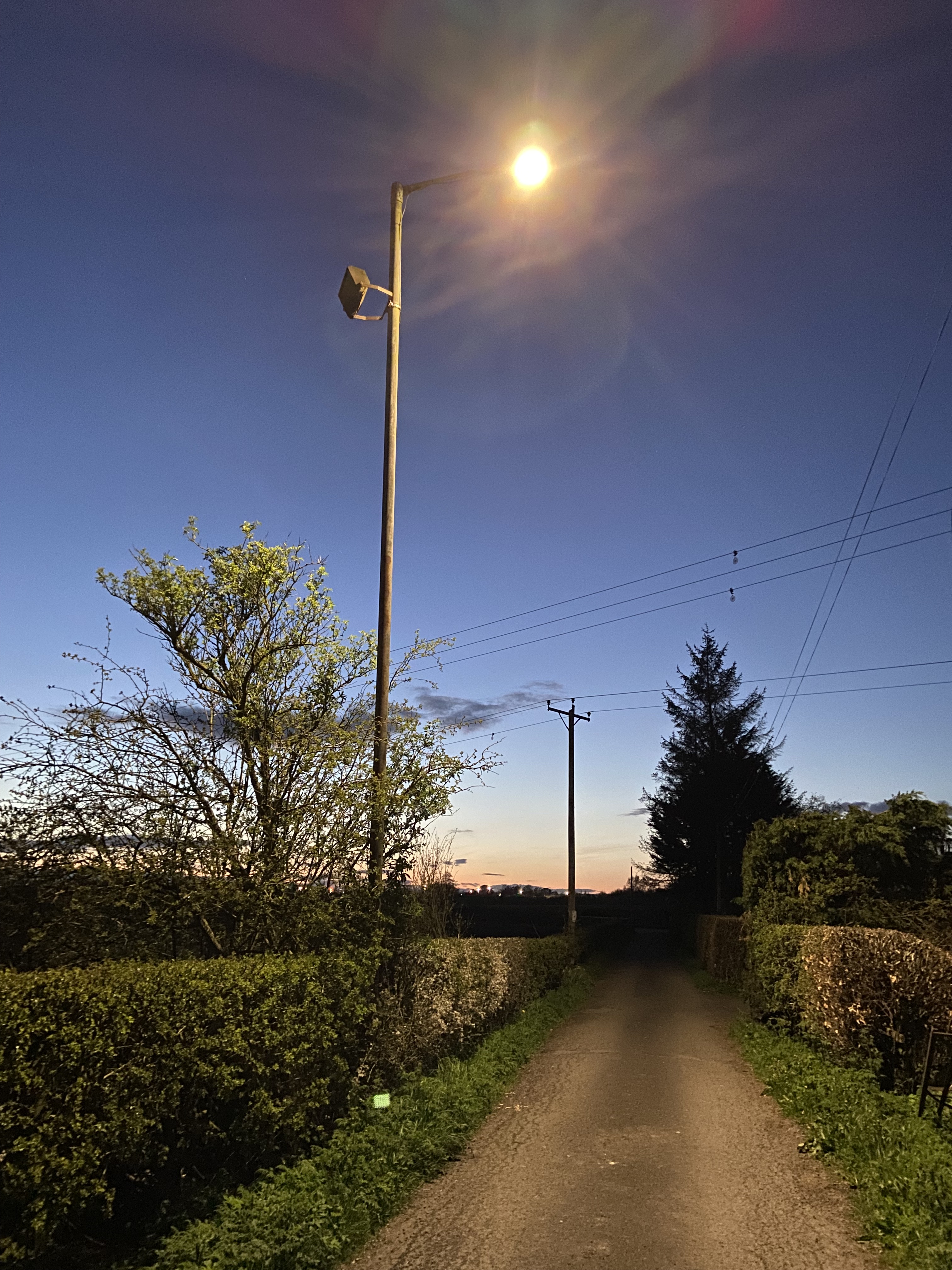
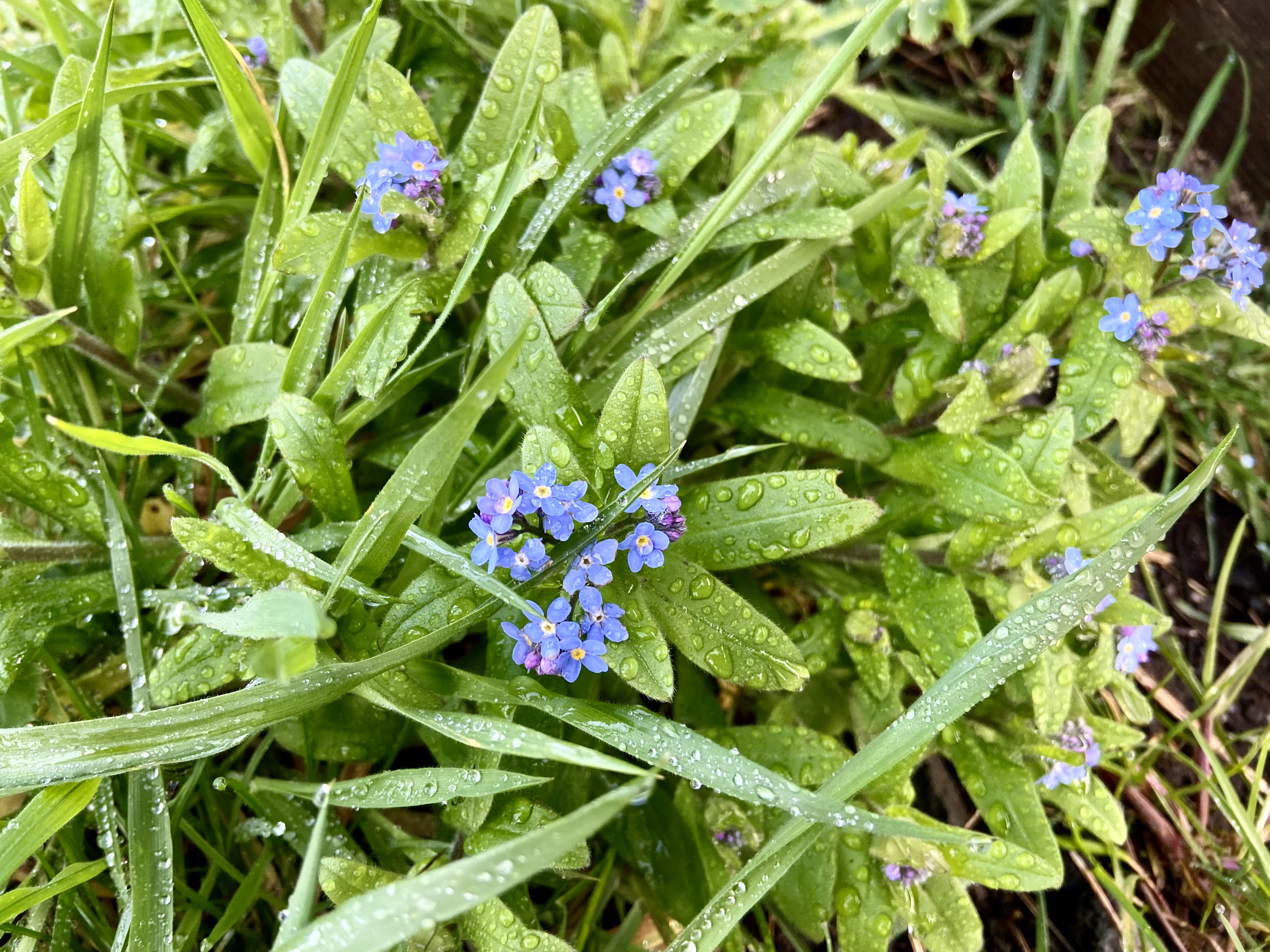
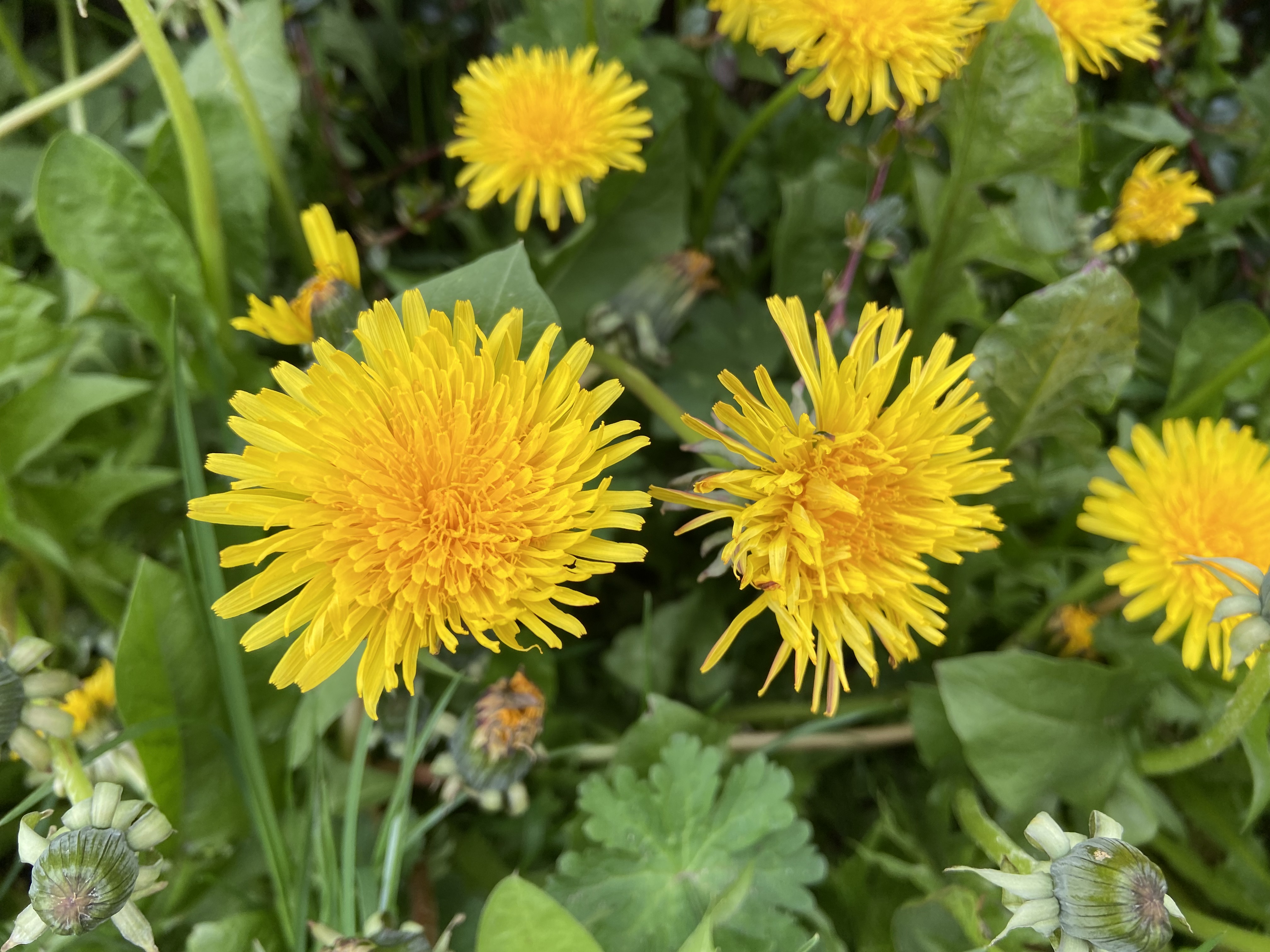
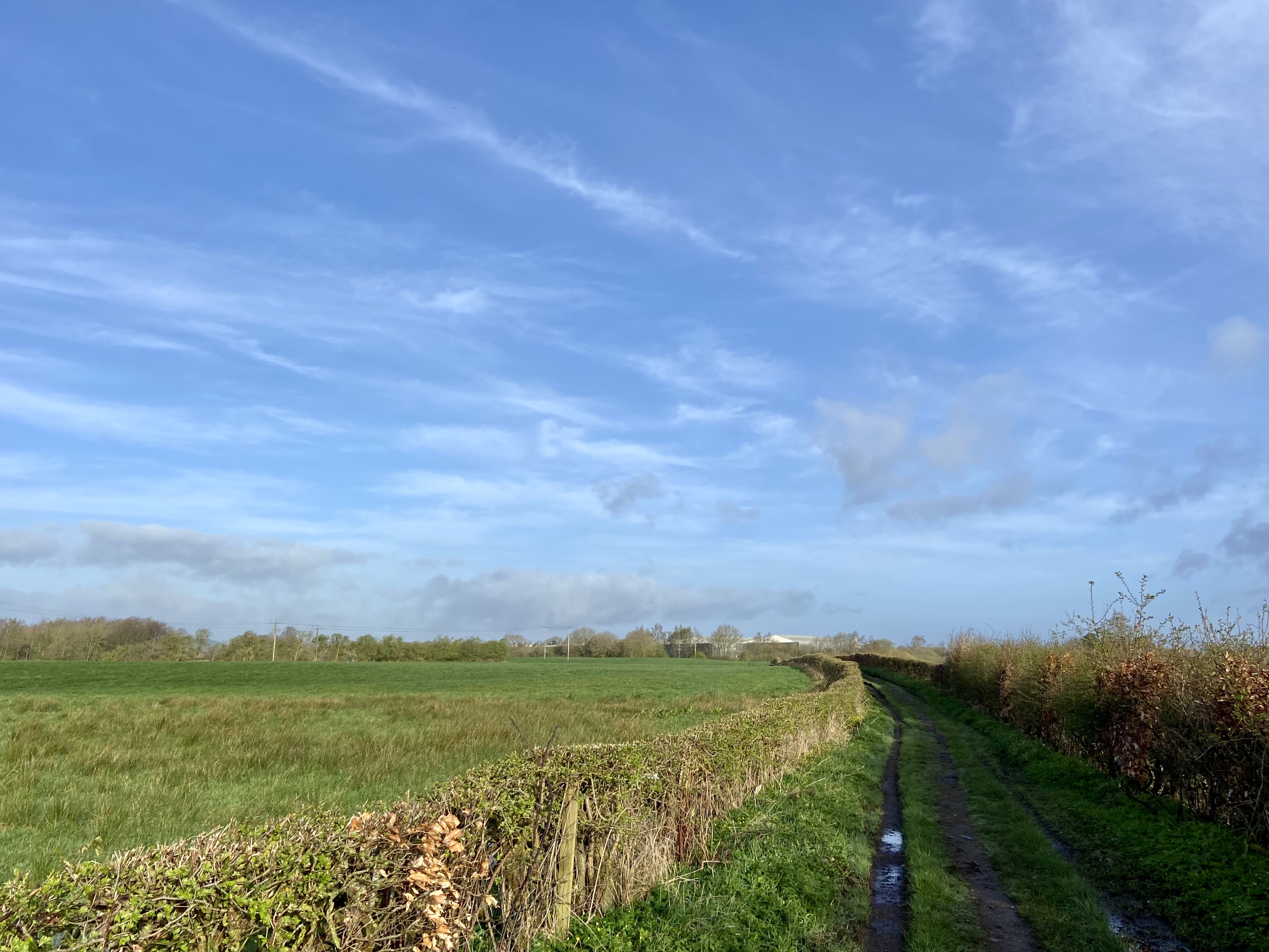
Anyway, I’ll leave you on that note. The pictures are from Blackbird lane, where Triar and I are still walking, morning and evening. This week’s unusual birds were a tree pipet and a mistle thrush, but the blackbirds haven’t deserted. Have a good week and thanks for reading!
It’s been a quiet week at work. As a veterinary inspector, I am on a rota four times a year for detached duty. During that time, I can be deployed anywhere in the UK where there is a disease outbreak. I was on the rota for next week, so I was half waiting for a call to come in, and I had kept my calendar clear of visits. I wasn’t sure when I would be told, but I was out inspecting a rendering plant on Tuesday with G, who told me that if I hadn’t heard by now, I could probably assume I wasn’t being sent anywhere.
I must say it came as a relief. Normally, I’m all for travelling to different places for work. I love a bit of variety and the current outbreak work seems to be bluetongue inspections and blood testing (last year’s bird flu – higher risk – not so pleasant) but I was exhausted after moving and the house is still in chaos. Triar was also unsettled so, much as he loves visiting Mum and Dad, it seemed better all round to be staying in our new home for a while. It also meant that I could plan my workload over two weeks instead of rushing through it.
The rendering plant visit was fascinating. I dare say most would find it grim. They deal with animal waste products, so stuff like fallen stock (animals that died on farms) and slaughterhouse waste. The products they process are high risk, so they have to heat them to a high temperature, then separate what’s left out. What impressed me, is that even these waste products are put to good use.
They remove as much fat (tallow) as they can and send it to make biofuels. Their fat is used to drive buses. The remaining meat and bone meal is sent to a power station and burned to produce energy, then the ashes become fertilizer. The plant itself has also recently invested in machinery that recirculates the heat, so that it’s twenty five percent more efficient than it used to be, and if the price of tallow drops, they can even run the unit using that, rather than selling it. Given how much of our household waste goes into landfill, it was good to find out that this waste is being put to much better use.
I was feeling a bit down when I came back from Yorkshire last Sunday. I had flung everything into my new house and then had to go away, so I knew I wasn’t coming back to an oasis of tranquility. Donna had suggested celebrating my arrival with gin, but she had a friend round and there was no way I could leave Triar to go and join them. Practical as ever she immediately suggested that she and Debs could come round, bringing the gin with them.
They arrived with gin, tonic and extra large ice cubes, which apparently are better as they don’t melt so fast and dilute the gin too much! Having allowed Debs to pour (in the knowledge that Debs pours with a very generous hand) they didn’t even get as far as sitting down. Seeing I was overwhelmed with everything, they offered to do what Donna had done when I last moved, and unpack my kitchen.
There wasn’t really any room for me (it’s a little house) so I went and cleaned out the sticky, hairy bathroom drawers, which I confess was helped along by being gin fueled. There’s quite a lot still to be done and cleaned, but having the basics in place makes life much more liveable.
My new street does seem rather lovely. There are three rows of cottages in what was once a village outside Dumfries, but which has now been assimilated. My street doesn’t go anywhere and I am almost at the end of it, so there’s not a lot of passing footfall. I’ve said before, that it seems like something out of Harry Potter and that feeling hasn’t gone away. I’ve been taking a Triar out morning and night and every time I seem to meet someone new. There’s Gary next door and Kay along the way, who has a little dog called Hamish, and apparently there’s a lovely old man across the street, who’s 93. He was born here, I was told, and wants everyone to feel welcome, so I hope to meet him soon. Everyone has been incredibly welcoming and it does feel like I’m living in a friendly village, rather than in a town.
And so the best part of my daily routine at the moment, is walking Triar. At the end of our street, you can take a left turn down a lane. It’s bordered with hawthorn and it’s filled with wild flowers and birdsong. It’s not (so far as I know) called Blackbird Lane, but that’s what I’ve called it in my head, because they are everywhere.
They sit atop the hawthorn, regarding me with their bright eyes, seemingly fearless. The males, with their sleek black plumage and cheerful yellow beaks, compete with one another for the best perches. I caught sight of one of the quieter brown females last night with a worm in her mouth, so perhaps she already has young somewhere.
I see house sparrows too, in the hedges and flitting around, but what I find particularly wonderful is the birdsong. A Norwegian friend from the Arctic posted on Facebook this week “the sound of spring” with film of a newly unfrozen stream, emerging from the ice. A wonderful sound indeed after the winter silence, but here in south west Scotland, spring is filled with birdsong.
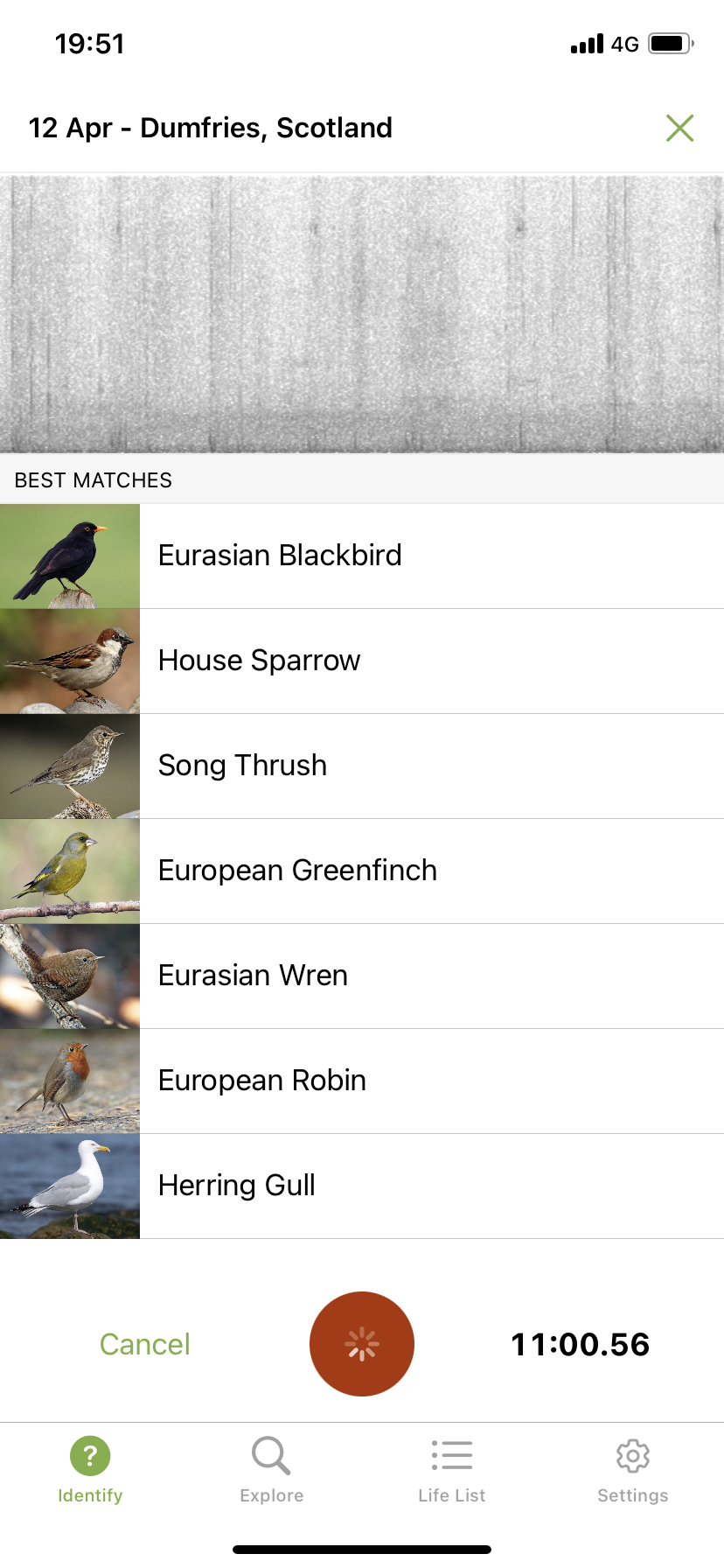
Just listening to it fills me with joy, but a while back, I downloaded an app, which records the song and tells me what I am hearing. I remembered it a couple of nights ago and it came up with sparrow, blackbird, wren, great tit and blue tit. Last night’s rendition was even better, though it did miss the wood pigeon that was calling in the distance. Finding out which birds are there makes the whole thing even more wonderful.
So there is a lot to do, but also a lot to look forward to. Today, I have to go and buy a stepstool so I can reach the ceilings. The previous owner smoked in the kitchen and the smell still lingers, along with the yellow stained paint. I’ll need to wash it all down before I can paint it. A colleague recommended a joiner to me and he came round yesterday to assess how much work it would be to put in insulation in the roof.
He suggested that, as we would have to pull the walls down to put the insulation in, if I was considering putting in a bathroom or toilet upstairs, it would be better to do the whole thing at once, and check the wiring too, if that was a viable option, so he might come back today with an electrician and later with a plumber. If he can really organize everything for me, that would be a miracle.
But priorities are priorities and the most important task of the day, apart from my tours down Blackbird lane, is to go out and buy some gin and tonic in the hope of attracting in a friendly neighbour. Said neighbour may have to bring along some extra large ice cubes as my freezer needs defrosting before I can use it. Currently it is scented with six month old cigarette smoke. Obviously I should have defrosted it before I moved in, but lingering ice odours hadn’t crossed my mind! I’m going on holiday soon, so that will be a good opportunity for defrosting, cleaning and airing.
Anyway, I hope you’ve enjoyed this little trip down Blackbird lane. I am looking forward to seeing what grows there through the summer and also exploring further as the mud dries up. Have a good week all!
I have been down to Weybridge agent this week, this time for a cattle handling course. Before going, I was rather cynical. After all, I’ve been a vet and have worked with cattle for a long time, I’d done a course in Norway about the design of facilities in abattoirs, where I learned about behaviours, so I rather thought it might be a lot of repetition. The two colleagues who attended with me were actually farmers, so I think they had the same concern, but it warm in fact, very interesting.
The essence of the course was to teach us about health and safety when it comes to cattle. I haven’t read it yet, but there is a health and safety document (HS32) regarding handling facilities and minimum safety standards when we go to a farm, what we should look for and when to walk away.
There’s a drive in UK farming at the moment and grants available for building safer facilities, we were told. Farmers who provide inadequate, unsafe facilities are paid the same for their products as farmers who don’t, so if we walk away, for valid reasons (backed up by HS32) then there is legal pressure for them to comply. If they don’t, they will find themselves under a movement ban. As someone who probably would have tended to push on through, this in itself was a good message. Take it further and it’s also good for the animals. Escape attempts that go wrong don’t only result in risk to the human beings present, but to the animals as well.
Most of the course was led by Miriam Parker, and if you are interested in what she does, there are videos online. In essence, she designs livestock handling facilities with the animals in mind. If you want an animal to go somewhere, the best way to do that is to design the facility so the animal wants to walk through it. Ideally, you want the handlers to be able to guide them from outside as well, as that is much safer.
I had learned about flight zones before: the area an animal maintains around itself – enter it and the animal tries to move away. I also knew about the balance point – if you stand behind its shoulder, it tends to move forwards, in front, it moves back or turns. But we also looked at the behaviour and signs of discomfort when you are in the flight zone (a potentially risky place to be) and the limitations of cattle sight.
I had always thought that, with their eyes in the sides of the head, that cattle were mostly looking out to the sides. Not so! They have very wide peripheral vision and can perceive movement there, but most of their attention is still focused in front of them. I should have known that really. When they stand looking at you in a field, they do look straight at you, after all. What they do have though, is a great big blind spot in front of them, which means it’s much harder to judge distance when close up, for example. If you wondered what the picture at the top of the page was, it’s my colleague, Lesley, wearing a pair of spectacles that allow you to get an idea of what a cow sees. No wonder, when cows are walking into somewhere that looks strange, they take a lot of time, putting their heads down and to different angles, trying to eye up not only whether it’s safe, but whether they can get through at all.
We also went out to a field, where there were some fairly flighty calves. Our group of about twenty was split into smaller groups, then we were sent out in turn to try various exercises, such as getting them to walk to different places in the field. This proved to be quite difficult as getting them moving slowly in the first place was one thing. Slowing them down if they took off was much more difficult. Miriam explained the importance of moving back to give them space, rather than pushing them on, or standing close to keep them where you want, to the point where they’re stressed and milling. Step back and they are more likely to relax and stand.
I had been disappointed with my performance with various teams for much of the exercise. However the last task of the day was to try to split off two calves, leaving the others in a group. Many years ago, I used to stay up late into the night, watching One Man and his Dog on TV. For those who don’t know, this was a shepherding competition for a shepherd and his sheepdog, where they had to guide the sheep round the field, through various gates and into certain areas, before guiding them into a pen and closing the gate.
One of the exercises they did was to separate out two sheep from the rest of the flock. How many times did I watch as those calm dogs edged towards the group, moving in an out until they saw their chance? A gap would form, where two of the animals started to edge away and the rest weren’t quite ready to follow, and then the dog went in between them, cutting the group cleanly into two. To my enormous pleasure, I found I could do this instinctively, and for the first time that day, our group performed this task smoothly and without a hitch. It was a great end to the session.
Good as the cattle course was, it was also great to spend some extra time getting to know my colleagues better. As well as Lesley, we had Lauren there. Both of them are from farming backgrounds and, like many people from farming stock, they are very down to earth, as well as funny and practical. I’ve always felt that the people I work with are what make the most difference between enjoying work or not and I’m looking forward to working with them more!
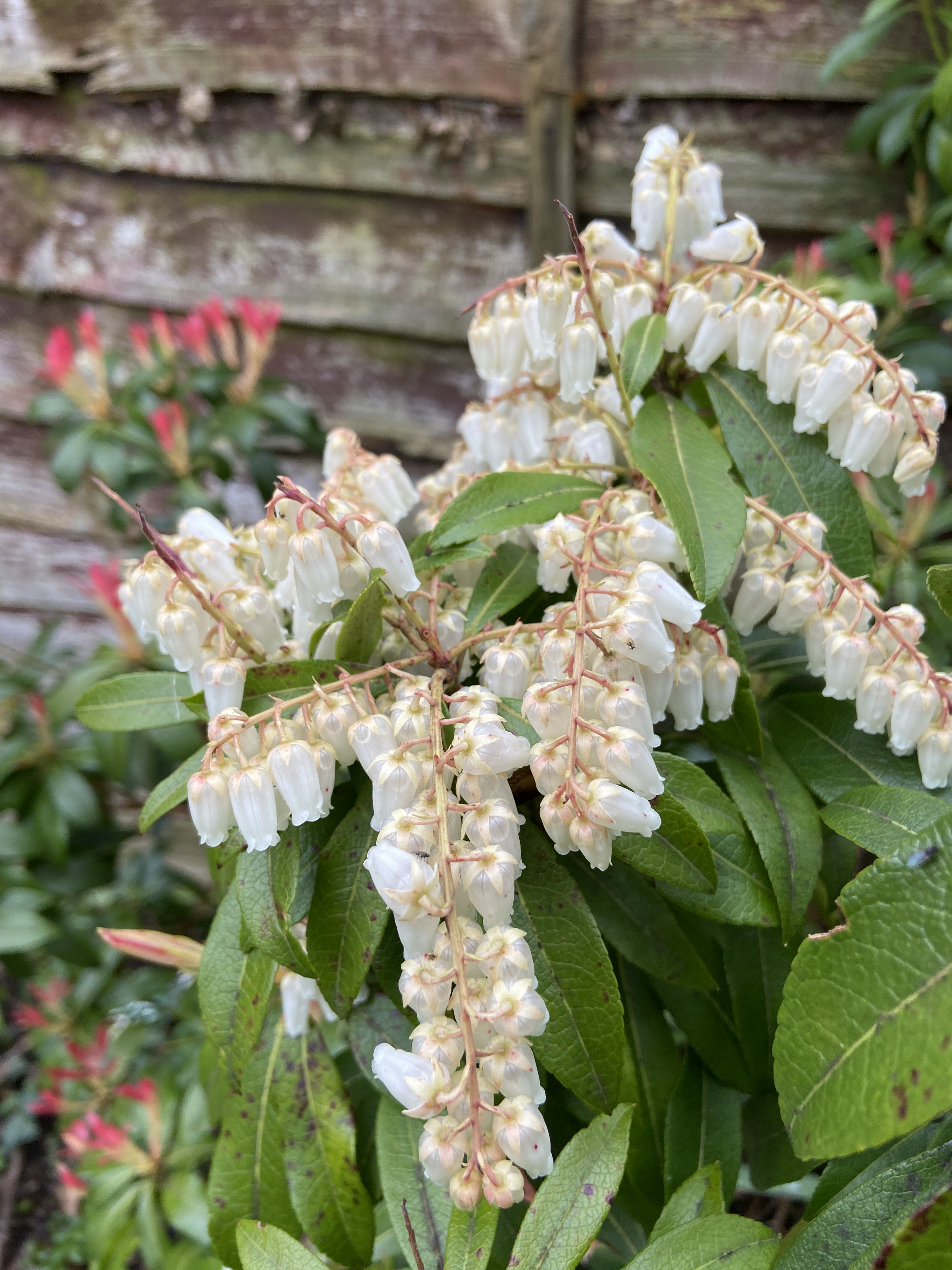
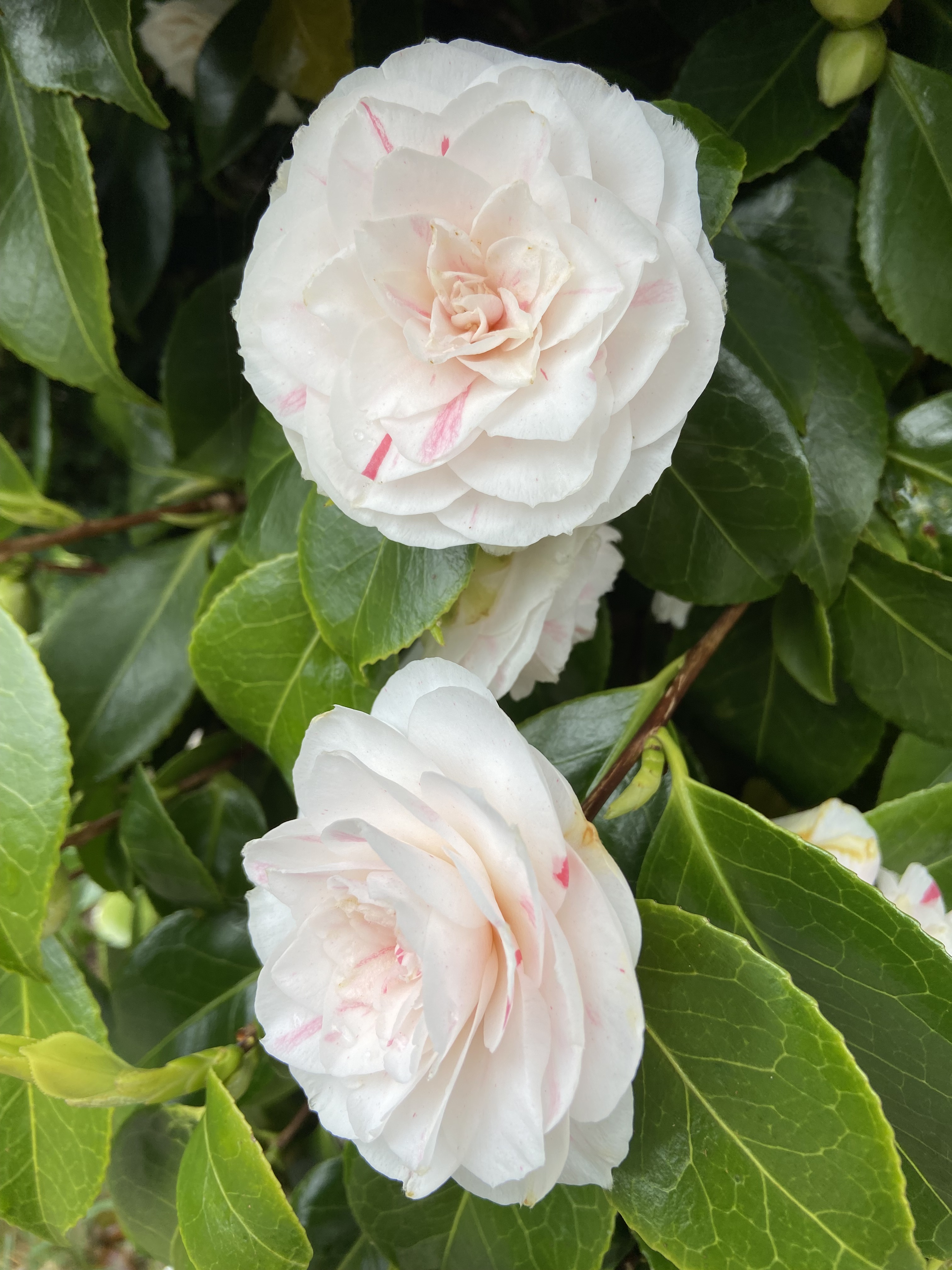
I’ll finish with a few photos from my new garden. Though it’s running a bit wild at the moment m there’s plenty of colour and lots to look at. Have a good week, all!
This is going to be a brief post. Thursday was spent in the new house getting Wi-Fi and a washing machine installed and with an insulation assessor, measuring up for several hours. On Friday, we did the big move – removal men for the big furniture, then clearing the last of the stuff and cleaning the remaining kitchen cupboards and floors and carpets that hadn’t yet been done. I hadn’t really slept much in the two nights leading up to it as there was so much to juggle and yesterday morning I was so exhausted, I decided to take a break from blogging.
Andrew and I came down to Yorkshire after we were finished on Friday. Anna and Lauren came up from Winchester to join us. Triar cried with excitement when he saw them, which was nice because he’d been very obviously stressed by the signs of another major shift. He’s moved house five times in his life, but hopefully this will be the last.
Yesterday, I got a couple of other things done that I’ve been putting off. I’m going to Norway in May, but hadn’t bought tickets home, so I got that done. Now, hopefully Mum will be able to book me a dentist’s appointment when I get back. Apparently all the dentists in Dumfries have massive waiting lists and my back teeth are gradually crumbling, so keeping on top of tooth care is important.
I also finally sorted out my Norwegian tax return. That one has been playing on my mind for weeks and I thought I was going to have to call them, but I found a video about how to add my UK earnings and tax. I’m going to have to fill in a tax return for the next three years. I only found that out after I’d left. Moving internationally is more complex than I could have ever imagined. Going out to Norway, I guess I was lucky, partly as the UK was in the EU, and partly because Charlie went six months before me and the children, so he had already sorted a lot out before I arrived.
Anyway, I only realised how heavily the tax form had been weighing me down after I’d done it. The feeling of relief was unexpected, but for the last two nights, I’ve also slept better and though there is still a lot to sort out, I feel I’m over a big hump. Hopefully it’ll all be downhill from here and life will gradually settle down.
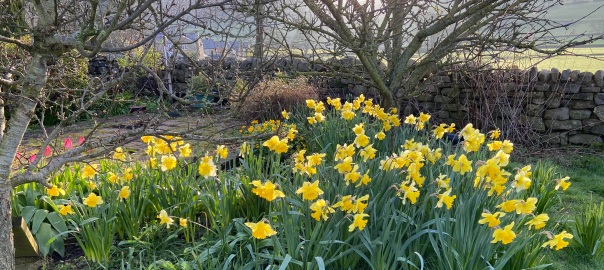
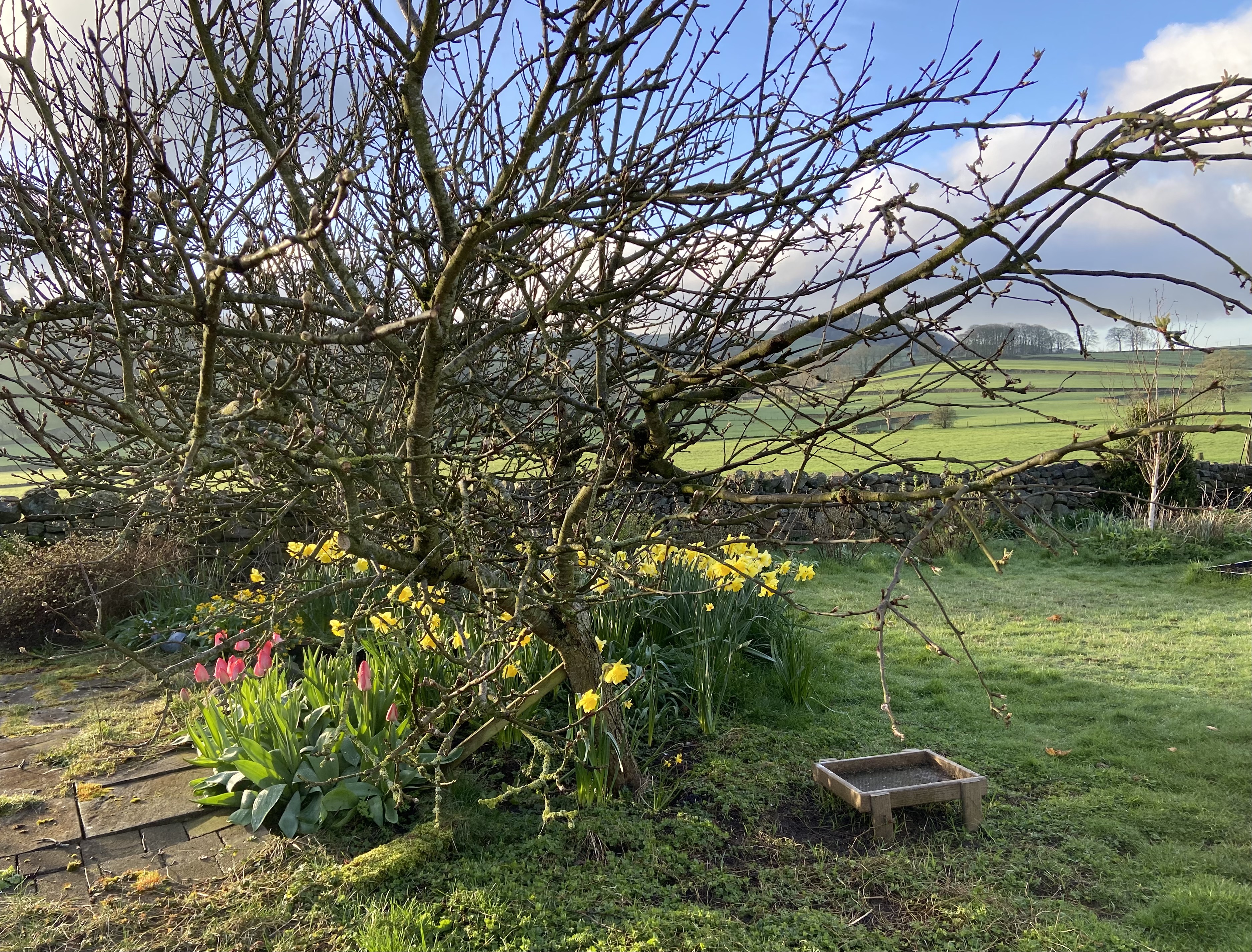
Anyway, I haven’t many photos to offer you, but here’s another from Mum and Dad’s garden yesterday morning, when Triar and I went out to greet the new day. Spring is really here in Yorkshire, which is wonderful when I’m used to having to wait for May or even June.
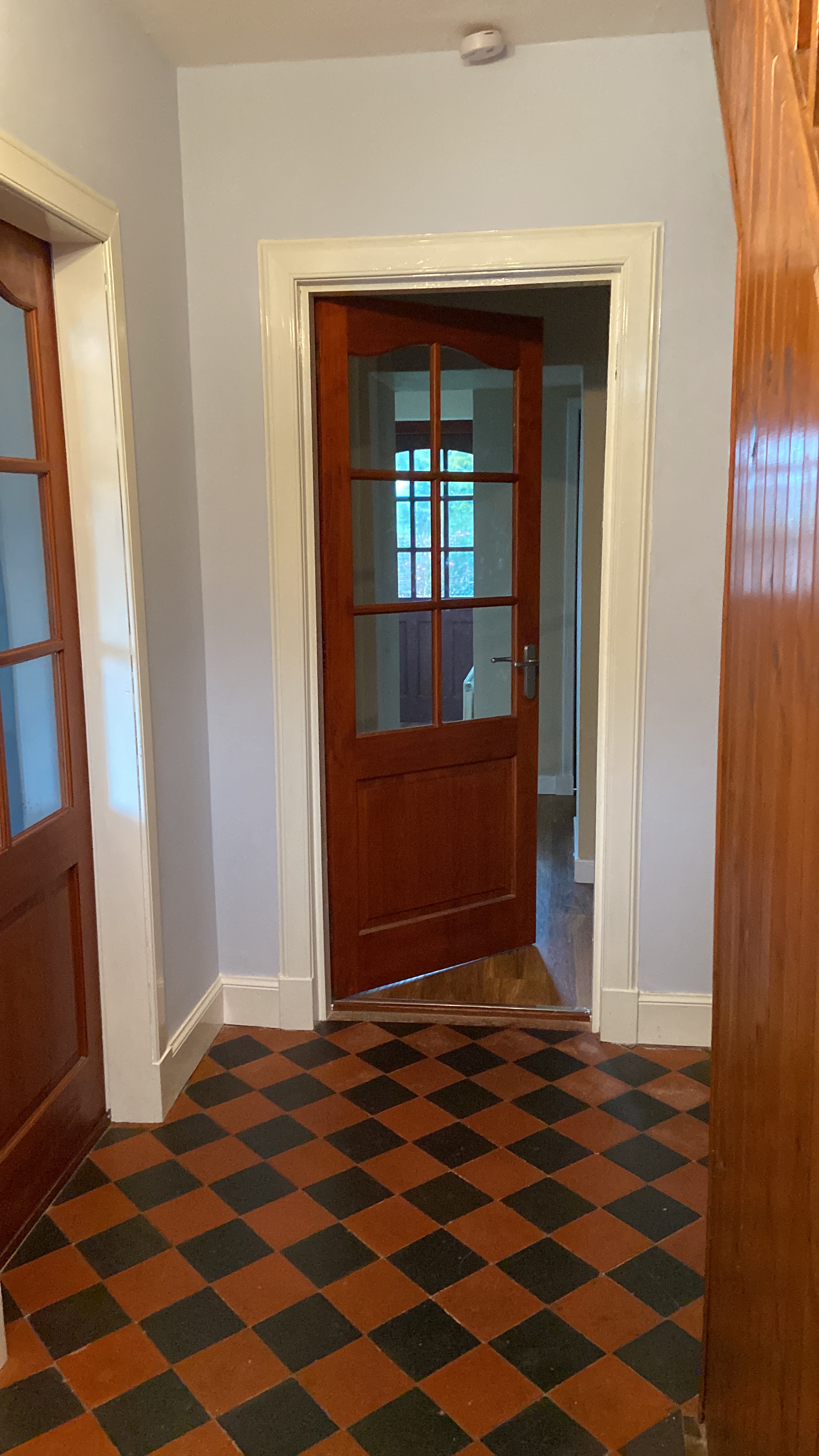
I bought a new house on Thursday. I say new, but it’s only new to me; it was actually built in the 1800s as part of, what was then, a small village of terraced cottages. I’m not going to list it here, but the address sounds like something out of Harry Potter and to me, the house feels a bit that way too. Parts of it are quite old-fashioned, like this wonderful tiled hallway.
Andrew also arrived on Thursday for an Easter holiday visit and yesterday, he and I began to move the boxes from my spare room here to my little witchy cottage. I also phoned for advice yesterday on having the roof insulated. It has cosy-looking bedrooms, up under the eaves, with sloping ceilings and a lovely view over the countryside, but at the moment, they wouldn’t be cosy at all in winter.
I was pleased to hear I might be eligible for a grant, less so when I looked at the website of acceptable companies that was sent to me. The nearest that do insulation are in Glasgow and I suspect coming all the way to Dumfries might not be high on their list of things they want to do. No acceptable installation company, no grant, apparently. I’ll have to do more research next week, though I had assumed that I was going to have to pay for it myself anyway and had planned for it. I’ll just have to work out how best to achieve that.
Perhaps the best thing about my witchy cottage is that it’s just around the corner from Donna. I couldn’t find how to turn on the water on Thursday and had to take Andrew home as he was exhausted, having just flown back from the US. I left a key with Donna (who apparently is the keeper of many keys) and later that evening received a message that they’d found the stopcock and switched it on. They’d also discovered an old oatcake under the dishwasher, which will save me from the potential months of Triar whining because he can smell food, but can’t reach it. And speaking of Triar, here is his new garden. It has two small holes in the hedge at the bottom, but once those are blocked up, he’s going to have a lot of space to run around.
So Andrew and I are going to be busy over the next few days, moving boxes, and the bigger furniture will be moved next Friday. Hopefully it’ll all go without a hitch and when I return after the Easter weekend, I can move into my new place and hand the keys back on my rental. I will miss looking at sheep from my windows each morning, but I will be closer to work and in my own place, and I am very much looking forward to it.
I was briefly down in Yorkshire last weekend and took a few photos while out walking Triar. Spring is on its way and after so many years of waiting for May before things started to grow, I have been enjoying it enormously.
The best thing about writing this blog is knowing I’m in contact with all the people who read it. I’m honestly grateful to those who read it each week, even though I don’t know who you all are. Occasionally people contact me, like Mary, who sent me the wonderful Norge I Fest book. [Link to post] Mary and I have never met, other than through this blog, but it would be lovely to meet one day.
So I was delighted to be contacted last weekend by a school friend. Many years ago, in primary school, we used to sit beside one another and for a while, he was my best friend. He made me laugh and had a unique perspective on life, so it was lovely to hear from him and to find out that he enjoys reading about what I’m doing now, all these years on.
I must confess, I embarrassed myself slightly. Way back then, his favourite not-quite-swear word was “Muckle Flugga” (for those who don’t know, Muckle Flugga is the most northerly lighthouse in the British Isles) so of course, I had to throw that in there! I was standing cleaning my teeth a couple of hours later, when I remembered that Flugga was spelt with an “a” at the end, and not “er” as I had spelled it. Still, hopefully he can forgive me. Back when he was saying it, there was no internet and it was only years later that I found out I’d been spelling it wrongly in my mind for years!
Anyway, as always, thanks for reading. I do appreciate it and I hope you have a lovely weekend, if you’ve read this far. See you next week!
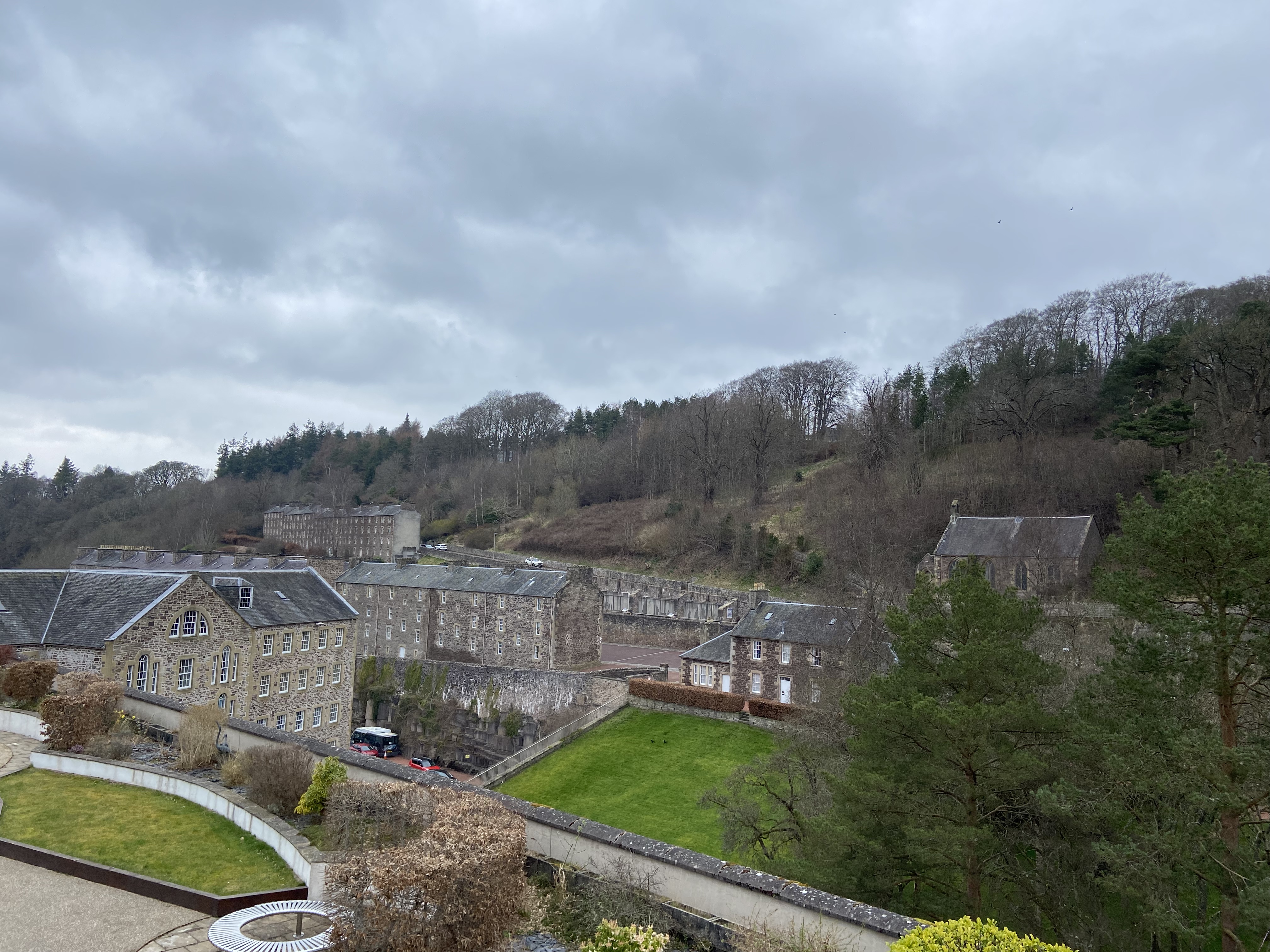
My son John and his girlfriend Yoana visited me last weekend. Though it was raining most of the time (in true, southwest Scotland style) John suggested we could go to New Lanark for a visit, so that’s what we did.
New Lanark holds a special place in my heart. For those who don’t know, it is a former 18th century cotton spinning mill village located on the banks of the Falls of Clyde, where social reform became very important. The lives of those who worked in the mill and their families were improved through schools, education, reasonably priced food and medical support. It’s a living village too – there are still tennants living there, and apparently very long waiting lists to get an apartment.
I think I might have visited with my parents, a very long time ago, but my fondest memories are from when John and Anna were young and we went there every year at Christmas time. There’s a ride you go through, where you sit on moving chairs and are taken on a trip back through the darkness of time. At Christmas, it gets set up like a kind of magical grotto and the filmed clips of a child that grew up in New Lanark, are replaced with an elf-like girl called Holly. At least that’s how it was back then, though that is twenty years ago now.
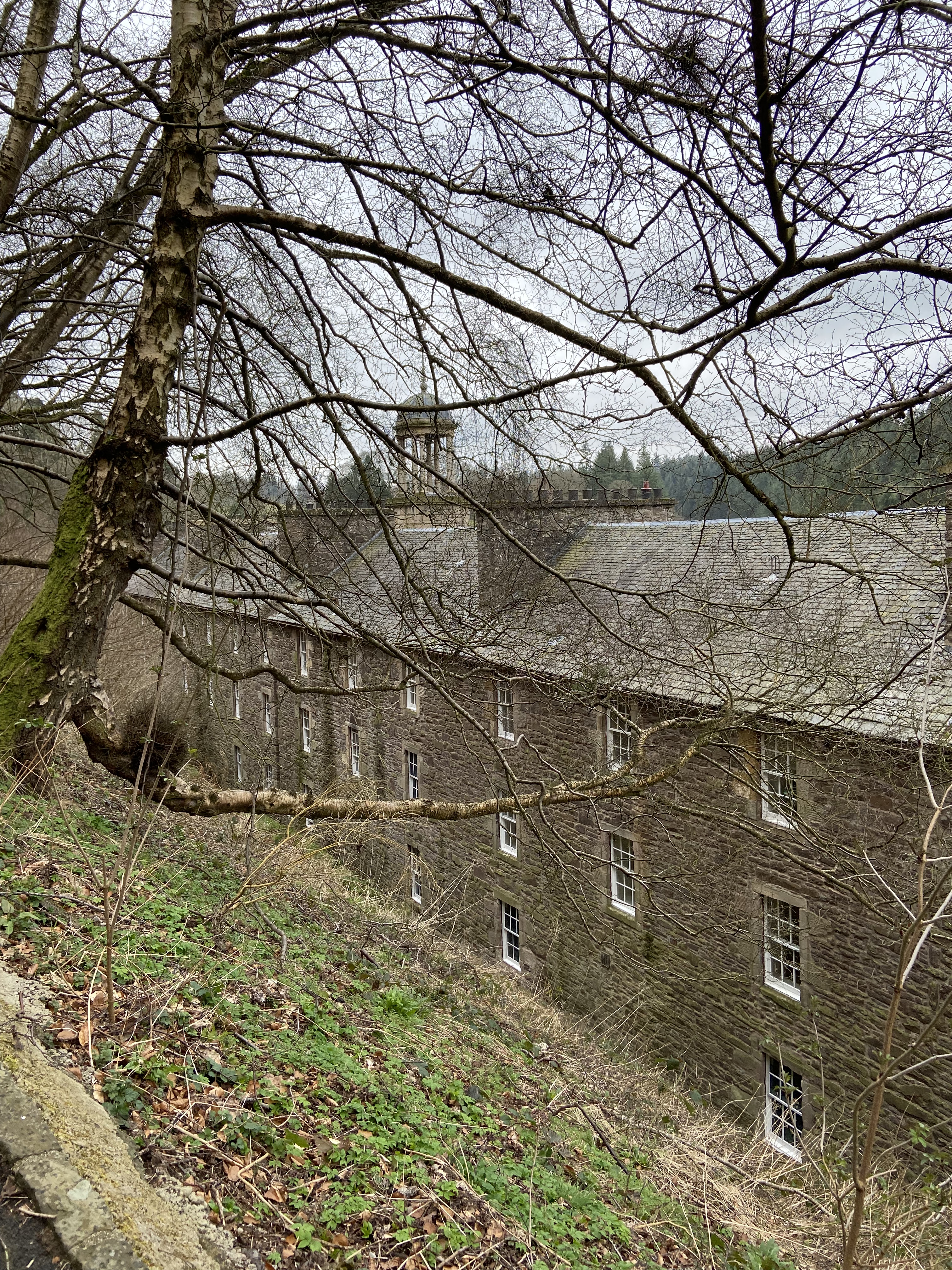
Millworkers’ apartment block.
The site has been undergoing improvement for a long time and it was lovely to visit again. Some things struck me, now that hadn’t really done so before. One was that the classroom, where the millworkers children were taught was a very large, airy room, with a high ceiling and lots of natural light. The contrast between that and the small, low ceilinged apartments, where large families occupied one or two rooms, must have seemed incredible to the children when they began to attend school.
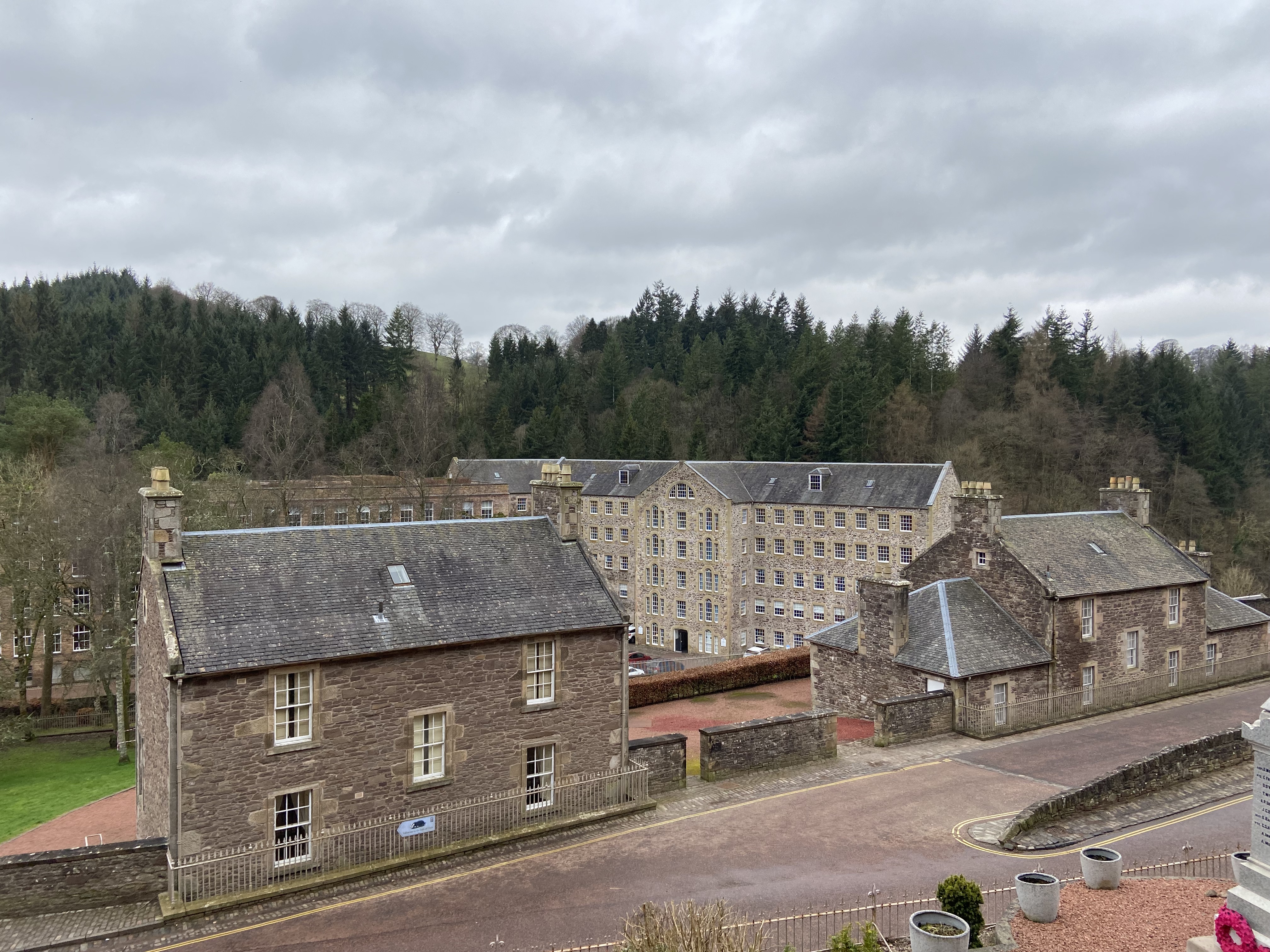
Robert Owen’s house is on the left.
The other was a comment in the film, where the mill workers’ working day was described. They “only” worked ten hours per day, potentially from ten years old, but there were evening classes so that they could be educated if they wanted. I only work eight hour days and am struggling to motivate myself to write in the evenings. It’s incredible to imagine a world where working ten hour days, six days a week, was considered humane, but there it is.
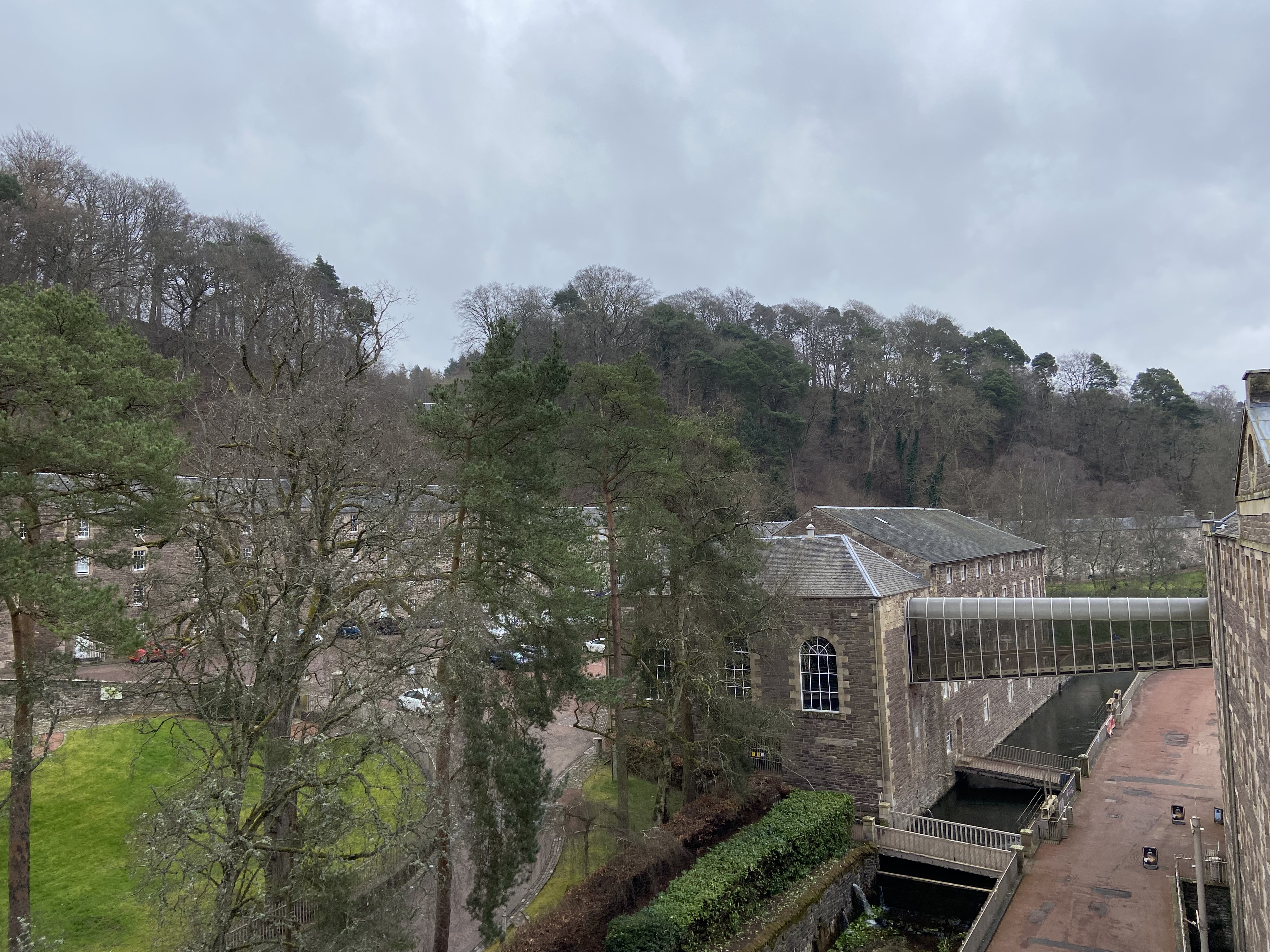
A beautiful roof-garden has been set up on one of the old mills.
Robert Owen, the social reformer, who brought in the improvements for workers in New Lanark, eventually left to set up a new project in America called New Harmony. This project fell apart within a few years. Reading between the lines, a lot of the people they attracted had lofty ideals, but weren’t necessarily hard working.
View from the rooftops.
It’s easy to see with hindsight, but it’s obviously much easier to improve the lives of those who started out with very little and were used to hard labour than it is to form a new community of truly equal people. If Owen had really wanted a socialist paradise, he could have considered whether it was possible to make all those in New Lanark equal. I think then, he might have realised he couldn’t achieve that without reducing his own circumstances to close to those of his workers, and I imagine that was why he set off on an unrealistic vanity project, rather than really setting out to achieve equality.
Back to work and I am unexpectedly working this weekend as the duty vet for Southern Scotland. This means that if there are any reports of suspected notifiable diseases, such as foot and mouth or bird flu reported, I’m the vet who will be sent out. Equally, if there’s an urgent welfare issue that’s so bad it can’t wait, that will be my job to tackle as well. My car is currently loaded up with boxes full of all the kit that I might need, which is quite eye opening as there’s so much of it. I know that in an outbreak situation, I would have to arrange clean and dirty areas in my car and, as I didn’t have much warning, everything has just been thrown in. I’m keeping my fingers crossed for now. Complicated routines take time to organize and I had less than a day to find everything, without anyone local to help me out. Roll on Monday!
The steam engine that drove the mill when the water in the Clyde was low was housed in the building on the right. The ropes that drove the machinery would have been inside the glass bridge. The mill race goes underneath the building on the right,
I finally made it out of bed on Monday, just in time to go back to work. By Tuesday, I was on the road again as I made my way to Edinburgh for a conference, where APHA staff from all over Scotland came together to meet and learn.
When I drove over to Stranraer, I was craving memories and was rather disappointed at the lack of familiarity. Although I grew up in Penicuik, which is not very far from Edinburgh, and that I went to university in Edinburgh, it hadn’t crossed my mind to hope for something similar. It hadn’t crossed my mind that our route wouldn’t take us on the featureless motorway network, but rather through a load of places that were embedded deeply from my childhood.
We passed through West Linton, then Carlops: familiar names and places from long ago. But it was when we reached Nine Mile Burn, where you can turn off to drive to Penicuik, that I had that sudden feeling of nostalgia.
My adult life has been interesting, but I was fortunate enough to have a very happy childhood. One of my sweetest memories is of climbing onto a low hanging tree bough and sitting in dappled sunlight with my friend, Sharon. We had been watching Robin of Sherwood, Sharon had pictures of Michael Praed on her wall and we were at the age when everything still seemed possible. If there was one moment in my life that I could go back and relive, I am fairly sure that would be the one I would choose as it is so unsullied. A young man fractured my mind at university and by the time I was 25 I’d had skin cancer twice and I think that’s why that memory of unsullied innocence is so precious. I’d love to relive it with Sharon, but she also got cancer and she didn’t make it.
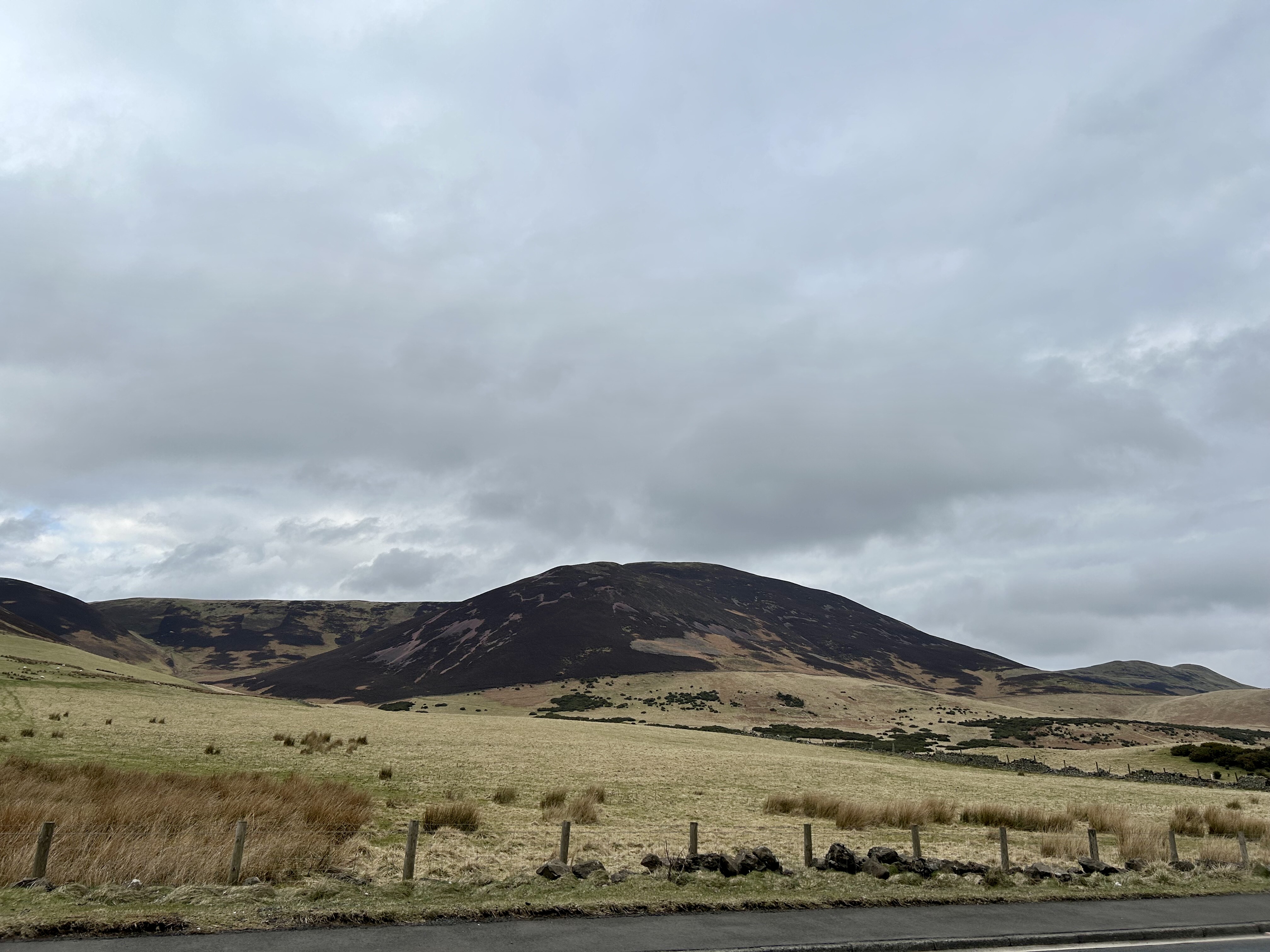
Goodness, I hadn’t expected this to take such a sorrowful turn, but those sweet, sweet memories do come with a hefty dose of melancholy. Anyway, the road carried on past Nine Mile Burn and we passed Silverburn, where my parents once considered buying the farmhouse. It was run down then, but now looks very smart. And then the Pentland Hills were on my left and those really were my old stomping ground. I remember some names: Carnethy, Scald Law, East and West Kip. Scald law was the highest hill, but we more often walked up Carnethy, or took the path over between the hills to a wonderful waterfall, though I don’t remember its name.
Pentland Hills – I think this one is Scald Law, but feel free to correct me!
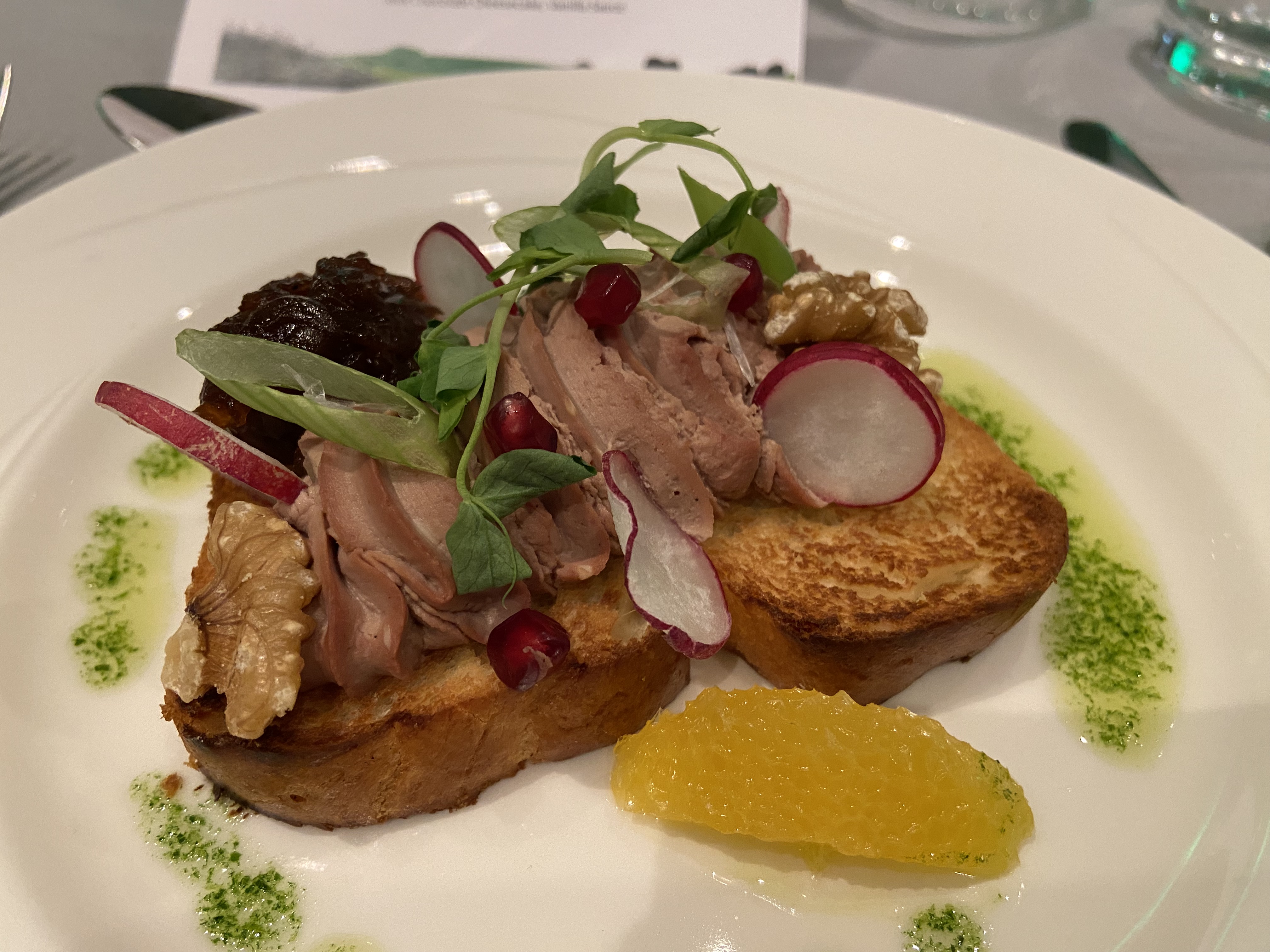
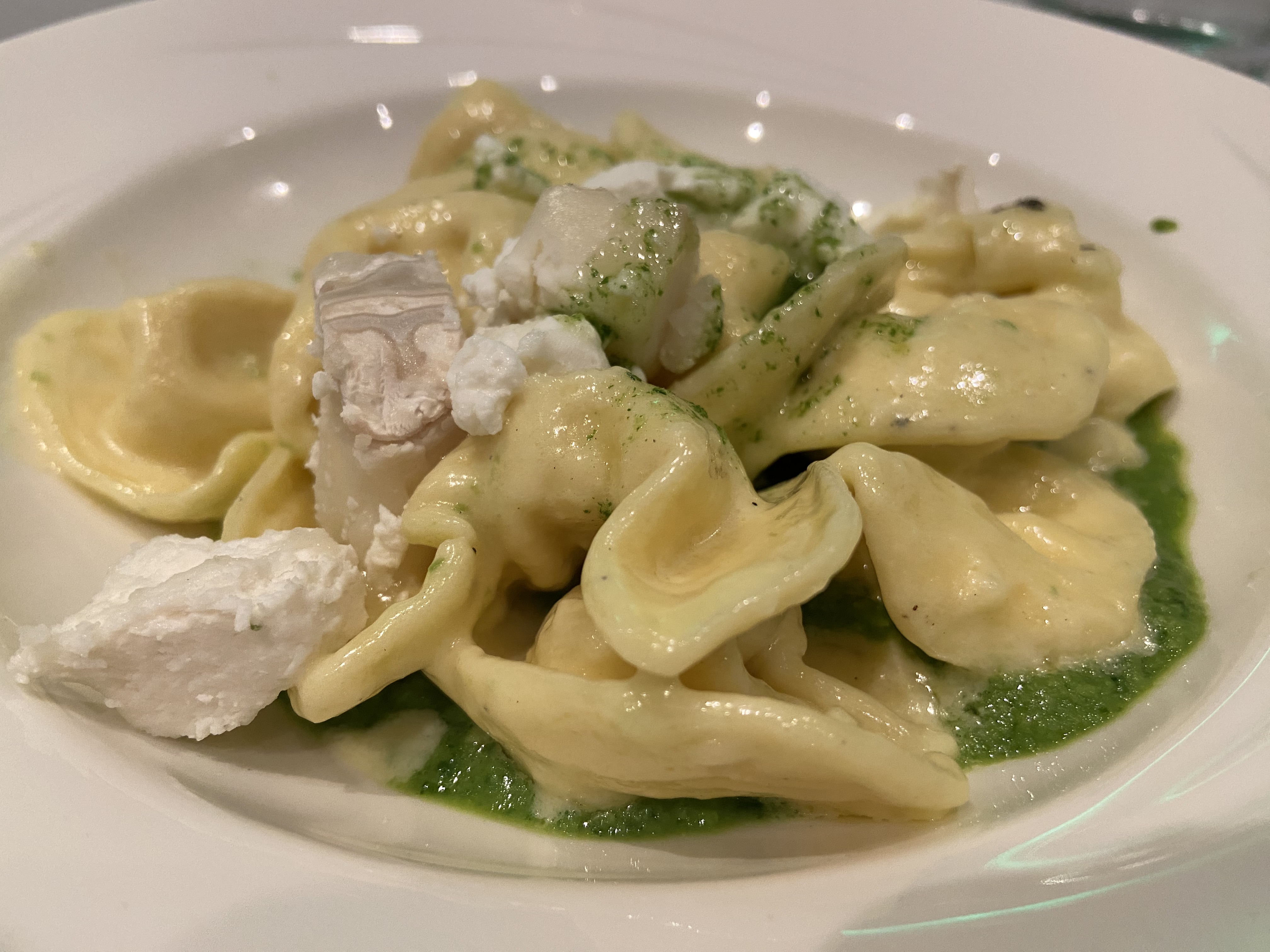
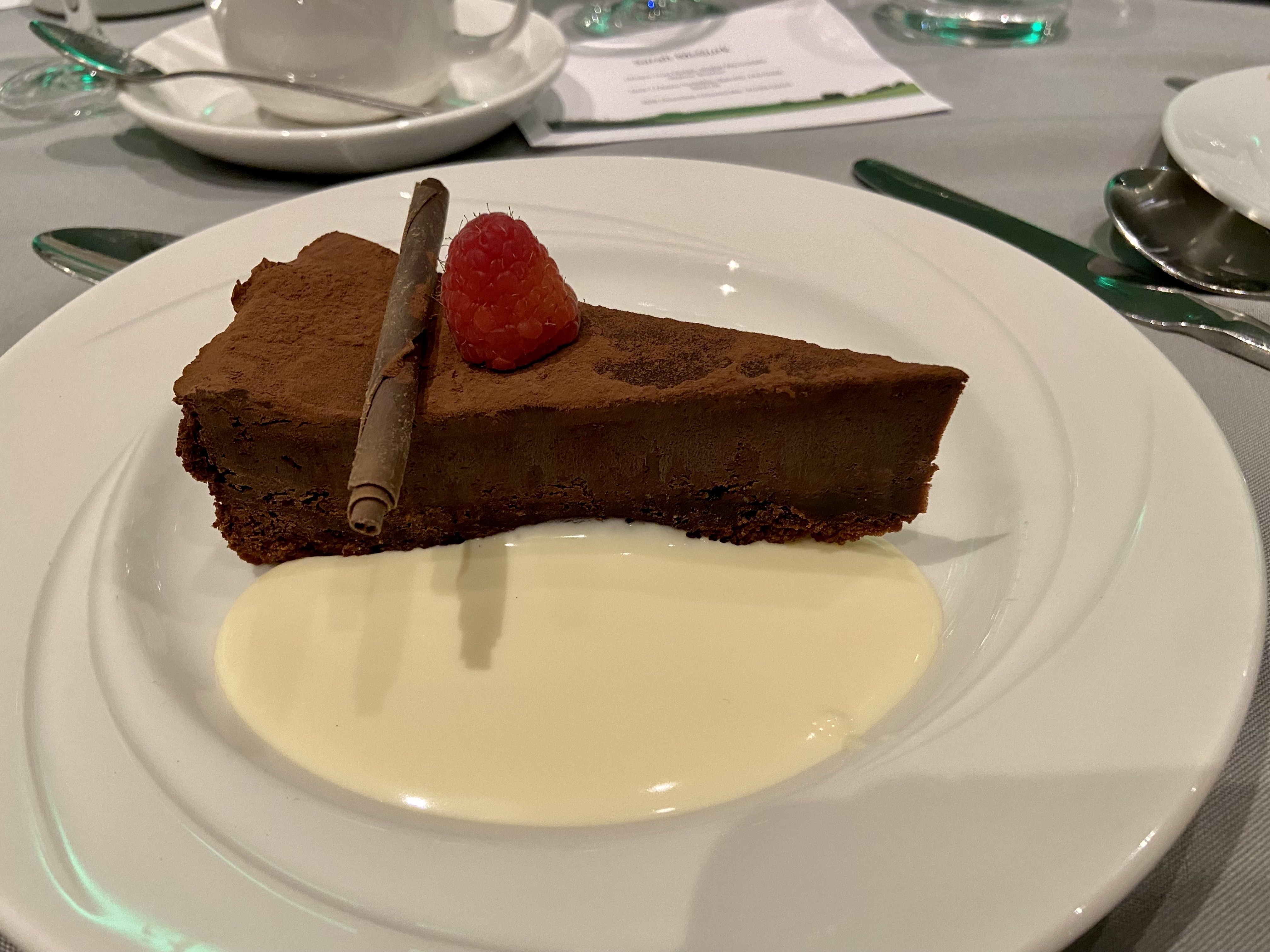
The hotel in Edinburgh was very pleasant, though very much a typical, identikit modern hotel, with no distinguishing features. I’m still at the stage where there’s lots to learn, so there was plenty of new information to pick up. I enjoyed the evening meal, although the milk chocolate cheesecake, which I expected to be a sweet and fluffy concoction was more like a dark chocolate brick of solidity that even I couldn’t finish.
The conference ran from lunchtime on Tuesday to lunchtime on Wednesday, then on Thursday I had to go to Ayr to have a mask-fitting appointment. This was to check whether I can use the FFP3 masks at work safely. This involved having a mask on, which was attached to a tube which monitored the air I was breathing, while performing various manoeuvres. As this involved marching on the spot, while moving my head around in various ways, and then counting out loud, while trying to breathe normally, it was quite a challenge, given that I am still coughing after being ill, but I survived without falling over, and now I am officially allowed to use a mask if I have to check out any sick chickens.
Much as I love travelling (especially those identikit hotels) and consider it a definite perk of my job, I am rather looking forward to next week, when the most distant visit I have booked in is to Castle Douglas.
I’ve probably gone a bit quiet about my house buying. Compared to an international move, it’s very low key, but I’m now at the stage when all the papers have to be signed, I have to show where the money for my deposit is coming from, and I have to arrange to shift my accounts with all my providers from one house to the other, while leaving an overlap as I don’t want to move everything on one single day. I’m quite excited about buying a house, but it doesn’t quite seem real yet, even though the intended date of exchange is less than two weeks away.
You know, I write these blogs mostly to keep in touch with people, but I sometimes think they will end up being a bit like a diary. Maybe one day in the future, I’ll look back and all the memories will come flooding back. My mind feels odd at the moment. Part of me is chugging onwards, being quite competent, learning lots of stuff, but it’s overlaid with a feeling of there being too much going on. It’s not perturbing me too much, but I do have a sense that there is chaos rushing all around me, while I just wander through it, waiting for everything to settle. I write this weekly and I can’t tell whether any of that feeling is coming across, or whether what I write is as scattergun as it sometimes feels. This week, I volunteered to work as a vet at the Royal Highland Show, and I can’t yet tell if that will turn out to be a marvellous opportunity or a daunting responsibility. Maybe both! Still, you know me. I tend to grab what comes my way and worry about the consequences later.
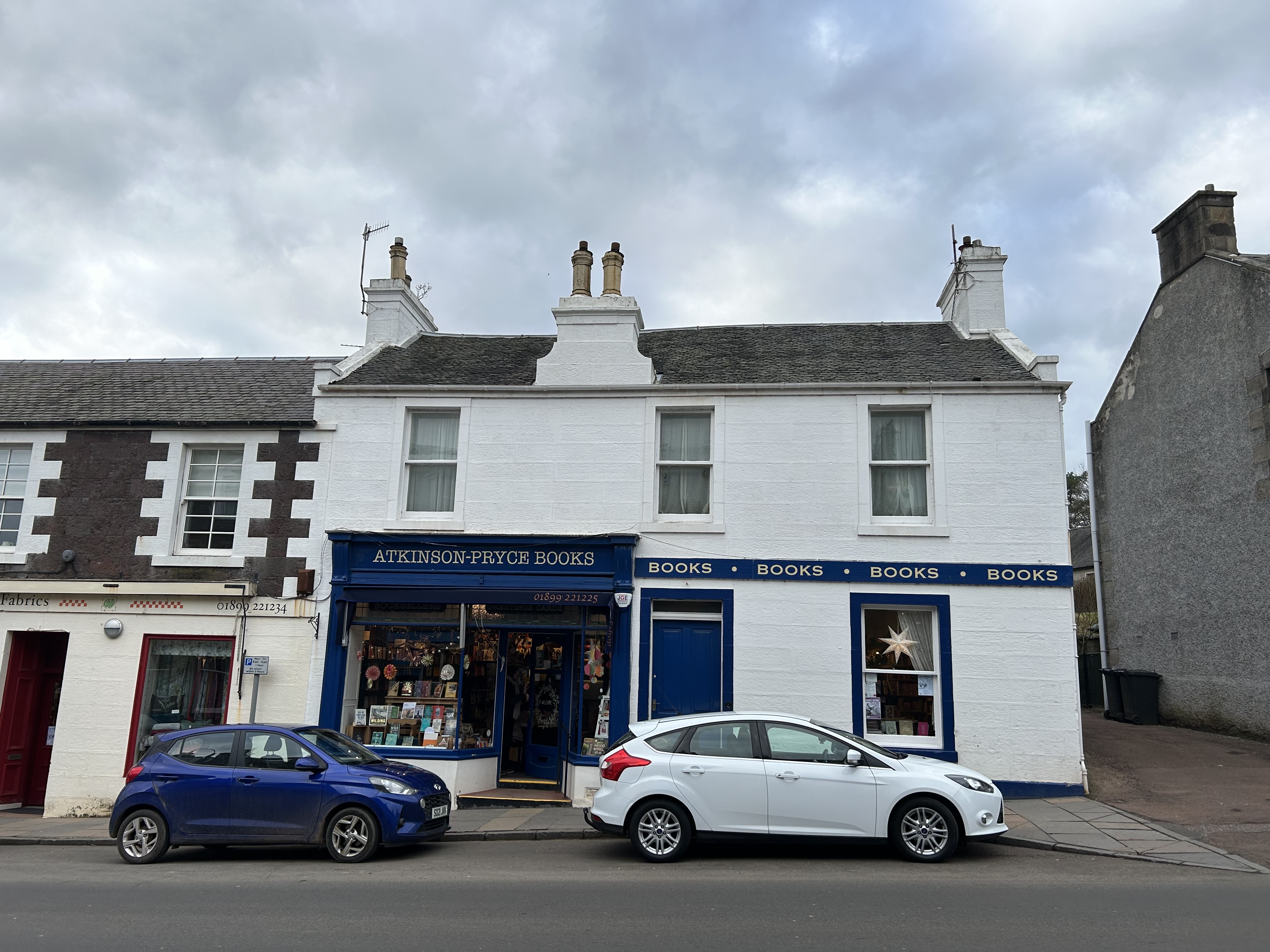
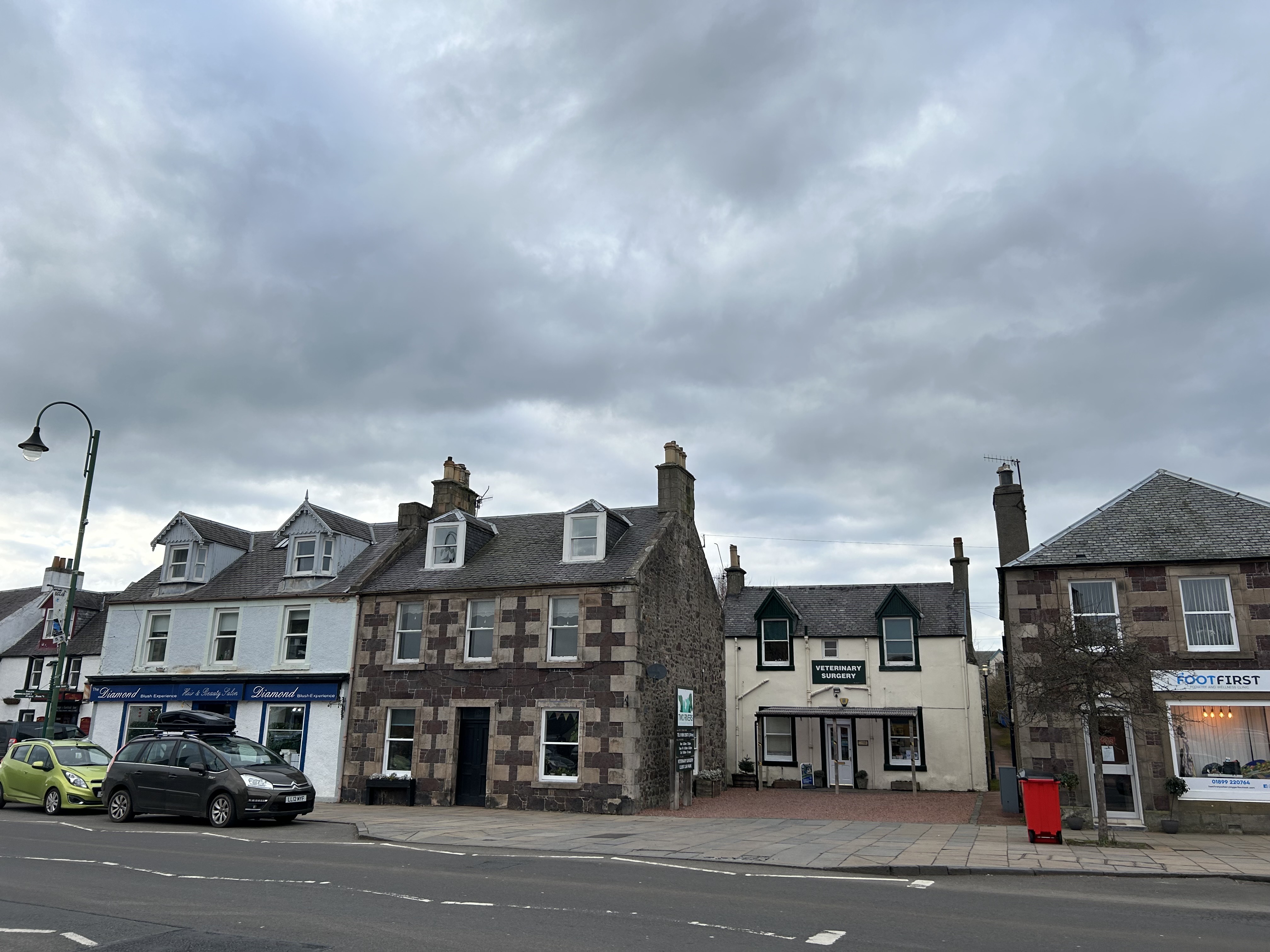
Anyway, as usual, thanks to anyone who made it this far. I hope you have a good week, and I will leave you with a couple of pictures of Biggar, where we went on school trips to the street museum. I was intrigued by the tiny scarlet door in the first building. I presume the road and pavement have been built up over the years, but anyone using that door would really have to watch their head! See you next week.


















 A Vet’s Life