After all the frenetic activities, work has been a bit slower this week, though no less interesting. I’ve spent time reading up on, and around the new case I’ve been given, which will be very different from anything I’ve done before as I am working in a group of ex-police enforcement and intelligence workers. I’m the one with the veterinary knowledge to their investigative powers. Unfortunately, I can’t really write about it though as people might recognize themselves, or others. I’m sure there’s a novel in there though, if only I ever find the time to write it.
Last weekend, I had a fabulous time visiting Sue at her home and then visiting the gardens at Dumfries House together. Dumfries house is, counterintuitively, in Ayrshire and not Dumfries and Galloway. Sue volunteered there, in the garden, a while back and pointed out a few huge bushes she had planted. Gardening has obviously been a lifelong passion. She wants to help me get my garden in shape. I have let it run wild this summer and finally started cutting the lawn this week. Unfortunately I didn’t get it all done in one go and the rain came after two exhausting sessions, so now I have one half yellow-brown lawn, one half hay field. I will get there…
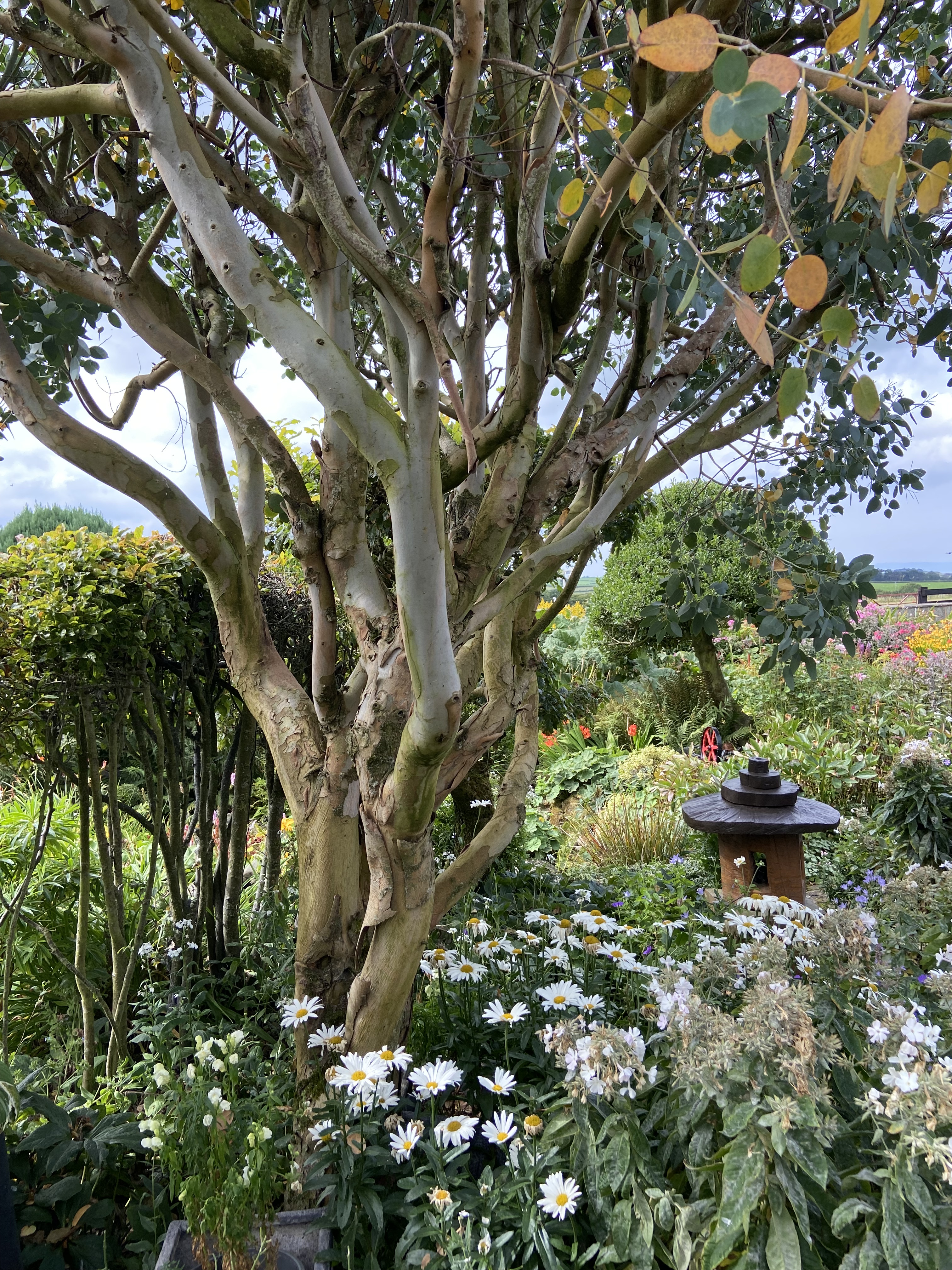
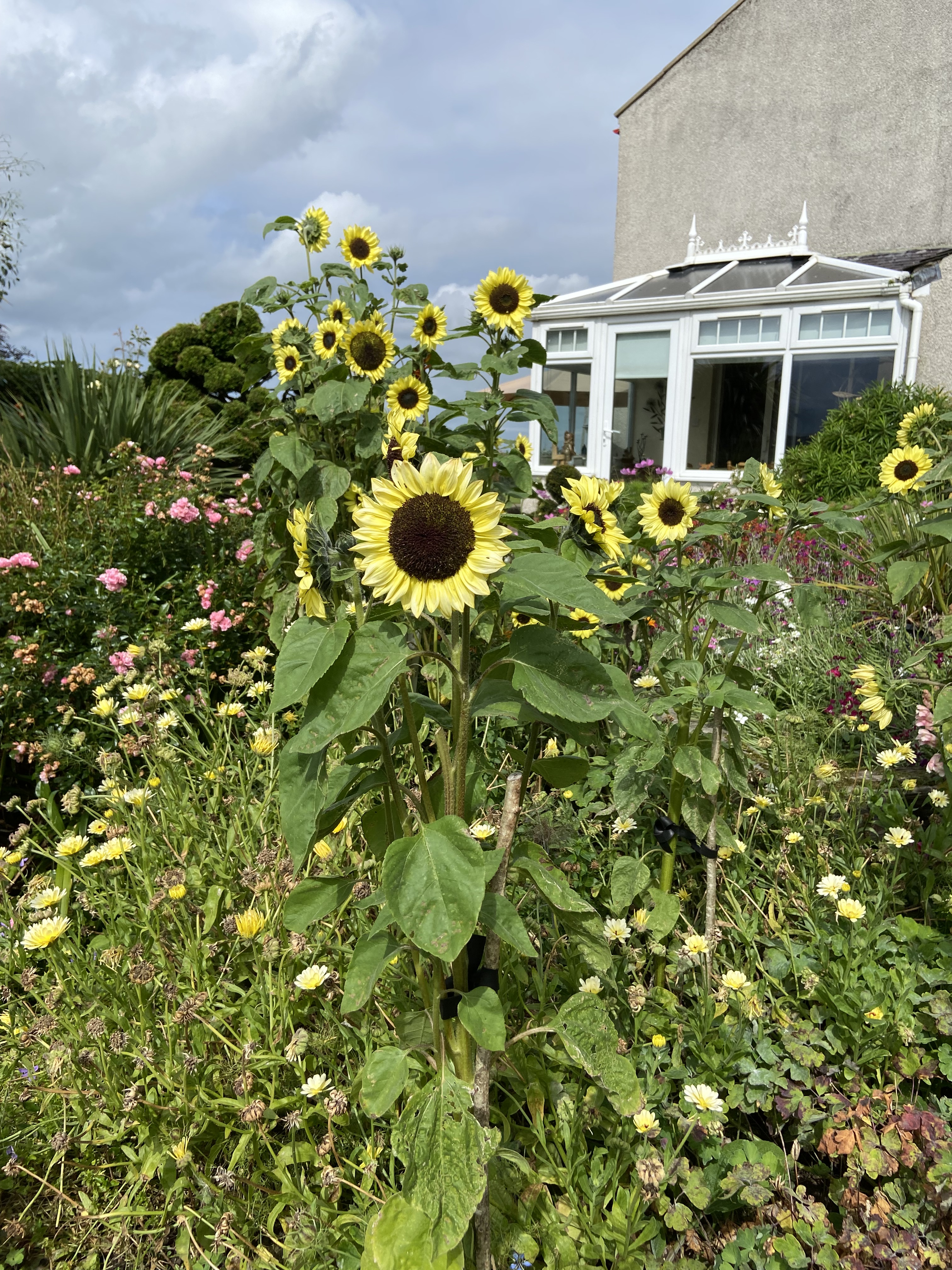
As you can see Sue’s garden is gorgeous!
I went to the GP earlier this week. I’ve been having headaches, pain when I moved my eyes and sensitivity to light, which has been going on for a few weeks now. It’s been particularly inconvenient as I have been affected when working in front of a screen as well as when driving, especially when it’s bright. The GP couldn’t help, so he directed me to my optician, who has been very helpful in the past when I had some flashing lights in my left eye. I saw her on Friday afternoon and it seems that I have dry eyes, which apparently can cause all those problems. I now have eye drops and a glasses shaped beanbag to heat up in the microwave and use on my eyes for ten minutes twice a day. This should help the oil in the glands along my eyelids to soften and get things going again. I’m mostly just glad it’s not FND related. Hopefully things are starting to get better already, though I’m about to go to Guildford for a week, so will be in a microwave-free zone.
The Guildford trip is for a chicken health and welfare course, so I’m hoping to come back with loads of new knowledge. I feel very honoured to have been selected to attend, so will be making the most of it. Triar will be getting spoiled at Mum and Dad’s. I will miss him, but at least he will be well looked after.
Firstly, a disclaimer. The sheep in the photo at the top of the page are random Norwegian sheep and are in no way related to any invest
Last week’s blog was a week late because I received a phone call as I was writing it. Two weeks ago, I was on call for the weekend and hoping to rest. Most on-call weekends are a matter of keeping your phone near you, maybe dealing with a request by a private vet for a case number so they can go out to test a cow that’s dropped dead to check it wasn’t anthrax or a similar request for itchy sheep that might have scab.
This time, to my surprise, I found my line-manager on the phone. “How would you feel about another report case?” he asked. Well how I felt was broadly irrelevant. I was the ready-to-go vet, so unless I was seriously unwell, it was my task to be handled, whatever it was. “Another AI?” I ventured.
”Um… no.” He paused. “We’ve been sent photos of lesions from some sheep’s tongues. They’re trying to decide whether to treat it as a bluetongue enquiry, or foot and mouth. This isn’t your official call, just a prewarning so you can start to prepare.”
Once the official call comes in, you are expected to be on the road within 30 minutes. In theory, everything should be in your car and you should be able to get in and go. In reality, there are things you might need for sampling that have to stay in the fridge in the lab at work. The buffer solution used for foot and mouth sampling is one of these, so I was glad for the heads up.
I admit, I did feel slightly breathless. Those living in the UK who are old enough to remember 2001 will recall the horrors unleashed on the country as whole farms and regions were forced to cull their livestock and burn them in the fields on horrific pyres of death. The recent, sporadic outbreaks in Europe mean we are on high alert. That the photographs sent in had the high heidyins in a nine am meeting discussing whether they dared risking treating it as “only” blue tongue felt quite significant.
I dressed and went into the office and started to gather paperwork. In theory, I should have paperwork for every eventually in my car, but having the appropriate papers to hand for setting up restrictions is useful. To my mild consternation, I found the main printer wasn’t working. Thanking my lucky stars that I wasn’t a newbie and knew how to work the secondary printer in the lab, I printed out what I thought I’d need.
I also threw a load of blood sampling equipment into my car. Better to have too many tubes than to create the necessity for someone else to come out and onto a farm with possible foot and mouth because you weren’t well enough prepared.
It was quite a long drive out to the farm. As I neared the farm, I slowed down to cast an eye over animals in the nearby fields. None were drooling or looking sick. A good start.
It had been confirmed that I was to treat it, for now, as bluetongue, but that foot and mouth was still there as a possibility. To explain the difference in requirements, because bluetongue is spread by midges, tramping on and off the farm with dirty boots and tyres isn’t so much of a worry. Not that I do that, but if I did, it’s not a disaster.
The restrictions served on the farmer are different too. Bluetongue restrictions only stop animals coming and going. Foot and mouth suspicions, like avian influenza suspicions, mean that every person and vehicle going on and off the farm has to have an individual license and any and all incursions are strictly limited to absolute necessities.
I arrived at the farm , put on paper suit and gloves and served the restrictions. It’s always the first thing to be done and having signed the form, I read out all the clauses that explained in full what was required. Next was history taking.
This is not like taking a history for a normal vet case, where you mostly want to know what has happened to the animal. For a notifiable disease investigation, by the time you are finished, you should have details of every movement on and off the farm within the last twenty one days. You have to assess whether there are any high risk factors. Are there rights of way and picnic sites where people might have fed the animals? Has anyone from the farm recently been on holiday to a different country? Are there stagnant ponds in the vicinity that might encourage midges? The factors, like everything else, vary with the disease suspected.
Having taken a careful history of the animals and the risk factors, I donned more layers of PPE and prepared to look at the animals. I knew, both by being told and by observation, that there were fields nearby that held another farmer’s cattle. I decided to walk up to look at them first. If it was something highly infectious, they might be showing signs too. Again the picture was reassuring. They were young stock from a dairy farm and could not have looked more healthy. They were eating as we approached, then lifted their heads to look at us. Not a nose lesion among them. Nolameness, no drooling. Bright eyes and shiny coats.
I was already, mentally, beginning to think foot and mouth was less likely. Obviously there were still the sheep to look at, but clinical signs in sheep can be subtle, cattle less so. These animals had been in relatively close contact, so by the time the mature mouth lesions were spotted in the sheep (with the caveat that it might have been caught early) I would expect to have seen some spread.
There were two groups of sheep – adults and lambs. The lesions in the photographs, nasty red eroded areas on the tongues, had both been from lambs. We therefore looked at the adult sheep first, partly to prevent any possible cross-infection, but also because a complete absence of problems there would go further towards ruling out foot and mouth. No reason why young sheep would be more severely affected than the old in a disease where neither group would have immunity.
What struck me again was that I was looking at a broadly healthy group of animals. There were 43 ewes and as I scanned their mouths, feet and udders (where possible) I saw nothing. Only bright, uncrusted eyes and alert ears. There were two that the farmer had noted had been getting thin for a while. We selected them out and I examined them more closely. Not a lesion in sight. Normal breathing, normal temperature. One was a bit dirty on her backside, but nothing to suggest foot and mouth or bluetongue.
We moved onto the lambs. This time, I decided we should examine all of them. There were thirty two in the group and the farmer caught each one and held them while their mouths and feet were inspected. In the end, there were four with tongue lesions, four with lesions around their lips and one with a sore area above its foot. None of the lambs with lesions was running a fever. I was strongly beginning to think that what we were dealing with was a severe case of orf – a pox virus that affects sheep and can infect humans who come in contact. It would be unusual to have tongue lesions, but not impossible.
Having taken history and examined the animals, it was time to decide where we were going to go with this. At one extreme, if I thought foot and mouth was still in the picture as a possibility, we would have to issue new restrictions as well as taking samples. I might well have to stay on the farm until it was ruled in or out. I’m still a bit sketchy on the details, though I had arranged for Triar to be looked after, just in case.
If I thought everything was ruled out, I would leave the farm with no tests done and hope I’d got it right. To do that, I’d need to be very certain. My gut feeling was that this was orf, based on the fact that it was only affecting the lambs. Orf is common and spreads in flocks to the new crop of animals born each year. Older animals can carry it, but usually have enough immunity that there are no clinical signs.
So on the grounds that only the lambs were affected and the adult ewes and neighbouring cattle were perfectly healthy, along with the fact that all the lesions were quite mature and I would have expected to see more early stage lesions (we have lectures about aging foot and mouth lesions) I felt confident enough to rule out foot and mouth (phew!). But could I rule out bluetongue too? I decided I couldn’t . After all, midges might well have selectively bitten the lambs with their thinner wool pelt. And orf might exist alongside bluetongue. The lip lesions could be orf and the tongue lesions something else.
And so, armed with my evidence, I called VENDU (the veterinary exotic notifiable disease unit) to tell them what samples I wanted to take. I have never been asked so many times and in so many different ways if I was sure, 100% certain, absolutely confident that I could rule out vesicular diseases like foot and mouth. At the start of the conversation I was using words like probably, but by the end, I was telling the, firmly that no, it was not foot and mouth.
So we tested the nine lambs for bluetongue: the four with mouth lesions, the four with lip lesions and the one with the foot. To cut a long story short, the test was negative, but most of Sunday was still spent on paperwork. I strongly suspect all the lesions were caused by orf: an unusual and interesting case all round and a good learning experience for me.
Lots of text so far and not many pictures, so I shall rectify that. Last weekend, I went to Drumlanrig Castle and met Sue (who used to locum with APHA) for a walk and for lunch. The gardens were beautiful.
I’m a day late in writing this, mostly because I am experiencing what could probably be best described as lassitude: described in the online Oxford Dictionary as “a state of physical or mental weariness; lack of energy.”
Don’t get me wrong, I am still able to function, on the surface. Yesterday and Friday, I met friends and today, I will go to church and walk the dog, but my body feels tired. There is a feeling in my feet and lower legs, as well as in my fingers that is probably best described as if they are fizzing, like I should imagine a glass of cola would feel, if it was able to. If I try to move fast, my body reacts by jerking. That feels similar to the effect you get if you touch an electric fence: the movement comes and there is no control over it. It’s not painful, nor is it alarming these days. It’s just a bit of a bore and rather tiring.
I wondered, for a while, if the fizzing was an anxiety attack. The occupational health doctor told me it wasn’t, one day when I was speaking to her and I said I felt it now. I was speaking and breathing normally, she said; it’s not that.
Looking for patterns, I think this attack is the result of being woken at two in the morning, working a twelve hour day, then having a very hot, hour long walk on the beach, without having any real opportunity to rest afterwards.
Should I have cancelled the friends and going to church? I took Friday off (flexi time) to rest and I would probably feel better now if I had spent a long weekend resting in bed or in front of the TV, but I am reluctant to cancel the things in my life that lift me up, to preserve myself for work.
What didn’t help was that I also spent Friday morning composing a long letter to the neurologist I saw about a month ago. His promised letter reached me on Tuesday and I read through it to the end, including the final paragraph that left me metaphorically gasping.
To go back to the appointment itself, we spent a lot of time discussing history, which inevitably took a while. I was in Norway 15 years, so everything medical that happened there is missing from my files. That part of his letter was reasonable. He didn’t get it all right, but the discrepancies probably aren’t significant enough to be worth arguing about it. As an aside here I will add, that FND is seen by many doctors as akin to hysteria, so I am wary about being seen as fussing too much. If I say that being diagnosed with FND messes with your mind, I hope you can understand what I’m getting at.
He then did something of a physical exam. I’ve had a lot of neurological exams over the years, so I know that he missed a lot out. If I took a positive view, he was concentrating his examination on what our discussion had highlighted as likely areas for assessment. A more negative take would be that he was looking for what he hoped to see, having already decided it was probably FND and needing a positive sign upon which to hang a that diagnosis.
I suspect the latter is nearer to the truth, because as soon as he saw something (head shaking during various exercises where I had to close my eyes to assess balance) he announced the diagnosis and quickly drew the appointment to a close. There was only the briefest discussion on why I was there. I mentioned being sent by occupational health, the problems with having only six sick days before formal proceedings, and how I had been much better in Norway where that didn’t occur, but not really anything about what is actually happening at present, for example as I described above.
His last paragraph then, described what he had heard during that last brief discussion. To my shock, what he wrote was “the biggest problem she has found is that employers in the UK only give six weeks of leave and she had the pattern in Norway where she would work for three weeks, her jerks would start to aggravate and then she had a week off and the jerks settled.”
Having written my response on Friday, I decided to send it on Monday, partly because Friday afternoon is not the best time to send anyone a letter at work and partly to allow myself more reflection time, which has actually been useful.
The real situation is that, in Norway, those physical and mental stressors that trigger the exhaustion (which can eventually require complete rest and absence from work, if I push on too hard) just didn’t happen that often. The job was much more reasonable and we were not chronically understaffed. I took a week off work to rest perhaps four times in three years.
Here in the UK, those events are perhaps coming four times a year and because I haven’t dared to take proper time off to recover, I am probably more susceptible as well. In the last six months, I have probably felt relatively normal for fifty percent of the time. The rest, I experience this weariness. I can still function, but it’s not pleasant and I tend to forget things and make stupid errors, that sometimes I find later and feel glad that nothing serious happened because I couldn’t concentrate properly.
So although I am shocked by what the doctor said, working through what is happening and why has been a useful exercise. I suspect, with all the frustrations in my current job, it is not going to be compatible with my health to continue in the same role, long term. I would add that I know it isn’t me. Many others are circling the drain or (as the health and safety officer corrected me) approaching burnout.
What I am going to do about it remains undecided. I quite like my job and I’m good at it, but my body and mind are not fit enough to tackle it and the risk of staying is that my health could worsen. I am considering reducing my work hours to four days a week, perhaps as a trial. Other alternatives obviously include trying to find something else, either within the civil service or elsewhere. I briefly toyed with the idea of returning to Norway, but I returned to the UK for various reasons and those remain unchanged.
Anyway, enough of that heavy stuff and self analysis. We had another fun training session on Wednesday with Josephine. She sadly only has two months left in her temporary role and they’ve only just started to advertise for a permanent replacement, so it looks like I may be left again without a veterinary mentor/guide while the civil service procrastinates. However, for now, she is a breath of fresh air and great at building up the team.
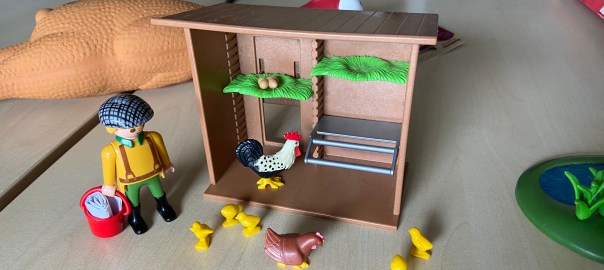
The exercise involved toy animals again. She set up various scenes, where there were disease outbreaks and we had to look for information and describe how we would go about diagnosis and putting the information onto the inevitable forms.
At the top of the page is a scene where there is an outbreak of avian influenza. That was slightly complicated because of these guys:
I assume that group had to discuss what to do about local wildlife, but my group had to investigate and record a possible bluetongue sampling at this lovely farm:
I got extra brownie points for querying the assorted carrots and other vegetables in the yellow box. This farmer may be feeding kitchen scraps, which is illegal in the UK!
There has also been some amusement at work this week, because of some seagulls which have been nesting somewhere on or near the building where I work. Perhaps others have not been so amused as a couple of people have been dive bombed or poohed on, but a theory of mine was confirmed when we had a number of extra staff visiting on Wednesday for a meeting. These are sexist seagulls and while I have passed out of the door, watched over by a relatively benign beady eye, all the actual attacks have been on men. Clearly there are some advantages to being female!
I’m not going to finish without giving high praise to The Boathouse restaurant at Glencaple. Regular readers may recall a lovely Christmas meal Donna and I had there back in December. I suggested a revisit, having seen an advertisement on Facebook for afternoon tea. It would be an understatement to say that it did not disappoint! As with the Christmas dinner, I took home enough food to last me until the next day and it really did taste as good as it looks!
Anyway, I shall go now. Thanks for reading and have a good week!
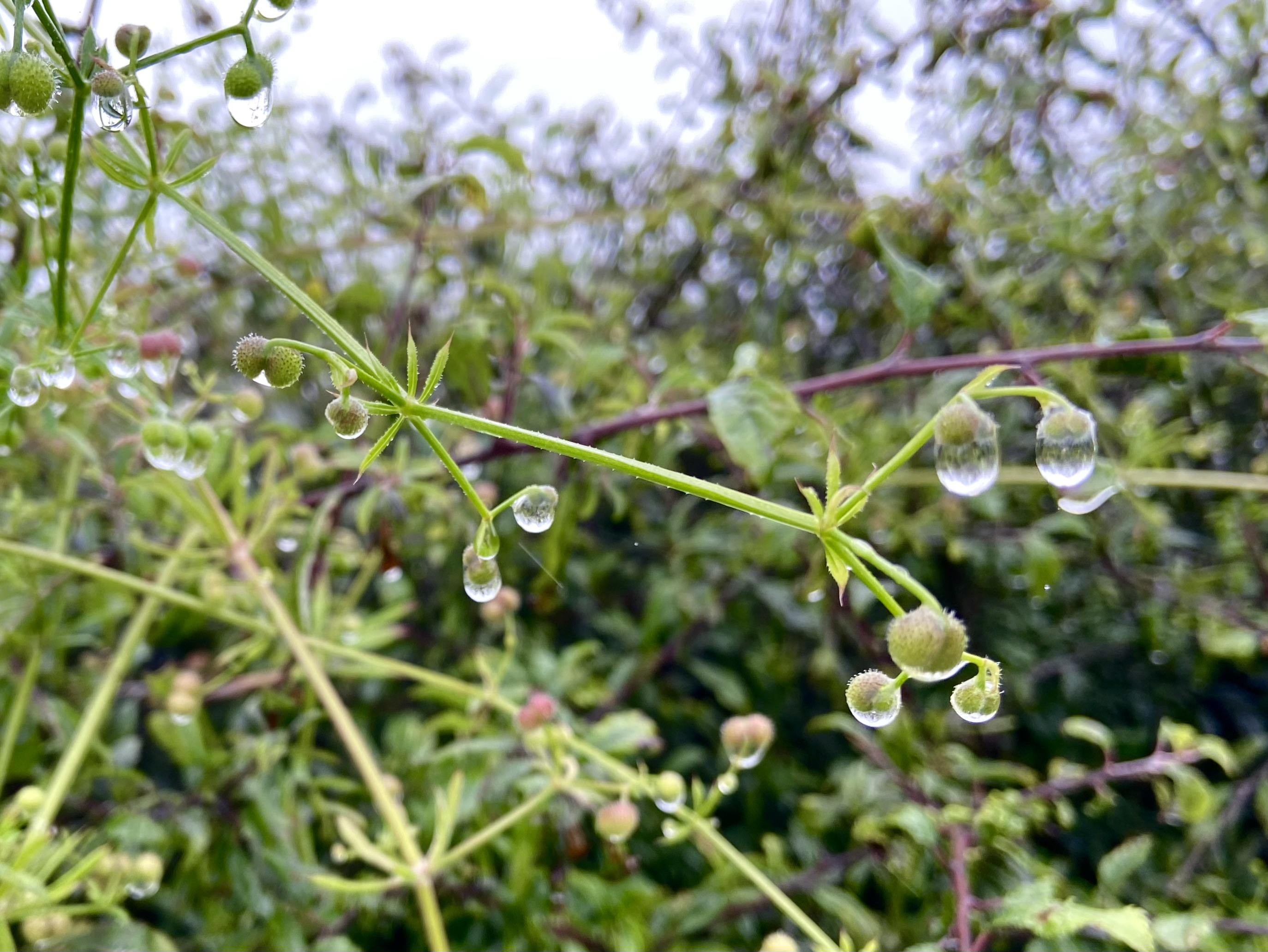
There were two beautiful mornings in Blackbird Lane the week before last that I want to share with you. I took the photo at the top of the page and the one below on Monday the 7th.
Mist hung above the fields, but the light was beautiful, catching the wonderful clarity of the raindrops, left there by a shower.
Four days later, it was frosty and again, I couldn’t resist taking photographs in the sparkling morning light.
I was taken out for a driver training course on the Thursday. The instructor asked why I was there. I must have triggered something when I answered some questions at work about my driving, but the only one I can think of was that I said I drive when I’m tired. If anyone working in field services (as I do) said they never drive when tired, they are not being entirely truthful. After a long day on a physical job on a farm, we all have to get home. That’s just how it is. Anyway I drove the instructor to Tebay service station and had a coffee and a pie, then drove her back. She says I’m a good driver, so no complaints about that one!
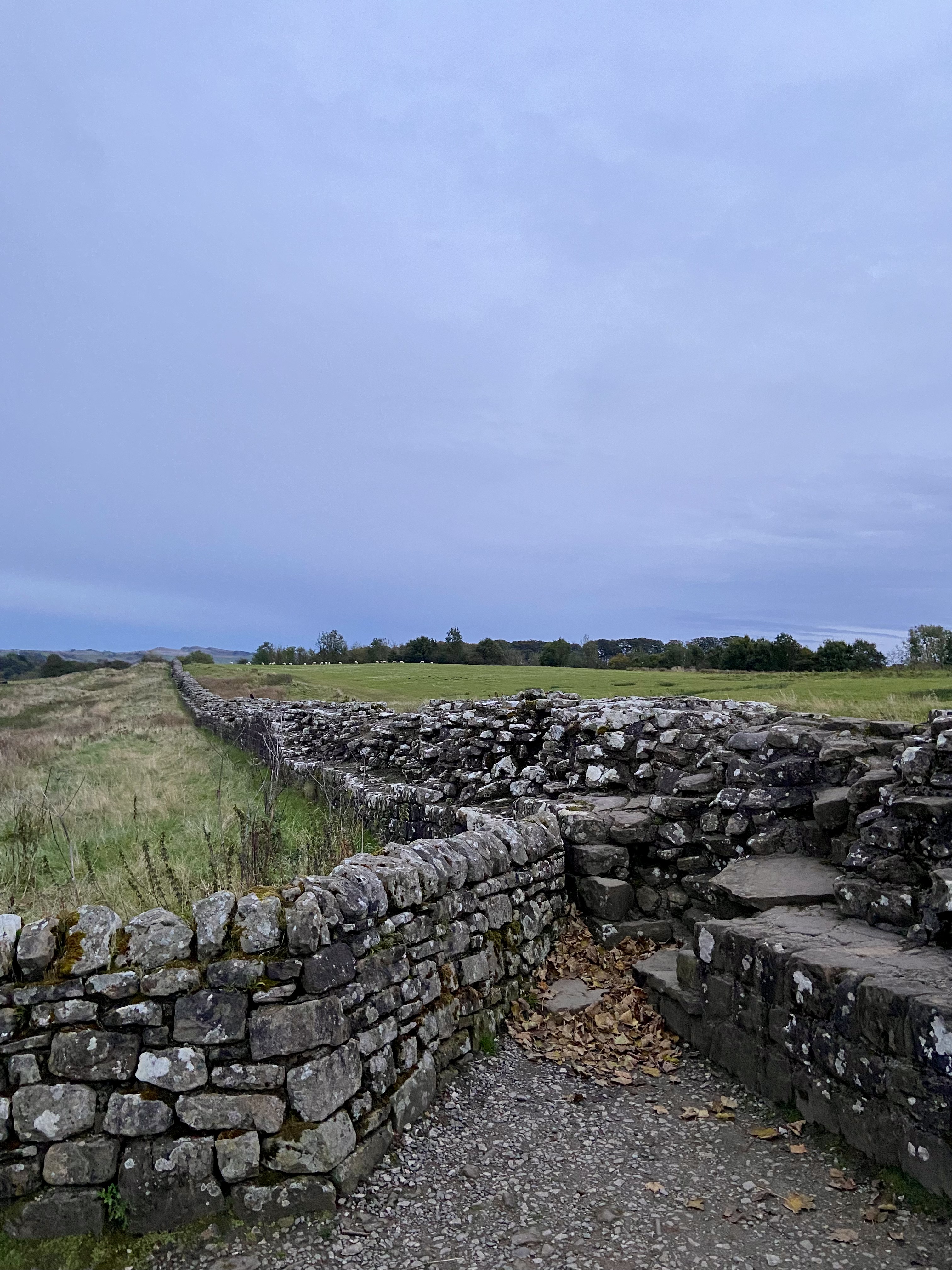
Last Sunday, I met an old friend from university and had a meal with him in Lockerbie. We then decided to go and look at a section of the west side of Hadrian’s wall, as it wasn’t too far away. It’s an impressive sight, even now: well constructed and taller than I am, so I couldn’t see over it. It was originally four metres high when it was built almost 2000 years ago. It must have been very commanding and Hadrian must have been very alarmed by all the evil Scots!
This week has been a real mixed bag. I was meant to be heading off to Bury St Edmunds today, to do some bluetongue surveillance, but on Tuesday, I was told that there was tracing work to be done here in Scotland and I couldn’t be spared. I was a bit frustrated as I was looking forward to getting away and doing some outbreak work.
The high point of my week was on Tuesday, when I visited a vet practice for a routine inspection over Wigtown way. It went well and I decided to spend lunchtime in a cafe in Wigtown called ReadingLasses. They had run out of soup and were only serving coffee and cake, so I chose a coffee and martini cake, which really was as delicious as it looks. Wigtown is also Scotland’s book town, as I’ve mentioned before, and as you can see in the photo below, and maybe guessed from its name, ReadingLasses was filled with books by and about women. I read the first two chapters of a book about crofting life with my cake and will definitely return for the following two next time I’m over that way.
Thursday wasn’t so good. I woke up and found that Triar’s breathing was not right. He was obviously struggling a bit, needing more effort to breathe out than was normal. I had woken at six and the vet didn’t open until 8:30 – he wasn’t bad enough to warrant an out of hours call – so I had a frightening couple of hours, during which my lovely friend Lara called me and calmed me down, talking through what to do.
By some miracle, the vet Triar knows had an appointment at 8:45, so I rushed Triar there. I think he has some kind of inflammation in his lungs, or pneumonia, but don’t know what’s causing it. He’s had a steroid injection and is doing a bit better, but for now, I’m waiting and monitoring and hoping he goes in the right direction. Lung problems in dogs can be difficult to diagnose and treat. This is the one time I wish I was working in practice, as I would do way more tests, though of course that can also cause more problems. Patience is very hard though and the realization of how precious he is to me was brought home by the wave of emotion. I was no use for work on Thursday morning and fortunately, my manager was very understanding.
So after all, I am very grateful to not be heading off to Bury St Edmunds today. Triar and I will have a quiet weekend together. The weather warnings say there’s a storm on the way, so we will shelter together here and hope for better things next week.
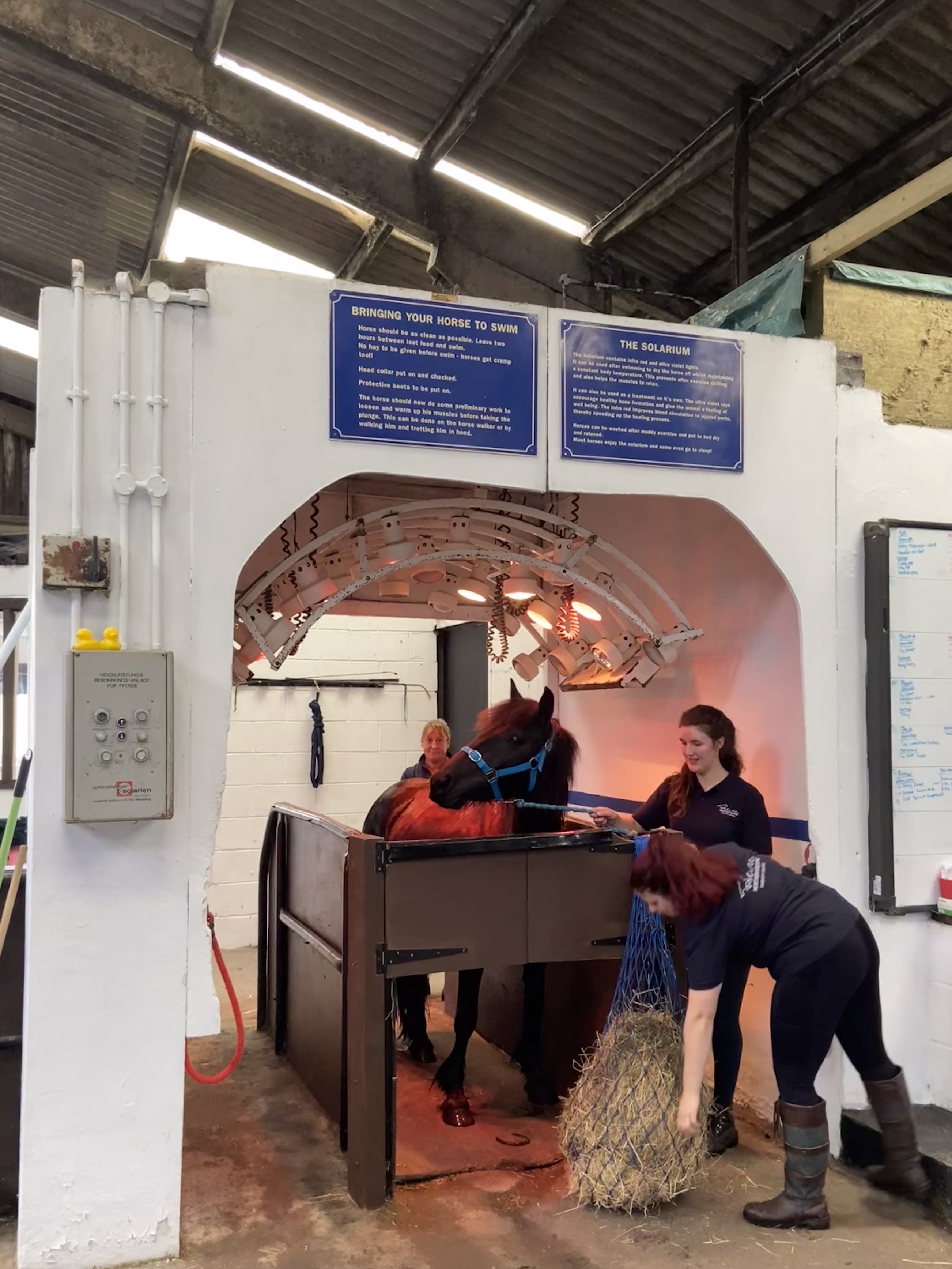
This week has felt so long, and has been so full, that it was almost a surprise when I looked back at my photos and realised that it was only last weekend I went to the Northern Canine and Equine Therapy Centre in Rathmell, where they do hydrotherapy for horses and dogs. They had advertised it as a coffee morning and we did indeed purchase a lovely coffee from a van outside the centre, but the real attraction lay inside.
The horse hydrotherapy session was due first, so we walked into the part of the centre where the horses were kept. I wish that I had taken more photos, but it was a lovely place and I instantly felt at home. The centrepiece of the covered yard was obviously the pool (pictured at the top of the page) but around two edges there were stables for the hospitalised horses. Some were there for lameness, some for weight loss and conditioning. Others were there, not so much for treatment, but for pampering. Imagine sending your horse away for a spa weekend!
Having swum round, the pony in the picture was taken out, towelled down, then treated with oils to replace the natural oils that would have been removed from his coat. He then was walked into a solarium to dry out a bit.
After we’d seen the horse swimming, we moved through to the dog pool. There. We watched as a dog physio put her labrador through his paces in the pool.
She told us about the different conditions they helped with. Her own dog doesn’t need any therapy, but he does love swimming. It’s also possible to book a half hour fun session with your dog and I immediately decided I’d like to take Triar to see if he would like indoor swimming. I also found myself wishing I worked there, or perhaps was a vet who could refer animals to them. It felt like a very positive place.
We had rather a bombshell last Friday afternoon, which I couldn’t bring myself to mention last week. My lovely boss, Kirsty, unexpectedly sent out a message to say she was leaving and her last day would be early in August. I will be very sad to see her go, and by the outpouring of shock, so will many of my colleagues. Both Lindsay (my Veterinary advisor – one step up from me) and Sue, who has just taken on a year long post after locumming on and off, called me up, mainly to express their sadness. Though it feels very sudden, it’s good for Kirsty and I hope she gets some much deserved time to relax.
Back at work on Monday, I visited a chicken farm with my colleague, Aleks. I have to do three visits with other vets before I can go solo, and this was my third. Because everyone is so busy, it’s difficult to find dates when two of us can go out together, so I’m glad my third accompanied visit is done. I have three of my own to do, so now I can more easily fit them into my timetable.
I can’t even remember what I did on Tuesday. It all feels so long ago! I was due to revisit a welfare case on Wednesday with David, who works for the local authority with animal health and welfare. We often work together and the revisit was to a farm where we witnessed some serious welfare issues before. But when he arrived, he asked me if we could divert to a more pressing issue. A group of pigs had escaped from their field and had turned up in someone else’s farmyard. It wasn’t the first time they’d escaped, but the farmer, quite correctly, now had them coralled in a barn.
Other authorities, including the police and the SSPCA had been called out when the pigs had escaped before, but nothing had been done. These situations are complicated to deal with. Animals do escape from time to time, and unless they’re on a road or causing risk, it’s really the farmer’s responsibility to get them back and secure them in the field or barn. For David and me, it was essentially a welfare issue. It’s not safe for the pigs to be marauding round the countryside. All farmers have a responsibility to keep their animals safe and keeping them enclosed within a safe area is key to that.
After the big foot and mouth outbreak in 2001, various laws were brought in to try to reduce the risks of another big outbreak. These included standstill laws on animal movements. If cloven hoofed animals (mainly cattle, sheep and pigs) are moved onto a farm, then the farm comes under a standstill order and for thirteen days, no animals can be moved off the farm without special permission.
So pigs landing unexpectedly on someone else’s farm presents quite an issue to that farmer, especially if they were planning on selling some animals, which our farmer was, and imminently. Our first action was to find out if the sale could go ahead. The pigs had not, to anyone’s knowledge, been near the animals that were to be sold, but equally, they had been loose, so where they had been was anyone’s guess. The movement ban applies to all animals on the farm, so the sale had to be stopped. That was done before we left the office.
Our next action was to visit the farm. It was an hour’s drive, but when we got there, I was able to examine the pigs. They were healthy and being well looked after. The main issue that had to be dealt with (or so we thought) was that they were not where they were meant to be.
Having looked at the entrapped pigs, we then went to visit the pig owner. The remainder of the herd were in a separate field from the ones who had escaped. To get to them, we had to walk through the field where the escapee pigs had been. There were some green boxes that looked like the boxes supermarkets use to deliver produce, but I had walked past them, keen to see if the pigs were okay. David had gone to get something from his van and I expected him to follow immediately, but when I turned to see where he was, he was standing at the gate, looking round.
He joined us eventually and we went and looked at the pigs. They looked well and the field they were in was (in my opinion) the perfect environment, with a small shelter, long grass and rushes to hide in and mud in which to wallow when the weather was warm.
It was only when we turned and walked back, that David told me what he had seen at the gate. Across from the supermarket boxes, there was litter, lying about. And in that rubbish, which was mostly food packaging, he had found empty packages for sausage rolls, ham and bacon, along with bags for bread and hot dog rolls.
I mentioned foot and mouth and the rules created after the big 2001 outbreak earlier. In addition to new rules on animal movements, strict rules were brought in about feeding pigs. Feeding them any kind of human food or kitchen waste is banned. We asked the farmer about the packages. It wasn’t impossible they had been left by someone having a picnic, but he didn’t know where they’d come from and said he thought people sometimes came and fed the pigs.
So now we had a situation, where there were empty packages for pork products that the escaped pigs had access to, and worse, that it was possible the produce, including raw bacon, might have been fed to the pigs.
These are the kinds of situations that have immediately to be sent up the food chain. Even if I had dealt with such a situation before, I would still have to call it in, without delay. The upshot of my phone call, and the work I have been doing for the last three days, is that both farms have to be locked down, with no movements of live or dead animals onto or off the premises, except under special licence. All the animals have to be inspected every 72 hours for signs of disease for a week, then probably weekly thereafter, for another two weeks. There was also the matter of the pigs being on the wrong farm, which was resolved yesterday, after lots of negotiation and paperwork.
So a vist which I thought might be a little complicated to resolve has turned into a behemoth case. One thing I will say is that we have an enormous amount to be grateful for with the farmer who took in the marauding pigs. She did everything right from start to finish, including calling us in. Chances are, the pigs don’t have foot and mouth, but now we have everything under supervision, so if the worst happens, we are already on top of it.
Had she chosen not to trap the pigs and call us, but had shoo’d them away and sent her animals to the sale, the potential for us being faced with another 2001 was there. That was started by pigs being fed improperly processed food and the disease wasn’t spotted until it had been sent all over the country. I may now be faced with three weeks of visits and a ton of paperwork, but this is the kind of work that can prevent a world of pain for farmers and a devastating cull that costs the country billions.
So this is what I am here for. I’m only a tiny cog in a very important chain, and kudos to both the wonderful farmer who called it in and for David for his observational skills. Next time, I won’t be so quick to pass by litter to look at animals.
But if I have one final thought, it is that I wish the government could see what we are here to do and how important vets and animal health and welfare officers are to this process. There should be more of us on the ground and the pay for those of us who choose to do this should be much better. Staff come and go, or work quickly to get promotion as there is no pay progression in our part of the civil service any more.
We need experienced people on the front line, but there is zero financial incentive to come and stay. Maybe saying this publically could get me into trouble, but if so, so be it. The people responsible for removing progressive pay bands for these roles have put the health and welfare of the nation’s animals at risk.
I work alongside a few, faithful staff, who have years of experience, a network of connections, a load of invaluable local knowledge, who are asked to train new entrants on the same wage as them. That is both plain wrong and absolute insanity. We should be making sure those people have an incentive to stay, that they know they are valued and that they don’t have to move to a different job to be properly rewarded.
And on that cheery note (sarcasm alert for non Brits) I shall leave you to your weekend! Have a good week all, and see you next week.
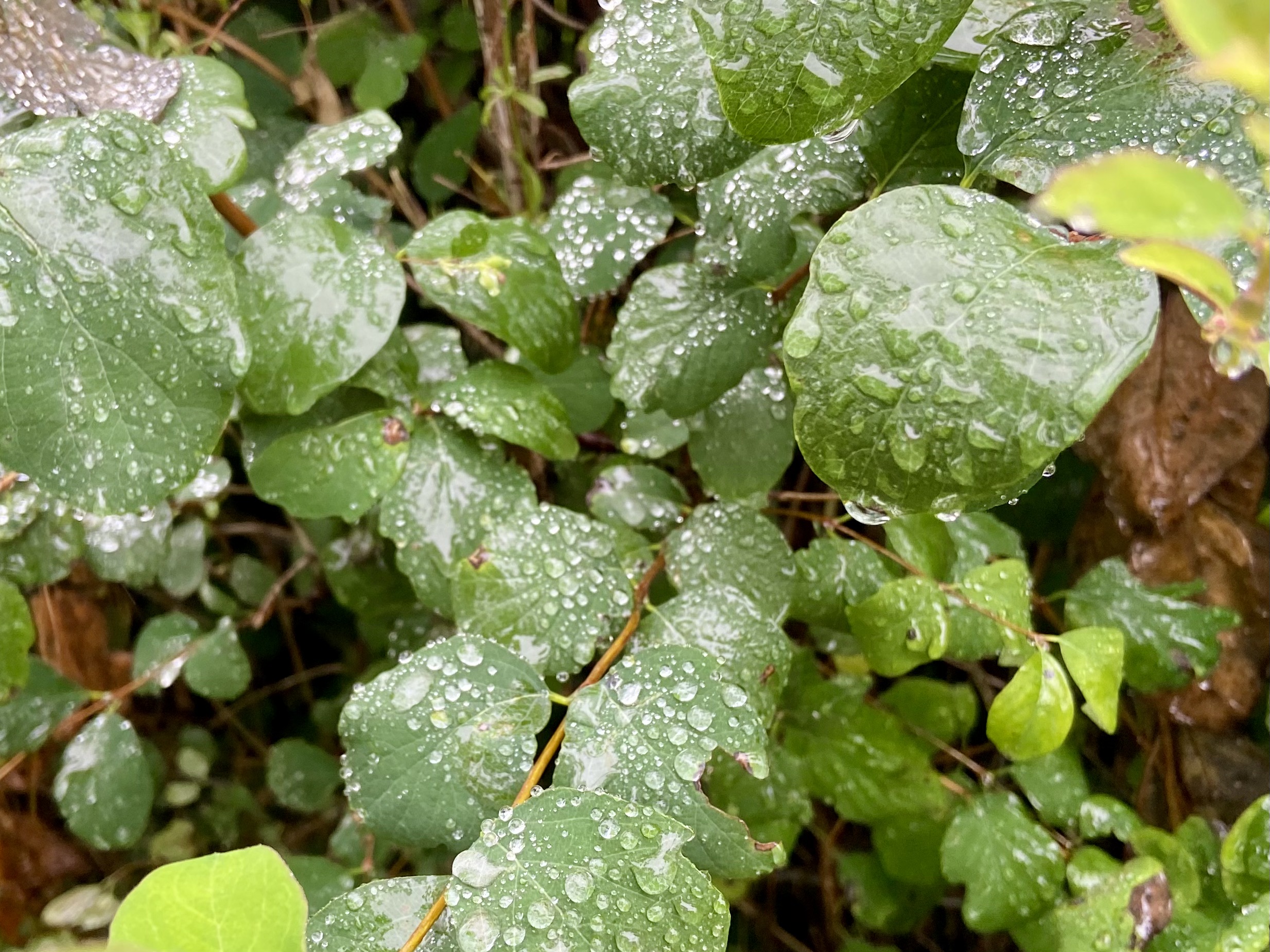
A few “after the rain” photographs for those who love Blackbird Lane.
This has felt like the longest week yet. I was duty vet on Monday, Tuesday and Wednesday. At any given time, there are three vets covering direct enquiries in Scotland and these can vary hugely from issues that are directly relevant to other tasks we do (TB, welfare, notifiable or reportable disease, animal by-products) to enquiries that have effectively been sent to the wrong agency or department. For example at one point, I had a question about sheep scab (a reportable mite infestation) alongside another about some brown banded cockroaches that had been seen in a consignment of books brought in from India.
The first of those – the sheep scab – is absolutely our territory. That one I knew I would have to deal with from start to finish. The cockroaches? Really I am clueless. So the first part of my task was to working out which of the tasks was mine to complete and which should be forwarded on. As a complete novice, even making that decision isn’t straightforward. The two other vets on duty with me were busy with their own tasks. There’s a more senior vet on call, but that’s mostly for consultation on serious cases at nights or weekends.
I had thought, before I started, that it was only three days. How bad could it be? But by Monday lunchtime, I was overwhelmed. I was told to follow various checklists, but without prior understanding, they didn’t have enough detail. The instruction, “obtain owner or keeper’s e-mail so restrictions can be served and lifted with fewer delays” sounds straightforward enough, but there are multiple different systems where that e-mail might be recorded. Moreover, those are so complex that looking things up could take an hour and even then, I might still not have found it.
Finally, in desperation, I called my veterinary advisor, Pilar. I probably should have done it earlier, but I knew she was busy and she had already spent hours with me, trying to prepare me. Fortunately she was empathetic and understood how out of depth I was feeling. I had actually reached the stage where I was contemplating switching off computer and phone and walking away, but she talked me through everything in simple steps, told me I could gather most information by calling the vet who diagnosed the scab and the farmer whose sheep were infected and gave me a list of what to ask each. The cockroaches, she directed me to another APHA specialist, who would be able to advise.
It took me a very long time to work through that sheep scab case. Next time, it will be much quicker, but the good news is, that by the time I phoned cockroach guy back afterwards to find out more about his query, he’d already had the Forestry Commission in, who had dealt with the problem. As someone else pointed out, almost none of the enquiries are urgent, but it still feels overwhelming. It will get better over time, but those three days left me feeling wrung out.
Having survived the three days (and nights – no calls, but not relaxing knowing the possibility is there) of duty vet, I was hoping for a good end to the week, but it wasn’t to be. On Friday, I had booked in a welfare investigation with David, the local authority inspector. As regular readers will know, mostly those investigations reveal good welfare, but occasionally the reports are accurate, and this was one of them.
There are two main sets of rules we follow. There’s both the law of the land (Animal Health and Wefare Act, Scotland, 2006) and a more stringent set of welfare guidelines that farmers sign up to in order to receive government subsidies. Up until now, I have mostly visited farms where the farmers were broadly compliant with the guidelines, which represent a higher standard than the law. There have been a couple who met the law but not the guidelines, but until now, I haven’t seen any proper breaches of both.
There are various protocols in place for dealing with breaches, depending on severity. Minor breaches can be corrected with simple guidance. There’s a sliding scale from there, including serving notices for improvement within a specific timeframe, calling for direct action while on the farm (such as calling the private vet or requiring that animals are culled) right up to prosecution, for the most serious cases. The latter is usually (though not always) a last resort after improvements haven’t been made.
Anyway, yesterday I had my first Scottish breach. I’ve dealt with some in Norway before, so the welfare signs and how to record them are similar. However the protocols differ and it’s easy to put your foot in it. One thing I have learned is that, when I come across welfare problems, it’s intense. There’s a lot of pressure to make sure you get stuff right. If you say the wrong thing, the farmer can get prematurely angry or defensive, which makes everything more difficult. On every case I’ve reflected on afterwards, I have looked back and realised there were ways I should have done better and some things I learned. This is my initial list after yesterday. I know more will crop up as the case is processed and followed up.
Firstly, don’t forget to take supplies. There’s a minimum kit I should have had with me and didn’t. In Norway, we used disposable overalls and boot covers on every farm and I would go round the stockroom and pick up measuring implements, microchip readers and other equipment each time. It had become routine. Here there are certain items I am meant to have with me at all times, but I went out with someone from the local authority and (incorrectly) assumed that the LA inspector would have everything I needed. I don’t think it caused any catastrophic problems, but that was only by good fortune. I can easily rectify that for next time.
In addition, I will never again go out without food and drink. Generally such inspections take a few hours at most and we can go and buy lunch, but this time, there was a lot to get through and I was uncomfortably thirsty before we managed to take a break. In Norway there were often no cafes or shops within a two hour drive. Thomas never ever went anywhere without a can of cola and something to eat and I had started to do similar. Again, an easy lesson.
Second, don’t do welfare on a Friday. Graham mentioned this and it’s great advice. Sometimes it’s unavoidable, but in fact, it can cause no end of problems. Vets go onto out-of-hours rates and limited staffing at weekends, so if a call-out is fairly urgently required, it’s more complicated. Worse, abattoirs close for the weekends. They did in Norway too, but we had an emergency slaughter service 24/7. Labs close. If you want to send them anything, and it’s late, you can’t leave it till the next day. Even from the point of view of our own follow-up, it would have been better to go through the case the next day and not have two days in between.
Third (and unexpected). Don’t use the word evidence. It’s a funny thing to reflect on, but I never accidentally used that word in Norway. I didn’t even know the Norwegian word when I started working in Finnsnes! I rapidly learned how important language was when I started out in practice years ago though and now I need to learn what works in this role. The way you phrase things makes a massive difference to how the person on the other side of the exchange reacts.
To me, it felt like a technicality. Evidence is stuff I see and write down. It can be positive or negative, but it was obvious when I used it a couple of times that it instantly conjured the threat of a court case. Next time, I will find alternatives. If I ask to take photos, it’s not for evidence, it’s to get or record a full and accurate snapshot of what I’m seeing. Doing that is easily described as being in everyone’s interest. There are so many police shows now that the rights they read out (that include the word evidence) are probably at the forefront of people’s minds. I’ve always thought it would be easier to do this job in English and there’s no doubt it is, but there are new pitfalls and I need to adjust.
Anyway, as well as the things I got wrong, there were others that I did get right. The habit of using descriptive, observational, factual language, not opinion became second nature in Norway. A cow is not “thin”. Thin is an opinion. Instead I might write that “I can see her ribs and the bony prominences of her pelvis and spine and I rate her body condition score at 2” (with an explanation of what the condition score means). Those are facts. Realistically, “thin” is shorthand for “I observed those things” but it can open up the problem that different people might assess “thin” in different ways.
On my suggestion, David drew a map. I learned that from police in Norway after working on a case with them. It makes it easier to keep track if you have all the farm buildings mapped out and the sheds numbered. You can then describe more accurately where you found various animals and what your photos show.
This is a Scottish/British one; I should record important words verbatim. I learned that on a statement writing course. It’s not easy to do that as conversations go faster than I can write, but writing down someone’s actual words removes any confusion created by a summary of what you thought they said.
And finally, I’m going to end with something David told me. It can feel overwhelming during a welfare case, especially if there are many issues that need to be addressed. Again, harking back to Norway, even if I managed to improve things, I could still get bogged down in what I didn’t achieve, because it could have been done better. But as David pointed out, in the end of the day, if the actions I took relieved the suffering of a single animal, that was still an important achievement.
It’s been an interesting week. I’ll start with an update on the water situation. The temporary fix with the tank and pump failed on Sunday due to an airlock. Sunday wasn’t great, but the main concern was still that it might be tough and costly to get the problem sorted out.
On Monday, the representative for the insurance company came back and quickly fixed the airlock (this time I remembered to ask him how he did it. After that, he went off to speak to the owner of the house nearest the well. He called me back about an hour later. Apparently the other house owner had actually begun to run out of water on Friday evening, but despite having our phone number, he hadn’t thought to tell us. There was an ice bridge blocking the stream further up, which meant the well had gradually emptied. Our water disappeared first because our pipe was highest up. So the mystery was solved and (thank goodness) no major digging works were required. So all in all, a bit inconvenient, but several lessons learned about where everything is and what to check if it happens again!
We had an interesting case at the abattoir on Wednesday. Some animals were sent in that were thin enough to set the alarm bells ringing, not only in me, but in the abattoir workers that work with the live animals. It’s almost a physical punch to see animals that are so obviously struggling. It’s quite a big job when we start to document such a case. I took a number of photographs while the animals were still in the pen, though I was worried enough about them that I didn’t go in and stir them up. The last thing I want to do is cause any additional distress.
I asked the animal handlers to call me back when the time came for the animals to be slaughtered. That way, I could photograph and handle them when they were already restrained. I then went back and sent messages to Hilde and Thomas. This case was serious enough to warrant immediate follow up.
I came back to examine the animals as they were being brought onto the line. It wasn’t reassuring. Close up, the animals were distressingly thin. The animal handlers obviously felt the same as I did and while it was upsetting, at least I was doing my utmost to make sure we had plenty of evidence.
The farm where the animals came from has been on our radar for a while, but things had been improving, so this was a real blow. But there was a curveball on the way, because after the animals had been killed, it was discovered that quite a large percentage of them had very unpleasant looking lung lesions.
Having spent some time inspecting the lungs, it was obvious we needed to find out what disease this was. So having photographed the carcasses and the lungs (evidence of everything must be recorded) I sent off various samples to the lab. It doesn’t sound so much when I write it down, but with all the extra tasks in addition to my normal work, it ended up being a ten hour working day. I spoke to Hilde and Thomas after I had finished and Thomas had already set up a visit for the next day.
I had been planning to catch up on some paperwork on Thursday as Ann was coming in to cover my morning shift, but I really wanted to be involved in the follow-up and so, mentally casting aside the reindeer overtime fees calculation checks I had been sent, I asked Thomas if I could join him and he agreed.
Though the thinness of the animals had been distressing, the farm visit was actually somewhat reassuring. There were thin animals there as well, and though things weren’t perfect, various steps were being taken. The grass is starting to grow now, so some of the problems will resolve once the animals are back outside and major plans for improvement are under way. But now we also have to throw in the possibility of some kind of infection on the farm. Once we know what caused the lung problems, then we will have to work out how to manage the problem. That could involve anything from a new vaccination program, right up to mass culling. Either way, we will be offering whatever support we can to the farmer, who has already expressed himself as being very grateful for any insight we can give on what’s going wrong.
This is the kind of work I signed up for when I chose to be a vet. I know there are times when it is incredibly heavy work, but at the end of the day, this really is what I want to be doing.
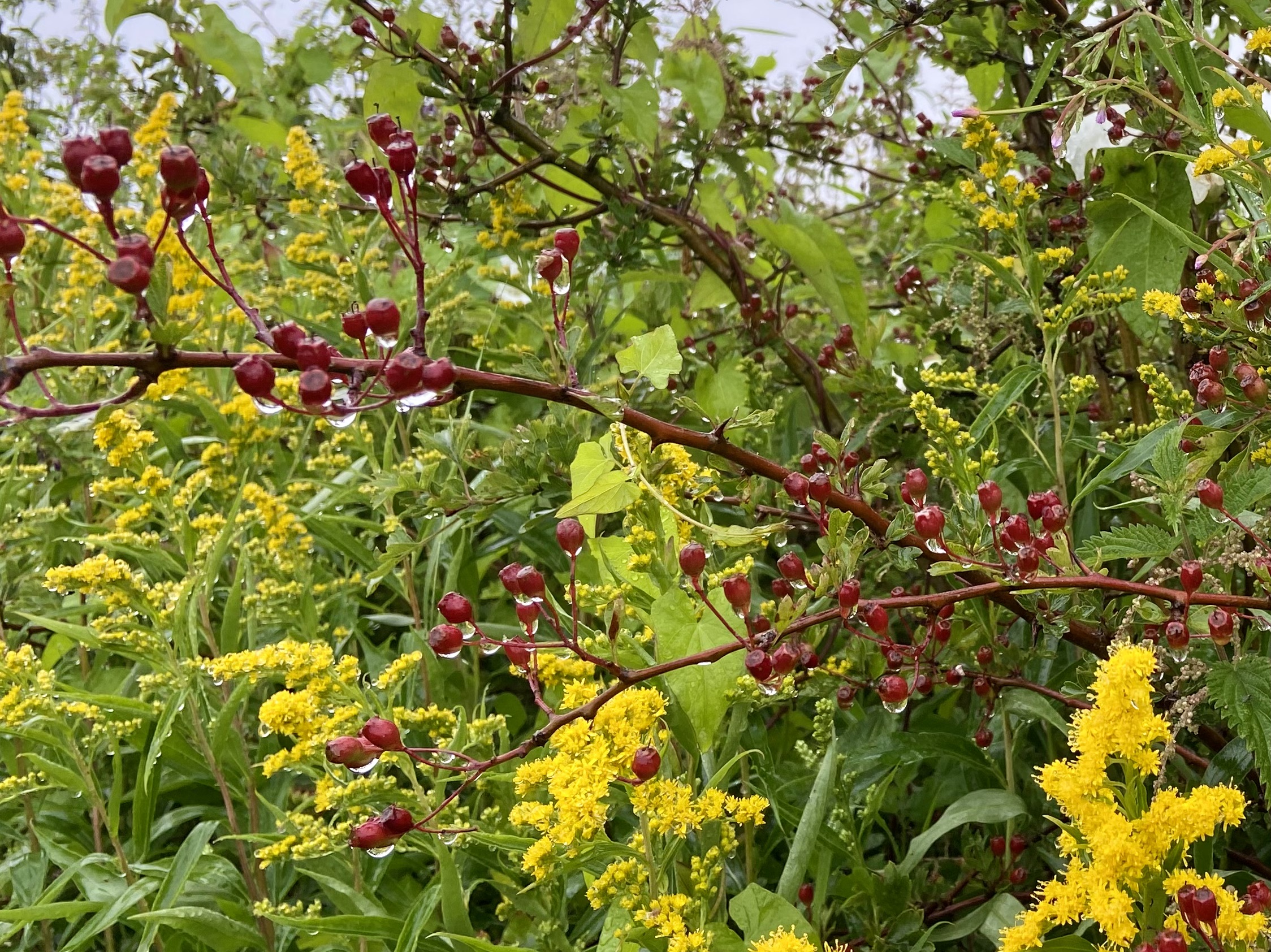
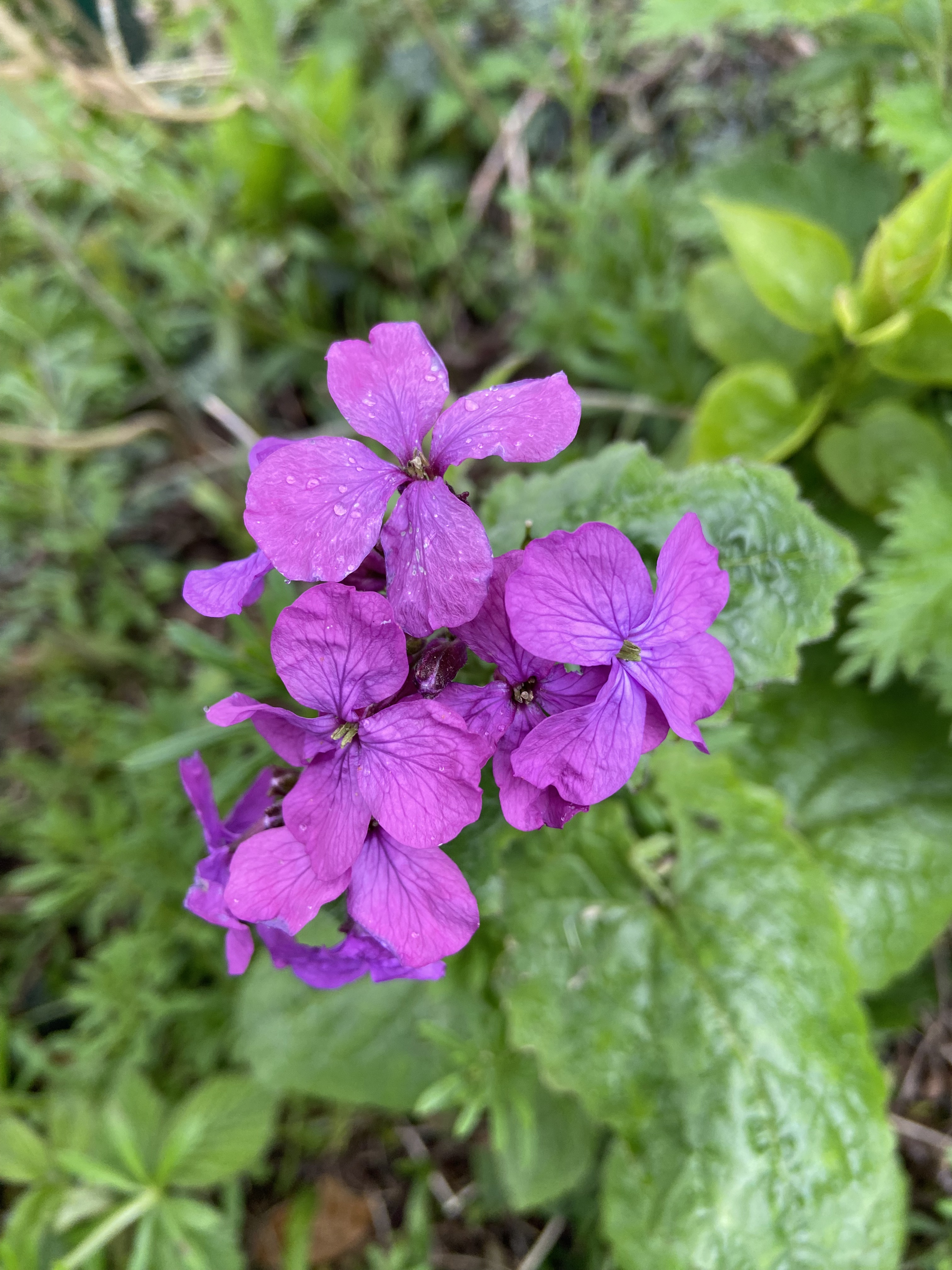
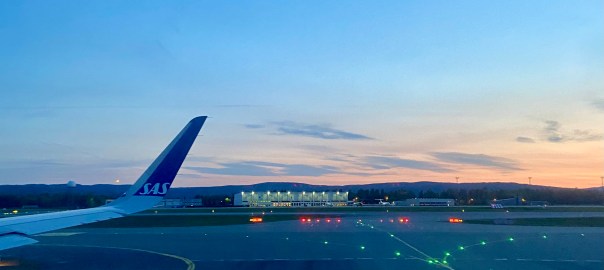
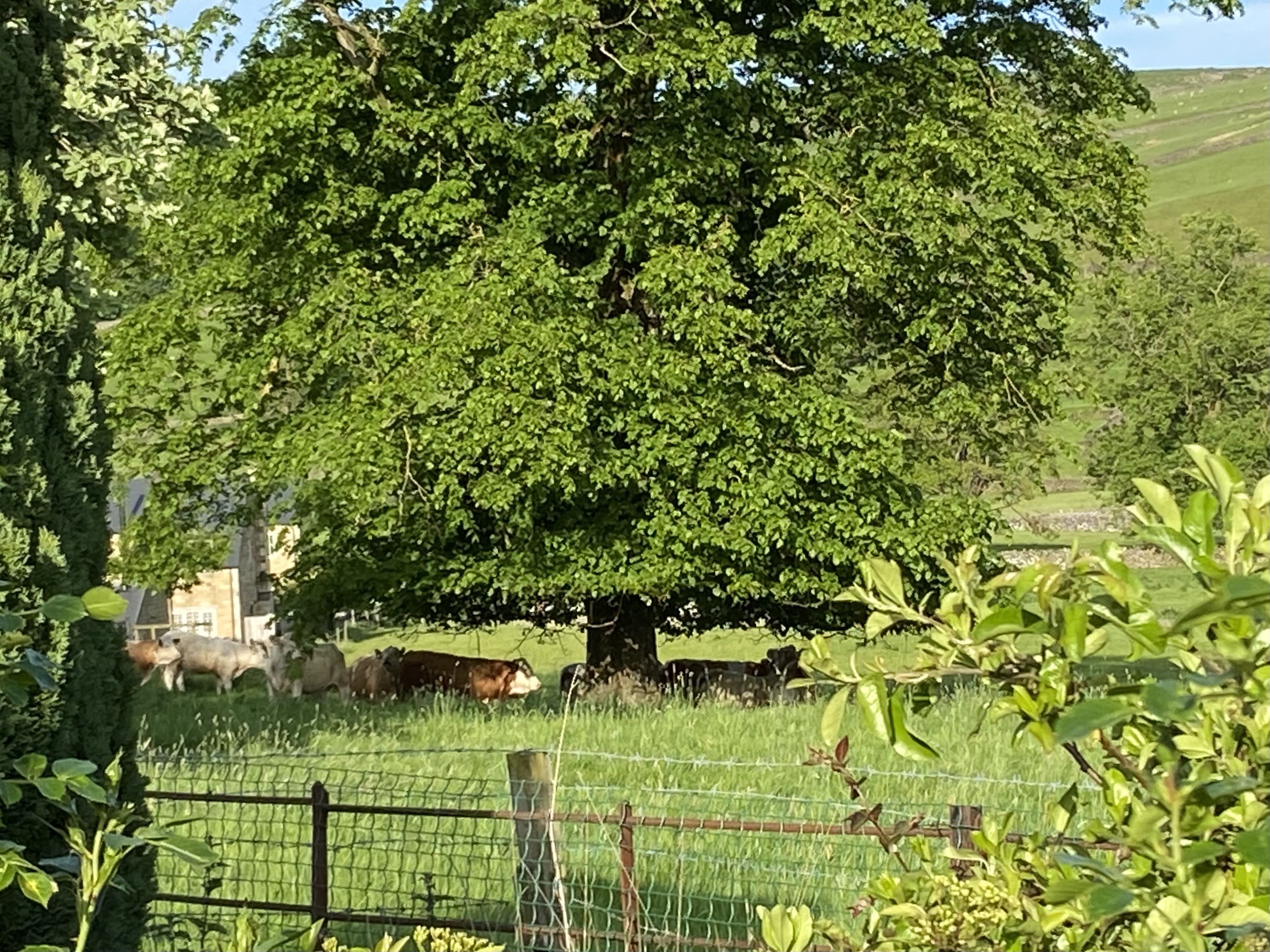
But as you can see from the photo at the top of the page, I am now a very long way from all that. I flew into Manchester yesterday, into the chaos of a failure in the electronic passport system. Having survived that, I am now back in beautiful Yorkshire, where the summer is coming in. There are fat, healthy cattle in the field behind the house and everything in the garden is beginning to bloom. And now I can hear that mum and dad are up and the kettle is on, so I will drop a few photos here and then go and join them. Have a lovely week everyone!
Last week was all about the snow. When it was coming down and down and down, it was almost as if it was lying heavily in my mind, rather than just on the roof; there was a real feeling of never-ending work coming at me. I took a photo of a snow drift that had formed beside the garage, that was both beautiful and daunting in its sheer volume.
Large snow drift that formed beside the garage, during last weekend’s storm.
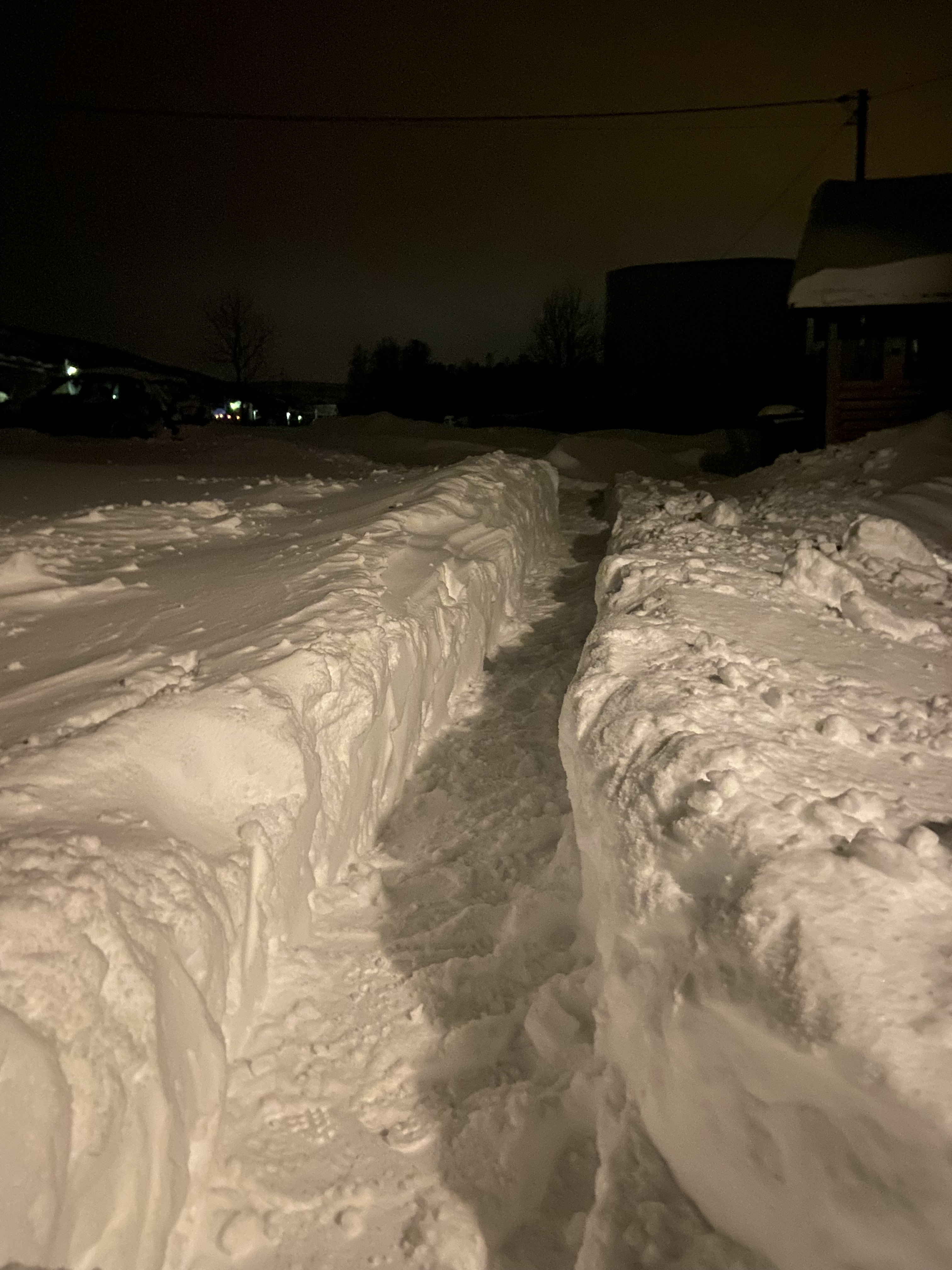
As you can probably see, the drift reached almost to the roof. There are still huge piles of snow along the front and back of the house. It gathered on the roof, then partially melted and fell off in huge quantities, to the point where we couldn’t keep up with it. Doubtless there will be more before the winter is out, but as summer time comes nearer, and the sun returns it has begun to feel less daunting.
It’s been very much milder this week and though there is still a thick covering of snow, the relentless feeling has gone. Quite apart from anything else, Andrew and I are going on holiday in two week’s time and it’s finally close enough that I can begin to properly look forward to it. We are heading to the UK. I expect there will be signs of spring there, in the south at least. We are also meeting Anna and Lauren, as well as my parents and hopefully, my sister Helen. I expect it will whizz by, but by the time we return, we will be well into March.
I had an interesting case at the abattoir this week. A batch of pigs came in and two of them had clear signs of a bacterial disease: erysipelas (rødsyke in Norwegian). I’ve never seen it before, but some of its symptoms are so distinctive that I remember them from university. The pigs I saw had very classic, diamond-shaped, raised red patches on their skin. The other thing I remembered from university is that it is a zoonosis – it can spread to different species, including people. The bacteria can survive a long time in infected meat, even if it’s kept chilled, so it’s important that infected pigs are kept out of the food chain. I also had to call the farmer and make sure he understood the risks and would take suitable precautions.
There was also an article on the front page of Mattilsynet’s intranet this week about the fact that tuberculosis had been picked up a some time ago in an abattoir further south. The investigation and (hopefully) eradication process is ongoing, but the article pointed out that though meat inspection is often seen as the poor relation in terms of importance when it comes to animal health and welfare, it can play a hugely significant role in keeping people and animals safe.
I have also been out on some welfare visits this week for the first time since the autumn. It was good to get out and about, and happily both the animals we went to see were not at risk. Thomas and I also went out to pick up a stray cat, only to find it had been picked up by Dyrebeskyttelsen (a Norwegian animal welfare charity) two hours before we got there. Our travels took us over to the far side of Senja, where the snow was largely gone at ground level. It is amazing how much difference in temperature the gulf stream brings, even this far north, though you can see the thick ice on the left, where the snow has been flattened in a car-parking area. Ice takes a lot longer to melt than snow.
Skaland, Senja
With the higher temperatures outside, the temperature in the house has also been more stable. The larger, more powerful heat exchanger I bought on moving in still wasn’t enough to keep the house properly warm when it was minus twenty outside. The wood stove has been wonderful though, and has been of particular interest to Triar. For most of his life we have lived in apartments in the cellars of other people’s houses, which is relatively common in Norway. Neither of our flats had fires or stoves and so he has always curled up on the couch beside us. But I had begun to notice that, now and then, he would go and lie in front of the wood stove when it was on. He didn’t lie there for long though and it crossed my mind that, in the UK, almost everyone I know has some kind of rug in front of the fire and a rug would be much more comfortable to lie on than laminate. And so, we have got Triar a sheepskin to lie on near the fire. As you can see, he loves it very much. Hope you all have a good week.
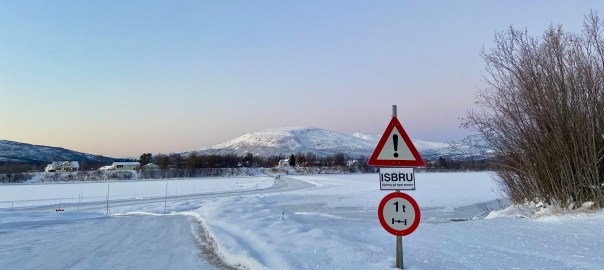
So much for trying to take a week off. The photograph of the ice bridge at the top of the page was only taken last Saturday, but it feels a very long time ago. John and I drove across it (just for fun) when we went to buy parts to try and fix the snow blower. It’s not quite working yet as one of the belts keeps jumping off, but John thinks he will be able to resolve that shortly. After working on it for several hours in significantly sub zero temperatures last weekend, he has made a lot of good progress.
My week off didn’t go as planned though. I was on my way to buy some gifts for John and Andrew’s stockings, on Monday morning, when I received a phone call from Thomas asking me to attend a meeting. Fortunately I have Teams on my phone, so I was able to join the meeting as I drove home. It was, of course, regarding last week’s tragedy, when one of the farmers in our district was shot by the police. I can’t share any details of the case itself, but Thomas and I spent a very long day out, in very low temperatures (round -15°C) working together to ensure that all the animals at the farm were either moved or would receive ongoing care until they can be.
I think the worst thing was the mental toll. Hard to deal with a case where it was so obvious that this was a person who had been badly failed by the system, but it was physically challenging as well. I hadn’t realised we would be there so long, but when I was preparing to go out, the only gloves I found were thickish waterproof gloves with no lining. Thomas, generous as ever, on seeing this lent me one of the two pairs he had brought. In fact, I think he lent me the warmer pair and that meant a lot. Sometimes it’s the small things that really help. It was a long and difficult day though, and we didn’t get back to Finnsnes until about midnight. I left Thomas working, with the agreement that I would go to the abattoir next morning, to oversee some ongoing work with the case.
The next morning’s trip didn’t go to plan either. I had taken one of the Mattilsynet lease cars. They are all quite new, and I wasn’t expecting any trouble, though one of the tyres was registering as having slightly low pressure, as sometimes seems to happen when it’s very cold. I was about half way there, when the car suddenly lost power and began to slow down. I was on a main road, where stopping would be dangerous, so I pushed the accelerator down further and the car speeded up a little, but was obviously not normal as it surged and slowed. I know the road very well, fortunately and knew there was a large bus stop up ahead where I could pull in. By this time, a message had popped up to say the motor was overheating. I managed to coax it into the layby before I turned the engine off.
My situation, even then, was precarious. I couldn’t run the engine to keep the car warm and the outside temperature was -25°C. I called the breakdown services and got through to a central line, who said someone local would call me back. I had a warm Mattilsynet jacket and hat in the car, which I quickly put on and fortunately, within a few minutes, I was talking to someone from Viking rescue, who was only about half an hour away. He wouldn’t be able to pick up the car, he told me. He already had one on the lorry, which he had to take to Tromsø ( a two hour drive) but he could pick me up and drop me off at the abattoir. I can honestly say, I have rarely been more grateful. I had been contemplating ringing Trude to collect me, but there was no guarantee anyone would be available for a while.
So I limped on to the abattoir, but then without a car, I couldn’t get back to collect my own from Finnsnes, so had to wait until my colleague was finished on the line. I also didn’t make it to the blood test I had booked in that afternoon.
Wednesday, I actually did manage a day off, though I was so exhausted by this time that it wasn’t really enough. I also received a phone call from work to ask if I could take Thomas’ shift at the abattoir on Thursday, starting at 05:45. Thomas had been working continually throughout and was even more exhausted than I was, so of course, I said yes. It was just one of those weeks!
On Thursday, just as I was contemplating the fact that I might manage to get home a little bit early to start my long weekend, which would be good as the weather forecast was awful, my phone rang. It was John, who often calls to tell me he’s going to be late home, or ask whether I want him to get anything at the shop, so I answered without any concern. John sounded a little bit shaky though, as he told me he was at the local doctors’. He had fallen and hurt his ankle, and as there was no longer an x-ray facility in Finnsnes, he had to go to the hospital in Tromsø. He was waiting for a taxi, he told me. Fortunately my generous colleague Konstantin said they would manage without me.
There was heavy snow forecast, but we made it to Tromsø in good time. It was a nightmare trying to find a place where I could park near an entrance to drop John off though, given that he couldn’t bear any weight on his foot. The doctor in Målselv had told us to take him to Accident and Emergency, but there didn’t seem to be any access there for ordinary cars. Eventually, we went to the main entrance, where there were wheelchairs available, but even then it wasn’t straightforward. Manoeuvring a rickety wheelchair in snow and ice isn’t easy. Then we couldn’t find anyone to tell us where we needed to be. I know the UK health service is on its knees, but I was thinking fondly of the old days in Scotland, where every hospital I ever attended had A&E department where you could drive up to the door, and walk in to find a receptionist who, one way or another, would register you and get you into the system.
We finally managed to find our way to the right place, but after the x-ray was taken, we had quite a long wait. I spent the time worrying about the fact that my phone was (uncharacteristically) low on charge, I didn’t have a charger with me, and that finding a hotel in Tromsø with parking at five or six at night would be difficult as well as heinously expensive.
To our relief, John’s ankle wasn’t broken and he didn’t need to stay in, but as we set off to drive back, it started to snow heavily. Visibility was awful and for a while, I couldn’t manage to limp along any faster than 40km/hour. The headlights clogged up with snow and the windscreen wipers were icing up and smeary and I had been up since four in the morning. Once again, we limped along until we could find a place to get off the main road. Fortunately, John had declined to take any strong painkillers and even more fortunately, it was his left ankle that was damaged and my wonderful, workhorse car is an automatic. In any other circumstances, I wouldn’t have let him drive, but driving onwards felt almost impossible. Still, we contemplated stopping at Vollan Gjestestue, which would be halfway home. By some miracle, the snow stopped at Nordkjøsbotn and John felt able to carry on and we made it home at about nine in the evening.
The storm finally hit properly yesterday and I was super-glad we had made it home on Thursday evening. It took a very long time to dig out the car yesterday. Have a good week all.
And so here I am, after my hoped-for week off ended up being anything but. We haven’t decorated for Christmas yet and I haven’t done the edits to my book that Ger, my agent, has asked me to do. I am now very much hoping that I can use some of my flexitime hours to take some shorter days next week, but of course it will depend what work comes in. When I decided, forty years ago, that I wanted to be a vet, I had no thought at all, and no understanding of how tough it can be to work in a profession where you never know what the next days, or even hours might bring. It’s mentally so much tougher than I could ever have imagined too, but one thing I can say about my life is that it is rarely ever boring.
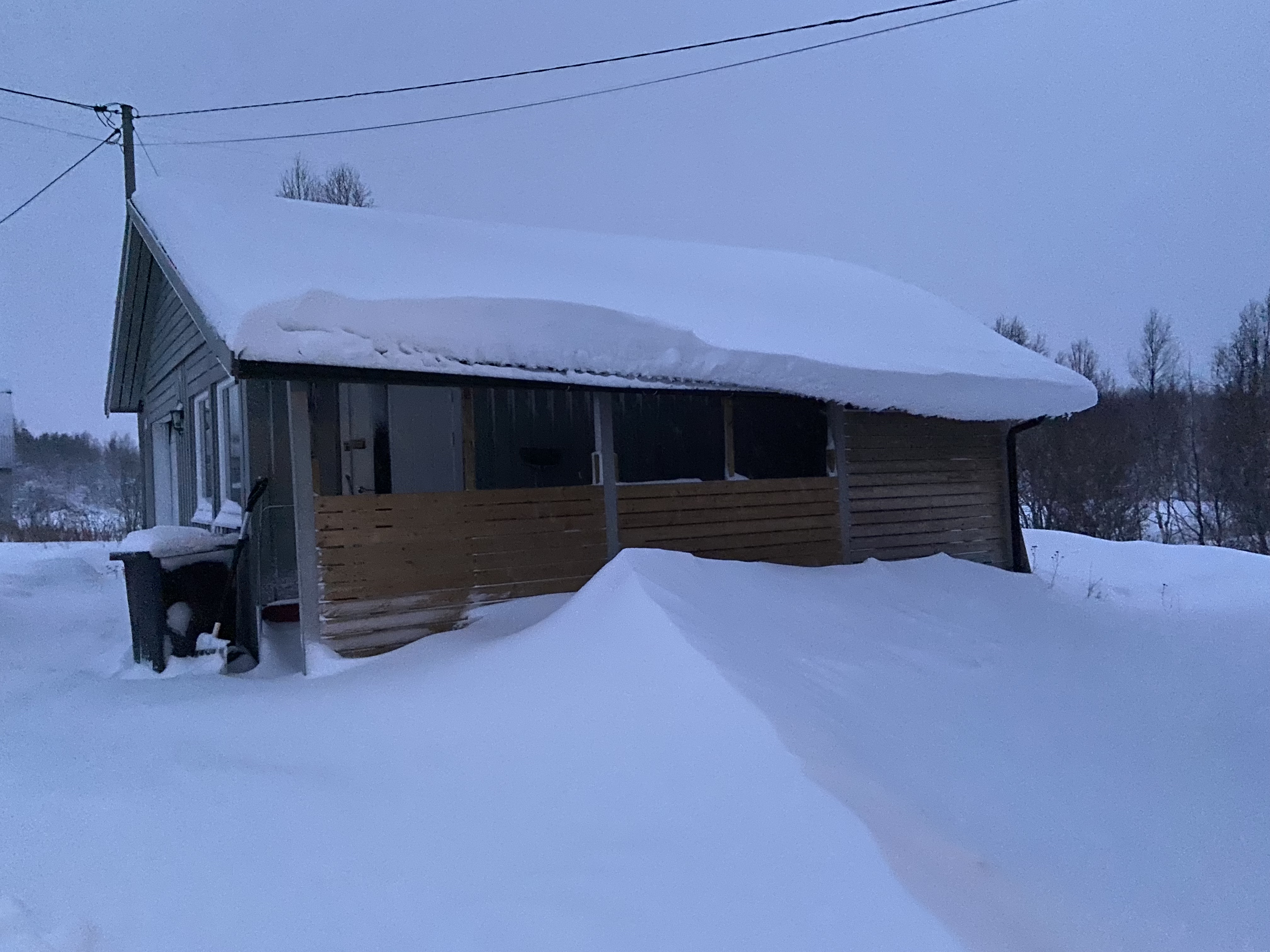
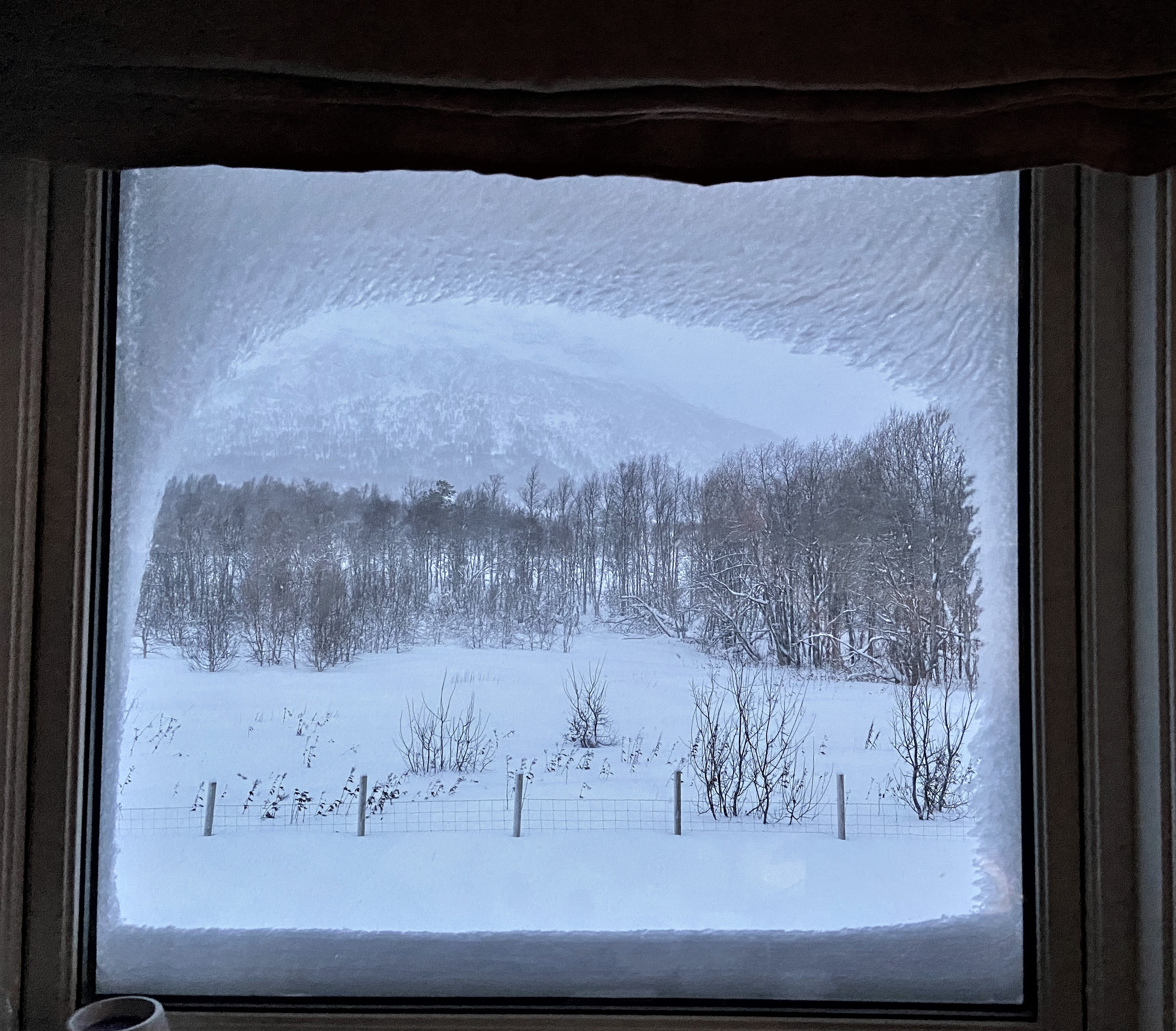
So here’s hoping that there isn’t too much more snow and that I have a bit more time this week. This was the view from my kitchen window yesterday, during the short, twilight hours.
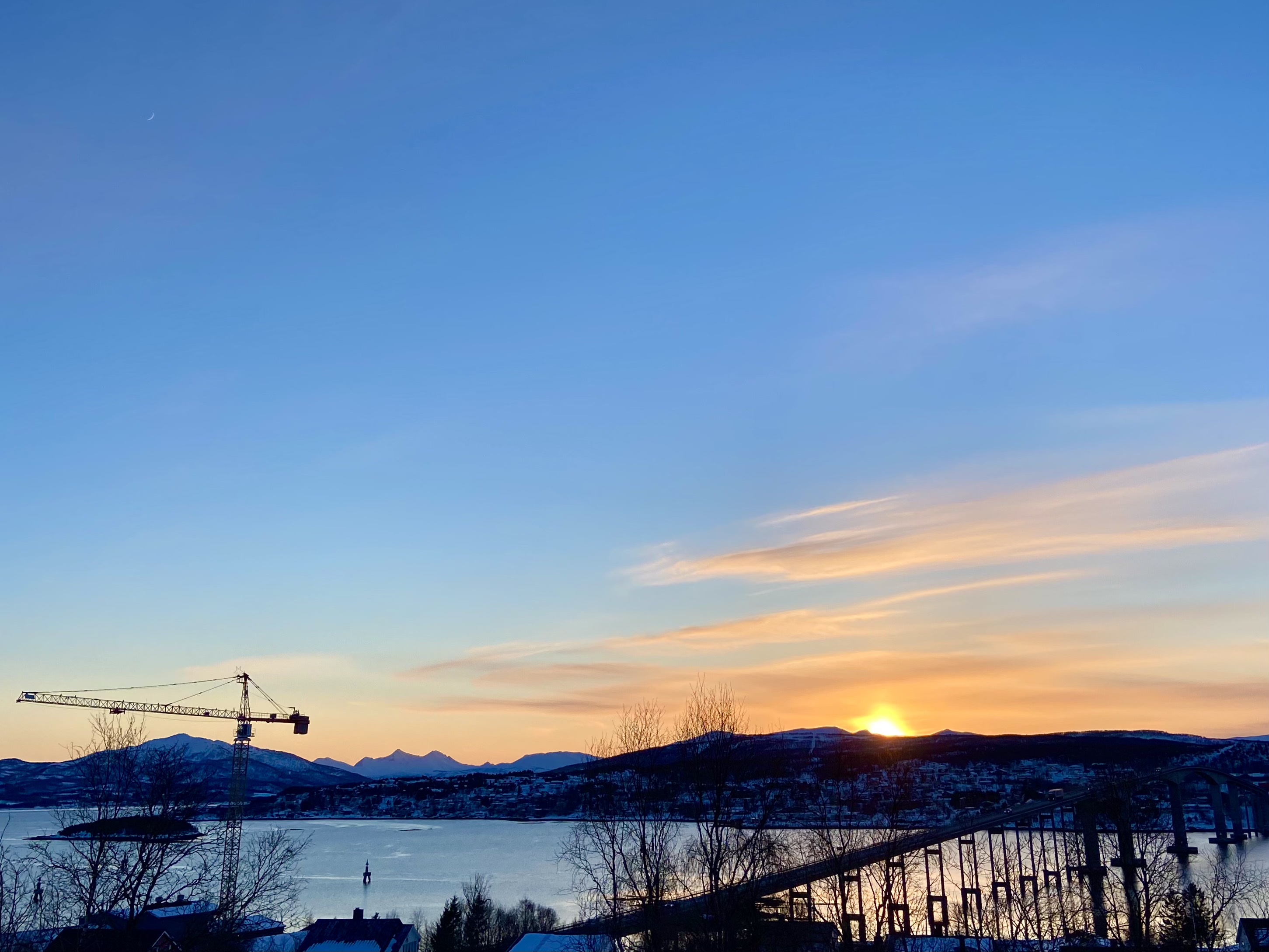
I thought I would dedicate this post to the wonderful skyline over Gisundet and Senja (Gisundet being the sound between the mainland and Senja, which is the second biggest island on the Norwegian coastline). I am incredibly fortunate to have such a wonderful view from my garden. With the changing lights and the boats that come and go, it never gets old. In the past week, I’ve taken three photographs on three separate evenings. The first was the one at the top of the page, where I caught the very last glow of the sunset, a new moon rising, and the aurora borealis in the same picture. I don’t think I’ve ever seen all three at once before. Here’s the full version.
The last of the daylight meets the new moon and the aurora over the island of Senja
Next up was the last rays of the sun as it dipped behind the mountains.
The last rays of sun over the mountains of Senja
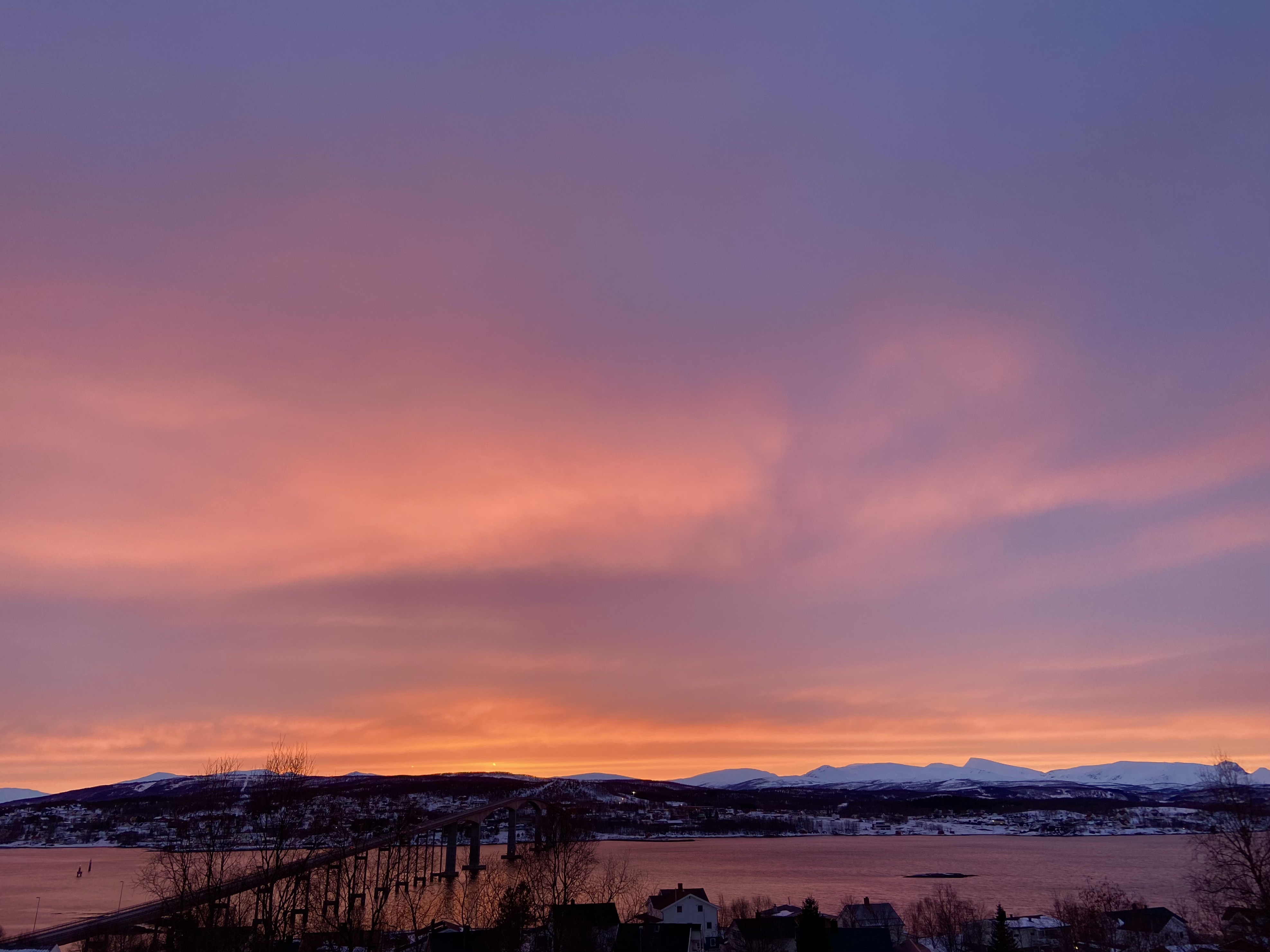
And the last was taken last night, as the sun dropped behind the mountains, lighting up the clouds and the water with its burnt orange glow.
Sunset lighting the sky and the water of Gisundet
It’s been a good week. There’s been a case hanging over me from since before I was ill with covid. The general rule is that we have a month, from receiving a report from the public, in which to take action. I missed the deadline, but the visit has been done now, and the report will hopefully be sent out on Monday. I’ve another two cases pending, both fairly serious, but having taken advice from Birgit, Hilde, Thomas and Line (as well as a discussion during our weekly meeting) I feel ready to tackle both. The process, as a whole, is daunting, but I am learning to break it down into steps, and I can get advice at any stage, which is reassuring.
Having not travelled anywhere in nearly two years, I now have two more trips booked in quick succession. This coming week, I will be taking a flying visit to the UK to visit my daughter Anna at university. I’ll only be there a couple of days, but Anna said she’d love to get out and about, so we are planning a trip to a castle, and will stay at a Premier Inn overnight nearby. Those two things are filled with nostalgia for me. When the children were young, we lived in central Scotland, where there were many castles within reasonable driving distance. We joined Historic Scotland and over the course of a year or two, we visited lots of them, staying overnight at various Premier Inns nearby. I have wonderful sunny memories of those times, when the children were young to hare off around the castle grounds while Charlie and I explored more quietly.
The second trip is the week after Easter and is an unexpected treat. I say treat – it’s actually a work meeting, but it’s also in the area of Norway where I used to live, so when it popped up last week, I jumped at the chance, and fortunately was selected to go.
The area isn’t the only attraction, however. I have felt for a while that building up the links between the welfare vets out in the offices and the staff who work in the abattoir would be very helpful in dealing with farm animal cases. I have been working for a while on a project where we at Mattilsynet are trying to tackle the chronic cases out on farms, where welfare isn’t good enough, and no real progress is being made. Having worked closely with Ann and Trude at the abattoir, I’ve come to appreciate how much of an oversight they have built up over the farmers that send their animals in.
The live animals are checked when they come in, and then the meat is inspected, so picking up signs that might indicate poor welfare (animals which are very dirty or very thin, for example) are picked up. The same names come up again and again throughout the years, and so those working at the abattoir come to build up a mental map of which farmers treat their animals well, and which are, perhaps, not so good.
The meeting down in Rogaland is about honing the process by which the abattoir staff report signs of poor welfare to the vets out in the field. We will try to address whether there are areas that are currently difficult to report. There are categories, for example, for reporting overgrown feet and dirty cattle, but no category for reporting eye injuries or inflammation in sheep, which might indicate a farmer hasn’t been keeping a close enough eye on the flock.
I understand we will also be discussing where the lines should be drawn. For example one sheep that’s just been brought in from pasture with a sore eye might be less than ideal but is probably just one of those things, whereas several affected sheep, that appear to have longer term damage, might be an indicator of a welfare issue. It feels odd to have found something that interests me so much. Up until recently, I have been scrabbling to find my feet, which might seem strange after eighteen months in a job, but is the reality as my job specification is so broad. Suddenly I feel really fired up about an issue, where I really want to make a difference. I have only a short time to collect in the information, but I am trying to gather evidence from every colleague with an opinion or with an experience to share, and I hope to carry all that collective knowledge with me to a meeting where I am determined to have some input.
Exciting times!
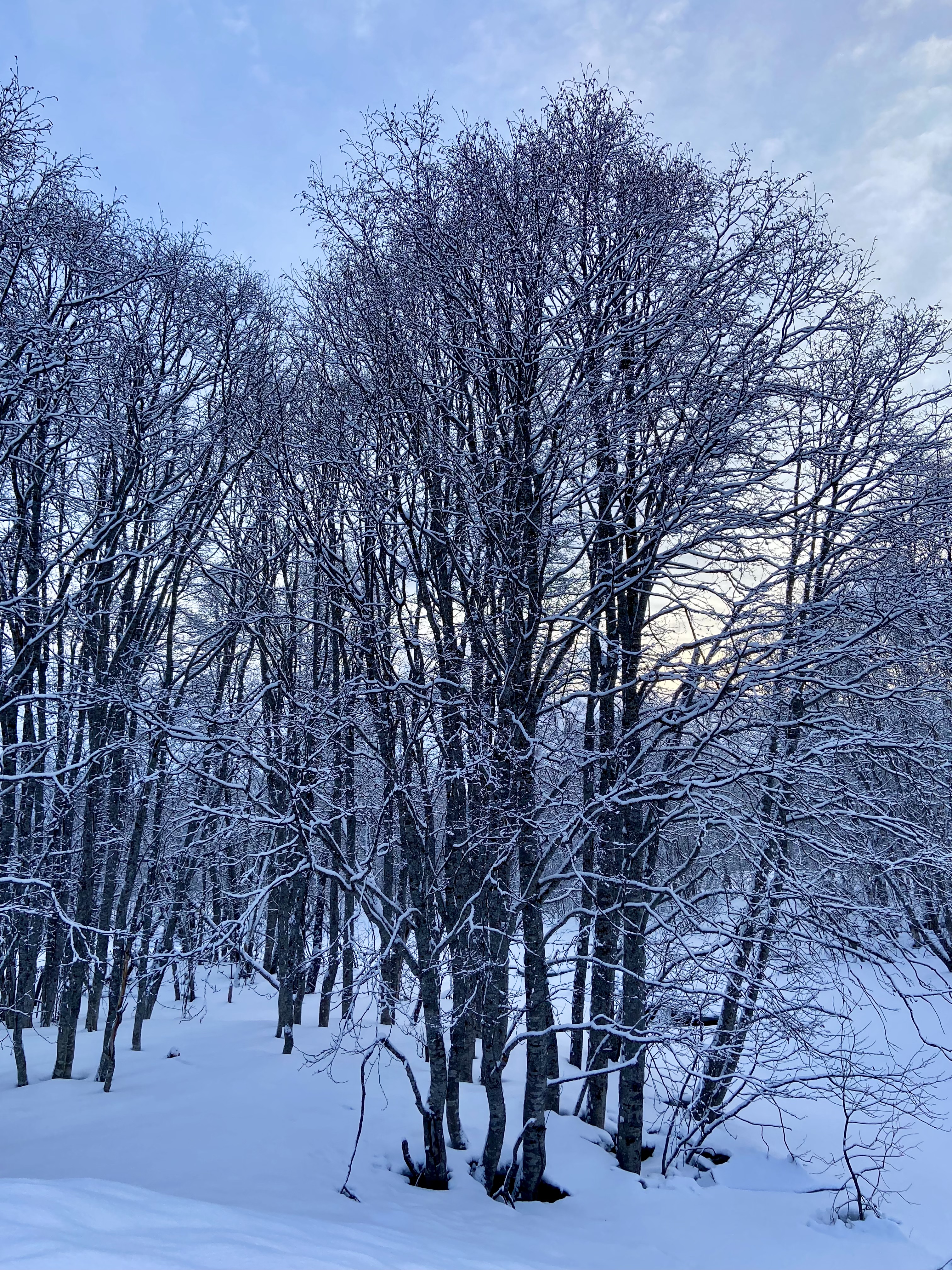
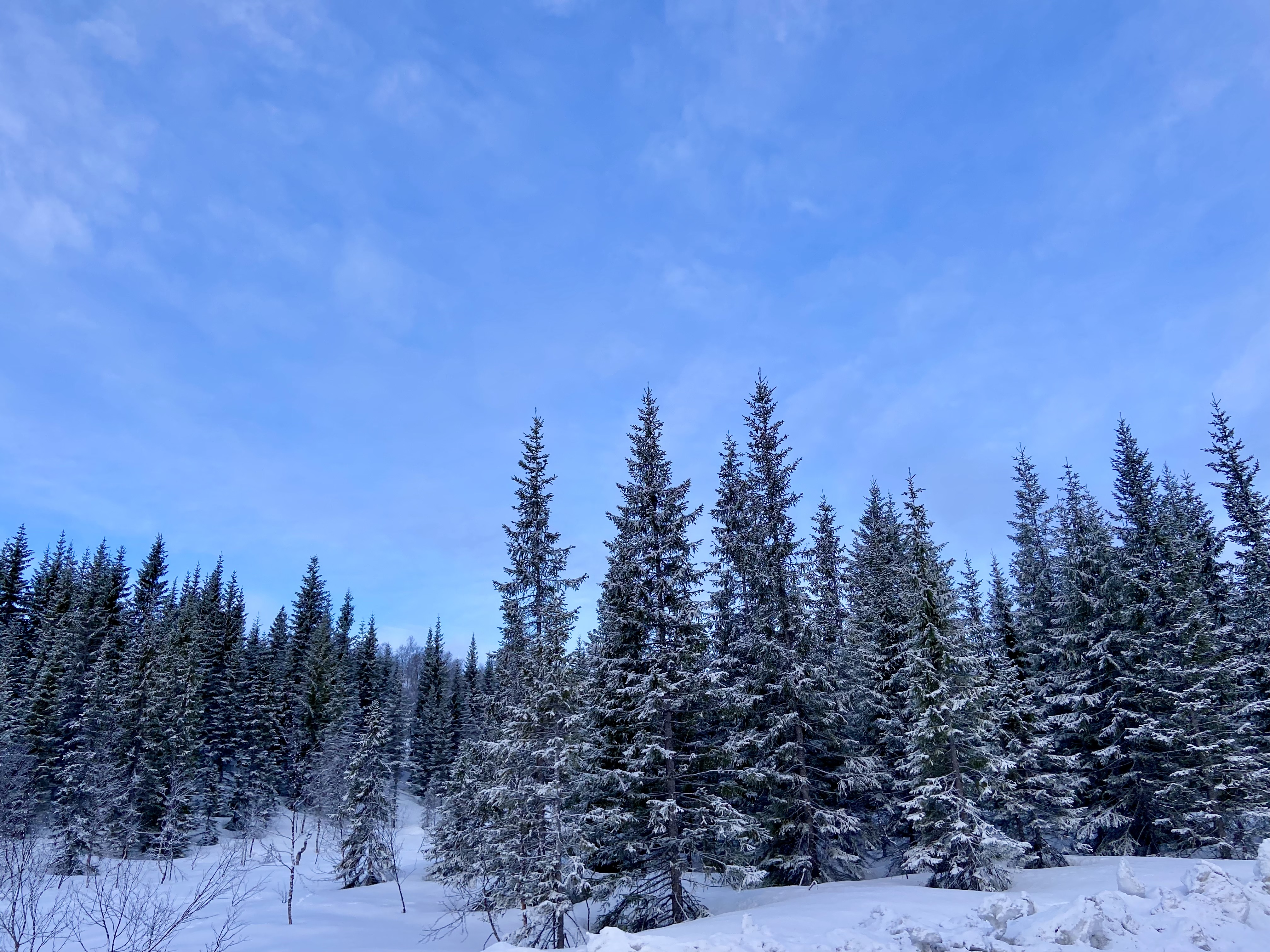
Next weekend I will be in England, but hopefully I will find time to pop in with some very different photographs. In the meantime, I’ll leave you with some snowy trees from this morning. Have a good week!
Icy river, melted, cracked and refrozen.Snowy trees against the dawn skyFir trees in the snow































 A Vet’s Life