Tag Archives: pigs

Unexpected Snow

When I booked this year’s Norwegian holiday in December, it didn’t cross my mind that I would see snow in Scotland before I went. Living in Dumfries for the last two winters, I’ve not seen more than a heavyish frost, so I joyfully booked a pre-Christmas week in the Arctic to boost my chances. Not that there is invariably snow there in December, but the odds of it (and Aurora) are much greater. Perhaps I should have been prepared for it. After all, last time I went there (May last year) Donna sent pictures of spectacular northern lights over my house. Life is sometimes topsy-turvy after all.

I guess in North Norwegian terms, this barely counts as snow, but it was beautiful anyway. A white world under a cloudless blue sky. My favourite kind of day.
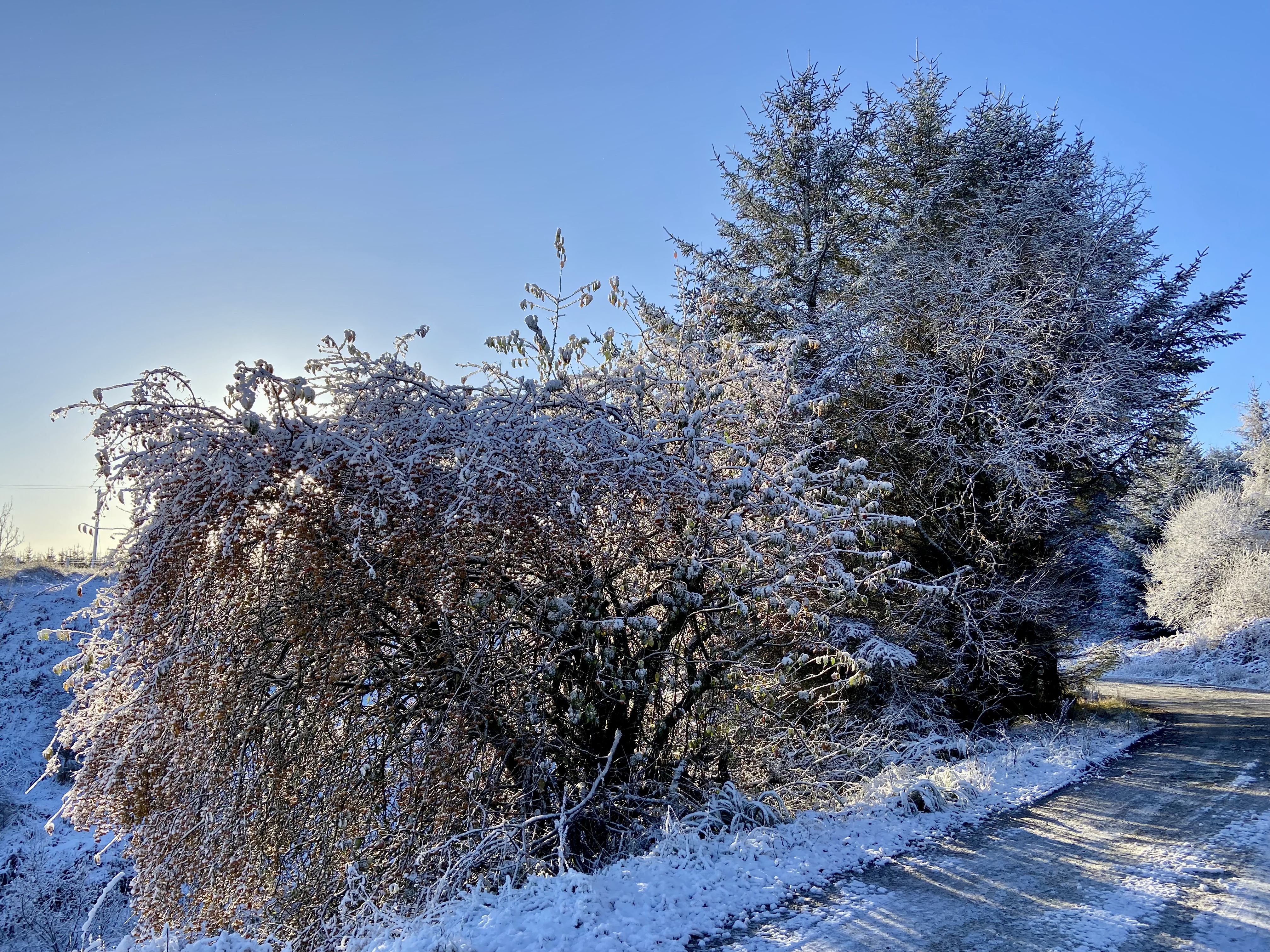
This was my second day in the area, working with a team that was trying to ensure the last of the maurauding pigs were gone. Most had been removed the week before by my colleague from the local authority in a trailer. These were the stragglers: those which were no longer domesticated enough to come back to their field for food. Knowing this might happen, I had asked for, and received, permission to invite a wildlife firearms team to come up.

I guess some might criticize that decision, but these were pigs living in close proximity to a nasty bend in an A road. We’d already dealt with one that had been hit by a lorry. Someone asked if I would be traumatized, but my thinking is that these are healthy animals being shot from a distance in an environment where they are comfortable. There are much worse ways to go. I was there as welfare vet though in truth, the two members of the team who came were so professional that my presence was barely needed. There were very few pigs, though there was a young pair, probably brother and sister, who would have bred if left.

As well as taking me up the hill where we had great views of the snow, my local authority colleague took me to see the weaned piglets from the members of the herd he’d taken away the week before. Instead of being outside in the cold, they were inside in a comfortable pen, with plenty of food. This hasn’t been a perfect operation, but it’s a good end to a welfare case that held the prospect of getting completely out of hand.

I’ve been out to a couple of cafes this week. The first was a trip to my local garden centre, where I have a card that lets me have two coffees each month. Mostly my intention is only to have coffee, but on my previous visit, I had seen a gingerbread cake that I decided was worth going back for when I was hungry. This then, was last week’s belated breakfast after waiting for the plasterer. It was worth the wait: the cake had a warm and spicy flavour that was nicely offset by the coolness of the icing. If I was being pernickety about it, I was slightly disappointed that the litttle gingerbread man and the biscuit crumbs on the cake wer soft and not crunchy but, complemented by the smooth bitterness of the coffee, it was a delicious start to the day.

The second was a revelation. On a dreich day at work, I went with a colleague to a cafe in Sanquhar called A’ the Airts. As Scots readers can possibly predict, this venue had lots of paintings on the walls. There was a gorgeous acrylic of a cat on a black background and a glorious golden painting of a stag with antlers. I may go back to buy a painting when the work in my house is finished, but I will definitely be going back before that for more food.

In addition to the normal menu of toasted sandwiches and soup, there were two Christmas offerings. Having been out in the rain all morning (I saw myself in a mirror and bedraggled would have been a good description) I was keen to order, so decided quickly on the second choice, which involved pigs in blankets, gravy and Yorkshire puddings. It was only after the order was in that I read the description properly: “Two Yorkshire Puddings stuffed with Cranberry, Pigs in Blankets & Honey Topped Baked Brie served with gravy & festive slaw

I guess there is nothing wrong with a cheese and Yorkshire Pudding combination, but I confess I was surprised. Still, bedraggled and hungry as I was, I was delighted when it appeared.
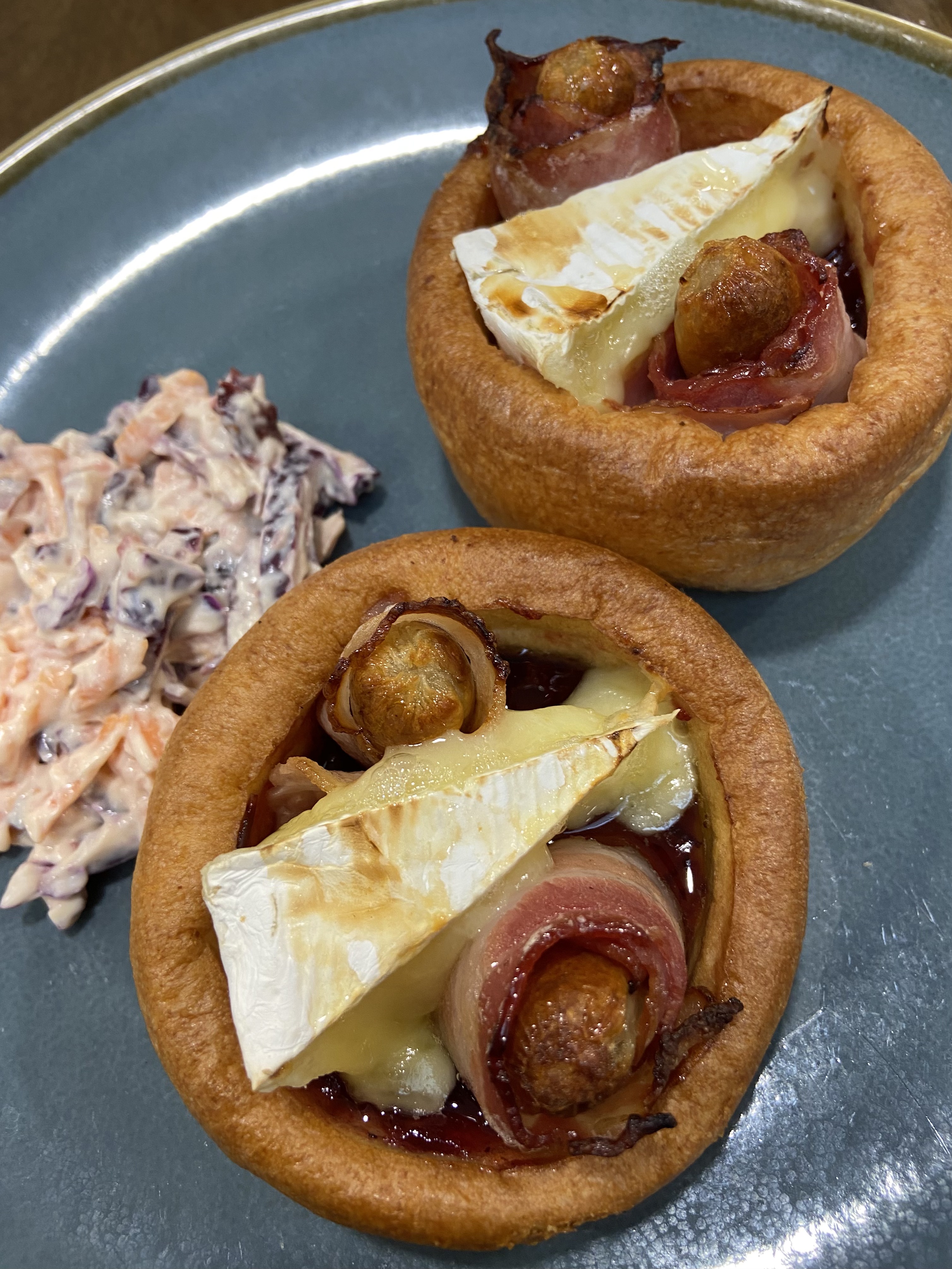
It wasn’t easy to photograph. I’m not sure how enticing it looks, but reader it was delicious! Cranberry and Brie is a common combination. I’m usually wary of adding in bacon. For me that is gilding the lily because the sharpness cranberry offsets the creaminess of the Brie so well. But this time, with the honey accentuating the salty and crunchy bacon, alongside that heavenly Brie and cranberry combination… well it was divine. I’m not sure I detected any gravy (I love gravy) but for a hot meal on a wet November day, it was perfect. And if you want to know what was festive about the slaw? That had cranberries in it too. Not sure they added much, other than it being an odd colour, but it’s a forgivable experiment! All in all, this was a wonderful meal.

And now I am down in Yorkshire. Not the snowy part, but the past two days were beautiful with frost. It’s been a lovely start to a long weekend.

Thanks for reading and have a lovely week.
Waiting for Workmen

I’m short of photos for this week’s entry. In addition to a photo drought, I’ve also been struggling for steps. To my amazement, following the unexpected plumber completion after months of waiting, I’ve hit the jackpot because James the plasterer arrived on Tuesday morning, all ready to go. He was here yesterday and said he’d be back this morning.

So with all that in mind, I had hatched a cunning plan to get more photos and steps before I started to write. James told me he’d be here at eight (even checking if it was okay with me to come so early). So, I thought I could go out when he arrived, take Triar for a sunrise walk (steps!) somewhere pretty (photos!) then as a bonus, I could go for coffee and cake at the garden centre and maybe write this there.

I was rather looking forward to all of that, but my plans fell through when eight a.m. came and went, with no sign of James. This isn’t unexpected. James is a lovely man, singing cheerily as he does a fabulous plastering job, but as I discovered last year, he’s also a bit unreliable. I don’t honestly mind. The job he does is great and he seems to prioritize getting my work done (all his kit is in my house, I don’t think he’s off doing work elsewhere) but planning ahead based on when he’s said he’ll come is a pointless exercise.

Still, I’m incredibly happy that the work in my house is finally moving forward again. Once the plaster has dried, I need some decorating done and a couple of electrical installations completing before I can thinking about frivolities like carpets and curtains. It’s probably not going to quite be finished for Christmas, but I had been starting to wonder whether I was going to have to find a whole new team and priming them to take over the project, so for it to suddenly be moving forward again is fantastic.

In equally good news, my car went in for its MOT and service on Wednesday and passed with no problems. Last year, it cost me £2,000 for things that should really have been fixed before I bought it, so I was nervous about finding myself in similarly expensive hot water, but I heaved a sigh of relief when I was told it was all okay. A month before Christmas isn’t the best time for big bills.

Work has been frenetic. When is it ever anything else? If you’re in the UK, you might know already that the bird flu season has started in earnest in England. Well this week, there has also been a case in southern Scotland. It’s not in my area, but it’s had a knock on effect on everything. All the vets in that area are now going flat out. I had to take over as duty vet on Thursday, and all the higher up staff, who usually act as advisors when anything complicated comes up, are embroiled in managing the situation. All the birds will be culled and, in the meantime, animals and birds within a ten km radius are under lockdown, so any movements on or off their farms have to be assessed and licenced.

In the meantime, with that as background, two of my long-term welfare cases are being wound up. By the end of next week, one more farmer will have gone out of business and the marauding pigs will (hopefully) have been removed. From an animal welfare and future work point of view, this is a good thing, but even as I have been putting the work in that will allow these things to happen, it’s been a sad experience. As I looked into various health implications of moving animals off the farm, I could see that in times past (and not so long ago) this has been a good farm, with high standards. How did we end up here, I wondered? Still, for both of the animal owners involved, I hope that as we help to wind up their dreams-turned-nightmares, that we can work as gently as possible and that it will bring relief and not further sorrow.

Only two more weeks at work and I will be on holiday. I need a break. Yesterday, for the first time in months, my FND twitches came back. Not that surprising. Duty vet on Thursday was exhausting with two calls about possible bird flu cases (fortunately negated during the calls, without having to trigger a full report case investigation) and various other tasks, all hitting at the same time. I’m intending to take it easy this weekend, but as a minimum I want to trim the hedge at the bottom of the garden, at least enough to fill the brown bin for its last emptying of the year. But that’s a task for later. James has arrived, so it’s time to head out for that walk and coffee.

Have a good week all! Thanks for reading.


From Swimming Horses to Marauding Pigs

This week has felt so long, and has been so full, that it was almost a surprise when I looked back at my photos and realised that it was only last weekend I went to the Northern Canine and Equine Therapy Centre in Rathmell, where they do hydrotherapy for horses and dogs. They had advertised it as a coffee morning and we did indeed purchase a lovely coffee from a van outside the centre, but the real attraction lay inside.

The horse hydrotherapy session was due first, so we walked into the part of the centre where the horses were kept. I wish that I had taken more photos, but it was a lovely place and I instantly felt at home. The centrepiece of the covered yard was obviously the pool (pictured at the top of the page) but around two edges there were stables for the hospitalised horses. Some were there for lameness, some for weight loss and conditioning. Others were there, not so much for treatment, but for pampering. Imagine sending your horse away for a spa weekend!

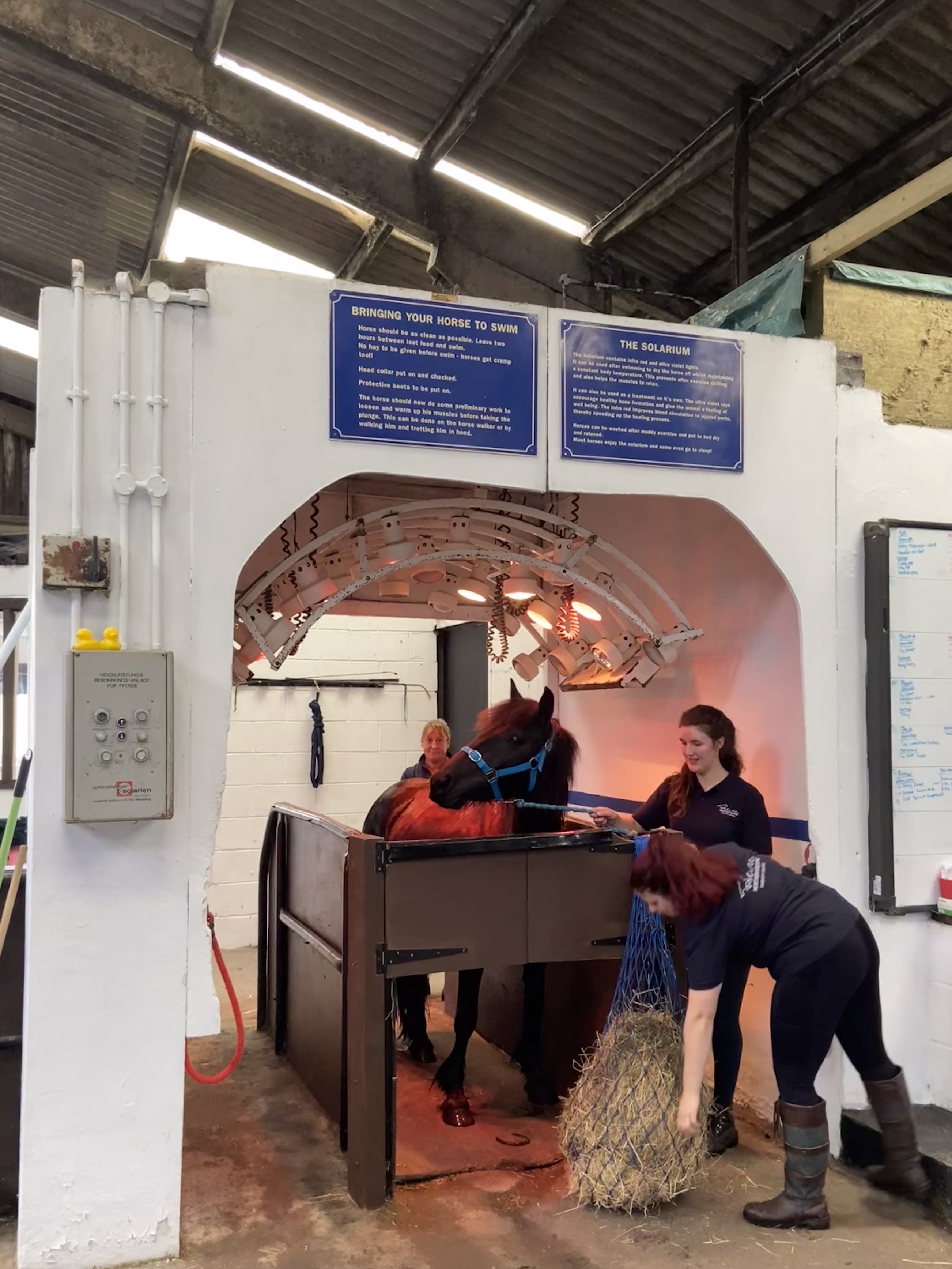
Having swum round, the pony in the picture was taken out, towelled down, then treated with oils to replace the natural oils that would have been removed from his coat. He then was walked into a solarium to dry out a bit.

Pony standing in the solarium. A bag of hay is being tied in front of him.

After we’d seen the horse swimming, we moved through to the dog pool. There. We watched as a dog physio put her labrador through his paces in the pool.

She told us about the different conditions they helped with. Her own dog doesn’t need any therapy, but he does love swimming. It’s also possible to book a half hour fun session with your dog and I immediately decided I’d like to take Triar to see if he would like indoor swimming. I also found myself wishing I worked there, or perhaps was a vet who could refer animals to them. It felt like a very positive place.

We had rather a bombshell last Friday afternoon, which I couldn’t bring myself to mention last week. My lovely boss, Kirsty, unexpectedly sent out a message to say she was leaving and her last day would be early in August. I will be very sad to see her go, and by the outpouring of shock, so will many of my colleagues. Both Lindsay (my Veterinary advisor – one step up from me) and Sue, who has just taken on a year long post after locumming on and off, called me up, mainly to express their sadness. Though it feels very sudden, it’s good for Kirsty and I hope she gets some much deserved time to relax.

Back at work on Monday, I visited a chicken farm with my colleague, Aleks. I have to do three visits with other vets before I can go solo, and this was my third. Because everyone is so busy, it’s difficult to find dates when two of us can go out together, so I’m glad my third accompanied visit is done. I have three of my own to do, so now I can more easily fit them into my timetable.

I can’t even remember what I did on Tuesday. It all feels so long ago! I was due to revisit a welfare case on Wednesday with David, who works for the local authority with animal health and welfare. We often work together and the revisit was to a farm where we witnessed some serious welfare issues before. But when he arrived, he asked me if we could divert to a more pressing issue. A group of pigs had escaped from their field and had turned up in someone else’s farmyard. It wasn’t the first time they’d escaped, but the farmer, quite correctly, now had them coralled in a barn.

Other authorities, including the police and the SSPCA had been called out when the pigs had escaped before, but nothing had been done. These situations are complicated to deal with. Animals do escape from time to time, and unless they’re on a road or causing risk, it’s really the farmer’s responsibility to get them back and secure them in the field or barn. For David and me, it was essentially a welfare issue. It’s not safe for the pigs to be marauding round the countryside. All farmers have a responsibility to keep their animals safe and keeping them enclosed within a safe area is key to that.

After the big foot and mouth outbreak in 2001, various laws were brought in to try to reduce the risks of another big outbreak. These included standstill laws on animal movements. If cloven hoofed animals (mainly cattle, sheep and pigs) are moved onto a farm, then the farm comes under a standstill order and for thirteen days, no animals can be moved off the farm without special permission.

So pigs landing unexpectedly on someone else’s farm presents quite an issue to that farmer, especially if they were planning on selling some animals, which our farmer was, and imminently. Our first action was to find out if the sale could go ahead. The pigs had not, to anyone’s knowledge, been near the animals that were to be sold, but equally, they had been loose, so where they had been was anyone’s guess. The movement ban applies to all animals on the farm, so the sale had to be stopped. That was done before we left the office.

Our next action was to visit the farm. It was an hour’s drive, but when we got there, I was able to examine the pigs. They were healthy and being well looked after. The main issue that had to be dealt with (or so we thought) was that they were not where they were meant to be.

Having looked at the entrapped pigs, we then went to visit the pig owner. The remainder of the herd were in a separate field from the ones who had escaped. To get to them, we had to walk through the field where the escapee pigs had been. There were some green boxes that looked like the boxes supermarkets use to deliver produce, but I had walked past them, keen to see if the pigs were okay. David had gone to get something from his van and I expected him to follow immediately, but when I turned to see where he was, he was standing at the gate, looking round.

He joined us eventually and we went and looked at the pigs. They looked well and the field they were in was (in my opinion) the perfect environment, with a small shelter, long grass and rushes to hide in and mud in which to wallow when the weather was warm.

It was only when we turned and walked back, that David told me what he had seen at the gate. Across from the supermarket boxes, there was litter, lying about. And in that rubbish, which was mostly food packaging, he had found empty packages for sausage rolls, ham and bacon, along with bags for bread and hot dog rolls.

I mentioned foot and mouth and the rules created after the big 2001 outbreak earlier. In addition to new rules on animal movements, strict rules were brought in about feeding pigs. Feeding them any kind of human food or kitchen waste is banned. We asked the farmer about the packages. It wasn’t impossible they had been left by someone having a picnic, but he didn’t know where they’d come from and said he thought people sometimes came and fed the pigs.

So now we had a situation, where there were empty packages for pork products that the escaped pigs had access to, and worse, that it was possible the produce, including raw bacon, might have been fed to the pigs.

These are the kinds of situations that have immediately to be sent up the food chain. Even if I had dealt with such a situation before, I would still have to call it in, without delay. The upshot of my phone call, and the work I have been doing for the last three days, is that both farms have to be locked down, with no movements of live or dead animals onto or off the premises, except under special licence. All the animals have to be inspected every 72 hours for signs of disease for a week, then probably weekly thereafter, for another two weeks. There was also the matter of the pigs being on the wrong farm, which was resolved yesterday, after lots of negotiation and paperwork.

So a vist which I thought might be a little complicated to resolve has turned into a behemoth case. One thing I will say is that we have an enormous amount to be grateful for with the farmer who took in the marauding pigs. She did everything right from start to finish, including calling us in. Chances are, the pigs don’t have foot and mouth, but now we have everything under supervision, so if the worst happens, we are already on top of it.

Had she chosen not to trap the pigs and call us, but had shoo’d them away and sent her animals to the sale, the potential for us being faced with another 2001 was there. That was started by pigs being fed improperly processed food and the disease wasn’t spotted until it had been sent all over the country. I may now be faced with three weeks of visits and a ton of paperwork, but this is the kind of work that can prevent a world of pain for farmers and a devastating cull that costs the country billions.

So this is what I am here for. I’m only a tiny cog in a very important chain, and kudos to both the wonderful farmer who called it in and for David for his observational skills. Next time, I won’t be so quick to pass by litter to look at animals.

But if I have one final thought, it is that I wish the government could see what we are here to do and how important vets and animal health and welfare officers are to this process. There should be more of us on the ground and the pay for those of us who choose to do this should be much better. Staff come and go, or work quickly to get promotion as there is no pay progression in our part of the civil service any more.

We need experienced people on the front line, but there is zero financial incentive to come and stay. Maybe saying this publically could get me into trouble, but if so, so be it. The people responsible for removing progressive pay bands for these roles have put the health and welfare of the nation’s animals at risk.

I work alongside a few, faithful staff, who have years of experience, a network of connections, a load of invaluable local knowledge, who are asked to train new entrants on the same wage as them. That is both plain wrong and absolute insanity. We should be making sure those people have an incentive to stay, that they know they are valued and that they don’t have to move to a different job to be properly rewarded.

And on that cheery note (sarcasm alert for non Brits) I shall leave you to your weekend! Have a good week all, and see you next week.

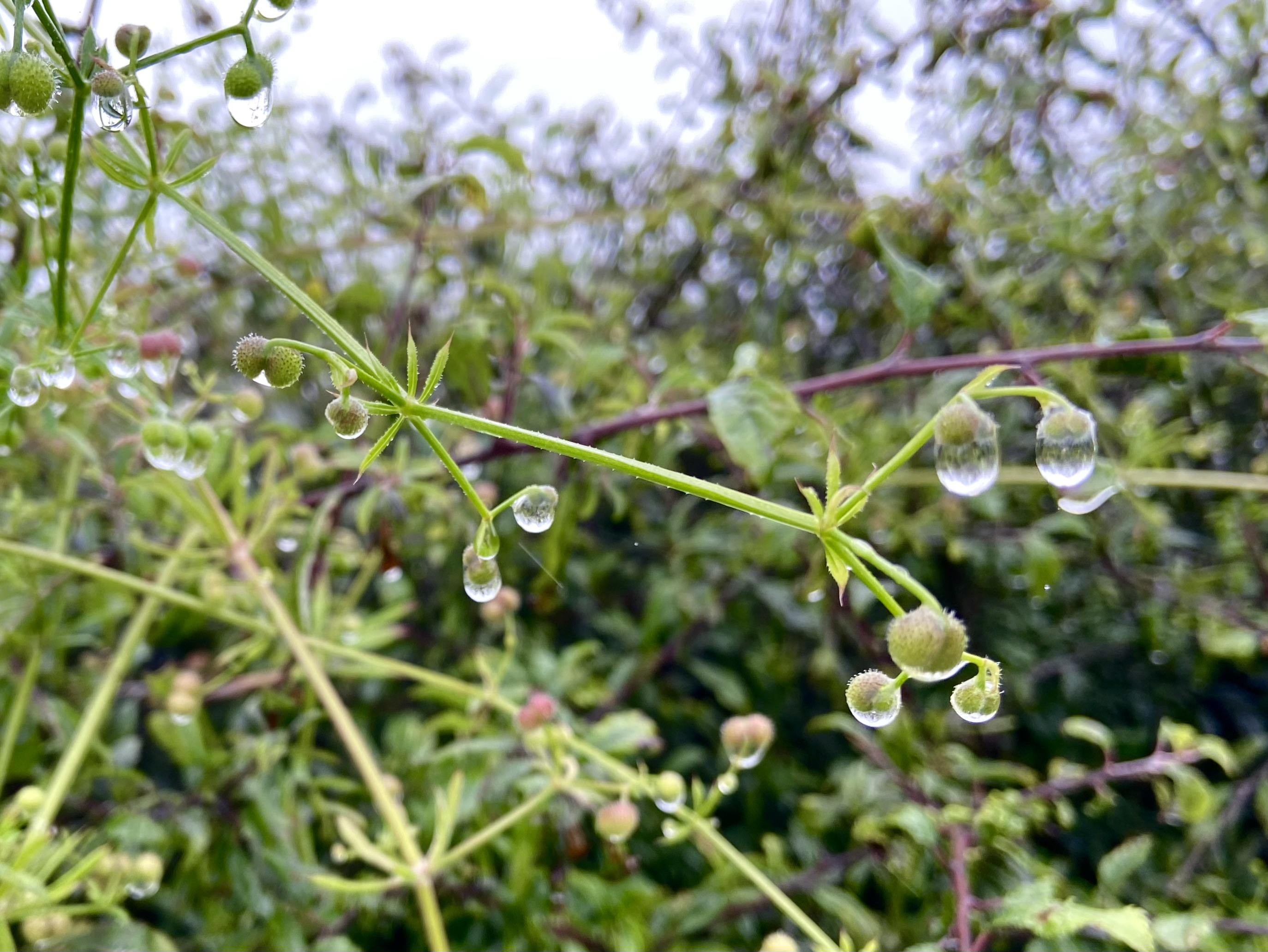
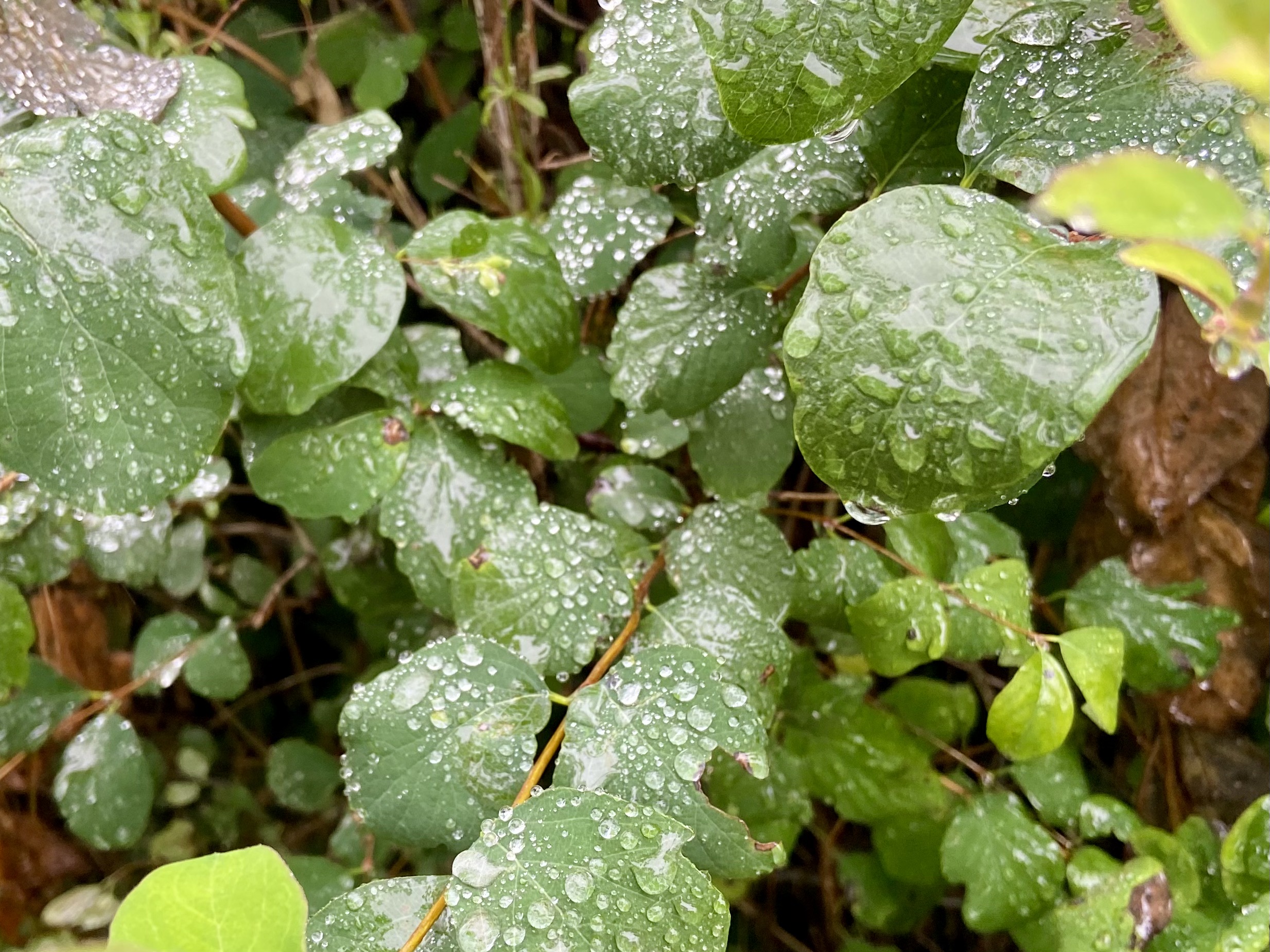
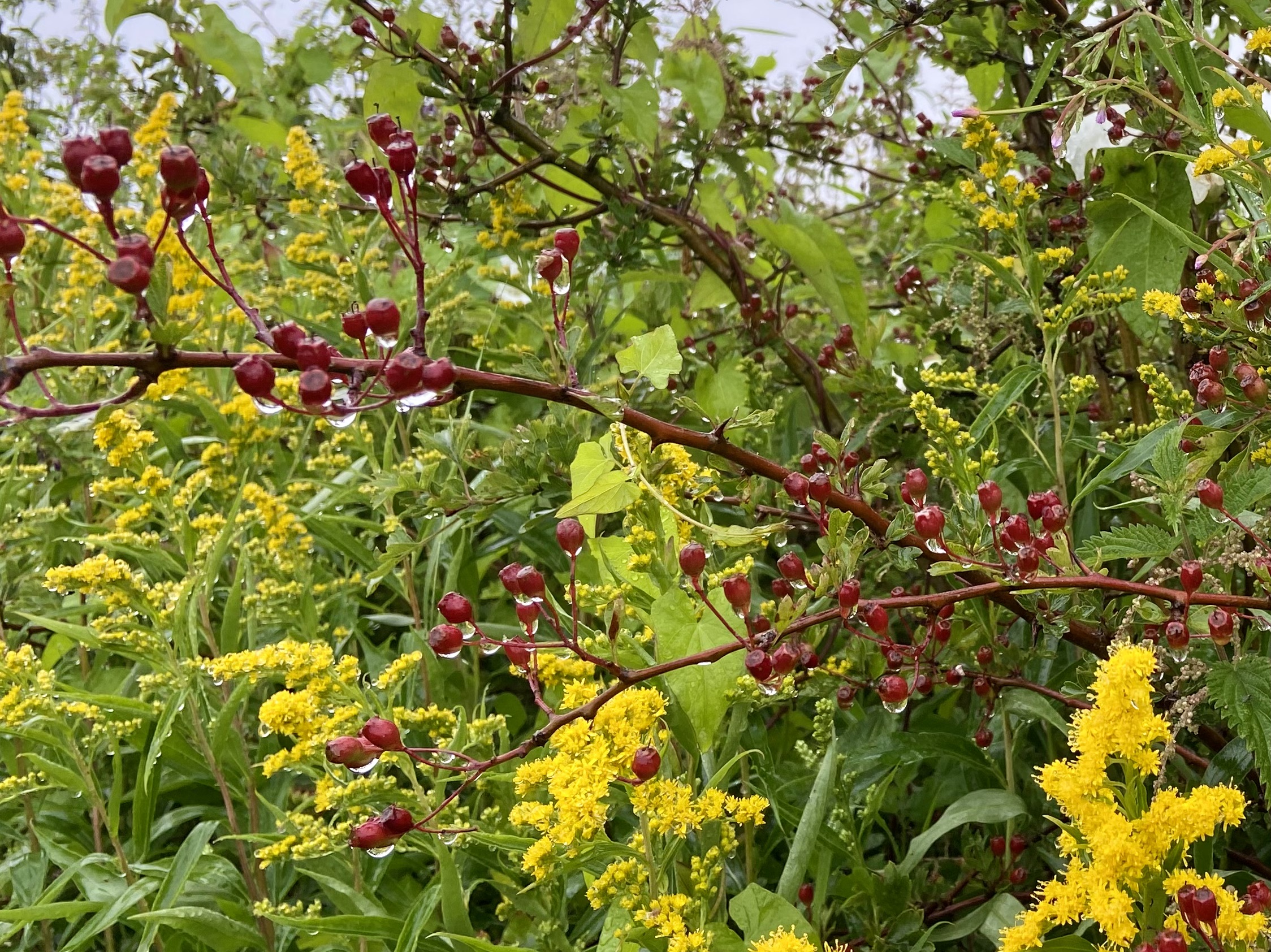
A few “after the rain” photographs for those who love Blackbird Lane.

Trouble in Paradise

Sunrise/sunset: Up all day.

This isn’t going to be an easy post to write. I tend to keep these entries upbeat, but sometimes there are issues that go so deep that they shouldn’t be ignored. There has been a great deal of discussion over animal welfare in Norway in recent weeks, especially concerning the welfare of pigs. Back in 2019 NRK (the Norwegian national broadcaster) aired an exposé of problematic practices on pig farms in Norway. Using undercover footage taken over five years, it was revealed that despite Norway’s strong legal rules around animal welfare, there were farmers in the pig industry who were flouting them. Some of them seemed to be taking pleasure in the fact that they were doing so.

Mattilsynet responded by increasing welfare visits in Rogaland, the area highlighted in the program, and this year the Pig Welfare Campaign has been rolled out across Norway. I spent a great deal of time at the beginning of the year learning about the program and about signs to watch out for that might indicate that an investigation should be carried out. It is part of my job to monitor the welfare of pigs coming in through the abattoir. There are certain signs that indicate possible welfare breaches which should trigger further investigation. So far, in my time working there, the general condition of the pigs coming through has been high, but it is an important tool in the chain, particularly for pig farms, which produce meat, reared over a relatively short period, and must therefore send animals through the abattoir with much higher frequency than, for example, dairy farmers.

But of course, monitoring procedures at the abattoir are not sufficient to ensure that good welfare is being practiced. It stands to reason that farmers might not send in animals that show clear signs of abusive practices. And despite the increased inspections carried out by Mattilsynet in Rogaland, there was another report aired recently on NRK regarding animal activists who had broken into pig farms and had taken photographs of animal welfare violations.

I confess I have very mixed feelings regarding animal activists. On the one hand, if there are welfare problems within farming, it is important that those are highlighted. But on the other side of the equation, their practices in breaking in place animals at risk. There is a strong commitment to biosecurity in Norwegian farming, which obviously is ignored by those breaking and entering.

According to a virtual Mattilsynet meeting on Friday, those same activists had held pictures showing evidence of animal welfare breaches from as far back as 2016. They had not reported those breaches to the authorities, which would suggest they are more interested in creating a scandal than in addressing those issues. It is important to remember that the aim of these groups is not to improve welfare by working with the farming industry and the authorities, but to close down the animal farming industry altogether.

Accordingly, these groups always highlight the worst. How many farms did they break into? How many of those were farms with very high welfare standards? It would be much more useful to have a balanced view of the whole picture. Without that, it is impossible to tell whether they have revealed that problems are occurring in a very high percentage of farms, or whether there is huge negativity being created around “a few bad apples”.

Mattilsynet have also come under fire. It is said that we are working too slowly in closing down those farms where animal welfare is chronically poor. Perhaps that is true, in some cases, but in many circumstances there has to be a period of assessment, of attempted education and/or enforcement, before taking the huge step of removing someone’s source of income.

These kinds of scandals are always both depressing and demoralising, not least because they are a reminder that there are some very unpleasant people in the world, and that some of them actually seem to revel in creating animal suffering. It frightens me that as well as those who are careless, lazy and ignorant (which I would say are the main drivers of animal welfare issues) there are also a few who are actively malevolent. I try not to dwell on it, but there has been a case in our region which might have fallen into that category. Those people make me feel sick to my stomach and because they will lie and work hard to conceal what they are doing, I think we will never gain full control over what they do.

However, it is important not to dwell too much on the things we can’t fix. I visited a farm on Friday where there were pigs running around in the open air, digging their snouts in the earth and obviously having a great life. Birgit and I carried out the first of our Pig Welfare Campaign visits on the same farm and it was a wonderful salve to the negativity. Reports like the one above can easily make it seem that we have an uphill and sometimes impossible task in trying to police all matters within the animal welfare sphere. But it’s essential to remember there are a lot of good people in the farming industry in Norway, who are doing their very best to uphold the excellent welfare standards that are required in law.

I drove a long way on Friday to complete the visit with Birgit. Despite the distance, it’s important that we work as a team. When I see the links between the scattered offices and the abattoir and all the knowledge held by veterinarians such as Birgit, Thomas, Ammar and Hilde, all of whom have worked in this area for a long time, I am reminded of how important that web of knowledge can be. I’ve been here almost a year now and I am beginning to build up my own map. I will continue to fight for better conditions for all animals in my own capacity. And though my contribution is small, I am not fighting alone.

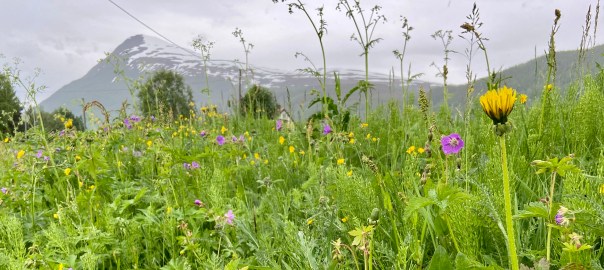
I am going to finish with a few photographs from Friday. As well as all the wonderful flowers that are brightening the verges, I drove along the side of a steep fjord, where the melting snow is creating myriad waterfalls as the twenty four hour sunlight warms the landscape.

The Art of Killing

Sunrise/sunset: 05:15/ 18:33. Daylength: 13hr 17mins

I started this week with a farm visit with Thomas. We were collecting cow poo to check for paratuberculosis (Johne’s disease). I had arrived prepared with some of those long orange gloves I used to use years ago in practice for calvings and pregnancy diagnosis, but in the event, Thomas simply scooped up dung from behind the oldest cows in the herd with a green plastic spoon. Don’t tell me my job isn’t filled with glamour!

I also spent part of the week at the abattoir, where on Tuesday I stood on the pig line by myself for the first time, and yesterday when I stood in for a colleague on the sheep line. Meat inspection of pigs is more difficult than inspecting sheep. This is partly because they are prone to abscesses in unpredictable places and partly because of their thick skin which remains in place rather than being removed, as is the case with other species. I have never been particularly fond of pigs, though my biggest veterinary claim to fame is that I once helped one of the stars of Emmerdale Farm (as it was then) to give birth to a very fine litter of piglets. As I work in the abattoir though, they are starting to grow on me as I become more familiar with handling them.

Compared with cattle and sheep, pigs are both noisy and noisome. Unlike the others, pigs are omnivores, which means their dung smells way more unpleasant than the digested grass or hay that herbivores produce. They are also descended from forest dwelling foragers, rather than being herd animals living on grasslands. They have a tendency to squeal very loudly when you try to get them to do something they don’t want to and when I first started to examine them in their pre-slaughter check, I would often find them squealing at the top of their lungs as I encouraged them to stand up. They mostly come into the abattoir the afternoon before, and when I arrive to check them at about six thirty in the morning, most of them are sleeping.

To carry out a thorough check, I have to go into the pen and wake them. I want to see them all walking about and check them more thoroughly than I can if they are lying flat on their sides. Obviously waking them up is never going to be particularly popular. Indeed sometimes when the whole pen is deep in slumber, I will check the other pens first, where at least one or two of the pigs are already up and rooting around. But I have learned, from experience, that most of the squealing comes when I disturb them unexpectedly and they want to get up but can’t due to a lack of space, or because another pig stood on them in the flurry of rising. So now I go through very gently and try to ensure that when I start to nudge a pig to get up, it has space around its head so that it can do so without panic. There are still occasional squeals when they come up against each other, but more often I elicit a rather pleasant grunting.

Controversial though it might be, I have also found myself watching the slaughter process with increasing fascination. As a very young vet, I once shot a sheep and was so horrified that I have never done it since. I suppose it’s cowardly to have taken that path as there are times when it is necessary and somebody else had to do it, but I wanted to mention it in light of my monitoring the pigs at the abattoir. It’s part of my job to check that the stunning and bleeding process is done properly, so that the animals do not suffer. I had no choice in the beginning, but I no longer worry about what I might witness. I have discovered that they are so efficient with the pigs that I now see it as being close to an art form. They bring them in in small groups, manoeuvre an individual into position without stress (the slaughter men encourage them to wander around the pen until they end up in the right place) and then stun them with a carefully placed tong that sends an electric current through them. There is no squealing and no sign that they are distressed by the smells in the pen or anything they can see. I can’t speak for any other systems, but I genuinely believe that the pigs in the abattoir where I work meet their end in a way that doesn’t cause distress. I take no joy in killing, but in doing it humanely? That is of the foremost importance.

Killing Time

Sunrise/sunset: 04:57 / 20:37. Daylength: 15hr 40min.

On Monday, Hilde drove me over to the abattoir where I will be spending a good chunk of my working days over the next few weeks. With the short summer and long, hard winter, most of the spring lambs will be brought in before it’s time for the remaining animals to be moved into their winter housing. Vets play an essential part in the process. The health of the animals must be checked before they are humanely killed and the welfare and conditions are carefully monitored.

Afterwards, a team of vets and technicians inspect the meat to check whether it is fit for consumption. This is another chance to check health and welfare. All the information from the checks, both ante and post mortem, is recorded. Nobody could claim it’s glamorous work, but as well as ensuring the animals are treated well in the abattoir, the findings are used to assess whether there might be problems on the farms where the animals were raised. If the animals are too thin, have overgrown feet, or show significant signs of illness, then a message is sent back to the local Mattilsynet office, where their vets will contact the farmer and take measures to improve the situation.

On Monday’s visit I was fitted out with a uniform, boots, a locker and a card to open the door. Hilde brought cake again, and I met a few of the staff.

On Tuesday I drove through again with Thomas. I had met him on my first day at work and he seemed friendly, but I hadn’t seen him since. Now he was to give me my first taste in working in an abattoir in northern Norway.

For my part, I was most interested in the inspection of the live animals. It is hard to spend much time on the internet without seeing horror stories, but my impression over the course of the first week has been that most of the animals coming through are very relaxed. Though the pigs all had balls in their pens to play with, most of them were sleeping when we went to see them. Some of the sheep were more skittish than others, but many of them came and were nibbling on my wellington boots. All animals have fresh water in their pens and any cows that are milking are milked if they are in for any length of time. The surroundings are quite similar to those you’d see on the farm and most farms here in Norway are small, so a lot of the animals are used to being handled.

The slaughter process itself was quick and efficient. Thomas showed me how to time the interval between stunning and bleeding. With the cattle, we checked the animal was unconscious before being moved on to the next stage.

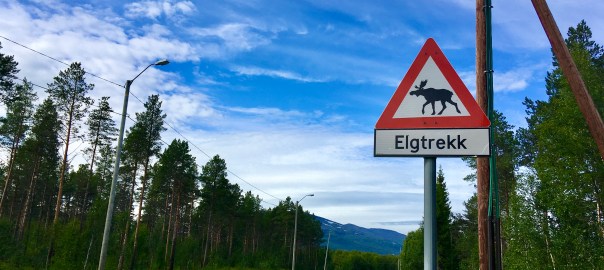
It’s a forty minute drive to get to the abattoir and the road is dotted with warning signs for moose. Thomas told me I would see more of them in the winter, though for now they are elusive. The filling station near the E6 has leaflets explaining what to do and who to call if you hit one. I hope it never happens to me, though it is possible I might be called out to do meat inspection on those too if they are injured and have to be shot.

It’s cooling towards autumn now. It was 4°C when I arrived at work yesterday morning. Though the trees are still clinging to their leaves, they are beginning to fade. The ground flora is wonderfully colourful and intensifying as a multitude of berries appear.

There was only one near miss with technology this week. Thomas handed me over to Ammar on Wednesday and he suggested some reading material. The season (as they call it) will begin very soon, and by then I have to be up to speed with meat inspection for lamb. Back in the office, I had chosen a pin code for the printer. You send your file, retrieve it and then put in your number. I assumed the process was the same in the abattoir, and so I went through the retrieval process and began to put in my four figure number. Luckily Ammar stopped me in time, before I set the printer in action printing out *9250 copies of an eight page document on red meat.

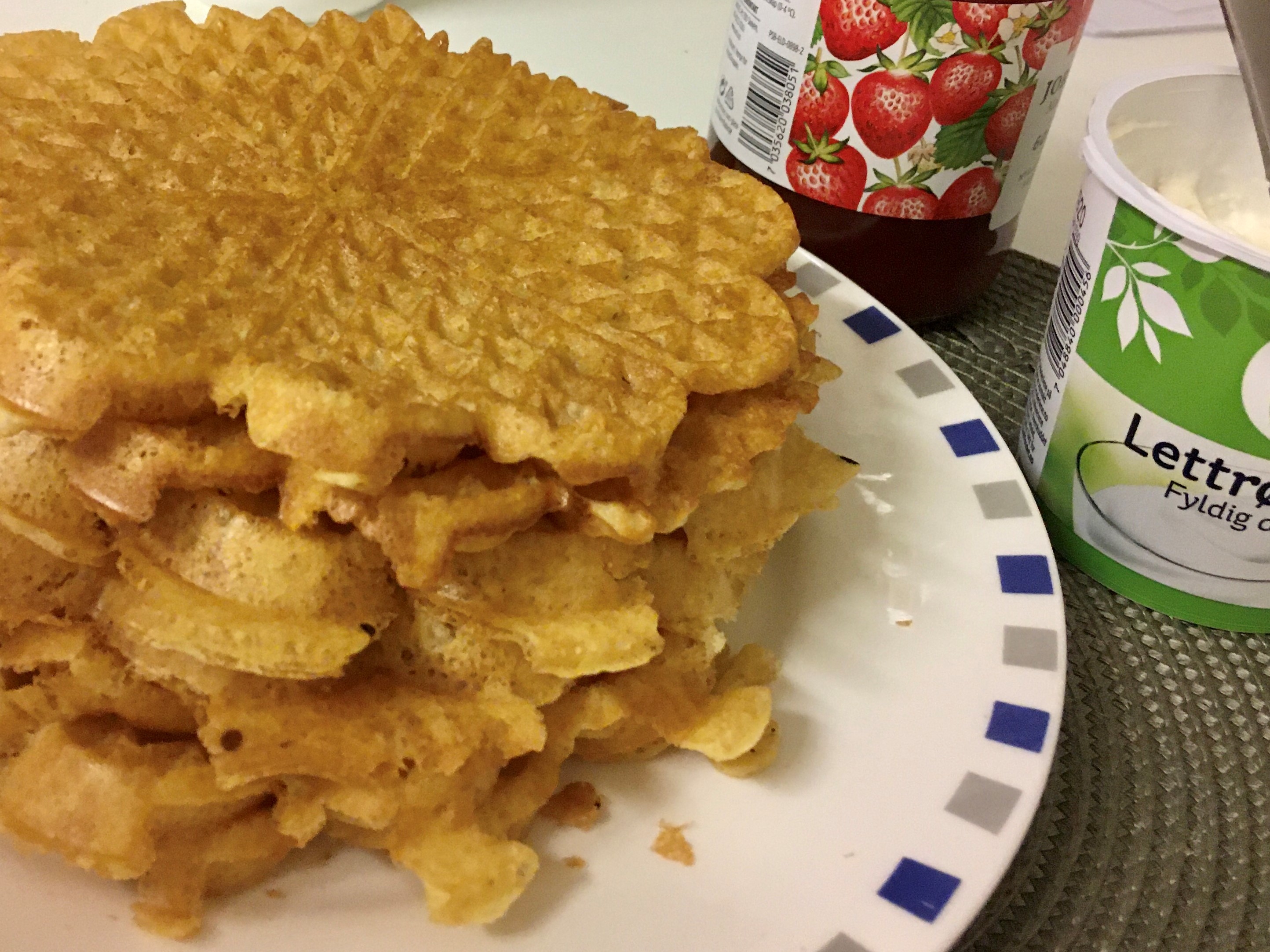
Friday afternoon was rounded off with waffles. In Norway they are traditionally eaten with strawberry jam and soured cream. It took me a while to get used to this combination, but now I love it. And what could be more Norwegian than a mountain of waffles to round off the week?

*Not my actual PIN.

In Which I have to Speak Norwegian.

So it’s been an exciting week for me on two fronts. Firstly on Monday, I was lucky enough to spend a day out with Åsulf from the large animal practice, and second, I am now officially employed by Tu Dyreklinikk as a Veterinary Surgeon and not as an assistant. Of course, the terminology might be confusing to those who work in veterinary practice in the UK, because there my official title was always “Veterinary Assistant” because that is the normal term for vets who are not partners. Anyway, I feel very proud of my new role.

Mostly the transition has gone smoothly. I have handled consultations before at times when things have been especially busy, or clients have arrived unexpectedly, so it wasn’t wholly new. But like most people I find any kind of change comes with a degree of uncertainty. My mind was distracted doing my assistant work in the morning (I start consulting at twelve) as I contemplated the cases I was to see later. Indeed I had a particularly embarrassing moment when I started to shave a dog’s leg for a cruciate operation. Unfortunately, with my head wrapping itself around the potential complications of a male dog who had blood in his urine, I started to shave the dog’s hip instead of the knee. It suddenly came to me, about two clipper strokes in, when the damage to the coat was so great that there was no way to hide it. I contemplated just shaving a massive area off to try to cover the error, but it would have been obvious, and so I had to crawl red-faced to Dagny and tell her. Happily she just laughed, although she did toy with me evilly when she came through by suggesting that I had shaved up the wrong leg. I was very restrained though. Even after she carefully aimed a spurting artery at me in a later operation, I refrained from trying to drop sharp scissors into her toes.

One of the conditions of my change of employment is that I am strictly to speak Norwegian at work from now on. Although I had started out well, I had fallen into the easy habit of speaking English most of the time with my colleagues, although to clients I have always tried to stick with Norwegian unless they have indicated that they want me to do otherwise. Naturally though, Dagny’s is very concerned that the practice’s clients are satisfied with my performance, and therefore she did spend some time with a very serious look on her face urging me to always speak Norwegian to the clients.

On Tuesday then, my appointment list was full. Happily my first client was Kari-Anna, the nurse who is on maternity leave, and her dog was in for a blood test, so that was pretty much stress-free, as was my next case which was a cat with a cut on its neck whose owner had left it for examination, so there was no owner, no history to take, and until the owner returned, no discussion at all. It fell therefore, that my first genuine official client was the owner of a dog that had been in a fight and had a wound over its eye.

Gerd brought the owner and patient through, and as I led the them into the consulting room, the owner said to me

“It’s okay if you would rather speak English.’

With Dagny’s dire warnings about language still ringing in my head, I replied in Norwegian that it was quite alright, and if it was easier for her, that would be fine. She started to laugh,

*I’m actually from Scotland,’ she announced, and after that we got on like a house on fire. I really hope that she will ask to see me if she comes back in.

Thursday was a little less busy than Tuesday. Today’s photo is of Trøffen, who came in to have a cyst removed from his head. Wivek was operating, and she called me through to the consulting room before she started to check with me whether I felt that she would be able to bring the skin together on his head if we removed the rather large lump. Trøffen is only eleven and a half though, and the cyst had already been emptied and had refilled, so there was a risk in leaving it as it might have become bigger. She decided to go ahead, and as you can see, she has done a beautiful neat job. Trøffen is a really lovely cat. Indeed I’m finding great pleasure in working with so many cats. Both Jan-Arne and Magne prefer dogs, and so I like to help out wherever possible. Magne was really impressed with me yesterday, when having easily taken a blood sample from a patient that has not always been wholly compliant, I also managed to give it a worming tablet. I guess I’ve always been fortunate, as most cats seem to like me as much as I like them.

The day out with Åsulf though was a revelation. It was utterly delightful from start to finish, even though the first visit was to a pig farm, and because of the way pigs smell and squeal, they have never been my favourite patients. I was very impressed though with Åsulf’s injection technique. He made it look easy, when experience has taught me that really it isn’t. As we went around, checking calves, examining cows (and yes, I did have my hand up a few cow’s bottoms) I felt completely at home. It just seemed so natural, and I really felt I could just slide right back into that way of life. It’s very different from small animal practice. And for the first time, I found I had very little difficulty with the language. For the first time, I felt that at some point in the future, it might not be impossible for me to work with production animals again. Anyway, for the moment I will continue with improving my Norwegian, and maybe I will ask Jan-Arne if I can go out with him again one Monday, as he now works there one day a week. Who knows. I might even be able to teach him something.