After all the frenetic activities, work has been a bit slower this week, though no less interesting. I’ve spent time reading up on, and around the new case I’ve been given, which will be very different from anything I’ve done before as I am working in a group of ex-police enforcement and intelligence workers. I’m the one with the veterinary knowledge to their investigative powers. Unfortunately, I can’t really write about it though as people might recognize themselves, or others. I’m sure there’s a novel in there though, if only I ever find the time to write it.
Last weekend, I had a fabulous time visiting Sue at her home and then visiting the gardens at Dumfries House together. Dumfries house is, counterintuitively, in Ayrshire and not Dumfries and Galloway. Sue volunteered there, in the garden, a while back and pointed out a few huge bushes she had planted. Gardening has obviously been a lifelong passion. She wants to help me get my garden in shape. I have let it run wild this summer and finally started cutting the lawn this week. Unfortunately I didn’t get it all done in one go and the rain came after two exhausting sessions, so now I have one half yellow-brown lawn, one half hay field. I will get there…
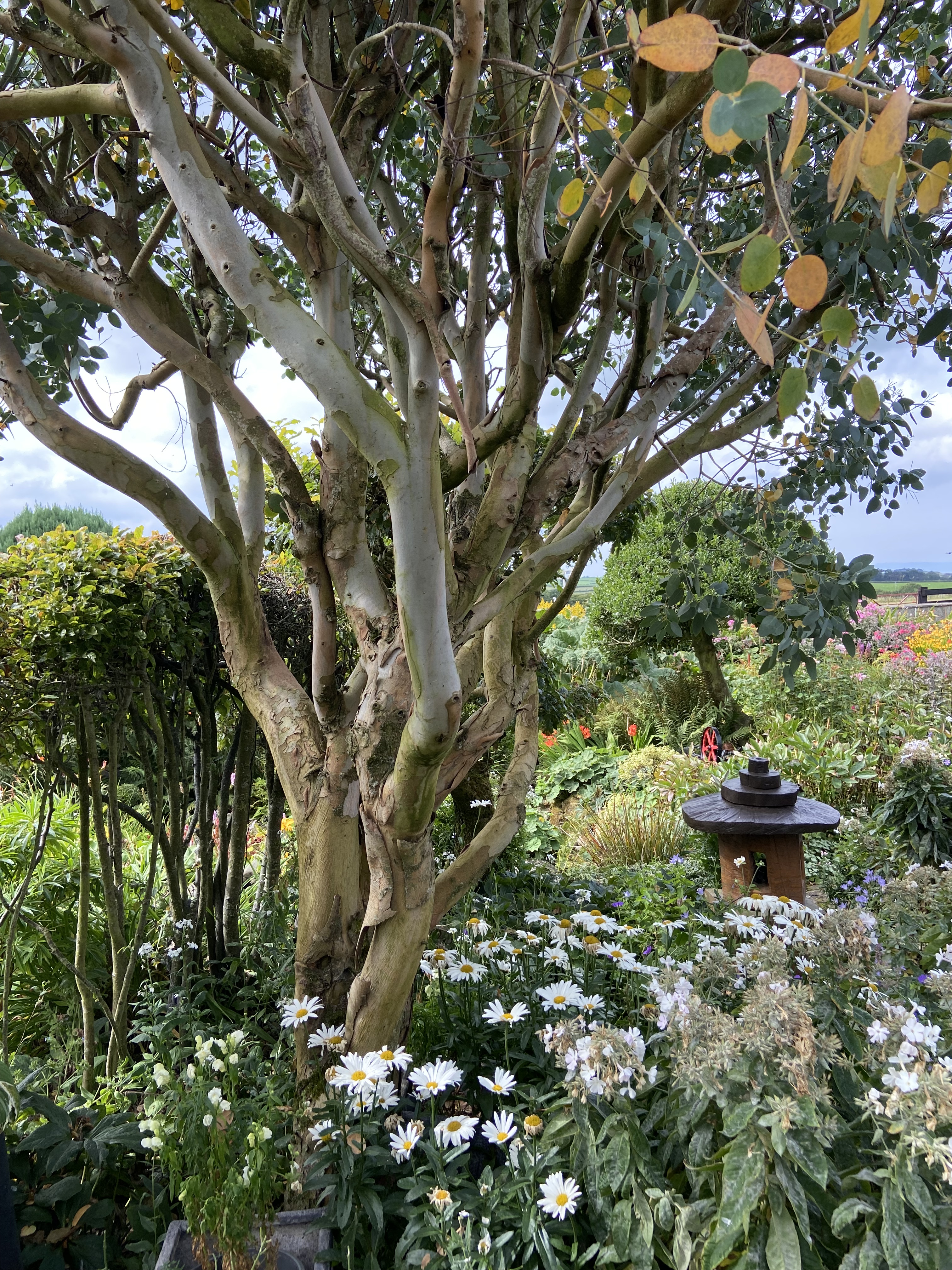
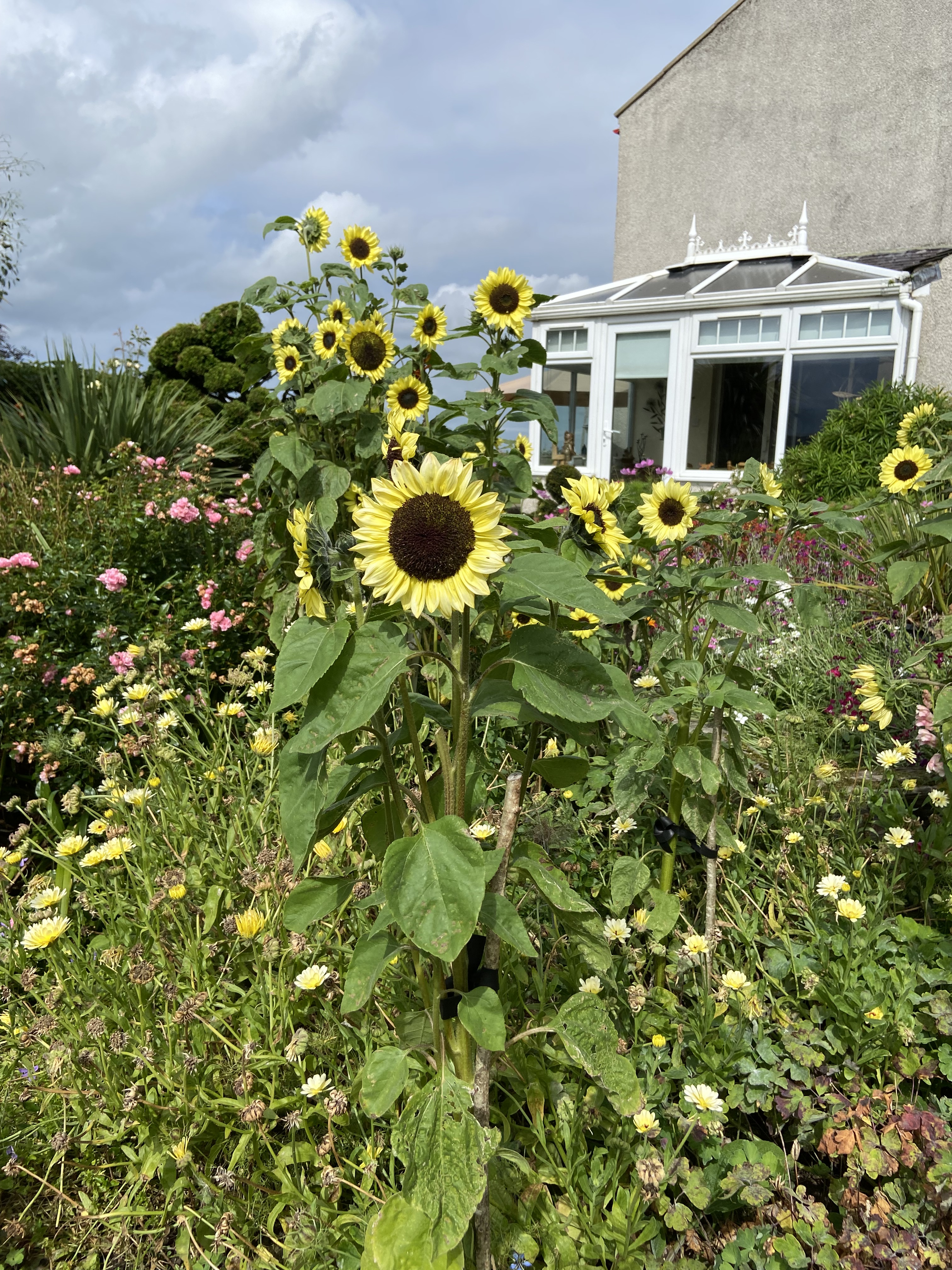
As you can see Sue’s garden is gorgeous!
I went to the GP earlier this week. I’ve been having headaches, pain when I moved my eyes and sensitivity to light, which has been going on for a few weeks now. It’s been particularly inconvenient as I have been affected when working in front of a screen as well as when driving, especially when it’s bright. The GP couldn’t help, so he directed me to my optician, who has been very helpful in the past when I had some flashing lights in my left eye. I saw her on Friday afternoon and it seems that I have dry eyes, which apparently can cause all those problems. I now have eye drops and a glasses shaped beanbag to heat up in the microwave and use on my eyes for ten minutes twice a day. This should help the oil in the glands along my eyelids to soften and get things going again. I’m mostly just glad it’s not FND related. Hopefully things are starting to get better already, though I’m about to go to Guildford for a week, so will be in a microwave-free zone.
The Guildford trip is for a chicken health and welfare course, so I’m hoping to come back with loads of new knowledge. I feel very honoured to have been selected to attend, so will be making the most of it. Triar will be getting spoiled at Mum and Dad’s. I will miss him, but at least he will be well looked after.
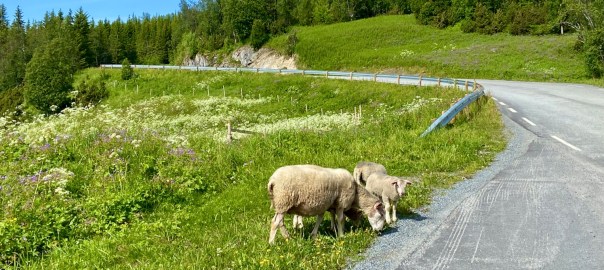
Firstly, a disclaimer. The sheep in the photo at the top of the page are random Norwegian sheep and are in no way related to any invest
Last week’s blog was a week late because I received a phone call as I was writing it. Two weeks ago, I was on call for the weekend and hoping to rest. Most on-call weekends are a matter of keeping your phone near you, maybe dealing with a request by a private vet for a case number so they can go out to test a cow that’s dropped dead to check it wasn’t anthrax or a similar request for itchy sheep that might have scab.
This time, to my surprise, I found my line-manager on the phone. “How would you feel about another report case?” he asked. Well how I felt was broadly irrelevant. I was the ready-to-go vet, so unless I was seriously unwell, it was my task to be handled, whatever it was. “Another AI?” I ventured.
”Um… no.” He paused. “We’ve been sent photos of lesions from some sheep’s tongues. They’re trying to decide whether to treat it as a bluetongue enquiry, or foot and mouth. This isn’t your official call, just a prewarning so you can start to prepare.”
Once the official call comes in, you are expected to be on the road within 30 minutes. In theory, everything should be in your car and you should be able to get in and go. In reality, there are things you might need for sampling that have to stay in the fridge in the lab at work. The buffer solution used for foot and mouth sampling is one of these, so I was glad for the heads up.
I admit, I did feel slightly breathless. Those living in the UK who are old enough to remember 2001 will recall the horrors unleashed on the country as whole farms and regions were forced to cull their livestock and burn them in the fields on horrific pyres of death. The recent, sporadic outbreaks in Europe mean we are on high alert. That the photographs sent in had the high heidyins in a nine am meeting discussing whether they dared risking treating it as “only” blue tongue felt quite significant.
I dressed and went into the office and started to gather paperwork. In theory, I should have paperwork for every eventually in my car, but having the appropriate papers to hand for setting up restrictions is useful. To my mild consternation, I found the main printer wasn’t working. Thanking my lucky stars that I wasn’t a newbie and knew how to work the secondary printer in the lab, I printed out what I thought I’d need.
I also threw a load of blood sampling equipment into my car. Better to have too many tubes than to create the necessity for someone else to come out and onto a farm with possible foot and mouth because you weren’t well enough prepared.
It was quite a long drive out to the farm. As I neared the farm, I slowed down to cast an eye over animals in the nearby fields. None were drooling or looking sick. A good start.
It had been confirmed that I was to treat it, for now, as bluetongue, but that foot and mouth was still there as a possibility. To explain the difference in requirements, because bluetongue is spread by midges, tramping on and off the farm with dirty boots and tyres isn’t so much of a worry. Not that I do that, but if I did, it’s not a disaster.
The restrictions served on the farmer are different too. Bluetongue restrictions only stop animals coming and going. Foot and mouth suspicions, like avian influenza suspicions, mean that every person and vehicle going on and off the farm has to have an individual license and any and all incursions are strictly limited to absolute necessities.
I arrived at the farm , put on paper suit and gloves and served the restrictions. It’s always the first thing to be done and having signed the form, I read out all the clauses that explained in full what was required. Next was history taking.
This is not like taking a history for a normal vet case, where you mostly want to know what has happened to the animal. For a notifiable disease investigation, by the time you are finished, you should have details of every movement on and off the farm within the last twenty one days. You have to assess whether there are any high risk factors. Are there rights of way and picnic sites where people might have fed the animals? Has anyone from the farm recently been on holiday to a different country? Are there stagnant ponds in the vicinity that might encourage midges? The factors, like everything else, vary with the disease suspected.
Having taken a careful history of the animals and the risk factors, I donned more layers of PPE and prepared to look at the animals. I knew, both by being told and by observation, that there were fields nearby that held another farmer’s cattle. I decided to walk up to look at them first. If it was something highly infectious, they might be showing signs too. Again the picture was reassuring. They were young stock from a dairy farm and could not have looked more healthy. They were eating as we approached, then lifted their heads to look at us. Not a nose lesion among them. Nolameness, no drooling. Bright eyes and shiny coats.
I was already, mentally, beginning to think foot and mouth was less likely. Obviously there were still the sheep to look at, but clinical signs in sheep can be subtle, cattle less so. These animals had been in relatively close contact, so by the time the mature mouth lesions were spotted in the sheep (with the caveat that it might have been caught early) I would expect to have seen some spread.
There were two groups of sheep – adults and lambs. The lesions in the photographs, nasty red eroded areas on the tongues, had both been from lambs. We therefore looked at the adult sheep first, partly to prevent any possible cross-infection, but also because a complete absence of problems there would go further towards ruling out foot and mouth. No reason why young sheep would be more severely affected than the old in a disease where neither group would have immunity.
What struck me again was that I was looking at a broadly healthy group of animals. There were 43 ewes and as I scanned their mouths, feet and udders (where possible) I saw nothing. Only bright, uncrusted eyes and alert ears. There were two that the farmer had noted had been getting thin for a while. We selected them out and I examined them more closely. Not a lesion in sight. Normal breathing, normal temperature. One was a bit dirty on her backside, but nothing to suggest foot and mouth or bluetongue.
We moved onto the lambs. This time, I decided we should examine all of them. There were thirty two in the group and the farmer caught each one and held them while their mouths and feet were inspected. In the end, there were four with tongue lesions, four with lesions around their lips and one with a sore area above its foot. None of the lambs with lesions was running a fever. I was strongly beginning to think that what we were dealing with was a severe case of orf – a pox virus that affects sheep and can infect humans who come in contact. It would be unusual to have tongue lesions, but not impossible.
Having taken history and examined the animals, it was time to decide where we were going to go with this. At one extreme, if I thought foot and mouth was still in the picture as a possibility, we would have to issue new restrictions as well as taking samples. I might well have to stay on the farm until it was ruled in or out. I’m still a bit sketchy on the details, though I had arranged for Triar to be looked after, just in case.
If I thought everything was ruled out, I would leave the farm with no tests done and hope I’d got it right. To do that, I’d need to be very certain. My gut feeling was that this was orf, based on the fact that it was only affecting the lambs. Orf is common and spreads in flocks to the new crop of animals born each year. Older animals can carry it, but usually have enough immunity that there are no clinical signs.
So on the grounds that only the lambs were affected and the adult ewes and neighbouring cattle were perfectly healthy, along with the fact that all the lesions were quite mature and I would have expected to see more early stage lesions (we have lectures about aging foot and mouth lesions) I felt confident enough to rule out foot and mouth (phew!). But could I rule out bluetongue too? I decided I couldn’t . After all, midges might well have selectively bitten the lambs with their thinner wool pelt. And orf might exist alongside bluetongue. The lip lesions could be orf and the tongue lesions something else.
And so, armed with my evidence, I called VENDU (the veterinary exotic notifiable disease unit) to tell them what samples I wanted to take. I have never been asked so many times and in so many different ways if I was sure, 100% certain, absolutely confident that I could rule out vesicular diseases like foot and mouth. At the start of the conversation I was using words like probably, but by the end, I was telling the, firmly that no, it was not foot and mouth.
So we tested the nine lambs for bluetongue: the four with mouth lesions, the four with lip lesions and the one with the foot. To cut a long story short, the test was negative, but most of Sunday was still spent on paperwork. I strongly suspect all the lesions were caused by orf: an unusual and interesting case all round and a good learning experience for me.
Lots of text so far and not many pictures, so I shall rectify that. Last weekend, I went to Drumlanrig Castle and met Sue (who used to locum with APHA) for a walk and for lunch. The gardens were beautiful.
I missed posting last week as I wasn’t feeling great. Happily I’m feeling better, but I was asked to go out yesterday afternoon to a report case (suspicion of notifiable disease). I couldn’t rule out disease, so we have sent off samples to be tested. Today, I will likely have to work again – there’s a lot of history to be taken about movements of animals/birds, people, vehicles, feed sources and so on, to be ready for if it comes back positive. So I’m going to post a few lovely pictures, mostly from Blackbird Lane. I hope you enjoy them.
Where are the sticky willies, you ask (or perhaps what)? They’re those little round seeds that have been sticking themselves into Triar’s coat for weeks now. They’re rife this year.
Hoping my samples come back negative! Have a good week all.
Isn’t it warm? It’s not yet seven thirty as I write this, but Triar and I have been out for our walk early. We stopped to have a chat with some heifers in a field (we stayed outside the gate) which is the high point of our day so far! Aren’t they gorgeous?
I came down yesterday as I had a dentist’s appointment to get a filling. I intended to come down on Thursday evening, but was unexpectedly offered a cancellation appointment to see a neurologist, so of course I jumped at the chance. As the occupational therapist at work wanted, he has given me a diagnosis – FND, which I’m guessing most people haven’t heard of. It’s described everywhere as being “like a software problem and not a hardware problem”. Basically they can’t see anything wrong on a battery of tests, but it fits certain criteria.
I’m still trying to process the ramifications. The tests I had were years ago and he hasn’t sent me for any new ones. With hindsight, I’m not sure we talked enough about what’s happening now and how it will be fixed. Back in Norway, I maintained fairly good health for three years, by resting properly when I needed to. He’s going to write me a letter to take to occupational health, so I will see what it says.
But overall, I think it’s good. On examination, he didn’t find anything new or particularly significant. He seemed certain there wasn’t a degenerative disorder. Having spent years looking up my own symptoms (don’t do this!) I had myself thought FND was the closest fit. Back in 2017 when this all began for me, I found almost nothing online about it. Now the internet is awash with information. It is, I feel the neurological disorder du jour! Hopefully I can find a way to manage it better than I am at the moment. I’m still working full time and doing a good job. I’d just like to have more energy to do things when work is over.
In other news, I’m getting through the paperwork mountain, though the dreaded Framework Agreement still needs some work. I’m giving training sessions next week, on Foot and Mouth disease, to some local authority inspectors on Tuesday and on the Disease Risk Form (investigation) during TB outbreaks to my fellow Senior Veterinary Inspectors. My boss, Dean, has a case lined up for me when those are done and there is some chicken work starting from July, so plenty to keep me going. I may be easily tired, but I also don’t like twiddling my thumbs, so it’s all going right at the moment.
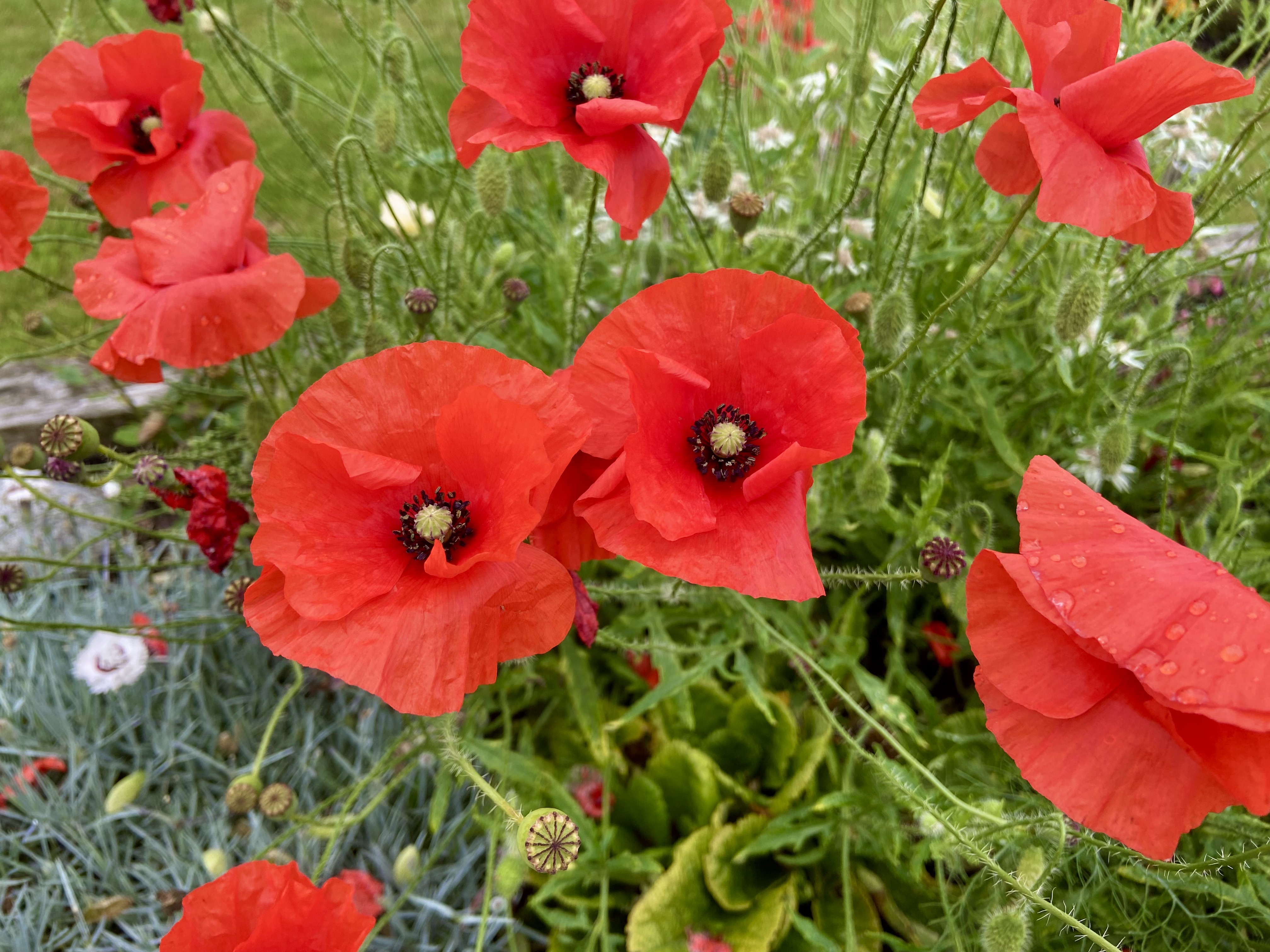
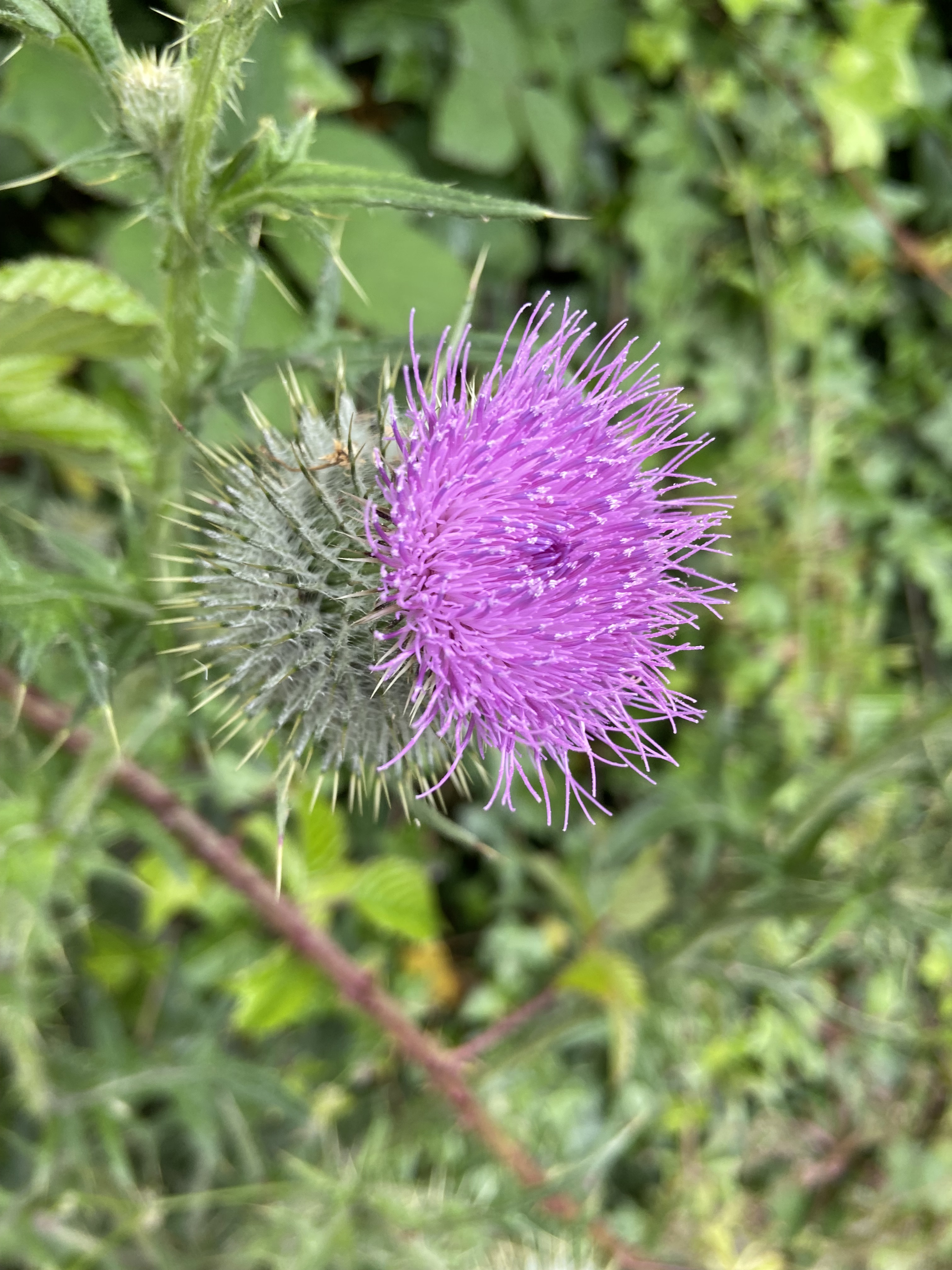
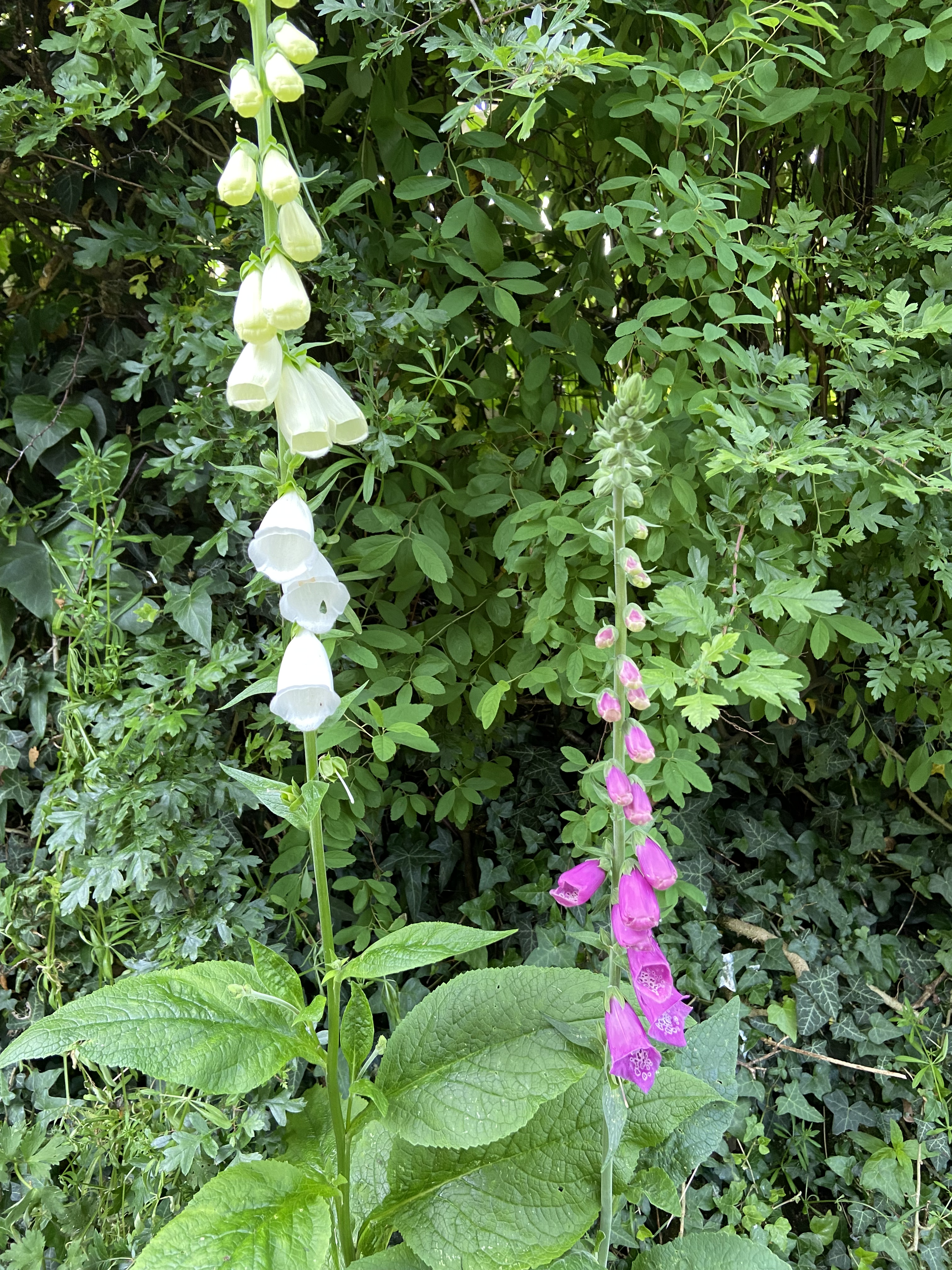
I shall leave you with some more cow pictures and maybe some flowers too. Blackbird Lane is wonderfully overgrown and tangled at the moment, with wildflowers peeking out all over the place. And now it’s time to go make breakfast, so have a good week all, and thanks for reading.
I was truly spoiled last weekend. It was a time of eating and… well eating more! There was some wine, but really… it was a food fest. Saturday dawned sunny, but there was such a cold wind that wild swimming didn’t seem like such a good idea any more. Instead, we sat in the garden, with the chiminea guzzling wood, as we did the same to a tube of Pringles. By Sunday morning, finding clothes to fit was more of a challenge than I had anticipated, but happily a new top came to the rescue for going to church, where my spirits were lifted. After a delicious lunch of leftover pizza, I headed down the road feeling replete, in more ways than one.
What I was though, was ripe for plucking! As a scrolled through Facebook, I came across a walking app called WalkFit. If I took up walking, it said, I would get to my goal weight in three months (ambitious, to say the least) but sooner than that, it promised that in a week, I’d feel better… and in two, I’d look better. I was hooked.
It has certainly had the effect of making me walk a lot more, but with two days left before the week is up, what I feel is not so much better, as knackered! My feet and legs are tired, I feel heavy and bloated and I haven’t been sleeping well. This is not really what I expected, though it might point to ME as a diagnosis for my neuro ills.
That said, the last time I started to walk, having had a vitamin B injection, the effect was that I quickly got fitter and did feel better. I’m not taking vitamin B in any form at the moment, so that’s something to try. Anyway, a nice side-effect is that I have been walking further along Blackbird Lane, enjoying all the birdsong and the flowers and the wonderful sense of peace.
The photo at the top of the page is from one of my morning walks. The dew is still wet on the grass and in the shady corners, there are frosted leaves and flowers.
Everything is growing with the gentle vigour of Scottish springtime.
The eponymous blackbirds are out in force, darting about, calling their sweet songs, curiously brave as I pass, but flitting away when I pull out my phone to take their picture. As so often before, I wish I had a camera with a lens that would allow me to capture them from further off, but still I do my best, and here it is.
The daffodils are passing now, but a few remain.
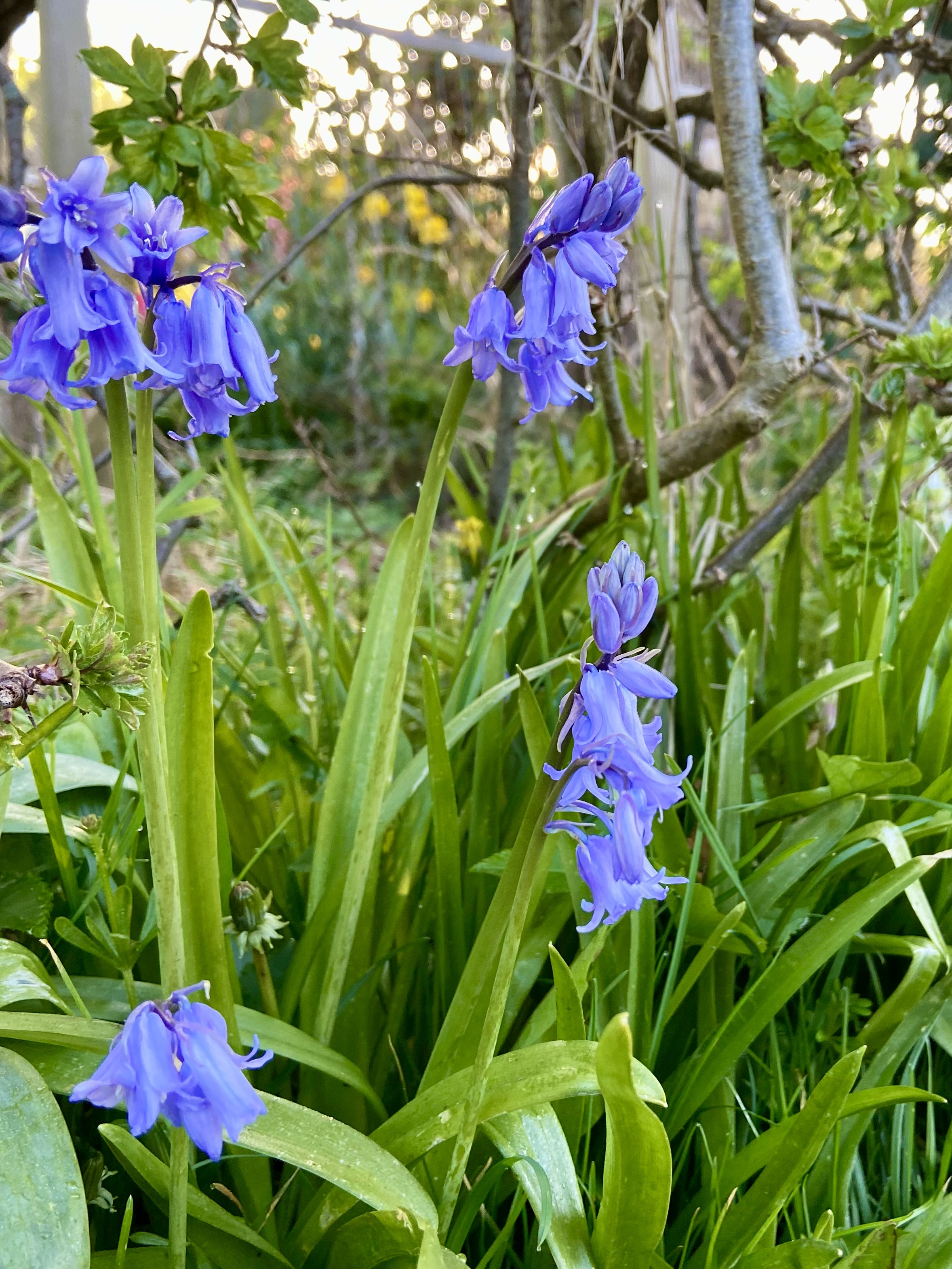
This week, bluebells have started to appear.
The hawthorn is decked in exquisite white and gold flowerettes.
And in the last two days, these hardy but cheerful perennials have reared their heads.
Meanwhile, back in my neglected garden, spring is also working its magic.
Nature perseveres and so shall I! Have a good week all and thanks for reading.
I am working very slowly on my writing projects. Various sources advise would-be authors to set themselves a routine. Write every day, they urge, or at least consistently. But there are days and weeks when work is taking almost everything I have and when I get home, I cook, eat, watch TV or read, and then I fall into bed. I think, if I had a project with a deadline, I would manage, but without that, I am writing very slowly, when I feel ready and whole.
This week at work has been more measured than the preceding weeks and for the past couple of days, I have been contemplating my Tir n’a Noir story. It starts with Black November: a man watching the raging sea as he declines into the pains of age and the ravages of a long life. That part is written in the past tense as he tries to catch the echoes of the long-ago summer, when Mary came to him.
He catches the echo and falls into a memory. While the current world is grey, the memory is rich with the green of Arctic summer, with its day that lasts for months, when the primitive plants are rushing towards the light. This part, I have written in the present tense. Though it is only in his mind, somehow, this is more real to him than what is happening now. Among the nature, he hears the sound of laughter and is so filled with energy and fascination, he runs towards it.
And that is as far as I have got. I have been waiting and wondering what Mary looks like, playing with ideas in my head. She’s Irish, but I don’t want the cliche of red hair and green eyes, beautiful as those things are. It came to me that I wanted her to remind him of a bird and I started to look up Arctic birds, but nothing really fit.
But for the past couple of days, I have been batting ideas around with my friend Shirley. I met Shirley in the boat terminal in Finnsnes as we queued for the fast boat to Tromsø. She and her friend Linda were speaking English and it was such a rare event, that I spoke to them. Some decisions just turn out to be right, and that was one of them! Anyway, I digress. Shirley took me to Dyrøya in May last year, and that visit inspired me to set my story there.
ToThe snow covered mountains of Senja, from Dyrøya
So having inserted the boat that brought Mary into this scene (a traditional pine-built fishing boat, obviously) I told Shirley our main character had seen the boat, but not yet Mary. I was assuming Mary was already on shore, but I hadn’t said so to Shirley, who assumed she was still on board. We were also discussing cormorants – not the most elegant of birds, but I want Mary to have dark hair and bright blue eyes, which fits better than the Arctic warbler I had been considering. Shirley suggested Mary was standing with outstretched arms, and from that, I saw her with her dark hair and bathing costume, diving neatly into the calm, clear water.
So now I know how Mary will enter the story. I just have to write it and try to find words as striking as the image. I can tell this story is going to unfold very slowly, but if I am in the mood for writing, I can return to my other book, which is about two thirds finished – at least the first draft is two thirds finished. Maybe, one day, I will complete both of them.
So that is project number one. Number two, for the first time in my life, I am working through reading the Bible. Valerie (another no-regrets friendship, wonderfully rekindled) is Christadelphian, a Christian group that puts a great deal of importance on studying the Bible. She sent me an app, which gives three readings each day, two from the Old Testament and one from the New.
Like many people who (have) attend(ed) a traditional church, I am much more familiar with the New Testament than the Old. I know I tried years ago to read it, but stuck on the long lists of names and genealogy. This time, I have pushed on through and am currently reading Numbers. I watched a Netflix show, Testament, which is about Moses. It shows and discusses the plagues that God brought on the Egyptians as well as showing Moses leading the people of Israel into the wilderness.
I confess, I am struggling with the Old Testament God, who seems fickle, angry, and vengeful in comparison with the God that Christ preached about. But it was the same God that Christ was preaching about and that seems very clear.
I guess these are not new struggles. I am never going to be a Bible scholar, though in some way, I regret not having learned more years ago. I find Christian forgiveness and the bonds with community that faith brings to give me a stability that is difficult to find, in this modern world.
But I am trying to find a pathway that combines those easy things with the new knowledge about how God is presented to us in the Old Testament. I don’t want to rationalise it away – pick and choose the bits to believe and pretend the rest is irrelevant or false. I will add here, that Testament showed Moses leading his people through the Red Sea, but Numbers details that there were 600,000 men (and there would be women and children too) and so the idea that there were a million people, living in the desert, picking up their holy tabernacle and moving the whole encampment round…
Well you can understand why I am having difficulty with that concept. The arguments about realism tend to focus on Genesis and creation, but this part seems more impossible to me. I can only persevere and hope that I can find some place of equilibrium.
I did start searching online for one of the cleverest Biblical Scholars I have come across in my life and I found a wonderful video of him talking about the lead up to Christ’s crucifixion in the gospel according to John. I shall share it here, for any Bible Nerds who may be interested. He’s a Monsignor now, but he was Father Patrick when I attended his church, years ago.
My other projects are more prosaic. The house and garden. I have even less energy for those, but will probably end up doing my work to pay for others to do the jobs that need to be done. I just need to find the energy to keep the garden under enough control that it won’t cost thousands more to fix it, when I’ve got the house into better shape. Sometimes it seems there is just too much to do and maybe I should have bought a well maintained apartment!
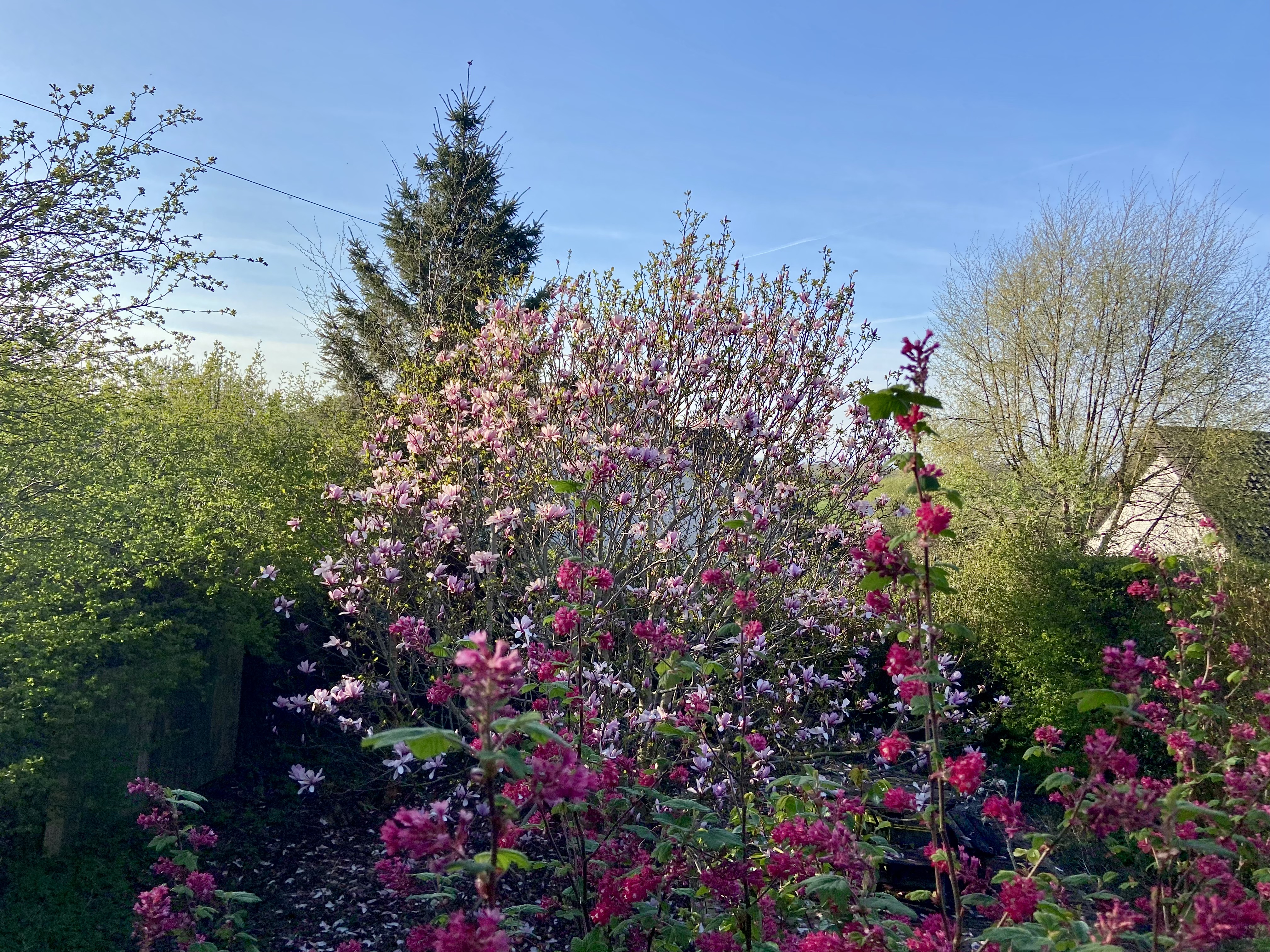
Work continues apace. I have a new welfare case and another TB suspicion. There’s a bonus available if I can prove that I have certain skills… and there’s another project. The whole of life seems to be a massive juggling act. But for now, I have the weekend and a little oasis of time to spend. I will share a few more images from my garden, which is starting to burst into flower, though I suspect some of the bushes would have benefitted from some pruning at the appropriate times, which is definitively not now. Its wild state is attracting the birds and I’m not going to do anything that will drive them away.
Have a good week all, and if you’ve persevered through my ramblings, thanks for reading!
It’s been a relatively peaceful week at work. I’ve been catching up with all the work that was pushed aside in the past few weeks and even getting ahead for work that’s coming up. By happy coincidence, it’s been beautiful weather. The skies have been clear and blue, and on the walls and under the hedges in Blackbird Lane, everything is growing.
I came across the ghost of one of last year’s flowers as well and couldn’t resist taking a picture. Nature weaving the finest lace!
With the clear skies at night, there was frost under the hedge too. I think these are celandines, edged with hoar frost, which quickly melted away as the sun came up.
Next week, things are still a bit up in the air. Part of the deal with working for APHA is that for one week every three months, I am expected to make myself available for what is called detached duty. This means I could be deployed anywhere to help with disease outbreak work.
On Thursday, I was contacted and asked if I had any experience of licencing. The central licencing team need someone apparently. I asked what kind of licencing and she didn’t know. She told me late yesterday afternoon that she was still trying to find out, so I may still be contacted on Monday about working for that team. In the meantime, I have other work pencilled in, that might all need to be rubbed back out again. Still, it means life is never boring!
And now I’ve deserted Scotland to inspect the Yorkshire flowers, though sadly, the weather seems to have broken and it’s quite chilly again. Thanks for reading and I hope you have a lovely week, wherever you are.
When I was young, going on holiday always involved trains. Not that we always travelled to our destination on one, but we did, almost invariably see some steam locomotives. Sometimes this would be a mountain railway or a rebuilt section of the old network, sometimes it was in a museum. I have long known that Mallard set the steam speed record at 126mph as her sleek lines were to be seen in York Railway Museum and at university, I was briefly to be found trainspotting in Waverley Station when I wasn’t off on a trip somewhere with a club of train enthusiasts.
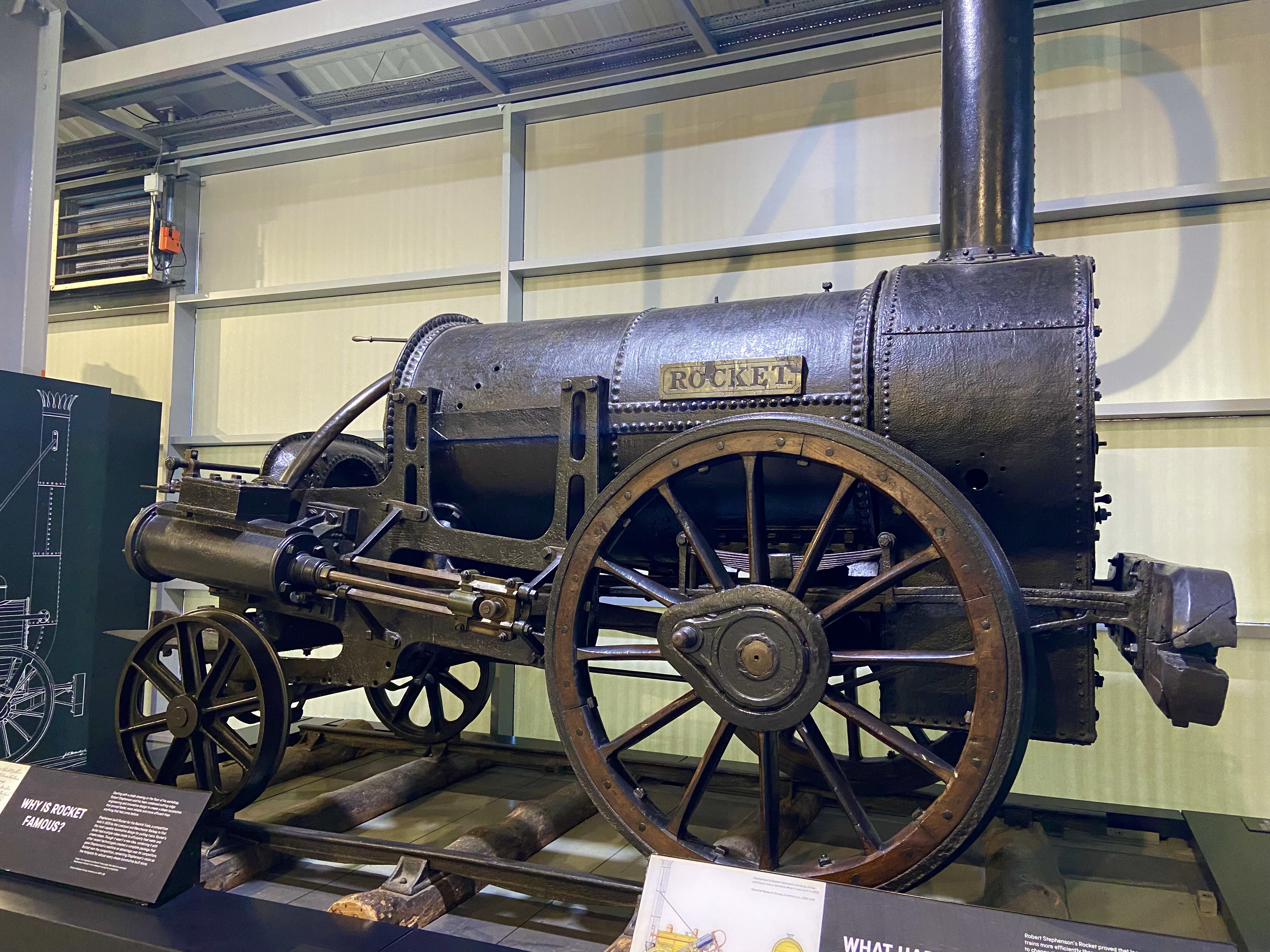
So when I was asked, last Sunday evening, what we should do the next morning, I already had my answer ready. We were going to visit Locomotion museum in Shildon. There were trains galore and also a cafe, so something for everyone! It’s a big site and we didn’t get all the way round, but we did explore both the original building, which was filled with old passenger trains and the new one, which was dedicated to industry and freight, as well as vehicles for mending and maintaining the tracks in all weathers.
There is some beautiful rolling stock, from an old horse drawn rail carriage to a former Royal train, and from Stephenson’s Rocket (which won a competition, in 1829, to run on the Liverpool and Manchester Railway – the world’s first inter-city passenger railway line) to the Flying Scotsman, which 100 years later, ran from London to Edinburgh and is officially, the first locomotive to reach 100mph.
What struck me most was the quality and workmanship that used to go into building those trains. The shiny paint and intricate shapes are so much more attractive than the modern, soulless units that run around the network nowadays.
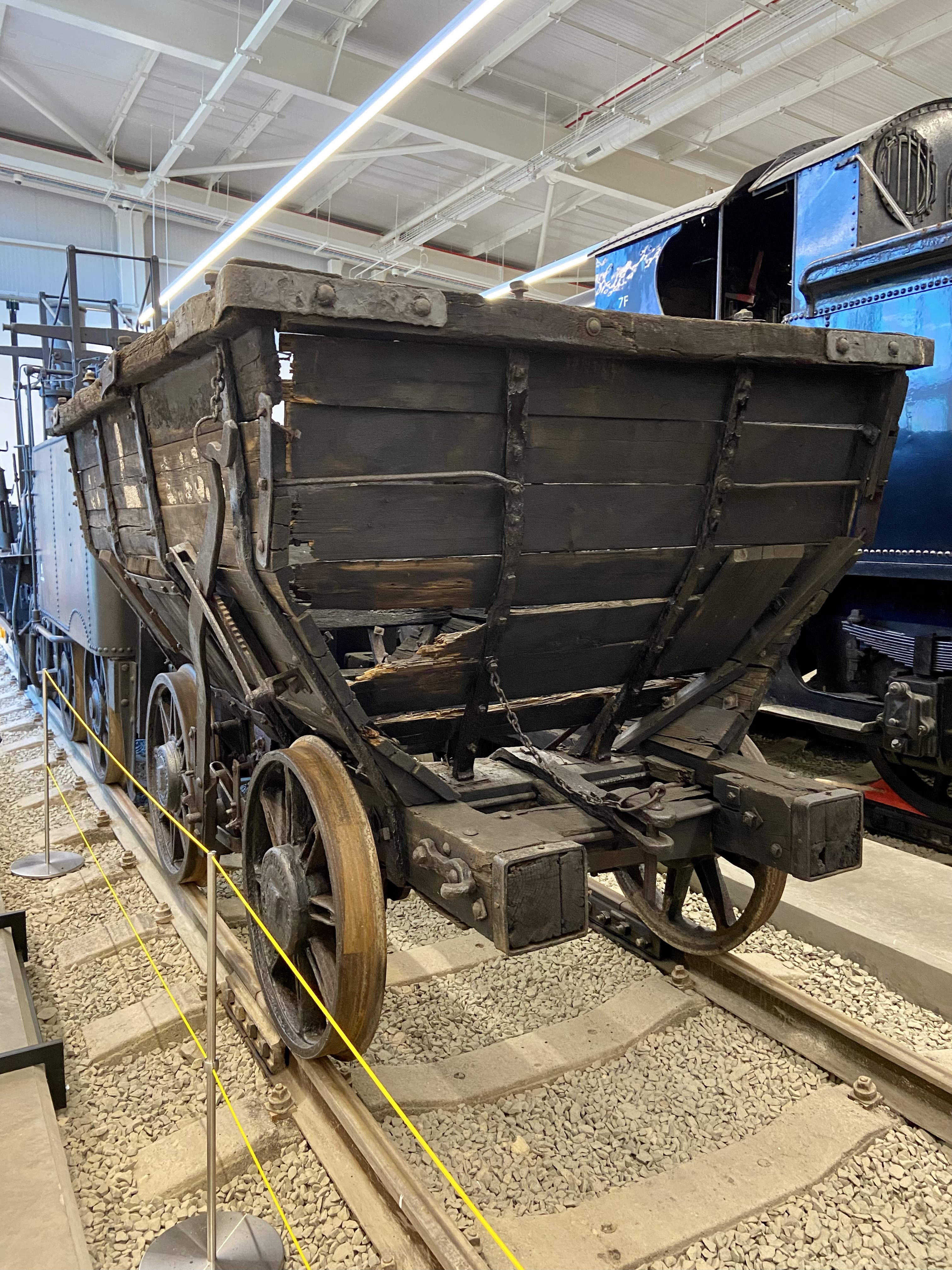
The second shed was all about practicality. Early wooden coal trucks and massive snow ploughs stood alongside freight containers for everything from cattle to wartime tanks.
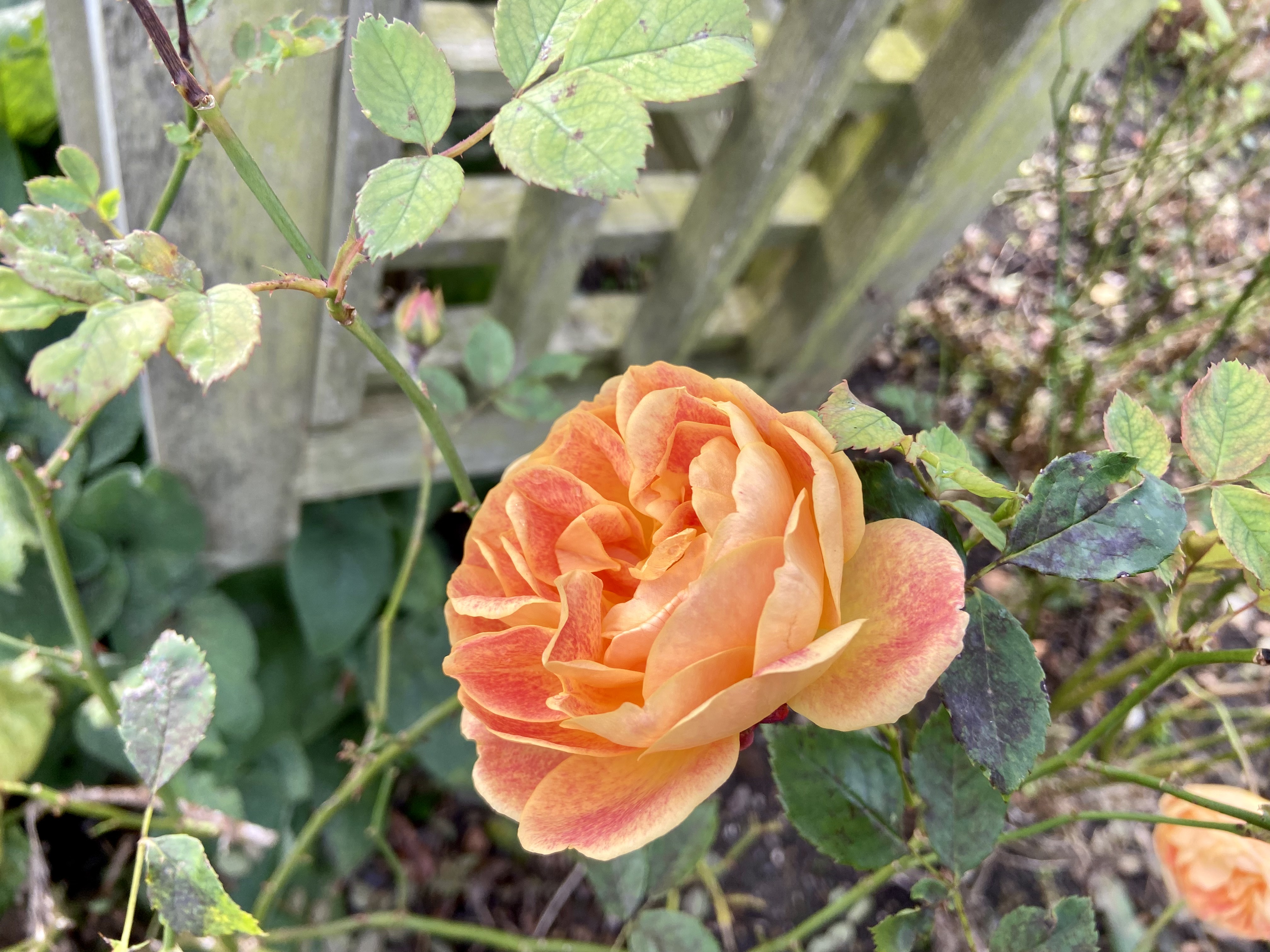
On Tuesday we went to Wynyard Hall Gardens. Famous for its roses, it wasn’t the best time of year for a visit. Nonetheless, there were still some lovely blooms and a few autumn leaves were clinging to the trees in the landscaped grounds.
And I’m going to leave it there for now. Sadly we have to leave the lovely farm cottage that’s been home for the past week at 10am, so breakfast and packing will have to take precedence, but I’ll leave you with a lovely encounter at the window on Tuesday afternoon. As always, thanks for reading.
I had a wonderful weekend last week, with Valerie. Back when the children were young, I met Valerie outside a classroom door. Her youngest, Stacey, was in the same class as John. We were both newcomers to the area and she quickly became one of my favourite people. She looked after Andrew when he was a baby and none of the child minders in the village had space for him. We both worked nights, but when we had time, we used to go for lunch at Jimmy Chung’s – a Chinese restaurant that did a fantastic buffet.
Meeting up made me feel I had gone back in time. With some friends, even when you haven’t seen them for years, you can pick it up where you left off and it was like that. Effortless and joyful. There were some new things. Valerie has a hot tub and evenings in the water with a glass of red wine (thoughtfully bought by her husband, Charles) were a wonderful new addition.
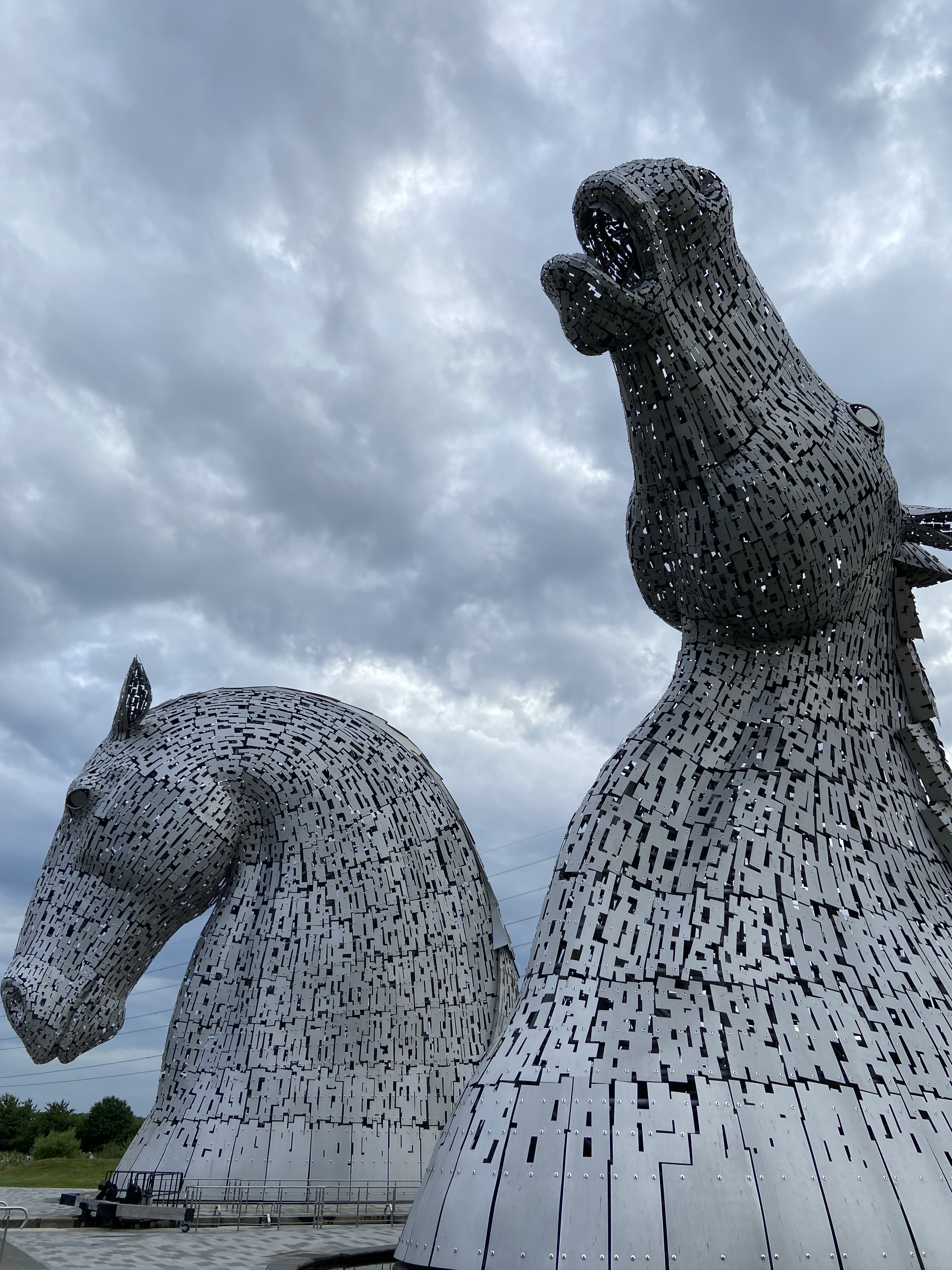
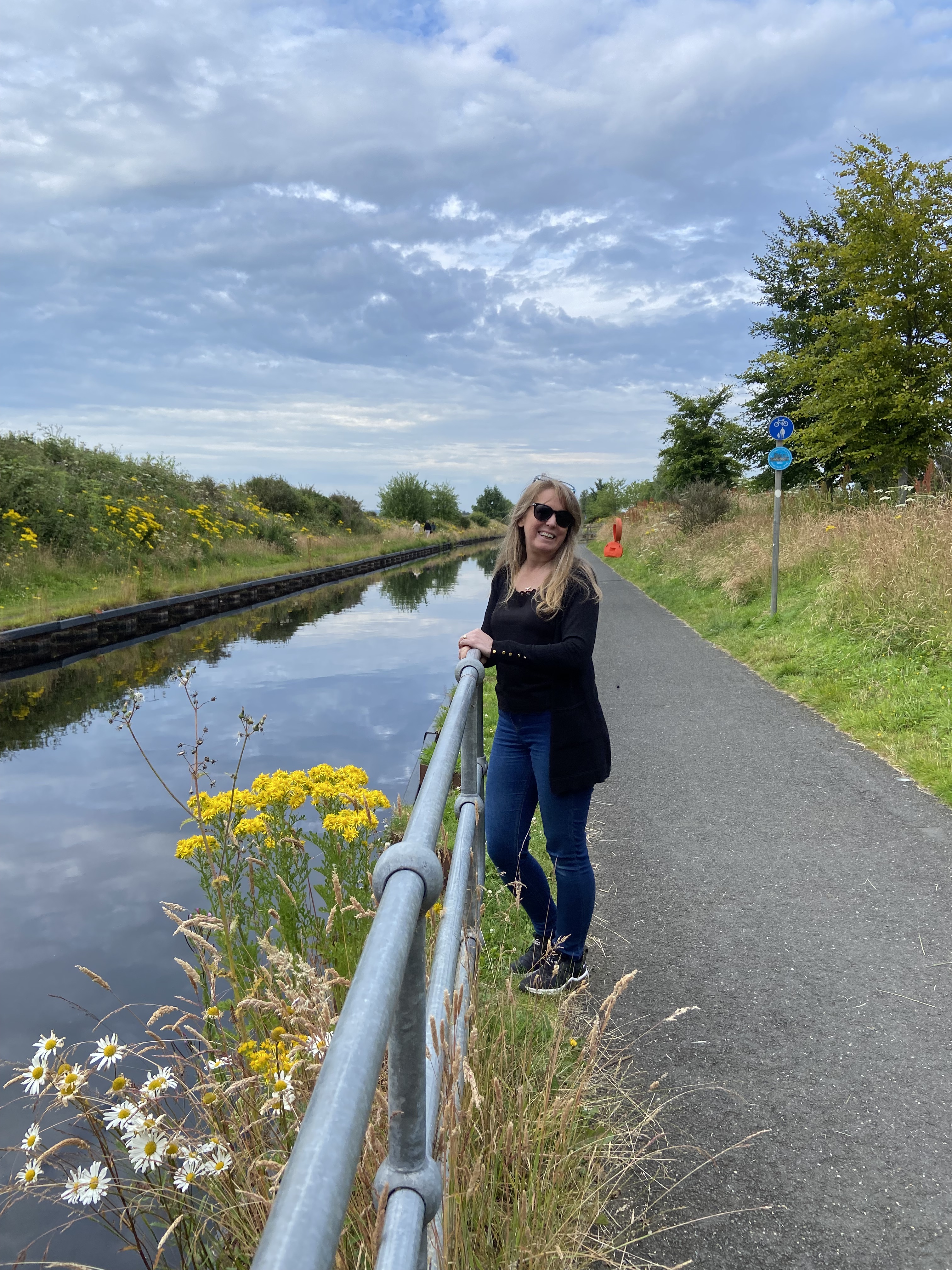
We also visited the Kelpies, which are not far from where I used to live. I’ve seen them in photos before, so it was lovely to see them, and that also fitted in to the daily walks I am now taking.
Valerie still looks amazing, despite all those Jimmy Chung’s meals and a bout of long Covid, caused by working in the NHS, in the front line, with no PPE. I had more protective gear as a technician in a chicken slaughterhouse in Norway. The chronic underfunding of public services in the UK has been going on for many years now. I hope it changes. Treating hard-working staff badly is not a recipe for a happy and healthy workforce.
I was in Ayr this week, Monday, Tuesday and Wednesday. My colleague (Pilar) was duty vet and I was shadowing her. While I was there to learn, it was an instructive lesson. Monday was fortunately quiet, but the two queries that took longest to deal with were about primates and alpacas. She also was put under pressure by a very grumpy vet, who probably knew he’d done something wrong and was taking it out on our staff. It didn’t inspire confidence in me that the role of duty vet is going to get any easier.
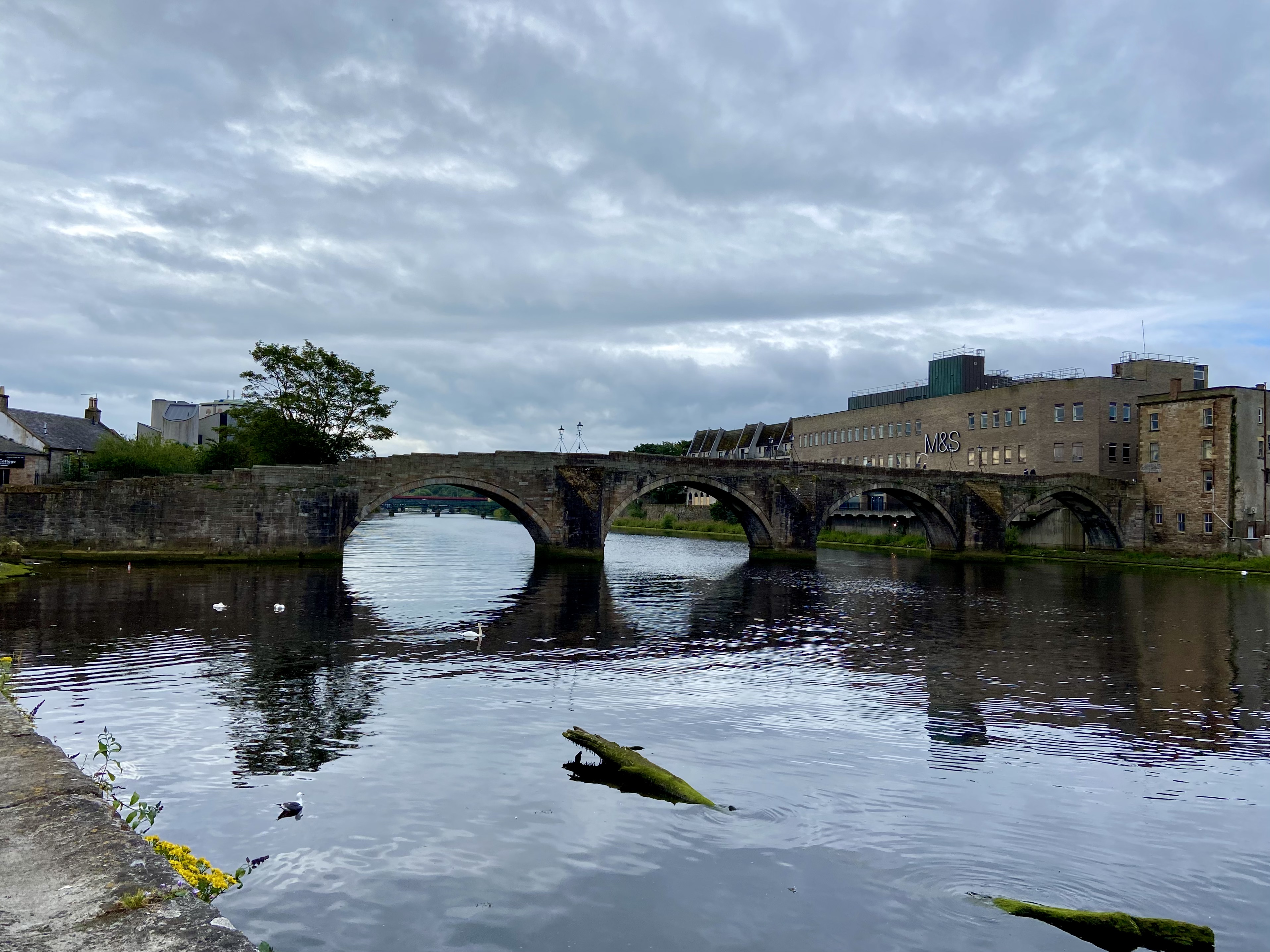
I did have time to wander around Ayr though, which was interesting. It’s on the coast and there’s a tidal river running through the town centre. It no longer seems deep enough for ships: perhaps years ago it was dredged and deeper, but there are many signs that it was once a thriving dock.
On the town centre side of the river, over the old bridge, which is now used as a foot bridge, there are some new buildings, such as Marks and Spencer.
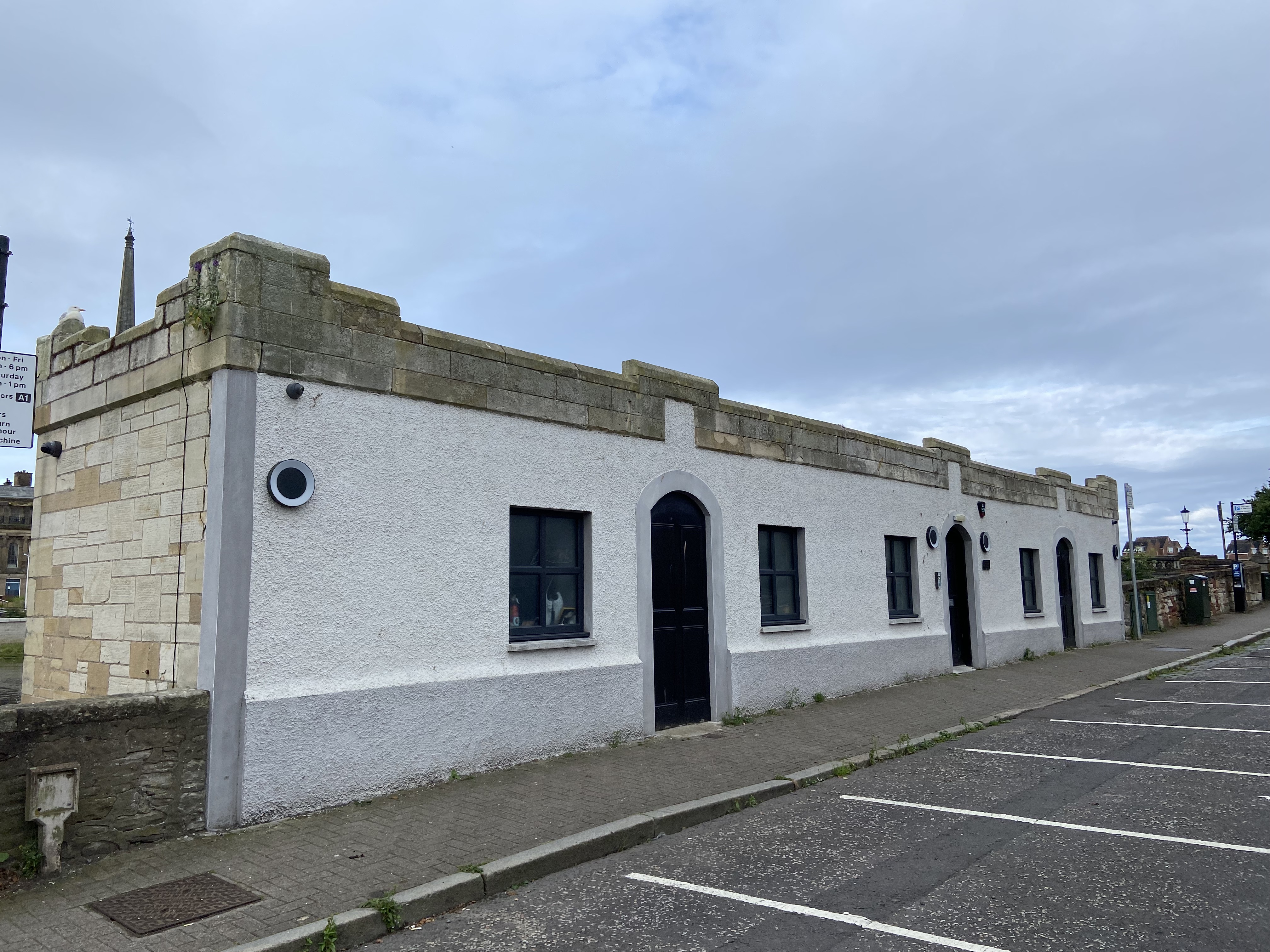
But on the north side of the river, there are older buildings that speak of sailors and ships and a different life for the town. These is the old bath house.
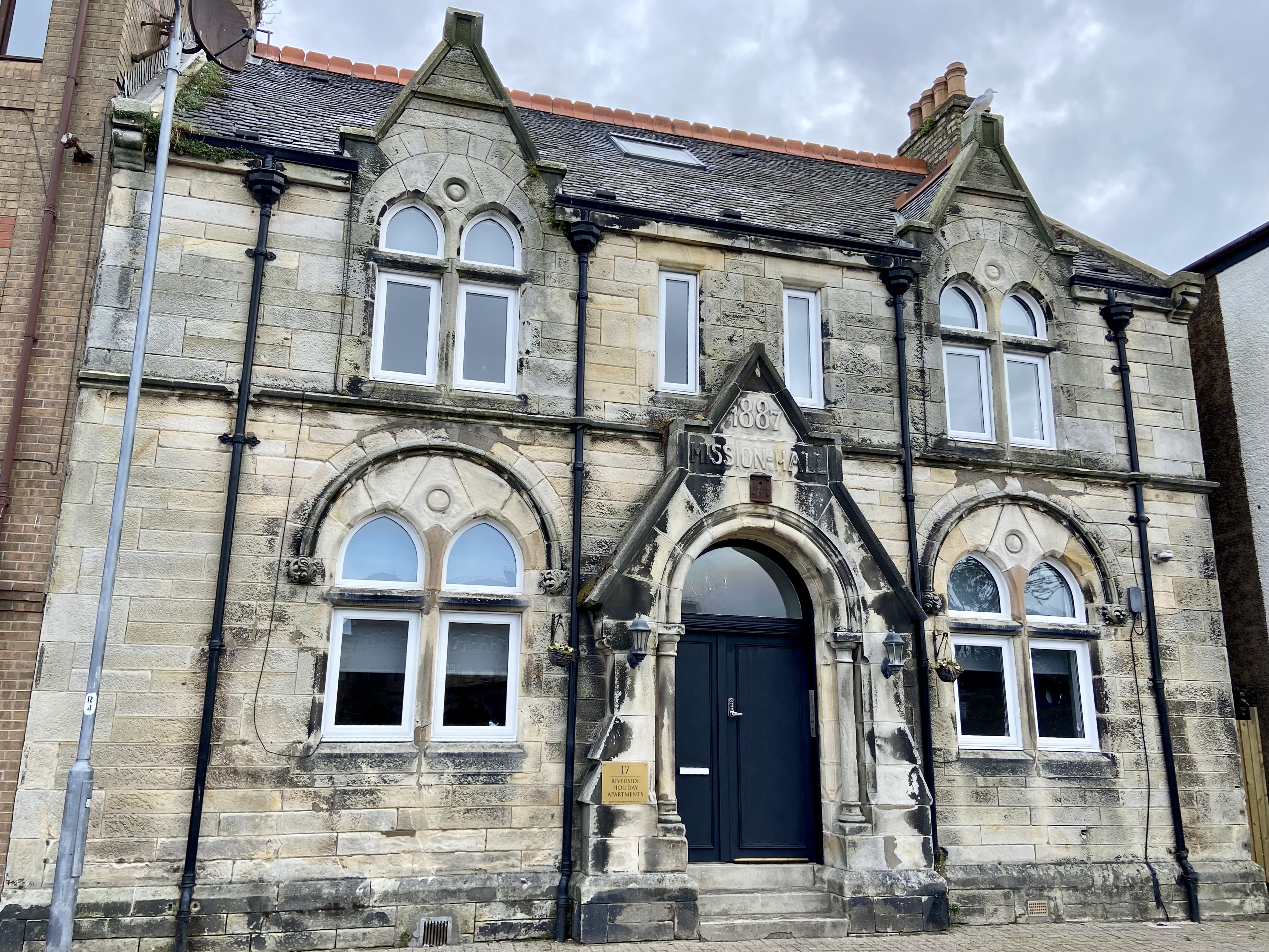
The seaman’s mission:
And while the oldest bar in Ayr still looks to be in use, the oldest restaurant seems to be falling into a sad state of disrepair.
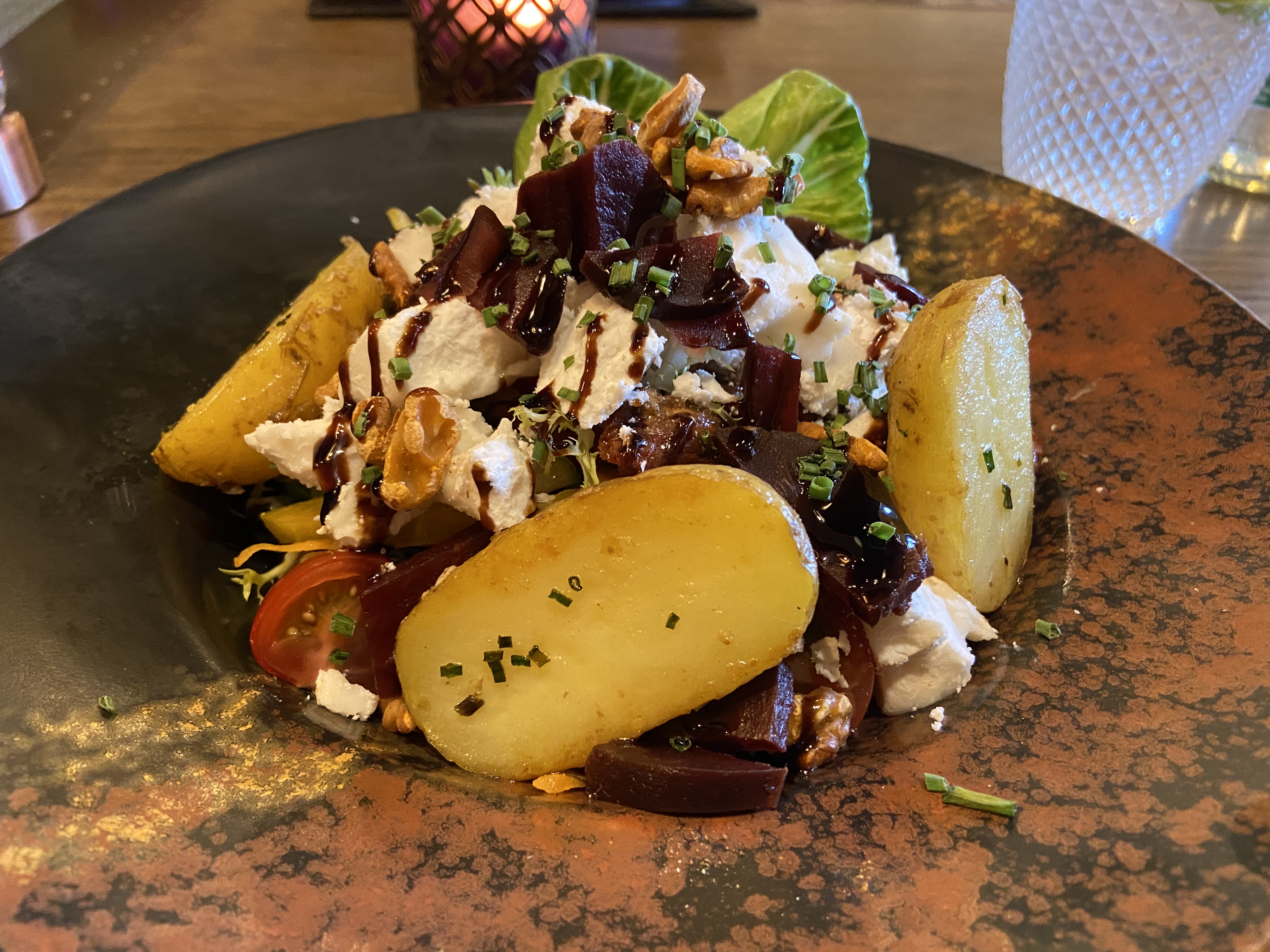
I can be difficult finding good food in new places, but I happened upon The Stravaig while wandering in search of inspiration on Tuesday evening. They served me a wonderful beetroot and goats cheese salad, with pickled walnuts. It was properly delicious and I will definitely be going back.
I have been doing the Second Nature program, primarily to lose weight (I’ve lost 5kg/11lb so far) but the program encourages better habits and lifestyle changes, rather than concentrating exclusively on food and calories. There are articles each day and a theme each week. So far we’ve had Prepare for the Program, Reset Your Lifestyle, Nutrition – Focus on Meal Planning, Mindset – Develop a Positive Mindset, Exercise – Increase Your Steps and this week’s Stress – Start Deep Breathing.
While I think it is a good program, and hope I can stick with it, it has struck me this week that an awful lot of it is about managing stress. The obesity epidemic undoubtedly has a lot of causes, from too much sugar, high availability of fast food and so on, but as I have embraced trying to sleep better and get into different routines, it did strike me as rather sad that my life is indeed filled with stress that I have to manage, and always has been. I’m sure it’s true of a lot of people and perhaps the reasons for that should be explored. Working hours in the UK are much longer than those in Norway, for example. After three in the afternoon, I’ve already worked out I’m not good in front of a computer. Out in the field, I can keep going, but I don’t achieve more by staying those extra hours.
Living in Norway opened my eyes to the horrible work situation in the UK. I remember sitting in a hotel at breakfast, listening to some southern businessman pontificating to his friend about how he knew who to promote as it would be the person who stayed late and really put in the hours. Perhaps he should have looked a bit harder at those who managed to finish their work within the allocated hours and prioritized their home life over crawling up the boss’s backside.
I felt a bit smug sitting there, having escaped all that. Nobody in Norway thinks that way. And now I’m back and it hasn’t changed, but I am thinking hard about what I can personally do so as not to slide back into those attitudes. I’m not going to be able to change the civil service, but in time, I may be able to change my own pattern of working. Deep breathing is all very well, but it should be an add on in a healthy lifestyle, not a lifeline to cling onto to survive.
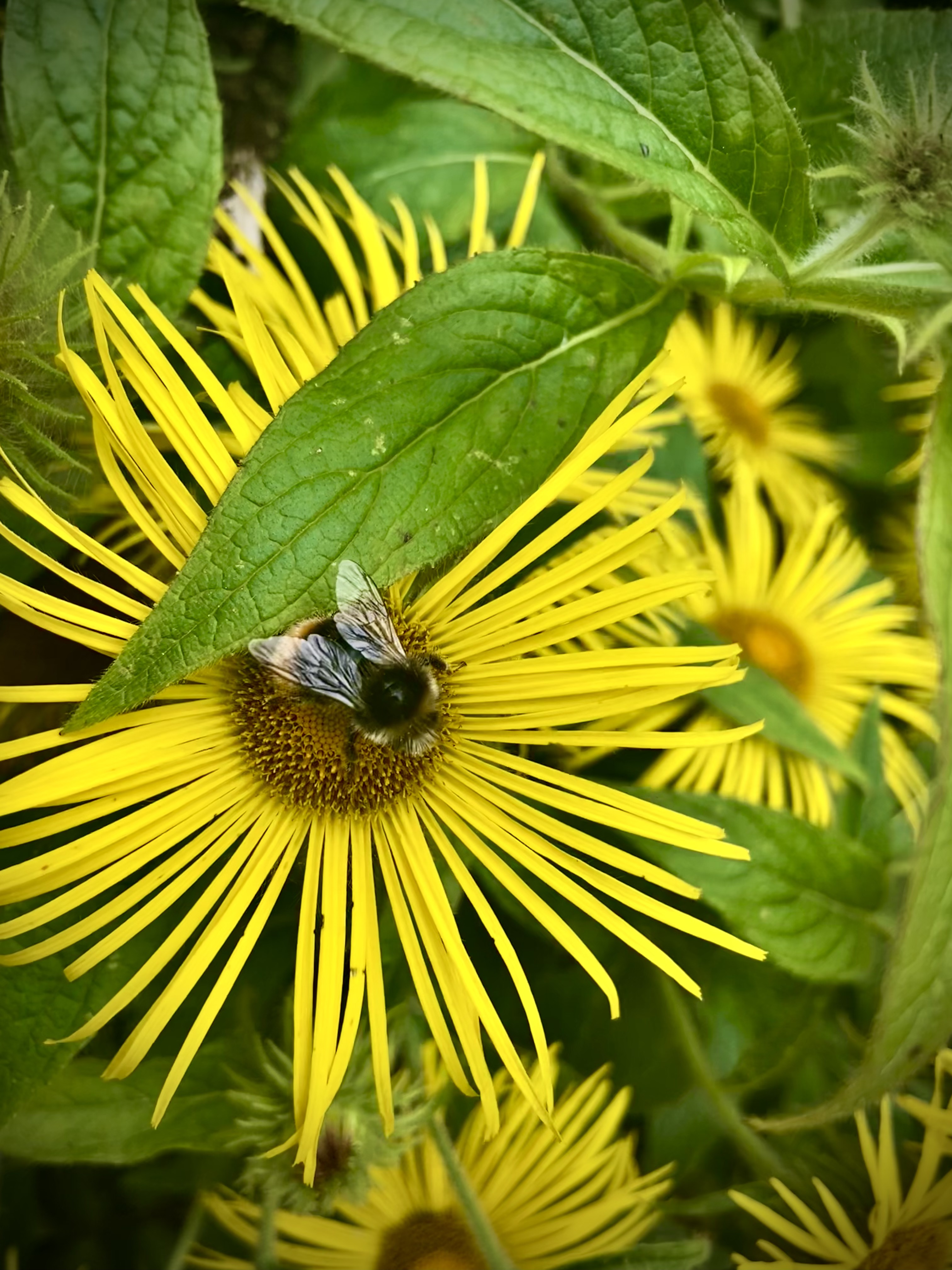
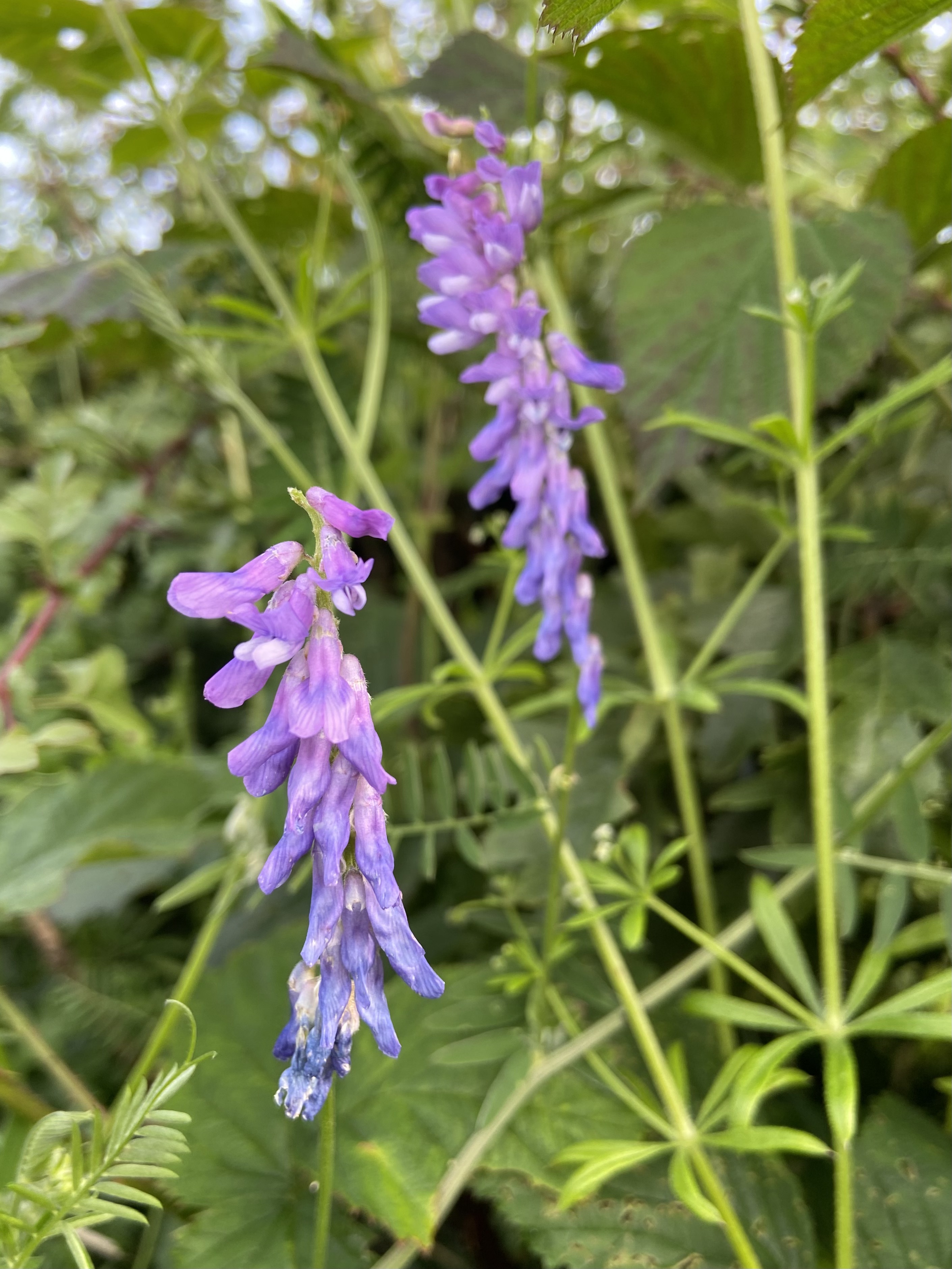
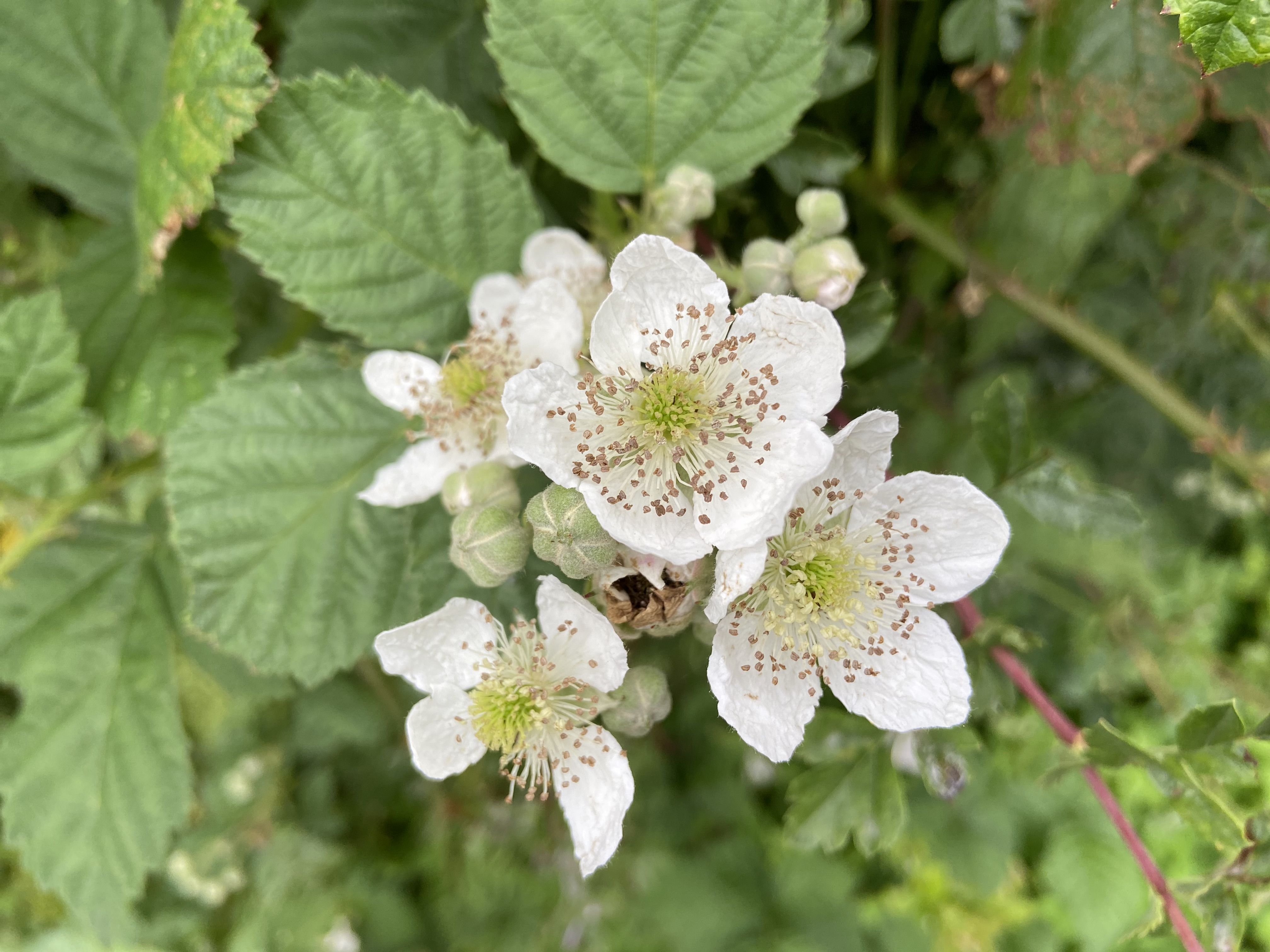
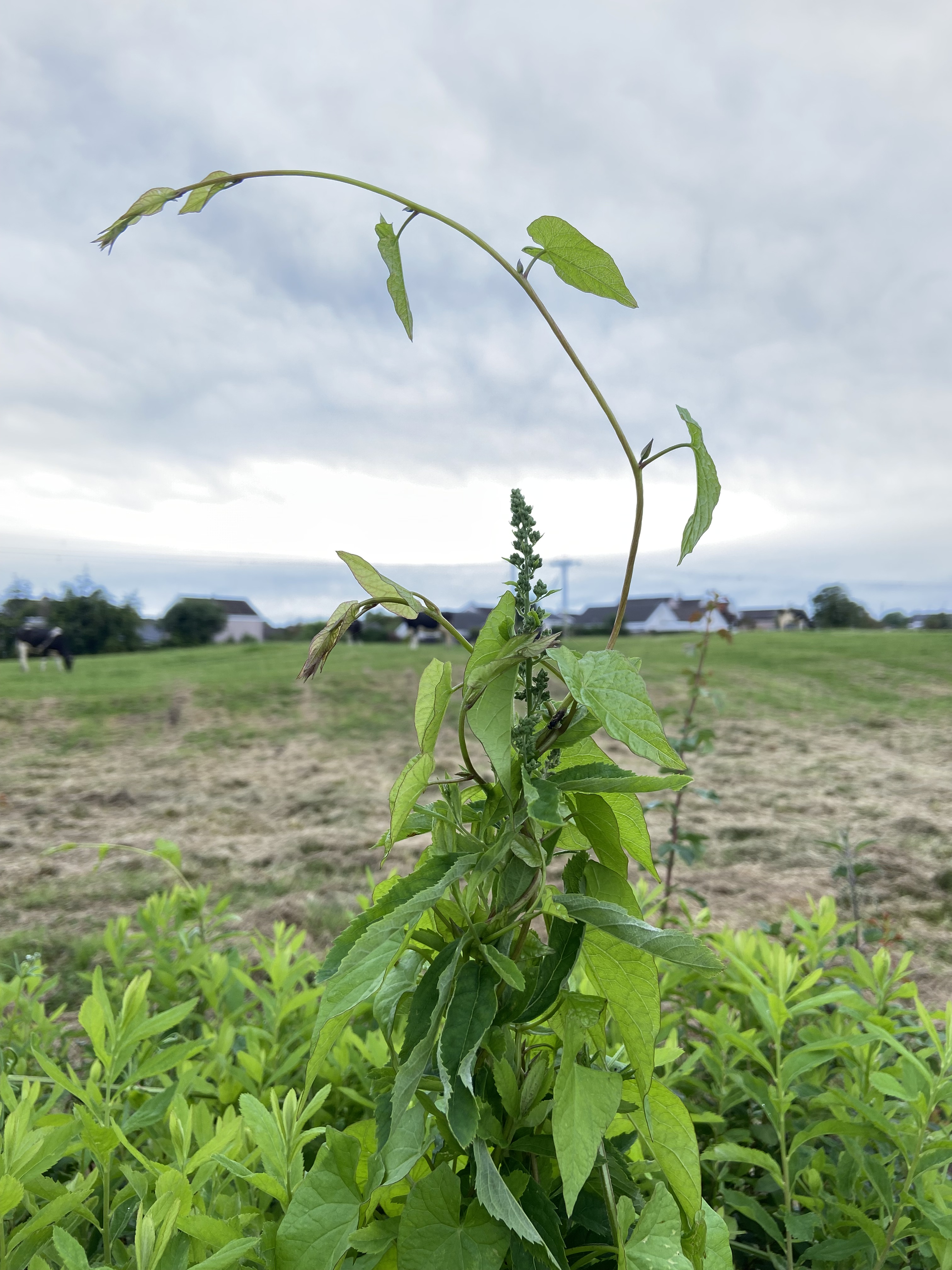
I will finish with some photos from Blackbird Lane. The hedgerow is filled with flowers and weeds and twined with different plants. I was struck yesterday by the bindweed, which is both pretty and efficient, though it achieves its height by strangling others. It isn’t just climbing through the hawthorn, but even engulfed a dead nettle and other flimsy plants. Anyway, they are all climbing towards the light and though it’s not been a warm summer, I still find new things there daily. The bees at the top of the page were there too.
One of the things I enjoy about working as a government vet is travelling to different places. It hasn’t happened yet, but at some point, I will be sent to do detached duty, where I can be sent anywhere in the UK to deal with any emerging notifiable disease. Even in my region though, I get around a bit. On Monday, I am going to Ayr to accompany a colleague on a welfare inspection. She has only been out to one such inspection so far and I’ve already done my three, so hopefully I can help her to do a good job.
I’m also going to be one of APHA’s vets at the Royal Highland Show next weekend, which is exciting. If nothing happens, it’ll be a lovely day out. It’s a long time since I’ve been, but it was always an enjoyable day out. If something happens that I have to deal with, it will be… interesting. Imagine how the day would change if we discover one of the animals is showing signs of foot and mouth. There are contingency plans, which I should get next week. I will make myself familiar with them and keep my fingers crossed that the most exciting thing to happen will be visiting the freshly cooked doughnut stand.
Not that I will be doing that. As I mentioned last week, I have been signed up to a weight loss program called Second Nature by the NHS. So far, it’s been very good. Its focus is on changing habits and not on counting calories, which is appealing to me. I can’t get on board with weighing out food for the rest of my life. It relies on encouraging exercise, eating more vegetables and cutting down on carbs, without cutting them out altogether.
I was meant to do lots of meal planning this past week, but bought pick and mix salad every day from my local supermarket, which handily is a ten minute walk from my office. In the evenings, Andrew and I have been using a delivery service called Hello Fresh. Both Anna and Donna recommended it, so we decided to give it a go. Each week, we select four meal plans, they deliver ready prepared ingredients, and we cook the food together when I get home from work. It’s been quite easy to modify the Hello Fresh meals to fit the Second Nature recommendations, so it’s all been very easy and I love not having to decide what to eat while standing in the supermarket.
I also signed up to an online service called Borrow My Doggy and this week, for the first time, someone new took Triar out for a walk. It did make me realise that he’s not the easiest dog to handle. He’s never been placid – quite the opposite. Also, I’ve not taught him very good manners on the lead.
It went off fine though. I’m hoping to find someone who would be able to take him at short notice if I have to go away unexpectedly for work, but I’m going to have to engage more to do that. I’ve just booked a holiday in November, so perhaps I need to concentrate my efforts more. Triar has never been in a kennel and I’m not sure I really want him to start now.
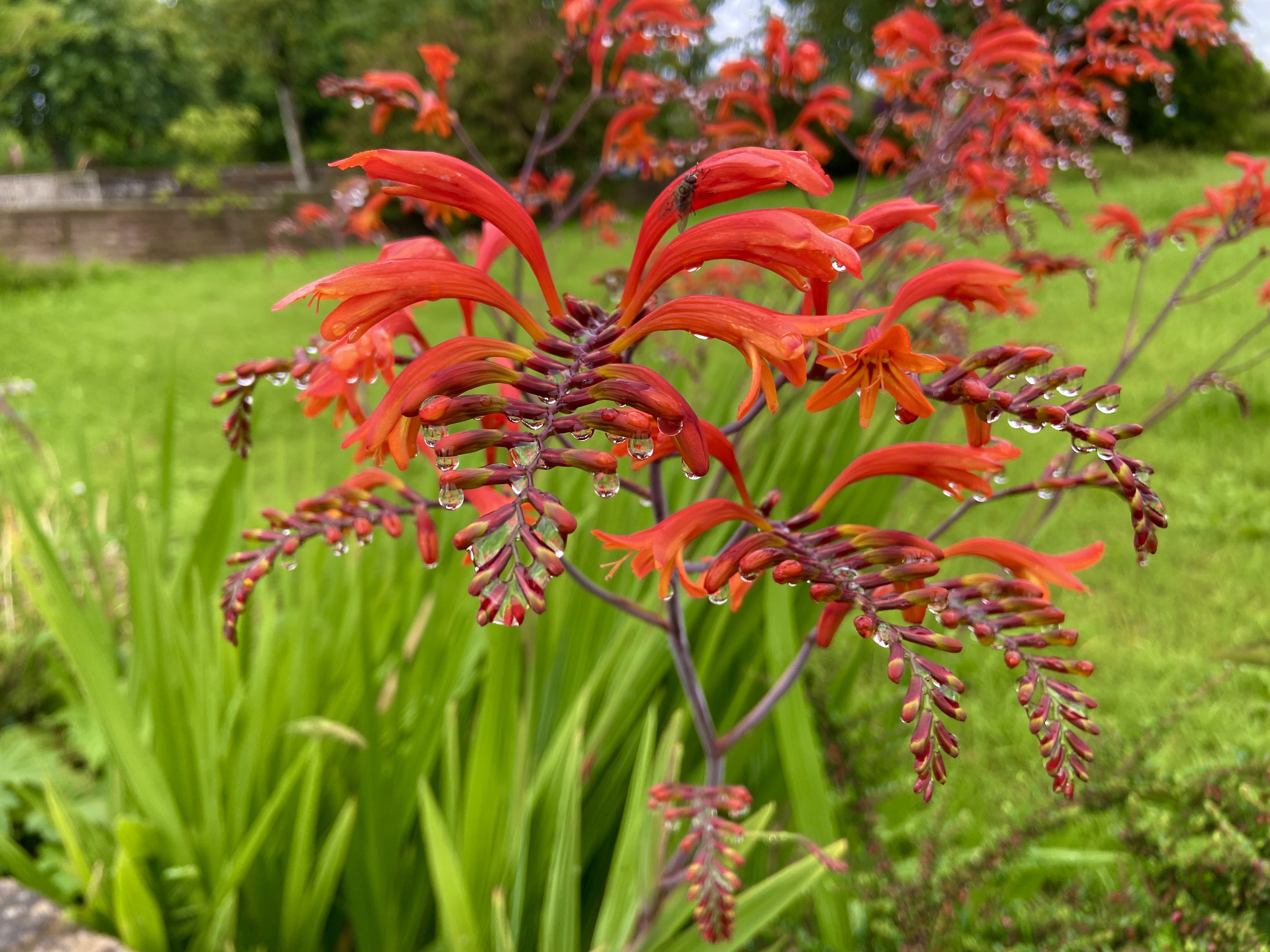
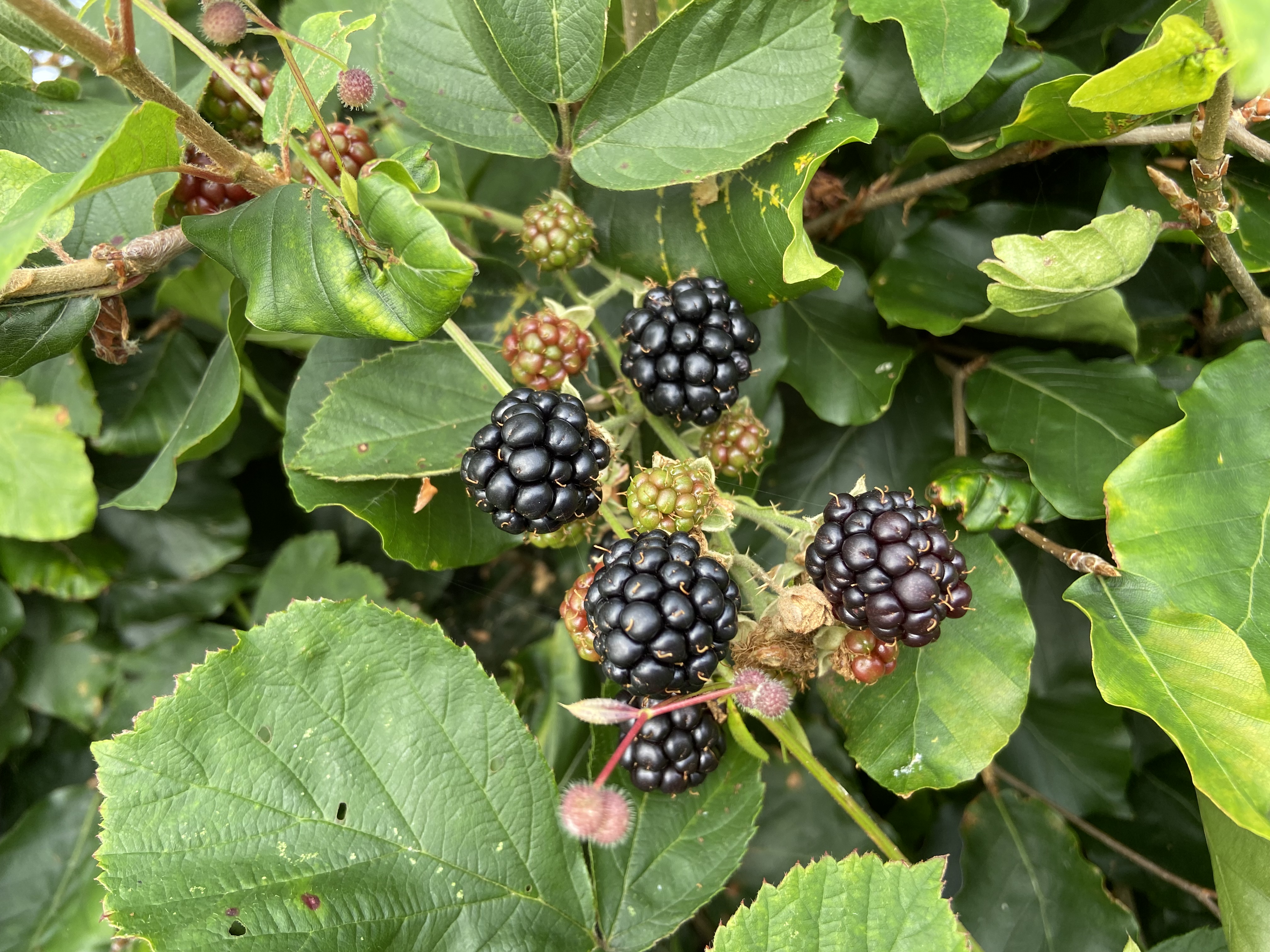
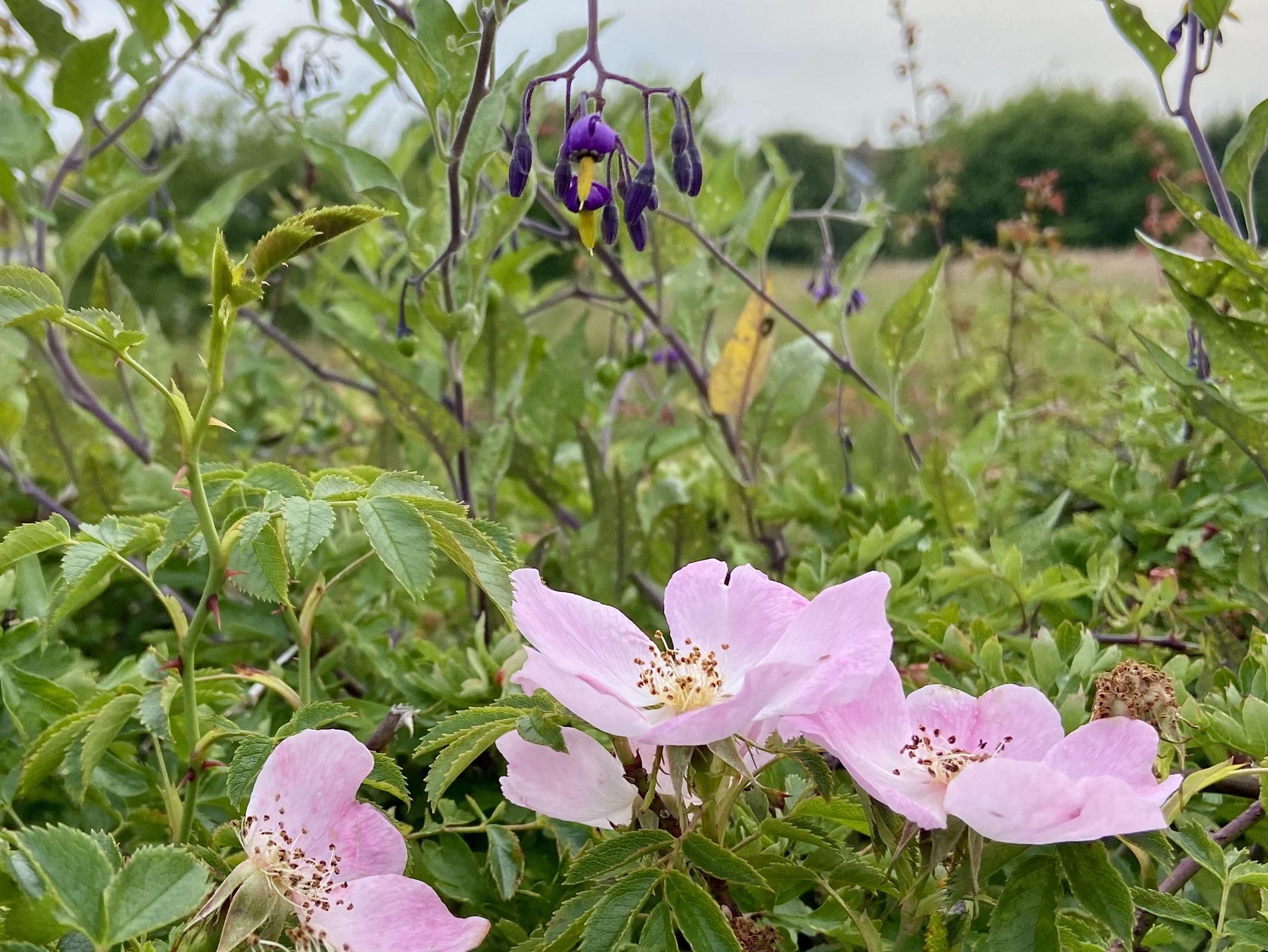
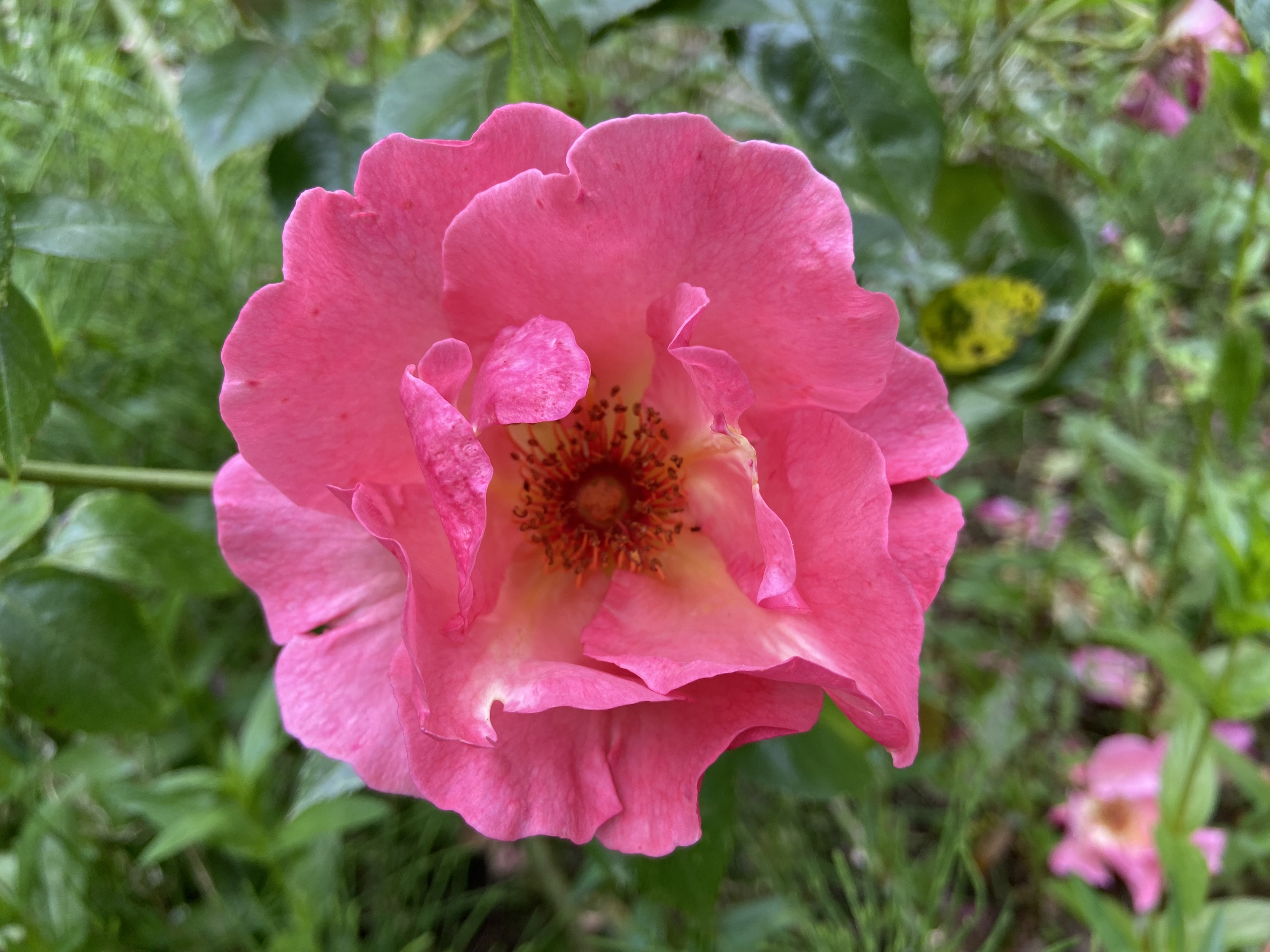
These are some photos from the bottom of my garden, which is running absolutely wild. The garden is full of insects and birds, which I love watching from my kitchen window. I made my way down the broken steps this week and was pleased to find that the overgrown roses have the same, wonderful scent that I remember from the roses in the garden when I was a child. So many these days seem not to have any aroma. “Stop and small the roses” is a good principle in life, I think. We’re down in Yorkshire for the weekend, so I’m going to start with a cup of coffee and take it from there. See you next week!











































 A Vet’s Life