When I was young, going on holiday always involved trains. Not that we always travelled to our destination on one, but we did, almost invariably see some steam locomotives. Sometimes this would be a mountain railway or a rebuilt section of the old network, sometimes it was in a museum. I have long known that Mallard set the steam speed record at 126mph as her sleek lines were to be seen in York Railway Museum and at university, I was briefly to be found trainspotting in Waverley Station when I wasn’t off on a trip somewhere with a club of train enthusiasts.
So when I was asked, last Sunday evening, what we should do the next morning, I already had my answer ready. We were going to visit Locomotion museum in Shildon. There were trains galore and also a cafe, so something for everyone! It’s a big site and we didn’t get all the way round, but we did explore both the original building, which was filled with old passenger trains and the new one, which was dedicated to industry and freight, as well as vehicles for mending and maintaining the tracks in all weathers.
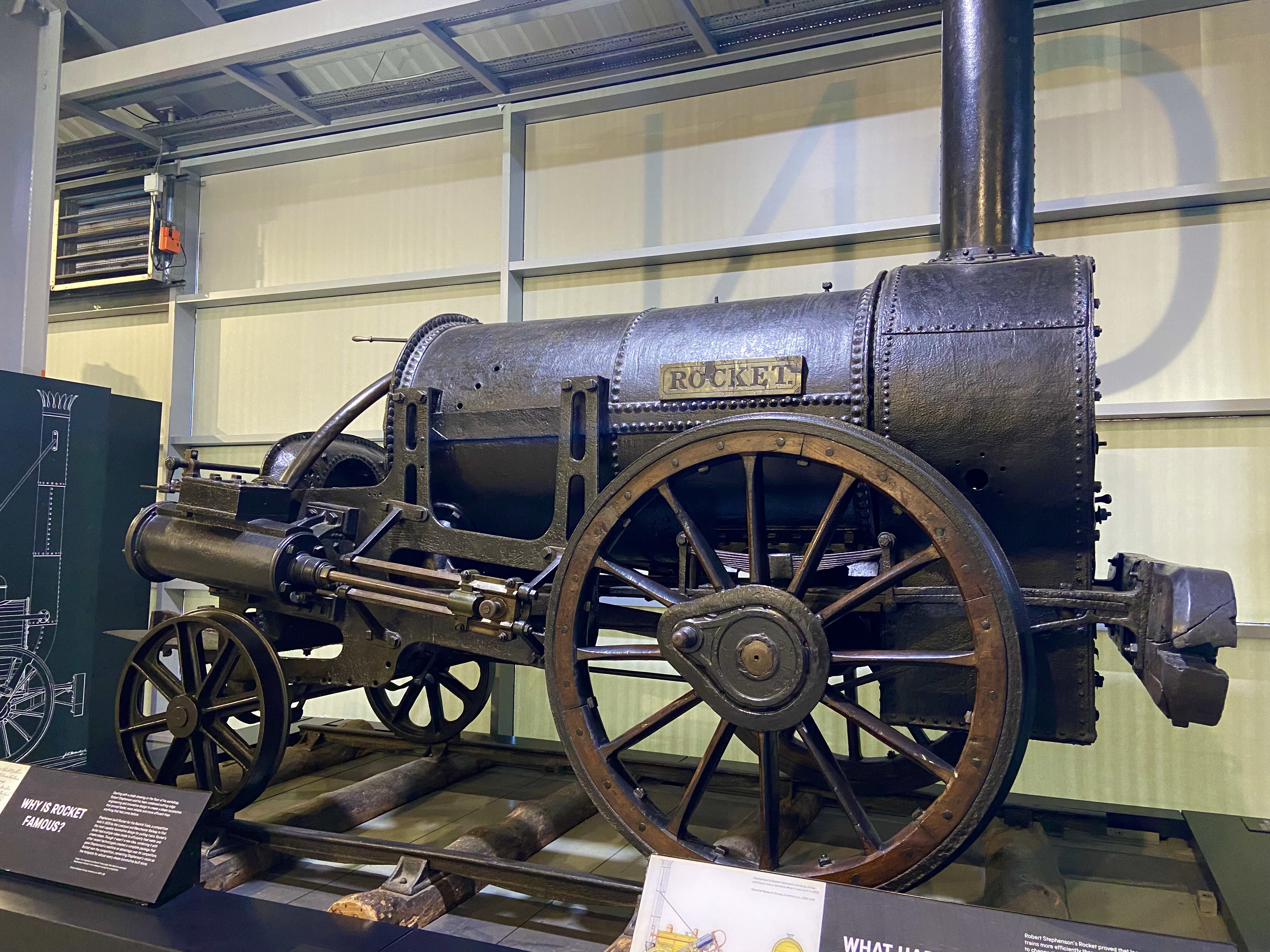
There is some beautiful rolling stock, from an old horse drawn rail carriage to a former Royal train, and from Stephenson’s Rocket (which won a competition, in 1829, to run on the Liverpool and Manchester Railway – the world’s first inter-city passenger railway line) to the Flying Scotsman, which 100 years later, ran from London to Edinburgh and is officially, the first locomotive to reach 100mph.
What struck me most was the quality and workmanship that used to go into building those trains. The shiny paint and intricate shapes are so much more attractive than the modern, soulless units that run around the network nowadays.
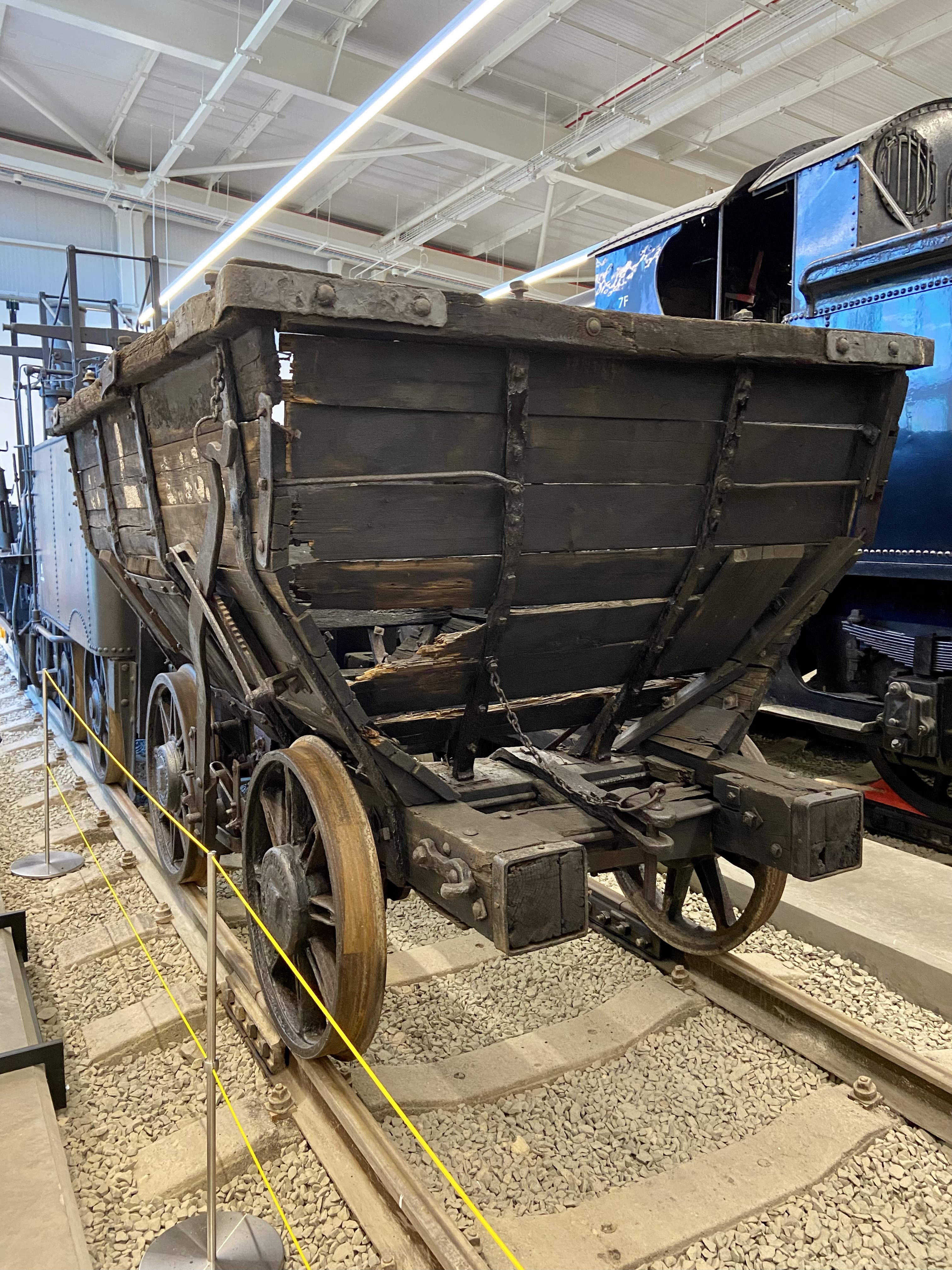
The second shed was all about practicality. Early wooden coal trucks and massive snow ploughs stood alongside freight containers for everything from cattle to wartime tanks.
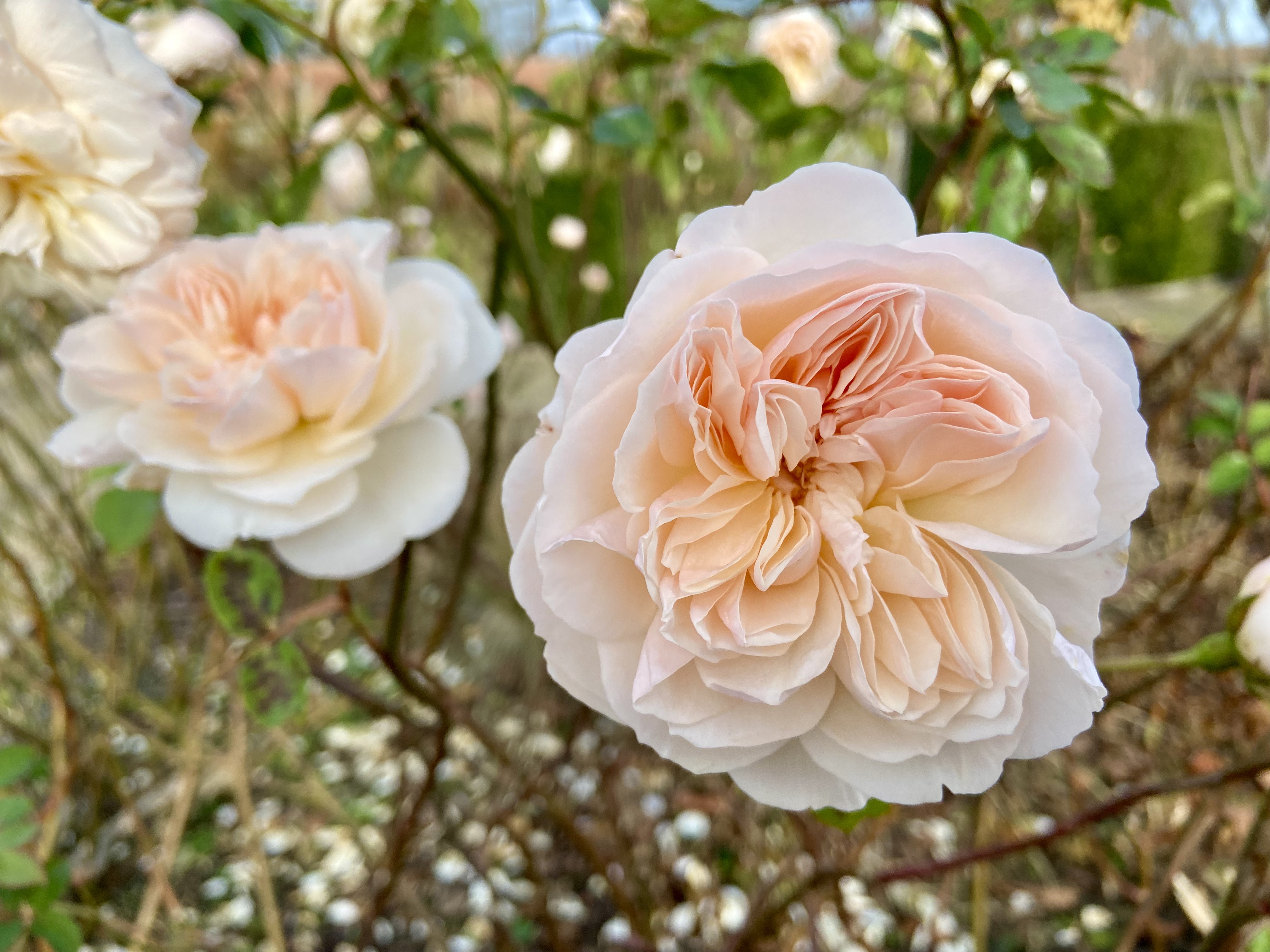
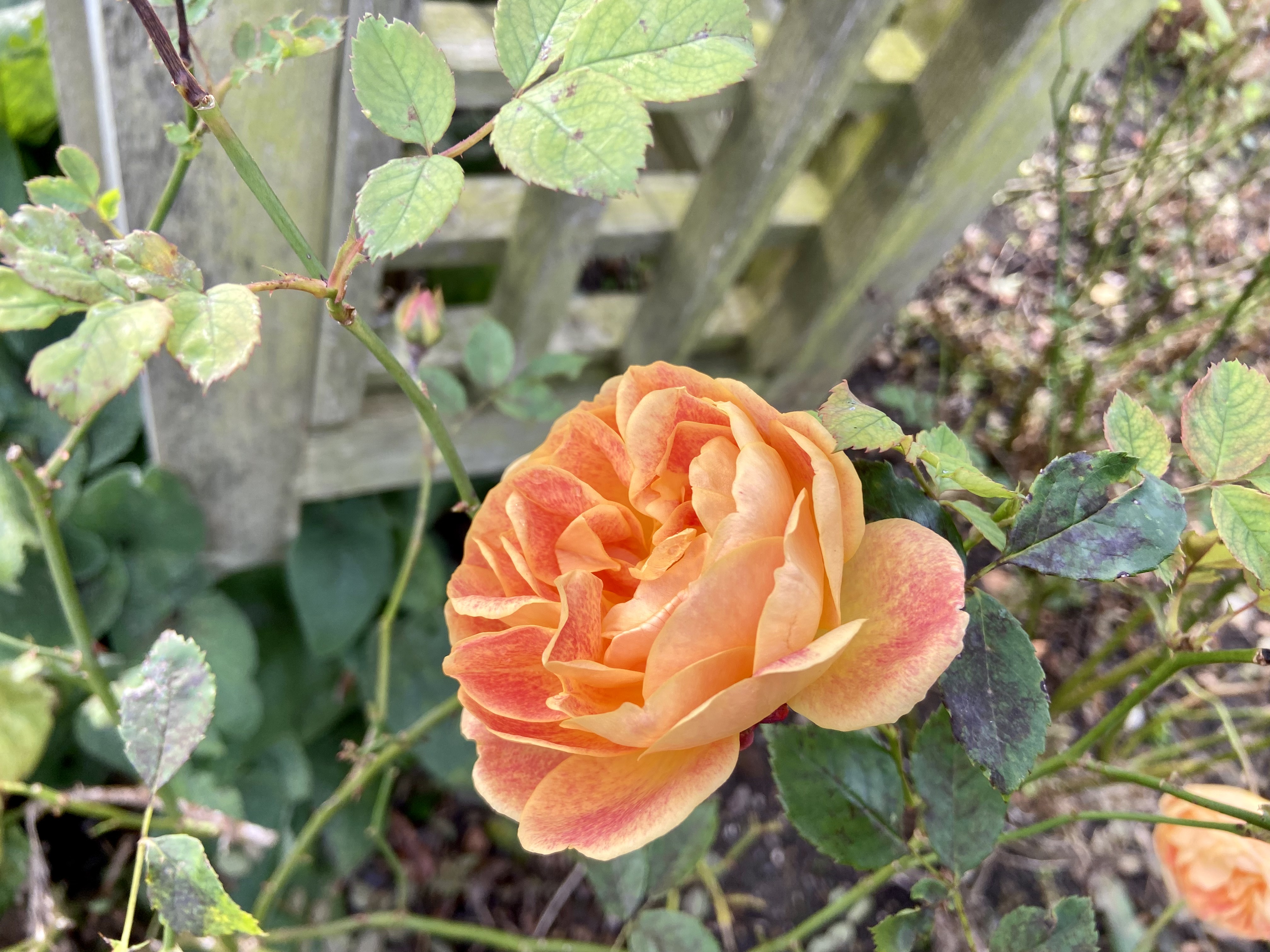
On Tuesday we went to Wynyard Hall Gardens. Famous for its roses, it wasn’t the best time of year for a visit. Nonetheless, there were still some lovely blooms and a few autumn leaves were clinging to the trees in the landscaped grounds.
And I’m going to leave it there for now. Sadly we have to leave the lovely farm cottage that’s been home for the past week at 10am, so breakfast and packing will have to take precedence, but I’ll leave you with a lovely encounter at the window on Tuesday afternoon. As always, thanks for reading.
A Sunday afternoon entry this week. Yesterday Mum, Dad, Triar and I travelled to Teeside to a farm stay cottage. It’s a lovely place with cosy stone houses and stables, a cobbled yard and plenty of animals. I took Triar for a tramp on the moors at seven thirty this morning and we came home hungry for breakfast. Morning coffee came later. The cheesecake looked delicious, but having been mostly off sugar for a few months, it was a bit too much. Next time, it’ll have to be a cheese scone instead!
The farm is gorgeous! It’s also a lovely novelty to be able to take pictures without worrying that I’m giving away classified information. The owners are very friendly and, with permission, we explored the farm this afternoon.
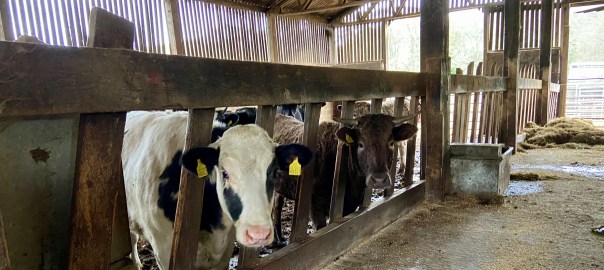
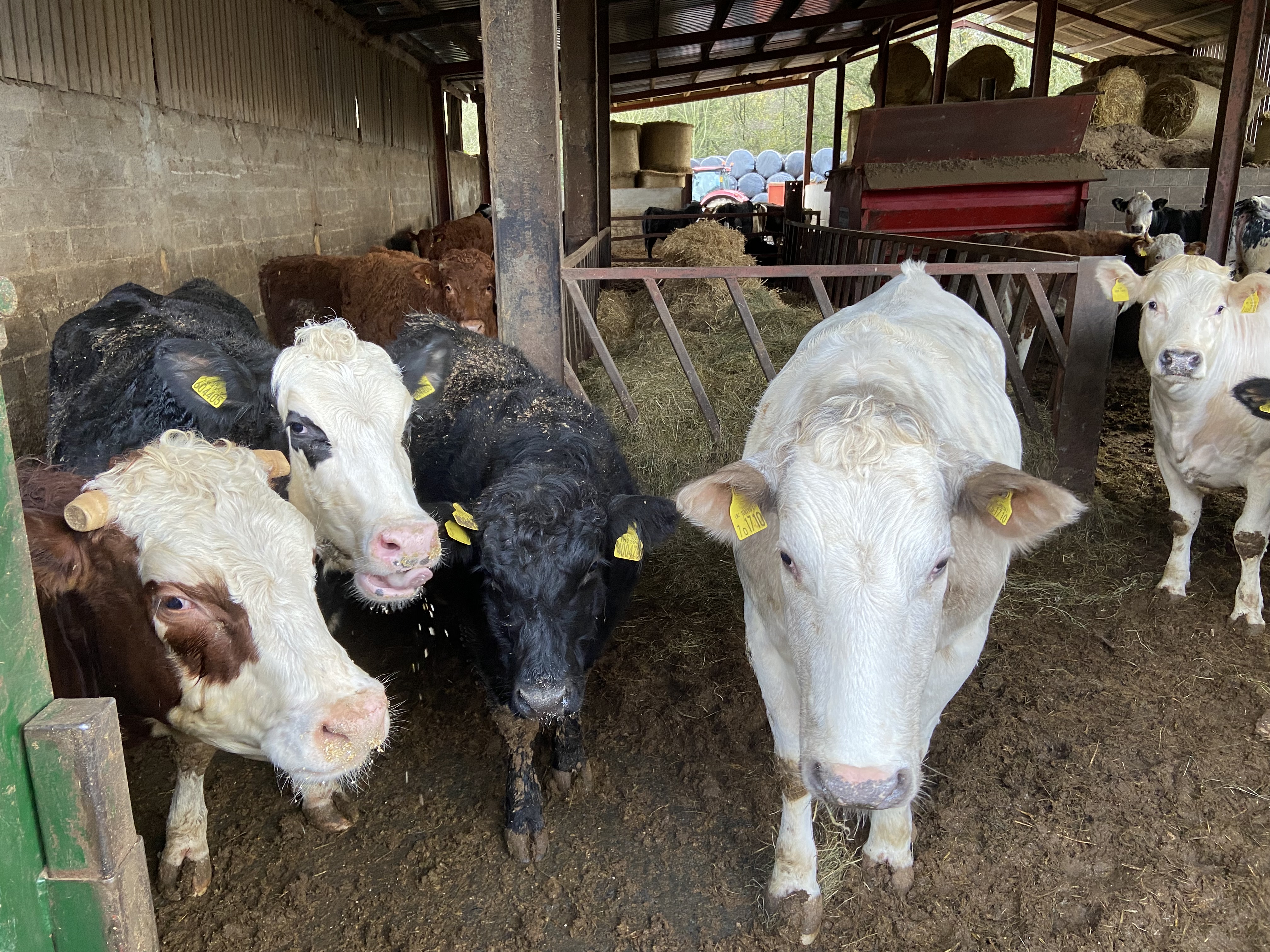
As well as finishing cattle…
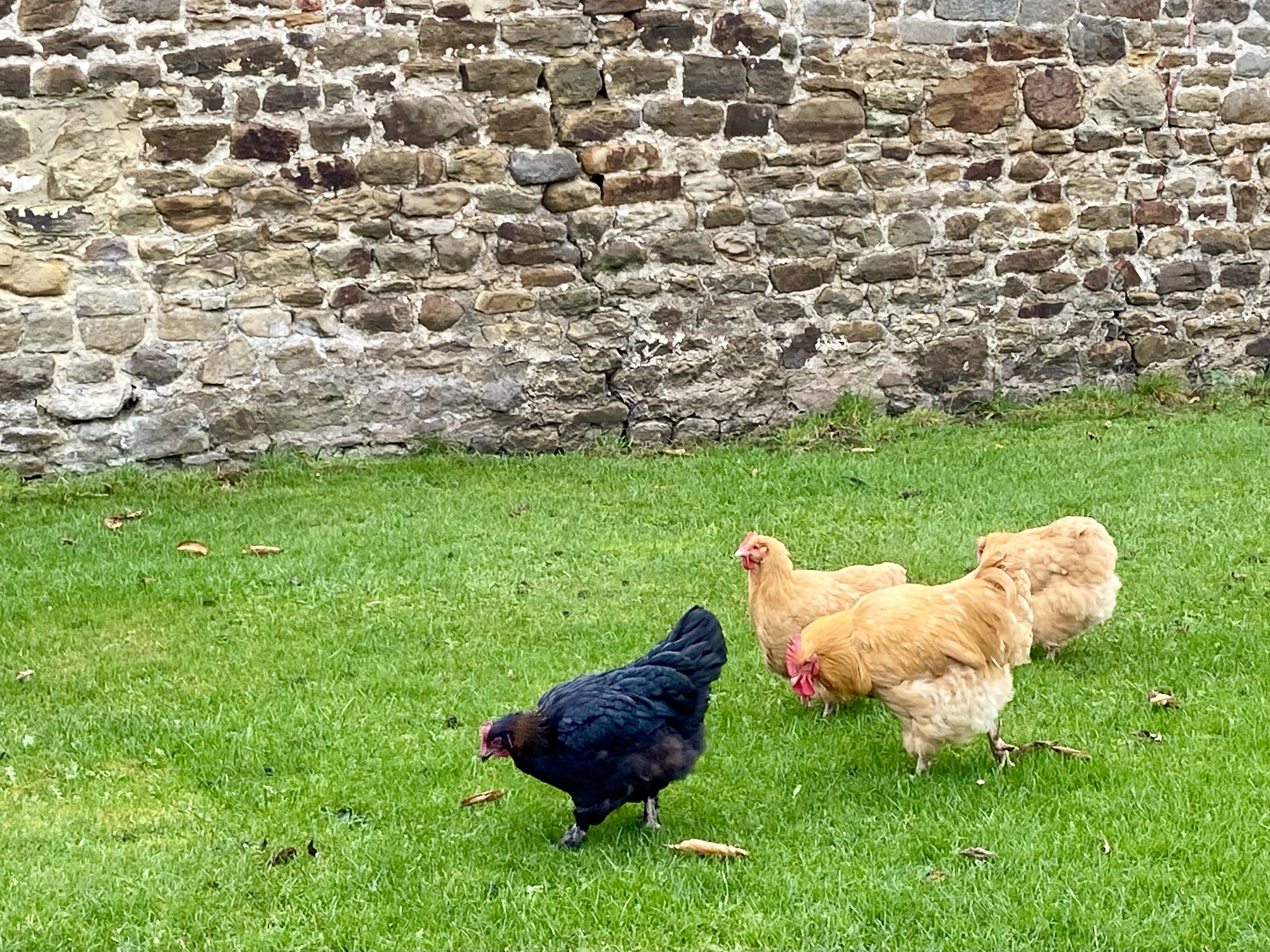
…there are chickens…
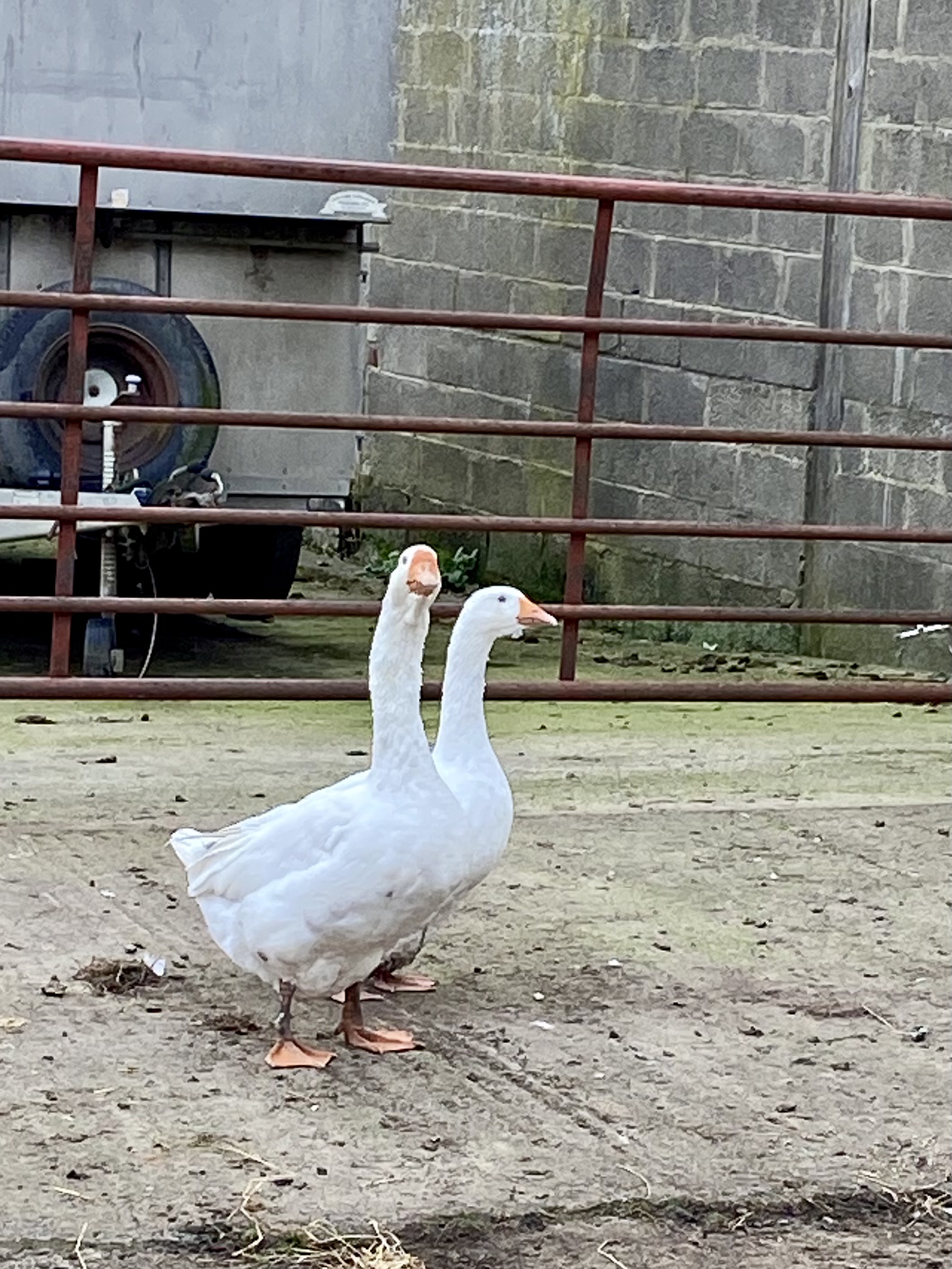
…a traditional brace of guard geese…
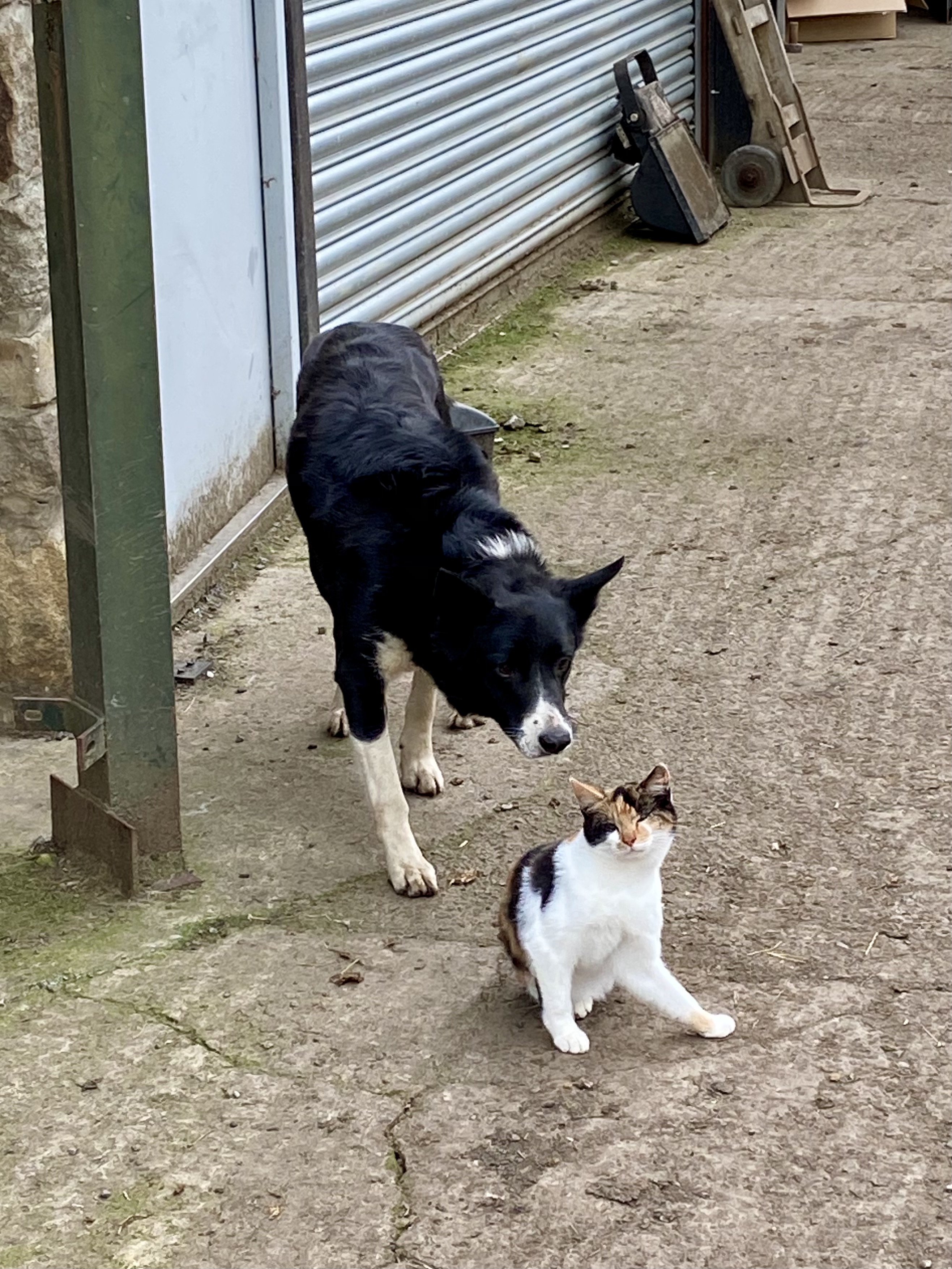
…and a collie that never got the memo about herding cats.
To be fair, I’m not entirely sure this cat is taking this game seriously.
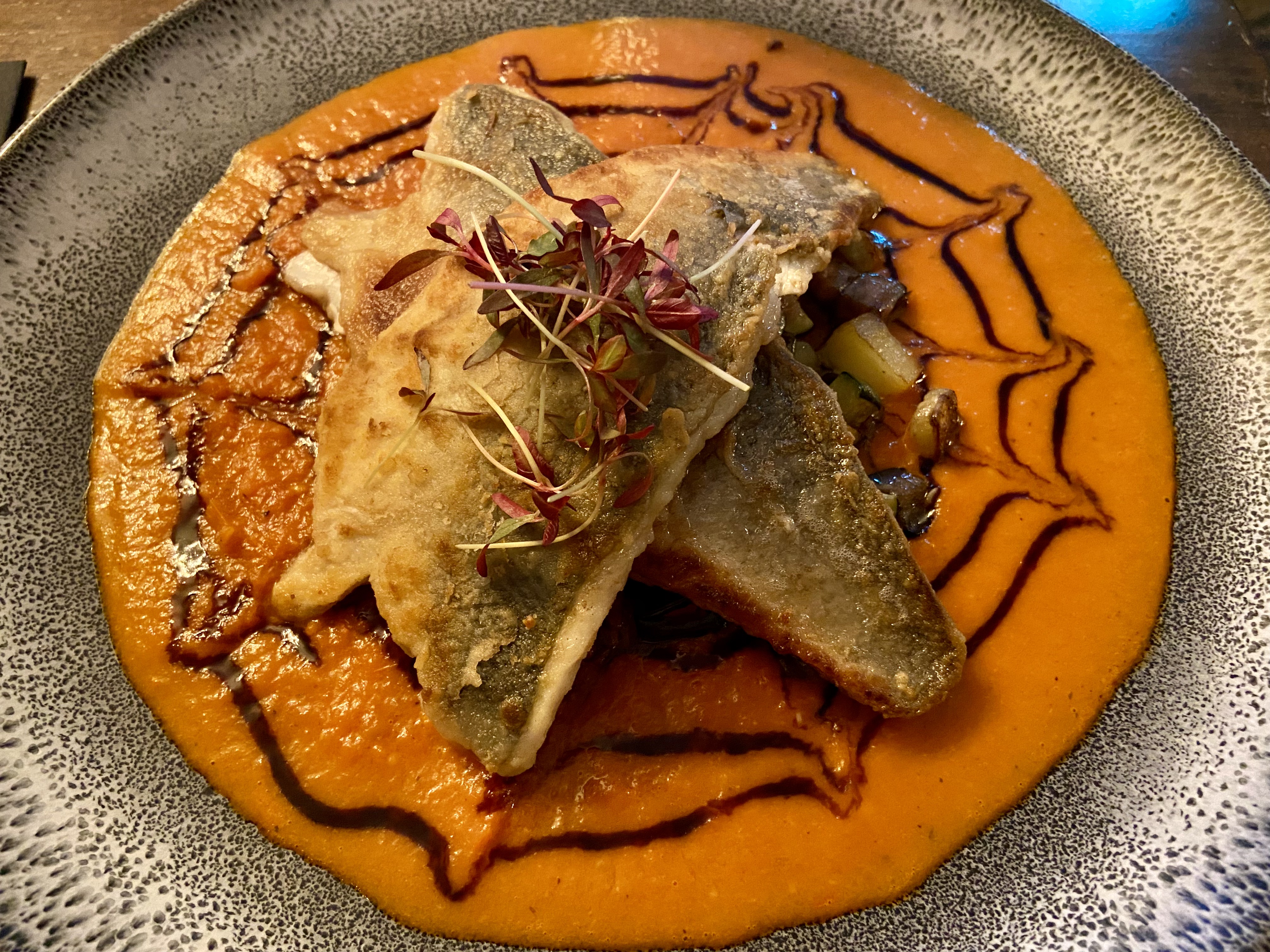
As you can probably tell, I’m enjoying my holiday so far. We stopped at The George for lunch yesterday. It’s a 16th C coaching inn, though I suspect the food styling has changed a bit in the intervening centuries. Who knew that Halloween themed fish would be a thing?
I selected the delicious sea bass with roasted vegetables. Mum chose Yorkshire pudding steak pie on a bed of buttery mash. Mine was definitely the right choice as I enjoyed every last bit, while the (probably equally yummy) pie was a bit too big. The George is within easy driving distance of the farm, so I’m hoping to go back.
Hope you enjoyed the pictures. Have a good week all.
The storm came last Sunday, as forecast. It wailed around the thick walls of my snug little house and wuthered in the chimney. Despite having no doors on the rooms upstairs, my living room stayed warm and cosy. I grew up in houses where the central heating was in minimal use and one room was kept warm with a fire, so it was nothing new. With Triar snuggling on his sheepskin rug beside me, we weathered the storm in comfort.
Triar seems to have recovered well, for which I am enormously thankful. I was out with a colleague from the local authority on Wednesday. He also lives alone with his dog and we discussed how much a dog becomes part of your life when it’s just you and them. My morning walks down Blackbird Lane are shared with Triar and without him, I might never have walked there. More than anything else, those walks help me stay centred and because Triar enjoys exploring all the scents under the hedgerows, we take our time. As he sniffs around, I enjoy the birdsong.
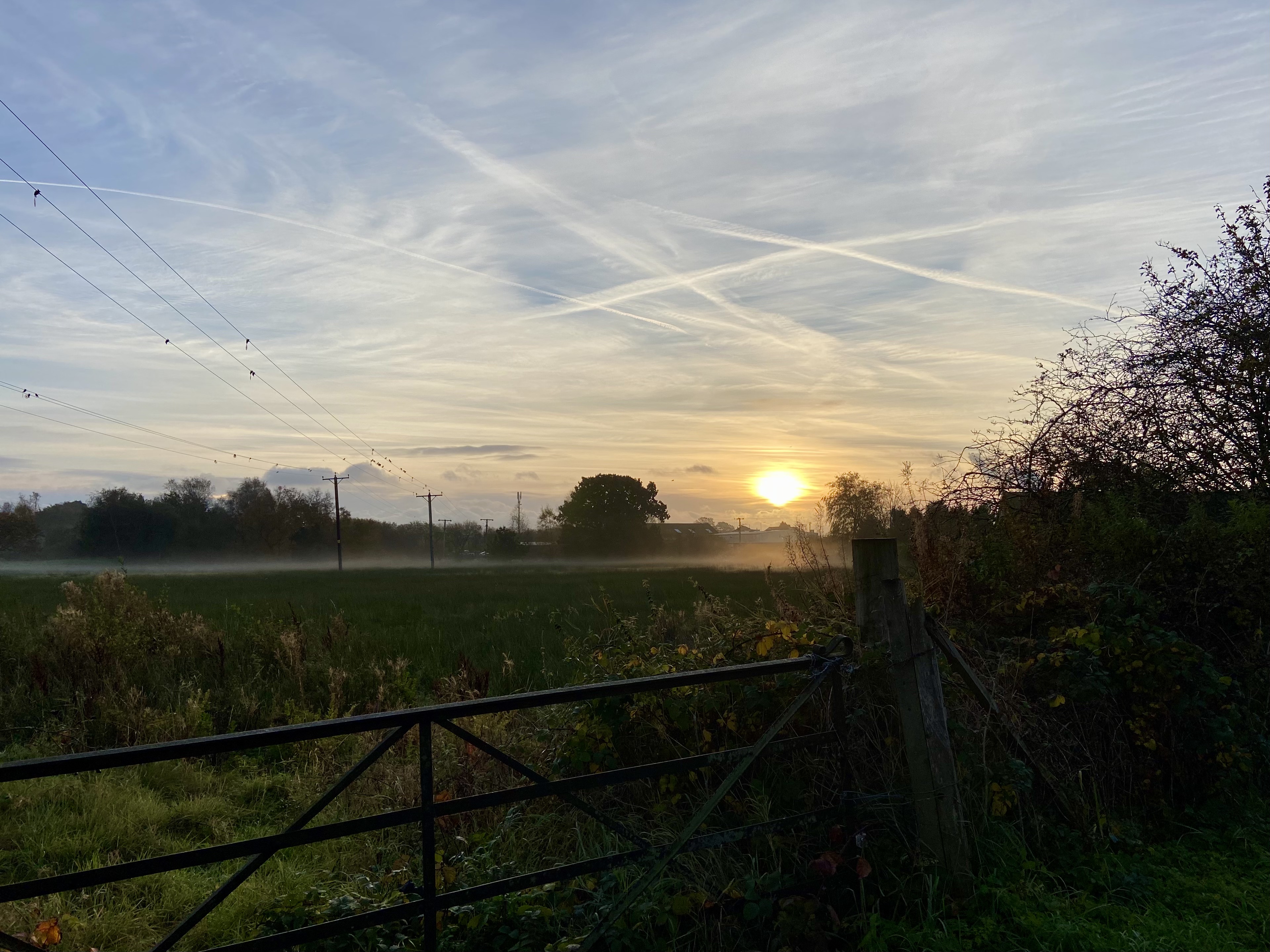
Wednesday was a particularly beautiful morning, calm at sunrise, with mist rising over the fields and the birds were in full song. It’s a while since I used my Merlin App, but the Dawn chorus was so beautiful that I pulled the phone out of my pocket and switched it on. As well as the inevitable blackbirds, sparrows and robin (his sweet little song always lifts my heart) I picked up the song thrush that breaks snails on my patio, a long tailed tit and a goldcrest, among other things.
I took some photos too… of course I did!
Despite knowing I had a potentially difficult day ahead, there was a true moment of peace, there in Blackbird Lane.
I’m not sure whether it’s the time of year, or whether it’s the fact that the other vet that works with me has been seconded to another department, but the welfare referrals have gone crazy in the last two weeks. My lovely line manager has been away, so these were passed on by other managers from another region and I think there were seven of them altogether. Wednesday’s sounded most urgent and there’s at least one that (in my opinion) isn’t an indicator of poor welfare at all, but it is overwhelming.
When I say it might be the time of year, several of them came from slaughterhouses. As winter approaches, the farmers send off their old stock that will struggle through the cold weather, so inevitably those include animals with problems. Part of my job involves reminding farmers that welfare doesn’t end on the farm, but needs to continue until the end of the animal’s life. If it isn’t fit to travel, or perhaps it is, but shouldn’t go far, then they need to work out whether it should be taken to a local abattoir, or culled on the farm without going anywhere.
Too many farmers rely on someone coming to collect their cull cows and “organize all that,” when they should be making the arrangements themselves. Difficult to change the mindset, when that’s what they’ve always done but it’s a discussion I’ll be having a lot. Getting the best price for the meat or taking the most convenient path shouldn’t be the standard. Given the animal has given them the best part of its life, its welfare in death should be given decent consideration. If taking that cow with overgrown hooves to the local abattoir saves them from me and the local authority turning up to inspect all their animals and paperwork, that’s surely a good thing? Even if that’s their only incentive, I try to make it count.
Anyway, it’s almost breakfast time, so I shall wind this up. Triar and I came down to Yorkshire yesterday evening on the train. It’s not too expensive and as winter comes in, it might be more relaxing than driving, so we gave it a try. Luckily, Triar is an old hand on trains now. Here he is, under the table.
I had a wonderful week in Shetland. It’s the first time I have visited. Years ago, I might have been daunted by the idea of an overnight ferry, but having travelled on two with Triar, almost a year ago, I was looking forward to it. I had booked a cabin as I wanted a good night’s sleep at the start of my holiday. I retreated there early and spent a comfortable night cocooned in a warm bed as the boat carried me north.
I walked to Lindsay’s house in the morning, where she had cooked me a wonderful breakfast. The house is lovely, warm and welcoming like Lindsay herself, and with an amazing view over the sea. It was at Lindsay’s suggestion that I had decided to go to the Wool Week festival, though my plans had evolved as I had contacted an old friend, who had invited me to stay on her croft on Whalsay. So Melanie joined us, just as Lindsay and I were about to eat and we left together soon afterwards, having arranged to meet Lindsay and the friends who were coming to stay with her, on Wednesday.
The last time I saw Melanie was in 1986. We attended a huge comprehensive school together and mostly met up in the music room and singing in choirs at Christmas concerts. What a strange feeling it was to meet someone at 55 that I hadn’t seen since we were 17, but wonderful all the same. Soon we were catching up on ancient history and all the years in between and it was a great start to my holiday.
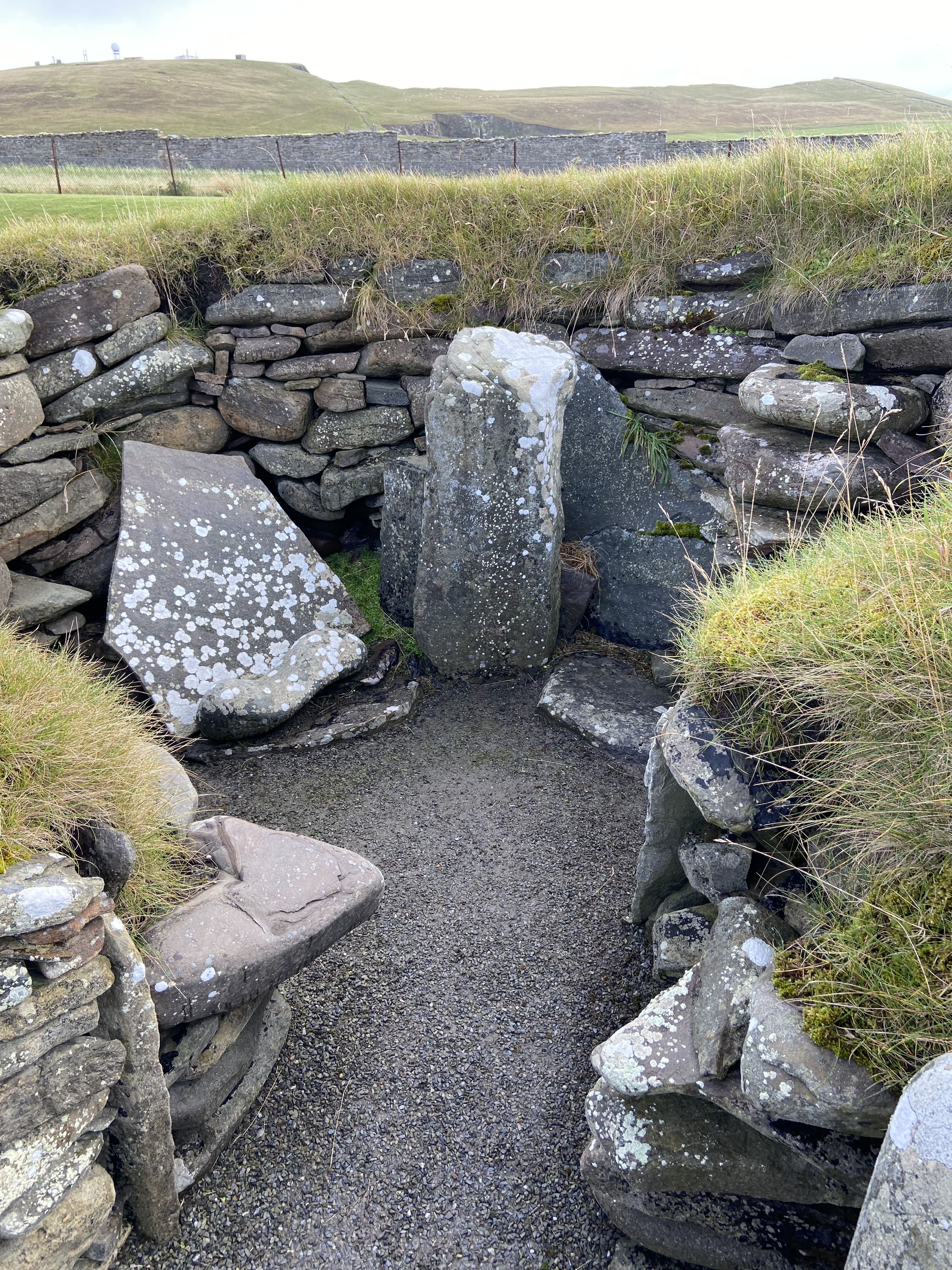
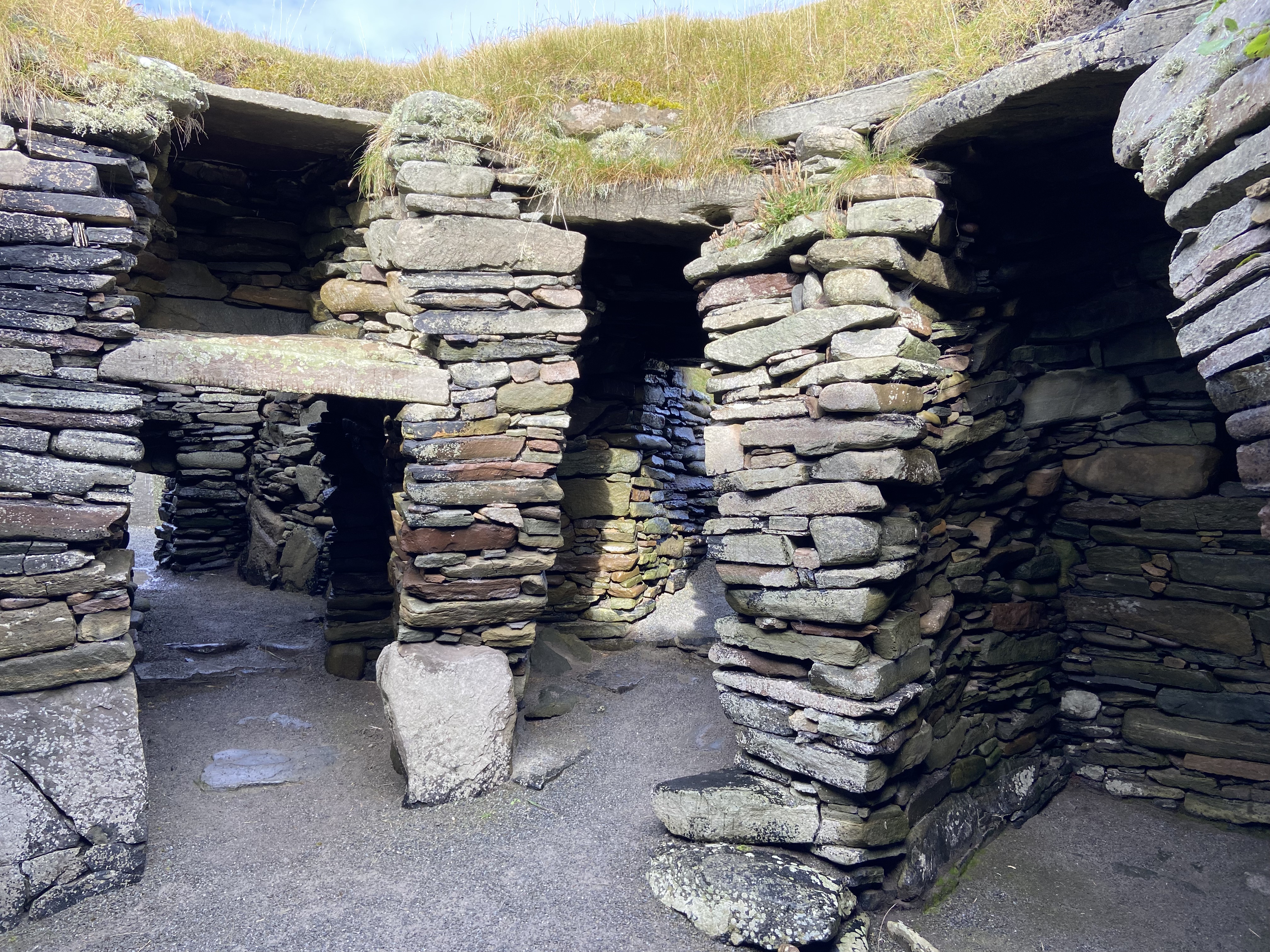
She drove me to Jarlshof – an ancient dwelling place, where people had lived from about 5-6,000 years ago, right up until the 1600s. Ancient brochs were superseded by Norse longhouses when the Vikings arrived. Later there was a laird’s house, parts of which were still standing. It would take years to begin to understand the site, but it was fascinating to walk round, trying to imagine those primitive lives, huddling through the long dark winters, before the arrival of glass windows, central heating and electric lights.
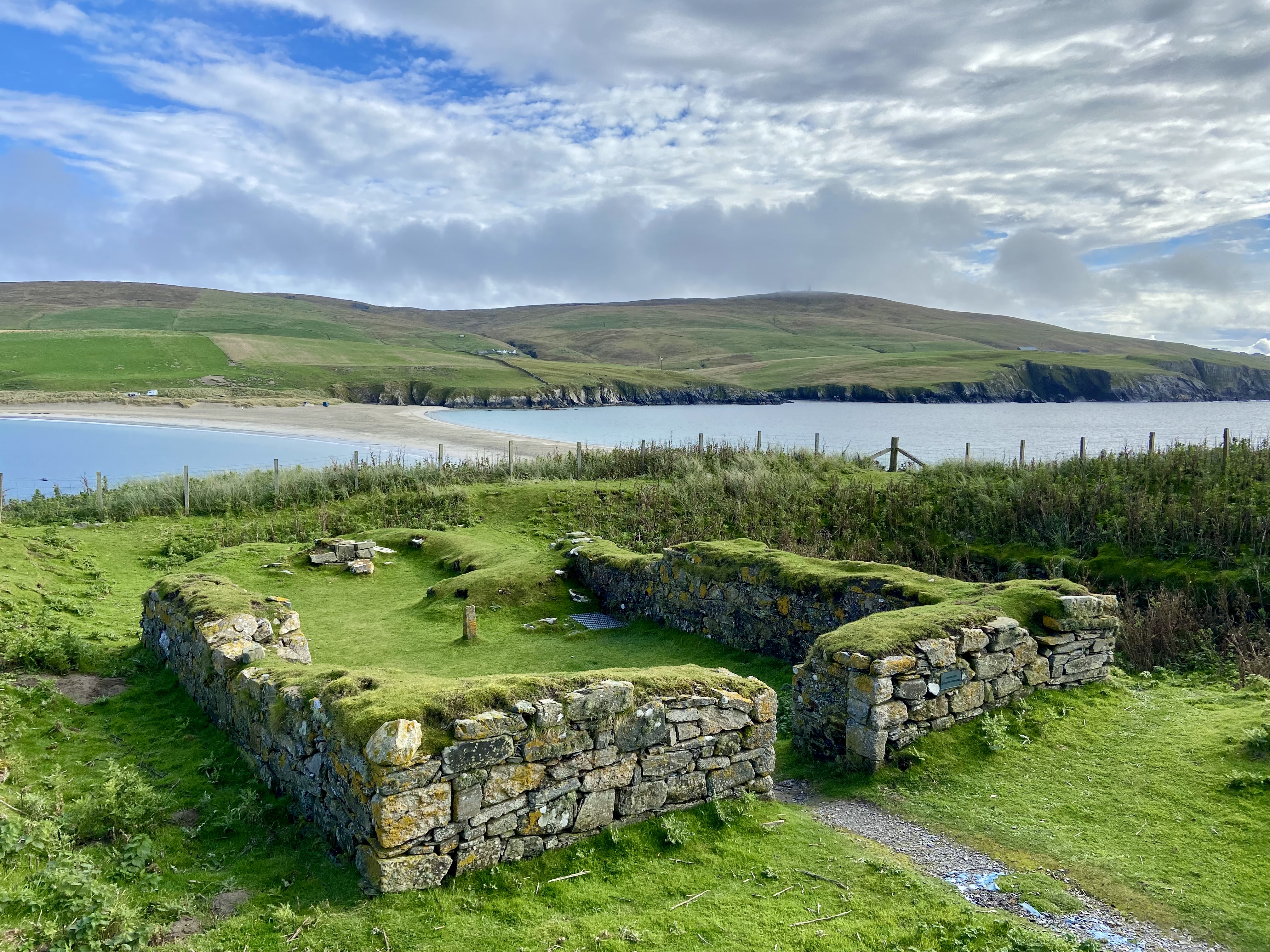
We then went to the ruined St Ninian’s Church on St Ninian’s Isle – almost an island, but connected to the mainland by a “sand tombolo” – which is a sandy beach with sea on both sides.
As we headed towards the Whalsay Ferry, it started to rain and a rainbow formed over the landscape, which felt like an omen for a good week to come.
I expected to enjoy writing this entry – and I am as I had a wonderful week – but it struck me as. I paused to make coffee, that back when I left school in 1986, it was stupendously unlikely that I would have caught up with Melanie again. I liked her very much, but we had never been close “at each other’s houses” friends.
Back then, unless you kept up with someone’s address or landline, there was no way to keep in contact. I moved, because my parents moved, and then I went to university. I kept in touch with one friend – Sharon Dickson. We shared a flat for a year at uni. But other than that, it was unlikely I’d catch up with anyone else. If you moved, life moved on. You met new people, only keeping in touch with the closest of friends by phone or letter.
Though the internet is officially understood to have been created in 1983, that’s not something we would have heard of. When I was at school, most of the upper classes (there were 14 classes, each with 30 pupils in my year, so we were streamed) would not have taken “secretarial studies”. Ironic to look back at how that subject was viewed as secondary, as learning to type would have been tremendously useful.
After the internet became more widespread in the early 2000s, I had contact from two “early adopters” who got in touch through Friends Reunited, but until Facebook came along in 2004 (eighteen years after I left school) it was stupendously unlikely I would have accidentally bumped in to Melanie. We both left the town we grew up in far behind. So I guess I have Mark Zuckerberg and co to thank for the way things have turned out.
Having lived in various northern and remote places, I was interested to see what Shetland life was like. As I mentioned before, Melanie lives in a croft on Whalsay, one of the islands that is connected to the Shetland mainland by a ferry. Every time we crossed to the mainland, life was punctuated by that half hour journey.
The time we got up was related to which ferry we would catch. If you didn’t book the ferry, there might not be space and you might have to wait for the next. I was incredibly glad I was being driven around by someone who knew exactly how the whole thing worked, but that punctuation of life – ruled by the comings and goings of a boat – is very different from anywhere I’ve lived.
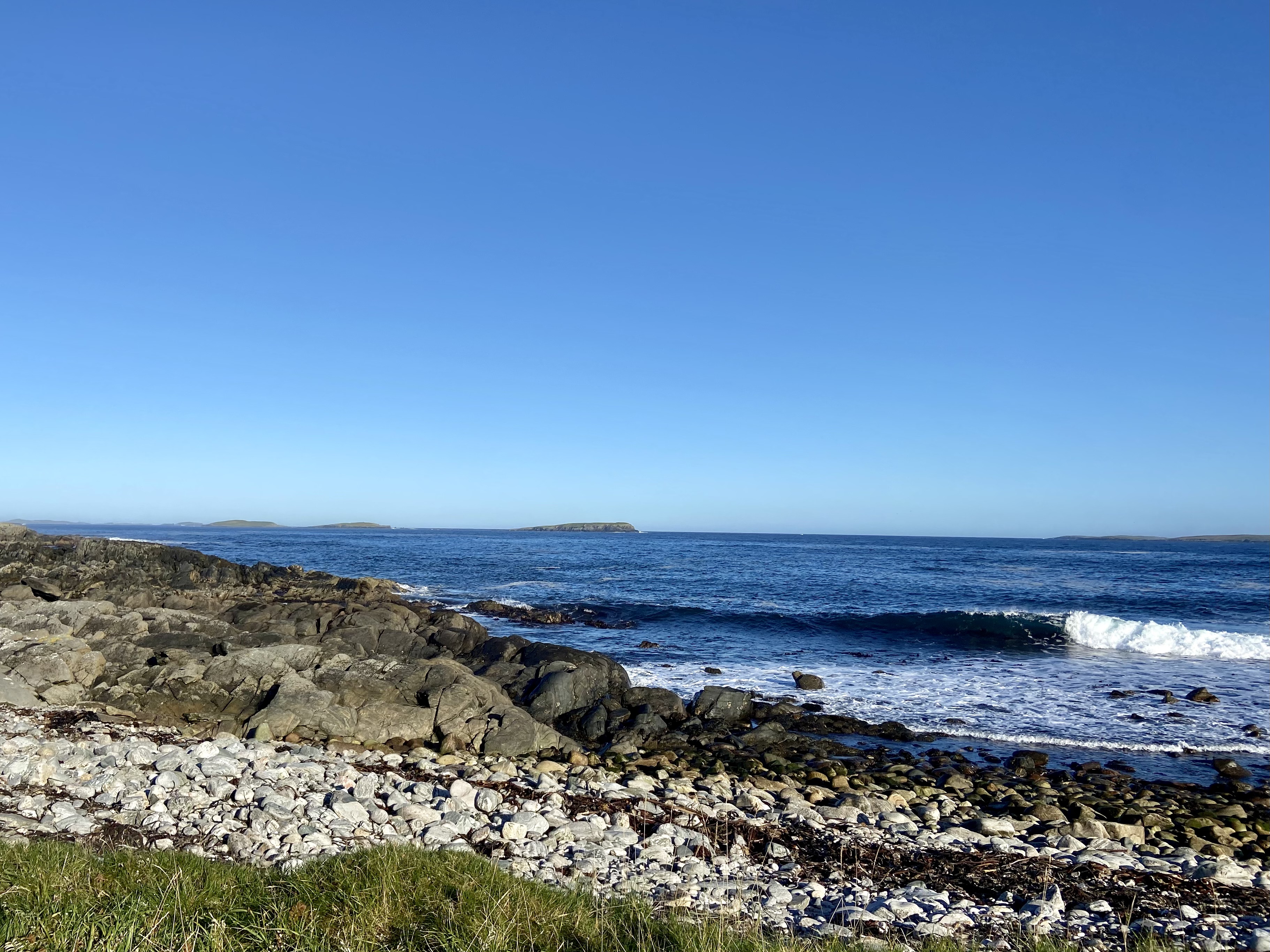
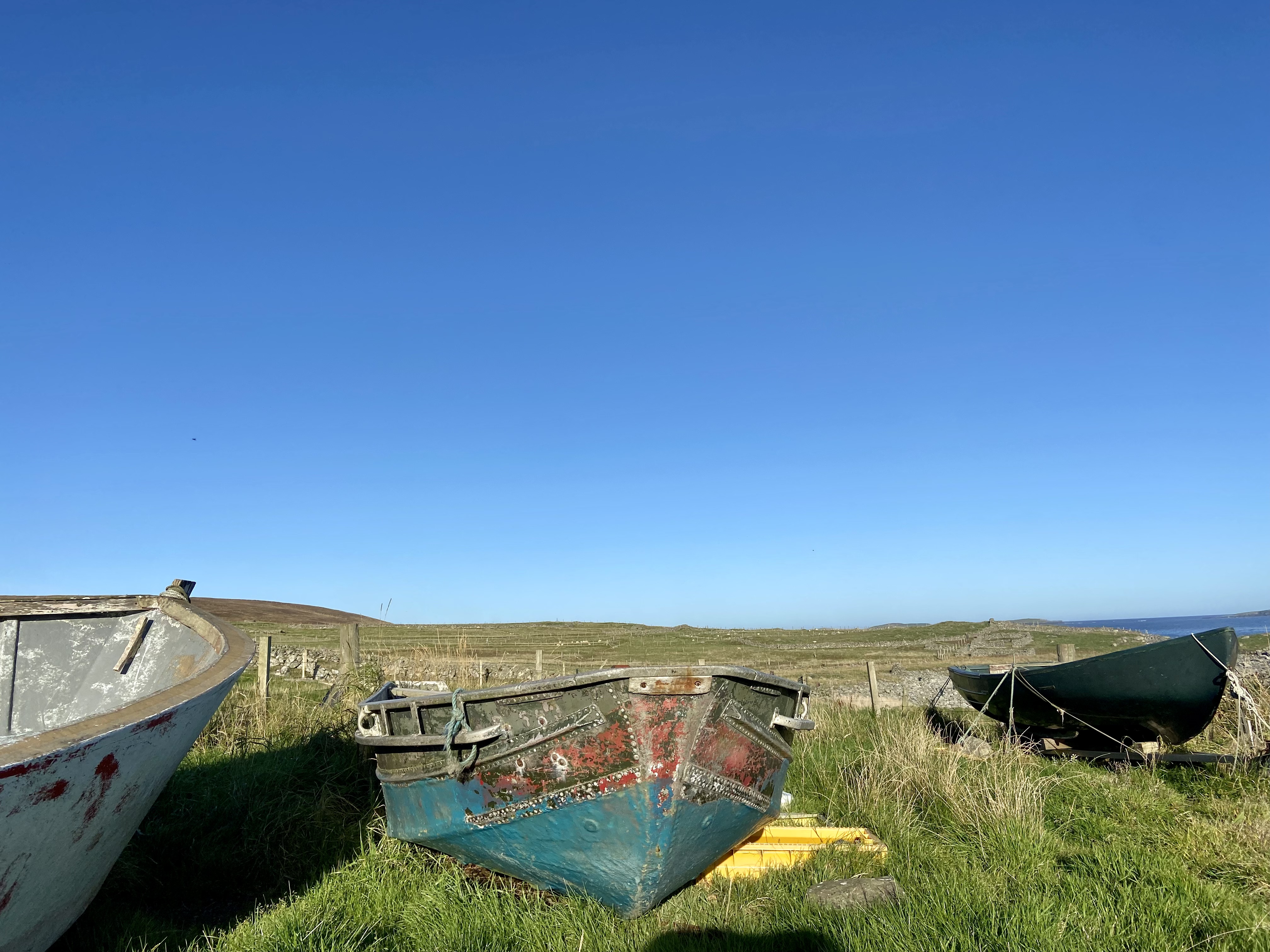
The croft itself was beautiful: a lovely warm home in that austere landscape, where trees don’t grow, but the sea is all around and the yellowing autumn grass was bounded by drystone walls. There were animals too: otters and seals in the sea, ponies, sheep and goats on the land.
As befits a croft, Melanie and her husband own about twenty sheep. Her husband has part ownership of a sophisticated fishing boat too, and as the week went by, I was privileged to share some traditional food, including a kind of stew of mutton chops, eaten with bannocks – scones cooked on a griddle, rather than in the oven, and also some of the fish caught from the boat. The mutton is served on the island at weddings and it was delicious. Melanie’s husband is a very good cook.
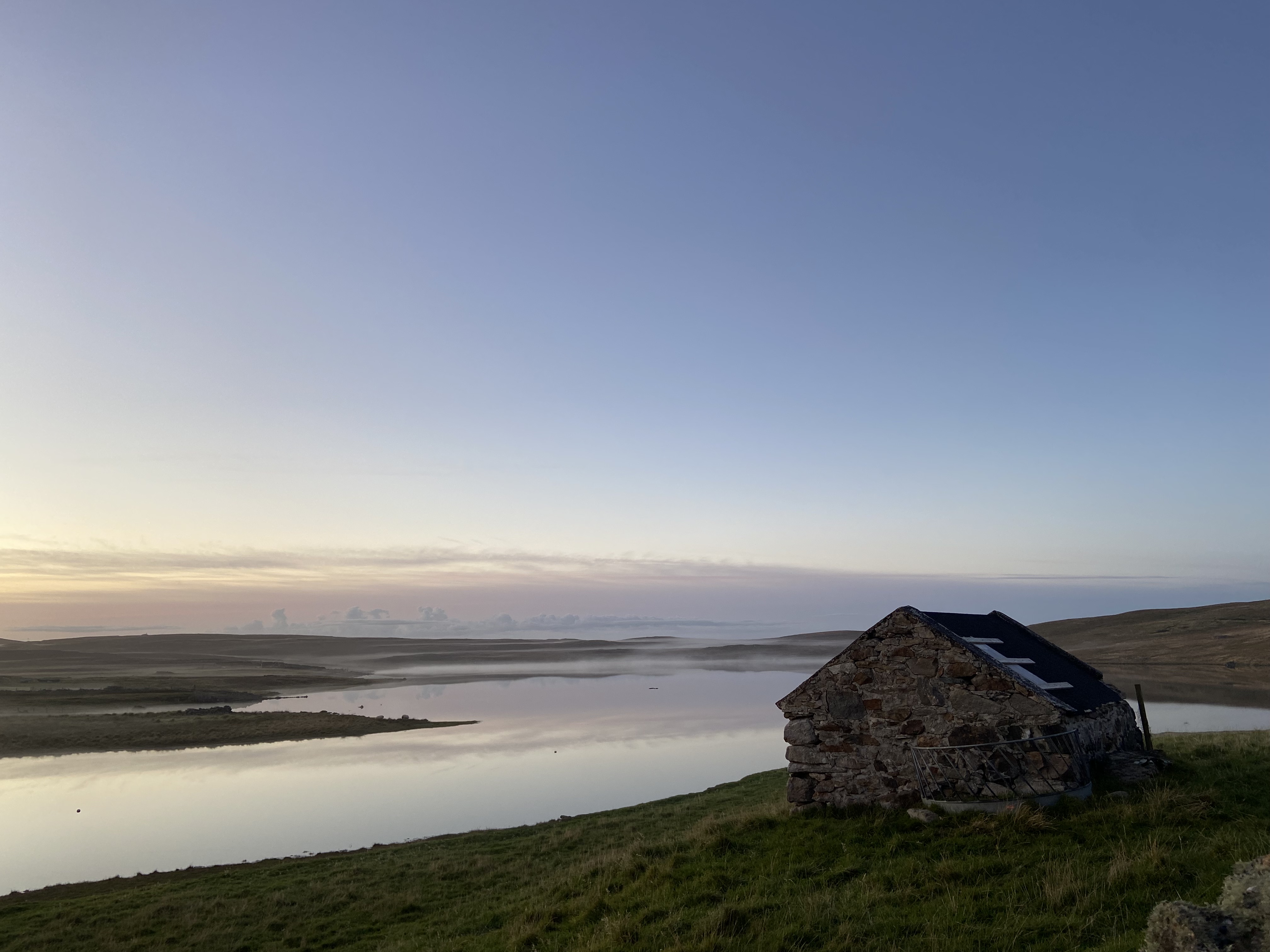
I took some photos of the changing light as the days passed and it was impossible not to fall in love with the place where Melanie has built her life.
Melanie, I and her friend Claire, went out to a few of the classes that made up Wool Week. There were so many of them, and I can’t knit or crochet, but Melanie booked three for us, the first stitching with wool, the second, felting and the third was called Weaving the Landscape.
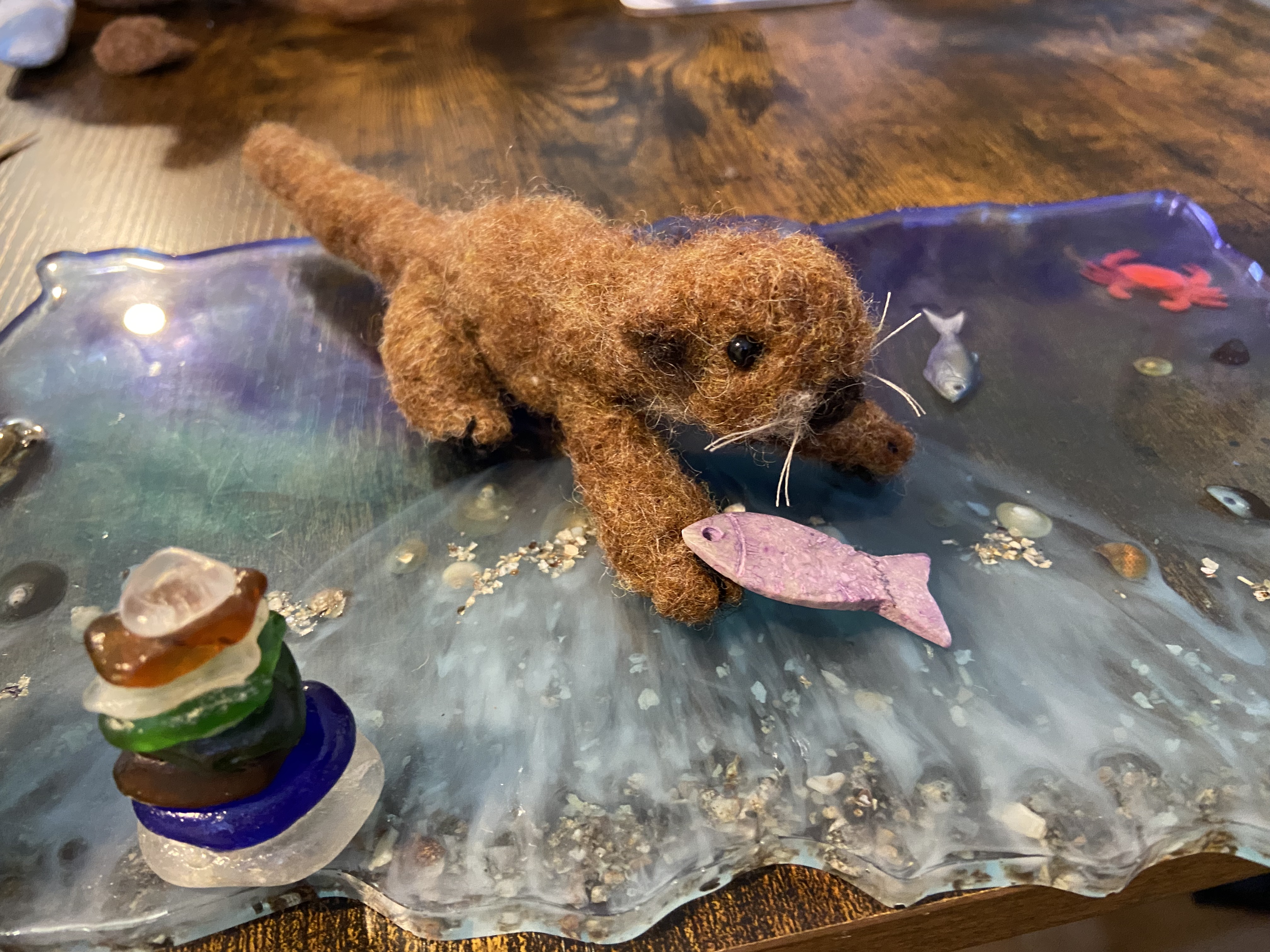
I haven’t finished the stitching project. It was impossible to do so in the afternoon lesson. I brought back wool though and, if I can borrow an embroidery ring and needles from my mum, I may be able to finish it. The felting class was fabulous. We made otters, and though mine is not anatomically perfect, I was very pleased with my efforts.
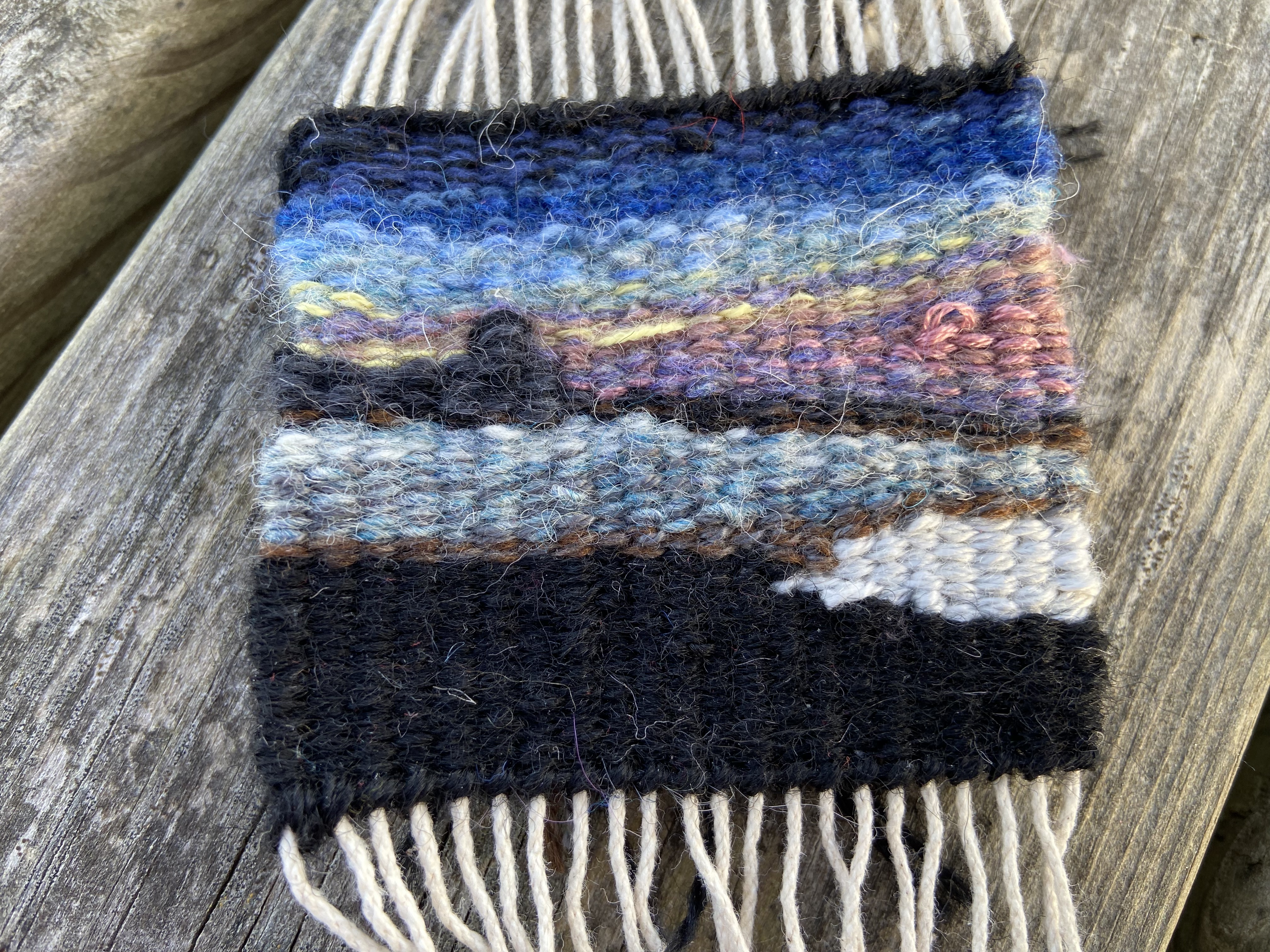
Weaving the landscape was also utterly engrossing. It took me all day to create a tiny two inch cloth, but hopefully you can see how inspired I was by the sunset photos of rising mist over the lochan beside the croft.
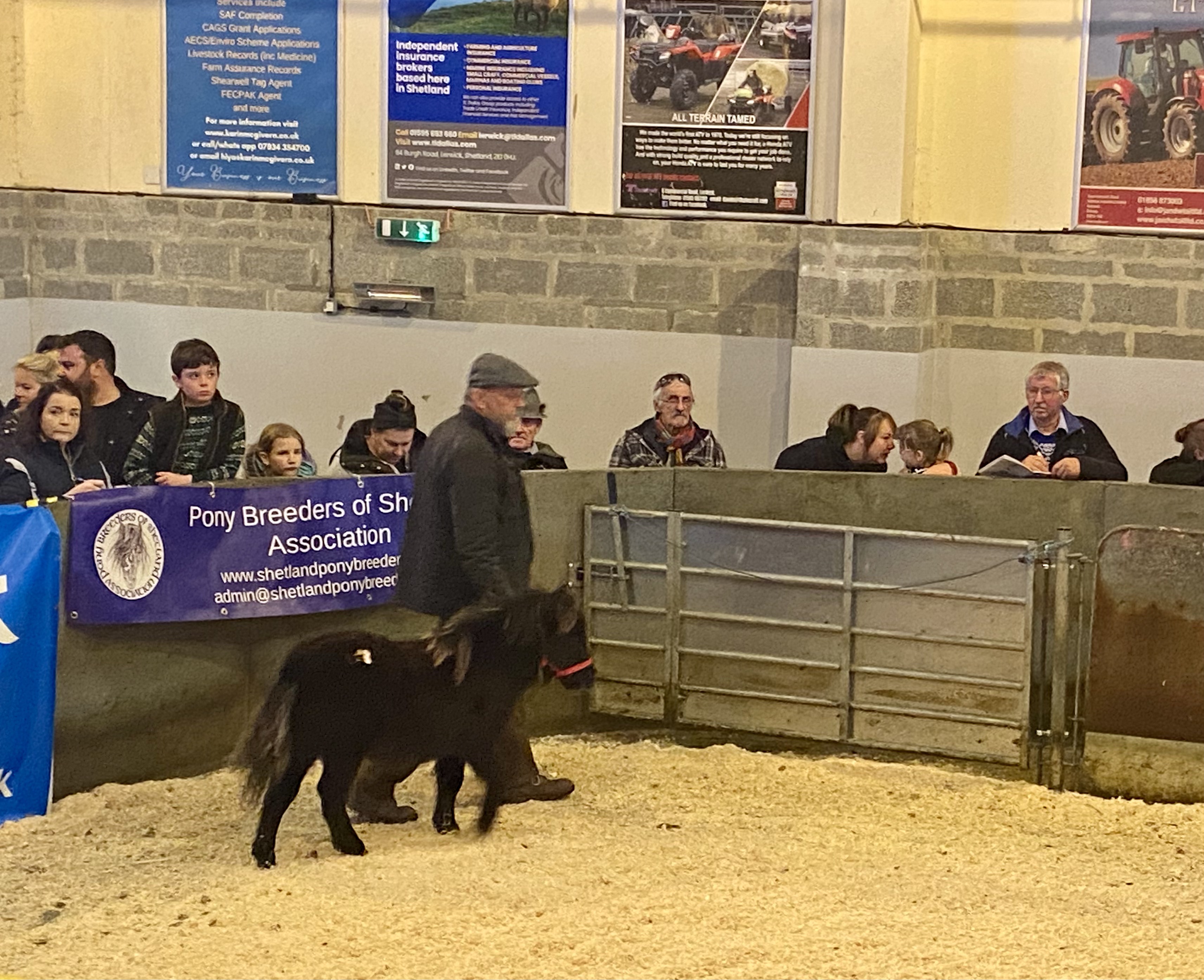
We met up with Lindsay at the mart on Wednesday , where the sale of Shetland ponies was under way. After that, Melanie and I had lunch with Lindsay and her friends. It was a lovely relaxed occasion. Who could have imagined what 4,000 guineas worth of tiny horse looked like?
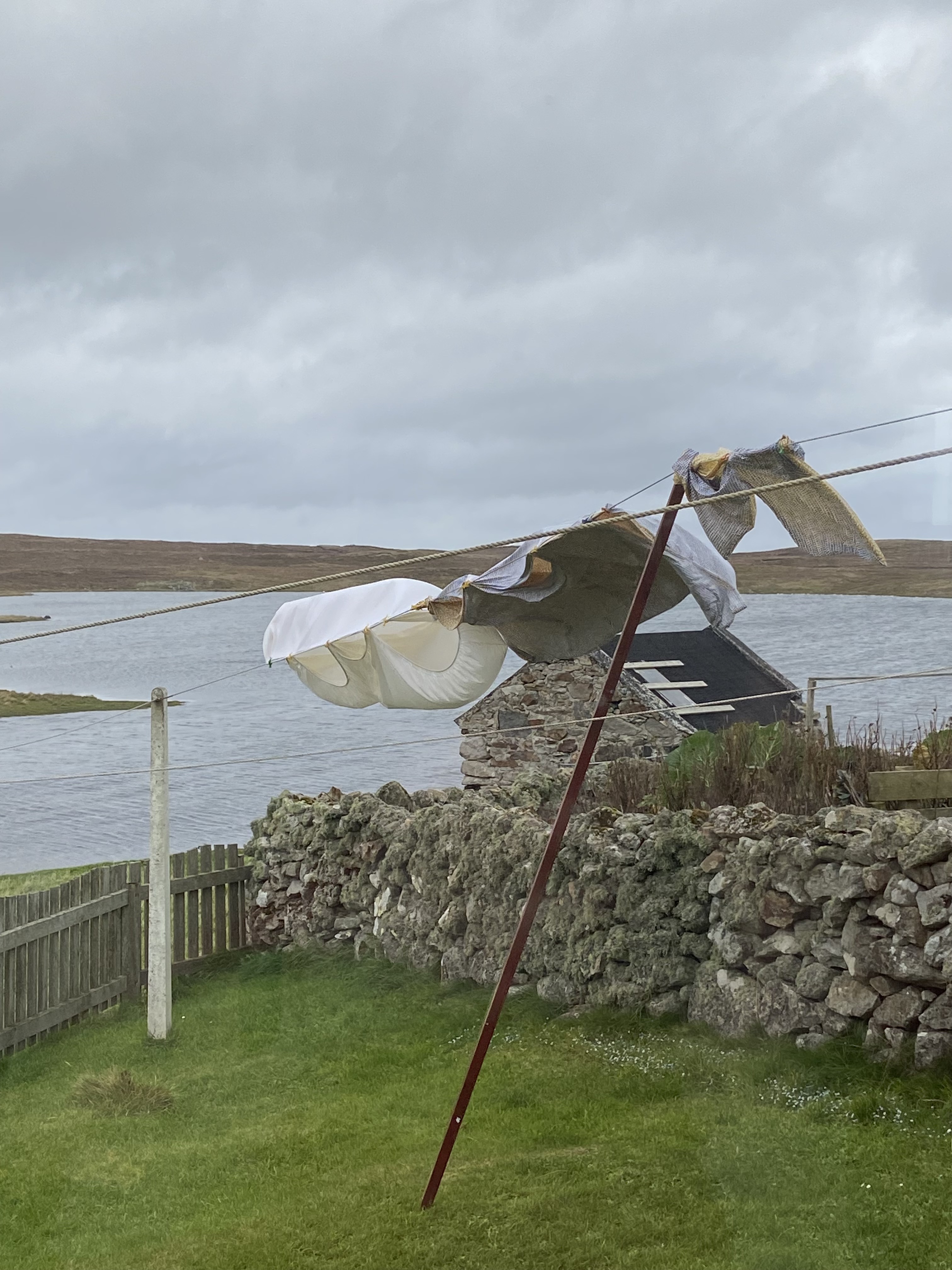
All too soon though, the week was over. The weather changed on the last day. I don’t know if you have watched the series, Shetland, but there is a shot in the opening titles, I think, where a small piece of plastic, caught on barbed wire, flutters frantically in the wind, This is my version of that shot! I think the sheets might have dried quickly, even though the temperature had dropped.
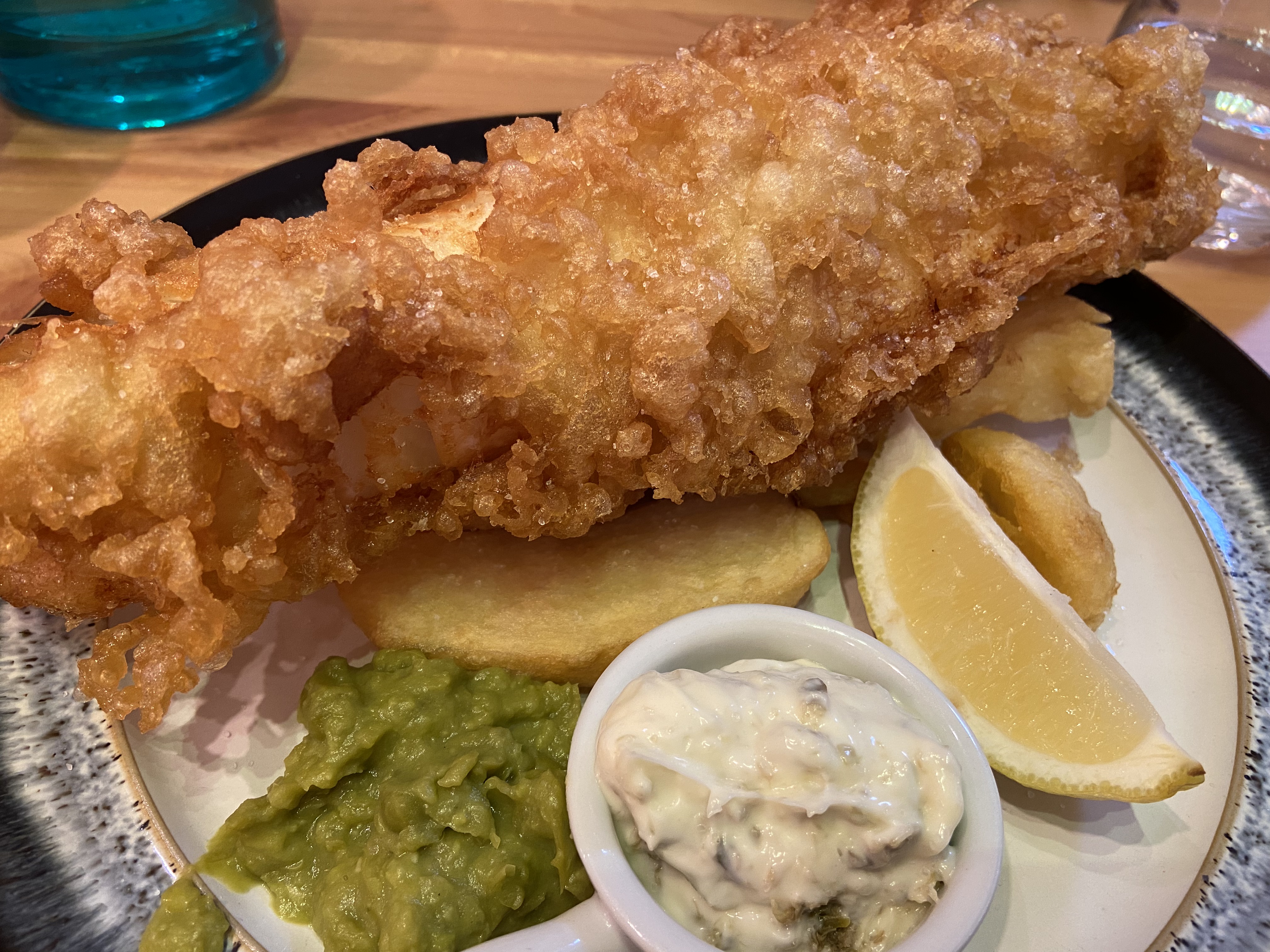
The boat was due to leave at five thirty in the afternoon, so I spent a last day with Melanie touring parts of the island. I bought souvenirs and ate the most enormous plate of cod and chips in a cafe in Lerwick.
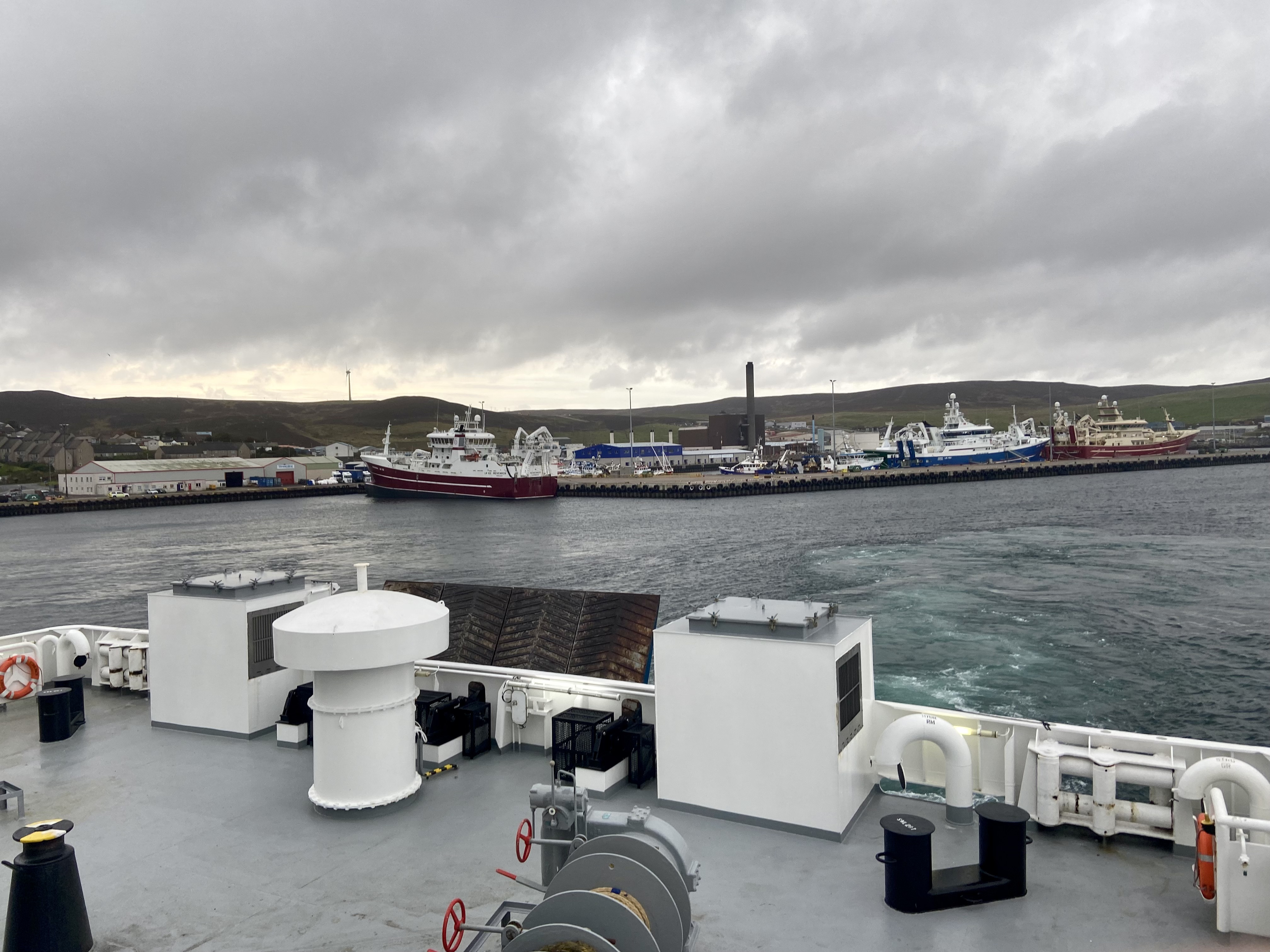
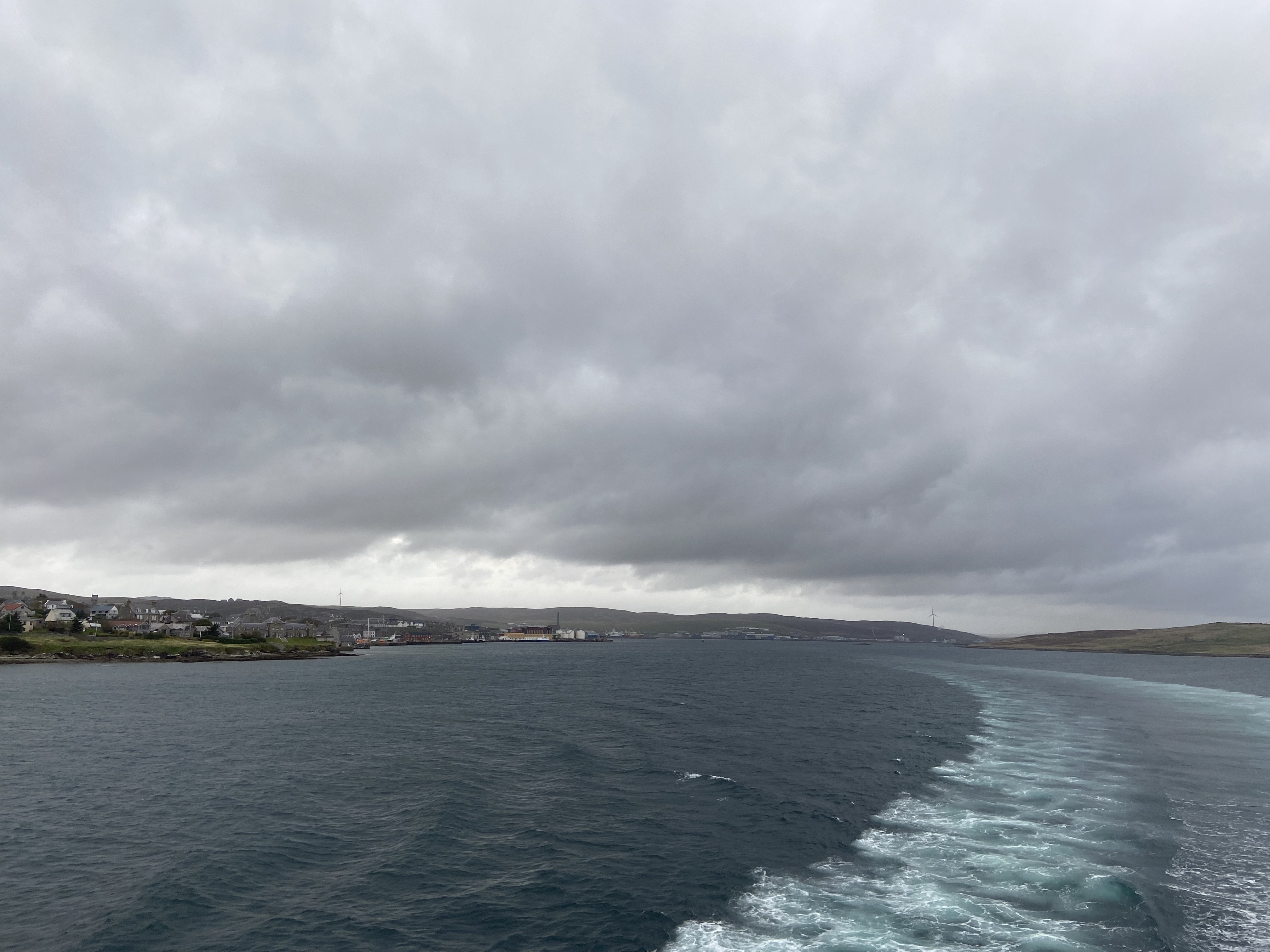
All too soon, it was time to get back on the boat. I took a few, precious last shots as we sailed away from Lerwick, but my abiding memories are of the warmth of my welcome to the islands and my desire is to go back next year, and do it all again. Thank you Lindsay, for encouraging me to go to Shetland, and most importantly, thank you Melanie for a wonderful week.
This post is filled with photos and is more than a week late. I have been away on holiday in Shetland and didn’t manage to post this a week ago on Friday or Saturday because there wasn’t great internet where Inwas staying on Friday night and I was travelling all of the next day. I’m home now, so will do my best to fill in a bit of information between the pictures I had already downloaded.
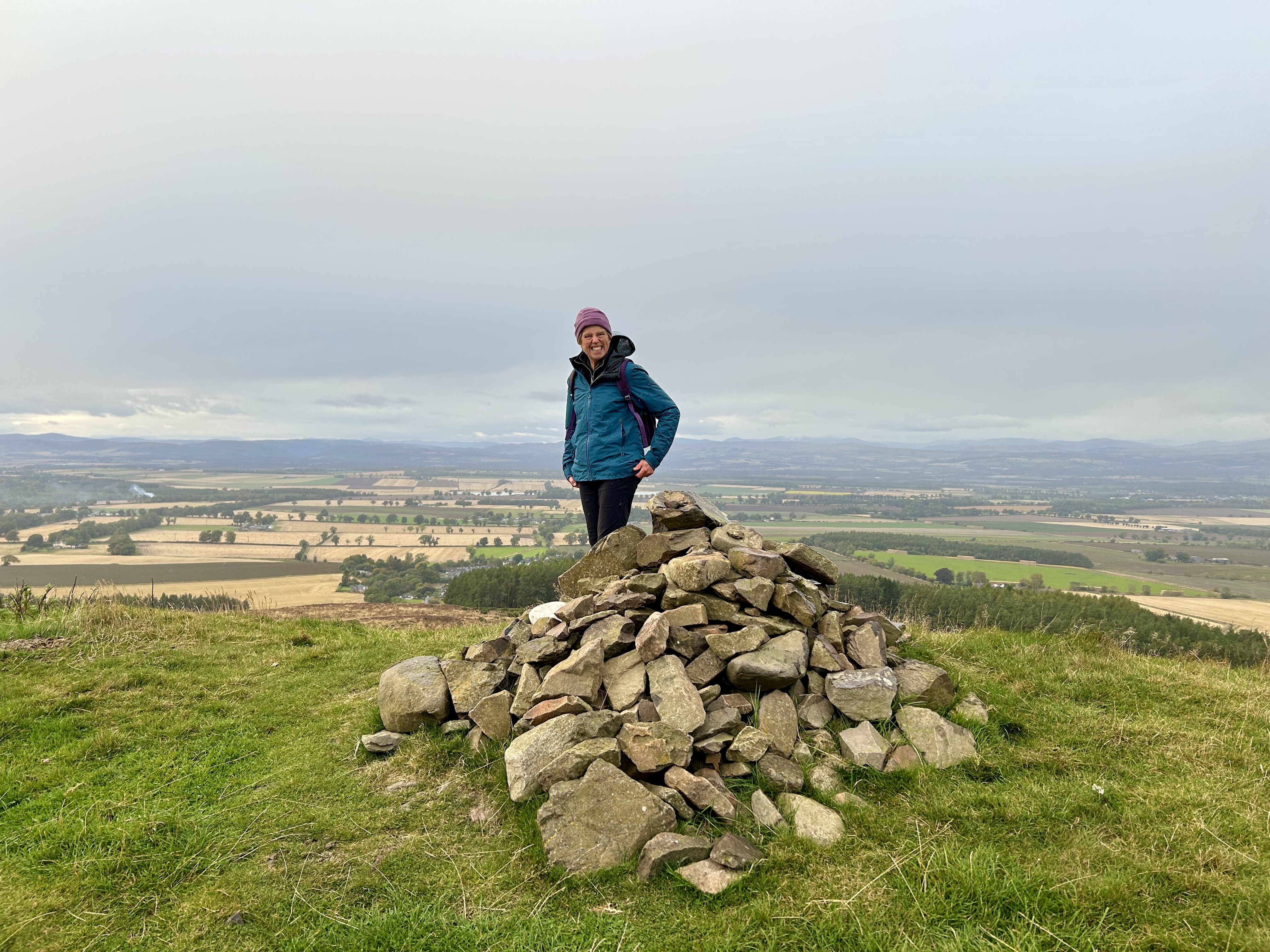
The first pictures are of Criffel, which I walked up with Triar. At 569m, starting near sea level, it was on the ambitious side for me. Indeed when I saw the above view, I felt I had bitten off more than I could chew, but I decided to give it a go. After all, I could always stop half way up…
Reader, I could not stop! There were good views over the Solway, though it was too cloudy/misty to see over to the Lake District. Perhaps I will try it again sometime on a clearer day.
I thought going down would be easier and, at first, it was. By the time 8 was three quarters of the way down, I was wondering if I was going to make it. My legs were so tired they were beginning to malfunction and there was a very real possibility of falling on my face, but I made it there and back without doing that, and of that I am very pleased.
After that there was another trip to Perth to learn about veterinary risk assessments. I met Sue again and this time, we went for a scone at Scone.
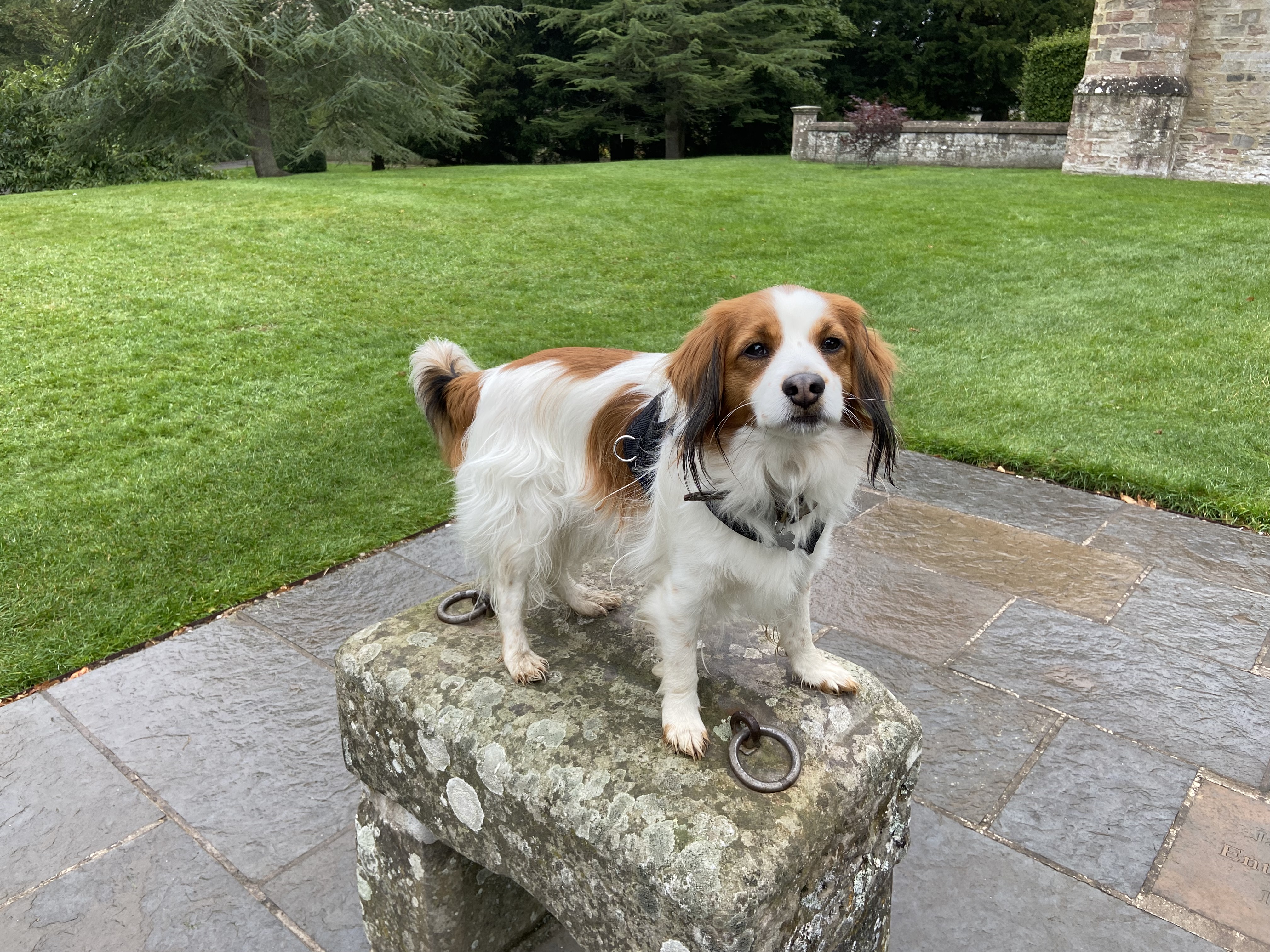
Triar thought he’d try his paw at being King of Scotland, but this is only a replica Stone of Scone, and anyway, I didn’t have a crown, so for now, we’re stuck with King Charles.
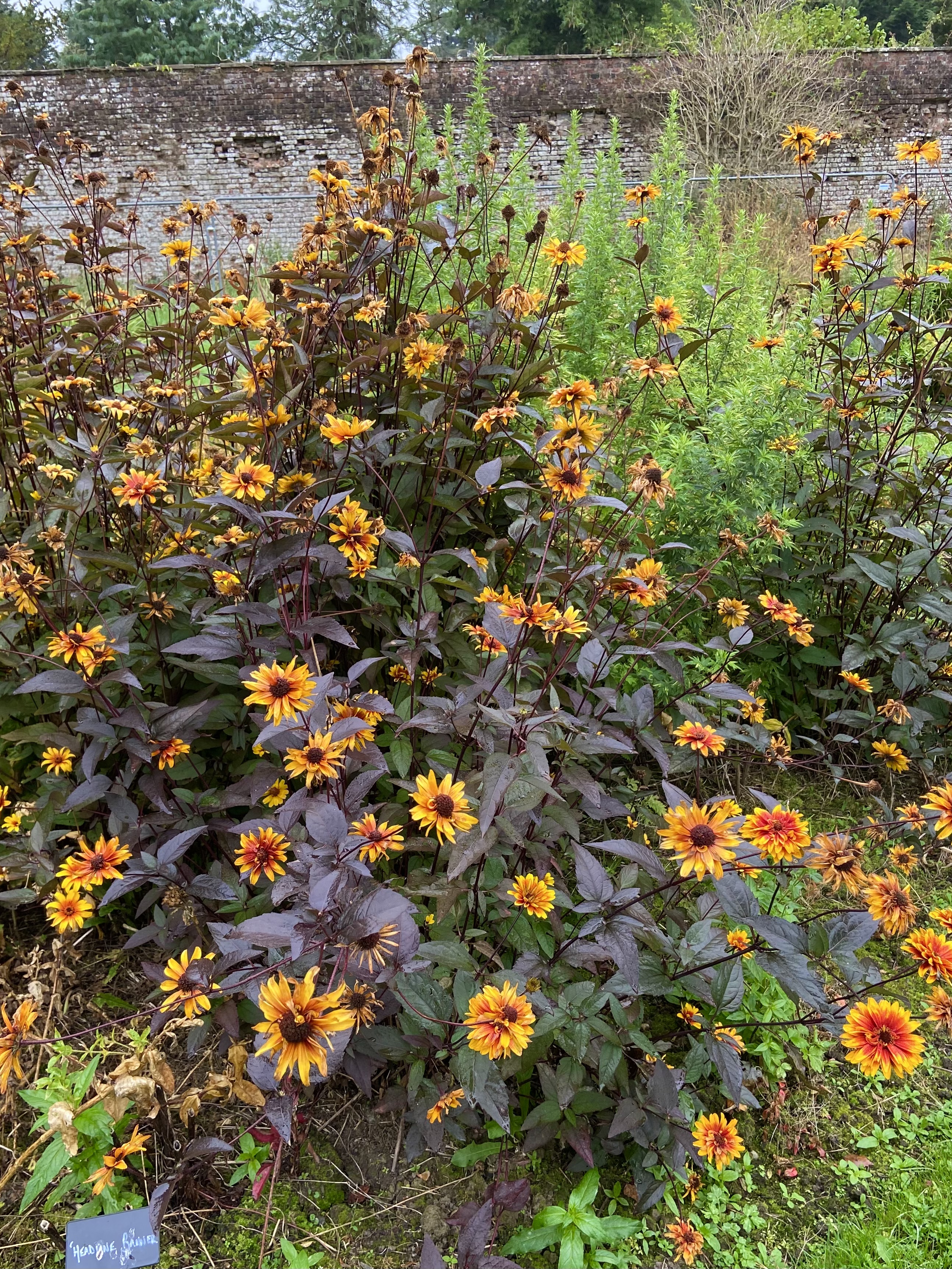
Despite being autumnal, there were some very pleasing parts of the gardens at Scone Palace.
On Tuesday, now on historical Scottish kings, Sue suggested we should climb Dunsinane Hill, to visit Macbeth, so we did. Again, it wasn’t the best weather, but it was an interesting hilltop with a flat peak where you could see there had been walls and structures in the past, though there wasn’t a great deal left. The views were wonderful though and it must have been a great lookout post.
Wednesday saw me driving back to Dumfries, where I had a day and a half of whirlwind work, trying to ensure I had everything vital done before heading off on holiday.
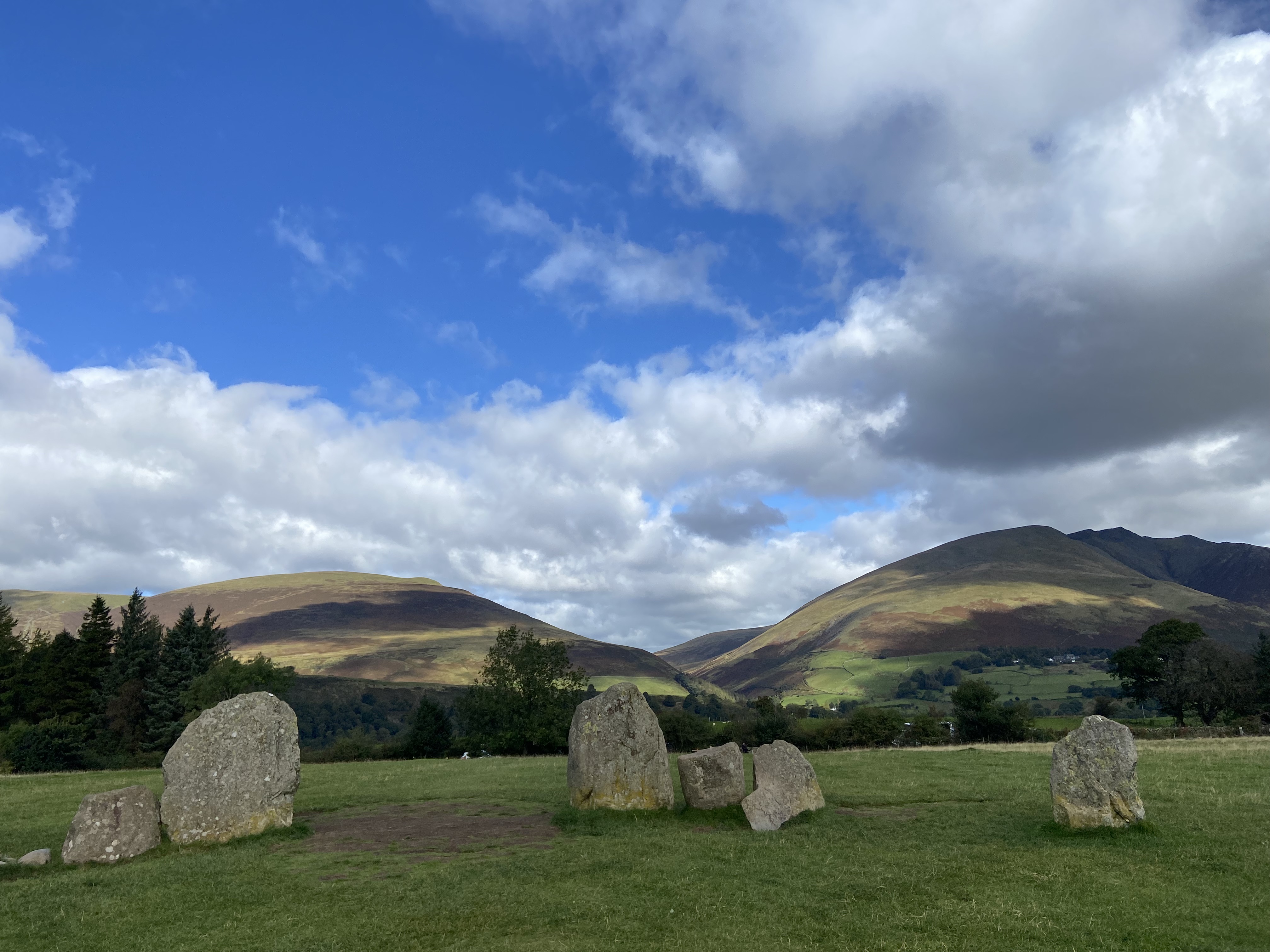
On Friday, I drove down to Yorkshire to drop off Triar at Mum and Dad’s. We wandered into the Lake District on the way down, to visit Castlerigg Stone Circle, which was lovely, but relatively busy for a non-weekend in late September. I guess to find it really quiet, I may have to try at dawn on a chilly Tuesday in February.
Anyway, that’s it for now. I shall post about my Shetland trip next week. I did so much that it will take some time to write the post. Suffice it to say, I had a wonderful week, catching up with old friends and making some new ones, while learning a whole load the crofting life in Shetland and making some interesting things out of wool.
I seem to be in a perpetual state of travel at the moment. After Perth, I had a night in Airth, then down to Yorkshire, and from Yorkshire, I headed directly to Crewe, not having spent a single night in my own bed. Luckily in Crewe, I was staying in a Premier Inn. I guess some would find their ubiquity boring, but I rather like knowing exactly what the room will be like, and what’s on the breakfast menu, even if I’ve never been to that particular hotel before.
This week’s training was on dealing with outbreaks of notifiable disease, with particular attention to bird flu, or avian influenza, as it’s called officially. It was quite sobering to hear the accounts of a couple of vets who arrived two years before me, and found themselves dealing with outbreak cases within a few weeks of arriving. That must have been a baptism of fire, given all the kit you have to wear, including hoods that cover your entire head and blow air over your face and require you to keep an eye on the battery levels if you’re in the sheds too long.
There was a day of practical training, out on a chicken farm. I’ve seen lots of broilers before – chickens bred for meat – so I was interested to see this one, which had laying hens. Though the hens were all inside, so not free range, they were not in cages, which I was glad about. Unlike the broilers, who were mostly on the floor, with a few perches and “toys” to interact with if they wanted, these hens were much more energetic and had different levels to walk on and metal bars to navigate across. It seemed a relatively good environment to me.
We saw some chickens being euthanized. It wasn’t particularly pleasant to watch, though the aim is to have high welfare throughout the process – hopefully actually higher than they would have in a slaughterhouse. There are various roles I might have to take if I go out to a notifiable disease case and one is the Welfare Vet. It’s important that I know the correct way everything should be done.
It wouldn’t necessarily be a big, commercial farm either. If I had to deal with someone’s pet chickens, I would want to be able to explain to them about what might happen, to prepare them for what they might see, just as I used to do when I euthanized people’s dogs when I was in practice. Dying doesn’t always look peaceful, even when there is no suffering involved.
We also carried out some post mortems. If I’m first on the scene, I have to be capable of carrying out some basic diagnostic procedures. Ultimately, all notifiable diseases will be diagnosed via tests sent to an official laboratory, but if I can rule out notifiable disease without it getting that far, it can save a lot of disruption. It can take twenty four hours for the tests to come back and until then, depending on which disease is suspected, movement restrictions will be in place, not just for the farm we’re on, but potentially for a large area surrounding that. With suspicion of foot and mouth, the whole country might potentially be brought to a standstill, so it’s incredibly important that the key vet is competent and backed up with a competent team.
At some point, I will be sent out to a report case where there is suspicion of a notifiable disease. While I know it will be daunting when it does happen, I feel better prepared now than I was before.
I finally got home on Thursday and have spent the last two nights in my own bed. As my friend Lara can confirm, I only own super-comfortable beds, so being home is always pretty nice! On my way up the road from Yorkshire, I stopped at Gretna Outlet to buy myself a new weekend happiness kit.
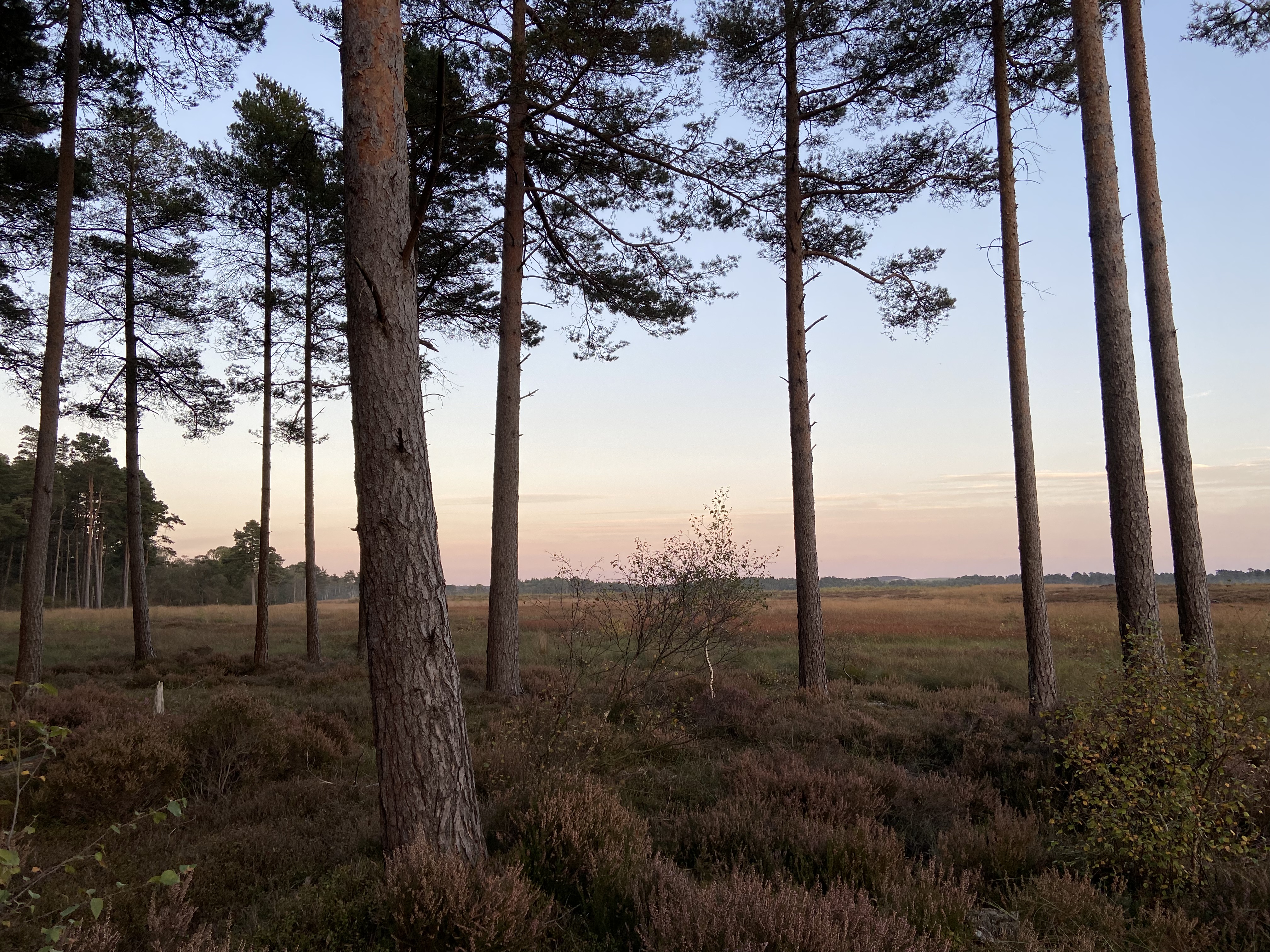
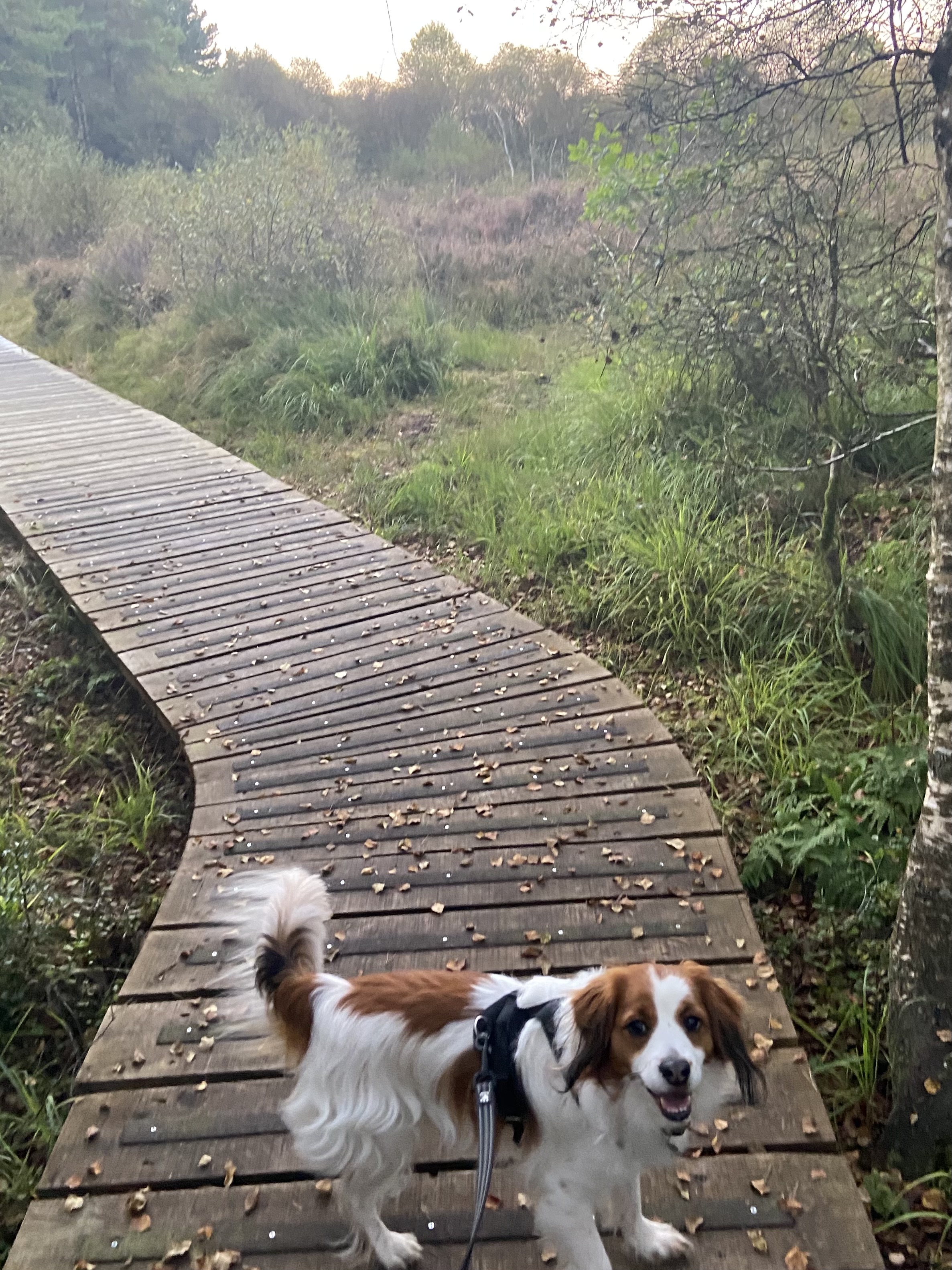
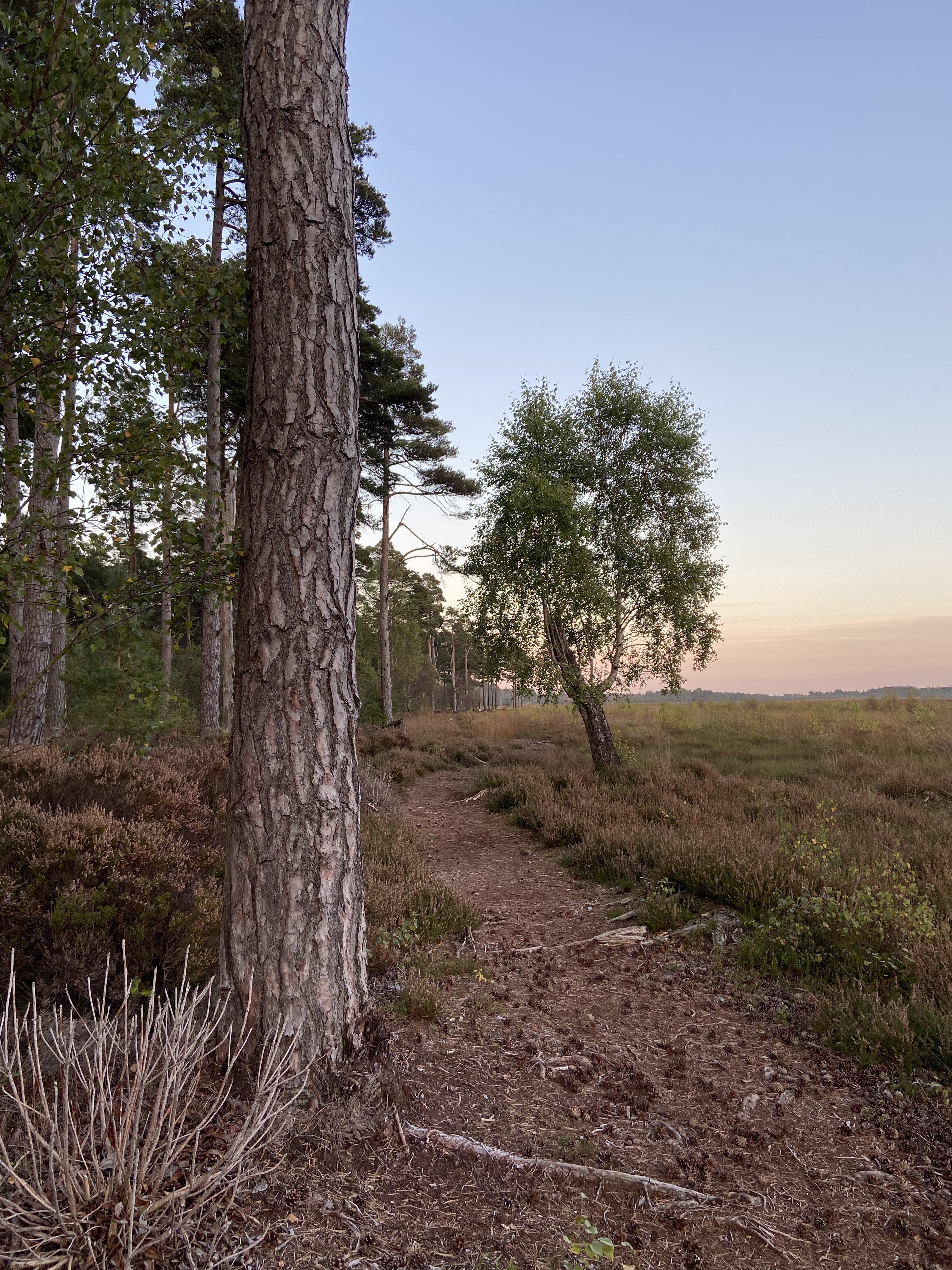
Though it wasn’t the weekend yet, Triar and I went out to Kirkconnell Flow Nature Reserve last night to start breaking my new boots in, ready for some more Perthshire hills next week. Kirkconnell flow is an ancient, raised, peat bog. Very rare apparently and stunningly beautiful yesterday evening in the golden light. We walked along the edge and through the forest, which reminded me of the forests in the north of Norway, with their tall pines and smaller silver birches sheltering underneath.
I was enjoying it so much that we did the outer circuit first and then the shorter inner circuit. I have a walk planned for today as well. Nothing too strenuous and good, well marked paths so getting lost is not possible. It’s about time I started exploring Dumfries and Galloway on foot and not just in my car.
Thank you for reading. I hope you have a good week.
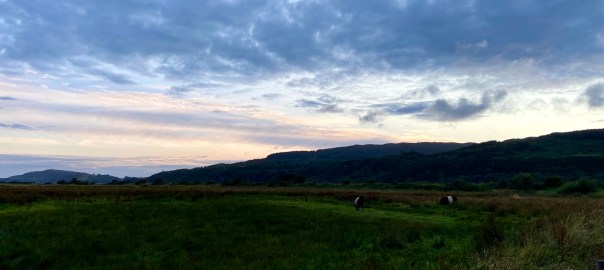
The week started well with a nocturnal walk at the local RSPB centre at Mersehead. My colleague, Cris, had mentioned it on Thursday and I jumped at the chance. We arrived at nine in the evening, when dusk was approaching. As you can see in the picture at the top of the page, the nature reserve has a few belted Galloway cattle on it for controlled grazing. That was the only photo I took, because the walk itself started in near darkness and ended at eleven, by which time it was properly dark.
Provided with hand held infra red cameras and instruments that converted bat sounds to a frequency audible to human ears, we set off for a wander. The first bats we heard, and then spotted, were noctule bats. I hadn’t seen these before and was surprised to see them crossing the sky at dusk, flying high, in straight lines. It took a bit longer to spot the more familiar pipistrelle bats, which flitted along the lane.
We took a detour into the butterfly field, where pathways had been cut through the waist high grass. There, our infrared cameras picked out a deer in the darkness. We watched for a while as it moved gently in the long grass. Back in the lane, more pipistrelles, then along to an old farm steading, where we failed to see badgers in the garden. There were barn owls in the shed on the other side of the lane though, letting loose their weird, screeching cries. They were sheltering high up in the corner, atop a pile of round bales, bright white outlines on the camera. Then on some more, a rabbit in a field, lolloping around, before a few drops of rain began to fall, then a flurry and before long, it was raining steadily. We made our way back to the centre. Our two hours had more than passed anyway. It had been a wonderful evening.
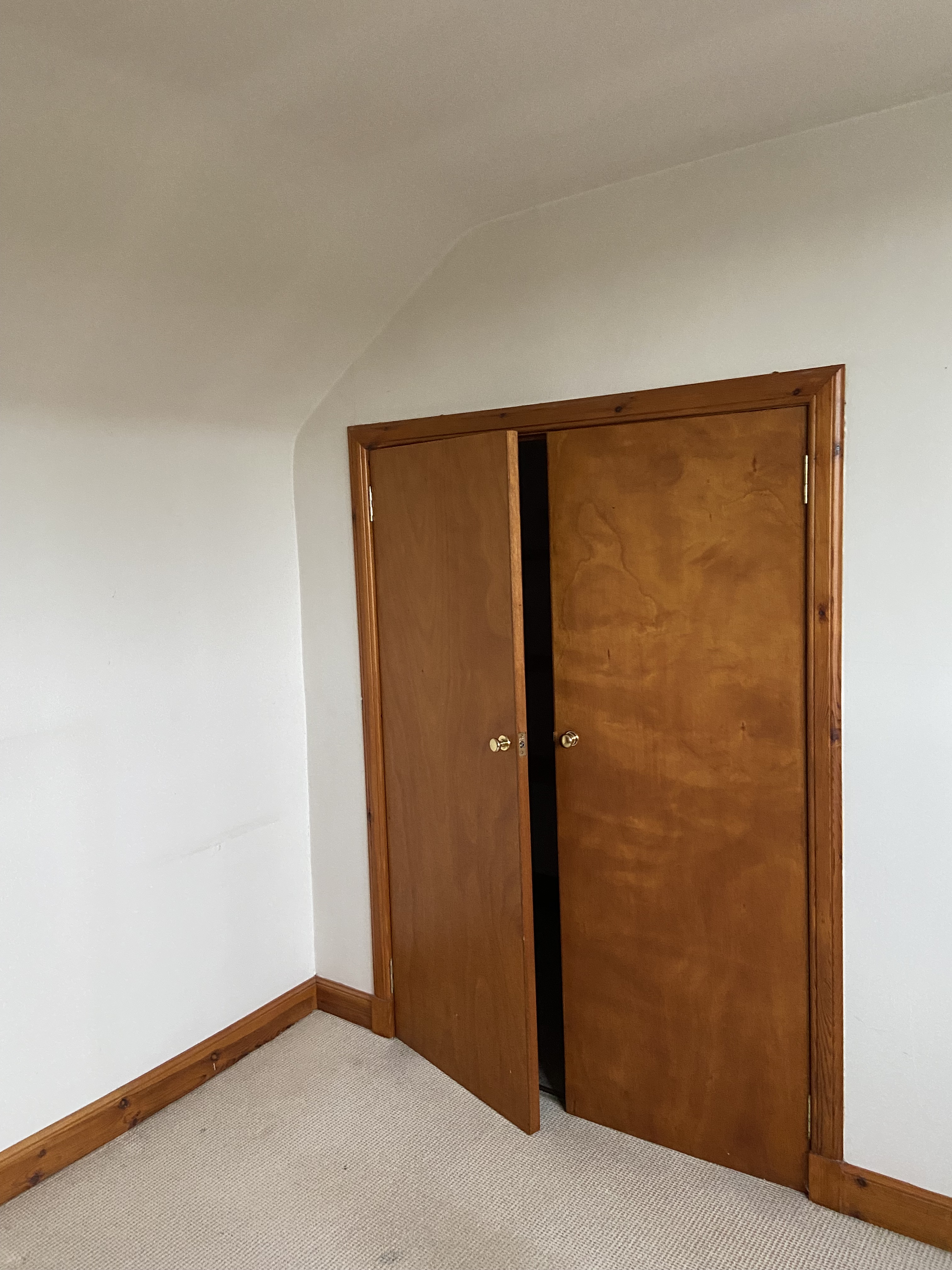
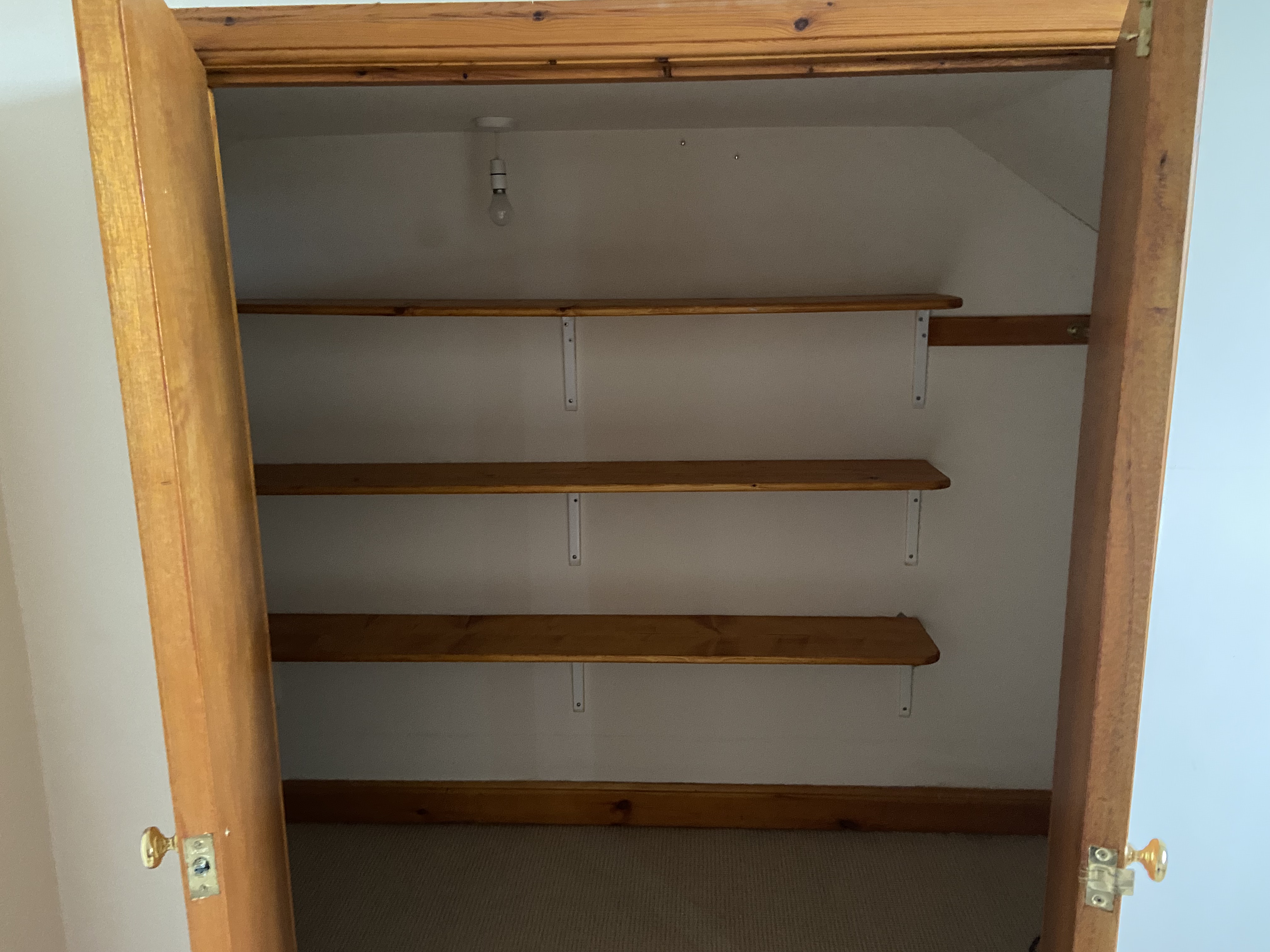
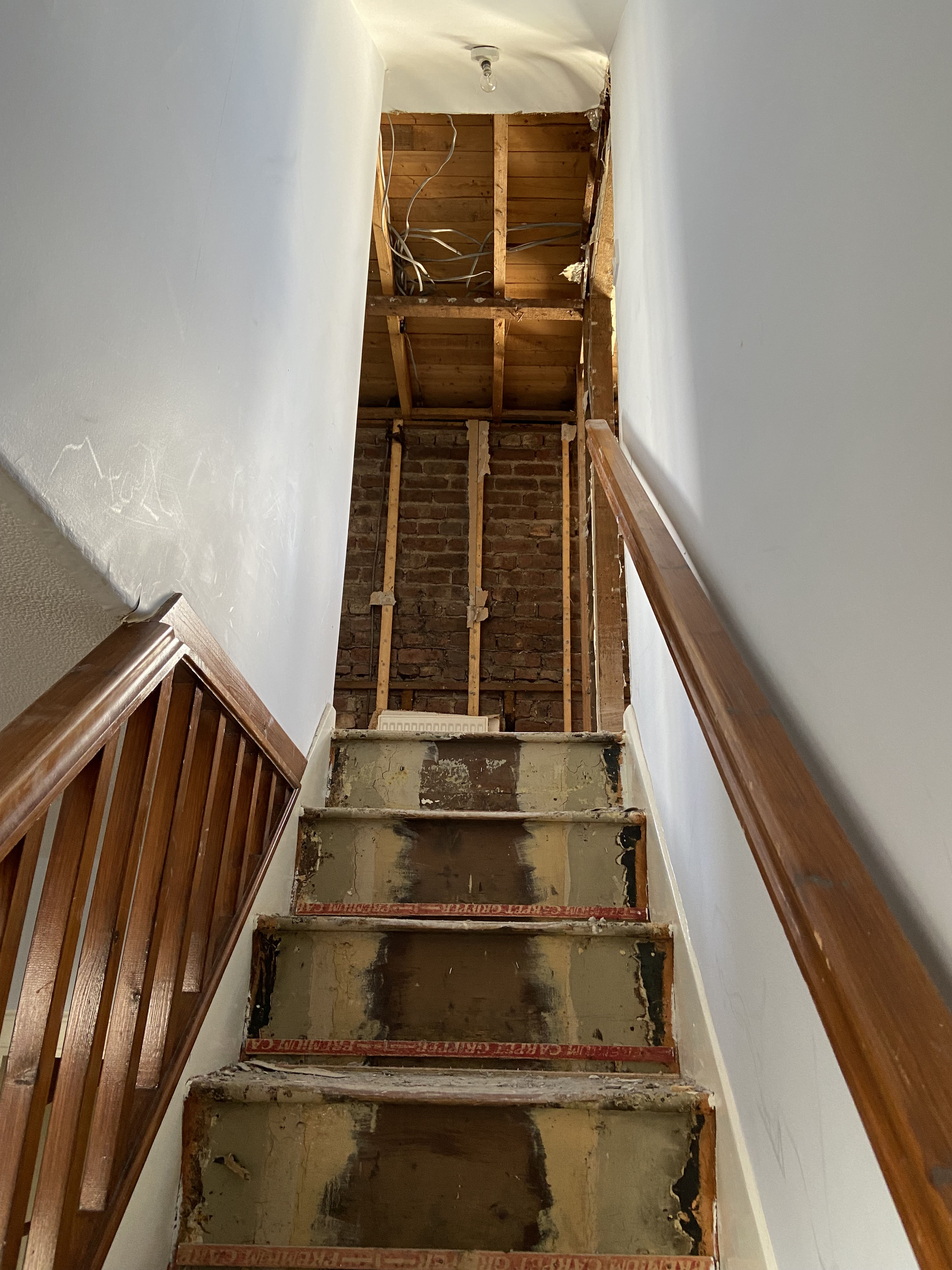
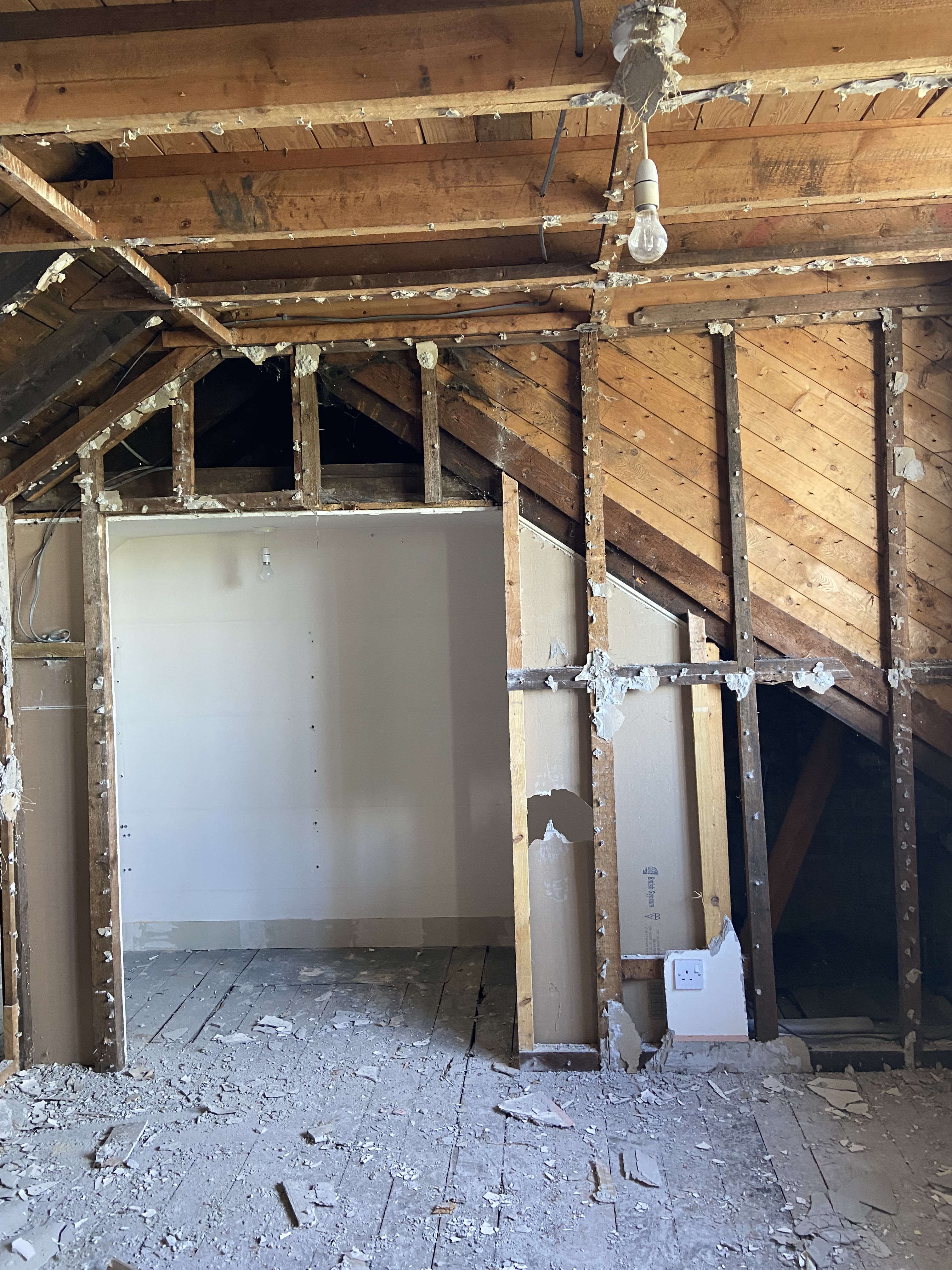
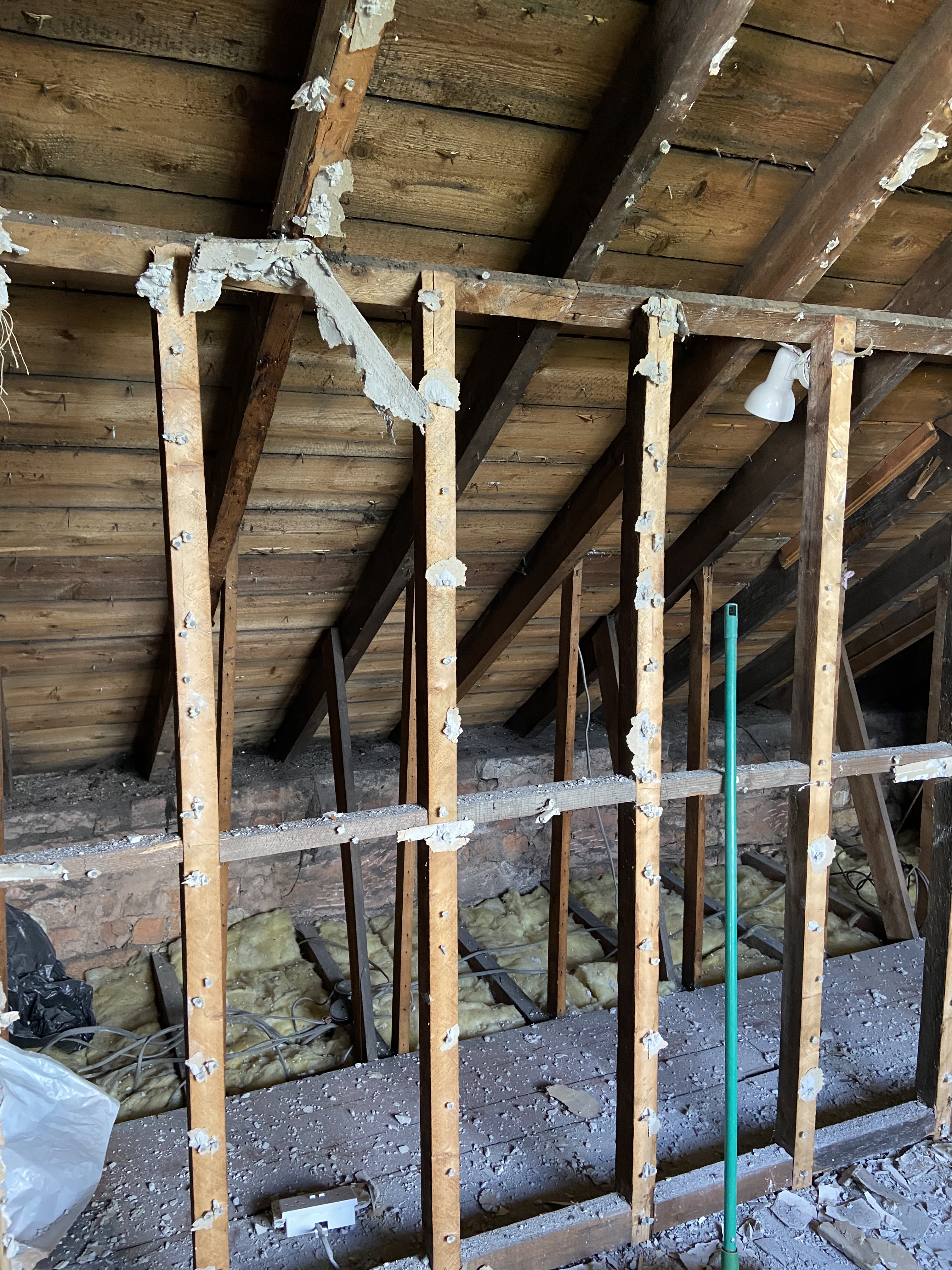
The builders moved in on Monday. They’re stripping out the rooms in my roof in order to put in insulation and hopefully a shower room and toilet. The rooms were light and bright before, with warm pinewood window frames and features, which I hope they can replicate, though I might end up with something more generic. I had thought that if the work went on into the winter, I could simply shut the doors at the top of the stairs to keep the heat in, but I was disabused of that misunderstanding when I came home on Wednesday or Thursday and glanced up the stairway to see a brick wall, wooden beams and the underside of the roof, stripped bare.
From this…
To this…
As far as I can see, that small amount of insulation in the last picture was the only insulation anywhere in the roof. Hopefully the difference in the heating bills will make it worthwhile.
With all that going on, and an uncharacteristically quiet week at work, I decided maybe it was time to use up some of the flexi time I had built up. Anna and Lauren had popped in to Dumfries at the end of their month-long tour of Scotland and were now back in Yorkshire, so I thought I’d join them for a long weekend.
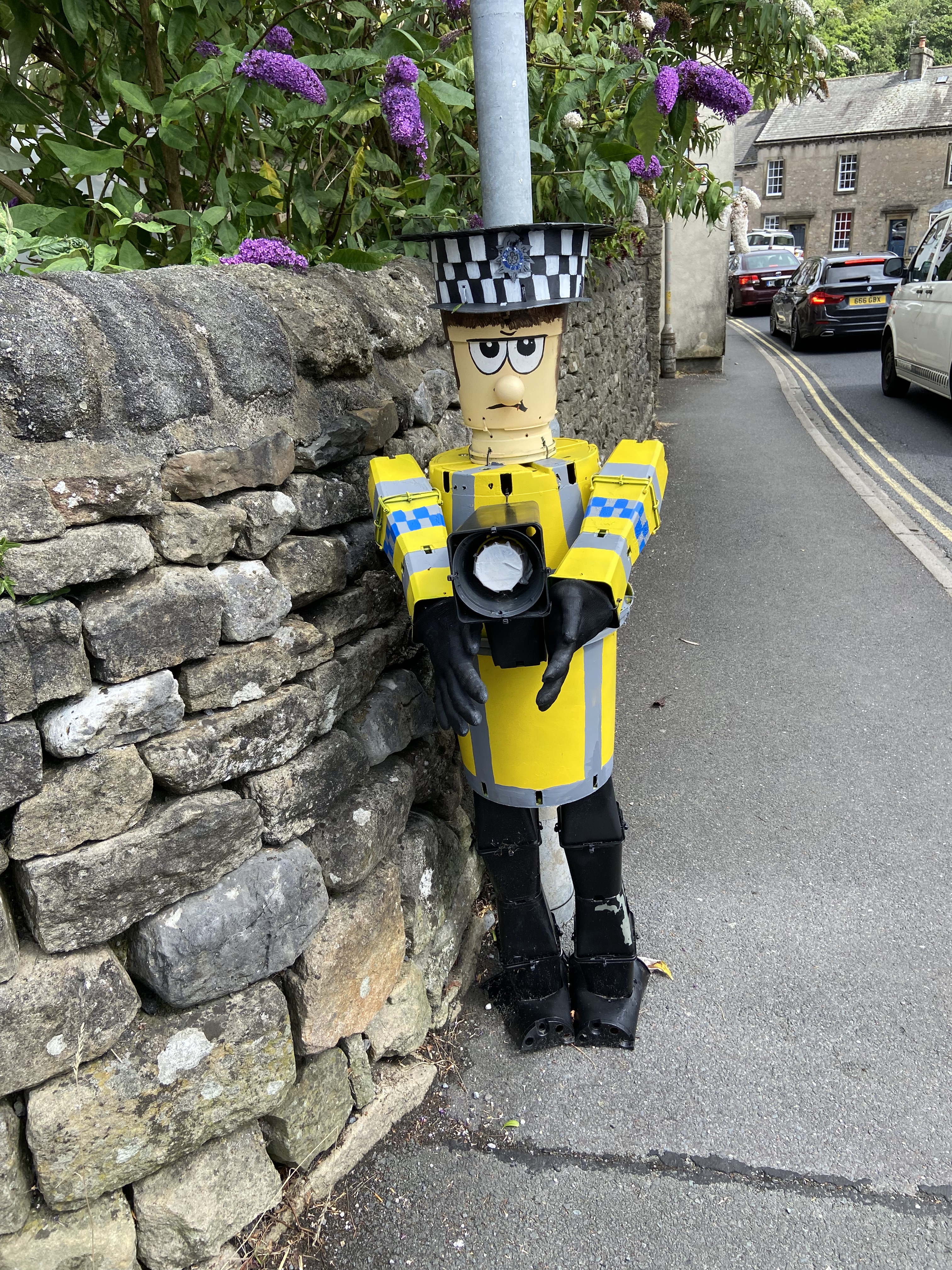
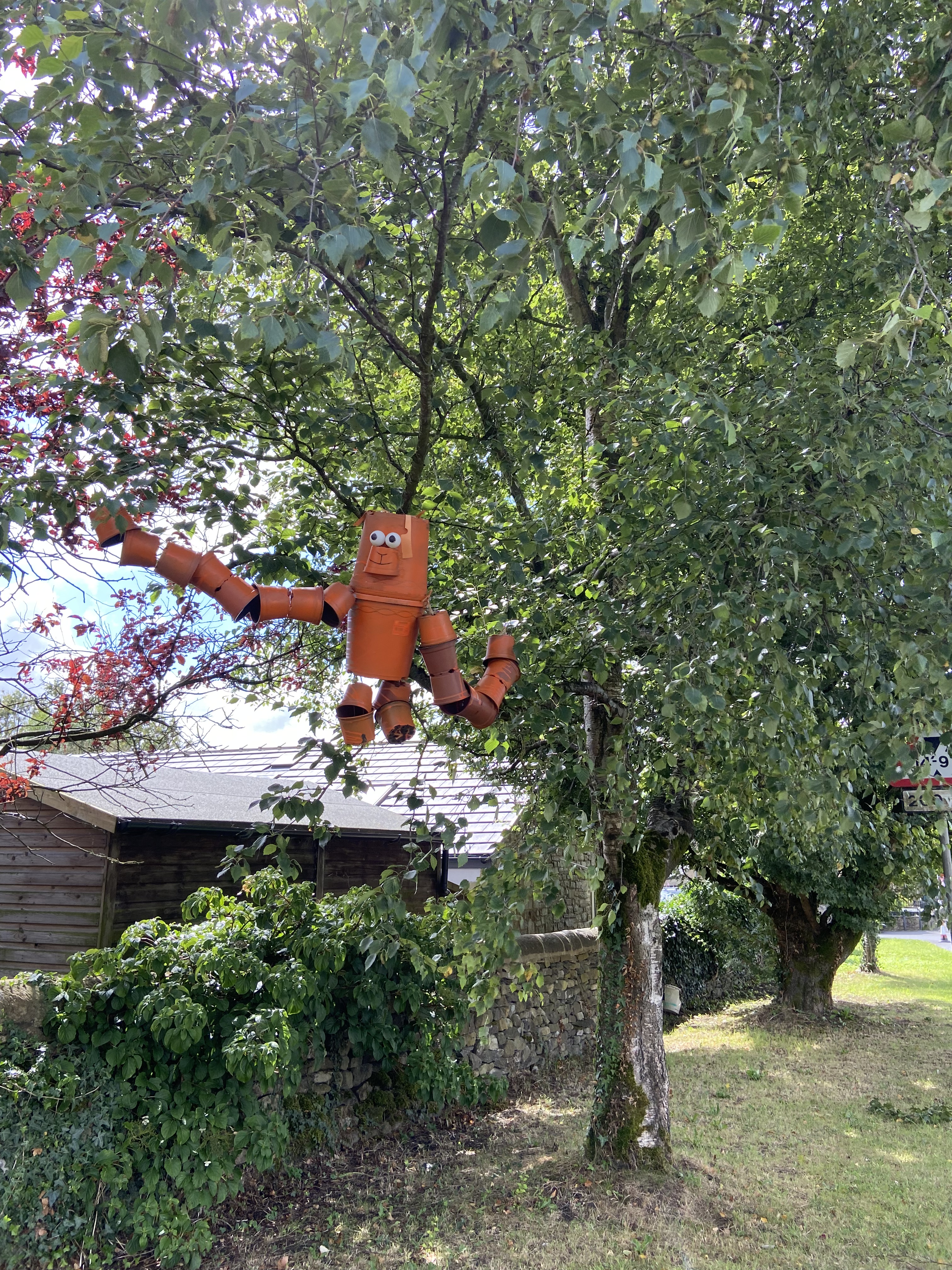
So here I am in Yorkshire again. It’s mixed weather, but we managed a walk into town yesterday, as well as a visit to the cheese centre, which now features a pizza restaurant with a wood oven as well as the very stinky cheese shop. Annually in Settle, there is a plant pot festival, where people make models from plant pots. The three below my favourites, but I have two more days of the weekend left to find more.
Hope you have a good week all! Thank you for reading.
After a pleasant weekend in Yorkshire, Andrew, Triar and I returned to Dumfries last Sunday, but I didn’t stay there long. I had booked a trip to Ayr to go out on a welfare cross-compliance visit with a colleague who needed support. I drove up and we worked on the paperwork together on Monday. The visit was planned for Tuesday and I wanted to have plenty of time to go through everything, but it was also good to catch up with some other Animal Health Officer colleagues I had worked with before in Stranraer.
I stayed in the Mercure Hotel, which was clean enough and had a decent breakfast, though the bed and pillow were so hard that I was surprised that I managed to get a reasonable night’s sleep. The British obsession with hard mattresses stopped making sense after a few years in Norway, where the mattresses are all soft and it feels like you are sleeping on a cloud.
I awoke in the morning to a cloudy day and a rather noisy friend outside my bedroom window. I confess I had been quite amused the night before to see a discarded half bottle of some unknown liquor on the flat roof outside my room. It’s so very Scottish to see that. With apologies to my Scottish friends, Scotland really does have a litter problem, as well as a huge penchant for drinking. The streaking of my window with bird poo might have been a hint, but I hadn’t really expected such a close encounter with a seagull.
This was just before I was about to go downstairs and I toyed with the idea of bringing back a slice of toast for the interloper, but out of respect for the hotel windows, I decided any more encouragement was not a good plan.
As this was also my second week on the Second Nature plan and I had pledged to do fifteen minutes exercise each morning, I decided to take a walk before breakfast. Though it’s not obvious from the photo above, if you squint at the area, over the rooftops, to the left of the tree my room did technically have a sea view, so I thought I would walk in that direction.
Wandering the town near the hotel to find a restaurant, the night before, I had been rather put off Ayr. The place had a run down air, though the Tempura restaurant (which Donna had recommended) was very nice, with lovely friendly staff. As I walked down towards the beach, I saw another side to it. While still run down, it was obvious as I walked down the wide street, with its substantial, terraced townhouses, now converted into solicitor’s offices and charity headquarters, that this had once been an attractive and prosperous place.
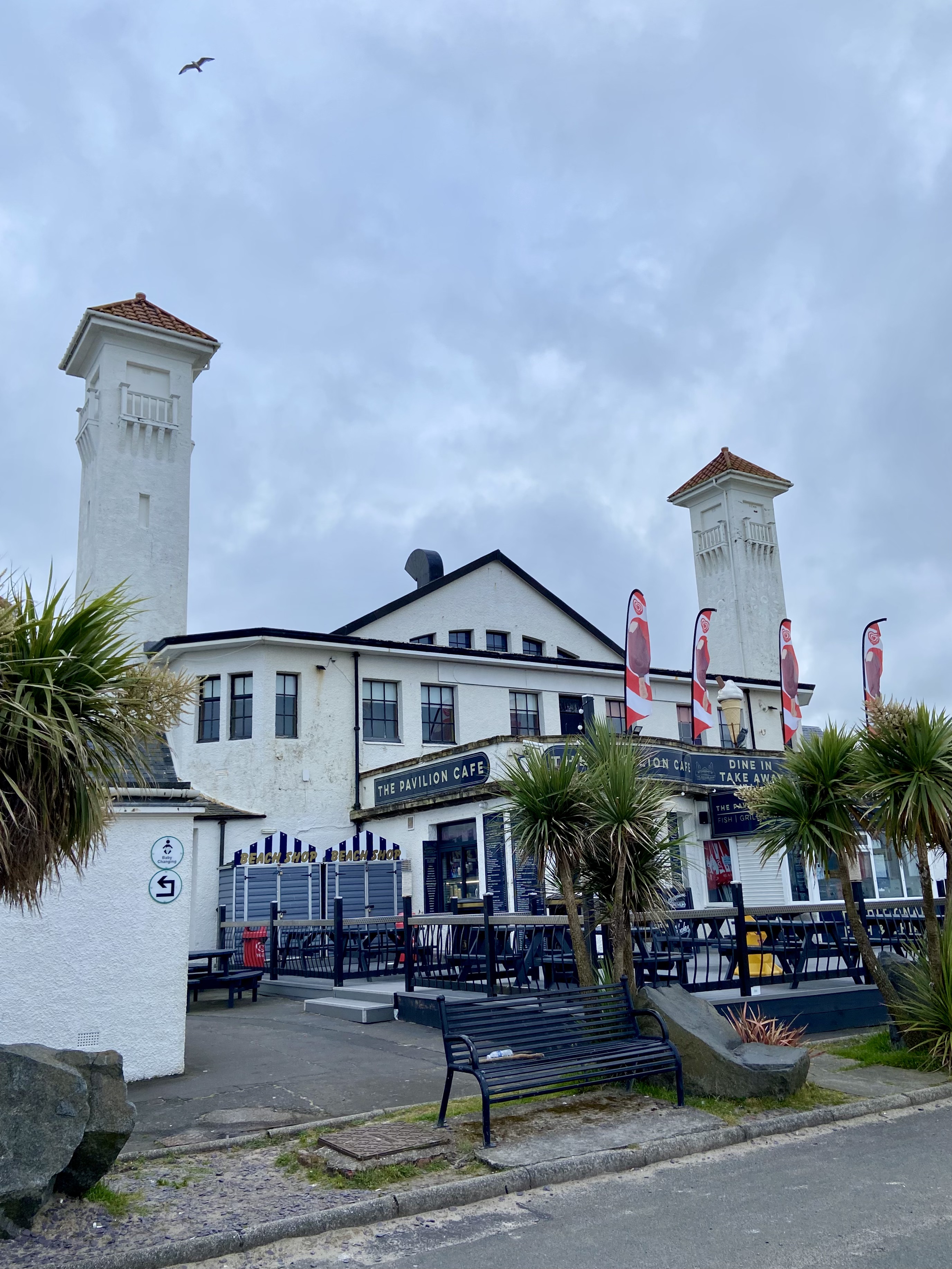
As I cleared the end of the houses, I saw a building that I knew, before I rounded the end of it to see the signs, that it would be called The Pavilion.
To my left, there was a huge swathe of flat green land with pathways crossing it. I thought of Triar and wished he was there.
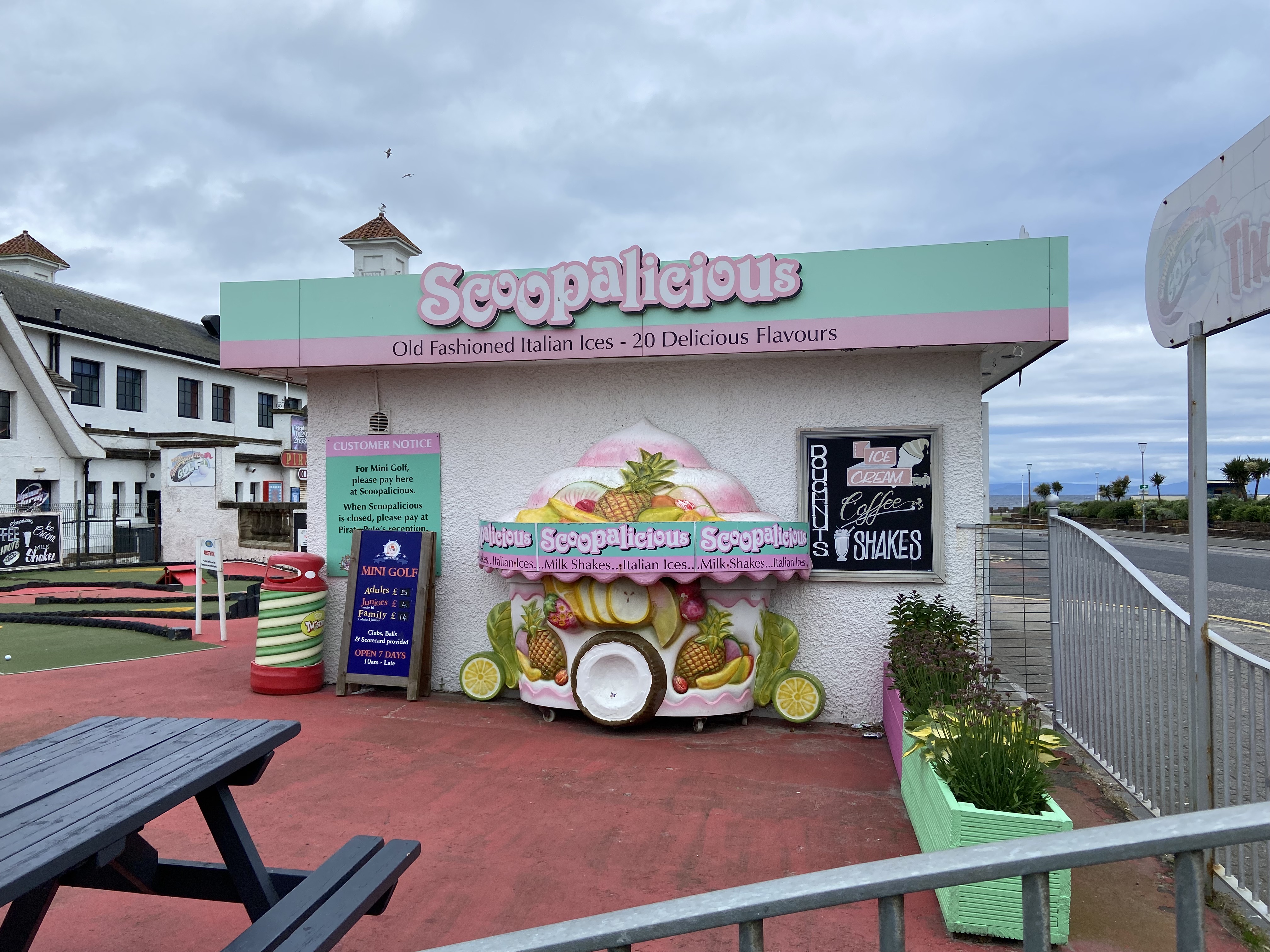
The Scoopalicious Ice Cream company was another nudging reminder of the golden age of Scottish seaside, west coast towns. An ice cream shop run by an Italian family was another staple in all the resorts that the people of Glasgow escaped to.
There was a pleasant sunken garden…
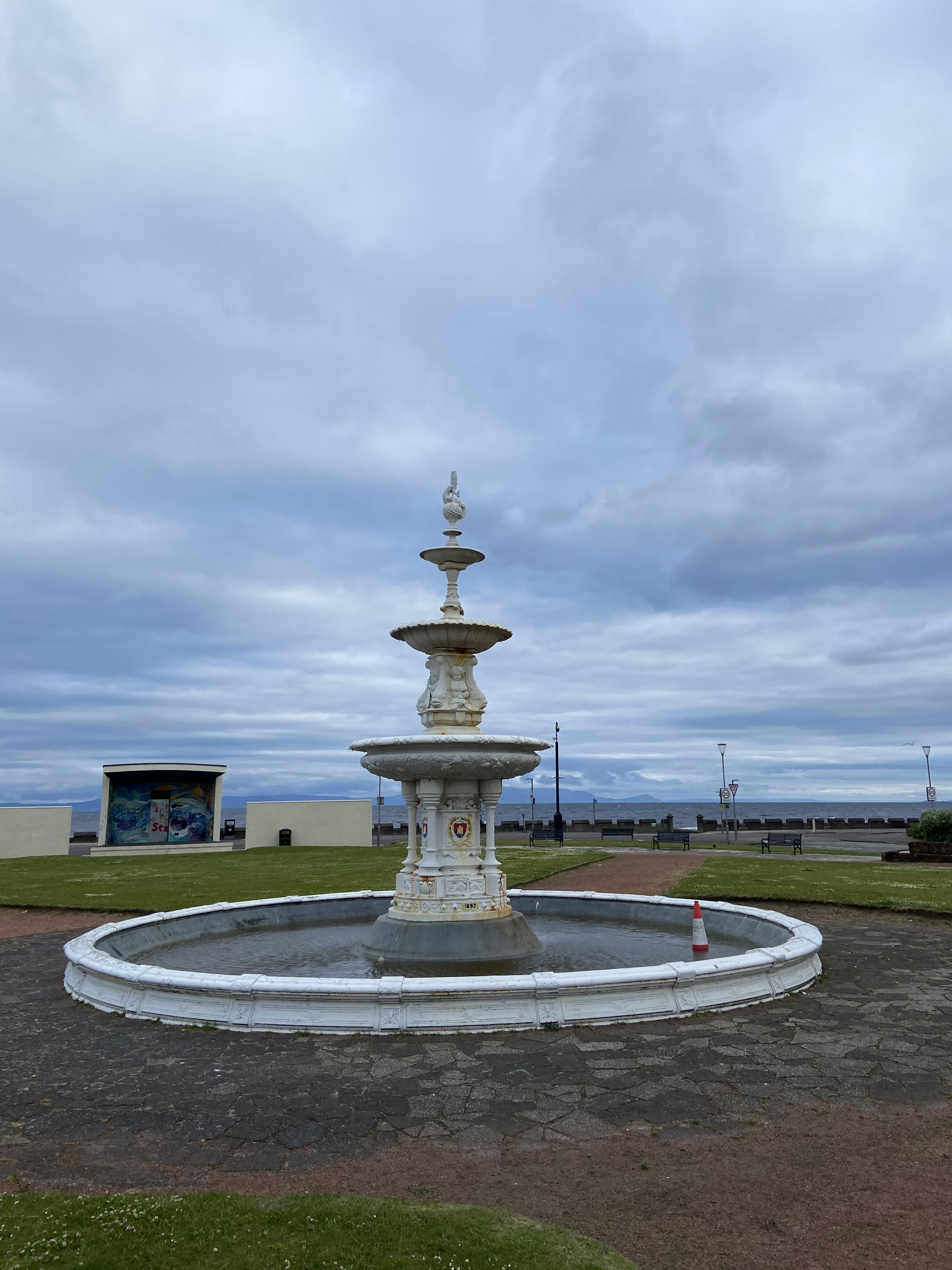
And a fountain, complete with a fairly traditional traffic cone.
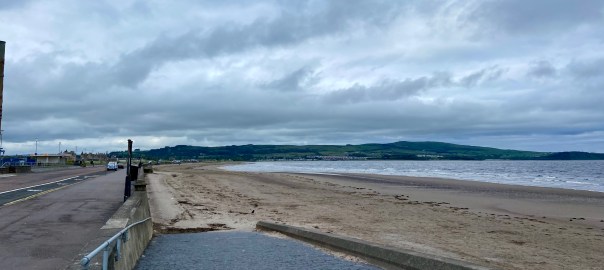
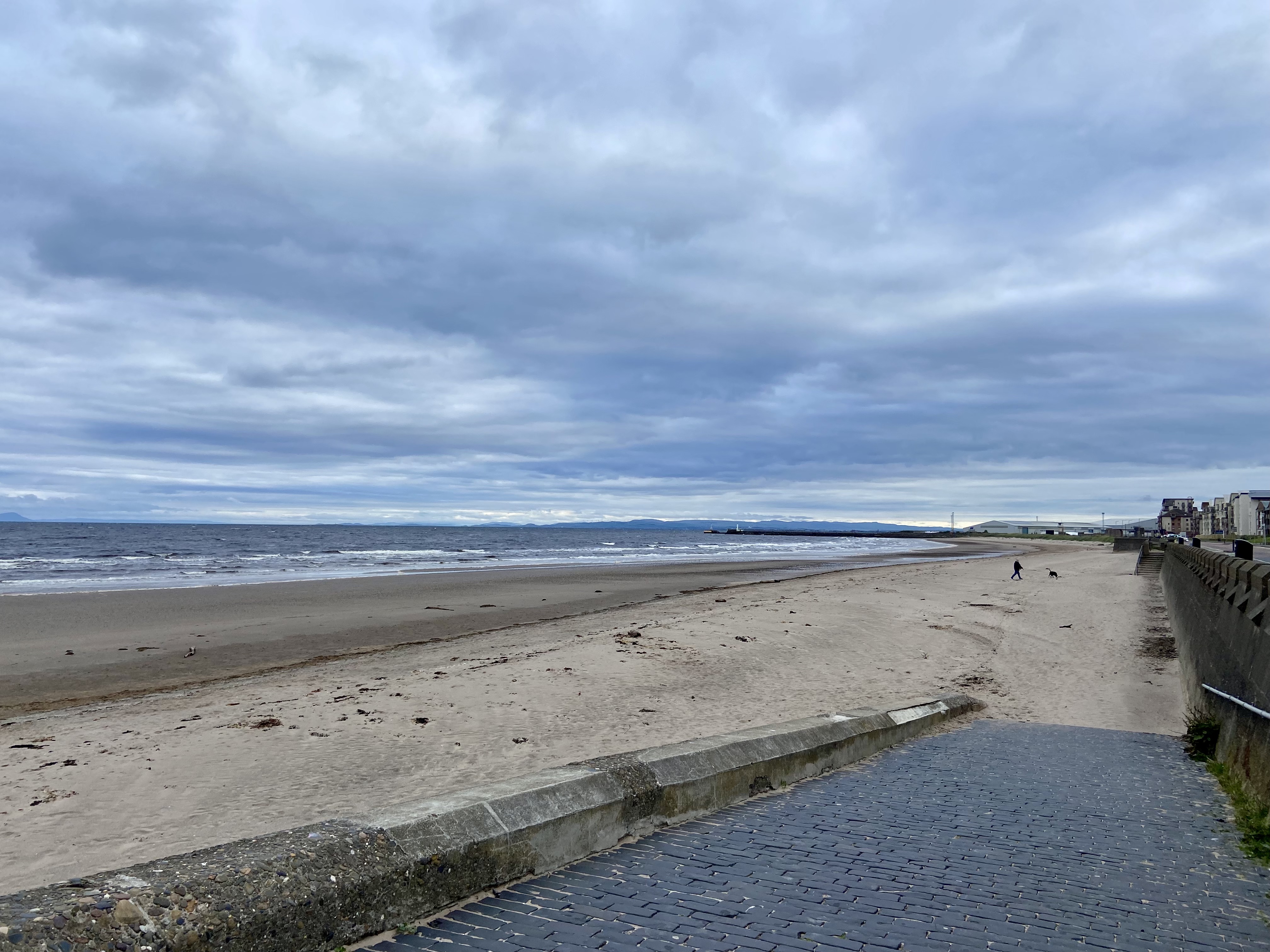
Though the sky was filled with clouds, the mountains of Arran were visible across the water of the wide bay as a reached the sea. To my left and right, there stretched a broad, sandy beach, and again, I found myself wishing Triar was here as he would love to run free across that vast expanse of sand.
I was tempted to venture down onto the sand, but time was limited. Turning back, I was unsurprised to see that The Pavilion was indeed called The Pavilion and was fronted with another southern, Scottish west coast tradition, some rather tired looking palm trees.
As I walked back up the road, I felt that odd sense of sadness and nostalgia such places bring me. Ayr and Largs were not part of my childhood, but many of those my age from Glasgow and other smaller west coast towns can remember visiting those places as children, when they were still popular holiday destinations. I found myself thinking I might come back sometime, for a weekend, and set Triar free on that beach to run.
The rest of my day was taken up with work. The welfare visit went well and I hope I left my colleague with a clearer view of how to carry out an inspection. Back in Dumfries, I have spent the rest of the week catching up with cases. I have written the first draft of a witness statement for a welfare case that might go to court and carried out a disease and cost risk assessment to allow one of my farmers with a TB breakdown to bring a new bull onto the farm.
We can’t go to Yorkshire this weekend as tomorrow, I will be working at the Highland Show. I spent yesterday reading the contingency plan for what we would do in the event of an outbreak of serious disease in the animals at the show. I understood the plans, but found myself hoping we wouldn’t have to implement them as it would be a huge undertaking, trying to sort animals, people and vehicles into groups that could leave and groups that couldn’t, with various stages in between involving gallons of disinfectant and chaotic queues.
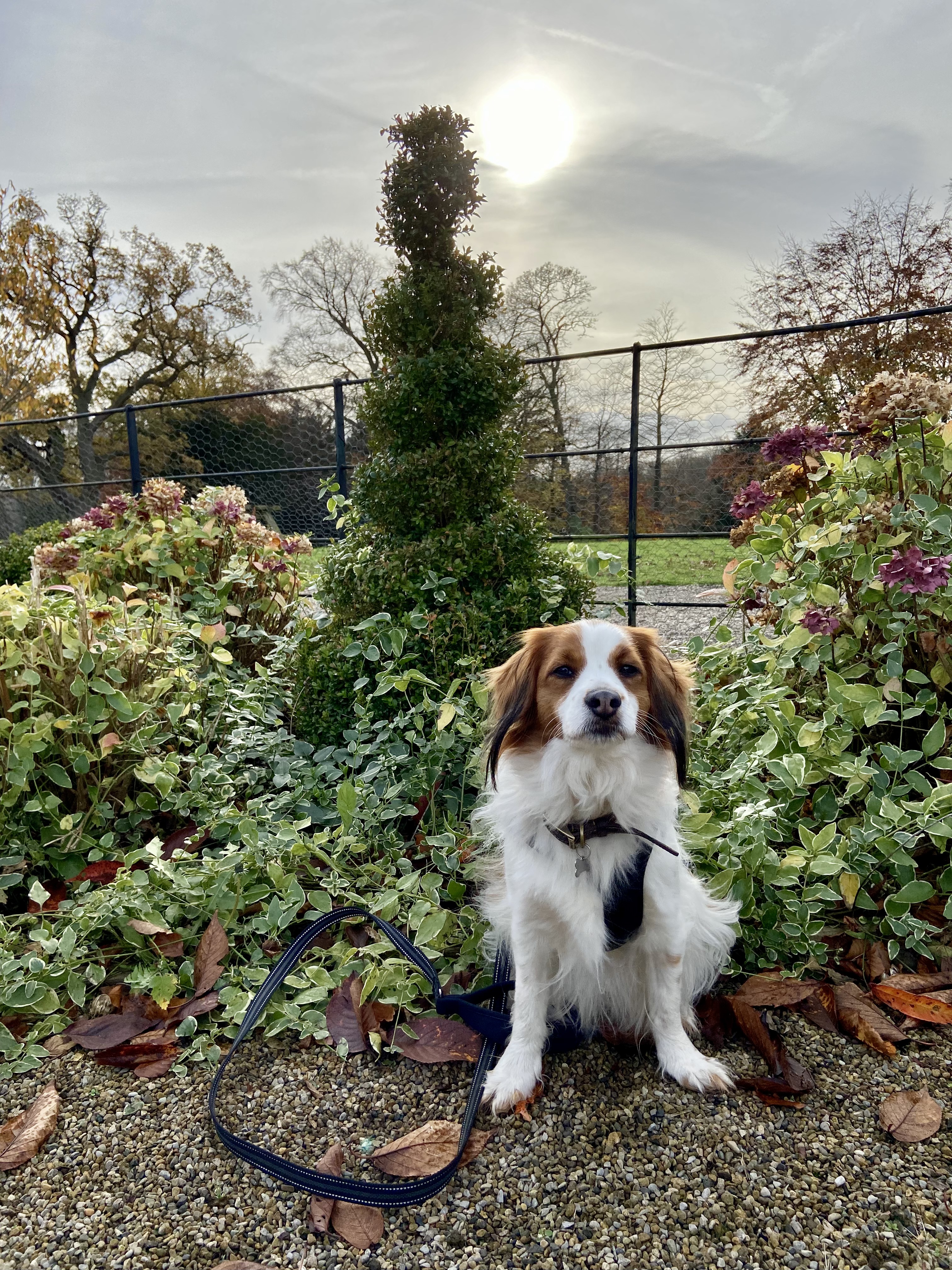
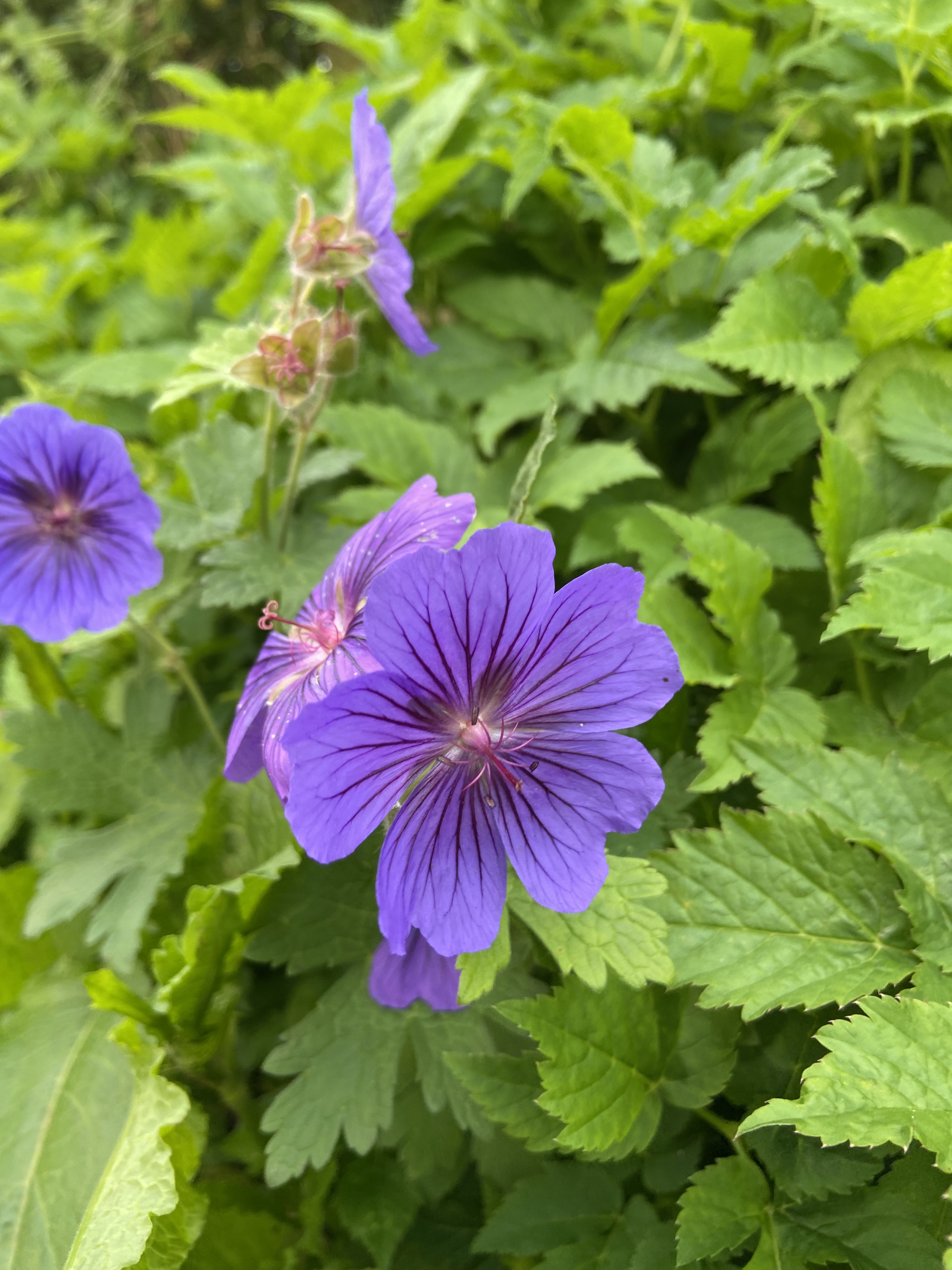
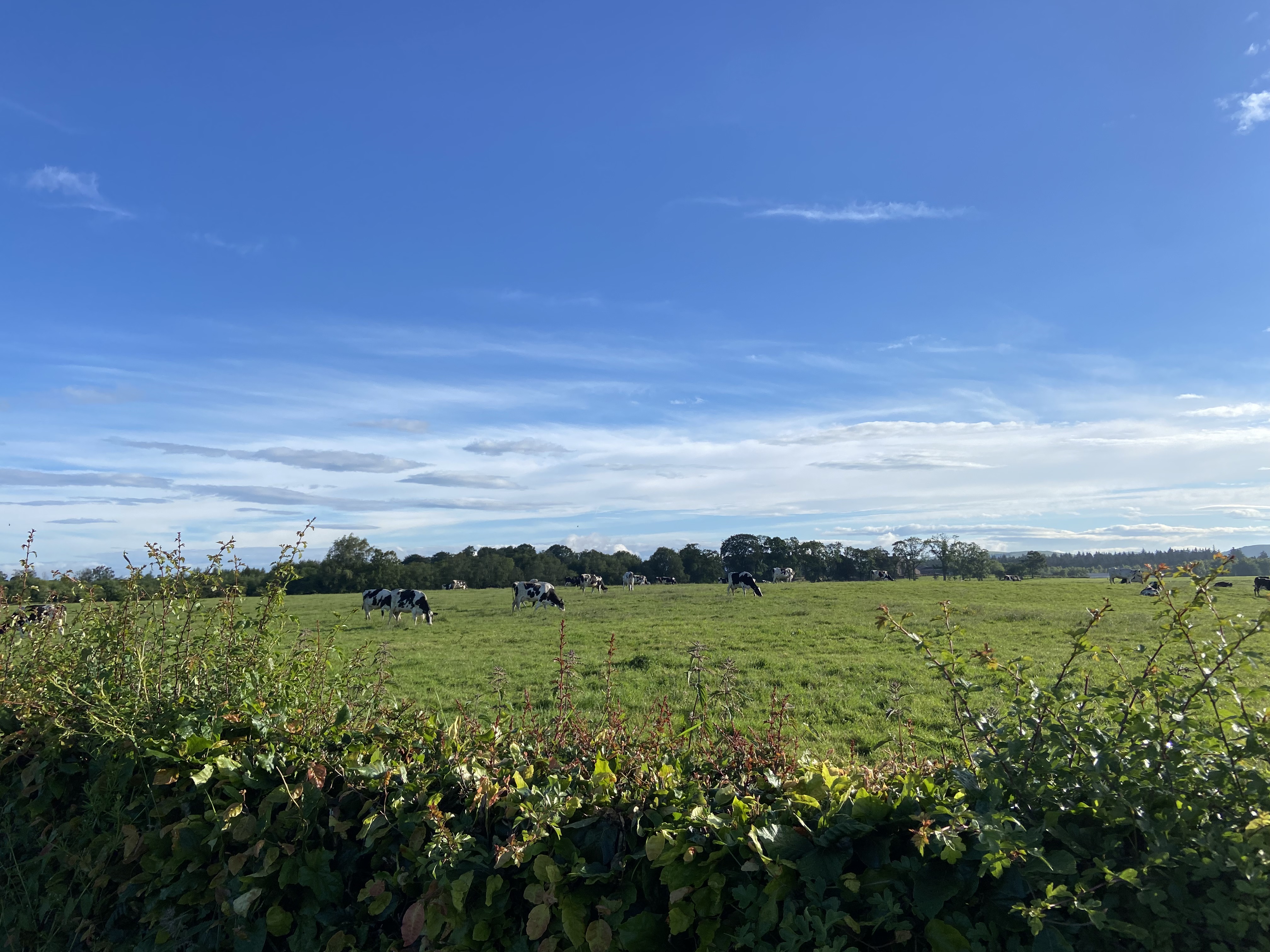
I will finish with some photos from Blackbird Lane. There are cows in the fields now and different wildflowers growing in the hedges. The hawthorn bushes have lost their spiky, white blossom and are beginning to form berries, that for now are a muted, brownish red, but will become bright and red as the autumn nears.
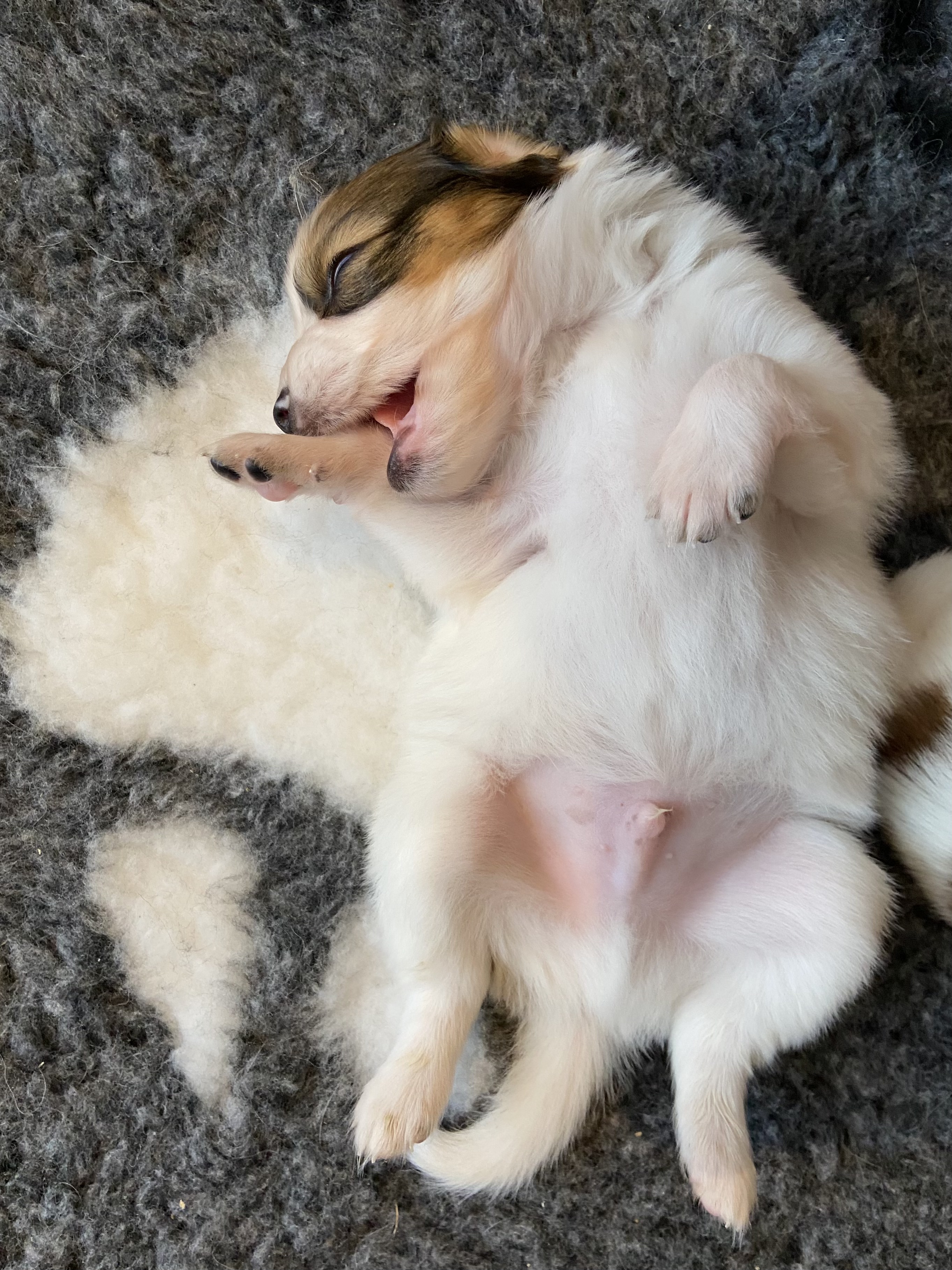
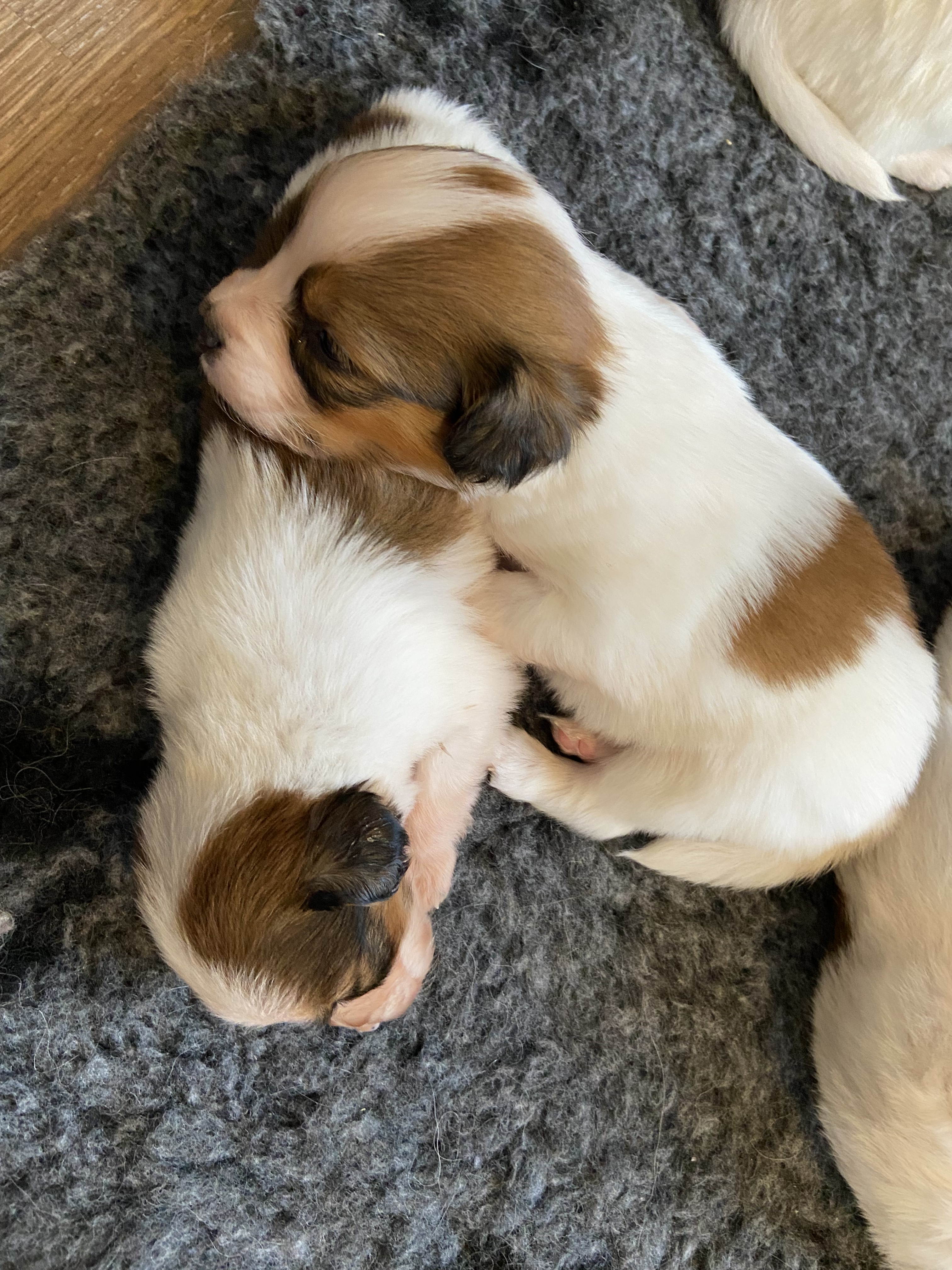
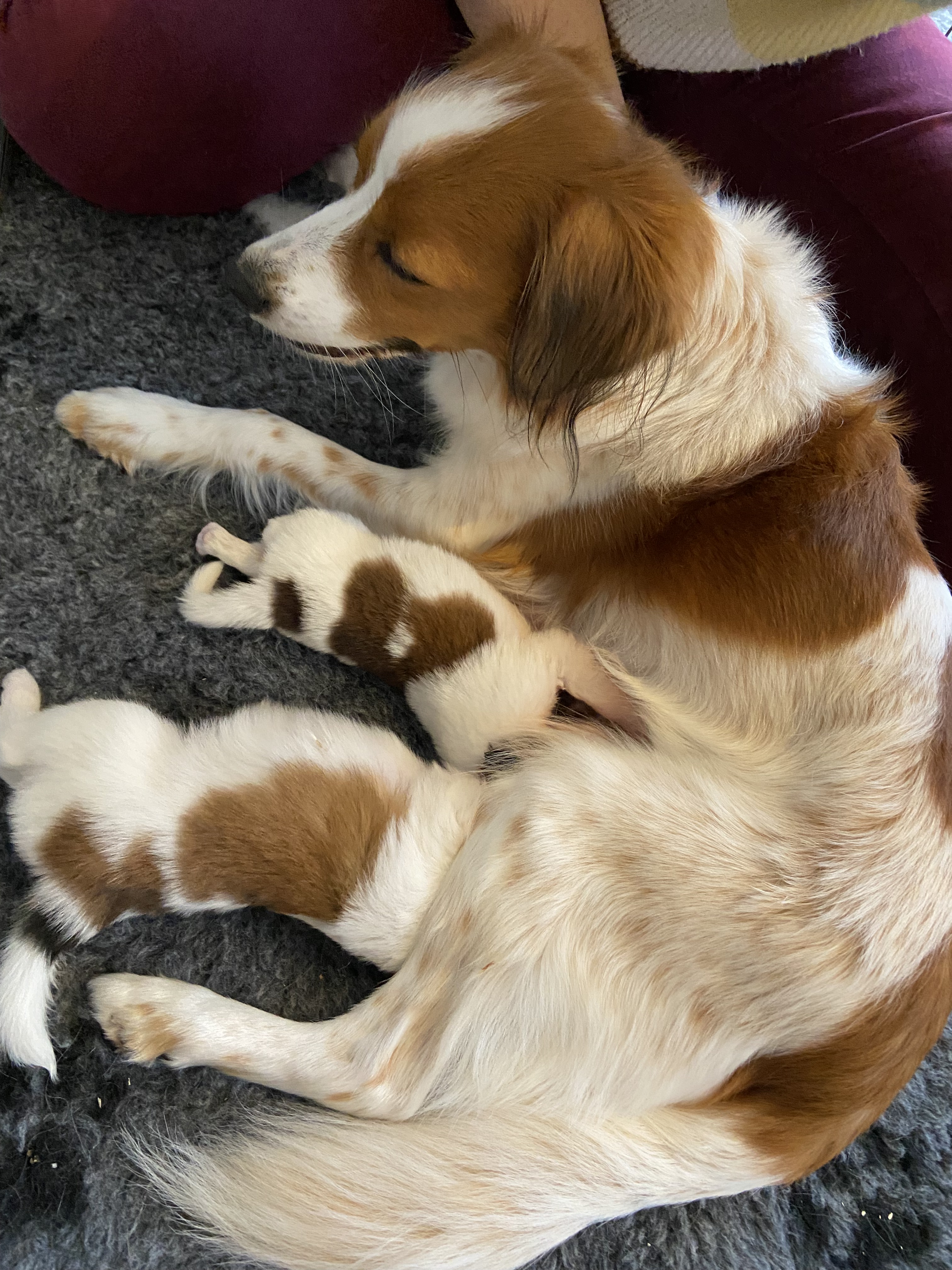
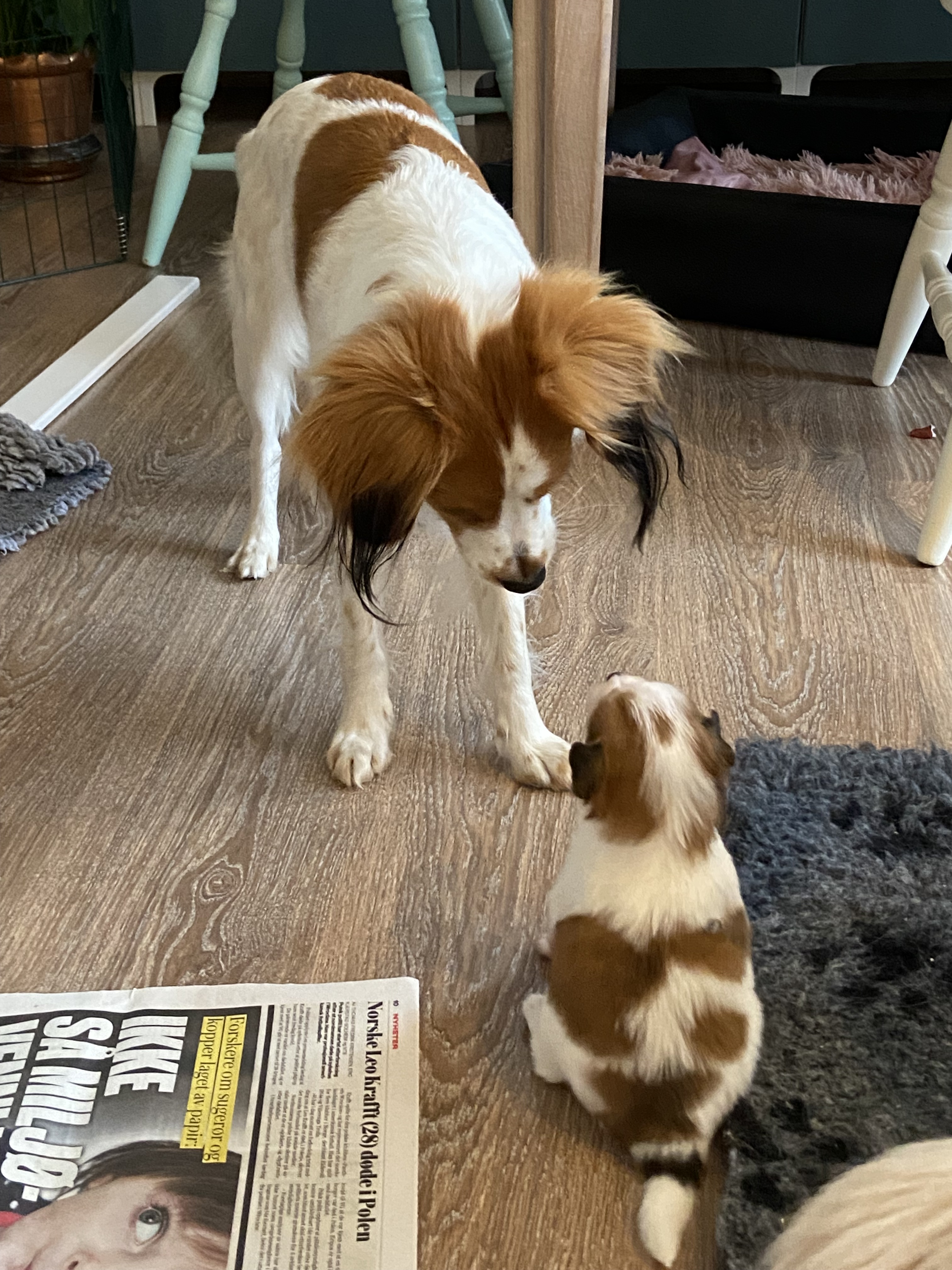
It was lovely being back in Stavanger. As well as catching up with family, I also visited Wivek, who owns Triar’s mum, Trifli. Trifli had another litter three weeks before our visit and the puppies are now on their feet and getting adventurous! The last picture here is of Triar’s half sister, Kløver, who seems fascinated with all these new friends!
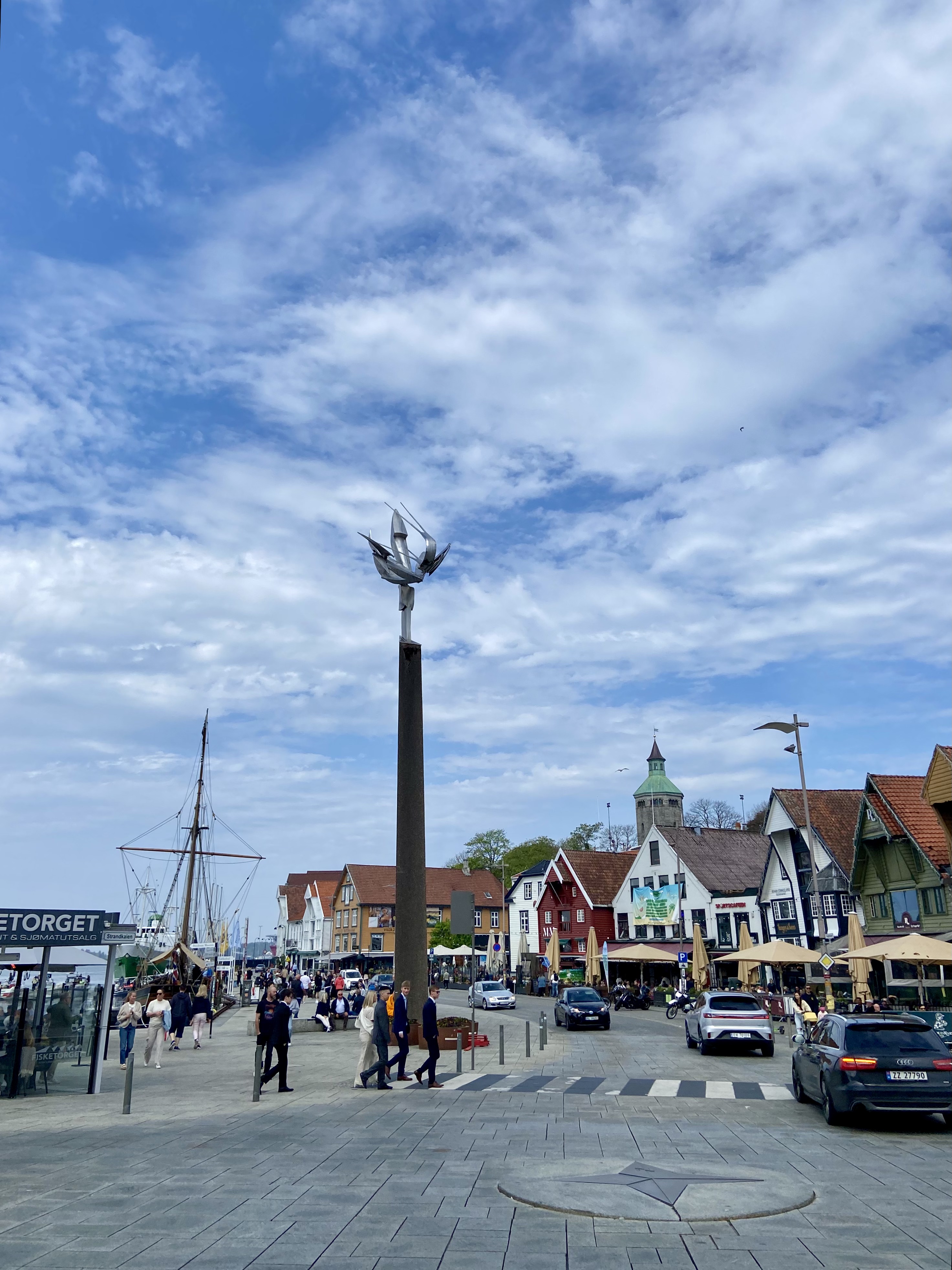
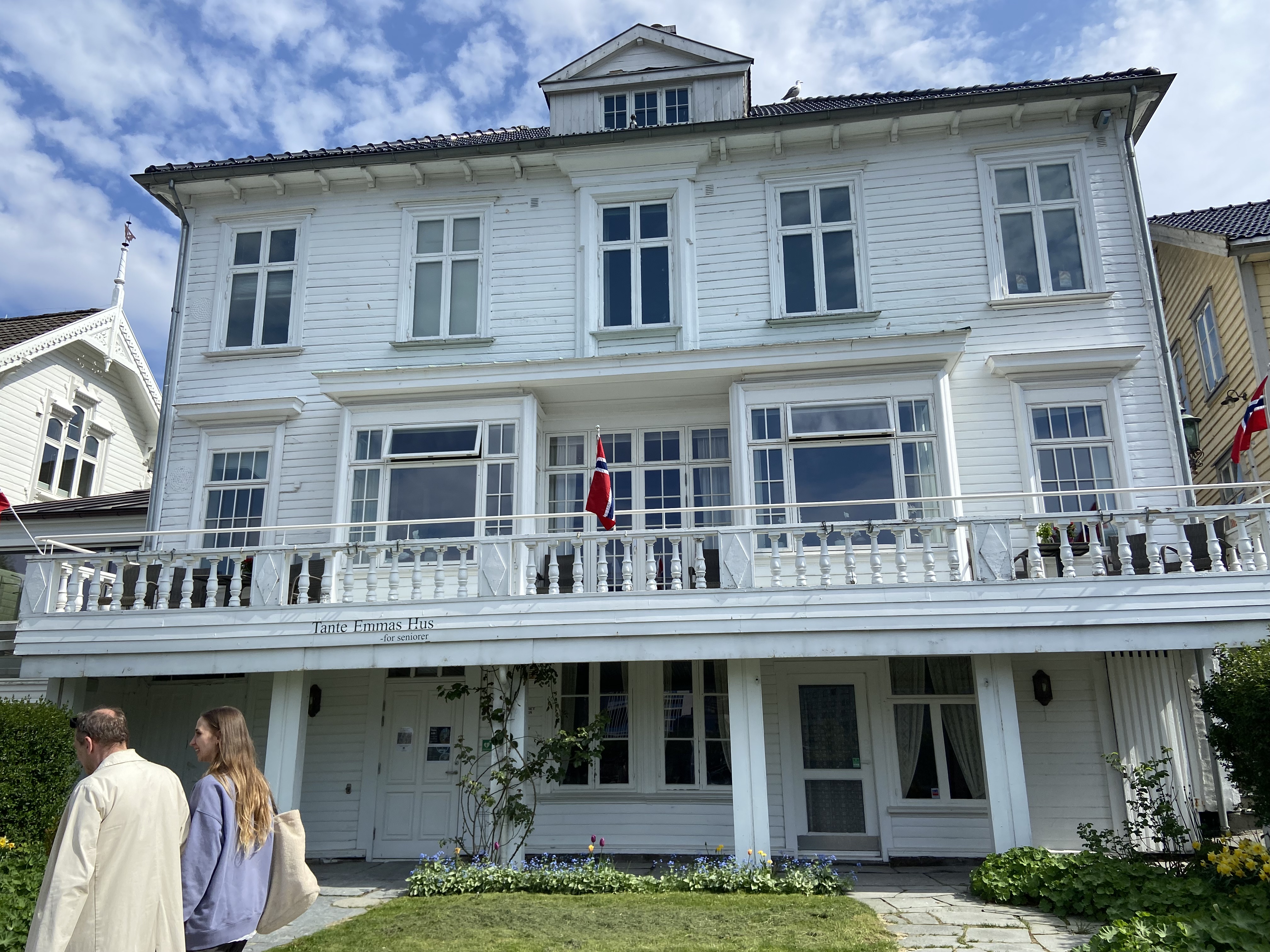
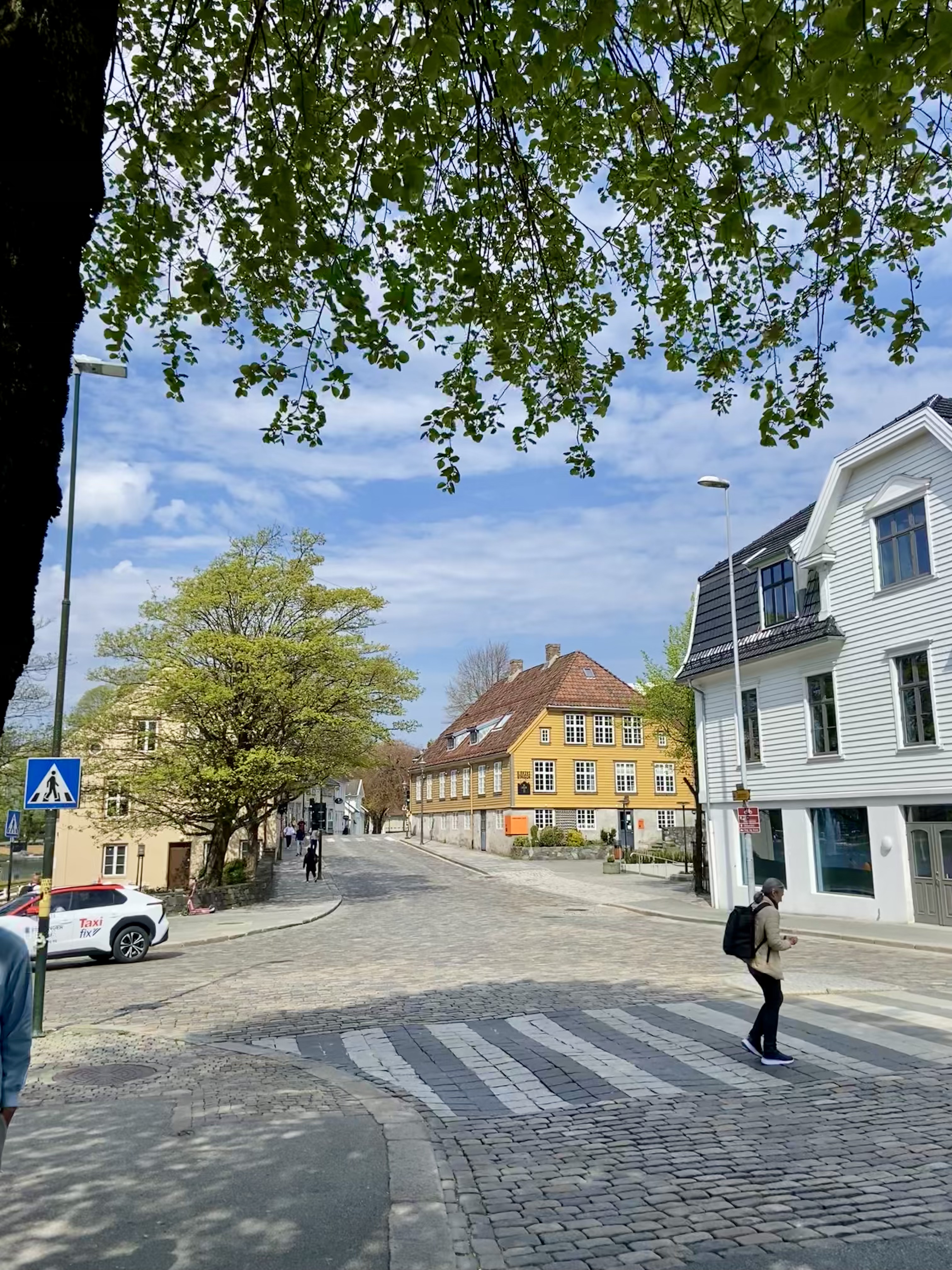
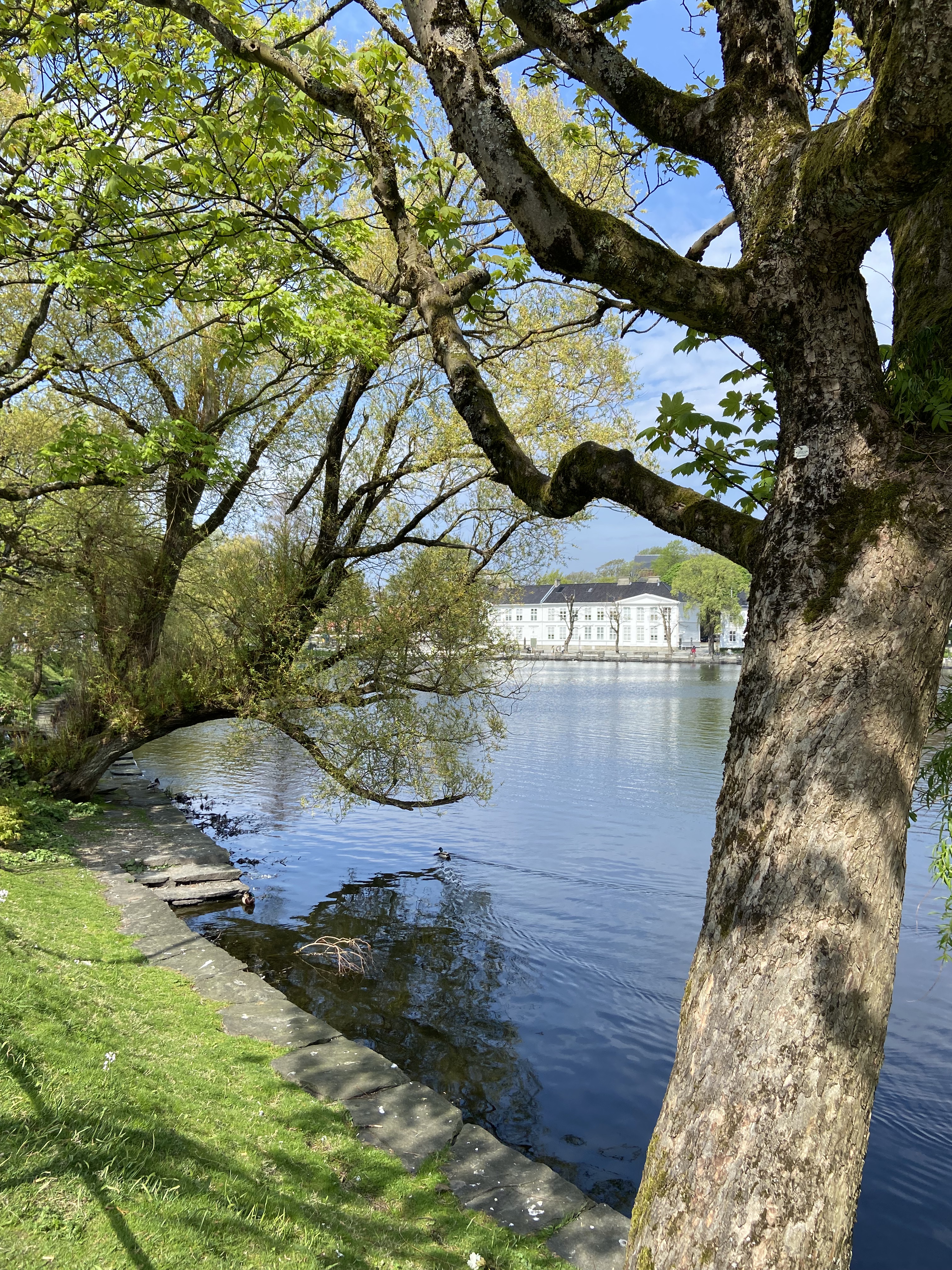
Stavanger looked beautiful under a clear blue sky. I have been very lucky with the weather, which is just as well as I couldn’t find my coat when I was packing. I thought I might have to buy a new one, but so far, I’ve got away with it!
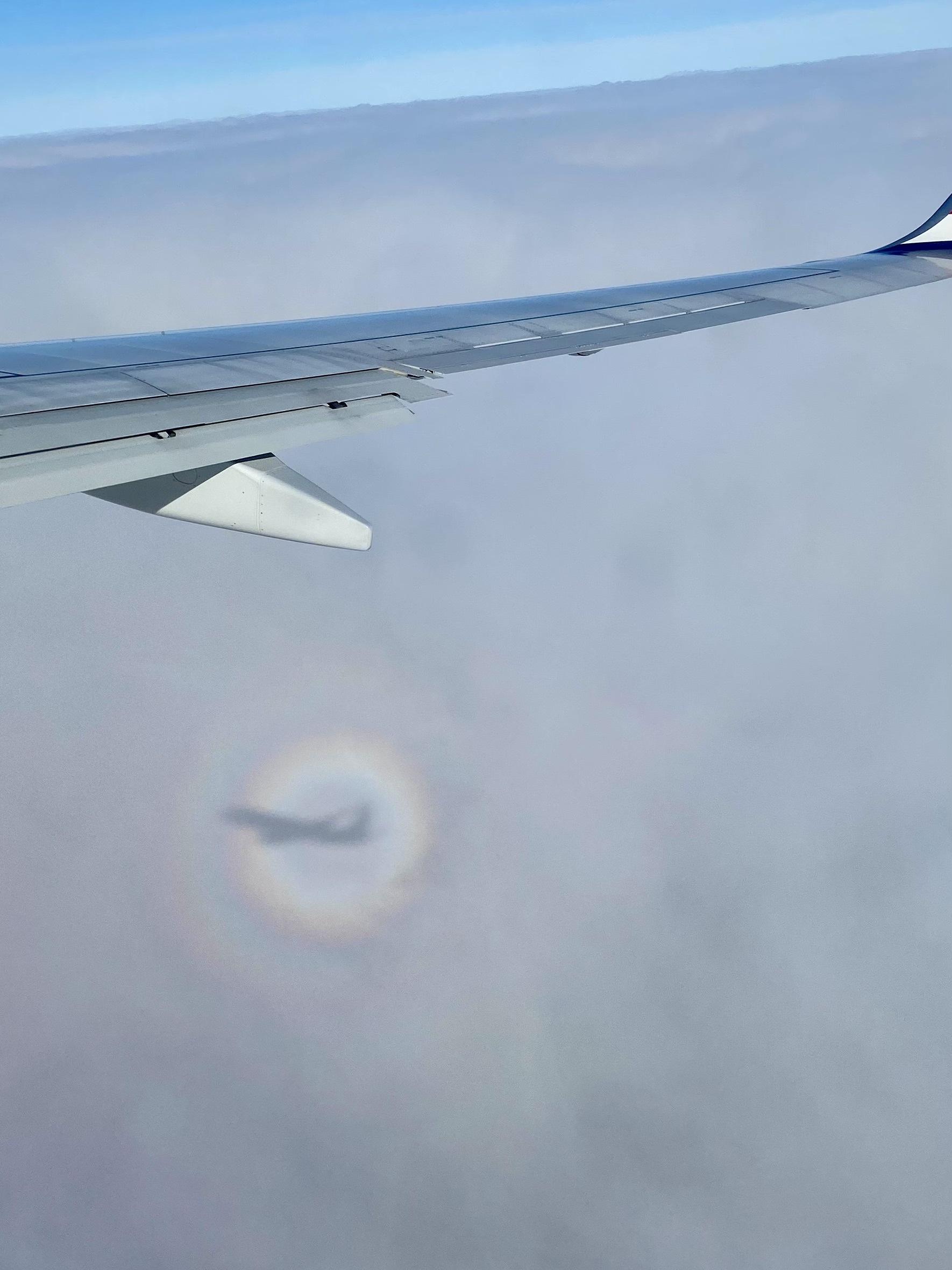
I came north on Monday. The stunning approach to Bardufoss, with its deep blue sea and snowy mountain ranges was a wonderful start to my Northern odyssey and though it clouded over as we neared our destination, I was treated to the sight of a «glory» which is a rainbow-surrounded shadow cast by the plane onto the cloud cover.
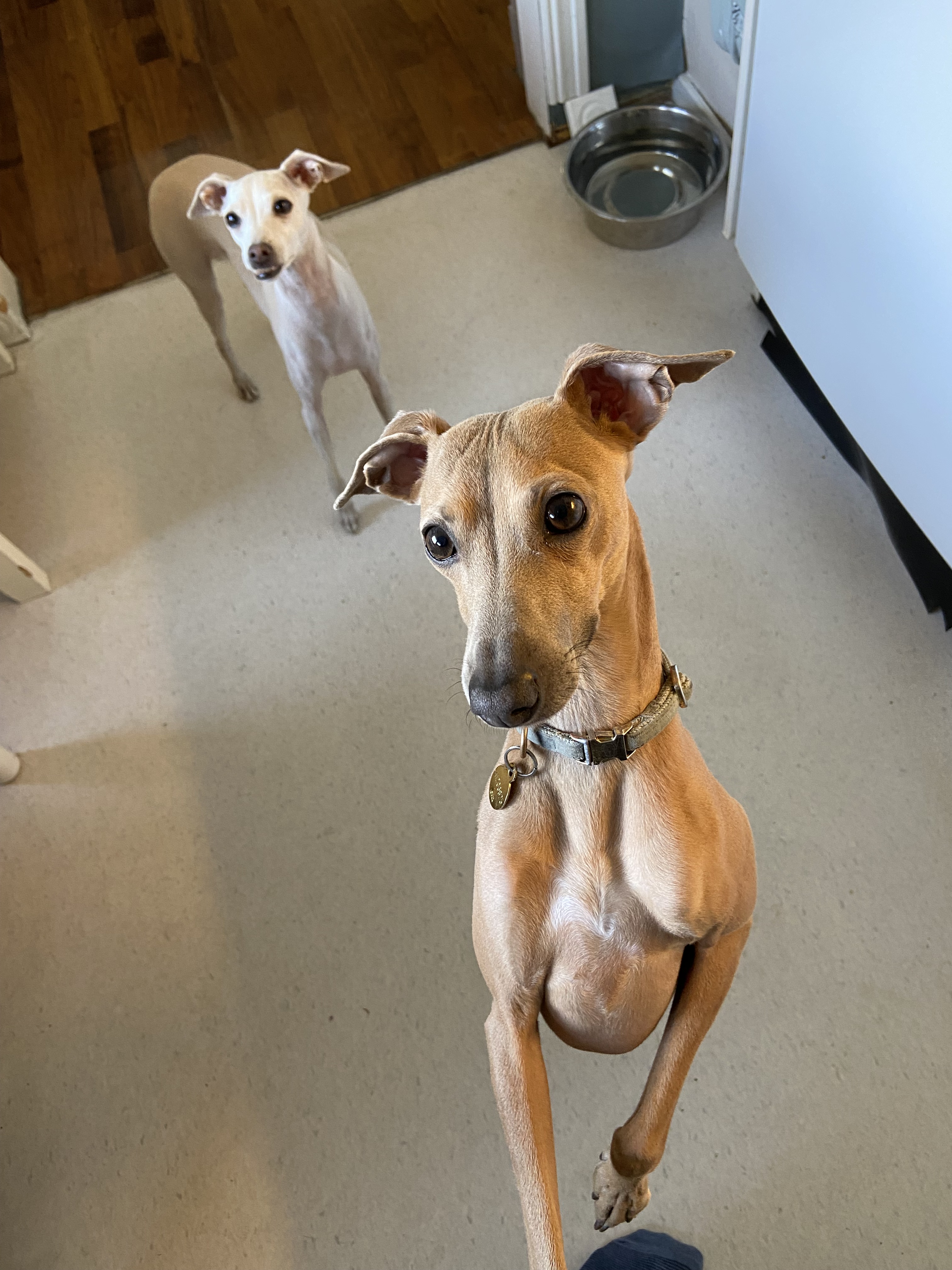
I have been staying with my lovely friend, Shirley, for the past few days. I met Shirley just over a year ago on the fast boat to Tromsø. Hearing people speaking English in this remote area of Norway is rare enough that I turned round to speak to her and her visiting friend, Linda, and we’ve never looked back. Coming back was like returning to a home from home, not least because of the lovely dogs she and her husband Kai own. Here they are: Bailey at the front and Alva in the background.
It’s been interesting coming back. The snow melted on the lower ground quite early this year, but it’s a week or two too early for the incredible summer growth to begin. When I lived here, it always seemed like the least beautiful time of year, with its dead-looking plants and grass, but driving through the valleys, past snowy peaks and still-frozen lakes, it was easy to see the beauty in the landscape, despite the dust that covers the roadsides when all the winter snow has melted away.
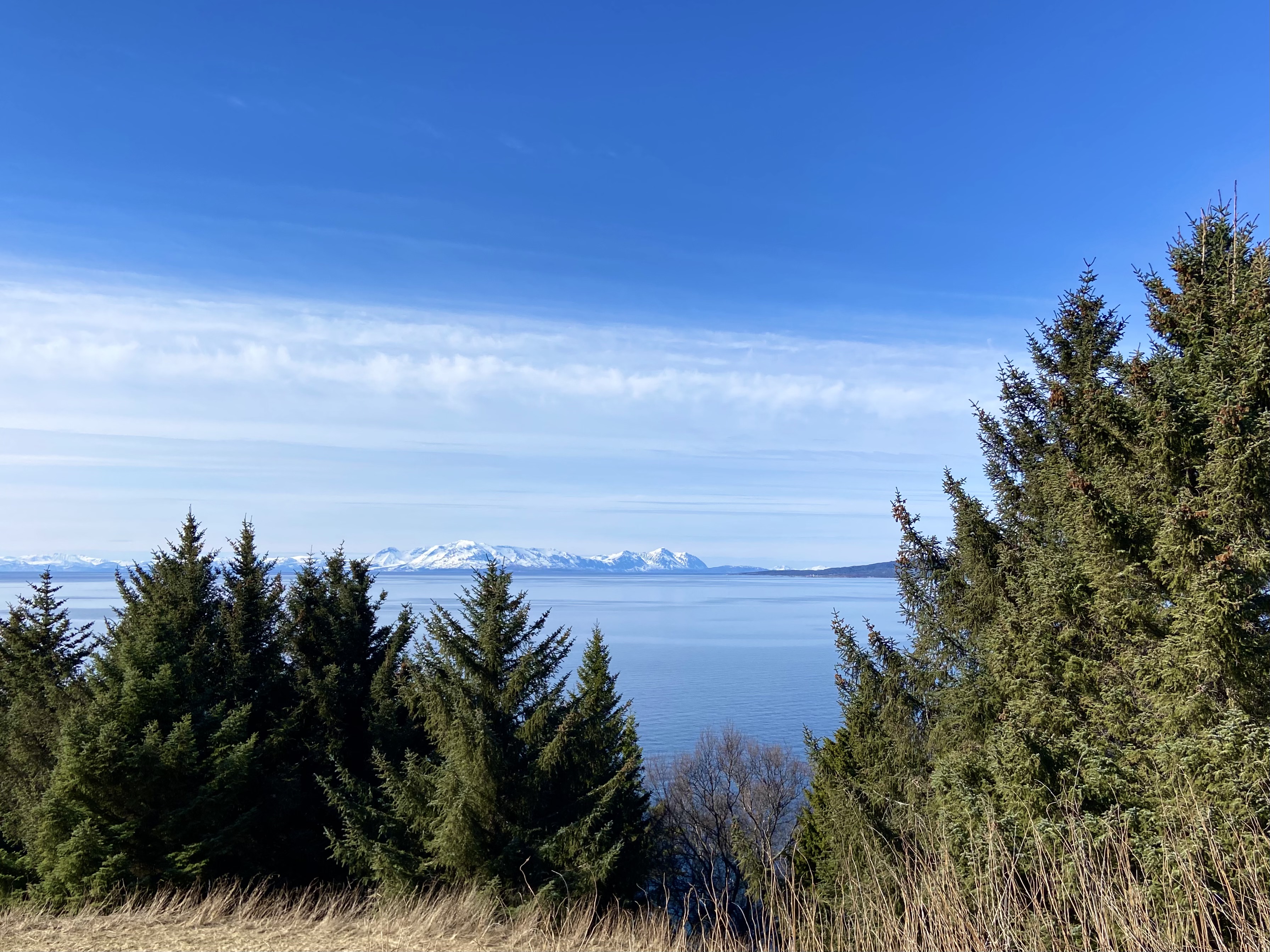
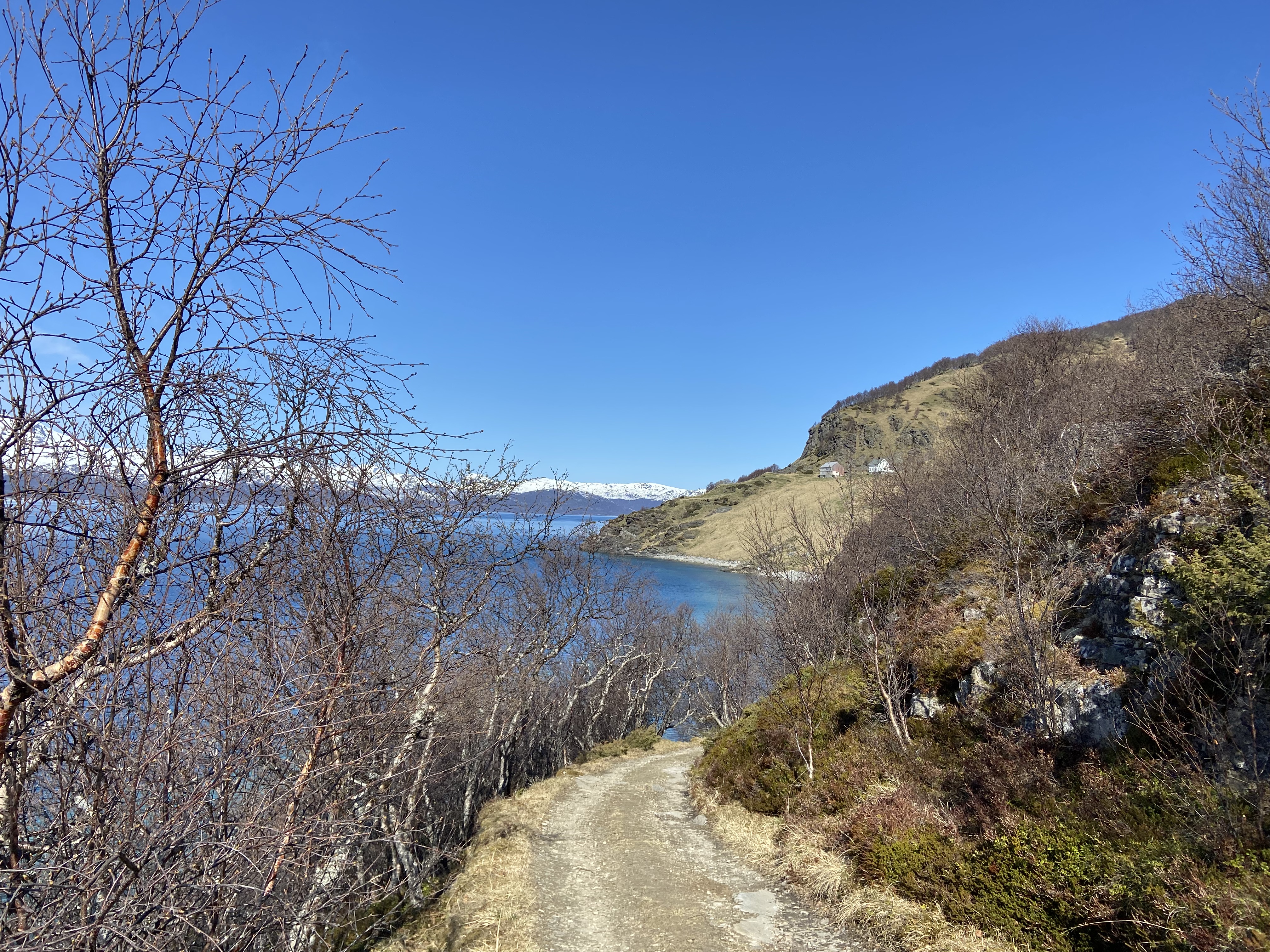
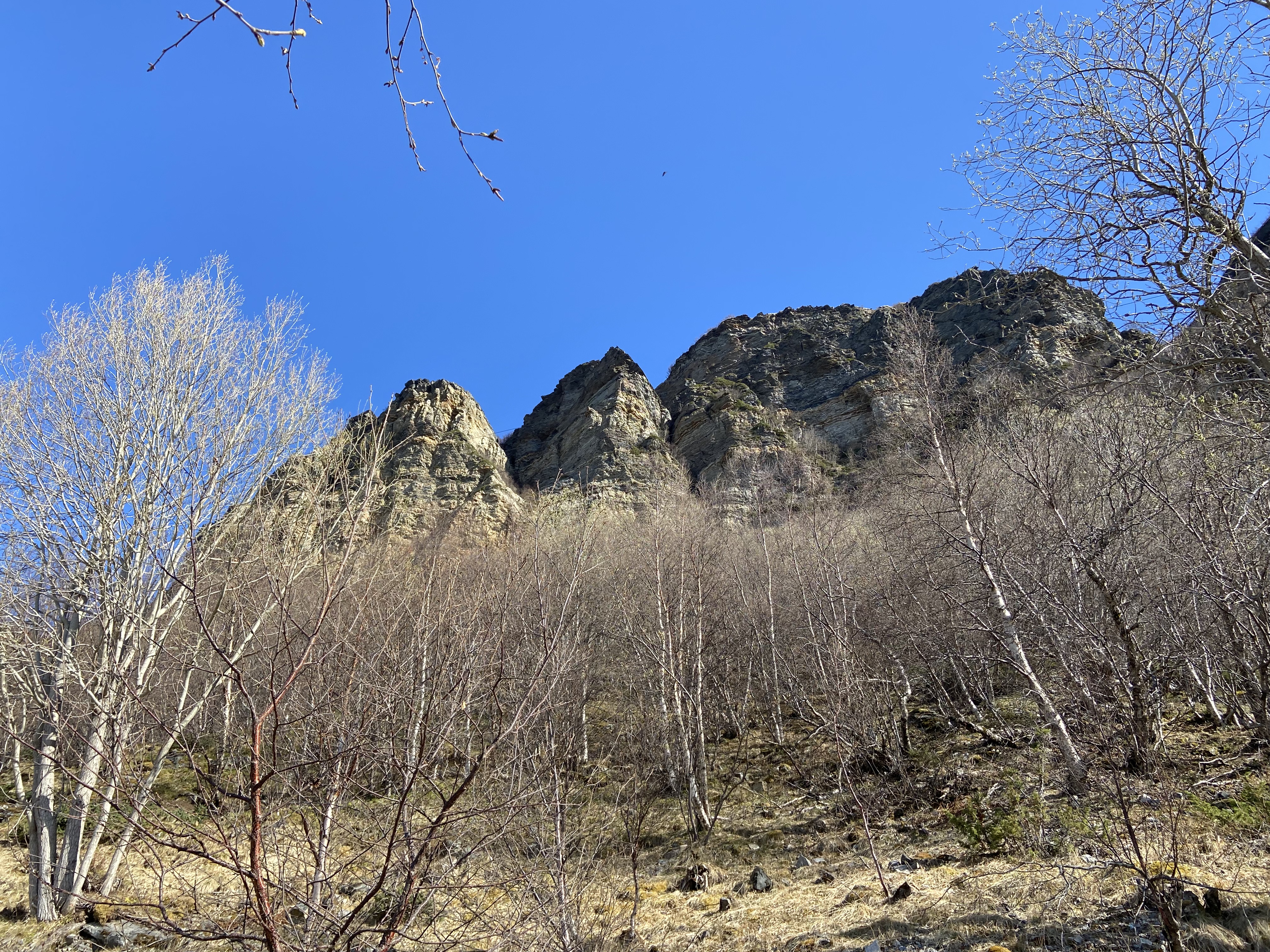
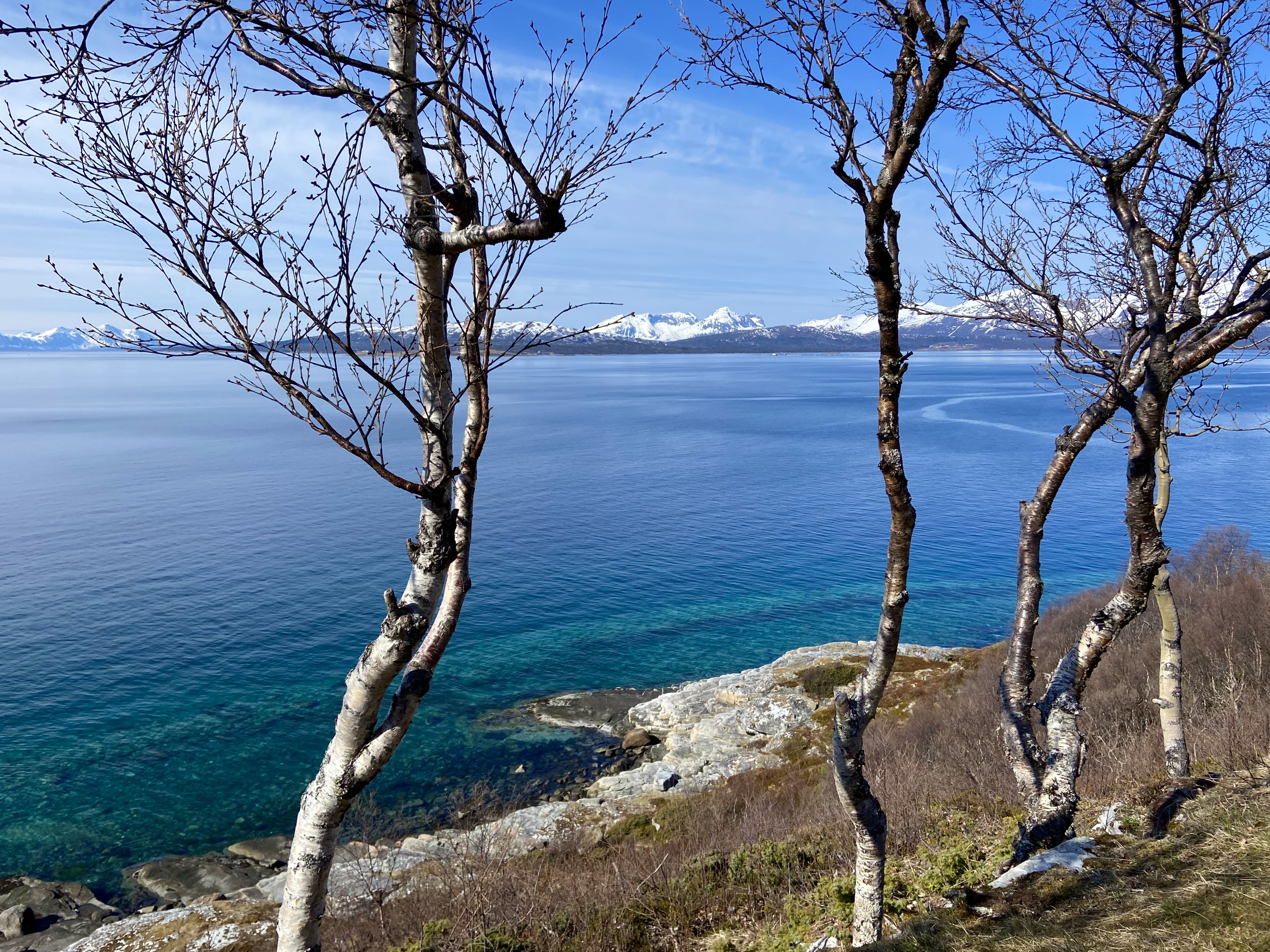
We’ve had a wonderful week of cooking together and wine with dinner, as well as UK comfort TV, like Heartbeat and Judge John Deed. We went on a trip to Dyrøya on Wednesday and walked for an hour along a track above the fjord, with views over to the mountains of Senja to one side and rocky peaks to the other. There was even a sea eagle soaring in the blue sky, far above our heads.
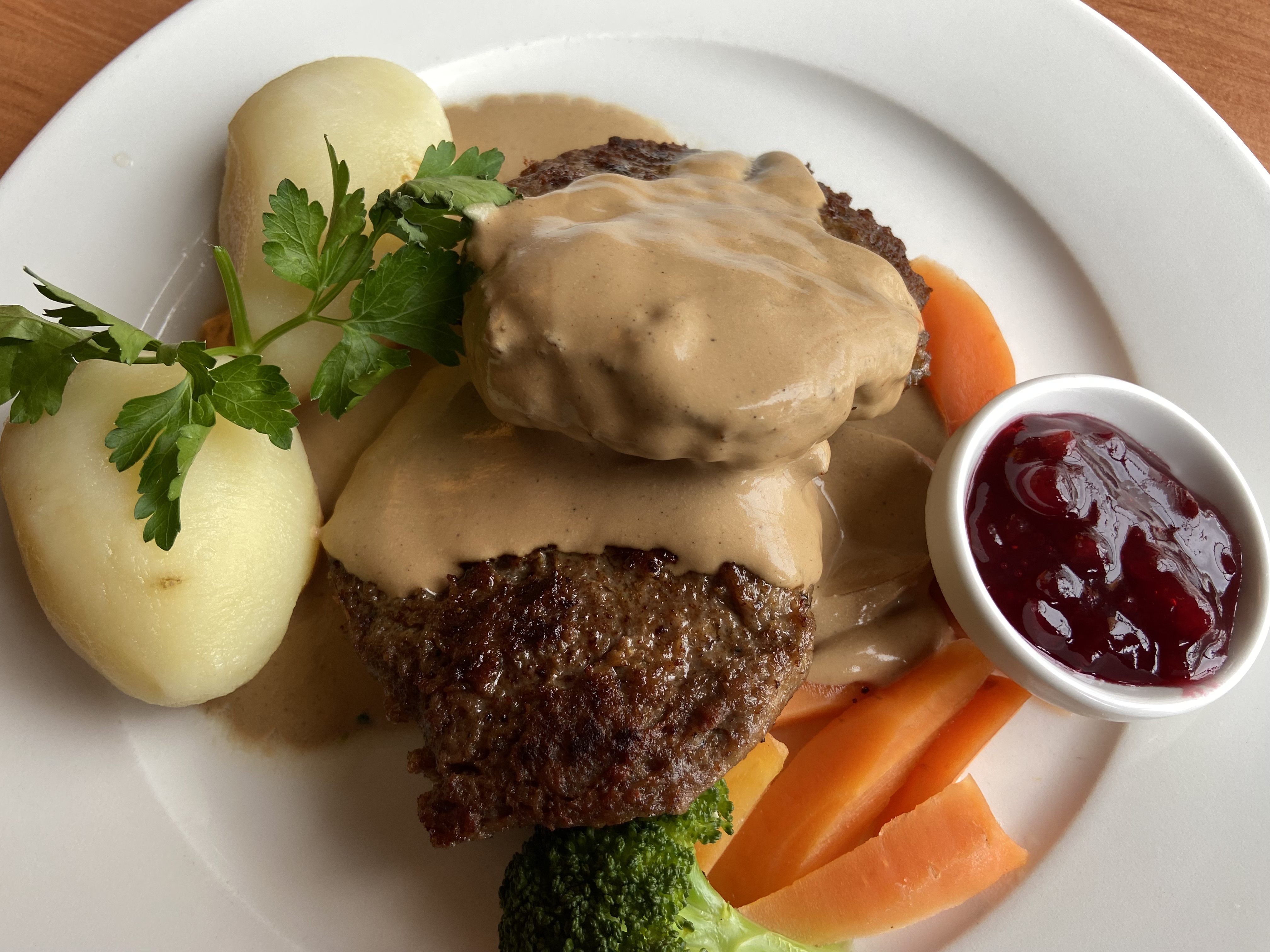
On Friday, we went to Senjastua, a restaurant on the edge of Stavanger, which serves traditional and modern Norwegian food. I chose reindeer karbonader, which came with boiled potatoes and cream sauce. It was the perfect end to a very enjoyable week.
In an hour or so, I am heading north again on the fast boat to Tromsø, where I will be visiting John and Yoana for a few days. Have a good week all and thanks for reading!
This weekend, I’m back in Stavanger. Having lived in Rogaland for twelve years, it all feels very familiar. Better still, Anna is with me and we’re visiting Andrew, whose year at school here is rapidly coming to an end. Today, we’re going to watch some of the films he’s made over the year, and (I think) do a session of singing with the students who have been studying music. We went to a great concert last night, put on by those students, so I hope it’s going to be a fun day.
I’ve quickly slid back into the Rogaland Rhythm. I may have taken too many pictures of food and drink, but that’s just the way it is! My first action at the airport, while waiting for the bus was to buy a hot dog. Norwegian hotdogs are the best. This one is a cheesy hotdog wrapped in bacon. Nam nam! as they say!
Having left a rather chilly Scotland after a long, wet winter and spring, I arrived to sun and twenty degree temperatures. Despite the heat, Anna and I went to one of our old haunts for breakfast. Steam does the best croissants and coffee!
We went for a stroll to the harbour, where a cruise ship dominated the landscape. They really do dwarf the buildings. In the background, there are a couple of oil rigs, presumably brought in for maintenance, and that’s very Stavanger too.
We stopped in a bar by the harbour and spent ten pounds on 400ml of lager! Sometimes you just have to go with it!
And then we had Funky Frozen Yogurt, or as it’s known in the McGurk family, Funky Zen Gurt, because when it first arrived in a shopping centre near us, the logo design highlighted those bits.
Anyway, that’s probably a reasonable summary of the last 36 hours and the crazy whirl since then punctuated, as you can see, by junk food. And now It’d better get up as we’re meeting Andrew in an hour. Have a good week all!















































 A Vet’s Life