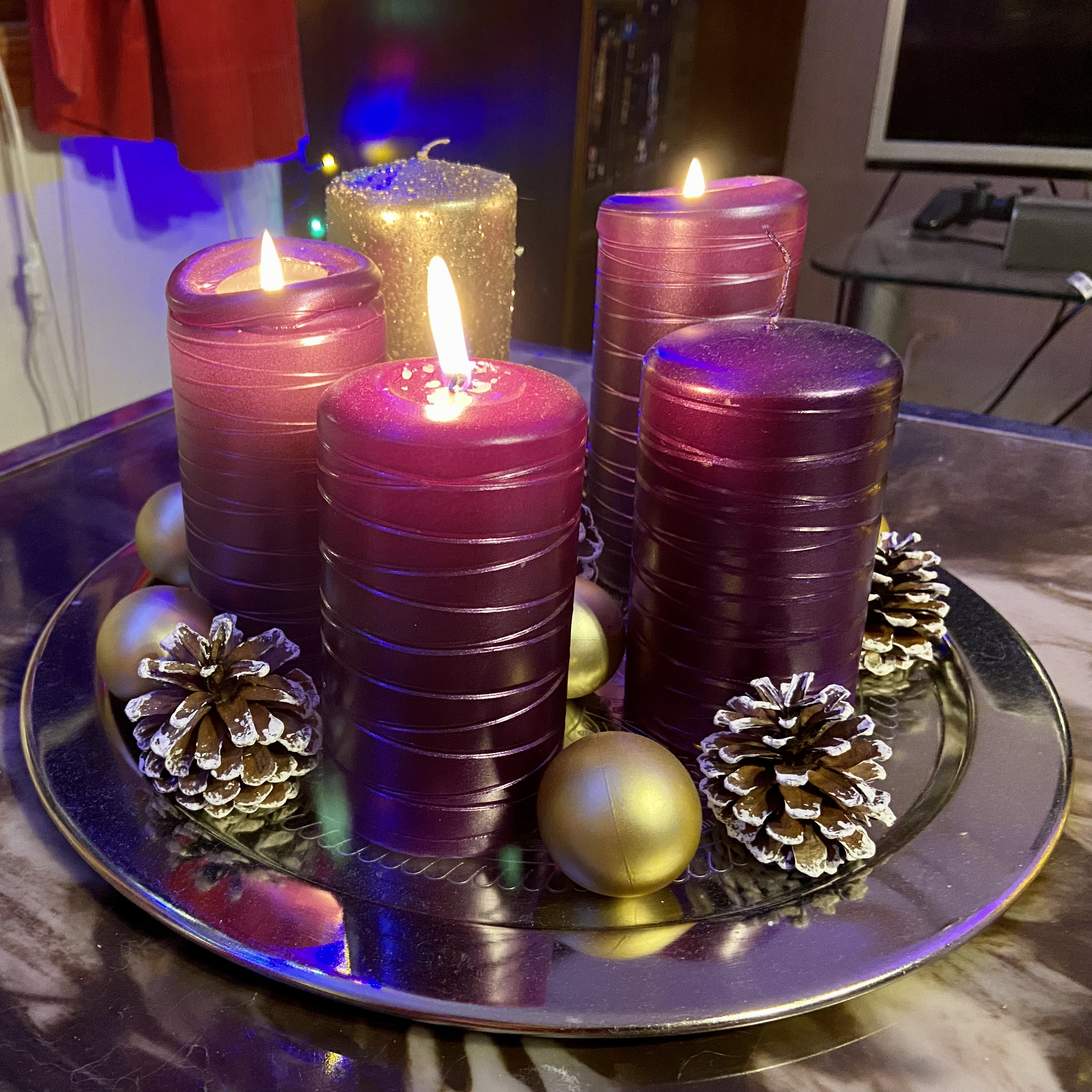
The third purple candle is now lit on the advent crown.
Not really a Christmas thing, but the sledge-like object in the picture at the top of the page is a spark, or sparkstøtting. As you can see, it has a handle at waist height and long runners behind the seat, so you can walk and push a child, or carry something. It’s not uncommon to see people taking them to the shops and around the town and children sometimes play with them on the road to our apartment. The pavements are rarely gritted, so sliding about isn’t too difficult. That said, at minus ten, there tends to be less ice and even though the snow is hard-packed, it often has powder on top. When the temperature rises above zero and it begins to melt, that’s when it is at its most treacherous.
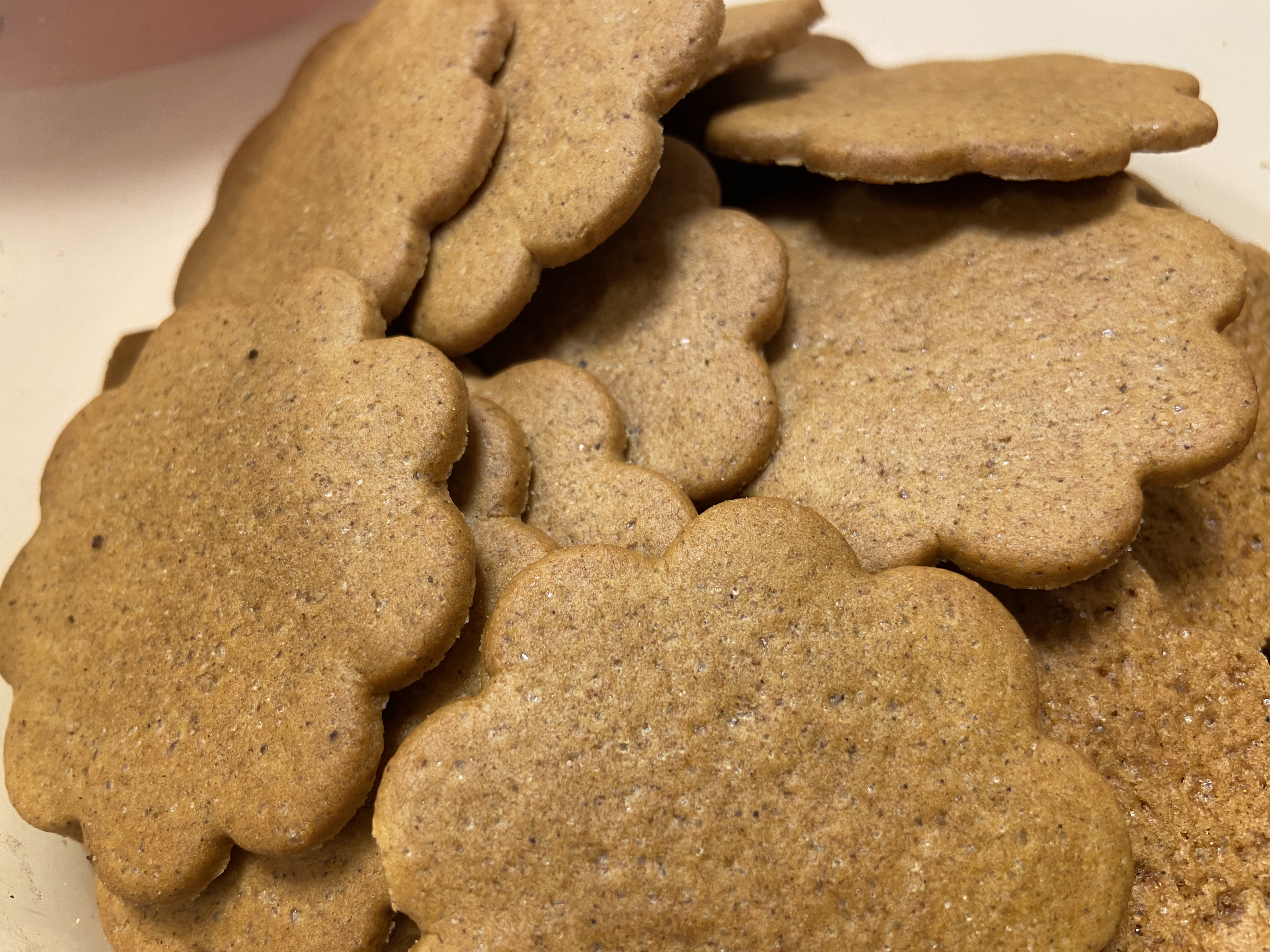
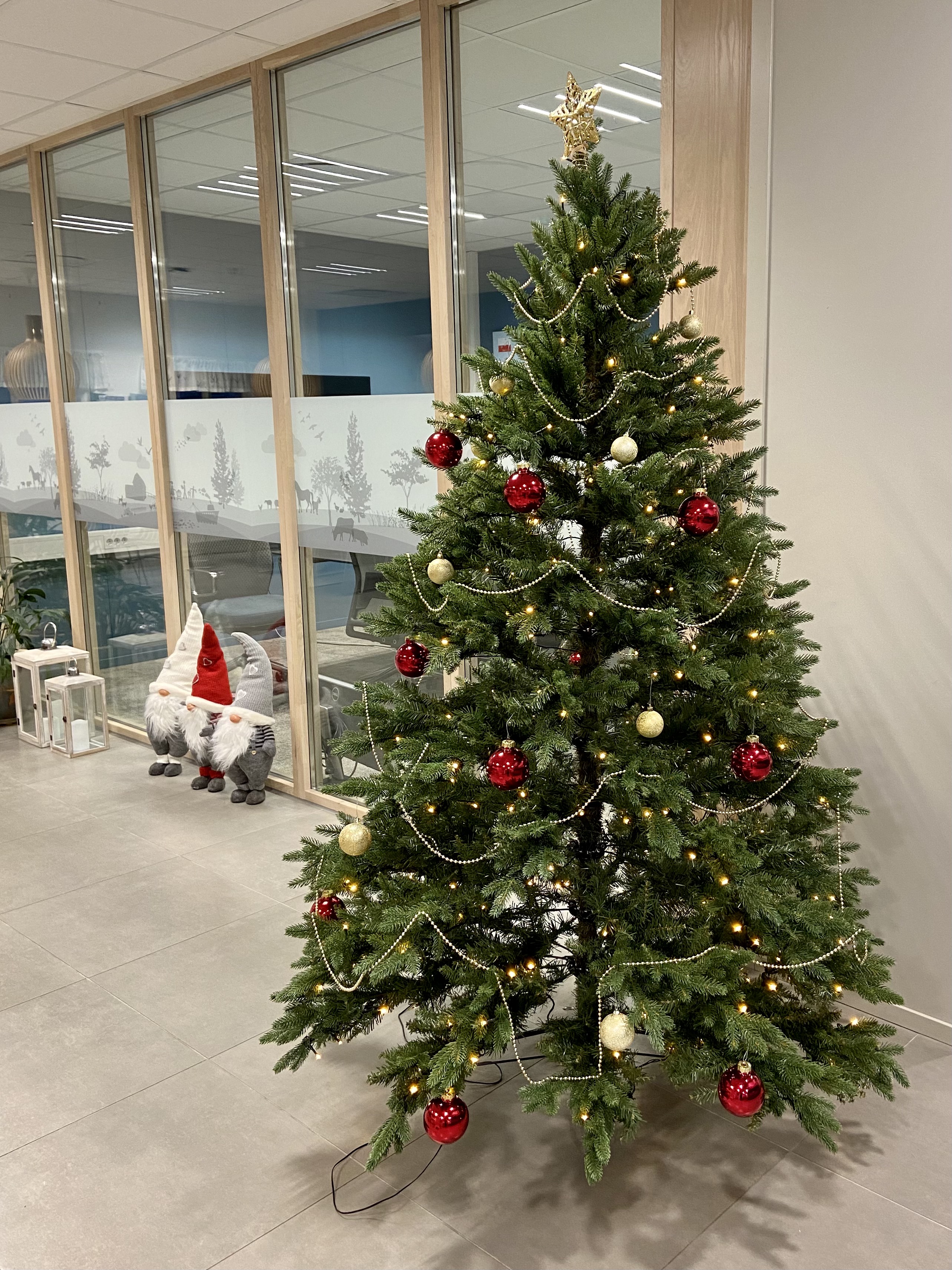
The office is now filled with Christmas cheer. These three nisser look a bit more cosy than the one in the hotel last week. I was hoping to bring pictures of our Christmas lunch, but I ended up working elsewhere on Thursday. I did take pictures of some of the most common Christmas “biscuits” though. On the left are kokosboller, top right are pepperkaker and bottom left are havreflarn.
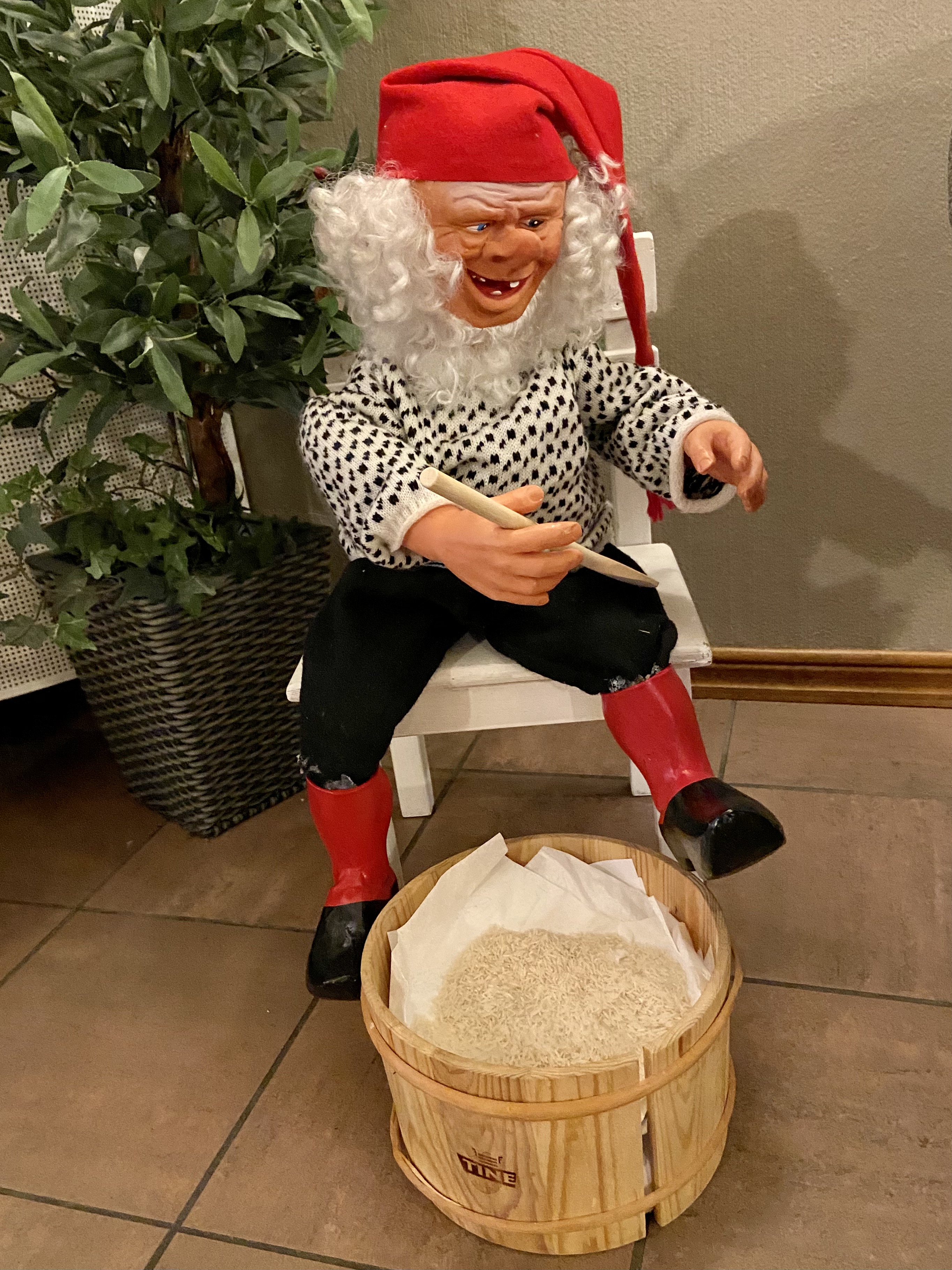
And this is risgrøt – basically rice porridge. This is what the nisser should be fed on Christmas Eve (Julaften). I had mine with butter, sugar and cinammon, but John tells me they eat it up here with spekemat – dried meats and sausages. One day I’ll have to give it a try.
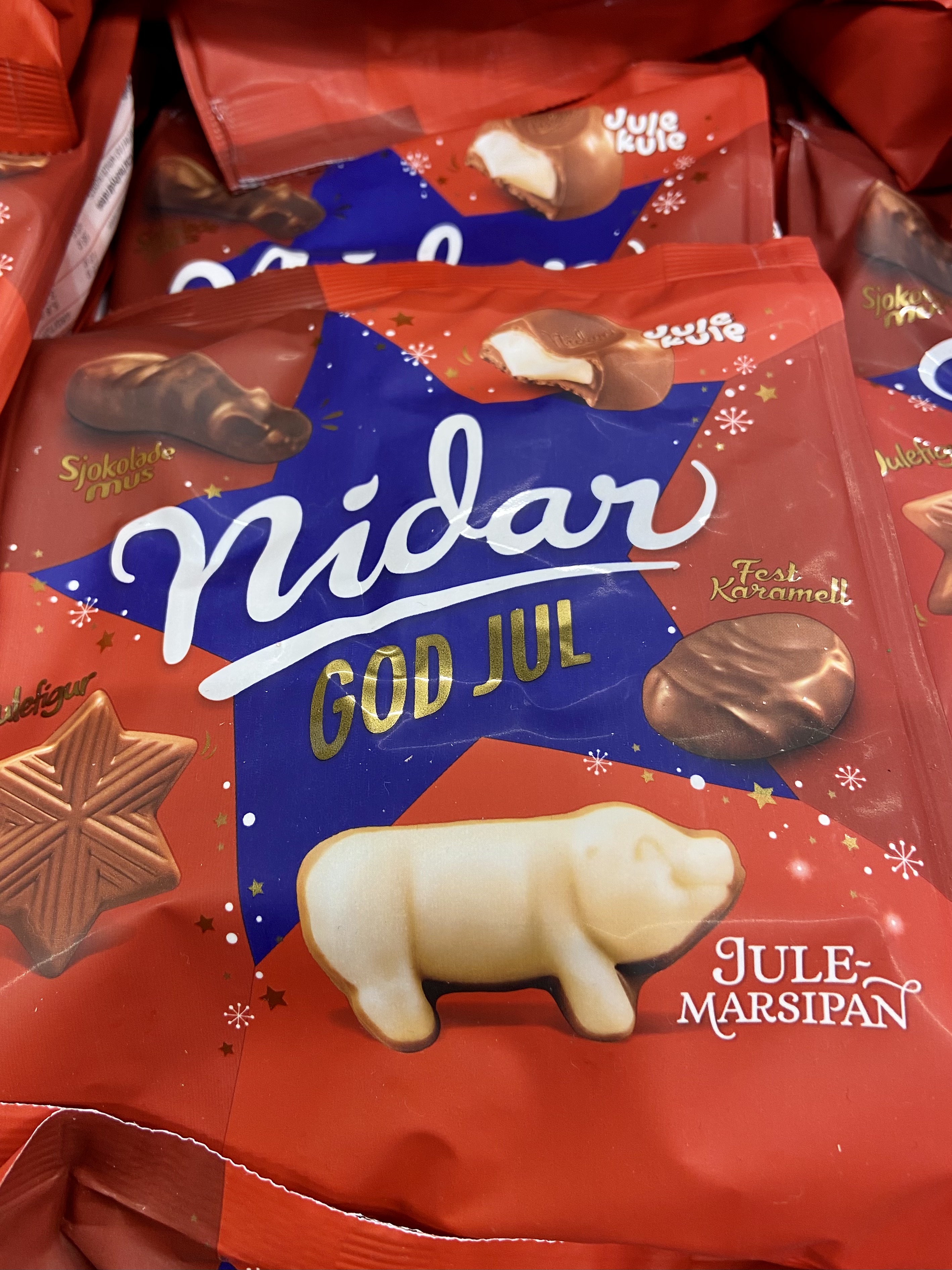
As in the UK, there are lots of Christmas sweets and snacks in the shops. Many are marzipan based, with a particular slant towards marzipan pigs. There is also the delicious sounding Juleskum though, if you’re feeling brave. I also had to take a photo of a packet of salted caramel crisps. Salted caramel is lovely, but this is one of those moments when even I think they’ve taken it a step too far!
If you’re thirsty, the classic drink is gløg, which is a warm, spiced wine drink, a little like mulled wine, though there is an alcohol free version for children.
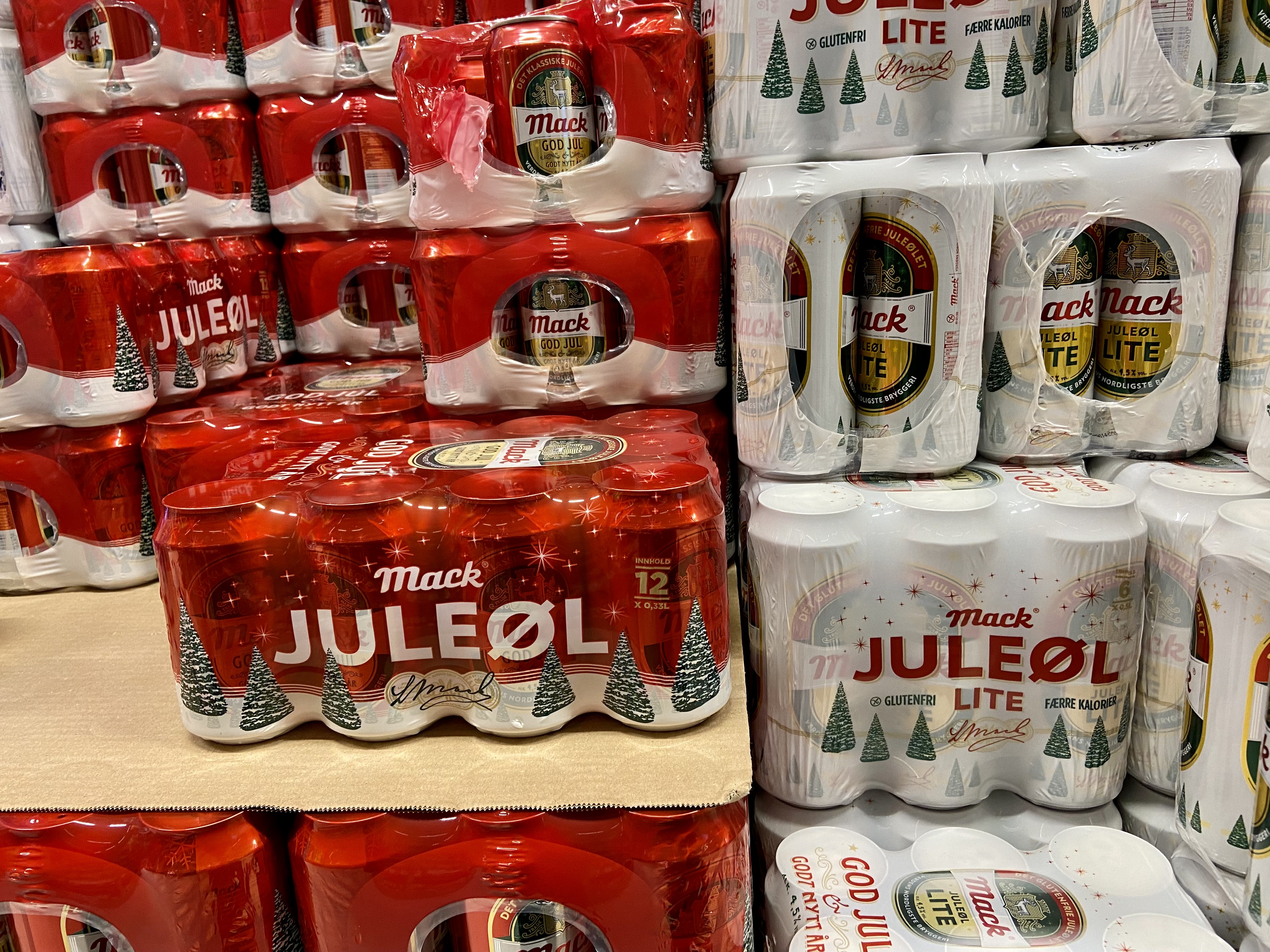
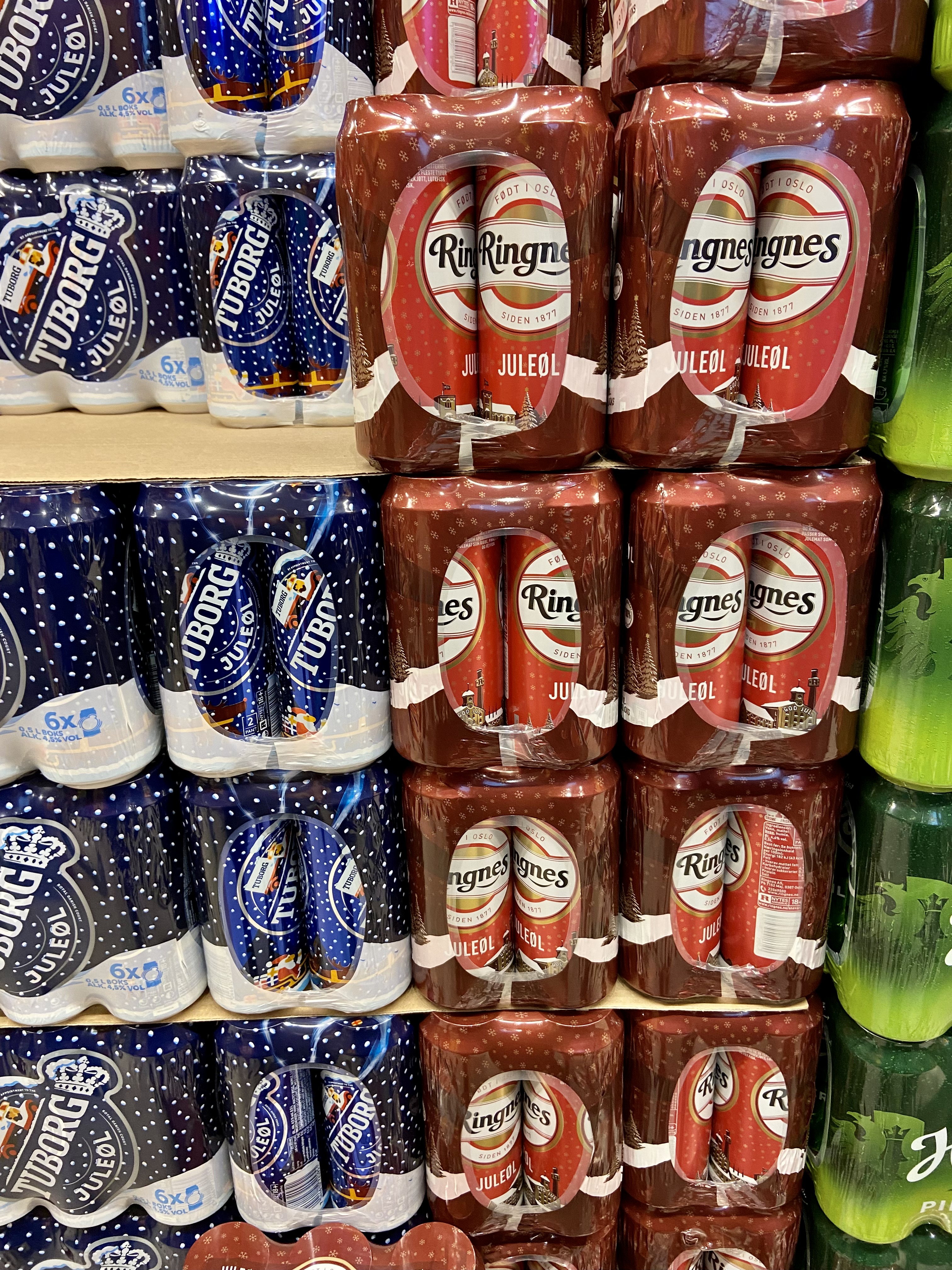
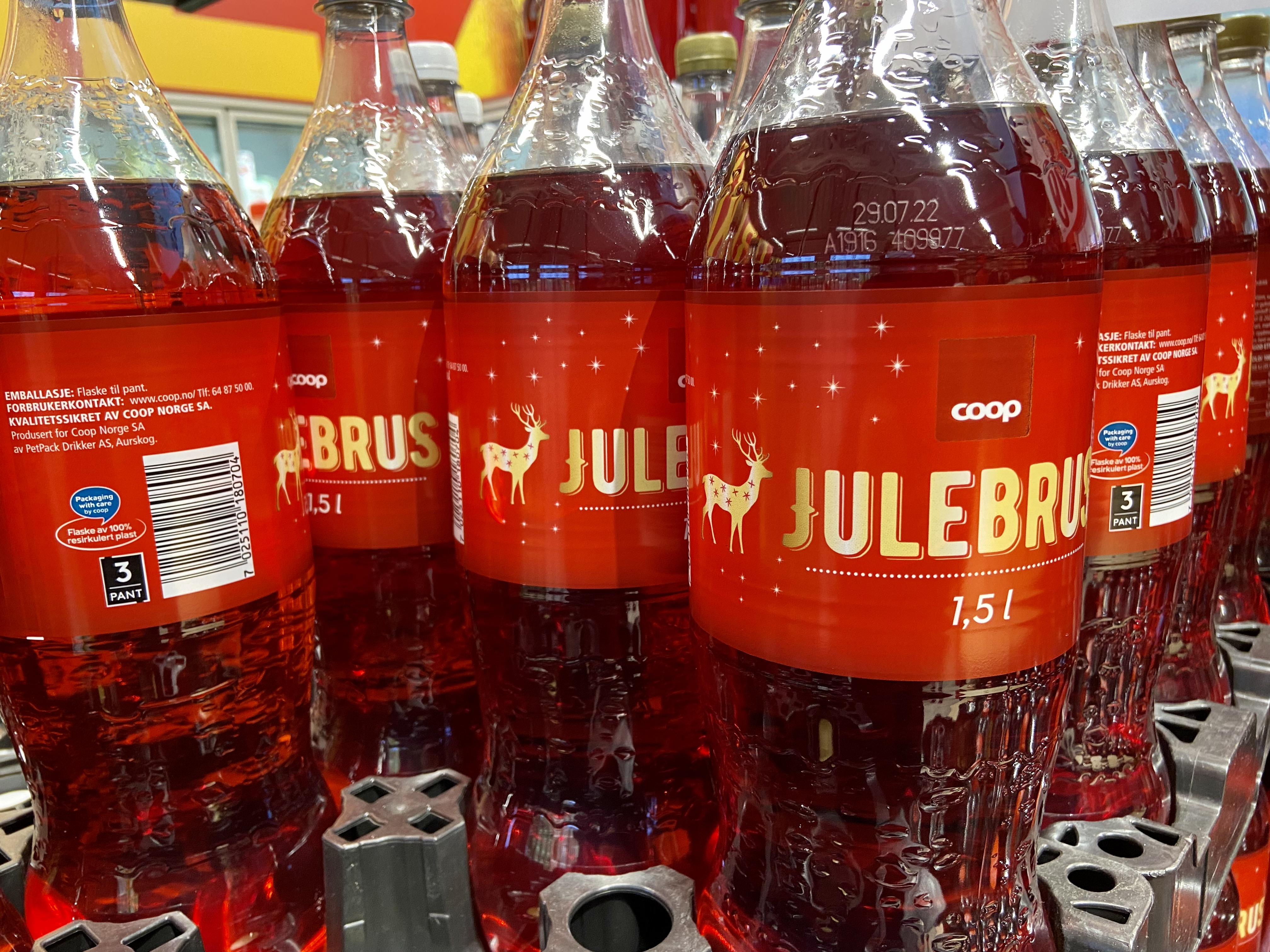
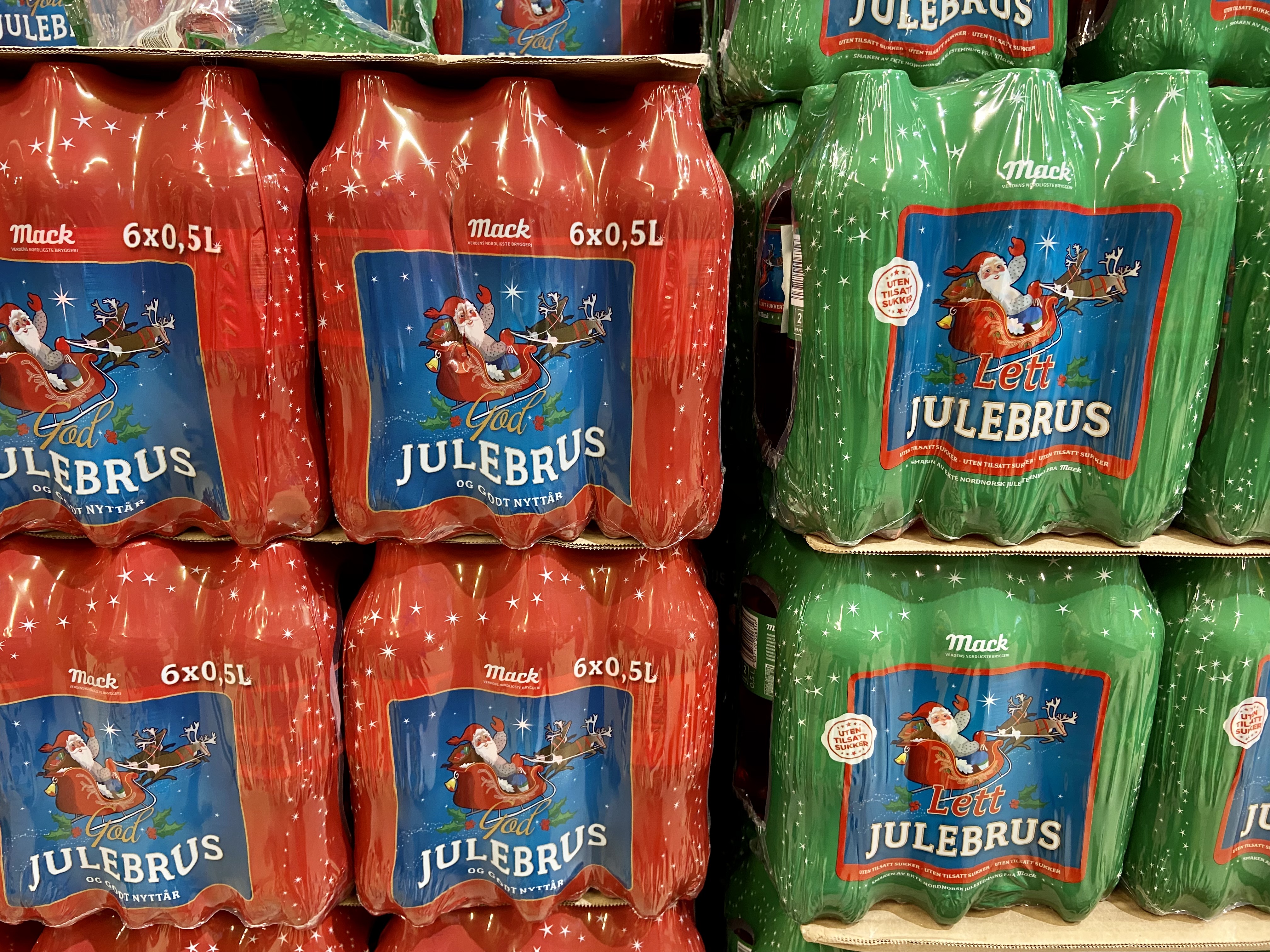
Alternative drinks include Christmas beers, made by all the bigger beer-makers and also Julebrus, which is a sweet, fizzy drink in either red or brown flavours. Mack is our “local” brewery (it’s in Tromsø) and it’s the most northern brewery in the world. As you can see, they make Julebrus as well as beer. The Julebrus here is different from the brands we used to buy when we lived much further south.
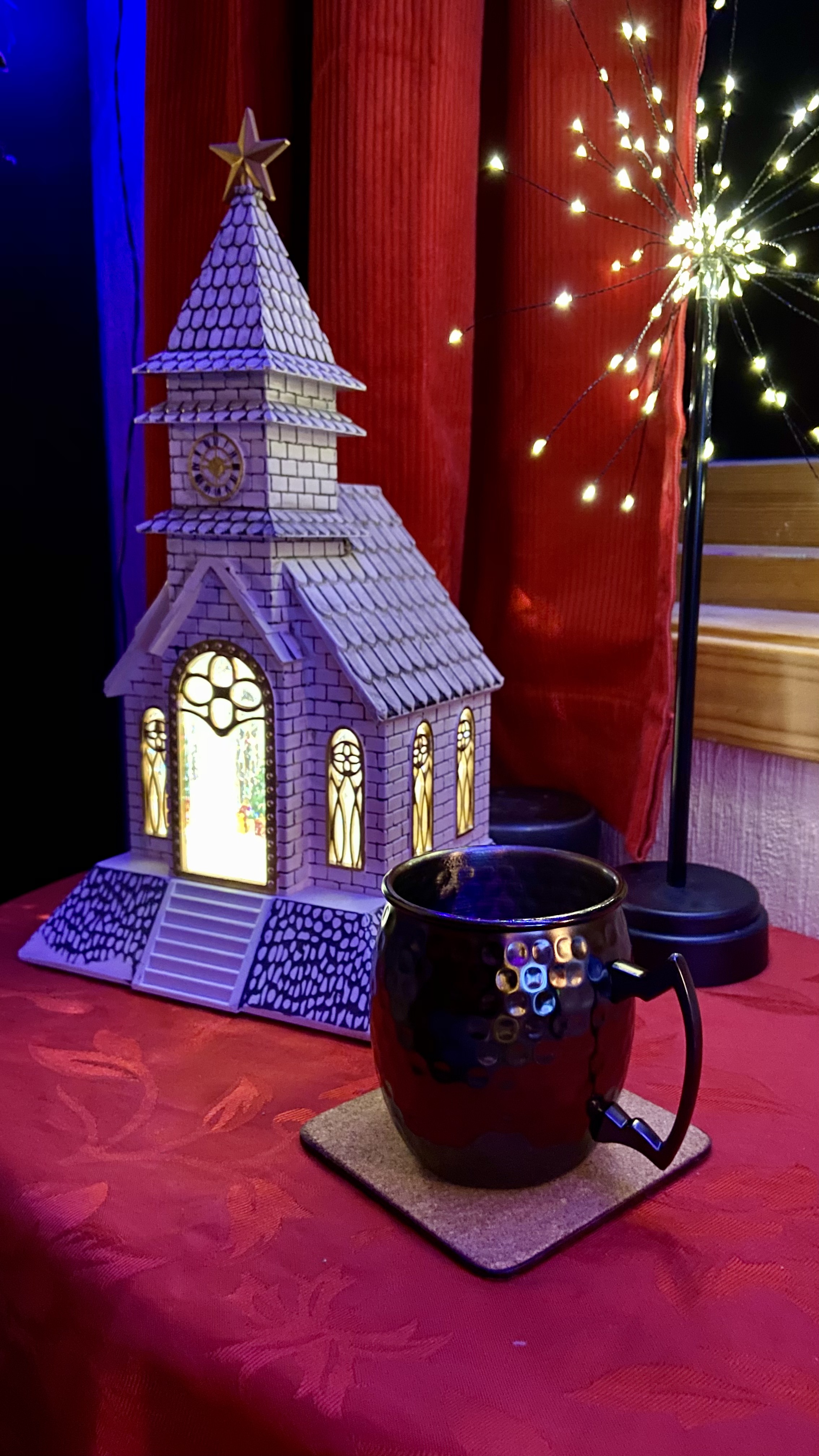
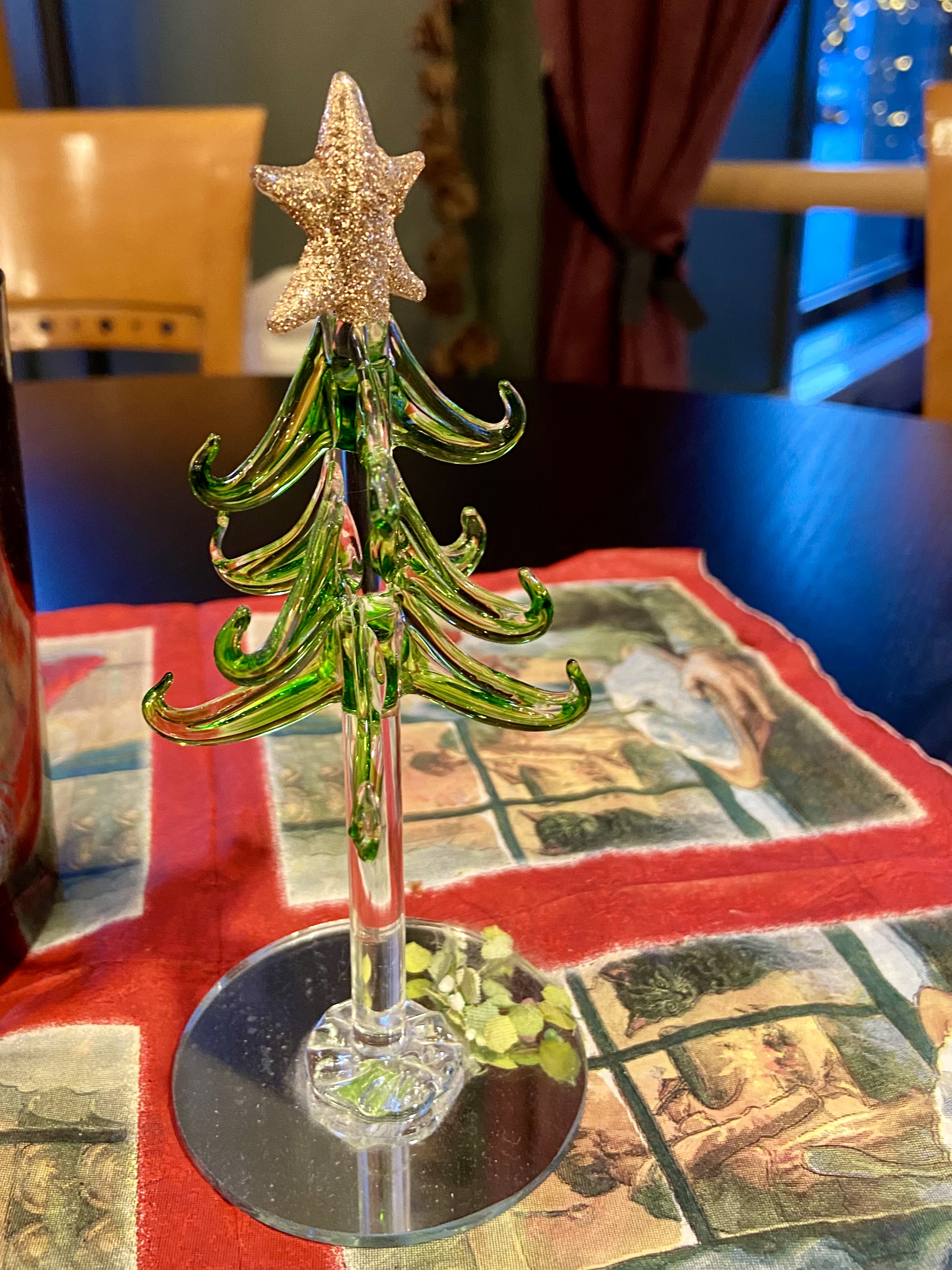
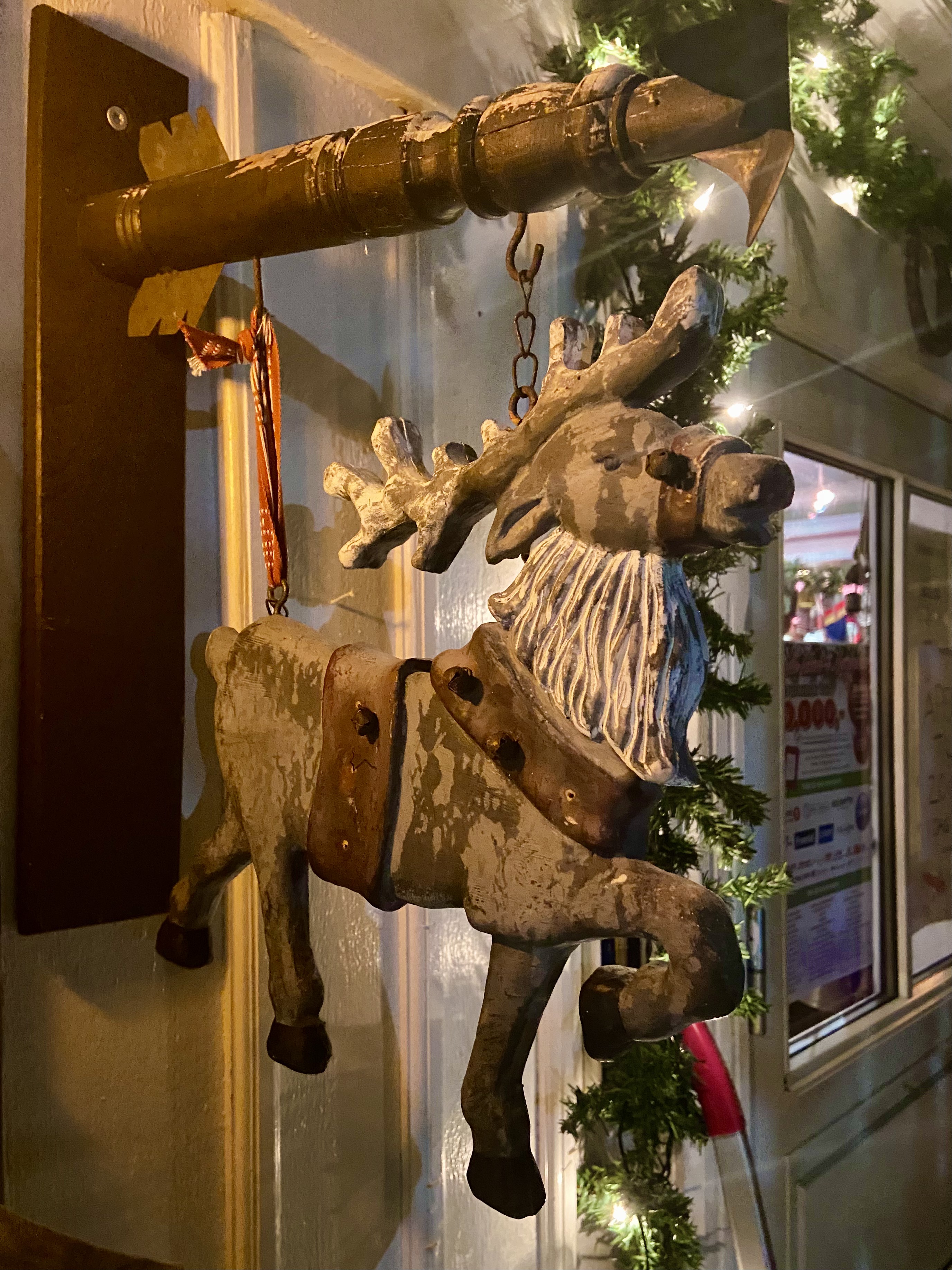
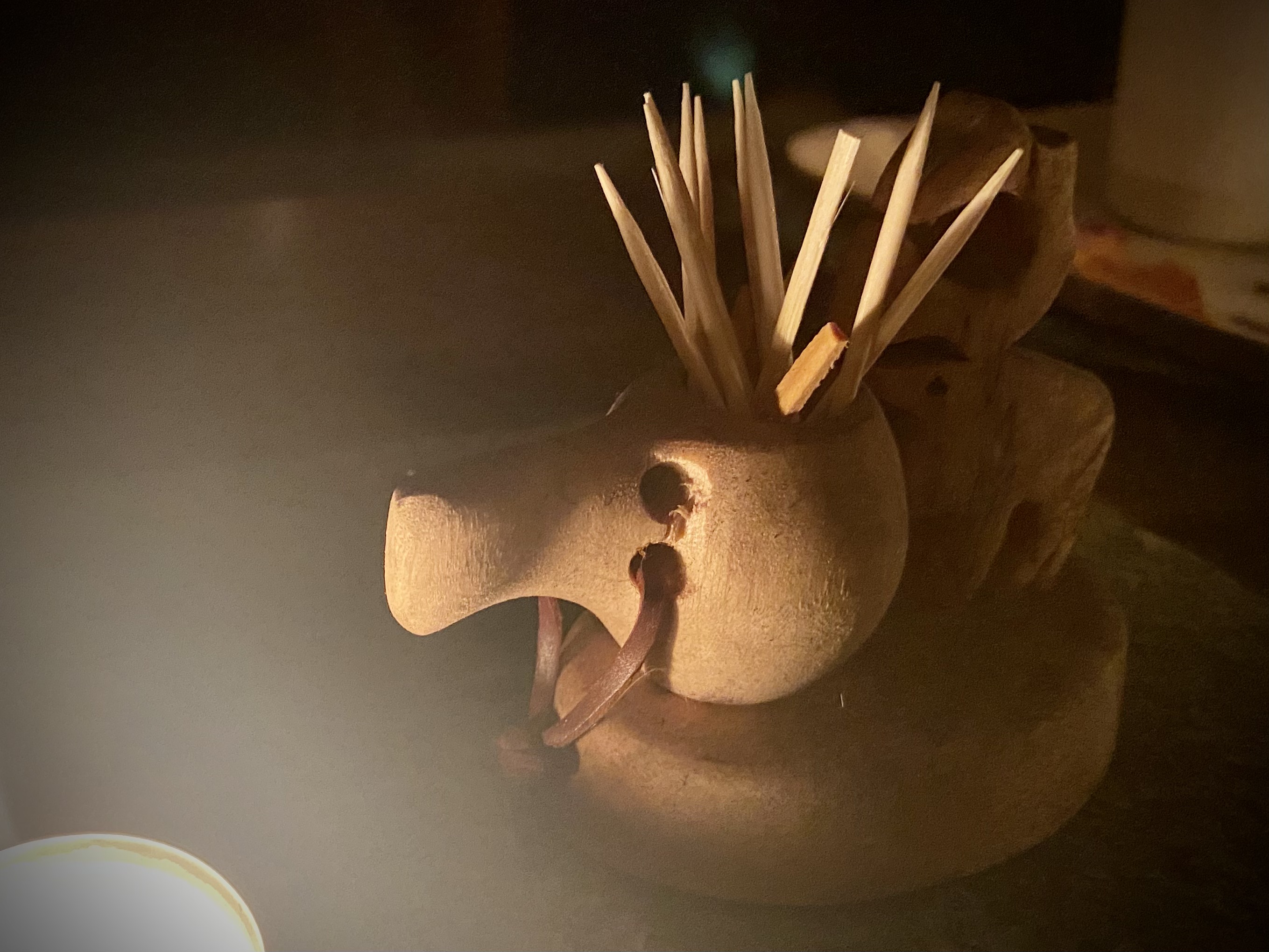
I’ll finish off with a few decorations. These are from a cafe we visited yesterday in Bardufoss. I was hoping they’d have some more Christmassy food, but nothing was leaping out at me, so I had a coffee instead, which was very pleasant.
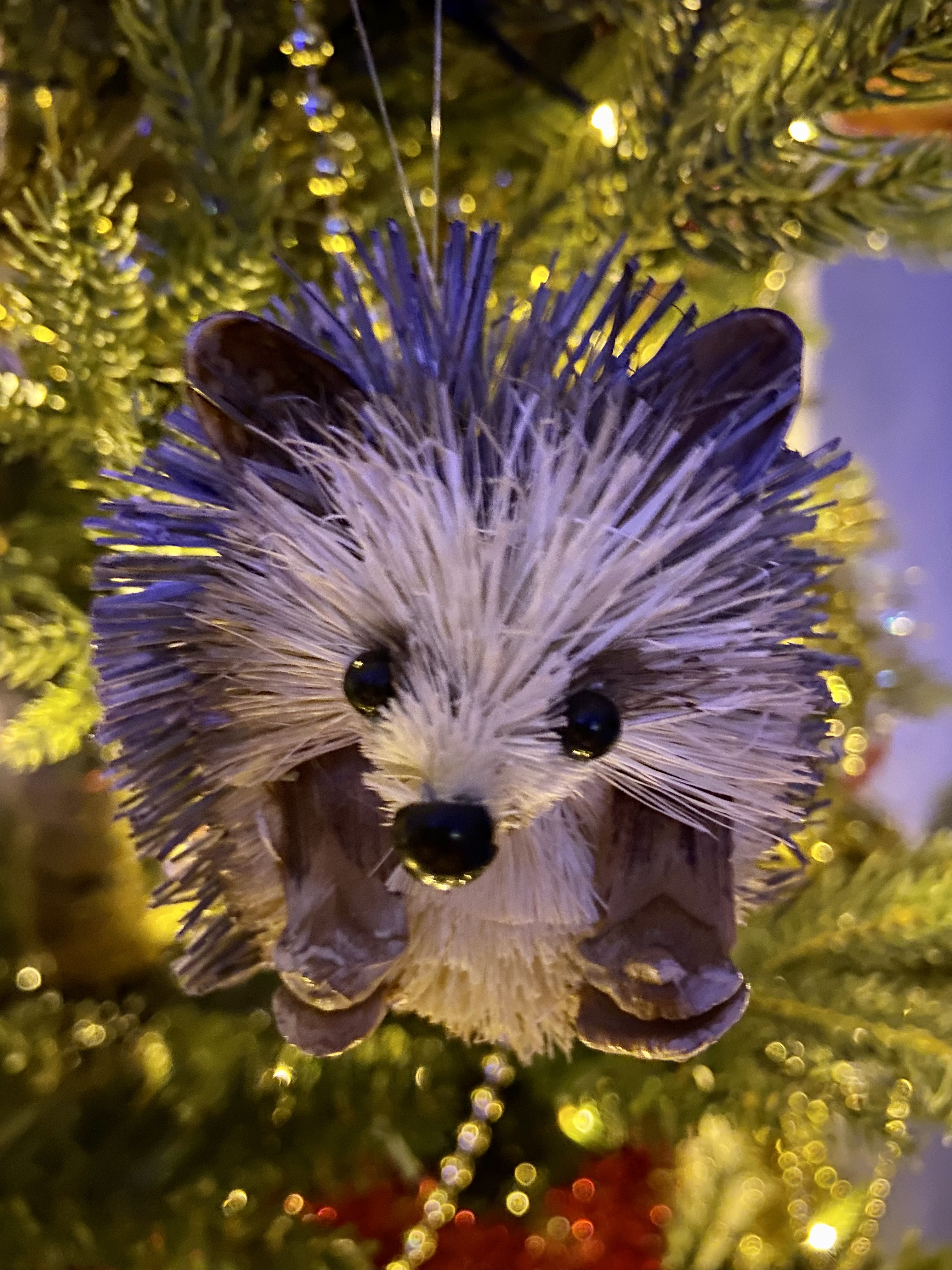
And these are from my own Christmas tree. My mum sent me these tree critters, so they’re not actually Norwegian, but they are definitely now part of my Norwegian Christmas.
I’m on holiday from Friday next week, so there is a sense of keeping going until then. I’m very much looking forward to it. The past week has been both busy and interesting though, and has opened up my mind to thoughts of how I might make a difference. It started out with a meeting on Monday of a group of people who want to try to improve animal welfare in our area by improving the lives of those who keep them. There used to be many more small scale farms in Norway. Lots of people followed a traditional way of life where they had a few animals that were out in the summer and housed in a barn near the house in winter time. It became more difficult to make a living from small scale farming, so increasingly people had to work alongside their animal commitments.
But keeping animals is a tie. It will be hard enough to find someone responsible to look after Triar and the guinea pigs when I go on holiday. Harder still to find someone to look after fifty or a hundred sheep, or a few cows, especially if they need milking. So the networks that farmers used to have, where there were neighbours nearby who could help out in a crisis have, to an extent, disappeared.
And it’s not just about the work. By their nature, farms are physically isolated. You need land around you to allow you to feed your flock or herd. There isn’t a pub culture in Norway, like there is in the UK, and even if there was, here in the north of Norway, the distances between towns can be huge. And so the meeting was about trying to build new networks to support those who remain.
The social side of my job is something that I find very interesting. Obviously there are many things that can drive animal welfare up or down, but mental health is definitely there among them. Thomas has told me about his involvement in one such case, where he arrived on a farm to find the owner had almost given up hope, and he was instrumental in helping him find a way through. And Thomas is rightly proud of having done that. But to help more people, we need to reach more of them.
The meeting ended with a plan for more meetings, but I was due to go out on a welfare visit with Gry from Dyrevernsnemda later in the week. Remembering the potential bomtur debacle from two weeks ago, I compiled a list of all the sheep and goat farms in the surrounding area.
We ended up visiting two farmers on the list, in addition to the welfare investigation. We carried “Skrapesjuketilsyn” where we discuss the symptoms of Scrapie and the monitoring systems in place to track it. One of the farmers was obviously very happy to see us. He knew Gry already (Gry is a key member of another farming network) but when I introduced myself and said I was from Scotland, he said how wonderful it was to have someone who wanted to come to the north of Norway and was interested in working with sheep welfare. I confess, I am filled with inspiration. I would love, as a Mattilsynet vet, to be a part of a network helping the local sheep farming community. But I do have to bear in mind the constraints of budget. Next week, or in the new year, I will have to have a chat with Hilde about what I can achieve within the current economic climate.
Tuesday was also one of those rather unusual Mattilsynet days. As regular readers will know, Mattilsynet runs the OK program, where we check food producing animal breeds for various infectious diseases and for foreign or banned substances. Ammar had planned to go out and get a urine sample from a cow, but he was unable to attend himself, so he rang me on Monday afternoon and asked me to step in. And so on Tuesday morning, I drove out to a farm and spent an hour in a byre behind a row of cows, waiting for one of them to oblige.
Polar night, snowy mountain under a blue and pink sky – taken on the drive out on Tuesday
There were a few false starts involved. Even the tamest cows are wary creatures when strangers come into their space. And of course, I was a stranger wearing a very odd blue overall and huge white boot covers with bows on them, so they were wary to begin with. One or two of them lifted their tails and started to pee, but as soon as I moved towards them, they gave me a very offended look and stopped again. Fortunately, I eventually managed it, but not without some very amused thoughts about the sheer glamour of my job. Since then Konstantin has told me there is a way to get the cows to urinate, so next time, perhaps I will be quicker, but either way, spending time around cows is something I very much enjoy, whatever the task.
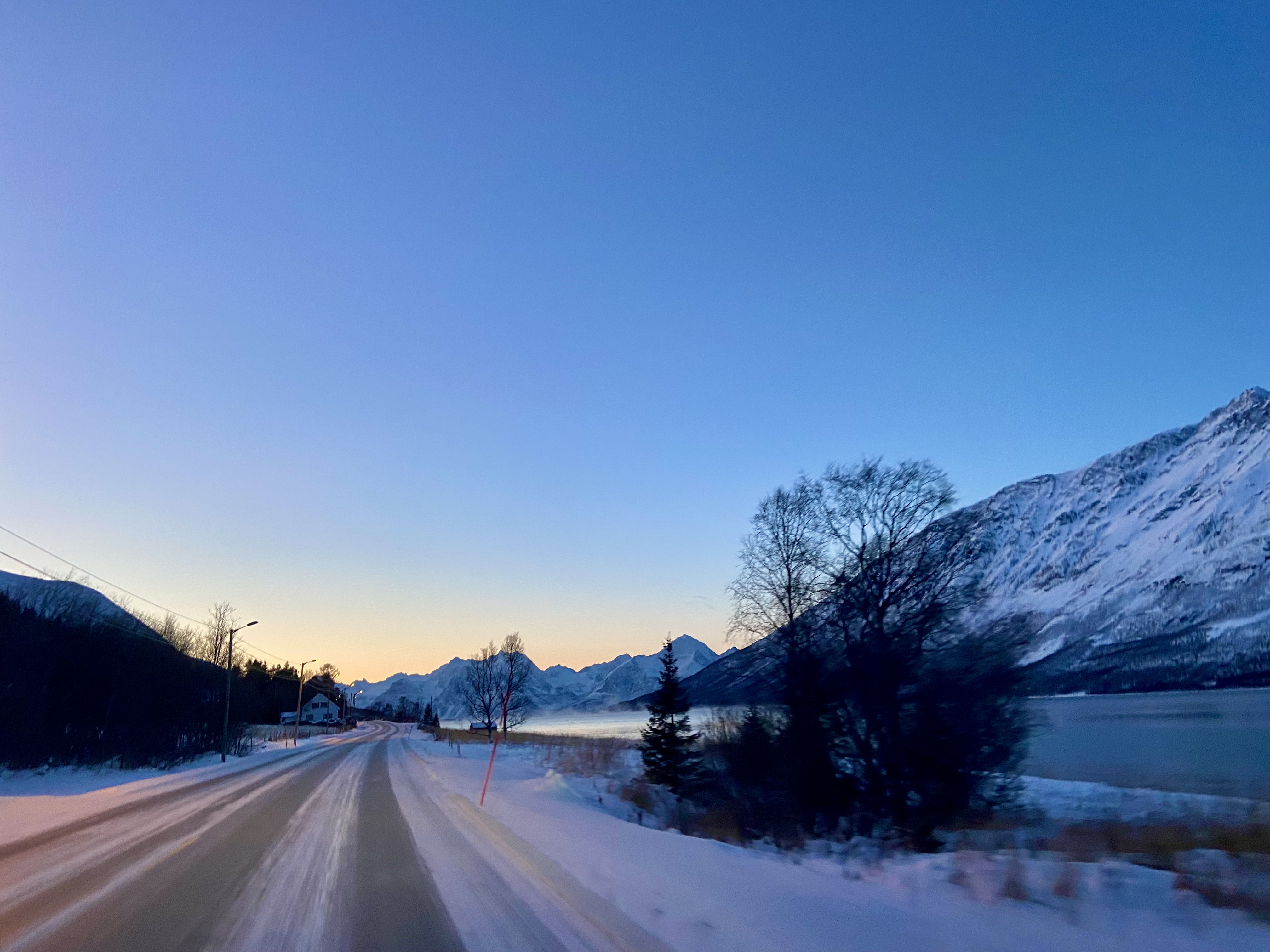
The road to Bardufoss
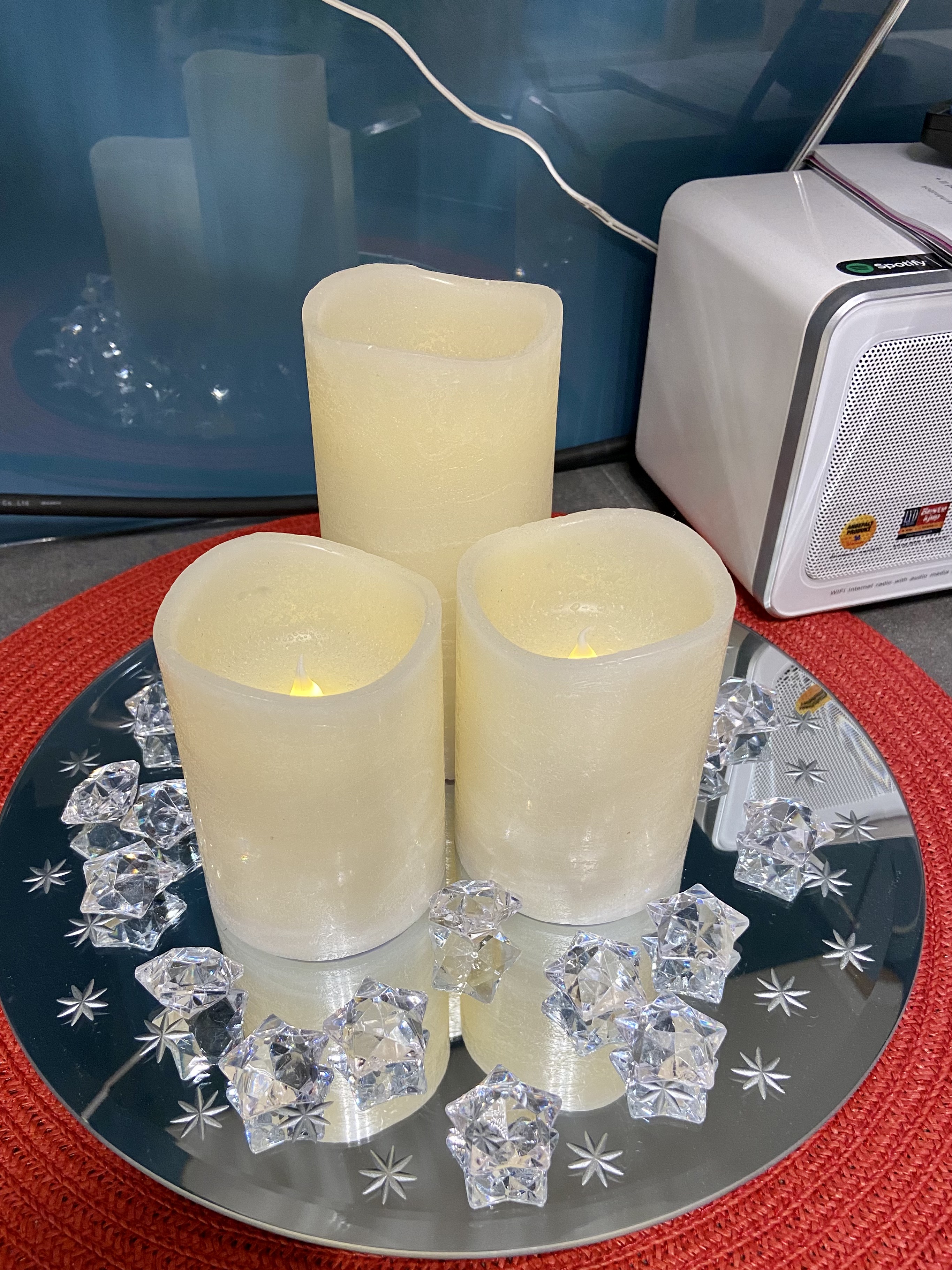
This week’s blog is a bit short as I have to go and collect John and bring him home, but I’ll leave you with a couple of pictures of the decorations that have gone up in our office. I hope you’ll join me for more advent pictures tomorrow.
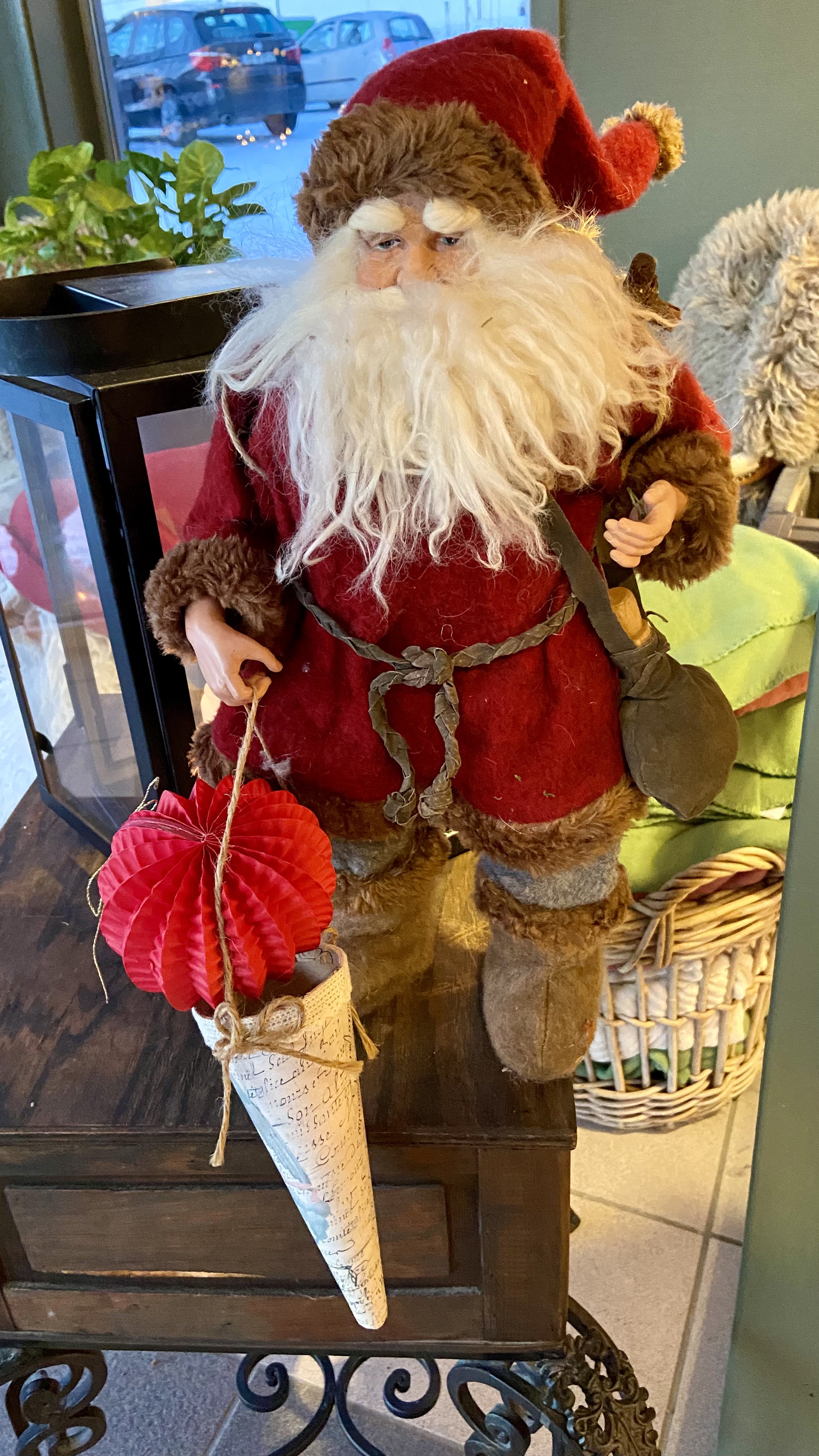
Christmas in Norway wouldn’t be complete without Nisser. There’s a programme on Netflix about them at the moment, and the name has been translated into English as “Elves”. But Nisser are nothing like the elves in British and American tradition, which assist Father Christmas or Santa at the North Pole. Nisser are definitely not helpful. Indeed if you forget to give them rice porridge on Christmas Eve, they can apparently become cantankerous. I should imagine they’re a bit like John when he’s expected to put up a Christmas tree with insufficient Pedro Ximenes. Anyway, I found one in the hotel up in Storslett. The poor critter has been given uncooked rice, which will probably give it a terrible stomach ache, but at least they tried.
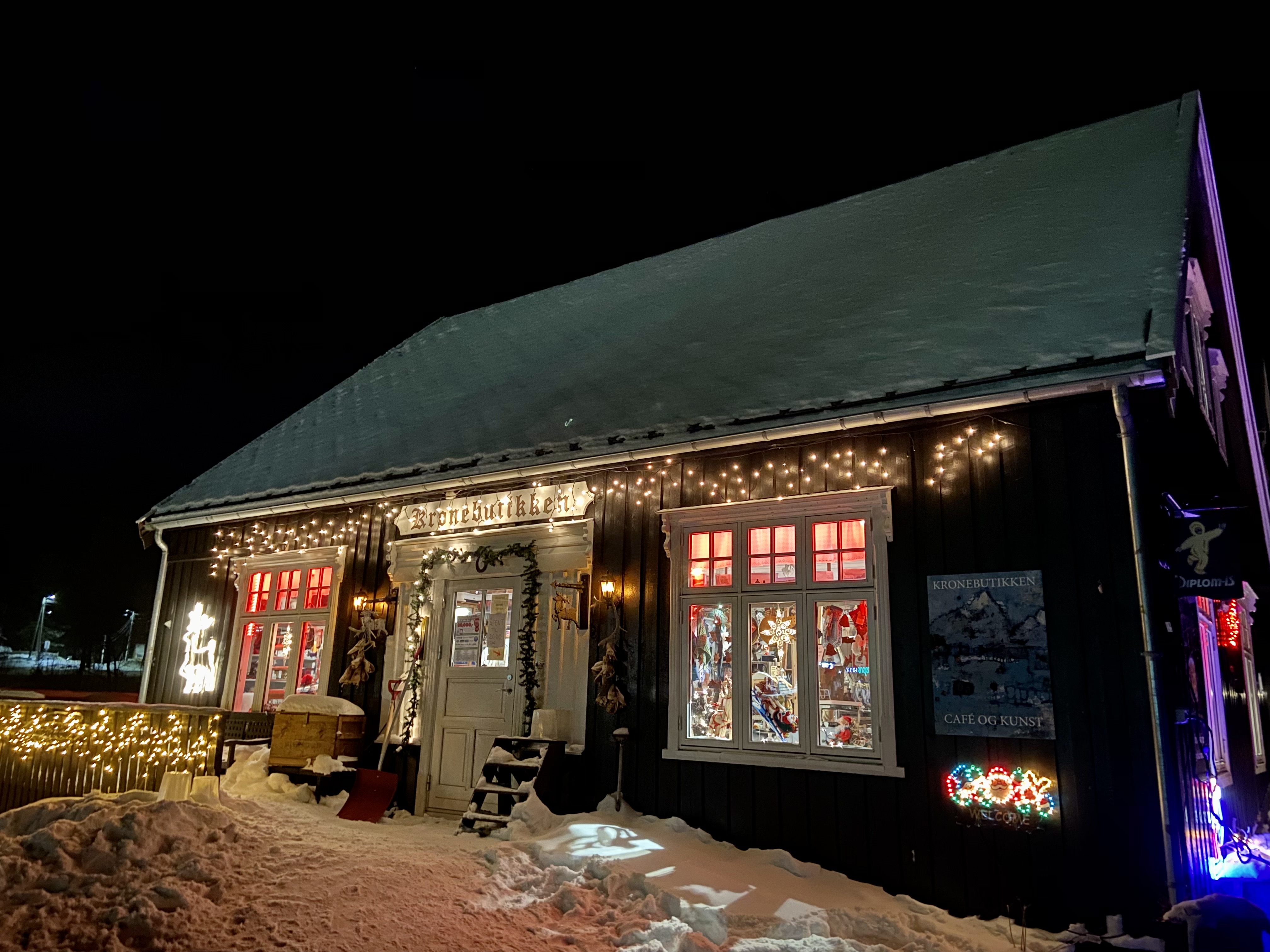
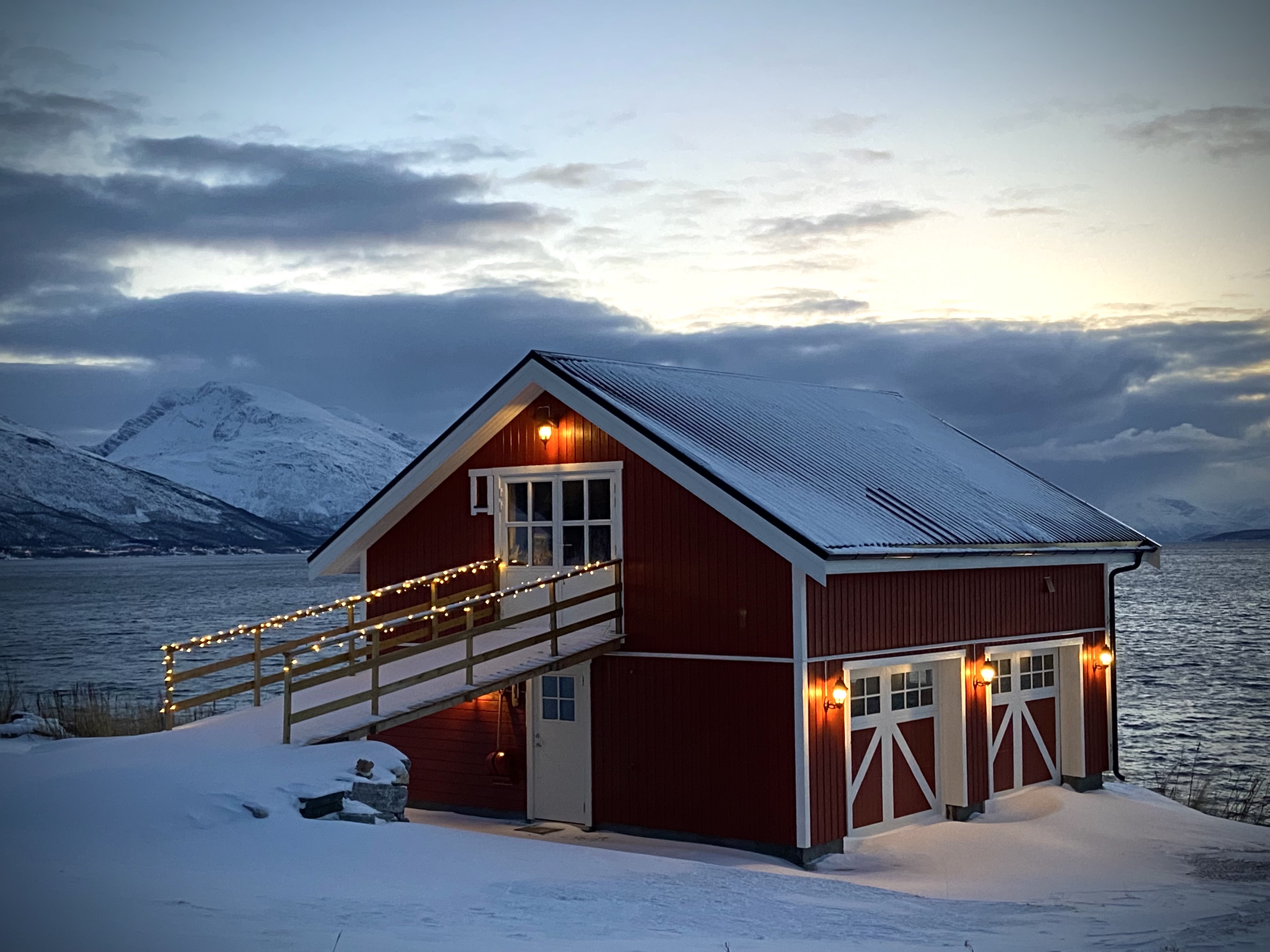
I have a few more photos from Storslett. The candlelit lavvo we ate in was beside a beautifully decorated Sami shop. The log cabin at the top of the page (under a sky that was green with aurora) was nearby too.
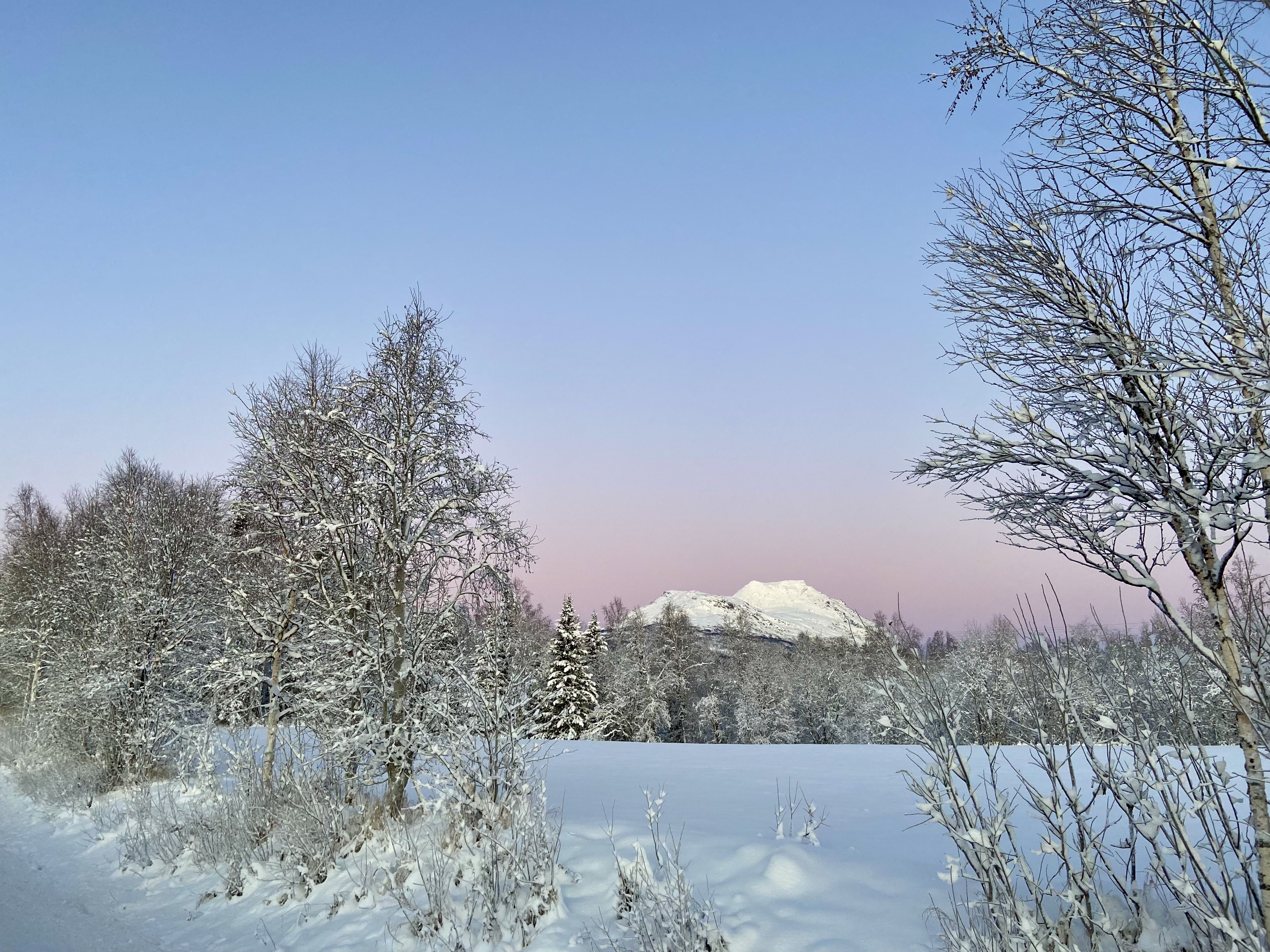
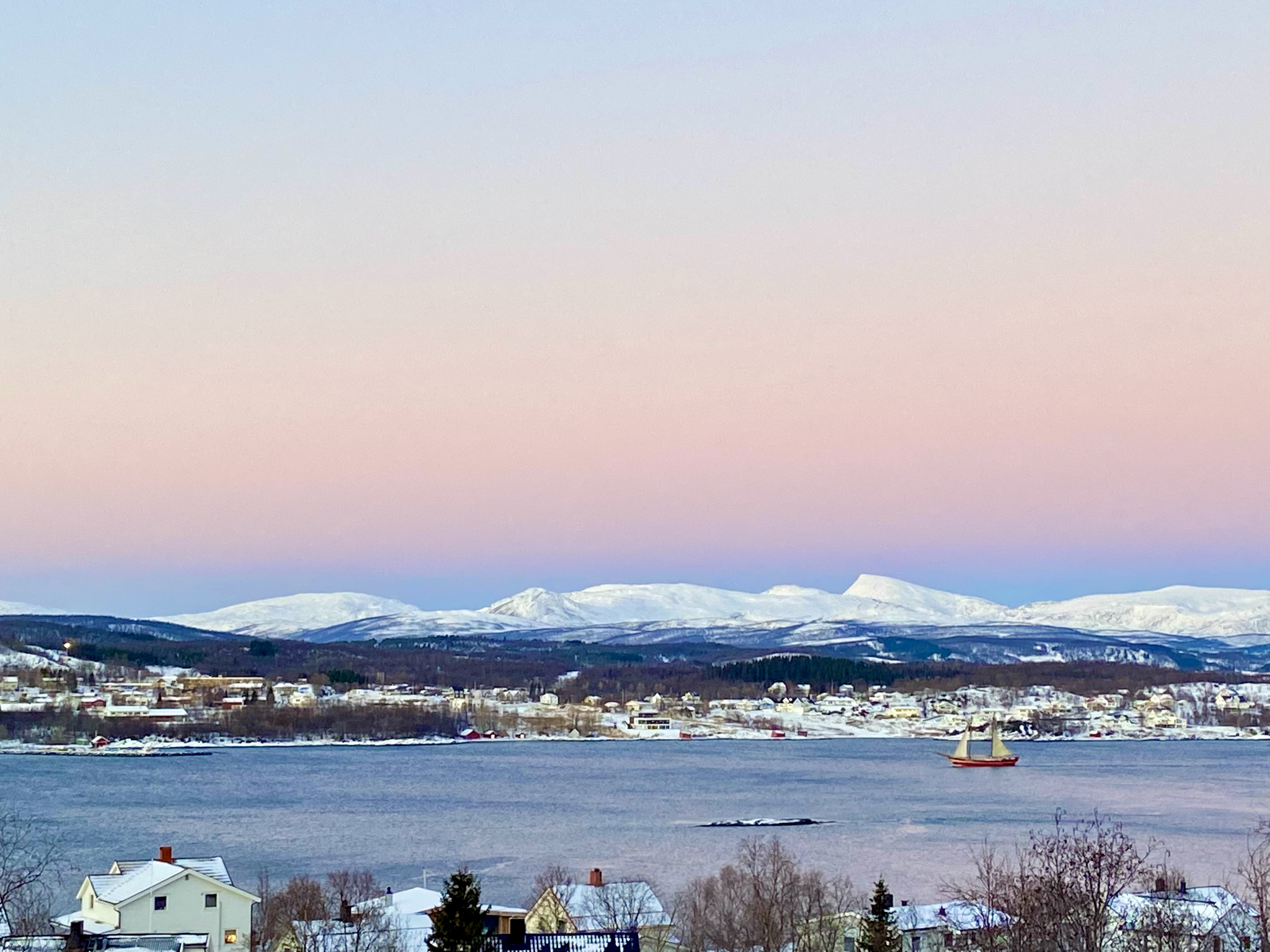
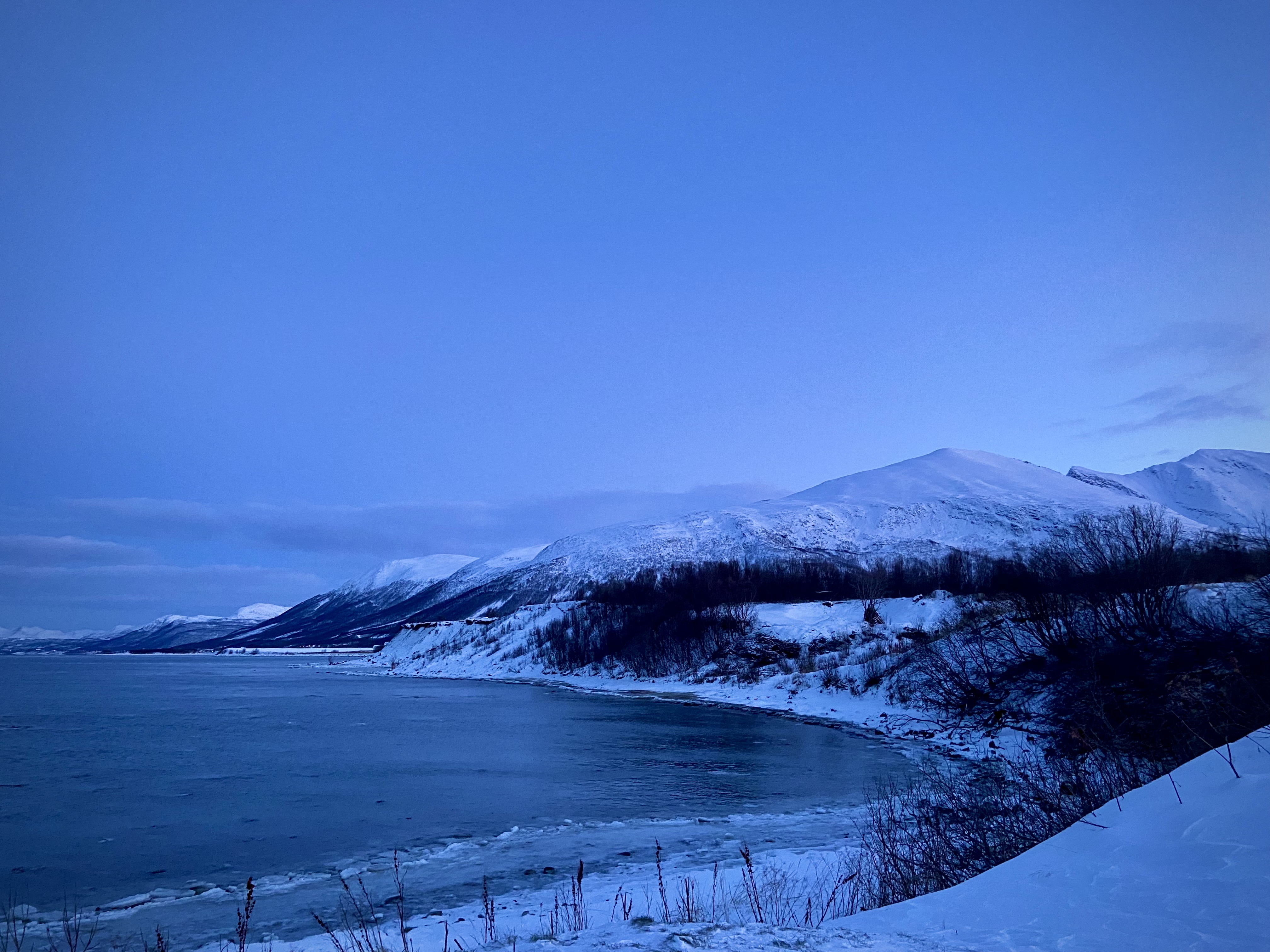
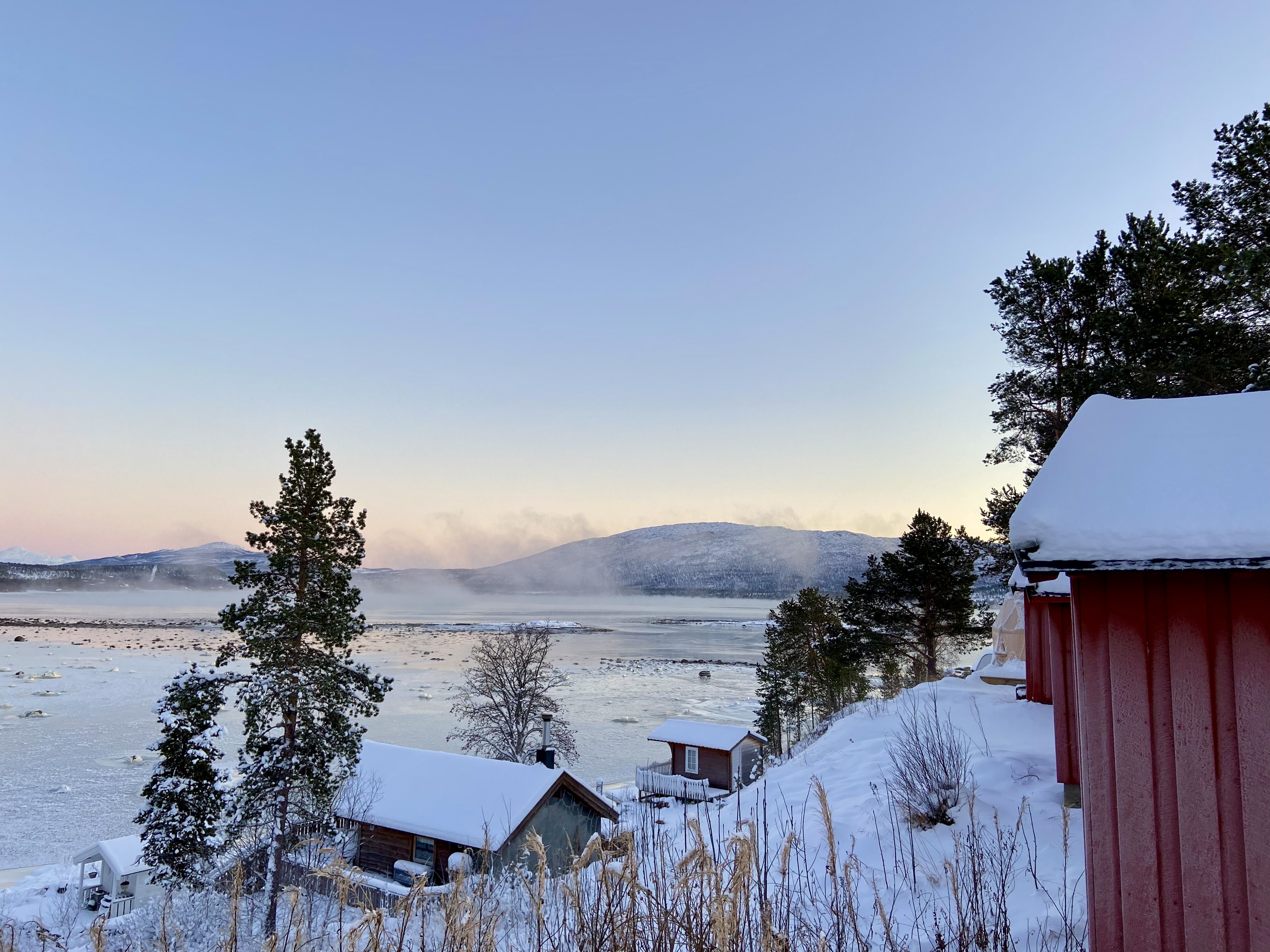
We’re a few days into the polar night now and when the sky is clear, it is layered with pale blue and pink. The temperature has remained low all week and the snow creaks when you walk on it. Often you can smell wood smoke in the crisp air as you walk. This is the view from my garden at eleven o’clock in the morning.
Another snow picture for you, this time from a drive inland, where it’s generally colder. My car reminds me that its battery isn’t happy as soon as it drops below minus twenty, and here it was nine degrees below that, but fortunately, despite the objections, the car brought us safely home.
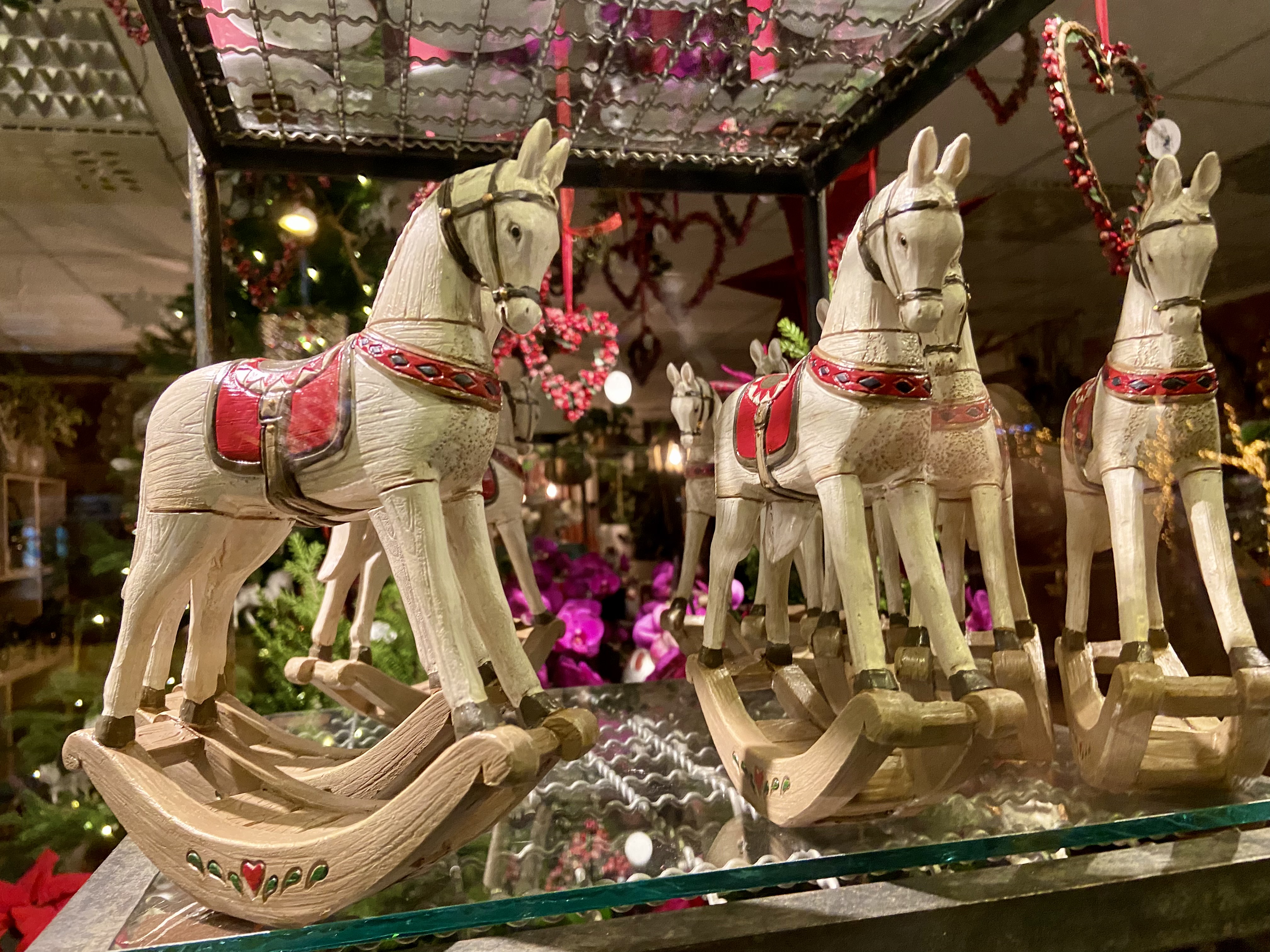
And just in case you were thinking that Christmas in Norway is all tasteful (Nisser aside) here’s a wonderfully over the top display I found, in the toy shop in our local shopping centre. I took a still photograph, but if I say there was plinky-plonky music playing and they were swaying their heads in time, you’ll be able to imagine the scene in full.
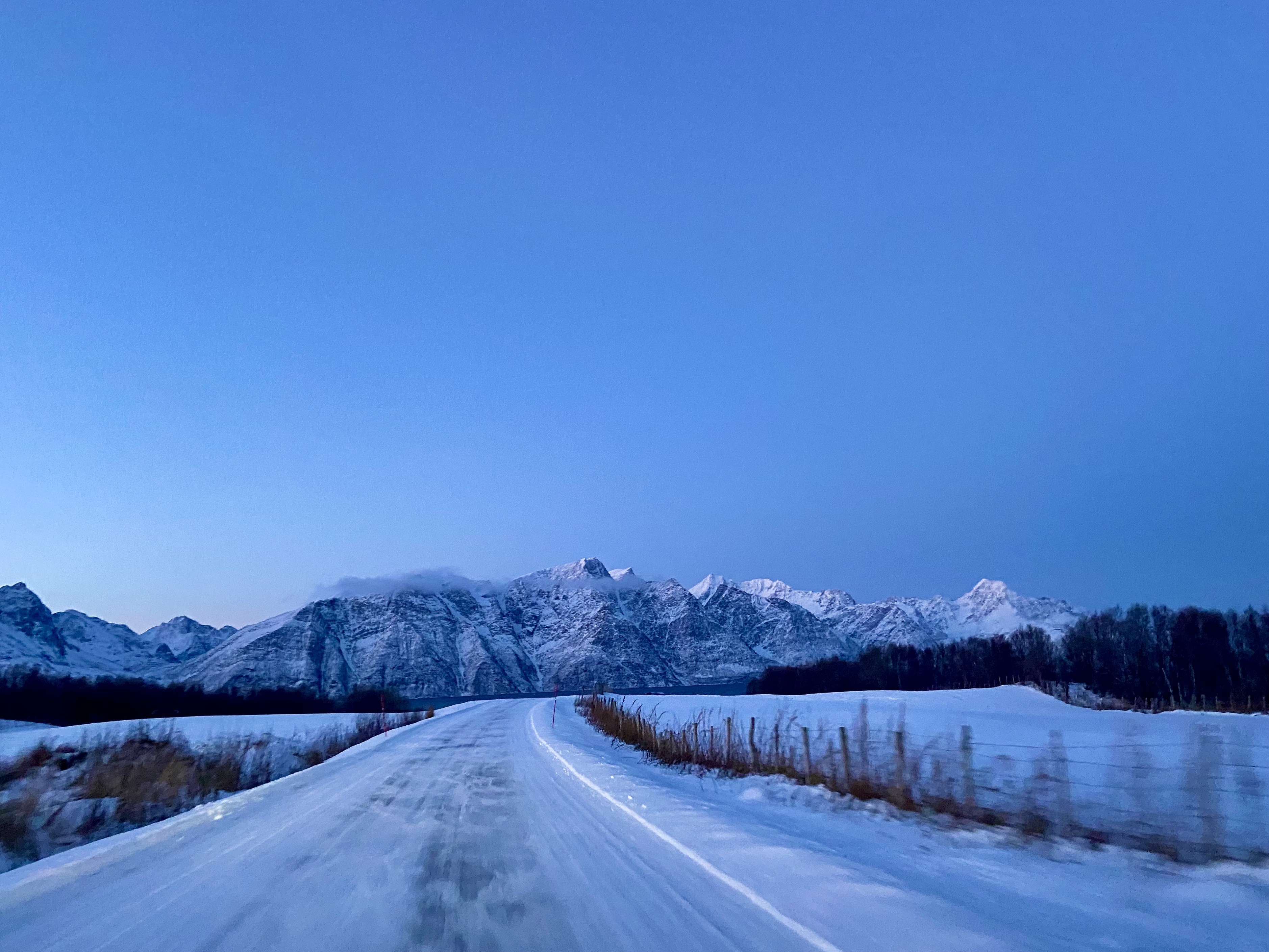
So here I am in my second Polar Night. Mørketid is the Norwegian name, which I love. A direct translation would be Darkness Time and the word “mørke” must have a common ancestry with the English word “murky” which seems appropriate. Not that it’s dark all day, of course. You can start to see twilight by half past eight in the morning, but by two in the afternoon, the light is fading again. In between, if it isn’t cloudy, there is this wonderful clear blue light that makes for very unusual photographs.
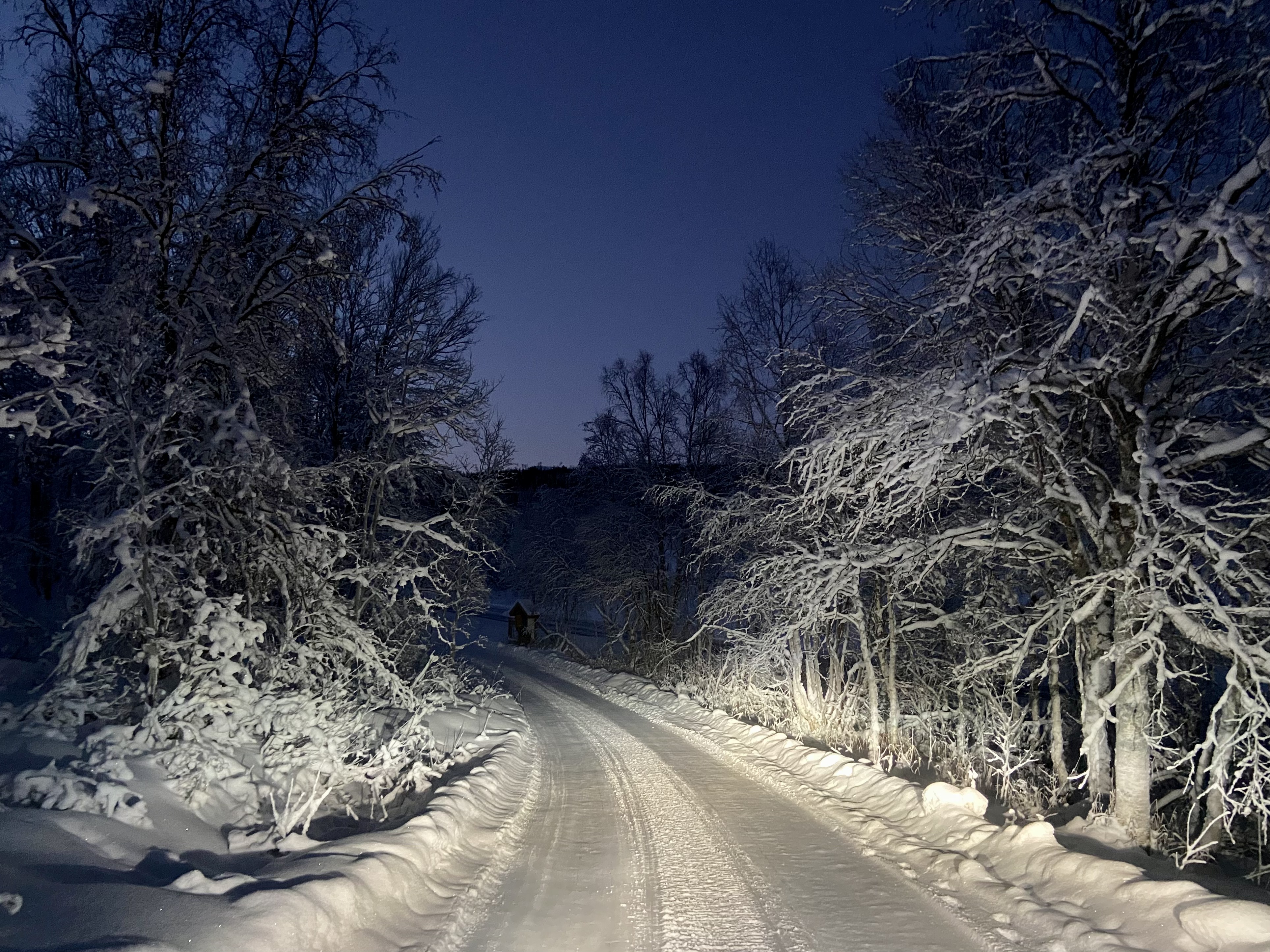
Icy road on the way home from Storslett
Coronavirus seems to be closing in again, with omicron making appearances all over Europe. Norway seems to be sticking to the plan of keeping everything as open as possible for those inside the country, though the rules for entry have been strengthened again. Our Mattilsynet Troms og Svalbard departmental gathering was this week on Thursday and Friday, and I was delighted when it went ahead. I guess when I say “department” most people might be thinking of a traditional business department, probably made up of lots of people who use the same building, but our “department” is diverse, and also very spread out.
We cover the whole of Troms and Svalbard, although there are no permanent staff on Svalbard. Troms is a county that is round twenty percent larger than Wales (a bit bigger than New Jersey for anyone checking in from the US, or Nova Scotia if you’re in Canada). We cover everything from animal welfare to drinking water, from three separate offices in Finnsnes, Tromsø and Storslett and this year’s gathering was in Storslett, which is the furthest north.
There was some discussion a couple of weeks ago about cars. We have three lease-hire cars available, and Øivind and Ronny quickly signed up two of them. Marit, who works with fish health and welfare then signed up the third, with another colleague, Eva, and designated it the “kvinnebil” or women’s car. So that was the one I signed up for, and despite Thomas’ suggestion that he too should travel in the kvinnebil, Eva, Marit and I drove up together. It was lovely getting to know them better.
Marit and Eva on the journey home
I’m not all that fond of meetings, and meetings in Norwegian are even more of a challenge, especially when those from the upper echelons begin to introduce buzzwords, like “sustainability” (bærekraft). But one thing Norwegians do very well is social events, and this meeting was no exception. We had received a cryptic message a few days earlier, telling us to bring warm clothes for sitting outside: clothes that, in addition, could stand some wood smoke. Though this sounded appealing to me, I was slightly concerned. Such an instruction could mean anything from sitting round a campfire roasting hot dogs to a five kilometre hike in the snow. I could handle either of those things, but they do require slightly different outfits.
In the event, it was a five minute walk along the road to a Sami lavvo (a wigwam type tent) where there was locally produced gløg, along with traditional dried meats, cheeses and flatbread, all served in candle-light around a huge wood fire. I’m not sure how local the grapes and olives are, but it was really very tasty indeed.
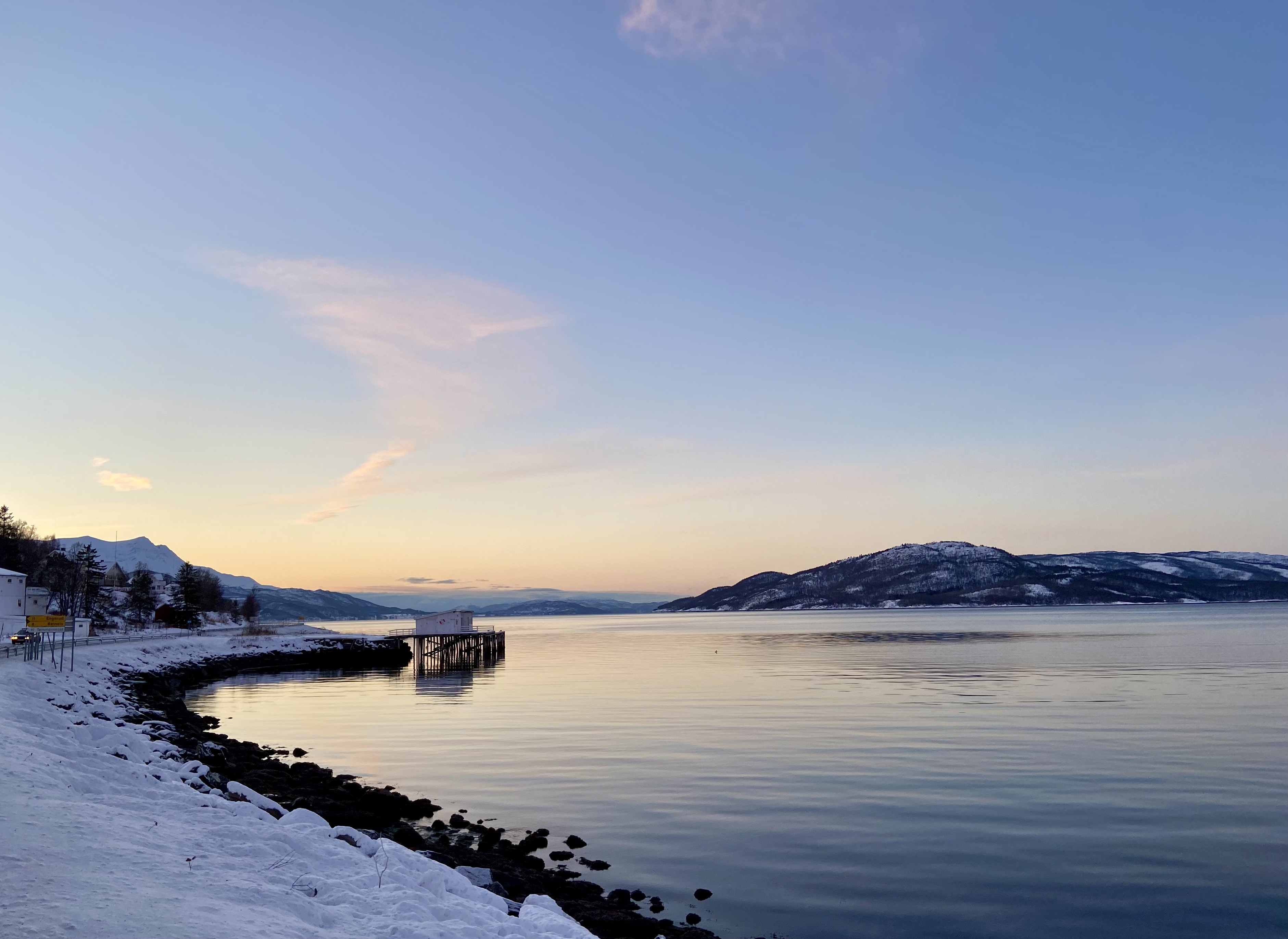
I’ve already included a couple of pictures of the return journey. Marit drove, so I was able to take a few photographs along the way, before the darkness descended again.
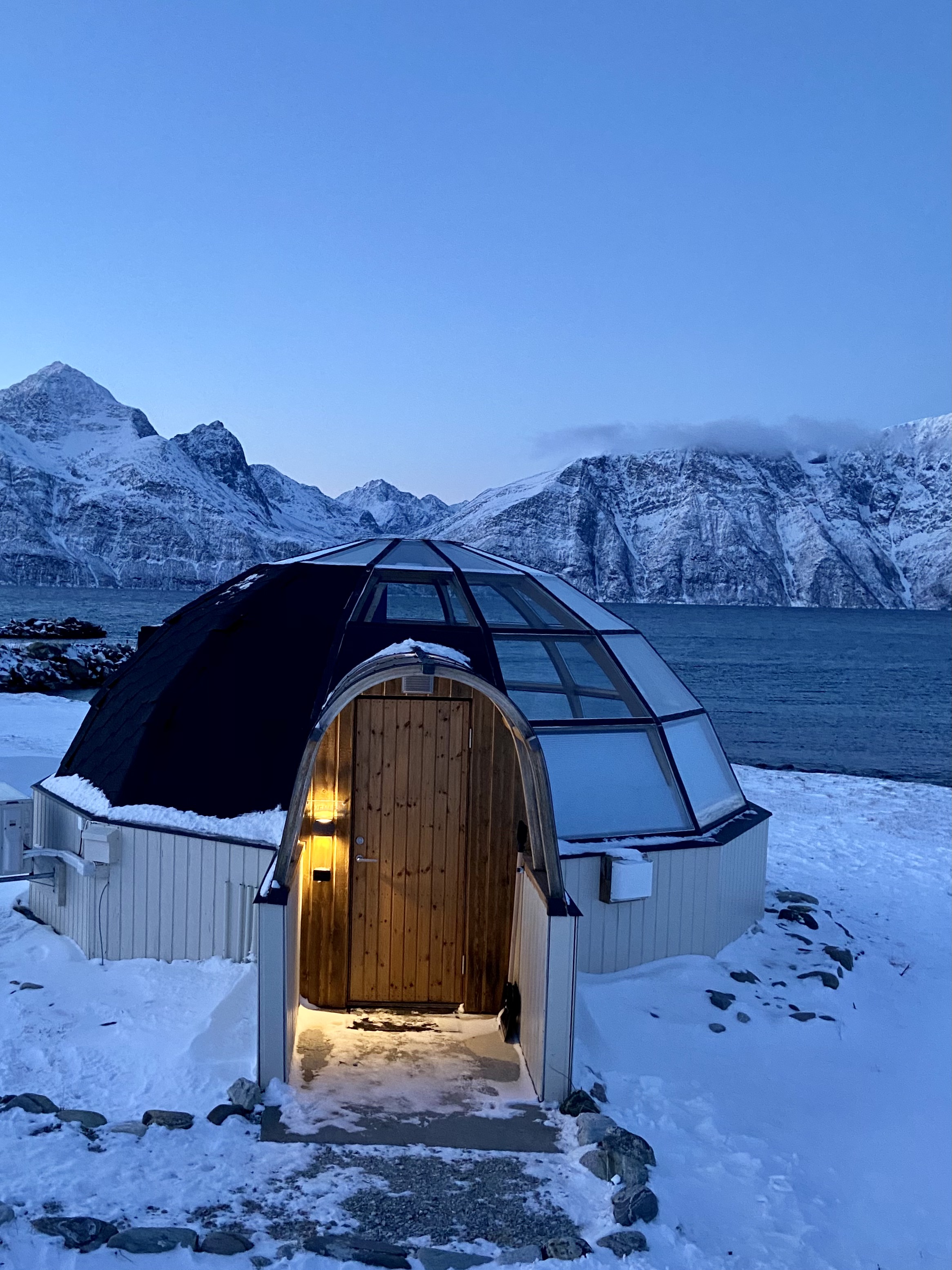
We took a short detour onto the Spåkenes Peninsula, where we found a very chilly bench as well as some glass igloos with an amazing view, which you can stay in overnight. Obviously I immediately added doing so onto my “to do” list.
There will be another advent update tomorrow, with more pictures from the trip, so goodbye for now. I hope you all have a lovely weekend.
Given all the uncertainty at the moment around the pandemic, I thought it would be nice to share some images from my life over the next four weeks in the lead up till Christmas. I had hoped to spend Christmas in the UK with my parents this year. It wasn’t to be but Christmas in Norway is beautiful, so hopefully I can share some of it with you.
Back in Scotland, in the lead up to Christmas, we used to go round the village where we lived to find the “crazy houses” – those wonderfully over-the-top places where there were inflatable snowmen in the garden, where a spotlit Santa was ascending the wall on a makeshift ladder and the entire house was lit up with flashing lights that would put Blackpool Illuminations in the shade.
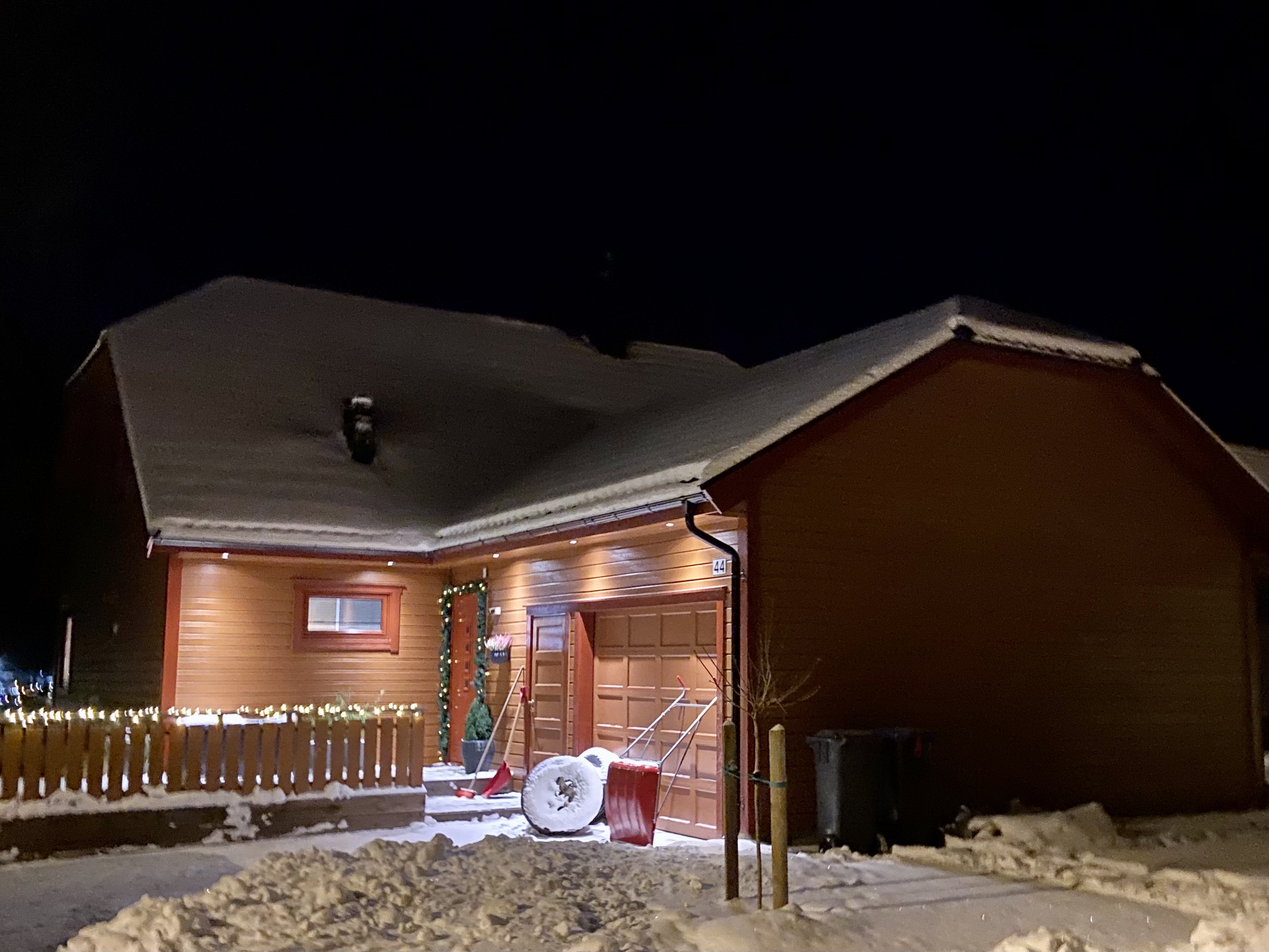
Here in the north of Norway, there are a lot of lights, but most of them are warm white. The painted wooden houses look very cosy in the darkness.
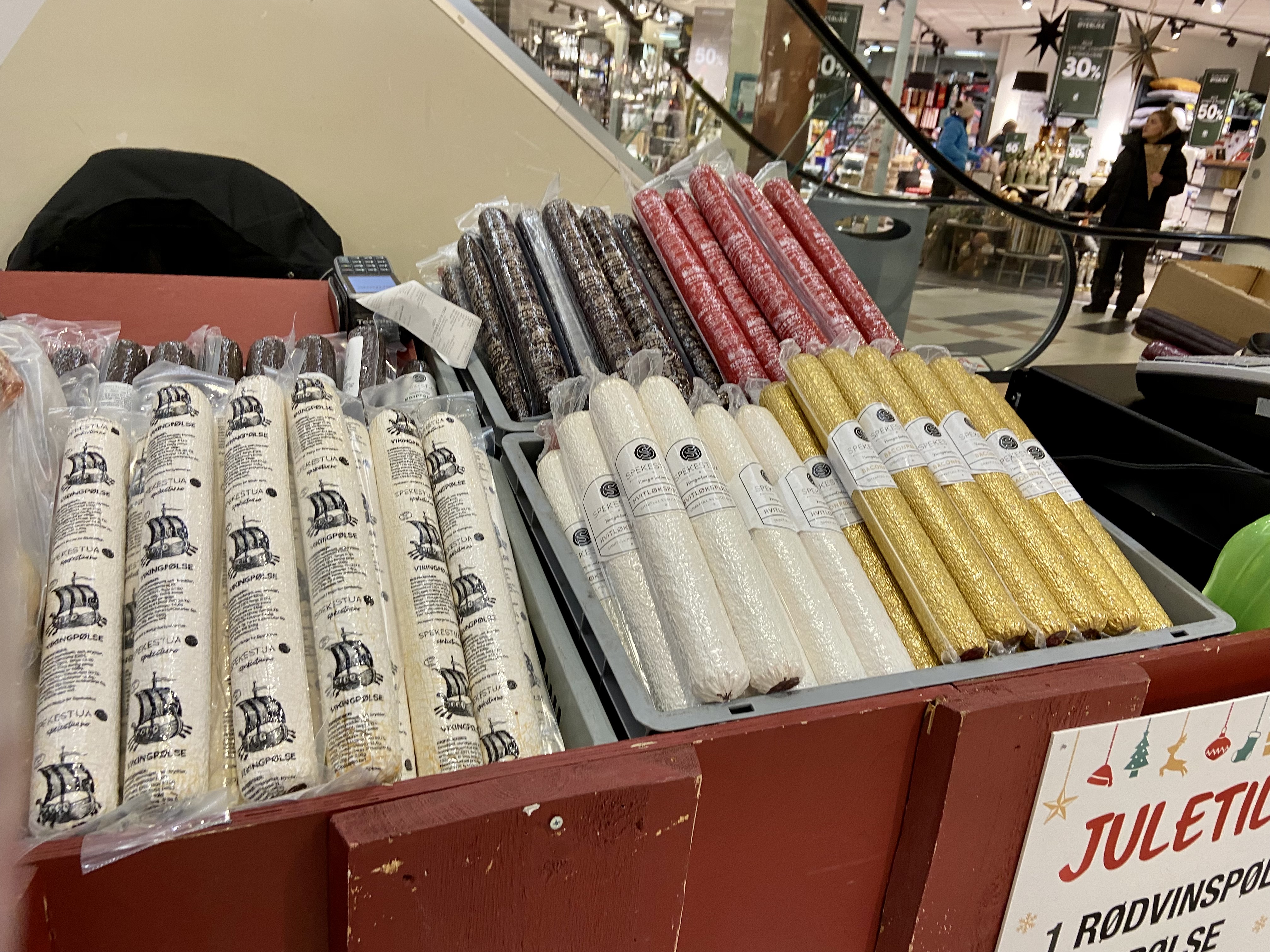
In the town centre yesterday afternoon, my eye was caught by some lovely shop window displays and by a rather drunken looking Christmas tree, lingering beside a door. There was also a stall in the local shopping centre, selling cured sausages.
We decided to take a walk in Ånderdalen national park and then have coffee at Senja Roasters but our plans were foiled by the cold temperature. It was minus twenty two when we set off for our walk. Triar has always been surprisingly resilient in the snow, so it hadn’t crossed my mind that perhaps minus twenty two might be a step too far. We managed less than two minutes before his natural enthusiasm left him, and instead of racing ahead, he came back and walked in front of me looking very uncertain. We carried him back to the car and he seemed relieved. I paused to take a photograph of the fjord, which was already starting to freeze in the shallow bay.
We weren’t sure whether we would be able to go into Senja Roasters. We did contemplate leaving the car running for Triar while we galloped in for coffee ( it was a balmy minus eleven in Stonglandseidet – the temperature changes as we drove around were astonishing) but happily, they allowed us to take Triar inside, so we could have a somewhat more relaxed lunch.
It was beautifully decorated with candles and coffee beans, and a few other cosy Christmas touches.
The food was great, of course, as well as the company.
And happily for Triar, we have hopefully found a solution to the cold-toe problem. See you next week!
It’s been another week of changes. I had a busy schedule prepared, with two long-haul visits to hens to test them for salmonella on Monday and Wednesday, plus a trip in between to two sheep farms for routine scrapie inspections. I popped into the office on Sunday to check my e-mails. I’d been out with Birgit all day Friday, so I wanted to make sure nothing else had come in as I was due to set out early on Monday morning, so there would be no chance to check then.
It was bird flu that got in the way. Even though the outbreak is almost four thousand kilometres /two and a half thousand miles away, it had a knock on effect up here. At first I assumed it was some crazy blanket rule. To be fair, they’ve found bird flu in wild birds in other areas of Norway, but all of them a long way south of here. But it turns out that the problem lay in the lab. The same lab that would analyse our salmonella samples was currently working day and night checking for bird flu. So that was that.
Then came the news that one of the Tuesday visits had to be postponed as well. Had I been very organised, I would have found some additional farms to visit in case my one remaining farmer was out, but the rapid changes threw me and I didn’t even think about it until Tuesday morning, just as I was about to set out.
Because we are supposed to do most of our visits without advance warning, so there’s no chance the farmer can rush around tidying away the bodies, there’s always a risk that we can get there and find there’s nobody available. Indeed having a completely wasted journey is common enough to have its own name – Bom tur.
So far, I have never driven a bom tur, but as I set out on Tuesday, it crossed my mind this one could potentially be quite spectacular. My visit wasn’t especially important. Scrapie inspections are part of the annual OK program of routine visits to check for illnesses. We look at the sheep or goats and inform or remind the farmer of the clinical signs of scrapie (effectively the sheep version of BSE) and of the legal requirements around it, such as making sure all animals over a certain age that die on the farm are tested. It’s a useful tool for getting on the farms for a general check, but there’s nothing life or death about it.
The drive was close to two hours on snowy roads. The original day I’d planned actually had three visits, all in the same general direction, and the only one left was actually the furthest away. And I had Gry with me as I’m still green enough to find it really helpful to have someone else there with additional knowledge. Gry is a member of Dyrevernnemnda: experienced people who come out on welfare visits to offer their judgement from a different point of view than that of a vet.
So if I drove a bom tur, Mattilsynet would be paying me and Gry, as well as for the car and fuel, for carrying out a farm visit that wasn’t all that important in the grand scheme of things. Still, as I commented to Gry as we drove out, at least the scenery was pretty. In the event, the farmer and her partner were there and I felt very relieved as we sat in their kitchen and drank coffee. The sheep looked in great shape too. It always gives me a lift when I look at well-cared for animals.
Of course, bom turs are not always avoidable. You could visit several farms and find nobody at any of them. But next time I go, I’ll definitely make sure I have a few more options. I also thought that now I am a little more at home with carrying out inspections, I need to get more organised. We’re supposed to visit ten percent of our flocks each year, so that over ten years, we cover every single farm in our area. And to do that efficiently, I need to make a list of all the sheep and goat farms in our area, work out where they all are, and make a plan to ensure I can cover as many of them as I can.
Gry was a revelation as well. It was the first time I had been out with her and she told me so much about sheep farming in the north of Norway. Though they have fences around the property, it’s quite extensive and the sheep can wander off, high into the mountains. Occasionally they can get over or through the fences, and then come down into the wrong valley. When they come back in, the farmers have to go through them, checking all their ear tag numbers to make sure the sheep they’ve brought in belong to them, and also check whether any haven’t come home. It’s quite a big task, collecting them all in and then making sure they are sheared and ready for winter.
Having done the visits on Friday and Tuesday, I had two reports to write. Luckily, as both visits had been good, the reports were straightforward. The second sheep visit had been put off until Friday and that was successful too. For the second time this week, we were offered coffee. Coronavirus has meant that for the last year, there has been little coffee on offer, but as I sat down around the table with Gry and the farmer and his staff, I felt very much at home. Going in for coffee was always one of the high points of being a farm vet.
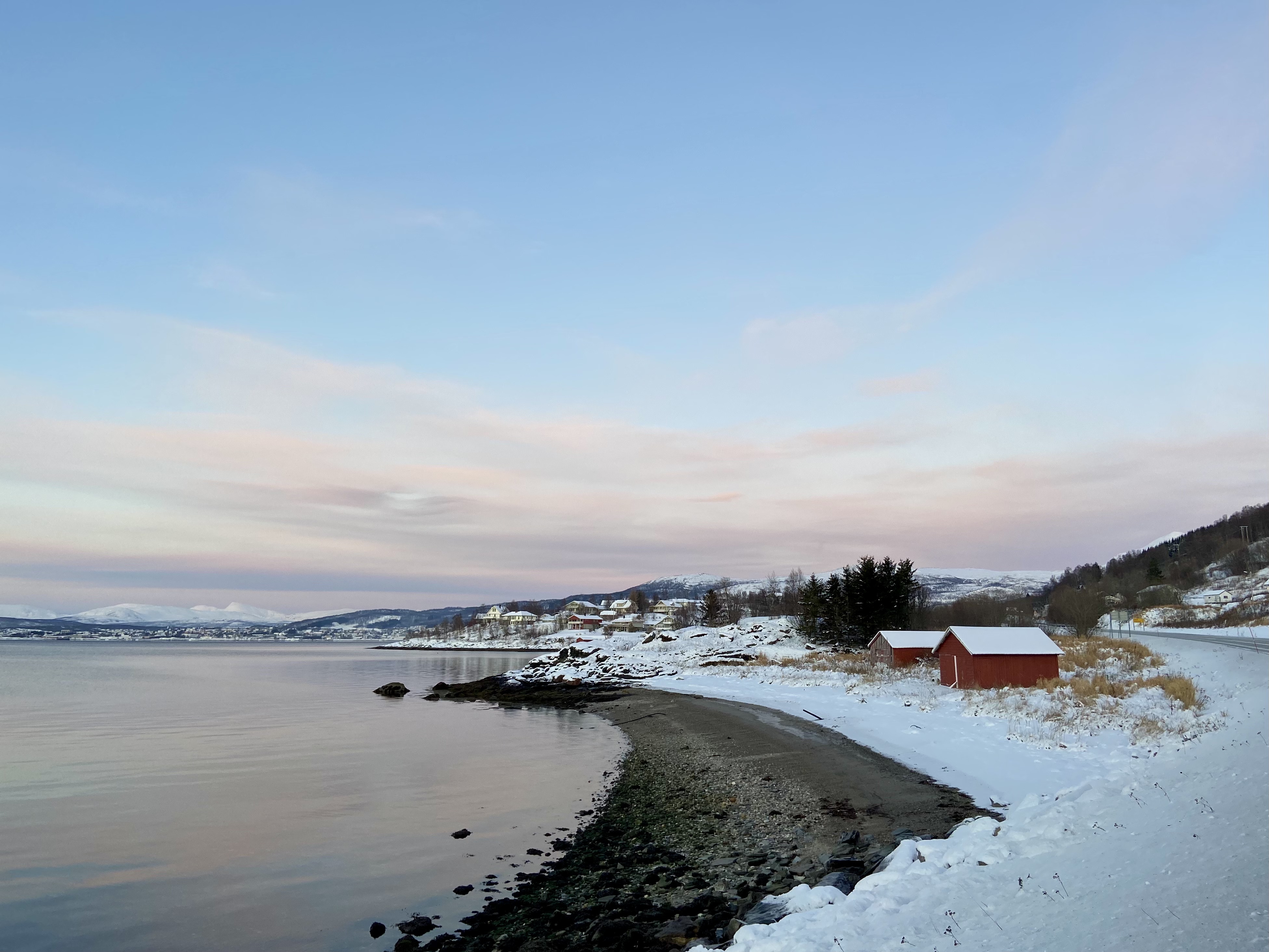
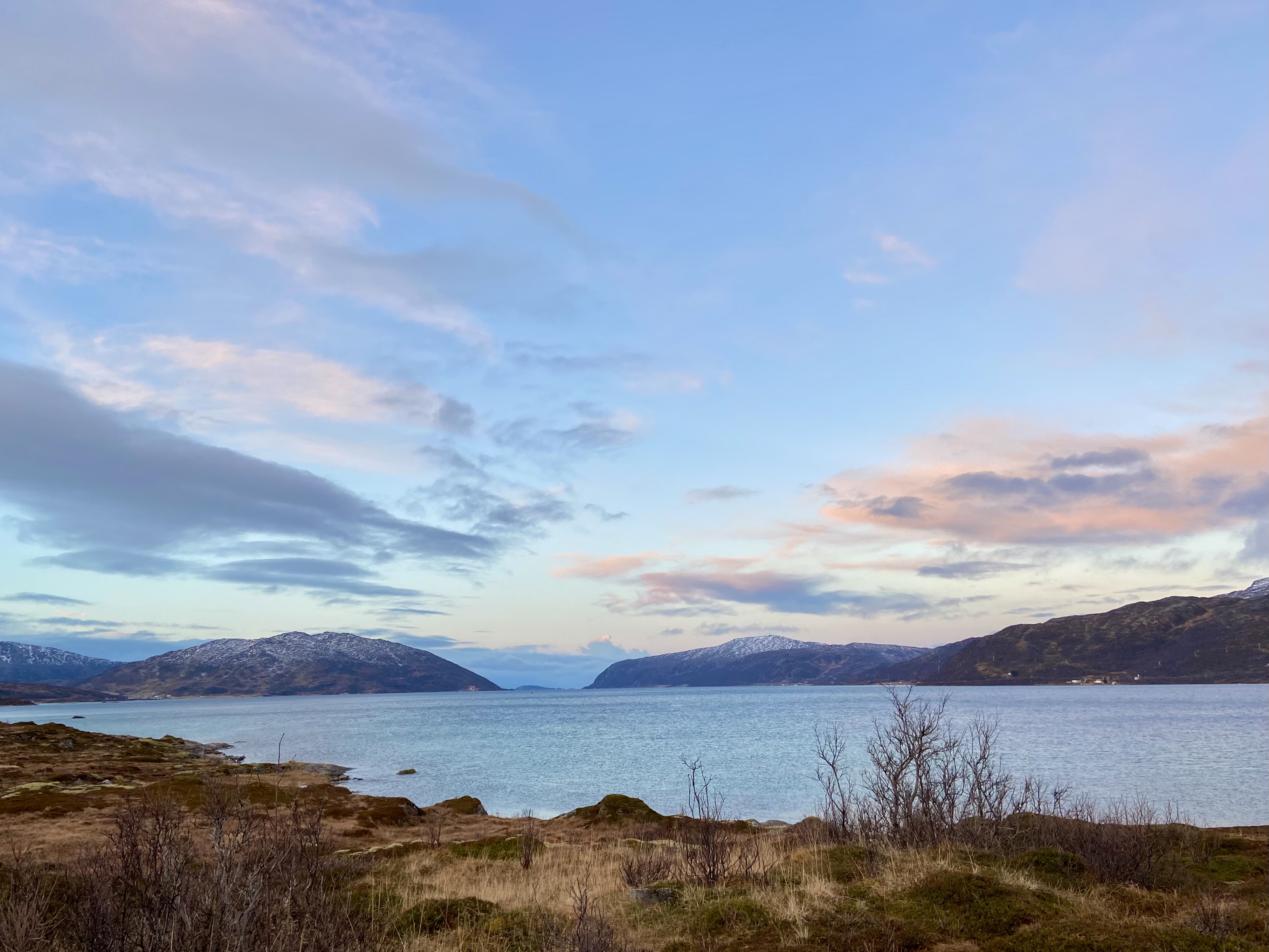
I took a couple of photographs on the way home on Friday, after I had dropped Gry off. The temperature has dropped suddenly here. It snowed last weekend and then fell away to between minus seven and minus fourteen. As usual when that happens, the sky is clear, and as the polar night approaches, the air becomes very clean and cold. The upper skies are a beautiful pale blue and close to the horizon, there is a pink tinge. It crossed my mind that although technically the polar night hasn’t quite arrived, I haven’t seen the sun for days. It’s probably already below the mountains.
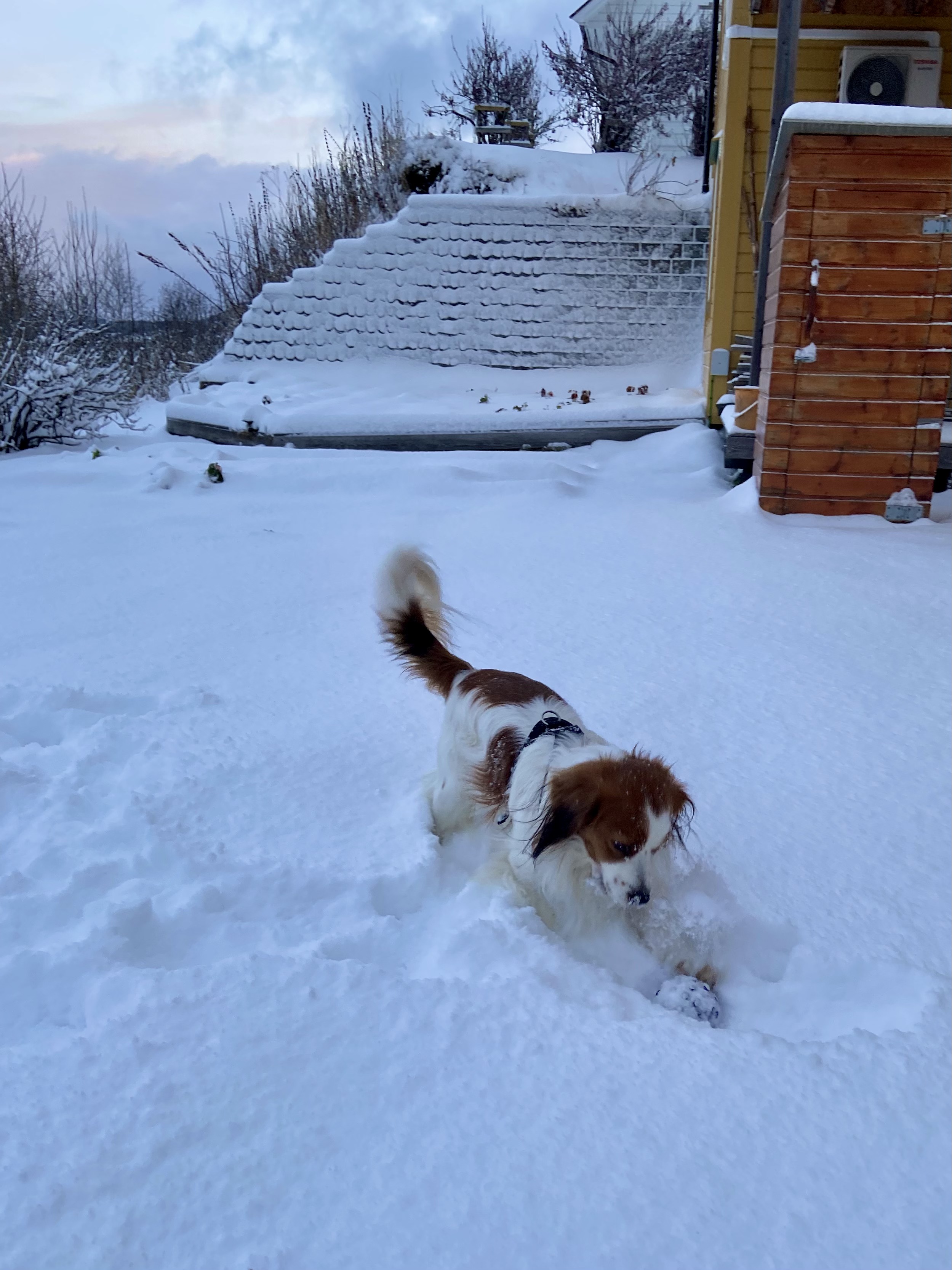
Triar is loving the snow and the cold weather. Sometimes he goes outside and zooms around, simply for the pleasure of running through the snow. Here he is in the garden playing with his ball.
There was one other piece of very good news, and that is that my friend who had been on the front line in diagnosing the bird flu outbreak is now fit and healthy again, and didn’t contract bird flu. I’m very relieved.
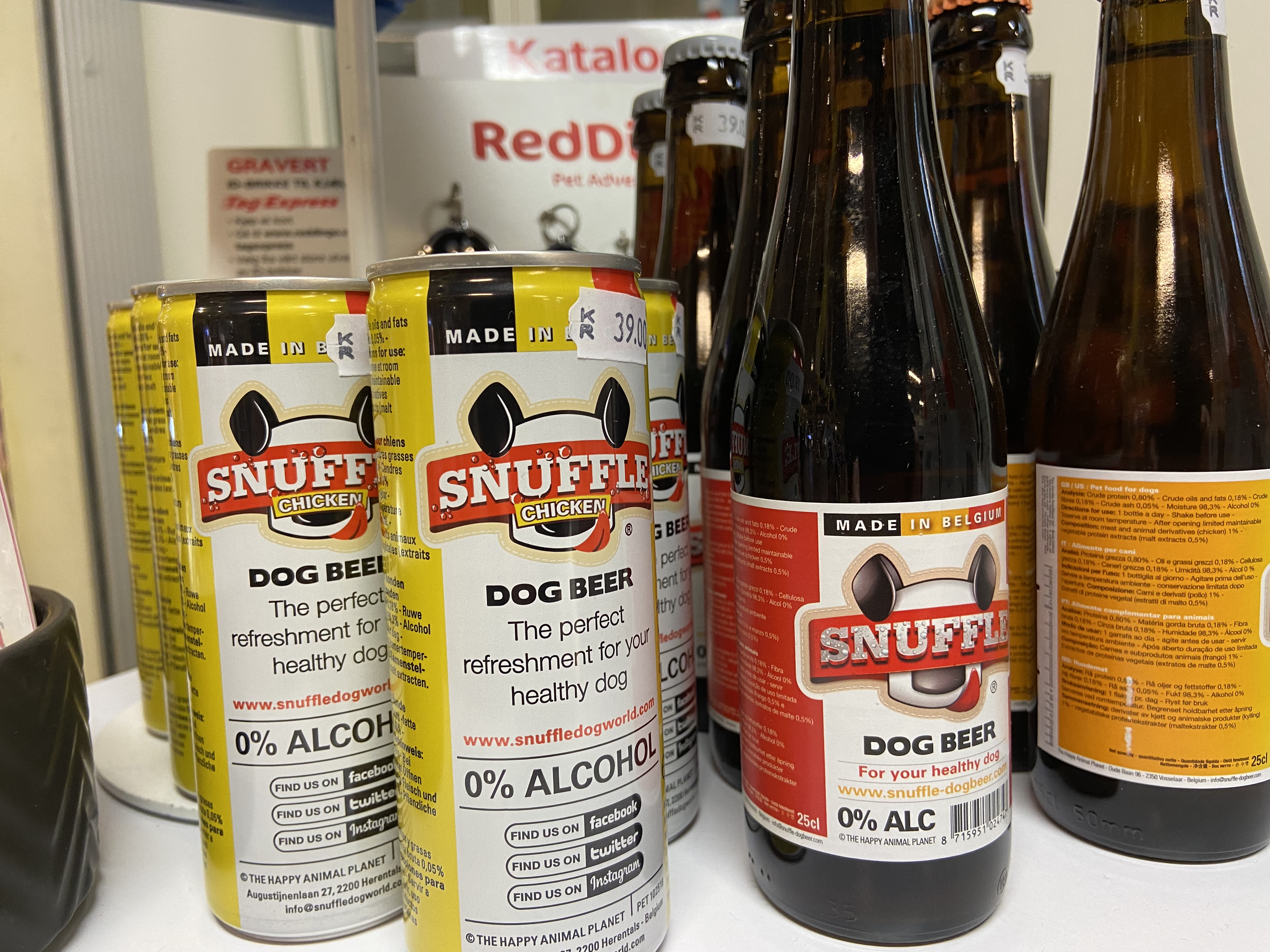
And finally, a completely random thing I found in the pet shop yesterday. I had noticed for the past couple of years that there are now advent calendars for pets, but now it seems that there is beer for dogs. Because what we really need is for Triar to be staggering around the house on Christmas day. Cheers!
I love being a veterinary surgeon. I am in the privileged position of having a career that is built around helping animals and in addition, I get to spend some of my days driving round in wonderful scenery and meeting farmers and their animals, and that’s something I value highly.
But there is a flip side to being a vet, which I discovered very early in my career, and that is that there is a lot of responsibility and that sometimes we find ourselves dealing with very heavy events.
I qualified when I was twenty two and started working at twenty three, and still have a stark memory from that time when I had been sent out to euthanase an old lady’s dog. I had driven out to her house and was still green enough to be worried about the process itself. Even when you’ve done it a thousand times, there’s still a risk that something untoward will happen, but you learn to navigate around potential difficulties, explain the possible issues beforehand and cope on the odd occasions when something unexpected does occur. On that day however, I was still completely green and very nervous. The old lady grabbed my hand and looked up at me from her chair. “I don’t want her to go,” she said. “Can’t you take me with her as well?”
I had no idea how to respond then and I probably still wouldn’t. Fortunately I had a wonderful nurse with me that day who did manage to say something and even after all these years, I remember how wise she was in comparison to me. Nowadays, when things get tough, I have more experienced people like Hilde and Thomas I can call on. Good colleagues are incredibly valuable in a crisis.
This week has had a couple of those moments when I have been reminded of how fragile everything can be. The first was the discovery on Monday that there had been a horrible event on Sunday in which a number of animals had died. I can’t give details: the investigation is still underway. But the quiet Monday I had planned, where I caught up with some overdue paperwork, was disrupted completely as I ended up driving to Tromsø with some of the animals that had died so that post-mortems could be carried out. There’s an extent to which, when tragedy hits, you have to act first and deal with the situation before you start to think too deeply about it, and that’s what I did. It wasn’t until I came home at the end of a twelve hour day, that I had time to process what had happened and what the animals had gone through, and then I cried briefly and hugged Andrew and Triar and then posted on Twitter, asking people for pictures of their pets and what they loved about them, so that if I woke in the night, I’d have something lovely and positive to read.
Our events here however, have been rather overshadowed by the news that Norway is experiencing its first ever outbreak of bird flu in domestic hens. Periodically last winter, there would be reports of bird flu being found in wild birds and Norwegian hen keepers have strict rules about outdoor access for their birds. When migration is happening, they all have to have a roof over them at all times. It had struck me, when doing our twice yearly emergency readiness exercise that if there was an outbreak of a serious illness in our area, that we would be in the front line and would be part of the team who had to go out and deal with the consequences. What hadn’t really struck me was that before we attended, there would likely be another vet who had been called out and might have been exposed first and a farmer too, and that they would be even more at risk, because they wouldn’t know beforehand that layers and layers of PPE were necessary.
This only came home to me when I read where the outbreak had occurred. It was (is) in Rogaland, where I used to live and work. Before I got the job here, I had applied for a job working with chickens down there, and it struck me that I could potentially have been that vet. Then it struck me further that the vet in question might be someone I know. It turns out the vet is indeed someone I know and they are still dealing with the possible fall out. So now I am hoping that there is nothing more serious to come, but the weight on them must be very heavy indeed.
But there was some lightness this week too. I have a busy few days planned, with lots of farm visits to different types of animal and with lots of different colleagues. Yesterday morning, I headed down to the fast boat in the dim pre-dawn November light. I was going up to Tromsø, where I would meet Birgit and we would visit a pig farm in the area. It was a routine visit, taking samples and carrying out a welfare inspection as part of Mattilsynet’s campaign to improve pig welfare.
The boat trip was a wonderful start to the day. The waters between Finnsnes and Tromsø are sheltered by islands and peninsulas and so it was a very smooth journey. It was getting lighter as we travelled and we went from farmland backed by low hills to much more sheer mountainsides, their peaks shrouded in snow and clouds. I had brought a book, but in the event, I couldn’t stop looking out of the window. The sunrise (picture at the top of the page) came when we were only a few minutes outside Tromsø. This is definitely a trip I want to repeat in my spare time.
The farmer was lovely. His pigs all looked in very good shape and he proudly showed us his sheep afterwards. Not all visits are like that, but it is great to see healthy animals being cared for well.
And it was fantastic to meet up with Birgit again. She had driven down from Storslett for a meeting the day before and had stayed overnight in Tromsø. She had her dogs with her and after the visit, we stopped briefly to give the dogs some fresh air. Kvaløya is beautiful. As I work in this area, I often look around me in wonder and think how lucky I am… as well as that I want to spend more leisure time exploring these different areas.
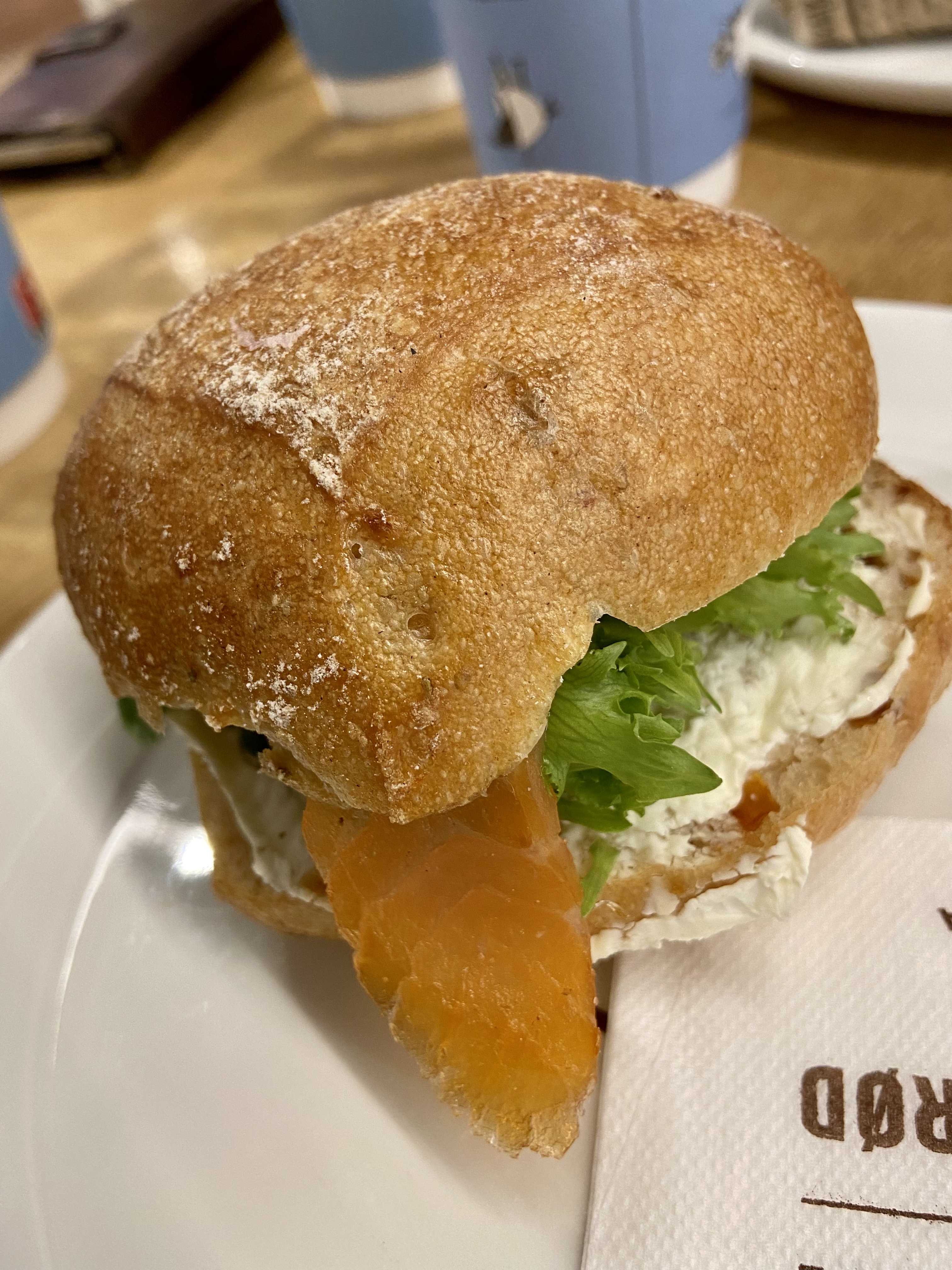
There was just time to stop for something to eat before I headed back on the boat. I ate a very tasty smoked salmon and cream cheese roll and was very pleased to see that the coffee shop were selling Senja Roasters‘ Christmas coffee. It was a good end to a very pleasant trip.
At the end of last week’s blog, I touched on the subject of the RNIB and on the happiness I felt having been contacted by a number of women who were interested in talking to me about being blind or severely sight impaired (which one of my correspondents described as being “the new term for blind”). As I mentioned last week, one of the characters in my new novel (Gail) is blind. She has a guide dog (Beth). I think there is a common assumption that those with a guide dog have no sight at all, but that isn’t the case. I am also planning a second book in the same series, which will have a major storyline around the relationship between Gail and Beth. I am very touched by the enthusiasm for my book. And it’s been lovely, hearing from new people and learning about different perspectives. A couple of the women have also shared websites that give added insight into their lives and I wanted to share them with you.
The first is a fascinating insight into how Samantha Leftwich sees the world. She uses photography to try to replicate different aspects of her vision. Her artwork was showcased in an exhibition called Windows of the Soul:
The other is a blog by Lynne Nicholson about living with Charles Bonnet Syndrome which she describes as “my brain being deprived of visual stimuli […] inventing it’s own version of the world around me.” Lynne writes about making her way through the world and some of the technology that helps with that navigation. Here’s the latest post on her blog:
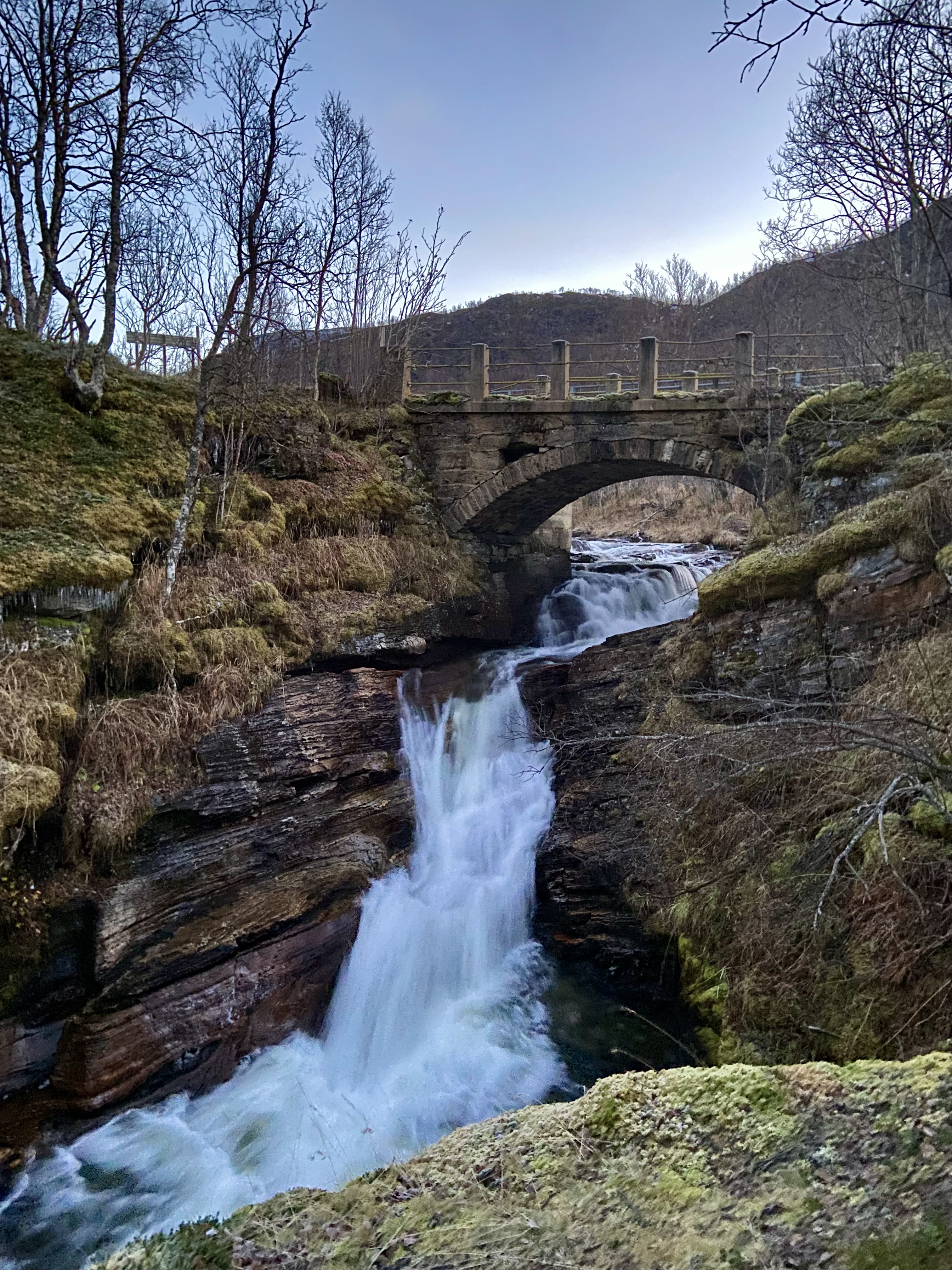
The weather is incredibly changeable at the moment. There had been snow, but by last Sunday, it had disappeared again. Looking for somewhere new to walk, I drove up onto the Lenvik Peninsula. (The Norwegian word for peninsula is “halvøy”, which translated literally means half island, which pleased me when I looked it up.) Turning up a random road, I parked the car near a waterfall under a bridge and headed up on a pathway that wove uphill through woodland.
Waterfall as it emerges from an old arched stone bridge
Though the snow was gone, the ground was frosty and the colours muted, but with touches of the glorious autumn still visible.
Blue and pink sky behind bare trees on a frosty hillsideFrosted autumn leaf
Triar was very happy, of course. He loves exploring new places.
Triar at the top of the hill
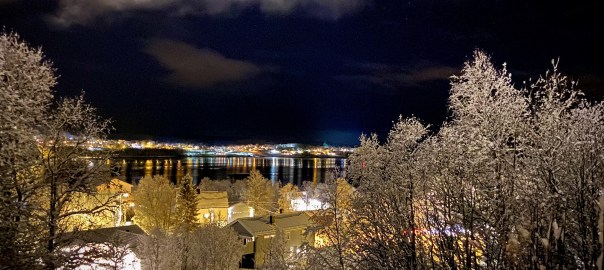
There was a wonderful fall of snow on Monday night, so of course I took some photographs when I took Triar for his evening walk. As I’ve mentioned before, the light at this time of year has a bluish tinge, even when the sun is up. At night, I was struck by the beauty of the golden light which shone through the snow clad trees and reflected on the water.
Friday ended up being a bit of a wild day. There was an office party planned for the evening and I was taking sausage rolls. It had been a long week, so I asked Hilde on Thursday if I could work from home, and I was planning an early finish to give me time to bake. There were a couple of meetings to get through and then I didn’t have too much left to do.
So much for my carefully laid plans. The first meeting was at 08:30 and was about our ongoing list of farms where we know the welfare needs some work. I had done a lot of work on these cases a while back, checking through the paper trails, creating historic timelines so that it was easy to see what the long-term problems were in each case. In the meeting, I discovered that our team had a new deadline and new Excel sheets to fill in regarding those histories, as well as creating new timelines for how we are going to tackle the cases in the coming months.
It was quickly obvious that I was going to have to go into the office to tackle these new deadlines. Having done much of the legwork, I hoped it would be a case of simply copy and pasting the information, but experience has taught me it’s hard to do that with the limitations of a laptop screen. Anyway, regardless of that, I needed to meet with Thomas to plan the next steps.
So at the end of the first meeting, I grabbed everything and rushed down to the office. The second meeting of the day was about to start and I just had time to get myself a coffee before it began.
The second meeting was our departmental meeting and as I don’t play a leading role in anything yet, I was starting to relax again, when Hilde sent the second curve-ball of the day flying at my unprotected head. There are, apparently, two confirmed cases of coronavirus in the slaughterhouse. Anyone who had been there in the course of the week was to take a rapid test. There was a mask on my desk, put there a while back and discarded, so I slapped it on. I’d been to the abattoir on Tuesday, so that group included me.
After that, I was impatient for the meeting to end so I could go and get the test. Obviously my urgent face-to-face meeting with Thomas was going to have to wait! We didn’t have any tests in the office, so after a brief discussion with Hilde, I headed off to the pharmacy to see if I could buy some. Having done so, I headed home to take the test. The fifteen minute wait before I could see the results felt very long, even though I knew the chances that it would be clear were good. I hadn’t been in close contact with many non-Mattilsynet staff, all of whom had already been tested and were clear. There was more hanging on it than my meeting with Thomas, of course. I have been waiting weeks for the office party and to miss it would have been awful.
Luckily the test was clear. I headed back to the office, calling in at the health centre, on the way, to book an MRSA test that I need to have before I can visit pig farms to check for it. No good me going out to check if the pigs have it, then contaminating the swabs or worse, giving it to them.
The party was fun! Lots of people brought food and so there was a wonderful spread. I wasn’t drinking, but some people were. There was an amazing feeling of a return to something I hadn’t realised how much I was missing. We sat close together at the tables, which in itself felt novel and not normal, as it used to be. Some people were drinking alcohol and unexpectedly, one of them began to get rather “tired and emotional” and that seemed nostalgically wonderful too. He talked at one point about how much he had missed this, and how we must do it more often and the whole room listened and then toasted him.
He really struck a chord when he said we have to create a new normal. The vast majority of people are vaccinated. It’s not perfect as the vaccine isn’t perfect, but likely this is as good as it’s going to get. There are no new developments left to wait for. There are still local lockdowns, where the risks are higher, but so long as the hospitals are not swamped, there’s an extent to which we now need to let it go.
I will leave you with a photograph of Thomas. As regular readers will know, Thomas is from South Sudan and his dazzling white Sudanese outfit was definitely one of the high points of the evening.
Thomas looking magnificent in clothes from his homeland, South Sudan
One of the UK customs I miss is the celebration of bonfire night on 5th November. It was an occasion I loved when young. My father always loved a good bonfire, and I have wonderful memories from when I was eight or nine, when we moved to a house with a large garden and there was a party with Parkin and treacle toffee, and my dad set off fireworks in the garden. It always felt like the start of winter and meant that Christmas was not far off. In Norway, bonfires are lit to celebrate midsummer, which is very different.
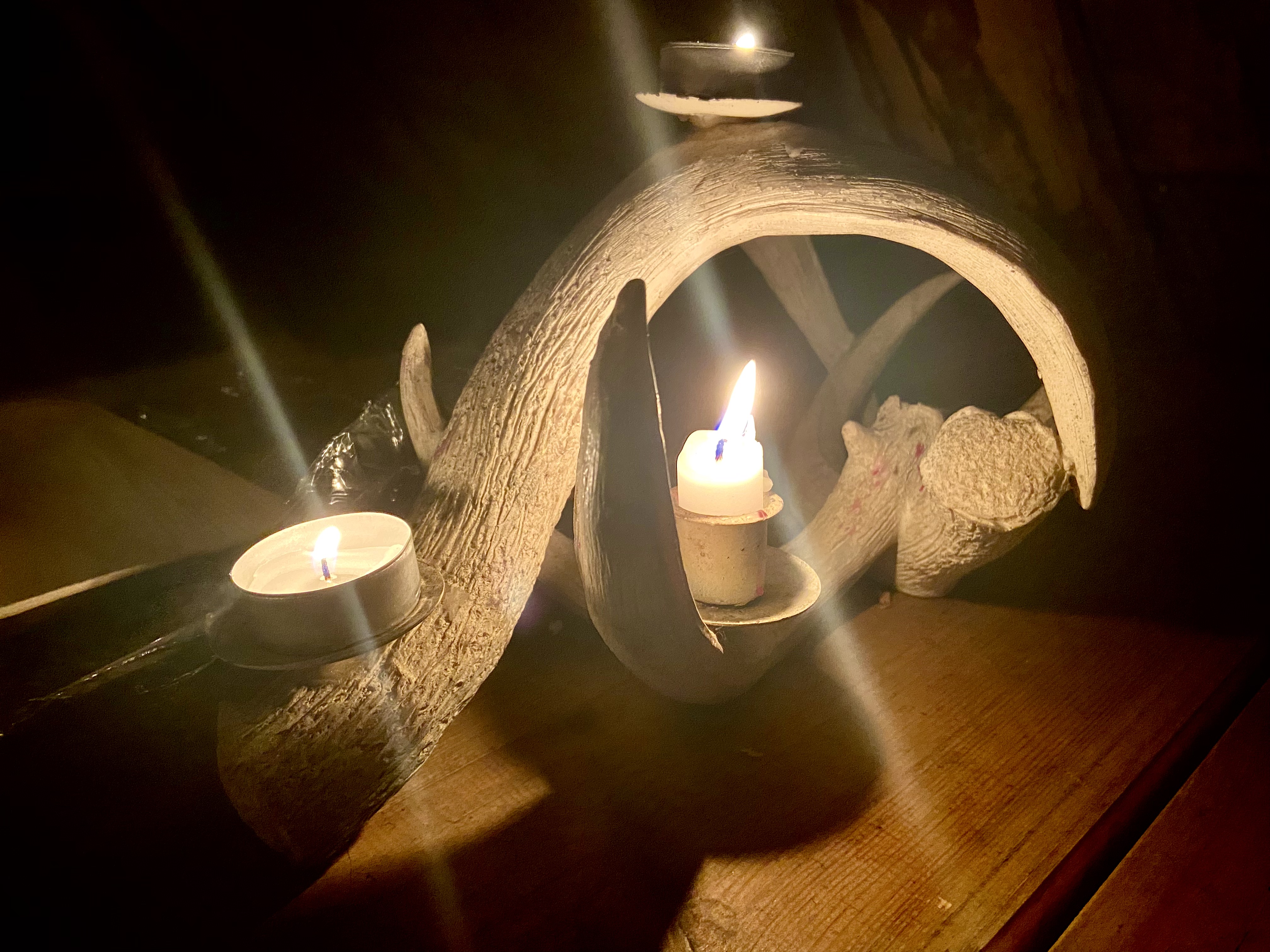
The Norwegian custom for lighting candles against the darkness of winter is something I have completely embraced though. For now, I have autumn coloured candles, but in three weeks time, they will be replaced with an advent crown. There are already purple candles available in the shops. When I first arrived in Norway and took Norwegian lessons for a year, they lit a candle in class at the beginning of each week and left it burning during the lessons that day. Advent will come at almost the same time as the Polar night arrives. I suppose it serves a similar purpose to the British bonfire night, bringing light at the darkest time of year.
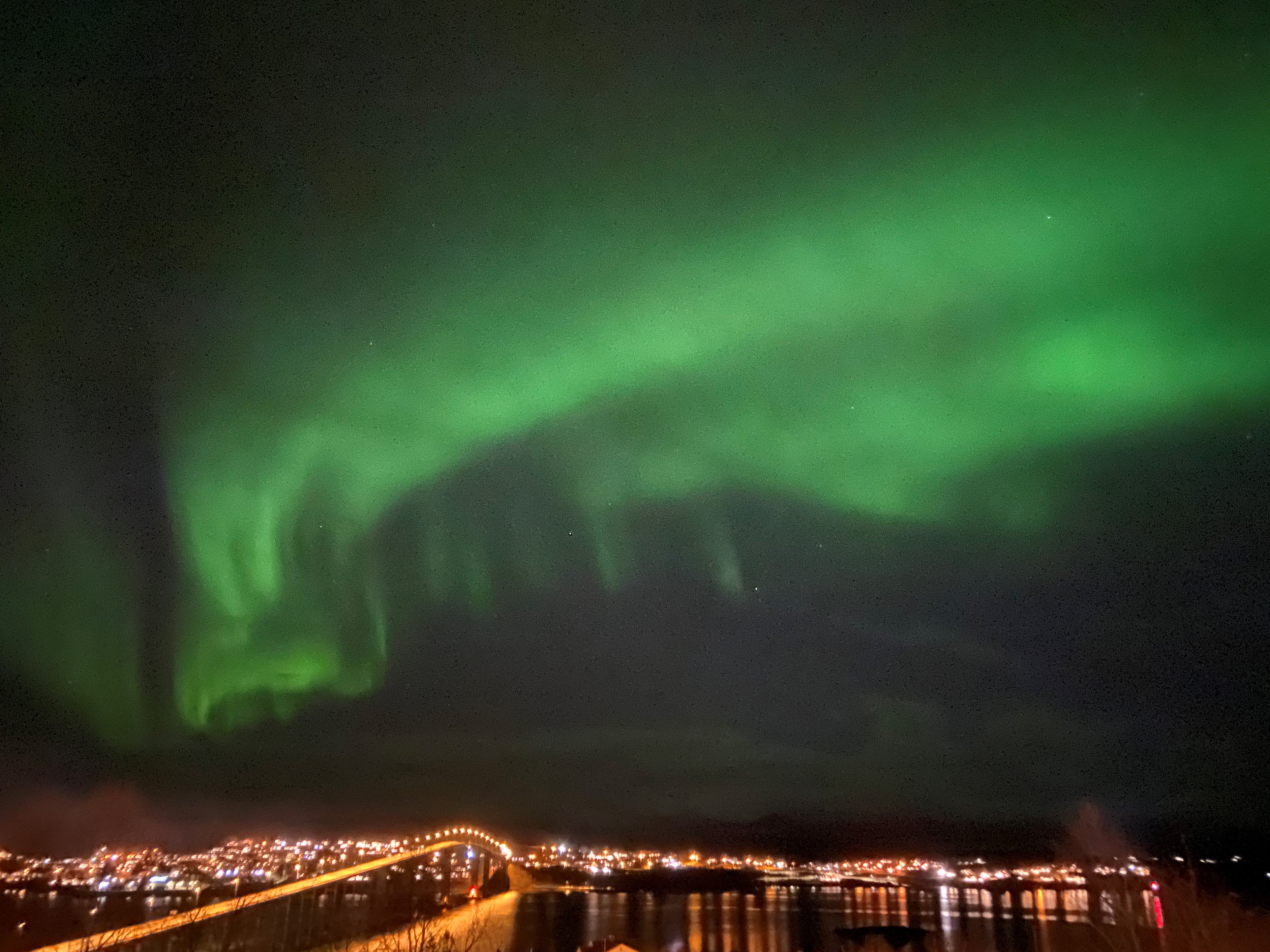
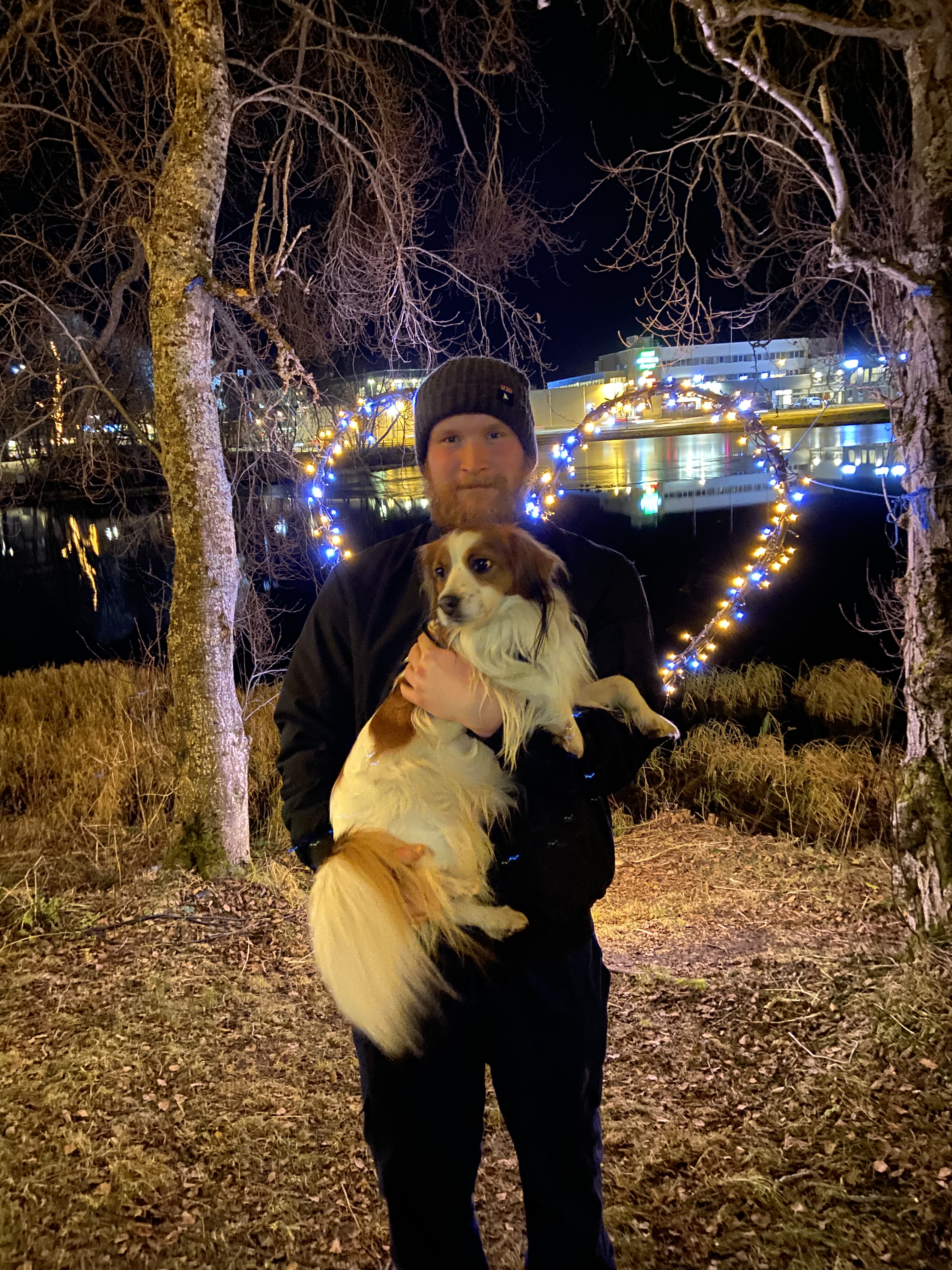
More light in the darkness – aurora over the reflected streetlights on SenjaAnd here are John and Triar, posing in front of a heart made of lights down in town.
The British affinity for queuing is another custom that I have found it hard to shake. I have applied for Norwegian citizenship, as well as reapplying for permanent residency under the new Brexit rules. I hadn’t originally applied for the Brexit pass as I hoped that I might gain citizenship before the Brexit pass deadline, which is the end of December. I initially went to the police to show my documents for citizenship in August (having sent my application more than a year earlier, the offices being closed in the meantime due to Covid) and was told that they couldn’t process it as I didn’t have a valid residence permit. This seemed odd, given that the deadline for the Brexit pass was December. Anna had showed her papers a month earlier in a different office without any problems. Anna told after she’d applied that the waiting list for citizenship applications was eight months. Having handed in my papers last week, I checked the waiting time, which is now eleven months. So no wonder they were insisting I should get the Brexit pass as it’s obviously going to be a long time before I find out if I can get a Norwegian passport.
Another odd thing was that it was possible to get appointments with the police for citizenship, but there were none available to show your papers for the Brexit pass, which is obviously more urgent. I am on a Facebook group for Brits living in Norway, and someone advised me that they had called the number provided for those with problems, and had been offered an appointment within a few days. It seems there are many times when there is little choice but to phone if you want to push your way to the front of the queue, though in fact I took a citizenship appointment and my Brexit pass was processed at the same time and has already arrived. But the need to phone, rather than wait (other than in dire circumstances that require a rapid response) still doesn’t come easily to me. I was reminded of when I was very sick in 2012 and losing weight at an astonishing rate while I waited to get my gall bladder removed. The six weeks they had told me I had to wait had come and gone and I was very perplexed that I hadn’t heard anything. When I asked my Norwegian friends, they told me I had to phone, which I did, and was taken in within a week or so.
It’s the same with job applications. In the UK, I always sent in my CV and whatever else was asked for, then waited patiently (or perhaps inpatiently, but still in silence) for a response. Someone in the Brits in Norway group asked for help as they were having no success with applying for jobs. I told them the advice that was given to me. There are instructions in the advertisements for how to apply, and I had always followed them to the letter, with little success. There was always a name and phone number to contact if you had questions, but as I rarely had questions, I had never called it.
Apparently, there is an unwritten rule that you must call that number for a casual chat, because if you don’t, they assume you’re not keen! This of course, seemed outrageous to my all-too-British, ready to queue soul! Then again, I have also been shouted at once by a doctor’s receptionist for not queuing enough. Doctor’s receptionists here are not behind a sliding screen off the waiting room, but behind a closed door. In my British ignorance, I once went through the door to queue politely behind someone else who was speaking to the receptionist. This was outrageous apparently, as discussions with the receptionist are private.
Customs are very odd things and some of them are invisible until you stumble over them. I love living in Norway, and hope to gain Norwegian citizenship, but I recognise that I am never going to be fully integrated. I will leave that (hopefully) to my children.
Not in any way related to the topic in hand, but here is Triar with his piggy toy.
I haven’t mentioned my other writing much. My agent hunt is continuing slowly. I have been told that so many people have written books during lockdown that many agents are swamped. I’m not in any particular hurry, fortunately. I have most of the storyline for a second book in place. It did cross my mind however, that I should perhaps do more research regarding one of my main characters who is blind. I therefore contacted the RNIB for help and they have shared my request with a Facebook group. A few people have got in touch with me, which was very cheering yesterday evening. Hearing about other people’s lives is always interesting and rewarding, so I have a pleasant weekend ahead of me.
I will leave you with a picture I took last weekend of Kistefjellet, which I still haven’t reached the summit of. It’s the peak on the left with the mast on it. One day I will get there and when I do, I’ll share it with you. Have a good week.
Back in June I wrote a post about complaints from animal rights organisations about Mattilsynet: Trouble in Paradise. Last weekend on my Facebook feed, I found a post from a colleague with a link to a new article from NRK, Norway’s public services broadcaster. It contained the stories of whistleblowers from within Mattilsynet regarding the distress its inspectors are feeling about their inability protect the welfare of the animals they are supposed to oversee.
One of the things I have noticed in my job is that almost every other week, changes are introduced to policies and protocols. There’s a lot to learn in any role and a year in, I feel I’m still picking things up, which would be enough already without the feeling that anything I learn might shift again next week. Then there’s the “paperwork”. Most of it is digitalised now, but there is a whole load of report writing, which often takes up far more time than the actual visit.
I am catching up gradually with some of the politics, and it seems that the current concentration on bureaucracy relates to criticism from the official Norwegian Auditor General in 2019 regarding the poor quality of case processing. It was stated that Mattilsynet lacked good tools and systems to deal with the animal welfare supervision it had to carry out, and that the result was that serious breaches of the animal welfare laws were not being followed up. It also said that Mattilsynet employees were not using the tools they had to penalise those who broke the law, and that it took too long for those who didn’t take proper care of their animals to be banned.
There’s a certain irony to what is happening now as a result of these accusations. I haven’t been here long, but one of the major constraints is the computer system we have to work with when processing cases. We use a system called MATS. I don’t know how old it is, but it is so complicated to use that it slows everything down. It sets out protocols and you have to work through the elements in order and tick off certain actions before you can proceed to the next. So if I receive a message from the public regarding a concern about animal welfare, it comes to me in MATS. I have to process that message and work through various stages on a list, and then at some point I will come to the end of that segment and have to move onto the next.
Once you click through to the new section, you can’t go back and change anything in the previous section if you’ve made an error. Thomas always tells me I have to be very careful before I click onwards, and I often check with him. But as I am trying to stand on my own feet a bit more, there have been cases where I have got as far as writing a report or a response to an animal owner who has asked for permission for something, and then had to go right back to the beginning as I realised I had linked the case to the animal owner’s personal file, and not to their business, or some other easily made system error that cannot be rectified.
MATS is also clunky in other ways. Almost nothing is automatic. Before we leave the farm or home, following an inspection, we have to write a “receipt” with a summary of what we have checked and what our assessments were. This used to be on paper, but now most of them are sent electronically. So we type our observations into an app. This would be very useful if there was an integrated system. If the observations we recorded in the receipt were transmitted automatically into MATS, and then perhaps used in the report, then it would be truly useful. As it is, we have to open MATS and the receipt and copy and paste all the information from one to the other.
The report itself has to comply with strict parameters in how it is set out and before I can send it to the owner, I have to run it past a colleague, and then afterwards past a control team, all the time making amendments, and then often sending it back and forth multiple times until everyone is satisfied.
Instead of rebuilding the system, they are adding things like the receipt system (and another system that allows us to add photo evidence) before the problem of MATS has been addressed. It seems to me, that they are trying to tweak something that is so fundamentally flawed that they are actually making the situation worse instead of better.
Of course all of this really comes back down to funding and monitoring. The argument is that they can’t afford a new system, though not affording it is probably costing millions. I have watched similar events in the public sector in the UK. The health service and school systems have both wandered into this territory where funding is reduced, then criticisms are made, and rather than improving the situation, new systems for monitoring are introduced, which increase the workload in ways that do nothing to correct the problems, but increase the cost of the operation. That the Norwegian government is paying veterinary surgeons to copy-paste long lists of observations and check and recheck whether the reports we write comply exactly with a template, which could presumably be automatically applied if the will and funding was there, seems brainless to me.
In addition, there are certain routine visits we carry out, for example those to check the farmers are following the rules with regard to ear-marks, disease control and traceability. Common sense would suggest that if no breaches of the rules are discovered, the feedback report could be generated automatically. Not only would that save direct work for the vet who did the inspection, but it would sidestep all the report-checks for compliance and would ensure their other aim – that everyone is dealt with the same way, wherever they are in Norway – was met without any effort whatsoever. Reducing the time it takes to process cases would free up time so that we could carry out more inspections. It seems like the system is set up in a way that prevents us from doing the most fundamental part of the job, which should be getting out and checking whether the animals are okay.
Anyway, I’m not going to comment any more on this for now. Our area is actually better off than those in the report, for which I am grateful. The report mentions an area where the inspectors have been told they can’t take on any more cases until the old ones are cleared up and we haven’t reached that stage. Thomas often tells me of his frustration that we are firefighting cases, rather than preventing problems before they start. Because I’ve only been here a short time, I can’t compare it with how things used to be, but he feels things have become more difficult. I am also aware of how much Thomas takes on, in comparison with what I can do at the moment. Though I help as much as I can, I know he is taking responsibility for the worst problems, as I work to follow what he’s doing and ensure the case timelines are kept in order. I am learning a lot about how cases should be handled, but even writing up the timelines shows me how frustrating the system is. There has been a change in government in Norway and the new government is more left-leaning, so I can only hope that some of the budget cuts, that have been happening forever, start to be reversed.
*****
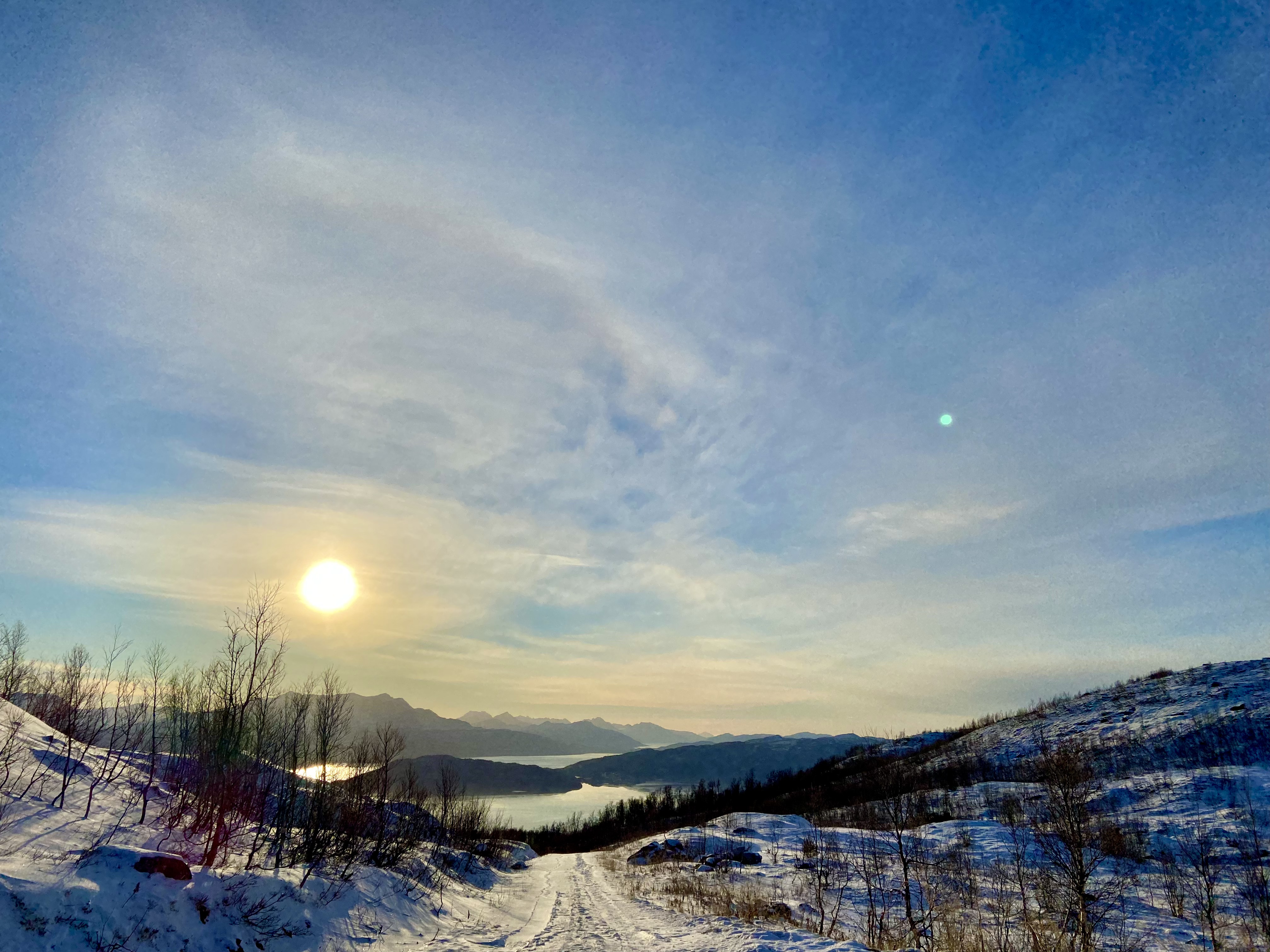
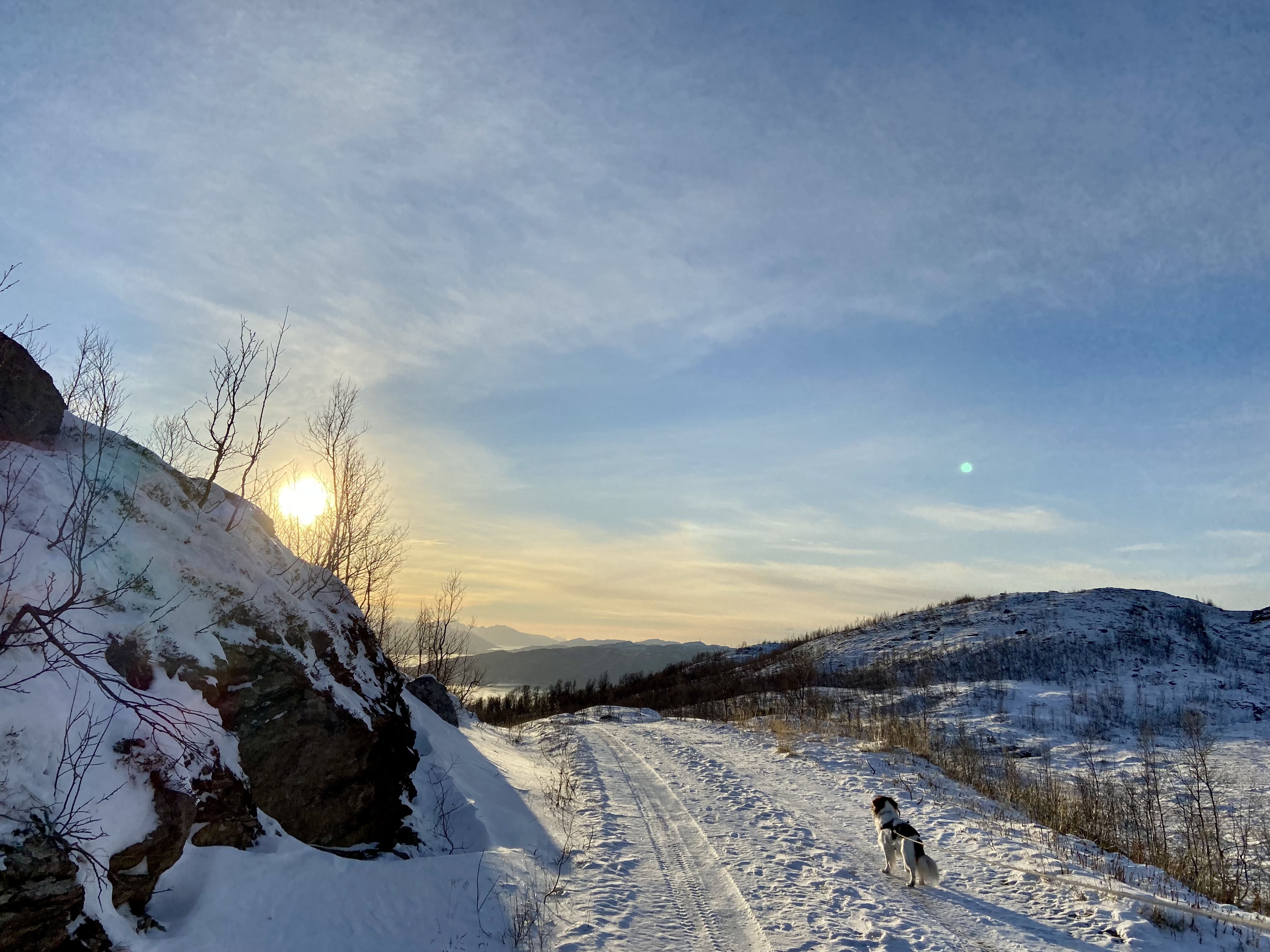
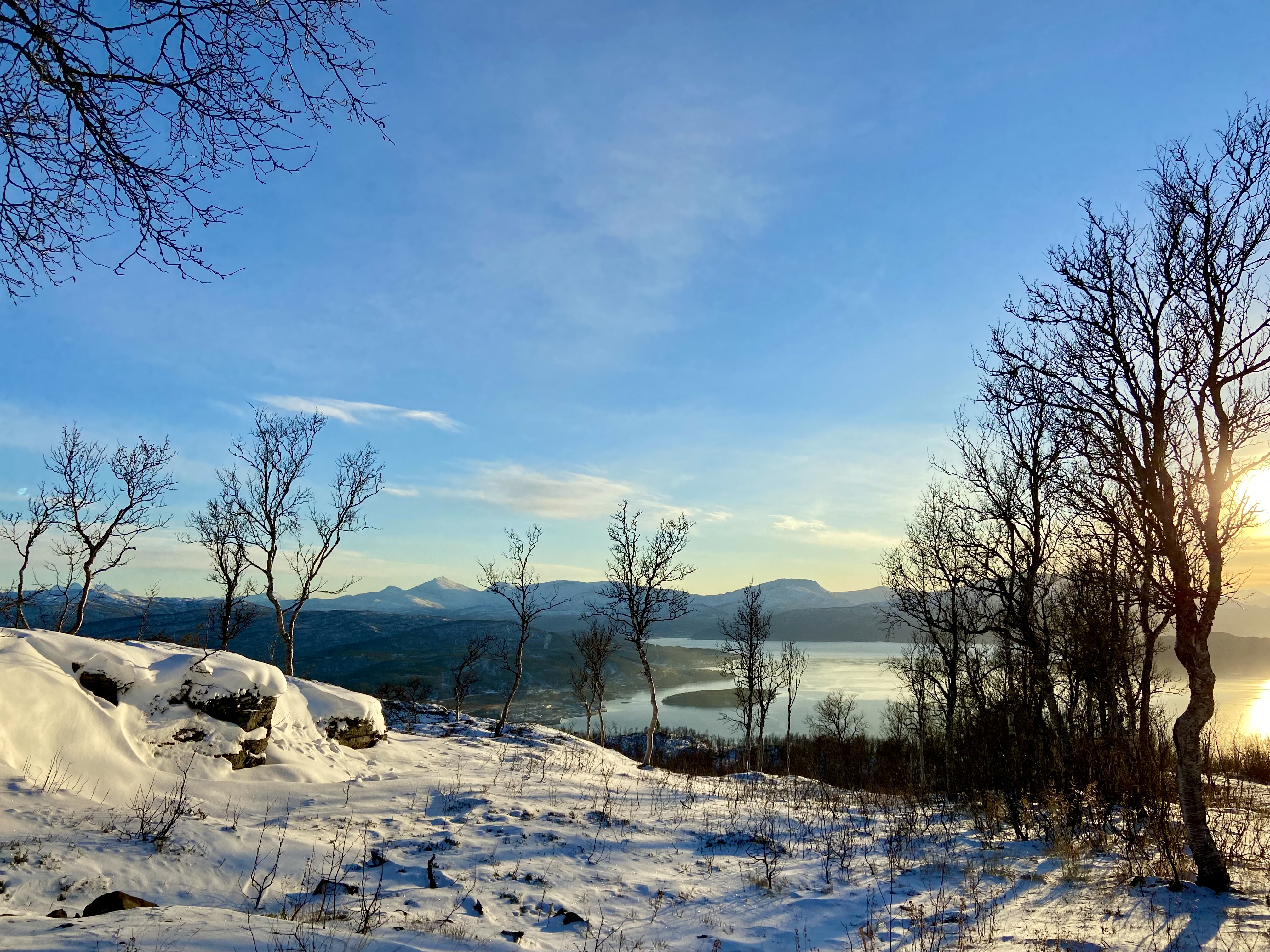
Though the snow has gone for now, it was beautiful while it lasted. Triar and I followed the same trail last Saturday as we had the week before. There were amazing views as I reached the higher ground and I went a little further than last time, though I think I was still only about halfway along the trail to the peak. I need to find someone to go with me before attempting the whole walk.
Looking back at the snowy trail up to Kistefjellet
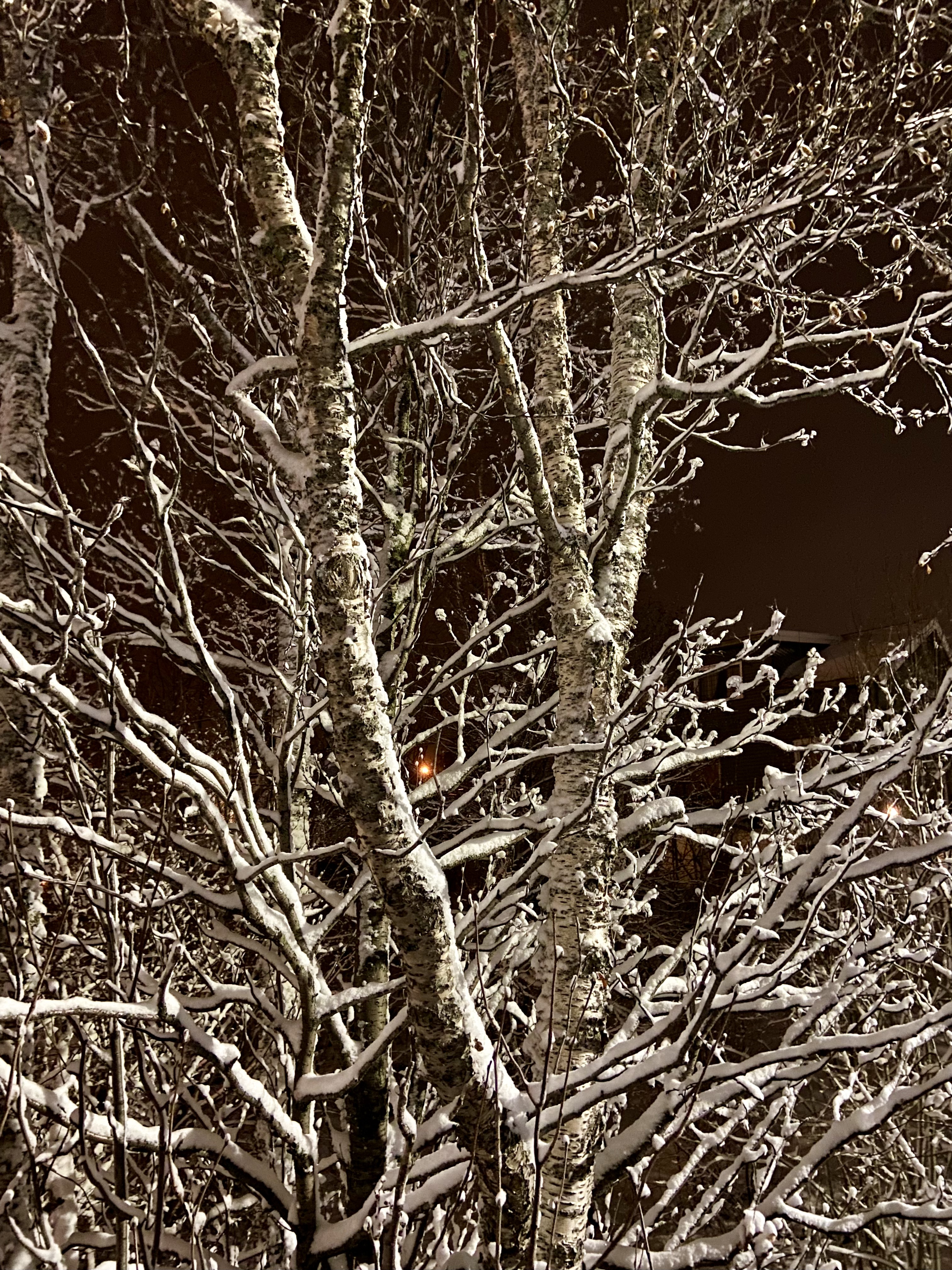
And on Tuesday evening, there was a snowstorm. Though it was windy, the temperature was around zero. When it’s really cold, the snow is powdery, and when the wind blows, it doesn’t stick to anything. But this snow stuck to everything. I went down into the town centre to get something, and had to stop to take photographs of the trees as they were so beautiful against the overcast sky and the streetlights.
I am looking forward to winter now. Though snow can be inconvenient, I still feel a childlike excitement when I wake up to find the world has turned white. And in a month, the polar night will be here. I hope you will follow and share it with me.
*If you want to read a Norwegian article in English (or any other language) you can paste the URL into Google Translate (set the languages at the top). A link will appear in the “Translation” side. If you click on the link, it should take you to a translated version of the article.






































 A Vet’s Life