Triar and I had a wonderful trip to Shetland. Traveling with him is always a joy. He makes me proud and other people smile. We headed up from Settle on the train, changing at Carlisle, walking from Central to Queen Street in Glasgow, then on up to Aberdeen. The Palm Court Hotel made us very welcome and the breakfast was delicious. I think we may head up there sometime for a weekend break, but that’s a decision for another day.
The Hrossey was not due to sail until five, so we stayed in the hotel until eleven, then strolled into town. A brief shower sent me into a cafe, where for the first time ever, as I ordered my coffee, I was asked if I wanted some chicken and water for my dog. Of course I said yes. He deserved it, after all.
Once aboard the Hrossey, he quickly made himself at home.
It was something of a rough crossing, so we didn’t sleep much, but we arrived safely and on time in Lerwick on Sunday morning. Lindsay’s house, where we would be staying, is on the edge of Lerwick, so we set off to walk there, passing the Norwegian named Sandveien and Kantersted on the way.
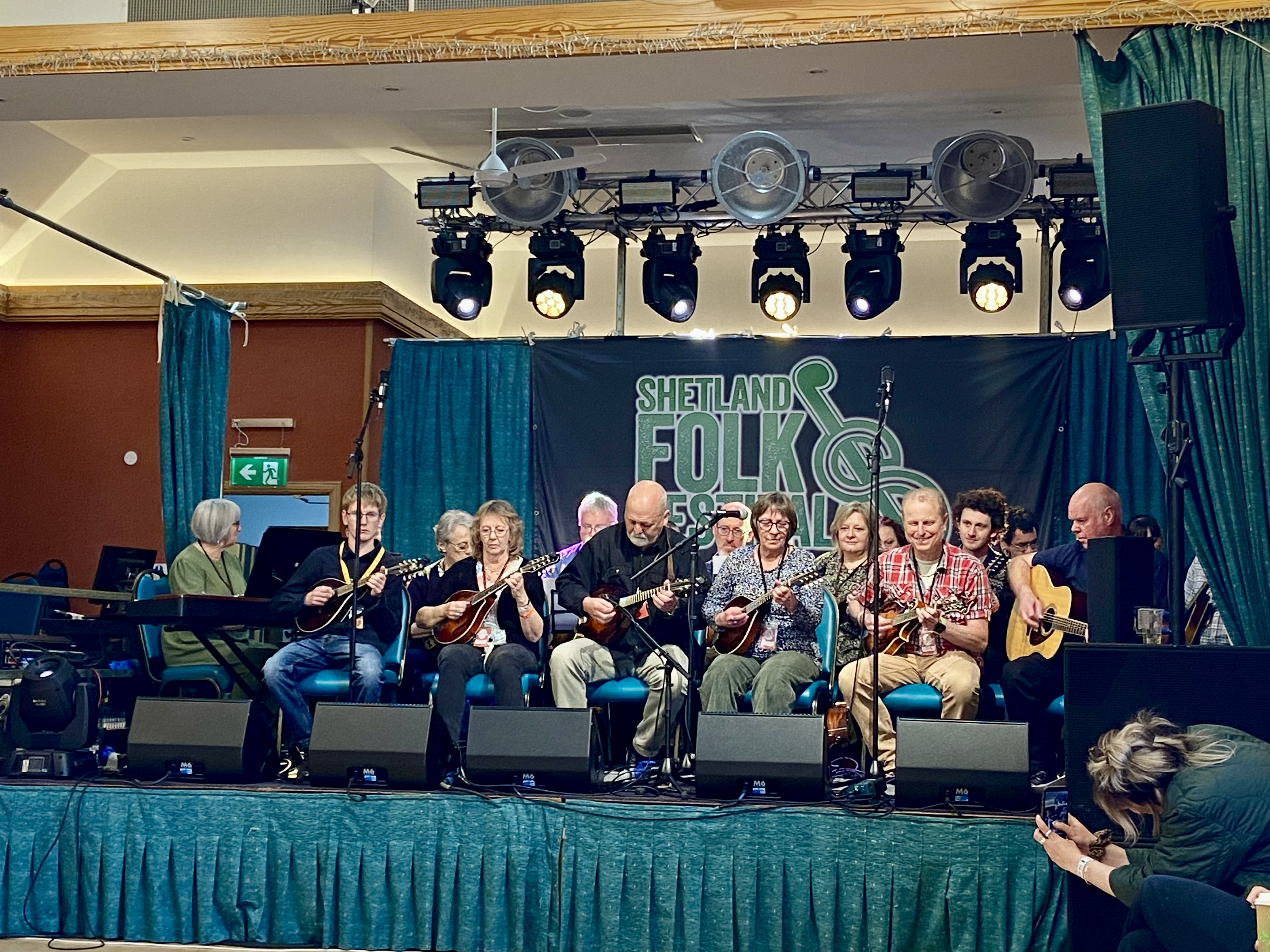
Lindsay had told me she was going to be eating low-carb and I arrived to the wonderful aroma of a roasting joint of Shetland lamb. We cooked and ate a late breakfast and then headed back out. Melanie (you may remember I spent Wool Week with her last year) was playing in the Mandolin Band as a part of Shetland Folk Festival and I didn’t want to miss it!
After that, the Mae Trio played a twenty minute set, while three little girls danced and spun.
It was a lovely atmosphere, but with only five hours of not-very-good sleep, and with Triar alone in a strange house, I decided we should head back and eat some of that delicious lamb before an early night.
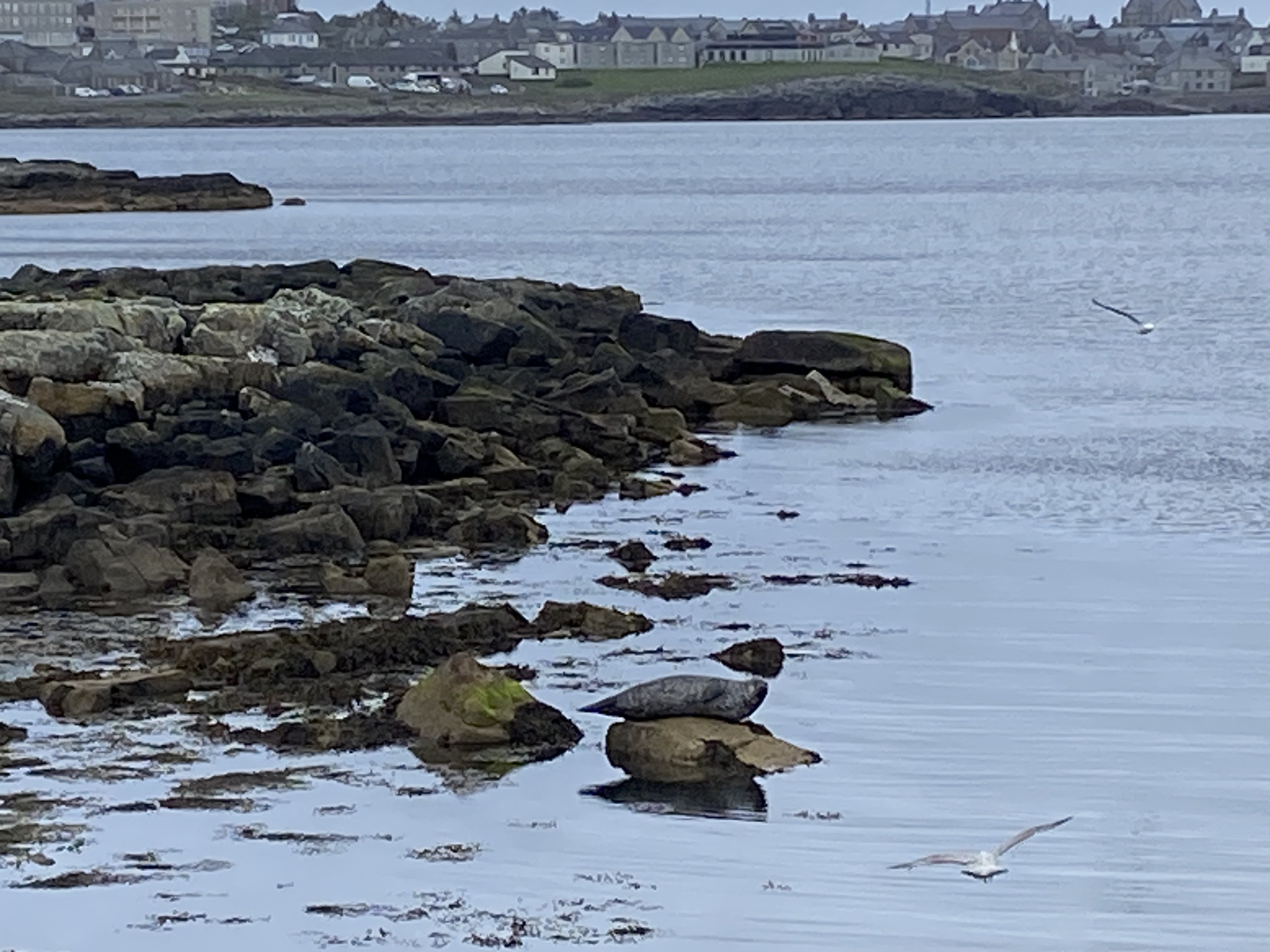
Triar and I were up bright and early the next morning. Unsurprising, I guess, having gone to bed at seven. With Walkfit in mind, we headed out for a morning walk along the road that followed the coastline south. It was beautiful, with the grey rocks, the quiet centre of Lerwick across the bay and the still water under a gentle sky.
In the other direction, lay rocky promontories and islets.
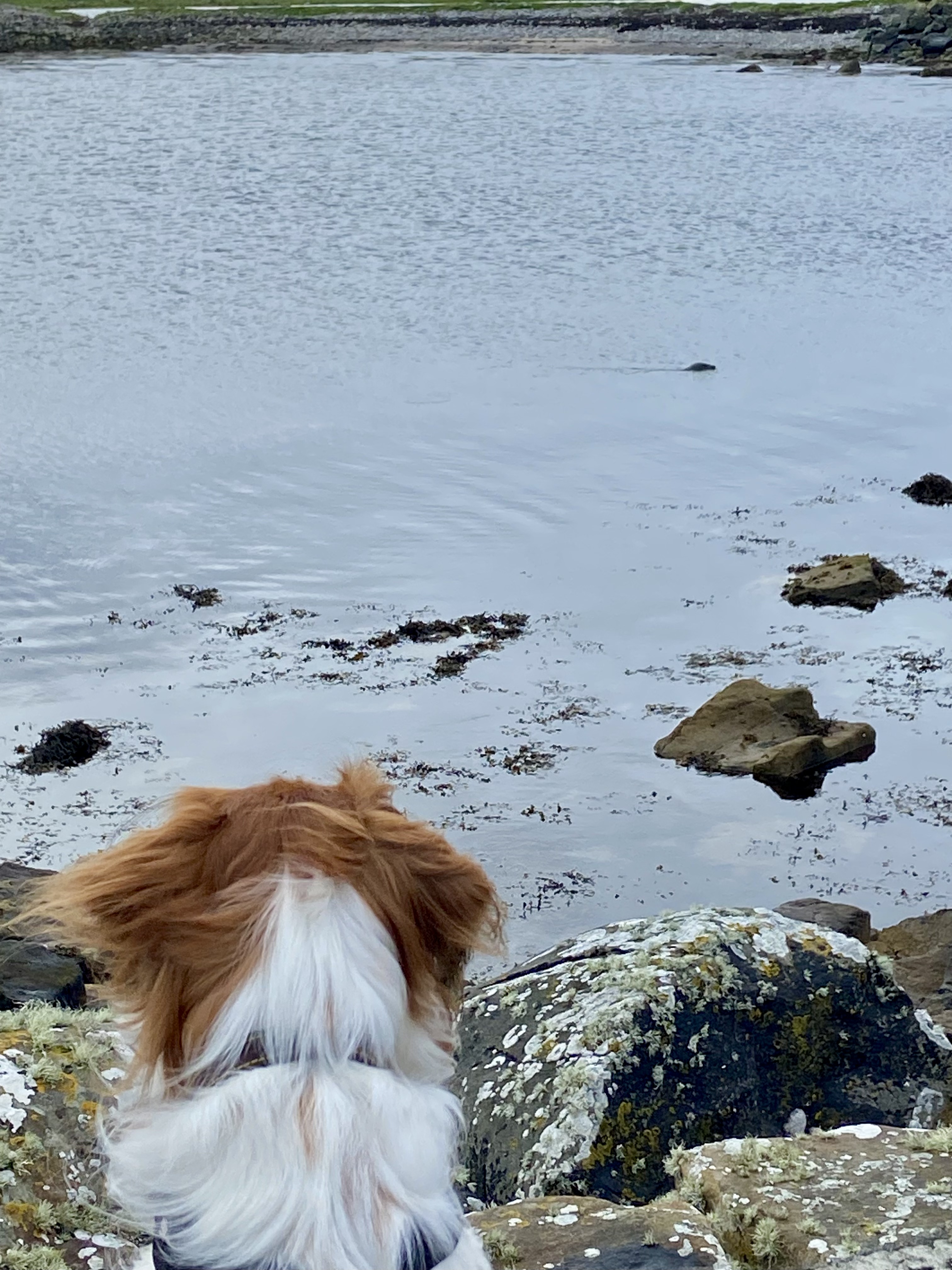
It felt wonderful, walking along that quiet road, going who knows where. Then to cap it all, Triar spotted movement in the water.
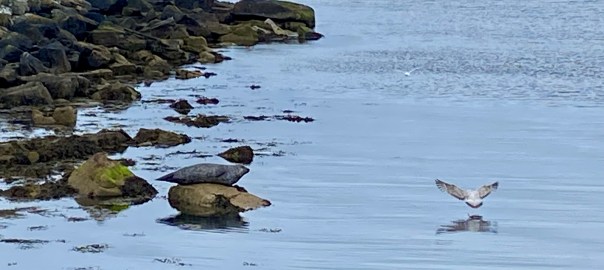
To my delight, it was a common seal. Within moments, it hauled itself out of the water and onto a rock, gazing at us as we gazed back.
A thousand steps or so more, we turned to head back. It was breakfast time, after all and still just the start of our Shetland adventure.
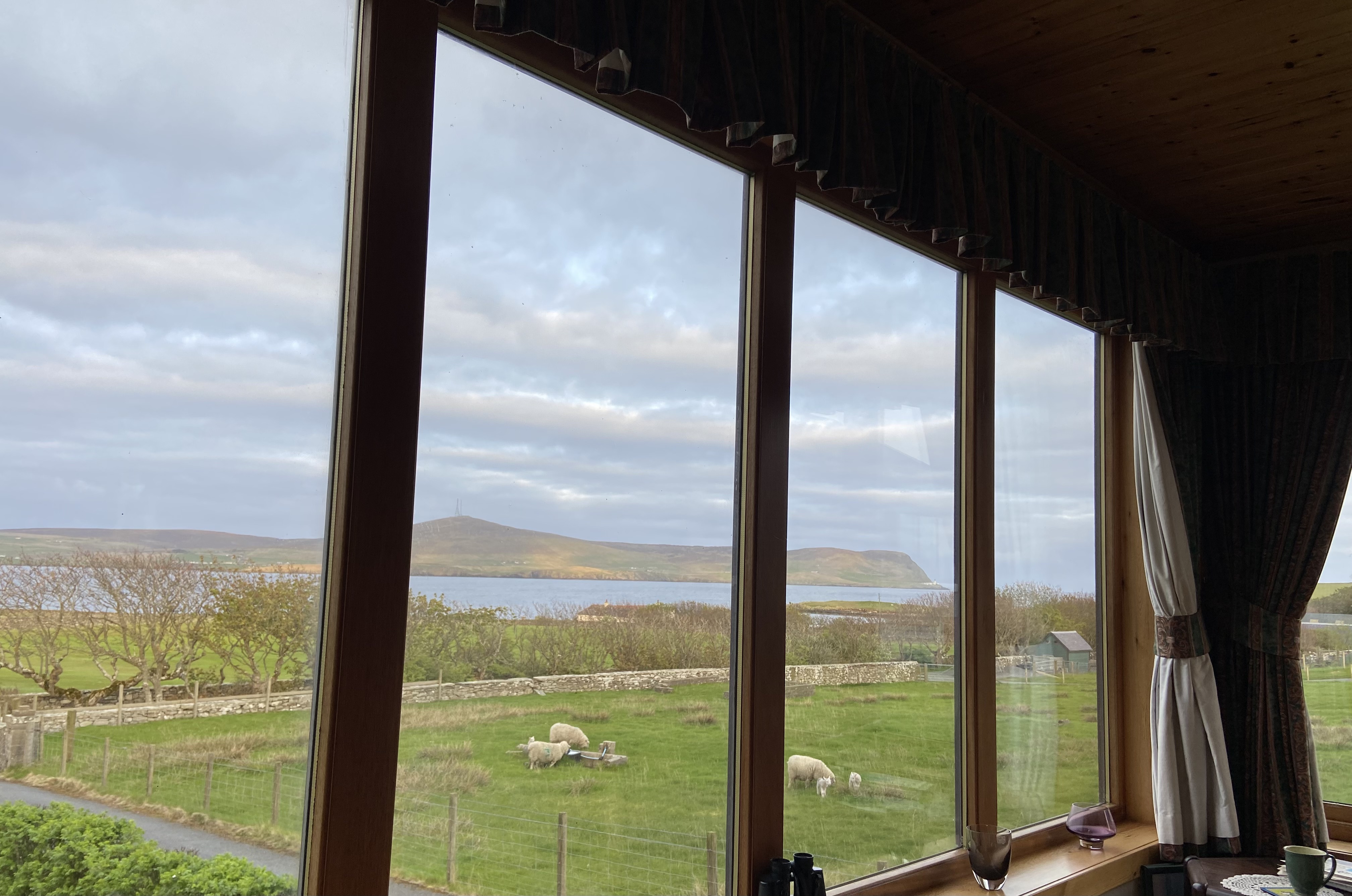
And now, back home as I am, I am going to pause there and continue tomorrow. The joiner arrived at 08:23 this morning and is upstairs attaching doors and it’s time for breakfast here too. Tomorrow there will be wartime boats and sunny white beaches, but for now, I’ll leave you with the view from Lindsay’s window and wish you an enjoyable start to the weekend. Thanks for reading.
So here I am, almost two weeks into my Walkfit project. Am I feeling and looking better? Well I’m not sure about the latter. It’s hard for me to assess, not least because I don’t have any decent sized mirrors to check myself out in. However, I am beginning to notice my energy creeping up a little.
As well as encouraging walking, there’s a kind of mini-aerobics session each day, that lasts between seven and ten minutes. I suspect the times will build gradually, but maybe not. They’re low impact and I’m starting to enjoy them, which is why I conclude my energy is building. I usually do them at the end of the day, by which time my steps are usually done anyway so that feels positive.
The current step count aim is 5,200 which I am easily surpassing most days, but if I overdo it one day, then I can drop it right down to that figure and still have achieved the goal, which feels positive. So far, I haven’t lost any weight at all, so their prediction that I would be at my goal weight by June or July was the nonsense I knew it would be, but I do hope that it will start to drop a bit at some point if I carry on, and if it doesn’t, being fitter is never a bad thing.
I have, of course, been doing most of my walking in Blackbird Lane, which has been gorgeous. My Merlin bird app has often picked up a song thrush, but it’s usually been in the distance. Last night I heard its song so loudly that I looked into the bush beside me and there it was. So beautiful. I reached for my phone, to add it to my bird life-list (birds you’ve seen to confirm the app got the identification right) but alas, I had the wrong phone with me. Another day, perhaps!
At the start of the lane, there’s a kind of brownish pond. While the hedge was bare, it was more visible, but it’s really barely more than a big deep puddle. As I walked past on Wednesday, a flash of green caught my eye. There, on this miniature pond, silent and still, was a beautiful mallard. I was amazed to see him there, on this tiny stretch of water.
The lane is a proper road with tarmac for a short distance, then it turns into more of a pathway. Here there are hedges and fields on either side and my eye (and ears) were caught by a group of graylag geese. This time I had my Merlin phone with me. I clicked on the life-list button, which showed me a picture of a graylag goose and asked “Is this your bird?” I answered “Yes” and the graylag goose was added. Though they were clear enough to my eye, they were a bit distant for phone photography, but I did my best.
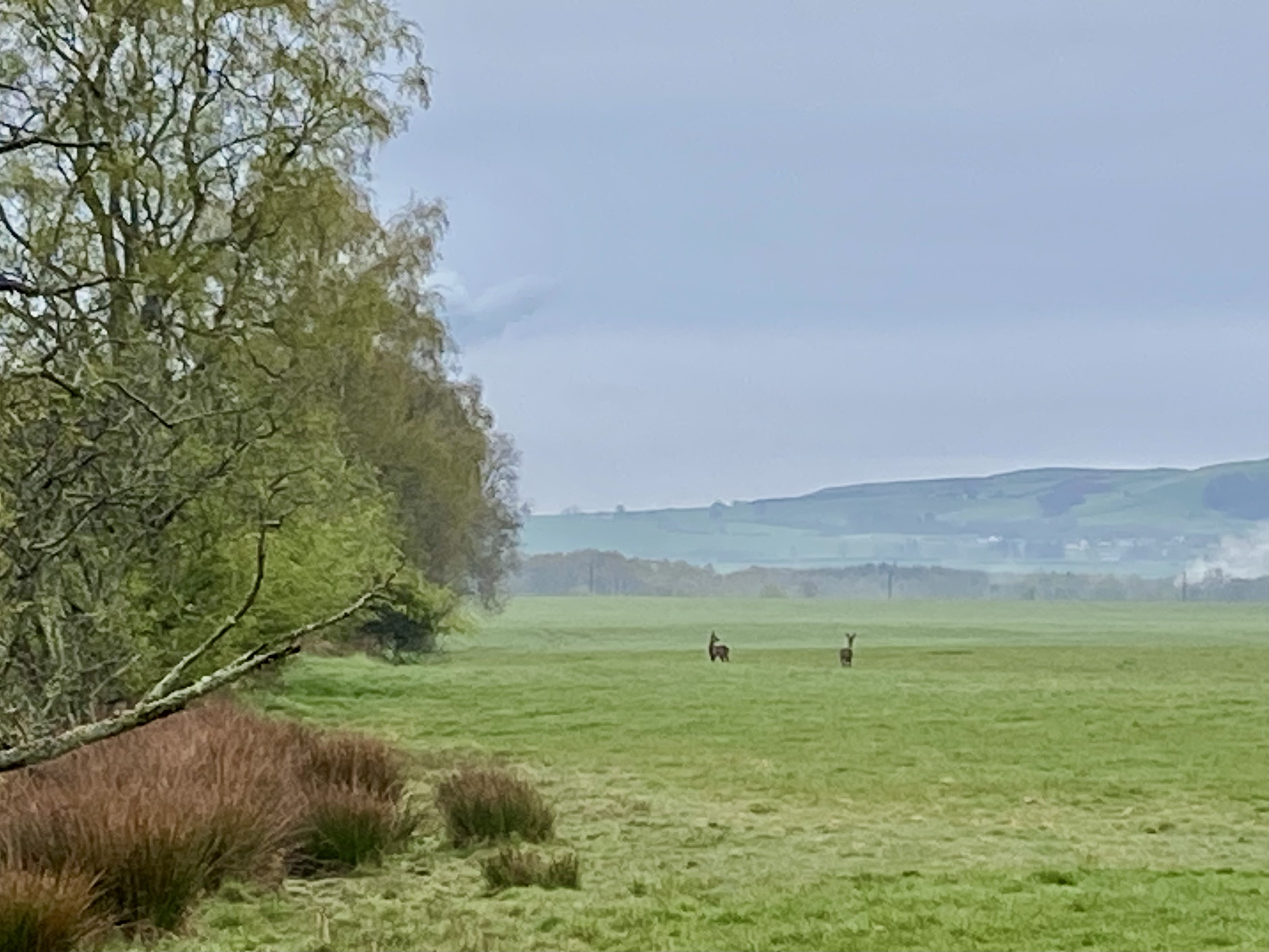
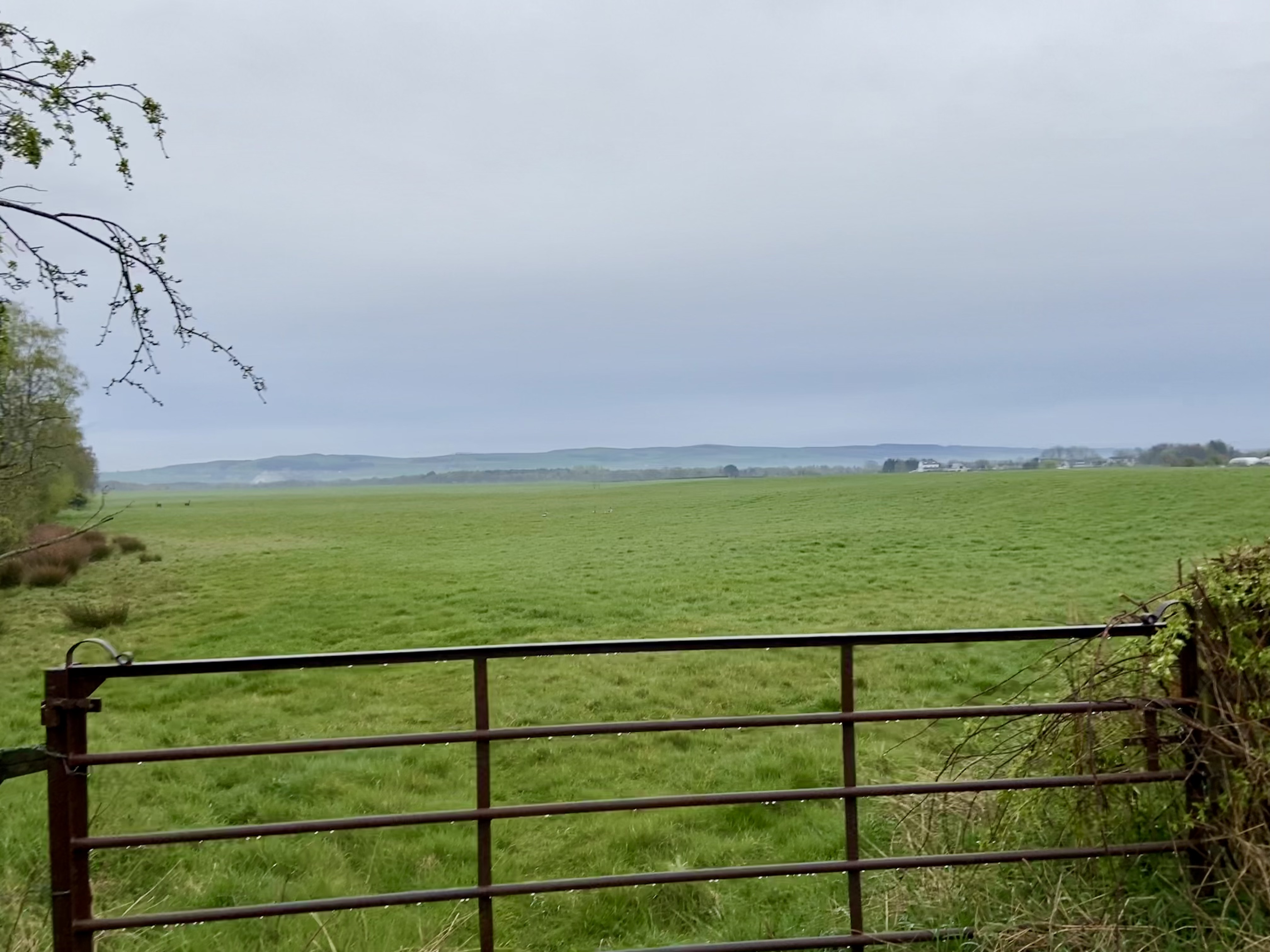
Only a little further on, I saw movement near the edge of the field. This time I saw the pricked ears and graceful forms of two deer. Again, I could see them fairly clearly, but on my phone, they are distant shapes, though still beautiful.
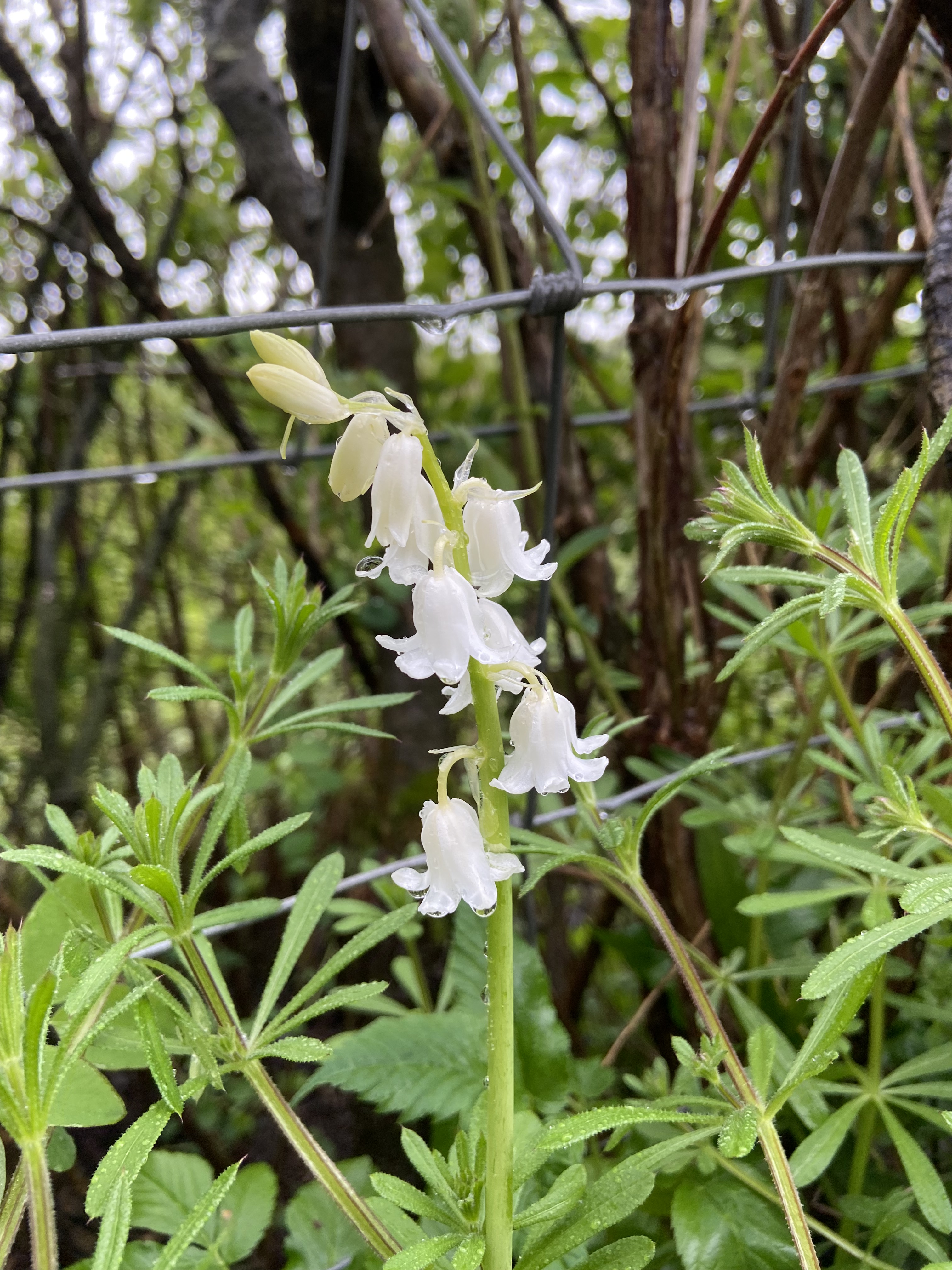
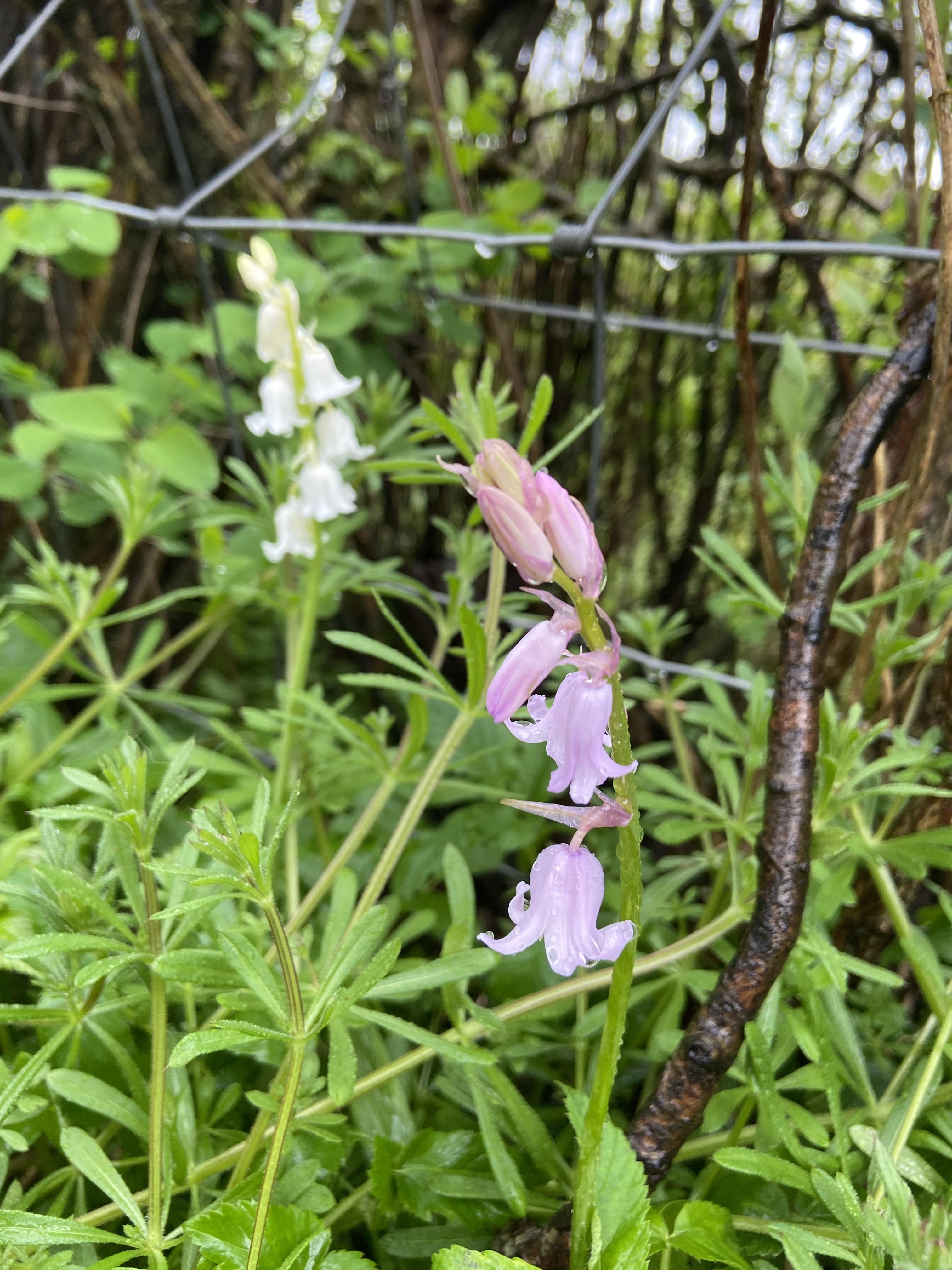
It was a damp morning, as you might guess from the sky. As well as the animal and bird life, I am entranced by the new leaves on the hedges as well as the flowers that shelter underneath. Everything was sparkling with new life and raindrops. It was a truly lovely morning.
And as I made my way back along the final lengths of the lane, I peeked through the hedge to see whether the little mallard was still there… and caught sight of Mrs Mallard. I don’t know whether that tiny pond, secluded as it is, would be a good place to raise a family, but you never know!
And after Easter and its long weekend are past, I only have two days left at work, before I head to Stavanger for a weekend, then up to Shetland. If my blog next weekend is late, it’s hopefully because I’m enjoying a weekend with John and Yoana.
I drove home from Storslett on Friday last week, but not before taking a photograph of fish hanging outside to dry. Birgit and I were inspecting a goat herd and another flock of sheep, and on the way I finally spotted some racks that were in use. Norwegian stockfish is dried cod, usually of the prime seasonal Arctic variety that is called skrei. It hangs outside between February and May and has been a traditional foodstuff and an export since Viking times. It is the main ingredient in the Italian dish Bacalao. John and I saw much bigger drying racks last summer as we drove through Lofoten, but as that was in August, there were no fish back then. So having spotted these on the way, I asked Birgit to stop on the way back and I ran along the road, hopped over the barrier and staggered down a grassy bank to get a picture.
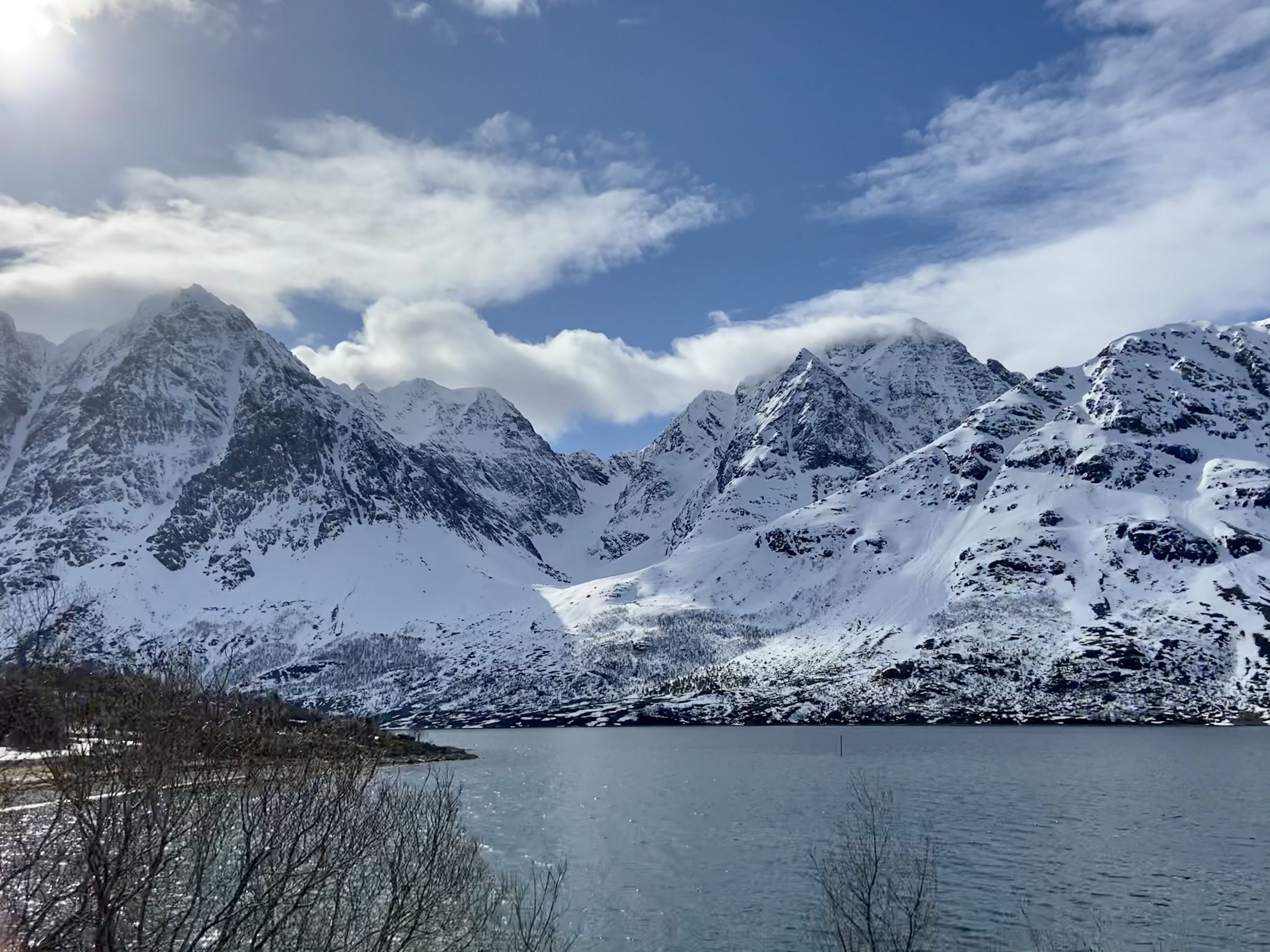
I took a couple of photos of the mountains as well. It is such a beautiful area and the mountain tops were decked with fluffy white clouds.
By the time I got home, the false spring weather had disappeared. Anna and I went for a walk on Senja on Saturday. There were a couple of reindeer standing in a field and we stopped to take a rather distant photo. Though the grass isn’t growing vigorously yet, I have seen other reindeer taking advantage of the temporarily uncovered pastures this week while driving around.
One of our favourite walks starts beside a school and Anna spotted some skis standing in a rack on the side of the building, so I took some pictures of them and the bike rack that is currently not in use. Outdoor living and exercise is very much encouraged and embraced here, whatever the weather.
On Tuesday I worked the early shift at the abattoir. It’s much easier driving over at 5am now it’s light. It was a particularly beautiful sunrise on Tuesday and I paused on the empty road to take a picture.
On Wednesday, with Birgit’s (long distance) help, I finished the course work and the report for the inspections I mentioned in Across the Lyngen Fjord. On Thursday morning there was a summing up meeting. On Thursday afternoon, having finished my homework for the week, I was free to turn my attention to my e-mails. Most of my e-mails contain information about meetings or outbreaks of controlled diseases, but now and then I am sent fascinating updates on the complicated interplay between large predators and domesticated and semi-domesticated animals in Norway.
In the past fifty years, there has been a movement from culling to preservation of species such as bears, wolverine, lynx, wolves and golden eagles. Wonderful as that is, it does have an impact and the Norwegian government have to work with farmers and herders to try to ensure balance.
Most of the domesticated animals such as sheep and cattle, are kept on pastures near to a farm. If they are moved, they go in lorries. Though some sheep (and especially lambs) are taken by predators, in general it is possible to keep the protected predator wildlife areas and farming regions separate. But the situation is much more complicated when it comes to reindeer.
Reindeer herding in Norway is carried out by Sami people using a mixture of traditional and modern methods. The reindeer are semi-domesticated: they are not fenced in, but are moved around to different pastures, depending on the season, food availability and the weather. Unfortunately, some of the important grazing areas, that have been used for thousands of years, overlap with some of the priority areas where there are targets set for these predatory animals.
The political situation is particularly difficult as there continues to be a lot of tension between the Sami and the Norwegian government. Until relatively recently, strong attempts were made to enforce integration into the more modern Norwegian lifestyle, but the creation of a Sami parliament in 1989 and the recognition of the language and way of life has not removed all conflict. Traditional herding methods are not only affected by predators, but by roadbuilding, property development and even wind farms. The grazing areas are mostly in land that is considered to be “state owned” but if that is land that your people have been using for more than a thousand years, I feel it is unreasonable to expect a full acceptance of that claim of ownership.
Anyway, back to the report. Apparently, lynx, wolverine and golden eagles are the biggest predatory threat to reindeer in Norway. Information from NINA, the Norwegian Institute for Nature Research shows that the wolverine diet is 95% reindeer and lynx 65%. Some of the herders report many of their calves are taken, sometimes up to 75% of the years progeny. And because of the nomadic lifestyle, it is not only direct predation that can be problematic.
In January this year, a herd of up to two hundred reindeer took fright when they were being moved and it was strongly suspected that this was triggered by predators. Instead of travelling safely to their winter pasture, they headed up into the mountains. The terrain was frozen and largely impassable, and of course there was no grazing. A small group of them returned, but without their calves. Eventually a helicopter was arranged so the herders could get an overview and the herd was recovered, but there’s no doubt that these predators, alongside climate change, have a huge impact on traditional ways of life.
Regular readers might also be interested to hear an update on the female bear with a taste for lamb and mutton that I mentioned in the very first blog post I wrote when I started work here (Piece of Cake). It was too late last year to move the mother bear to a different area where there were no sheep. Now they are waiting to see whether the bear is pregnant and/or whether she will emerge from hibernation with yearling cubs.
Though moving her might prove to be a long term (or even impossible) project, other solutions are also sought. One of the farmers who reported the greatest losses has been granted funds to restructure and he will change from farming sheep to beef cattle. The farmers who lose animals are compensated for their losses, but of course the picture isn’t simply one of monetary cost.
One of the focuses of the report was on the animal welfare issues caused by the hunting of domesticated animals by these predators. In general, domesticated animals are kept safe from that type of harm. The idea that living in nature is some kind of idyllic haven for animals is overly simplistic.
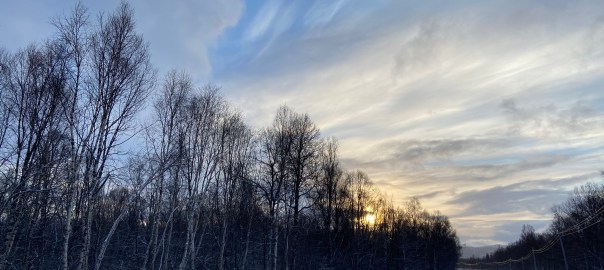
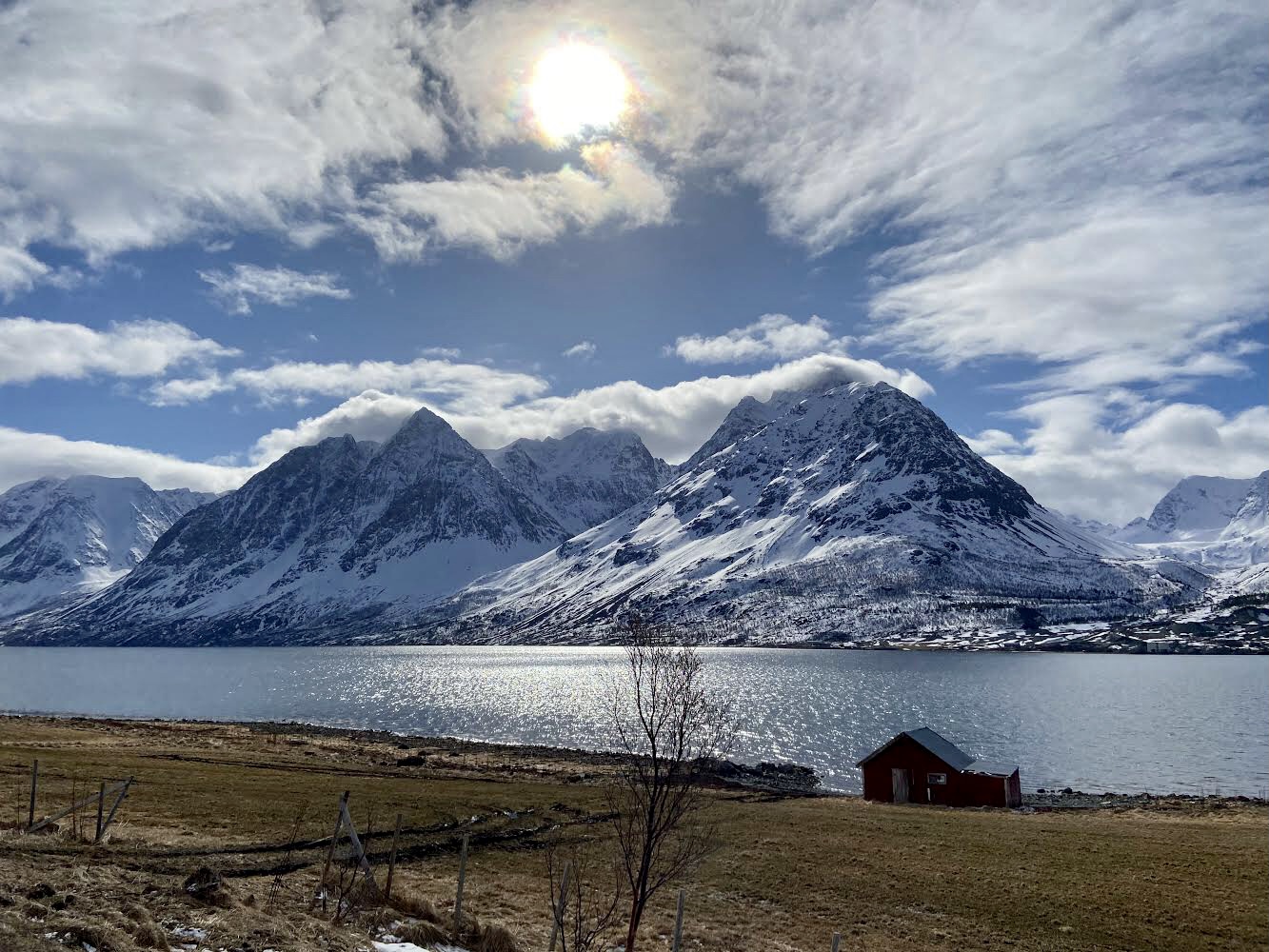
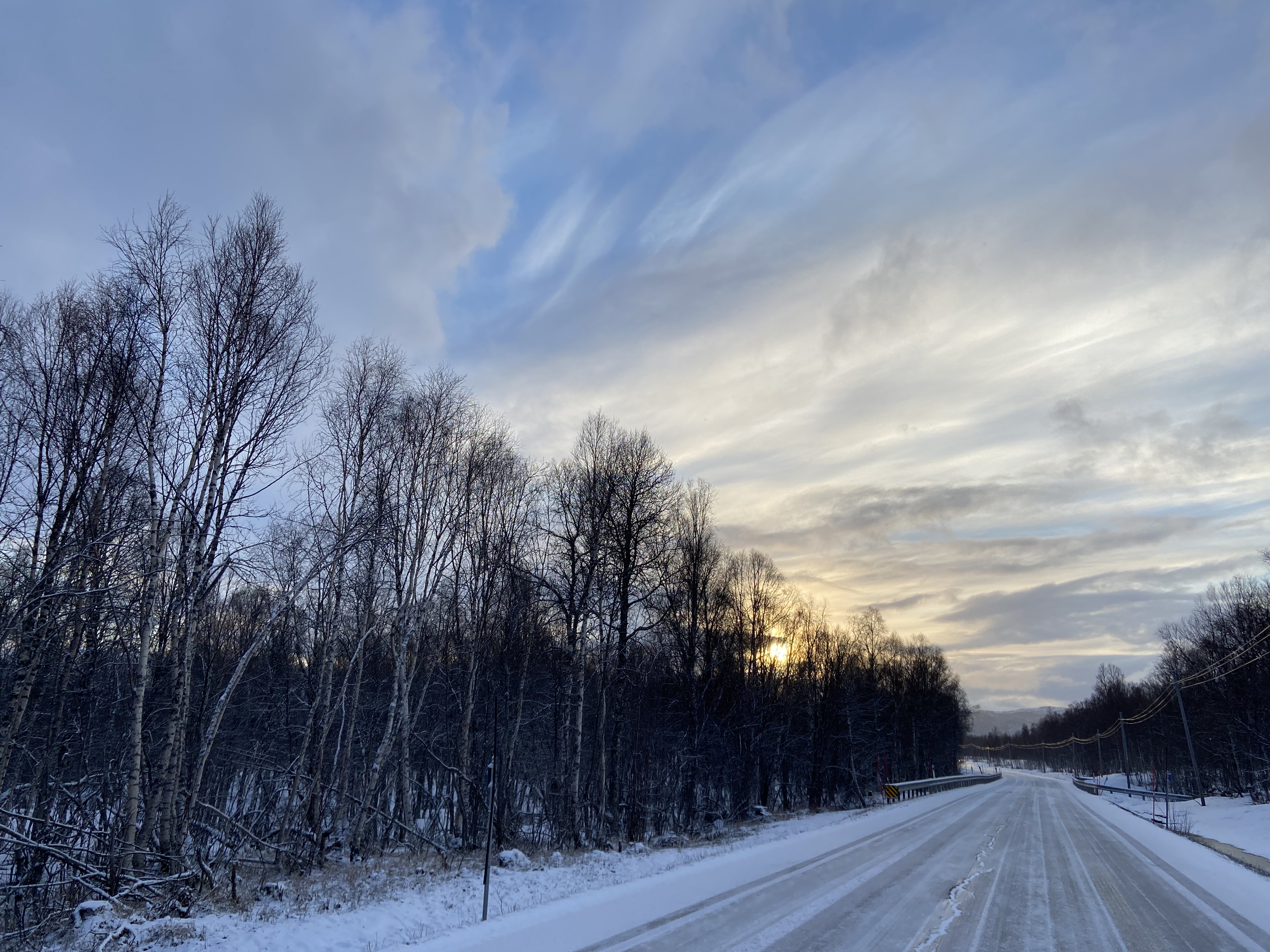
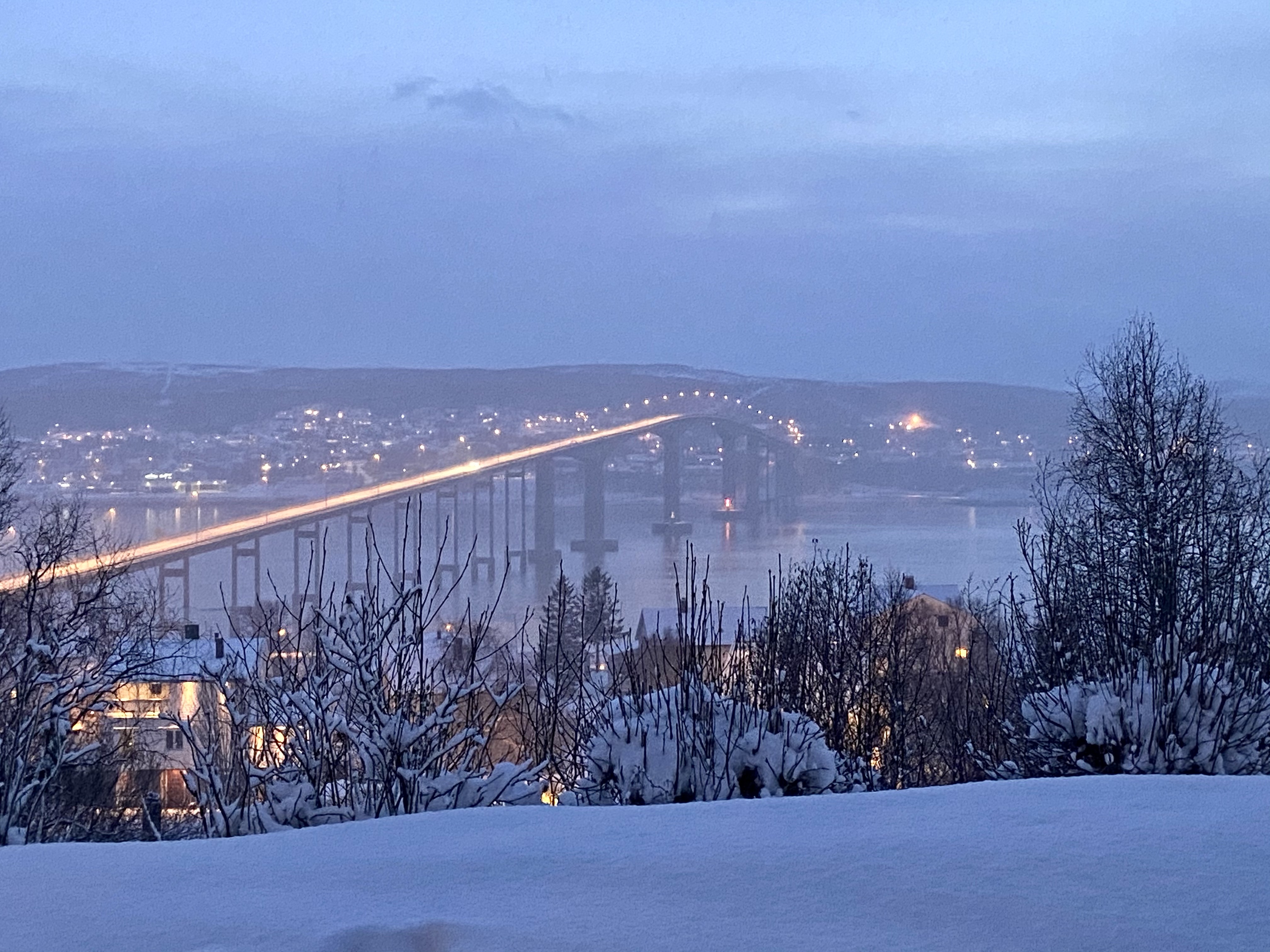
I will finish up with a couple of photographs taken yesterday. The days are now very long and light, but after a week or two of rapid melting, the snow has returned. In the middle of the day, when the sun is high, it is so bright as to be almost unbearable. I really must buy some sunglasses! These pictures were taken at seven fifteen in the morning and at eleven forty five in the evening. Twenty four hour sunlight (and hopefully summer) is just around the corner.











 A Vet’s Life