Tag Archives: Scotland

From Nostalgia to Duty

My son John and his girlfriend Yoana visited me last weekend. Though it was raining most of the time (in true, southwest Scotland style) John suggested we could go to New Lanark for a visit, so that’s what we did.

New Lanark holds a special place in my heart. For those who don’t know, it is a former 18th century cotton spinning mill village located on the banks of the Falls of Clyde, where social reform became very important. The lives of those who worked in the mill and their families were improved through schools, education, reasonably priced food and medical support. It’s a living village too – there are still tennants living there, and apparently very long waiting lists to get an apartment.

New Lanark

I think I might have visited with my parents, a very long time ago, but my fondest memories are from when John and Anna were young and we went there every year at Christmas time. There’s a ride you go through, where you sit on moving chairs and are taken on a trip back through the darkness of time. At Christmas, it gets set up like a kind of magical grotto and the filmed clips of a child that grew up in New Lanark, are replaced with an elf-like girl called Holly. At least that’s how it was back then, though that is twenty years ago now.
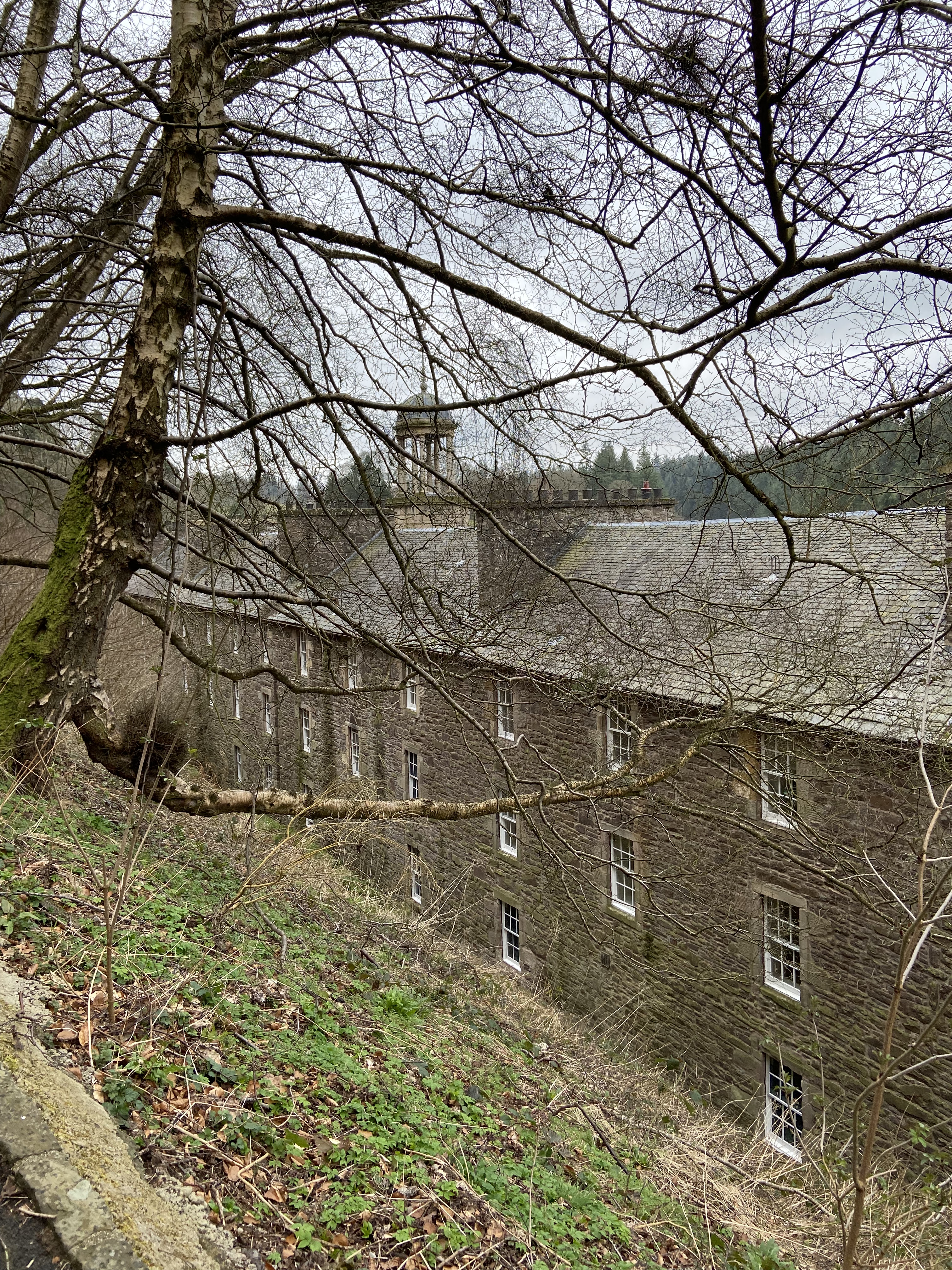
Millworkers’ apartment block.

The site has been undergoing improvement for a long time and it was lovely to visit again. Some things struck me, now that hadn’t really done so before. One was that the classroom, where the millworkers children were taught was a very large, airy room, with a high ceiling and lots of natural light. The contrast between that and the small, low ceilinged apartments, where large families occupied one or two rooms, must have seemed incredible to the children when they began to attend school.
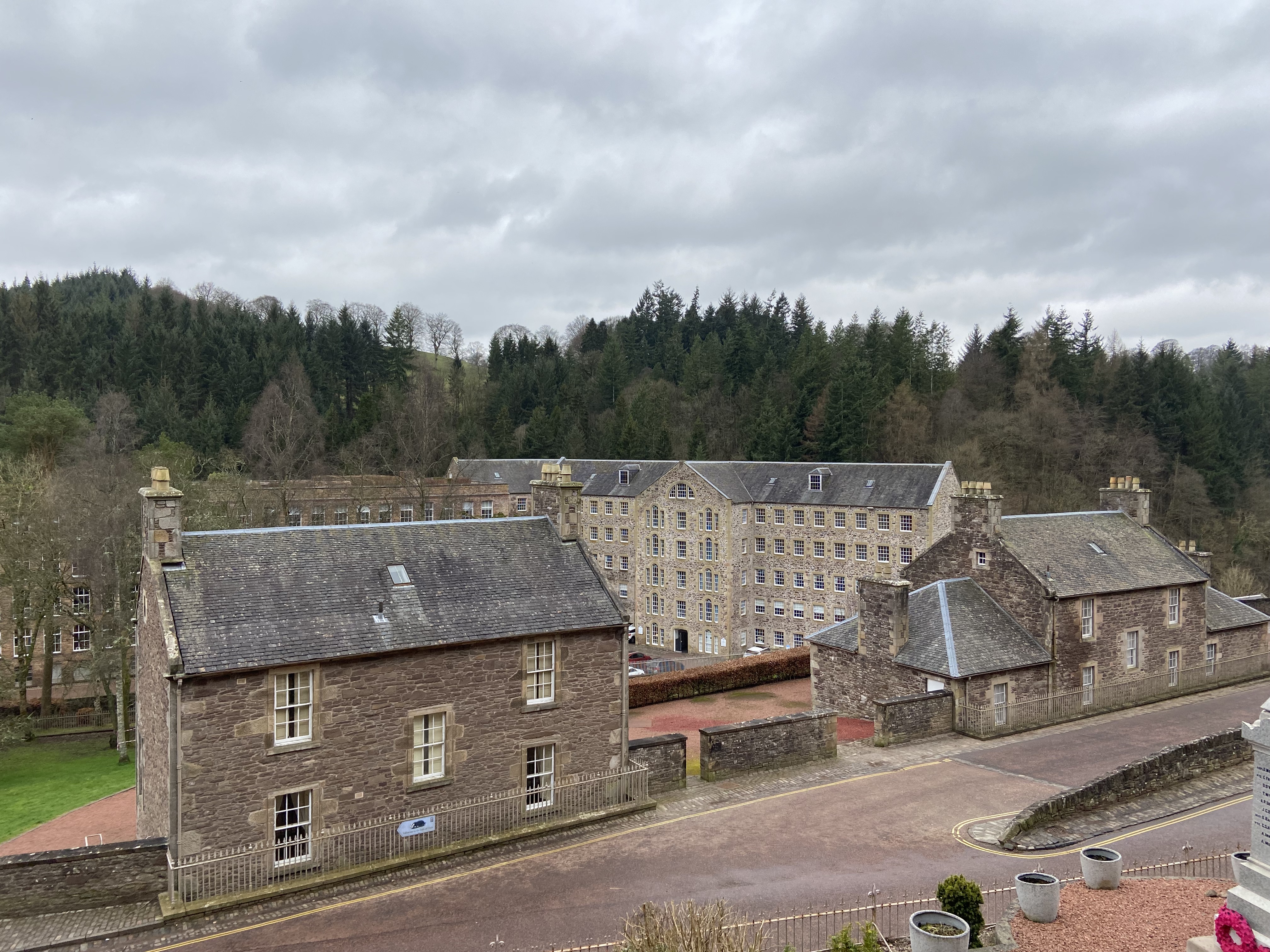
Robert Owen’s house is on the left.

The other was a comment in the film, where the mill workers’ working day was described. They “only” worked ten hours per day, potentially from ten years old, but there were evening classes so that they could be educated if they wanted. I only work eight hour days and am struggling to motivate myself to write in the evenings. It’s incredible to imagine a world where working ten hour days, six days a week, was considered humane, but there it is.
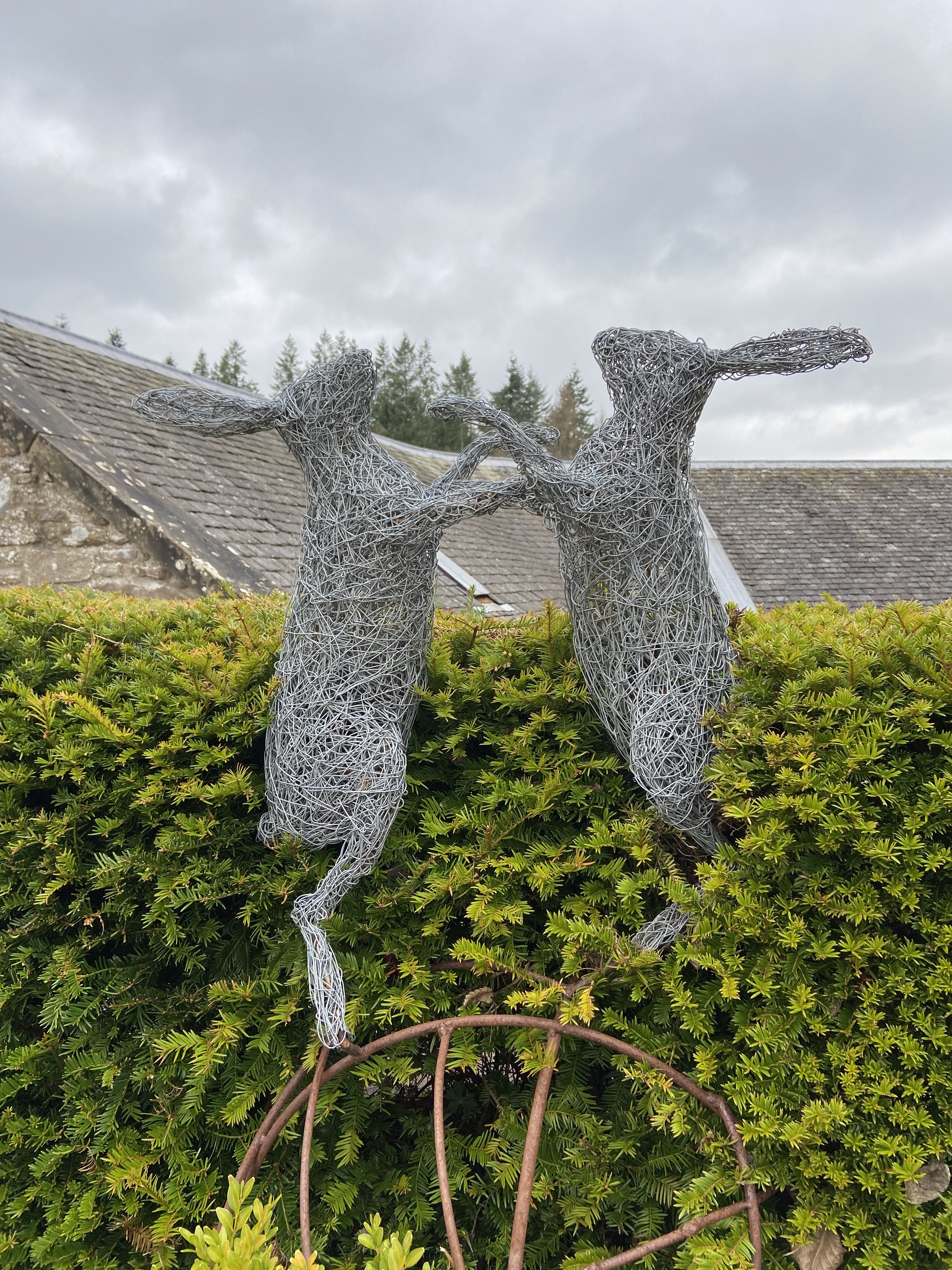
A beautiful roof-garden has been set up on one of the old mills.

Robert Owen, the social reformer, who brought in the improvements for workers in New Lanark, eventually left to set up a new project in America called New Harmony. This project fell apart within a few years. Reading between the lines, a lot of the people they attracted had lofty ideals, but weren’t necessarily hard working.
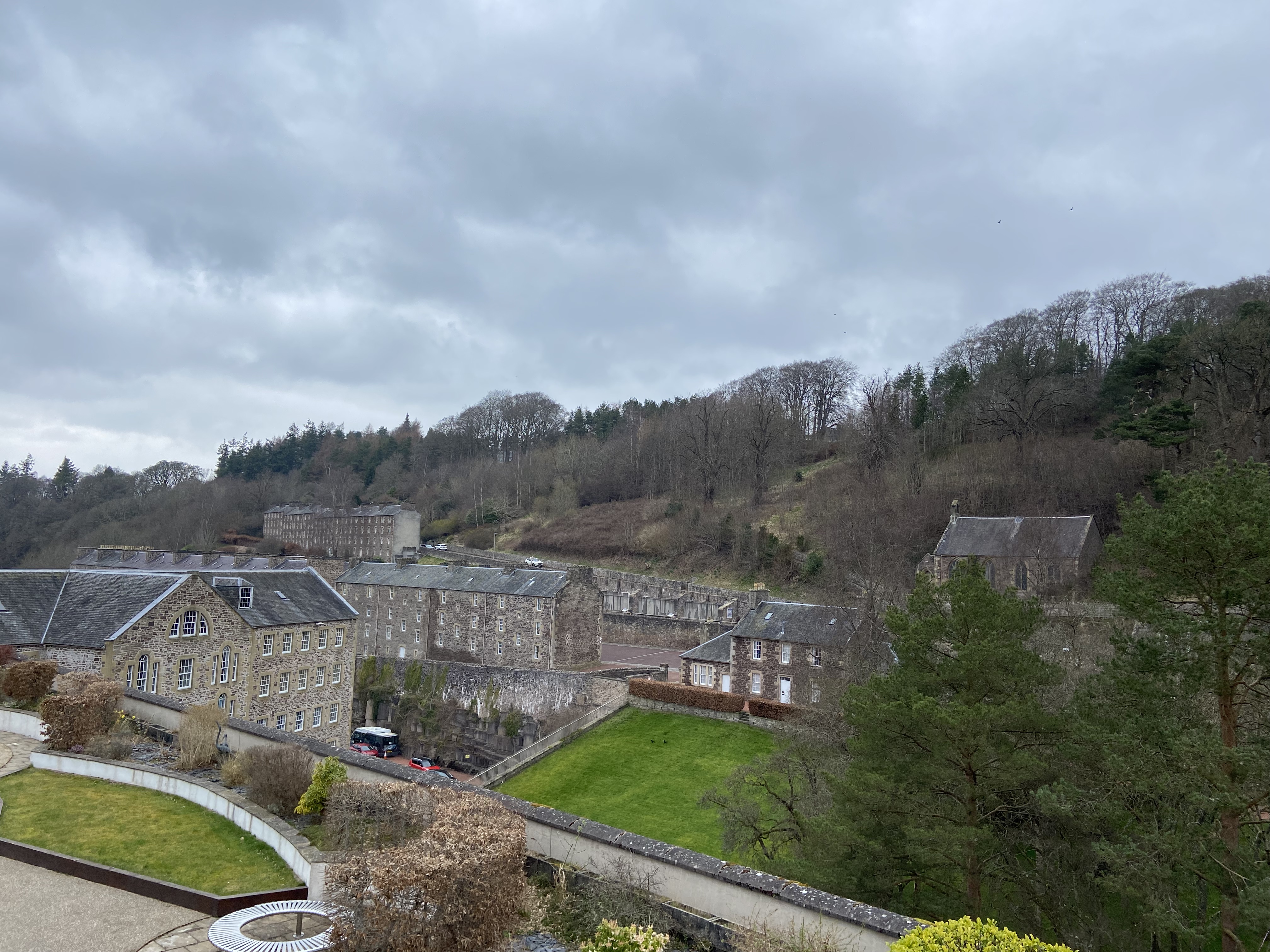
View from the rooftops.

It’s easy to see with hindsight, but it’s obviously much easier to improve the lives of those who started out with very little and were used to hard labour than it is to form a new community of truly equal people. If Owen had really wanted a socialist paradise, he could have considered whether it was possible to make all those in New Lanark equal. I think then, he might have realised he couldn’t achieve that without reducing his own circumstances to close to those of his workers, and I imagine that was why he set off on an unrealistic vanity project, rather than really setting out to achieve equality.

Back to work and I am unexpectedly working this weekend as the duty vet for Southern Scotland. This means that if there are any reports of suspected notifiable diseases, such as foot and mouth or bird flu reported, I’m the vet who will be sent out. Equally, if there’s an urgent welfare issue that’s so bad it can’t wait, that will be my job to tackle as well. My car is currently loaded up with boxes full of all the kit that I might need, which is quite eye opening as there’s so much of it. I know that in an outbreak situation, I would have to arrange clean and dirty areas in my car and, as I didn’t have much warning, everything has just been thrown in. I’m keeping my fingers crossed for now. Complicated routines take time to organize and I had less than a day to find everything, without anyone local to help me out. Roll on Monday!
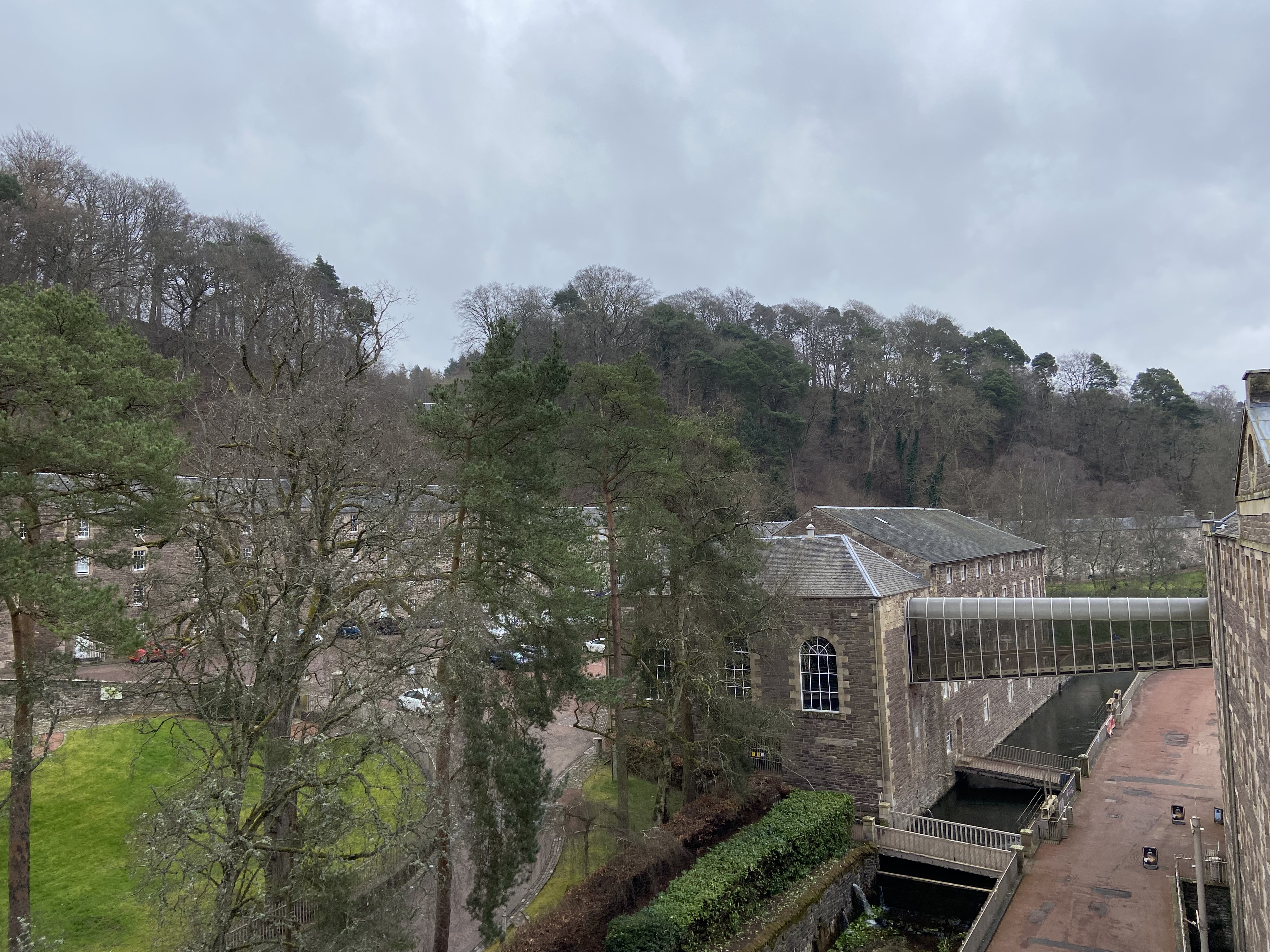
The steam engine that drove the mill when the water in the Clyde was low was housed in the building on the right. The ropes that drove the machinery would have been inside the glass bridge. The mill race goes underneath the building on the right,

Tripping

I finally made it out of bed on Monday, just in time to go back to work. By Tuesday, I was on the road again as I made my way to Edinburgh for a conference, where APHA staff from all over Scotland came together to meet and learn.

When I drove over to Stranraer, I was craving memories and was rather disappointed at the lack of familiarity. Although I grew up in Penicuik, which is not very far from Edinburgh, and that I went to university in Edinburgh, it hadn’t crossed my mind to hope for something similar. It hadn’t crossed my mind that our route wouldn’t take us on the featureless motorway network, but rather through a load of places that were embedded deeply from my childhood.

We passed through West Linton, then Carlops: familiar names and places from long ago. But it was when we reached Nine Mile Burn, where you can turn off to drive to Penicuik, that I had that sudden feeling of nostalgia.

My adult life has been interesting, but I was fortunate enough to have a very happy childhood. One of my sweetest memories is of climbing onto a low hanging tree bough and sitting in dappled sunlight with my friend, Sharon. We had been watching Robin of Sherwood, Sharon had pictures of Michael Praed on her wall and we were at the age when everything still seemed possible. If there was one moment in my life that I could go back and relive, I am fairly sure that would be the one I would choose as it is so unsullied. A young man fractured my mind at university and by the time I was 25 I’d had skin cancer twice and I think that’s why that memory of unsullied innocence is so precious. I’d love to relive it with Sharon, but she also got cancer and she didn’t make it.

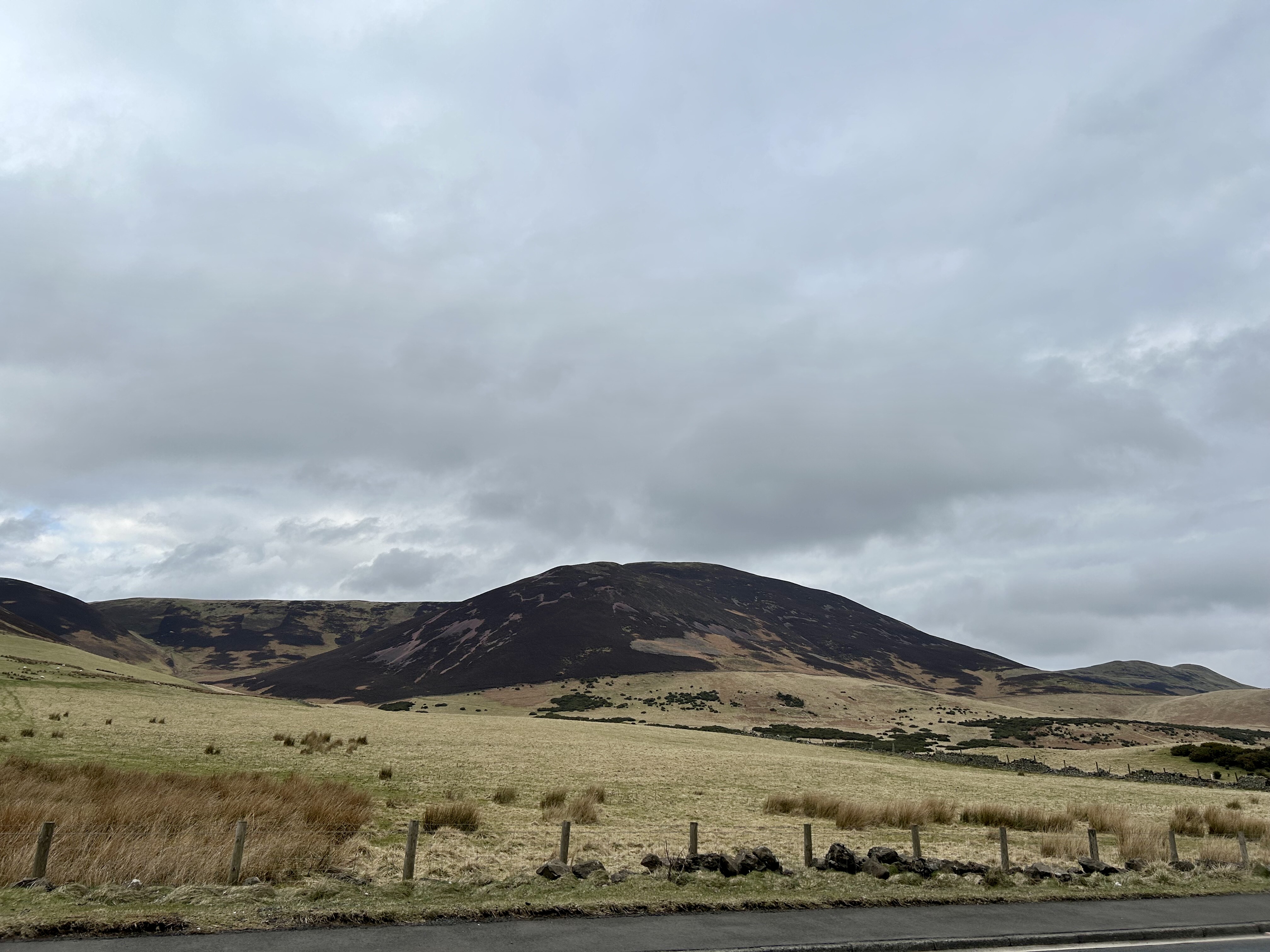
Goodness, I hadn’t expected this to take such a sorrowful turn, but those sweet, sweet memories do come with a hefty dose of melancholy. Anyway, the road carried on past Nine Mile Burn and we passed Silverburn, where my parents once considered buying the farmhouse. It was run down then, but now looks very smart. And then the Pentland Hills were on my left and those really were my old stomping ground. I remember some names: Carnethy, Scald Law, East and West Kip. Scald law was the highest hill, but we more often walked up Carnethy, or took the path over between the hills to a wonderful waterfall, though I don’t remember its name.

Pentland Hills – I think this one is Scald Law, but feel free to correct me!

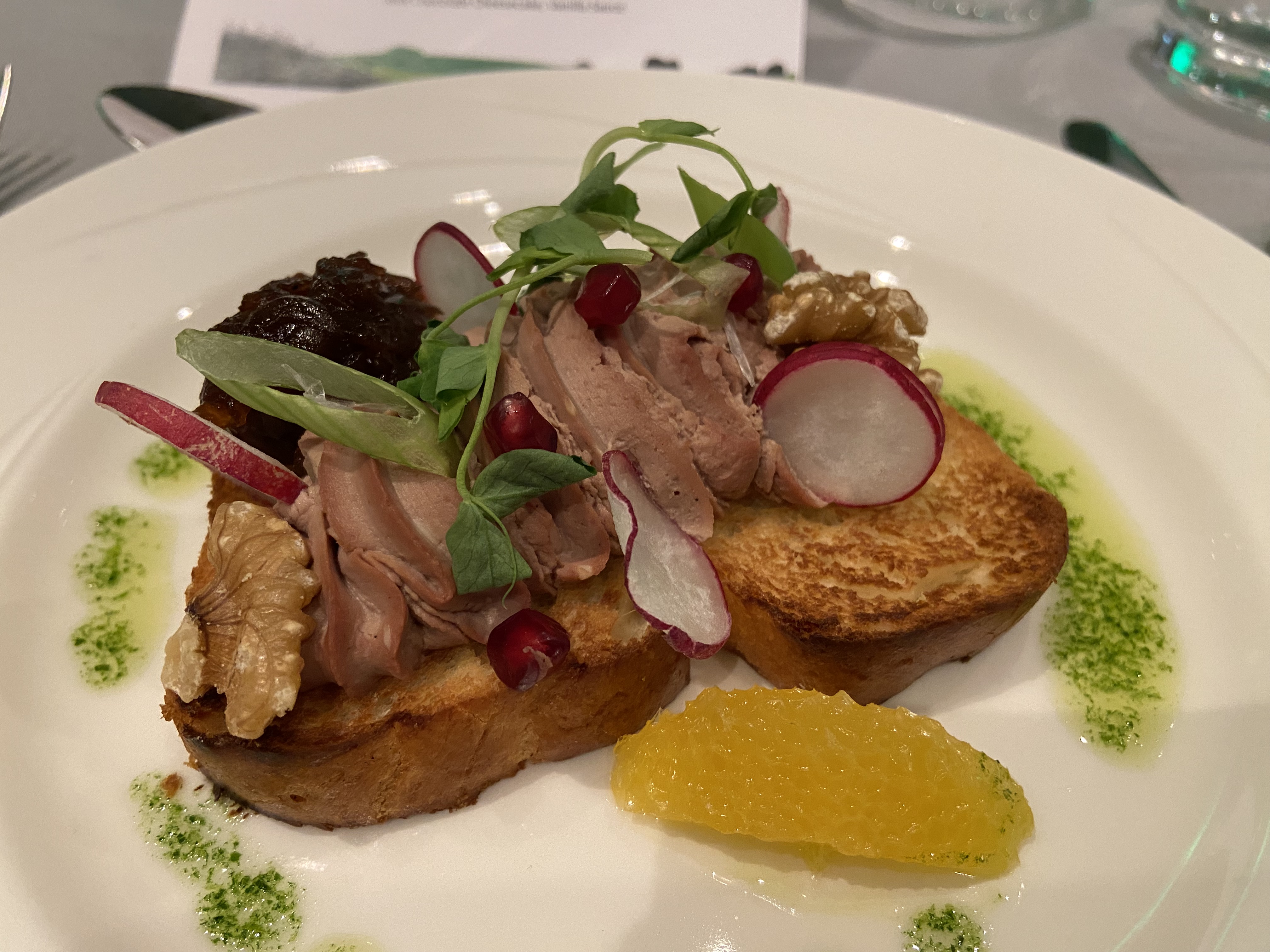
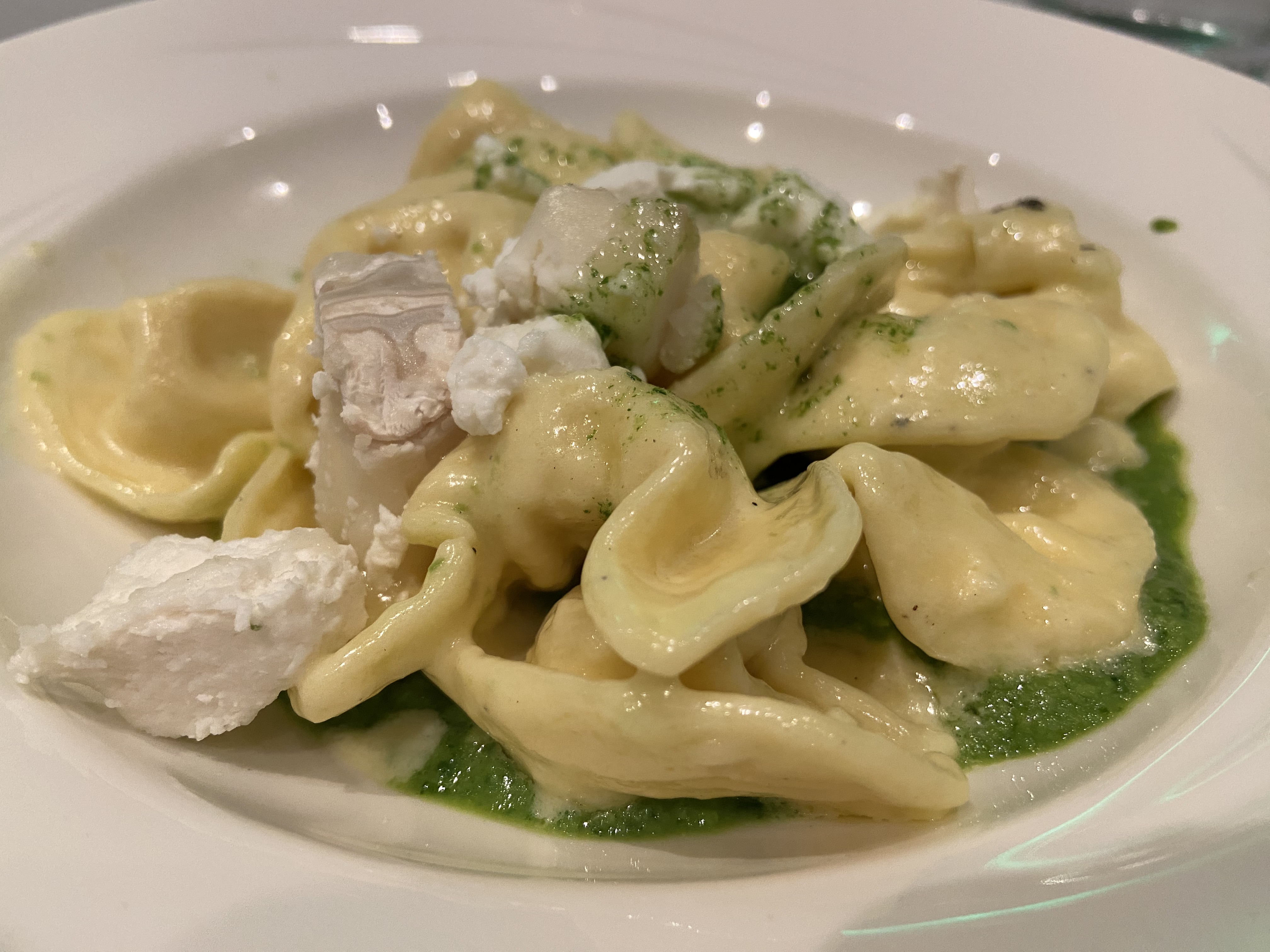
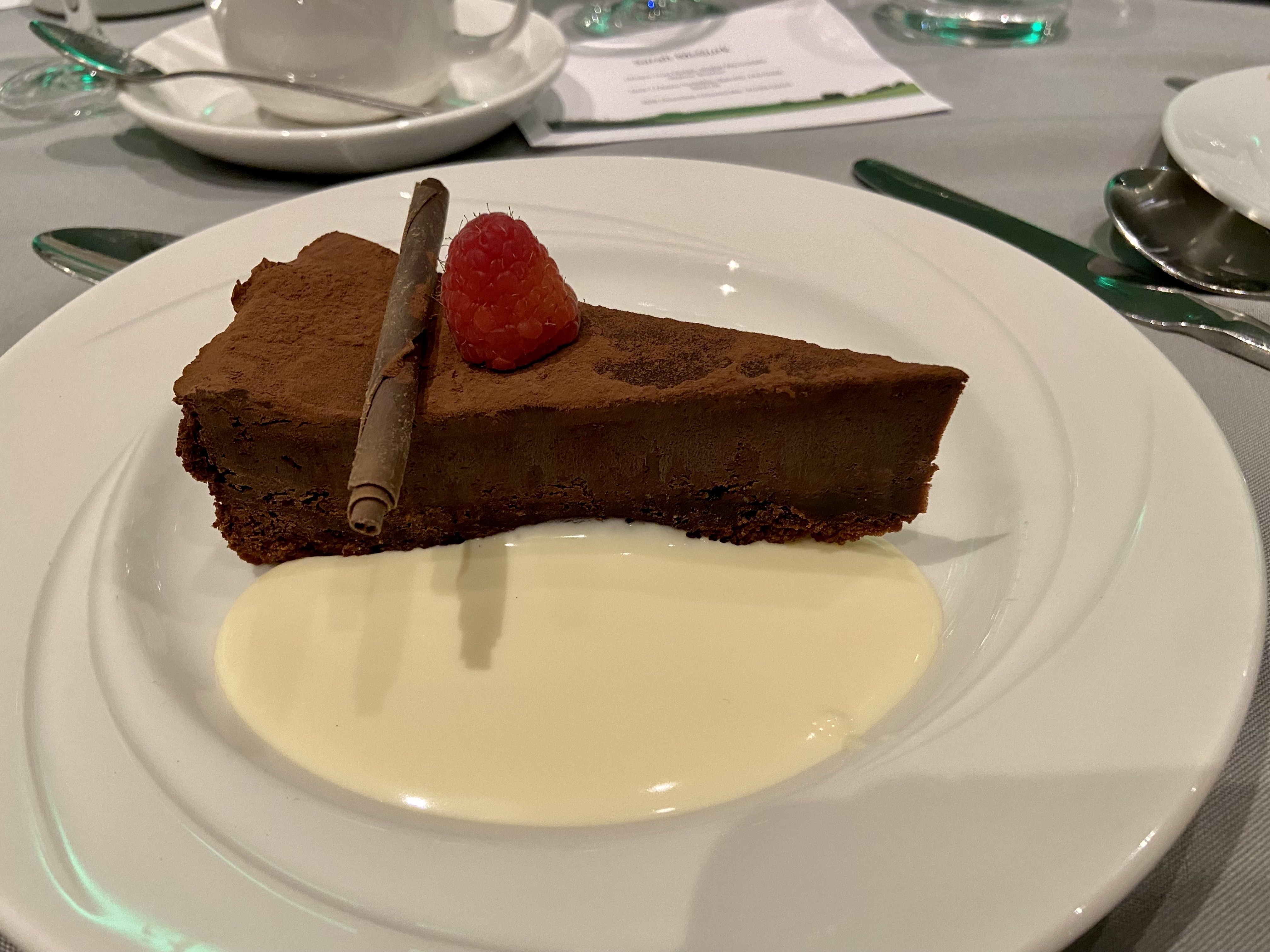
The hotel in Edinburgh was very pleasant, though very much a typical, identikit modern hotel, with no distinguishing features. I’m still at the stage where there’s lots to learn, so there was plenty of new information to pick up. I enjoyed the evening meal, although the milk chocolate cheesecake, which I expected to be a sweet and fluffy concoction was more like a dark chocolate brick of solidity that even I couldn’t finish.


The conference ran from lunchtime on Tuesday to lunchtime on Wednesday, then on Thursday I had to go to Ayr to have a mask-fitting appointment. This was to check whether I can use the FFP3 masks at work safely. This involved having a mask on, which was attached to a tube which monitored the air I was breathing, while performing various manoeuvres. As this involved marching on the spot, while moving my head around in various ways, and then counting out loud, while trying to breathe normally, it was quite a challenge, given that I am still coughing after being ill, but I survived without falling over, and now I am officially allowed to use a mask if I have to check out any sick chickens.

Much as I love travelling (especially those identikit hotels) and consider it a definite perk of my job, I am rather looking forward to next week, when the most distant visit I have booked in is to Castle Douglas.

I’ve probably gone a bit quiet about my house buying. Compared to an international move, it’s very low key, but I’m now at the stage when all the papers have to be signed, I have to show where the money for my deposit is coming from, and I have to arrange to shift my accounts with all my providers from one house to the other, while leaving an overlap as I don’t want to move everything on one single day. I’m quite excited about buying a house, but it doesn’t quite seem real yet, even though the intended date of exchange is less than two weeks away.

You know, I write these blogs mostly to keep in touch with people, but I sometimes think they will end up being a bit like a diary. Maybe one day in the future, I’ll look back and all the memories will come flooding back. My mind feels odd at the moment. Part of me is chugging onwards, being quite competent, learning lots of stuff, but it’s overlaid with a feeling of there being too much going on. It’s not perturbing me too much, but I do have a sense that there is chaos rushing all around me, while I just wander through it, waiting for everything to settle. I write this weekly and I can’t tell whether any of that feeling is coming across, or whether what I write is as scattergun as it sometimes feels. This week, I volunteered to work as a vet at the Royal Highland Show, and I can’t yet tell if that will turn out to be a marvellous opportunity or a daunting responsibility. Maybe both! Still, you know me. I tend to grab what comes my way and worry about the consequences later.

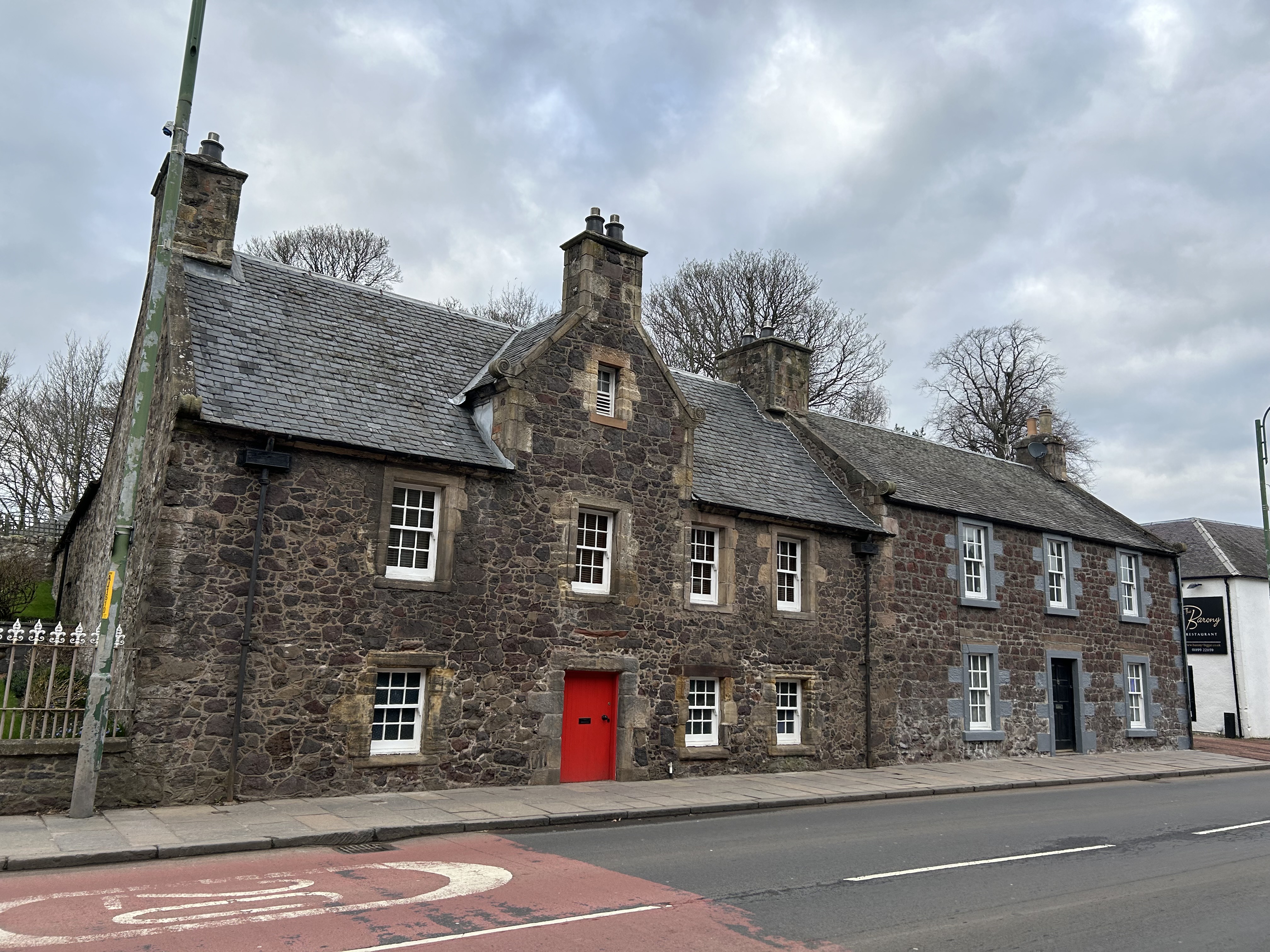
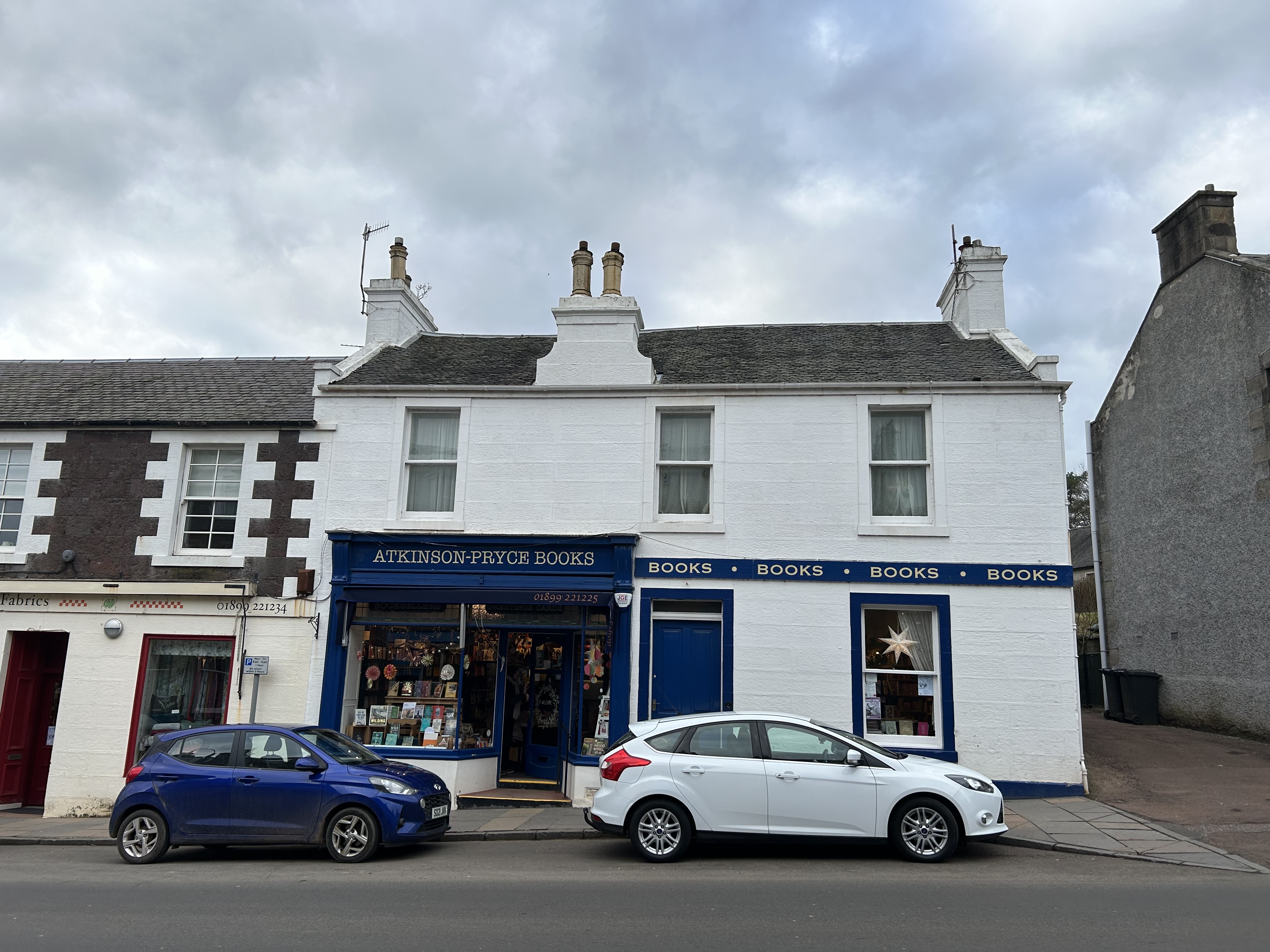
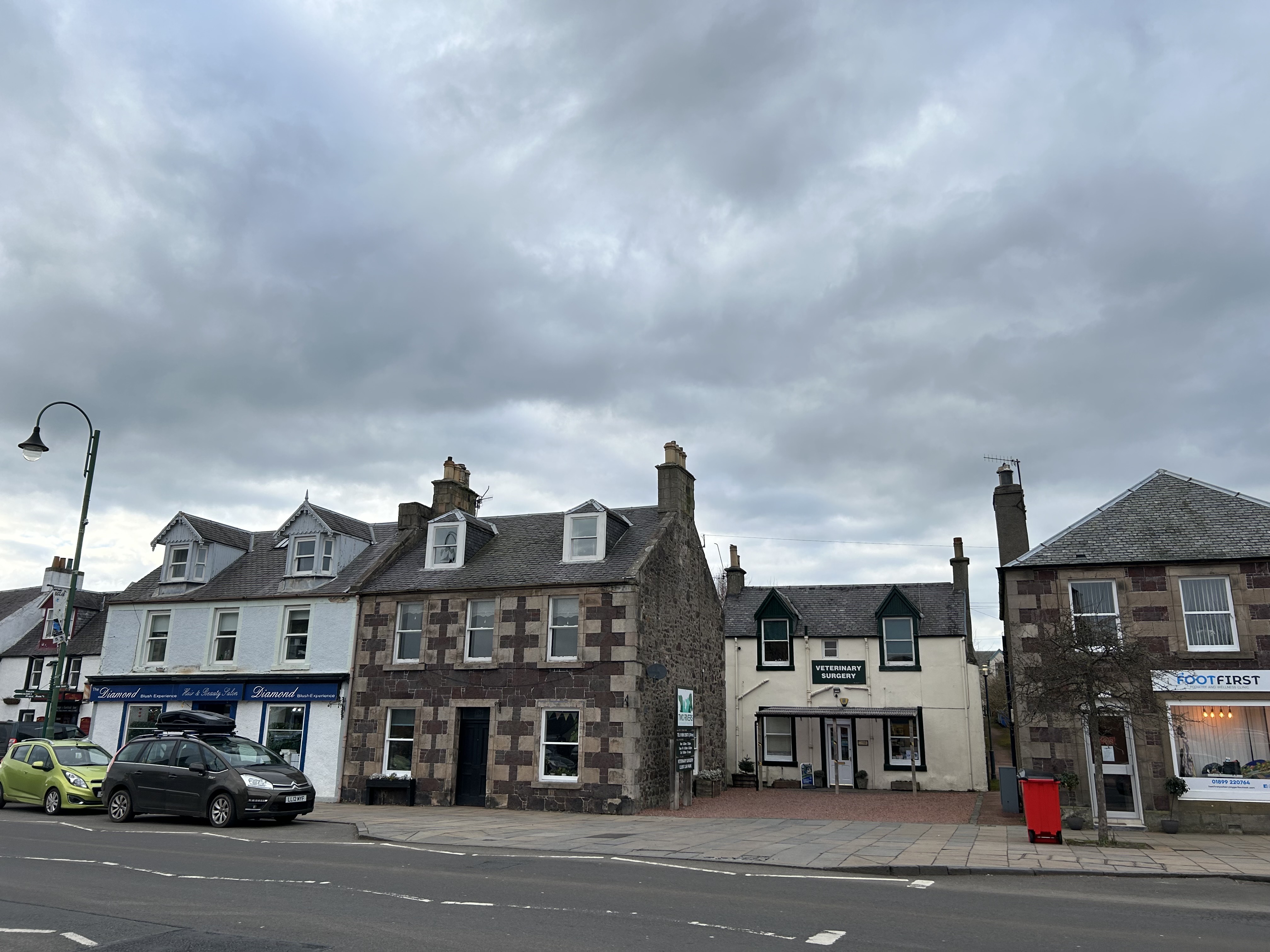
Anyway, as usual, thanks to anyone who made it this far. I hope you have a good week, and I will leave you with a couple of pictures of Biggar, where we went on school trips to the street museum. I was intrigued by the tiny scarlet door in the first building. I presume the road and pavement have been built up over the years, but anyone using that door would really have to watch their head! See you next week.

Offering

I’ve made a bid on a house. It’s a small, terraced cottage with two windows and a door at the front, but like most such cottages, which originally only had a couple of rooms, it’s been extended at the back and has bedrooms in the roof space. The main part of the house is old, with thick stone walls.

There seem to be a lot of houses Scotland where the fireplaces have been removed and this is one of them. There were originally fireplaces in both downstairs rooms. Presumably there was a time when real fires were considered too dirty and inconvenient and anyway, new build houses don’t have them, but after so many years in Norway, I would love to have a wood stove. It’s possible that there’s an intact chimney behind the blocked off fireplace, but equally possible there isn’t. That isn’t something the surveyor would look at. What I do find fascinating is that it’s now quite common to have an electric fire with an entire fake fireplace built in. They’re quite nice, but it’s kind of funny and sad and also a demonstration that the old fireplace was quite a focal point in any room that people sat in and a TV in the corner doesn’t quite hit the mark when it comes to making a room feel cosy.

I’m having to feel my way through the buying process. I’ve been away a long time, and like other things, the process has changed somewhat. Parts of it are still the same. Some houses are listed as “offers over” and a price. That was traditionally the initial move when selling a house in Scotland. The hope was that several people would be interested, at which point a “closing date” would be set. That was the date by which any bids had to be made. The bid had to be made by a solicitor and it was blind – nobody knew what anyone else was bidding, so if you really wanted the house, you had to make a high bid and hope for the best.

Houses that had been on the market a while and hadn’t sold with “offers over” could then be moved to a “fixed price”. That meant pretty much you knew where you were. You could bid that and it would be accepted or perhaps bid a little lower and might still be successful.

Fixed price seems to have disappeared now. I think I’ve only seen one house listed that way. Now there are two other standard wordings which are “offers in the region of” and “offers around”. There doesn’t seem to be much difference between those two, but quite a lot of houses seem to go on directly in those categories.

The one I’ve made a tentative bid on is “in the region of”. I say a tentative bid because at this stage, my solicitor is in a verbal negotiation with the estate agent (also a solicitor) about what the owner might accept. I assume I’m paying for the solicitor to carry out this discussion on my part, but that the full work of putting in an actual bid hasn’t started yet. In Norway , it was up to me to check out everything was all in order legally with the house I was buying. Here in Scotland it’s hers.

I’m glad though of this tentative bid system. When you want to buy a house with a closing date, you have to bid blind and with a popular house, there’s a good chance several people will have to pay their solicitor to do that work, with no house at the end of it. I think I liked the Norwegian bidding system better, though I do remember that momentous feeling of jumping in with a bid on my mobile phone, knowing that bid was legally binding if accepted. Using a solicitor puts a layer between me and the process that takes some of the pressure off.

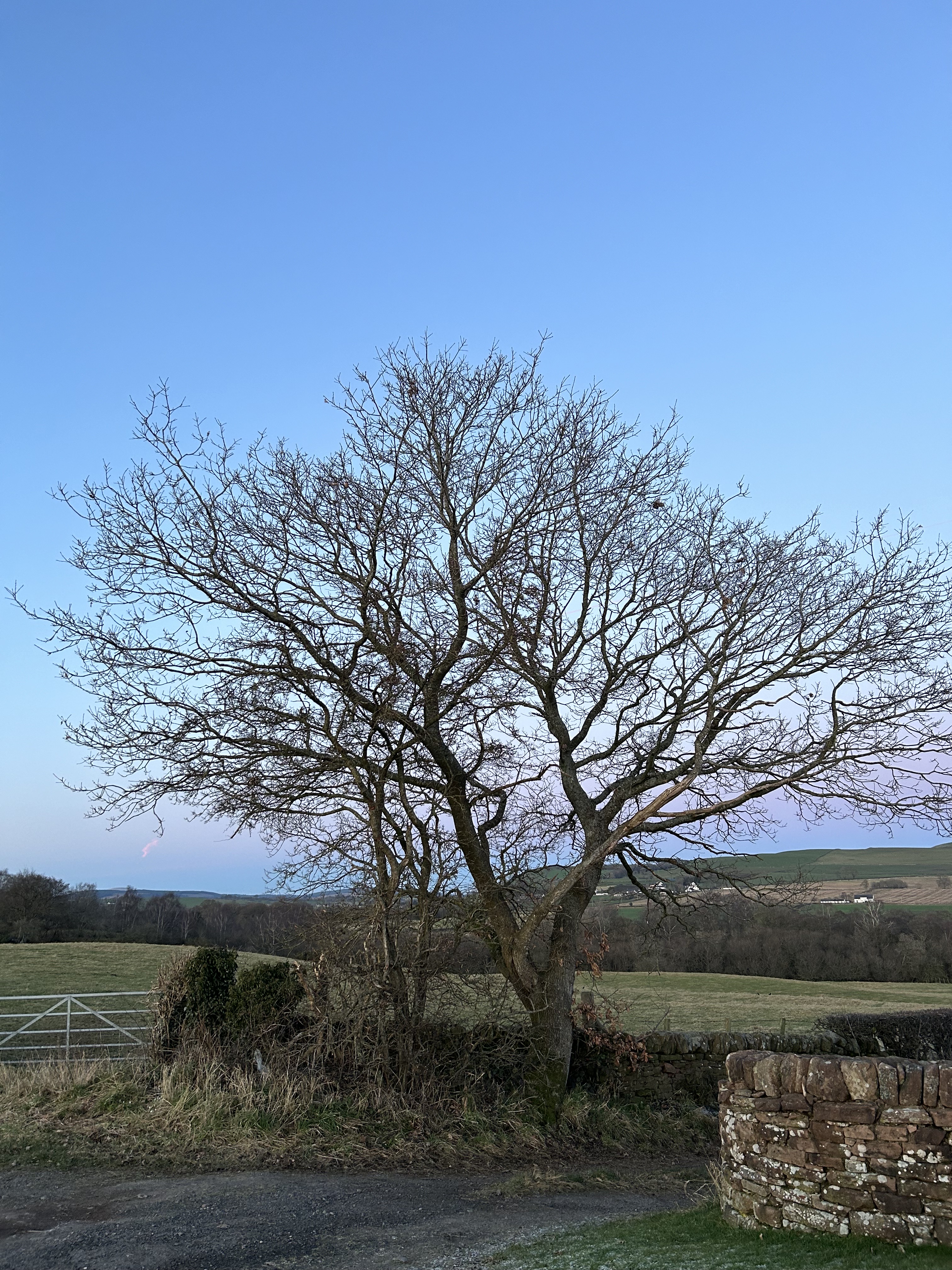
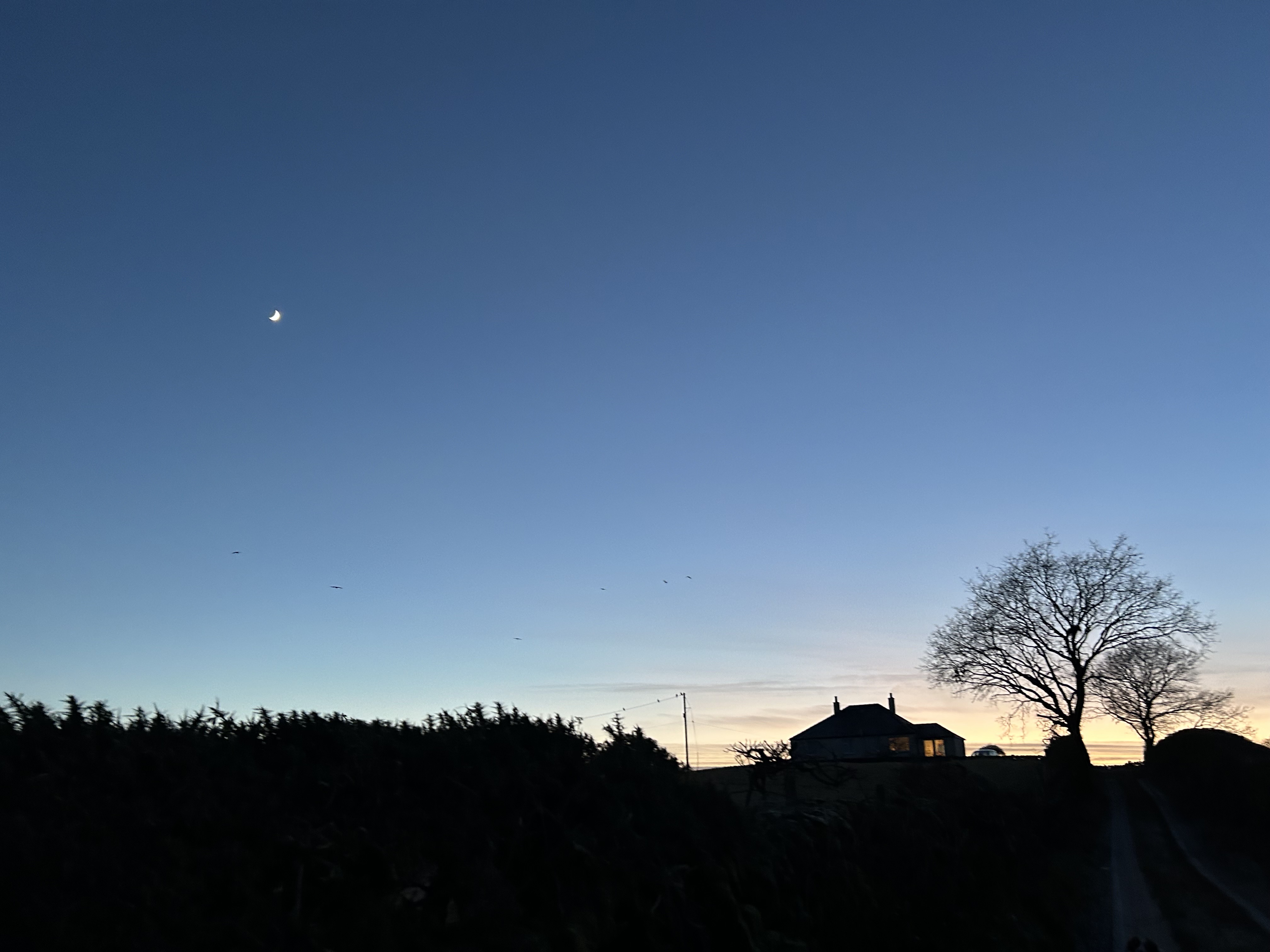
As you can probably see from the photos, Triar and I are taking a lot of walks at dawn and dusk. It’s nothing like as extreme as it was in Norway, but it’s good to see the days lengthening. C took me out on a welfare visit on Monday, albeit a very brief one. The report had come in from a vet at the slaughterhouse, which seems to be quite common here. For minor welfare issues at the abattoir in Norway, I’d probably have looked at the case myself, assessed whether I thought there was a significant problem and then dealt with it myself if it was something minor or if I thought an animal had been transported when it wasn’t fit.

Here in Scotland, those cases come to us for assessment of welfare on farm and the local authority decide whether the laws on transporting animals were breeched. Many of the animals also go through markets or are bought by dealers on their way to the slaughterhouse, which adds in another layer of complexity in the case and stress for the animal. When looking at a welfare case that went to market and was bought by a dealer who then sold it on to the slaughterhouse, you have to consider whether the market that sold that animal on and the person who bought it there ought to have spotted the problem. Also whether the issue worsened during that process. Much less complicated when it’s only down to the farmer who sent it and the driver who brought it.


Still, that case and another I dealt with myself have helped me get to grips with the system a little bit. I will probably be capable of managing minor cases myself quite shortly. Now I have to start to get to grips with dealing with tuberculosis investigations, which look equally complicated, perhaps more so. That’s something I haven’t been involved in at all in Norway, so it will be interesting to learn.

I should imagine it’s going to be mentally quite tough. The farms we visit will be dealing with confirmed outbreaks and though the aim is to get rid of a risky disease, telling a farmer that some of his animals will need to be culled, and sometimes many of them, isn’t going to be easy. TB is quite slow moving, but also near silent in the early stages. It can spread a long way before anyone picks up that it’s there. Still, trying to control notifiable diseases is a major part of my role and I’ve moved to an area of Scotland where the density of farms is relatively high. The important thing is to learn to do the job to the best of my ability. If the farmer is going through something tough, the last thing I want to do is add to his or her problems.

Thanks for reading. Have a good week!

Very Expensive Chicken

This week, my fellow senior veterinary inspector, C, took me out on some chicken visits. I guess I may have a poultry vet or two among my readers, but in general, beyond occasional pictures of huge chicken sheds on the news, and the understanding that all chickens came from an egg, most people have probably never thought about where all those chickens come from.

Back in Norway, I worked for a while in a chicken slaughterhouse and I did visit a few broiler units in Norway (a broiler is a chicken specifically raised for meat). During those visits I had to put on protective clothing over my own. This consisted of a full disposable overall with a hood, Wellington boots that were kept inside the shed and a face mask. Biosecurity is very important in any large flock of birds as infections like chicken flu or salmonella can move quickly through a flock with devastating effects.

What I didn’t know then was that the broilers I saw were the end result of an extensive, highly controlled breeding program that took three to four years from start to finish. Obviously I was aware that all the tiny chicks that come onto a broiler unit were bred somewhere, but I hadn’t realized how complicated the process was.


Logically, those broilers must have parents that are used for breeding and egg production, not meat and those flocks are parent flocks. Go back another layer and there are grandparent flocks, then another to the great grandparent flocks. Beyond that there is one final layer – the pedigree or pure line stock, and these are the birds from which all the chicken on your table are originally bred.

Those pedigree stock represent many years of careful genetic selection, which was initially aimed at increasing production levels, but animal welfare is being taken more into account now. When you’re rearing so many birds for food, there’s an extent to which each individual animal doesn’t have much significance, unlike in a small dairy, for example, where the farmer probably knows each individual animal very well. That means that welfare considerations are generally taken at a flock level and breeding birds that stay healthy has to be an important part of that.

As you can probably imagine though, a shed full of those pedigree chickens would be extremely valuable in monetary terms, and even down the chain at the grandparent flock level, each individual chicken is worth a lot more than the birds I saw in those broiler units. The birds C took me out to see were part of a grandparent flock and the inspection was a routine inspection, not linked to any welfare concerns.

I thought the biosecurity with the broilers was good, but before visiting the grandparent unit, we had to answer a whole series of questions about how recently we’d been in contact with other birds and animals and whether we had any symptoms of illness. Any wrong answers and we would have been refused entry. After that, we had to go into a unit where we left all our own clothes at one side, showered thoroughly, then put on clothes that are only used inside the restricted areas of the unit. Even after that, as we entered each individual shed, we had to change boots again. Each shed has its own boots and we had to disinfectant our boots and hands at every stage as we moved in between the houses.

I found the whole process both interesting and exhausting. Taking long Wellington boots on and off and balancing as you step over a barrier to get into them is physically quite demanding, though I imagine it gets easier with practice. Anyway, the birds are valuable enough that I will have to do several visits with another vet before I am allowed out on my own.

I’ve been out on a lot of visits this week, most of them with C. I also had a day long course on statement writing, aimed at ensuring we were capable of writing reports that were high enough quality that if we were asked about them in a courtroom, we wouldn’t find ourselves having to answer complicated questions about how we had arrived at our conclusions that the animals were suffering. This is something I learned quite a lot about in Norway, so it was interesting to see how it all compared. It’s very important, for example, that you give concrete examples. It’s not enough to say that the farmer had allowed the animals to become thirsty. Rather you would include observations about whether there was any water available l whether it was clean, whether there were enough troughs or nipples feeders for all the animals to drink and state that when you did give the animals water, that they stood drinking for x amount of time. If you merely said they were thirsty, three years later, in court, when challenged how you knew, you could easily find yourself floundering to recall the specific details of how you drew that conclusion.
If anything, I’ve been a bit too busy this week. There is still a lot of basic information I need to learn and there are courses I need to take to learn some of the basics. Time management and making sure I understand the underlying principles and context is something I need to be aware of as there is an awful lot of work to get through, but I get frustrated when I try to do tasks and simply don’t have the knowledge I need to tackle them.

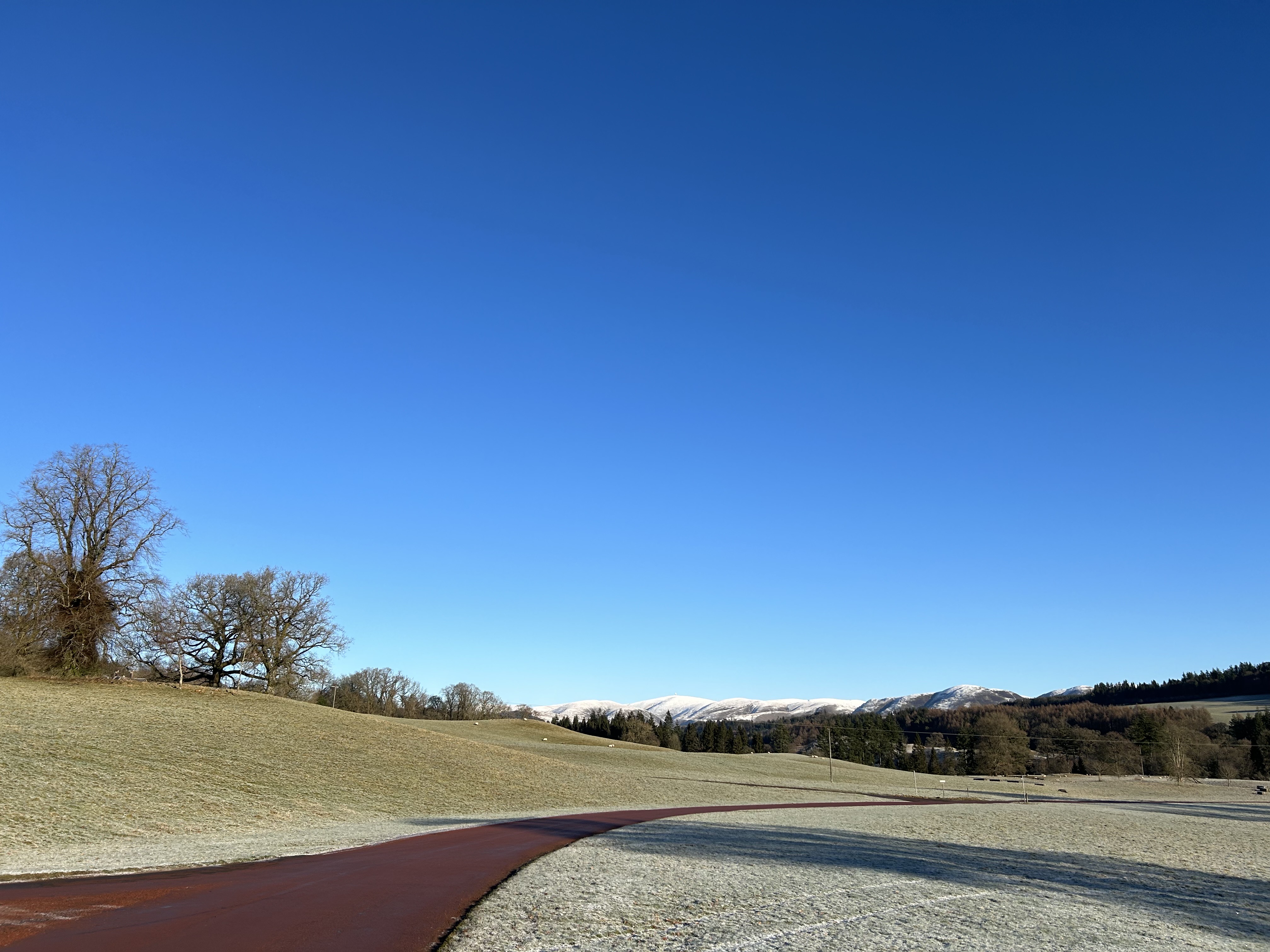
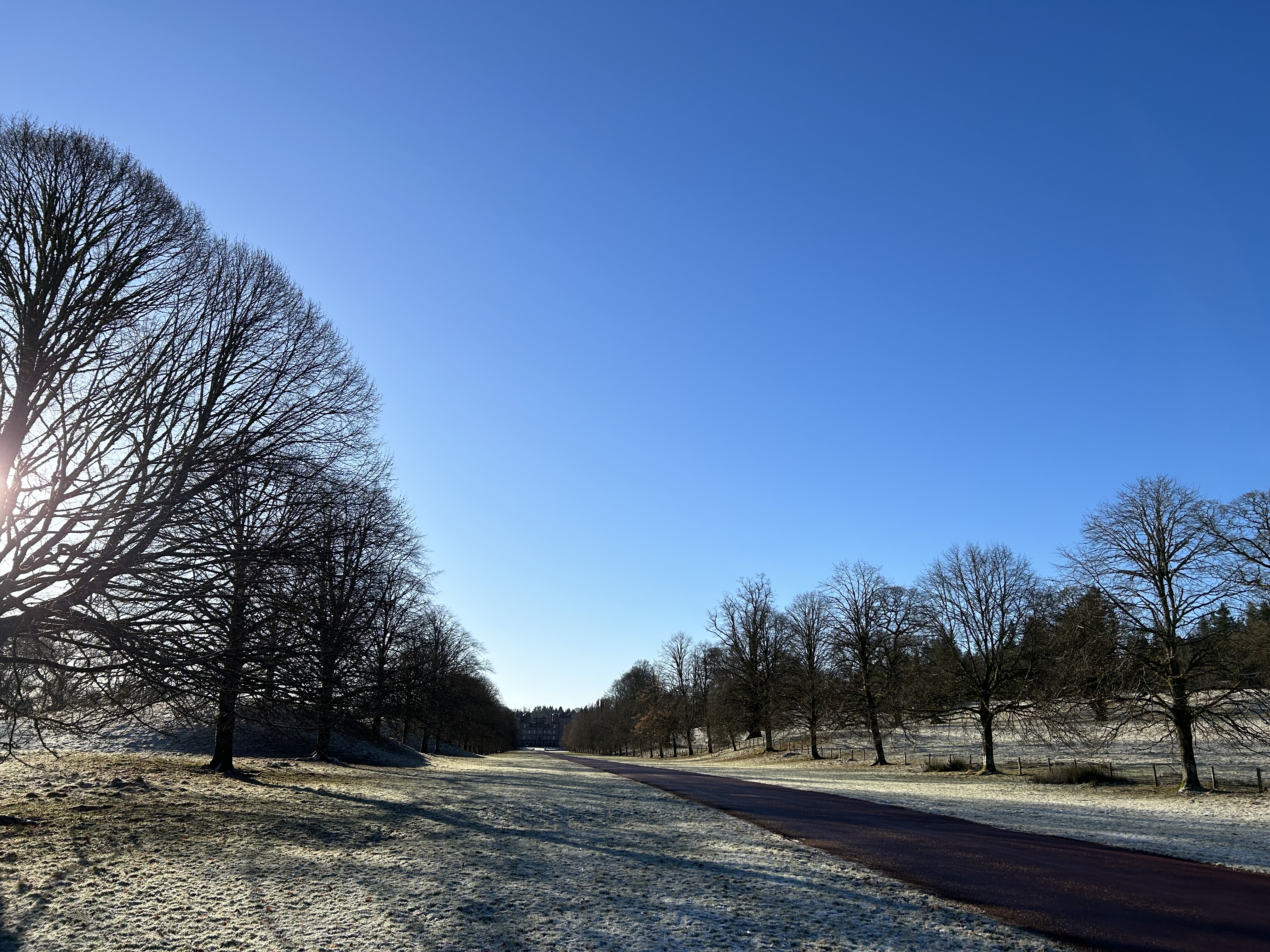
Still it’s all interesting and I know from experience that I will learn it all eventually. And there are some beautiful days and some wonderful scenery. C took me out on a visit and she took me into Drumlanrig Castle on the way there. She tells me there’s a good coffee shop there, but we didn’t have time when we passed through. We did have time to stop and take photos though! These grounds and trees are so British. For me it is wonderfully familiar. It was beautiful in Norway, but it was always wild in a way the great estates in the UK are not.

I was also reminded, as I basked in the frosty sunlight, that my friends and family in the far north may not have seen the sun yet this year. Polar night officially ended in Tromsø this week, but sometimes it can be days or even weeks before you catch that first, wonderful peek of the sun’s rays after a month and a half. Love to all my friends up there.

Anyway it’s late so I’m not going to write any more for now, though I am starting to progress through the process of buying a house here in Scotland. It’s quite different to the process in Norway and I will probably say more about that next week, but for now I’ll leave you with some photos from evening walks with Triar around the area where I’m currently living. Have a good week all!

Turkey Calling


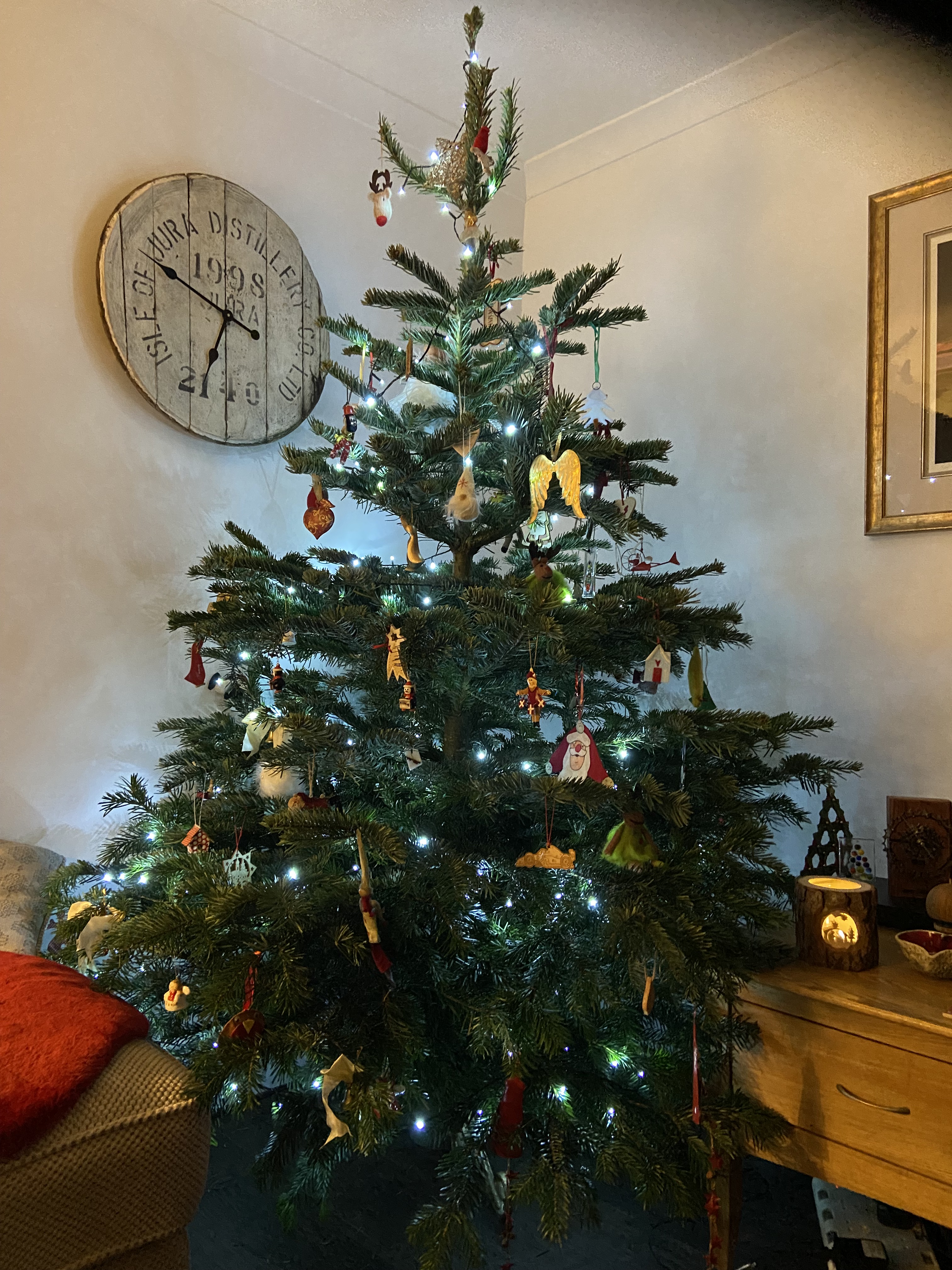
I arrived back at Donna and Will’s on Sunday afternoon and we spent the evening putting up Christmas decorations. They’ve got a real tree and Christmas decorations from different people and places they’ve been. I was also impressed they had even more boxes of decorations than I did before my moving rationalisation, when sadly, I had to cut it down to three boxes. Can’t have too much Christmas cheer, in my opinion. The amazing Lego Christmas Village picture at the top of the page is theirs. Building an entire village is real dedication to the Christmas cause.

Although my online induction continues apace (deadline 24th December for the general program) I’ve been out on two visits this week. The first was to a veterinary practice which carries out some Official Veterinarian work on behalf of the government. Much of this doesn’t seem to have changed too much since I was doing it myself back in the early nineties, though we didn’t use much rabies vaccine back then, before the days of pet passports. We inspected equipment such as the guns that are used to inject tuberculin to check for TB and the practice microscope for looking for anthrax. There was a feeling of familiarity, being back in a mixed animal country practice, though the lingering scents of iodine, vitamin B12 and calcium were sadly absent from the stockroom.

I also went on a visit to a fallen stock plant, where culled animals that are not fit for human consumption are taken. Though they’re not going into the food chain, the animals are still tested for BSE or Scrapie (the sheep version). One thing I’m really revelling in is chatting to people effortlessly. Back in Norway, I’d go out with Birgit and she’d launch into chatting about what was happening at that time of year and perhaps more local news. Suddenly I can do it too!

We received a directive about carrying out welfare visits on turkey farms at the time of slaughter. As regular readers will know, killing animals as humanely as possible is something that really energises me, so I was hoping to get involved, but it seems that there are very few in our region and that most of them either send them outside the area or are already finished. This is definitely something I should write in my calendar for October next year. I was asked to do some of the phoning though. I can see I’m going to be leaping into this job like a pig rushing to the muddy corner of its field, only with more disinfectant involved.

Andrew arrived last night from Norway and will be here over Christmas and New Year. Triar was very pleased to see us both when we arrived at Mum and Dad’s, though it was well after his bedtime when we got here. Anna and Lauren will be arriving later today for a weekend visit, so it’s going to be a full house. I went to Aldi on the way to pick up some party food. Another novelty for me. Vol-au-vents, cocktail sausages and duck spring rolls were in short supply in Finnsnes. I miss ribberull meat on my sandwiches though. I wonder if I could make my own.

My furniture should arrive on Tuesday and I’m hoping to take a couple of days off later in the week to unpack. Donna has offered to give me a hand, which I’ve gladly accepted. It’ll be good to get my things back, though I’ll be sad to move out of Donna’s very comfortable spare room. Her social life is so busy that I will need to make appointments to see her, once I’ve moved out. We’ve already booked Pilates classes including one in January though, so we’ll be keeping fit as well as in contact.

Anyway, I’d better go and get breakfast. See you tomorrow for the exciting third installment in this years advent adventure!

Waltzing along

This week’s blog is going to be brief. Not only are we off to Scotland tomorrow for a wedding (Charlie has spent the last three hours on the computer writing his best-man speech) but also due to the impendingness of next week’s surgery, my brain has become as flaky as a West Highland White terrier with atopy.

Dagny’s neighbour Matilde has been in doing work experience this week. She has amazed me with the way she mucks in and helps with clearing up and holding things. I confess that when I was 14 or 15, I would probably have been too scared to touch anything without being specifically asked. She has also been with Dagny and me in the operating theatre watching some quite gory stuff. Again she impressed me by looking on with interest as Magne wielded his bone drill, rather than horror or faintness.

Of course, even my initial interaction with her showed signs of my erratic brain. I asked her on Tuesday morning what her name was, and completely forgot to tell her mine. Fortunately Dagny was there to remind me. I was trying to remember though, how introductions tended to occur back in Scotland. Here in Norway, it is a very set thing that when you meet someone new, you shake their hand and introduce yourself. Whilst this is probably very practical for most people, my available memory is now smaller than that of a fifteen year old laptop so within three seconds I have forgotten. Still, I suspect in Scotland that there might have been occasions when I could get through a whole week of work-experience student visits without them ever knowing what I was called. If they were lucky, the receptionist probably told them. Despite the readiness of the words “Sorry,” and “Thank you” on my lips, I fear that the reality is that I am just terribly rude sometimes.

Still I have been pleased to go into work this week. The (probably unwarranted) adrenaline flow over next week’s tonsillectomy has made me jumpy and there’s something reassuring about arriving in the morning and going through the consulting rooms to check the drawers whilst automatically assessing how many surgical kits are awaiting assembly and whether there is enough distilled water. Routine is my friend. As are Irene, who noticed I was quiet and gave me a hug, Wivek who is driving me to hospital next week, Marita who helped me with a dental this afternoon, Dagny, who told me to take the rest of Tuesday off after I have been for pre-op blood test and check-up, Jaqueline, who volunteered to speak to the owner of the dental so I could go home and Jan-Arne who made me laugh when I walked into the changing room and found a cuddly man there dressed only in a pair of stars-and-stripes boxer shorts. How lucky I am.

So I’m not sure whether there will be a blog next week. I will be in hospital overnight from Wednesday, hopefully home Thursday. Who knows, maybe something will happen on my ward that is so ridiculous that I can’t wait to share it with you. Au revoir mes amis. See you all soon.


This week’s photo is of Mika, who had been managing to lick his stitches. Hopefully his new, larger buster collar will discourage him. He is just as cute as he looks!