I was meant to be going to York this week for a conference on TB. I suppose I’m not surprised, but my trip was cancelled yesterday afternoon as they need me to cover duty vet from Tuesday evening to Thursday morning. I knew others had already cancelled, and really it was going to be hard to fit in my TB cases (and ongoing work round the bird flu outbreak) around it, but I am disappointed. It would have been a good chance to meet with the UK APHA team who are trying to eradicate the disease from the UK and to better understand the fuller picture.
I do have a day of flexi booked for Monday and at least that is being honoured. I’m paying a flying visit to see mum and dad, so that can still go ahead. They are still in the throes of moving house, so help is needed.
On the home front, the decorator finally arrived on Monday and has been doing a sterling job on the woodwork bedrooms upstairs and the hallway. I asked him to paint the hall white. It’s an old house and rather dark, so this seemed like a good plan, but it struck me when looking at it that I’m used to Scandinavian white walls with wooden skirtings, that break the whole thing up. It’s not quite finished, but I’m now looking at what I can hang on the walls and how many plants I need to bring in to break up the blank look. I don’t really have the spare mental capacity or indeed the finances to tackle it all at once, but I’ve been living in a building site for more than a year now. I can wait a bit longer.
I was out yesterday at two farms. One has a TB outbreak, the other has been put under restrictions because some stock from the first farm are being overwintered there. When a farm has an animal that reacts to a TB test (or where TB typical lesions are found at the slaughterhouse) that farm is automatically placed under a movement restriction. This isn’t as cataclysmic as the bans for bird flu (which mean everyone and everything coming on and off the farm needs a licence) but it does mean cattle can’t be moved on or off.
Straightforward enough, you’d think, but I’ve been amazed since returning to the UK, to find out how intricate the UK farming industry is. Perhaps I just wasn’t seeing some of the detail, but mostly in Norway it seemed that cattle were born on a farm, grew up there, gave birth and milked and/or raised their young (some of which were sent to the abattoir when big enough) then died. People sometimes sold animals and of course, they were moved from winter housing to summer grazing, but mostly I wasn’t aware of too much moving around.
Here in the UK, many beef cattle are born on one farm then go to the market and are sold as “stores”. They stay on that farm for a while, then go back to the market and are sold as “finishers”, before finally being sent for slaughter. In addition to that, lots of farms send a few of their cattle to overwinter on someone else’s farm. I guess this maximises the number of animals. If you have plenty of grazing, but not quite enough housing, and someone else has sheds they’re not using, it makes sense in a way, but from a notifiable disease perspective, all these moves are a nightmare.
So then, back to my second farm that is under restrictions because there are animals there from the breakdown farm. There are animals from three farms on that premises. They are there for the winter, but there isn’t grazing space in the summer and now they are under restrictions where they can’t be moved off until we are as sure as we can be that none of them have TB.
Not talking about the specific farm, but in general, there are various possible groups. Some might be finishers, so they can still go to the slaughterhouse (under licence) when they are big enough. Others might be dairy heifers. They are overwintered on farms where there is no dairy or facilities. If they are in calf and calving is imminent, they may need to be moved to somewhere they can calve and then be milked.
As you can imagine, this all becomes very complicated. Occasionally we can move animals on welfare grounds, but all such moves have to be justified, with an assessment of how much it will increase the risk of spreading disease and how much it might cost the government if a healthy animal is moved to an infected premises and picks up the disease. I must admit, I often look at this whole web of movements and wish it didn’t happen.
Anyway, after looking at this particular situation, I now need to apply for general licences for the two sets of finishers that are present, then I need to call the third farmer, who I haven’t yet spoken to (the land owner should have informed him of the restrictions, but I can’t control what third parties do) and ask what animals he has there and whether they are fine there for the foreseeable future, or whether being there longer than expected might create a welfare problem.
So as you can probably see, finding a single animal that has reacted to a TB test can cause a cascade of work. And that’s before we start to look at testing neighbouring animals that might have said hello over a wall, or where animals might have come from and been sold to. In one of my other cases, they have finally identified the strain of the bacteria. Now I have to look at other farms where they’ve had related strains to see if I can find any links. It’s fascinating work, but there’s quite a lot of it and a finite amount of time in which to do it. So really, it’s probably just as well I’m not going to York, but it’s still a bit sad I can’t go.
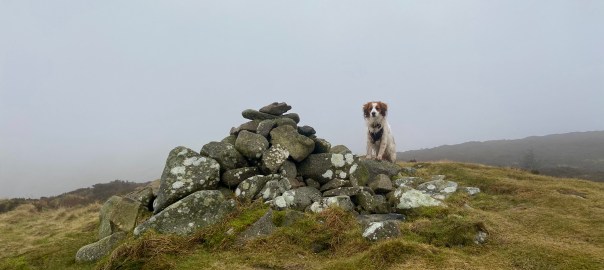
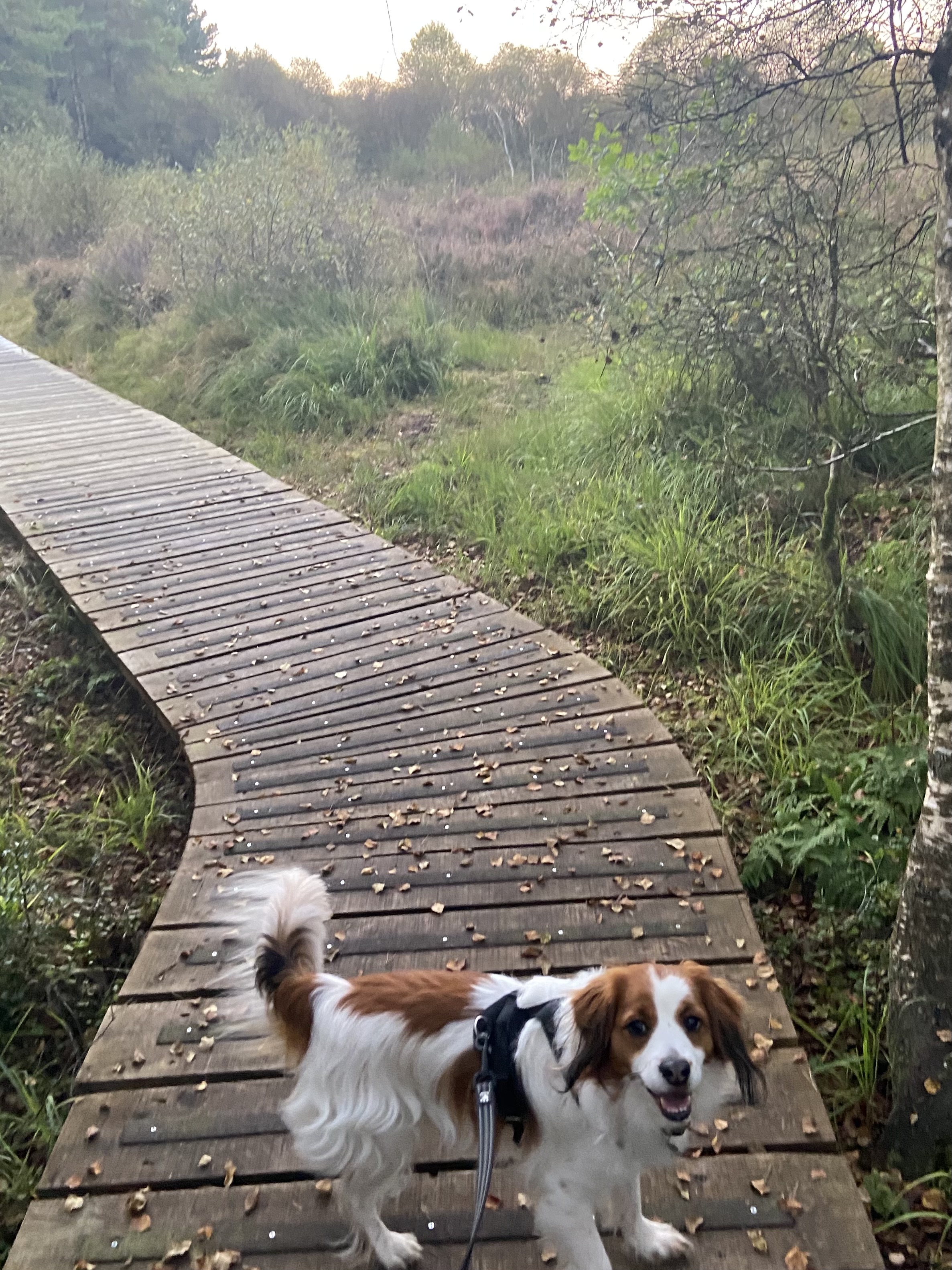
Last week, Triar and I walked up Knockendock, which is a smaller hill attached to Criffel, which we walked up last summer. It was a bit misty on top, but Triar posed very prettily beside the cairn, as you can see in the picture at the top of the page. There was a great view from nearly the top and I survived walking through a high-level peat bog without unexpectedly sitting down or falling on my face, which was undoubtedly a result!
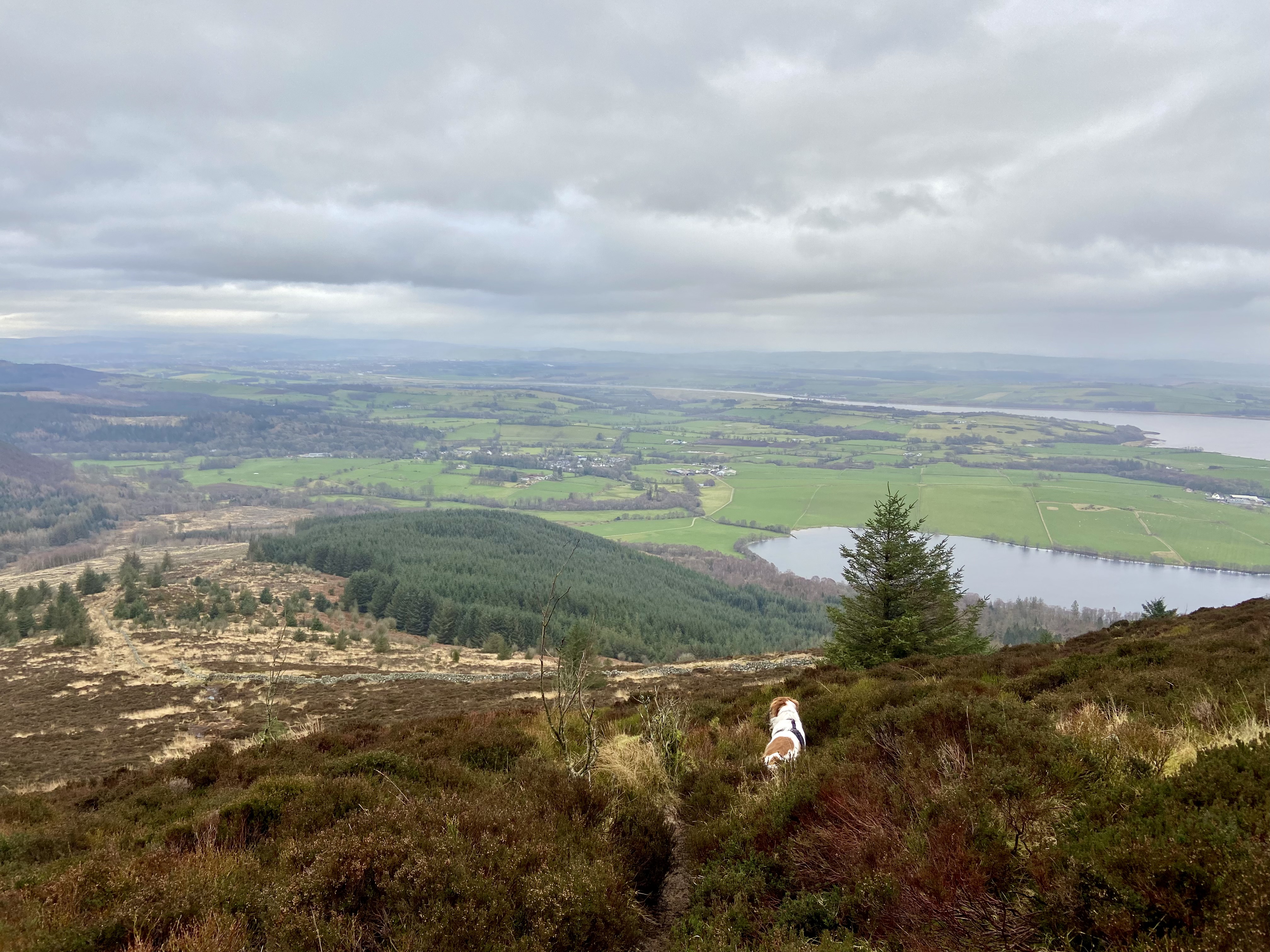
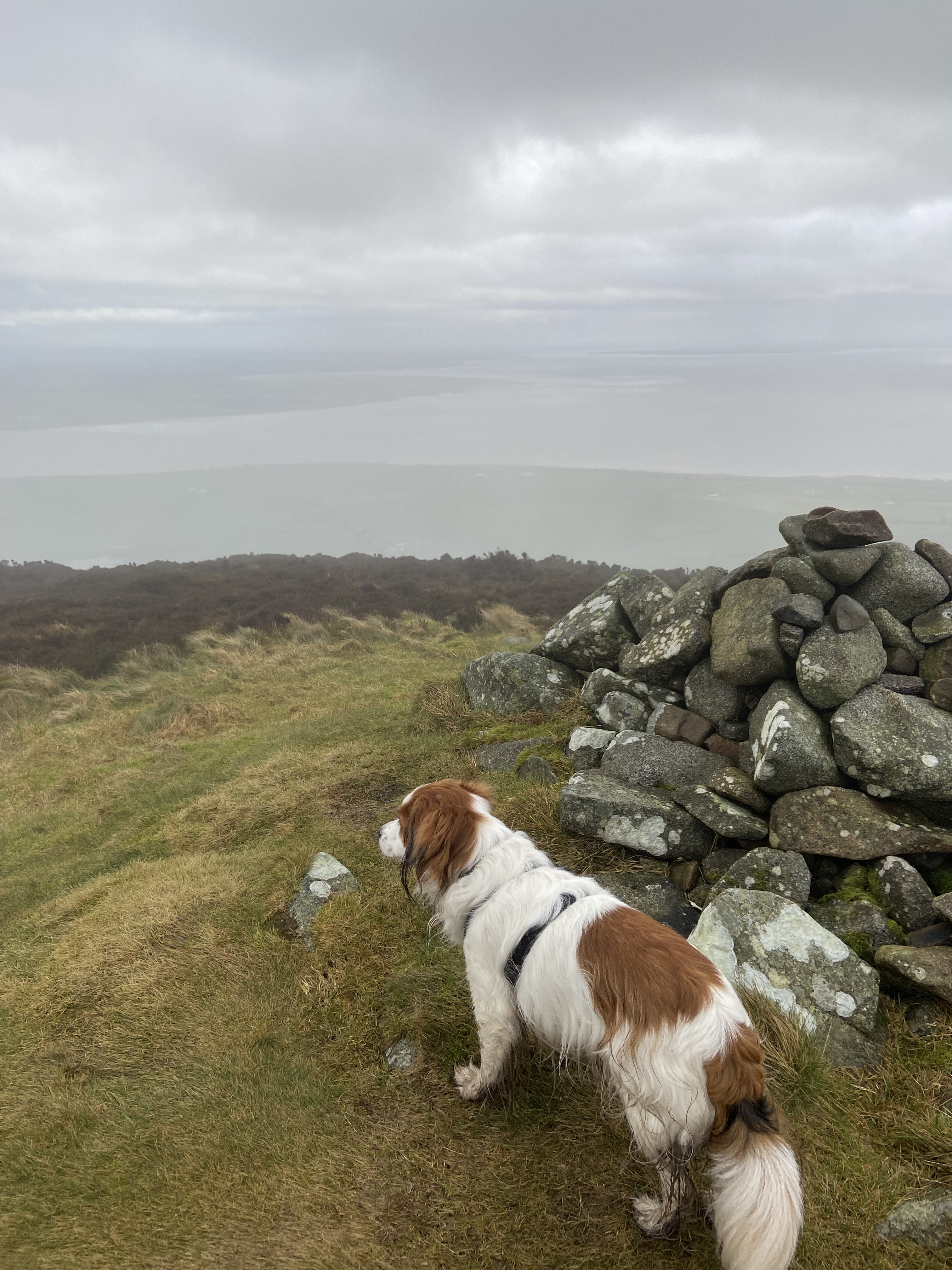
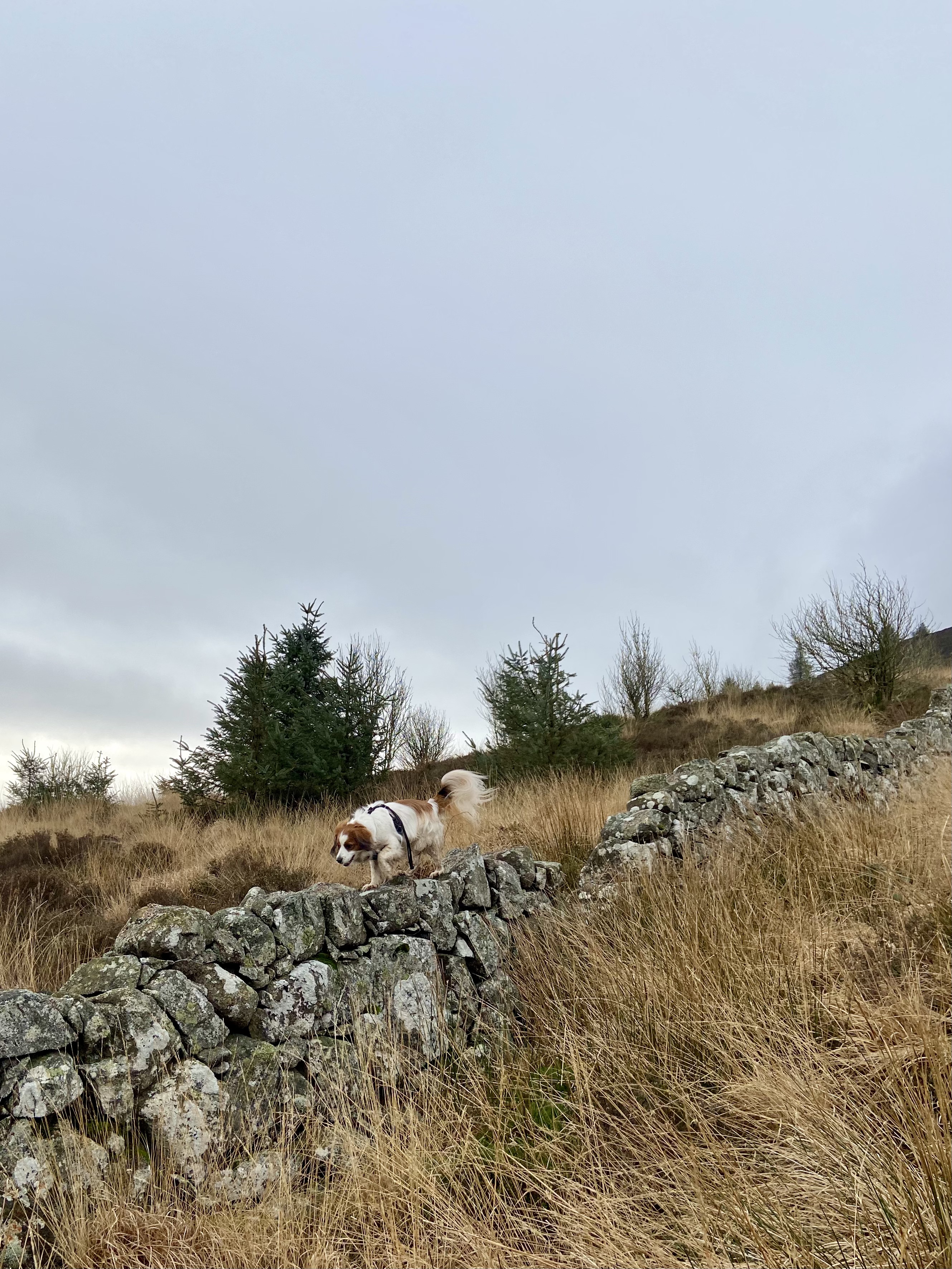
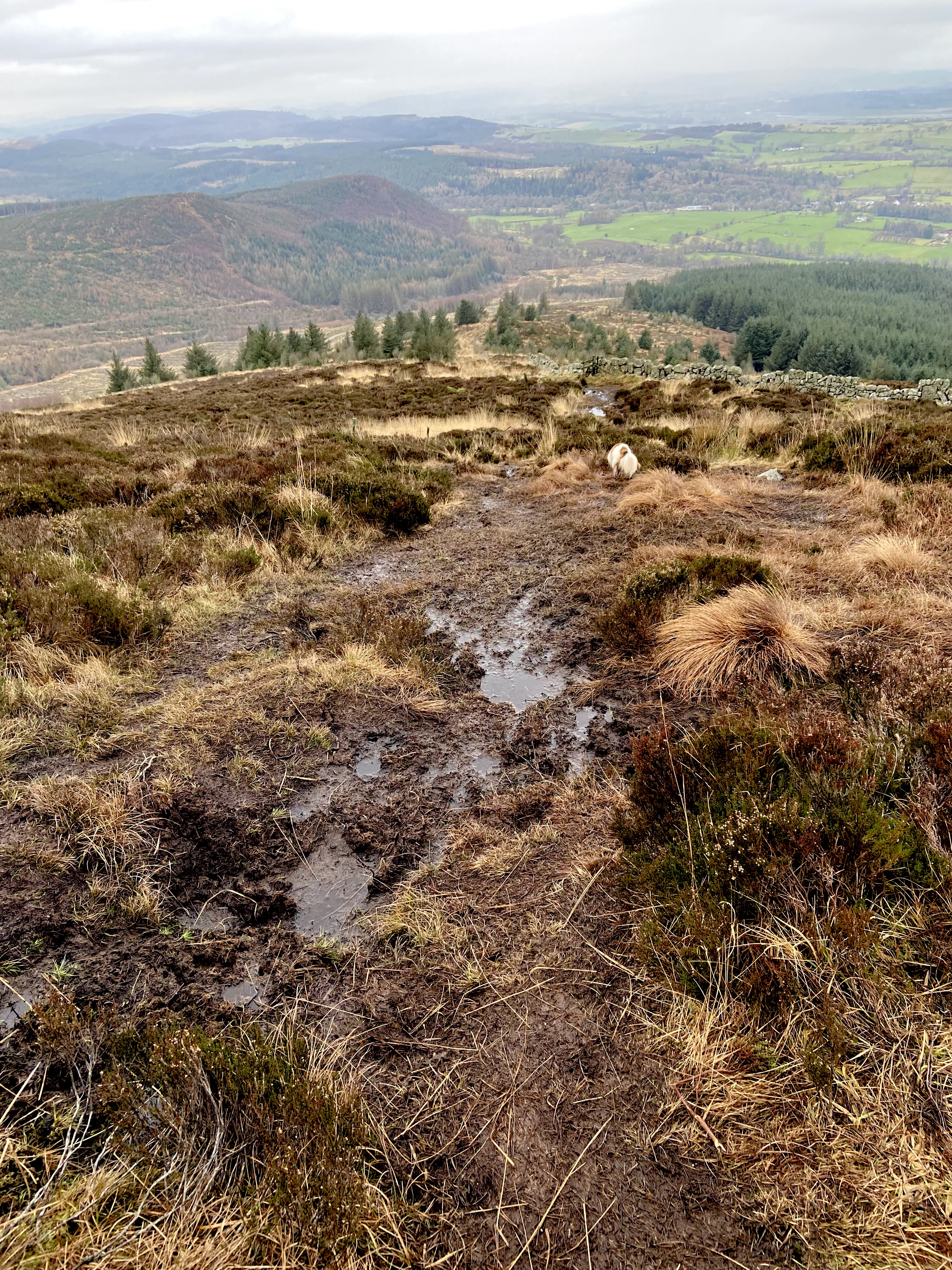
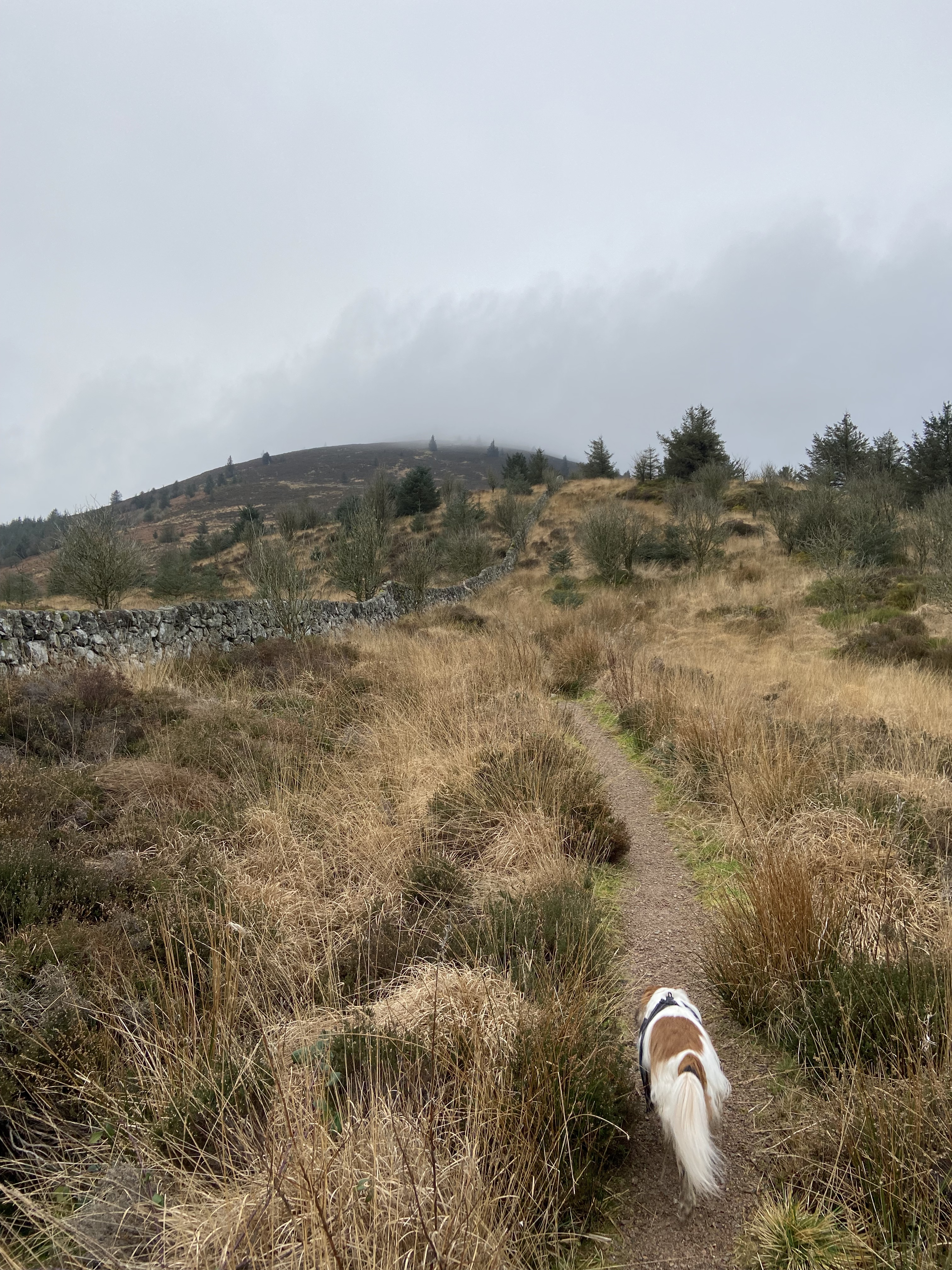
For me, seeing Triar trotting happily ahead of me is one of the best views possible. But that’s all for now. Thanks for reading and have a lovely week.















 A Vet’s Life