I wrote, last week, about my frustrations around the non payment of relocation expenses. They haven’t yet been paid, but K, my line manager, has told me that the big boss I sent my complaint to is now trying to get it paid from the local budget, rather than continuing to fight with DEFRA HR. I will try to keep you updated. Another colleague has suggested I contact the union I joined when I arrived, so that’s another step to consider, though I am hoping it will all be resolved soon and I won’t need to.
For most of this week, including last weekend and the (Scottish) Monday bank holiday, I have been working as duty vet. During the weekend, that meant the APHA national phone line went through to my work phone, or at least any and all calls from the north of Scotland came through to me. In the north, a second vet was taking phone calls for the south. Not many people call the emergency line (thank goodness). I had only a few calls on the Monday, most of which were easily dealt with. The counter to that is that, if something does come in that actually requires me to go out, it is likely to be something serious. Possible reasons would include a suspected outbreak of a notifiable disease (think bird flu or foot and mouth) or a welfare case that’s so bad it can’t wait.
Anyway at least, with mobile phones, being on call no longer requires me to stay in the house, glued to a landline, so Andrew and I decided on Saturday that it was time to go and explore our local ice cream emporium. There are a couple locally. Farmers in the UK have been encouraged to diversify and so we took a short drive out to Drummuir Farm where they make their own ice cream. There were loads of choices of flavour, from biscotti to battenberg, and Andrew and I ended up ordering two glorious fruity sundaes.
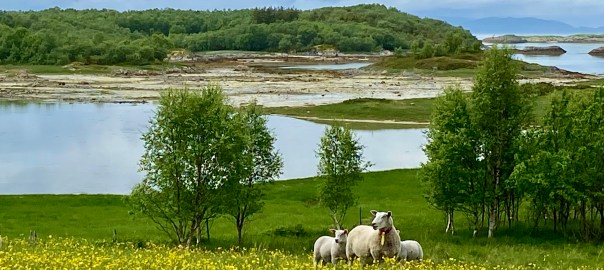
We went for a drive afterwards, including through Dalton, where I stopped to take a photo of this lovely pastoral scene.
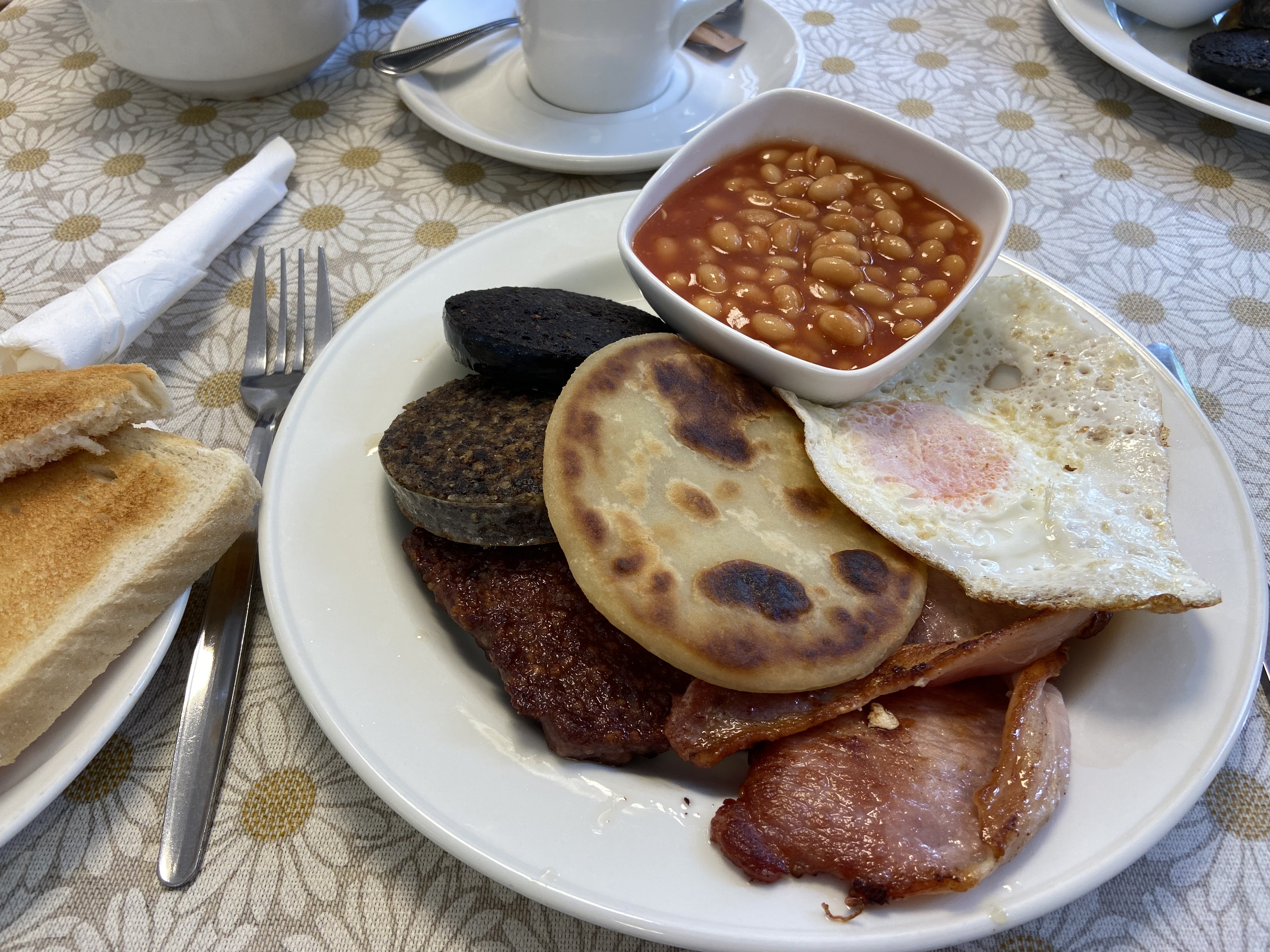
Andrew’s eye was caught at Drummuir by the full Scottish breakfast on the menu, so we returned on Sunday for an early lunch, which I can also recommend!
I don’t know if I’ve written much about being duty vet through the week before, but it’s not an enjoyable part of my job. Part of it is dealing with any queries that come in, either in emails or by phone. We don’t actually have to answer the phone during the day, but the calls are logged with a summary of the question, so then we have to look at what’s being asked and decide what action to take.
Some of these are quite straightforward. If a cow dies suddenly, the local private vet should go out and check whether it died of anthrax. An APHA vet has to okay that, then give them a reference number. This mostly involves form filling and it happens often enough that I already know the ropes.
But APHA covers a lot of ground on the animal front, so I might find myself with a query about an imported horse whose health certificate wasn’t filled in properly, or a farmer who failed to update his online records properly and has now found his farm is under TB restrictions as his test couldn’t be verified. These can take a lot of sorting out and require solid understanding of all the different computer systems we use. The main problem for me there, is that I don’t have a solid understanding of those systems yet.
Fortunately I have lovely colleagues, so I managed to get through, but ex policeman Tommy, who shares an office with me, saw that I was so stressed on Tuesday , Wednesday and Thursday that he arrived on Friday with a bottle of Malbec for me! Next week should be better, I think, My ongoing cases were mostly put on hold while I was on duty, so there’s a bit of catching up to do, but at least I have a better grasp of where I’m going with those.
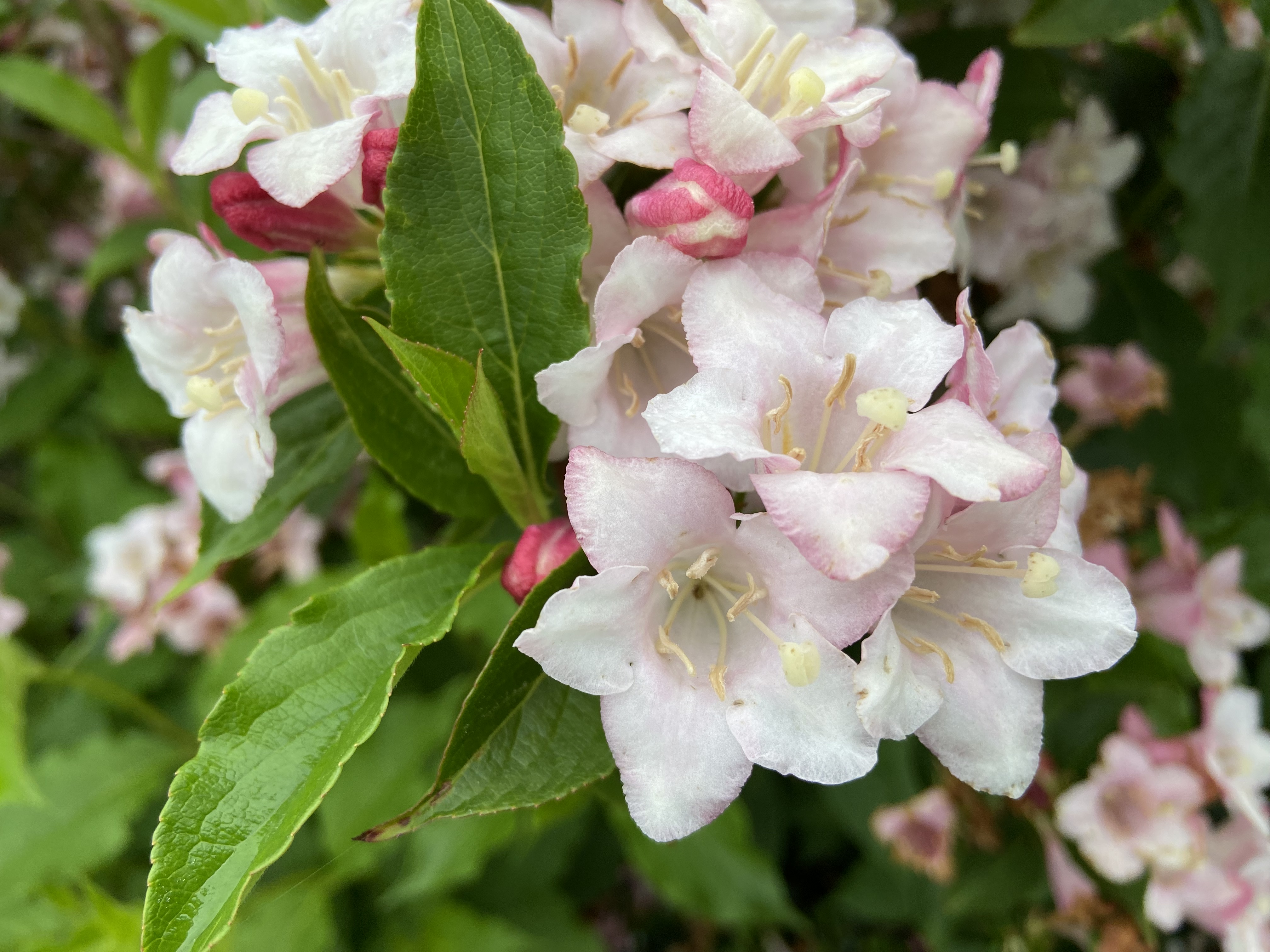
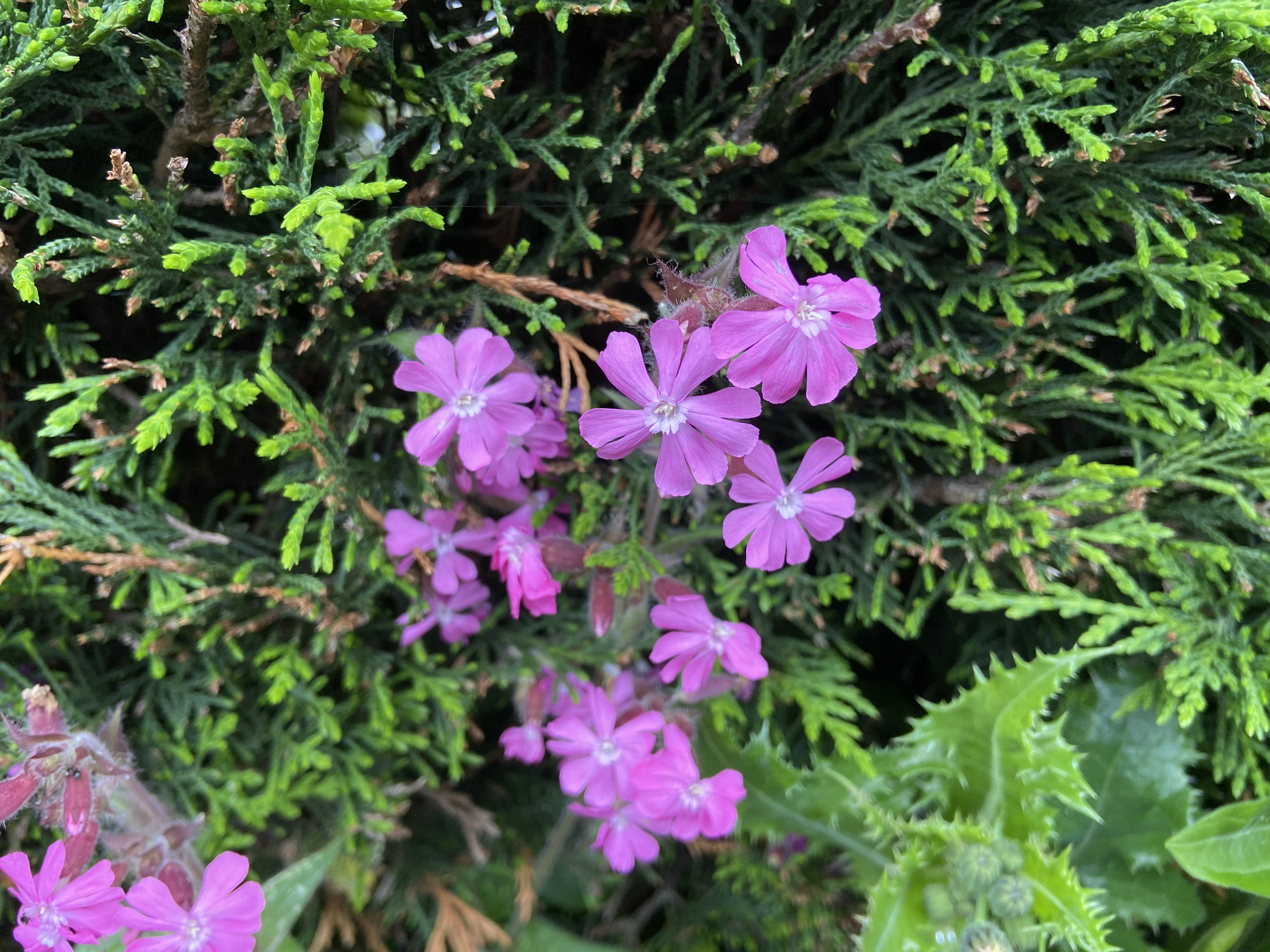
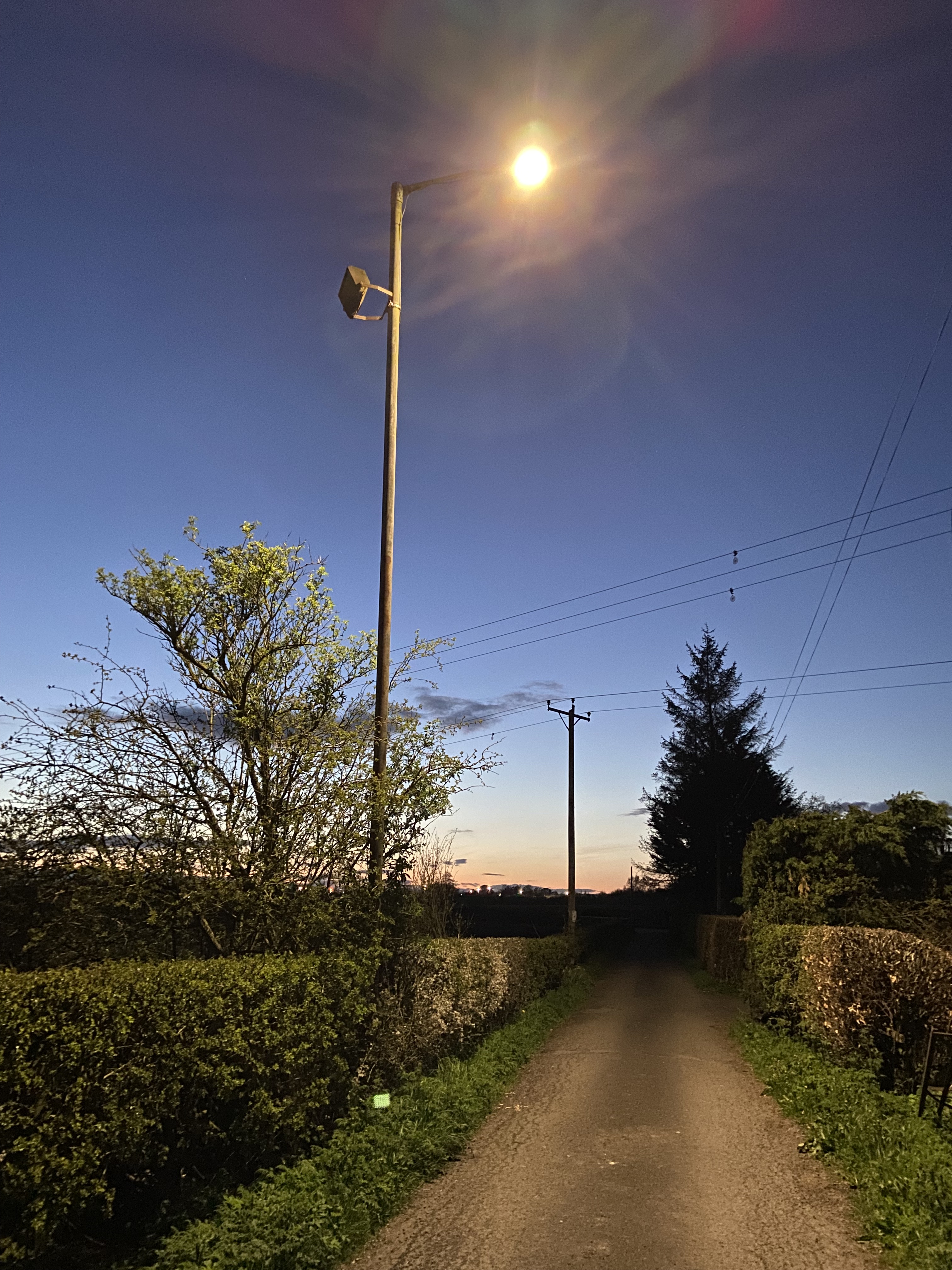
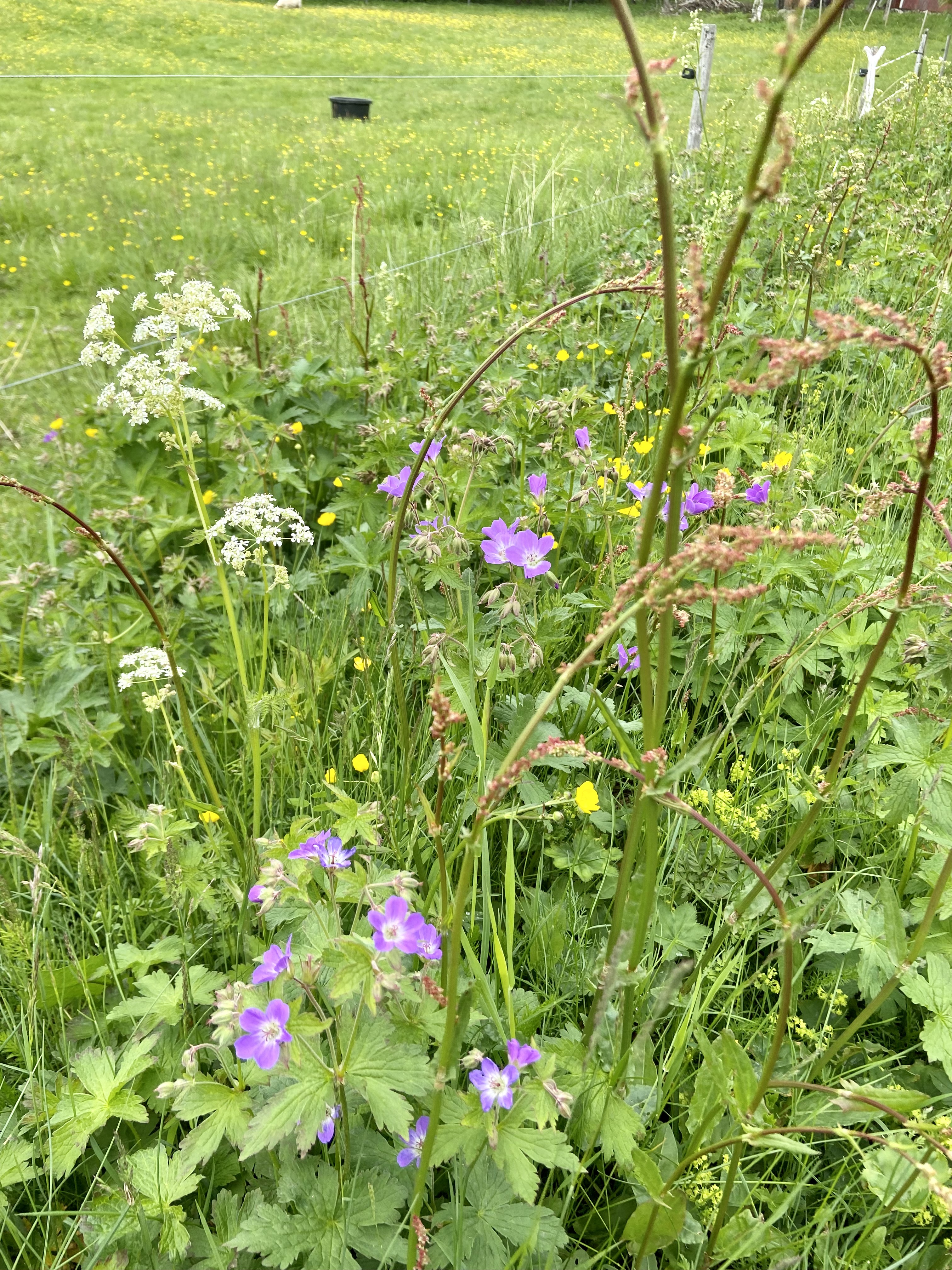
In the meantime, I’ll finish with some pictures from my daily walks down Blackbird Lane. We’re into summertime now and my little green lane is full of colour and birdsong: a daily oasis to sooth my soul.
Though in some ways, the weeks seem to rush past, by the time I write this blog, things that happened Saturday to Tuesday always seem distant. I will be wandering round, on one of those days, thinking “I’ll have to write about this,” then by the end of the week, something else displaces it. Ideally, I should start logging in as things happen, but hey, I’m not that organized! Anyway, this week I have carefully stored away a couple of things I really want to share. The first is about a welfare inspection I did on Tuesday.
I’ve probably said it before, but the sheer size of farms now, compared even to fifteen years ago when I left, is astonishing. When I qualified as a vet, in 1991, larger dairy units might have had 150 cows. Numbers were creeping up though, and by the time I left the UK many of the bigger herds had expanded to having over three hundred cows. Now it seems to be not unusual to have a thousand, sometimes even more.
I have been wondering how welfare is maintained on such a unit. Back when herds were smaller, most farmers knew their animals well. I went out with a dairyman when I was at college and he knew the personalities of the cows he milked and there were some he was very fond of. I remember seeing him cry when he’d been away on holiday and came back to find one of his favourites gone, due to the carelessness of the relief dairy worker that had been covering for him. No wonder some farmers barely take holidays.
I am not under the false impression that bigger is inevitably worse. Those who have expanded are often the most efficient and forward thinking farmers. They are investing in the herd and their own future, but still I had been wondering how. These are living animals and to keep track of when they are in season or in calf, or are sick, takes a lot of time for observation and knowledge.
As we walked along the calf pens, I could see they were being bucket fed. Lots of bigger farms use automatic feeders for their calves, but not here. The farm is run by a couple and (fairly traditionally) it’s the woman who is responsible for feeding the calves. They did have automatic feeders for a while, but found they tended to get dirty. In addition, teaching them to drink from a bucket prepares them for going into bigger groups and being given milk from a trough. You can also check how much milk each calf gets and individualise each one. I guess it takes a long time at peak calving time, but it was interesting to see that a good start in life is so important that industrialization hadn’t occurred (or rather, had been tried and rejected) on this part of the farm.
As we moved from the calves to look at the close-to-calving cows, I was interested to notice that the nearest cow had something attached to her foreleg. I asked what it was, and was told it was a movement monitor. Just as I wear a watch that can tell me how many steps I take each day, the cow’s steps were also being monitored. I wasn’t immediately sure what purpose this would serve, but later, he took me to the computer where these measurements were read.
He showed me a the readings of a cow that was coming in season every month or so. Sure enough, the movements peaked hugely at that time. But it wasn’t only that he could look at the program and see which animals were in season. The system itself recognizes the pattern and, as the cow comes out of the milking parlour, where it goes twice a day, a gate automatically opens to allow it through into a different area, so she can be inseminated. A person walking through the cubicle shed to separate out these cows disturbs all the other animals. Instead, this is another process that is mechanised to minimise both the work required and the disruption to the herd.
Automatic scrapers to clean passageways in cubicle sheds have been around for a long time. Usually they are pulled by chains or ropes and there were some of those here. The chains were in runnels to prevent the cows standing on them and hurting their feet. One of the sheds had one of the newer machines, that functions like a robot vacuum cleaner. These have the advantage that they can go round corners, so there are no missed sections, which there are with the chain scrapers.
What I hadn’t seen before though, was an automatic scraper for moving silage. Usually cows are fed in a passage, where they put their heads between bars and eat the silage and feed that is put there. As they eat, the food gets pushed away, and usually someone will drive along with a tractor now and then and push it back in. Here, there was a machine that ran along a metal track, doing the job automatically for all the big sheds. It runs every two hours, except just after milking time, when it is set to go hourly, as the cows tend to be hungry when they’ve just been milked. Again and again, I saw that, although this system was on a large scale, there were tweaks and tricks that meant that it was really set up, based on what the cows needed.
And finally, back to the matter of the individual animal and the personal relationship. I can’t say I really touched on this with the farmer, although it was apparent as we walked round, that there was still fondness for individual animals. He did tell me though, that where his dad had always been keen to give every sick animal a chance, he tended to be more ruthless is removing animals with bad feet or which had been ill enough to mean they probably wouldn’t thrive. One thing I have observed from life as a vet is that there is a lot of unconscious cruelty by some pet owners, who keep their pets alive long after that life stopped being worth living. Perhaps in a system where animals with bad feet get removed quickly, breeding from those animals that are left will create a better herd, with fewer foot problems in the future. Anyway, I really enjoyed my visit. Cows are still cows and they are still my favourite animals and these visits give me plenty of food for thought.
The other memory was from last weekend. I mentioned I had been told there was a man in his nineties, who’d lived here all his life. I ran into him last weekend. He has a garage at the end of the street where he makes wooden toys for children. He beckoned Triar and me in, and gave Triar a biscuit. Though he was in a wheelchair and his hands were shaky, he was painstakingly painting a toy duck that would go on a stick. There would also be feet attached to a wheel that would spin as it was pushed along the ground.
I asked him if he sold the toys and he said no. He gives them away, and the look on the child’s face is payment enough, he told me. If I ever have any children to stay, I will undoubtedly take them along to see him.
He also started to tell me a bit about the street and I resisted the urge to ask him if I could record what he was saying, as it was lovely. He had lived in the street law his life, he said, and could remember back to the time when it was a village and not part of the town. The doctor came out rarely, he said. If someone was sick, they called for Mrs Black. Mrs Black was also the one you called on if someone was giving birth. We also had a discussion about the healing powers of honey. As antibiotic resistance is growing, even in the vet world there is starting to be more exploration of how old remedies can be better integrated into modern treatment. I bet Mrs Black could have taught us a few things about helping sick people that we have lost in our rush towards modern medicine.
Anyway, I’ll leave you on that note. The pictures are from Blackbird lane, where Triar and I are still walking, morning and evening. This week’s unusual birds were a tree pipet and a mistle thrush, but the blackbirds haven’t deserted. Have a good week and thanks for reading!
It’s holiday time, and my phone keeps pinging with reminders of upcoming flights and stays. Konstantin is housesitting for me, so I know that Triar and the guinea pigs will be well cared for. Lots of other things are bubbling along. I signed the house contract this week. On first of August, I will be a house owner. So far, we have a TV and stand, a washing machine and cooker, a desk and chair, and one bed. Fortunately we have a month between buying the house and moving out of our current flat, so there will be time to rectify that. Hopefully by the time we move in, we will at least have two beds and something to sit on!
Last week, I mentioned that Ger had submitted The Good Friends’ Veterinary Clinic to ten publishers. So far, two have turned it down. Ger tells me this is quite normal. I believe Harry Potter was turned down by twelve publishers, so I am staying positive for now. I am in the final stages of getting the storyline for book two finished. Hopefully I will find some time to write during my holiday. Due to Covid we won’t be going out and about too much, so I will be able to escape to the fictional town of Invercorrich on the west coast of Scotland. I will also be staying with my parents for the last two weeks of the three weeks I’m taking. I haven’t seen them since December 2019, so being with them again will be truly wonderful.
Just to slightly complicate matters (as if they weren’t already complicated enough) I have been vaguely unwell for a few months and finally heaved myself to the doctors about three weeks ago. She referred me to Tromsø for a colonoscopy, which was done on Thursday. Probably the less said about the procedure the better, though I survived the process without having to have sedation or painkillers, which was a bonus.
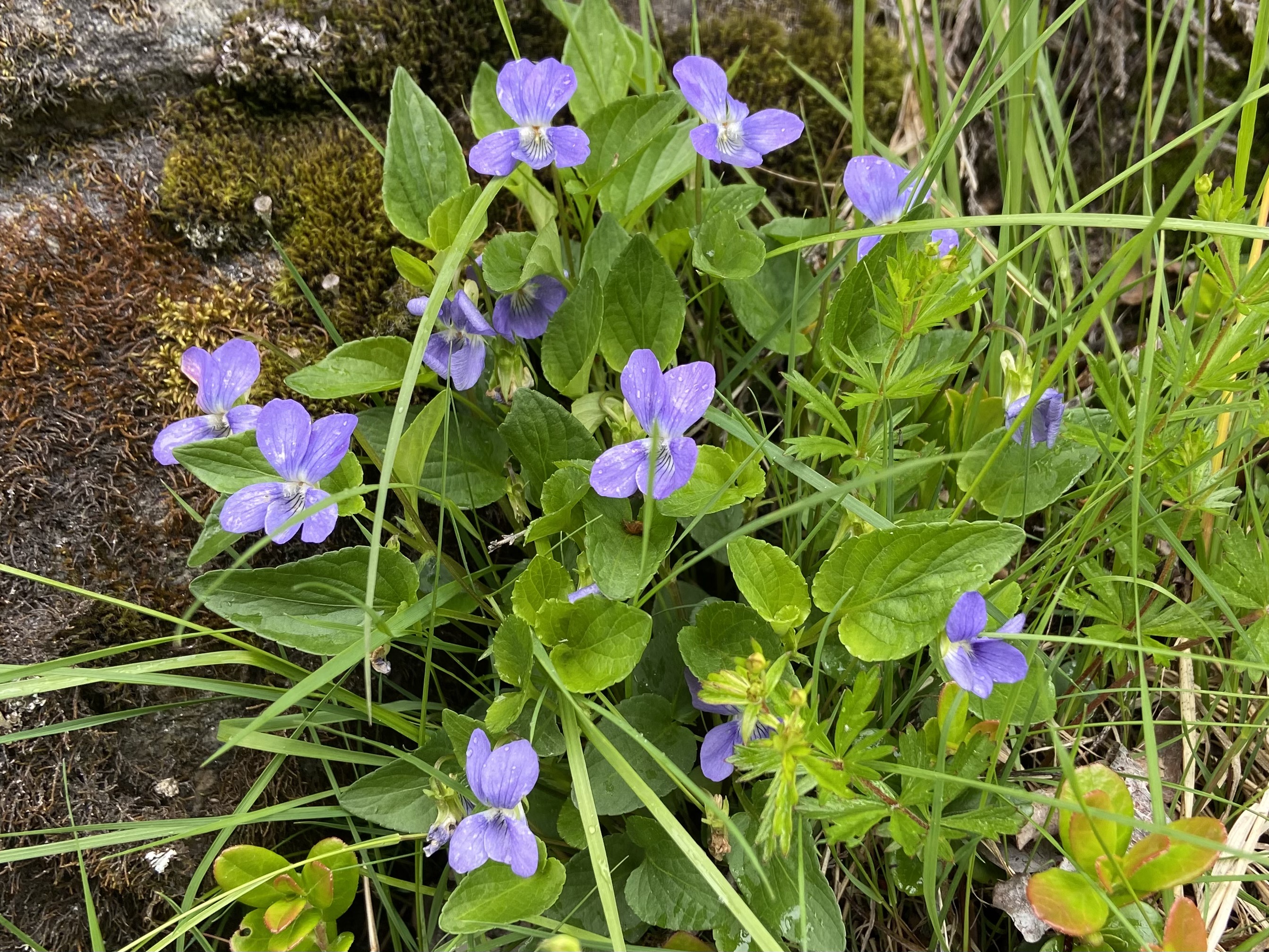
There are flowers on all the roadsides, even around the hospital, so I will share a few pictures here.
The good news is that my intestines are in good shape. The bad news is that the doctor I saw in Tromsø agreed with what I was initially concerned about, which was that there is probably something going on with my pancreas or bile duct. I don’t have a gall bladder any more, so it’s not that. He said the next stage was an ultrasound, but given that I was going on holiday for three weeks, he decided he would do that there and then, rather than wait. He couldn’t see anything big, which is good, but he says I will have to return for an MRI when I get back. He suggested that my bile duct might be blocked, possibly by a stone or stones, which wouldn’t be that surprising. There were complications after my gall bladder was removed, and now and then signs of stones passing (a very distinctive feeling, for anyone who’s experienced it). So all that is slightly hanging over me. I know the UK has an NHS, but it would be much less complicated if I didn’t have to use it.
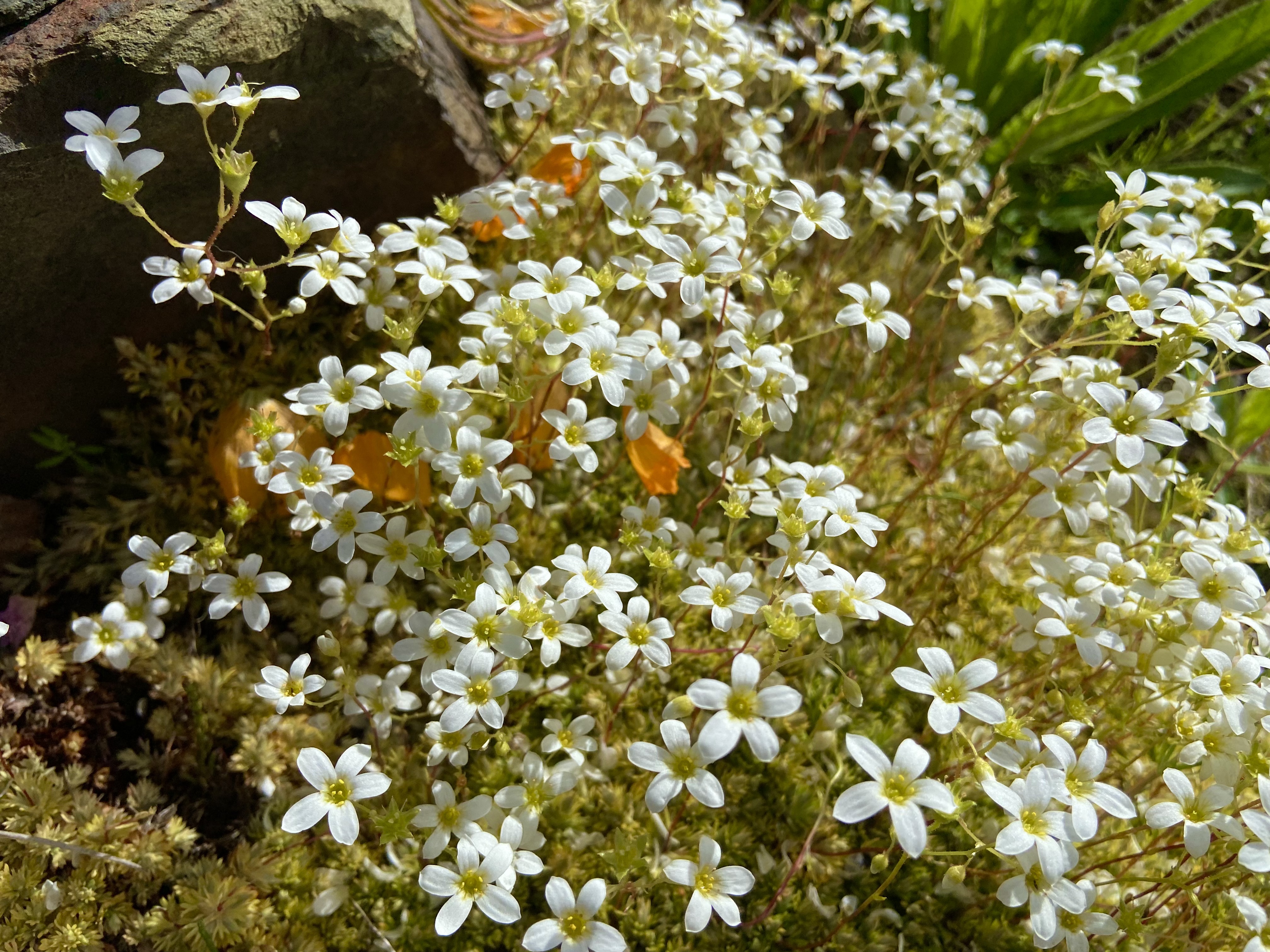
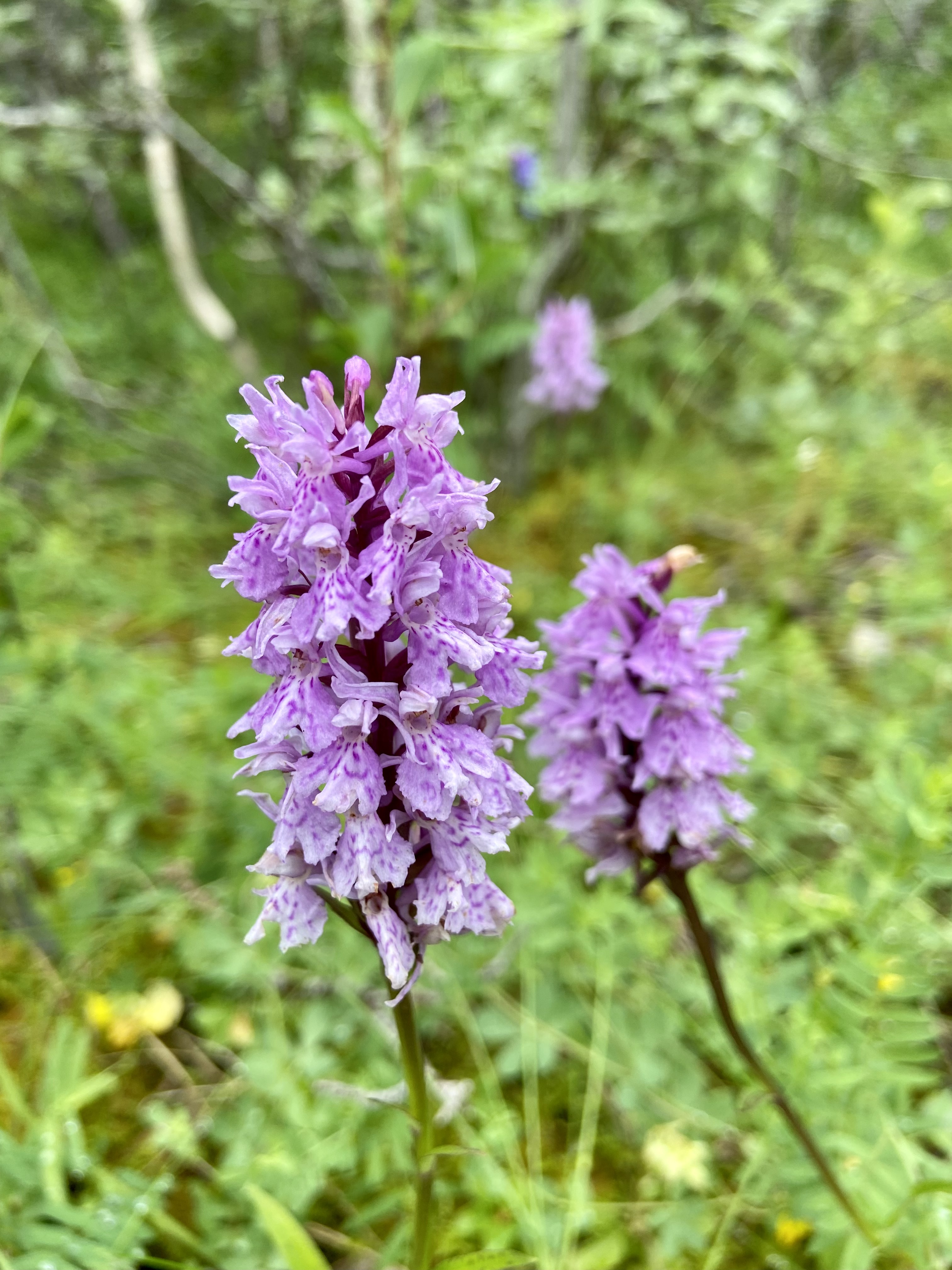
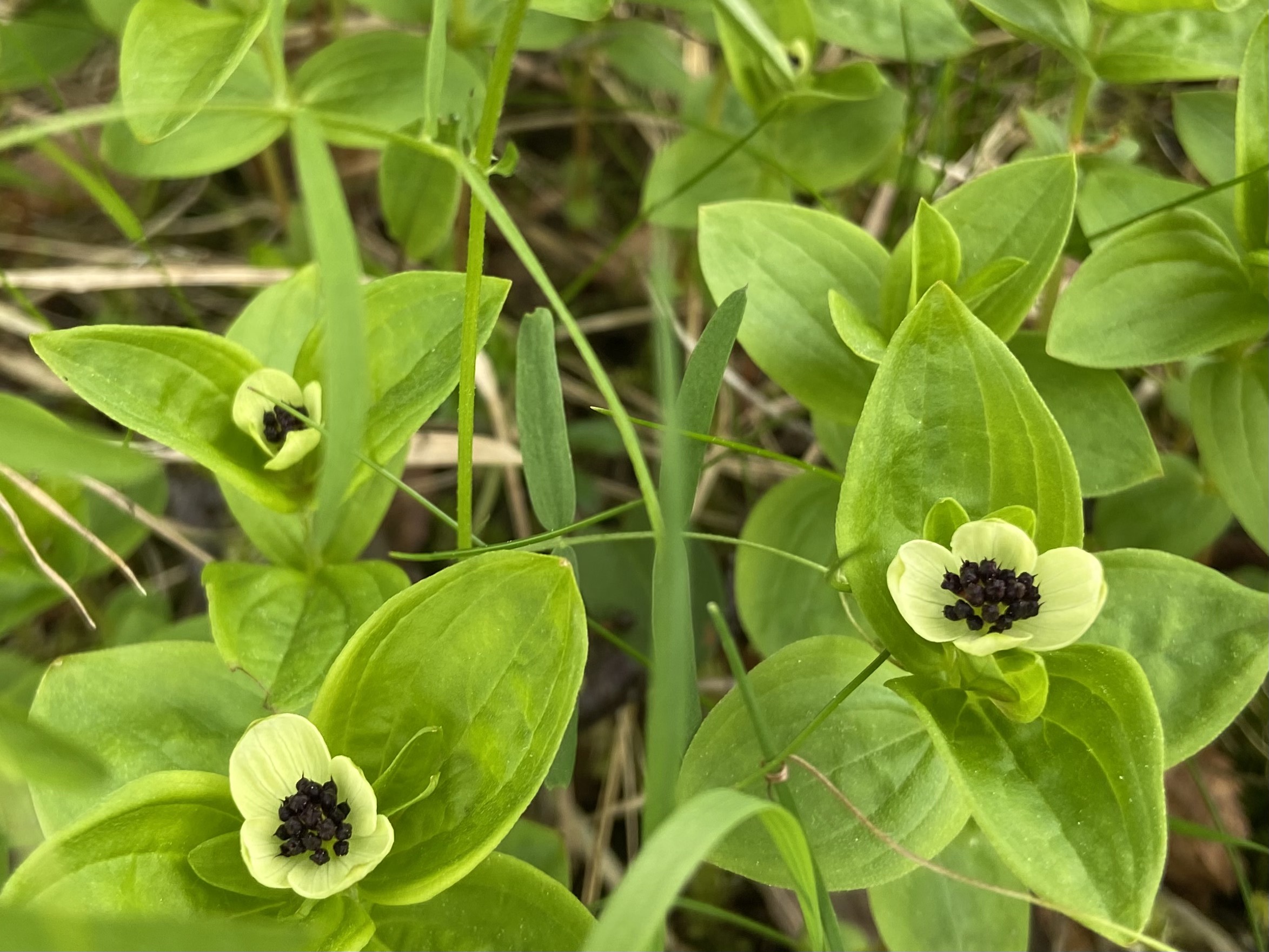
Anyway, all my photos this week are of flowers. I went up to Tromsø a day early before the colonoscopy and went out to explore the Arctic-Alpine Garden near the hospital. There was a cafe there, which I would definitely have stopped at for an ice cream, had I not been banned from eating anything. Next time I’m up there if it’s fine weather, I’ll definitely pop in. I began with the intention of taking photographs and taking down names, but the labelling seemed somewhat erratic, or at least some plants seemed to have spread and others perhaps died back, so I’ll just spam you with the gorgeous flowers and hope you enjoy them, as I do, without ever knowing their names.
There has been a massive change in the weather this week. Until now, it’s been warm and sunny, on and off, but the forecast this week, courtesy of YR.no looked like this.
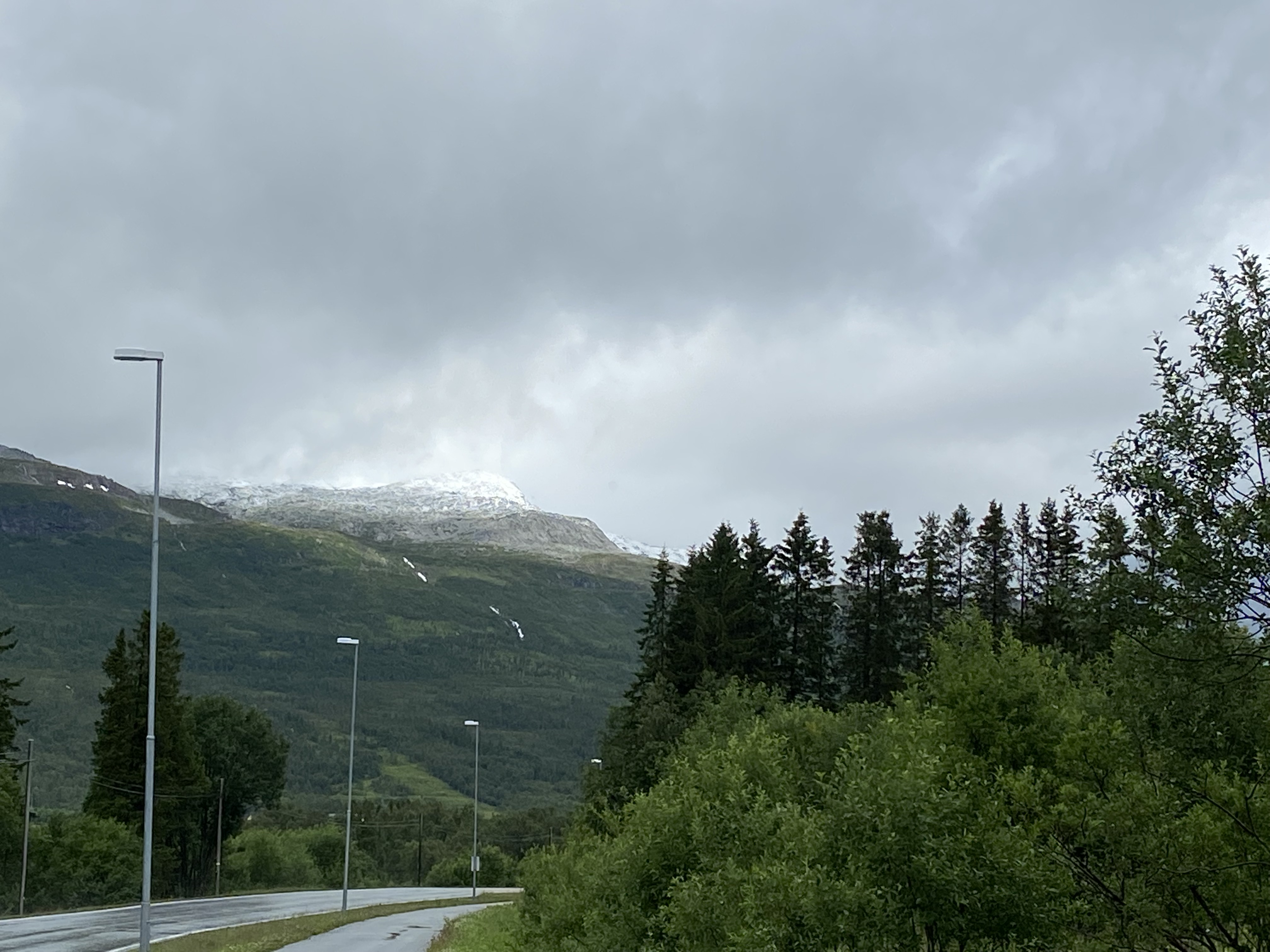
Not only has it rained a lot, but those temperature listings aren’t very accurate. I took John to the airport on Tuesday and noticed that the temperature was a rather chilly 5.5°C. I took a picture after dropping him off. The mountains were shrouded in mist and the river was a distant mirage.
When the mountain peaks emerged now and then, they too showed evidence of the chill in the air.
I was reminded of the weather forecasts in October and November last year, where they announced that the snow line was now at 400m, 300m, 200m and you could watch the gradual descent into winter.
I am very much better than I was. My blood pressure has returned to normal, thank goodness and I seem to be generally on the mend. I was back to work yesterday. I was afraid that I would be too tired, but I had a good quiet day in the office catching up and arranging things for next week.
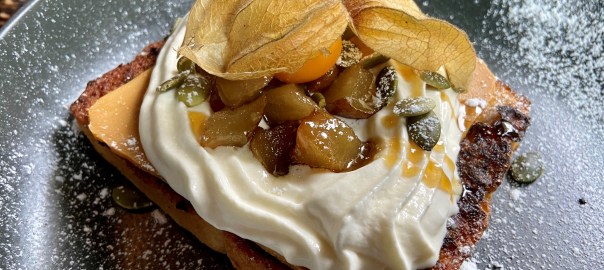
Though I spent much of the week resting, Anna and Andrew offered to take me out for a Senja Roasters brunch on Thursday. How could I resist? I’ve been wanting to try the French Toast ever since I read the description and it didn’t disappoint. It was wonderful, filled with caramel flavours.
French toast , brown cheese and mascarpone whipped cream, honey, roasted pears, and pumpkin seeds
Our trip did lead to one of those truly embarrassing British moments, however. Thomas is always telling me off for thanking him and I probably still apologise way too often, but this was one of those more toe curling examples. The lovely waitress was explaining to us that there was no cured ham for the Banger Toasts. Instead, they were substituting chorizo. I’m not sure where she was from, but I didn’t quite catch what she said at first. When it dawned on me, I said, in a rather loud voice, “Oh, chorizo!” About one second later, my brain caught up and I remembered that, of course, her pronunciation was almost certainly the genuine article. It was more an announcement of realisation from me than any attempt to correct, but it was one of those wonderfully cringeworthy moments I love to share with you all!
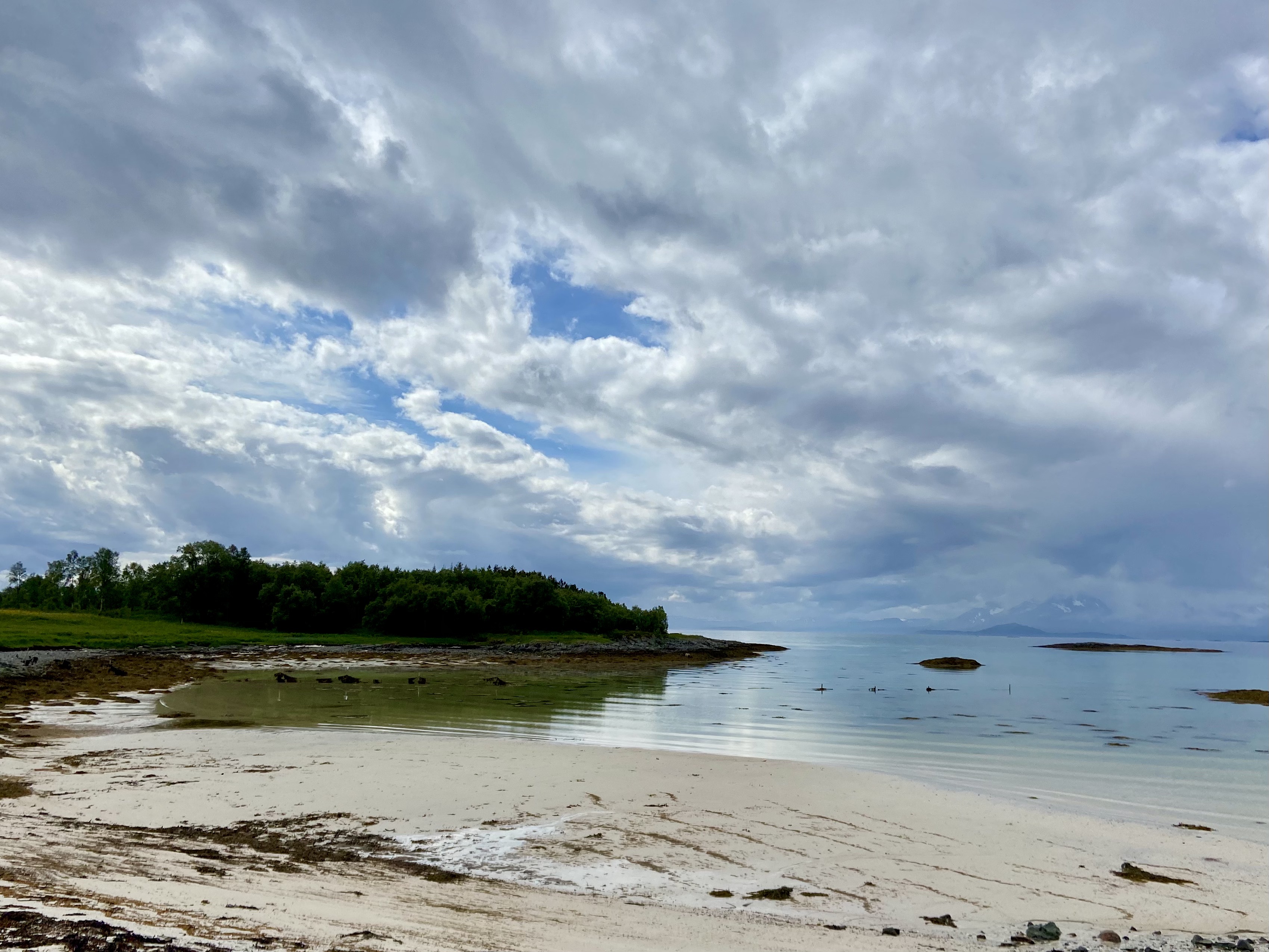
We walked down the track to my favourite beach afterwards. Happily it was between rain showers. Though summer is passing and the green has passed its vibrant zenith, Senja is still stunning. There are orchids and harebells, sandy beaches and misty mountains. And sheep with bells on. What could be more Norwegian than that?
This will be the last time this summer that I will write: Sunrise/sunset: Up all day. Next Saturday, the sun will dip below the horizon for almost an hour.
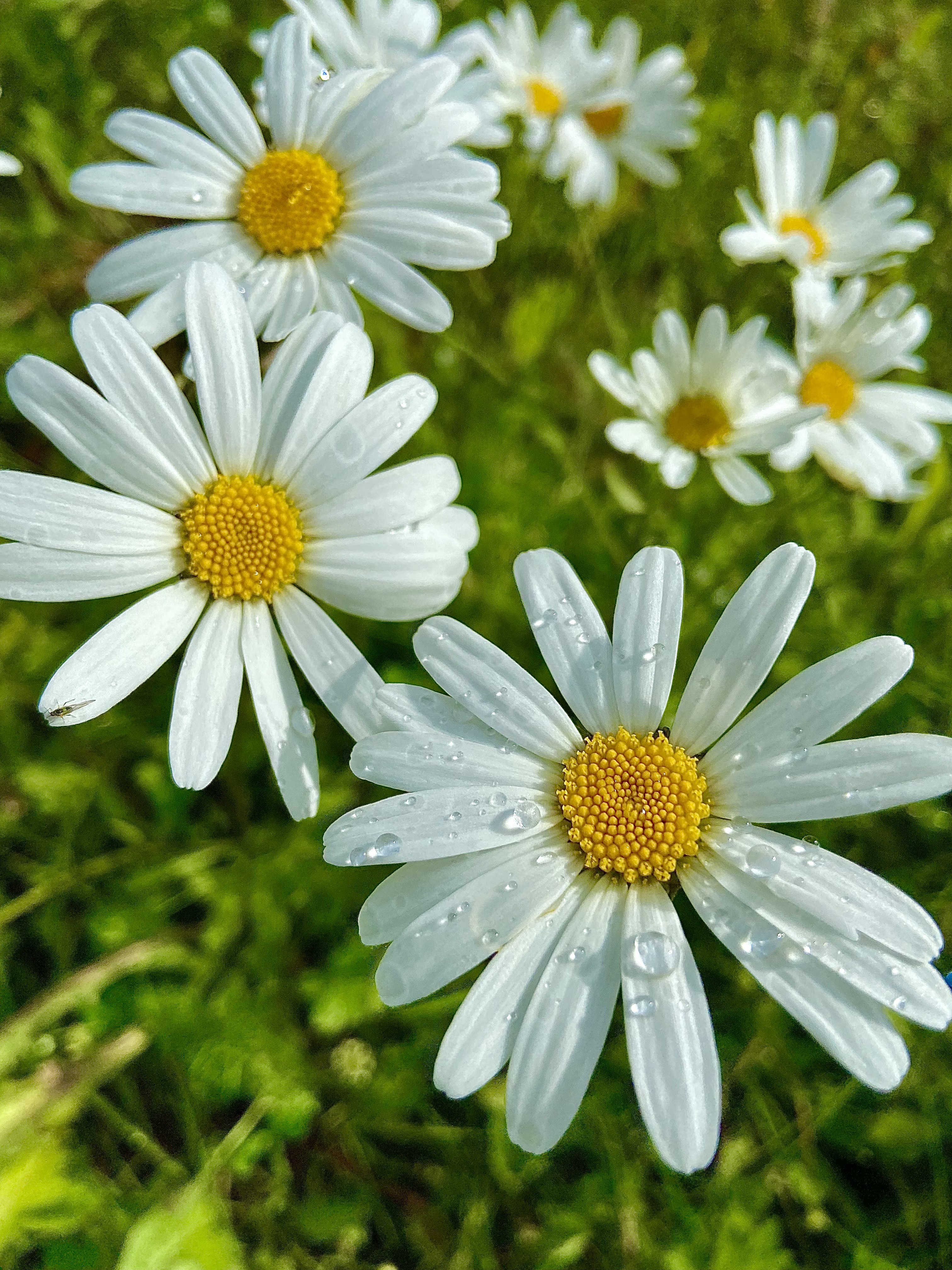
I haven’t done much this week. Last weekend was mostly spent resting with a headache, and as headache tops the currently listed top five symptoms of COVID, I went on Monday to take a test. It had been raining, and when I came out, I took a few photographs of raindrops on the leaves and flowers growing around the test station.
Happily, the test came back negative, so having spent Tuesday and Wednesday resting, I took myself in to work at the abattoir on Thursday. Working on the line was okay. It’s routine work and not too strenuous, once you have learned some knife skills. Hilde had come over to visit, and I spent a while chatting to her. I was still feeling exhausted, so after some discussion, it was agreed that I would go to the doctor for a check-up. It hadn’t been so long after my vaccination that I had fallen ill, so it didn’t seem impossible the two things were unrelated.
I have to pass the surgery on my way home, and having tried to book earlier in the week, I knew they didn’t have any routine appointments until August. The receptionist started telling me about calling in the morning for one of their emergency appointments, then glanced up at me. I guess I must have looked as tired as I was feeling because she took pity on me. After another check of her computer, she said if I waited now, someone would see me.
So I’m signed off now for a week. As I hadn’t been sleeping well, I was given some sleeping tablets, but I woke this morning feeling so groggy and nauseated I’m not sure I’ll continue. I’ll give them one more night and see.
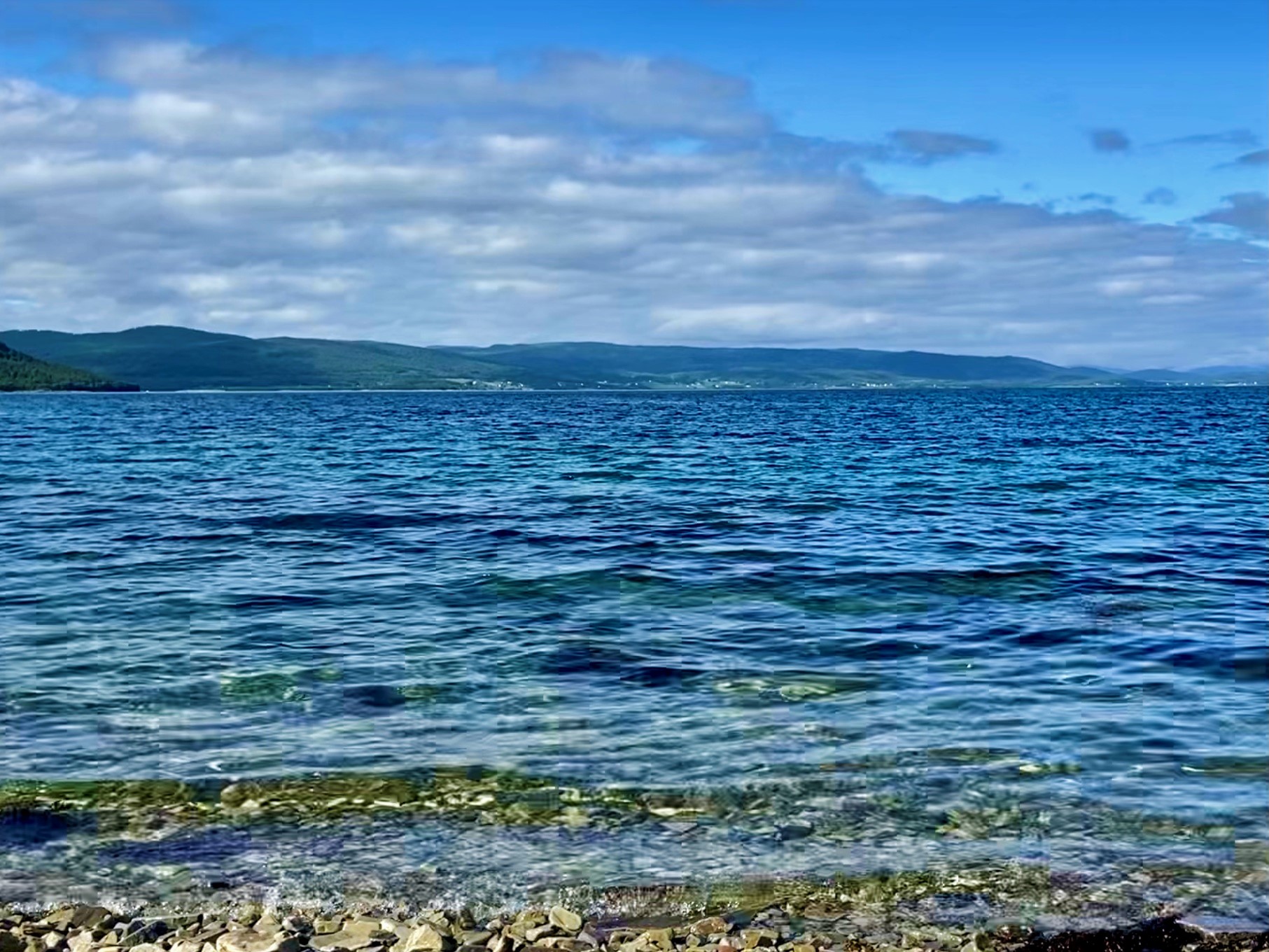
Anyway, though I haven’t been out as much as usual, I have managed a few gentle wanders. Anna and Andrew are back and Anna and I went to the stony beach a little bit north of Silsand on Senja where we often walk Triar.
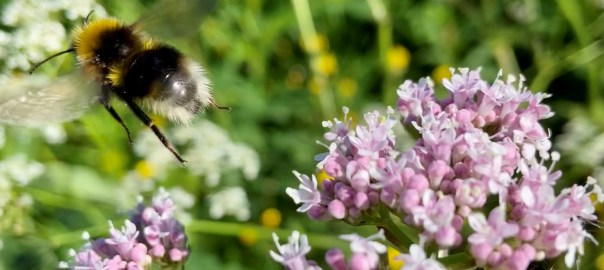
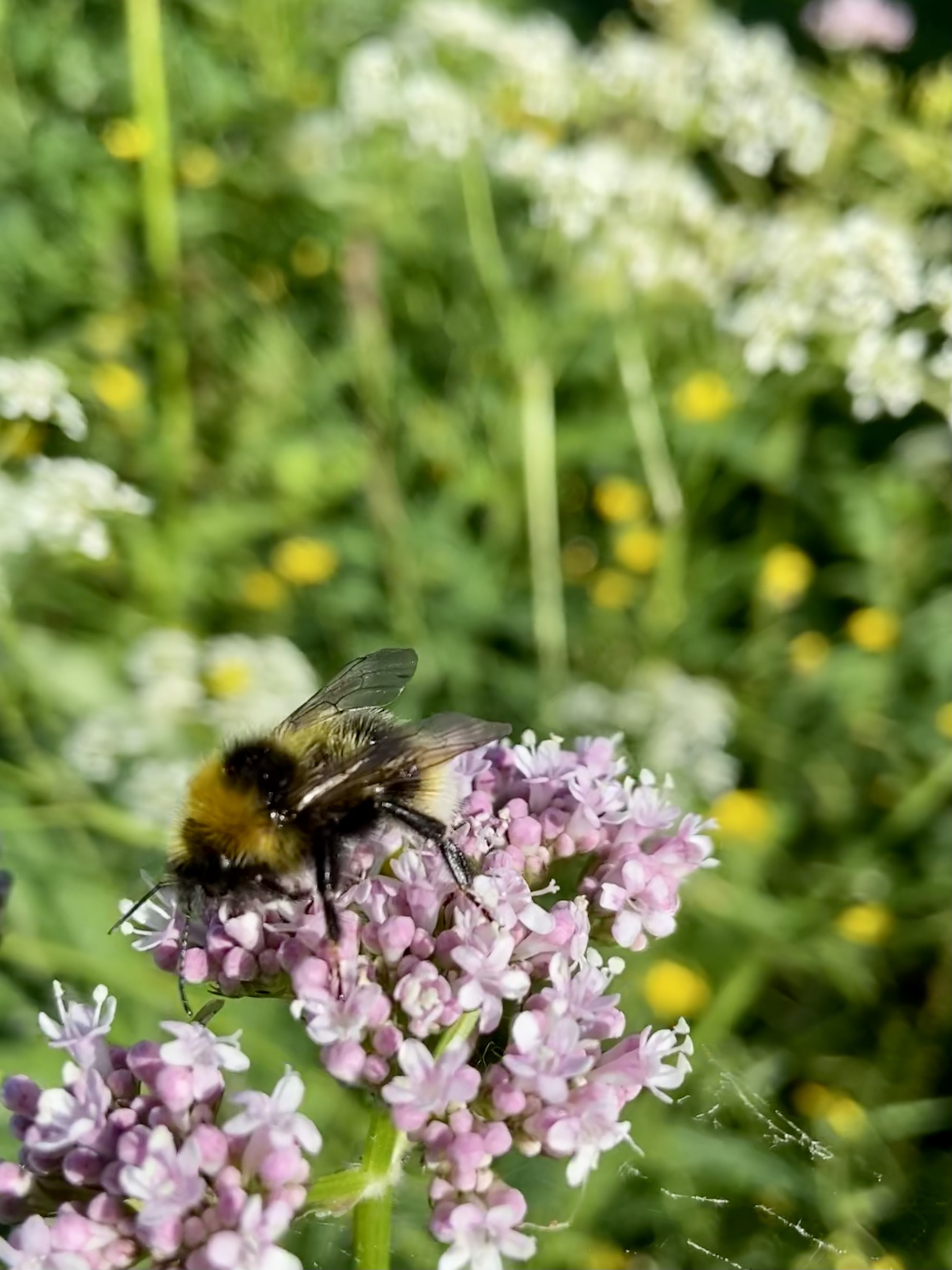
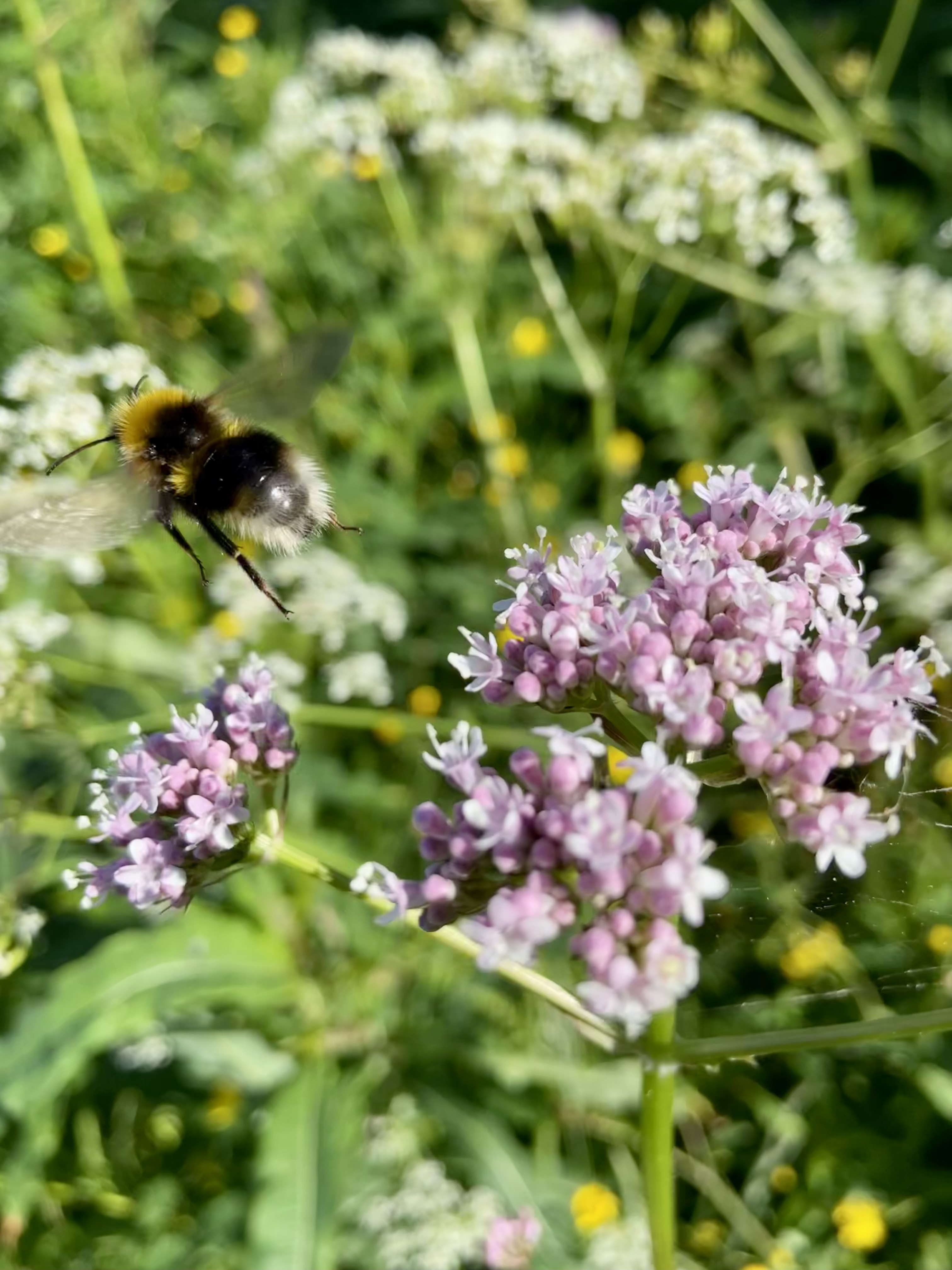
I took some photographs there of a bumble bee. There are so many of them here at the moment.
And these were taken in the lane at the back of the house.
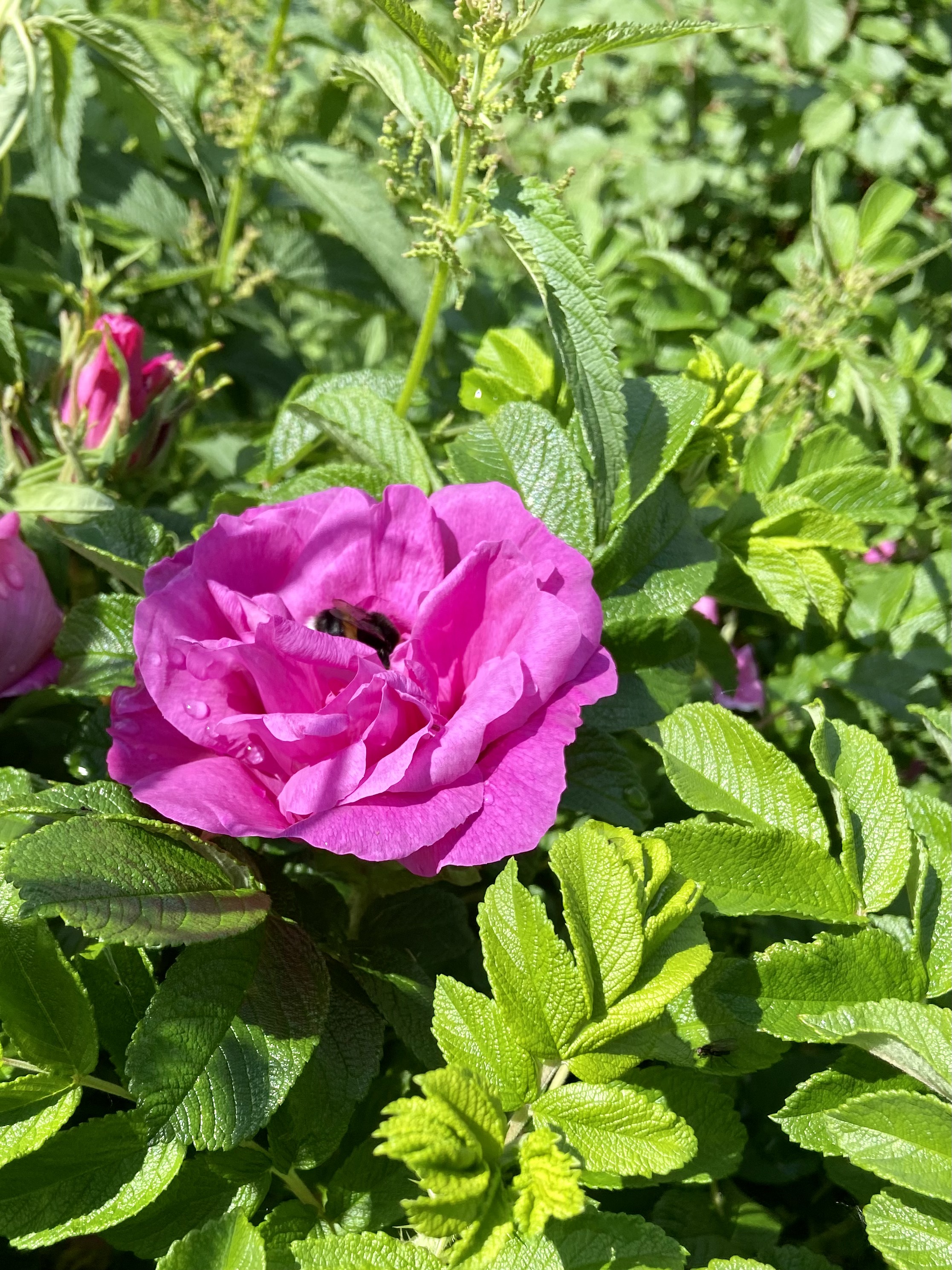
And to my amazement, another bee sequence. I took a photo of one of the rose-like flowers in the back garden, and a bee emerged, and then another.
Anyway, nobody enjoys being unwell. With any luck, the title of next week’s blog will be very easy! And if being laid up in bed is boring, at least I was lucky enough to have good company.
We’re into July now. Time seems to be passing almost too quickly. In a couple of weeks, the twenty-four hour daylight will be past. In August, I will have been here a full year. I only have one week of holiday booked this summer. Norwegian holiday laws are odd. For some reason, you are paid holiday pay in arrears, the year after you took the holiday. As I only worked from August last year, I’m only entitled to ten days of paid holiday this year. Last year, my only holiday was the ten days I spent driving up here, so it feels like a very long time since I’ve had a break. Anyway, given the continuing COVID restrictions, I thought it would be appropriate to use my week in August to travel up to Nordkapp, right up at the top of Norway. I will then have driven the full length of the country.
I had my COVID vaccination this week on Wednesday. Though Norway is a little behind the UK, everything seems to be moving along now. John had his on Thursday and Anna will have hers when she returns from Rogaland. I’m not sure what is happening with under 18s yet. I hope that Andrew will receive his in due course. The UK seems to be about to head into crazy territory. Allowing the virus to run rampant through the young people, knowing how easy it is for the virus to mutate, seems like a very strange pathway to choose, given that there’s a viable option to vaccinate.
I don’t have much else to report. I saw some moose on the drive to work and yesterday came across a gorgeous reindeer wandering about on Senja, but as usual, photographing wild animals proved more difficult than taking pictures of the scenery!
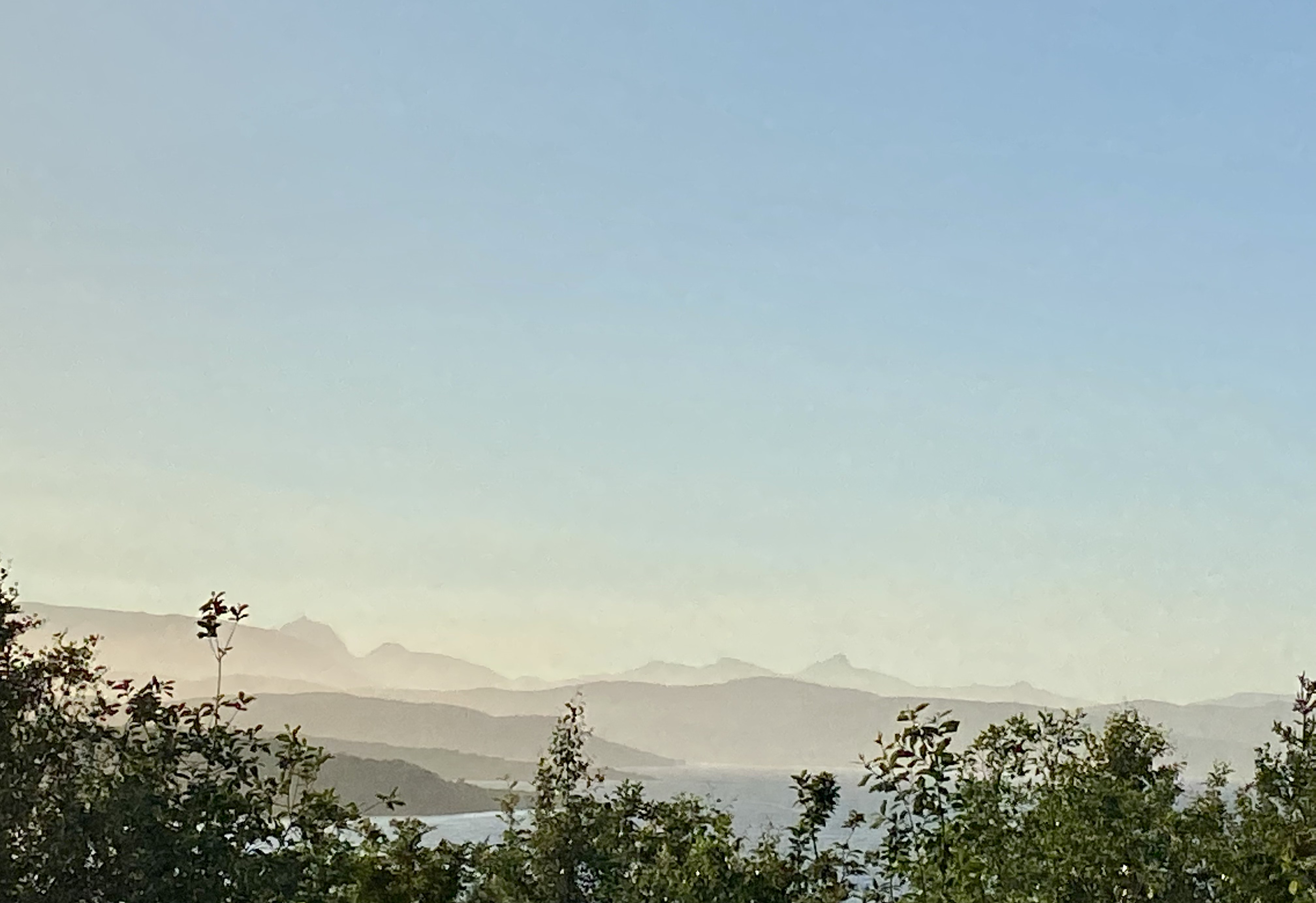
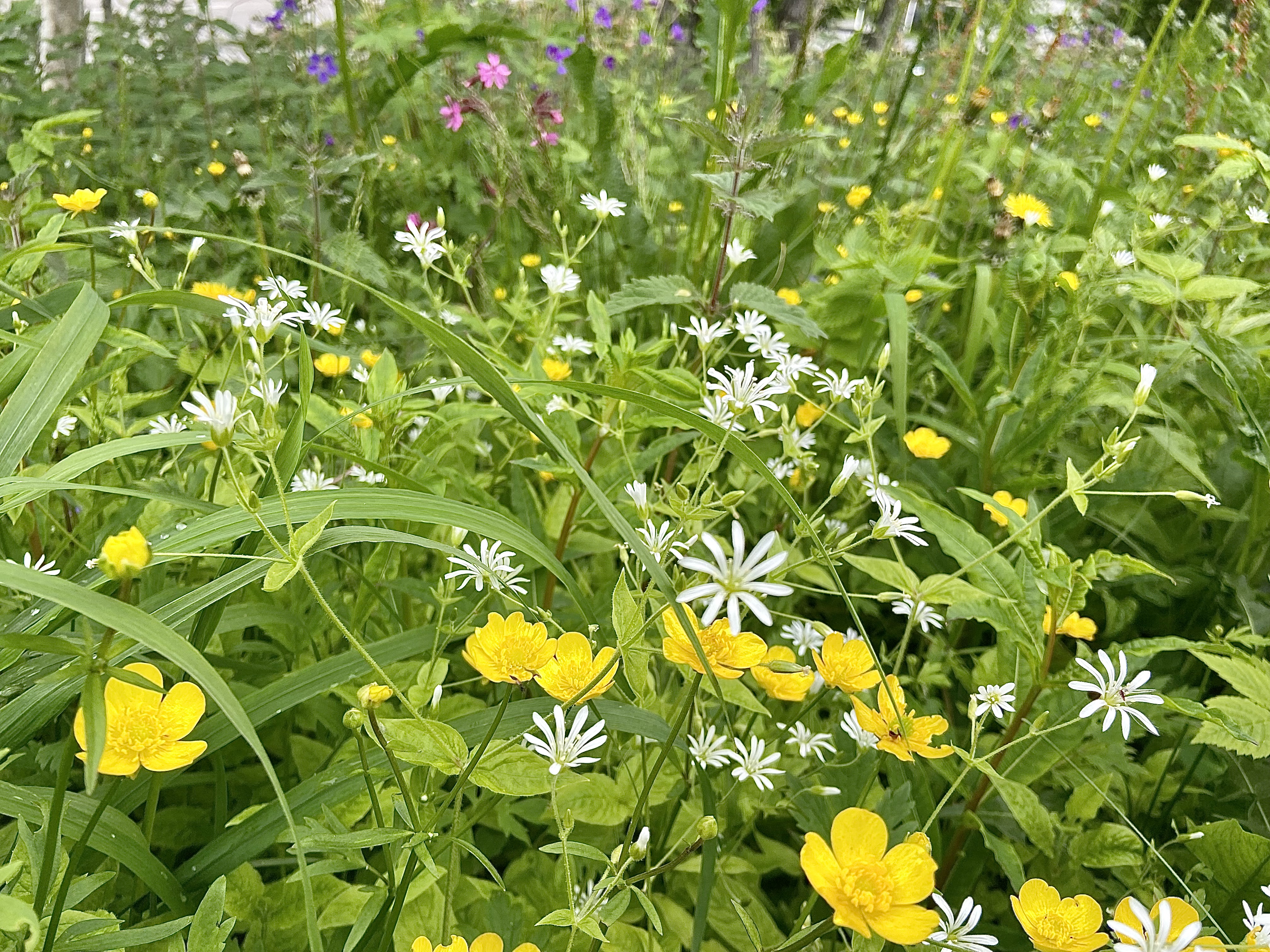
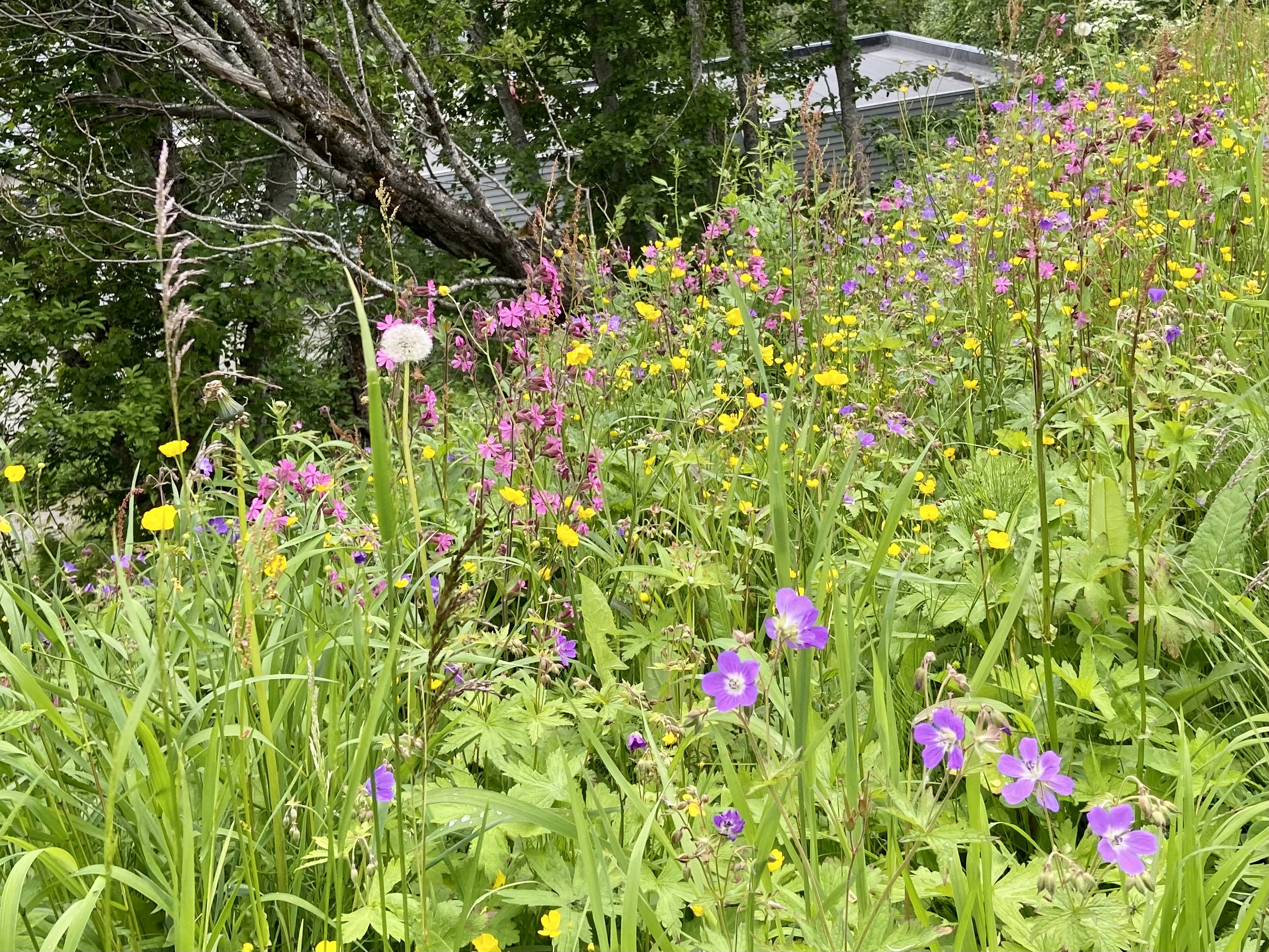
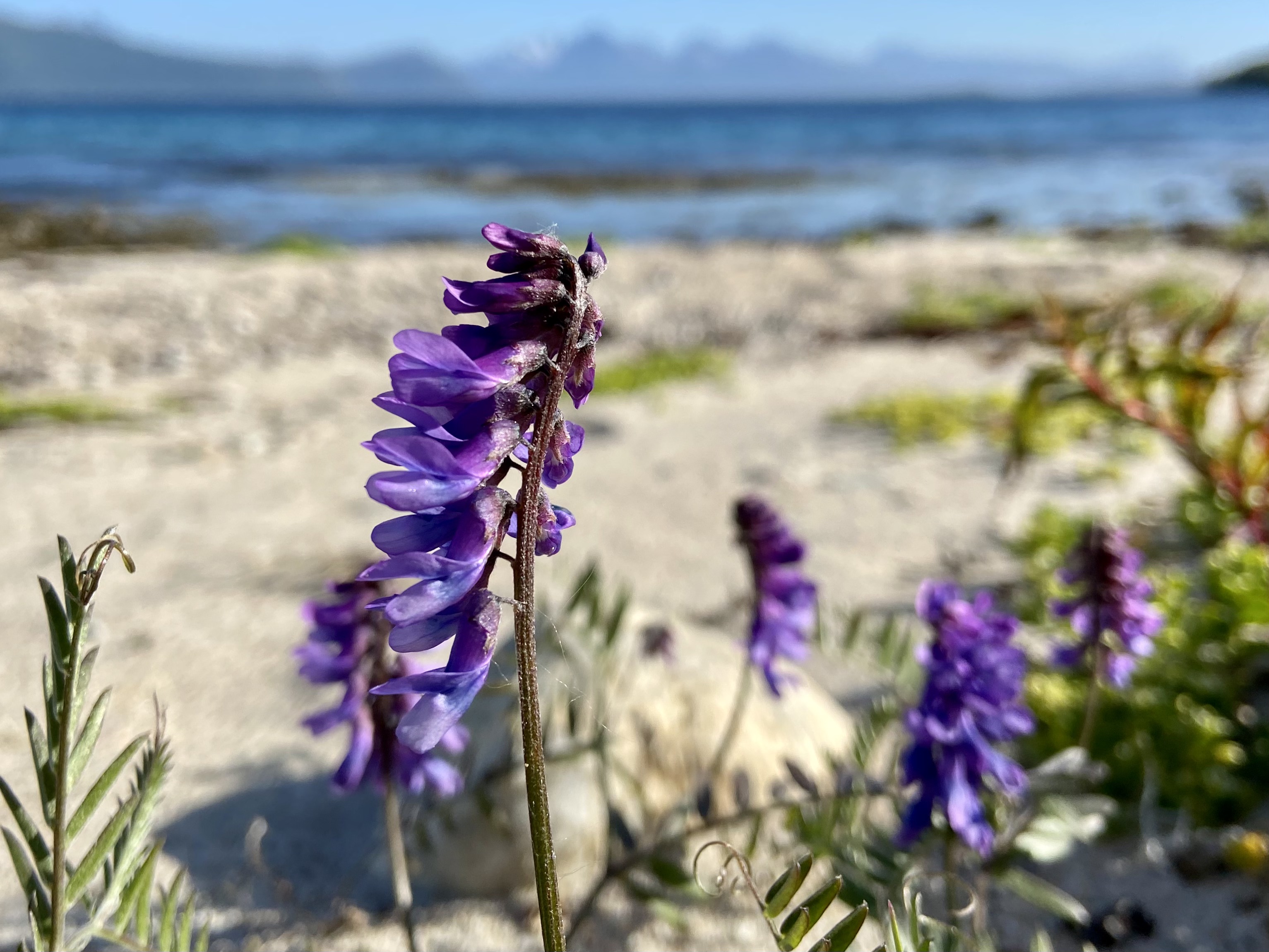
In the depths of the polar night, the light was bluish and very clear. Now in the height of summer, there’s a haze hanging in the air that lends the distant mountains a sense of magical unreality. And then there are the flowers. They are everywhere. I’ve taken a few photos as usual. Hope you enjoy them.
Dyrøya from Senja.The mountains of Senja from my back garden.
I took Anna and Andrew to the airport on Monday morning. They will be away for another week and a half, staying with Charlie down in the more southern regions of Norway. John and I have spent more time together. As well as the visit to Roasters, we spent some time exploring the southern end of Senja and have also taken a couple of walks up around the local ski area, which looks very different without snow. I haven’t much by way of commentary. There must be bloggers who can tell you all the names of the flowers and the mountains, but I am happy for now just to gaze and wonder… and share the photographs with you in blissful ignorance.
I’ll start with the ski slope. It’s small, I believe: just one tow. Next winter, I hope that Andrew and I will get season tickets, but for now, it’s open for hiking. Triar was with us, of course. When is he not?
While Anna and Andrew are away, John and I are hoping to get a night or two away camping. Weather permitting, I still hope to take a midnight hike up one of the easier hills on Senja. We found a possible campsite as we were driving down to Roasters. It’s down by the edge of the fjord, by the side of a river. Wild camping is allowed in Norway, so we hope to make our base here.
John, Triar and I also went for a wander around Stonglandseidet and back to the beach where Thomas and I were taken on our reindeer hunt.
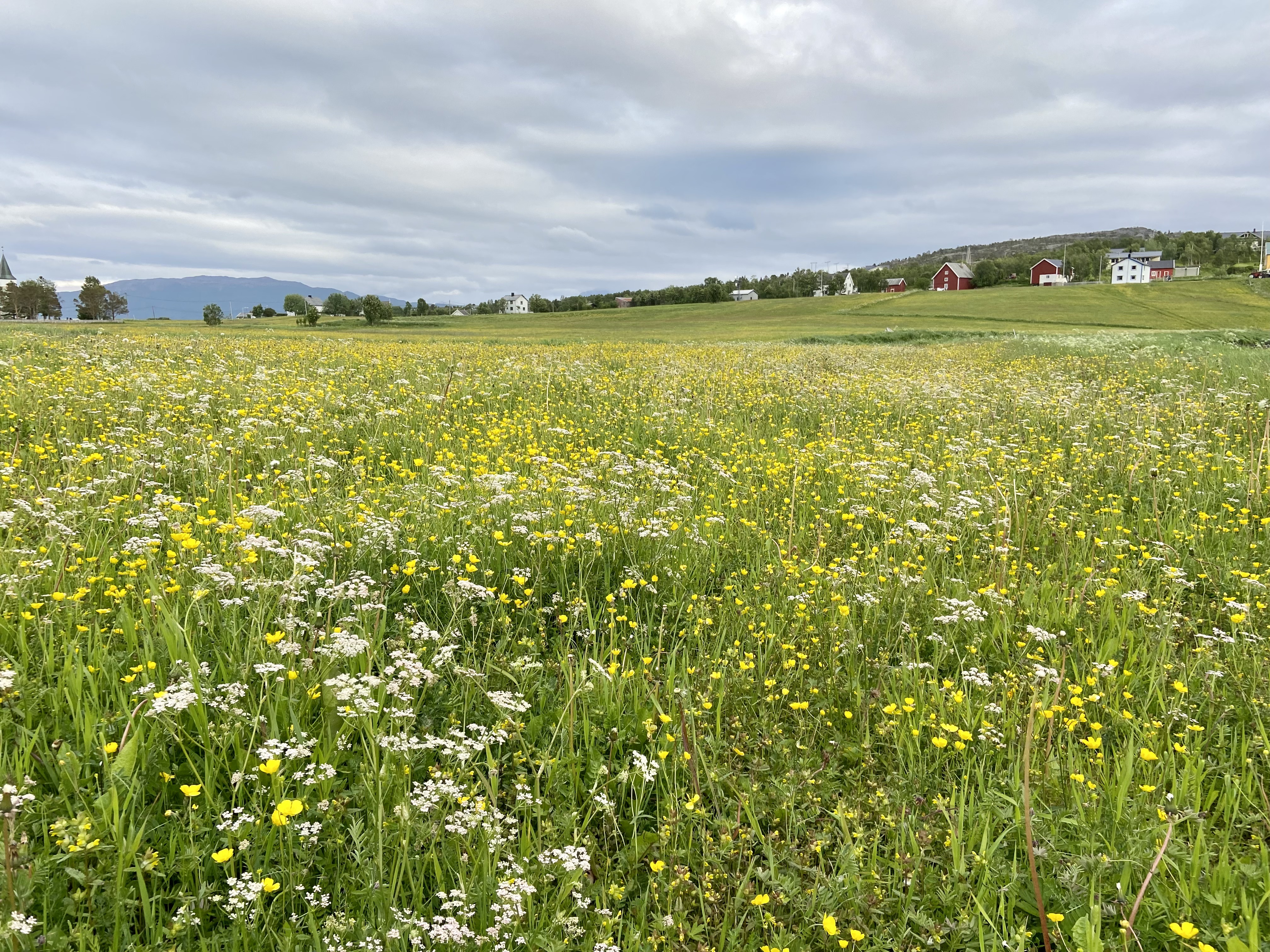
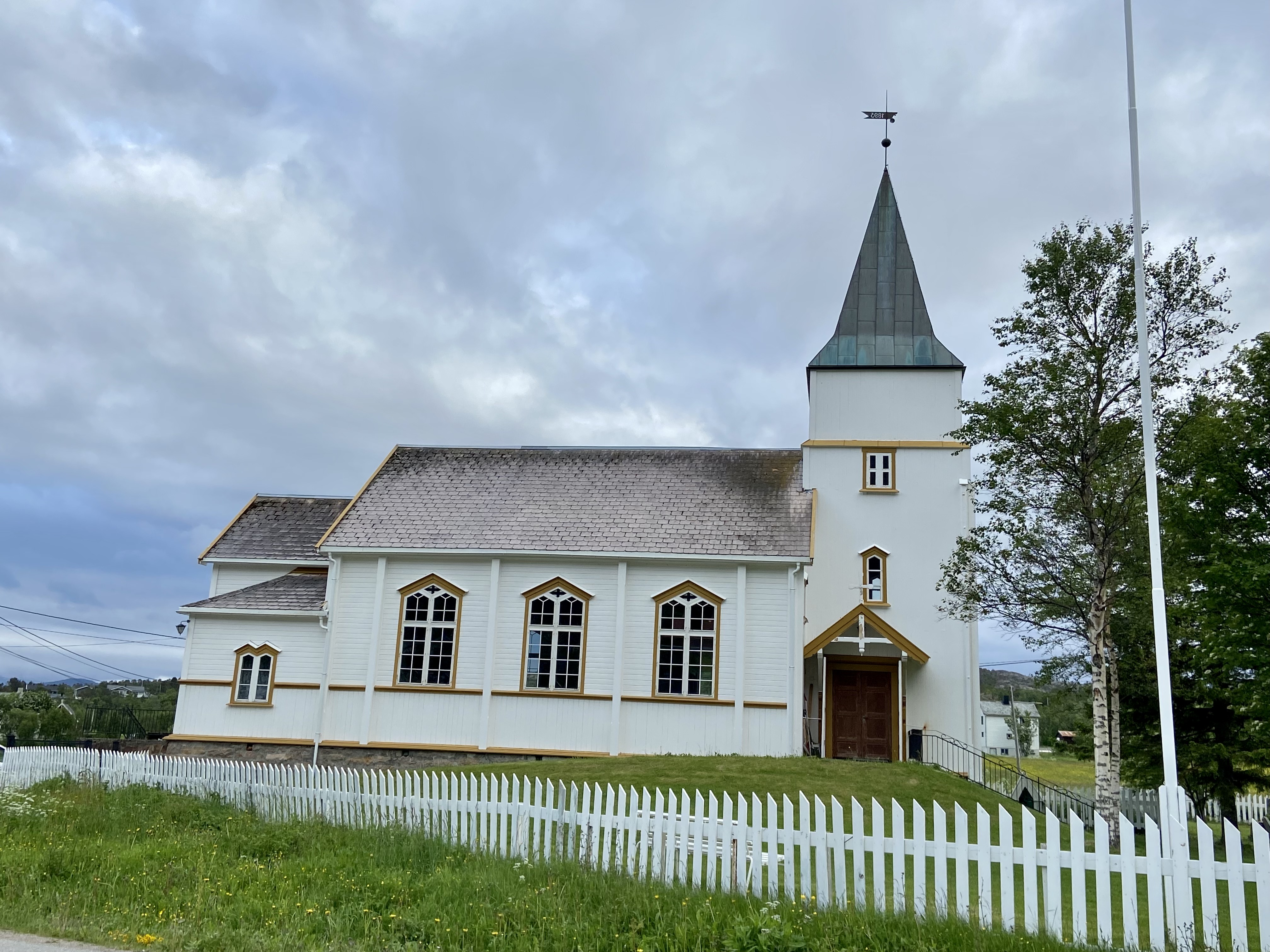
Stonglandseidet has a lovely church. It’s spread out around flower meadows, between two stony bays with a mountainous backdrop.
After a short stroll there, we went back to the beach, which is also surrounded by velvety meadows and grass verges, stippled with flowers.
And finally, this is possibly the happiest photograph of Triar I’ve taken. He really brings a huge amount of cheer into my life.
When I applied for this job last summer, one of the things that attracted me was the very varied workload. Working in remote places where relatively few people live has some (often unconsidered) side-effects, and that is one of them. If you are a (human) GP who lives in a city, you are likely to have many specialist centres available. If you have a complex case, then referring them is the obvious thing to do. But if you are a GP on a remote island, where referral is complex, where a hospital stay might mean that family cannot visit and where sometimes the weather means that nobody can get on or off the island, your workload, and the scope of things you might attempt to deal with locally is likely to be quite different. One isn’t necessarily better than the other, but they might appeal to different people, and the latter is more like the work I do here. In other areas, those who work in animal welfare in the field are a separate team from those who work in the slaughterhouse. Their teams might be big enough so that their members can specialise. But here, it’s mostly me and Thomas locally, and we cover a very large area and a whole range of different animals.
For large chunks of the summer, I will be working in the abattoir. The staff who work there full time will be on holidays and for now, I am the default stand-in. This is slightly complicated by the fact that the other part of my job seems to be speeding up, rather than slowing down, but most vets will recognise that there is a seasonal pattern to our work. I have accrued several days of flexitime, most it over the past few weeks, but it isn’t looking like I’ll be taking them any time soon.
This week couldn’t have been much more varied. I have been working on a list of places that need follow-up checks. These are farms where there were problems in the past, where Mattilsynet has recorded that the law has been broken. I’ve been creating files showing the timelines of events and the specific areas that needed improvement. The next stage is to follow up with visits, but in order to work on the histories, I’ve had to polish up my Excel skills, which have been sadly neglected in recent years.
Thomas and I also carried out an emergency readiness exercise, which is done twice a year. This is aimed at making sure that if there was a major outbreak that was a serious threat, either to other animals or to people, that we would be prepared. Here’s a picture of me, decked out in protective gear that we might use if there was an outbreak of avian flu.
I hope it never arises. It is incredibly hot inside the double layer of protective clothing. Those who work for the likes of Doctors Without Borders fill me with admiration. And of course, at the present time, there are staff working with COVID who have been spending weeks and months working in protective clothing that perhaps they had never seriously anticipated using. To anyone reading who has been faced with it, you are amazing.
On Friday, I had my day planned out. It was going to be a relatively pleasant day in the office. I had a few things that needed to be updated and I needed to check the lists of animals coming in to the abattoir next week. It’s someone’s job to check through the farmers who are sending in their livestock in case there’s anything in particular that we need to follow up. There was also a departmental meeting to attend, which I have only remembered now as I’m writing this!
But instead of a quiet day with an early finish, it turned into one of those wild-card days that end up being the high points of the year. I knew Thomas was going out for the day. I assumed he was blood testing some animals in our area that have recently been diagnosed with a disease that’s being tracked, so I asked him if that was what he was doing, and whether he needed a hand.
It turned out he wasn’t blood testing. Instead, he had been called out to assess the possible welfare implications of moving a group of reindeer from one area of Senja to another, using a helicopter. Reindeer herding is a traditional Sami occupation. There are families who have been using traditional summer and winter pastures for hundreds, perhaps thousands of years. Back then, the land was presumably not owned by anyone in the way it is now.
But since more modern styles of agriculture have become normal, the rights of each group can come into conflict. If you are feeding your cattle on one pasture and are growing hay in another, the last thing you want is a group of reindeer trekking through. Arguably, this should have been discussed when the land was bought, but that too will be largely historical as farms are often handed down in families and the sale might have occurred generations back. What was done in the past can’t be undone. Fortunately there are some landowners who are happy to have the reindeer on their land. If I was building a holiday home in the wilds, or had land I wasn’t using for farming, I’d love to be in an area where I was likely to wake up to reindeer in the garden.
When conflict arises, sometimes it’s best for everybody if the reindeer are moved, but that isn’t easy. There are times of year when the herd comes together for migration, and that is when they are generally taken to new places. The herders work with the natural behaviour patterns of the animals. Moving them in the middle of summer when there is plenty of good grazing, and perhaps young calves at foot, is not so straightforward. And that is where the potential helicopter comes in.
Anyway, Thomas suggested that if I had time, I would be welcome to come along. It would be useful to have an extra pair of eyes and also helpful if I can start to learn more about the political landscape here in the north of Norway.
Assessing the welfare implications of such a move requires an examination of two separate factors. One is looking at the landscape. We drove round the likely route, looking in particular at fences they might have to bypass or leap. The other factor is the reindeer themselves. Moving a group of adult male reindeer is very different from moving heavily pregnant females, or mothers with calves at foot. Ideally, Thomas wanted to inspect the animals. He wanted to assess whether there were any pre-existing injuries that might make running at speed and jumping over obstacles a high risk.
But of course, it’s not always easy to find groups of animals that have freedom to roam. We hit lucky on our first location. A group of nine reindeer were standing at the top of a sloping pasture. One of the herders had dogs, but as the reindeer flew off at full pelt as soon as they caught sight of the dogs, it was obvious that herding them that way could be almost impossible.
We only saw them from a distance. I assumed what I saw was a buck with a group of females. There was one magnificent male, dark in colour, bigger than the others and with impressive antlers. But I was told that in fact it was a group of nine males. How they could tell, I’m not sure, but I hope in time I will learn a little more about them and it will seem a little less foreign.
I had assumed, from the first stop, that finding the rest would be straightforward. What actually happened was that we spent the rest of the day playing the most spectacularly unsuccessful game of hide and seek I have ever been involved in.
But for an unsuccessful day, it was very satisfying. If you’re going to waste a day in the wilderness looking for elusive creatures, it might as well be done in one of the most beautiful places on earth in the early part of the summer. I was told before I came here, that the summer was intense. That the contrast between the white of winter and the green of summer was extraordinary. But what I hadn’t reckoned with was the flowers. They are everywhere, from roadsides and pastures to the forest floor. Different sizes, different hues, stretching out as far as the eye can see.
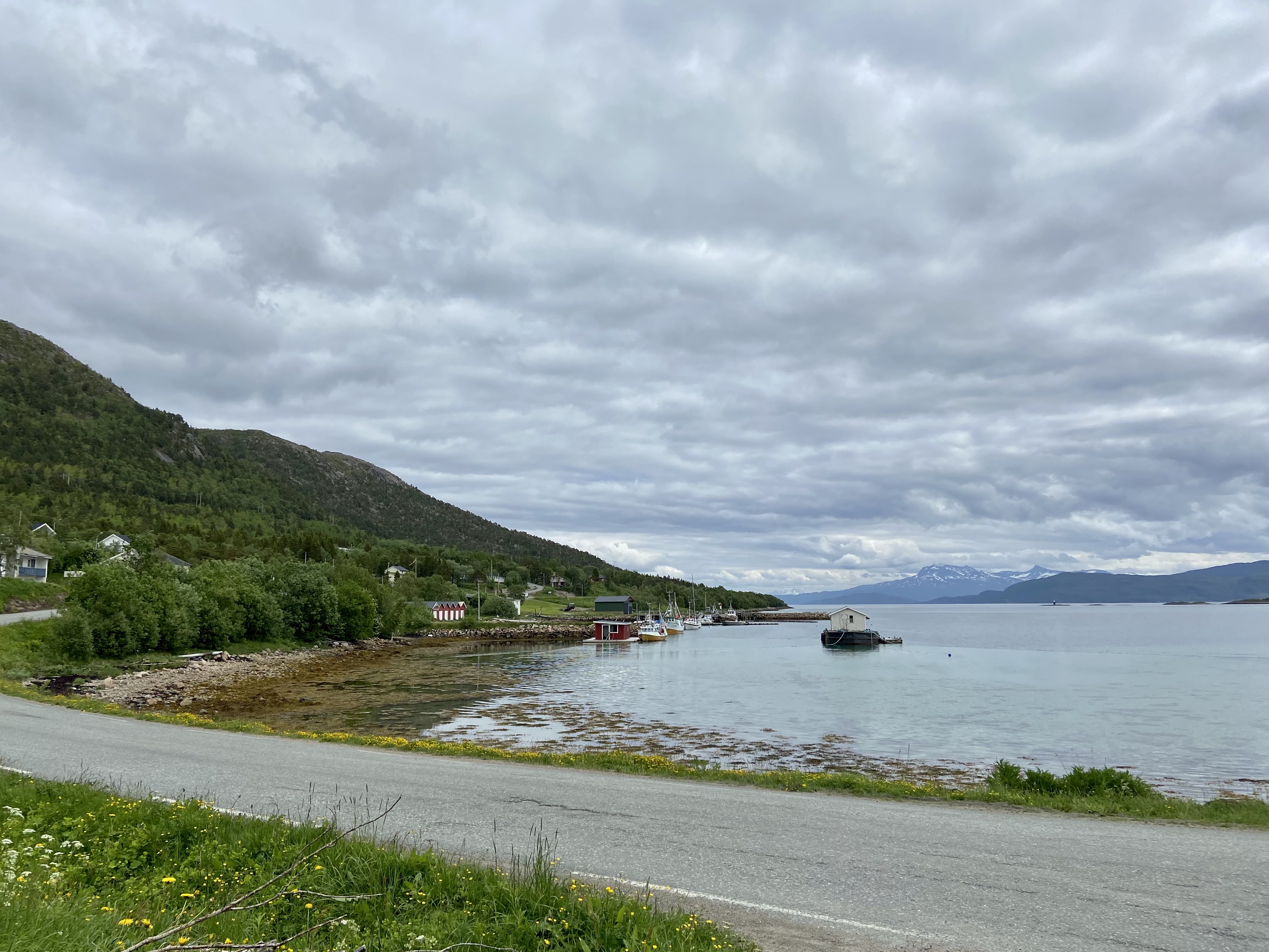
We were at the southern end of the island – a part I haven’t really explored before. And as well as trees and pastures, there were beaches and bays with white sand and turquoise water that looked more tropical than arctic to my eyes.
I was very glad I had started my fitness project a few weeks back. Though the general pace of life in Norway is slower than that of the UK, Norwegians walk much faster. When the group were walking, I could mostly keep in touch with them, though at one point everyone set off and scrambled up a steep slope. It was heavily strewn with fallen branches and knee high undergrowth that caught on my bootlaces and clothes. I found it so tough that I had to give up halfway to the top. Had I not, I have the feeling I might have ended up flying headfirst down the hill into one of the alarming looking nests of fire ants.
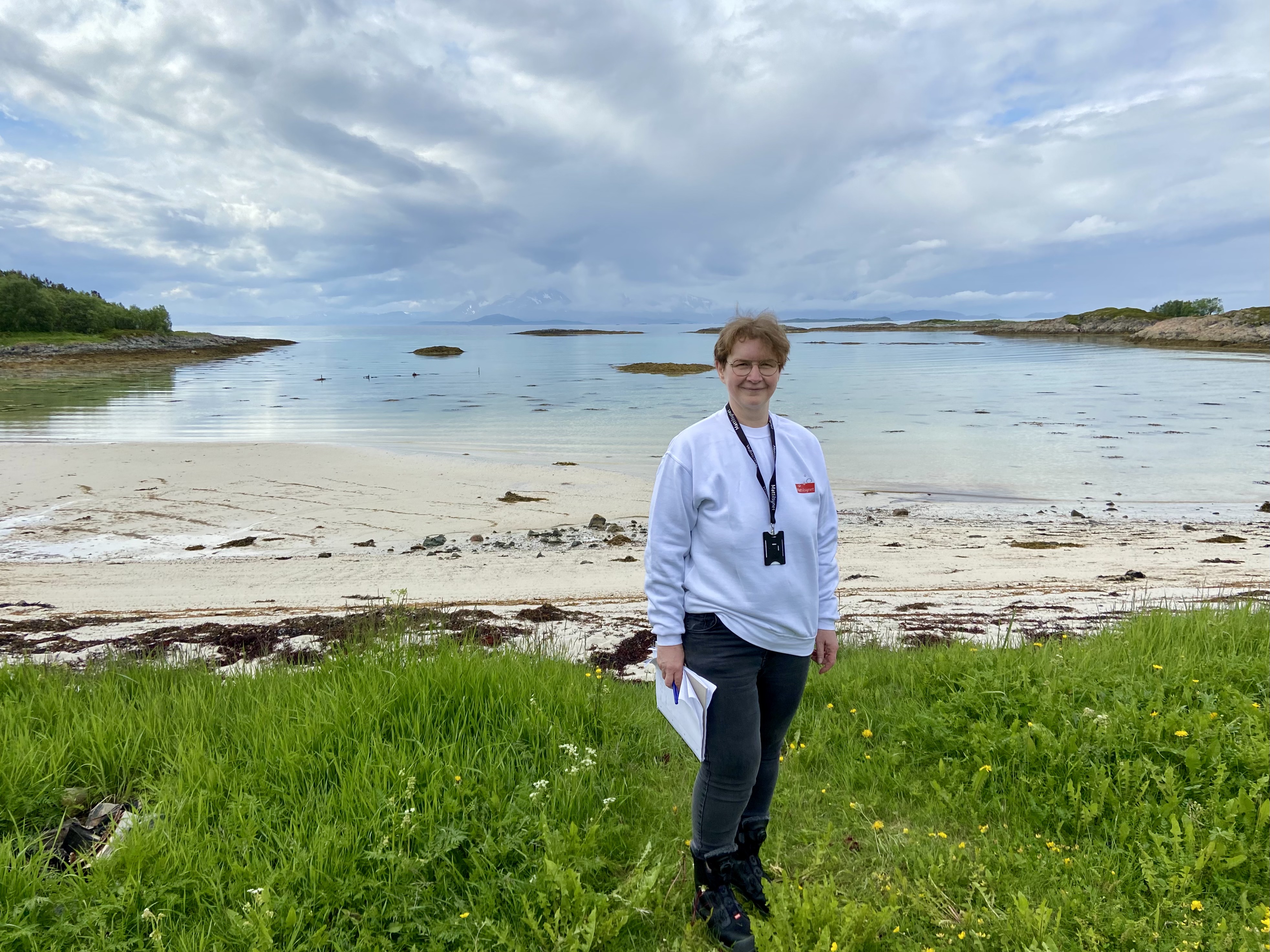
Still, Thomas offered to take a photo of me at the beach, so here it is. This is me: a typical day at the office!
In the end, we didn’t see any more reindeer in the wilds of Senja. We had to return home having inspected only half the group we had wanted to see. But we were assured the remainder were also all male and that there were no calves. Most of the fences were well constructed as well. It is now illegal to build new barbed wire fences in Norway, so hopefully they will gradually disappear. Thomas gave a cautious go ahead to the move. The owners of the reindeer will be given time to make the attempt themselves, but if that doesn’t work, the helicopter may be needed. Thomas told me that the ownership of the reindeer is also complicated. The herding is very much a family business, so children in the family are likely to own a couple of reindeer alongside their parents’ larger share. All in all, it was a very interesting day and by the end of it, I felt I had learned a few basic facts about how herding works. It’s a very different way of life.
We returned to the office, where I had to speedily download a link for a website to my phone. There’s work to be done next week that I probably should have prepared for yesterday. With a bit of luck, I might be able to fit most of it in on Monday, assuming nothing else comes up. But I wouldn’t have missed yesterday for anything. Sometimes you have to seize the moment. And if Thomas is reading, he might be pleased and surprised to hear that I actually found two reindeer on my way home. For some unexplained reason, this mother and her calf were lurking in the Co-op. Appropriately, they were standing right beside the Polar Bread. Now that really isn’t something you see every day!
It seems like an age since I have written here. In my last post I was about to head off to Scotland. That weekend already feels like a distant memory. It was a wonderful wedding. I won’t share all the details, but just as a random sample of how great it was, here are some photos of the venue and the wedding cake.
The day after I returned was a whirlwind of hospital appointments and seeing Charlie off to the airport and then suddenly it was Wednesday and time for my operation. Wivek very kindly drove me to the hospital, and to my surprise (and relief) rather than dropping me in the car park, she accompanied me up to the ward, helped me find where I had to go and then waited with me until the nurse arrived. I was bundled into a bed and given some pain relief. I don’t know what it was, but somehow I managed to fall asleep and they had to wake me up to take me into theatre.
I came round a while later to be presented with some ice-cubes to suck. These were oddly soothing, but there was a horrible taste in my mouth and I remember a strange moment of overwhelming gratitude when the nurse came over to me proffering a lurid pink and yellow ice lolly.
At some point I was reunited with my mobile phone and it struck me that it might be a good idea to let my nearest and dearest know that I had survived. Having sent a boringly factual message to Charlie, I then concluded that I should also let Wivek know. I’m not sure what kind of madness seized my brain at this point. Rather than repeating the factual tone, my fingers sketched in the abstract statement ‘Ice-cubes are my friends.’ At least I think it was something like that. Having typed this gibberish, my clouded brain then decided it would be a good plan to include Dagny and Jan-Arne. To their credit, Dagny and Wivek just wrote back saying they were glad.
Jan-Arne however was obviously confused. Unlike the other two, I suspect that he didn’t have my number programmed into his phone, and faced with some random babble about ice-cubery, he rapidly texted back ‘Que?’ Followed by another message saying ‘Who is this?’ When I let him know it was me, he decided to call me. Goodness knows what I sounded like with a swollen throat and a brain filled with opiates, but it was lovely to hear his friendly voice.
At some point, the surgeon also very kindly visited to let me know that although they wouldn’t have the definitive pathology back for a week or so, there had been no sign of anything severely wrong with my tonsils. As the reason I skipped the waiting-list was that there was some concern over my history of melanoma, this was an enormous relief.
Anyway, my two weeks off raced past in a blur of writing (trying to get Ready. Vet, Go edited in time for a summer onslaught of literary agents) and Come Dine With Me on the TV. In defence of my (appalling) taste in TV programmes, I must say that I only watch such drivel when my brain and body are drained.
And so yesterday, I returned to work. I had been there less than an hour when I began to feel shaky and exhausted. Somehow, everyone but me was swamped with work and this was doubly frustrating as a vomiting cat had been booked in for me and left by the client, and despite having time to spare, without another pair of hands, I was unable to examine it. In between flurries of washing, topping up and resetting the haematology machine, I spent quite a while sitting in the lunch room feeling utterly drained, mentally and physically. I struggled most of the day, both with my veterinary work (thanks are due to Wivek and Marita, who very patiently helped me with each and every case) and with my Norwegian. At one point, I saw a very stressed owner whose dog had been hit by a car. Whilst my emergency-clinic primed brain was still ticking over well enough to asses the dog, I struggled so much with explaining the concept of keeping an eye on the dog’s breathing that I was worried that I wasn’t managing to reassure the owner well enough that she could cope with monitoring the dog for the rest of the day.
I was also still horribly aware of the poor cat which was awaiting a full assessment. I had checked him out and put him in a comfortable kennel with some water so I knew his condition wasn’t critical, but as soon as Jacqueline had arrived, Magne had rushed her in to help him in theatre and I was beginning to wonder whether I was ever going to get a chance to examine and blood test him. I think the emotional roller coaster of the past few weeks was taking its toll, because there were moments when without logical reason, I found my eyes were suddenly threatening to overflow. It’s a long time since I have felt so oddly helpless.
Still there were a few lighter moments which kept me from being overwhelmed. Marita had two cats booked in for clipping and grooming under sedation. She appeared in the prep room clutching the wrong end of one of those evil plastic aprons that come in a roll and from the quizzical way she was examining one of the side tapes, I could tell that she had no idea which part of the thing she was gripping. It became apparent to me at this moment, that despite the fact that most of the logical and language sections of my brain were running on empty, spatial awareness was still fizzing away in a miasma of over-efficiency. I took it from her, tore away the throwaway sections and handed it back to her the correct way up.
‘What kind of IQ do you need to sort out one of those things?’ she asked, rolling her eyes.
‘Not very high,’ I responded. ‘After all I managed it.’
I think this probably demonstrates just how disconnected my brain was. Fortunately, instead of thumping me as I deserved, she just laughed and fixed me with a fake glare.
‘So are you saying my IQ is really low then?’ she demanded. In response, I just grinned rather weakly.
After the road-traffic-accident dog, I managed to snaffle Jacqueline to help me with the vomiting cat. Having tried unsuccessfully earlier to take his temperature on my own, I finally managed it with her there to help. Logic however, had deserted. Somehow I had forgotten it might be better to blood test him first before winding him up by inserting an object up his bottom, however fortunately for me, despite turning into a wildcat with the thermometer, he reverted to sweet pussy cat while I wielded the syringe to take blood from his jugular.
Time was going on, and we were broaching the Thursday communal lunch hour. There was no meeting as Dagny was absent, but people kept urging me to come and get my lunch. Thinking that this was mainly out of concern for my health, I stubbornly sat and waited for the cat’s blood test results, and when they came through, I burrowed my head in a laboratory book to check the significance. I think I had been once or twice into the lunch room. I had started to prepare my lunch and was frankly oblivious to what was going on around me. Suddenly someone started to sing ‘Happy birthday’ and I finally looked up from my book.
‘Whose birthday is it?’ I asked.
‘We’re singing it for you,’ they replied.
I confess that, at this point, I was a million miles away, utterly disconnected from the clinic and wishing I could go home.
‘It’s not my birthday.’ I said in grumpy confusion. There was a rather long silence, filled with suppressed giggles and when I finally managed to reconnect my brain, I realised they were all glancing between me and some stunning flowers rather obviously placed right in the middle of the table.
‘They’re for you,’ they said. The message on the card welcomed me back and said they had missed me and it was signed by Irene, Wivek, Jan-Arne, Jacqueline and Marita. Suddenly my eyes were filled with tears again, but happy ones this time. This was a gift from my friends, not an official token from the clinic and that meant a lot.
Finally, as I was leaving, Jan-Arne came up and gave me a huge hug.
‘I really missed you,’ he said. ‘It just isn’t the same when you’re not here.’
Magne appeared in the passage behind him and said something, at which point Jan-Arne went over and offered to give him a hug as well, but he was humorously rebuffed. For a moment, I considered giving Magne a hug as well as I suspected that might have been more to his taste, but somehow at the last minute, we both lost our nerve. Instead he patted me rather awkwardly on the shoulder and told me how glad he was to see me back. Despite the fact that yesterday was my worst day at work for a very long time, I am very grateful to all my colleagues for their obstinate insistence (despite all the evidence) that I am lovely.















































 A Vet’s Life