Tag Archives: birds

Other People’s Disasters: A Masterclass in Stress

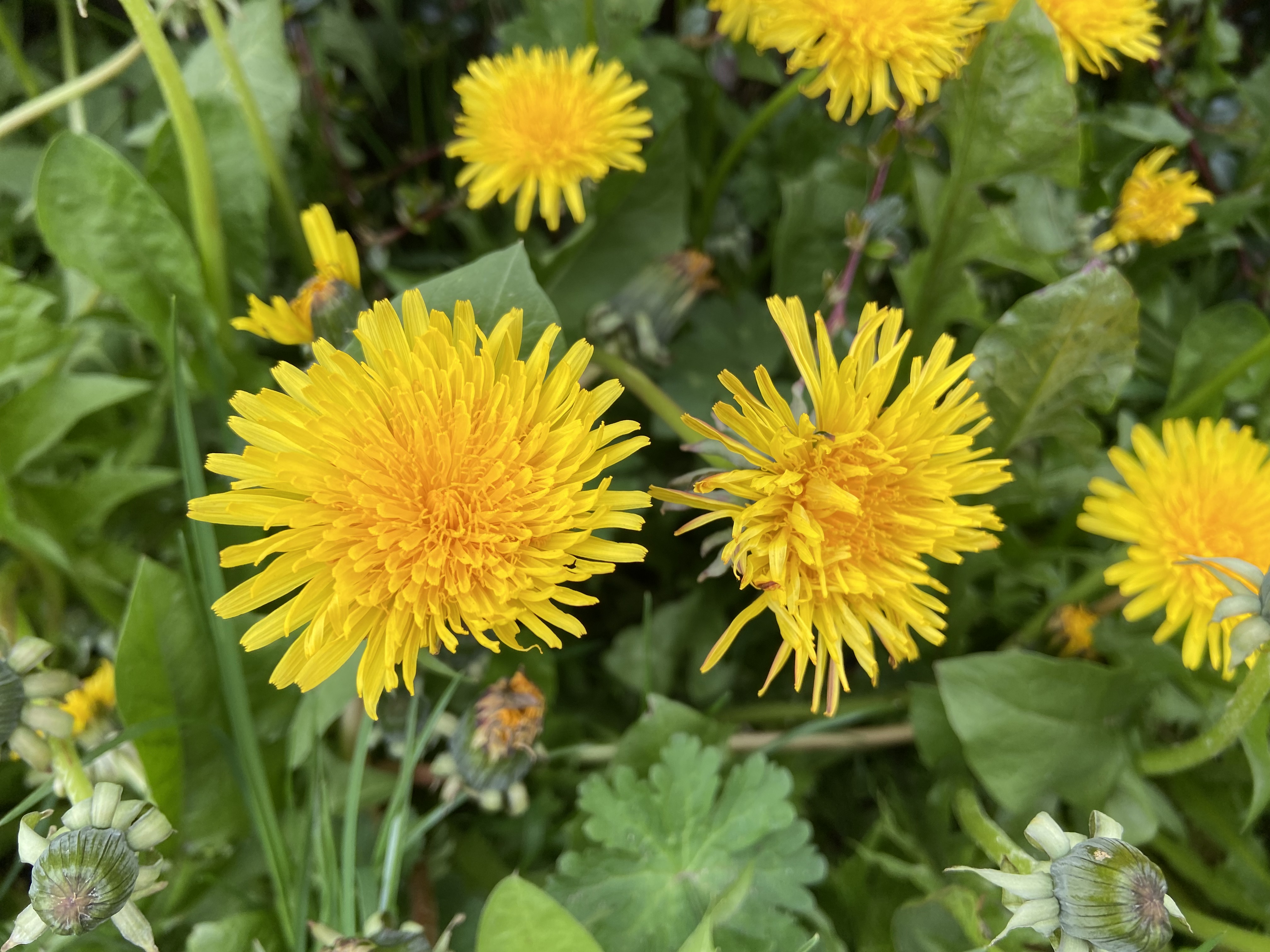
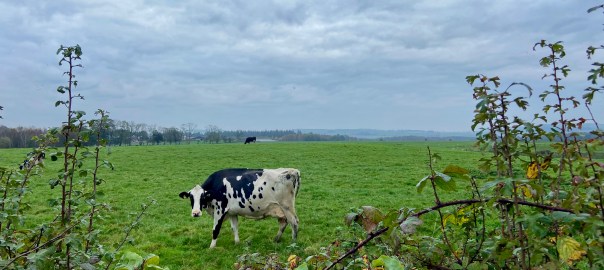
This week has felt very long. Monday was spent catching up on work from last week. Tuesday, I was out on a welfare visit. I haven’t done so many of those lately as our regional vet team are so overstretched that my line-manager is withholding all but the most urgent work. I enjoyed it. It was a well-run dairy farm (the picture at the top of the page is unrelated) which I always find reassuring. We get a few awful welfare visits, but most of the time I find dedicated farmers who concentrate on welfare as part of their routine work. The reality is that animals that are treated well are more productive, which I’m sure has a bearing, but generally they care about the animals they look after.

Wednesday there was a monthly team meeting, and the first in a series of mandatory meetings for the vet team. As I said above, our regional team is struggling. This is straightforwardly as a result of understaffing. We should have a team of ten vets and right now, we have the equivalent of five fully functional vets. Wages for a Senior Veterinary Inspector are not high in comparison with other vet jobs and South West Scotland is the busiest region. Sometimes people come into our team, train for a while, feel the weight and then leave. They go to other jobs, or to different areas, where there is less work. Anyway, at the meeting, a colleague led by saying she wasn’t even able now to work through her emails as they come in. This rang a bell with me. I look through mine and pin the ones I have to deal with at the top of the page. There used to be around five there at any time. Now they’re off the page.

They don’t really have any solutions and I don’t blame my line manager. He is doing all he can to protect us, but only dealing with the most urgent work means that the work we are doing is often heavy or very much time-constrained. If there are horses arriving in the airport, we can’t say, “I’ll handle that tomorrow.” We have to handle the TB cases because if we don’t, there will be more.

The only reason I had the nice welfare visit was because my line manager was away. Those standing in for him seem unable to bear the weight he does, so while he’s away, the welfare visits get distributed and we get pushed to take on other work. We did an Emotional Intelligence training day a while back, where they set us tasks and pushed us to complete them faster. Some of them involved throwing things to each other. The people running it seemed quite impressed that none of the team criticized anyone who slowed us down, by fumbling a catch or throwing badly. I commented, in a wry voice, that we were so used to missing our targets that nobody was going to be uptight about not getting the fastest time in a throwing game. Everyone laughed, but the reality is that working constantly under pressure means that we do understand what is important and we do have quite a forgiving core team.

On Thursday, I thought that I might finally finish and send off my witness statement from the Farm of Doom case, which I last visited back in April. I haven’t been responsible for all the delays on that one. My Local Authority colleague took an age to come back to me with the photographs for numbering, so I couldn’t finish my statement without them. I thought I was more or less done, then sent my work to one of the ex-police Enforcement Officers, who told me I had to be explicit in stating that I took each photo and what it shows. As there are a lot of photos, I was only about halfway through this task and Thursday lunch time was approaching when my line manager rang.

I answered, feeling quite sanguine as I generally do when I finally get the time to complete overdue paperwork. He said, “Sarah, can you start to prepare for a report case please?” The bottom fell out of my day. Thursday afternoon and Friday, when I had planned to get through All the Things, including the almost finished paperwork from Tuesday’s welfare, updating my TB case and writing a long-postponed talk I’m supposed to be giving on deer were immediately thrown out of the window. A report case would take up the whole of the next two days. “What kind of report case?” I asked. “AI,” he replied. Avian Influenza. Mentally, I cast aside my planned quiet days and started to prepare for the onslaught.

When I go on holiday, and especially when flying, there’s a bit of a tense period before setting off. Making sure I have everything I’ll need creates a bit of tension. Obviously, I can buy new underwear, but if I forget my passport or my phone, with its electronic ticket information, and maybe the phone charger, then life would become more complicated. I usually relax once I’m through airport security. Beyond that gate, anything that goes wrong will be dealt with.

It’s a bit similar for me with a report case. Before I set off, I need to make sure I have everything in my car that I might require for my disease investigation. All the right paperwork, all the right kit. Throw on top of there the knowledge that I might not make it home that night, so I have to make sure Triar’s needs are covered too, and you get the picture. Having been “officially informed” that I am the attending vet, I have half an hour before I’m meant to be on my way. The reality is that we usually get this pre-warning and the official time is so vague that I have trouble filling in the form the next day. There’s no chance of getting out of the door in half an hour.

Anyway, that prep time, as with the airport planning, is always the worst bit for me. Once I’m in the car and on my way, my mind settles and I am committed. There’s no point in worrying about my other cases or whether I’ve forgotten anything. The next few hours, I have one task only, which is to assess whether there is notifiable disease on the farm or not. This time, I was driving out west. I hadn’t had lunch, so I stopped in a roadside shop for a filled roll. While I was stopped, I saw a message from Donna, saying she would take Triar out (and possibly in overnight). Another weight off my mind.

I’m writing all this as if I’m an old hand, but in reality, this was only my third real report case. It was the second bird flu report case in our region this week. The other farm would still be under restrictions because, after testing, the final all-clear for bird flu takes about a week to come through, but initial results suggested that one was negative. My farm, the one I was heading for, was a laying unit, producing eggs. There were, in total, 180,000 birds on three sites. 80 birds had died overnight in one of the sheds. My job was to go in, take a detailed history, examine both live and dead birds, and then decide whether we need to test for bird flu.

If you’re wondering about now, “well why don’t they just go and test them and see?” the answer is because notifiable diseases are only notifiable because they present a risk. The risk might be economic, for example it might mean animals can’t be sold to other countries because of trade agreements. Scotland is fighting to keep its Bluetongue status as “Free of Disease” because that means more international markets are open to them. Most though, have an animal welfare or human risk aspect. If foot and mouth spreads out of control, as it did in 2001, there is a massive animal welfare issue, as well as a huge economic cost to farming and to the UK. Bird flu presents a risk to human health, as well as a significant welfare impact on the infected birds. Both spread like norovirus through a scout camp, so as soon as there is suspicion of disease, the farm is locked down. The first thing I do, on arrival at the farm, is to serve official papers, confirming the verbal restrictions they were told when they called us.

And when I say locked down, I mean just that. Bird flu spreads easily, so it’s not only birds and animals that can’t move off. People aren’t allowed on or off. Vehicles too. Any movement, from that moment, until the restrictions are lifted, has to be made under a licence. If I can’t rule out disease and we go for testing, this farm is going to be locked down for a week. If I decide this isn’t bird flu, they can open up again this evening. This is an egg producing farm, with 180,000 birds, each laying an egg daily. Eggs can carry bird flu. A week’s worth of eggs… well you get the picture.

I need to be calm when I arrive on the farm. If this day is stressful for me, then think about what the farmer is going through. His or her animals and a chunk of his or her livelihood are on the line. They need me to guide them through this so I want them to have confidence. I bless my years in general practice out of hours and in the emergency clinic. I’ve been dealing with other people’s disasters since I was 23. (As an aside, I love the company of old vets for exactly that reason. Many new vets never do out of hours. It’s not good for the profession.)

My Animal Health Officer (AHO) who will take the samples today, if we sample, is F. She’s even newer than me. My first bird-flu case was hers too, but that time we had an experienced AHO with us. This time, it’s just us. She’s holding up well and was out of her car before me. Deep breath. Grab all the paperwork. I open the car door, climb out, and greet the farmer as if I’ve done this a thousand times before and it’s all routine. Explain who I am: what we’re going to do. There will be a lot of paperwork. Hundreds of questions. Better they know what we’re in for, because they are about to be grilled on all their daily routines, their biosecurity arrangements, who has been on and off the farm in the last 21 days, what has gone to plan, what has happened that was different.

We go into the house. The first thing I do is plug in my phone. I used it to guide me here and later, I have to document everything with photographs. The first time I did this, a few months back, I plugged in my phone, but forgot the switch on the socket. Nobody’s perfect! This time I throw the switch. Then we get down to it, at the kitchen table. I ask them questions. They answer, in detail and at high speed. I’m writing it all down. There is no chance all the information will go into my head and stay there. Several times, I have to ask them to repeat, because they are three facts ahead and I’m still noting down fact 1.

I have to guide the conversation, but it’s difficult. It’s already three in the afternoon and I am mindful of the remaining daylight. We don’t want to be sampling in darkness. I need to drill into the core history. What did they notice first? When? How might disease have been introduced? Where are the weak points in their defences? Are there other possible causes? I’m also vaguely aware that tomorrow, I will be filling in a form which is going to ask me for details which may not be relevant here. I try to balance the depth, get enough information, disregard the unimportant.

Finally, I feel I have enough information. I stand up and go to my phone. Calling my veterinary advisor is the next step. I have to refer the history I’ve gathered to check it’s enough. Because the interview had hopped about a bit, it was difficult to find the information. I have three of four A4 pages, densely written. She asks a few more questions and I have her on speaker, so the farmer answers. It’s time to go and look at the birds.

There are eleven sheds in total, but the dead birds were mostly from shed X. A second shed (Y) has had reduced egg production for a couple of weeks. These two sheds are linked. With plenty of time, I might visit several sheds. If bird flu is confirmed, we will need GPS coordinates for all eleven. I suggest visiting one of the healthy sheds first, then egg-drop Y, then dead birds X. Time is so short though, that after a couple of minutes of discussion, we cut it down to sheds Y, then X which are at Site C. Taking the possibly infected shed last is good practice. I don’t want to infect any sheds that are still clean, though if it is bird flu, every single bird will be dead within the week.

I have a ton of gear to take to the shed and we’re driving down. Two layers of disposable overalls, two layers of gloves. Foot coverings for going into the shed. Breathing hood and filters. Post mortem kit. Sharp safe. Phone, inside a plastic bag. I forget my thermometer. Nobody’s perfect!

I take a photo of the door of Site C and a GPS reading, which I screenshot. If the case goes live, this reading will define the 3km Protection Zone and the 10km Surveillance Zone.

Their biosecurity is reassuring. They ask me to change footwear as I go in, but I decline. All these layers of kit are there to protect me from infection and if I take my wellies off and put their footwear on, I’m compromising that. I disinfect my clean wellies and put on the boot protectors, hoping for the best. Worst case scenario, they don’t have bird flu and I take it in. Oh well.

To get to shed Y, we pass the end of shed X. They have shared air space. There’s a pile of dead birds outside shed X and I cast a glance at them as we walk by, but nothing leaps out. I look in at shed Y through the wire mesh. There are no dead birds visible in the shed. It’s a high rise layer unit with birds on perches right up to the roof. Seeing me in all my get-up all the birds on the floor skedaddle for the high-rise perches or away to the other end of the pen. They look healthy enough.

I don’t go in. It’s time to walk through shed X.

I go in on my own. The birds get alarmed if two people go in together, the farm manager tells me. I think this weird creature with the noisy hood on her head will alarm them anyway, but I don’t say anything. The birds in this shed are as flighty as those in shed Y. It doesn’t matter a fig that I forgot my thermometer. There is not a chance we will be catching any of these birds. I can only see them as they run and climb, and then at a distance, but the view is reassuring. None are lame. No lethargic clumps of sick looking birds. Their tails are up, their feathers smooth. Eyes bright. They stare at me in distant disapproval, but none of them are sneezing.

My mind is fizzing as I walk. Surely, with bird flu, there would be sick birds? Probably dead birds too. These are some of the healthiest birds I’ve ever seen. They can certainly run!

I walk the length of the shed. It’s a well-managed unit. Nice dry litter. Plenty of space. The birds can usually go outside, but today they too are locked down. I walk back, through the pens, taking a few pictures with my plastic-wrapped phone. It’s time to post-mortem some birds. I haven’t seen anything in the shed to suggest there is bird flu, but I still can’t definitively rule it out. We’ve had 80 dead birds overnight and I need to be sure.

I take a look again at the pile of dead birds. With bird flu, I might see swollen heads, deep blue wattles, maybe haemorrhages in the legs or diarrhoea round the cloaca. I don’t see any of those things. I select two birds and photo them. It’s not very bright here, so I ask the farm manager if he has a light. He fetches his head torch. I don’t want to move the birds from where they are. It will have to do.

Kneeling on the floor, I start the post-mortem. It’s a month and a half since I did my last bird PM and that was in a brightly lit lab, on a comfortable bench. Now I’m kneeling on the concrete floor, my head encased in a hood that limits my view, in semi-darkness. This PM is make or break time. I check the head, then open up the throat to look at the trachea. There’s no mucus there, no haemorrage. It’s perfectly normal and when I reach the crop at the base of the neck, it is filled with food. Whatever happened to this bird, it was eating until the moment it died. I open up the body cavity, looking for inflammation, haemorrhage or necrosis, but the only thing that looks abnormal is the liver. Normally, the liver is reddish brown throughout, but this one has brown patches. Some of patches have clear cut edges. They’re not abscesses. I worked in a chicken slaughterhouse for three years, but I’ve never seen a liver like this.

The next bird is the same. I open it up. A second mottled liver. Maybe a little fluid build up where the air-sacs would be. Maybe metabolic, I think. Very strange, but just as in the sheds, there is nothing screaming bird-flu at me. I take a few photos of my findings. It’s good to have evidence. Packing up, I edge back to my feet. It’s not so easy these days, but I make it and we leave the shed again.

Once outside, clutching my now-contaminated kit, I decide to go back up to the main holding before phoning VENDU. The Veterinary Exotic Notifiable Disease Unit give us directions what samples to take, but it’s my decision whether we need to take any at all. If I decide not to, they will challenge me to try to assess my decision, but the final choice is mine. I’ve stripped off most of my kit. If they challenge me for information I don’t have, I’ll have to go again. I decide to call my veterinary advisor before VENDU. I don’t think this is bird flu. It had not really crossed my mind, as I drove here, that I wouldn’t be testing, but with all the information I’ve gathered, I’m conflicted. For me, testing is the safe option, but it’s hammering in my head. I DON’T THINK THIS IS BIRD FLU!

I call my advisor and tell her. She asks about the livers and I describe them. She will discuss with her advisor, she says, while I call VENDU. I drop two liver photos into the chat and leave them to it. I briefly chat with the farmer. He drops it into the conversation that he has no insurance that would cover a week of lockdown. I can’t let that influence my decision either. I have to be sure.

The VENDU vet is busy, but when she calls back, it’s someone I know. This makes it easier to have that discussion, but even then, as I tell her I don’t think it’s bird flu, she wants me to be certain. I am as certain as I can be. The only thing that’s holding me back is that it’s a huge decision. If I say no testing, this farm will open up overnight. Halted eggs on lorries will be on the move again. If there are hundreds more deaths overnight, and it then goes positive, the whole thing will restart tomorrow and I will have messed up massively.

I’m almost sure. I REALLY DON’T THINK THIS IS BIRD FLU! If I lock down the farm, their own vet can’t come on and take samples for a week, even if early tests are negative. Whatever caused the egg drop and the deaths, they’ll have to live with it undiagnosed.

I can’t let that affect my decision either. I tell the VENDU vet that I am almost decided, but I want to call my advisor again. My advisor and her advisor have seen the photos. “Good pictures,” is written in the chat. I call her back and tell her I want to negate. I explain my reasoning again. “We’ve chatted,” she says, “and if you want to negate, we will back your decision fully. Even if it kicks off again, we are happy to defend your decision.”

I take a deep breath. “I don’t think this is bird flu,” I say, “I don’t want to sample.”

The farmers’ relief was palpable. They made a couple of phone calls and thanked me profusely and all the while, I hope I’ve made the right decision. I drive home and pick up Triar and in all honesty, I was high as a kite. Adrenaline has been my drug of choice for a long time and, perhaps bizarrely, I love this stuff. Still, the worry was there that it could all kick off. I didn’t get a whole lot of sleep. My phone rang when I was out walking Triar in the morning. “11 birds have died in sheds X and Y overnight,” they said. 11 out of the thousands of birds. A lot less than yesterday’s 80. I didn’t quite punch the air, but it was a good start to my Friday morning.

I’m writing this on Saturday morning. Despite negating the case, I still had to process all the paperwork and, with a few distractions, it took me all day yesterday. My advisor told me to drop the not-quite completed form into the case folder, “just in case it kicks off over the weekend,” she said. I don’t think it will, and anyway my workphone is switched on. I’m pretty sure if anything kicks off, it’s me the farmer will call first.

Monday will all be paperwork. This case created a new pile to add to that I already had. Even then, if something else comes in, I might have to drop the paperwork and run again.

And after all that, I found out that I left my phone charger on the farm and will have to go and collect it. Nobody’s perfect!
Almost Easter

So here I am, almost two weeks into my Walkfit project. Am I feeling and looking better? Well I’m not sure about the latter. It’s hard for me to assess, not least because I don’t have any decent sized mirrors to check myself out in. However, I am beginning to notice my energy creeping up a little.

As well as encouraging walking, there’s a kind of mini-aerobics session each day, that lasts between seven and ten minutes. I suspect the times will build gradually, but maybe not. They’re low impact and I’m starting to enjoy them, which is why I conclude my energy is building. I usually do them at the end of the day, by which time my steps are usually done anyway so that feels positive.

The current step count aim is 5,200 which I am easily surpassing most days, but if I overdo it one day, then I can drop it right down to that figure and still have achieved the goal, which feels positive. So far, I haven’t lost any weight at all, so their prediction that I would be at my goal weight by June or July was the nonsense I knew it would be, but I do hope that it will start to drop a bit at some point if I carry on, and if it doesn’t, being fitter is never a bad thing.

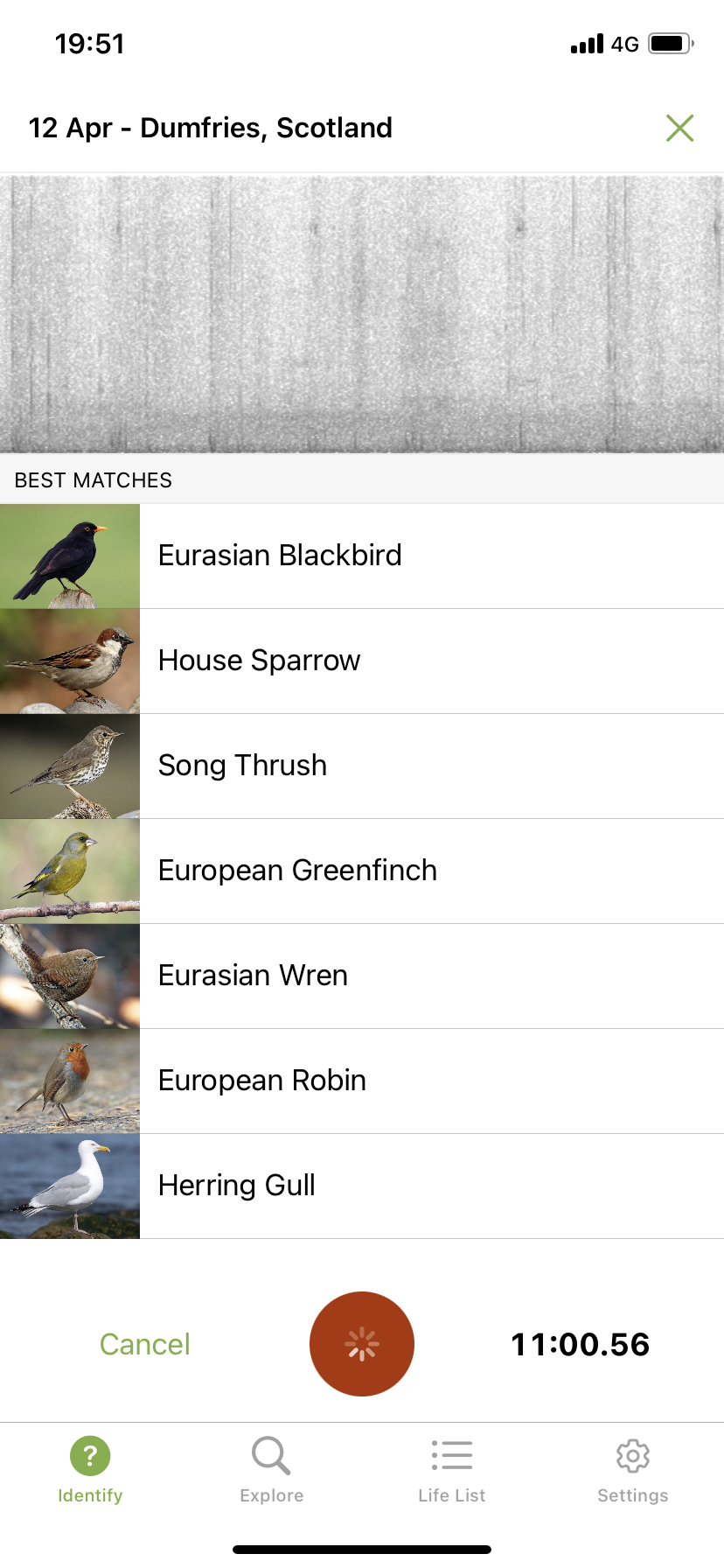
I have, of course, been doing most of my walking in Blackbird Lane, which has been gorgeous. My Merlin bird app has often picked up a song thrush, but it’s usually been in the distance. Last night I heard its song so loudly that I looked into the bush beside me and there it was. So beautiful. I reached for my phone, to add it to my bird life-list (birds you’ve seen to confirm the app got the identification right) but alas, I had the wrong phone with me. Another day, perhaps!

At the start of the lane, there’s a kind of brownish pond. While the hedge was bare, it was more visible, but it’s really barely more than a big deep puddle. As I walked past on Wednesday, a flash of green caught my eye. There, on this miniature pond, silent and still, was a beautiful mallard. I was amazed to see him there, on this tiny stretch of water.

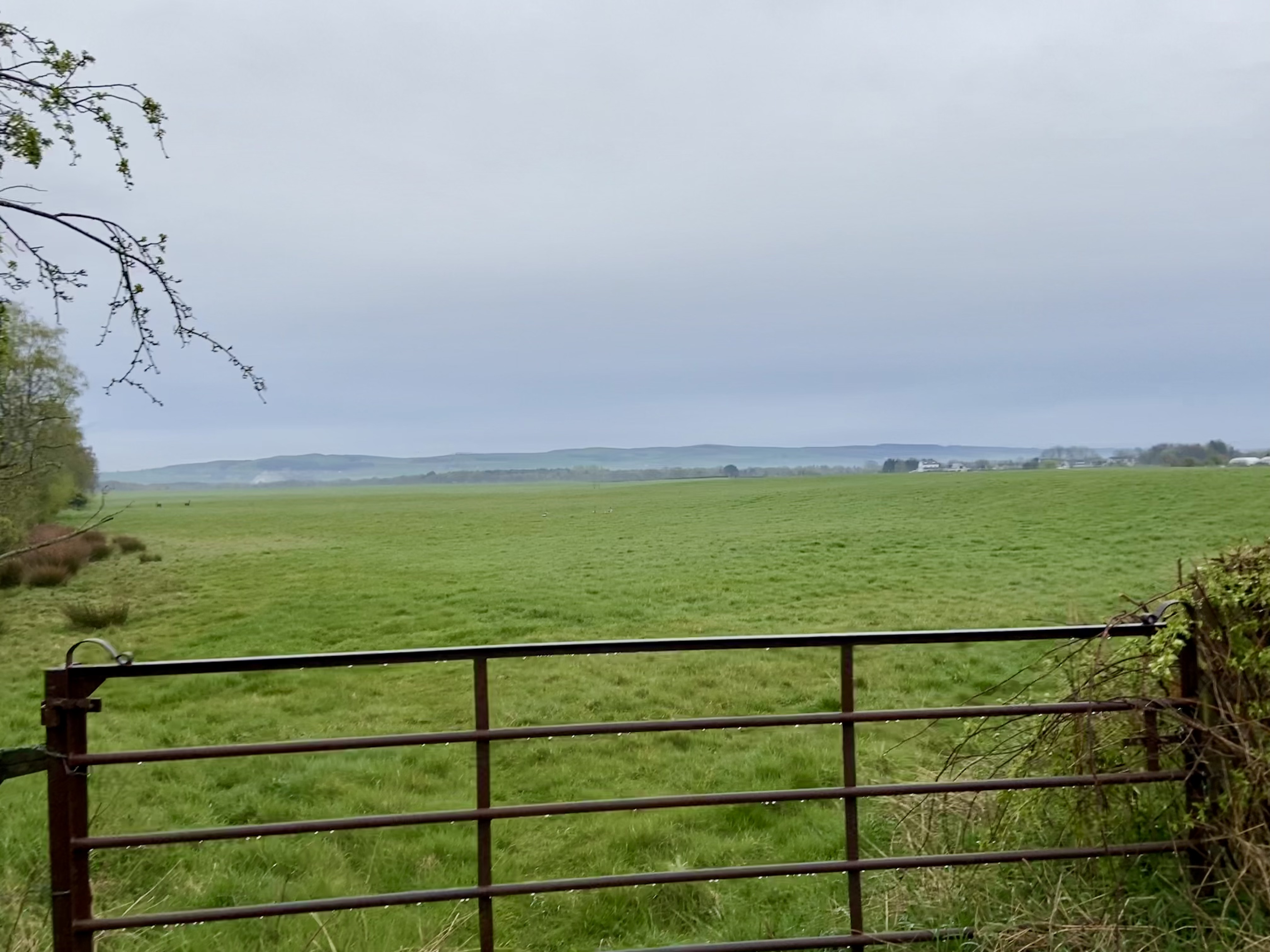
The lane is a proper road with tarmac for a short distance, then it turns into more of a pathway. Here there are hedges and fields on either side and my eye (and ears) were caught by a group of graylag geese. This time I had my Merlin phone with me. I clicked on the life-list button, which showed me a picture of a graylag goose and asked “Is this your bird?” I answered “Yes” and the graylag goose was added. Though they were clear enough to my eye, they were a bit distant for phone photography, but I did my best.

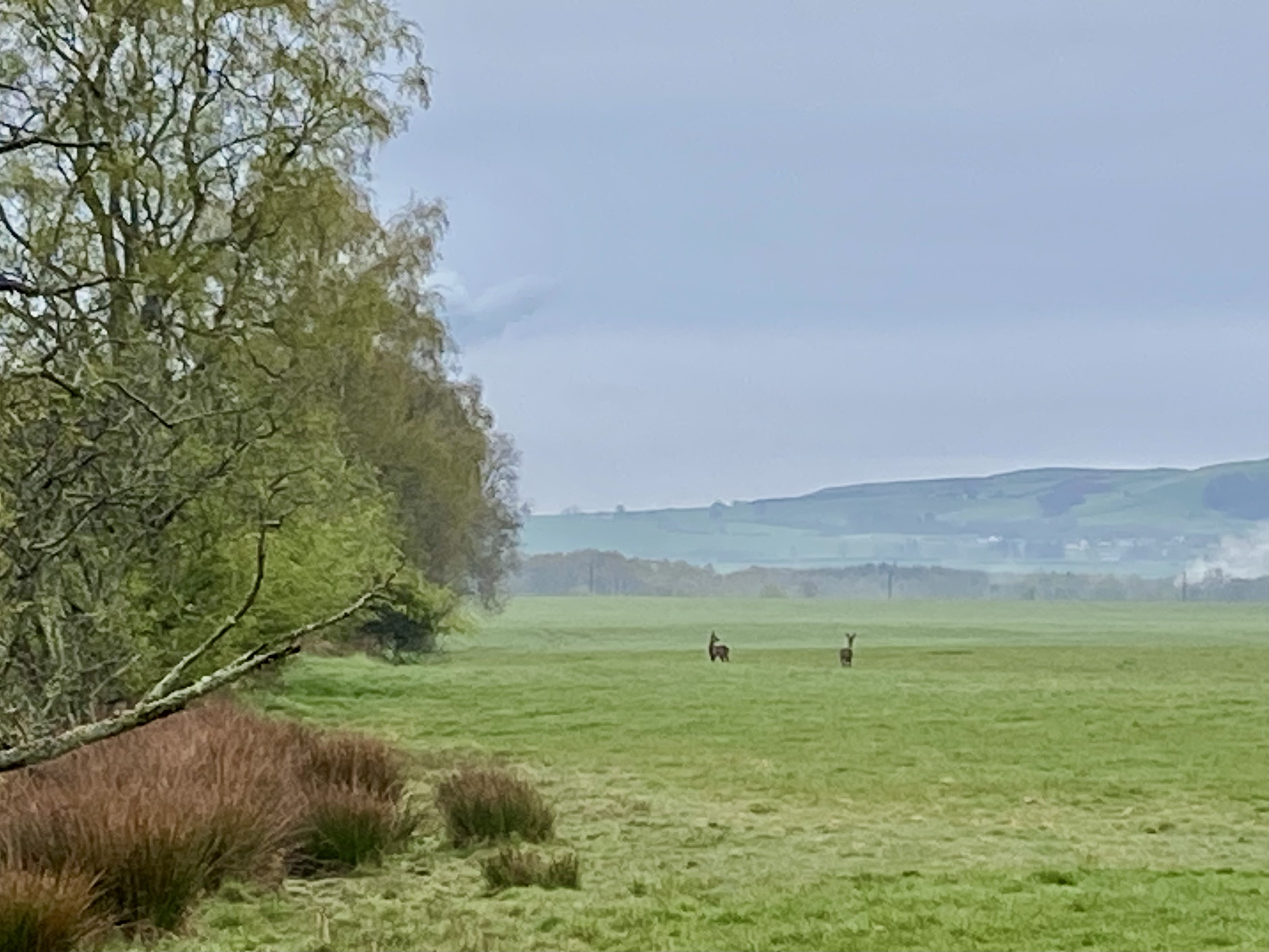
Only a little further on, I saw movement near the edge of the field. This time I saw the pricked ears and graceful forms of two deer. Again, I could see them fairly clearly, but on my phone, they are distant shapes, though still beautiful.

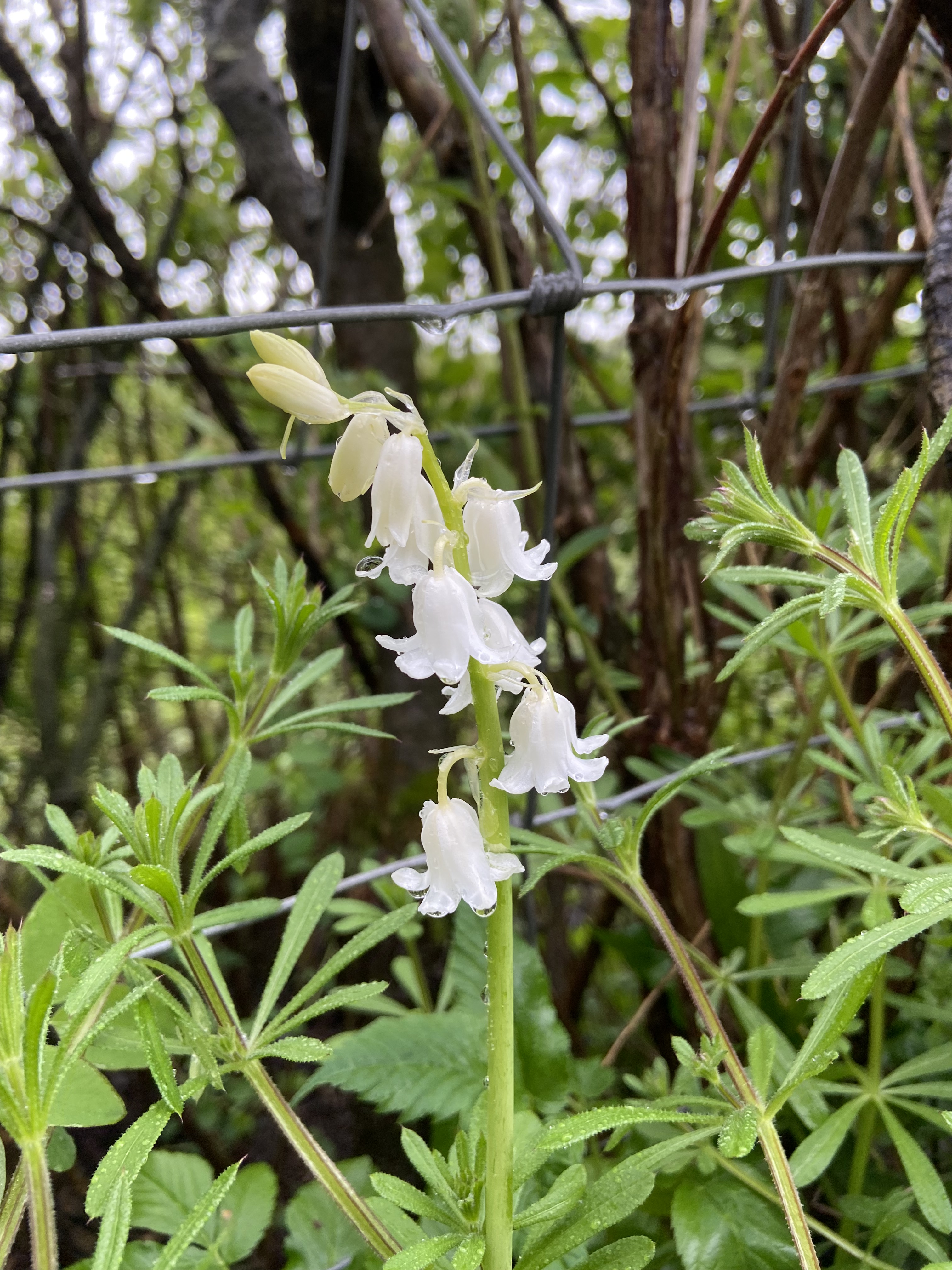
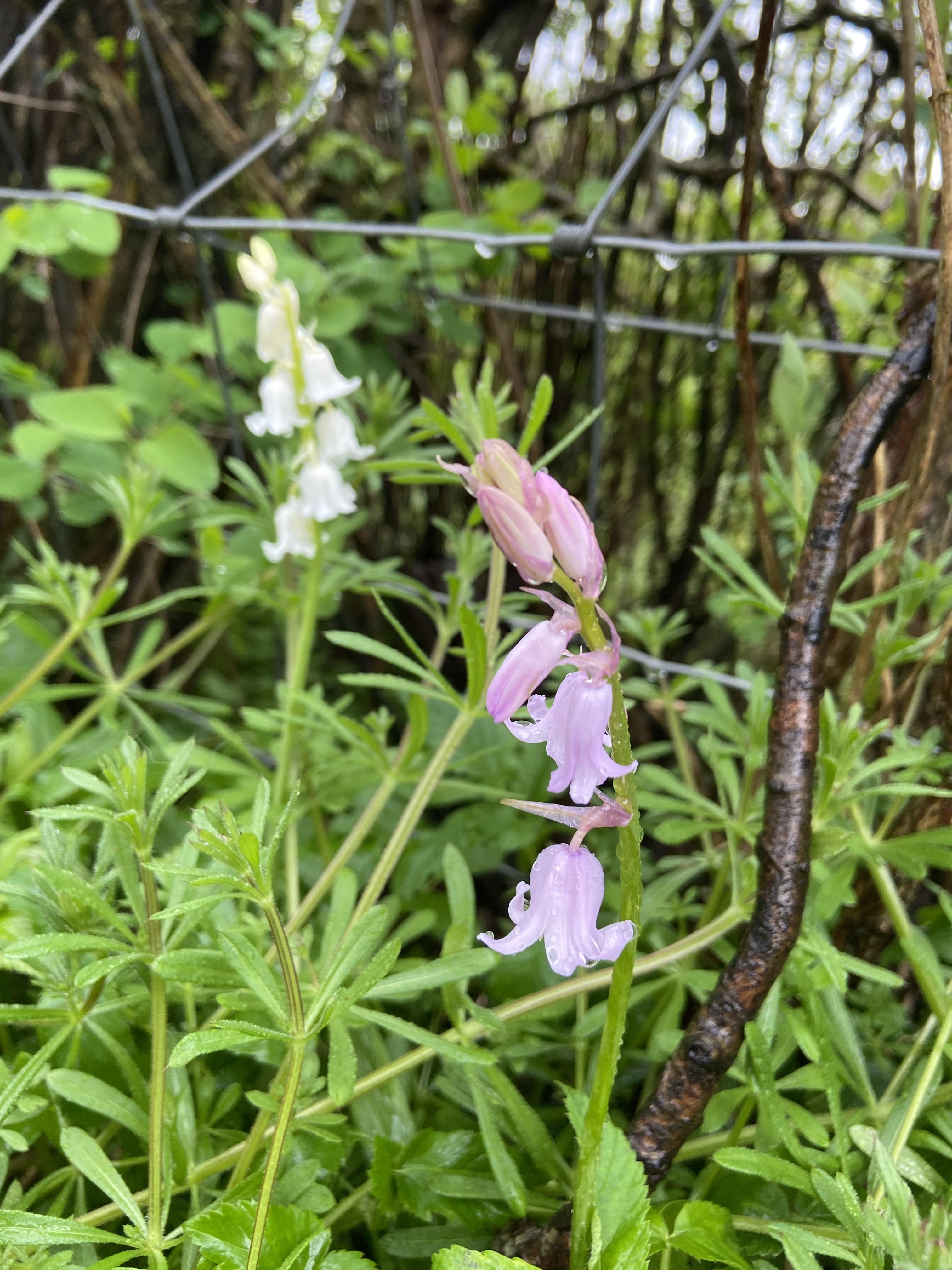
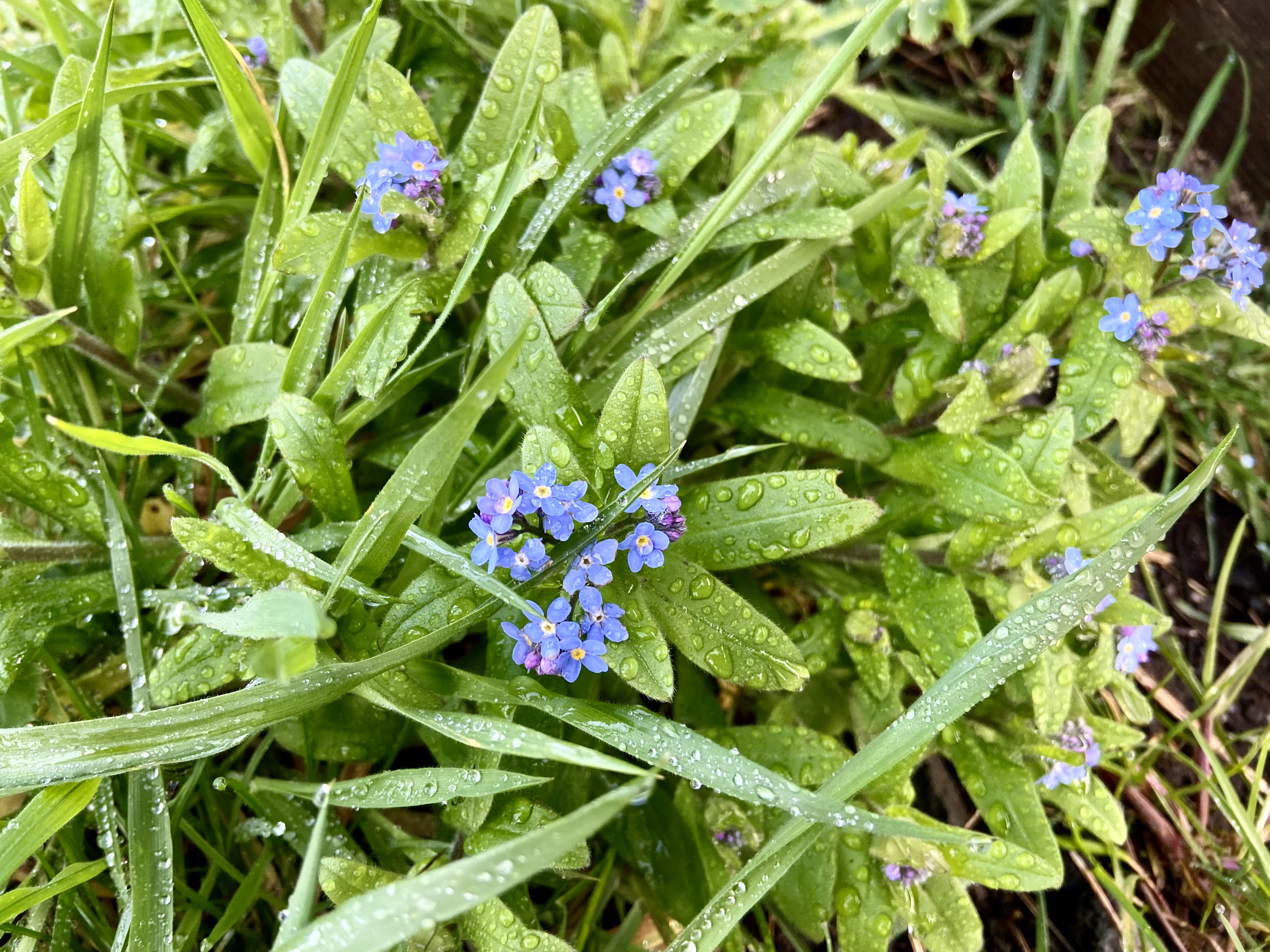
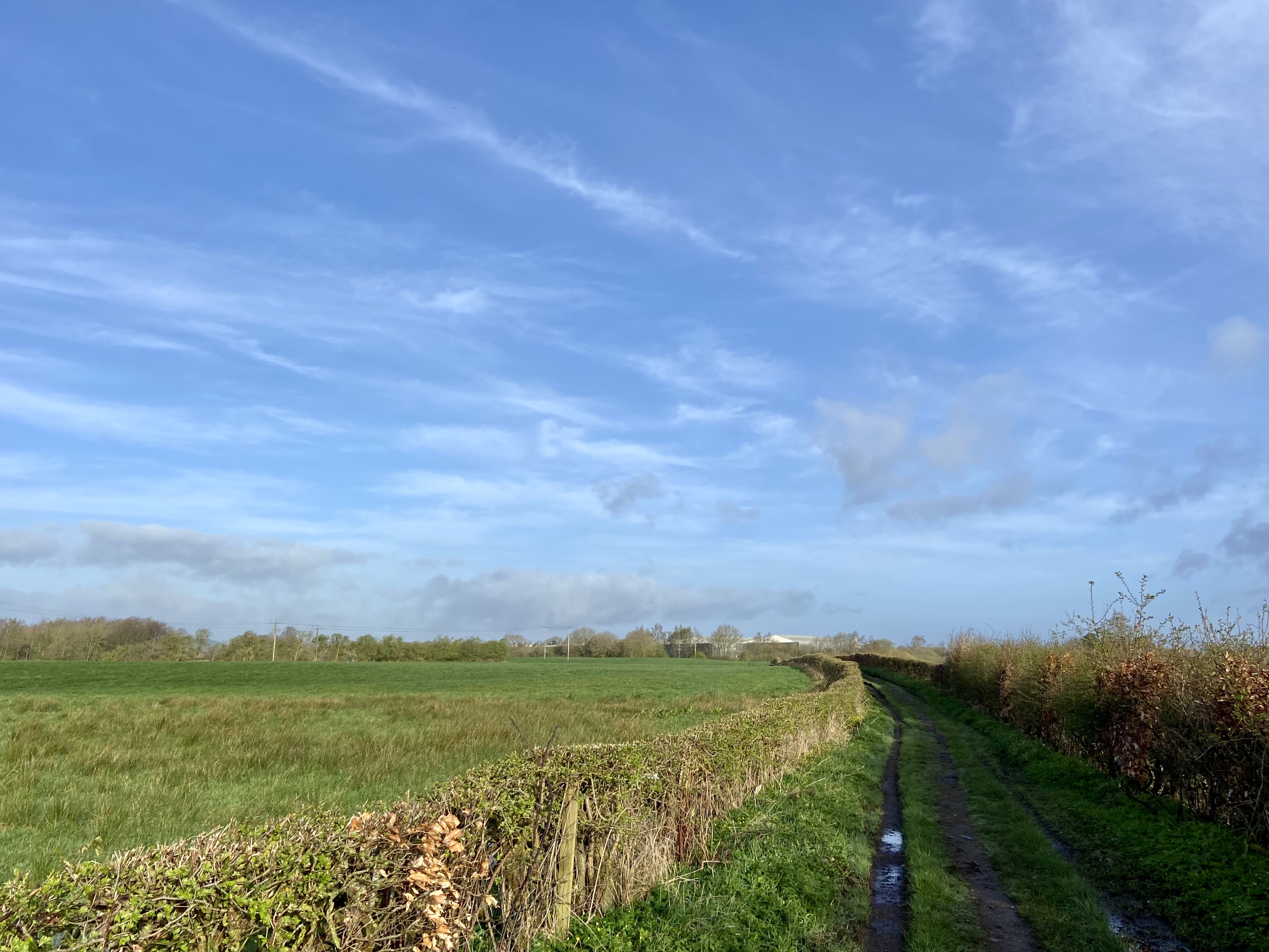
It was a damp morning, as you might guess from the sky. As well as the animal and bird life, I am entranced by the new leaves on the hedges as well as the flowers that shelter underneath. Everything was sparkling with new life and raindrops. It was a truly lovely morning.

And as I made my way back along the final lengths of the lane, I peeked through the hedge to see whether the little mallard was still there… and caught sight of Mrs Mallard. I don’t know whether that tiny pond, secluded as it is, would be a good place to raise a family, but you never know!

And after Easter and its long weekend are past, I only have two days left at work, before I head to Stavanger for a weekend, then up to Shetland. If my blog next weekend is late, it’s hopefully because I’m enjoying a weekend with John and Yoana.

Thanks for reading. Have a good week all.

Muted Sunshine

Last Saturday I had an emergency trip to the opticians’. On Friday, or perhaps Thursday, I’d noticed flashes of light in the corner of my left eye. I thought it was a reflection from the headlights of a passing car catching the edge of my glasses, but when it happened again in the darkness of my back garden on Friday evening, then again when writing this blog on Saturday morning, I knew it wasn’t.

Having looked up what flashes of this type could mean, I called the opticians’ as soon as they opened. The receptionist asked lots of questions and said they were fully booked, but that she would speak to an optician and call me back. She did so within a few minutes, telling me they were going to fit me in and to come right away.

I was seen very quickly and fortunately, she didn’t find anything untoward. As a part of the aging process, the vitreous humour (the jelly like substance filling your eye) becomes more liquid and can pull away from the retina (made up of cells which capture the light and send information to your brain allowing you to see). As it pulls away, there’s a risk of tearing. Either the retina can be torn away from the back of the eye altogether (meaning you lose sight over whichever area becomes detached) or blood vessels can tear, with potentially the same effect if the cells of the retina die. Fortunately, my flashes were most likely caused by the edge of the retina lifting a little as the vitreous humour separated. Most likely it would stop in a few days, she said, and it seems to have done just that.

There was another unexpected surprise when I went to pay. I was expecting a fee of maybe £100 as she’d spent a lot of time looking at my eyes and used a lot of sophisticated equipment, but apparently the whole examination was covered by the NHS. Many of its services may be broken, but this one worked exactly as it ought to. A reminder then, that sometimes peripheral functions can be provided by the private sector, even if central services really are better served in public hands.

It’s been a good week at work. I inspected chicken farms on Monday and Tuesday and felt I was beginning to provide a useful service as my knowledge is growing over time. Once I have been doing it for a little longer, it would be a useful experience to recap by joining another more experienced vet on a visit, if I am allowed to. When you first visit with someone else, you pick up some knowledge and can grow your own as you work, but sometimes going back and watching someone else once the basic knowledge is in place can mean picking up on the subtler aspects that you maybe missed in the steep learning curve at the beginning. I’ll have to discuss it with my line manager though. One of the problems with being chronically understaffed is that there is little spare time for anything beyond the basic.

On Thursday, I had lunch with Fran, the minister of the church I’ve been attending in Lochmaben. It’s been my intention for a while to ask her whether there is anything I can usefully do in my (admittedly limited) spare time to help in the parish, but instead, we got talking about Shetland, where she worked for a few years, and then writing. It seems that she also writes and was very enthusiastic when I suggested she could come along to the writing club I belong to. I will ask about helping out later, but in the meantime, I seem to have made another friend.


The best things come to those who wait, or so it is said. Over the past years and months, I have had so many things to sort out (moving internationally is incredibly intense) that all kinds of other things have ended up on the back burner. A colleague and I had talked about getting a coffee machine at work, but somehow, I’d never got round to it. I had a lovely meal round at Donna’s last Friday and it came up that she had one, barely used, that she was going to take to a charity shop. I guess I should probably make a donation to charity now to cover what they’ve lost, but she gave it to me instead. It is now installed at work and I will buy pods and try it out next week. I hope my colleague is pleased!

I’ve also been putting off making any decisions about the garden, which needs to be tidied, but is taking a firm second place to the building work in the house. I had a gardener for a while, but he sacked me as I was never home. I had vaguely looked for another, but they aren’t easy to find. David, one of the local authority inspectors I work with, unexpectedly offered me gardening tools that were left in a rental house he part-owns and oversees. So now, without lifting a finger, I have a lawn-mower, a strimmer, a hedge cutter and various hoes and spades. Part of what put me off doing my own gardening was the expense and time it would take to go out and buy everything I need, and now I don’t have to. Though the last few years have been incredibly tough, and there are still struggles I’m going through, there are shafts of sunshine in my life that are beginning to break through the clouds.

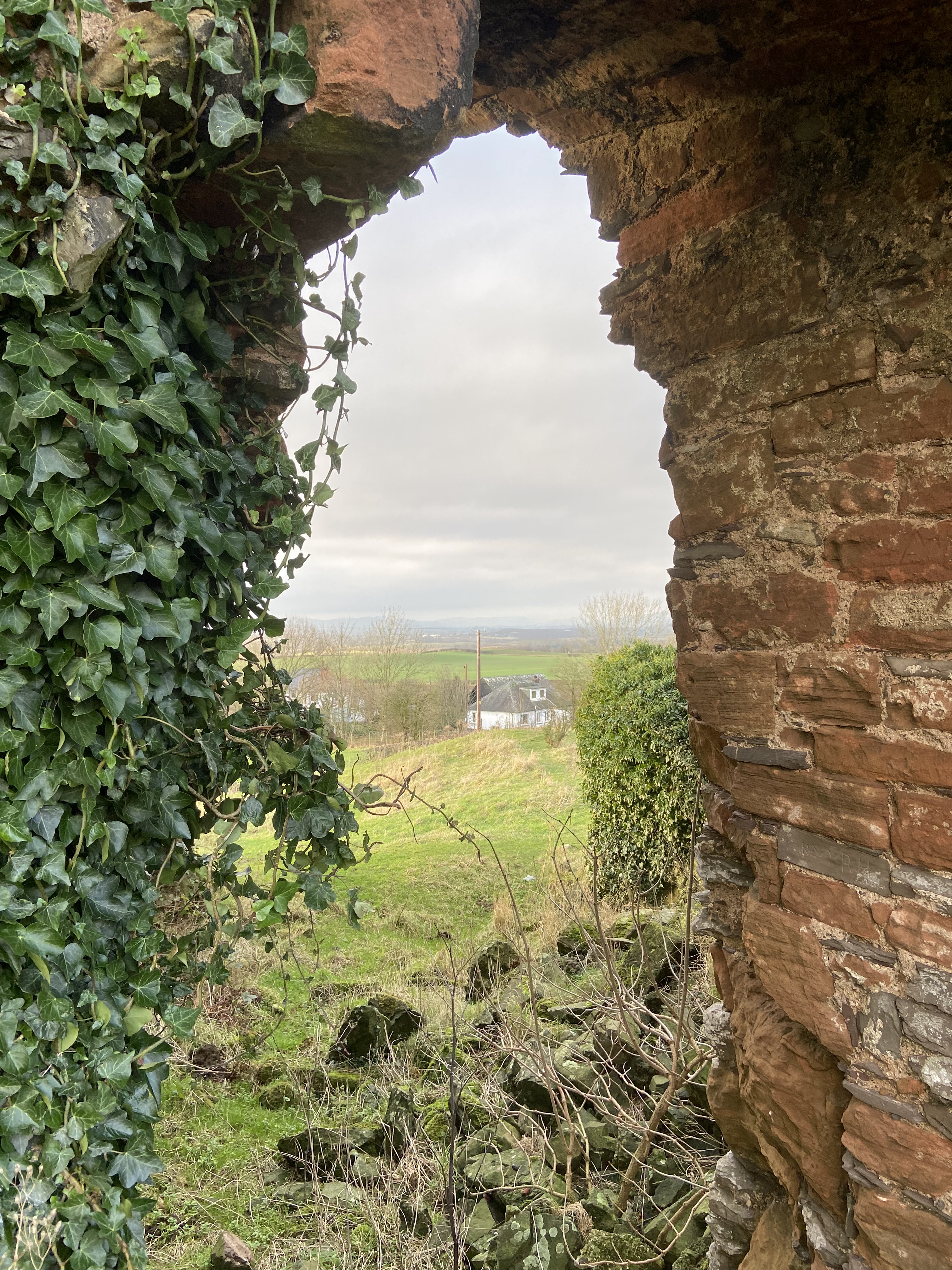
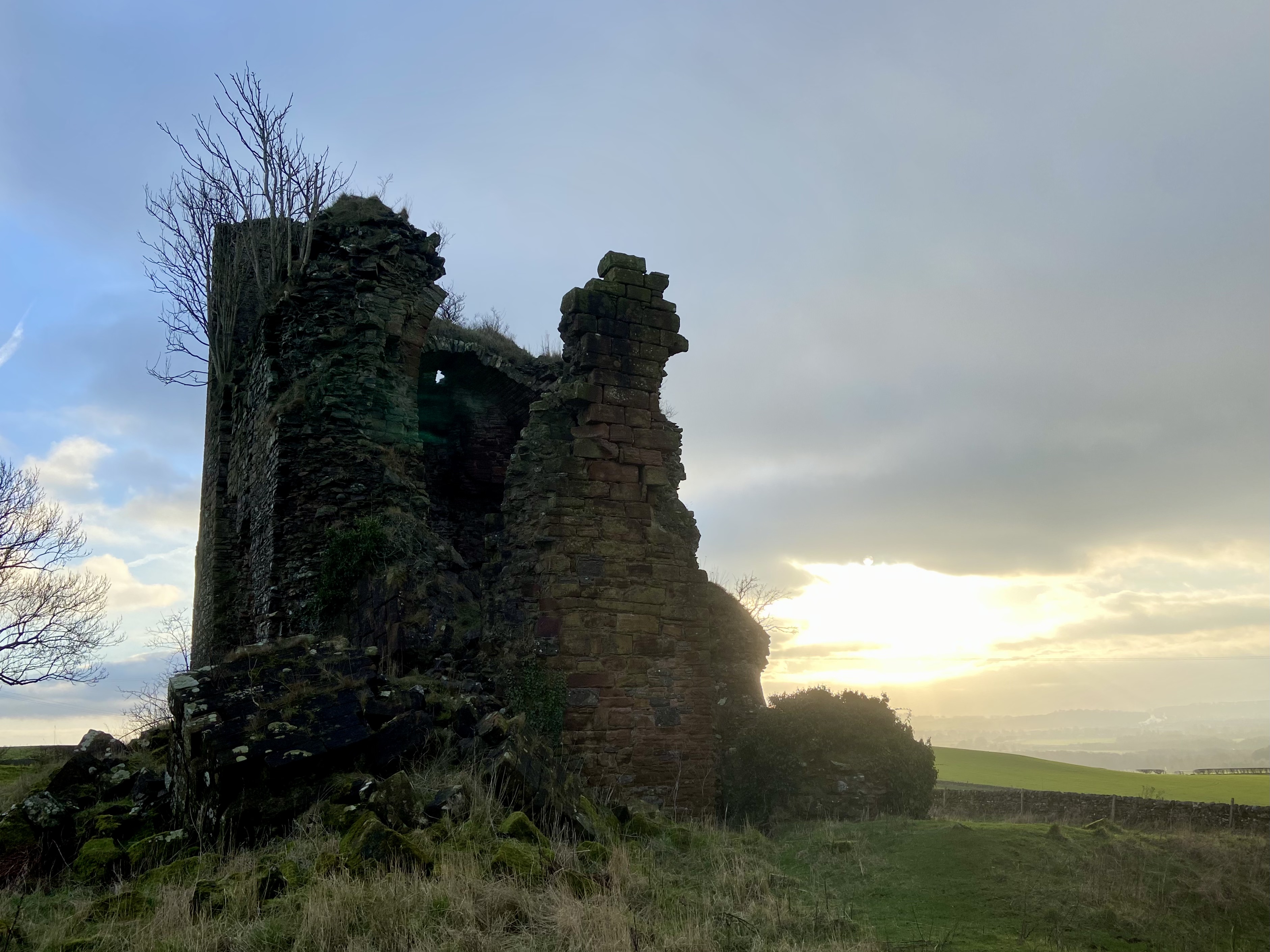
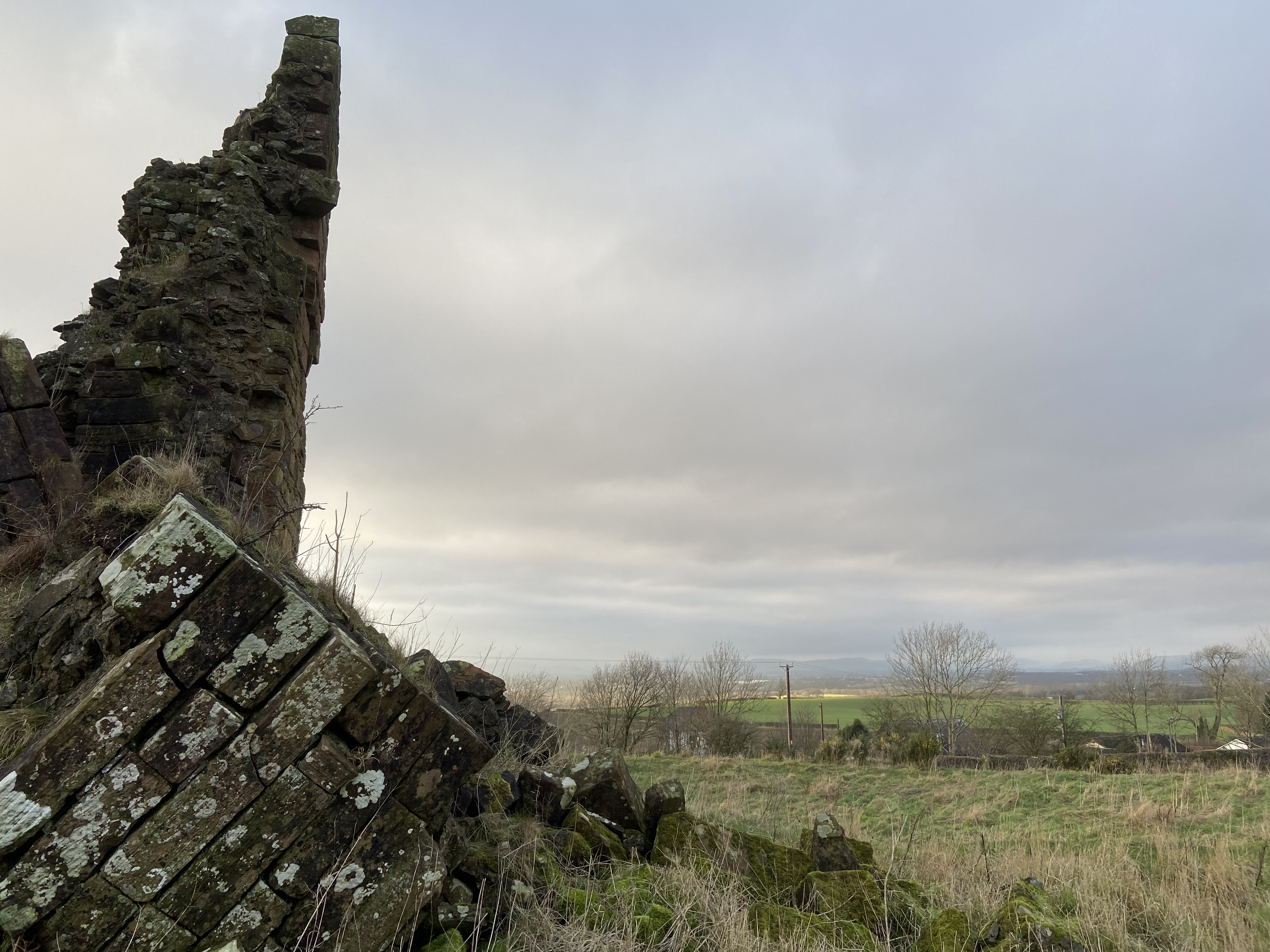
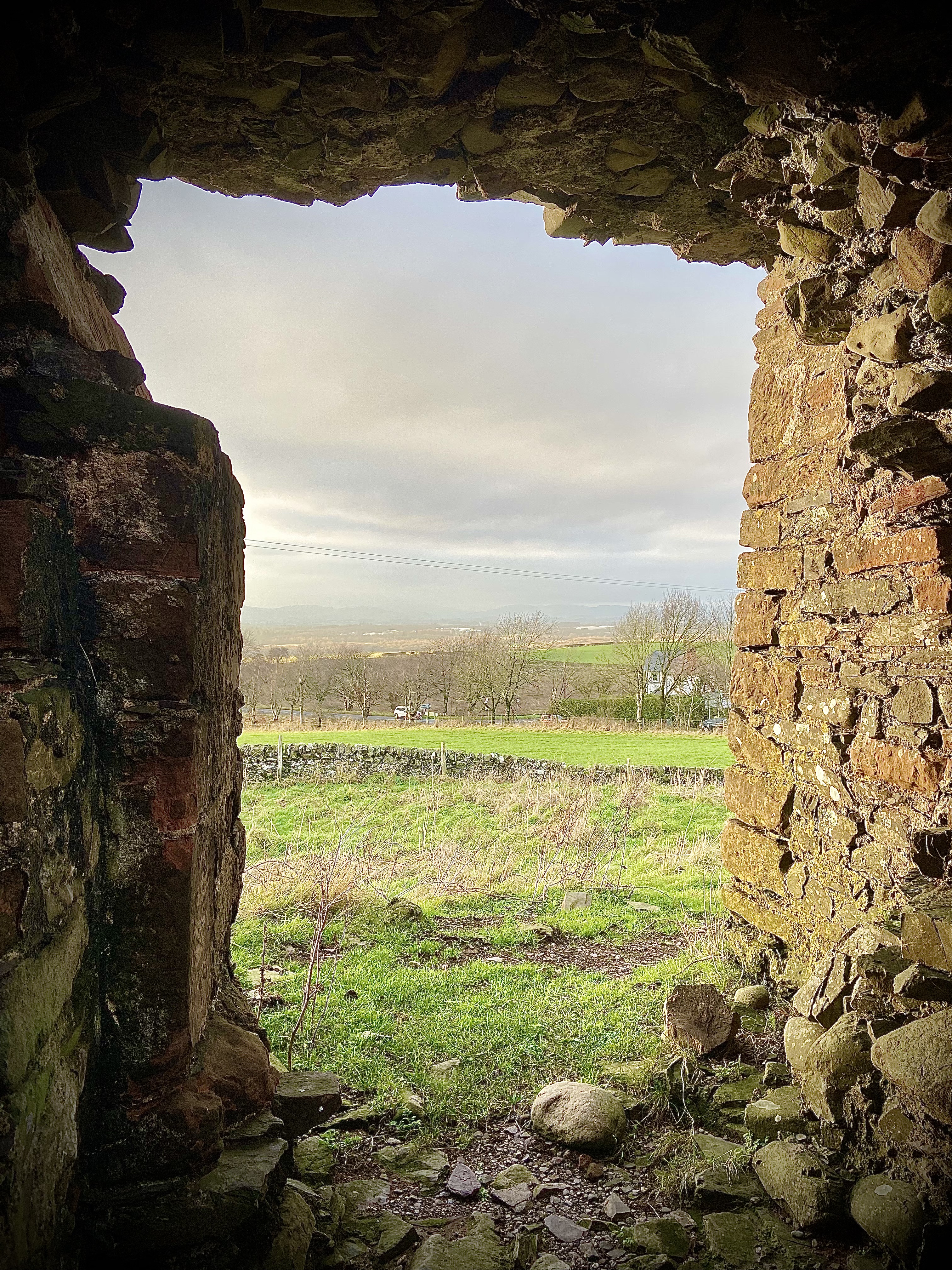
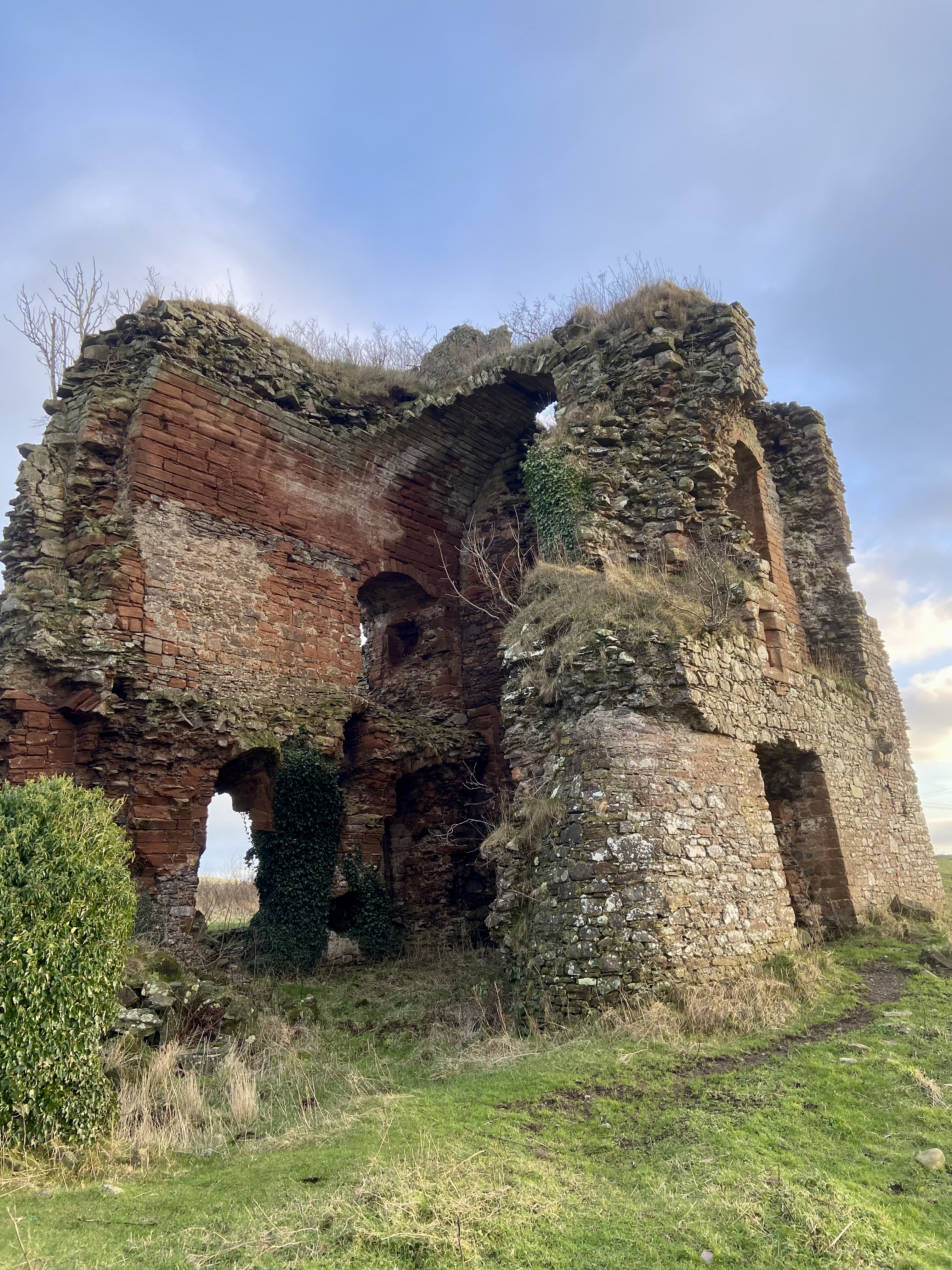
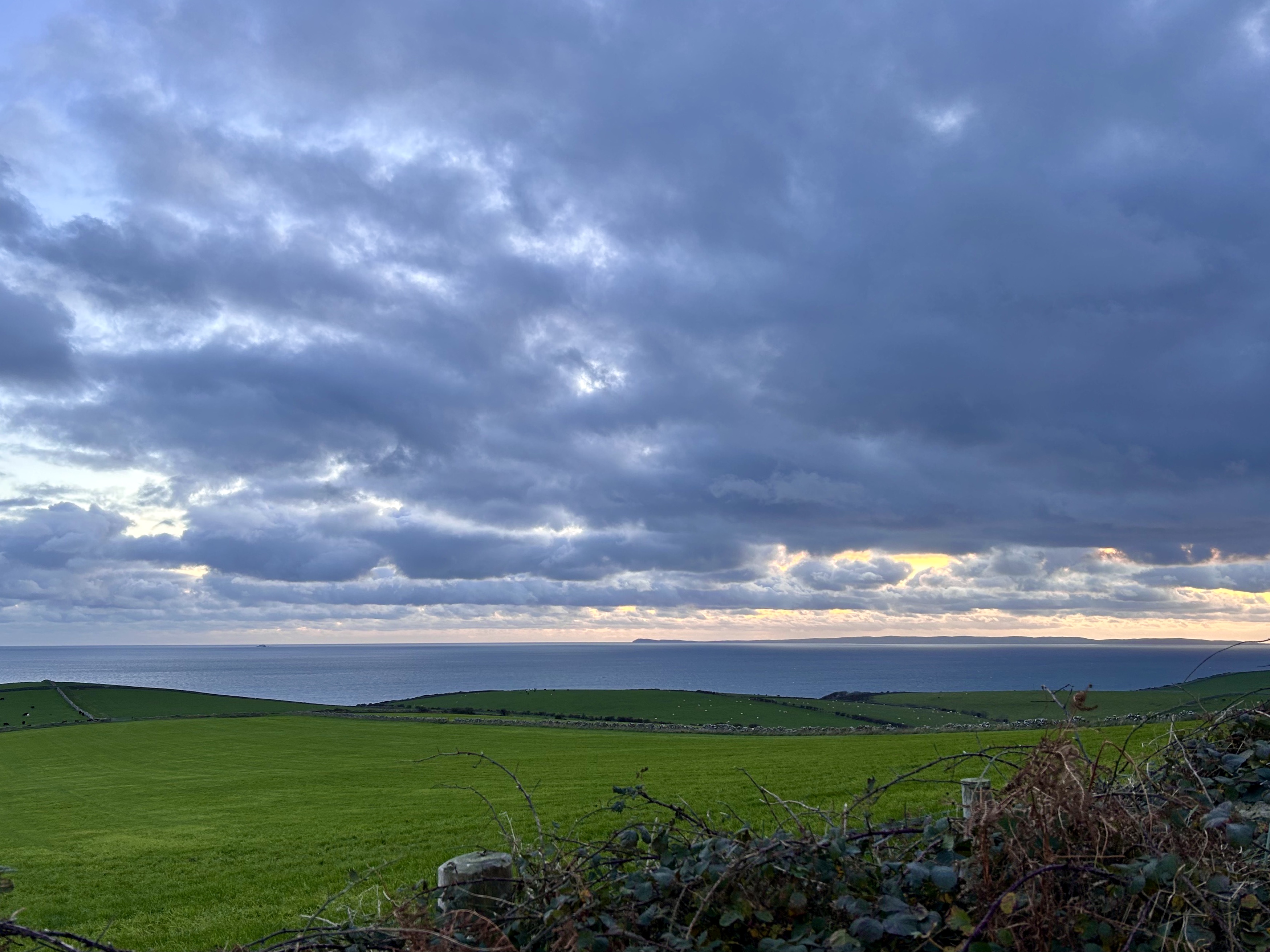
Most of the pictures this week were taken on the way back from lunch on Thursday. The cafe was in Lochmaben and the road back to Dumfries tops a hill, then drops steeply away, giving marvellous views over the plain where Dumfries lies. As I drove over, I got glimpses of the sun, which was shining through cloud, creating a wonderfully dramatic sky. The village of Torthorwald is halfway down the hill and I often drive past it and look at the ruined castle, clinging to the hillside. This time, I couldn’t resist. Stopping the car, I got out, climbed over the gate and made my way over the muddy stream to see the ancient stones in their wonderful setting. I hope you enjoy them as much as I enjoyed my wander.

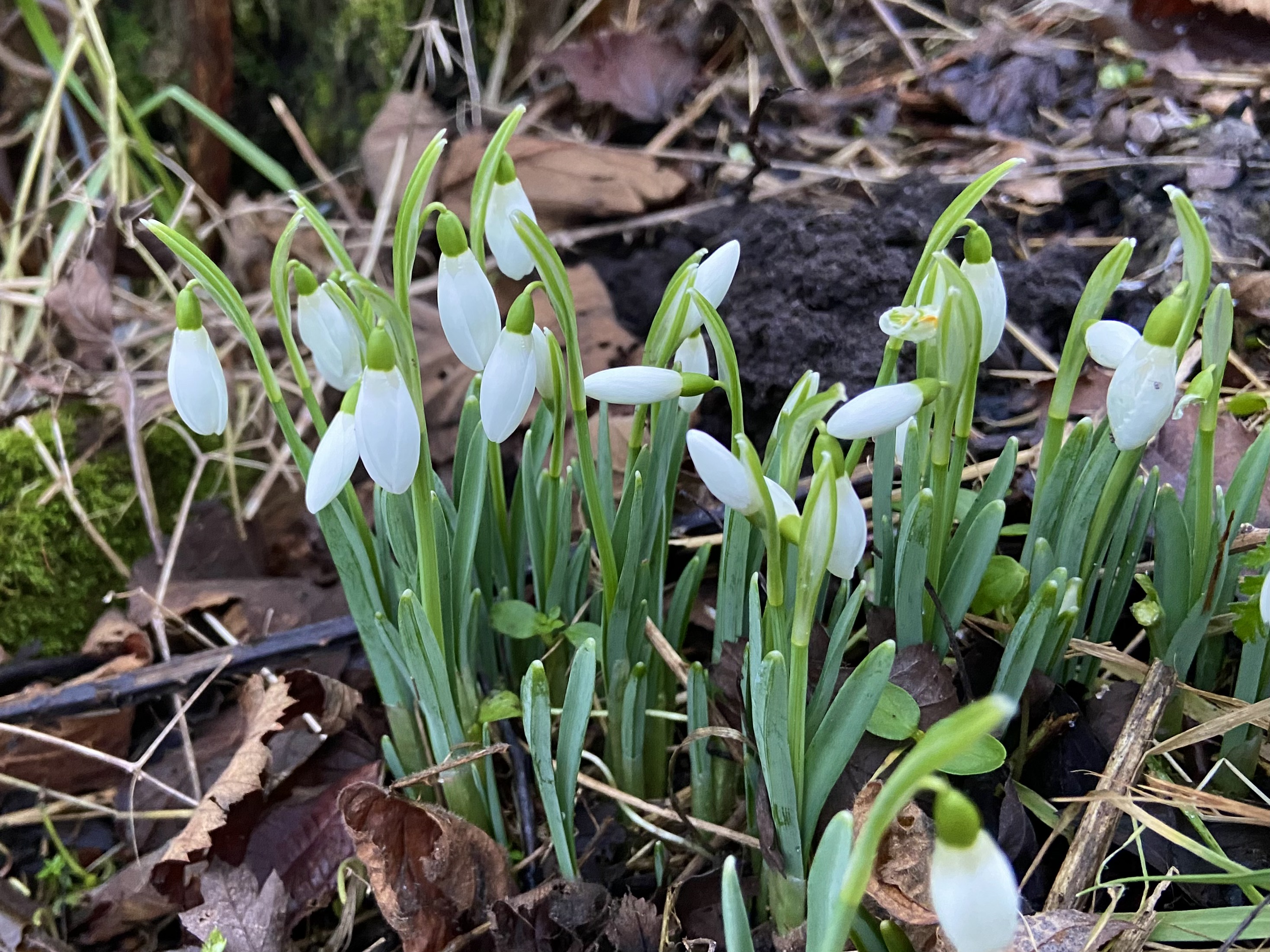
And last, but not least, after the long, Arctic winters, where everything is silent and frozen for months on end, I was amazed to see that, even after the deep chill of last week, there were snowdrops growing in the shelter of the hawthorn hedges in Blackbird Lane. The birds are starting to sing again as well, on still mornings. On Wednesday, blackbirds vied with robins and greenfinch, as well as pink-footed geese and collared doves in a wonderful morning concerto. It was a reminder that spring is not too far away.

Thanks for reading. I hope you have a lovely week.

Autumn Sunrises

The storm came last Sunday, as forecast. It wailed around the thick walls of my snug little house and wuthered in the chimney. Despite having no doors on the rooms upstairs, my living room stayed warm and cosy. I grew up in houses where the central heating was in minimal use and one room was kept warm with a fire, so it was nothing new. With Triar snuggling on his sheepskin rug beside me, we weathered the storm in comfort.

Triar seems to have recovered well, for which I am enormously thankful. I was out with a colleague from the local authority on Wednesday. He also lives alone with his dog and we discussed how much a dog becomes part of your life when it’s just you and them. My morning walks down Blackbird Lane are shared with Triar and without him, I might never have walked there. More than anything else, those walks help me stay centred and because Triar enjoys exploring all the scents under the hedgerows, we take our time. As he sniffs around, I enjoy the birdsong.

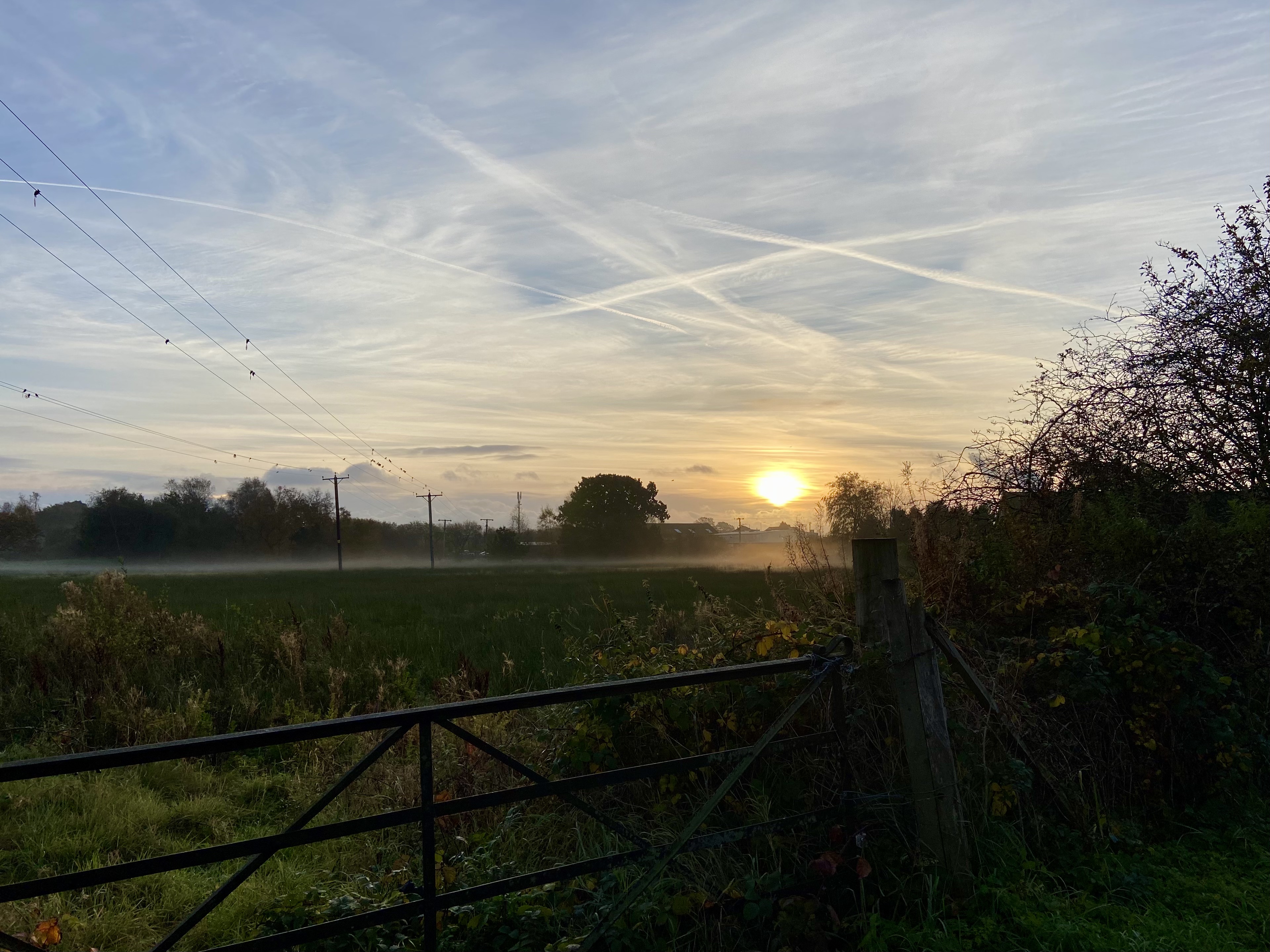
Wednesday was a particularly beautiful morning, calm at sunrise, with mist rising over the fields and the birds were in full song. It’s a while since I used my Merlin App, but the Dawn chorus was so beautiful that I pulled the phone out of my pocket and switched it on. As well as the inevitable blackbirds, sparrows and robin (his sweet little song always lifts my heart) I picked up the song thrush that breaks snails on my patio, a long tailed tit and a goldcrest, among other things.

I took some photos too… of course I did!

Despite knowing I had a potentially difficult day ahead, there was a true moment of peace, there in Blackbird Lane.

I’m not sure whether it’s the time of year, or whether it’s the fact that the other vet that works with me has been seconded to another department, but the welfare referrals have gone crazy in the last two weeks. My lovely line manager has been away, so these were passed on by other managers from another region and I think there were seven of them altogether. Wednesday’s sounded most urgent and there’s at least one that (in my opinion) isn’t an indicator of poor welfare at all, but it is overwhelming.

When I say it might be the time of year, several of them came from slaughterhouses. As winter approaches, the farmers send off their old stock that will struggle through the cold weather, so inevitably those include animals with problems. Part of my job involves reminding farmers that welfare doesn’t end on the farm, but needs to continue until the end of the animal’s life. If it isn’t fit to travel, or perhaps it is, but shouldn’t go far, then they need to work out whether it should be taken to a local abattoir, or culled on the farm without going anywhere.

Too many farmers rely on someone coming to collect their cull cows and “organize all that,” when they should be making the arrangements themselves. Difficult to change the mindset, when that’s what they’ve always done but it’s a discussion I’ll be having a lot. Getting the best price for the meat or taking the most convenient path shouldn’t be the standard. Given the animal has given them the best part of its life, its welfare in death should be given decent consideration. If taking that cow with overgrown hooves to the local abattoir saves them from me and the local authority turning up to inspect all their animals and paperwork, that’s surely a good thing? Even if that’s their only incentive, I try to make it count.

Anyway, it’s almost breakfast time, so I shall wind this up. Triar and I came down to Yorkshire yesterday evening on the train. It’s not too expensive and as winter comes in, it might be more relaxing than driving, so we gave it a try. Luckily, Triar is an old hand on trains now. Here he is, under the table.

Have a good week all. Thanks for reading.

Blackbird Lane

It’s been a quiet week at work. As a veterinary inspector, I am on a rota four times a year for detached duty. During that time, I can be deployed anywhere in the UK where there is a disease outbreak. I was on the rota for next week, so I was half waiting for a call to come in, and I had kept my calendar clear of visits. I wasn’t sure when I would be told, but I was out inspecting a rendering plant on Tuesday with G, who told me that if I hadn’t heard by now, I could probably assume I wasn’t being sent anywhere.

I must say it came as a relief. Normally, I’m all for travelling to different places for work. I love a bit of variety and the current outbreak work seems to be bluetongue inspections and blood testing (last year’s bird flu – higher risk – not so pleasant) but I was exhausted after moving and the house is still in chaos. Triar was also unsettled so, much as he loves visiting Mum and Dad, it seemed better all round to be staying in our new home for a while. It also meant that I could plan my workload over two weeks instead of rushing through it.

The rendering plant visit was fascinating. I dare say most would find it grim. They deal with animal waste products, so stuff like fallen stock (animals that died on farms) and slaughterhouse waste. The products they process are high risk, so they have to heat them to a high temperature, then separate what’s left out. What impressed me, is that even these waste products are put to good use.

They remove as much fat (tallow) as they can and send it to make biofuels. Their fat is used to drive buses. The remaining meat and bone meal is sent to a power station and burned to produce energy, then the ashes become fertilizer. The plant itself has also recently invested in machinery that recirculates the heat, so that it’s twenty five percent more efficient than it used to be, and if the price of tallow drops, they can even run the unit using that, rather than selling it. Given how much of our household waste goes into landfill, it was good to find out that this waste is being put to much better use.

I was feeling a bit down when I came back from Yorkshire last Sunday. I had flung everything into my new house and then had to go away, so I knew I wasn’t coming back to an oasis of tranquility. Donna had suggested celebrating my arrival with gin, but she had a friend round and there was no way I could leave Triar to go and join them. Practical as ever she immediately suggested that she and Debs could come round, bringing the gin with them.

They arrived with gin, tonic and extra large ice cubes, which apparently are better as they don’t melt so fast and dilute the gin too much! Having allowed Debs to pour (in the knowledge that Debs pours with a very generous hand) they didn’t even get as far as sitting down. Seeing I was overwhelmed with everything, they offered to do what Donna had done when I last moved, and unpack my kitchen.

There wasn’t really any room for me (it’s a little house) so I went and cleaned out the sticky, hairy bathroom drawers, which I confess was helped along by being gin fueled. There’s quite a lot still to be done and cleaned, but having the basics in place makes life much more liveable.

My new street does seem rather lovely. There are three rows of cottages in what was once a village outside Dumfries, but which has now been assimilated. My street doesn’t go anywhere and I am almost at the end of it, so there’s not a lot of passing footfall. I’ve said before, that it seems like something out of Harry Potter and that feeling hasn’t gone away. I’ve been taking a Triar out morning and night and every time I seem to meet someone new. There’s Gary next door and Kay along the way, who has a little dog called Hamish, and apparently there’s a lovely old man across the street, who’s 93. He was born here, I was told, and wants everyone to feel welcome, so I hope to meet him soon. Everyone has been incredibly welcoming and it does feel like I’m living in a friendly village, rather than in a town.

And so the best part of my daily routine at the moment, is walking Triar. At the end of our street, you can take a left turn down a lane. It’s bordered with hawthorn and it’s filled with wild flowers and birdsong. It’s not (so far as I know) called Blackbird Lane, but that’s what I’ve called it in my head, because they are everywhere.

They sit atop the hawthorn, regarding me with their bright eyes, seemingly fearless. The males, with their sleek black plumage and cheerful yellow beaks, compete with one another for the best perches. I caught sight of one of the quieter brown females last night with a worm in her mouth, so perhaps she already has young somewhere.

I see house sparrows too, in the hedges and flitting around, but what I find particularly wonderful is the birdsong. A Norwegian friend from the Arctic posted on Facebook this week “the sound of spring” with film of a newly unfrozen stream, emerging from the ice. A wonderful sound indeed after the winter silence, but here in south west Scotland, spring is filled with birdsong.

Just listening to it fills me with joy, but a while back, I downloaded an app, which records the song and tells me what I am hearing. I remembered it a couple of nights ago and it came up with sparrow, blackbird, wren, great tit and blue tit. Last night’s rendition was even better, though it did miss the wood pigeon that was calling in the distance. Finding out which birds are there makes the whole thing even more wonderful.

So there is a lot to do, but also a lot to look forward to. Today, I have to go and buy a stepstool so I can reach the ceilings. The previous owner smoked in the kitchen and the smell still lingers, along with the yellow stained paint. I’ll need to wash it all down before I can paint it. A colleague recommended a joiner to me and he came round yesterday to assess how much work it would be to put in insulation in the roof.

He suggested that, as we would have to pull the walls down to put the insulation in, if I was considering putting in a bathroom or toilet upstairs, it would be better to do the whole thing at once, and check the wiring too, if that was a viable option, so he might come back today with an electrician and later with a plumber. If he can really organize everything for me, that would be a miracle.

But priorities are priorities and the most important task of the day, apart from my tours down Blackbird lane, is to go out and buy some gin and tonic in the hope of attracting in a friendly neighbour. Said neighbour may have to bring along some extra large ice cubes as my freezer needs defrosting before I can use it. Currently it is scented with six month old cigarette smoke. Obviously I should have defrosted it before I moved in, but lingering ice odours hadn’t crossed my mind! I’m going on holiday soon, so that will be a good opportunity for defrosting, cleaning and airing.

Anyway, I hope you’ve enjoyed this little trip down Blackbird lane. I am looking forward to seeing what grows there through the summer and also exploring further as the mud dries up. Have a good week all!