Working as a government vet, there are times when my job brings an intensity to life that I find fascinating, almost addictive at times. I am still dealing with the aftermath of the bird flu investigation. The initial visit – walking round the shed seeing the sick birds was just the start. There followed a tense period of information gathering. Behind the front line workers like me, there are teams working on epidemiology, tracings and licensing. They need to understand the minutiae of the on-farm operations.
So during that period, it’s as if nothing else matters. It’s all-consuming. The rest of life takes such a back seat that any daily struggles and all other work fall into the background. I fall into a seat in front of the TV at the end of my working day and it’s enough.
As the tidal wave of that work begins to slow, the rest of life and the other work tasks trickle back into focus, but at the moment, those (work) tasks are still quite urgent. Principally, I fell back from avian influenza into the slower wave of bovine tuberculosis. As well as dealing with outbreak work, I should also be doing routine work relating to trade and imports and exports. But our work is prioritised and often we are so busy that we are only skimming the top of what needs to be done. That said, I slipped in a Poultry Health Scheme inspection into my calendar on Tuesday, completed the paperwork and sent it off the next day. The deadline was March, but it was painless (actually I enjoy those visits) and now it’s done.
So picking up the reins of my TB cases, one is quite far along. At the start, there’s a lot to be done, contacting the farmer, explaining what will happen. Broadly, no cattle can move on or off the premises, other than to a slaughterhouse (where they will be scrutinized for disease) and even that is done under licence. There follows a period of testing and culling. Most of the tests are skin tests, but we do blood testing too, at the start. Any animals with positive results are culled and those too are inspected for signs of TB infection. Once we have two clear tests in a row and we have paperwork to say the farmer has cleaned and disinfected the area or areas where the sick animals were housed, then we lift the restrictions.
So with the first of my cases, we are past the blood test and the first of the two skin tests just came back clear. It’s not impossible something might show up, but generally from here it’s plain sailing. In my other case, we are just concluding the blood test. It tends to throw up more positive results, so those animals have to be processed, slaughtered and inspected. I guess it may sound barbaric, but compared with the suffering TB can cause if it goes unchecked… well these things have to be weighed against each other. To me, those results look quite good. There weren’t so many positives. It will be interesting to see whether any of the animals have what are called “visible lesions” – the TB bacteria tend to wall areas off in the body, a bit like abscesses. If they find those, they will do further testing. Finding the bacteria is almost the holy grail because that allows us to get a much better idea of where the disease came from because they can test to see what strain it is and which other cases are closely related. It takes ages though to grow the bacteria and sometimes they can’t.
Anyway, I digress! As well as working through this process, I have to write everything up in a monthly report. My information and that of all the other cases goes to Scottish Government for oversight. The whole thing takes up a lot of time. I’ve also been allocated the job of overseeing the cleansing and disinfection work at my bird flu farm. The cull is finished and the shed is almost empty. But as the end of the week came into view, I was just thinking that next week, I have plenty to do, but that I will also be able to fit in a welfare visit that’s part of another ongoing investigation that has currently been sidelined. And then my line manager asked me to take on another TB case. This one’s just starting. What testing will be required remains to be seen because all we have at the moment is a positive result, found on a routine skin test. If they don’t find visible lesions then the regime will be different again, but my initial tasks include a Disease Risk Form – a visit to the farm to look at possible source and spread. Is this beginning to sound familiar? This is what I do!
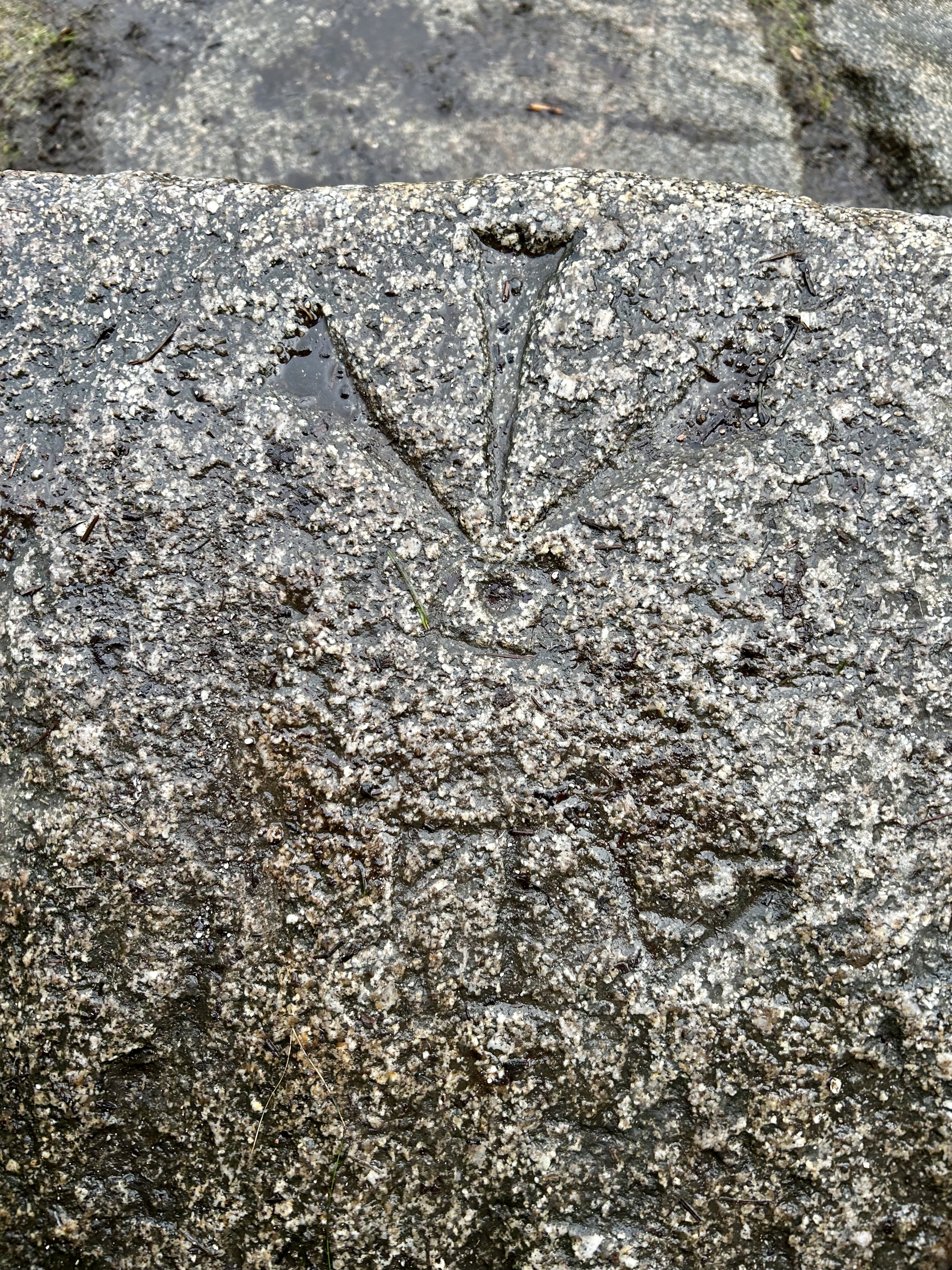
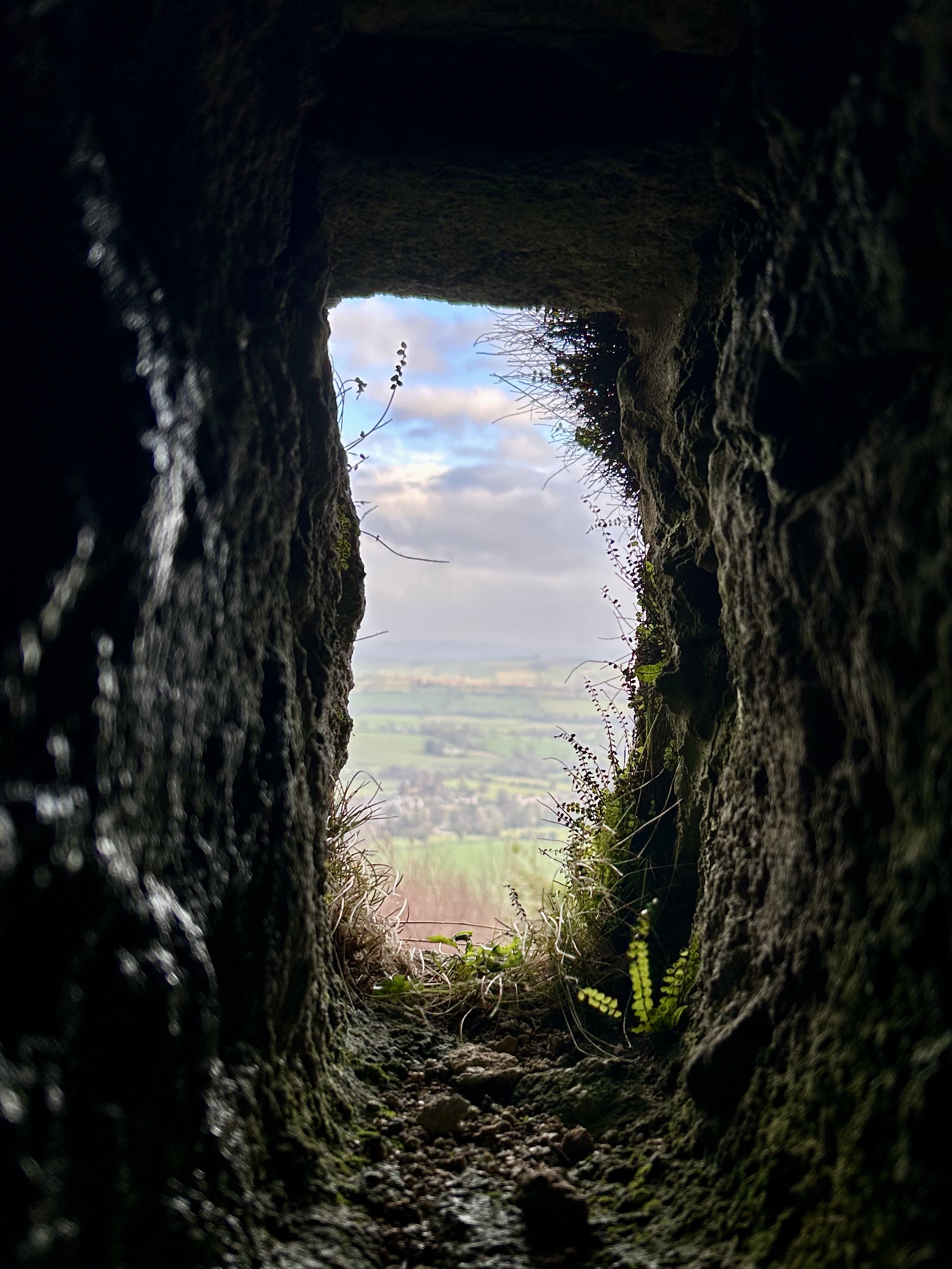
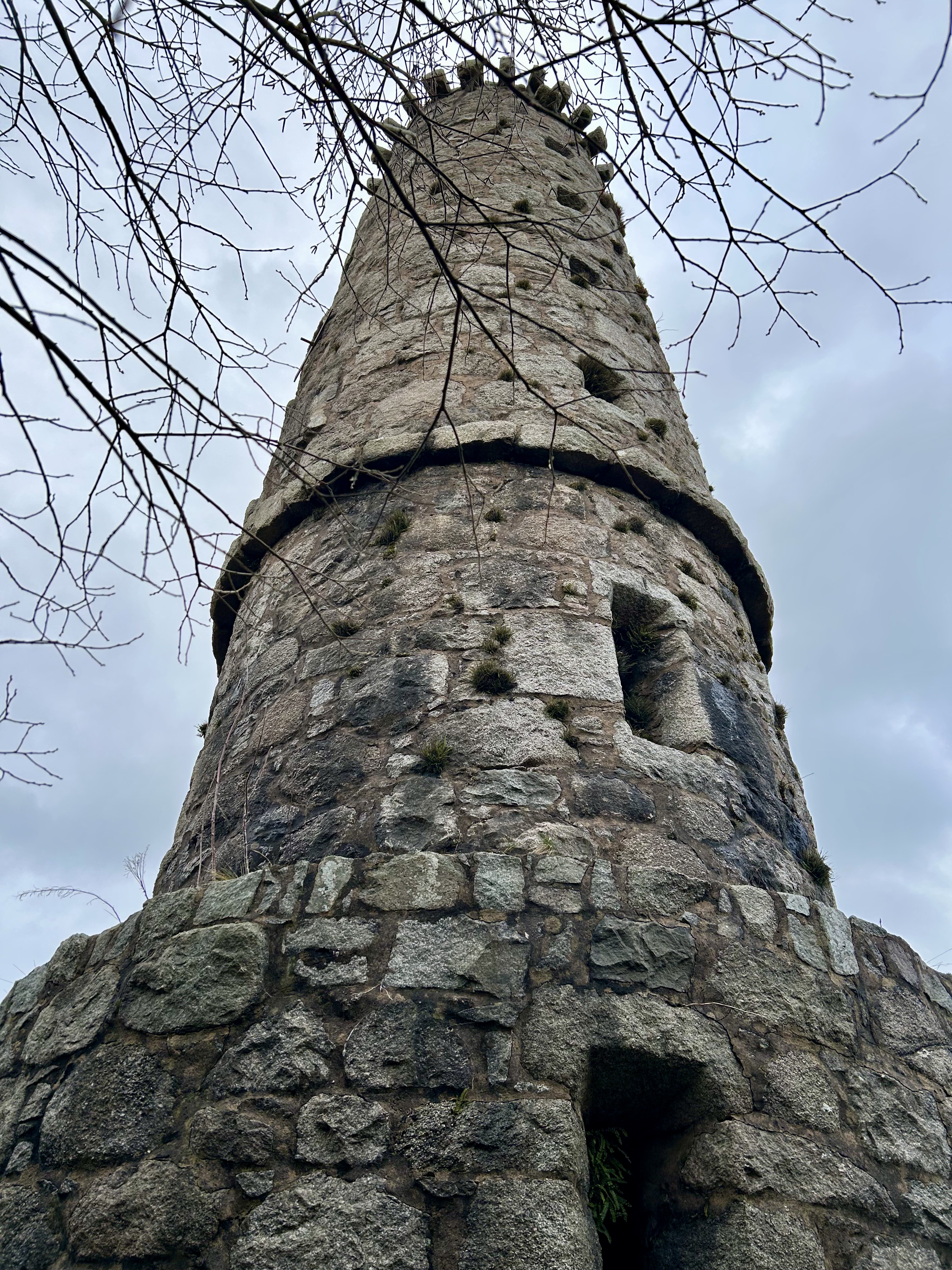
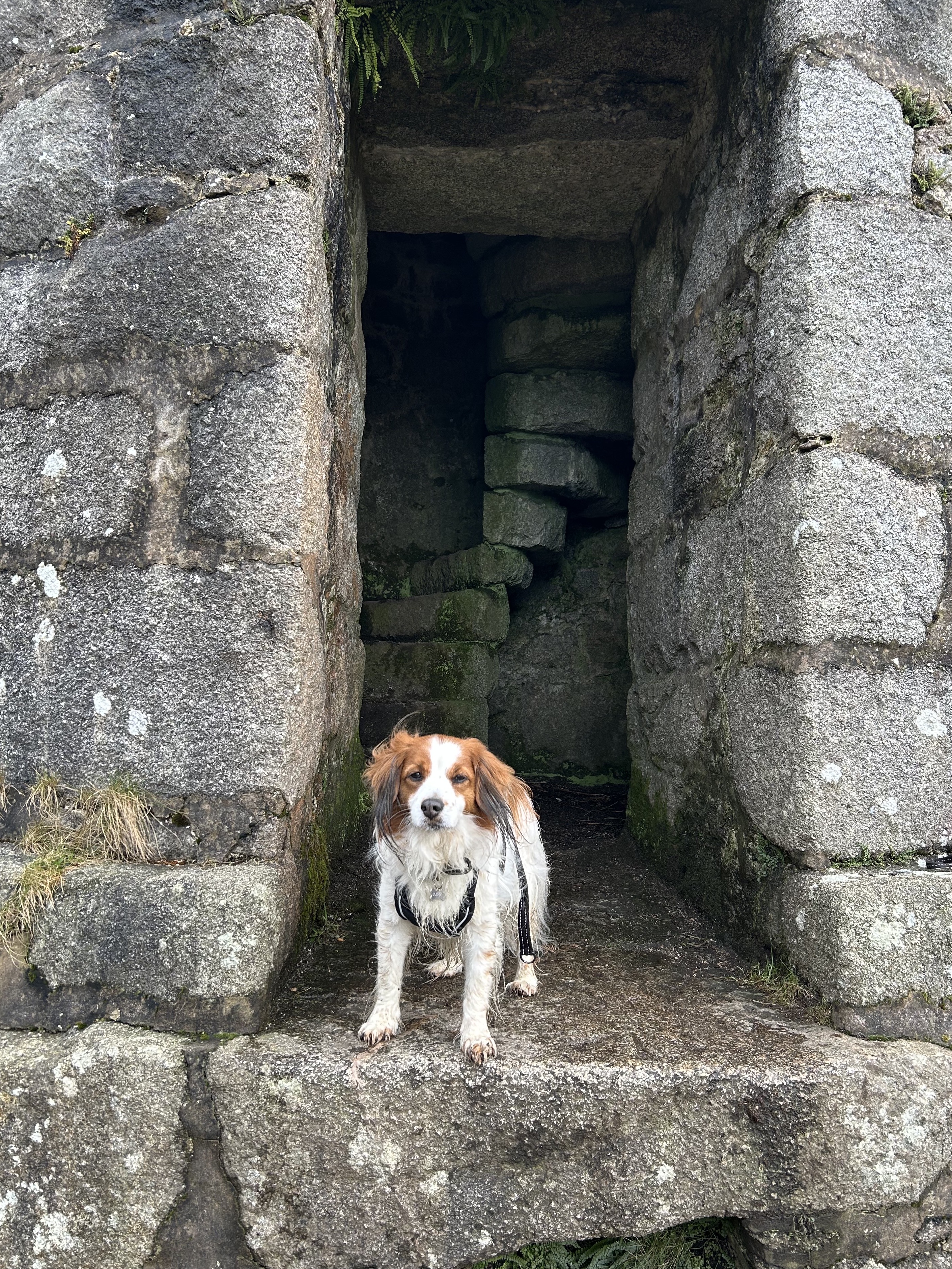
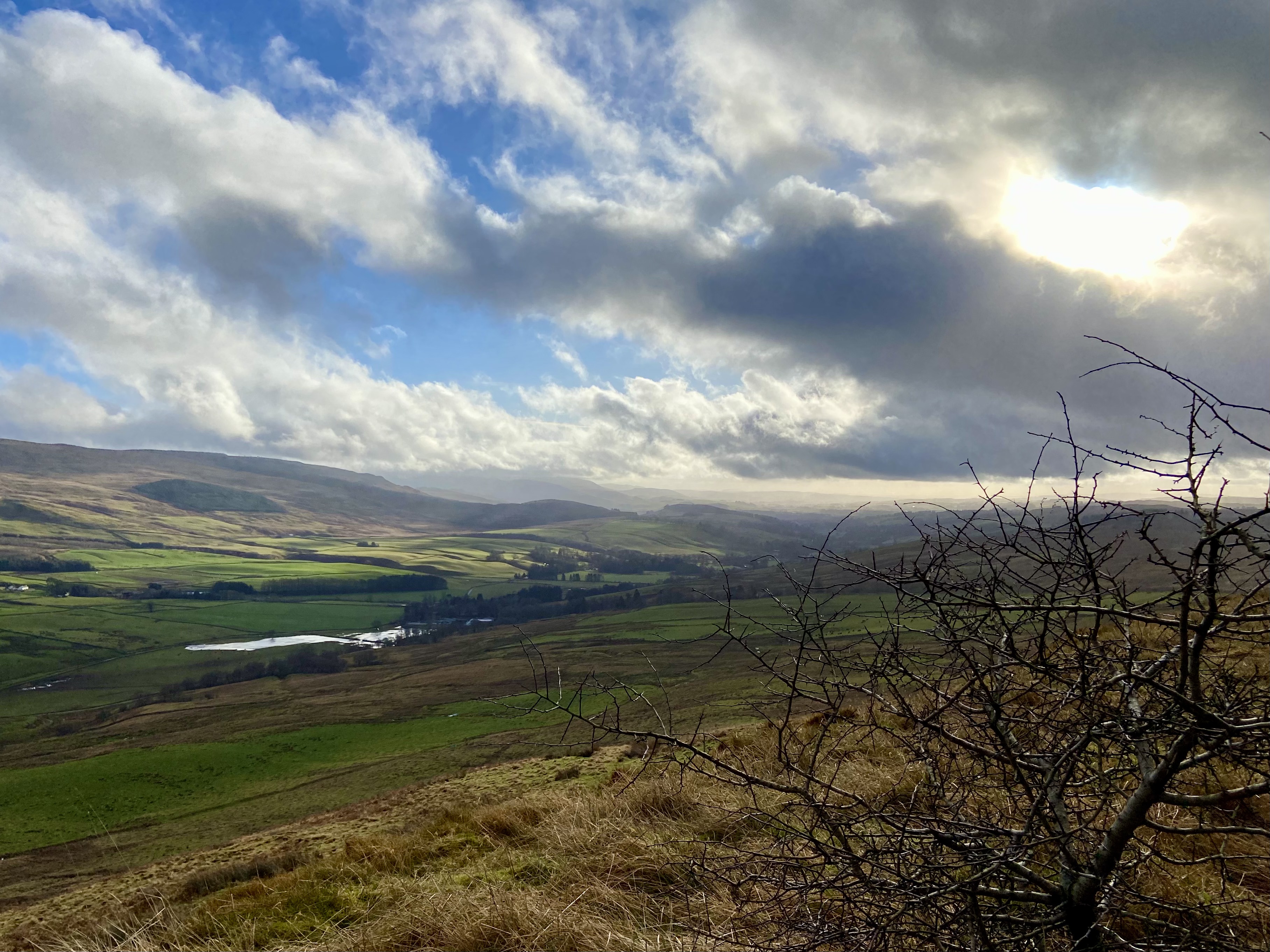
Anyway, in among the work, I am trying to sort out when I might take holidays and who I might visit. My attention is so distracted that I realized yesterday that I’ve booked a week’s holiday that overlaps with a weekend on duty, so I’m going to have to work out what to do about that. For now though, I intend to rest and enjoy the weekend. Last week, Triar and I climbed a whole load of rough steps to visit the Waterloo Monument above New Abbey. It was quite a grey day, but I took a few photos.
We didn’t make it all the way to the top. The stairs were very dark and Triar said no halfway up. Unsurprising really and a sensible decision! Anyway, thanks as ever for reading. I hope you have a lovely week.
This week, I’ve been involved at the ongoing bird flu outbreak at Scotland’s biggest egg producer. Case AIV2026-06 Millennium Farm was confirmed positive for infection on 15th January. As it’s already in the press, I can say that this was not the first in the group of farms in that area, but the investigation and clinical assessment still took me many hours and the last two days have been filled with paperwork. Once disease has been confirmed, more work is triggered, both on farm, where teams prepare for the culling of thousands of birds, while in offices, other teams begin the long process of tracing which commercial vehicles came on and off the farm, delivering feed, collecting eggs and manure. Where did they go. Where might the virus have spread. As you can imagine, our limited staff of vets and animal health officers have been working flat out. The management team must be exhausted too. I was incredibly pleased though, that when I was sent out on Wednesday, one of our most experienced animal health officers was sent out to carry out the sampling process. As I had been in full PPE for four hours by this time, carrying out my clinical investigation on the birds, I was incredibly grateful as he swung into action. All I had to do was number the swabs and hand them to him. By this point, writing clearly and getting the numbers in the right order took all my concentration.
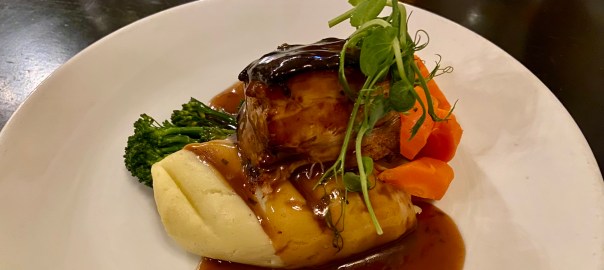
I stayed in a nearby hotel overnight, where they very kindly kept the kitchen open for me for an extra few minutes and produced the meal in the picture at the top of the page, which was slow roast belly pork. I had already downed a pint of cola and a glass of water by the time it arrived. Having eaten it, I did begin to feel almost human again!
I can’t say I slept much. Not in any way the fault of the hotel bed, which was very comfortable, but my mind and body were in that state where I was almost too tired to sleep. Still, I got up for breakfast at 07:30 to join my colleagues, one of whom, I think, was involved in the breakdown from the weekend before, and the other was my lovely, experienced animal health officer from the day before. While I went back up to my hotel room to start completing the forty pages of information I had to provide, he was heading back to the farm to start measuring buildings and assessing how the cull would go ahead. These experienced staff are invaluable and my one sour note in all this is that the civil service have removed progressive pay, so that these hugely experienced staff get paid very little more than someone who is just starting on the job.
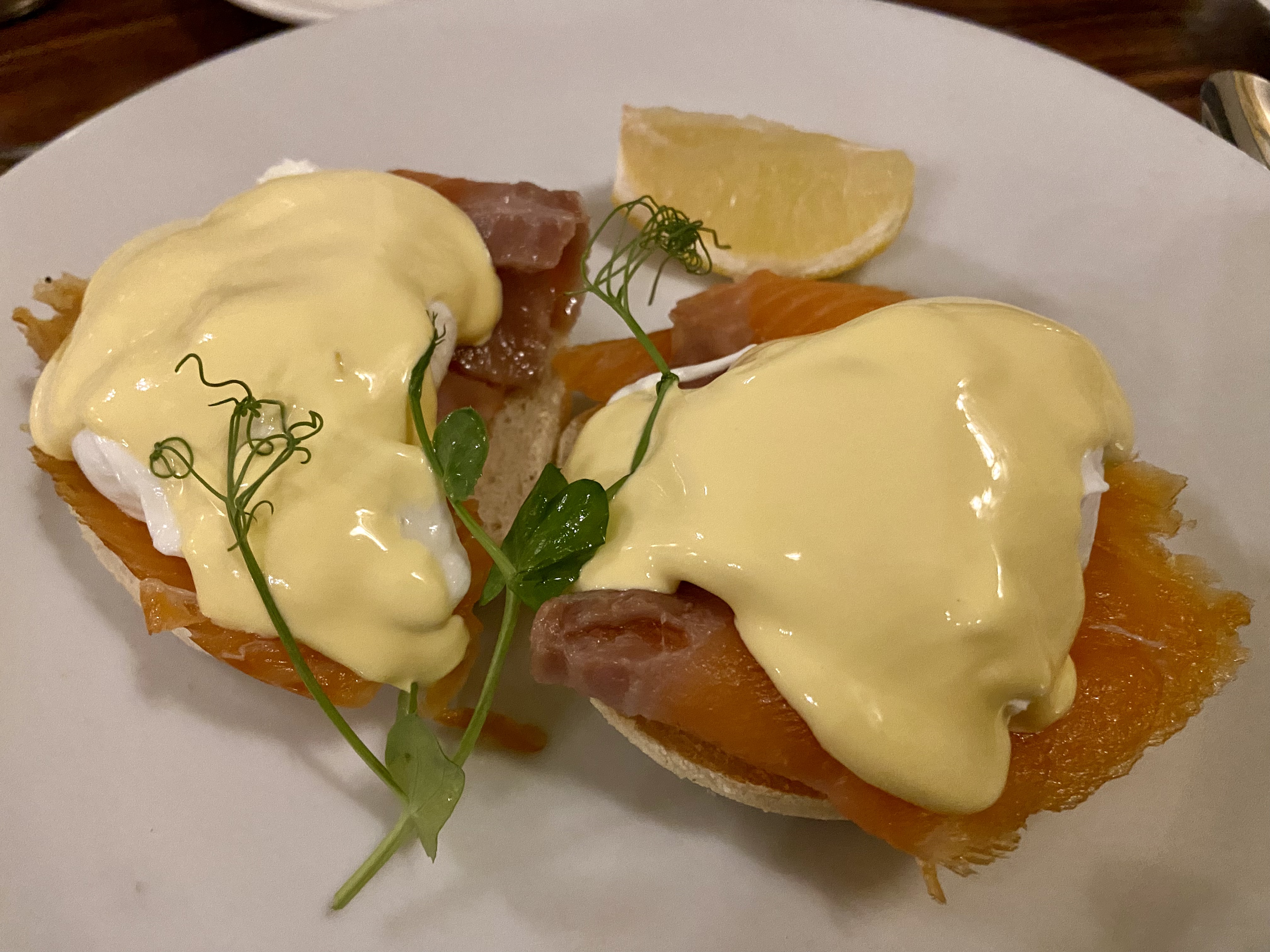
Eggs royale for breakfast. Delicious!
I returned to Dumfries on Thursday afternoon and picked up poor Triar, who’d had to watch me rush in, pack a case, and leave the day before. I’m incredibly grateful to Donna (when am I not?) who calmly agreed to take him in and told me just to go and everything would be taken care of. I do have the most wonderful friends.
I had barely expected to get the weekend off. I was on what’s called the detached duty rota this week, which means I can be sent to an outbreak anywhere. My phone is on, my kit is in the car and, if anything else goes down, it’s not impossible I’ll be called on. But for now, I’m at Valerie’s near Stirling. Yesterday evening, I drank mulled wine in her hot tub and today (God willing 😆) we’re going to a Chinese buffet for lunch. Next week’s plan involves blood testing cattle for two days, or at least teaching one of the new animal health officers to do so. Obviously, there’s still a chance I might be redirected, but wherever I’m sent, Triar will be here for a few days, while I’ll be away. One thing about this job, life never stands still.
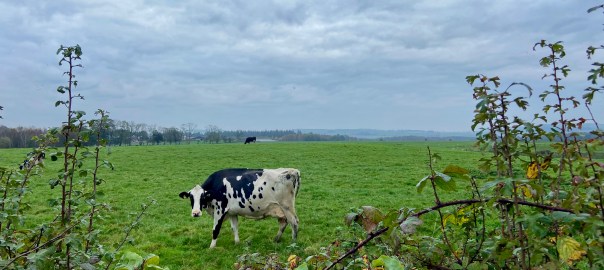
This week has felt very long. Monday was spent catching up on work from last week. Tuesday, I was out on a welfare visit. I haven’t done so many of those lately as our regional vet team are so overstretched that my line-manager is withholding all but the most urgent work. I enjoyed it. It was a well-run dairy farm (the picture at the top of the page is unrelated) which I always find reassuring. We get a few awful welfare visits, but most of the time I find dedicated farmers who concentrate on welfare as part of their routine work. The reality is that animals that are treated well are more productive, which I’m sure has a bearing, but generally they care about the animals they look after.
Wednesday there was a monthly team meeting, and the first in a series of mandatory meetings for the vet team. As I said above, our regional team is struggling. This is straightforwardly as a result of understaffing. We should have a team of ten vets and right now, we have the equivalent of five fully functional vets. Wages for a Senior Veterinary Inspector are not high in comparison with other vet jobs and South West Scotland is the busiest region. Sometimes people come into our team, train for a while, feel the weight and then leave. They go to other jobs, or to different areas, where there is less work. Anyway, at the meeting, a colleague led by saying she wasn’t even able now to work through her emails as they come in. This rang a bell with me. I look through mine and pin the ones I have to deal with at the top of the page. There used to be around five there at any time. Now they’re off the page.
They don’t really have any solutions and I don’t blame my line manager. He is doing all he can to protect us, but only dealing with the most urgent work means that the work we are doing is often heavy or very much time-constrained. If there are horses arriving in the airport, we can’t say, “I’ll handle that tomorrow.” We have to handle the TB cases because if we don’t, there will be more.
The only reason I had the nice welfare visit was because my line manager was away. Those standing in for him seem unable to bear the weight he does, so while he’s away, the welfare visits get distributed and we get pushed to take on other work. We did an Emotional Intelligence training day a while back, where they set us tasks and pushed us to complete them faster. Some of them involved throwing things to each other. The people running it seemed quite impressed that none of the team criticized anyone who slowed us down, by fumbling a catch or throwing badly. I commented, in a wry voice, that we were so used to missing our targets that nobody was going to be uptight about not getting the fastest time in a throwing game. Everyone laughed, but the reality is that working constantly under pressure means that we do understand what is important and we do have quite a forgiving core team.
On Thursday, I thought that I might finally finish and send off my witness statement from the Farm of Doom case, which I last visited back in April. I haven’t been responsible for all the delays on that one. My Local Authority colleague took an age to come back to me with the photographs for numbering, so I couldn’t finish my statement without them. I thought I was more or less done, then sent my work to one of the ex-police Enforcement Officers, who told me I had to be explicit in stating that I took each photo and what it shows. As there are a lot of photos, I was only about halfway through this task and Thursday lunch time was approaching when my line manager rang.
I answered, feeling quite sanguine as I generally do when I finally get the time to complete overdue paperwork. He said, “Sarah, can you start to prepare for a report case please?” The bottom fell out of my day. Thursday afternoon and Friday, when I had planned to get through All the Things, including the almost finished paperwork from Tuesday’s welfare, updating my TB case and writing a long-postponed talk I’m supposed to be giving on deer were immediately thrown out of the window. A report case would take up the whole of the next two days. “What kind of report case?” I asked. “AI,” he replied. Avian Influenza. Mentally, I cast aside my planned quiet days and started to prepare for the onslaught.
When I go on holiday, and especially when flying, there’s a bit of a tense period before setting off. Making sure I have everything I’ll need creates a bit of tension. Obviously, I can buy new underwear, but if I forget my passport or my phone, with its electronic ticket information, and maybe the phone charger, then life would become more complicated. I usually relax once I’m through airport security. Beyond that gate, anything that goes wrong will be dealt with.
It’s a bit similar for me with a report case. Before I set off, I need to make sure I have everything in my car that I might require for my disease investigation. All the right paperwork, all the right kit. Throw on top of there the knowledge that I might not make it home that night, so I have to make sure Triar’s needs are covered too, and you get the picture. Having been “officially informed” that I am the attending vet, I have half an hour before I’m meant to be on my way. The reality is that we usually get this pre-warning and the official time is so vague that I have trouble filling in the form the next day. There’s no chance of getting out of the door in half an hour.
Anyway, that prep time, as with the airport planning, is always the worst bit for me. Once I’m in the car and on my way, my mind settles and I am committed. There’s no point in worrying about my other cases or whether I’ve forgotten anything. The next few hours, I have one task only, which is to assess whether there is notifiable disease on the farm or not. This time, I was driving out west. I hadn’t had lunch, so I stopped in a roadside shop for a filled roll. While I was stopped, I saw a message from Donna, saying she would take Triar out (and possibly in overnight). Another weight off my mind.
I’m writing all this as if I’m an old hand, but in reality, this was only my third real report case. It was the second bird flu report case in our region this week. The other farm would still be under restrictions because, after testing, the final all-clear for bird flu takes about a week to come through, but initial results suggested that one was negative. My farm, the one I was heading for, was a laying unit, producing eggs. There were, in total, 180,000 birds on three sites. 80 birds had died overnight in one of the sheds. My job was to go in, take a detailed history, examine both live and dead birds, and then decide whether we need to test for bird flu.
If you’re wondering about now, “well why don’t they just go and test them and see?” the answer is because notifiable diseases are only notifiable because they present a risk. The risk might be economic, for example it might mean animals can’t be sold to other countries because of trade agreements. Scotland is fighting to keep its Bluetongue status as “Free of Disease” because that means more international markets are open to them. Most though, have an animal welfare or human risk aspect. If foot and mouth spreads out of control, as it did in 2001, there is a massive animal welfare issue, as well as a huge economic cost to farming and to the UK. Bird flu presents a risk to human health, as well as a significant welfare impact on the infected birds. Both spread like norovirus through a scout camp, so as soon as there is suspicion of disease, the farm is locked down. The first thing I do, on arrival at the farm, is to serve official papers, confirming the verbal restrictions they were told when they called us.
And when I say locked down, I mean just that. Bird flu spreads easily, so it’s not only birds and animals that can’t move off. People aren’t allowed on or off. Vehicles too. Any movement, from that moment, until the restrictions are lifted, has to be made under a licence. If I can’t rule out disease and we go for testing, this farm is going to be locked down for a week. If I decide this isn’t bird flu, they can open up again this evening. This is an egg producing farm, with 180,000 birds, each laying an egg daily. Eggs can carry bird flu. A week’s worth of eggs… well you get the picture.
I need to be calm when I arrive on the farm. If this day is stressful for me, then think about what the farmer is going through. His or her animals and a chunk of his or her livelihood are on the line. They need me to guide them through this so I want them to have confidence. I bless my years in general practice out of hours and in the emergency clinic. I’ve been dealing with other people’s disasters since I was 23. (As an aside, I love the company of old vets for exactly that reason. Many new vets never do out of hours. It’s not good for the profession.)
My Animal Health Officer (AHO) who will take the samples today, if we sample, is F. She’s even newer than me. My first bird-flu case was hers too, but that time we had an experienced AHO with us. This time, it’s just us. She’s holding up well and was out of her car before me. Deep breath. Grab all the paperwork. I open the car door, climb out, and greet the farmer as if I’ve done this a thousand times before and it’s all routine. Explain who I am: what we’re going to do. There will be a lot of paperwork. Hundreds of questions. Better they know what we’re in for, because they are about to be grilled on all their daily routines, their biosecurity arrangements, who has been on and off the farm in the last 21 days, what has gone to plan, what has happened that was different.
We go into the house. The first thing I do is plug in my phone. I used it to guide me here and later, I have to document everything with photographs. The first time I did this, a few months back, I plugged in my phone, but forgot the switch on the socket. Nobody’s perfect! This time I throw the switch. Then we get down to it, at the kitchen table. I ask them questions. They answer, in detail and at high speed. I’m writing it all down. There is no chance all the information will go into my head and stay there. Several times, I have to ask them to repeat, because they are three facts ahead and I’m still noting down fact 1.
I have to guide the conversation, but it’s difficult. It’s already three in the afternoon and I am mindful of the remaining daylight. We don’t want to be sampling in darkness. I need to drill into the core history. What did they notice first? When? How might disease have been introduced? Where are the weak points in their defences? Are there other possible causes? I’m also vaguely aware that tomorrow, I will be filling in a form which is going to ask me for details which may not be relevant here. I try to balance the depth, get enough information, disregard the unimportant.
Finally, I feel I have enough information. I stand up and go to my phone. Calling my veterinary advisor is the next step. I have to refer the history I’ve gathered to check it’s enough. Because the interview had hopped about a bit, it was difficult to find the information. I have three of four A4 pages, densely written. She asks a few more questions and I have her on speaker, so the farmer answers. It’s time to go and look at the birds.
There are eleven sheds in total, but the dead birds were mostly from shed X. A second shed (Y) has had reduced egg production for a couple of weeks. These two sheds are linked. With plenty of time, I might visit several sheds. If bird flu is confirmed, we will need GPS coordinates for all eleven. I suggest visiting one of the healthy sheds first, then egg-drop Y, then dead birds X. Time is so short though, that after a couple of minutes of discussion, we cut it down to sheds Y, then X which are at Site C. Taking the possibly infected shed last is good practice. I don’t want to infect any sheds that are still clean, though if it is bird flu, every single bird will be dead within the week.
I have a ton of gear to take to the shed and we’re driving down. Two layers of disposable overalls, two layers of gloves. Foot coverings for going into the shed. Breathing hood and filters. Post mortem kit. Sharp safe. Phone, inside a plastic bag. I forget my thermometer. Nobody’s perfect!
I take a photo of the door of Site C and a GPS reading, which I screenshot. If the case goes live, this reading will define the 3km Protection Zone and the 10km Surveillance Zone.
Their biosecurity is reassuring. They ask me to change footwear as I go in, but I decline. All these layers of kit are there to protect me from infection and if I take my wellies off and put their footwear on, I’m compromising that. I disinfect my clean wellies and put on the boot protectors, hoping for the best. Worst case scenario, they don’t have bird flu and I take it in. Oh well.
To get to shed Y, we pass the end of shed X. They have shared air space. There’s a pile of dead birds outside shed X and I cast a glance at them as we walk by, but nothing leaps out. I look in at shed Y through the wire mesh. There are no dead birds visible in the shed. It’s a high rise layer unit with birds on perches right up to the roof. Seeing me in all my get-up all the birds on the floor skedaddle for the high-rise perches or away to the other end of the pen. They look healthy enough.
I don’t go in. It’s time to walk through shed X.
I go in on my own. The birds get alarmed if two people go in together, the farm manager tells me. I think this weird creature with the noisy hood on her head will alarm them anyway, but I don’t say anything. The birds in this shed are as flighty as those in shed Y. It doesn’t matter a fig that I forgot my thermometer. There is not a chance we will be catching any of these birds. I can only see them as they run and climb, and then at a distance, but the view is reassuring. None are lame. No lethargic clumps of sick looking birds. Their tails are up, their feathers smooth. Eyes bright. They stare at me in distant disapproval, but none of them are sneezing.
My mind is fizzing as I walk. Surely, with bird flu, there would be sick birds? Probably dead birds too. These are some of the healthiest birds I’ve ever seen. They can certainly run!
I walk the length of the shed. It’s a well-managed unit. Nice dry litter. Plenty of space. The birds can usually go outside, but today they too are locked down. I walk back, through the pens, taking a few pictures with my plastic-wrapped phone. It’s time to post-mortem some birds. I haven’t seen anything in the shed to suggest there is bird flu, but I still can’t definitively rule it out. We’ve had 80 dead birds overnight and I need to be sure.
I take a look again at the pile of dead birds. With bird flu, I might see swollen heads, deep blue wattles, maybe haemorrhages in the legs or diarrhoea round the cloaca. I don’t see any of those things. I select two birds and photo them. It’s not very bright here, so I ask the farm manager if he has a light. He fetches his head torch. I don’t want to move the birds from where they are. It will have to do.
Kneeling on the floor, I start the post-mortem. It’s a month and a half since I did my last bird PM and that was in a brightly lit lab, on a comfortable bench. Now I’m kneeling on the concrete floor, my head encased in a hood that limits my view, in semi-darkness. This PM is make or break time. I check the head, then open up the throat to look at the trachea. There’s no mucus there, no haemorrage. It’s perfectly normal and when I reach the crop at the base of the neck, it is filled with food. Whatever happened to this bird, it was eating until the moment it died. I open up the body cavity, looking for inflammation, haemorrhage or necrosis, but the only thing that looks abnormal is the liver. Normally, the liver is reddish brown throughout, but this one has brown patches. Some of patches have clear cut edges. They’re not abscesses. I worked in a chicken slaughterhouse for three years, but I’ve never seen a liver like this.
The next bird is the same. I open it up. A second mottled liver. Maybe a little fluid build up where the air-sacs would be. Maybe metabolic, I think. Very strange, but just as in the sheds, there is nothing screaming bird-flu at me. I take a few photos of my findings. It’s good to have evidence. Packing up, I edge back to my feet. It’s not so easy these days, but I make it and we leave the shed again.
Once outside, clutching my now-contaminated kit, I decide to go back up to the main holding before phoning VENDU. The Veterinary Exotic Notifiable Disease Unit give us directions what samples to take, but it’s my decision whether we need to take any at all. If I decide not to, they will challenge me to try to assess my decision, but the final choice is mine. I’ve stripped off most of my kit. If they challenge me for information I don’t have, I’ll have to go again. I decide to call my veterinary advisor before VENDU. I don’t think this is bird flu. It had not really crossed my mind, as I drove here, that I wouldn’t be testing, but with all the information I’ve gathered, I’m conflicted. For me, testing is the safe option, but it’s hammering in my head. I DON’T THINK THIS IS BIRD FLU!
I call my advisor and tell her. She asks about the livers and I describe them. She will discuss with her advisor, she says, while I call VENDU. I drop two liver photos into the chat and leave them to it. I briefly chat with the farmer. He drops it into the conversation that he has no insurance that would cover a week of lockdown. I can’t let that influence my decision either. I have to be sure.
The VENDU vet is busy, but when she calls back, it’s someone I know. This makes it easier to have that discussion, but even then, as I tell her I don’t think it’s bird flu, she wants me to be certain. I am as certain as I can be. The only thing that’s holding me back is that it’s a huge decision. If I say no testing, this farm will open up overnight. Halted eggs on lorries will be on the move again. If there are hundreds more deaths overnight, and it then goes positive, the whole thing will restart tomorrow and I will have messed up massively.
I’m almost sure. I REALLY DON’T THINK THIS IS BIRD FLU! If I lock down the farm, their own vet can’t come on and take samples for a week, even if early tests are negative. Whatever caused the egg drop and the deaths, they’ll have to live with it undiagnosed.
I can’t let that affect my decision either. I tell the VENDU vet that I am almost decided, but I want to call my advisor again. My advisor and her advisor have seen the photos. “Good pictures,” is written in the chat. I call her back and tell her I want to negate. I explain my reasoning again. “We’ve chatted,” she says, “and if you want to negate, we will back your decision fully. Even if it kicks off again, we are happy to defend your decision.”
I take a deep breath. “I don’t think this is bird flu,” I say, “I don’t want to sample.”
The farmers’ relief was palpable. They made a couple of phone calls and thanked me profusely and all the while, I hope I’ve made the right decision. I drive home and pick up Triar and in all honesty, I was high as a kite. Adrenaline has been my drug of choice for a long time and, perhaps bizarrely, I love this stuff. Still, the worry was there that it could all kick off. I didn’t get a whole lot of sleep. My phone rang when I was out walking Triar in the morning. “11 birds have died in sheds X and Y overnight,” they said. 11 out of the thousands of birds. A lot less than yesterday’s 80. I didn’t quite punch the air, but it was a good start to my Friday morning.
I’m writing this on Saturday morning. Despite negating the case, I still had to process all the paperwork and, with a few distractions, it took me all day yesterday. My advisor told me to drop the not-quite completed form into the case folder, “just in case it kicks off over the weekend,” she said. I don’t think it will, and anyway my workphone is switched on. I’m pretty sure if anything kicks off, it’s me the farmer will call first.
Monday will all be paperwork. This case created a new pile to add to that I already had. Even then, if something else comes in, I might have to drop the paperwork and run again.
And after all that, I found out that I left my phone charger on the farm and will have to go and collect it. Nobody’s perfect!
I was in the middle of writing this last Saturday when my work phone rang and that was that! No time for blogging last weekend. I shall finish this now, then leave the next installment for another day. Sometimes, life is crazy!
Last weekend, I had my first real report case. Unlike the disappearing seal, this one involved live animals, or rather birds. I had intended to go down to Yorkshire last weekend. My sister, Helen, and some of her family were there and my intention was to take Triar down to introduce them. I had a couple of tasks I had to complete first. Some birds that had been imported (as eggs) from the US had been in isolation for three weeks. I had to inspect their health and make sure all the paperwork was in order before releasing them.
In addition to that, one of my TB cases was on its final test and while I was looking at chickens, that test went clear. After they’ve been locked down and unable to move cattle on and off the farm for months, I try to prioritize getting their restrictions lifted as soon as I can.
I had just completed these two time-specific tasks (it was around midday) and was about to go complete all the surrounding paperwork (I had to look up the import isolation release as it was my first) when my phone rang. It was my line manager. “How would you feel about going on a report case?” he asked.
Well I couldn’t really say no. I’ve put in an application for special pay, competence based, and one of the weak points in my application was that I had never done a report case. If my Veterinary Advisor had to defend my application, one of the easiest ways would be if she could point out I now had done one, competently. And apart from that, I wanted to get the first one out of the way. It’s an important part of the job.
My mind was working quickly. I’d seen last night that there was a bluetongue report case in, to be done this morning and, though it seemed unlikely nobody had gone there yet, it seemed even more unlikely there was a second suspicion of notifiable disease report in our region. The reason I hadn’t been to one was because there hadn’t been any locally in the last year and a half.
”Is it the bluetongue one?” I asked. I had been hoping my first one would be. After all, blue tongue is spread by midges. Infection control is still considered, but compared to diseases that spread directly, animal to animal, or worse, to humans as well, there’s a whole lot less PPE to worry about.
”Um… no,” came the reply. “It’s an avian influenza one in pheasants.”
He told me where it was – an hour in the wrong direction for driving to Yorkshire. Mentally cancelling my planned weekend, “Yes, okay,” I said.
I could hear the relief in his voice, and no wonder. We’d had few report cases recently and alongside our two, there was a third in the north already. Depleted as we are by summer holidays and staff signed off from fieldwork, finding willing staff locally must have been a relief.
I spent the next couple of minutes ripping through my Teams contacts to see if someone could talk to me. I knew where all the gear was, but I needed paperwork and some of it had to be printed out before going. Each different notifiable disease has a different form to restrict movement. They quote the relevant sections of the law, under which the restrictions are put in place, so you need the right one. And then there were sampling forms, which are different depending on whether the birds are classified as wild. I had to take hard copies as those need to go with any samples I decided were necessary.
Frankly, my mind was whirling. I needed someone to give me instructions. Fortunately, one of the Veterinary Advisors called me back and (as is my habit) I started the first of the many lists I was going to need over the next few hours, to keep everything straight. Having printed out all the forms I would need, and having thrown the “grab and go” boxes with all the report case gear in them, I set off.
Traffic was awful. Going round the Dumfries by-pass on a Friday afternoon is a nightmare at the best of times. They’d found me an animal health officer, who was being deployed from Ayr. He wanted to know what kit to bring for sampling and I had to pull into a couple of lay bys to talk to him. The whole exercise was obviously going to take a while and going back to collect something we’d forgotten between us would be a real pain.
There was a small incident when I had been stuck behind a dawdling camper van for some time. There was a short section with two lanes on my side of the road. I pulled out to pass (I bought a car that can accelerate fast for a reason) and some idiot motorcyclist waiting in a queue going the other way dawdled over a double white line and right into my lane so I couldn’t. It’s just as well I wasn’t driving a car marked with APHA on it. It’s a long time since I have given someone the finger while driving, but really, some people are beyond the pale in their selfishness and I was undoubtedly fueled by adrenaline at this point, as well as diesel.
By the time I arrived on the farm, I was my usual professional self. This is my job. It’s the animal owner who’s having a bad day and my task to present a calm exterior and offer guidance. At any time, I could call for advice, but to be too obviously ignorant is to invite worry. My first task was to complete the movement restriction form. There was a section with two boxes on it where I couldn’t decide whether I should write my name, or strike through them. Phoning to ask would be the most obvious indicator to the poor gamekeeper whose birds were dying that I hadn’t done this before. I struck through them, carried on and handed over the form, reading out the instructions on the back to make sure he knew what was and wasn’t allowed.
There was a slightly disconcerting moment, when the gamekeeper looked at me and asked, “Is this your first?” I was surprised he could tell, but am old enough to know honesty is the best policy at these moments. “Yes,” I said. “It is, actually.”
”Oh,” he said. “I knew from her questions on the phone that the person I spoke to on the phone knew nothing about pheasants. I thought they probably wouldn’t find a pheasant expert. She didn’t even seem to know that partridges and pheasants are different.”
My shoulders sank a couple of inches. I hadn’t been rumbled after all and I did, at least know enough about game birds not to make an idiot of myself.
Having served the papers that locked down everyone and everything on the farm, it was time to start the investigation. Most of the birds were healthy, but I needed to have eyes on them and I also needed to map where they all were. It’s not so hard when you have chickens and they are all in a shed in the farmyard. You can print out a satellite image or map of the premises, put an X on the spot and provide a GPS reading. That reading is essential because if disease is confirmed, that X becomes the centre of the 3km restriction zone and the 10km surveillance zone. This time, I had 15 different GPS readings, spread over different farms: at least I think they were. I was taken to them in a kind of buggy on back roads and tracks. There was no way I could mark where they all were on a printout of the steading.
I lost contact with the team and with time. We drove between pens and I took readings with my OS maps app. I screenshot each reading, took a photo of the pen and any nearby animals and scrawled notes on a piece of paper. How many birds? What species? Were they in or out? The last question was crucial. When they are young, the pheasants are in closed pens with mesh over the top. At that point they are kept. Eventually, the gates of the pens are open and the birds can roam fully. At that point they are wild. In between is a grey zone.
Coming back to the steading, I saw the animal health officers had arrived, one experienced, the other in training. I still hadn’t seen a single sick bird. After yet another conversation with the Veterinary Advisor, I put on a second layer of PPE over the single layer I’d been wearing up until that point and we headed up to see the sick birds. I had with me the Sundstrøm hood that we are given for AI cases. Even though I would be outdoors, I still had to wear the full kit. It was rather bizarre, outside the pen, on a patch of grass on a forest track, donning a hood that would isolate me from everything. It felt very incongruous.
I had occasionally worried about how I would cope with the hood, which blows air into your face, but it was actually fine. I walked into the pen alone and surveyed the sorry picture. Sick birds, feathers puffed out, tails down and looking sorry for themselves, carcasses of others that hadn’t made it. Yet there were no specific signs. Birds with bird flu often have neurological signs and pheasants have been described as having cloudy looking eyes, but there was nothing. I should perhaps, have done some post-mortems, but hadn’t brought kit and there wasn’t really much time remaining. We are on a strict twelve hour limit when it comes to driving for work and Triar was waiting at home.
We went back, again, to the steading and I checked in with my report. Could I rule out avian influenza? I couldn’t. No specific signs to rule it in, but none that would rule it out either. Were they wild or kept. Grey zone. It was time to call VENDU. The Veterinary Exotic Notifiable Disease Unit are the body that dictates what tests should be taken, once the on-site vet decides disease can’t be ruled out. The answer was to sample 20 birds, swabs from the throat and cloaca, plus bloods and two heads.
It was time for the AHOs to don their gear and as they started to do their work, it was time for me to leave. It was a 45 minute drive home and I had to get there by 20:30 if I wasn’t to get a slapped wrist for going over my twelve hours. Luckily there was no traffic now and I made it by the skin of my teeth. I hadn’t eaten all day, so having passed the office (so technically onto my commute) I stopped at the chip shop. The time on the receipt is 20:32, thank goodness, so I could prove I hadn’t gone over!
After that, there was all the follow up to do. Saturday was spent filling in EXD40, a colossal document where I had to transfer all the GPS and other data I’d collected, as well as explaining in triplicate, why I felt that testing was justified. There were calls flying at me as well. Because the birds were tested they would be locked down for at least a week until the final test results were through.
A positive result would be quick, but would raise all the complicated questions about what and how to cull. Again, not like birds in a closed shed. These were ranging about and half wild in pens that spread over acres of forestry. In the event, just as I was about to be sent out on Saturday afternoon to do a valuation (healthy birds are paid for as compensation – a good incentive for early reporting) the initial results came back: not confirmed. Still, it would be another week until they were certain. Along with my form filling, there was someone from the licensing team doing more form filling. Everyone who might enter, every vehicle that drove onto and off the locked-down premises had to have permission.
And so, that was my first report case. For a week, even after the initial results were back, I had daily contact with the gamekeeper as the mystery disease spread slowly, though still all in that one pen. I supported as best I could and then, with relief, handed over to his private vet. Finally they could go on and sample for other things, now it was confirmed there was no bird flu. And as I said at the top of the page, no sooner was this case handed over, I had a different one to tackle, but this is more than long enough already.
I made a happy discovery yesterday evening, when I was travelling to Yorkshire. I like to break my journey at Tebay, but when it’s hot and I have Triar in the car, I tend to push on. Last night though, I was tired enough to stop. On entering the car park, instead of going straight ahead, I turned left up the hill, hoping to find some shade behind the trees. What I didn’t expect to find was a lovely shady dog walk, set among the trees. So as well as crunchy cheese and mango flavoured fizzy water, I got in 1,000 steps and a very pleasant woodland wander.
It’s been an unexpected type of week really. The only visits I had planned were to a farm where I was to TB test eight cattle. They had tested before as inconclusive, following a move up to Scotland from a higher risk area, so they were being retested. That was booked in for Tuesday/Friday (inject and read) so when my line manager sent out a message asking for volunteers to do night duty on Monday, Tuesday and Wednesday nights, I quickly offered.
Usually, being on call is not too onerous. Sometimes there are phone calls in the evening, but it’s fairly rare, so I was quite unprepared when the phone rang at 2am on Wednesday morning. Quickly gathering pen and paper, I spoke to a vet about an owner whose dog had been in contact with a bat. The dog was now unwell and she wanted some advice. As both bat and dog were in central Scotland, the chances of rabies infection were small, but having been phoned, I had to make sure. Most of the form filling was left for the morning, but I was still up for a couple of hours recording the situation, so the vets taking over in the morning knew I was dealing with it.
So Wednesday morning was mostly taken up with the aftermath. The afternoon was quiet, but I was glad when home time came. However, I had only just sat down when the phone rang again. This time it was my veterinary advisor. Did I want to go on a report case the following morning. I’ve been waiting to do a report case, which is an investigation into a potential notifiable disease outbreak, so I said yes first, then braced myself for whatever she was going to say next. Whatever had run through my head, I wasn’t expecting what came next.
I was being asked to go to a beach where there had apparently been a number of dead birds found, as well as a seal (or maybe a porpoise). I was to test the seal for avian influenza and to do so would involve taking brain and lung samples, while fully dressed in all my protective gear, including my space-age hood, which circulates air through filters and blows it on my face.
I did double check about the hood. After all, I have tested dead birds in Norway for avian influenza and nobody even reminded me to wear a mask. But the answer was yes, I had to wear the hood. To be fair, brain sampling required a hammer, so spray was quite possible, but what struck me as particularly amusing was that this wasn’t a beach in the middle of nowhere. It was near a relatively popular west-coast holiday resort. I understand there were background discussions going on about whether we should let the police know. I was half imagining television cameras turning up, creating mass panic over people donning virtual space suits to approach dead animals that, half an hour earlier, someone’s dog might well have been sniffing.
Having spent two hours on Wednesday evening, learning about techniques for sampling marine wildlife and refreshing myself on donning and doffing PPE safely, and another hour on Thursday morning, ensuring I had everything in the car I might need, I drove an hour and a half and met my colleague , an experienced animal health officer, at the beach.
Partly because it was already warm, and partly to avoid causing alarm, I had decided that we should plot the position of the animals first, then get our final permission and instructions to test from VENDU (the Veterinary Exotic Notifiable Disease Unit). My plan was to photograph the animal or bird (necessary so that an expert can make sure what species it is) and get OS coordinates for each. All those details have to be recorded, so it made sense to do that before getting all the kit on.
In the event, what actually happened was that we walked onto the beach, made our way to the mark on the satellite image where the seal carcase had been recorded, and found… only tyre tracks. There were a number of dog walkers on the beach, so my colleague began to ask whether any of them had seen anything. None of them had. We walked on down the beach. No dead seal. No bird carcasses either.
I called my veterinary advisor. Was it possible the local authority, or someone, had already been and removed the seal? In the background, she started to make enquires to all the possible agencies and groups that might possibly have done so. In the meantime, my colleague and I walked on, scouring the beach with our eyes. After all, the worst possible scenario I could imagine was that we failed to find it after all the prep and travel, only for it to be reported again the next day.
The tyre tracks were explained – the local council had been out, but hadn’t found anything apparently. Nor did we. Despite walking for half an hour along the beach, the only things we found were a number of dead jelly fish and one, single, very rotten bird carcase, where there was nothing much left except bones and a wing. Eventually, we had to admit defeat and turn back. All that remained was to call VENDU and call off the hunt.
I did that, back at my car. I was just driving off when VENDU called back and asked whether we could go back and sample the bird. I said no. Sampling is from the cloaca and the back of the throat. Neither of those would have been identifiable. Not only that, but it was a good half-hour walk back to where we had seen it and there was no guarantee we’d find it again as, by that time, I’d abandoned all thoughts of OS coordinates.
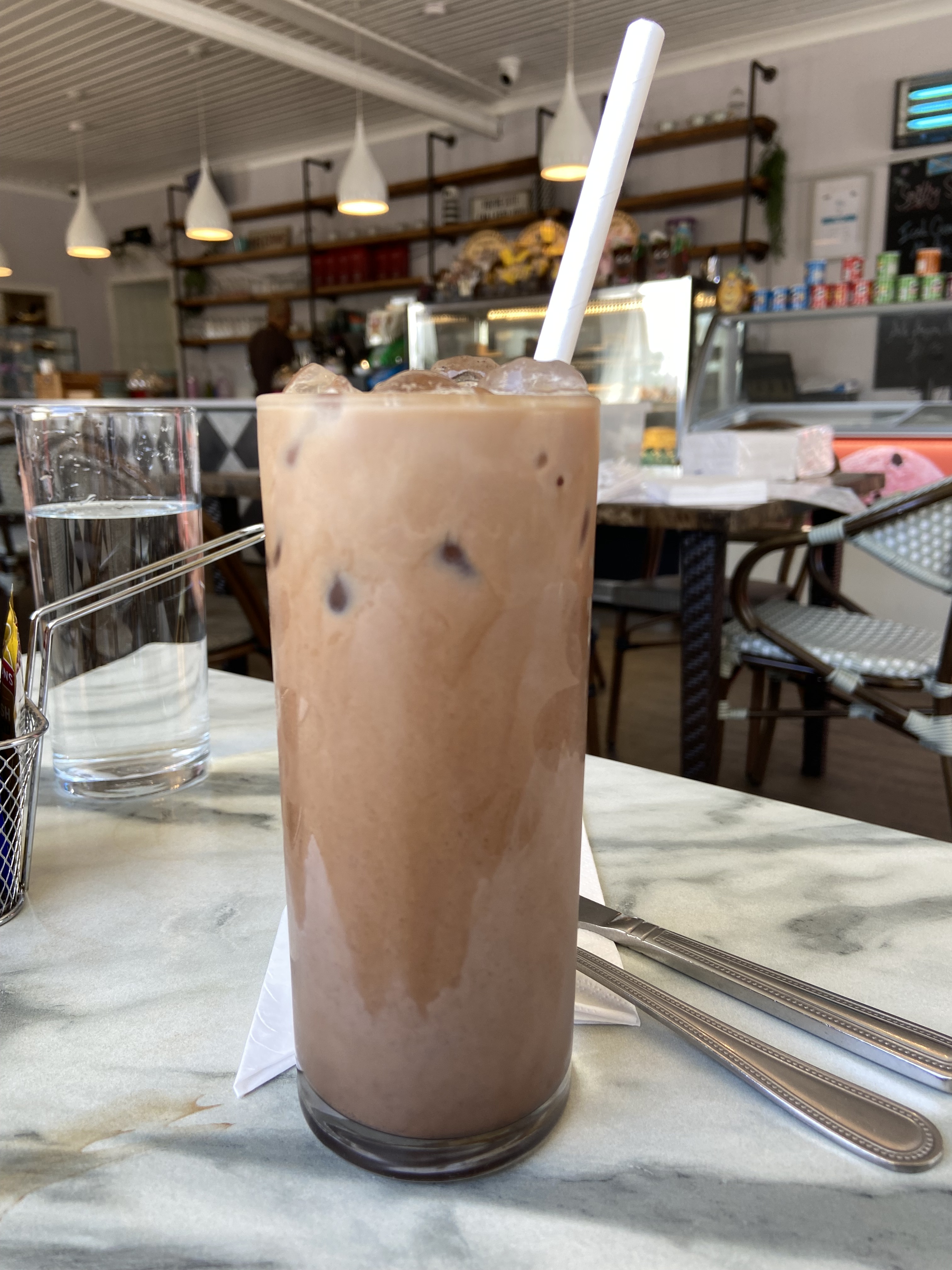
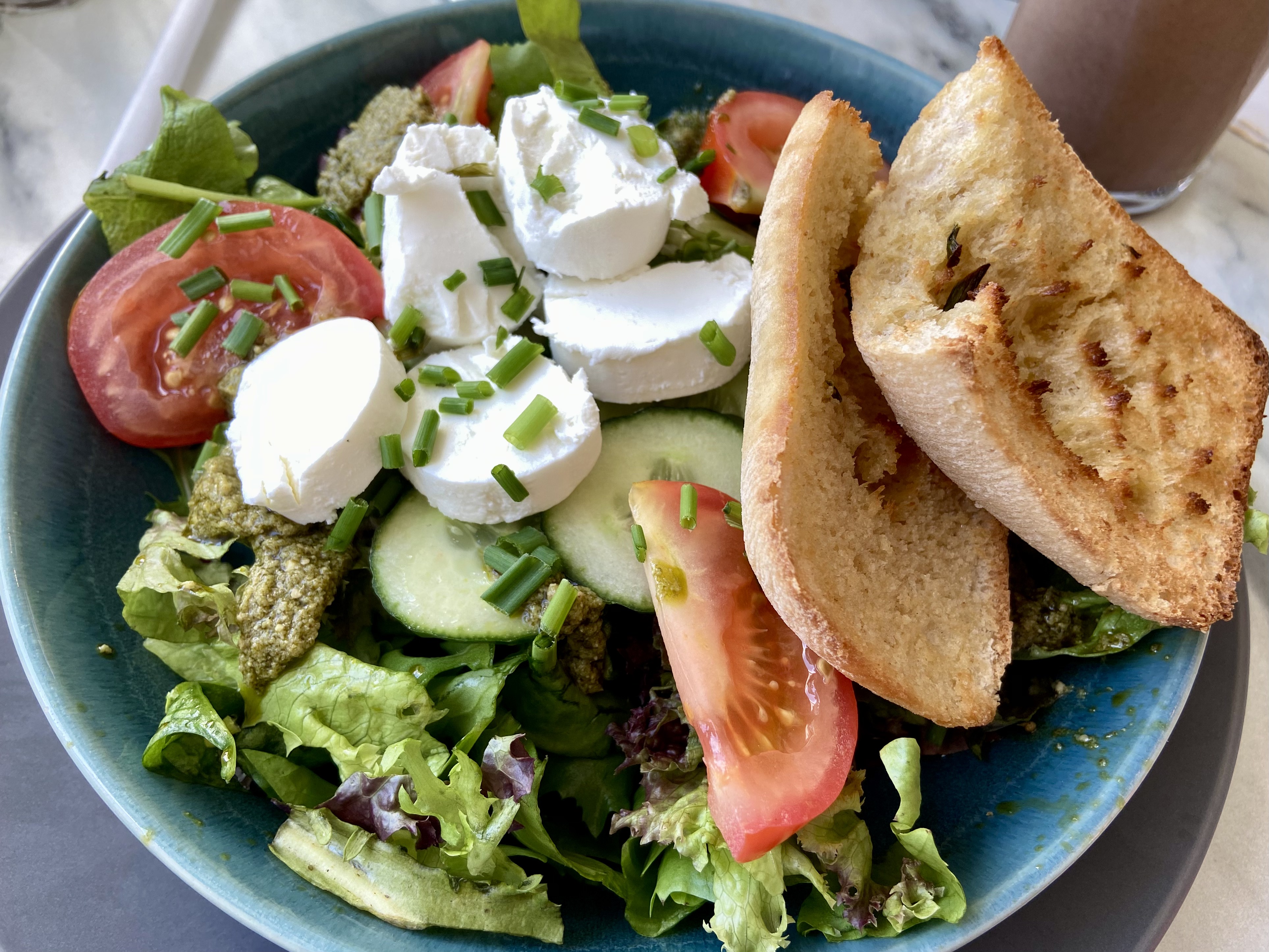
We’ve been told that in hot weather, we have been allocated a £2 cold drinks allowance, so when I stopped for lunch, I ordered an iced caramel mocha. £2 doesn’t come close to covering it, but it was delicious, as was the goats’ cheese salad I ordered along with it.
I had a pleasant drive back down the Galloway Trail. Really, it ended up being one of those rare days where I look back and want to laugh and feel highly pleased that someone actually paid for me to do that. There are truly awful moments in this line of work, but there are some great ones too. And next time I am asked to go on a report case, there will be things I learned this time that will be put to good use.
I rounded off the week reading the TB test. Sadly, there were some animals that tested positive. Another farm, now under restrictions, with thousands of animals that all need to be tested. If I were in charge, I would be looking at banning moving cattle from high risk zones and into Scotland. I know there’s a lot of negativity about red tape, but the eventual cost of allowing those movements is unreasonably high. Then again, after 15 years in Norway, I’d be on board for massive limitation on moving animals around.
I seem to be in a perpetual state of travel at the moment. After Perth, I had a night in Airth, then down to Yorkshire, and from Yorkshire, I headed directly to Crewe, not having spent a single night in my own bed. Luckily in Crewe, I was staying in a Premier Inn. I guess some would find their ubiquity boring, but I rather like knowing exactly what the room will be like, and what’s on the breakfast menu, even if I’ve never been to that particular hotel before.
This week’s training was on dealing with outbreaks of notifiable disease, with particular attention to bird flu, or avian influenza, as it’s called officially. It was quite sobering to hear the accounts of a couple of vets who arrived two years before me, and found themselves dealing with outbreak cases within a few weeks of arriving. That must have been a baptism of fire, given all the kit you have to wear, including hoods that cover your entire head and blow air over your face and require you to keep an eye on the battery levels if you’re in the sheds too long.
There was a day of practical training, out on a chicken farm. I’ve seen lots of broilers before – chickens bred for meat – so I was interested to see this one, which had laying hens. Though the hens were all inside, so not free range, they were not in cages, which I was glad about. Unlike the broilers, who were mostly on the floor, with a few perches and “toys” to interact with if they wanted, these hens were much more energetic and had different levels to walk on and metal bars to navigate across. It seemed a relatively good environment to me.
We saw some chickens being euthanized. It wasn’t particularly pleasant to watch, though the aim is to have high welfare throughout the process – hopefully actually higher than they would have in a slaughterhouse. There are various roles I might have to take if I go out to a notifiable disease case and one is the Welfare Vet. It’s important that I know the correct way everything should be done.
It wouldn’t necessarily be a big, commercial farm either. If I had to deal with someone’s pet chickens, I would want to be able to explain to them about what might happen, to prepare them for what they might see, just as I used to do when I euthanized people’s dogs when I was in practice. Dying doesn’t always look peaceful, even when there is no suffering involved.
We also carried out some post mortems. If I’m first on the scene, I have to be capable of carrying out some basic diagnostic procedures. Ultimately, all notifiable diseases will be diagnosed via tests sent to an official laboratory, but if I can rule out notifiable disease without it getting that far, it can save a lot of disruption. It can take twenty four hours for the tests to come back and until then, depending on which disease is suspected, movement restrictions will be in place, not just for the farm we’re on, but potentially for a large area surrounding that. With suspicion of foot and mouth, the whole country might potentially be brought to a standstill, so it’s incredibly important that the key vet is competent and backed up with a competent team.
At some point, I will be sent out to a report case where there is suspicion of a notifiable disease. While I know it will be daunting when it does happen, I feel better prepared now than I was before.
I finally got home on Thursday and have spent the last two nights in my own bed. As my friend Lara can confirm, I only own super-comfortable beds, so being home is always pretty nice! On my way up the road from Yorkshire, I stopped at Gretna Outlet to buy myself a new weekend happiness kit.
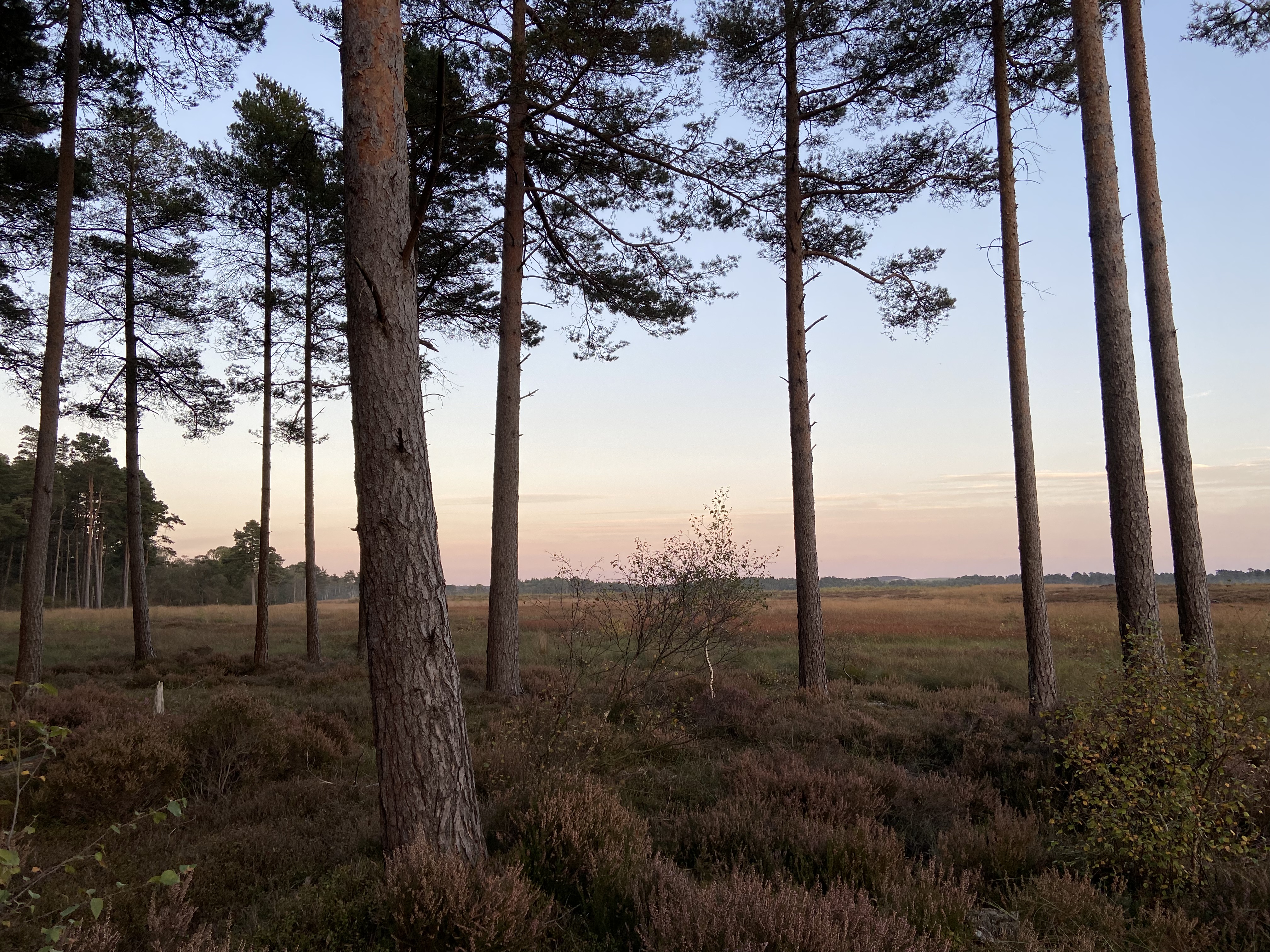
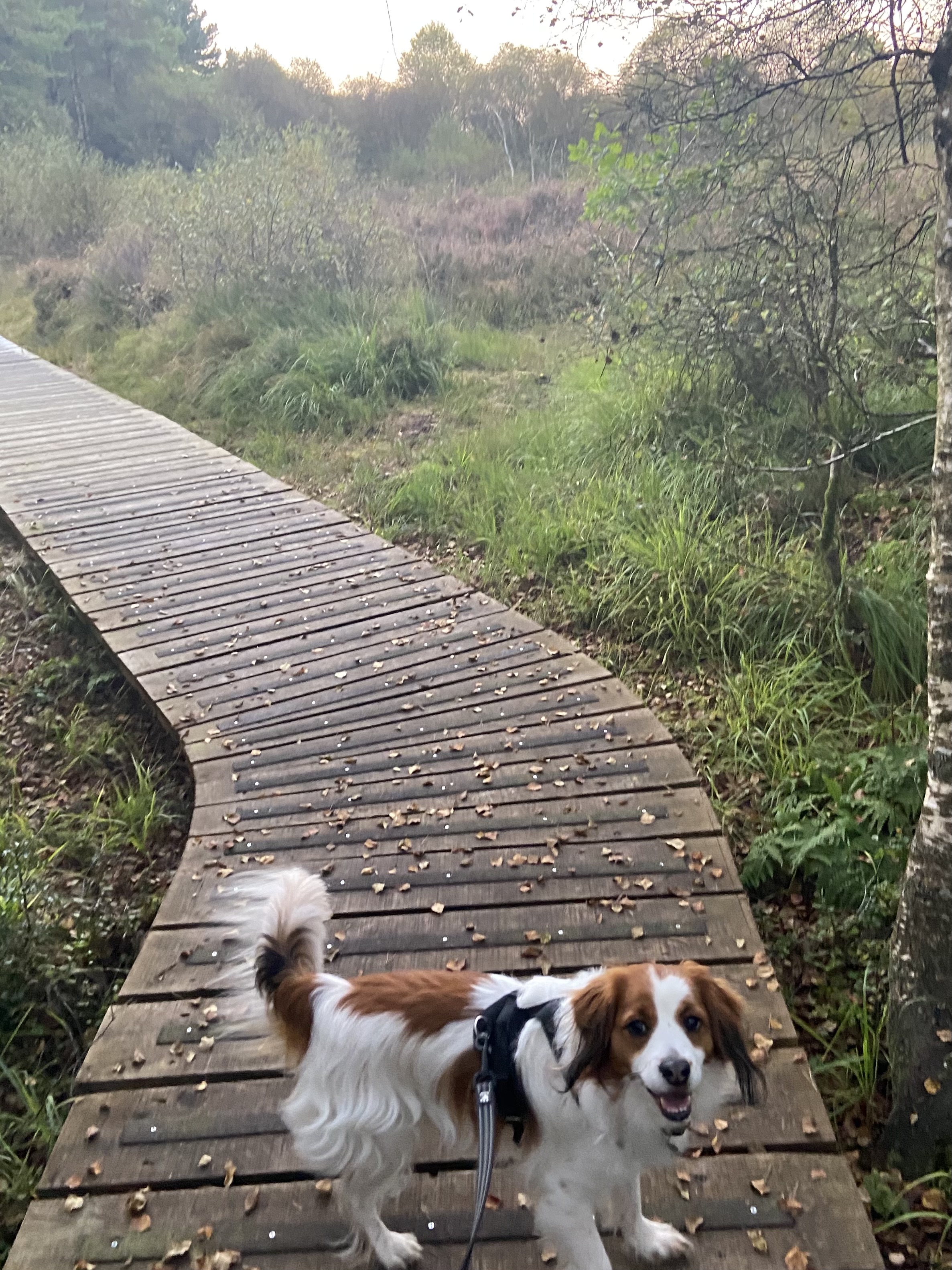
Though it wasn’t the weekend yet, Triar and I went out to Kirkconnell Flow Nature Reserve last night to start breaking my new boots in, ready for some more Perthshire hills next week. Kirkconnell flow is an ancient, raised, peat bog. Very rare apparently and stunningly beautiful yesterday evening in the golden light. We walked along the edge and through the forest, which reminded me of the forests in the north of Norway, with their tall pines and smaller silver birches sheltering underneath.
I was enjoying it so much that we did the outer circuit first and then the shorter inner circuit. I have a walk planned for today as well. Nothing too strenuous and good, well marked paths so getting lost is not possible. It’s about time I started exploring Dumfries and Galloway on foot and not just in my car.
Thank you for reading. I hope you have a good week.
Regular readers will be glad to know that this week has been better than last. I want to thank the people who reached out to me after reading what I wrote. I’m still a bit short on local friends, but I have spoken online and on the phone to both old and new friends this week, which has really meant a lot. Some of my colleagues have been supportive too, and to them, thank you so much.
It’s been a busy week. I was out on two welfare inspections on Monday and another on Wednesday. The inspections themselves don’t take long, though there can be a fair bit of driving. Writing the reports and dealing with the aftermath often takes longer, though as there was nothing too challenging, the reports themselves were less urgent than checking the animals weren’t suffering. I will be going on holiday in three weeks time and there’s definitely a feeling in my head that my main aim at the moment is just to keep going until I get there. One of the things I learned early in my career was that I can continue to function on the surface, even when there’s turmoil inside, but that’s wearing a bit thin right now. I will ultimately be fine, but I’m not sure it’s good for me.
On top of the welfare visits, I received an e-mail about a dead sea eagle, which needed to be tested for bird flu. There have been a few confirmed cases up here, and most have been in sea eagles, presumably because they are at the top of the food chain. When people report dead birds, we have to go out and swab them. Up until now, I hadn’t done any, so as with any new procedure, before I could go out, I had to find out what equipment I needed, whether we had that equipment, and once that question was resolved, I needed to find out how to do it.
Because it’s a high risk infection, Mattilsynet is monitoring the situation as part of its OK program. The correct protocol, on finding a dead bird, is to leave it where it is and alert us. That hadn’t happened in this case. The bird had already been scooped up and was in the freezer of one of the council offices in our region. Perhaps I should warn you that the rest of this blog is going to be about my (to me) amusing encounter sampling this dead eagle, so if that isn’t your kind of thing, you should probably look away now!
There are a lot of occasions in Mattilsynet where we are asked to do things we haven’t done before. Quite often you will be doing it without being shown how, because we’re all so spread out that there isn’t always someone local to show you. In order to help us cope with this with regard to the OK program, there is a massive word document, updated annually, with descriptions of what samples you need to take, how to take them, how to send them off to the lab and which lab each needs to go to.
In addition to this sheet, which I quickly accessed, I made a point of asking colleagues for any tips or helpful comments. Quite often, these are not colleagues who are sitting beside me, who could come out and show me, but are sitting in an office a few hours drive away, and have their own jobs to do. Thomas was in Svalbard this week, but fortunately, he was able to tell me exactly where the bird flu swabs were. I should have known myself probably, as he and I had discussed this before, but my memory is awful at the best of times, and the best of times probably isn’t a phrase that applies right now.
Anyway, having established the fact that we did, at the very least, have the swabs I needed, I was able to get back to the man who had contacted us about the eagle. I sent him a message saying I would be out on Thursday morning and cc’d Line as she had forwarded the message to me. Line was in Svalbard as well, but fortunately she saw the e-mail and sent me a gentle reminder that I should probably ask Kommune man to take the bird out of the freezer to defrost a little.
I did give some consideration to the defrosting. This week has been quite warm. When the sun is shining in your windows for a large part of the day, it can get very hot inside. If he took the dead bird out of the freezer and put in in a warm room overnight, it would probably be quite grim in the morning. With this thought in mind, I told him to take it out on the Wednesday afternoon, before he went home.
As I said above, I am still (more or less) functional at the moment, but new things are always more challenging when you are tired. Knowing that I was, I had spent quite a lot of time poring over the instructions, trying to make sure I was confident in what I was doing, before heading out. It all seemed straightforward enough. I had to take two swabs, one from the throat and one from the cloaca. In addition, I had to remove the left wing, through the shoulder joint, and send that off too. There was a polite picture of this procedure on the sheet alongside the instructions. It didn’t look too difficult. I gathered together my kit: scalpel, forceps, swabs, gloves, facemask and forms, took them out to the car, and set off.
I always feel, that as a vet, it’s important to look competent and to approach things as if you know what you are doing, even if you don’t. This rule probably applies even more when you’re dealing with potentially deadly diseases. It crossed my mind, that before I arrived, I should stop the car and have one last read of the procedures. As I read through the text again, I realised that though I had the kit for dissecting the wing, I had forgotten to take a plastic bag to pack it into. I’ve been a vet for a long time now, and one thing I have learned is that, even if you don’t have absolutely everything with you, it’s usually possible to work around it or find a substitute that will do. Casting my eyes around the car, I realised that I had packed my disposable gloves into a plastic bag. Better still, it was a ziplock bag, so easily sealed. Thanking the gods of veterinary substitutions, I emptied out the gloves, put a few in my pocket, and continued on my journey.
Kommune man seemed very helpful when I arrived. I thought we should probably fill in the forms before we started. The required details included the GPS co-ordinates of where the eagle had been found, as well as details such as age and sex. Fortunately, someone at head office had realised the realities of the situation, so I was able to tick “don’t know” for the latter two. The dead bird was in a different building he told me, so once the form was mostly filled in, I followed him outside, down some stairs and into a garage, where there was a black bin bag on the floor, sealed with brown tape.
I unwrapped my scalpel, which was of the flimsy, disposable type, with a plastic handle. It crossed my mind for the first time that perhaps I should have brought a spare or better still a sturdy, abattoir-style, sharp knife. The polite picture of the dissection had shown a smallish bird, carefully laid out on its breast, wing effortlessly outspread, with a neat incision over the shoulder, where the cut was to be made. Those doing this gentle procedure had presumably not had to chop through two layers of dustbin bags before they began. Still, it was over an hour’s drive to get back to the office and I had to get this sample taken and sent off by two o’clock. I had arranged with Konstantin that I would send it off from the abattoir. There was no way I could go back now.
As I unwrapped the bag and started to look for the cloaca, I realised that I had perhaps made a second error of judgment. For some reason, I had thought carefully about how bad it would be if the bird was too warm overnight, but hadn’t really considered the possibility that overnight wasn’t really long enough to defrost anything left in a cool place. Any cooks among you who have been faced with a still-frozen turkey on Christmas day, will probably recognise that it takes quite a long time to thaw a large bird. It also struck me, as I contemplated the huge talons and the sheer size of the body, that the small plastic bag I had so gratefully emptied of its gloves, was not going to contain an eagle’s wing. I guess it’s probably a reflection of how tired I was, but I had seen the picture and had been vaguely visualising something with a wing that was a bit bigger than a chicken, but an eagle’s wingspan is huge. Even folded up, it was going to need something more like a bin bag. Looking up from where I was kneeling on the floor, I asked Kommune man if he had anything, and to my relief, he disappeared to get one.
It took me a little while to actually find the cloaca (where both the urine and faeces come out). There was a thick layer of feathers obscuring everything, and because the bird was frozen into a twisted position, I couldn’t stretch it out flat to see where the midline lay. When I finally did locate it, I found that everything was way too stiff to be able to insert a swab. My problems were compounded by the fact that the bird flu swabs had obviously been designed with the possibility of checking out blackbirds or maybe a budgerigar. The stalk was incredibly thin and bendy. When I tried to insert it, it was obvious that any pressure would cause it to break.
Abandoning the cloaca for a moment, I thought I would have a go at the throat and come back to the bottom end later. The instructions about where and how to swab the throat had included another polite picture, this time of a duck, its bill gaping, revealing the clean and tidy structures of the cartilage and the tissues that open and close to protect the trachea.
At least the neck of the eagle was defrosted enough so I could straighten it. It was an impressive bird, close up, and I prised open the hooked beak and looked into the throat, only to find it was filled with gunk. I’m not sure if what I could see was a part of the eagle’s last meal, but it was obscuring my view, and I began to scoop it out. There was a surprising amount of it, and I was aware the entire time that if the bird did actually have anything nasty, all this material could be contaminated. Finally, it was all gone, though it was still a very long way to the back of the throat and what I could see really didn’t look much like the equivalent structures in a duck. At least I could get the swab in though, which was an improvement on the other end, so I took the swab out of its packet, swivelled it inside and outside the tracheal opening, placed it carefully in the liquid transport medium in the tube provided, broke off the tip as instructed, and replaced the lid. Step one complete!
Changing into a new pair of disposable gloves, I decided to tackle the wing next. “Turn the bird over onto its breast and stretch out the wing to find the shoulder,” said the instructions. The obvious trouble now was that nothing here was stretching out. There were also thick feathers in the way. An eagle’s flight feathers are really quite impressive, close up, but as I grasped the weedy scalpel again, I was very much aware that I couldn’t afford to blunt the thin metal of the blade. Assessing anatomy and the position of joints is also quite easy if you can move them all. Trying to do so when the whole thing is frozen stiff and under a thick layer of fathers, not so much. Feeling around with my fingers, I made a cut down over where I thought the shoulder joint probably was, and began not so much to carefully dissect, as to hack away in the hope that I could cut the wing from the body without making a complete tit of myself. Though it took all my feeble strength to prise the wing out from the body far enough to get in underneath it, I did at last manage to slice through the frozen muscle enough to finally remove the wing. Sliding it into the plastic bag, I let out a small sigh of relief and turned my attention to step three.
The cloaca was still frozen to the point where I couldn’t get my gloved finger through it. I was supposed to put the swab inside and move it around until there were visible bird droppings on it. Even if I could get the swab through, the droppings would be just as frozen as everything else. First though, I had to gain access. It would be easier, I thought, if I could see what I was doing. And so I made a cut at the opening. Fortunately my scalpel was still intact and sharp enough. After only a few moments’ dissection, I was able to insert my finger and the swab. Pressing the swab against the thin wall of the cloaca, I was glad to find that my finger was warm enough to melt some of the bird droppings onto the swab. Withdrawing it with relief, I put the second and final swab into the medium, snapped it off and twisted the lid firmly into place.
Despite all the delays, it was still morning as I flung all the equipment in the boot of the car and set off towards the abattoir. Trude is an expert at sending off samples, and I was sure she would be able to help me with this. She has the codes for the computer and would know how to print me out a label. Doubtless, given time, I could work it out myself, but time was something that was beginning to be in short supply. Donning yet another pair of disposable gloves, I carefully lifted out the swabs and the black binbag containing the wing from the car boot and headed inside.
There were no polystyrene boxes big enough for the wing. Of course there weren’t! It took about two minutes to establish the fact that I was going to have to head back to the Finnsnes office, where I knew we had much bigger polystyrene boxes for sending off fish samples. The packages have to be both sealed so that no liquid can escape, and also insulated enough so that, with a couple of cool packs, the whole thing can remain sufficiently chilled overnight that the sample arrives without being denatured.
As I drove back to Finnsnes, I was wracking my brains about the label. You have to go online to the parcel service and select the specific service you need, which in this case was for bird flu samples to the Veterinary Institute in Ås, to be delivered overnight and arrive in the morning. It’s important that everything is correct, otherwise it’s easy for your samples to go astray. I was still deep in thought when I received a text. It was from Trude, and a quick glance revealed that she had been into the website, ordered the correct service, and sent the label to my e-mail. It struck me, not for the first time, that there were times when having truly competent colleagues on your side can make life a million times easier than it would otherwise be.
I took a photograph of the final package, which was probably the largest thing I’ve ever taken into the post office. As you can see, it takes up most of the back seat of the car and that eagle’s wing took up most of the length of it.
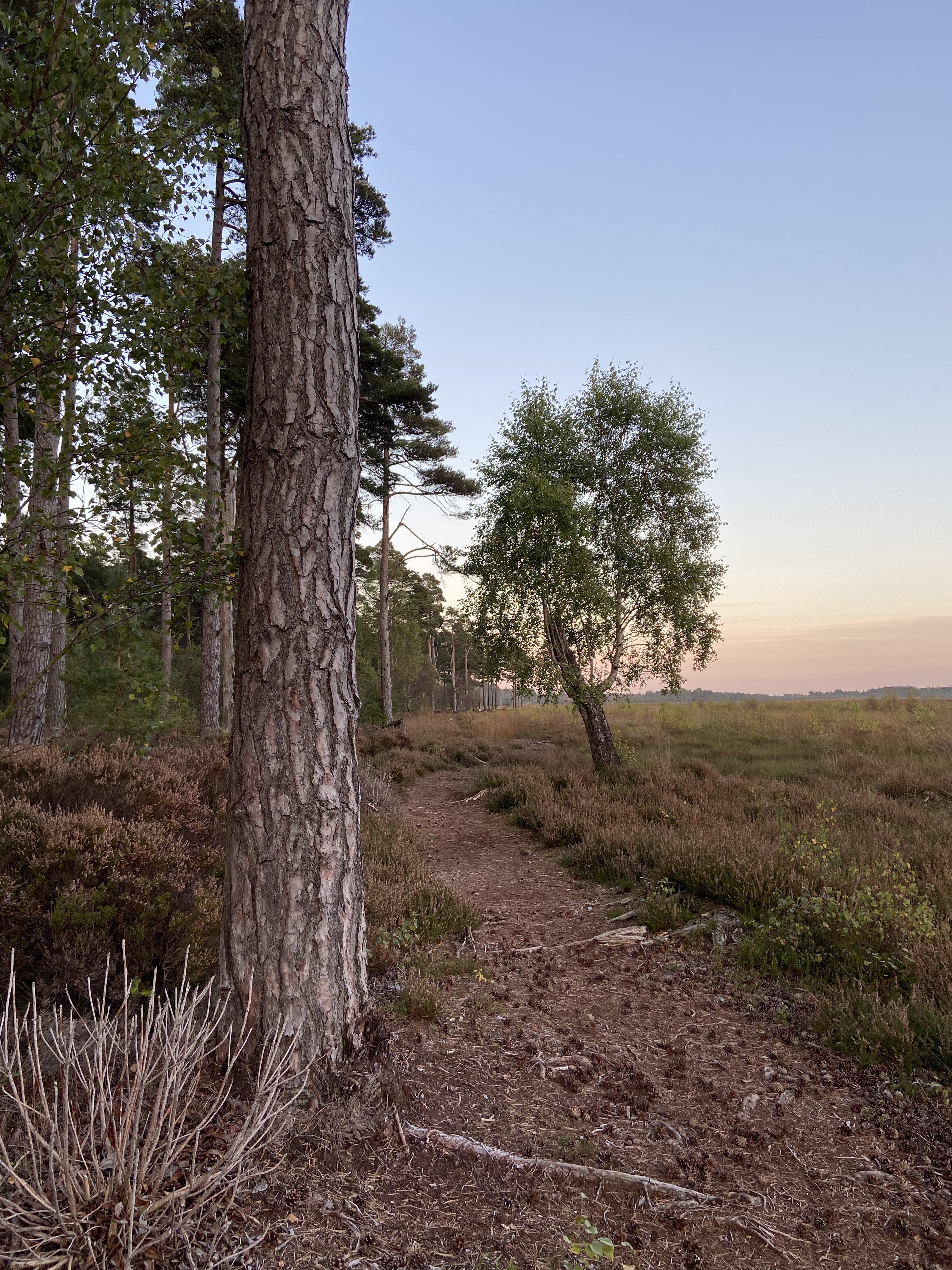
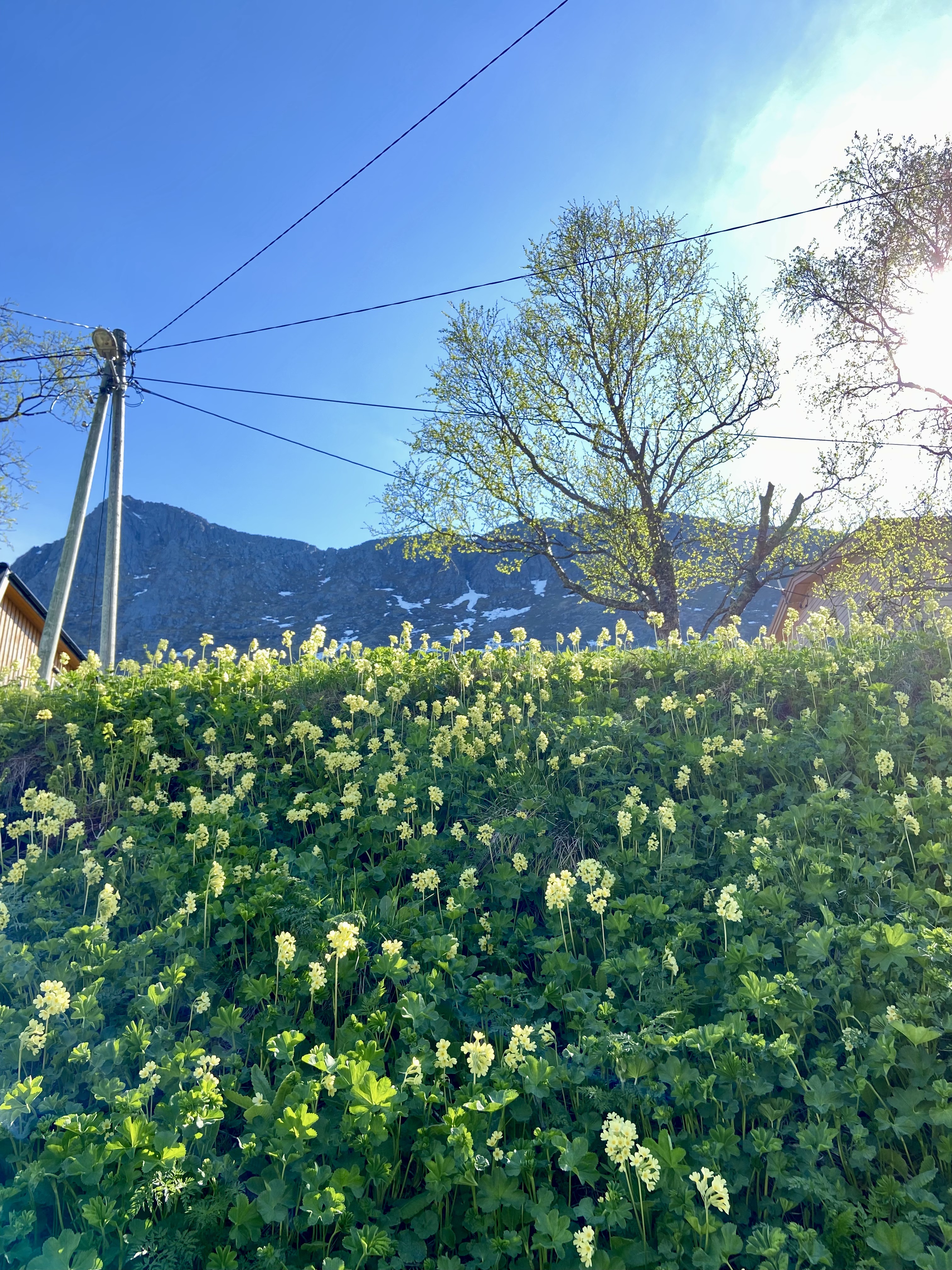
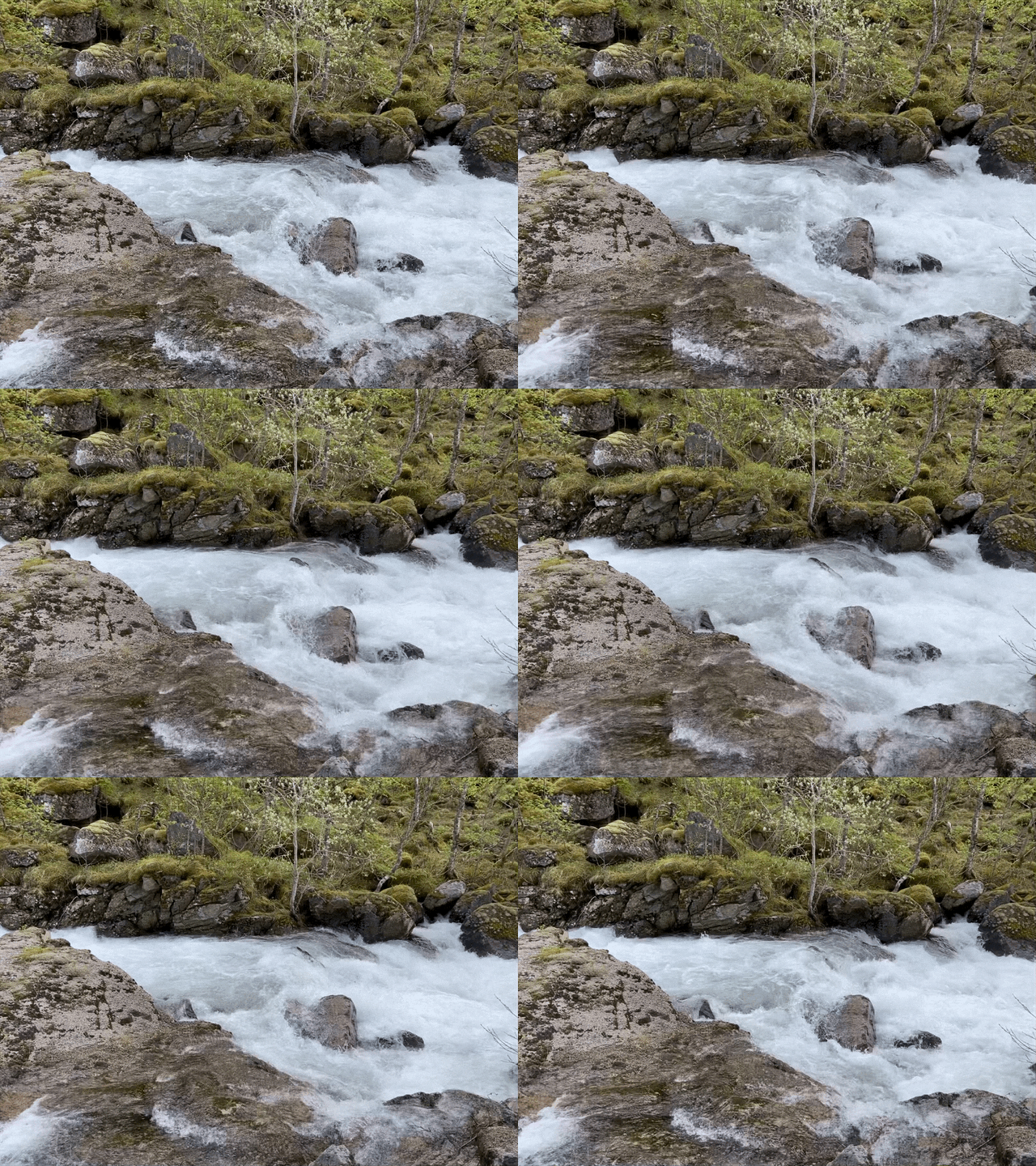
I took yesterday off. Monday is also a bank holiday in Norway, so I am hoping that by next week, I will be rested enough to be back on better form. Despite my eagle experience being something of a comedy of errors, I’m pretty sure the sample itself was taken adequately. I guess I’ll find out in the next few days whether it was positive or not. Anyway, I’ll leave you with some pictures of scenery and flowers. After the long winter, everything is now green leaves and rushing water. Hope to see you next week.












 A Vet’s Life