I’m back in Dumfries today, because I’m going to another “mini writing retreat,” with A Novel Approach, the writing group from Lockerbie. Not that I have done much writing recently, outside of this blog. Life has just been too full-on for me to find the mind space.
It’s been another great week at the PDSA. As well as neutering, I’ve started to do some consultations. I’m not very confident yet, partly because the PDSA provides care that is, by necessity, somewhat more limited than private vets might offer. It’s also more than twenty five years since I was in general practice in the UK. I did emergency work after that, and also worked in a small animal practice in Norway, but all those things were different, so I’m feeling my way back in. Happily, I’m getting plenty of help from all the staff, from the animal care auxiliaries, nurse and vets.
On Saturday, following a recommendation from Martin in the comments last week, Triar and I visited Barshaw Park. My original intention was to go in the afternoon, when the miniature train might have been running, but I wasn’t hungry first thing, and felt at a loose end, so decided to go in the morning, with a view to going back later. As it was a half hour walk, and I wanted to save energy for when I got there, I decided to go on the bus. It was easy enough to find where to get on, but when I told the driver I wanted to go to Barshaw Park, she didn’t know where it was. On the spur of the moment, having seen an all day ticket advertised, I decided to go for that. So Triar and I went on the bus to Barshaw Park.
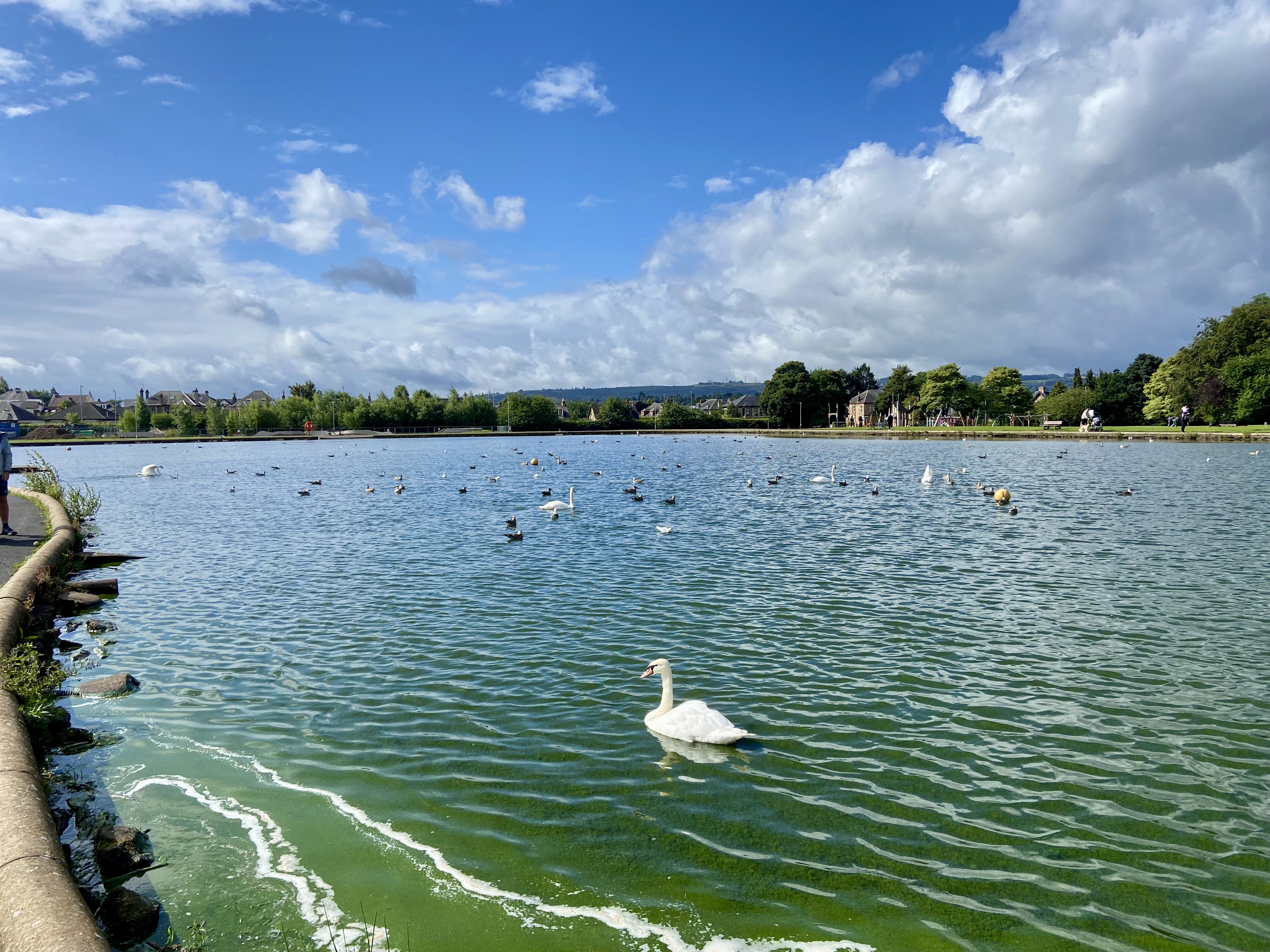
It was a nice park, though we didn’t explore too much of it. I saw the track for the little railway as well as a boating pond with lots of birds and an adventurous looking play park. There were a lot of dogs though and as Triar tends to get excited when that happens, it was not the most relaxing visit. Still, we enjoyed our walk around the pond and then took the bus back to Paisley centre.

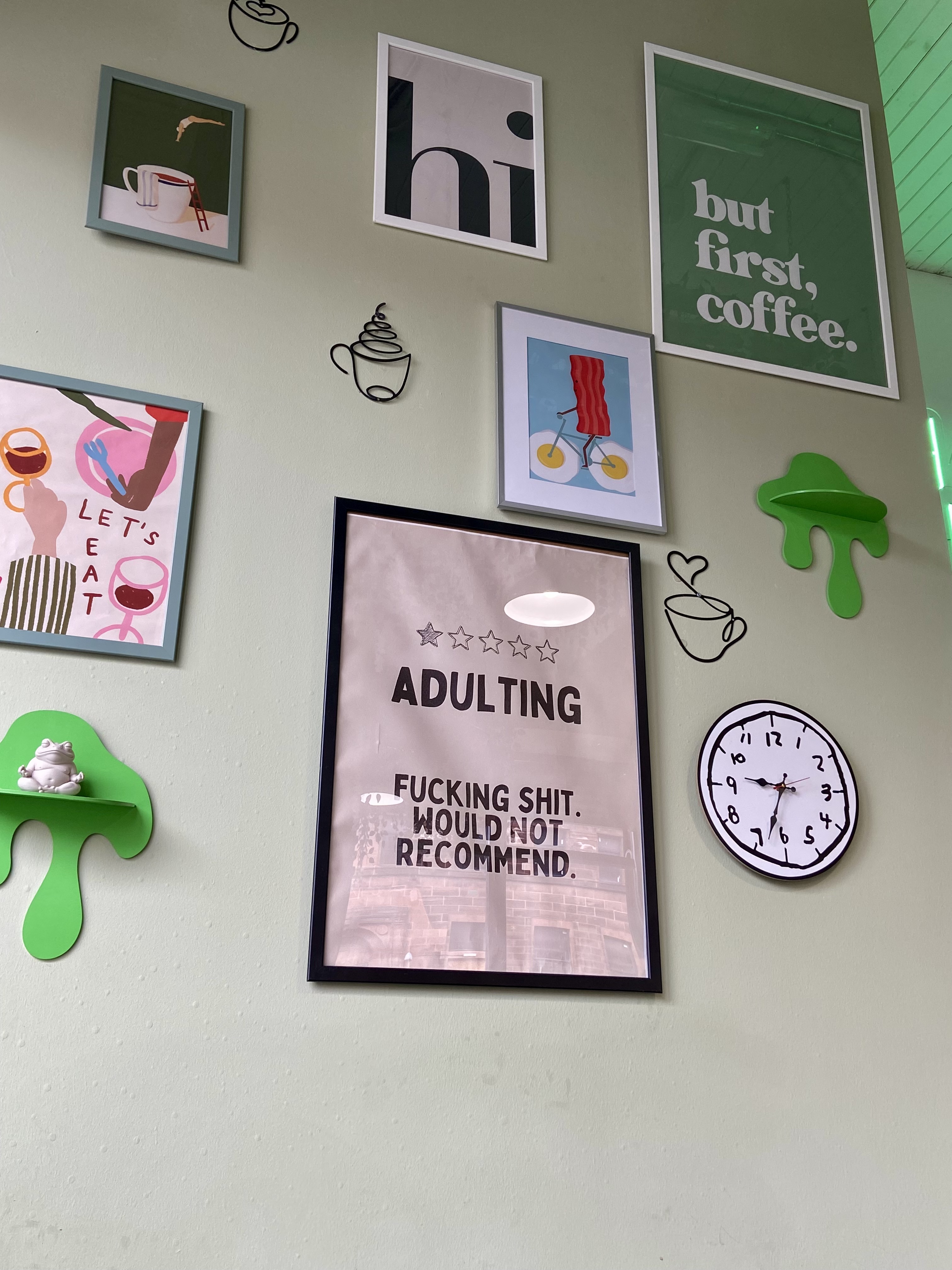
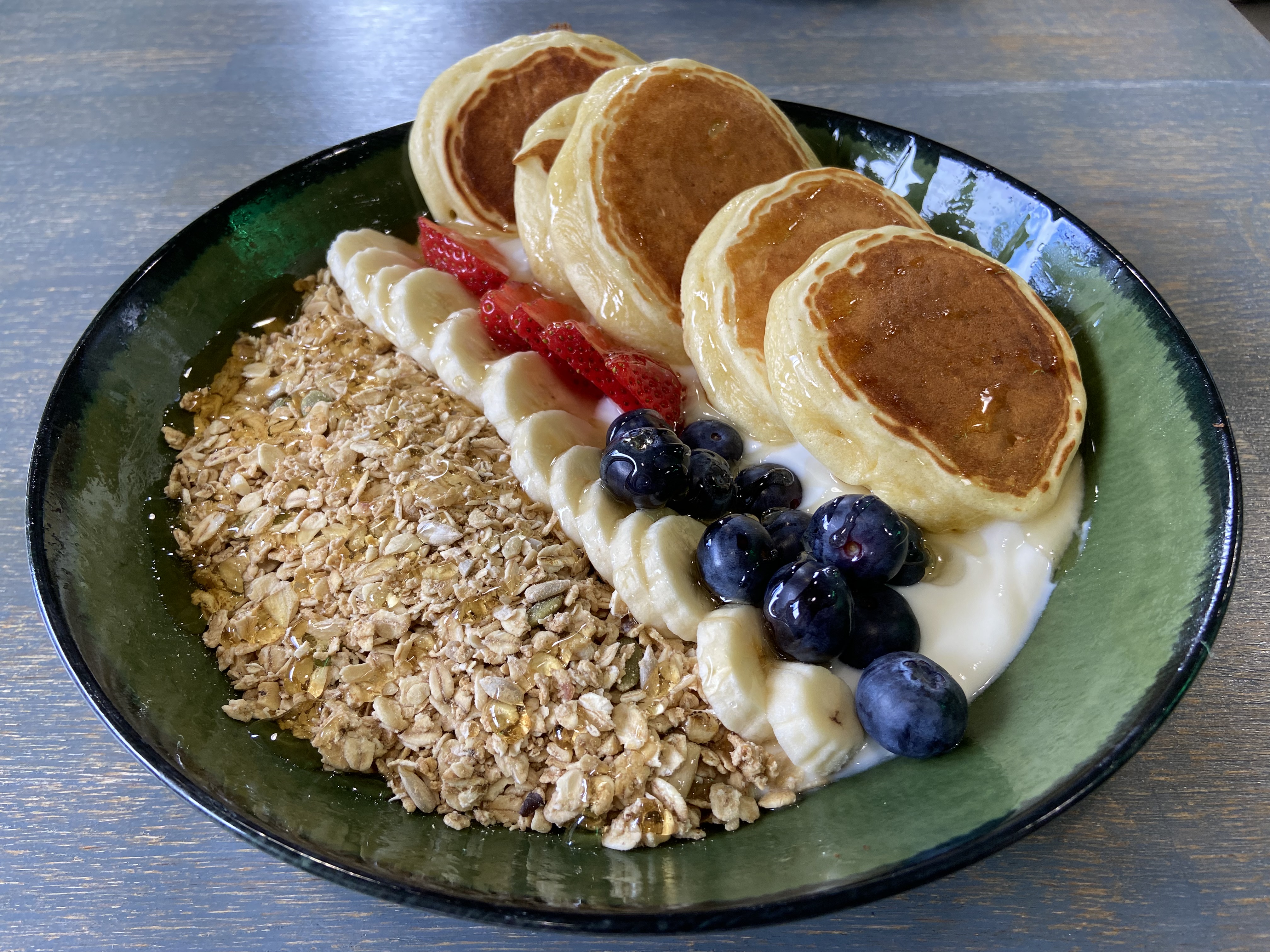
As I was now hungry, we went to Harry’s Fuel Bar, where I decided to get the pancakes again. I continue to be amused by the sign on the wall beside the counter. The pancakes were just as delicious and filling as they were the first time.
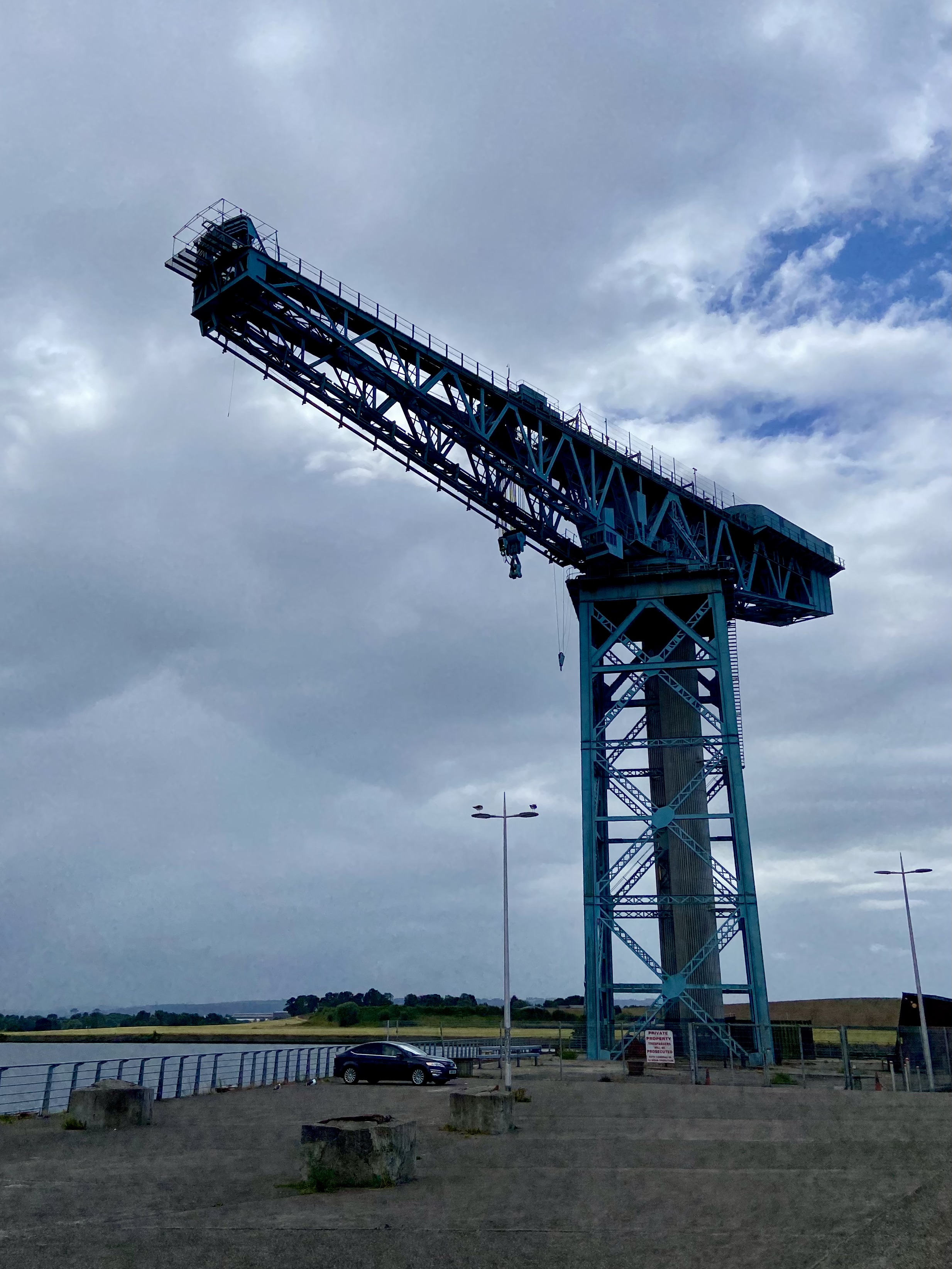
On leaving Harry’s Fuel Bar, I noticed the bus stop outside, which said the bus went to Clydebank, so on a whim, given I had bought an all day ticket, I decided that we would go there and see what Clydebank had to offer. With Triar in tow, rather than walking round the town centre, I decided to go find what used to be the docks. Clydebank was once a huge shipbuilding hub. There are few signs of that history left, other than seeing the sturdy bollards along the river bank, where the ships used to tie up, and standing alone, the massive Titan crane. At 150 feet tall, it dominates the landscape. It was open to the public for a while, but the maintenance costs are so high that it was closed in 2018 and now its future is uncertain. For now though, it stands as a reminder of Scotland and the Clyde’s shipbuilding past.
:
Triar and I continued our walk along the river bank, then back round into the town, to catch the bus again, back to our temporary home in Paisley.
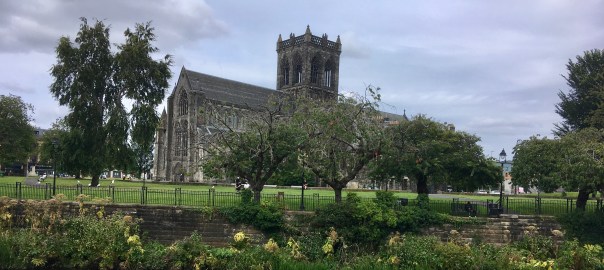
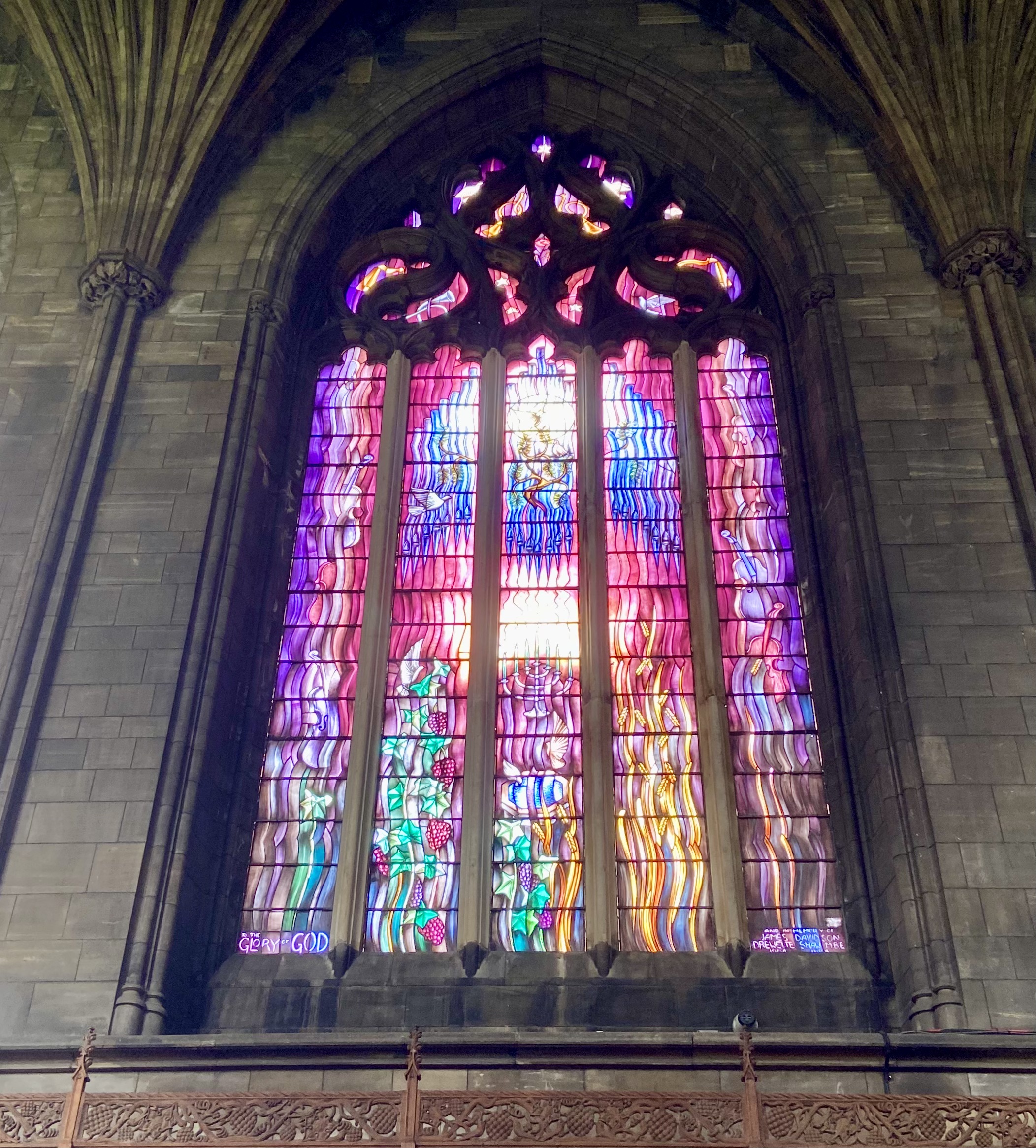
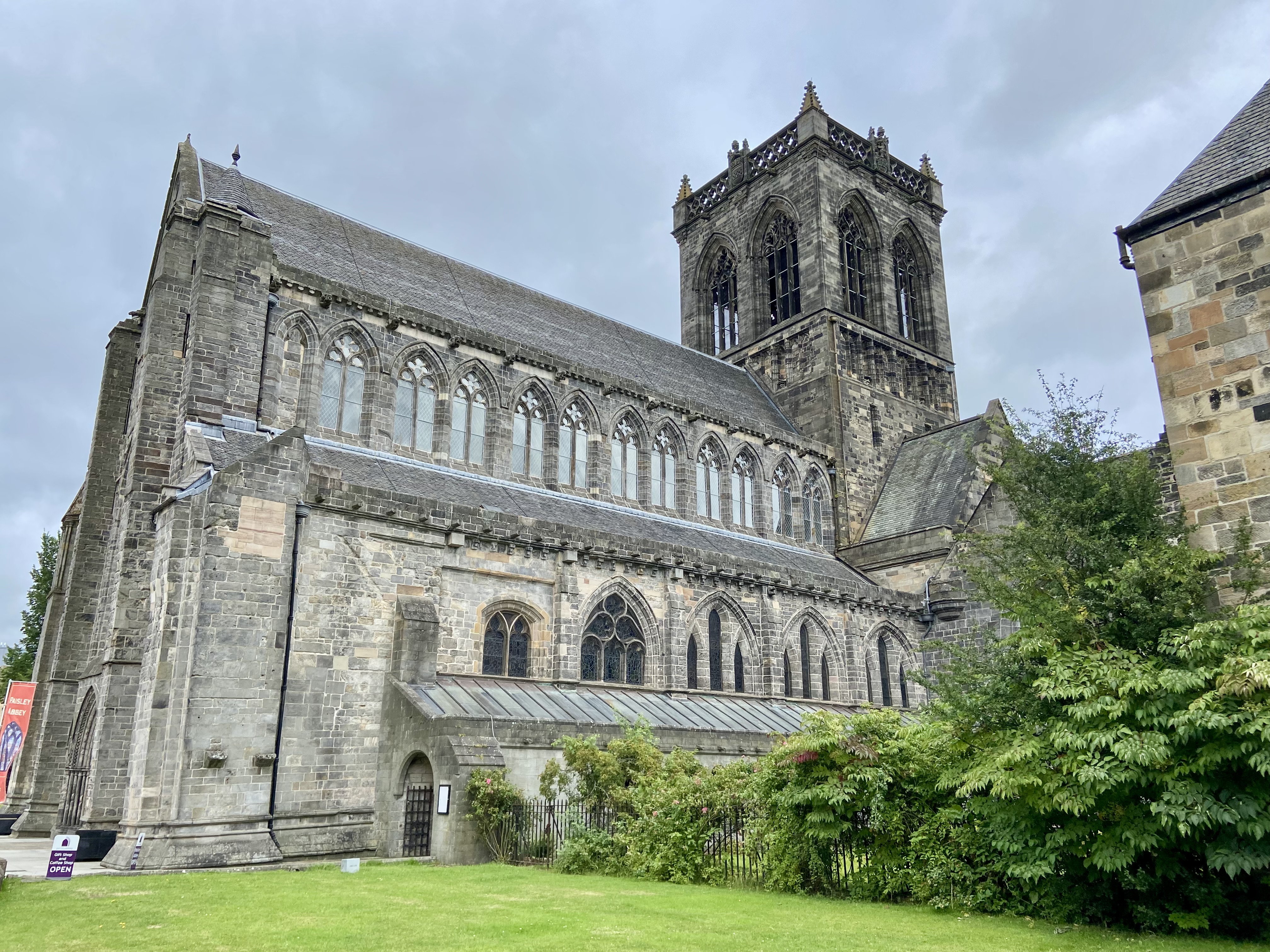
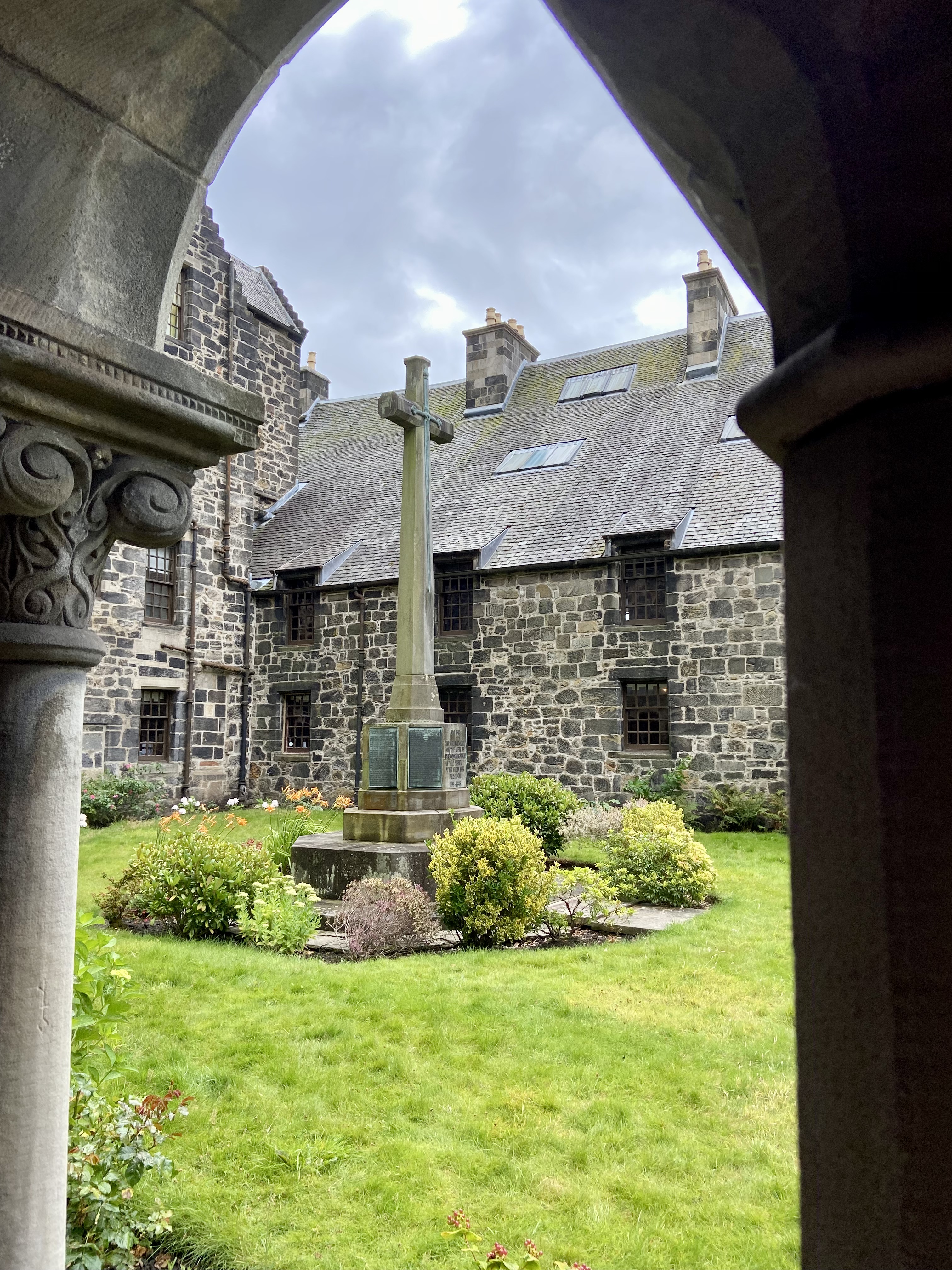
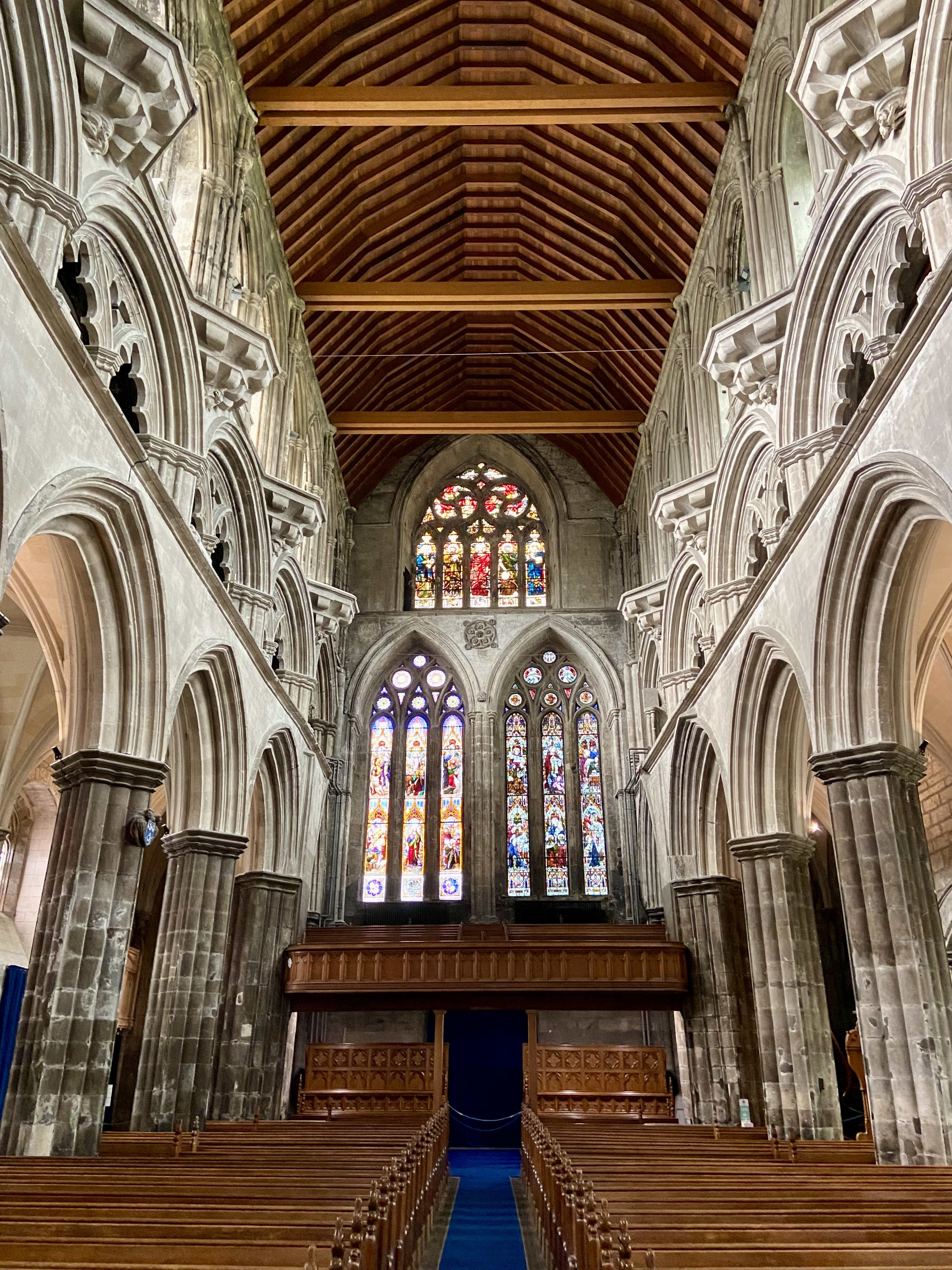
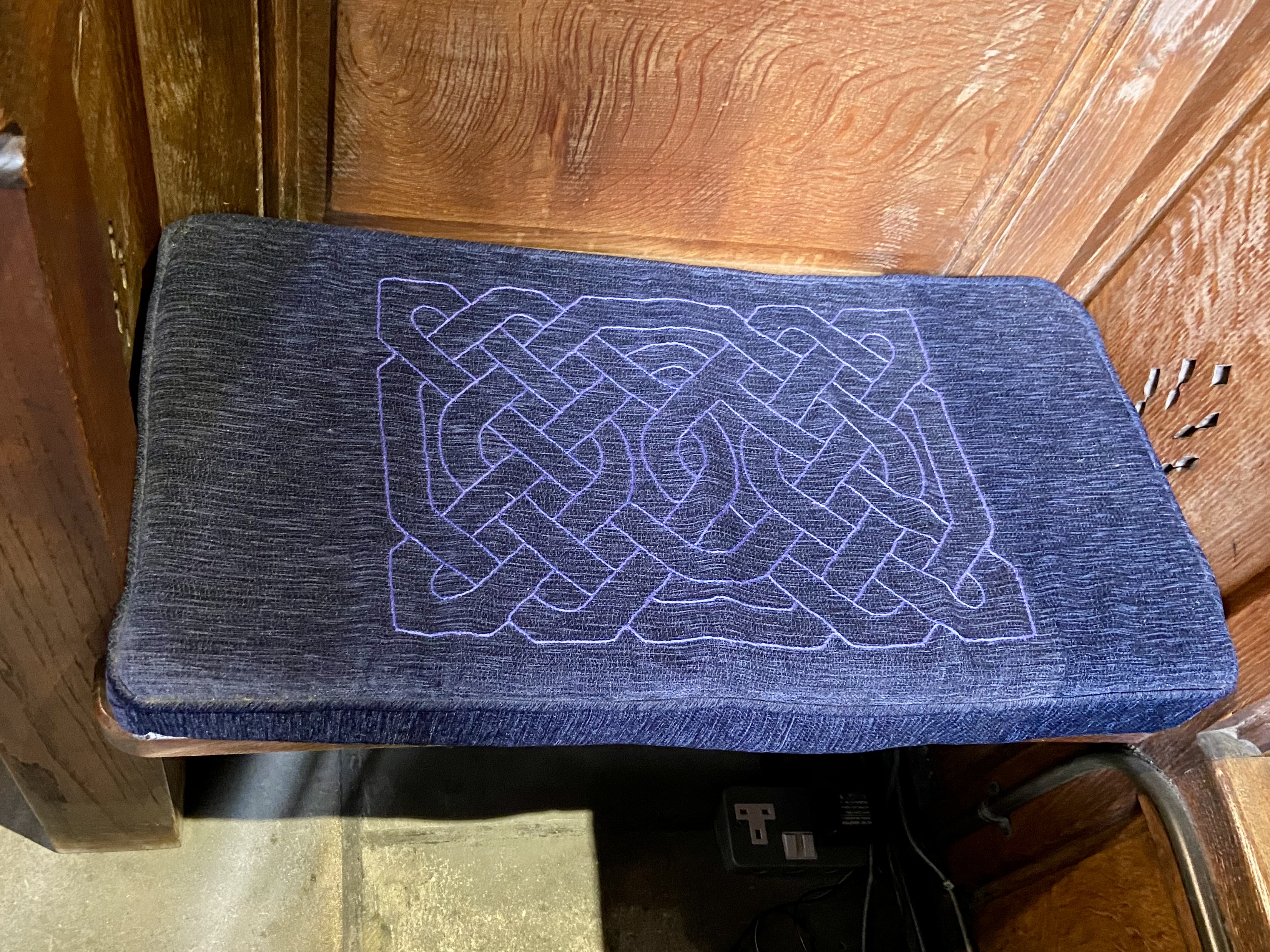
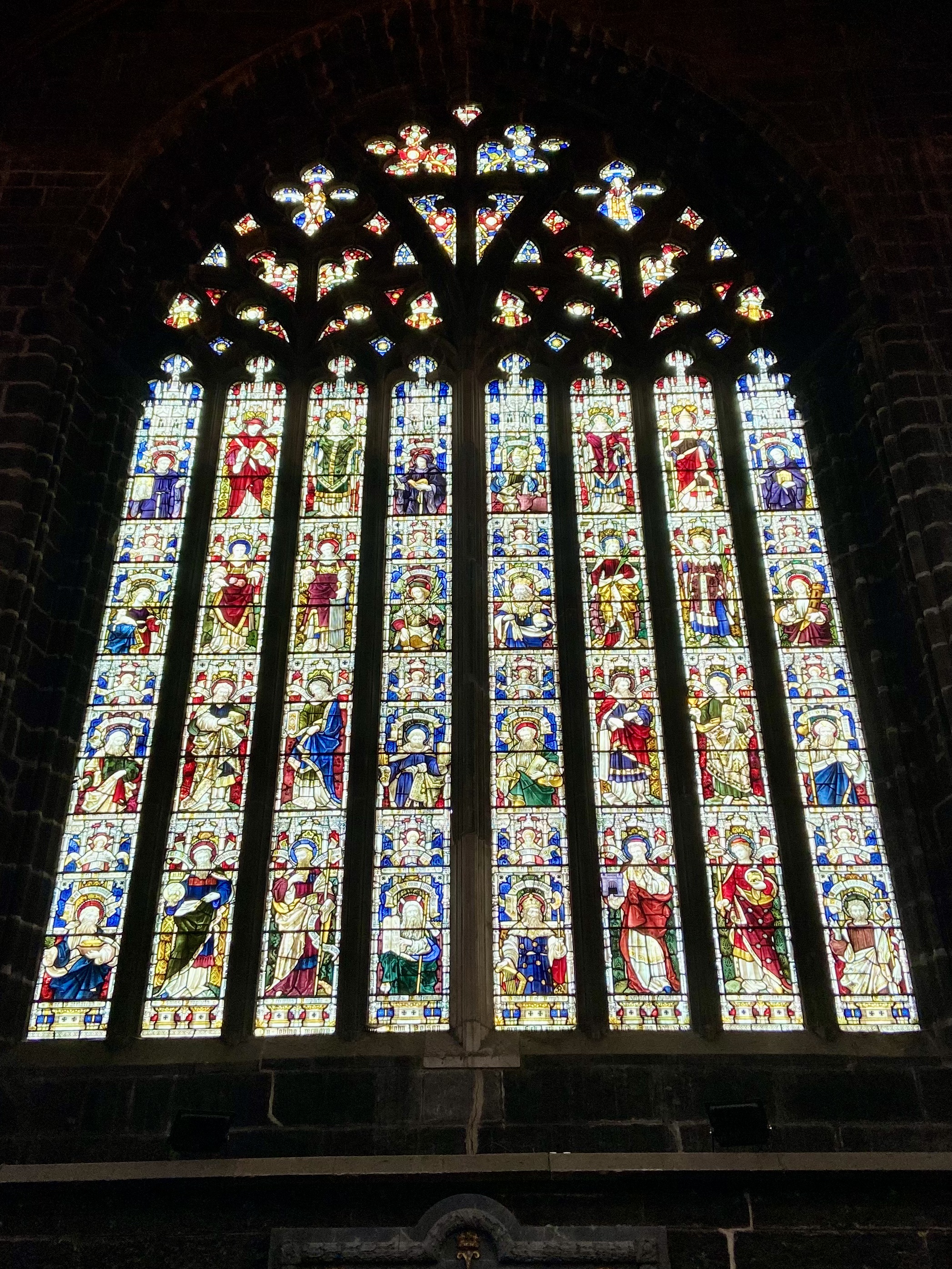
I had a day off on Wednesday and decided to go and explore Paisley Abbey. It’s now the Church of Scotland’s parish church, but was originally established as a priory, back in 1163. The current church is a mosaic of buildings, created at different times. The oldest part is from the 12th century – a Romanesque door through which visitors now enter. Parts of the building have fallen down, been sacked and burned, rebuilt and restored until as recently as 2012, though most of the rebuild was completed in the 1920s. There is beautiful stained glass, old and new. Perhaps the most striking is a window near the organ, designed by John K Clark, dedicated to James Davidson Drewette Shaw and representing light and music.
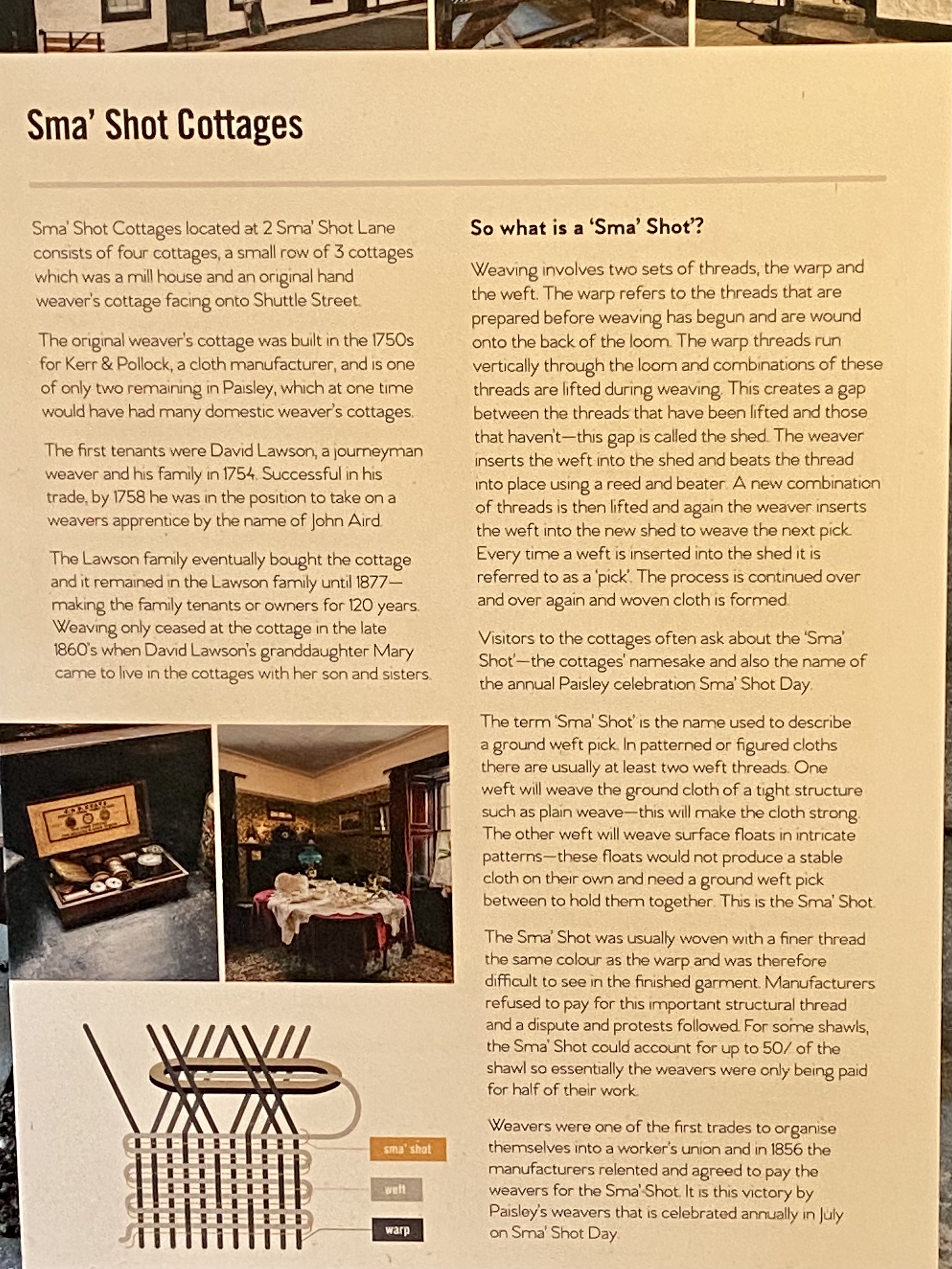
Then, for contrast, I visited a much more humble offering: Sma’ Shot Cottages, which were originally a weaver’s cottage from the 18th century and a slightly later house that belonged to the foreman of a nearby mill in the mid-19th century. It’s always a salutary lesson in how fortunate we are now in how we live in the western world. Whole families used to eat and sleep in one small room, cooking over a coal fire that would have had to have been lit, summer and winter, to make food and boil water. The (restored and working) looms were in a room next door. They didn’t have to travel far to go to work!

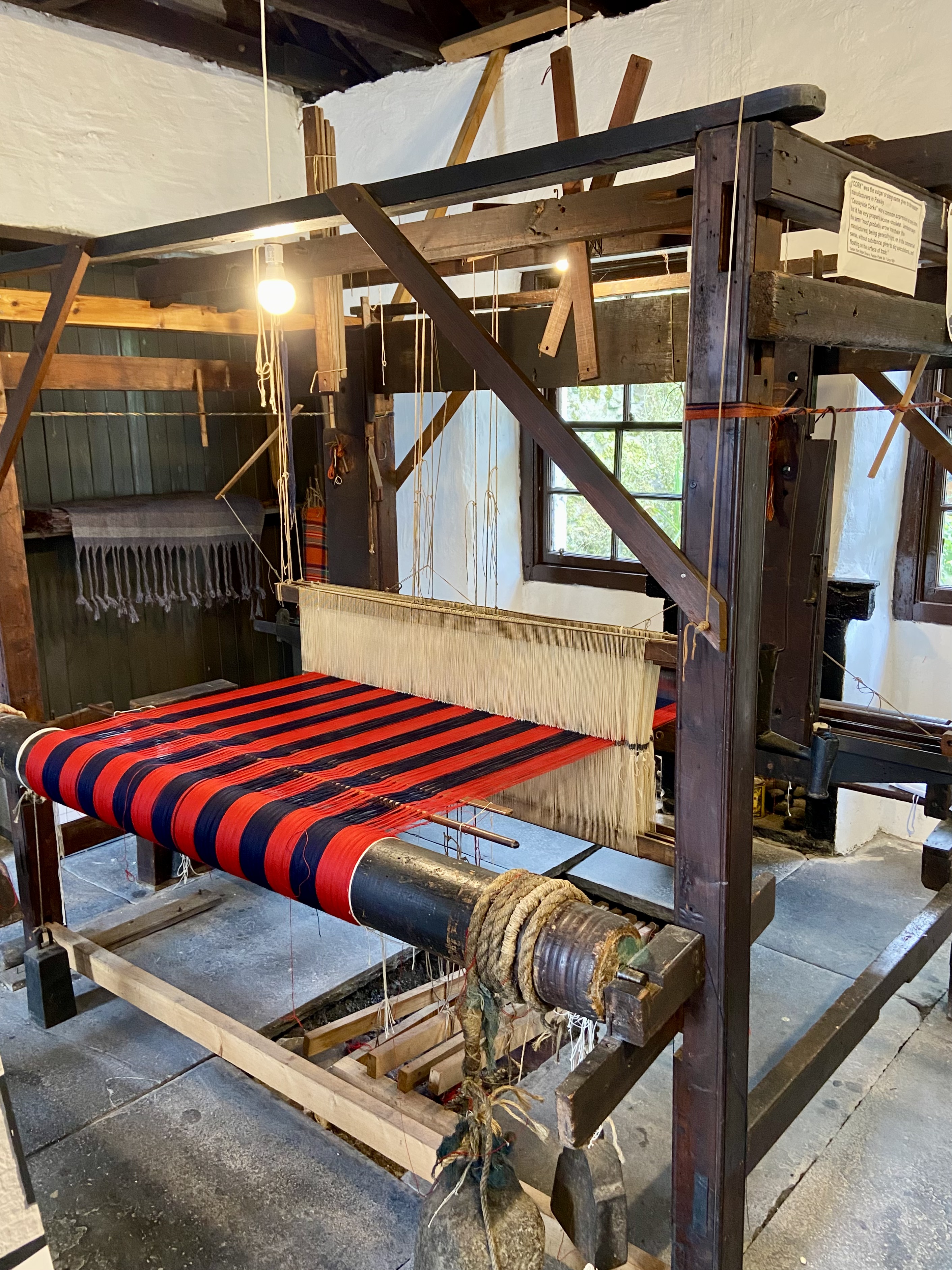
If, like me, you are wondering what a small shot is, there’s an explanation here:
Anyway, I had better go now. My writing retreat starts at 10, so I’d better get organized. Thank you to all of you who’ve read this far. I hope you have a lovely week.


Informative and evocative, thanks.