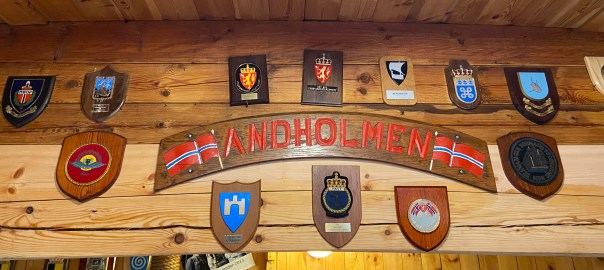
One of the highlights of my Shetland trip was visiting the Liberation Convoy which visited Lerwick while I was there. My friends, Melanie and John Arthur came over from Whalsay and together we explored the Norwegian ships which had served in the World Wars and were commemorating 80 years from the end of World War II.
Though it was a fascinating experience there was, as always when thinking about wars, a heavy sense of grief and loss. On the first ship we explored, Hestmanden, we read many stories about the young men, British and Norwegian, who served on board this and other ships. There was devastation brought to so many lives, both those of the young men lost and even of those who came back alive but broken.
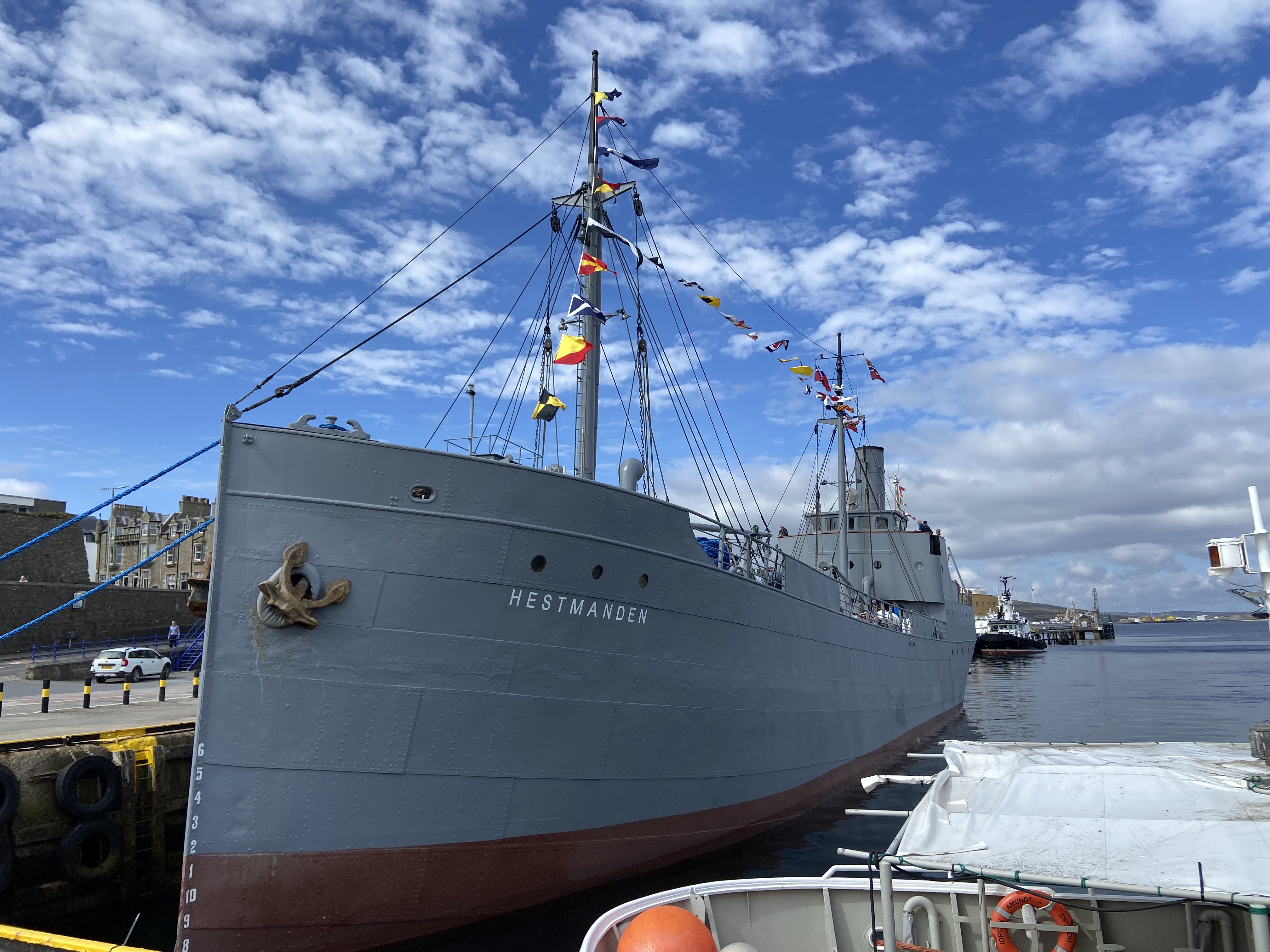
One of the most haunting things I read was that many of the sailors who served in WWII were not even welcomed back in Norway at the end of the war. Norway was occupied for most of the war, so many of them could not go home during wartime. By the time liberation occurred, they had been outside of Norway for longer than was allowed, and having not been back, they did not have the right to return. Many did not get back in until 1947 as they waited for papers to be sorted out.
I guess the leaders were dealing with their own devastation, but if there was ever a time for rules to be pushed aside, surely that should have been it? Sometimes Norwegian life was uncomfortable for me as I didn’t really know or understand all the rules or expectations and occasionally, would come up against them and know I didn’t really fit in. It’s hard to explain, but I can’t imagine this particular circumstance having occurred in the U.K.
John Arthur, who is co-owner of a fishing boat and a sailor himself, was particularly interested in the engines. It was incredible to see the machinery from 1911, still in working order and very much still a living memorial. There were oily rags and modern tools to keep everything going.
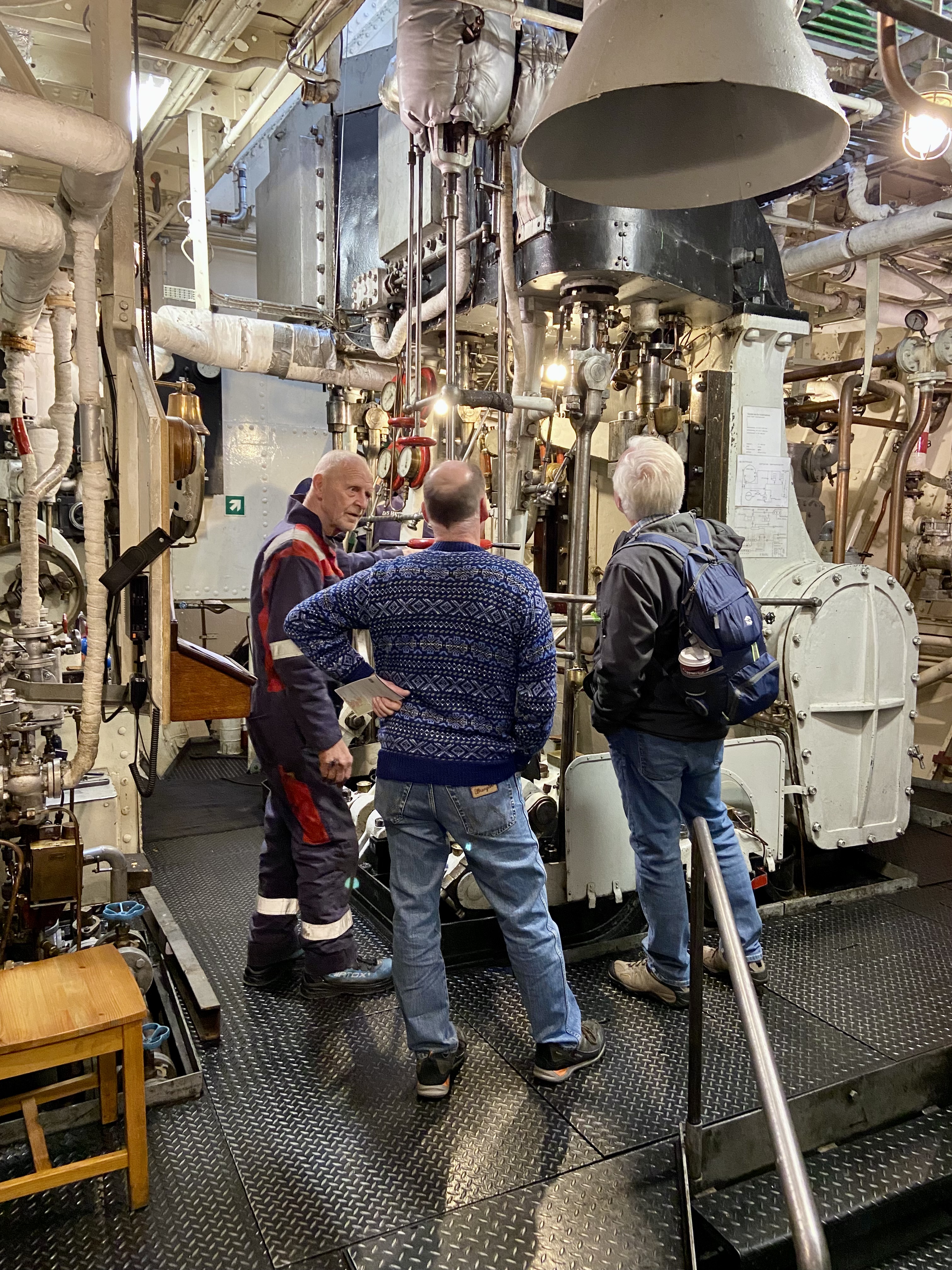
In a converse to the non-understanding of the rules I mentioned above, there was a sense of freedom in many parts of Norwegian life that doesn’t exist in the U.K. This was reflected in our exploration of these vessels.We were allowed in almost every area of Hestmanden, climbing steep ladders, allowed to poke in corners that I know in the U.K. would have been chained off as too dangerous to enter. I feel I’m talking too much about me and my reflections on living as a foreigner in Norway and not enough about the ships, but it is opening up these thoughts as I am writing this, so you’re just going to have to share them!
Hestmanden was a cargo ship and many of her stories were of sailing in convoys, where many accompanying ships were destroyed and the devastation of how it felt to be a survivor when you had witnessed so much death and lost so many friends and acquaintances. The Andholmen, which we visited next had seen more direct action.

Built as a fishing boat in 1938, she was requisitioned in 1940 by the Norwegian navy up in Narvik in Northern Norway. Germany controlled the only deep water landing place, so small vessels like the Andholmen were used to put allied soldiers ashore.
Later she worked between Shetland and Norway and then was based in Peterhead. It’s not so obvious from that photo, but she was armed and still ready to go.


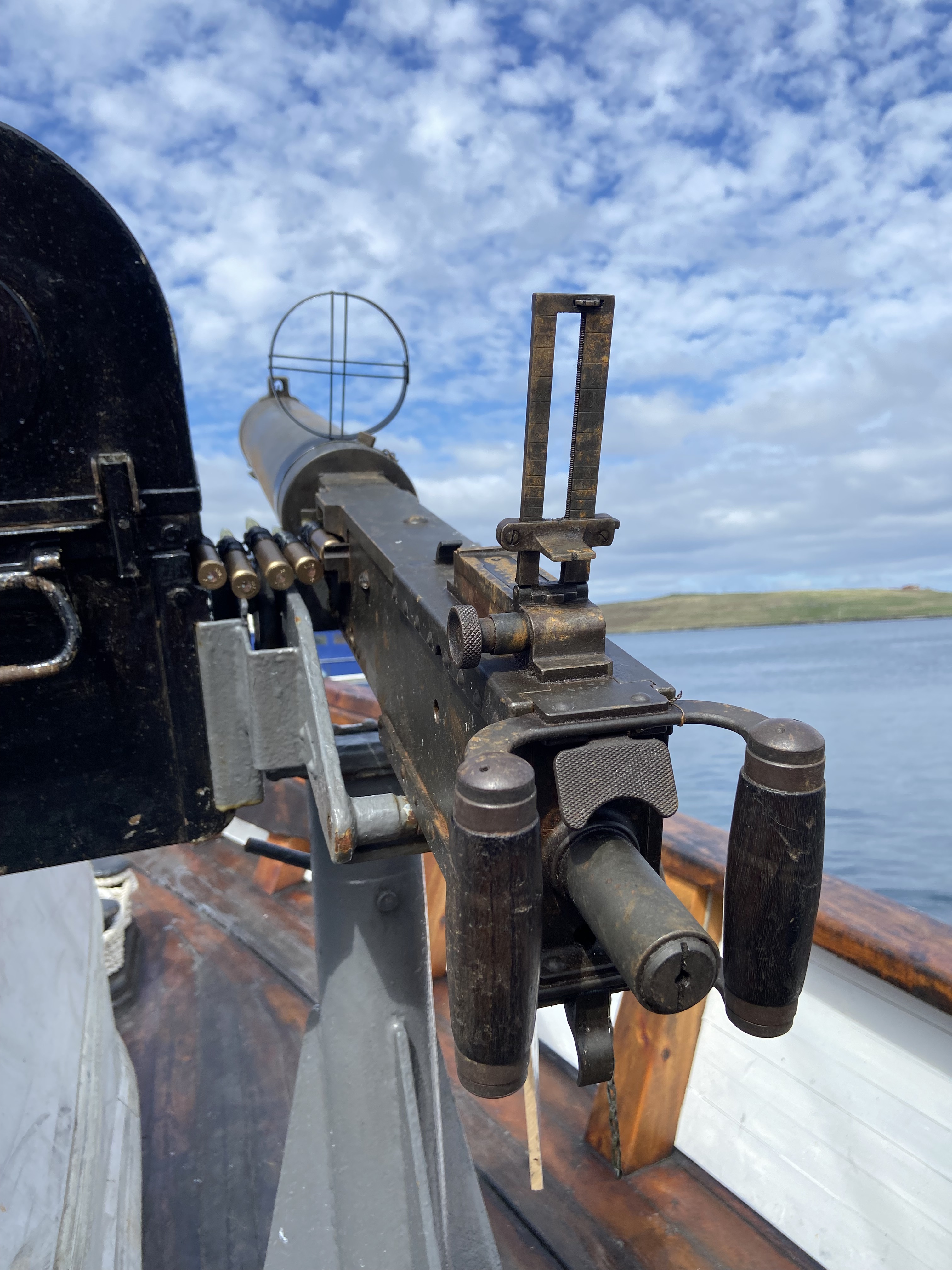
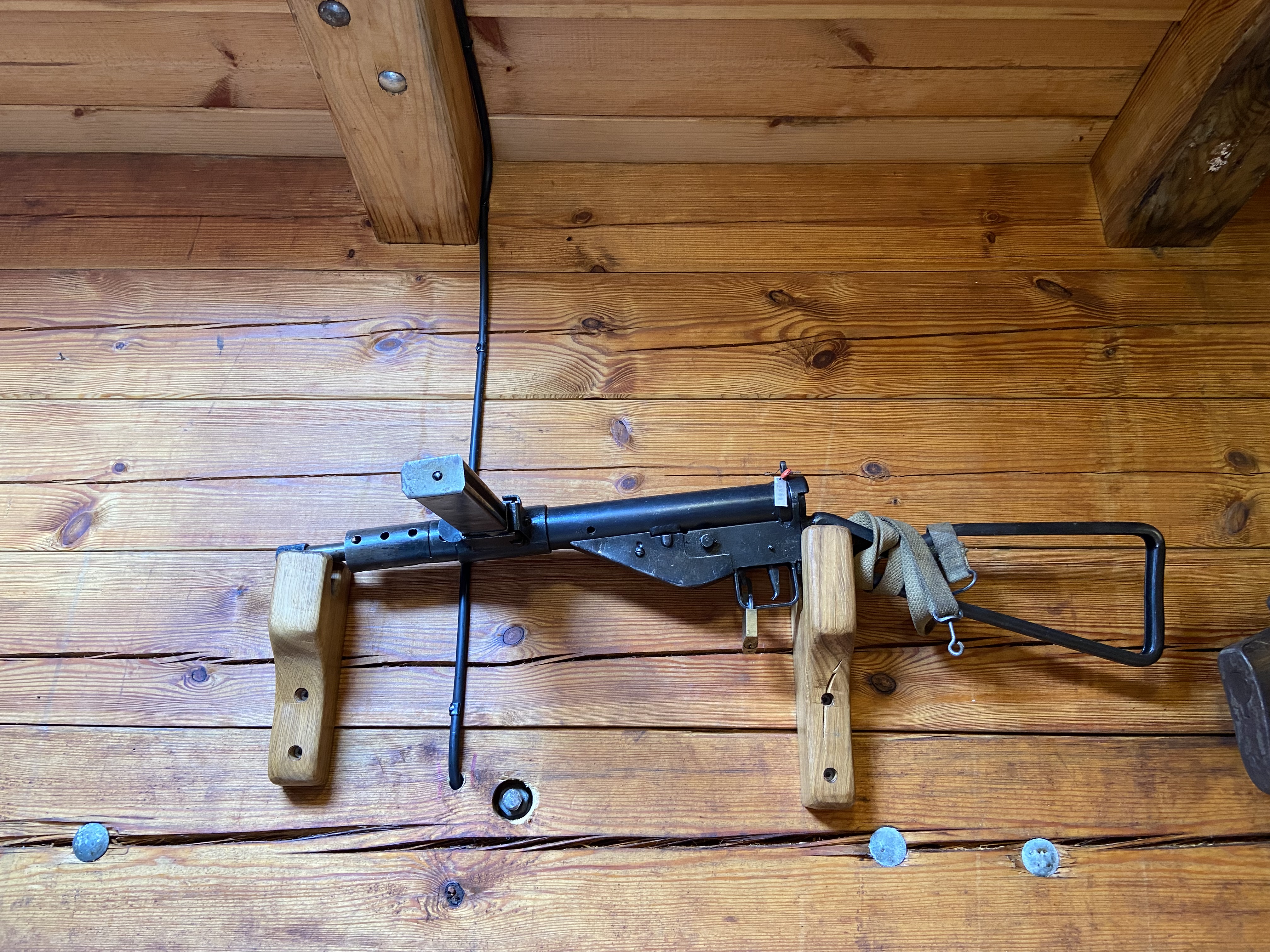
Climbing down into the cabin, there were tidy bunks tucked away in corners and many more weapons, presumably a collection and not necessarily used on Andholmen herself. The cold metal of the guns makes quite a contrast against the warmth of the wood of which the ship is built. Unlike Hestmanden, which was set up as a museum, this was much smaller, but equally fascinating as a historic part of the war effort.


We didn’t get the chance to go aboard the Arnefjord, but she was one of the ships that worked as part of the “Shetland Bus” service that brought resistance fighters from Norway to the relative safety of Scotland.
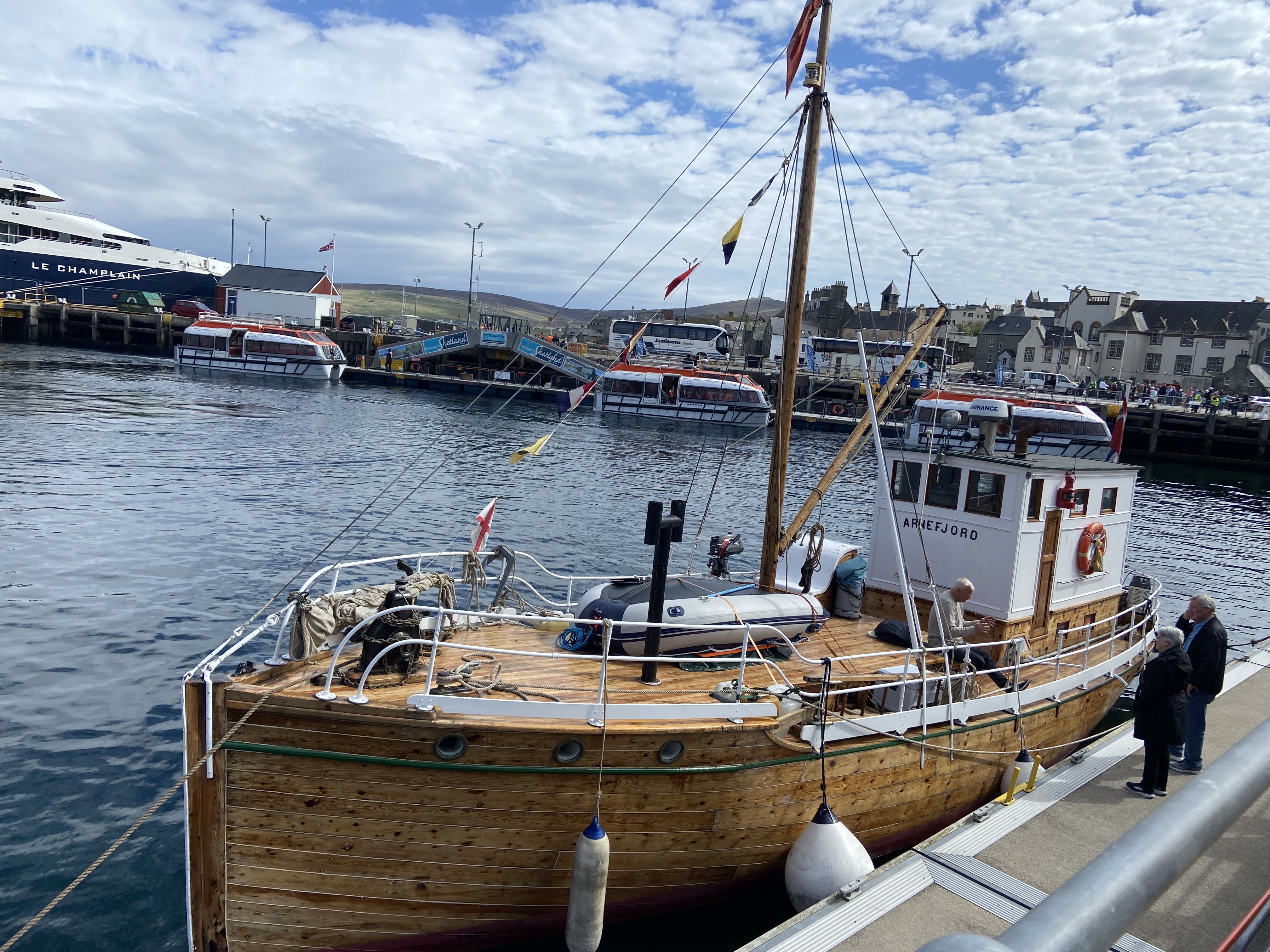
The Erna and the Heland were also fishing boats, requisitioned for the Shetland Bus. It was a wonderful experience to see them eighty years later, moored again in Lerwick harbour.


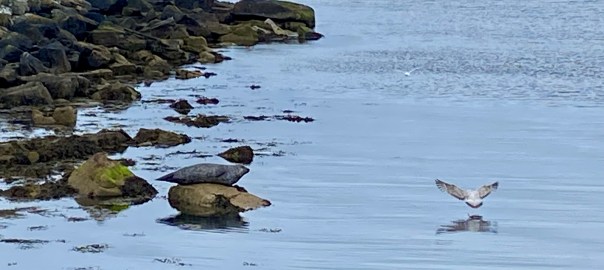
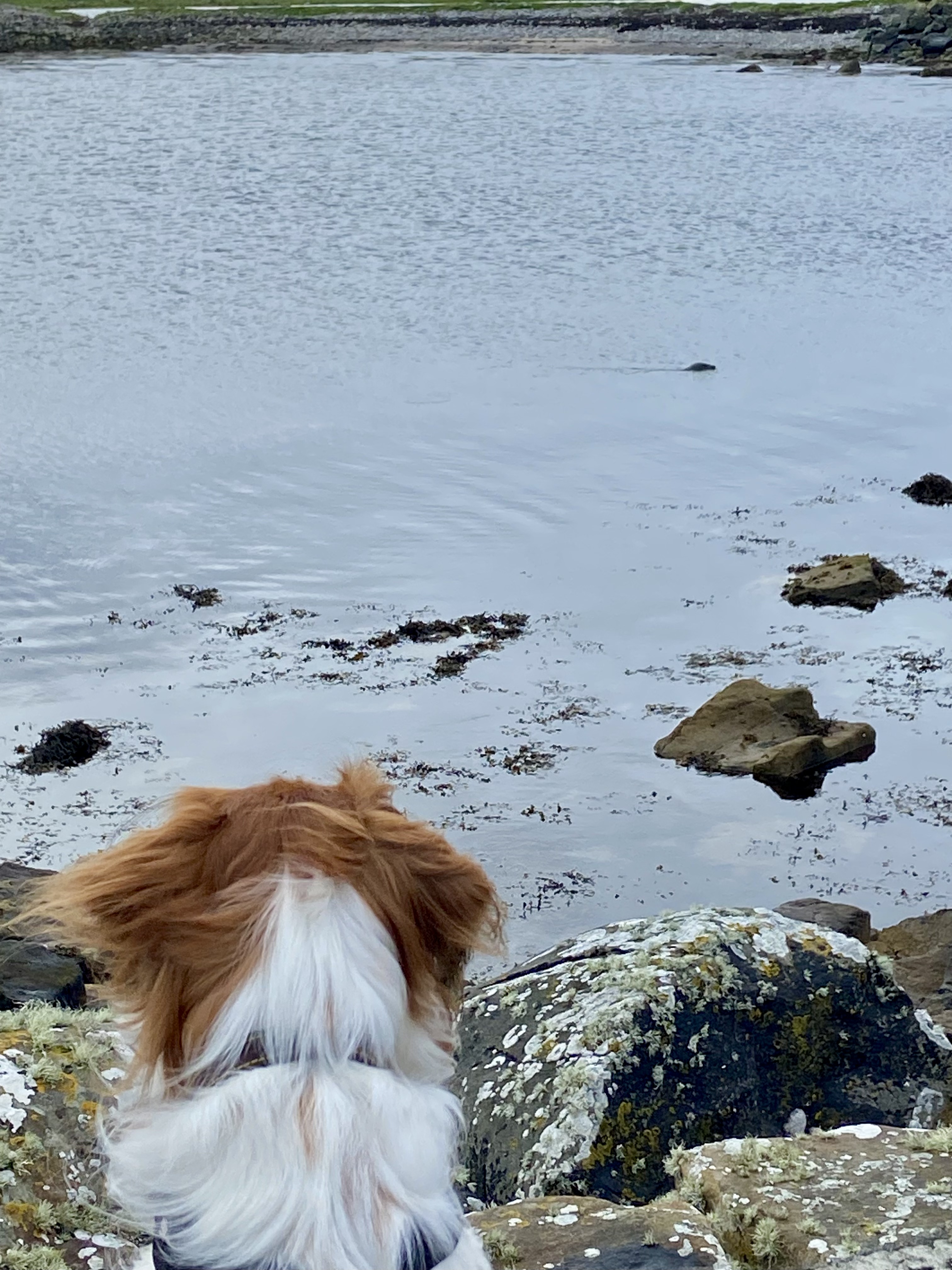
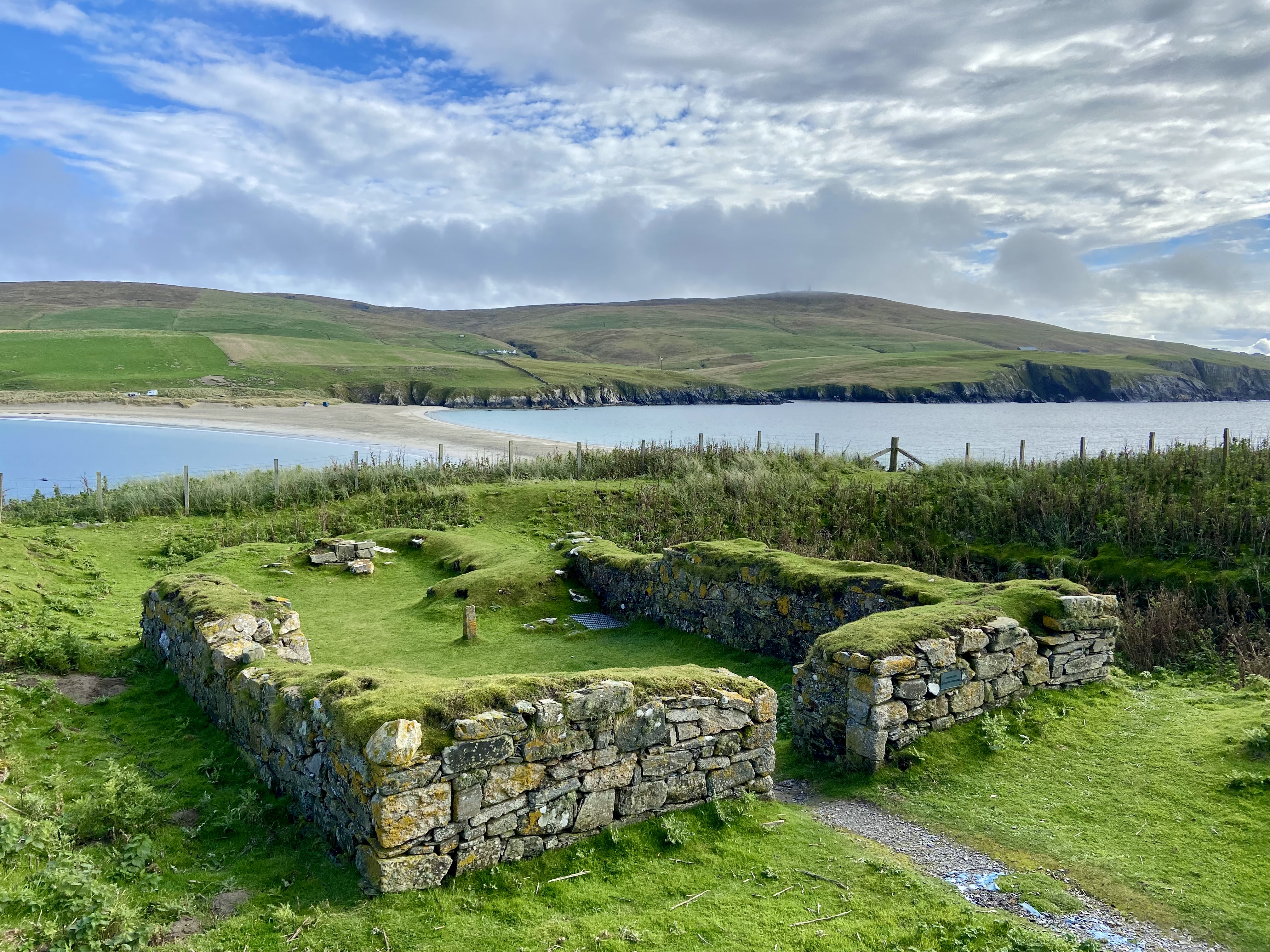
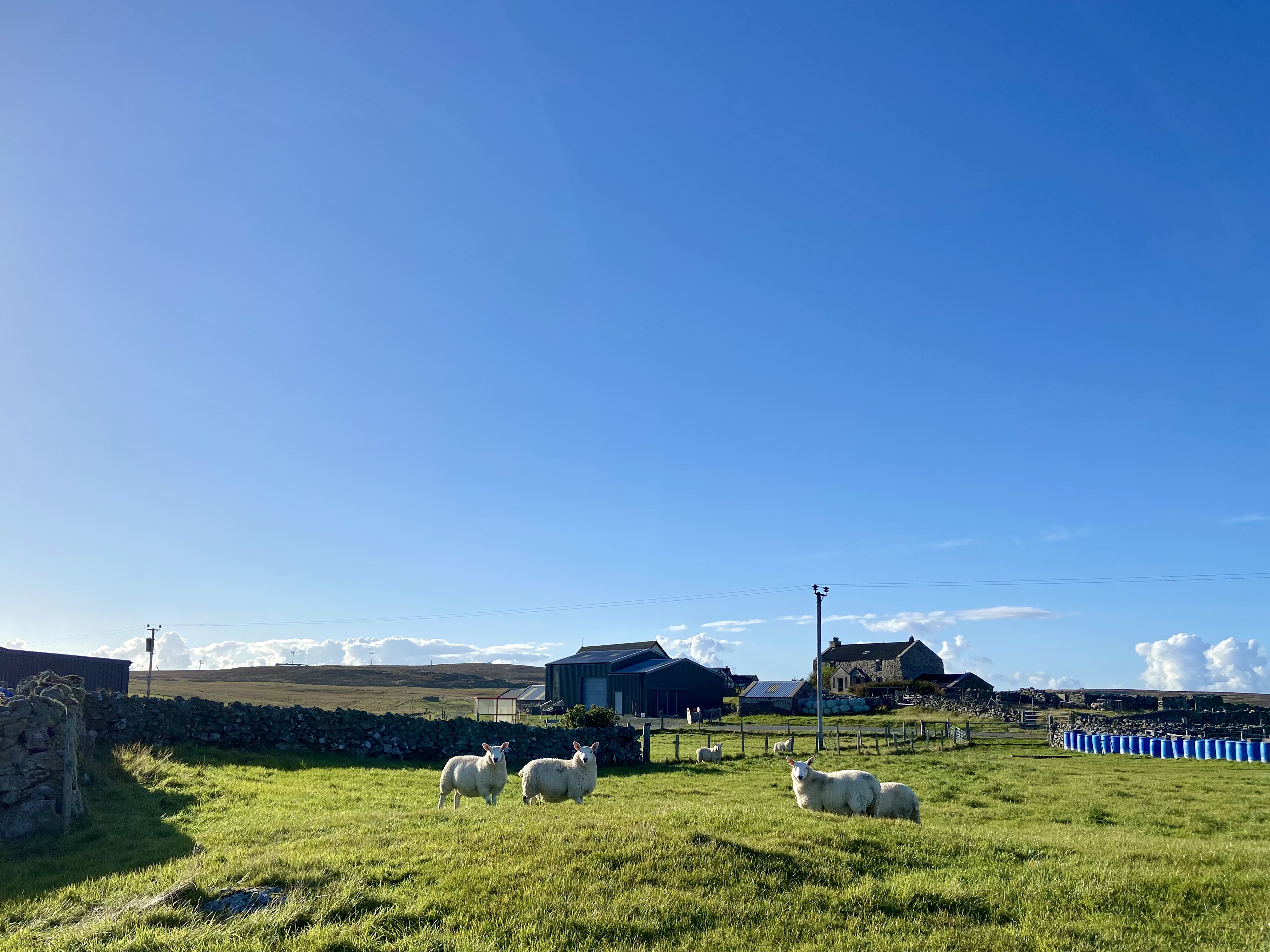
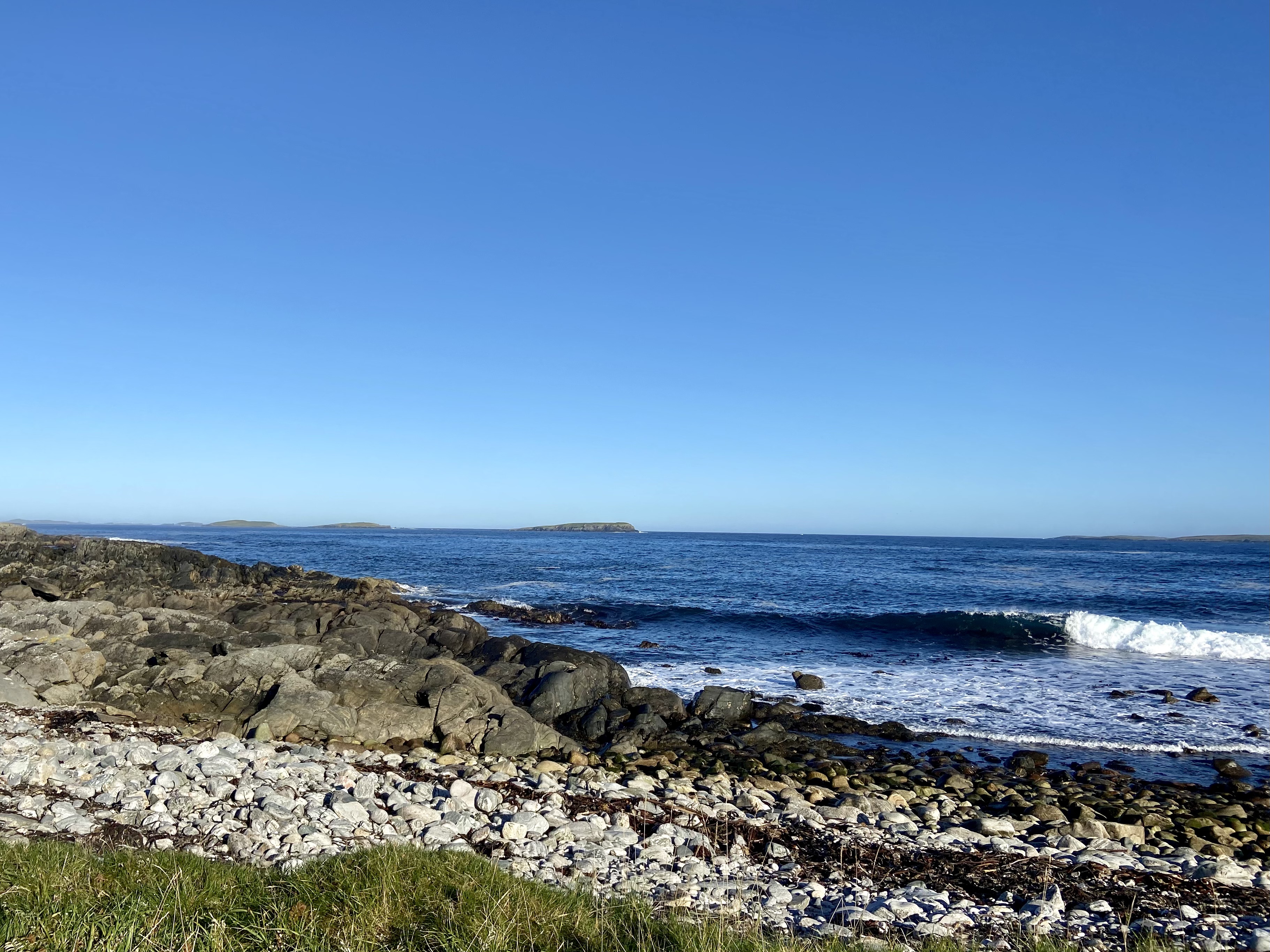
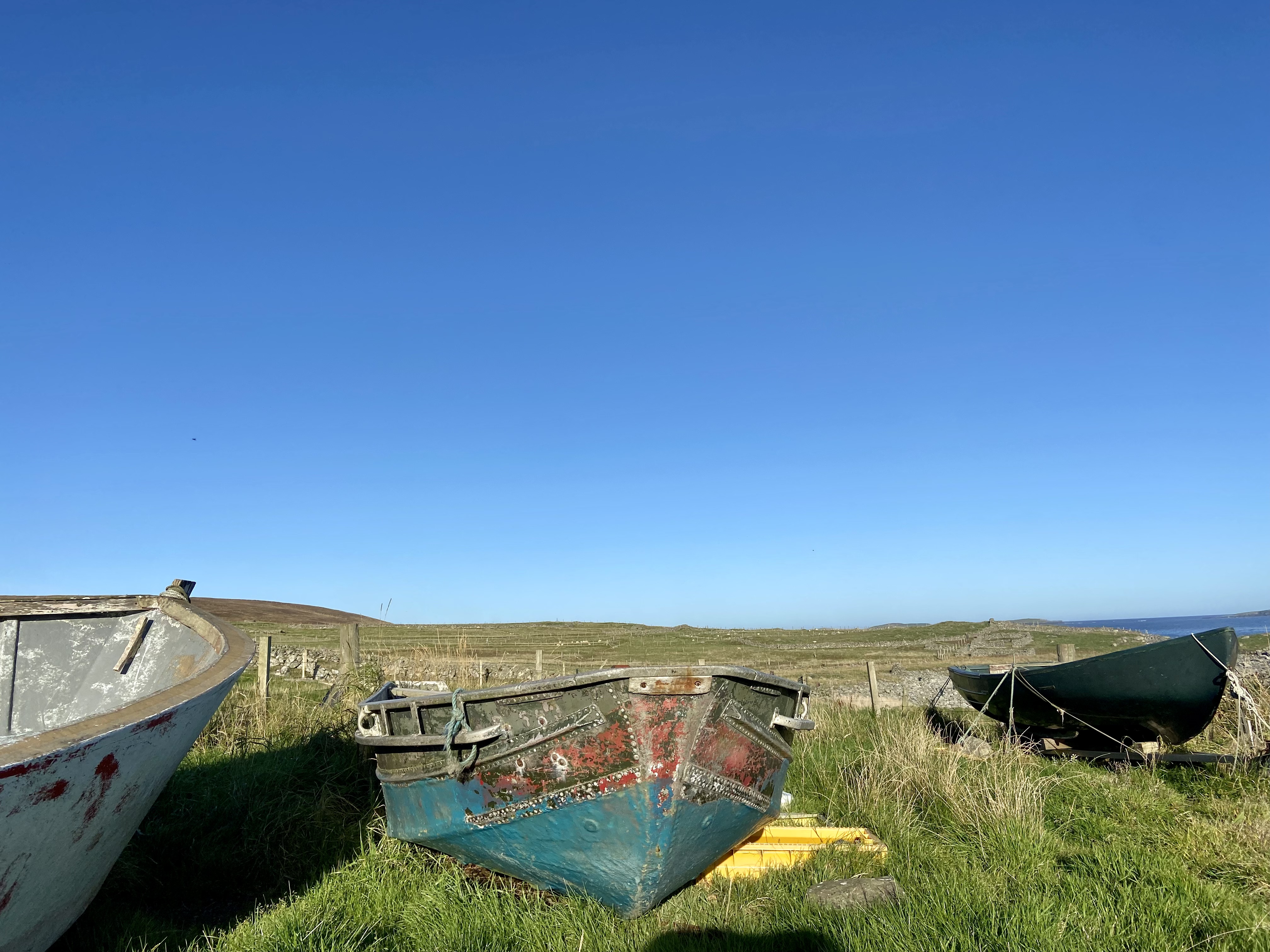
The rest of my week in Shetland was filled with sunshine and coastal views, from cliffs to rocky shores and wonderful golden beaches. Thanks again to Lindsay and Melanie for a fantastic holiday.
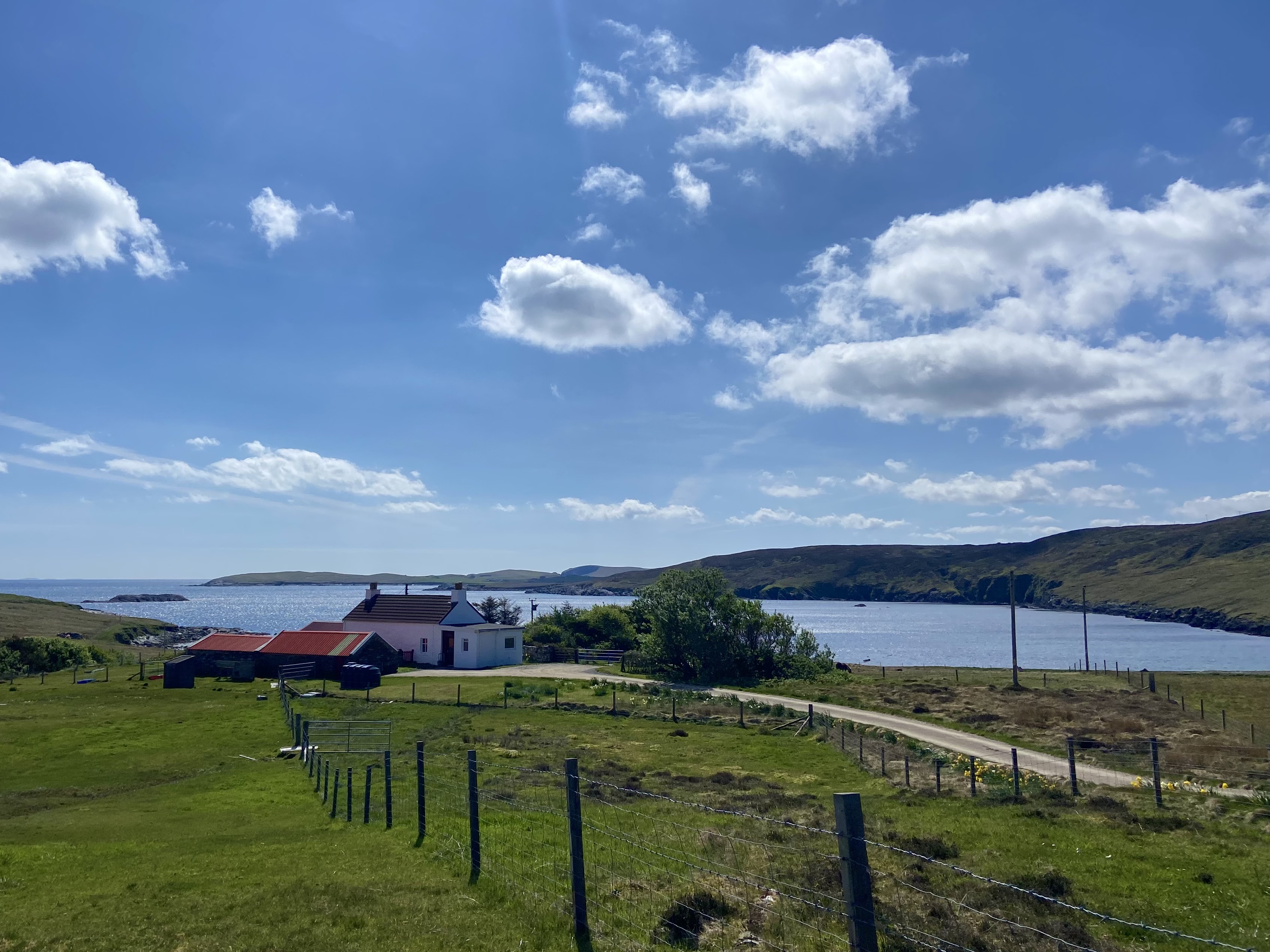

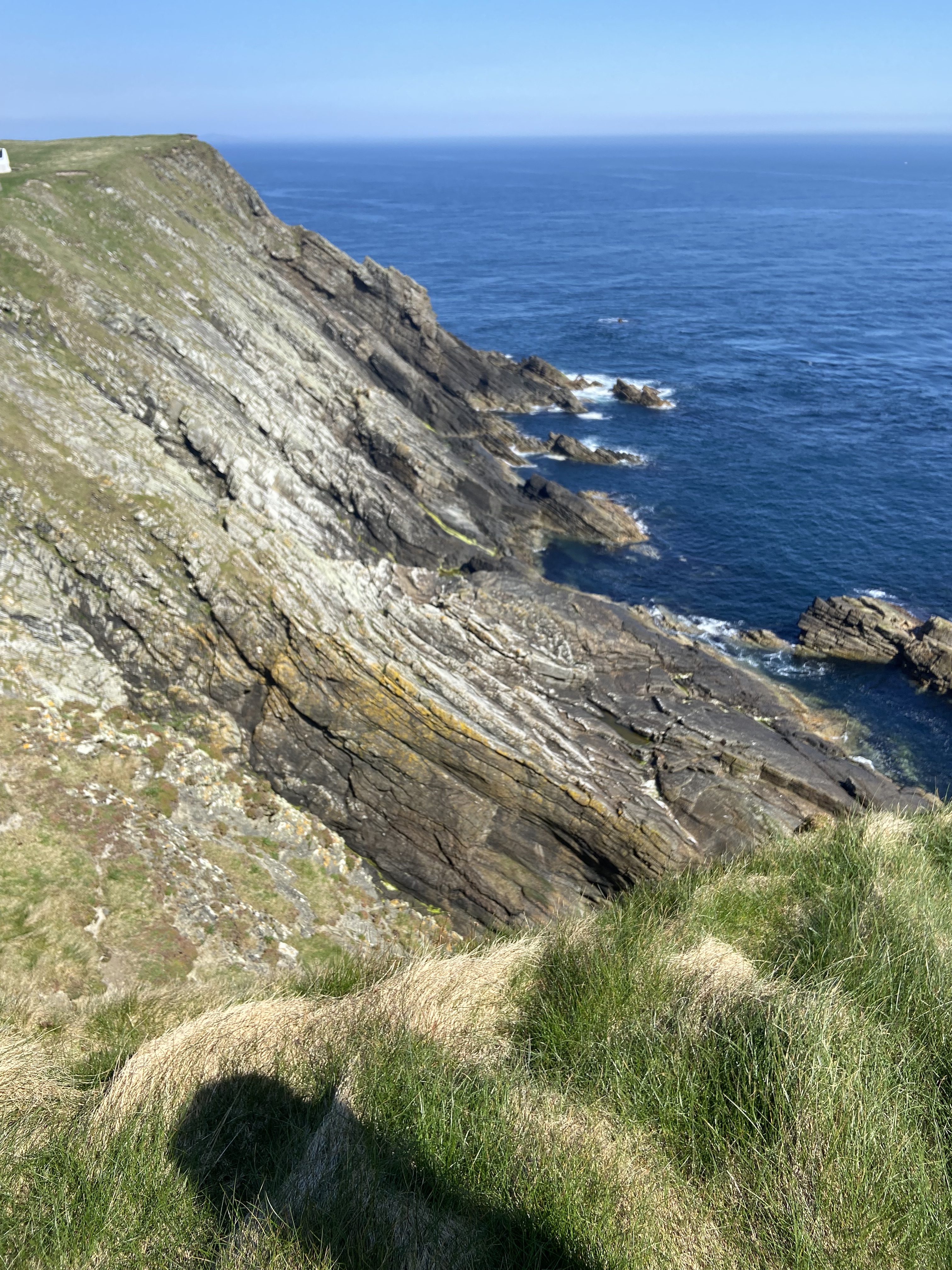
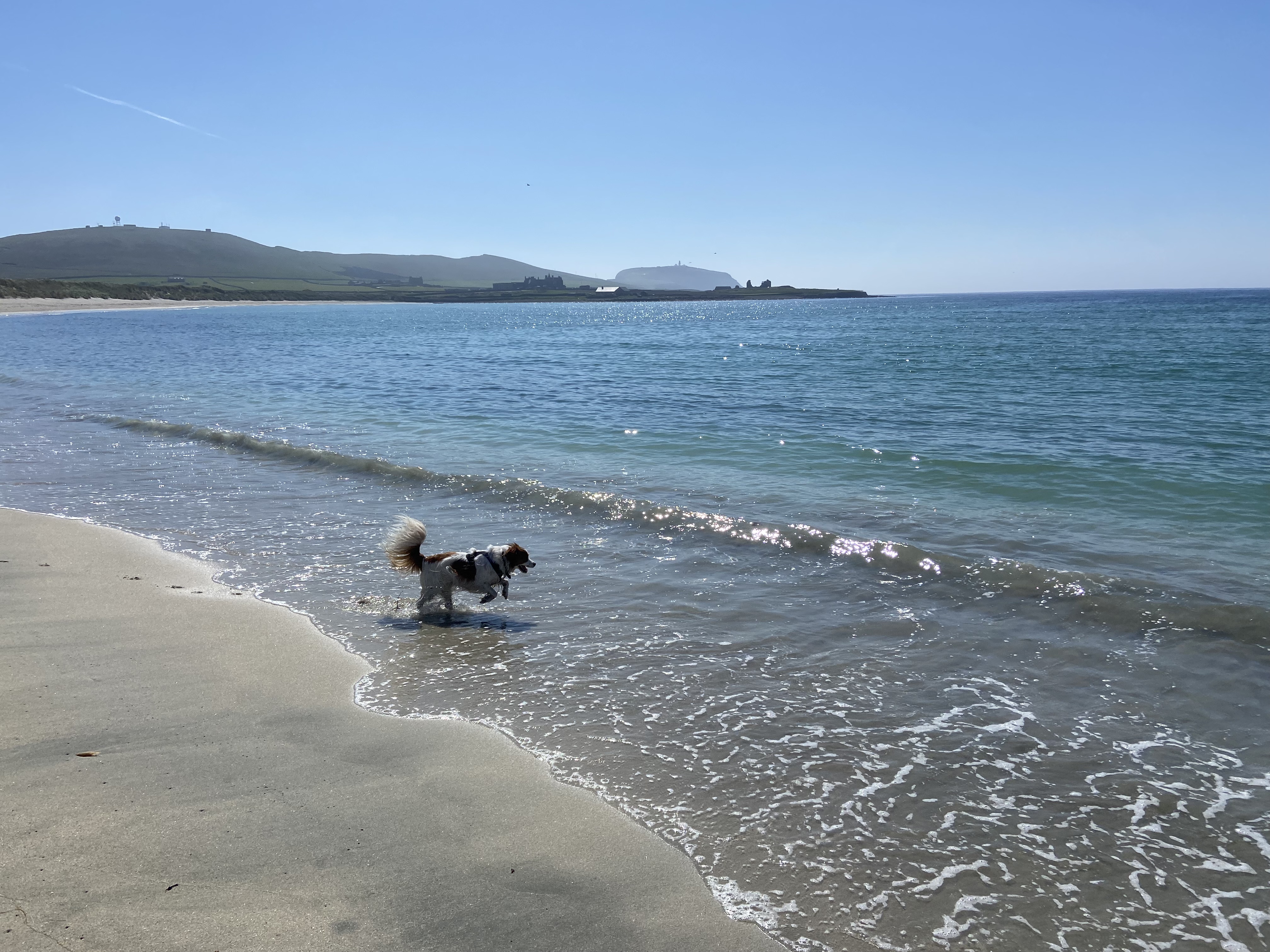
Leaving at the end was sad, but I hope to be able to go back. Triar also had a good time, I think.

See you next time.















 A Vet’s Life