I went out on New Year’s morning to find a waterfall. I guess the main aim was to find somewhere new to walk and I stopped briefly about a mile short of Routin Brig because there was a sign that said there was a path to it. On closer examination, the notice said the path (which followed the river upstream) could become impassable after a lot of rain (tick) and had narrow segments that had a steep drop into the water. I’m not the best on my feet these days and didn’t really want to start 2026 with a trip to A&E, so I got back in the car and drove.
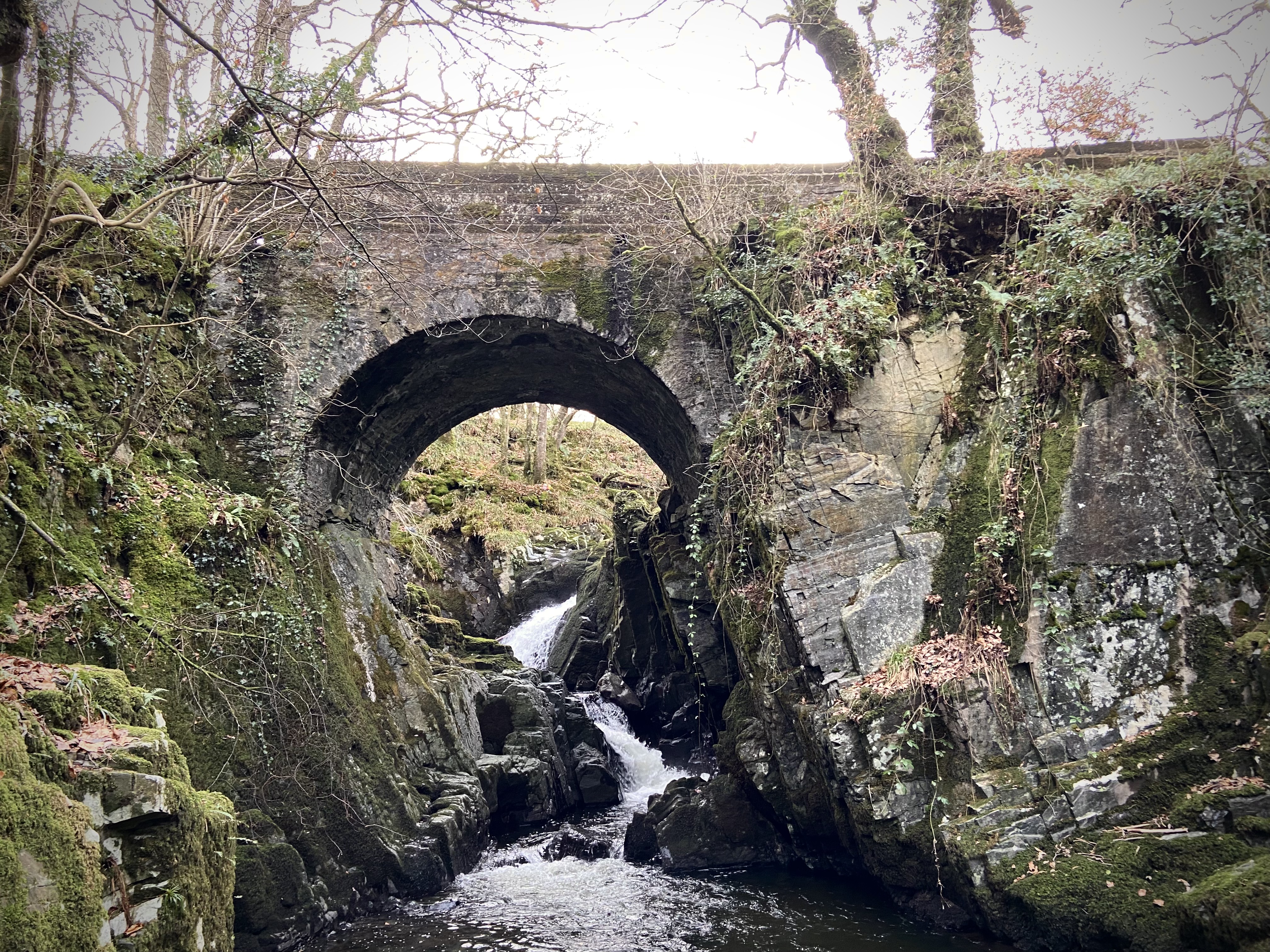
It was worth the drive, though it would have looked better under a blue sky.
The current bridge, which carries a road, is from the late 18th century, but there apparently has been a river crossing there since the 16th or earlier. The river is called the Cairn Water and it’s rumoured that witches used to meet here and the area is closely associated with the Covenanters (and their persecution). The only people I met there were taking a New Year’s dip though, which involved a degree of yelling, so I assume it was chilly!
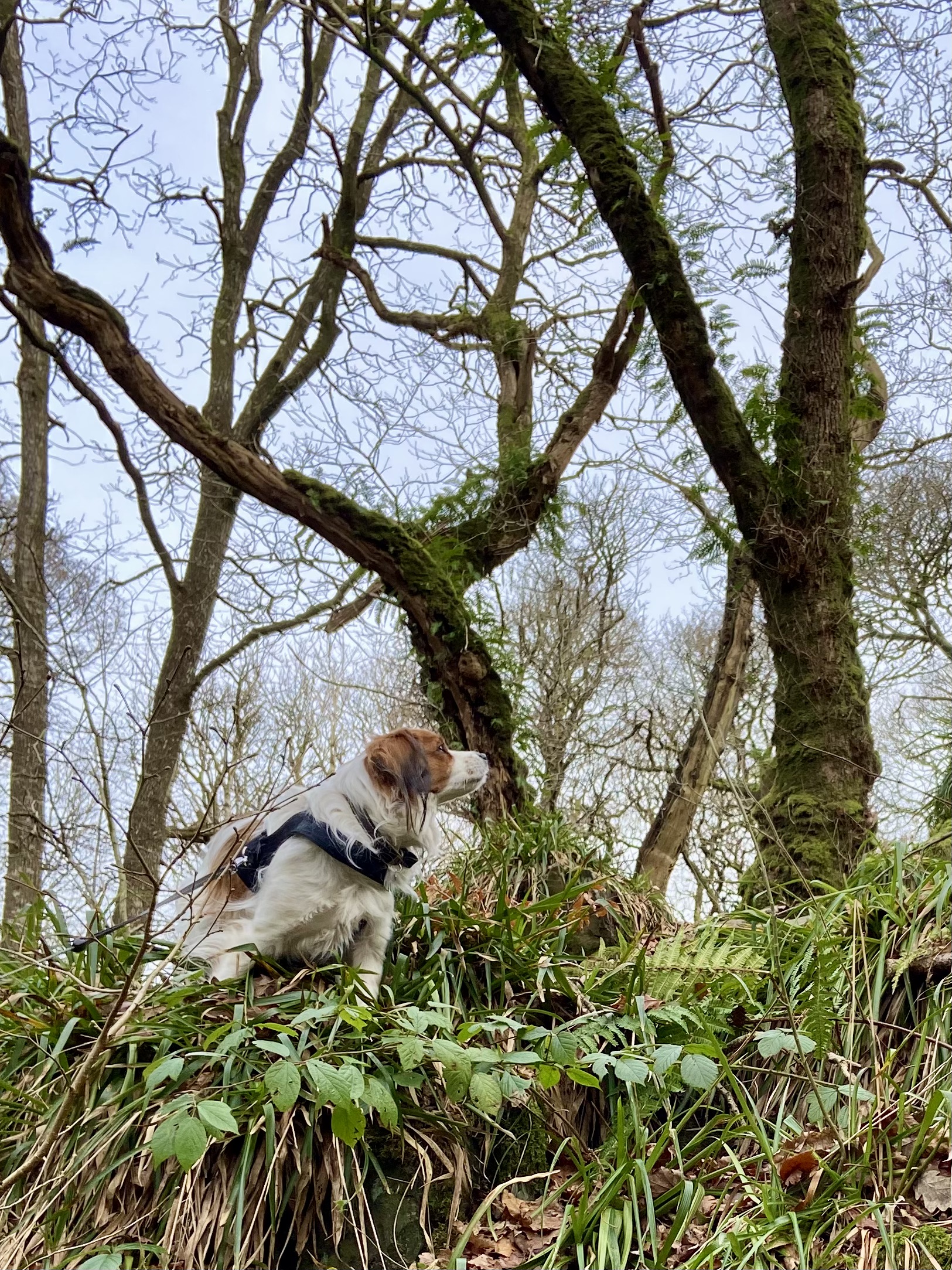
Because I am on standby for work (quiet so far, fingers crossed) we couldn’t walk too far, but we wandered a bit in the woodland and Triar celebrated New Year by doing zoomies four times round a tree on his extending lead. I was expecting to have to disentangle him, but he resolved it by changing direction and zooming round the other way three times on his own. I had to persuade him round the fourth time, but he did pretty well for a dog at speed.
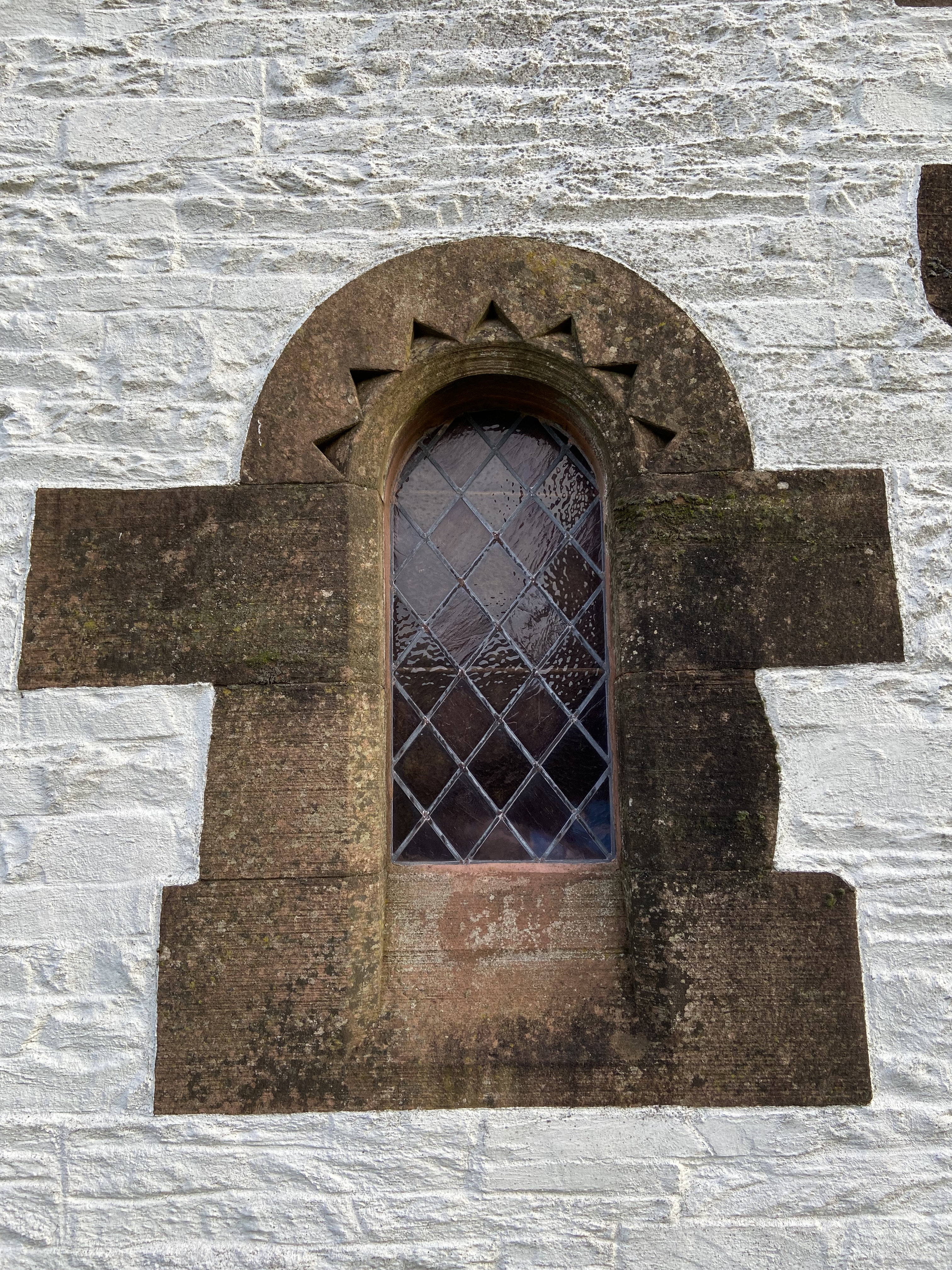
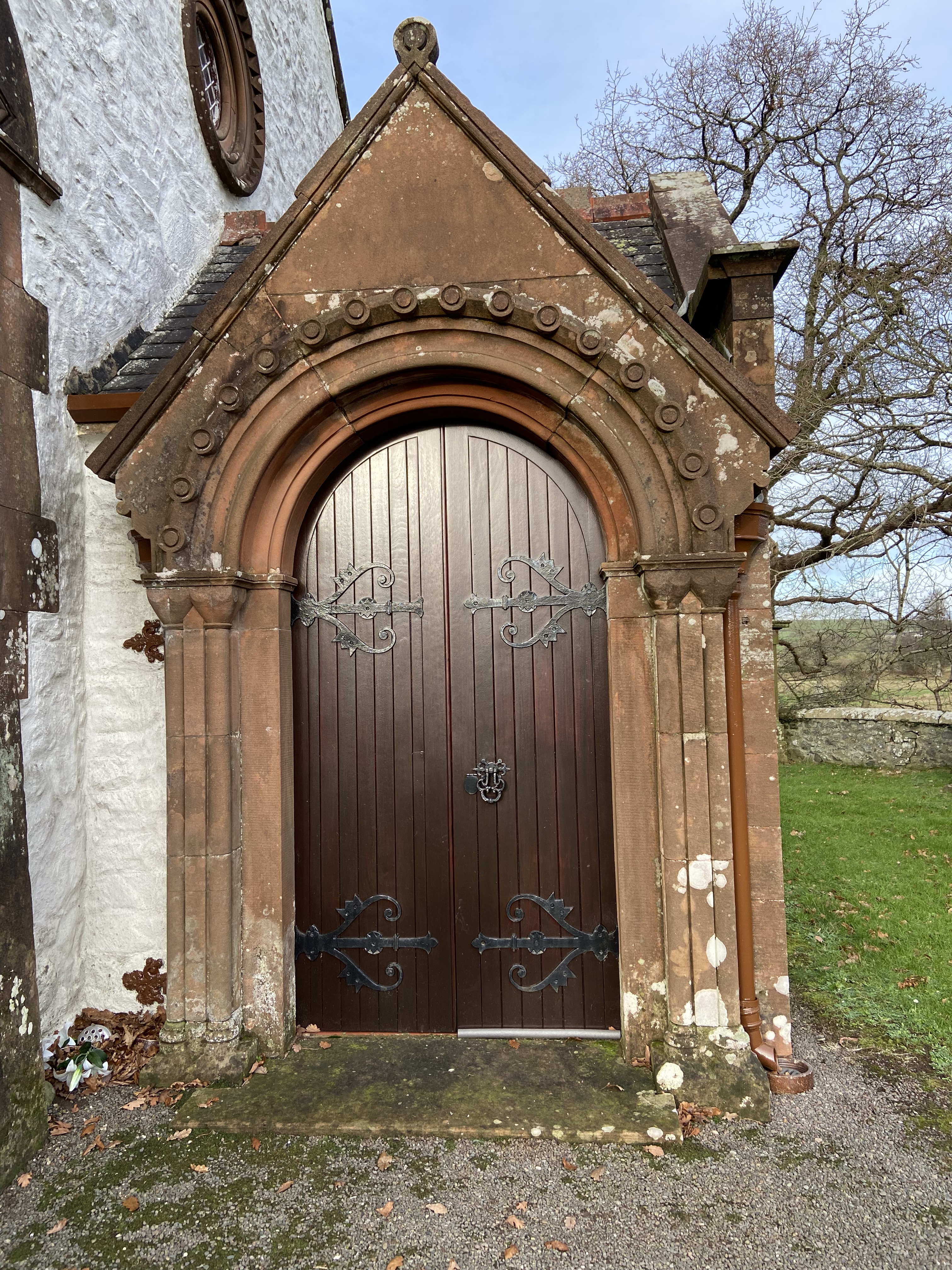
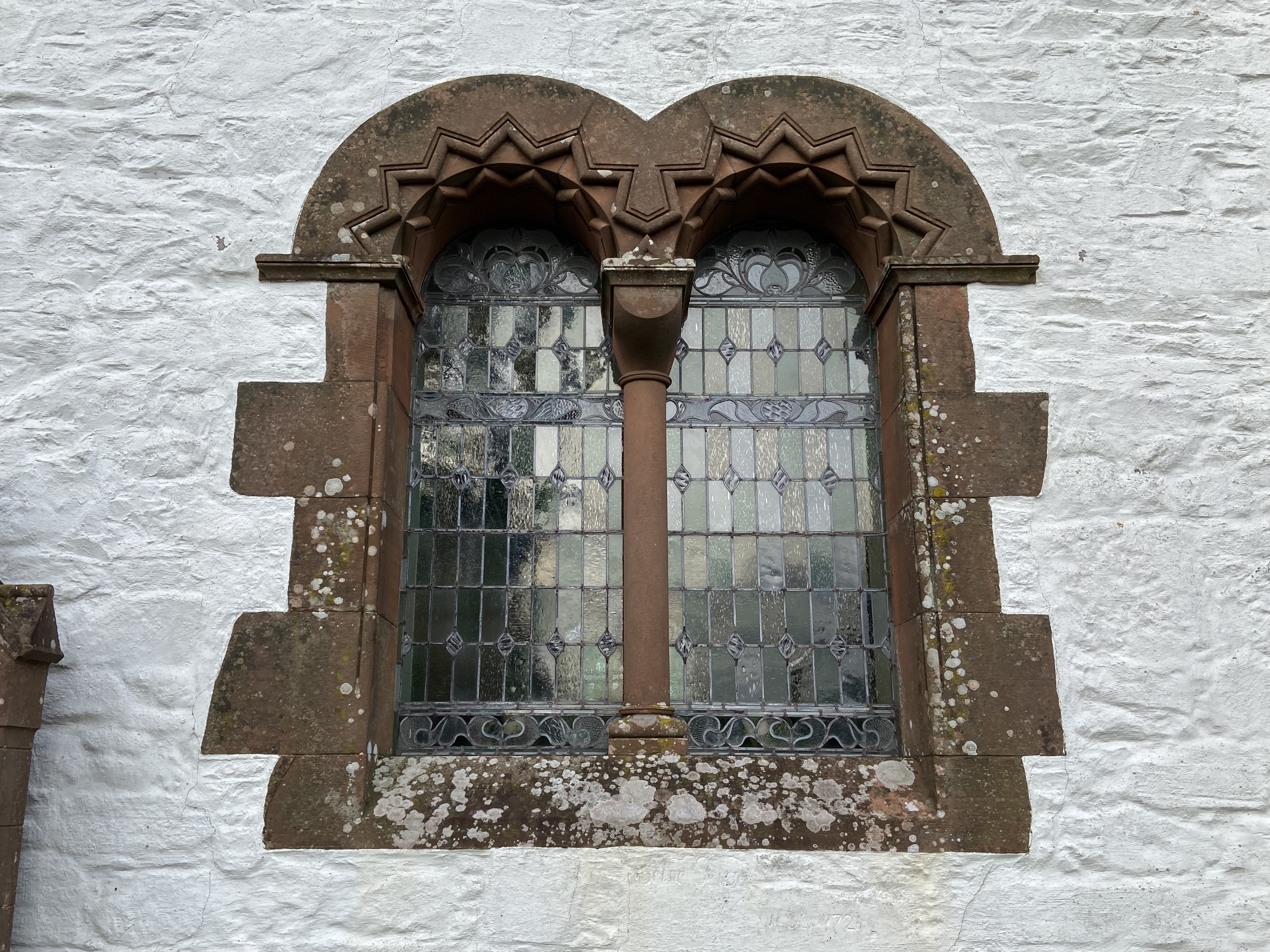
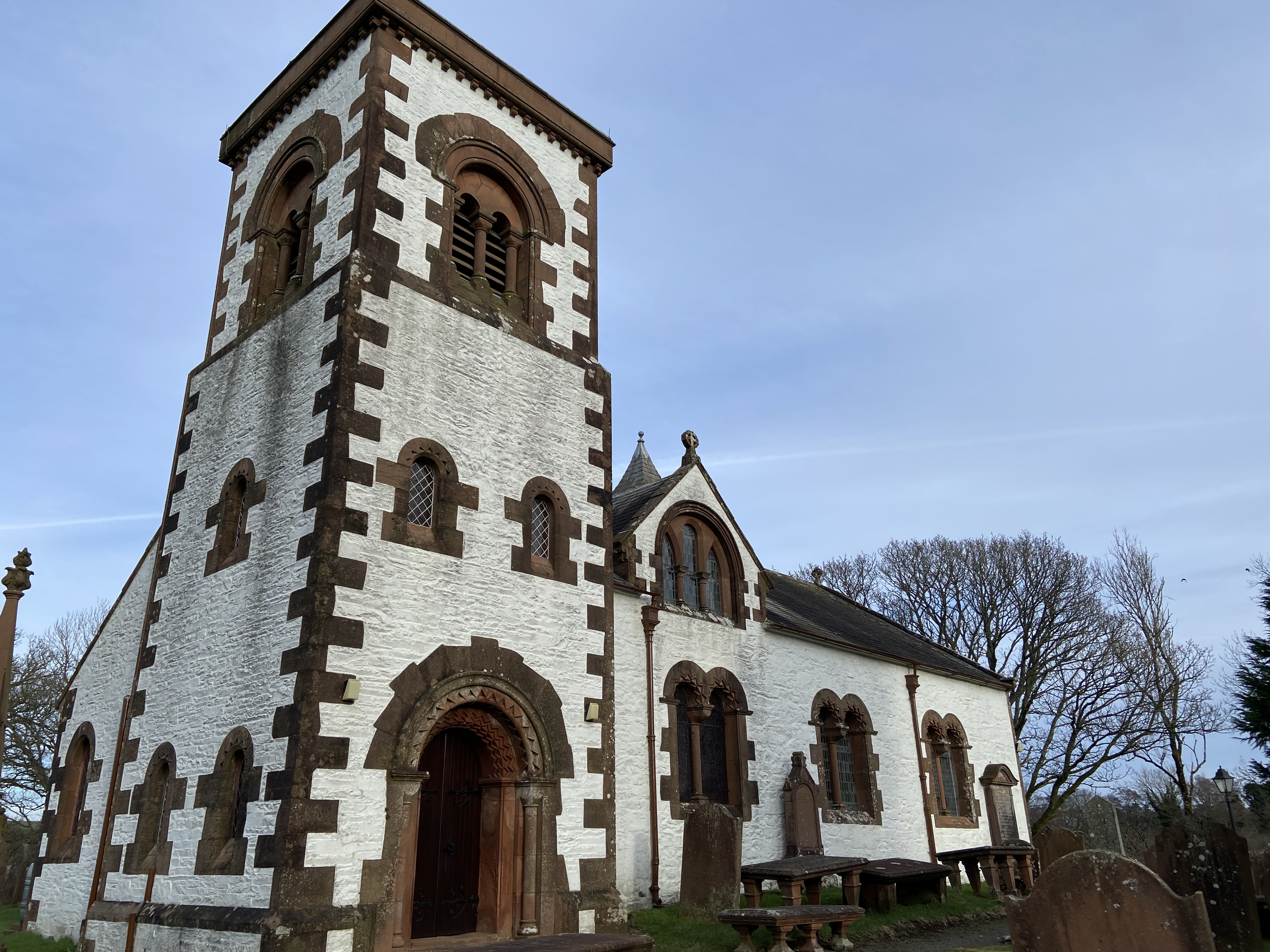
I stopped a couple of times on the way back, once to look at another sign, which indicated a path “Coffin Road to Shawhead”. I shall go back and explore that one another day. Coffin roads were, as the name indicates, footpaths that led from villages or towns to a church. These were the pathways by which the dead were carried to their burial place. The associated church in this case is the eye catching kirk at Kirkpatrick Irongray. Isn’t that a wonderful name?
Again, there is history here associated with the Covenanters. History is complicated m but in essence, these were Scots who resisted the establishment of the king as the head of the church as only Jesus could be that. As with being a witch, the punishment for preaching at “conventicles” – places outside the church in the open air or in barns and houses – was death. History is bloody, is it not, but those who stand by their principles against changes they see as wrong, despite appalling consequences, are a fascinating study.
Though I had hoped to spend New Year in Settle, it has been a good few days, filled with rest and good food, much of it provided by Donna. At short notice, I joined her family for the traditional Scottish New Year meal of steak pie, then for a “festive food from the freezer” meal last night and am going again for a birthday celebration with friends tomorrow. I know I am truly blessed to have such a generous neighbour.
Next week will be interesting. The decorator is due to start painting and varnishing on Monday. After that, I will need carpets and a few of the electricals need tidying up, but 2026 should hopefully be the year when I can start having overnight visitors again. I hope the end stages go smoothly.
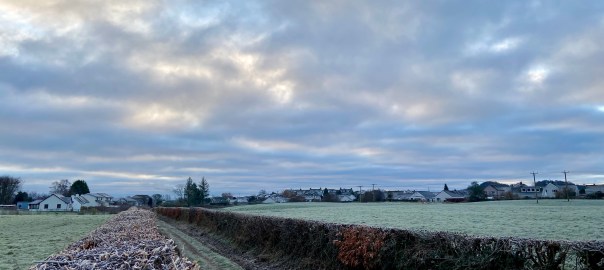
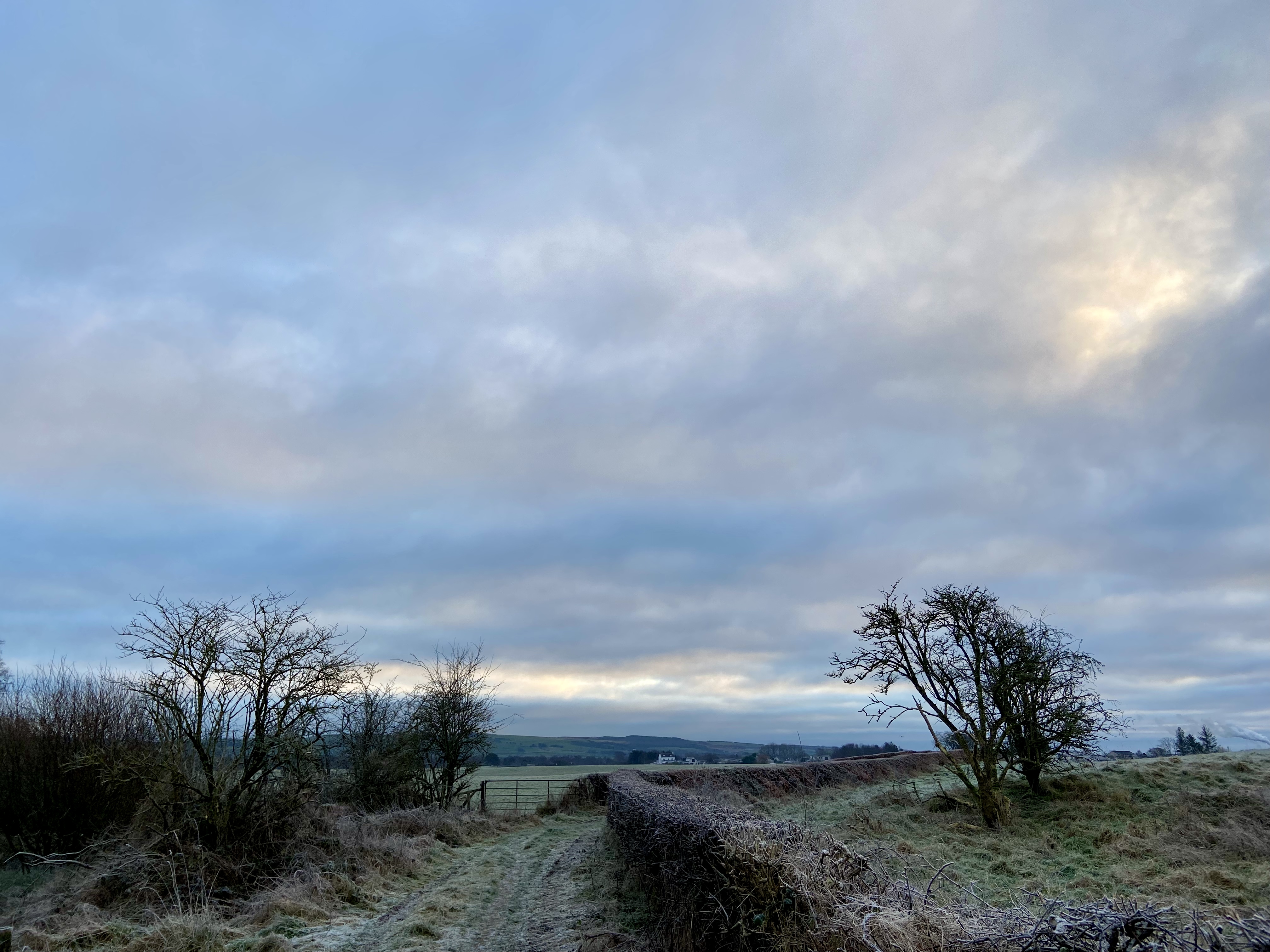
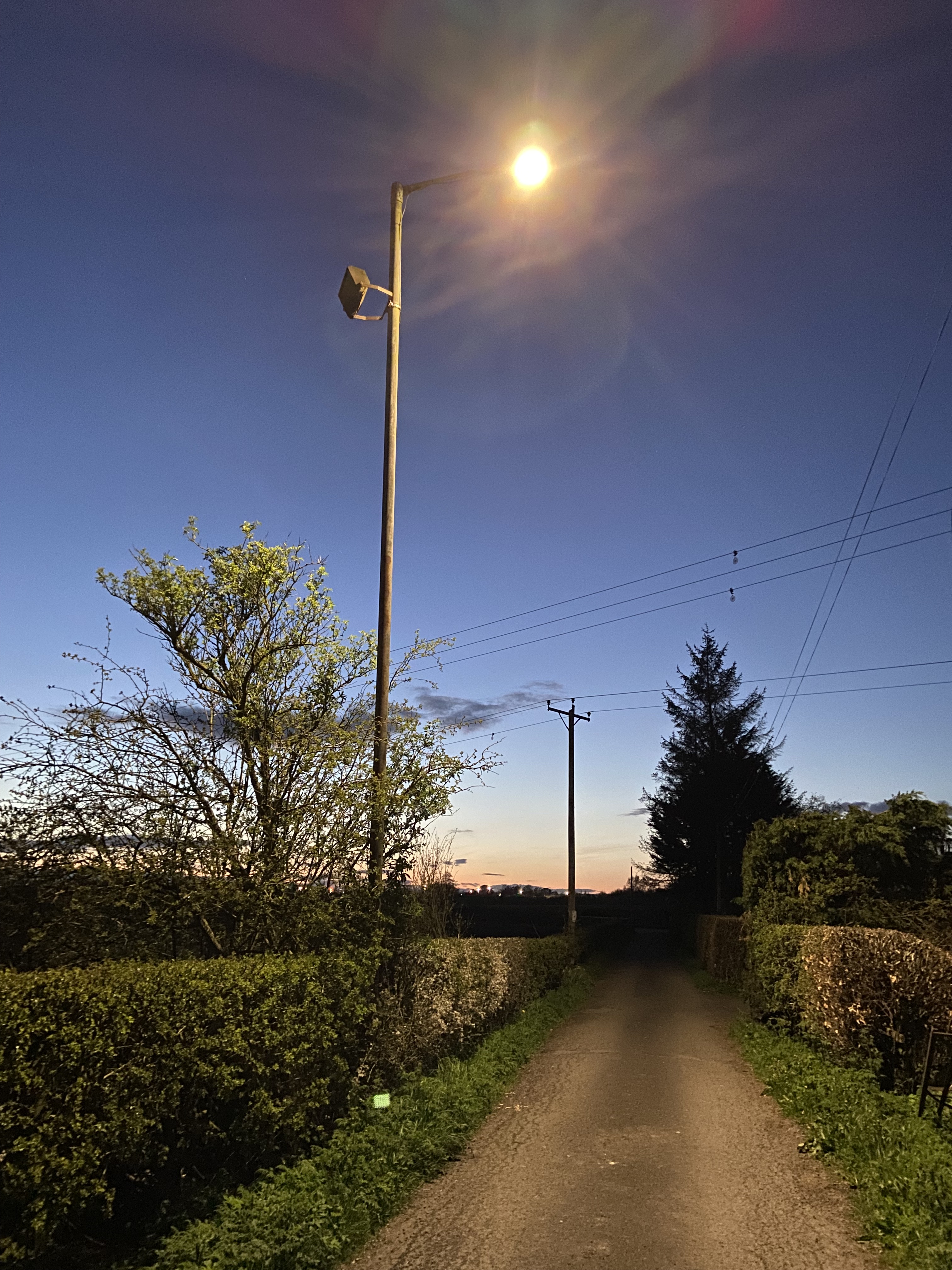
In the meantime, I will leave you with another end of the year picture from Blackbird Lane. The sky was beautiful on Wednesday and I took some more photos after I had turned and begun to walk back. Thank you for reading and Happy New Year to you all.
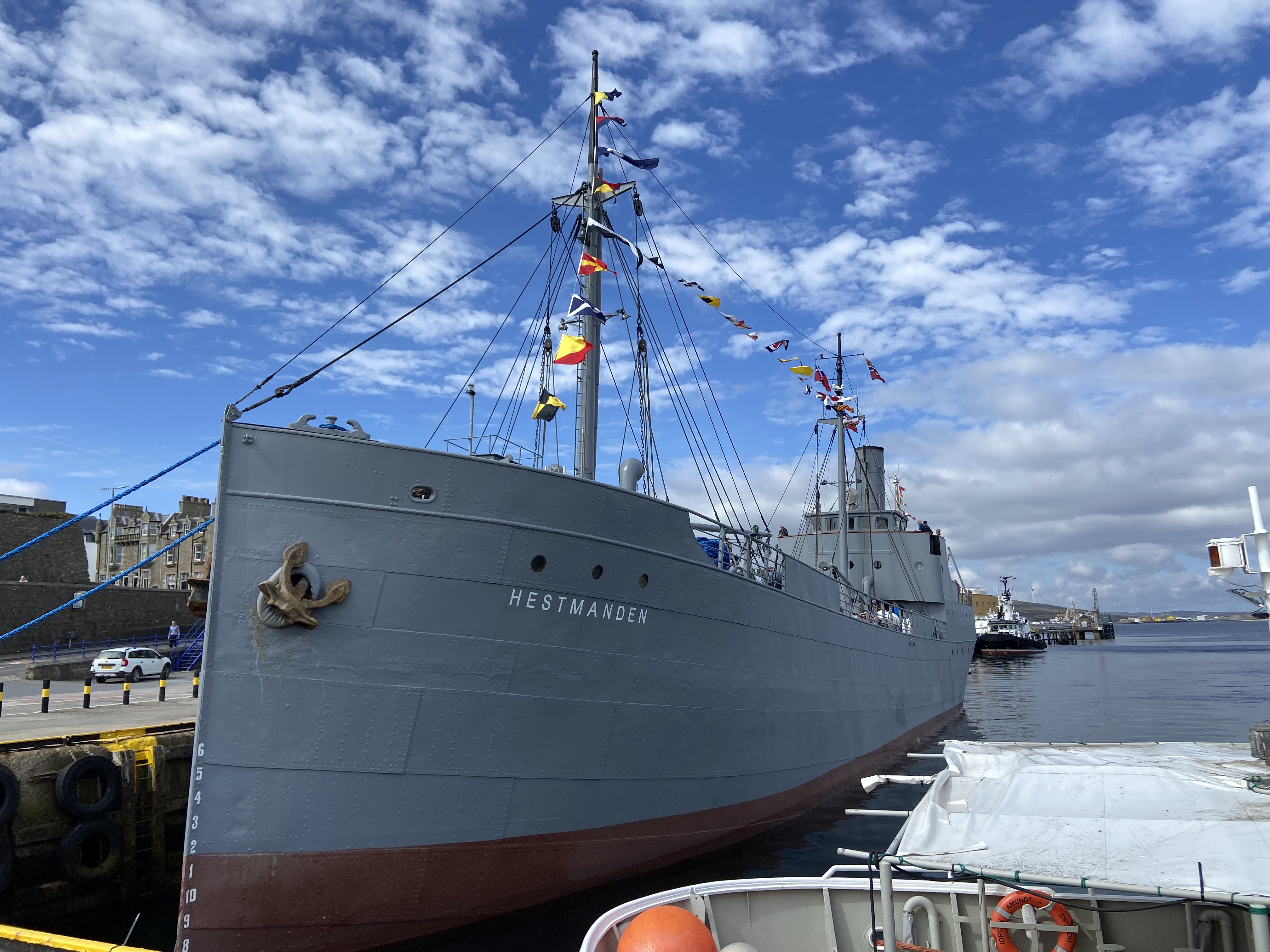
One of the highlights of my Shetland trip was visiting the Liberation Convoy which visited Lerwick while I was there. My friends, Melanie and John Arthur came over from Whalsay and together we explored the Norwegian ships which had served in the World Wars and were commemorating 80 years from the end of World War II.
Though it was a fascinating experience there was, as always when thinking about wars, a heavy sense of grief and loss. On the first ship we explored, Hestmanden, we read many stories about the young men, British and Norwegian, who served on board this and other ships. There was devastation brought to so many lives, both those of the young men lost and even of those who came back alive but broken.
One of the most haunting things I read was that many of the sailors who served in WWII were not even welcomed back in Norway at the end of the war. Norway was occupied for most of the war, so many of them could not go home during wartime. By the time liberation occurred, they had been outside of Norway for longer than was allowed, and having not been back, they did not have the right to return. Many did not get back in until 1947 as they waited for papers to be sorted out.
I guess the leaders were dealing with their own devastation, but if there was ever a time for rules to be pushed aside, surely that should have been it? Sometimes Norwegian life was uncomfortable for me as I didn’t really know or understand all the rules or expectations and occasionally, would come up against them and know I didn’t really fit in. It’s hard to explain, but I can’t imagine this particular circumstance having occurred in the U.K.
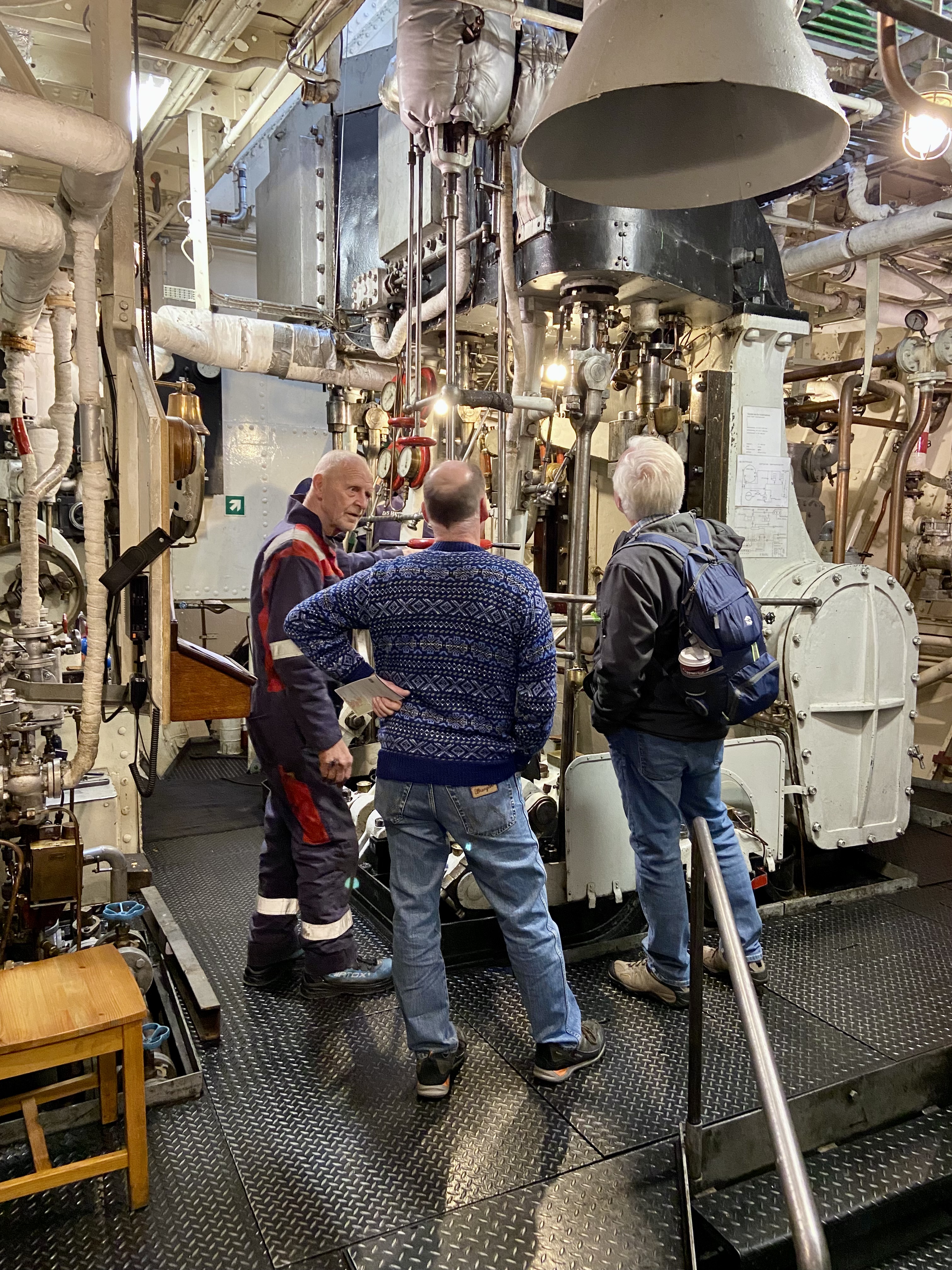
John Arthur, who is co-owner of a fishing boat and a sailor himself, was particularly interested in the engines. It was incredible to see the machinery from 1911, still in working order and very much still a living memorial. There were oily rags and modern tools to keep everything going.
In a converse to the non-understanding of the rules I mentioned above, there was a sense of freedom in many parts of Norwegian life that doesn’t exist in the U.K. This was reflected in our exploration of these vessels.We were allowed in almost every area of Hestmanden, climbing steep ladders, allowed to poke in corners that I know in the U.K. would have been chained off as too dangerous to enter. I feel I’m talking too much about me and my reflections on living as a foreigner in Norway and not enough about the ships, but it is opening up these thoughts as I am writing this, so you’re just going to have to share them!
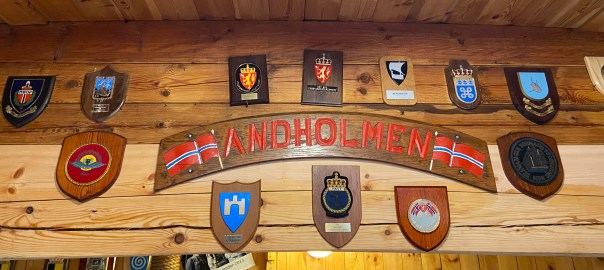
Hestmanden was a cargo ship and many of her stories were of sailing in convoys, where many accompanying ships were destroyed and the devastation of how it felt to be a survivor when you had witnessed so much death and lost so many friends and acquaintances. The Andholmen, which we visited next had seen more direct action.
Built as a fishing boat in 1938, she was requisitioned in 1940 by the Norwegian navy up in Narvik in Northern Norway. Germany controlled the only deep water landing place, so small vessels like the Andholmen were used to put allied soldiers ashore.
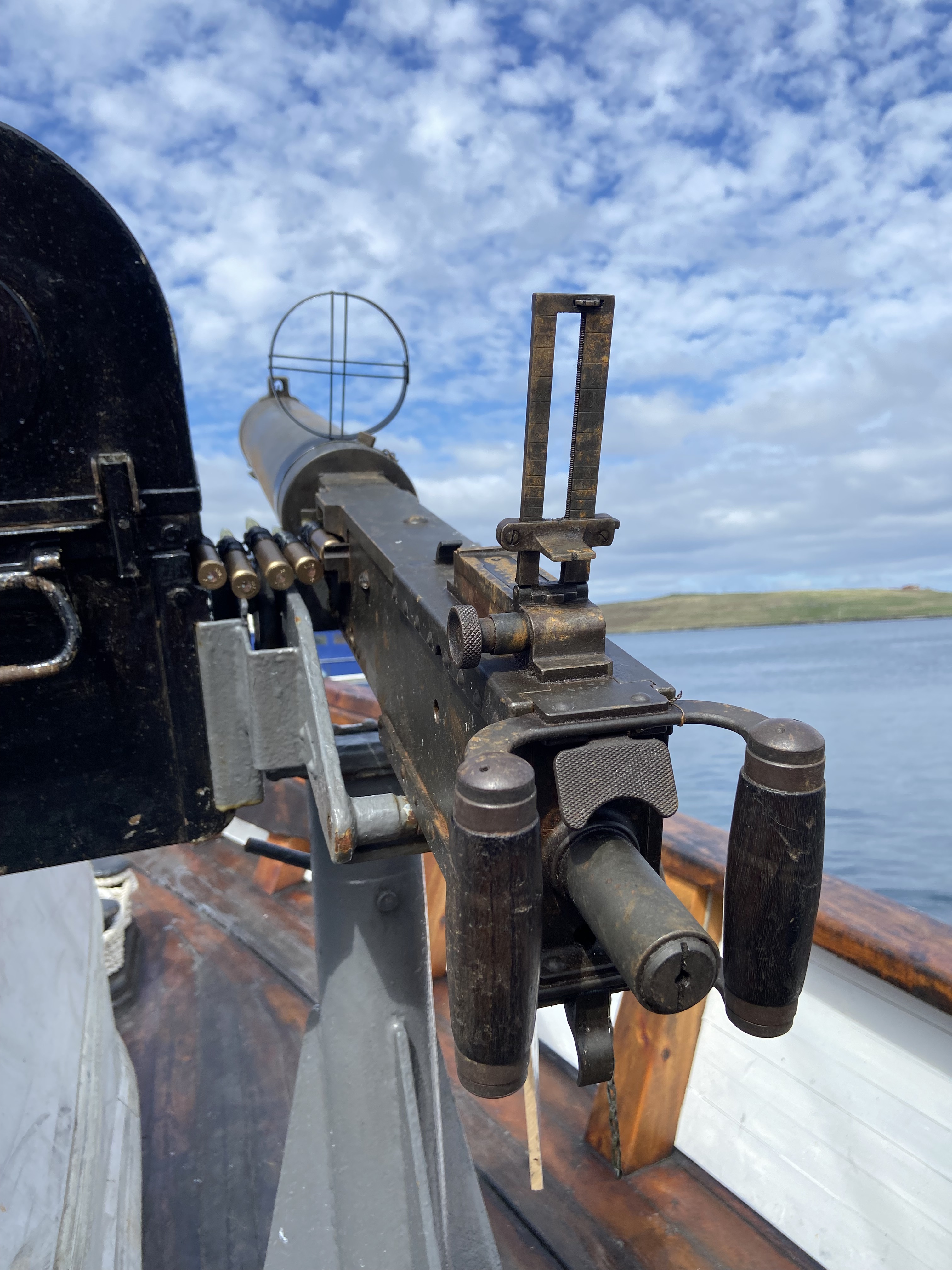
Later she worked between Shetland and Norway and then was based in Peterhead. It’s not so obvious from that photo, but she was armed and still ready to go.
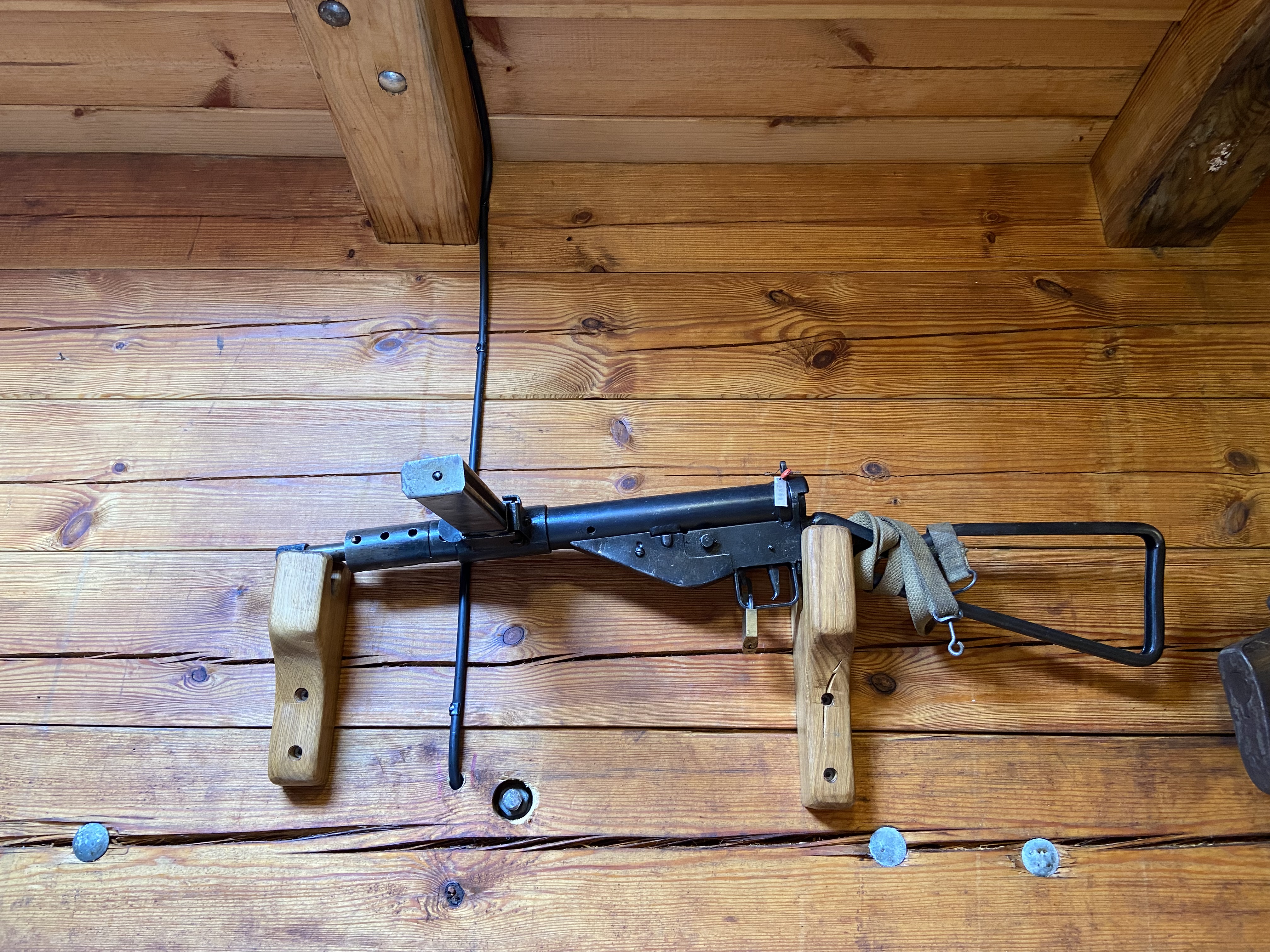
Climbing down into the cabin, there were tidy bunks tucked away in corners and many more weapons, presumably a collection and not necessarily used on Andholmen herself. The cold metal of the guns makes quite a contrast against the warmth of the wood of which the ship is built. Unlike Hestmanden, which was set up as a museum, this was much smaller, but equally fascinating as a historic part of the war effort.
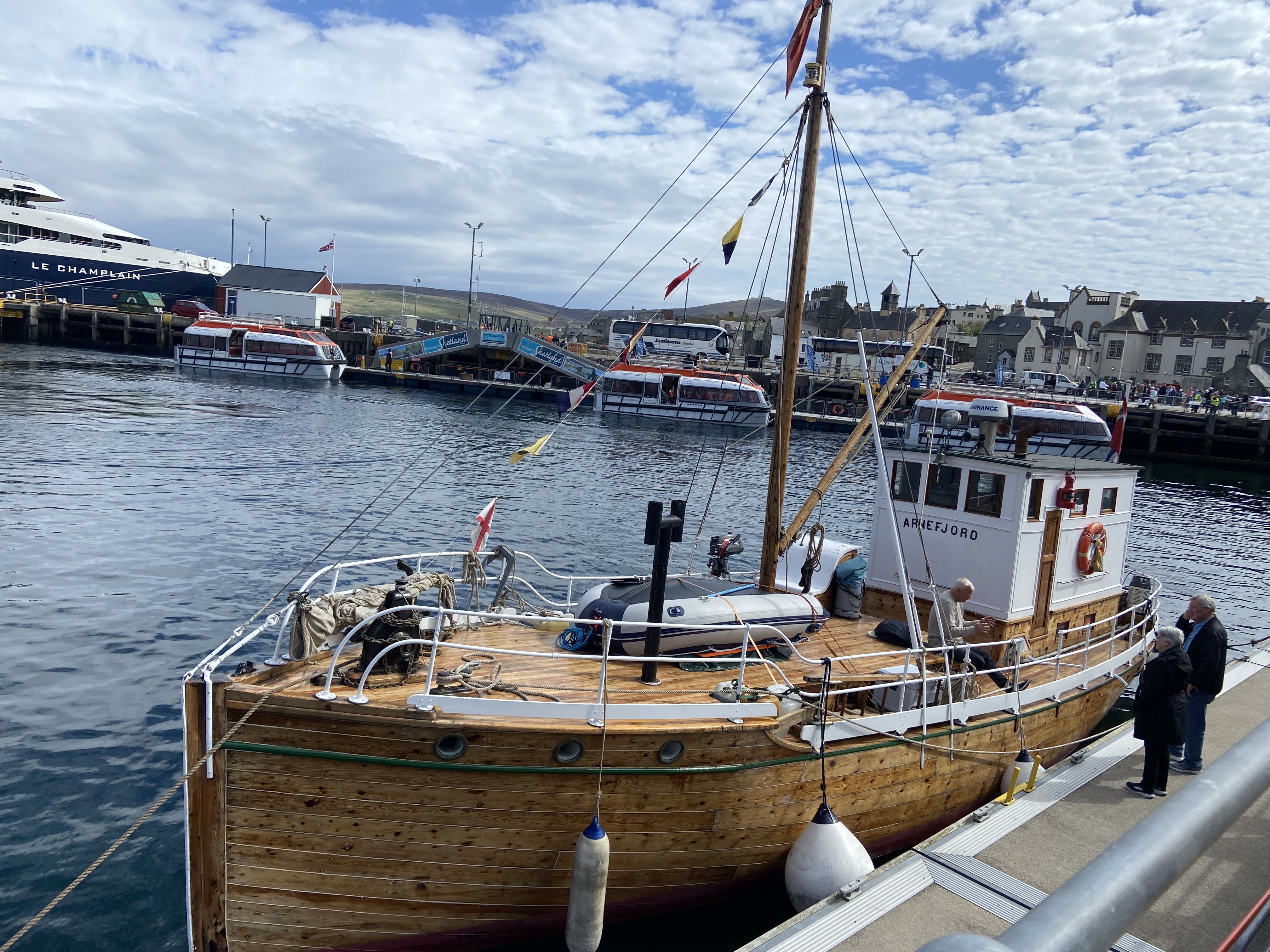
We didn’t get the chance to go aboard the Arnefjord, but she was one of the ships that worked as part of the “Shetland Bus” service that brought resistance fighters from Norway to the relative safety of Scotland.
The Erna and the Heland were also fishing boats, requisitioned for the Shetland Bus. It was a wonderful experience to see them eighty years later, moored again in Lerwick harbour.
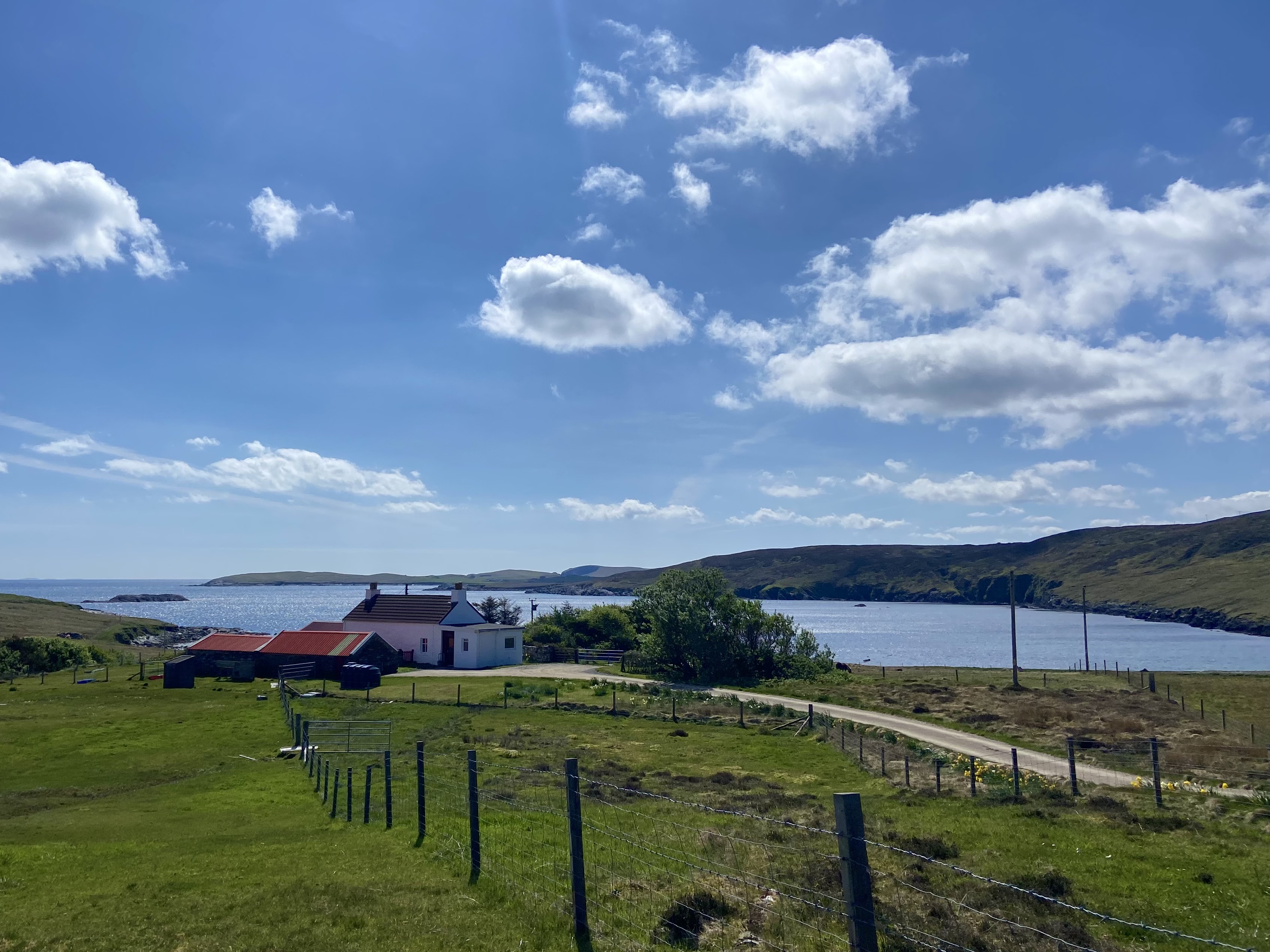
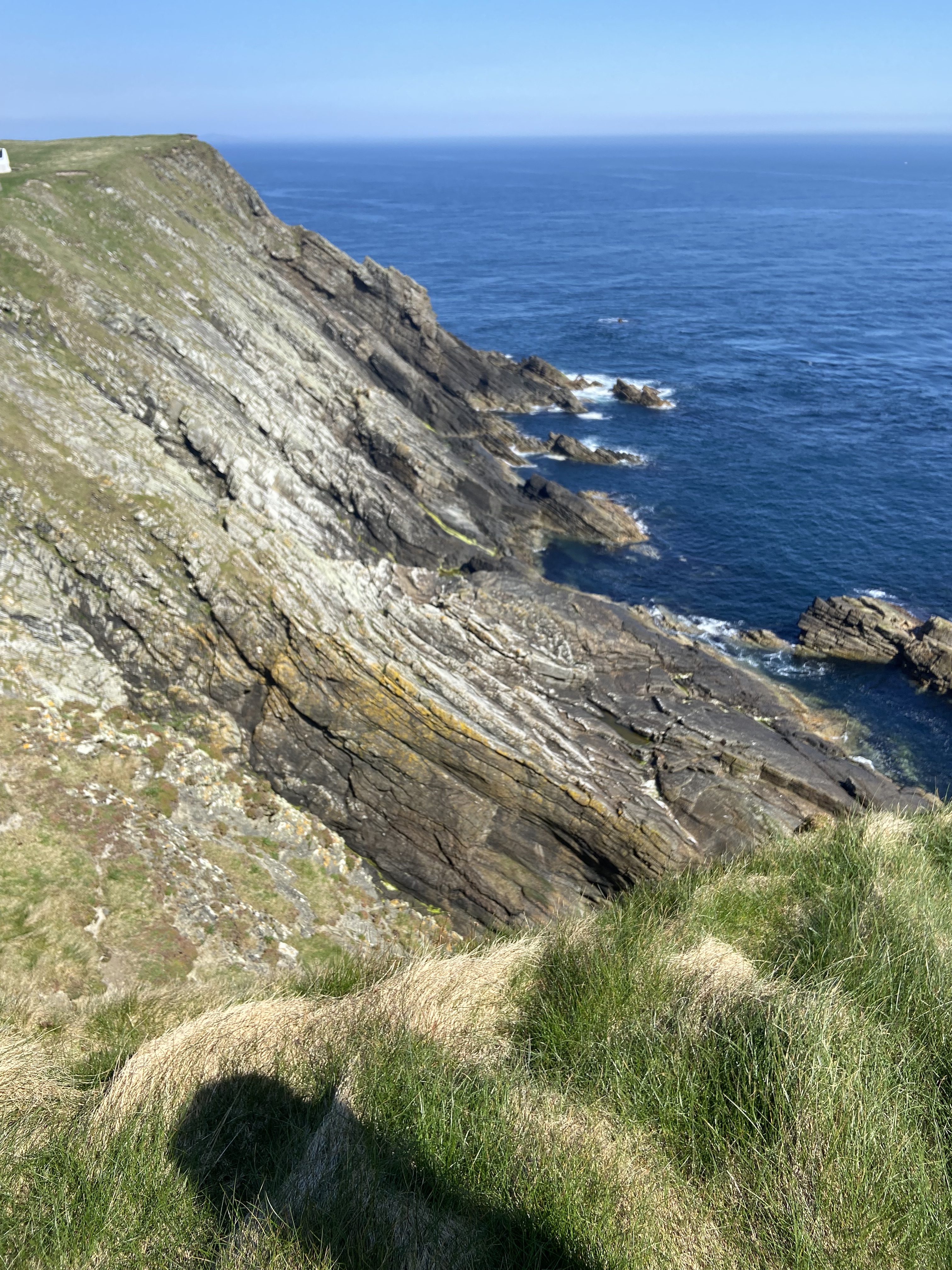
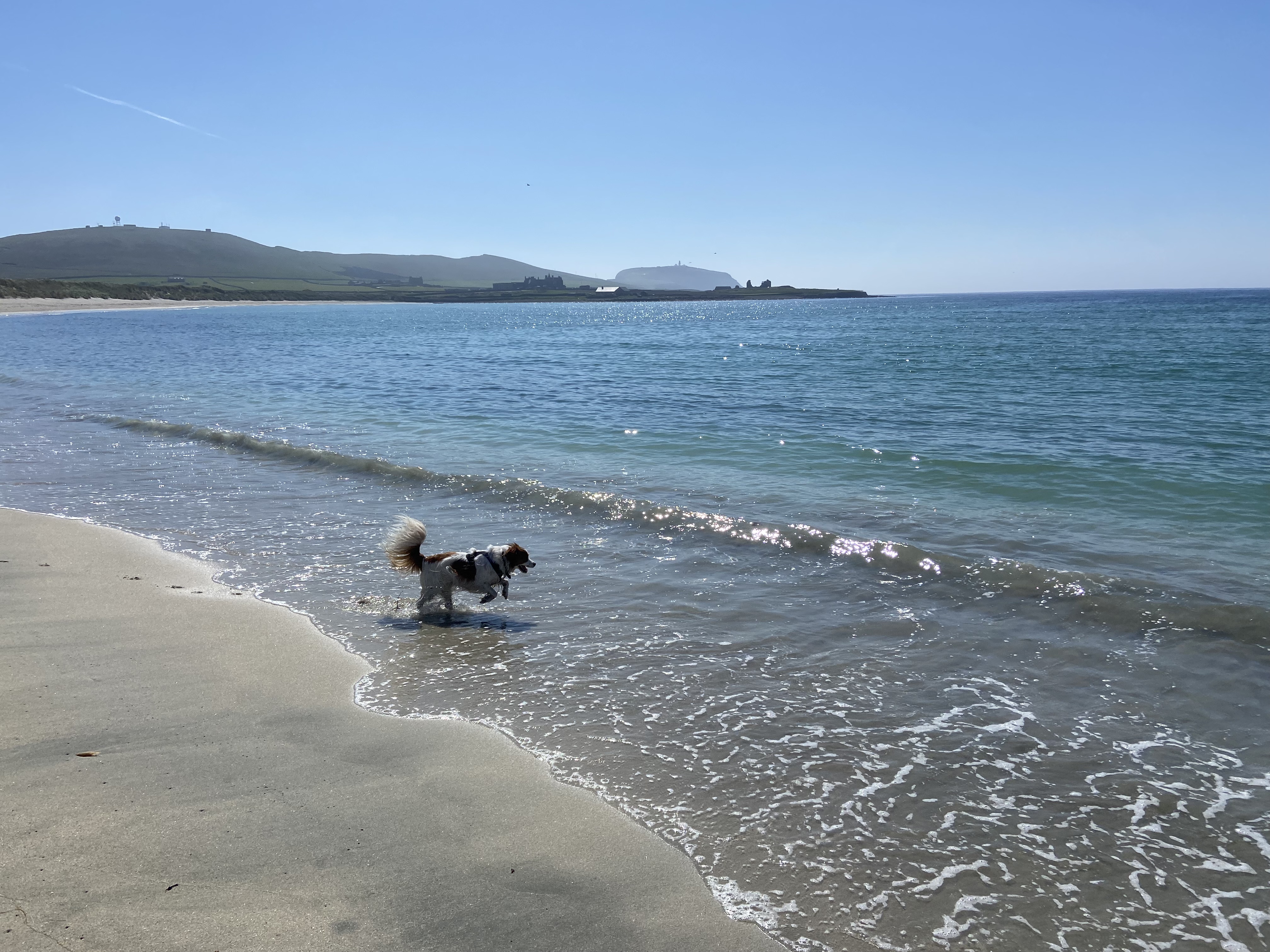
The rest of my week in Shetland was filled with sunshine and coastal views, from cliffs to rocky shores and wonderful golden beaches. Thanks again to Lindsay and Melanie for a fantastic holiday.
Leaving at the end was sad, but I hope to be able to go back. Triar also had a good time, I think.
When I was young, going on holiday always involved trains. Not that we always travelled to our destination on one, but we did, almost invariably see some steam locomotives. Sometimes this would be a mountain railway or a rebuilt section of the old network, sometimes it was in a museum. I have long known that Mallard set the steam speed record at 126mph as her sleek lines were to be seen in York Railway Museum and at university, I was briefly to be found trainspotting in Waverley Station when I wasn’t off on a trip somewhere with a club of train enthusiasts.
So when I was asked, last Sunday evening, what we should do the next morning, I already had my answer ready. We were going to visit Locomotion museum in Shildon. There were trains galore and also a cafe, so something for everyone! It’s a big site and we didn’t get all the way round, but we did explore both the original building, which was filled with old passenger trains and the new one, which was dedicated to industry and freight, as well as vehicles for mending and maintaining the tracks in all weathers.
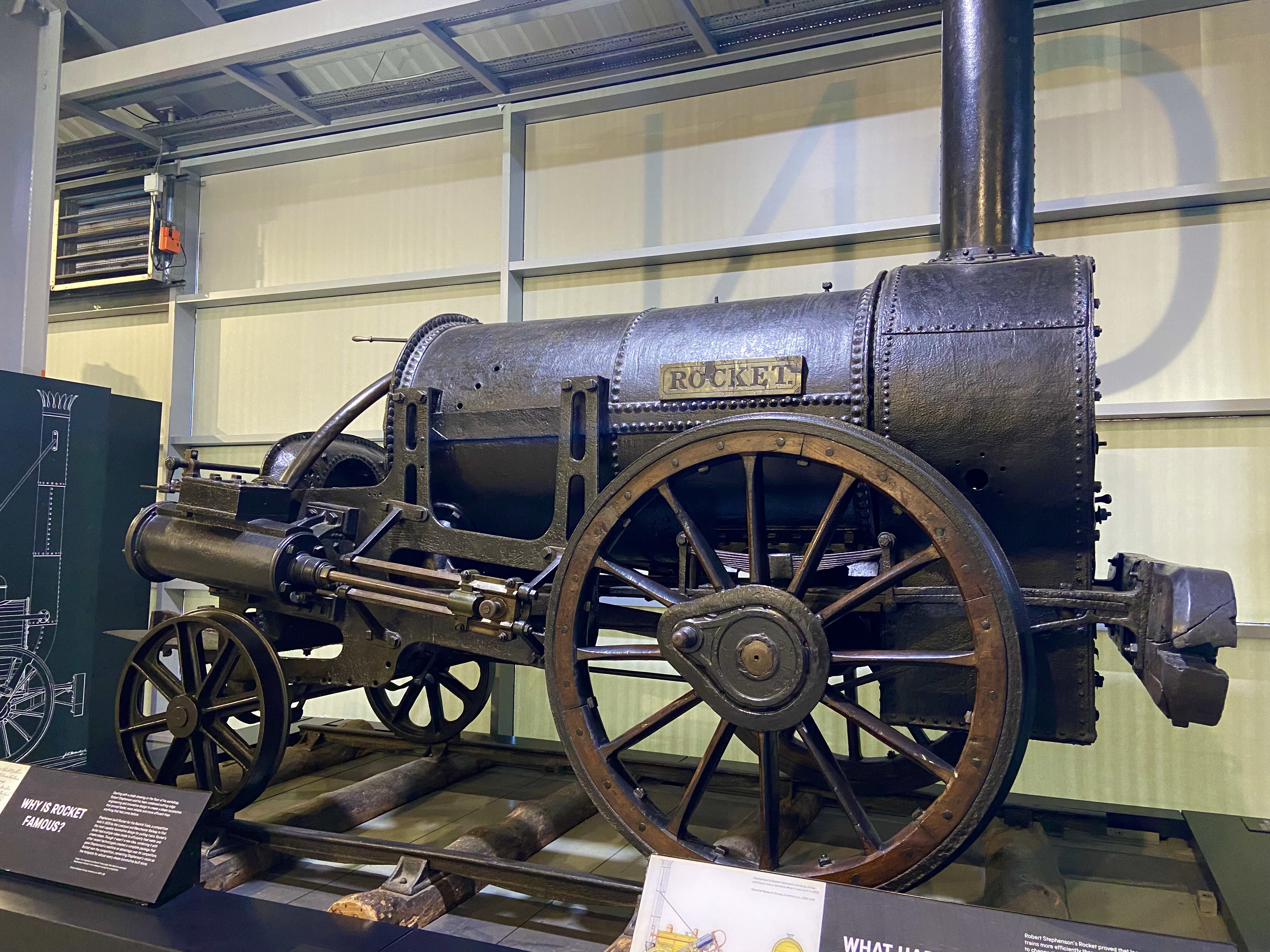
There is some beautiful rolling stock, from an old horse drawn rail carriage to a former Royal train, and from Stephenson’s Rocket (which won a competition, in 1829, to run on the Liverpool and Manchester Railway – the world’s first inter-city passenger railway line) to the Flying Scotsman, which 100 years later, ran from London to Edinburgh and is officially, the first locomotive to reach 100mph.
What struck me most was the quality and workmanship that used to go into building those trains. The shiny paint and intricate shapes are so much more attractive than the modern, soulless units that run around the network nowadays.
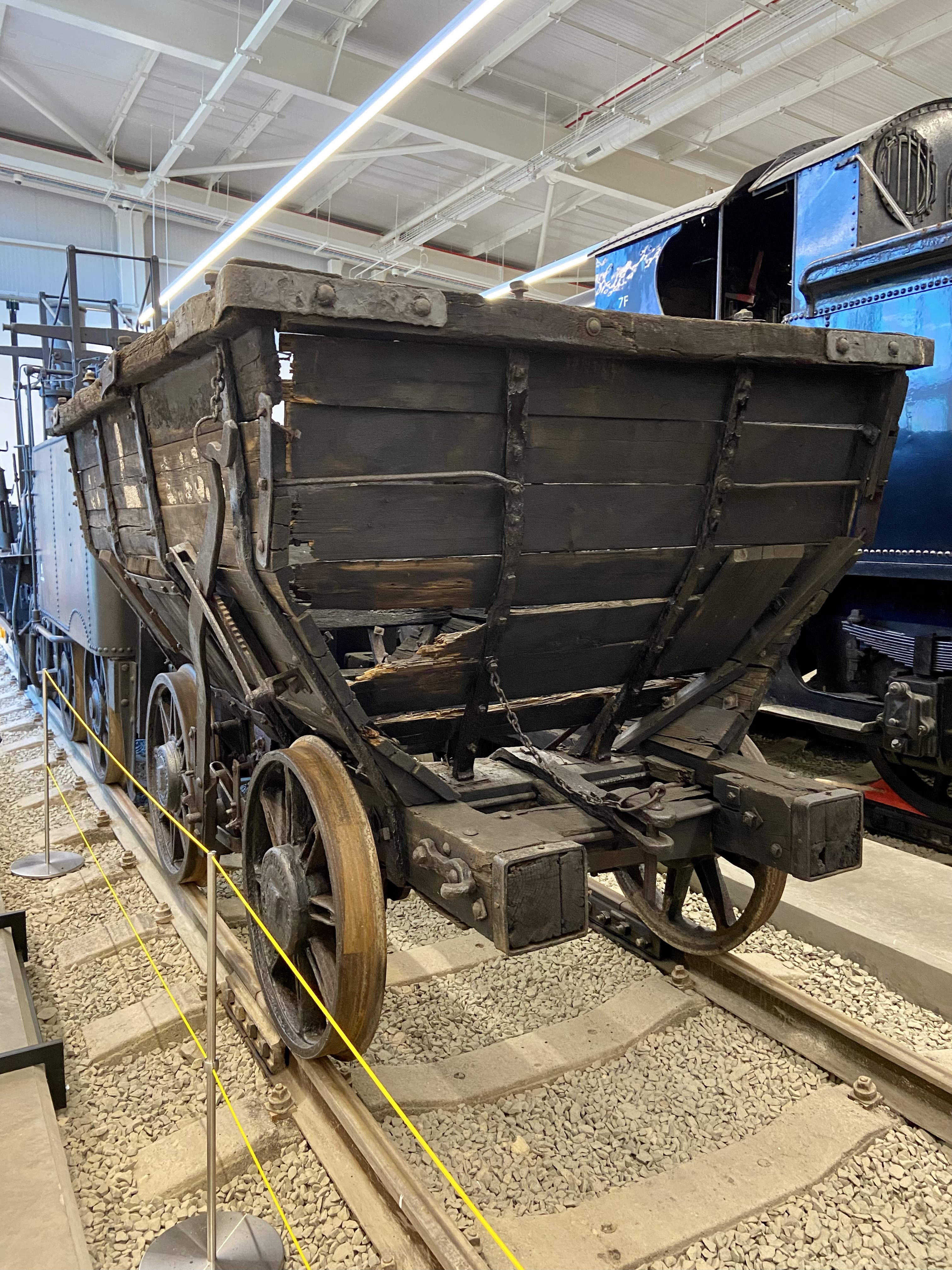
The second shed was all about practicality. Early wooden coal trucks and massive snow ploughs stood alongside freight containers for everything from cattle to wartime tanks.
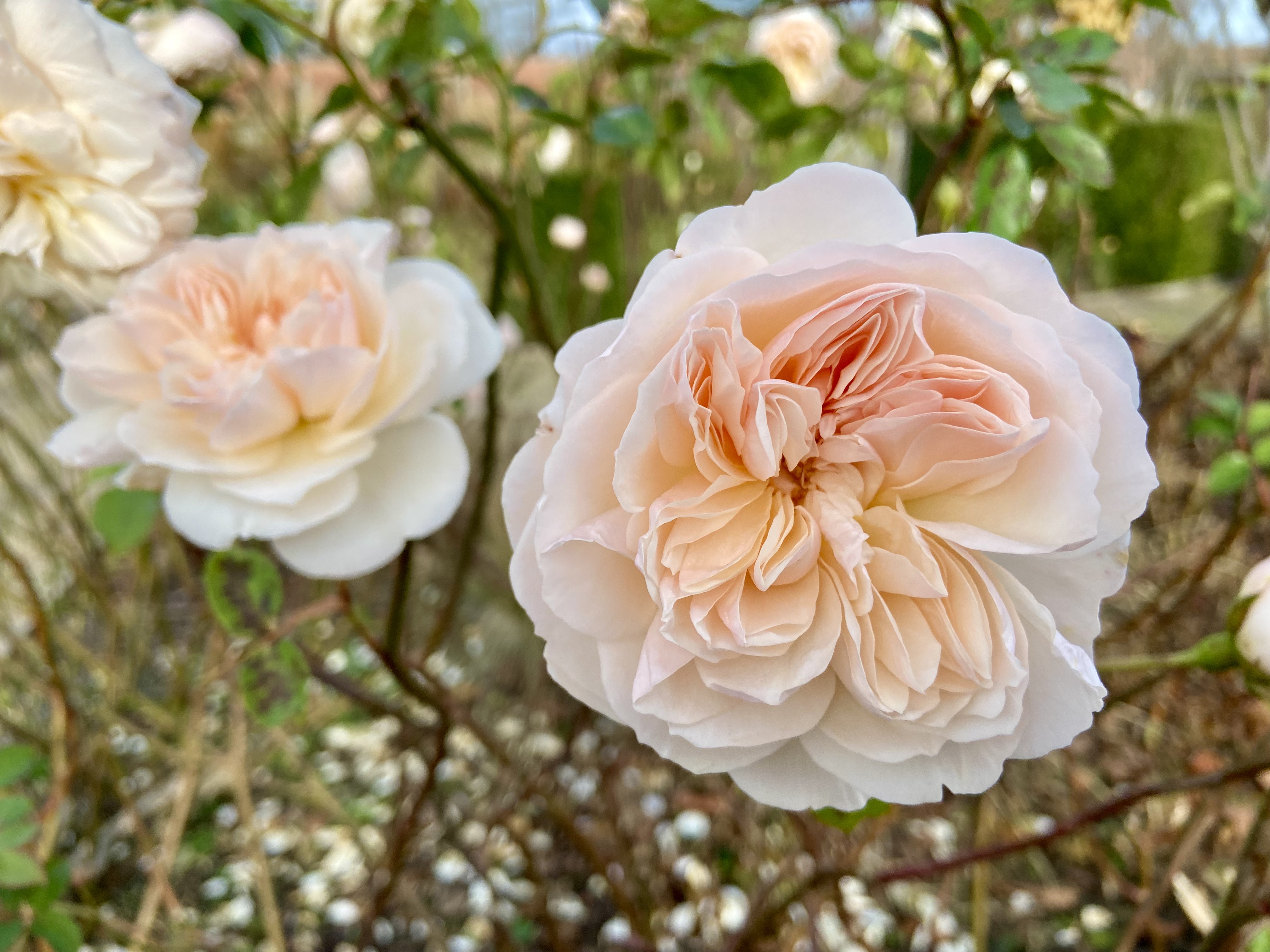
On Tuesday we went to Wynyard Hall Gardens. Famous for its roses, it wasn’t the best time of year for a visit. Nonetheless, there were still some lovely blooms and a few autumn leaves were clinging to the trees in the landscaped grounds.
And I’m going to leave it there for now. Sadly we have to leave the lovely farm cottage that’s been home for the past week at 10am, so breakfast and packing will have to take precedence, but I’ll leave you with a lovely encounter at the window on Tuesday afternoon. As always, thanks for reading.
Though in some ways, the weeks seem to rush past, by the time I write this blog, things that happened Saturday to Tuesday always seem distant. I will be wandering round, on one of those days, thinking “I’ll have to write about this,” then by the end of the week, something else displaces it. Ideally, I should start logging in as things happen, but hey, I’m not that organized! Anyway, this week I have carefully stored away a couple of things I really want to share. The first is about a welfare inspection I did on Tuesday.
I’ve probably said it before, but the sheer size of farms now, compared even to fifteen years ago when I left, is astonishing. When I qualified as a vet, in 1991, larger dairy units might have had 150 cows. Numbers were creeping up though, and by the time I left the UK many of the bigger herds had expanded to having over three hundred cows. Now it seems to be not unusual to have a thousand, sometimes even more.
I have been wondering how welfare is maintained on such a unit. Back when herds were smaller, most farmers knew their animals well. I went out with a dairyman when I was at college and he knew the personalities of the cows he milked and there were some he was very fond of. I remember seeing him cry when he’d been away on holiday and came back to find one of his favourites gone, due to the carelessness of the relief dairy worker that had been covering for him. No wonder some farmers barely take holidays.
I am not under the false impression that bigger is inevitably worse. Those who have expanded are often the most efficient and forward thinking farmers. They are investing in the herd and their own future, but still I had been wondering how. These are living animals and to keep track of when they are in season or in calf, or are sick, takes a lot of time for observation and knowledge.
As we walked along the calf pens, I could see they were being bucket fed. Lots of bigger farms use automatic feeders for their calves, but not here. The farm is run by a couple and (fairly traditionally) it’s the woman who is responsible for feeding the calves. They did have automatic feeders for a while, but found they tended to get dirty. In addition, teaching them to drink from a bucket prepares them for going into bigger groups and being given milk from a trough. You can also check how much milk each calf gets and individualise each one. I guess it takes a long time at peak calving time, but it was interesting to see that a good start in life is so important that industrialization hadn’t occurred (or rather, had been tried and rejected) on this part of the farm.
As we moved from the calves to look at the close-to-calving cows, I was interested to notice that the nearest cow had something attached to her foreleg. I asked what it was, and was told it was a movement monitor. Just as I wear a watch that can tell me how many steps I take each day, the cow’s steps were also being monitored. I wasn’t immediately sure what purpose this would serve, but later, he took me to the computer where these measurements were read.
He showed me a the readings of a cow that was coming in season every month or so. Sure enough, the movements peaked hugely at that time. But it wasn’t only that he could look at the program and see which animals were in season. The system itself recognizes the pattern and, as the cow comes out of the milking parlour, where it goes twice a day, a gate automatically opens to allow it through into a different area, so she can be inseminated. A person walking through the cubicle shed to separate out these cows disturbs all the other animals. Instead, this is another process that is mechanised to minimise both the work required and the disruption to the herd.
Automatic scrapers to clean passageways in cubicle sheds have been around for a long time. Usually they are pulled by chains or ropes and there were some of those here. The chains were in runnels to prevent the cows standing on them and hurting their feet. One of the sheds had one of the newer machines, that functions like a robot vacuum cleaner. These have the advantage that they can go round corners, so there are no missed sections, which there are with the chain scrapers.
What I hadn’t seen before though, was an automatic scraper for moving silage. Usually cows are fed in a passage, where they put their heads between bars and eat the silage and feed that is put there. As they eat, the food gets pushed away, and usually someone will drive along with a tractor now and then and push it back in. Here, there was a machine that ran along a metal track, doing the job automatically for all the big sheds. It runs every two hours, except just after milking time, when it is set to go hourly, as the cows tend to be hungry when they’ve just been milked. Again and again, I saw that, although this system was on a large scale, there were tweaks and tricks that meant that it was really set up, based on what the cows needed.
And finally, back to the matter of the individual animal and the personal relationship. I can’t say I really touched on this with the farmer, although it was apparent as we walked round, that there was still fondness for individual animals. He did tell me though, that where his dad had always been keen to give every sick animal a chance, he tended to be more ruthless is removing animals with bad feet or which had been ill enough to mean they probably wouldn’t thrive. One thing I have observed from life as a vet is that there is a lot of unconscious cruelty by some pet owners, who keep their pets alive long after that life stopped being worth living. Perhaps in a system where animals with bad feet get removed quickly, breeding from those animals that are left will create a better herd, with fewer foot problems in the future. Anyway, I really enjoyed my visit. Cows are still cows and they are still my favourite animals and these visits give me plenty of food for thought.
The other memory was from last weekend. I mentioned I had been told there was a man in his nineties, who’d lived here all his life. I ran into him last weekend. He has a garage at the end of the street where he makes wooden toys for children. He beckoned Triar and me in, and gave Triar a biscuit. Though he was in a wheelchair and his hands were shaky, he was painstakingly painting a toy duck that would go on a stick. There would also be feet attached to a wheel that would spin as it was pushed along the ground.
I asked him if he sold the toys and he said no. He gives them away, and the look on the child’s face is payment enough, he told me. If I ever have any children to stay, I will undoubtedly take them along to see him.
He also started to tell me a bit about the street and I resisted the urge to ask him if I could record what he was saying, as it was lovely. He had lived in the street law his life, he said, and could remember back to the time when it was a village and not part of the town. The doctor came out rarely, he said. If someone was sick, they called for Mrs Black. Mrs Black was also the one you called on if someone was giving birth. We also had a discussion about the healing powers of honey. As antibiotic resistance is growing, even in the vet world there is starting to be more exploration of how old remedies can be better integrated into modern treatment. I bet Mrs Black could have taught us a few things about helping sick people that we have lost in our rush towards modern medicine.
Anyway, I’ll leave you on that note. The pictures are from Blackbird lane, where Triar and I are still walking, morning and evening. This week’s unusual birds were a tree pipet and a mistle thrush, but the blackbirds haven’t deserted. Have a good week and thanks for reading!
Anna and I visited the small Nordkapp Museum on the afternoon of our last day in Honningsvåg. It concentrated mostly on relatively recent history, though it was fascinating to see that being close to the ocean meant that trade routes here allowed this distant arctic region to be colonised early as the ice from the last ice age retreated, long before other regions which nowadays would be considered as hubs for movement and trade.
There were one or two snippets about women, which interested me on a personal level. I am always fascinated by pioneering women. For example this small plaque celebrates the first local paper on Magerøya, which the notice tells us, was written by two ladies.
Witchcraft in the village of Kjelvik seems to have been more strongly ranged against men than women though. Interesting as in other parts of the world, it seems to have been women (and particularly older women) who were targeted.
There was a large exhibition about the war and its after effects. I was aware that the far northern regions of Norway were devastated at the end of the war when the Nazis retreated, and I had wondered whether Honningsvåg was so far away and so remote that it might have escaped being burned to the ground. It seems that it was not. Of course that makes sense. In these days, where road and air travel tend to dominate (at least in my mind) it requires a complete adjustment to understand that in both near and more distant history, boat travel was one of the most significant ways of transporting people and goods. This was especially true around Norway, but also as it connects more distant parts of the world. Of course many goods continue to be transported by boat, but it doesn’t predominate in the news unless something goes wrong. But any harbour town must have been particularly useful to any invading forces, and therefore at risk.
It seems all of Honningsvåg was burned with the exception of the church, which I regret not visiting. The rebuilding effort was rapid. Some had fled to caves in the hills, others returned from evacuation to start again, and those who did so apparently slept in the church.
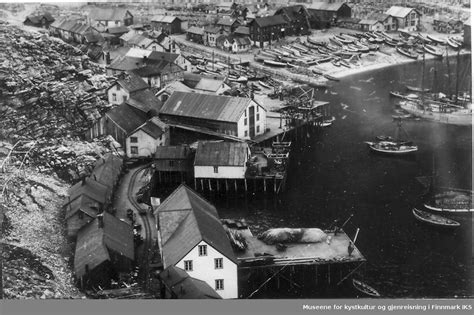
There was also a filmed interview with a man who had been born in Finnkongkeila, which was a busy Sami fishing village to the east of Magerøya. It too was razed in 1944, but due to the lack of road access, and because of the steep slopes that lay behind it with the high landslide risk, the Norwegian authorities decided it would not be rebuilt. The idea of having the place, where you had lived your whole life just disappear, burned and then gradually overtaken by nature, is so alien that I can scarcely imagine it. Here’s a photograph of Finnkongkeila before it disappeared.
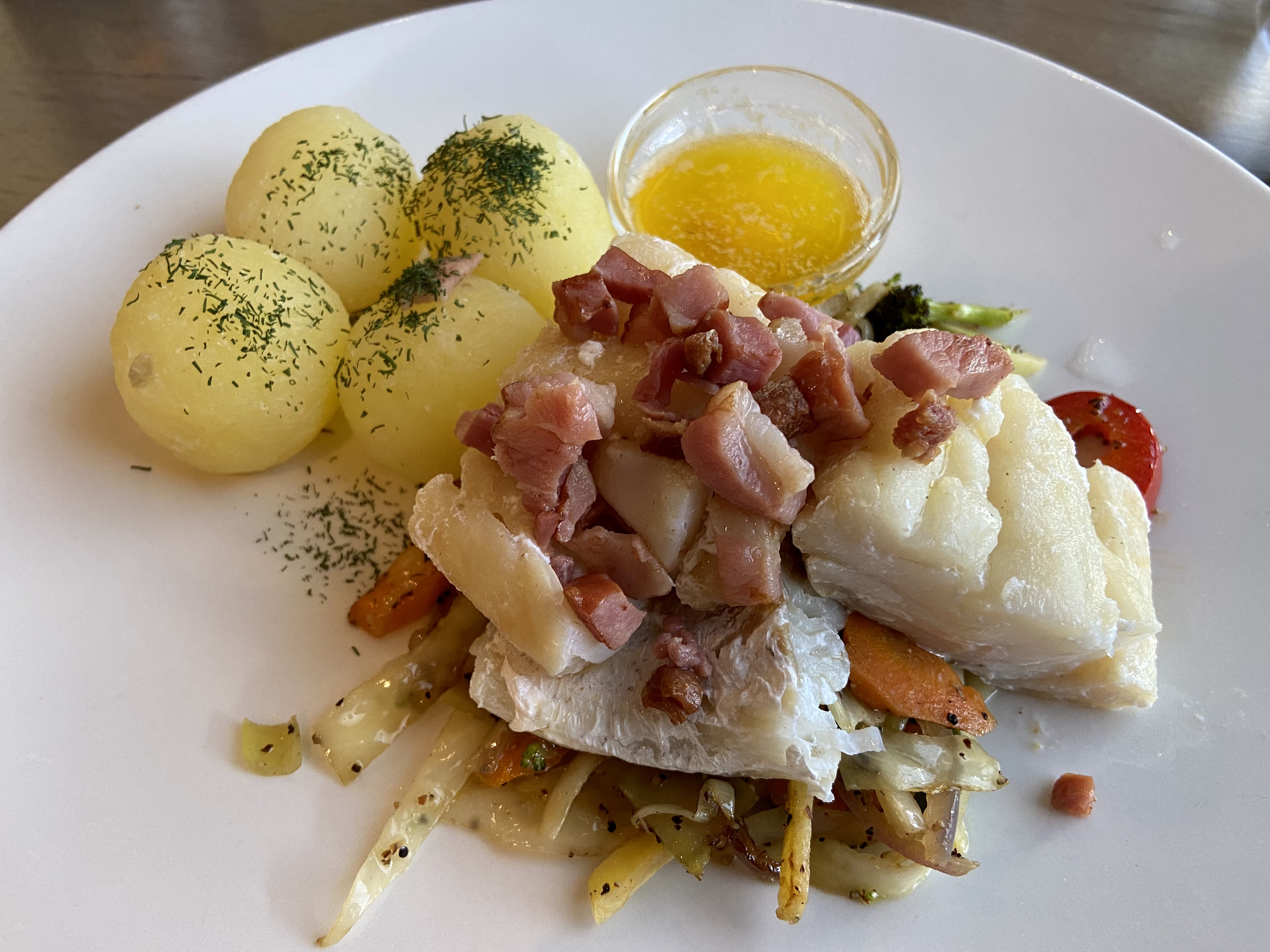
We also read a lot about the local fishing industry and the related trade in dried fish. I was interested to find out that though stockfish is dried and exported in huge quantities, the local dish is actually boknafisk, which is only semi-dried. I had noticed it on the menu in the restaurant we had eaten in the night before, and so of course I had to go back and try it. It was really very good.
I was going to write that our holiday disaster struck the next morning, but given what I’ve written about so far, I shall temper it to say that a mild bump in the road reared its head the next day. I had heard coughing from more than one other guest during breakfast the previous two mornings at the hotel. So it should perhaps not have come as a surprise when Andrew came to us first thing and told us he had a sore throat and perhaps the beginnings of a cough. I confess I wasn’t too much worried about his health (he’s been a school throughout the pandemic and we’ve been through several rounds of colds) but I was concerned about the logistics. Hotels in Norway are not cheap, and the idea of stopping and getting a test locally, then waiting for the results was not appealing. We were due to check out anyway, and so Anna and I went down to breakfast (and took Andrew up some very tasty chocolate croissants). We discussed the situation afterwards. Andrew was already feeling a bit better, and there was still a chance he was suffering only from a flare-up of his allergies and so we decided to head down to Alta to the cabin we had booked there, and then reassess the situation.
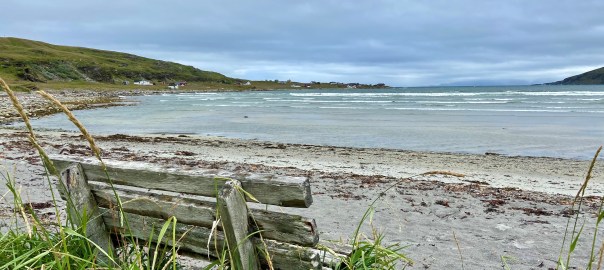
It was only three hours or so, but I was rather sad to be leaving Magerøya so soon. Andrew seemed to be feeling better and we stopped once or twice on the way to get some fresh air and enjoy the scenery. Triar went for a run on a little beach at Repvåg, where I found these two very weathered benches under the sullen sky.
And then we were back into the amazing slate-dominated landscape with its weathered stones, its disconcertingly angles layers jutting towards the sky .
The cabin in Alta was tolerably comfortable. It had a small TV tuned to the National Geographic channel with a sign that sternly informed us that we mustn’t touch the settings. By nightfall, it was obvious Andrew’s cough was not a resurgence of allergies, but definitely something more, and so we decided that we should try and get a test the next day, then find out whether we would be permitted to drive home, or should wait in the cabin until we got the results.
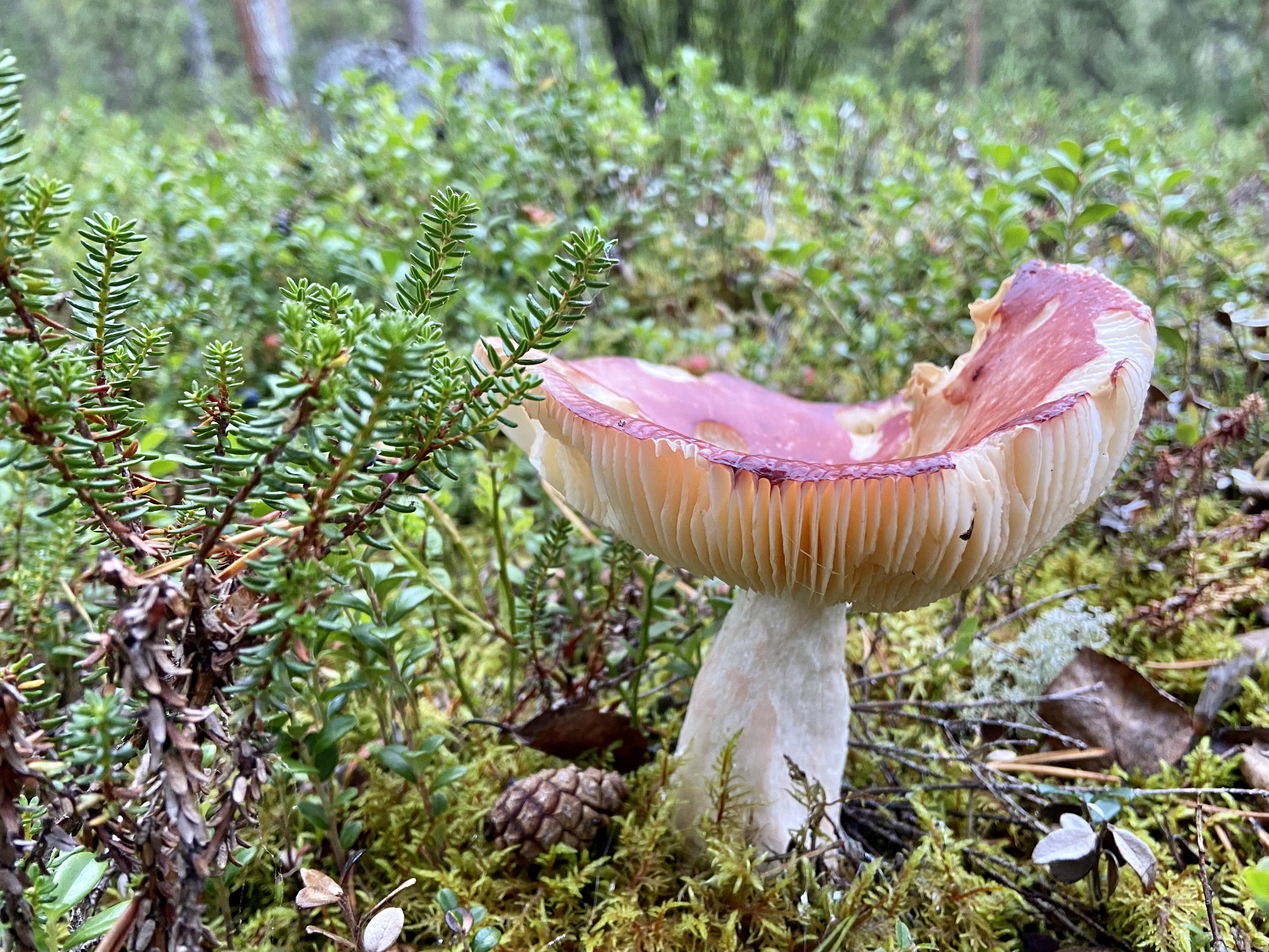
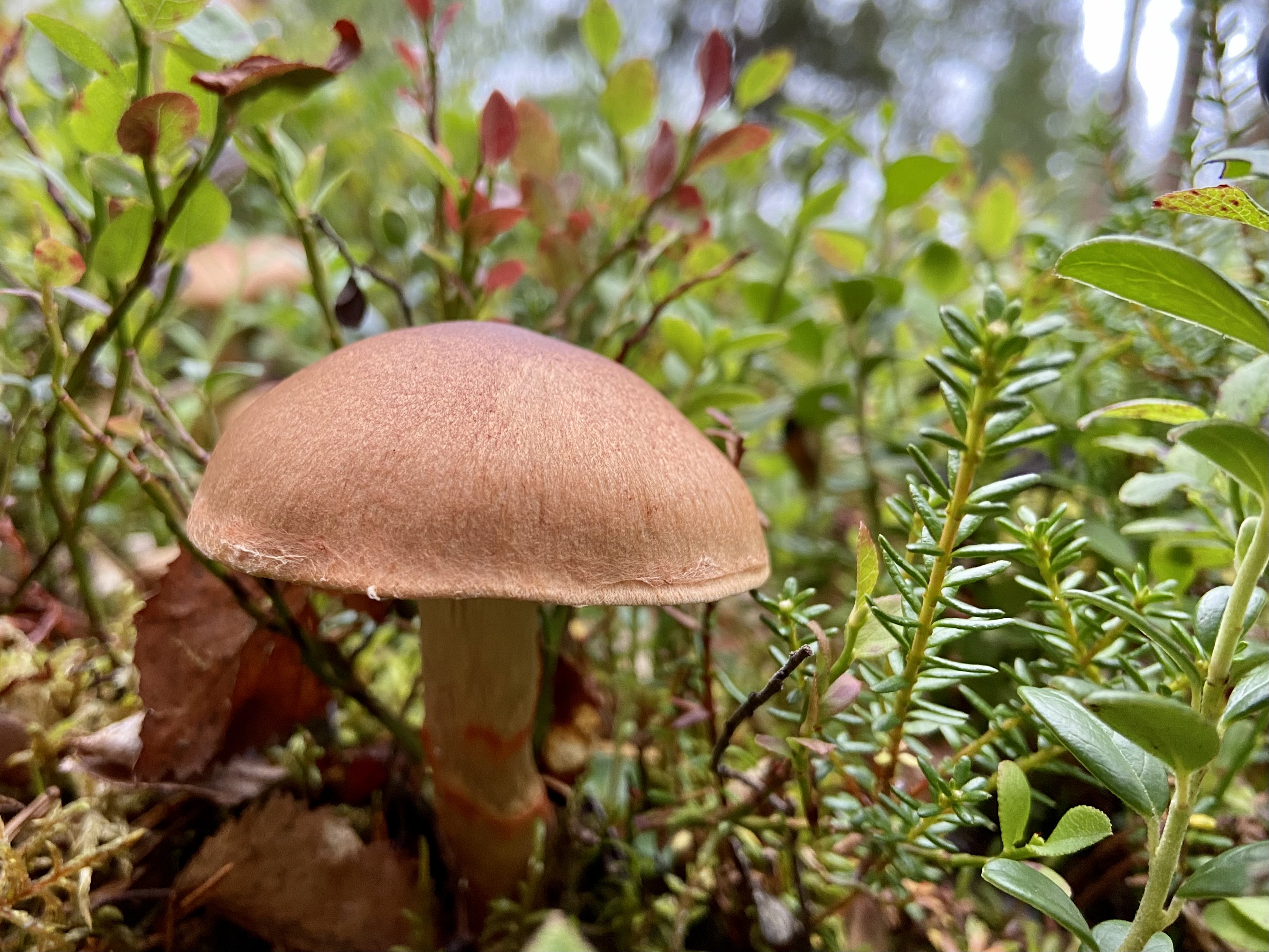
Friday then, was rather sad. We had arranged to have two nights in Alta as there were things we wanted to do there. Our neighbours had recommended the bathing park and I very much wanted to go and see the famous rock paintings and carvings. Instead, Andrew slept for much of the day, while Anna and I sat on poorly padded wooden benches and watched a series of documentaries about aeroplane crash investigations, airport drug smuggling and some rather Top Gearesque programmes about a man who refurbishes classic cars. The wifi was awful, so other pastimes were not really possible. I had hoped to write a blog update, but that wasn’t really possible. Anna and I did take Triar out for a walk in the (fungi-filled) woods, alongside a sortie to the shops and to a local takeaway but that was the extent of our day in Alta.
I was impressed with Alta’s coronavirus test station. Our local version involves going into an old school building, where masks are not compulsory, and standing in a queue of blue dots set two metres apart. I’ve long thought it must be a wonderful hub of infection as everyone who has a cold is meant to get tested. In Alta there’s a drive through tent outside the health centre and drive through we did, shouting replies to the man in protective clothing as Triar barked in Andrew’s ear from the back of the car. We asked about travel and he told us that so long as Andrew stayed isolated in the car and wasn’t too unwell, there was no reason not to head home the next day.
And so abandoning our possible plans for a last night in Vollan or possibly Tromsø (fortunately I had nothing booked as I was sure we would find something and wanted to keep things flexible) we made a run for home last Saturday. It was a six hour drive, and though we stopped to buy food and drinks from garages, we were not really able to take much of a break on the way. We stopped a few times to look at the scenery, which was dominated in part by the sheer numbers of berries growing on the ground and on the trees, and in part by the weather, which was mostly good overhead, but with glimpses of cloud capped mountain tops and distant rain-filled valleys.
I arrived home feeling tired with a rather dry throat. I was still hopeful that this might have been due to a long drive and the car’s air-conditioning, but I woke up on Sunday with a raging cold that has seen me spending most of this week in bed. Andrew’s Covid test was negative, as was mine, but I was definitely not able to go back to work. I’m still coughing away as I write this and feeling fragile, but I will try to work (from home) tomorrow and hopefully things will gradually return to normal. Anyway, I hope you have enjoyed the journey to the north with me. Next time we venture north I’d like to take more time to explore Alta and Magerøya, and perhaps go on a detour to Hammerfest and Karashok. There’s still so much of northern Norway left to explore!























 A Vet’s Life