Tag Archives: Cow

Through the Eyes of a Cow

I have been down to Weybridge agent this week, this time for a cattle handling course. Before going, I was rather cynical. After all, I’ve been a vet and have worked with cattle for a long time, I’d done a course in Norway about the design of facilities in abattoirs, where I learned about behaviours, so I rather thought it might be a lot of repetition. The two colleagues who attended with me were actually farmers, so I think they had the same concern, but it warm in fact, very interesting.

The essence of the course was to teach us about health and safety when it comes to cattle. I haven’t read it yet, but there is a health and safety document (HS32) regarding handling facilities and minimum safety standards when we go to a farm, what we should look for and when to walk away.

There’s a drive in UK farming at the moment and grants available for building safer facilities, we were told. Farmers who provide inadequate, unsafe facilities are paid the same for their products as farmers who don’t, so if we walk away, for valid reasons (backed up by HS32) then there is legal pressure for them to comply. If they don’t, they will find themselves under a movement ban. As someone who probably would have tended to push on through, this in itself was a good message. Take it further and it’s also good for the animals. Escape attempts that go wrong don’t only result in risk to the human beings present, but to the animals as well.

Most of the course was led by Miriam Parker, and if you are interested in what she does, there are videos online. In essence, she designs livestock handling facilities with the animals in mind. If you want an animal to go somewhere, the best way to do that is to design the facility so the animal wants to walk through it. Ideally, you want the handlers to be able to guide them from outside as well, as that is much safer.

I had learned about flight zones before: the area an animal maintains around itself – enter it and the animal tries to move away. I also knew about the balance point – if you stand behind its shoulder, it tends to move forwards, in front, it moves back or turns. But we also looked at the behaviour and signs of discomfort when you are in the flight zone (a potentially risky place to be) and the limitations of cattle sight.

I had always thought that, with their eyes in the sides of the head, that cattle were mostly looking out to the sides. Not so! They have very wide peripheral vision and can perceive movement there, but most of their attention is still focused in front of them. I should have known that really. When they stand looking at you in a field, they do look straight at you, after all. What they do have though, is a great big blind spot in front of them, which means it’s much harder to judge distance when close up, for example. If you wondered what the picture at the top of the page was, it’s my colleague, Lesley, wearing a pair of spectacles that allow you to get an idea of what a cow sees. No wonder, when cows are walking into somewhere that looks strange, they take a lot of time, putting their heads down and to different angles, trying to eye up not only whether it’s safe, but whether they can get through at all.

We also went out to a field, where there were some fairly flighty calves. Our group of about twenty was split into smaller groups, then we were sent out in turn to try various exercises, such as getting them to walk to different places in the field. This proved to be quite difficult as getting them moving slowly in the first place was one thing. Slowing them down if they took off was much more difficult. Miriam explained the importance of moving back to give them space, rather than pushing them on, or standing close to keep them where you want, to the point where they’re stressed and milling. Step back and they are more likely to relax and stand.

I had been disappointed with my performance with various teams for much of the exercise. However the last task of the day was to try to split off two calves, leaving the others in a group. Many years ago, I used to stay up late into the night, watching One Man and his Dog on TV. For those who don’t know, this was a shepherding competition for a shepherd and his sheepdog, where they had to guide the sheep round the field, through various gates and into certain areas, before guiding them into a pen and closing the gate.

One of the exercises they did was to separate out two sheep from the rest of the flock. How many times did I watch as those calm dogs edged towards the group, moving in an out until they saw their chance? A gap would form, where two of the animals started to edge away and the rest weren’t quite ready to follow, and then the dog went in between them, cutting the group cleanly into two. To my enormous pleasure, I found I could do this instinctively, and for the first time that day, our group performed this task smoothly and without a hitch. It was a great end to the session.

Good as the cattle course was, it was also great to spend some extra time getting to know my colleagues better. As well as Lesley, we had Lauren there. Both of them are from farming backgrounds and, like many people from farming stock, they are very down to earth, as well as funny and practical. I’ve always felt that the people I work with are what make the most difference between enjoying work or not and I’m looking forward to working with them more!

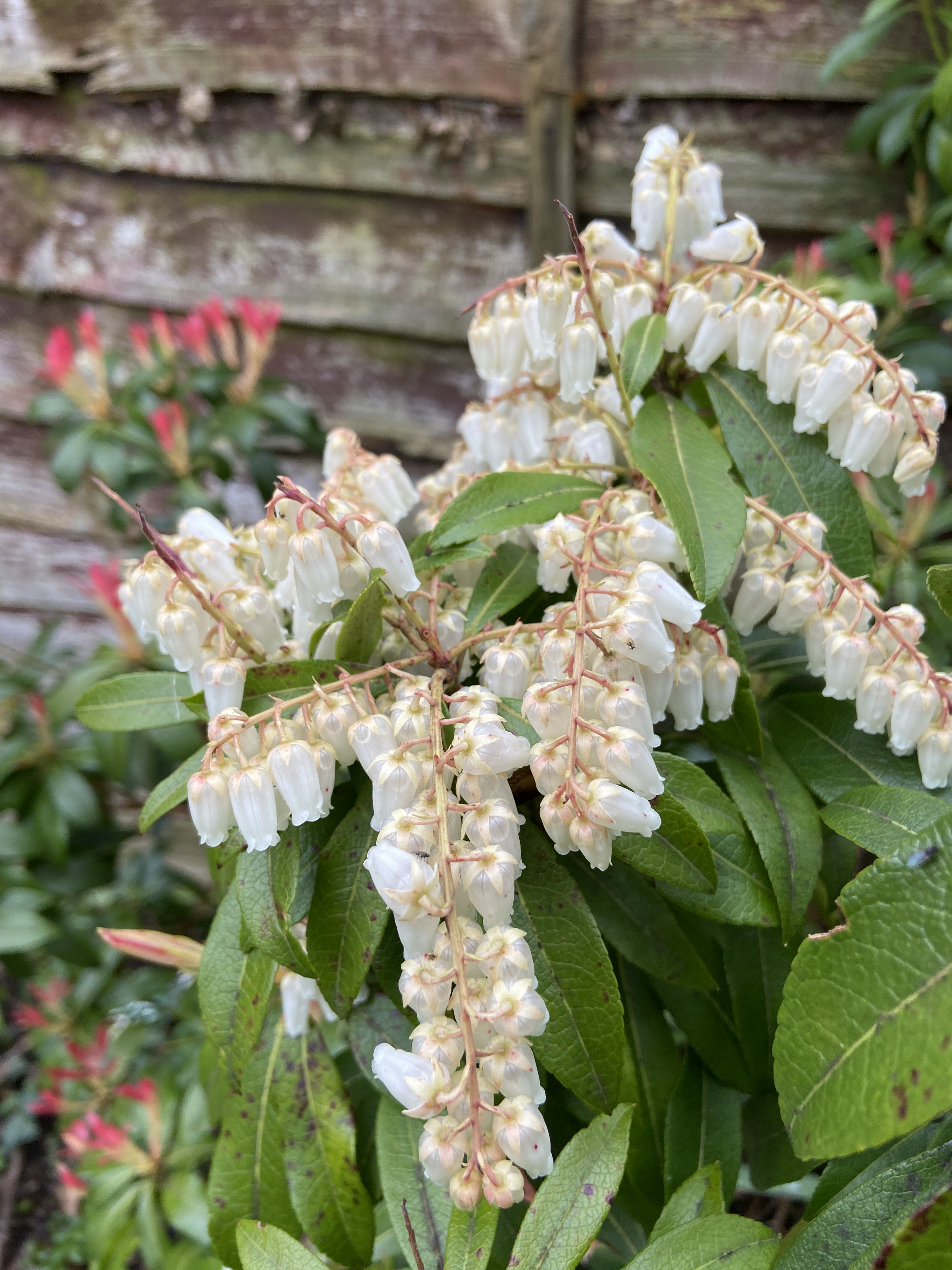
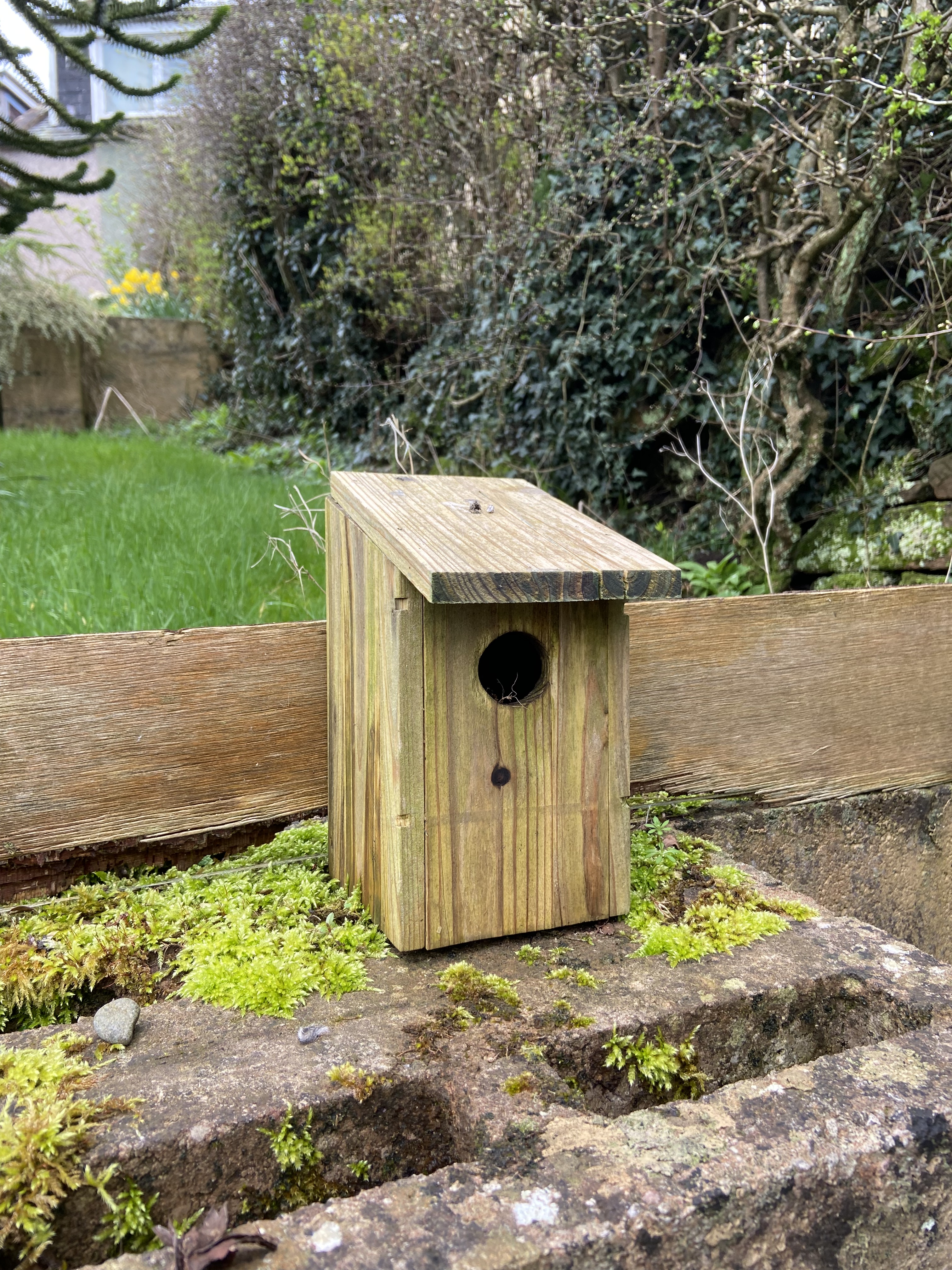
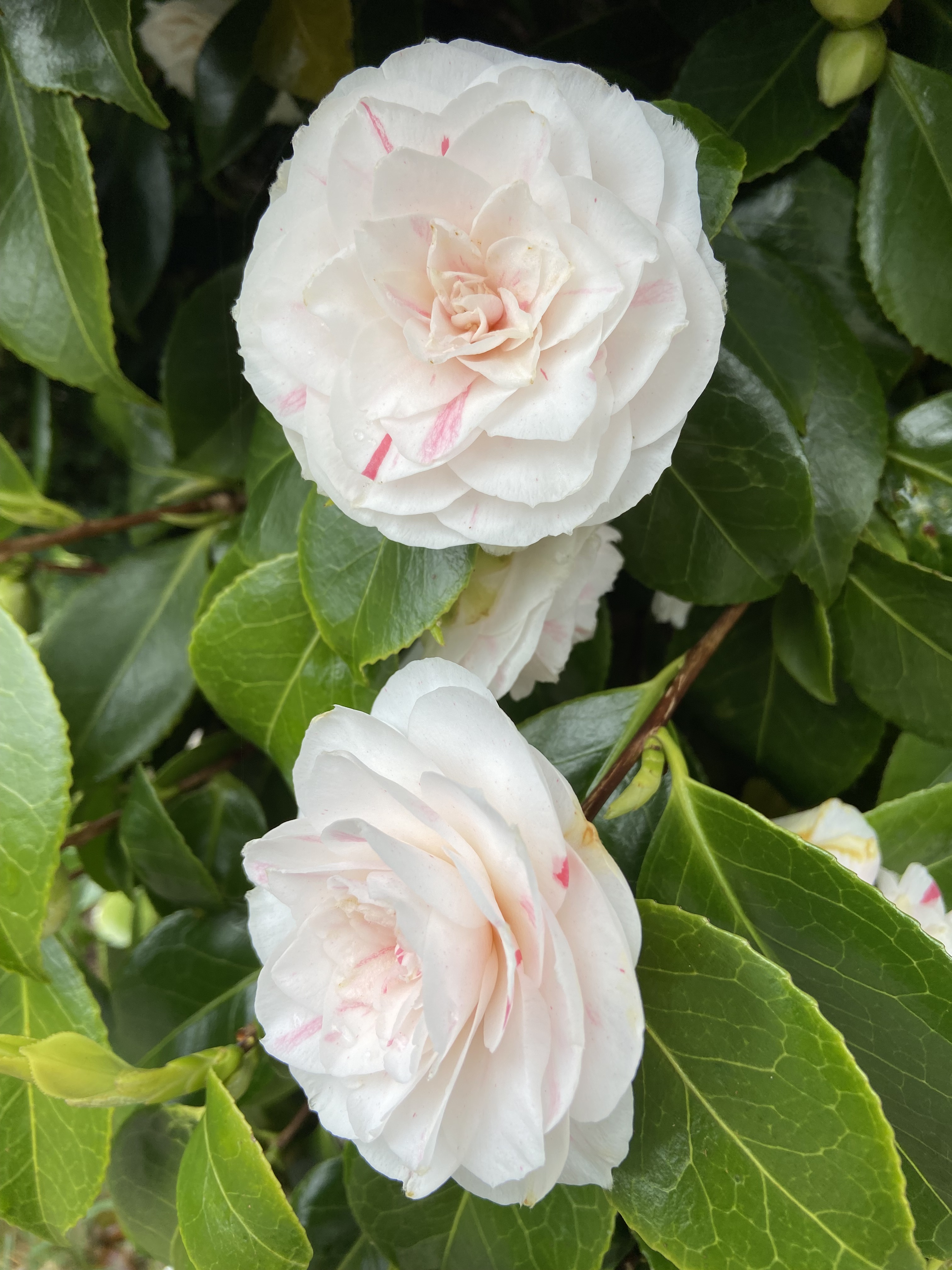
I’ll finish with a few photos from my new garden. Though it’s running a bit wild at the moment m there’s plenty of colour and lots to look at. Have a good week, all!

Blissful Ignorance

Sunday this week: a lovely day, and the day I had arranged to go out and “see practice” with Jan-Arne. I had been hoping to do this for a while, but it had proved difficult to arrange. In the event I ended up seeing only one patient, though Jan-Arne did all that he could to drum up some additional business, first by telephoning the previous days clients to see if they needed a follow-up call, and secondly by driving me around the entire district in a vain attempt to run over an animal (or cyclist).

The single call was to a cow with mastitis. I walked into the barn and as with the small animal clinic, had an immediate feeling of coming home. I miss farm work so much. I love the sense of peace that I experience when I am in the presence of dairy cows. These large animals are so docile; they allow us to stand so close and rarely object to being handled, except now and then when they need to protect their calves and even that is mostly done with a doe-eyed gentleness. But there is also a sense of community in farming that is so very different from city life. Years ago in Scotland, working in a dairy practice, I felt almost (only almost) as if I belonged. I wasn’t born to it, and yet as a vet there was a sense of integration. I was wanted and needed within their society, and it is that feeling of belonging that appealed to me, almost as much as the animals themselves.

There were some interesting differences. Norwegian farms are strict on biosecurity. I was fascinated to see the gigantic pair of wellington boots that the farmer’s wife brought out from a cupboard. They fitted right over Jan-Arne’s trainers and he clomped around with feet like those of a yellow elephant. I had to make do with special plastic wellington boot covers. I had the tremendous feeling that I could just walk back into that lifestyle. It all felt so similar to the old days that I could almost see myself there.

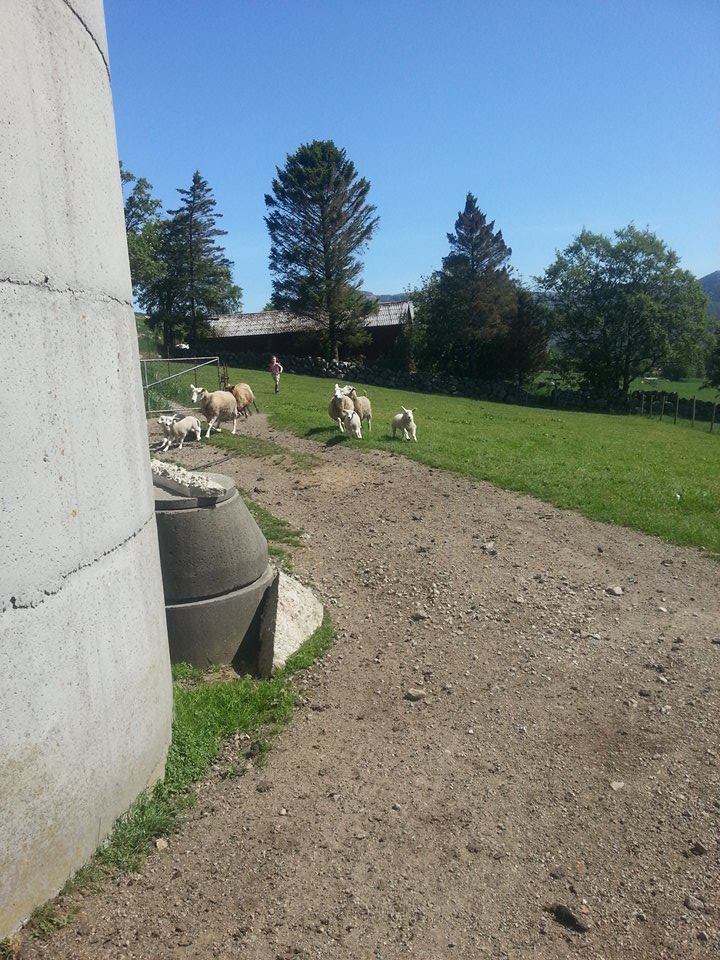
Any delusions about that were shattered later when we visited a farm where Jan-Arne was friendly with the family. We looked at a couple of their bottle-fed lambs and all the time the conversation was rattling on around me. I couldn’t follow a word and the farmer couldn’t speak any English. They had a lovely young daughter though, who kept grinning at me conspiratorially. She wanted to show us her pet lambs and tried various methods to capture them, including an attempt to entice them with some food. Afterwards, she raced around the field chasing them, a streak of pink in a pair of purple wellingtons, childish hair flying everywhere. Finally she managed to catch one, a sturdy black lamb of a traditional Norwegian breed. My biggest regret of the day was that in my haste to leave the house I managed to forget my camera. Jan-Arne very kindly offered to take some shots of the field and the child and the sheep and here they are…

Jan-Arne's Sheep 1

Jan-Arne's Sheep 2

Jan-Arne's Sheep 3

Always difficult to get a good action shot, but it was a beautiful setting on a wonderful day.

The biggest revelation occurred when we got back to the practice where I had left my car. Jan-Arne pointed to the house next door.

‘I wonder if Magne and Gerd are in there, enjoying their day off,’ he said. ‘Did you know they lived there?’

Did I know they lived there? My mind was screaming.’Magne and Gerd are married?’ I managed to croak it out at last.

‘Didn’t you know?’ He was laughing at me.

Amazing the things I fail to register. Everyone else knows presumably and maybe they just forgot to tell me, but more likely I missed it. Perhaps they stand and chat at the desk about what they are going to have for dinner. I have no idea because after so long in Norway, my brain just switches off when other people are chatting to one another. They could be talking about me, and I would remain in a happy state of oblivion.

I realised recently that this was, in many ways, a blessing. When I return to Scotland, it always comes as a shock to overhear conversations which my mind automatically processes. There are so many preconceptions based around accent and word use, instant frustration at the banalities of life. Here I escape all of that. I wouldn’t change it, even if it means that occasionally things pass me by. I wondered recently whether this must be like for a young child, having a mind that passes over incomprehensible things that don’t really matter.

When I discovered Magne and Gerd were married, it leaped into my head that I should be worried about whether I had ever said anything reprehensible about one to the other, but of course I was able to dismiss that in an instant. I just don’t have those kinds of conversations. I would love to say I have never said anything offensive about anyone, but of course, there is Scary Boss Lady. Apparently the other staff found “All Change” so amusing that they had to tell her and she read it. Since then, she has tried to convince me she isn’t scary. She even appeared one day in a poncho with the words “Love Me” woven into it. I left no doubt, she told me over a mammary tumour, that it was her I referred to. In case there was any confusion, I had clearly stated “Dagny, the scary boss lady”. She tells me that it will follow her now. Even at the Christmas party, she is in no doubt that her name-tag will read “Scary Boss Lady”. Still, she can’t have been too offended. Apparently she told her friends in the cycling club about me on a train journey. I can imagine their wide-eyed shock as they asked her, “Did she know you would read it?” Of course, I didn’t know. But I was aware it was possible, because I had already friended some of the others on Facebook. Ah well, it’s always a good idea when starting in a new job to begin on good terms with your boss!