Tag Archives: Cattle

Testing for Tuberculosis

I was tempted to call this week’s entry TB, or not TB but that feels wrong. Although I have enjoyed this week, the subject is serious and there are sad overtones. I suppose the animals that go to slaughter following our test would have ended up there anyway eventually, but their lives will be cut short and it is a loss for the farmer, though he will receive some financial compensation for the cattle which are culled. It can’t be easy, knowing there is disease in your herd.

Though the aim to wipe out TB is laudable, for each farmer affected it can be a major headache. When we find TB on a farm, all cattle movements on and off that farm are limited. Restrictions are put in place and the only place those animals can go, is direct to the slaughterhouse. This means that if there are more animals on the farm than grass for them to eat, the farmer can’t send the excess stock to market. He either has to buy in food for them, or send them to be killed, even if they are animals that would be more valuable sold live. A young breeding cow has more value than the price of its meat, for example.

So it’s a difficult juggling act for the farmer. Throw in there the fact that our tests aren’t perfect, the disease is unpredictable and eliminating it can be difficult and you have the perfect combination for resentment of the people coming on the farm to do the testing and represent the government who put all these rules in place. We were very lucky this week that the farm owners were philosophical. It’s time consuming for the farmer as well. We tested close to four hundred animals this week. It took the best part of four days and even then, there are some retests that need to be done. Then in a couple of months, the whole thing will need to be repeated. On and on until the tests come back clear.

I met up with the team on Sunday night in the hotel where I would be sleeping for the best part of a week. I had met S the vet before. She took me out on some welfare visits a couple of weeks back, but there were two animal health officers coming too to carry out the blood testing and keep the paperwork in order. There was also another TB team, who would be skin testing at another farm in the area, so we were quite a big group. Though the food and conversation were good, we all retired early, ready for the hard work that was coming the next day.

It was interesting to me to go out testing. Thirty years ago, I used to carry out TB skin tests in the area, though in those days, there was no known TB in the area and all the tests were routine herd tests where we didn’t expect to find anything. The farm where we tested this week has already had TB confirmed. Culled animals had been found to have TB lesions present and culture results – where they attempt to grow bacteria in a lab from a possibly infected source – had shown that bovine TB to be present.

As far as I could see, the skin test hasn’t changed much at all. Two patches of skin on the neck are clipped (so you can see where you injected) and two types of tuberculin are injected: avian and bovine. Tuberculin contains purified proteins from the tuberculosis bacteria and in the UK, two types are used.

Because other harmless bacteria can be present in the environment, avian tuberculin is also injected, to try to rule out animals which have developed an immune reaction to those harmless bacteria, but still capture those that are infected with the harmful cattle strain. What this means, in terms of the test, is that if the animal produces an immune response, a lump develops at the injection site. If the lump at the bottom (bovine tuberculin) is bigger than the lump at the top (avian tuberculin) then the animal is classified as a “reactor”. That animal must then be slaughtered and checked for disease.

What was new to me though, was doing blood testing for TB in addition to the skin test. The blood tests are relatively new, very expensive, and there is a limited capacity for doing them in the UK. The animal health officer – SW – who arranged the test, had to call the lab in advance and book in our samples. The blood in the tubes also has to be kept within a certain temperature range and as it is winter, that meant that as soon as the sample was taken, it had to be placed in an insulated box with a heat pad. At the end of the day, a courier came, who would drive the samples directly to the lab.

Though it was a dull day on Monday, the test started well. SW was taking bloods and was wonderfully efficient at it. The arrangement with the needles was a bit different from what I remember in the old days. We used to use a test tube, a needle and a small, plastic needle holder. In between blood tests, you would unscrew the needle from the holder and replace it with a new one, so the holder was reused. Now, presumably due to the number of needle stick injuries that caused, a new needle holder is used for each animal. In addition, you don’t put the protective cap back on the needle. Instead there’s a green plastic flap that you flip into place to cover the needle. Doubtless it saves a lot of sore thumbs, but there is an immense amount of plastic waste.

This is K, the other animal health officer, taking a sample from the cow’s tail.

I had forgotten how messy blood testing cattle is. It was a beef farm, so the animals are always a lot wilder than dairy cattle. The animals are run up a race (a narrow fenced passage) and into a crush, where their neck is trapped so that they can’t move forward or back. That doesn’t stop them fighting it though, and as they scrabble about, the air fills with flying dungbombs. Of course, when you’re taking a sample from the tail, you’re also directly in the splat zone. I did a few samples and was briefly proud of how clean everything was… and then a cow sent the traditional jet of liquid shit directly at me and I spent the rest of the day with half my jacket and one trouser leg well and truly coated.

SW and K made a wonderful team. I was worried at the start that I would be a complete spare part, but they quickly involved me. Despite all the flying faeces, and the potentially serious nature of our visit, it was wonderful being back out on a farm, in the thick of the action, doing the job that I trained for all those years ago.

We had bought packed lunches in the shop in the morning. As we walked back to the cars, I was reminiscing with S the vet about the old days. When you spent the day on a farm testing, it was normal when you broke for lunch, to find a wonderful three course meal waiting for you in the farmhouse, courtesy of the farmer’s wife. Though it was already starting to be more common for farmer’s wives to work, it was still a regular part of that life back then, but I had been told it was uncommon now.

Of course, with four of us there, it would also be a big ask, but to my delight, we were invited into the farmhouse, where there was delicious, warming farmhouse soup, sausages, cheese and rolls and pancakes with butter and jam. Given what we were there to do, it was fantastically generous and it added to that feeling of deja vu I had all week.

We spent all day on Monday and Tuesday, injecting the skin test and taking blood samples, then on Thursday and Friday, S went out to read the skin test and I accompanied her, partly to do the writing (making sure you record the numbers and make sure the right animals are identified is crucial) and partly to see what the skin reactions are like and how they should be read. Though I’d seen a few avian reactions years ago, I never found any reactors and I was half hoping we wouldn’t find any.

But that hope only got as far as the third cow. Unfortunately, she had a lump where the bovine tuberculin had been injected, but no reaction at the avian injection site, which meant that she was a reactor. It was quite a chilling feeling for me, partly because the cow would have to be slaughtered and partly because I now knew that here was an animal with an infection that could be passed to humans. We’re not allowed out on farms to test without having had a BCG vaccine, but it was an unexpectedly sobering thought.

Things went relatively well from there, though there was one other reactor, and that was last years calf from the infected cow. Interestingly, the blood tests came back on Friday, and though it had picked up TB in the calf, the cow tested as negative. It will be interesting to see what is found when the two of them are culled. Though it’s not nice to see a young, recently weaned beast being sent off, it was some consolation that the cow would have company. Cattle tend to be stressed when they are isolated from the herd, and the farmer is required to isolate reactors as soon as possible.

There were also some more positives from the blood test, so they will be sent off too. Then, as I said back at the start, the herd will need to be tested again, and maybe several more times, but hopefully it will eventually be cleared. Officially Scotland is TB free, but in southwest Scotland, where animals are regularly brought in from Ireland, it’s always going to be a problem until they find a better solution. And as this is part of my patch, it looks as though we will be working on it for some time yet.

And for those of you that have made it this far, here are some gratuitous food photos from the Craignelder Hotel, where we stayed.

Out and About

Sunrise/sunset: 09:12/ 13:51. Daylength: 4hr 38min

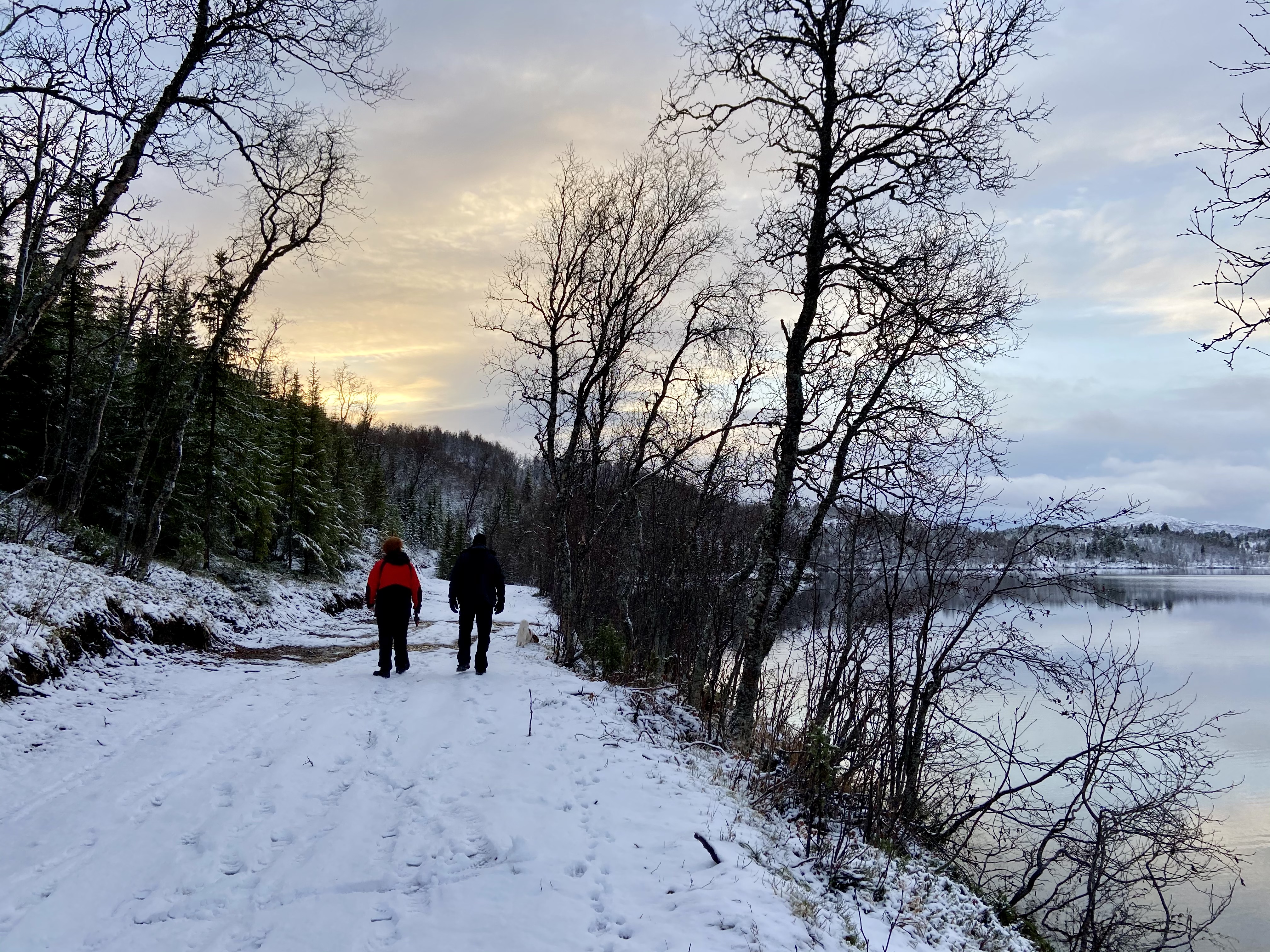
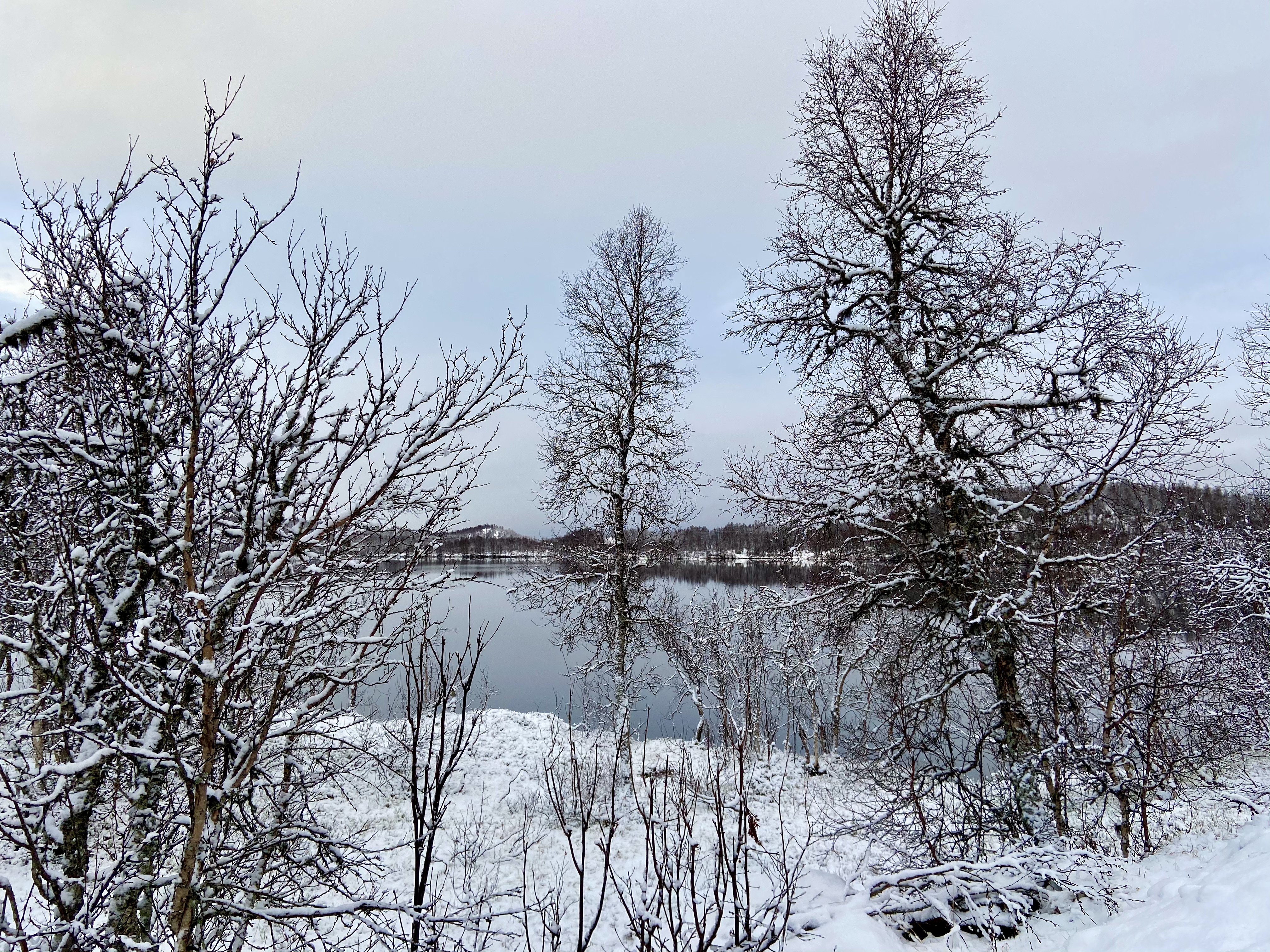
I’m sitting in my living room at three in the afternoon and it’s already dark outside, save for the streetlights on the bridge and along the shoreline across the water. The days are fast fading, but for now I am making the most of what daylight there is. It was wonderful to have a couple of days off at the beginning of the week and Charlie and I continued our exploration of local beaches and of Senja, the island that lies over the bridge from Finnsnes. The snow is coming and going, as you will see from the photos. Lots to see this week!

These photographs were taken on Sunday. This is one of our more regular haunts, though once the snow begins to lie, the track will become a ski-track. We won’t be able to walk along it until spring comes.

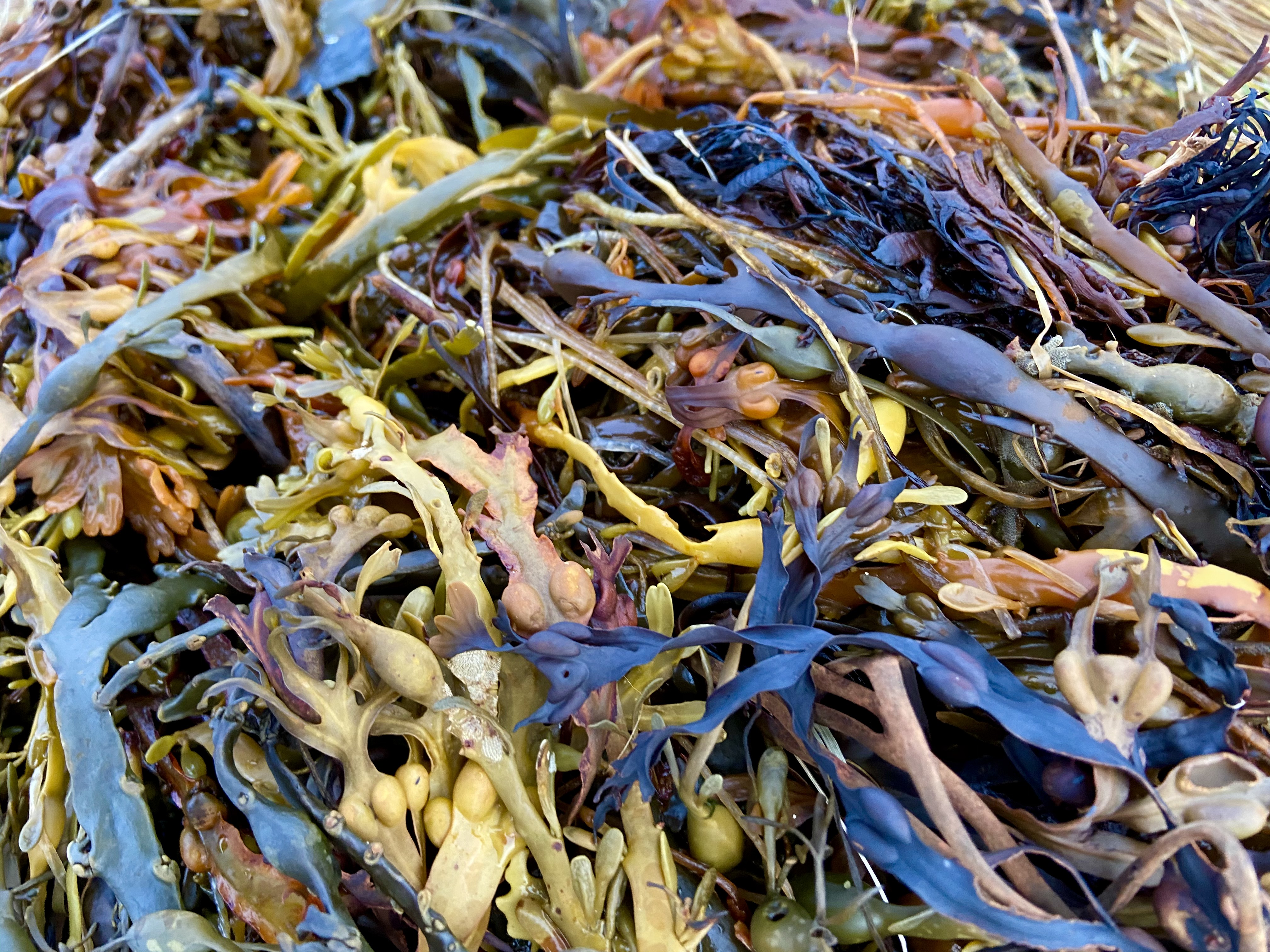
By Monday the snow was gone, and on Monday and Tuesday, we took Triar to different beaches, the first at Sørreisa (the site where you can light fires under shelter that I have written about before) and the next day on Senja near Vangsvik.

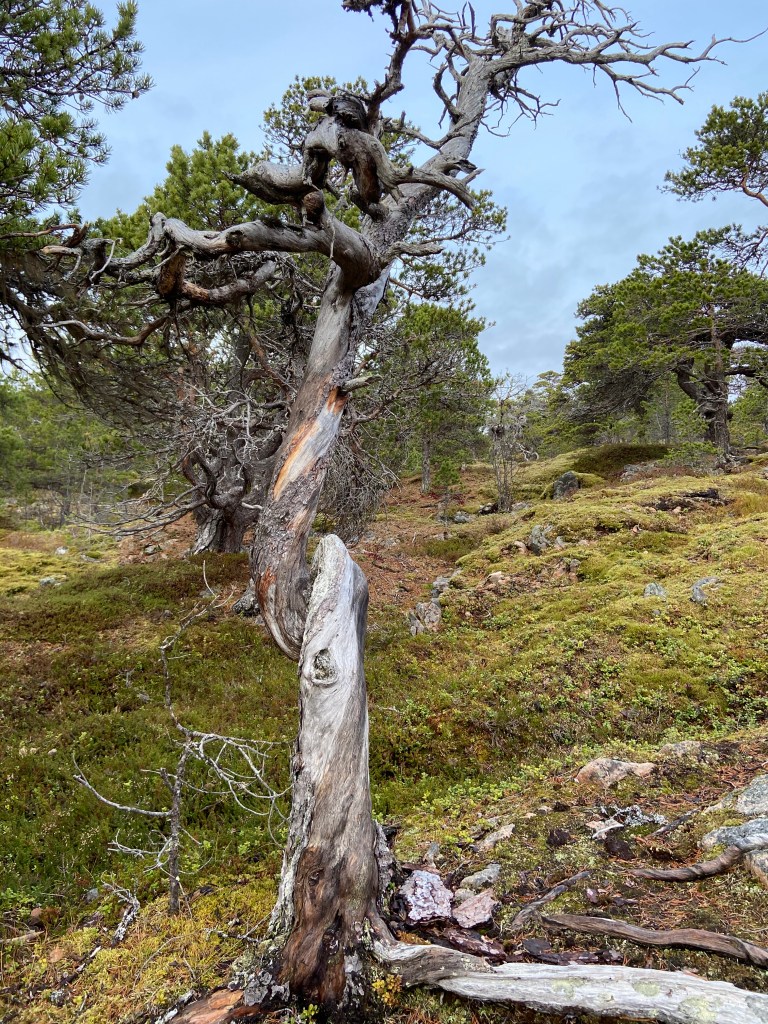
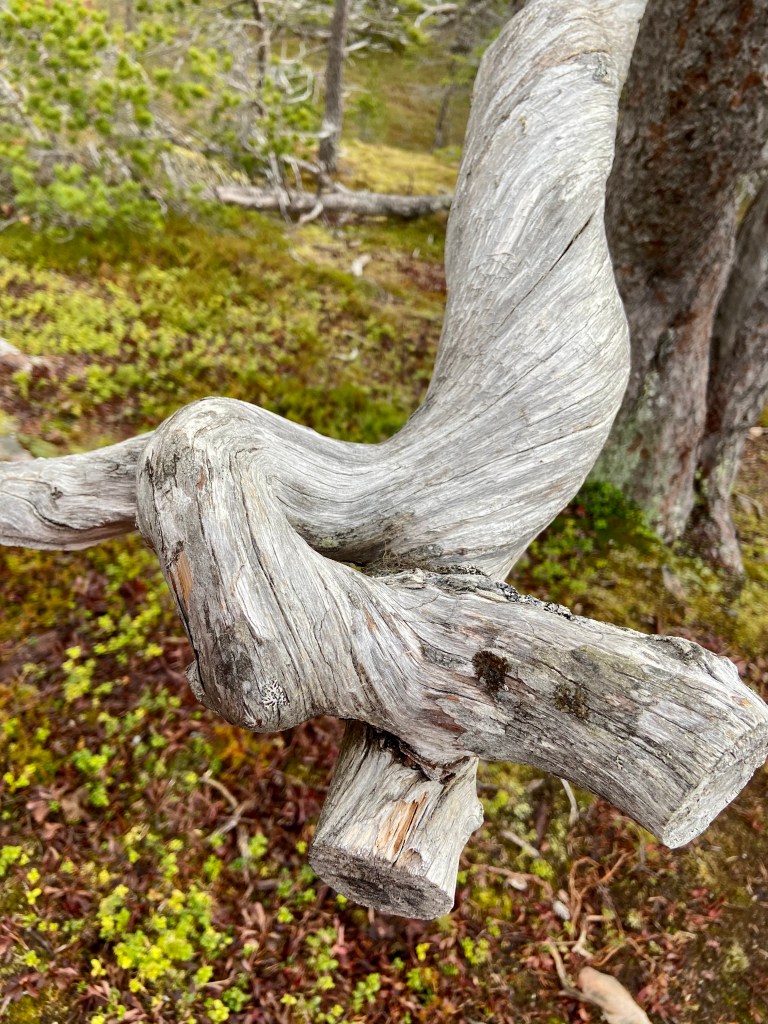
There were more fir trees as we walked down to the tiny beach at the southern end of Senja and it struck me that, twisted and stunted as they are, they remind me of bonsai trees. Not that they are anywhere near so small, but their growth is surely limited by the shallowness of the soil and the long, long winters.

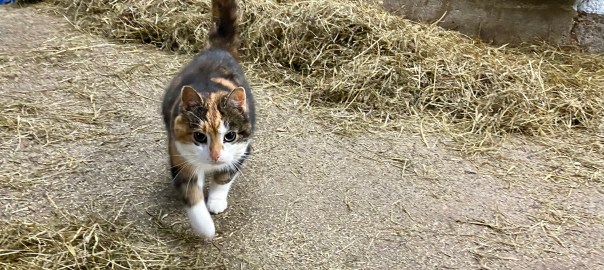
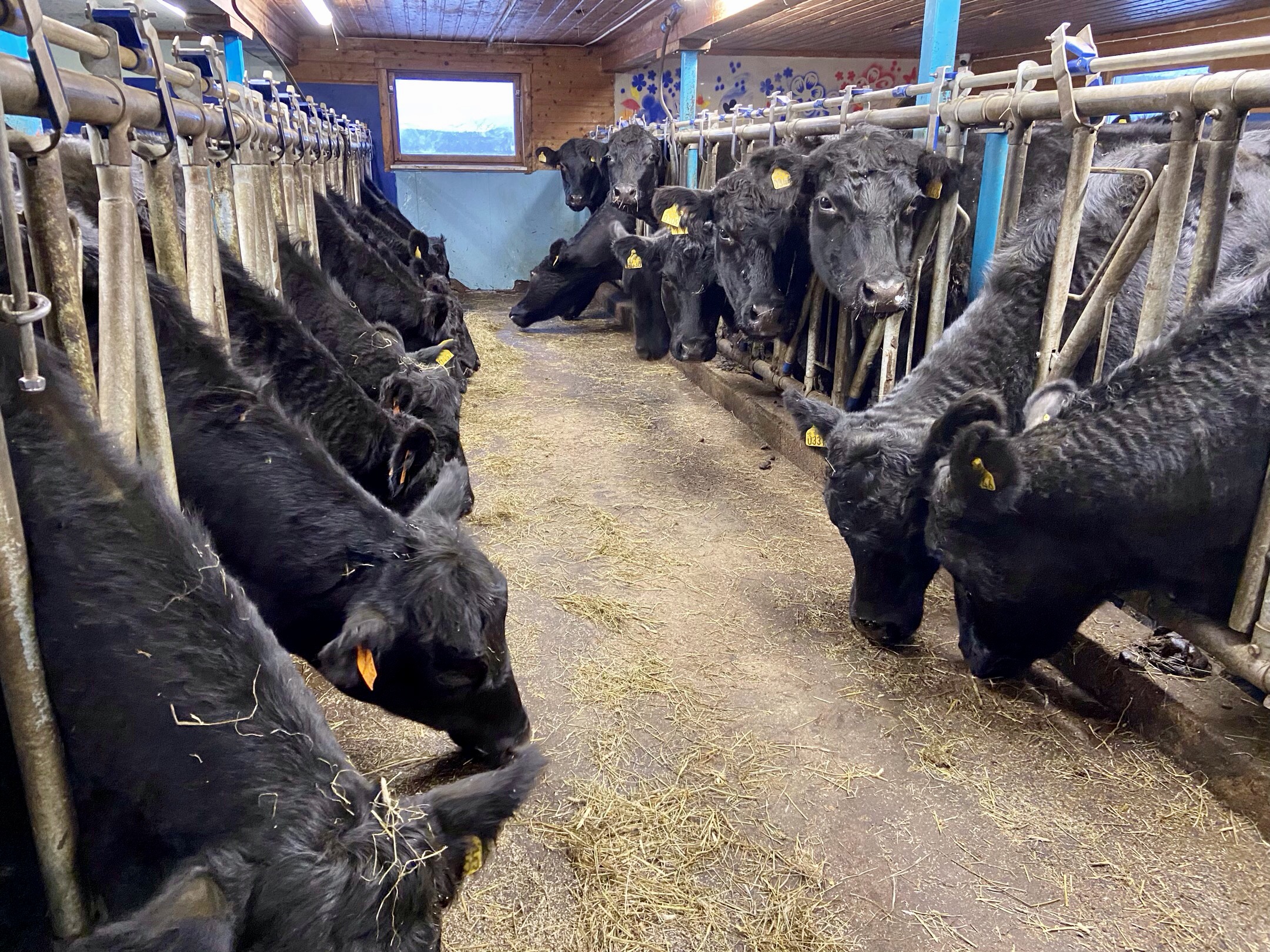
I returned to work on Wednesday and was delighted to be invited out on a farm visit. Both Ammar and Thomas had compiled lists of possible farms to collect samples for the OK Program. The OK Program is an official project, carried out annually, where various samples are taken from different animals or herds to check for contamination. This can be in the form of heavy metals, which can be present in the soil in certain areas, antibiotics which might have entered the food chain, radioactivity, or infections such as MRSA or salmonella. Some of the materials are collected at the slaughterhouse, but we were looking for urine and milk samples. In the end, we visited four farms. One had no milk because the tanker had already collected it (and a herd sample was needed, rather than one from a single animal) and on another, there was no farmer to be found. But the other two were more productive. One had milk in the tank still. The other was the best for me. We had to collect a urine sample, and for that, we had to go and stand behind a row of cows in a byre and wait until one of the cows obliged. They were lovely cows – a little herd of Aberdeen Angus cattle that would have been equally at home in Scotland. They looked healthy and well fed and the farmer very generously let me take a couple of photos (including the sweet little cat at the top of the page).

And so I carried out my first farm visit in the north of Norway. Here’s hoping there will be many, many more!

Killing Time

Sunrise/sunset: 04:57 / 20:37. Daylength: 15hr 40min.

On Monday, Hilde drove me over to the abattoir where I will be spending a good chunk of my working days over the next few weeks. With the short summer and long, hard winter, most of the spring lambs will be brought in before it’s time for the remaining animals to be moved into their winter housing. Vets play an essential part in the process. The health of the animals must be checked before they are humanely killed and the welfare and conditions are carefully monitored.

Afterwards, a team of vets and technicians inspect the meat to check whether it is fit for consumption. This is another chance to check health and welfare. All the information from the checks, both ante and post mortem, is recorded. Nobody could claim it’s glamorous work, but as well as ensuring the animals are treated well in the abattoir, the findings are used to assess whether there might be problems on the farms where the animals were raised. If the animals are too thin, have overgrown feet, or show significant signs of illness, then a message is sent back to the local Mattilsynet office, where their vets will contact the farmer and take measures to improve the situation.

On Monday’s visit I was fitted out with a uniform, boots, a locker and a card to open the door. Hilde brought cake again, and I met a few of the staff.

On Tuesday I drove through again with Thomas. I had met him on my first day at work and he seemed friendly, but I hadn’t seen him since. Now he was to give me my first taste in working in an abattoir in northern Norway.

For my part, I was most interested in the inspection of the live animals. It is hard to spend much time on the internet without seeing horror stories, but my impression over the course of the first week has been that most of the animals coming through are very relaxed. Though the pigs all had balls in their pens to play with, most of them were sleeping when we went to see them. Some of the sheep were more skittish than others, but many of them came and were nibbling on my wellington boots. All animals have fresh water in their pens and any cows that are milking are milked if they are in for any length of time. The surroundings are quite similar to those you’d see on the farm and most farms here in Norway are small, so a lot of the animals are used to being handled.

The slaughter process itself was quick and efficient. Thomas showed me how to time the interval between stunning and bleeding. With the cattle, we checked the animal was unconscious before being moved on to the next stage.

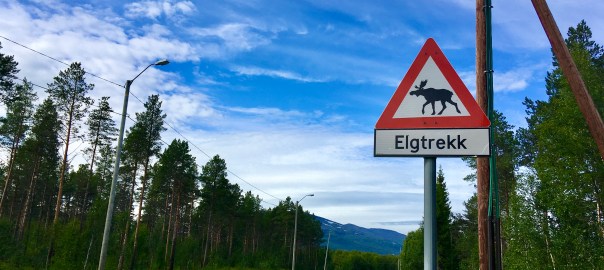
It’s a forty minute drive to get to the abattoir and the road is dotted with warning signs for moose. Thomas told me I would see more of them in the winter, though for now they are elusive. The filling station near the E6 has leaflets explaining what to do and who to call if you hit one. I hope it never happens to me, though it is possible I might be called out to do meat inspection on those too if they are injured and have to be shot.

It’s cooling towards autumn now. It was 4°C when I arrived at work yesterday morning. Though the trees are still clinging to their leaves, they are beginning to fade. The ground flora is wonderfully colourful and intensifying as a multitude of berries appear.

There was only one near miss with technology this week. Thomas handed me over to Ammar on Wednesday and he suggested some reading material. The season (as they call it) will begin very soon, and by then I have to be up to speed with meat inspection for lamb. Back in the office, I had chosen a pin code for the printer. You send your file, retrieve it and then put in your number. I assumed the process was the same in the abattoir, and so I went through the retrieval process and began to put in my four figure number. Luckily Ammar stopped me in time, before I set the printer in action printing out *9250 copies of an eight page document on red meat.

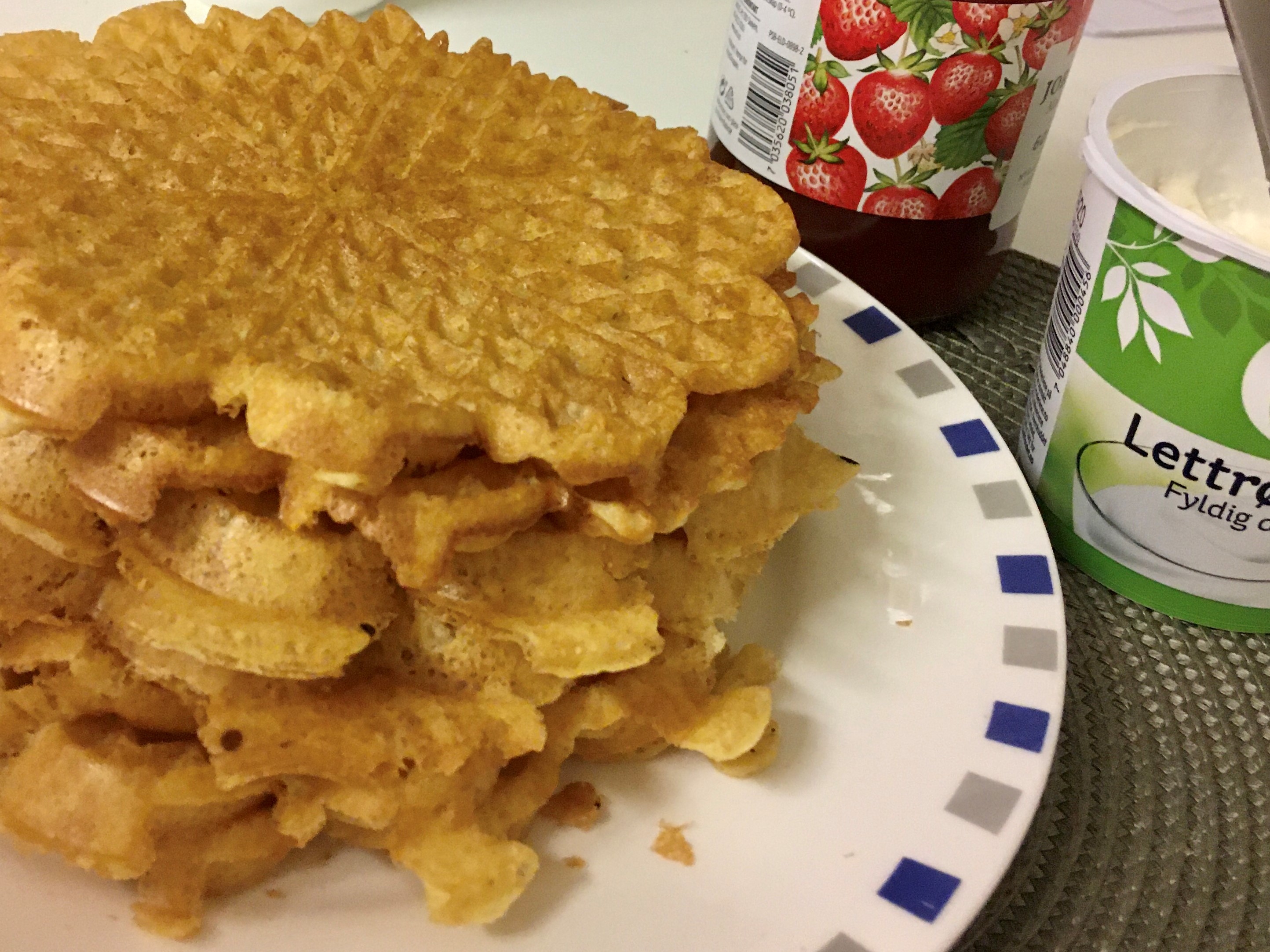
Friday afternoon was rounded off with waffles. In Norway they are traditionally eaten with strawberry jam and soured cream. It took me a while to get used to this combination, but now I love it. And what could be more Norwegian than a mountain of waffles to round off the week?

*Not my actual PIN.

Case Files

Although Summer at Hope Meadows is a novel set in a veterinary practice (as opposed to a novel about a veterinary practice) it was important to me that the background was believable. I have noticed that even writers who are known for thorough research often get small details wrong. For those without a veterinary background, it might not be obvious, but for me those errors leap out.

In addition, anyone who has worked full time in mixed practice will know the job is an integral part of life. It would never be far away from the story. I have tried to reflect that reality throughout the book, though there were times when Mandy definitely had more freedom than the average young veterinary assistant. For those reading this in other parts of the world, veterinary assistant is the normal term for a salaried veterinary surgeon in UK practice.

However, the set-up is unusual, in that they are practising in a family setting. I suspect the lines between who was on call, and who would attend cases out of hours could be blurred. They are living in the same house. It’s conceivable there would be more give and take if one of them felt unwell or had an excessive amount of work coming in.

There were a whole host of different cases I had to describe, from an aural haematoma in a cat, to a back-breaking session finding an abscess in a cow’s foot. One thing I found difficult was to find the balance of expertise. Mandy has been qualified for only a year. I didn’t want to make her unrealistically experienced, but nor could she come across as ignorant.

I blurred the lines a little, by giving her some specialist knowledge. For two years working in Norway, I spent a lot of time in theatre, working as an anaesthetist. When Mandy is faced with an awkward client and a difficult case, I wanted to give her the tools to prove herself. So I added the information that she had an interest in anaesthesia. She proves herself in style…. and for that I must give thanks to the wonderful Veterinary Anesthesia Nerds group on Facebook!

One of the joys of fiction over real life is that I can go back and change what happened earlier. Recently, faced with a situation where Mandy literally had her hands full, I was able to go back to an earlier scene and slip the tools she needed for the job into her pocket when she was leaving the car.

The second book is set even more firmly in mixed practice. I have asked for the third to be set at lambing time and they have agreed. (Hooray!) There is the slight complication that I haven’t worked in mixed practice since 1999. During my years in emergency and critical care, I saw only one lamb. Other than that, the nearest thing to a large animal was the Scottish Deerhound I once saw with a neck injury.

Luckily I have friends who still work in the kind of rural practice that Animal Ark represents. It’s important because working in Norway is really quite different. I am no longer up to date with what is permitted and what is common. Perhaps, some time soon, I will make the time to go and see practice with one of them. Any excuse to get my arm up a cow’s arse should be grasped firmly. Even if it is done with only one hand.

Have a great weekend.

Thanks to Jan-Arne Hagen for the photo