Category Archives: Scotland

Lights in the Darkness

It’s nice to start the weekend with something amusing. Last night, I sent a selfie to Yoana, my son John’s partner. Last Christmas, she gave me a headband that she had knitted herself. I was touched. Homemade gifts are precious. It’s been a while since the weather has been suitable for a knitted headband, but one frosty morning last week, I put it on to keep my ears warm when I was walking Triar. I don’t normally take selfies. Too old perhaps, and anyway I’ve always been curiously preoccupied with photographing scenery rather than people. Anyway, I took a photo of me in the headband and sent it to Yoana with the caption, “Warm ears on a chilly day!”.

I woke this morning to a message, “Thank you. Wish the same for you.” I was slightly surprised. It wasn’t quite the response I was expecting, but having lived in Norway for a long time, I’m used to conversations which didn’t quite go where they would have with a fellow native Brit. I was happy just to hear from her.

A couple of hours later, a new message arrived. “Just showed it to John and he mentioned the headband which I didn’t notice!” A laugh emoji followed. I found myself picturing the scene: Yoana maybe unsure of my original message. An odd sentiment about warm ears? Rather a strange thing to mention? I’ll check with John.

And maybe John… my mum sent a selfie? Odd!

Then of course, the revelation that it wasn’t a selfie per se, rather a thank you for an appreciated gift, and it all makes sense. She and I were both amused. It was a good start to the morning. I took photos other than my selfie. It was a gorgeous sunrise over the frosty ground.

More than a morning, more than a weekend, this is the start of a two week holiday. I’m here until Tuesday, then I’m off for a week of Polar Night. Sometimes there’s a dull warm period up there at the start of December. I’m hoping for snow on the ground, sub zero temperatures and clear skies (with some Northern Lights as a massive bonus) but even if it’s wet, I get to spend time with friends. My friend Shirley was concerned it might not be good weather, but when I suggest we could stay inside, bake and cook all week, watch TV and maybe write, she agreed this was a wonderful plan. Really, I’m going to see her Nothern Norway is just the world’s best bonus!

The photo at the top of the page is of the Nith as it runs under the Devorgilla Bridge in the centre of Dumfries. I was out last night for a low-alcohol beer with a friend and was struck by how lovely the water was, with the lights shining out in the darkness. It felt like a good start to a winter holiday. Tomorrow I’m joining some colleagues in Glasgow. A group of female APHA vets, we’re going to an escape room as our Christmas Day out. There are no trains to Glasgow on a Sunday morning, either from Dumfries or Lockerbie, so I’m about to find out what the bus service is like. Hopefully on time, as well as relatively cheap!

I have a decorator coming this evening to look at my building project. Hopefully he’s going to tackle the complications of partially removed lining paper on (probably) lath and plaster on my stairwell. He’s unlikely to do the work before Christmas, but I am eyeing up carpets and thinking I might be able to get the bedrooms finally in order. There are buried clothes in my bedroom which I haven’t seen now for over a year. Getting them out (and putting them away in actual drawers) will be a novelty after a year where my clean clothes are piled on a table and there are four beds, a pile of boxes and no other useful furniture in the room where I sleep.

Anyway, December is almost here. For anyone who hasn’t seen my photo Arctic Advent calendar, you can find it here: Arctic Advent

As for me, I’m off there shortly to make some new Arctic memories. I shall leave you with more frosty morning pictures. Have a good week all and thanks for reading.

The Nights are (Fair) Drawing In

It’s starting to feel quite wintery outside, though really it’s still late autumn. I’m in Yorkshire again and there are still a few leaves clinging to the trees, though there are more on the ground.

While that leaf reminded me of flames (next project must be to get some kind of cosy fire in my house) most are shades of brown. Triar has started a new game where instead of pooing on grass, he’s choosing piles of leaves. As anyone who’s ever tried to spot doggy doo among a pile of leaves will testify, it’s quite a challenging game!

While I am trying to keep up my 7,500 steps a day (thank you WalkFit) the darkening evenings and wet weather are making it tougher. There’s mud now down Blackbird Lane and anyway, it’s too dark down there at night for it to be enjoyable, so though we still go there in the mornings, evening finds us walking the damp streets, admiring the foggy drizzle as we walk through pools of light from the street lights. Soon, of course, there will be Christmas lights to offer more colour in the darkness, but despite the best efforts of the shops, the Christmas spirit hasn’t quite descended yet.

That said, I did watch Harry Potter and the Philosopher’s Stone last weekend. It’s one of my annual Christmas pilgrimages and it takes time to watch all seven films. I’m also in a mood to get the last seven chapters of my novel finished. It’s set in the lead up to Christmas and definitely easier to write when the evenings are long and the mood is upon me. I’ve been writing it for years and have considered abandoning it, but I’m so far through that it seems daft not to complete it. Then maybe I can put it behind me and start something else.

It feels odd to me that Bonfire Night has been and gone, leaving barely a mark. I did hear fireworks now and then. There was a spent rocket in Blackbird Lane the other morning, but it was always such a big part of my childhood that it seems very muted now. I guess I was lucky growing up. My dad loved bonfires and fireworks weren’t frowned upon as they seem to be now. But with the build up to Christmas getting earlier, it does feel like the autumn celebrations of Halloween and Guy Fawkes now feel like they are merging into some kind of early winter celebration. Instead of seeing notices for a local fireworks display around 5th November, then Christmas lights being switched on in early December, I’m seeing mid-November dates for the lights.

Maybe I’m just getting old. The neighbour’s children certainly went out Trick or Treating. I took them some sweets round and was rewarded by the neighbour clipping the top of my too-tall to reach hedge from the roof of his shed. I have no idea if those things were related, but it felt like it to me.

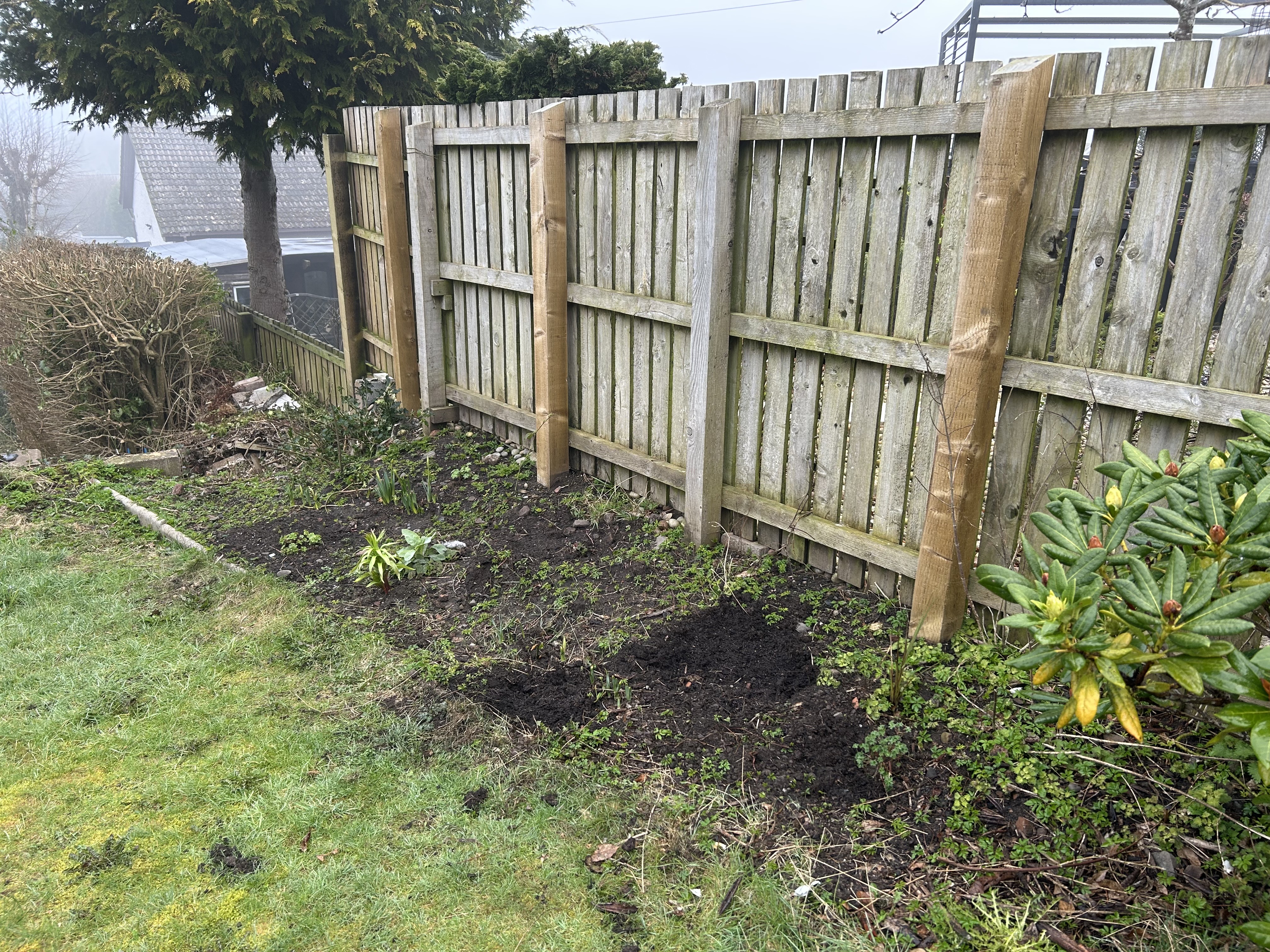
Project garden is moving slowly. The top part now looks neatish, with the exception of a flowerbed that is still choked with ground elder. I’ve planted most of the bulbs I bought with Valerie and have filled my brown bin each fortnight with hedge clippings. The bin service stops through the winter so there’s only one more to go this year. Next weekend, I’ll try to get more hedges cut. At least the growth is slowing down, so anything I do will be easy to keep under control until spring.

For now though, I’d better get up and take Triar out. Those 7,500 steps are not going to walk themselves. I will leave you with some photos taken last Sunday, driving back to Dumfries from Lochmaben. Amazing how the light changes, depending on the weather and the direction of the sunlight.

Hope you have a good week and thanks for reading.

Return of the Rampaging Pigs

Disclaimer: the pig picture above belongs to a friend and is not part of my case.

Looking back at this post from last year it’s kind of odd to see how little has changed in terms of my workplace, workload and colleagues. The reason I was reading it was because this week, on top of my TB case, the aftermath of Thursday’s report case, big welfare in transport investigation and a couple of routine inspections done or due, the marauding pigs have made a return. It’s been posted on Facebook and the local news, so I guess I can say that these pigs are now causing a significant hazard on the A76. Last year, it appeared the situation was back under control but (as with many other welfare situations) it has spiraled again.

It’s not that surprising. During my three years in Norway, it became obvious that most farmers are doing a great job and that almost all the problems we have to deal with stem from a few people, a few of whom are genuinely bad or ignorant, but most of whom are struggling with life, one way or another. Lots of people have a dream where they run a successful business, keeping animals. The reality is that doing so involves a huge amount of hard graft and a steely mind that can cope when catastrophe hits. Farming is a tough business. To quote James Herriot, ‘I was beginning to learn about the farmers and what I found I liked. They had a toughness and a philosophical attitude which was new to me. Misfortunes which would make the city dweller want to bang his head against a wall were shrugged off with “Aye, well, these things happen.”‘

Anyway, Tuesday was a bit sad as one of the poor pigs was hit by a lorry. The end of the week was filled with meetings and multi-agency planning to find a solution that will last. Otherwise, we’re going to be dealing with ongoing problems for years to come.

A lot of what we do involves fighting against the system. These welfare issues are typical – we have to make sure we give people the chance to rectify problems themselves, when the reality is they are only in that place because they aren’t coping. There’s little we can offer in terms of support and neither advice nor penalties really help. After almost two years though, I have a reasonable grasp on many of the tasks I’m handling and what I can actually do. I have a network of contacts, both local and national, who can be relied on to get things done, which makes all the difference.

In other good news, after waiting since May for a non-appearing plumber, I contacted a different plumber from my street, who came the same evening and started work the next day. I now have a functioning shower and toilet upstairs and the rusty and unusable shower over the bath downstairs has now been replaced. So now, after more than a year without a shower, I have two. Still plastering and decorating to go, but it feels like the end is now in sight for my room-in-roof insulation project.

On Thursday, we had the first frost of the year. Less spectacular than the Arctic frosts that could go on for weeks, building huge ice-crystals, frost here still adds a new layer of beauty to the small things. I do love proper winter weather.

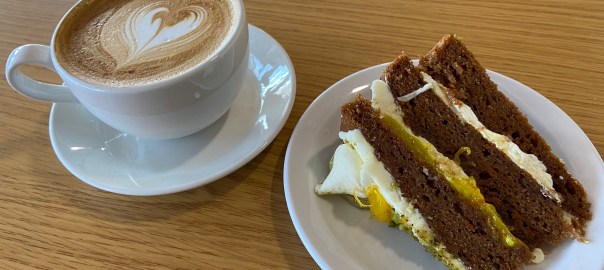
I’m tired after a busy couple of weeks at work, but there’s not much I need to do this weekend. I have a shoebox from the church that I need to fill with Christmas gifts for (I think) refugees somewhere, so I shall take a wander to the shops this morning to get that filled. I may stop for a coffee and a slice of gingerbread cake at the garden centre. Other than that, it looks a bit stormy outside, so I intend to spend some time in front of the TV. It’s almost time to start my Harry Potter Christmas marathon, so that might be on the agenda. In the meantime, I will leave you with some photographs I took last weekend, over towards Wigtown. It’s a beautiful part of the country. Thanks for reading and hope you have a great week.

Other People’s Disasters: A Masterclass in Stress

This week has felt very long. Monday was spent catching up on work from last week. Tuesday, I was out on a welfare visit. I haven’t done so many of those lately as our regional vet team are so overstretched that my line-manager is withholding all but the most urgent work. I enjoyed it. It was a well-run dairy farm (the picture at the top of the page is unrelated) which I always find reassuring. We get a few awful welfare visits, but most of the time I find dedicated farmers who concentrate on welfare as part of their routine work. The reality is that animals that are treated well are more productive, which I’m sure has a bearing, but generally they care about the animals they look after.

Wednesday there was a monthly team meeting, and the first in a series of mandatory meetings for the vet team. As I said above, our regional team is struggling. This is straightforwardly as a result of understaffing. We should have a team of ten vets and right now, we have the equivalent of five fully functional vets. Wages for a Senior Veterinary Inspector are not high in comparison with other vet jobs and South West Scotland is the busiest region. Sometimes people come into our team, train for a while, feel the weight and then leave. They go to other jobs, or to different areas, where there is less work. Anyway, at the meeting, a colleague led by saying she wasn’t even able now to work through her emails as they come in. This rang a bell with me. I look through mine and pin the ones I have to deal with at the top of the page. There used to be around five there at any time. Now they’re off the page.

They don’t really have any solutions and I don’t blame my line manager. He is doing all he can to protect us, but only dealing with the most urgent work means that the work we are doing is often heavy or very much time-constrained. If there are horses arriving in the airport, we can’t say, “I’ll handle that tomorrow.” We have to handle the TB cases because if we don’t, there will be more.

The only reason I had the nice welfare visit was because my line manager was away. Those standing in for him seem unable to bear the weight he does, so while he’s away, the welfare visits get distributed and we get pushed to take on other work. We did an Emotional Intelligence training day a while back, where they set us tasks and pushed us to complete them faster. Some of them involved throwing things to each other. The people running it seemed quite impressed that none of the team criticized anyone who slowed us down, by fumbling a catch or throwing badly. I commented, in a wry voice, that we were so used to missing our targets that nobody was going to be uptight about not getting the fastest time in a throwing game. Everyone laughed, but the reality is that working constantly under pressure means that we do understand what is important and we do have quite a forgiving core team.

On Thursday, I thought that I might finally finish and send off my witness statement from the Farm of Doom case, which I last visited back in April. I haven’t been responsible for all the delays on that one. My Local Authority colleague took an age to come back to me with the photographs for numbering, so I couldn’t finish my statement without them. I thought I was more or less done, then sent my work to one of the ex-police Enforcement Officers, who told me I had to be explicit in stating that I took each photo and what it shows. As there are a lot of photos, I was only about halfway through this task and Thursday lunch time was approaching when my line manager rang.

I answered, feeling quite sanguine as I generally do when I finally get the time to complete overdue paperwork. He said, “Sarah, can you start to prepare for a report case please?” The bottom fell out of my day. Thursday afternoon and Friday, when I had planned to get through All the Things, including the almost finished paperwork from Tuesday’s welfare, updating my TB case and writing a long-postponed talk I’m supposed to be giving on deer were immediately thrown out of the window. A report case would take up the whole of the next two days. “What kind of report case?” I asked. “AI,” he replied. Avian Influenza. Mentally, I cast aside my planned quiet days and started to prepare for the onslaught.

When I go on holiday, and especially when flying, there’s a bit of a tense period before setting off. Making sure I have everything I’ll need creates a bit of tension. Obviously, I can buy new underwear, but if I forget my passport or my phone, with its electronic ticket information, and maybe the phone charger, then life would become more complicated. I usually relax once I’m through airport security. Beyond that gate, anything that goes wrong will be dealt with.

It’s a bit similar for me with a report case. Before I set off, I need to make sure I have everything in my car that I might require for my disease investigation. All the right paperwork, all the right kit. Throw on top of there the knowledge that I might not make it home that night, so I have to make sure Triar’s needs are covered too, and you get the picture. Having been “officially informed” that I am the attending vet, I have half an hour before I’m meant to be on my way. The reality is that we usually get this pre-warning and the official time is so vague that I have trouble filling in the form the next day. There’s no chance of getting out of the door in half an hour.

Anyway, that prep time, as with the airport planning, is always the worst bit for me. Once I’m in the car and on my way, my mind settles and I am committed. There’s no point in worrying about my other cases or whether I’ve forgotten anything. The next few hours, I have one task only, which is to assess whether there is notifiable disease on the farm or not. This time, I was driving out west. I hadn’t had lunch, so I stopped in a roadside shop for a filled roll. While I was stopped, I saw a message from Donna, saying she would take Triar out (and possibly in overnight). Another weight off my mind.

I’m writing all this as if I’m an old hand, but in reality, this was only my third real report case. It was the second bird flu report case in our region this week. The other farm would still be under restrictions because, after testing, the final all-clear for bird flu takes about a week to come through, but initial results suggested that one was negative. My farm, the one I was heading for, was a laying unit, producing eggs. There were, in total, 180,000 birds on three sites. 80 birds had died overnight in one of the sheds. My job was to go in, take a detailed history, examine both live and dead birds, and then decide whether we need to test for bird flu.

If you’re wondering about now, “well why don’t they just go and test them and see?” the answer is because notifiable diseases are only notifiable because they present a risk. The risk might be economic, for example it might mean animals can’t be sold to other countries because of trade agreements. Scotland is fighting to keep its Bluetongue status as “Free of Disease” because that means more international markets are open to them. Most though, have an animal welfare or human risk aspect. If foot and mouth spreads out of control, as it did in 2001, there is a massive animal welfare issue, as well as a huge economic cost to farming and to the UK. Bird flu presents a risk to human health, as well as a significant welfare impact on the infected birds. Both spread like norovirus through a scout camp, so as soon as there is suspicion of disease, the farm is locked down. The first thing I do, on arrival at the farm, is to serve official papers, confirming the verbal restrictions they were told when they called us.

And when I say locked down, I mean just that. Bird flu spreads easily, so it’s not only birds and animals that can’t move off. People aren’t allowed on or off. Vehicles too. Any movement, from that moment, until the restrictions are lifted, has to be made under a licence. If I can’t rule out disease and we go for testing, this farm is going to be locked down for a week. If I decide this isn’t bird flu, they can open up again this evening. This is an egg producing farm, with 180,000 birds, each laying an egg daily. Eggs can carry bird flu. A week’s worth of eggs… well you get the picture.

I need to be calm when I arrive on the farm. If this day is stressful for me, then think about what the farmer is going through. His or her animals and a chunk of his or her livelihood are on the line. They need me to guide them through this so I want them to have confidence. I bless my years in general practice out of hours and in the emergency clinic. I’ve been dealing with other people’s disasters since I was 23. (As an aside, I love the company of old vets for exactly that reason. Many new vets never do out of hours. It’s not good for the profession.)

My Animal Health Officer (AHO) who will take the samples today, if we sample, is F. She’s even newer than me. My first bird-flu case was hers too, but that time we had an experienced AHO with us. This time, it’s just us. She’s holding up well and was out of her car before me. Deep breath. Grab all the paperwork. I open the car door, climb out, and greet the farmer as if I’ve done this a thousand times before and it’s all routine. Explain who I am: what we’re going to do. There will be a lot of paperwork. Hundreds of questions. Better they know what we’re in for, because they are about to be grilled on all their daily routines, their biosecurity arrangements, who has been on and off the farm in the last 21 days, what has gone to plan, what has happened that was different.

We go into the house. The first thing I do is plug in my phone. I used it to guide me here and later, I have to document everything with photographs. The first time I did this, a few months back, I plugged in my phone, but forgot the switch on the socket. Nobody’s perfect! This time I throw the switch. Then we get down to it, at the kitchen table. I ask them questions. They answer, in detail and at high speed. I’m writing it all down. There is no chance all the information will go into my head and stay there. Several times, I have to ask them to repeat, because they are three facts ahead and I’m still noting down fact 1.

I have to guide the conversation, but it’s difficult. It’s already three in the afternoon and I am mindful of the remaining daylight. We don’t want to be sampling in darkness. I need to drill into the core history. What did they notice first? When? How might disease have been introduced? Where are the weak points in their defences? Are there other possible causes? I’m also vaguely aware that tomorrow, I will be filling in a form which is going to ask me for details which may not be relevant here. I try to balance the depth, get enough information, disregard the unimportant.

Finally, I feel I have enough information. I stand up and go to my phone. Calling my veterinary advisor is the next step. I have to refer the history I’ve gathered to check it’s enough. Because the interview had hopped about a bit, it was difficult to find the information. I have three of four A4 pages, densely written. She asks a few more questions and I have her on speaker, so the farmer answers. It’s time to go and look at the birds.

There are eleven sheds in total, but the dead birds were mostly from shed X. A second shed (Y) has had reduced egg production for a couple of weeks. These two sheds are linked. With plenty of time, I might visit several sheds. If bird flu is confirmed, we will need GPS coordinates for all eleven. I suggest visiting one of the healthy sheds first, then egg-drop Y, then dead birds X. Time is so short though, that after a couple of minutes of discussion, we cut it down to sheds Y, then X which are at Site C. Taking the possibly infected shed last is good practice. I don’t want to infect any sheds that are still clean, though if it is bird flu, every single bird will be dead within the week.

I have a ton of gear to take to the shed and we’re driving down. Two layers of disposable overalls, two layers of gloves. Foot coverings for going into the shed. Breathing hood and filters. Post mortem kit. Sharp safe. Phone, inside a plastic bag. I forget my thermometer. Nobody’s perfect!

I take a photo of the door of Site C and a GPS reading, which I screenshot. If the case goes live, this reading will define the 3km Protection Zone and the 10km Surveillance Zone.

Their biosecurity is reassuring. They ask me to change footwear as I go in, but I decline. All these layers of kit are there to protect me from infection and if I take my wellies off and put their footwear on, I’m compromising that. I disinfect my clean wellies and put on the boot protectors, hoping for the best. Worst case scenario, they don’t have bird flu and I take it in. Oh well.

To get to shed Y, we pass the end of shed X. They have shared air space. There’s a pile of dead birds outside shed X and I cast a glance at them as we walk by, but nothing leaps out. I look in at shed Y through the wire mesh. There are no dead birds visible in the shed. It’s a high rise layer unit with birds on perches right up to the roof. Seeing me in all my get-up all the birds on the floor skedaddle for the high-rise perches or away to the other end of the pen. They look healthy enough.

I don’t go in. It’s time to walk through shed X.

I go in on my own. The birds get alarmed if two people go in together, the farm manager tells me. I think this weird creature with the noisy hood on her head will alarm them anyway, but I don’t say anything. The birds in this shed are as flighty as those in shed Y. It doesn’t matter a fig that I forgot my thermometer. There is not a chance we will be catching any of these birds. I can only see them as they run and climb, and then at a distance, but the view is reassuring. None are lame. No lethargic clumps of sick looking birds. Their tails are up, their feathers smooth. Eyes bright. They stare at me in distant disapproval, but none of them are sneezing.

My mind is fizzing as I walk. Surely, with bird flu, there would be sick birds? Probably dead birds too. These are some of the healthiest birds I’ve ever seen. They can certainly run!

I walk the length of the shed. It’s a well-managed unit. Nice dry litter. Plenty of space. The birds can usually go outside, but today they too are locked down. I walk back, through the pens, taking a few pictures with my plastic-wrapped phone. It’s time to post-mortem some birds. I haven’t seen anything in the shed to suggest there is bird flu, but I still can’t definitively rule it out. We’ve had 80 dead birds overnight and I need to be sure.

I take a look again at the pile of dead birds. With bird flu, I might see swollen heads, deep blue wattles, maybe haemorrhages in the legs or diarrhoea round the cloaca. I don’t see any of those things. I select two birds and photo them. It’s not very bright here, so I ask the farm manager if he has a light. He fetches his head torch. I don’t want to move the birds from where they are. It will have to do.

Kneeling on the floor, I start the post-mortem. It’s a month and a half since I did my last bird PM and that was in a brightly lit lab, on a comfortable bench. Now I’m kneeling on the concrete floor, my head encased in a hood that limits my view, in semi-darkness. This PM is make or break time. I check the head, then open up the throat to look at the trachea. There’s no mucus there, no haemorrage. It’s perfectly normal and when I reach the crop at the base of the neck, it is filled with food. Whatever happened to this bird, it was eating until the moment it died. I open up the body cavity, looking for inflammation, haemorrhage or necrosis, but the only thing that looks abnormal is the liver. Normally, the liver is reddish brown throughout, but this one has brown patches. Some of patches have clear cut edges. They’re not abscesses. I worked in a chicken slaughterhouse for three years, but I’ve never seen a liver like this.

The next bird is the same. I open it up. A second mottled liver. Maybe a little fluid build up where the air-sacs would be. Maybe metabolic, I think. Very strange, but just as in the sheds, there is nothing screaming bird-flu at me. I take a few photos of my findings. It’s good to have evidence. Packing up, I edge back to my feet. It’s not so easy these days, but I make it and we leave the shed again.

Once outside, clutching my now-contaminated kit, I decide to go back up to the main holding before phoning VENDU. The Veterinary Exotic Notifiable Disease Unit give us directions what samples to take, but it’s my decision whether we need to take any at all. If I decide not to, they will challenge me to try to assess my decision, but the final choice is mine. I’ve stripped off most of my kit. If they challenge me for information I don’t have, I’ll have to go again. I decide to call my veterinary advisor before VENDU. I don’t think this is bird flu. It had not really crossed my mind, as I drove here, that I wouldn’t be testing, but with all the information I’ve gathered, I’m conflicted. For me, testing is the safe option, but it’s hammering in my head. I DON’T THINK THIS IS BIRD FLU!

I call my advisor and tell her. She asks about the livers and I describe them. She will discuss with her advisor, she says, while I call VENDU. I drop two liver photos into the chat and leave them to it. I briefly chat with the farmer. He drops it into the conversation that he has no insurance that would cover a week of lockdown. I can’t let that influence my decision either. I have to be sure.

The VENDU vet is busy, but when she calls back, it’s someone I know. This makes it easier to have that discussion, but even then, as I tell her I don’t think it’s bird flu, she wants me to be certain. I am as certain as I can be. The only thing that’s holding me back is that it’s a huge decision. If I say no testing, this farm will open up overnight. Halted eggs on lorries will be on the move again. If there are hundreds more deaths overnight, and it then goes positive, the whole thing will restart tomorrow and I will have messed up massively.

I’m almost sure. I REALLY DON’T THINK THIS IS BIRD FLU! If I lock down the farm, their own vet can’t come on and take samples for a week, even if early tests are negative. Whatever caused the egg drop and the deaths, they’ll have to live with it undiagnosed.

I can’t let that affect my decision either. I tell the VENDU vet that I am almost decided, but I want to call my advisor again. My advisor and her advisor have seen the photos. “Good pictures,” is written in the chat. I call her back and tell her I want to negate. I explain my reasoning again. “We’ve chatted,” she says, “and if you want to negate, we will back your decision fully. Even if it kicks off again, we are happy to defend your decision.”

I take a deep breath. “I don’t think this is bird flu,” I say, “I don’t want to sample.”

The farmers’ relief was palpable. They made a couple of phone calls and thanked me profusely and all the while, I hope I’ve made the right decision. I drive home and pick up Triar and in all honesty, I was high as a kite. Adrenaline has been my drug of choice for a long time and, perhaps bizarrely, I love this stuff. Still, the worry was there that it could all kick off. I didn’t get a whole lot of sleep. My phone rang when I was out walking Triar in the morning. “11 birds have died in sheds X and Y overnight,” they said. 11 out of the thousands of birds. A lot less than yesterday’s 80. I didn’t quite punch the air, but it was a good start to my Friday morning.

I’m writing this on Saturday morning. Despite negating the case, I still had to process all the paperwork and, with a few distractions, it took me all day yesterday. My advisor told me to drop the not-quite completed form into the case folder, “just in case it kicks off over the weekend,” she said. I don’t think it will, and anyway my workphone is switched on. I’m pretty sure if anything kicks off, it’s me the farmer will call first.

Monday will all be paperwork. This case created a new pile to add to that I already had. Even then, if something else comes in, I might have to drop the paperwork and run again.

And after all that, I found out that I left my phone charger on the farm and will have to go and collect it. Nobody’s perfect!

Stories and Mist

As I opened my iPad to write this, I noticed an email had come in from one of the short story competitions I entered. I was excited to enter as I was very pleased with what I had written. The competition was called Aurora and my story was set under Arctic skies. Having read the previous year’s winner and looked over a couple more, I felt less confident mine would go anywhere as they were so unlike my style, but I gave it a go anyway. Sadly, my feeling was correct and I didn’t even make the shortlist of 25.

I suspect as well, as with all writing, if I really want to win anything, I would have to do a lot more research to find a competition that suits my style (if such a thing exists). My time is limited, as is my patience for doing that. To me, good writing is good writing, but I know from past attempts to read Booker Prize winners, there are times when pretentious writing is rewarded over good. Maybe I’m just not cut out for this writing thing, but I shall plod on, because I like what I write. I really want to share my story here, but until the three competitions I’ve entered are over, I can’t.

The early part of the week was sunny, with misty mornings. I took some photos from Blackbird Lane as I love the effect, with white haze hanging over the dewy grass and shining drops glistening in the low-slung sun.

Triar and I were out early that morning as I spent the day over in Stranraer, carrying out a disease risk assessment in a new TB breakdown. In a couple of weeks time, I will be over there again, when all the animals are tested so we can find out how many other animals may be affected. It can be devastating for farmers and at this stage, we don’t know what’s coming, but I am hoping we can get it sorted out without too many losses.

The middle of the week was a bit stressful. My big investigative case and the attempts to finally complete my witness statement for the awful welfare case had to take a back seat to the two TB cases and also to training in imports of live animals. There are more horses coming into Prestwick on Tuesday and the VA in border controls was supposed to be overseeing me as I processed them. I asked her a question and she directed me to the Ops Manual, so I wasted a good two or three hours trawling through that, without finding an answer.

I discussed this phenomenon with another colleague and we both agreed, the Ops Manual on almost any given topic is so complex and sprawling, that finding anything in it, when you’re not sure which section to check, is nigh on impossible. After a year doing TB cases, I can now usually find the part I need, but with imports, I’m just setting out. In my opinion, while the Ops Manual can be great to check when you are doing a task where you know your way round, but haven’t done for six months, it’s worse than useless as a training tool.

I did eventually beg the VA to link the actual documents I should read. I really don’t have time for trawling. The most useful document she sent was actually not in the Ops Manual at all, but in a much clearer document, specifically about procedures at Prestwick, written by the previous Border Controls VA. Having read that, I felt much more confident.

But on Thursday evening, Mum rang. Dad wasn’t particularly well and had seen a consultant about his heart. She was worried he might need to go to hospital to get some fluid drained, presumably from his chest. Whether that would be needed depended on a new prescription he’d been given and whether that worked. This all sounded worrying, so on Friday morning, I spoke to my line manager who said I should come down to help. Working for the civil service isn’t particularly well paid at the moment and there are a lot of problems, but they are still great about giving time to carers when it’s needed.

So I won’t be going to Prestwick after all as I will work down here in Yorkshire until I go on holiday, next Wednesday. Dad’s prescription seems to be helping, which is a relief, but there’s a lot of get sorted out, so I am very relieved to be here. I can work from here and have permission to do that, but can do other things in between. While I am building a great life in Dumfries, I do sometimes wish I had got the job in Skipton I originally applied for.

Autumn is fast setting in with storms and rain, but Blackbird Lane was lovely this week, so I will end with a couple of pictures from yesterday morning, when I was trying to work out what to do and took to send to my parents while I did. Next weekend, all being well, I shall be in Brighton,so I’m not sure how the Wi-Fi will be. This website doesn’t function well for writing and uploading photos when it’s limited, but I will update when I can. Thank you for reading and have a lovely weekend.

Hot Drinks and Spiders’ Webs

I had a wonderful weekend in Central Scotland. The forecast rain warning had moved south by Saturday morning, so rather than huddling indoors, Valerie and I went shopping. I have been looking at my hedges for some time, knowing I have to trim them, but in recent weeks (since bird nesting was definitely past) they have been so wet that the idea of tackling them with a plugged-in electrical hedge trimmer seemed risky. Having finally got myself a garden waste bin, I wanted to fill it, before the service stops for winter, so with that in mind, I bought a battery powered trimmer. I had been hoping for a long-handled version (tall hedges, shortish human being) but didn’t find any, so I opted for a normal one and thought I’d figure out the height issue later.

Valerie was looking for a garden box to store cushions, so we were in a number of garden centres. The end result was that, as well as the hedge trimmer, I came home with multiple packs of bulbs and a trowel as well. A dog bowl for Triar was next on my non-existent shopping list. A lovely friend from church has offered to take Triar and my current method (sprinkling food across the floor) probably isn’t very civilized. So now he has a new bowl.

Next on the list of things I didn’t really need was a scented candle advent calendar. Given that I have booked a holiday in the Arctic Wastes of Sørreisa for the first week of December. I may end up with a scented candle glut on my return, but it was only £5.99, which seemed a small price to pay. Finally, we went to a café, where I had a latte and Val had a spectacular hot chocolate, I found a Christmas present for a friend, so I bought that too. For someone who didn’t intend to buy anything, it was a great morning!

The café (and gift shop) were on a farm set against the backdrop of the Ochil Hills. The picture at the top of the page was the view from the car park. This is the view from the covered terrace where we sat.

The food sounded great too, but we’d had a massive breakfast, so we didn’t indulge. There are far too many cafés I’d really like to try in Scotland, and not enough time! Perhaps I should have pursued a life as a restaurant critic, but at 16, James Herriot’s lifestyle called me more. The fact that those days were already past, even as I set out to train, wasn’t something I had the life experience to understand.

Since I’ve come back, I have started to tidy up the garden. Different people have inspired me to try, the most obvious being Sue, whose garden I visited a few weeks back, and whose love of gardening shines through so clearly. Another, unexpectedly, is Scott with whom I do a lot of welfare work. As well as fun discussions about food, he has told me now a couple of times that he loves cutting the lawn as he enjoys the smell of freshly cut grass so much. I had always viewed it as rather boring labour, but now my lawn is (mostly) cut, I’ve realised that the answer is probably to do it often, because then it really will only take a few minutes. It’s hard labour this year because I procrastinated over doing it. Next year, I hope to make different choices. That said, I’m about to plant a load of crocuses and daffodils there, so there will be hard decisions to make about those patches!

My job is going well and that’s something I didn’t think I would ever be able to say. My line manager has acknowledged our team is in crisis, due to understaffing and has started to withhold work that he feels would be too much. I’ve no idea whether he will successfully campaign for enough staff. In the end, I think it’s pay that is the real stumbling block, alongside our district having the most animals and most of the (non-existent in Scotland) TB breakdowns. People tend to join to our team, then head off to somewhere there’s less work as soon as the opportunity arises. I’m so glad someone is fighting for us. Sickness over the summer was like watching dominoes fall.

The big case I’m handling is fascinating. I’m looking at animals that should not have been transported for reasons of health and welfare and I am liaising with useful people all over that I didn’t know existed. I have dug through ancient files and scrolled through reports and investigations and became so engrossed in it this week that when my manager tossed me a TB case on Thursday afternoon, it simply caused my mind to go blank. For a moment, TB case management was shoved so far back inside my head that I struggled to retrieve it. But retrieving it was essential, because my job is to keep the farmer informed about what he or she has to do, and manage the system so that the awful disruption of being locked down is bearable. By Friday morning, I was ready to go. Changing direction when something new crops up is part of my job and something I have to manage.

Autumn has really set in now. Unsurprising as we are at the end of September. I don’t know where the year has gone. This week has seen a return to blue skies and I have been enjoying Blackbird Lane with its changing colours and ever-shifting hedgerows. Yesterday morning was particularly wonderful. The sun, low in the sky, lit up the dew drops bedecking thousands of spider webs. Normally invisible, they stood out against the leafy backdrop. There are berries everywhere too and the sun shone on those too, so bright and cheerful. Hope you enjoy the pictures I took, even though they don’t do it justice. You’ll have to imagine the gentle warmth of the sun, the chill air on my cheeks and the earthy scent of autumn, that hung in the air with the birdsong.

Cross Country

If you were attracted in by the title and train times photo, and you’d prefer not to read my ramblings about current events and Charlie Kirk, please scroll down until you see a photo of the Leeds to Settle train time from last week. Underneath that, I describe my rail journey from last weekend. My brain took me elsewhere as I contemplated the title I had just written and it’s quite long, so feel free to pass over it, if you will.

There are a lot of thoughts rushing round my head this morning, and as I typed the title, it struck me that the words have more than one meaning. Our country and many others in the western world do seem to be filled with anger. I don’t have a TV licence, nor do I read many newspapers, so I don’t know how it’s been presented in the UK mainstream, but I have seen on Twitter/X an outpouring of debate, following the shooting of Charlie Kirk.

Most people I follow, whether they agreed with him or not, have reacted with shock and grief. Whatever you thought of his politics, this was a young man with a family, shot for his political views. I must add here, that I had never heard of Charlie Kirk until he was shot, but having seen a lot of clips of him, it seems he was a Christian who was trying to remind people that the Bible doesn’t just say, as many modern churches (and even secular societies) seem to, that life is all about being nice to people and that we should never judge or comment on what we personally believe is right, in case it offends someone. He also seems to have recently been hand in glove with Donald Trump. US politics are beyond my understanding right now, but Christianity and politics are somehow embroiled in a way that doesn’t happen in the UK, so that is something I can’t assess, but my thoughts are around the accusations attached to his Christian views.

Some Bible “rules”, even in the New Testament, set out ideas that don’t seem very relevant or important. There are examples of customs set out in the Bible which many modern churches simply ignore. A fairly non-contentious one for discussion would be the instruction, set out in 1 Corinthians 11 that women should cover their heads when praying, while men should not.

4Every man praying or prophesying, having his head covered, dishonoureth his head. 5But every woman that prayeth or prophesieth with her head uncovered dishonoureth her head”

This is, broadly, ignored in modern churches. I ignore it myself, though I can remember my grandmother always wore a hat to church, so in living memory, it was considered important enough for faithful Christians to follow it. There are far more contentious things set out, including that women should not preach. We struggle with that, in an age when we are trying to remove ideas we see as sexist. Long term readers will know that I have started daily Bible readings, with a view to understanding more about what the Bible actually says, and that I have struggled with the contrast between Jesus, who calls God “my Father” and the jealous, even capricious God described in the Old Testament. To be truly Christian, as set out in the Bible, is actually a difficult prospect, because it doesn’t fit with some values we now hold to be true, and even within the texts, there seem to be contradictions.

While being nice to people is an attractive (surely blameless) suggestion, the idea that we should never set out our personal beliefs if they might offend someone is a backwards step. Our western values were heavily influenced by the Bible and Christianity and those rules are being eroded. Some might regard those rules as stupid, but abandoning some while assuming we can retain the good ones that fit with modern sentiment is open to the risk of undermining everything.

Anyway, from one side, I see Charlie Kirk being accused of being right wing, anti-gay, anti-abortion and these are held out to be heinous crimes, actually worthy of assassination. But the clips I have seen paint a more nuanced picture. The Roman Catholic Church is similarly accused, and possibly there are some members of that church who are sufficiently anti-gay and anti-abortion that they would shun those who are gay or have abortions. But my understanding, from priests I have listened to (and Charlie Kirk seems to have held similar beliefs) is that Christians should never shun those people, or condemn them, but rather love them nonetheless as another person’s sin is between that person and God, and not for us to judge. Love the sinner, hate the sin. But you can’t hate the sin, without acknowledging that it exists.

What many in modern society seem to propose, is that we should dismiss the very idea that anything is sinful and we must move towards a blame-free model, which is simply a free-for-all with everyone choosing their own rules. The expectation that nobody should mention the Biblical rules in any form, lest someone feel hurt, or that only chosen topics that are agreeable to modern sentiment can ever be mentioned, is dangerous ground.

I feel that, in the rush to be non-judgemental, even those in many modern churches seem too ready to dismiss the rules altogether, which (contended through translation or not) is to lose sight of what is written in the Bible. If you pick and choose which of the Bible’s (and particularly the New Testament’s) teachings to believe (as opposed to working out which you can bring yourself to adhere to) you may as well not really call yourself Christian at all. Am I a Christian? Well I’m working out where I stand, but I realize that I too, am on dodgy ground when I pick and choose which parts I want to believe and which I dismiss. Who am Ito judge what is relevant? Those who wrote it and those who selected what belongs in it did so a long time ago. It’s a thorny problem.

So how does this relate to Charlie Kirk? From the clips I’ve seen, which I admit are not comprehensive and have obviously been selected to demonstrate certain points, what he seems to be accused of is being anti-gay and so on, but what he is actually “guilty” of is reminding people the rules are there, written in the Bible and that picking and choosing is a complicated business. There are clips of him talking to gay people and saying what they do isn’t up to him to judge. He still accepted they were important to God and the society he wanted to build. Nowadays, reminding people that Christianity has rules is, by some members of society, being painted as so contentious that those doing the reminding deserve violence.

I’m not a particularly deep thinker, but I don’t believe anyone deserves violence and I don’t think violence is ever justified, though there is a grey area with physical self-defence. I also think a completely secular society, where we throw out all Christian based beliefs of right and wrong, is a society where awful ideas can more easily take hold. The idea that there is no “normal” and it’s not okay to regard anyone’s activity as deviant? Well I understand what that is trying to achieve, but it leaves us at risk of normalizing behaviors that put others in society at risk.

That attitude seems to go hand in hand with the idea that those who even mention the suggestion that some activities are deviant are committing a violent act and that retribution is only to be expected if you say something that offends people. The idea that someone might deserve to die, for saying things a group of people didn’t like, then starts to be normalized and excused. Well what did he expect? He should have keep his mouth shut! Really that is a world I don’t want to see or live in, yet here we are. What happened to “I disapprove of what you say, but I will defend to the death your right to say it.”?

I apologize to anyone who was drawn into this blog by the photo of the train journey at the top of the page and didn’t want to read my thoughts on current events. This was going to be a light hearted post about my rail trip from Guildford to Leeds last weekend, but sometimes I end up going where my brain takes me. From here on is what I intended to write about.

Screenshot


I took a train from Guildford to Reading last Saturday morning and was smugly thinking how much easier rail travel was nowadays. As I looked at the screenshots I had taken of train times, I thought back to a time when I would stand on station platforms, trying to make sense of the printed timetables on the posters and of a huge tome with all trains everywhere for the next six months, which my dad or the people in the ticket booth at the station would check for you, so you could work out how to get where you wanted. You had to memorize the journey in advance. That said, if you missed a train, there was usually a guard or station worker who could tell you. They all seemed to have magical memories, that retained all this national knowledge of what went where.

Having looked online last weekend for trains to Leeds, from Reading, it seemed that I had a choice of going to Paddington, getting the Underground Central Line to Kings Cross (or it may have been Euston) then getting a Leeds bound train from there. The alternative was going via Birmingham and changing there for a train to Leeds. That would get me to Leeds a bit later, but I would still be in time to get the 15:18 from Leeds to Settle. Whichever I chose, I would arrive in Settle at the same time. While I had confidently negotiated a trip from Kings Cross to Waterloo on the way to Guildford, I decided Birmingham New Street sounded the easier option.

If you look closely at the image at the top of the page, there was only a twelve minute connection time between the train arriving at Birmingham New Street and the Leeds train, but as you can also see, the information gathered by Google even went so far as to tell me what platform I needed. As I rushed across New Street station, dismissing the possibilities of toilet and coffee (queues at both) I was glad of the help that Google provided.

The first carriage I tried to get into turned out to be first class. With time passing, I went to the next entrance, which proved to already have passengers standing, while through the windows I could see all the seats were filled. Scurrying along the train, wondering whether there were seats anywhere, again and again, I came to entrances that were already blocked by people for whom there was standing room only. It was a long train and eventually, in the last carriage, there were a few seats. With relief, I jumped in and sat down. My student days of happily sharing train floors with seated strangers are long past.

It was only after the train had left the station, that I started to listen to the announcements about where it was going. There was a long list. The final stop was Aberdeen, with many stops along the way, but one name that I hadn’t heard was Leeds. I waited for the scrolling announcement on the screen to go again and it was confirmed. Sheffield and Doncaster were on the list. Leeds was not.

There had been a woman with a trolley in the entrance to the carriage. Rather than trying again online, I thought I might ask her. She was lovely, but didn’t know. “What you can do,” she said, “is walk up to first class. There are staff there who’ll be able to advise you.” I was halfway along the carriage where I had found the seat before it struck me that, not only was it a long way up to first class, but that getting past all the people in the corridors was going to make the journey difficult and that there was a possibility that I might not be able to make it at all.

I did give consideration to sitting back down and trying to work it out myself, but my faith in asking people for help surged to the fore. I’d already made a mess of online searching. Better to ask someone who actually knew how it all worked. It was a long walk and I apologised over and over as I initially pushed past people, then later actually had to aske them to stand up from where they had settled themselves in on the floors of the increasingly crushed corridors and doorways.

With all those bodies, it was hot and I was sweating by the time me and my suitcase passed through the civilised and air conditioned first class carriage to reach the galley beyond, where I did indeed find two permanent members of train staff. To my relief, my stammered explanation of being on the wrong train was met with a friendly resignation. This train, they agreed, did normally stop at Leeds, but today it was going via Doncaster instead.

They advised that I could get off at either Sheffield or Doncaster and would find easy connections to Leeds from either. It was only then that I began to think about the rest of the journey to either of those. Both were still a couple of hours away and the seat I’d found was a very long way off, past people I’d already inconvenienced once. I’d had a brief conversation with a staff member on an earlier train, who’d said it would probably only be a tenner to upgrade to first class. Not expecting to find it was the same here, I haltingly asked how much it would cost to upgrade here.

To my amazement I was told that, as the train was fully booked, I could sit in first class for now, until somebody else needed the seat. I felt slightly guilty as I sat down in the only spare seat, but as the alternative was to shuffle all the poor floor sitters in the stuffy vestibule beyond the first class door (there was no space to join them so going past would be the only option) I decided I would stay where I was and hope that nobody else would book the seat I was sitting in before we got to Sheffield.

Thankfully, I was able to travel first class to Sheffield, where I found there was about an hour to wait before the next Leeds train. There may well have been more trains that stopped there (rather than it being an end destination) but I decided that I wasn’t going to risk Dr Google again and that the time could be well spent, using the toilet and buying the coffee and sandwich there hadn’t been time for in Birmingham.

And so, I arrived back in Settle about an hour and a half later than I had hoped, with a new realization that I should not take shortcuts in looking up train times. There are proper apps and sites that will actually give live information on what is actually happening that day, and not on what usually happens on the line or service. I guess I’ve already started to doubt the AI summary that Google gives at the top of any search now, so I can add train times to the list of things I need to search for on reliable websites and not on accumulated information (and misinformation) that Google gathers from anywhere and everywhere.

I was also going to write a bit about the apps I use to help with managing my FND and in particular, my amusement last night about a “Sleep Wind Down” called “Arctic Lights” which… well the described scene did not resemble the Arctic I remember. I may come back to that next week, because this is already long enough.

I’ll leave you with a few images from Blackbird Lane, where autumn is already creeping in and the clear summer skies have been replaced with more typical Scottish weather. Thanks for reading and I hope you have a good week.
.

Off to Learn about Chickens

After all the frenetic activities, work has been a bit slower this week, though no less interesting. I’ve spent time reading up on, and around the new case I’ve been given, which will be very different from anything I’ve done before as I am working in a group of ex-police enforcement and intelligence workers. I’m the one with the veterinary knowledge to their investigative powers. Unfortunately, I can’t really write about it though as people might recognize themselves, or others. I’m sure there’s a novel in there though, if only I ever find the time to write it.

Last weekend, I had a fabulous time visiting Sue at her home and then visiting the gardens at Dumfries House together. Dumfries house is, counterintuitively, in Ayrshire and not Dumfries and Galloway. Sue volunteered there, in the garden, a while back and pointed out a few huge bushes she had planted. Gardening has obviously been a lifelong passion. She wants to help me get my garden in shape. I have let it run wild this summer and finally started cutting the lawn this week. Unfortunately I didn’t get it all done in one go and the rain came after two exhausting sessions, so now I have one half yellow-brown lawn, one half hay field. I will get there…
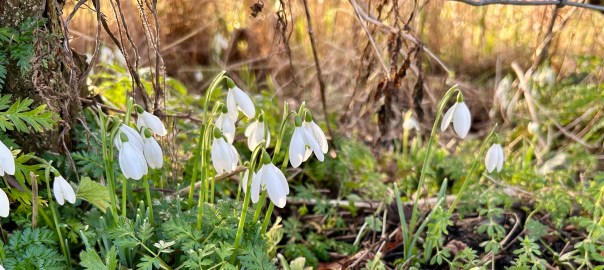
As you can see Sue’s garden is gorgeous!

I went to the GP earlier this week. I’ve been having headaches, pain when I moved my eyes and sensitivity to light, which has been going on for a few weeks now. It’s been particularly inconvenient as I have been affected when working in front of a screen as well as when driving, especially when it’s bright. The GP couldn’t help, so he directed me to my optician, who has been very helpful in the past when I had some flashing lights in my left eye. I saw her on Friday afternoon and it seems that I have dry eyes, which apparently can cause all those problems. I now have eye drops and a glasses shaped beanbag to heat up in the microwave and use on my eyes for ten minutes twice a day. This should help the oil in the glands along my eyelids to soften and get things going again. I’m mostly just glad it’s not FND related. Hopefully things are starting to get better already, though I’m about to go to Guildford for a week, so will be in a microwave-free zone.

The Guildford trip is for a chicken health and welfare course, so I’m hoping to come back with loads of new knowledge. I feel very honoured to have been selected to attend, so will be making the most of it. Triar will be getting spoiled at Mum and Dad’s. I will miss him, but at least he will be well looked after.

Hope you have a good week and thanks for reading.

Report the Second

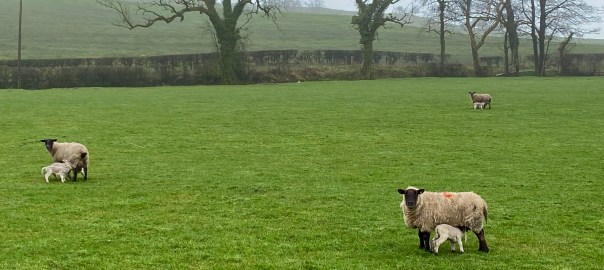
Firstly, a disclaimer. The sheep in the photo at the top of the page are random Norwegian sheep and are in no way related to any invest

Last week’s blog was a week late because I received a phone call as I was writing it. Two weeks ago, I was on call for the weekend and hoping to rest. Most on-call weekends are a matter of keeping your phone near you, maybe dealing with a request by a private vet for a case number so they can go out to test a cow that’s dropped dead to check it wasn’t anthrax or a similar request for itchy sheep that might have scab.

This time, to my surprise, I found my line-manager on the phone. “How would you feel about another report case?” he asked.
Well how I felt was broadly irrelevant. I was the ready-to-go vet, so unless I was seriously unwell, it was my task to be handled, whatever it was. “Another AI?” I ventured.

”Um… no.” He paused. “We’ve been sent photos of lesions from some sheep’s tongues. They’re trying to decide whether to treat it as a bluetongue enquiry, or foot and mouth. This isn’t your official call, just a prewarning so you can start to prepare.”

Once the official call comes in, you are expected to be on the road within 30 minutes. In theory, everything should be in your car and you should be able to get in and go. In reality, there are things you might need for sampling that have to stay in the fridge in the lab at work. The buffer solution used for foot and mouth sampling is one of these, so I was glad for the heads up.
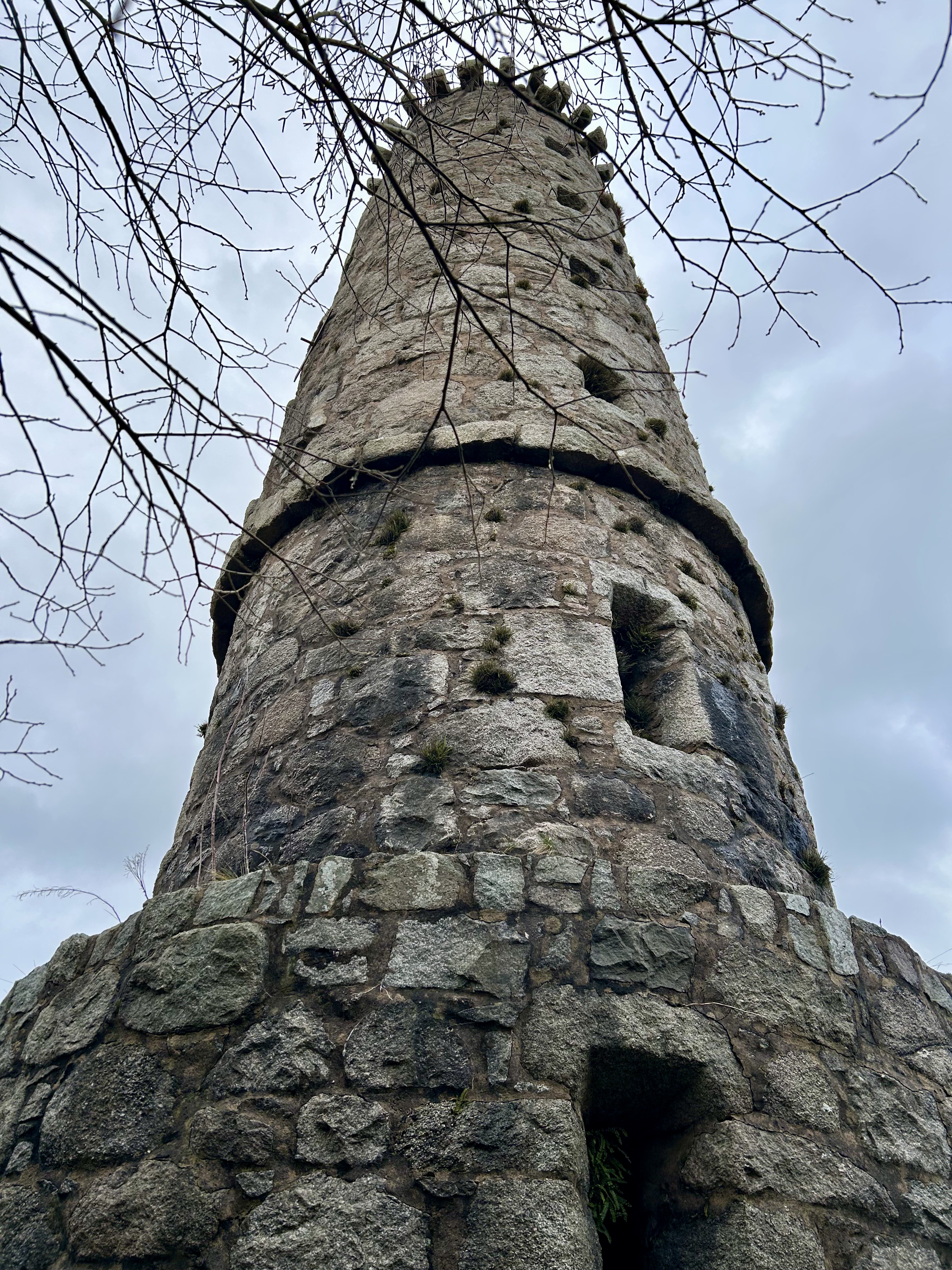
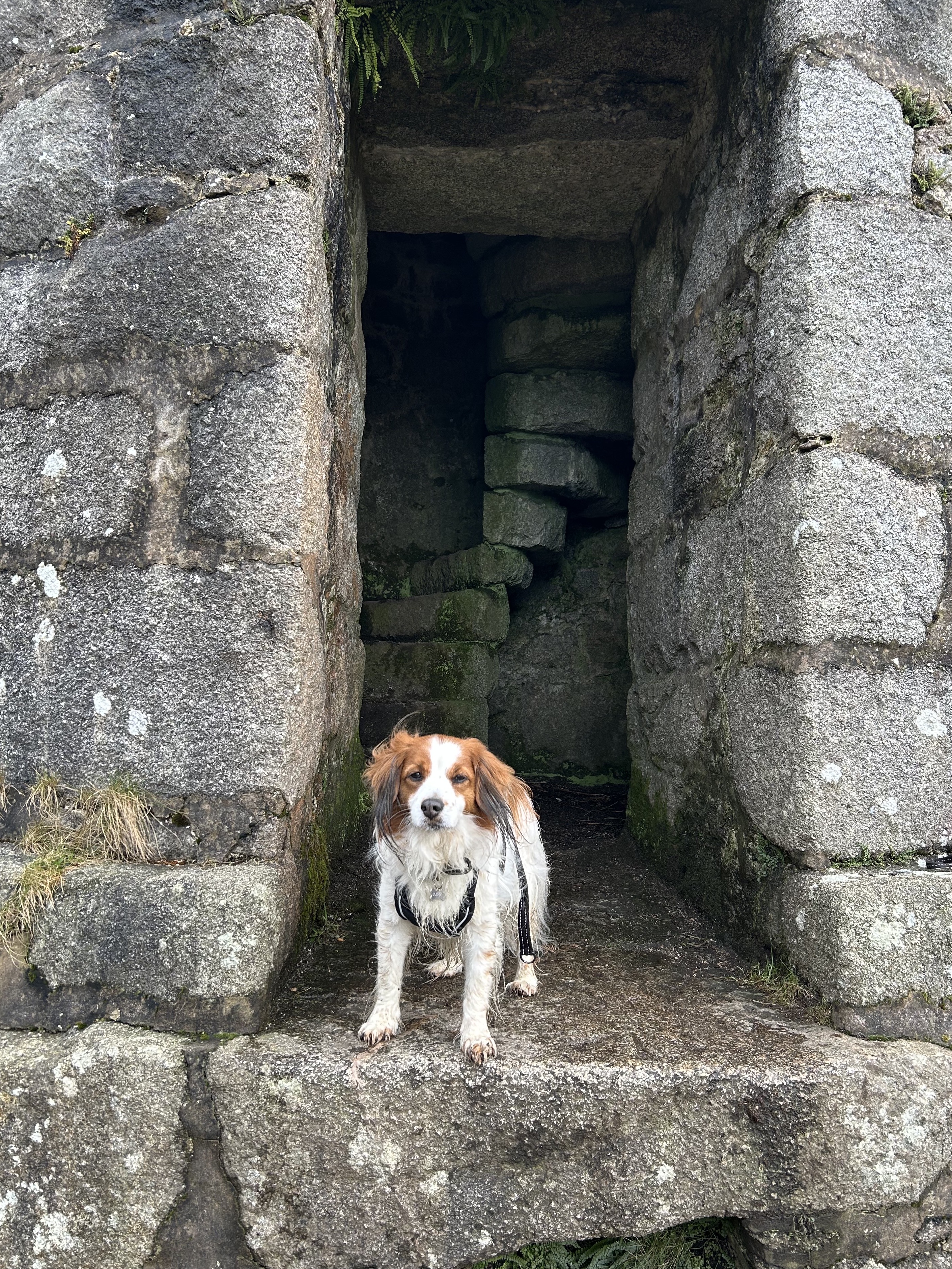
I admit, I did feel slightly breathless. Those living in the UK who are old enough to remember 2001 will recall the horrors unleashed on the country as whole farms and regions were forced to cull their livestock and burn them in the fields on horrific pyres of death. The recent, sporadic outbreaks in Europe mean we are on high alert. That the photographs sent in had the high heidyins in a nine am meeting discussing whether they dared risking treating it as “only” blue tongue felt quite significant.

I dressed and went into the office and started to gather paperwork. In theory, I should have paperwork for every eventually in my car, but having the appropriate papers to hand for setting up restrictions is useful. To my mild consternation, I found the main printer wasn’t working. Thanking my lucky stars that I wasn’t a newbie and knew how to work the secondary printer in the lab, I printed out what I thought I’d need.

I also threw a load of blood sampling equipment into my car. Better to have too many tubes than to create the necessity for someone else to come out and onto a farm with possible foot and mouth because you weren’t well enough prepared.

It was quite a long drive out to the farm. As I neared the farm, I slowed down to cast an eye over animals in the nearby fields. None were drooling or looking sick. A good start.


It had been confirmed that I was to treat it, for now, as bluetongue, but that foot and mouth was still there as a possibility. To explain the difference in requirements, because bluetongue is spread by midges, tramping on and off the farm with dirty boots and tyres isn’t so much of a worry. Not that I do that, but if I did, it’s not a disaster.

The restrictions served on the farmer are different too. Bluetongue restrictions only stop animals coming and going. Foot and mouth suspicions, like avian influenza suspicions, mean that every person and vehicle going on and off the farm has to have an individual license and any and all incursions are strictly limited to absolute necessities.

I arrived at the farm , put on paper suit and gloves and served the restrictions. It’s always the first thing to be done and having signed the form, I read out all the clauses that explained in full what was required. Next was history taking.

This is not like taking a history for a normal vet case, where you mostly want to know what has happened to the animal. For a notifiable disease investigation, by the time you are finished, you should have details of every movement on and off the farm within the last twenty one days. You have to assess whether there are any high risk factors. Are there rights of way and picnic sites where people might have fed the animals? Has anyone from the farm recently been on holiday to a different country? Are there stagnant ponds in the vicinity that might encourage midges? The factors, like everything else, vary with the disease suspected.

Having taken a careful history of the animals and the risk factors, I donned more layers of PPE and prepared to look at the animals. I knew, both by being told and by observation, that there were fields nearby that held another farmer’s cattle. I decided to walk up to look at them first. If it was something highly infectious, they might be showing signs too. Again the picture was reassuring. They were young stock from a dairy farm and could not have looked more healthy. They were eating as we approached, then lifted their heads to look at us. Not a nose lesion among them. Nolameness, no drooling. Bright eyes and shiny coats.

I was already, mentally, beginning to think foot and mouth was less likely. Obviously there were still the sheep to look at, but clinical signs in sheep can be subtle, cattle less so. These animals had been in relatively close contact, so by the time the mature mouth lesions were spotted in the sheep (with the caveat that it might have been caught early) I would expect to have seen some spread.

There were two groups of sheep – adults and lambs. The lesions in the photographs, nasty red eroded areas on the tongues, had both been from lambs. We therefore looked at the adult sheep first, partly to prevent any possible cross-infection, but also because a complete absence of problems there would go further towards ruling out foot and mouth. No reason why young sheep would be more severely affected than the old in a disease where neither group would have immunity.

What struck me again was that I was looking at a broadly healthy group of animals. There were 43 ewes and as I scanned their mouths, feet and udders (where possible) I saw nothing. Only bright, uncrusted eyes and alert ears. There were two that the farmer had noted had been getting thin for a while. We selected them out and I examined them more closely. Not a lesion in sight. Normal breathing, normal temperature. One was a bit dirty on her backside, but nothing to suggest foot and mouth or bluetongue.

We moved onto the lambs. This time, I decided we should examine all of them. There were thirty two in the group and the farmer caught each one and held them while their mouths and feet were inspected. In the end, there were four with tongue lesions, four with lesions around their lips and one with a sore area above its foot. None of the lambs with lesions was running a fever. I was strongly beginning to think that what we were dealing with was a severe case of orf – a pox virus that affects sheep and can infect humans who come in contact. It would be unusual to have tongue lesions, but not impossible.

Having taken history and examined the animals, it was time to decide where we were going to go with this. At one extreme, if I thought foot and mouth was still in the picture as a possibility, we would have to issue new restrictions as well as taking samples. I might well have to stay on the farm until it was ruled in or out. I’m still a bit sketchy on the details, though I had arranged for Triar to be looked after, just in case.

If I thought everything was ruled out, I would leave the farm with no tests done and hope I’d got it right. To do that, I’d need to be very certain. My gut feeling was that this was orf, based on the fact that it was only affecting the lambs. Orf is common and spreads in flocks to the new crop of animals born each year. Older animals can carry it, but usually have enough immunity that there are no clinical signs.

So on the grounds that only the lambs were affected and the adult ewes and neighbouring cattle were perfectly healthy, along with the fact that all the lesions were quite mature and I would have expected to see more early stage lesions (we have lectures about aging foot and mouth lesions) I felt confident enough to rule out foot and mouth (phew!). But could I rule out bluetongue too? I decided I couldn’t . After all, midges might well have selectively bitten the lambs with their thinner wool pelt. And orf might exist alongside bluetongue. The lip lesions could be orf and the tongue lesions something else.

And so, armed with my evidence, I called VENDU (the veterinary exotic notifiable disease unit) to tell them what samples I wanted to take. I have never been asked so many times and in so many different ways if I was sure, 100% certain, absolutely confident that I could rule out vesicular diseases like foot and mouth. At the start of the conversation I was using words like probably, but by the end, I was telling the, firmly that no, it was not foot and mouth.

So we tested the nine lambs for bluetongue: the four with mouth lesions, the four with lip lesions and the one with the foot. To cut a long story short, the test was negative, but most of Sunday was still spent on paperwork. I strongly suspect all the lesions were caused by orf: an unusual and interesting case all round and a good learning experience for me.

Lots of text so far and not many pictures, so I shall rectify that. Last weekend, I went to Drumlanrig Castle and met Sue (who used to locum with APHA) for a walk and for lunch. The gardens were beautiful.

Have a good week! Thanks for reading.

Report!

I was in the middle of writing this last Saturday when my work phone rang and that was that! No time for blogging last weekend. I shall finish this now, then leave the next installment for another day. Sometimes, life is crazy!

Last weekend, I had my first real report case. Unlike the disappearing seal, this one involved live animals, or rather birds. I had intended to go down to Yorkshire last weekend. My sister, Helen, and some of her family were there and my intention was to take Triar down to introduce them. I had a couple of tasks I had to complete first. Some birds that had been imported (as eggs) from the US had been in isolation for three weeks. I had to inspect their health and make sure all the paperwork was in order before releasing them.

In addition to that, one of my TB cases was on its final test and while I was looking at chickens, that test went clear. After they’ve been locked down and unable to move cattle on and off the farm for months, I try to prioritize getting their restrictions lifted as soon as I can.

I had just completed these two time-specific tasks (it was around midday) and was about to go complete all the surrounding paperwork (I had to look up the import isolation release as it was my first) when my phone rang. It was my line manager. “How would you feel about going on a report case?” he asked.

Well I couldn’t really say no. I’ve put in an application for special pay, competence based, and one of the weak points in my application was that I had never done a report case. If my Veterinary Advisor had to defend my application, one of the easiest ways would be if she could point out I now had done one, competently. And apart from that, I wanted to get the first one out of the way. It’s an important part of the job.

My mind was working quickly. I’d seen last night that there was a bluetongue report case in, to be done this morning and, though it seemed unlikely nobody had gone there yet, it seemed even more unlikely there was a second suspicion of notifiable disease report in our region. The reason I hadn’t been to one was because there hadn’t been any locally in the last year and a half.

”Is it the bluetongue one?” I asked. I had been hoping my first one would be. After all, blue tongue is spread by midges. Infection control is still considered, but compared to diseases that spread directly, animal to animal, or worse, to humans as well, there’s a whole lot less PPE to worry about.

”Um… no,” came the reply. “It’s an avian influenza one in pheasants.”

He told me where it was – an hour in the wrong direction for driving to Yorkshire. Mentally cancelling my planned weekend, “Yes, okay,” I said.

I could hear the relief in his voice, and no wonder. We’d had few report cases recently and alongside our two, there was a third in the north already. Depleted as we are by summer holidays and staff signed off from fieldwork, finding willing staff locally must have been a relief.

I spent the next couple of minutes ripping through my Teams contacts to see if someone could talk to me. I knew where all the gear was, but I needed paperwork and some of it had to be printed out before going. Each different notifiable disease has a different form to restrict movement. They quote the relevant sections of the law, under which the restrictions are put in place, so you need the right one. And then there were sampling forms, which are different depending on whether the birds are classified as wild. I had to take hard copies as those need to go with any samples I decided were necessary.

Frankly, my mind was whirling. I needed someone to give me instructions. Fortunately, one of the Veterinary Advisors called me back and (as is my habit) I started the first of the many lists I was going to need over the next few hours, to keep everything straight. Having printed out all the forms I would need, and having thrown the “grab and go” boxes with all the report case gear in them, I set off.

Traffic was awful. Going round the Dumfries by-pass on a Friday afternoon is a nightmare at the best of times. They’d found me an animal health officer, who was being deployed from Ayr. He wanted to know what kit to bring for sampling and I had to pull into a couple of lay bys to talk to him. The whole exercise was obviously going to take a while and going back to collect something we’d forgotten between us would be a real pain.

There was a small incident when I had been stuck behind a dawdling camper van for some time. There was a short section with two lanes on my side of the road. I pulled out to pass (I bought a car that can accelerate fast for a reason) and some idiot motorcyclist waiting in a queue going the other way dawdled over a double white line and right into my lane so I couldn’t. It’s just as well I wasn’t driving a car marked with APHA on it. It’s a long time since I have given someone the finger while driving, but really, some people are beyond the pale in their selfishness and I was undoubtedly fueled by adrenaline at this point, as well as diesel.

By the time I arrived on the farm, I was my usual professional self. This is my job. It’s the animal owner who’s having a bad day and my task to present a calm exterior and offer guidance. At any time, I could call for advice, but to be too obviously ignorant is to invite worry. My first task was to complete the movement restriction form. There was a section with two boxes on it where I couldn’t decide whether I should write my name, or strike through them. Phoning to ask would be the most obvious indicator to the poor gamekeeper whose birds were dying that I hadn’t done this before. I struck through them, carried on and handed over the form, reading out the instructions on the back to make sure he knew what was and wasn’t allowed.

There was a slightly disconcerting moment, when the gamekeeper looked at me and asked, “Is this your first?”
I was surprised he could tell, but am old enough to know honesty is the best policy at these moments. “Yes,” I said. “It is, actually.”

”Oh,” he said. “I knew from her questions on the phone that the person I spoke to on the phone knew nothing about pheasants. I thought they probably wouldn’t find a pheasant expert. She didn’t even seem to know that partridges and pheasants are different.”

My shoulders sank a couple of inches. I hadn’t been rumbled after all and I did, at least know enough about game birds not to make an idiot of myself.

Having served the papers that locked down everyone and everything on the farm, it was time to start the investigation. Most of the birds were healthy, but I needed to have eyes on them and I also needed to map where they all were. It’s not so hard when you have chickens and they are all in a shed in the farmyard. You can print out a satellite image or map of the premises, put an X on the spot and provide a GPS reading. That reading is essential because if disease is confirmed, that X becomes the centre of the 3km restriction zone and the 10km surveillance zone. This time, I had 15 different GPS readings, spread over different farms: at least I think they were. I was taken to them in a kind of buggy on back roads and tracks. There was no way I could mark where they all were on a printout of the steading.

I lost contact with the team and with time. We drove between pens and I took readings with my OS maps app. I screenshot each reading, took a photo of the pen and any nearby animals and scrawled notes on a piece of paper. How many birds? What species? Were they in or out? The last question was crucial. When they are young, the pheasants are in closed pens with mesh over the top. At that point they are kept. Eventually, the gates of the pens are open and the birds can roam fully. At that point they are wild. In between is a grey zone.

Coming back to the steading, I saw the animal health officers had arrived, one experienced, the other in training. I still hadn’t seen a single sick bird. After yet another conversation with the Veterinary Advisor, I put on a second layer of PPE over the single layer I’d been wearing up until that point and we headed up to see the sick birds. I had with me the Sundstrøm hood that we are given for AI cases. Even though I would be outdoors, I still had to wear the full kit. It was rather bizarre, outside the pen, on a patch of grass on a forest track, donning a hood that would isolate me from everything. It felt very incongruous.

I had occasionally worried about how I would cope with the hood, which blows air into your face, but it was actually fine. I walked into the pen alone and surveyed the sorry picture. Sick birds, feathers puffed out, tails down and looking sorry for themselves, carcasses of others that hadn’t made it. Yet there were no specific signs. Birds with bird flu often have neurological signs and pheasants have been described as having cloudy looking eyes, but there was nothing. I should perhaps, have done some post-mortems, but hadn’t brought kit and there wasn’t really much time remaining. We are on a strict twelve hour limit when it comes to driving for work and Triar was waiting at home.

We went back, again, to the steading and I checked in with my report. Could I rule out avian influenza? I couldn’t. No specific signs to rule it in, but none that would rule it out either. Were they wild or kept. Grey zone. It was time to call VENDU. The Veterinary Exotic Notifiable Disease Unit are the body that dictates what tests should be taken, once the on-site vet decides disease can’t be ruled out. The answer was to sample 20 birds, swabs from the throat and cloaca, plus bloods and two heads.

It was time for the AHOs to don their gear and as they started to do their work, it was time for me to leave. It was a 45 minute drive home and I had to get there by 20:30 if I wasn’t to get a slapped wrist for going over my twelve hours. Luckily there was no traffic now and I made it by the skin of my teeth. I hadn’t eaten all day, so having passed the office (so technically onto my commute) I stopped at the chip shop. The time on the receipt is 20:32, thank goodness, so I could prove I hadn’t gone over!

After that, there was all the follow up to do. Saturday was spent filling in EXD40, a colossal document where I had to transfer all the GPS and other data I’d collected, as well as explaining in triplicate, why I felt that testing was justified. There were calls flying at me as well. Because the birds were tested they would be locked down for at least a week until the final test results were through.

A positive result would be quick, but would raise all the complicated questions about what and how to cull. Again, not like birds in a closed shed. These were ranging about and half wild in pens that spread over acres of forestry. In the event, just as I was about to be sent out on Saturday afternoon to do a valuation (healthy birds are paid for as compensation – a good incentive for early reporting) the initial results came back: not confirmed.
Still, it would be another week until they were certain. Along with my form filling, there was someone from the licensing team doing more form filling. Everyone who might enter, every vehicle that drove onto and off the locked-down premises had to have permission.

And so, that was my first report case. For a week, even after the initial results were back, I had daily contact with the gamekeeper as the mystery disease spread slowly, though still all in that one pen. I supported as best I could and then, with relief, handed over to his private vet. Finally they could go on and sample for other things, now it was confirmed there was no bird flu. And as I said at the top of the page, no sooner was this case handed over, I had a different one to tackle, but this is more than long enough already.

Thanks for reading. Over and out!