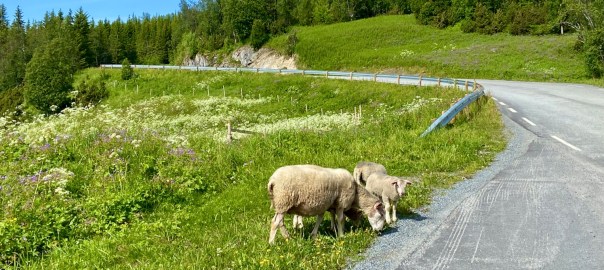
Firstly, a disclaimer. The sheep in the photo at the top of the page are random Norwegian sheep and are in no way related to any invest
Last week’s blog was a week late because I received a phone call as I was writing it. Two weeks ago, I was on call for the weekend and hoping to rest. Most on-call weekends are a matter of keeping your phone near you, maybe dealing with a request by a private vet for a case number so they can go out to test a cow that’s dropped dead to check it wasn’t anthrax or a similar request for itchy sheep that might have scab.
This time, to my surprise, I found my line-manager on the phone. “How would you feel about another report case?” he asked.
Well how I felt was broadly irrelevant. I was the ready-to-go vet, so unless I was seriously unwell, it was my task to be handled, whatever it was. “Another AI?” I ventured.
”Um… no.” He paused. “We’ve been sent photos of lesions from some sheep’s tongues. They’re trying to decide whether to treat it as a bluetongue enquiry, or foot and mouth. This isn’t your official call, just a prewarning so you can start to prepare.”
Once the official call comes in, you are expected to be on the road within 30 minutes. In theory, everything should be in your car and you should be able to get in and go. In reality, there are things you might need for sampling that have to stay in the fridge in the lab at work. The buffer solution used for foot and mouth sampling is one of these, so I was glad for the heads up.
I admit, I did feel slightly breathless. Those living in the UK who are old enough to remember 2001 will recall the horrors unleashed on the country as whole farms and regions were forced to cull their livestock and burn them in the fields on horrific pyres of death. The recent, sporadic outbreaks in Europe mean we are on high alert. That the photographs sent in had the high heidyins in a nine am meeting discussing whether they dared risking treating it as “only” blue tongue felt quite significant.
I dressed and went into the office and started to gather paperwork. In theory, I should have paperwork for every eventually in my car, but having the appropriate papers to hand for setting up restrictions is useful. To my mild consternation, I found the main printer wasn’t working. Thanking my lucky stars that I wasn’t a newbie and knew how to work the secondary printer in the lab, I printed out what I thought I’d need.
I also threw a load of blood sampling equipment into my car. Better to have too many tubes than to create the necessity for someone else to come out and onto a farm with possible foot and mouth because you weren’t well enough prepared.
It was quite a long drive out to the farm. As I neared the farm, I slowed down to cast an eye over animals in the nearby fields. None were drooling or looking sick. A good start.
It had been confirmed that I was to treat it, for now, as bluetongue, but that foot and mouth was still there as a possibility. To explain the difference in requirements, because bluetongue is spread by midges, tramping on and off the farm with dirty boots and tyres isn’t so much of a worry. Not that I do that, but if I did, it’s not a disaster.
The restrictions served on the farmer are different too. Bluetongue restrictions only stop animals coming and going. Foot and mouth suspicions, like avian influenza suspicions, mean that every person and vehicle going on and off the farm has to have an individual license and any and all incursions are strictly limited to absolute necessities.
I arrived at the farm , put on paper suit and gloves and served the restrictions. It’s always the first thing to be done and having signed the form, I read out all the clauses that explained in full what was required. Next was history taking.
This is not like taking a history for a normal vet case, where you mostly want to know what has happened to the animal. For a notifiable disease investigation, by the time you are finished, you should have details of every movement on and off the farm within the last twenty one days. You have to assess whether there are any high risk factors. Are there rights of way and picnic sites where people might have fed the animals? Has anyone from the farm recently been on holiday to a different country? Are there stagnant ponds in the vicinity that might encourage midges? The factors, like everything else, vary with the disease suspected.
Having taken a careful history of the animals and the risk factors, I donned more layers of PPE and prepared to look at the animals. I knew, both by being told and by observation, that there were fields nearby that held another farmer’s cattle. I decided to walk up to look at them first. If it was something highly infectious, they might be showing signs too. Again the picture was reassuring. They were young stock from a dairy farm and could not have looked more healthy. They were eating as we approached, then lifted their heads to look at us. Not a nose lesion among them. Nolameness, no drooling. Bright eyes and shiny coats.
I was already, mentally, beginning to think foot and mouth was less likely. Obviously there were still the sheep to look at, but clinical signs in sheep can be subtle, cattle less so. These animals had been in relatively close contact, so by the time the mature mouth lesions were spotted in the sheep (with the caveat that it might have been caught early) I would expect to have seen some spread.
There were two groups of sheep – adults and lambs. The lesions in the photographs, nasty red eroded areas on the tongues, had both been from lambs. We therefore looked at the adult sheep first, partly to prevent any possible cross-infection, but also because a complete absence of problems there would go further towards ruling out foot and mouth. No reason why young sheep would be more severely affected than the old in a disease where neither group would have immunity.
What struck me again was that I was looking at a broadly healthy group of animals. There were 43 ewes and as I scanned their mouths, feet and udders (where possible) I saw nothing. Only bright, uncrusted eyes and alert ears. There were two that the farmer had noted had been getting thin for a while. We selected them out and I examined them more closely. Not a lesion in sight. Normal breathing, normal temperature. One was a bit dirty on her backside, but nothing to suggest foot and mouth or bluetongue.
We moved onto the lambs. This time, I decided we should examine all of them. There were thirty two in the group and the farmer caught each one and held them while their mouths and feet were inspected. In the end, there were four with tongue lesions, four with lesions around their lips and one with a sore area above its foot. None of the lambs with lesions was running a fever. I was strongly beginning to think that what we were dealing with was a severe case of orf – a pox virus that affects sheep and can infect humans who come in contact. It would be unusual to have tongue lesions, but not impossible.
Having taken history and examined the animals, it was time to decide where we were going to go with this. At one extreme, if I thought foot and mouth was still in the picture as a possibility, we would have to issue new restrictions as well as taking samples. I might well have to stay on the farm until it was ruled in or out. I’m still a bit sketchy on the details, though I had arranged for Triar to be looked after, just in case.
If I thought everything was ruled out, I would leave the farm with no tests done and hope I’d got it right. To do that, I’d need to be very certain. My gut feeling was that this was orf, based on the fact that it was only affecting the lambs. Orf is common and spreads in flocks to the new crop of animals born each year. Older animals can carry it, but usually have enough immunity that there are no clinical signs.
So on the grounds that only the lambs were affected and the adult ewes and neighbouring cattle were perfectly healthy, along with the fact that all the lesions were quite mature and I would have expected to see more early stage lesions (we have lectures about aging foot and mouth lesions) I felt confident enough to rule out foot and mouth (phew!). But could I rule out bluetongue too? I decided I couldn’t . After all, midges might well have selectively bitten the lambs with their thinner wool pelt. And orf might exist alongside bluetongue. The lip lesions could be orf and the tongue lesions something else.
And so, armed with my evidence, I called VENDU (the veterinary exotic notifiable disease unit) to tell them what samples I wanted to take. I have never been asked so many times and in so many different ways if I was sure, 100% certain, absolutely confident that I could rule out vesicular diseases like foot and mouth. At the start of the conversation I was using words like probably, but by the end, I was telling the, firmly that no, it was not foot and mouth.
So we tested the nine lambs for bluetongue: the four with mouth lesions, the four with lip lesions and the one with the foot. To cut a long story short, the test was negative, but most of Sunday was still spent on paperwork. I strongly suspect all the lesions were caused by orf: an unusual and interesting case all round and a good learning experience for me.
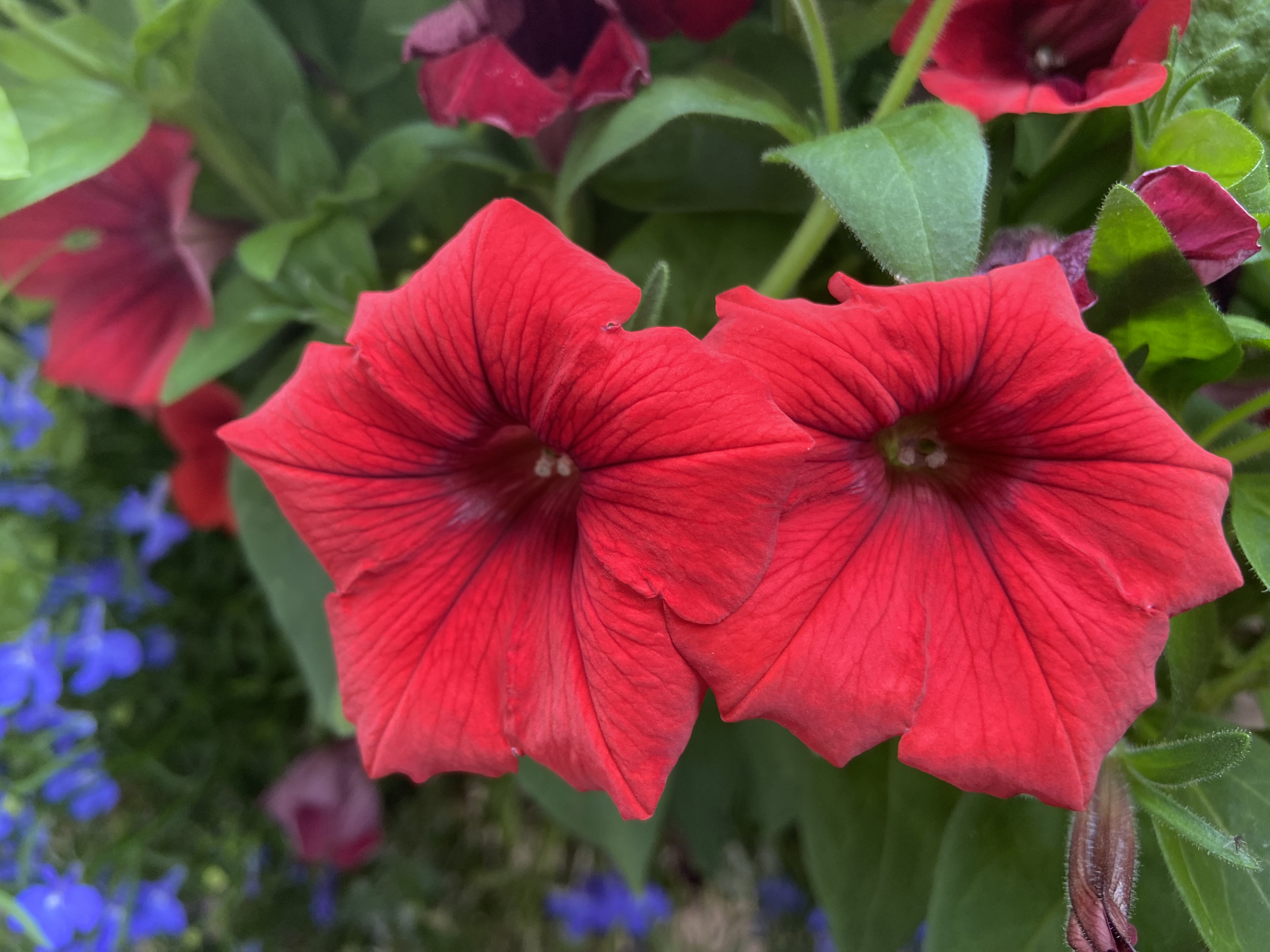
Lots of text so far and not many pictures, so I shall rectify that. Last weekend, I went to Drumlanrig Castle and met Sue (who used to locum with APHA) for a walk and for lunch. The gardens were beautiful.
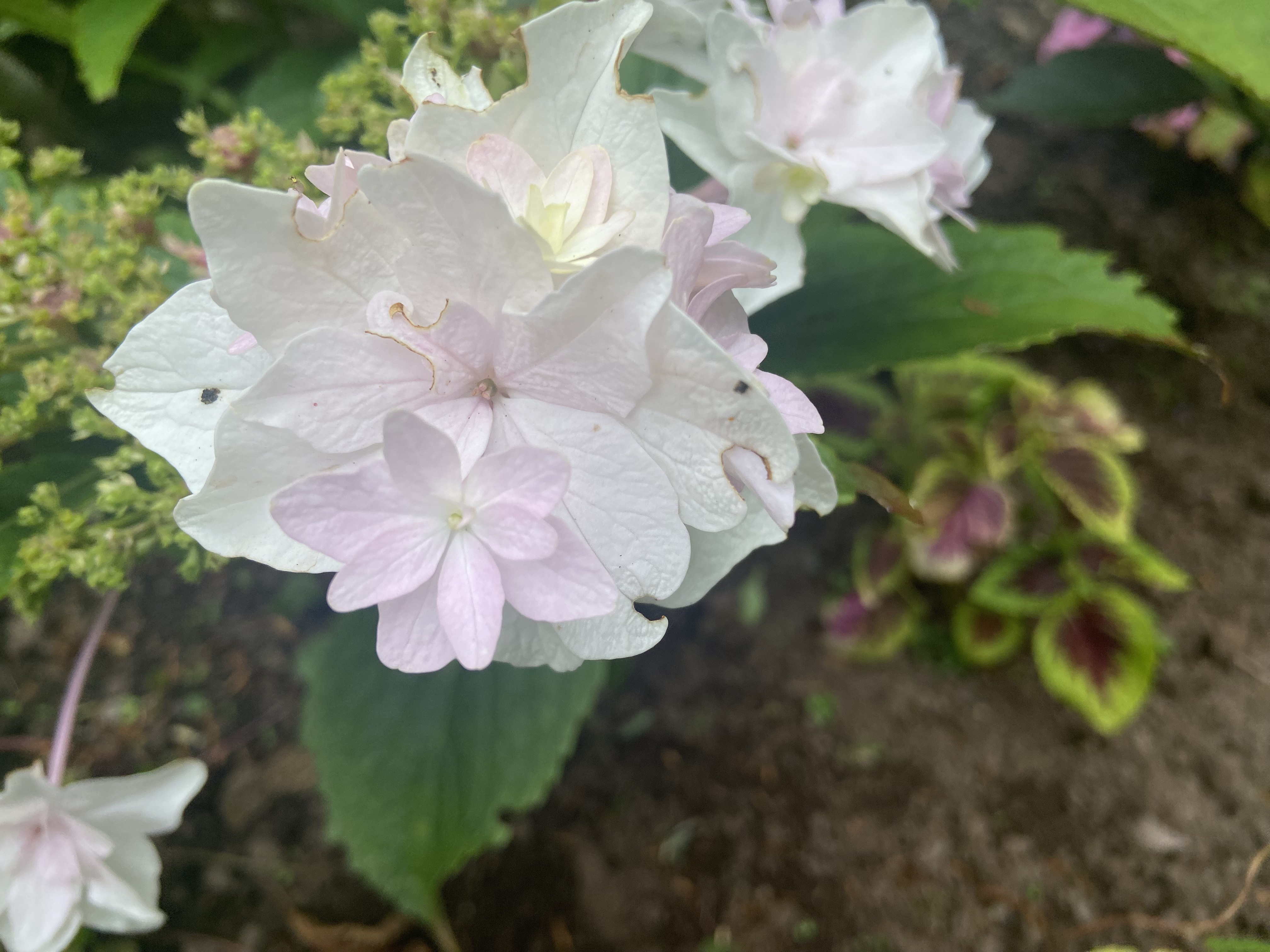



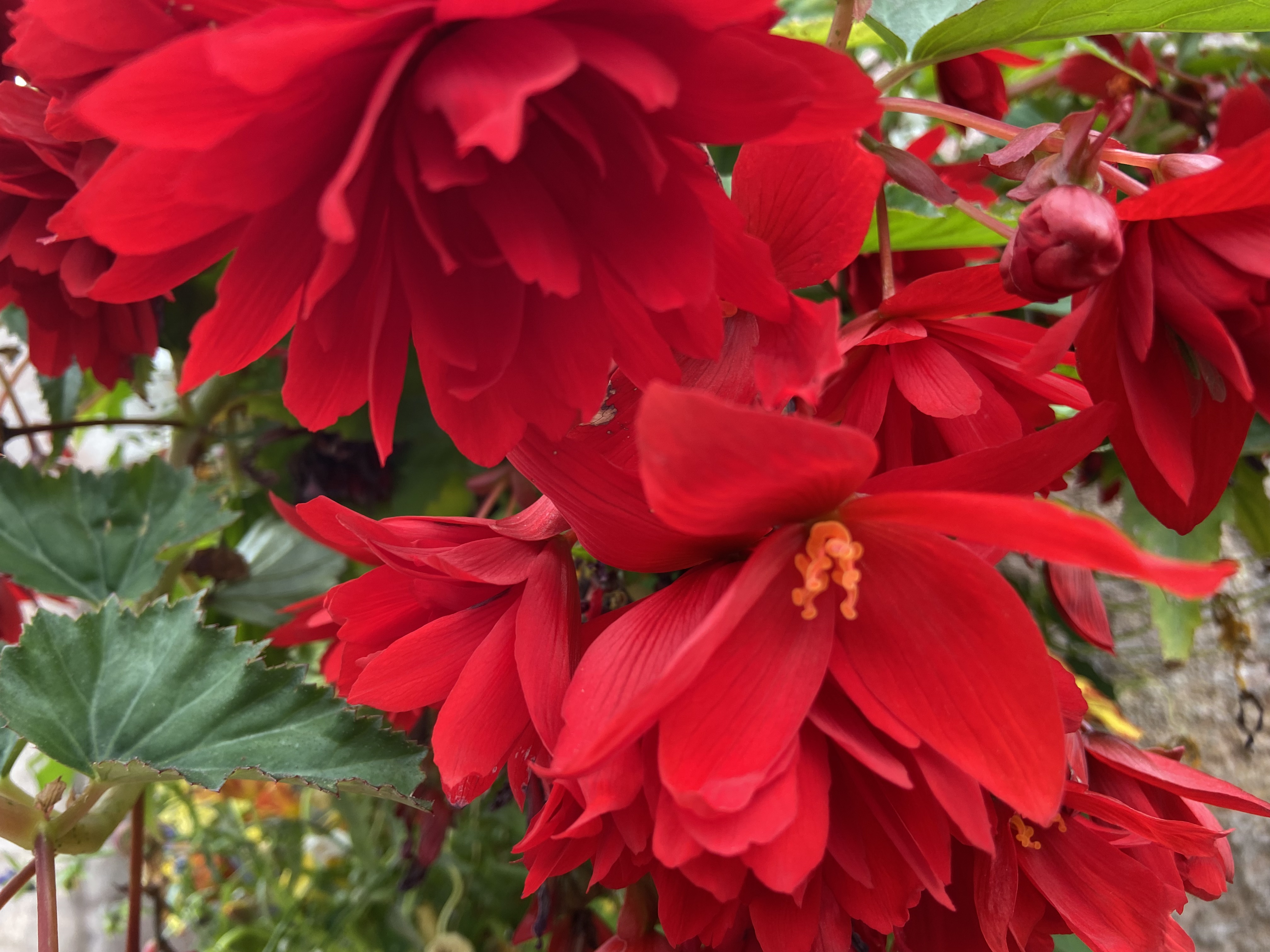

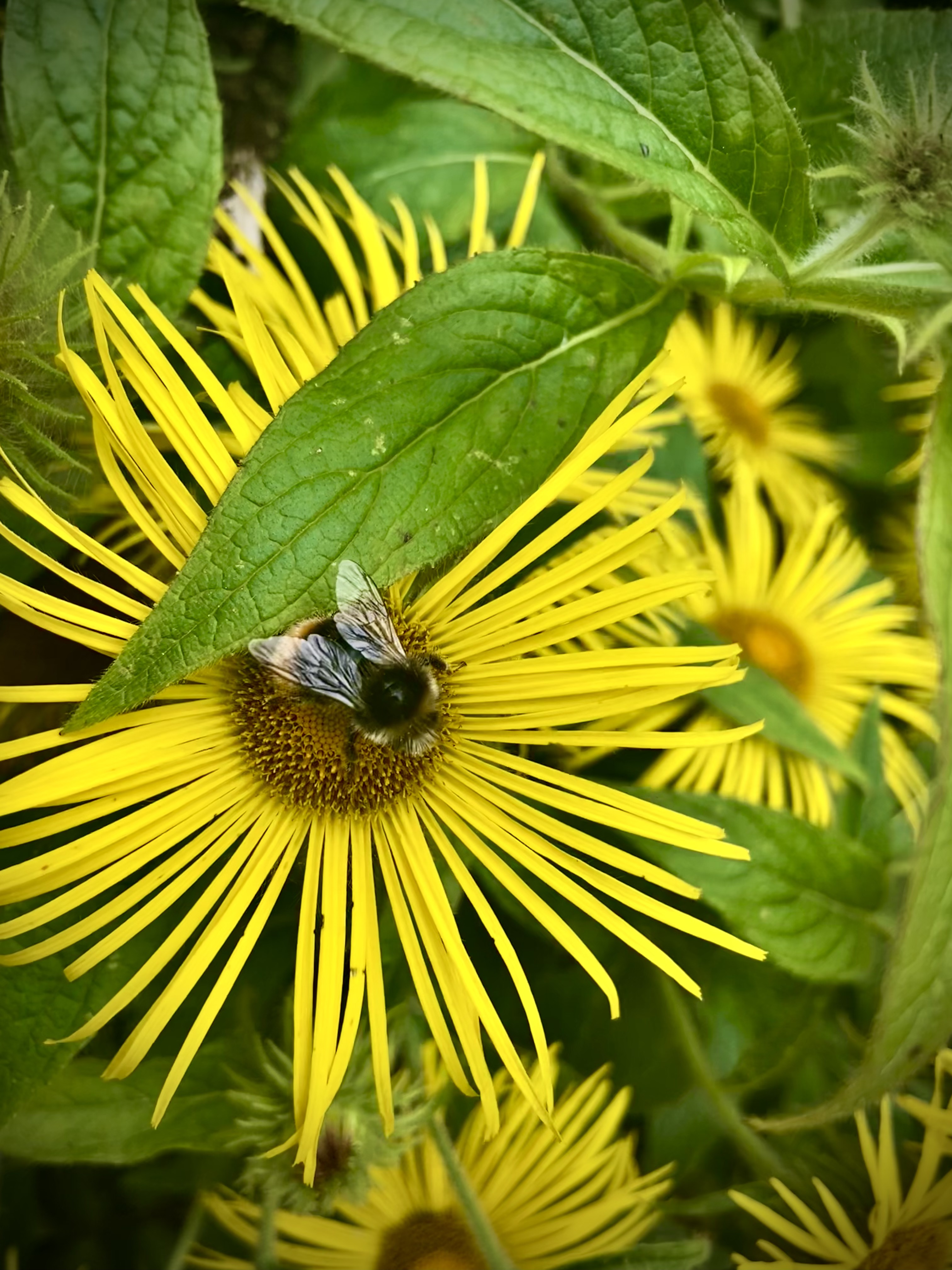

Have a good week! Thanks for reading.
 A Vet’s Life
Hard, scrupulous work on your part, and what seems the best possible outcome for the farmer and his flock.