Tag Archives: Scotland-Norway connections

The Liberation Convoy

One of the highlights of my Shetland trip was visiting the Liberation Convoy which visited Lerwick while I was there. My friends, Melanie and John Arthur came over from Whalsay and together we explored the Norwegian ships which had served in the World Wars and were commemorating 80 years from the end of World War II.

Though it was a fascinating experience there was, as always when thinking about wars, a heavy sense of grief and loss. On the first ship we explored, Hestmanden, we read many stories about the young men, British and Norwegian, who served on board this and other ships. There was devastation brought to so many lives, both those of the young men lost and even of those who came back alive but broken.
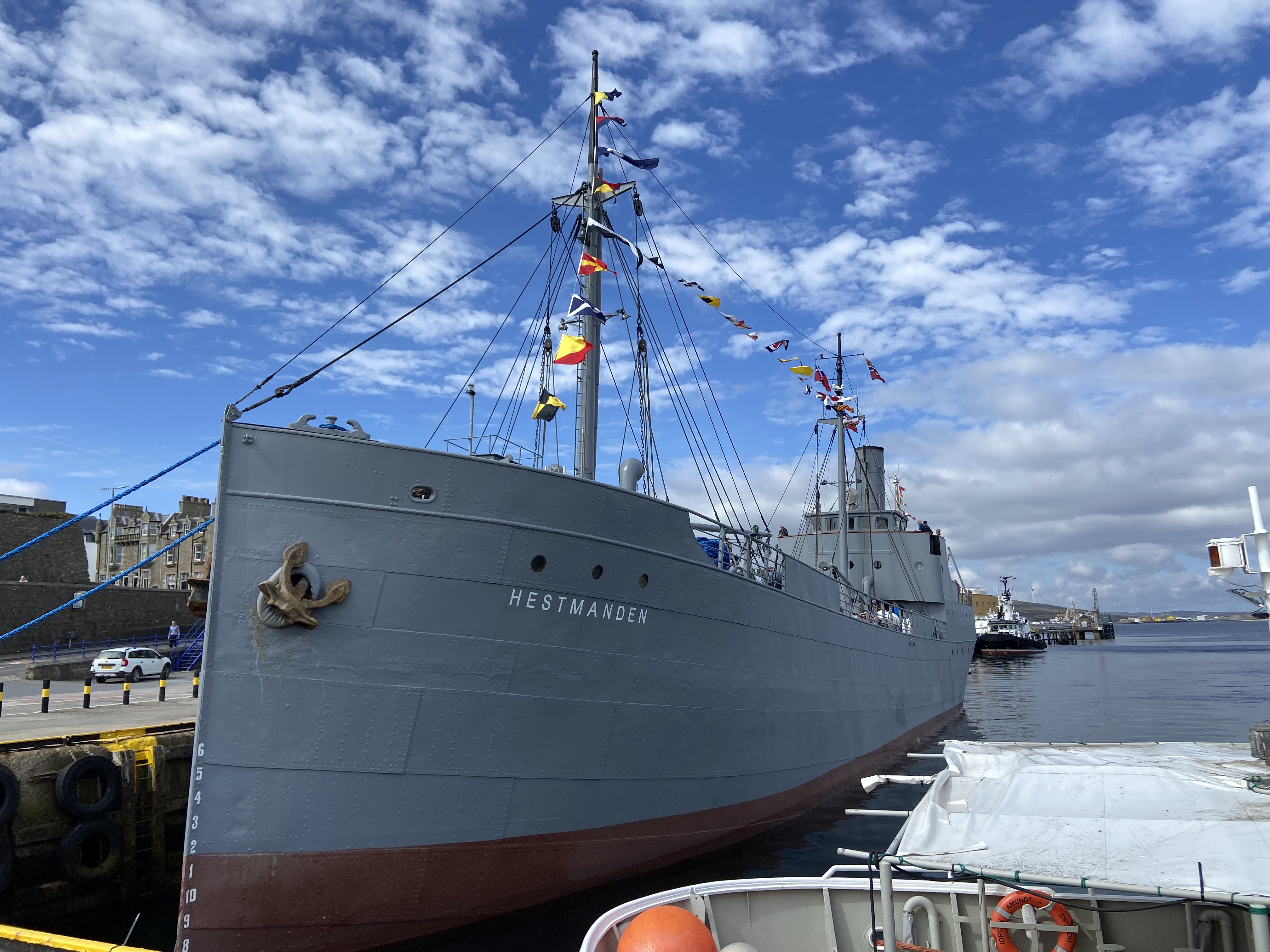
One of the most haunting things I read was that many of the sailors who served in WWII were not even welcomed back in Norway at the end of the war. Norway was occupied for most of the war, so many of them could not go home during wartime. By the time liberation occurred, they had been outside of Norway for longer than was allowed, and having not been back, they did not have the right to return. Many did not get back in until 1947 as they waited for papers to be sorted out.

I guess the leaders were dealing with their own devastation, but if there was ever a time for rules to be pushed aside, surely that should have been it? Sometimes Norwegian life was uncomfortable for me as I didn’t really know or understand all the rules or expectations and occasionally, would come up against them and know I didn’t really fit in. It’s hard to explain, but I can’t imagine this particular circumstance having occurred in the U.K.

John Arthur, who is co-owner of a fishing boat and a sailor himself, was particularly interested in the engines. It was incredible to see the machinery from 1911, still in working order and very much still a living memorial. There were oily rags and modern tools to keep everything going.
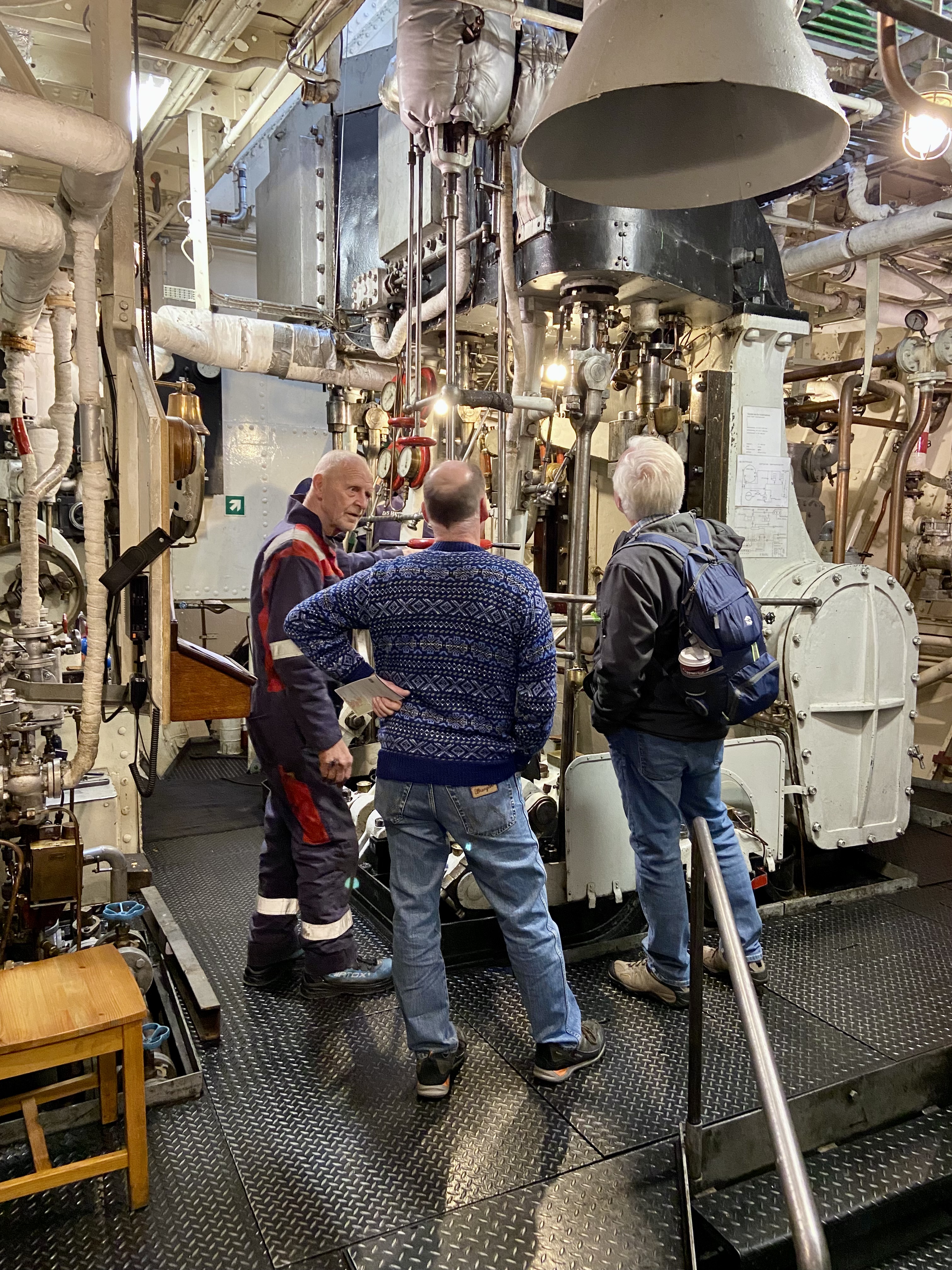
In a converse to the non-understanding of the rules I mentioned above, there was a sense of freedom in many parts of Norwegian life that doesn’t exist in the U.K. This was reflected in our exploration of these vessels.We were allowed in almost every area of Hestmanden, climbing steep ladders, allowed to poke in corners that I know in the U.K. would have been chained off as too dangerous to enter. I feel I’m talking too much about me and my reflections on living as a foreigner in Norway and not enough about the ships, but it is opening up these thoughts as I am writing this, so you’re just going to have to share them!

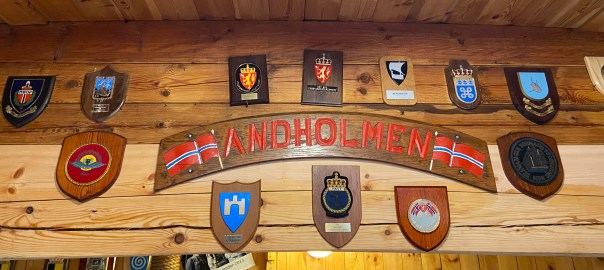
Hestmanden was a cargo ship and many of her stories were of sailing in convoys, where many accompanying ships were destroyed and the devastation of how it felt to be a survivor when you had witnessed so much death and lost so many friends and acquaintances. The Andholmen, which we visited next had seen more direct action.

Built as a fishing boat in 1938, she was requisitioned in 1940 by the Norwegian navy up in Narvik in Northern Norway. Germany controlled the only deep water landing place, so small vessels like the Andholmen were used to put allied soldiers ashore.

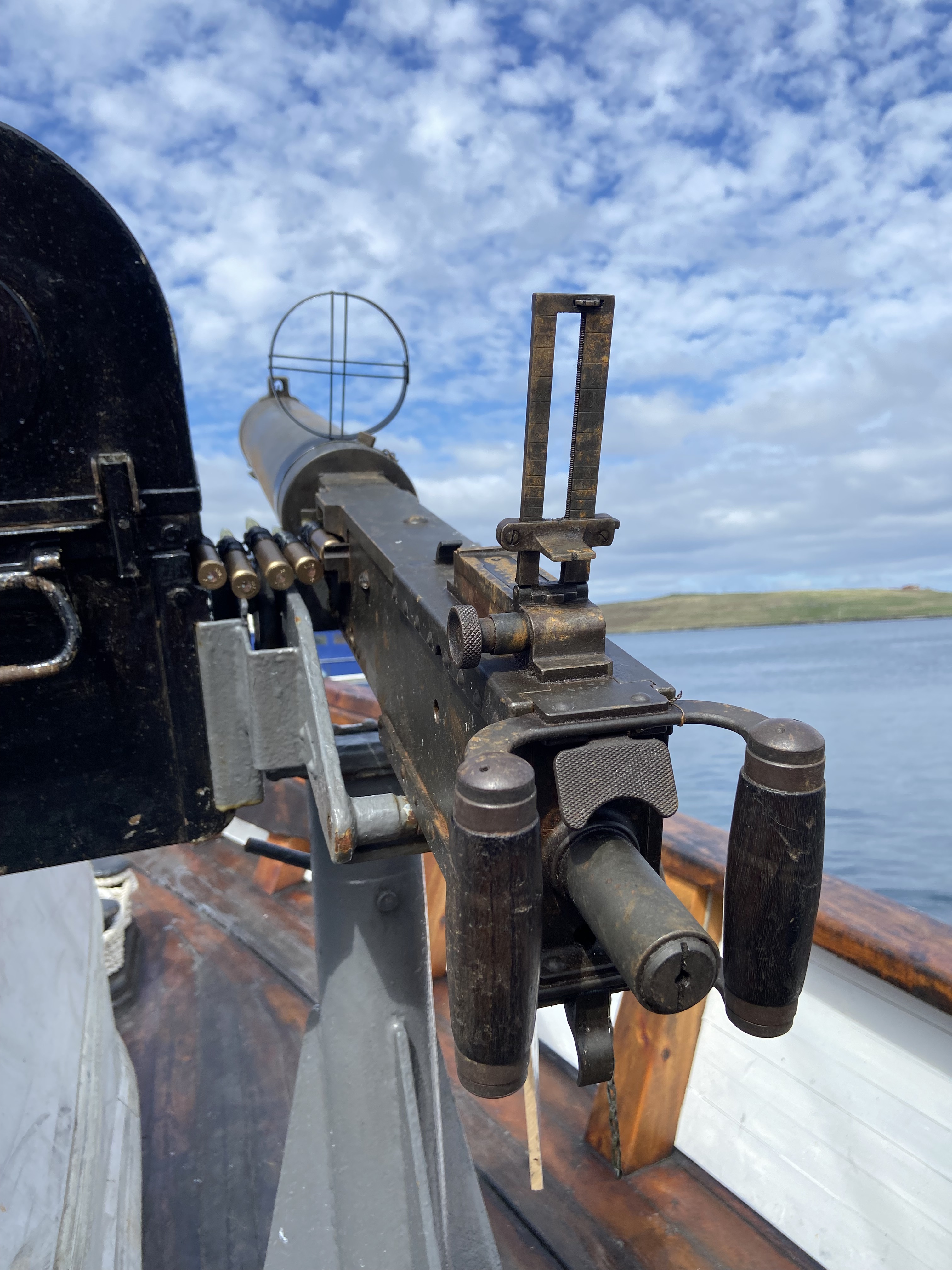
Later she worked between Shetland and Norway and then was based in Peterhead. It’s not so obvious from that photo, but she was armed and still ready to go.

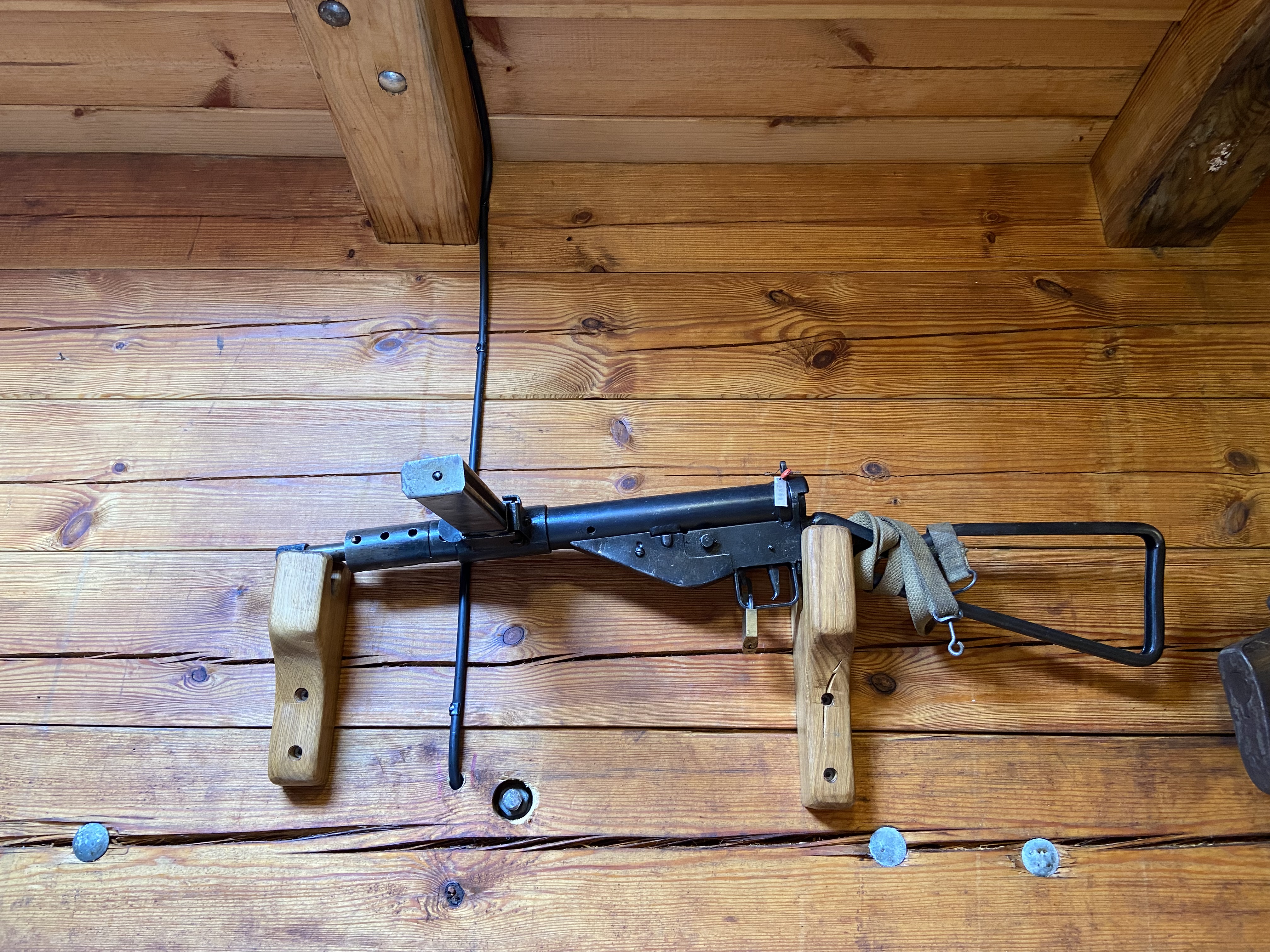
Climbing down into the cabin, there were tidy bunks tucked away in corners and many more weapons, presumably a collection and not necessarily used on Andholmen herself. The cold metal of the guns makes quite a contrast against the warmth of the wood of which the ship is built. Unlike Hestmanden, which was set up as a museum, this was much smaller, but equally fascinating as a historic part of the war effort.
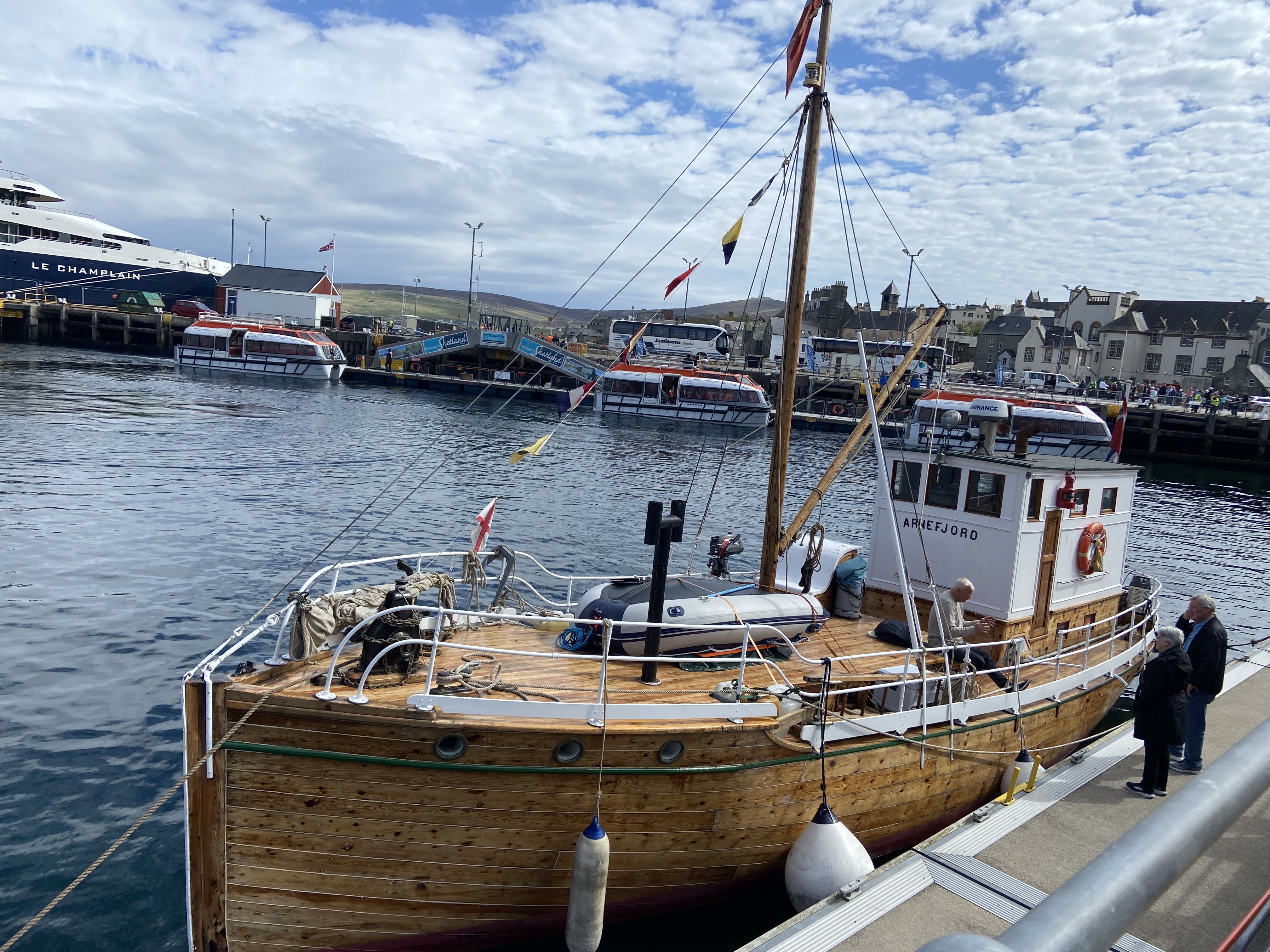
We didn’t get the chance to go aboard the Arnefjord, but she was one of the ships that worked as part of the “Shetland Bus” service that brought resistance fighters from Norway to the relative safety of Scotland.
The Erna and the Heland were also fishing boats, requisitioned for the Shetland Bus. It was a wonderful experience to see them eighty years later, moored again in Lerwick harbour.

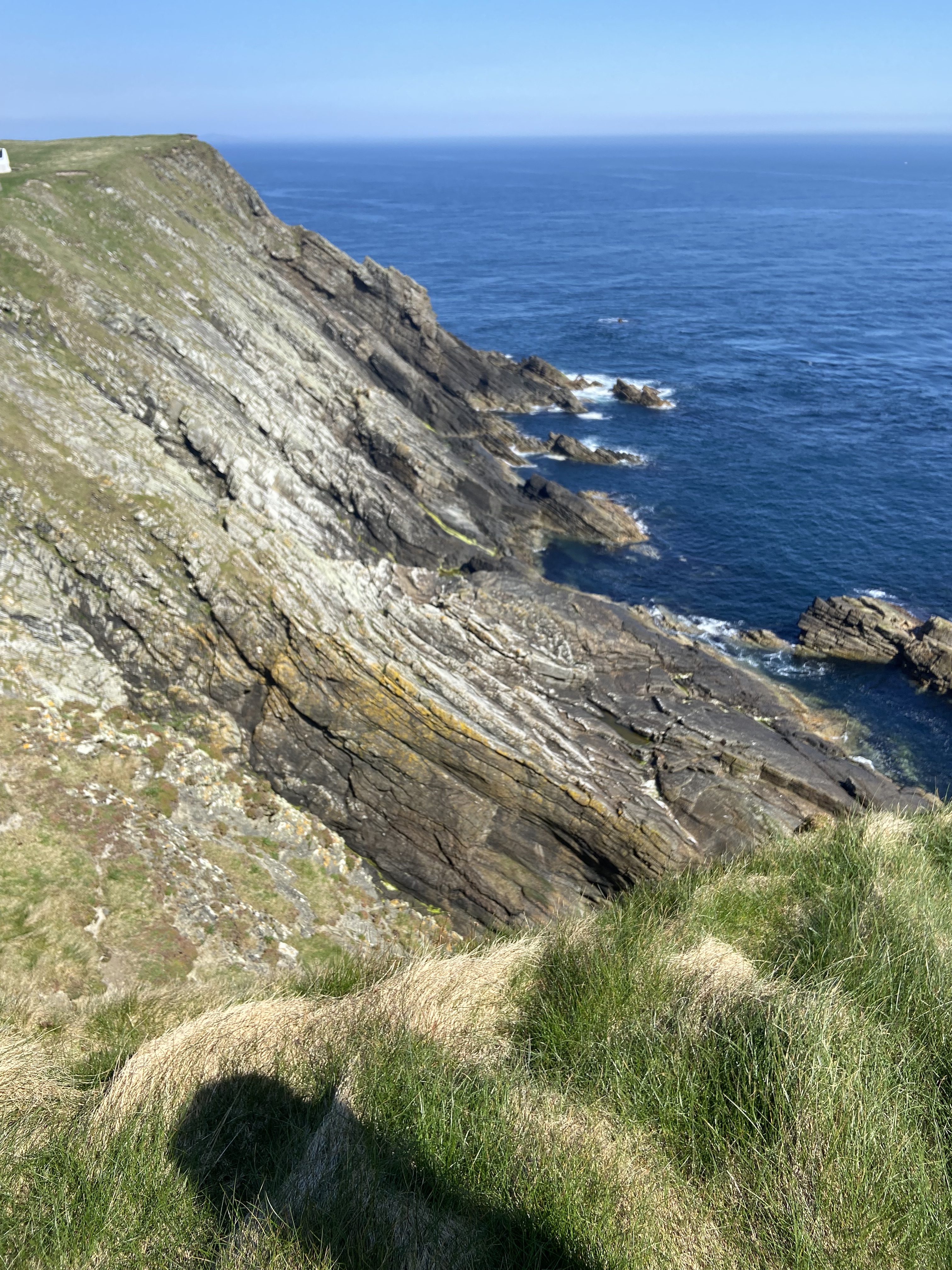
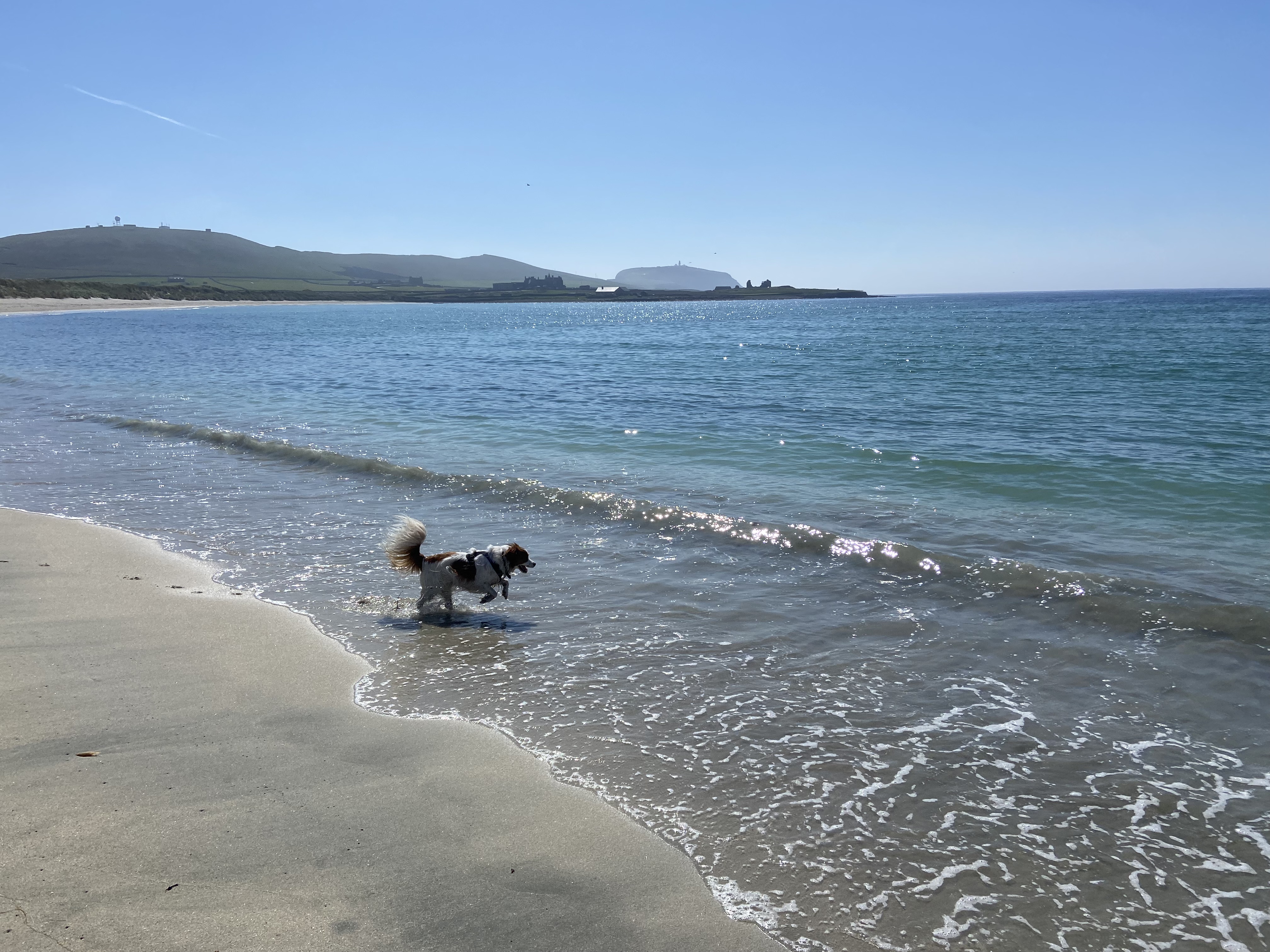
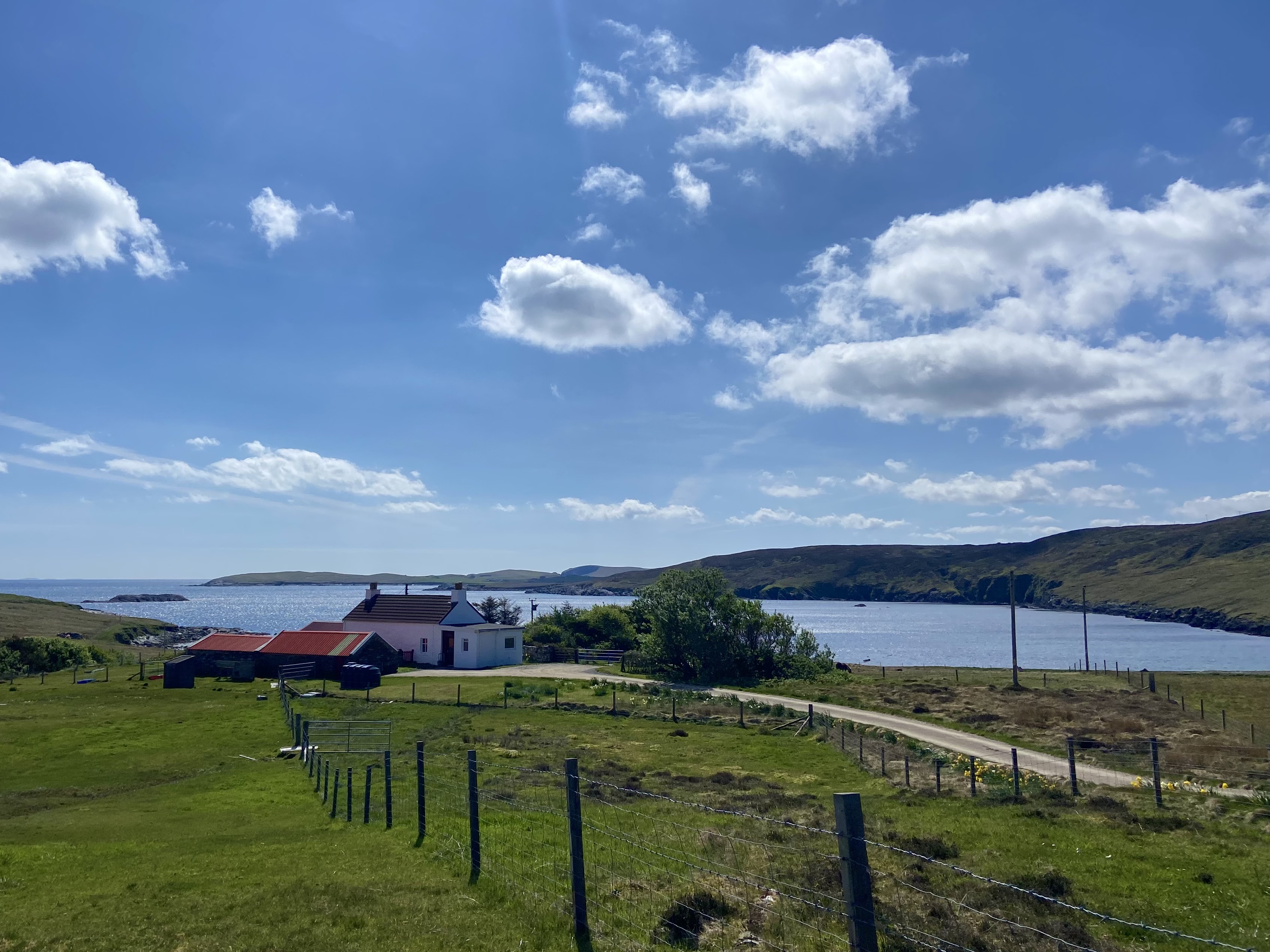
The rest of my week in Shetland was filled with sunshine and coastal views, from cliffs to rocky shores and wonderful golden beaches. Thanks again to Lindsay and Melanie for a fantastic holiday.
Leaving at the end was sad, but I hope to be able to go back. Triar also had a good time, I think.

See you next time.

Case Work and Crocuses

I went back, both to work and to the doctors’ on Monday. The GP I saw was helpful. He was young and I think may have been in his foundation years as a GP, but he took the time to do a fairly thorough neurological examination. I was laughing to myself afterwards as I’ve had so many of them that I could have told him a couple of bits he’d missed, but he found a few things, at least one of them new.

He told me he will contact the neurological department at the hospital, both to ask them to reassess my triage as urgent and also, to ask if there’s anything that can be done for me while I’m waiting. It will be interesting to see if I am now seen earlier than July. I don’t know when he’ll get an answer to the other question.

So I’m not as fatigued as I was. I am managing to do some things again that had more or less come to a halt, like cooking and tidying the kitchen afterwards. I even took myself upstairs yesterday and did a bit of painting in the bedroom, but the energy I had quickly drained, as it did when I tried to do a veterinary risk assessment yesterday morning.

The veterinary risk assessment (VRA) I have to do is an assessment of the possible consequences of moving cattle from a farm where there is no TB present, to one where it has been confirmed.

This particular VRA is a bit of a wildcard because TB hasn’t been confirmed yet. We are waiting for the results at the moment (they are trying to grow bacteria in a Petrie dish from lesions found in the lungs of a cow that was slaughtered) and they won’t be back until mid-March. The cattle that need to be moved onto the farm are young stock (heifers) which are being wintered on a different farm. They are due to calve in mid-April. If the culture is negative, restrictions will be lifted and heifers can move to the dairy unit with no problems. If it’s positive, the restrictions will remain and we will need to move quickly.

In order to complete the assessment, I will look into all kinds of factors, including how high the risk of spread is. For example, are there cattle on neighbouring farms and how likely is it those cattle have had nose to nose contact with cattle from the infected farm? What are the potential costs to the government? For example, moving a lot of cattle onto the farm might mean the government has to pay compensation later, if those animal become infected.

And there is an absolute requirement to carry out a short interval skin test (SIT) before any cattle can be moved onto the farm. TB is a slow moving disease sometimes. A cow can be infected for years before it is spotted. When we confirm there are TB bacteria on the farm, we have to check, via the SIT whether we have one infected animal, or many. Until we’ve done that, it’s impossible to weigh the risk.

So if we get a positive culture, I will need to be ready with the SIT and the VRA so we can move quickly. There’s nowhere to calve those heifers and nowhere to milk them, where they are, so they need to go somewhere, on welfare grounds. I find this part of my work very interesting, but with so much cross-referencing of data, I need to be on the ball. Hopefully I can get more of it done in the early part of next week. Big welfare case is also due a revisit though, so we will see!

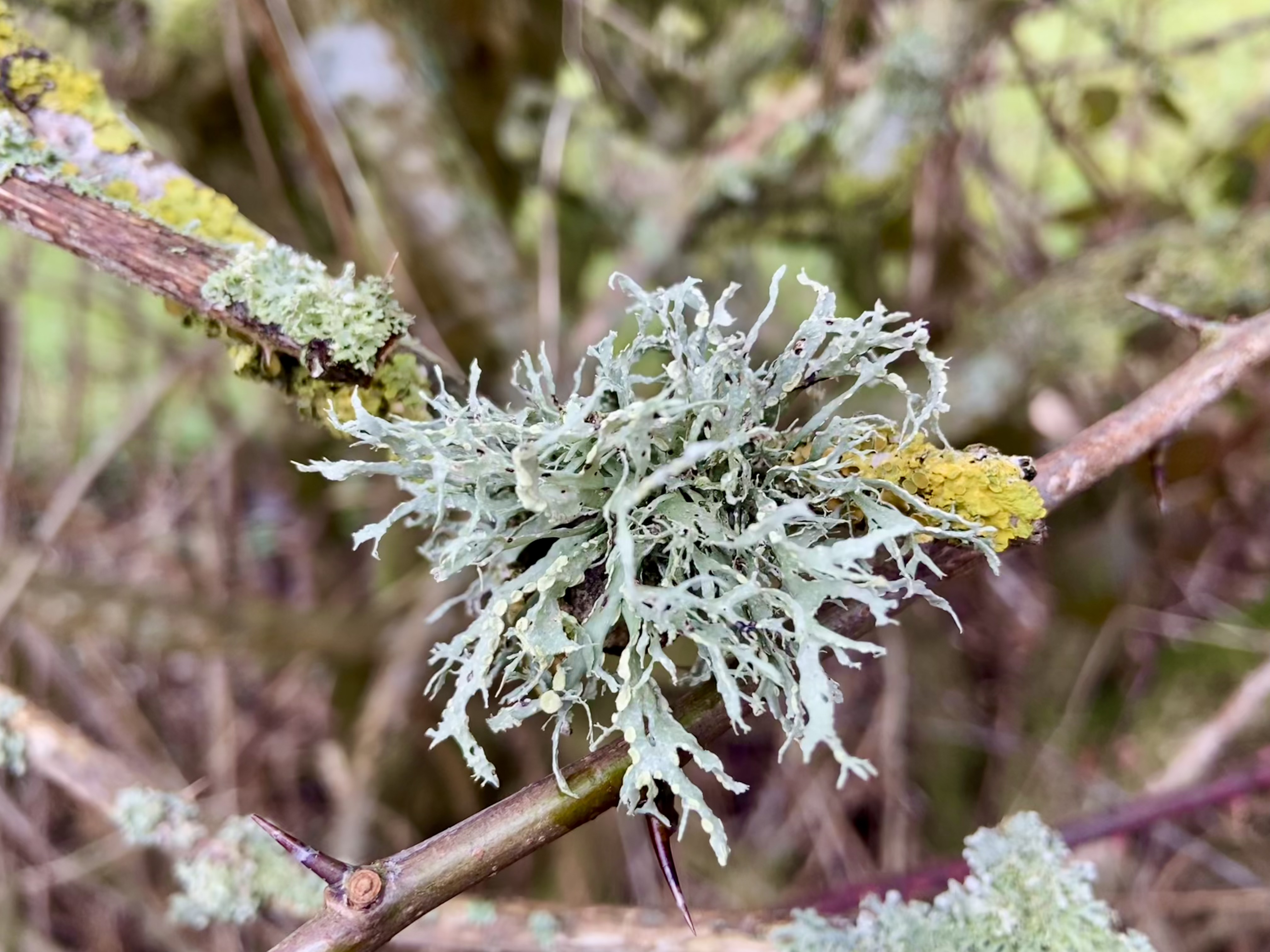
I don’t have so many photos at the moment. I’ve not been out walking or exploring much, though I took a couple of pictures of colourful lichen in Blackbird Lane, which I will share with you.

Taking time to look closely at the nature around me keeps me sane! A few minutes ago, Triar was whining, so I took him outside and stood in the semi darkness, listening to the most wonderful dawn chorus. There were robins and blackbirds and a song thrush, all greeting the new day. Triar stood and listened too, as he sniffed the morning air. I wonder what he could smell.

I saw on Facebook that Norwegian ships from WW2 are coming to Shetland the week I am there. I was oddly emotional when I saw that, hoping I can speak to the sailors who bring them over. I found a rock beside the Nith (which runs through the middle of Dumfries) commemorating the connections between Dumfries and Norway in the war. Funny how things come together sometimes.

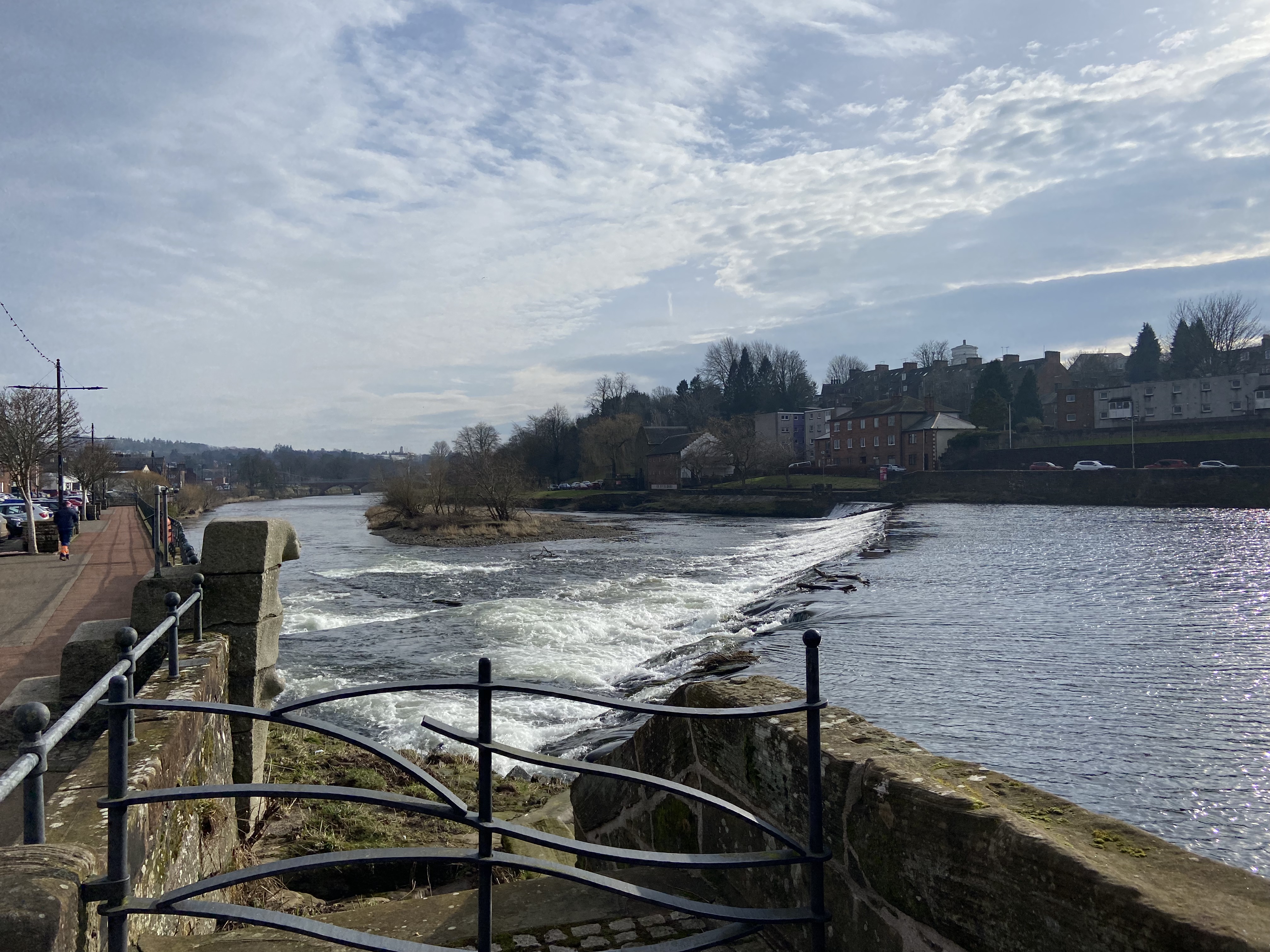
Anyway, I will leave you with photos of the stone and the Nith itself. There were flood warnings in place last night, but midweek, when Triar and I took a walk there, it looked benign enough. Triar photobombed the rock shot, but I’ll not crop it! Have a good week all!