Tag Archives: Farming

Through the Eyes of a Cow

I have been down to Weybridge agent this week, this time for a cattle handling course. Before going, I was rather cynical. After all, I’ve been a vet and have worked with cattle for a long time, I’d done a course in Norway about the design of facilities in abattoirs, where I learned about behaviours, so I rather thought it might be a lot of repetition. The two colleagues who attended with me were actually farmers, so I think they had the same concern, but it warm in fact, very interesting.

The essence of the course was to teach us about health and safety when it comes to cattle. I haven’t read it yet, but there is a health and safety document (HS32) regarding handling facilities and minimum safety standards when we go to a farm, what we should look for and when to walk away.

There’s a drive in UK farming at the moment and grants available for building safer facilities, we were told. Farmers who provide inadequate, unsafe facilities are paid the same for their products as farmers who don’t, so if we walk away, for valid reasons (backed up by HS32) then there is legal pressure for them to comply. If they don’t, they will find themselves under a movement ban. As someone who probably would have tended to push on through, this in itself was a good message. Take it further and it’s also good for the animals. Escape attempts that go wrong don’t only result in risk to the human beings present, but to the animals as well.

Most of the course was led by Miriam Parker, and if you are interested in what she does, there are videos online. In essence, she designs livestock handling facilities with the animals in mind. If you want an animal to go somewhere, the best way to do that is to design the facility so the animal wants to walk through it. Ideally, you want the handlers to be able to guide them from outside as well, as that is much safer.

I had learned about flight zones before: the area an animal maintains around itself – enter it and the animal tries to move away. I also knew about the balance point – if you stand behind its shoulder, it tends to move forwards, in front, it moves back or turns. But we also looked at the behaviour and signs of discomfort when you are in the flight zone (a potentially risky place to be) and the limitations of cattle sight.

I had always thought that, with their eyes in the sides of the head, that cattle were mostly looking out to the sides. Not so! They have very wide peripheral vision and can perceive movement there, but most of their attention is still focused in front of them. I should have known that really. When they stand looking at you in a field, they do look straight at you, after all. What they do have though, is a great big blind spot in front of them, which means it’s much harder to judge distance when close up, for example. If you wondered what the picture at the top of the page was, it’s my colleague, Lesley, wearing a pair of spectacles that allow you to get an idea of what a cow sees. No wonder, when cows are walking into somewhere that looks strange, they take a lot of time, putting their heads down and to different angles, trying to eye up not only whether it’s safe, but whether they can get through at all.

We also went out to a field, where there were some fairly flighty calves. Our group of about twenty was split into smaller groups, then we were sent out in turn to try various exercises, such as getting them to walk to different places in the field. This proved to be quite difficult as getting them moving slowly in the first place was one thing. Slowing them down if they took off was much more difficult. Miriam explained the importance of moving back to give them space, rather than pushing them on, or standing close to keep them where you want, to the point where they’re stressed and milling. Step back and they are more likely to relax and stand.

I had been disappointed with my performance with various teams for much of the exercise. However the last task of the day was to try to split off two calves, leaving the others in a group. Many years ago, I used to stay up late into the night, watching One Man and his Dog on TV. For those who don’t know, this was a shepherding competition for a shepherd and his sheepdog, where they had to guide the sheep round the field, through various gates and into certain areas, before guiding them into a pen and closing the gate.

One of the exercises they did was to separate out two sheep from the rest of the flock. How many times did I watch as those calm dogs edged towards the group, moving in an out until they saw their chance? A gap would form, where two of the animals started to edge away and the rest weren’t quite ready to follow, and then the dog went in between them, cutting the group cleanly into two. To my enormous pleasure, I found I could do this instinctively, and for the first time that day, our group performed this task smoothly and without a hitch. It was a great end to the session.

Good as the cattle course was, it was also great to spend some extra time getting to know my colleagues better. As well as Lesley, we had Lauren there. Both of them are from farming backgrounds and, like many people from farming stock, they are very down to earth, as well as funny and practical. I’ve always felt that the people I work with are what make the most difference between enjoying work or not and I’m looking forward to working with them more!

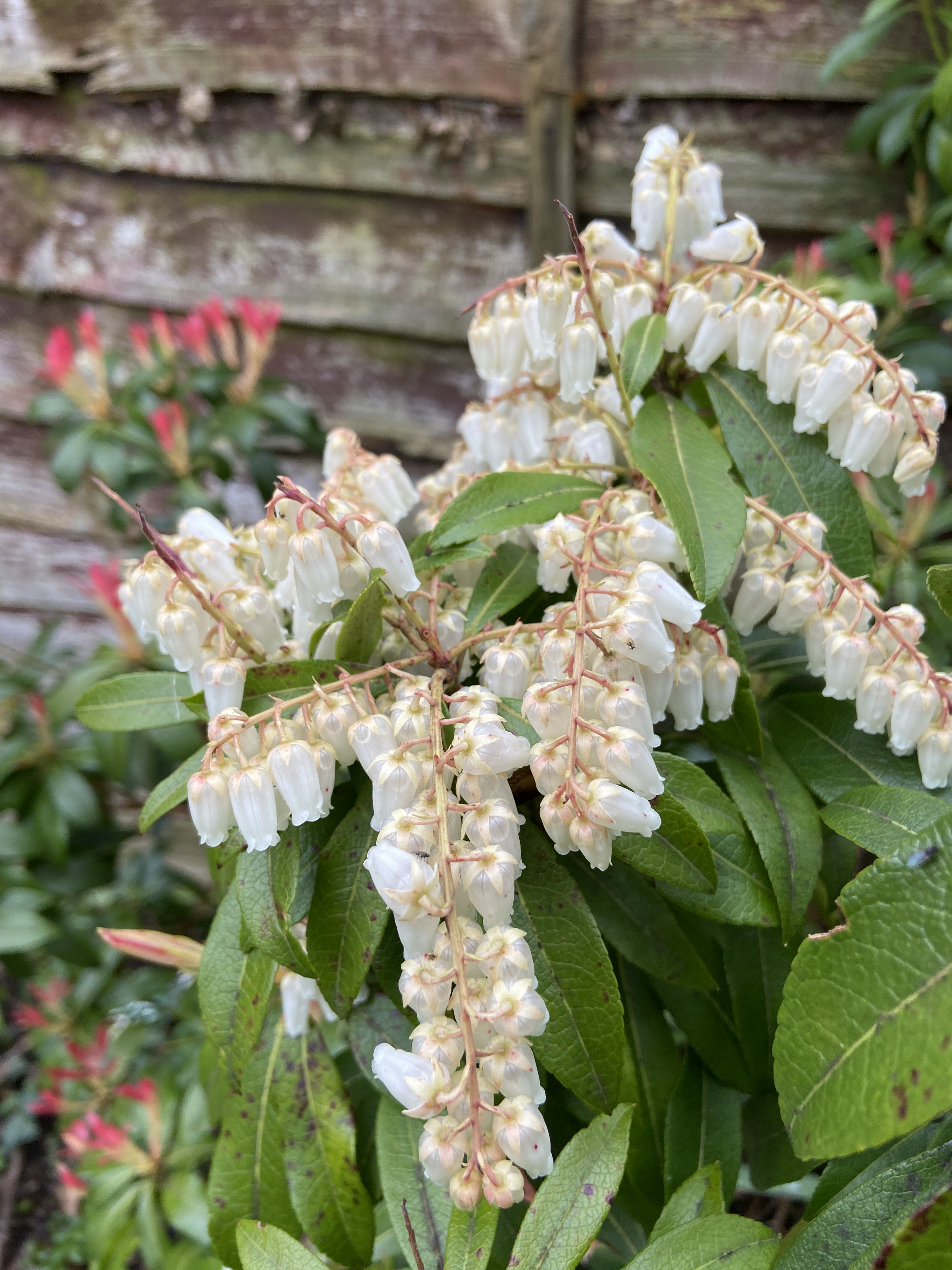
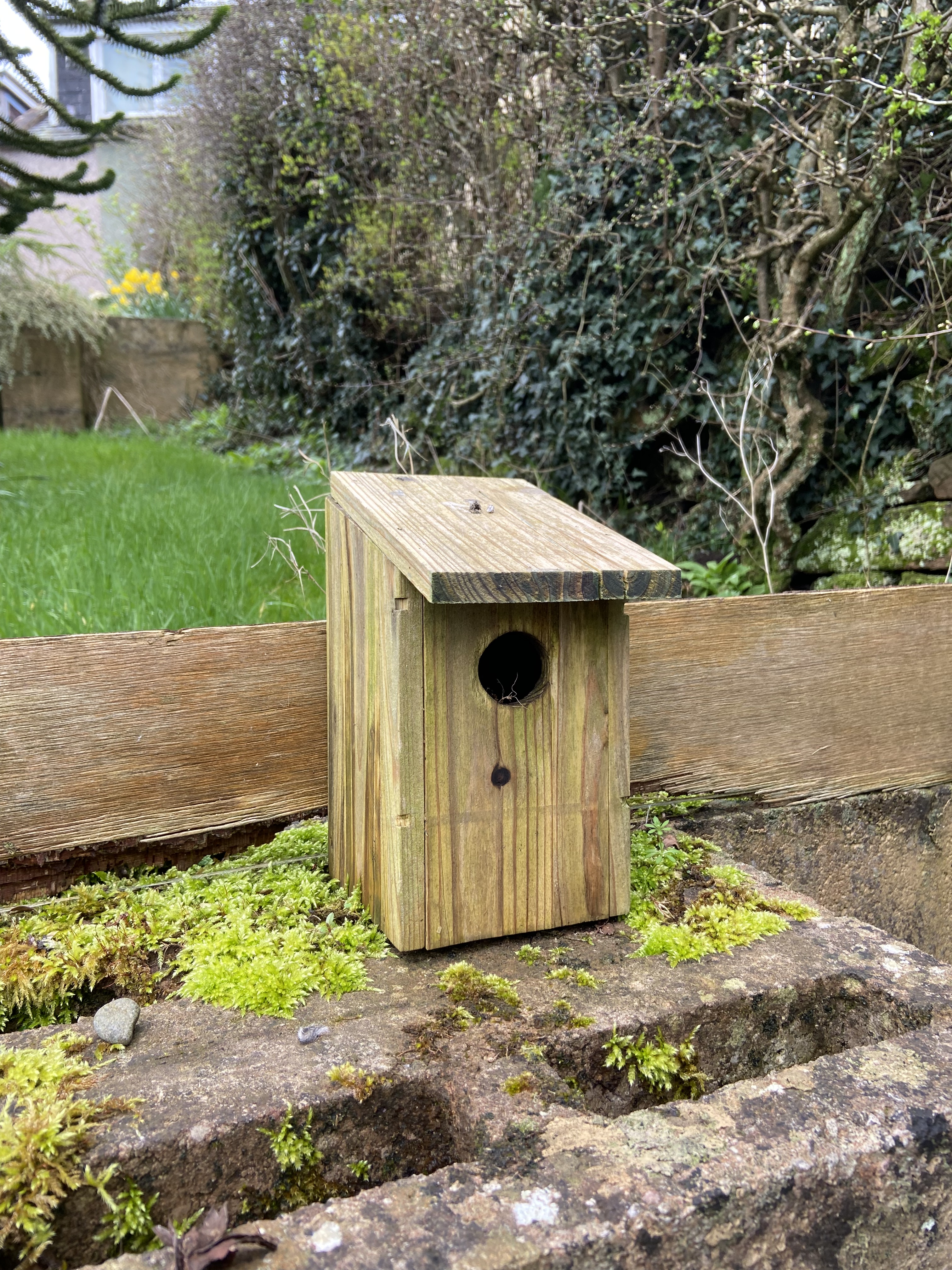
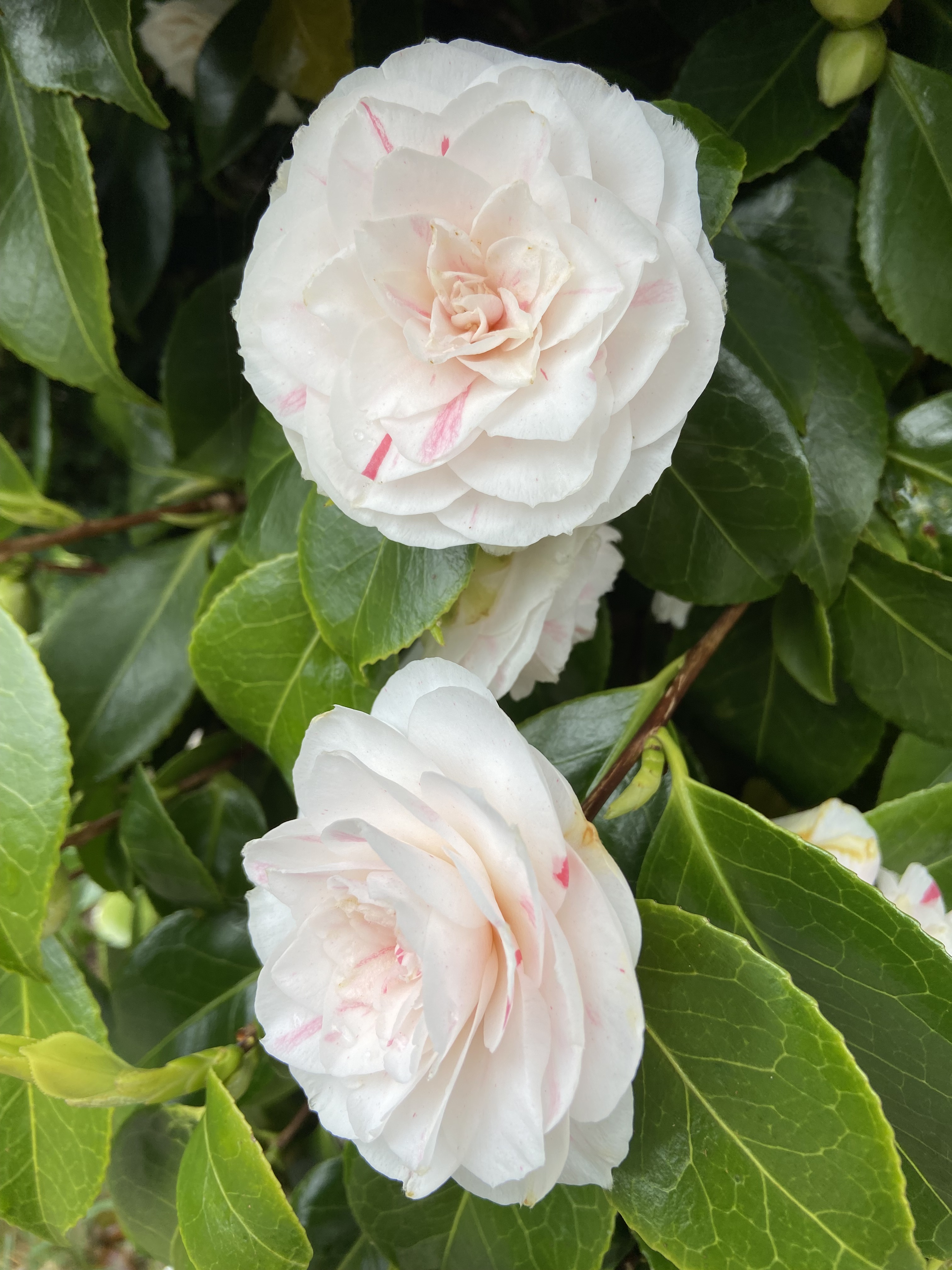
I’ll finish with a few photos from my new garden. Though it’s running a bit wild at the moment m there’s plenty of colour and lots to look at. Have a good week, all!

Testing for Tuberculosis

I was tempted to call this week’s entry TB, or not TB but that feels wrong. Although I have enjoyed this week, the subject is serious and there are sad overtones. I suppose the animals that go to slaughter following our test would have ended up there anyway eventually, but their lives will be cut short and it is a loss for the farmer, though he will receive some financial compensation for the cattle which are culled. It can’t be easy, knowing there is disease in your herd.

Though the aim to wipe out TB is laudable, for each farmer affected it can be a major headache. When we find TB on a farm, all cattle movements on and off that farm are limited. Restrictions are put in place and the only place those animals can go, is direct to the slaughterhouse. This means that if there are more animals on the farm than grass for them to eat, the farmer can’t send the excess stock to market. He either has to buy in food for them, or send them to be killed, even if they are animals that would be more valuable sold live. A young breeding cow has more value than the price of its meat, for example.

So it’s a difficult juggling act for the farmer. Throw in there the fact that our tests aren’t perfect, the disease is unpredictable and eliminating it can be difficult and you have the perfect combination for resentment of the people coming on the farm to do the testing and represent the government who put all these rules in place. We were very lucky this week that the farm owners were philosophical. It’s time consuming for the farmer as well. We tested close to four hundred animals this week. It took the best part of four days and even then, there are some retests that need to be done. Then in a couple of months, the whole thing will need to be repeated. On and on until the tests come back clear.

I met up with the team on Sunday night in the hotel where I would be sleeping for the best part of a week. I had met S the vet before. She took me out on some welfare visits a couple of weeks back, but there were two animal health officers coming too to carry out the blood testing and keep the paperwork in order. There was also another TB team, who would be skin testing at another farm in the area, so we were quite a big group. Though the food and conversation were good, we all retired early, ready for the hard work that was coming the next day.

It was interesting to me to go out testing. Thirty years ago, I used to carry out TB skin tests in the area, though in those days, there was no known TB in the area and all the tests were routine herd tests where we didn’t expect to find anything. The farm where we tested this week has already had TB confirmed. Culled animals had been found to have TB lesions present and culture results – where they attempt to grow bacteria in a lab from a possibly infected source – had shown that bovine TB to be present.

As far as I could see, the skin test hasn’t changed much at all. Two patches of skin on the neck are clipped (so you can see where you injected) and two types of tuberculin are injected: avian and bovine. Tuberculin contains purified proteins from the tuberculosis bacteria and in the UK, two types are used.

Because other harmless bacteria can be present in the environment, avian tuberculin is also injected, to try to rule out animals which have developed an immune reaction to those harmless bacteria, but still capture those that are infected with the harmful cattle strain. What this means, in terms of the test, is that if the animal produces an immune response, a lump develops at the injection site. If the lump at the bottom (bovine tuberculin) is bigger than the lump at the top (avian tuberculin) then the animal is classified as a “reactor”. That animal must then be slaughtered and checked for disease.

What was new to me though, was doing blood testing for TB in addition to the skin test. The blood tests are relatively new, very expensive, and there is a limited capacity for doing them in the UK. The animal health officer – SW – who arranged the test, had to call the lab in advance and book in our samples. The blood in the tubes also has to be kept within a certain temperature range and as it is winter, that meant that as soon as the sample was taken, it had to be placed in an insulated box with a heat pad. At the end of the day, a courier came, who would drive the samples directly to the lab.

Though it was a dull day on Monday, the test started well. SW was taking bloods and was wonderfully efficient at it. The arrangement with the needles was a bit different from what I remember in the old days. We used to use a test tube, a needle and a small, plastic needle holder. In between blood tests, you would unscrew the needle from the holder and replace it with a new one, so the holder was reused. Now, presumably due to the number of needle stick injuries that caused, a new needle holder is used for each animal. In addition, you don’t put the protective cap back on the needle. Instead there’s a green plastic flap that you flip into place to cover the needle. Doubtless it saves a lot of sore thumbs, but there is an immense amount of plastic waste.

This is K, the other animal health officer, taking a sample from the cow’s tail.

I had forgotten how messy blood testing cattle is. It was a beef farm, so the animals are always a lot wilder than dairy cattle. The animals are run up a race (a narrow fenced passage) and into a crush, where their neck is trapped so that they can’t move forward or back. That doesn’t stop them fighting it though, and as they scrabble about, the air fills with flying dungbombs. Of course, when you’re taking a sample from the tail, you’re also directly in the splat zone. I did a few samples and was briefly proud of how clean everything was… and then a cow sent the traditional jet of liquid shit directly at me and I spent the rest of the day with half my jacket and one trouser leg well and truly coated.

SW and K made a wonderful team. I was worried at the start that I would be a complete spare part, but they quickly involved me. Despite all the flying faeces, and the potentially serious nature of our visit, it was wonderful being back out on a farm, in the thick of the action, doing the job that I trained for all those years ago.

We had bought packed lunches in the shop in the morning. As we walked back to the cars, I was reminiscing with S the vet about the old days. When you spent the day on a farm testing, it was normal when you broke for lunch, to find a wonderful three course meal waiting for you in the farmhouse, courtesy of the farmer’s wife. Though it was already starting to be more common for farmer’s wives to work, it was still a regular part of that life back then, but I had been told it was uncommon now.

Of course, with four of us there, it would also be a big ask, but to my delight, we were invited into the farmhouse, where there was delicious, warming farmhouse soup, sausages, cheese and rolls and pancakes with butter and jam. Given what we were there to do, it was fantastically generous and it added to that feeling of deja vu I had all week.

We spent all day on Monday and Tuesday, injecting the skin test and taking blood samples, then on Thursday and Friday, S went out to read the skin test and I accompanied her, partly to do the writing (making sure you record the numbers and make sure the right animals are identified is crucial) and partly to see what the skin reactions are like and how they should be read. Though I’d seen a few avian reactions years ago, I never found any reactors and I was half hoping we wouldn’t find any.

But that hope only got as far as the third cow. Unfortunately, she had a lump where the bovine tuberculin had been injected, but no reaction at the avian injection site, which meant that she was a reactor. It was quite a chilling feeling for me, partly because the cow would have to be slaughtered and partly because I now knew that here was an animal with an infection that could be passed to humans. We’re not allowed out on farms to test without having had a BCG vaccine, but it was an unexpectedly sobering thought.

Things went relatively well from there, though there was one other reactor, and that was last years calf from the infected cow. Interestingly, the blood tests came back on Friday, and though it had picked up TB in the calf, the cow tested as negative. It will be interesting to see what is found when the two of them are culled. Though it’s not nice to see a young, recently weaned beast being sent off, it was some consolation that the cow would have company. Cattle tend to be stressed when they are isolated from the herd, and the farmer is required to isolate reactors as soon as possible.

There were also some more positives from the blood test, so they will be sent off too. Then, as I said back at the start, the herd will need to be tested again, and maybe several more times, but hopefully it will eventually be cleared. Officially Scotland is TB free, but in southwest Scotland, where animals are regularly brought in from Ireland, it’s always going to be a problem until they find a better solution. And as this is part of my patch, it looks as though we will be working on it for some time yet.

And for those of you that have made it this far, here are some gratuitous food photos from the Craignelder Hotel, where we stayed.