
Though in some ways, the weeks seem to rush past, by the time I write this blog, things that happened Saturday to Tuesday always seem distant. I will be wandering round, on one of those days, thinking “I’ll have to write about this,” then by the end of the week, something else displaces it. Ideally, I should start logging in as things happen, but hey, I’m not that organized! Anyway, this week I have carefully stored away a couple of things I really want to share. The first is about a welfare inspection I did on Tuesday.
I’ve probably said it before, but the sheer size of farms now, compared even to fifteen years ago when I left, is astonishing. When I qualified as a vet, in 1991, larger dairy units might have had 150 cows. Numbers were creeping up though, and by the time I left the UK many of the bigger herds had expanded to having over three hundred cows. Now it seems to be not unusual to have a thousand, sometimes even more.
I have been wondering how welfare is maintained on such a unit. Back when herds were smaller, most farmers knew their animals well. I went out with a dairyman when I was at college and he knew the personalities of the cows he milked and there were some he was very fond of. I remember seeing him cry when he’d been away on holiday and came back to find one of his favourites gone, due to the carelessness of the relief dairy worker that had been covering for him. No wonder some farmers barely take holidays.
I am not under the false impression that bigger is inevitably worse. Those who have expanded are often the most efficient and forward thinking farmers. They are investing in the herd and their own future, but still I had been wondering how. These are living animals and to keep track of when they are in season or in calf, or are sick, takes a lot of time for observation and knowledge.
As we walked along the calf pens, I could see they were being bucket fed. Lots of bigger farms use automatic feeders for their calves, but not here. The farm is run by a couple and (fairly traditionally) it’s the woman who is responsible for feeding the calves. They did have automatic feeders for a while, but found they tended to get dirty. In addition, teaching them to drink from a bucket prepares them for going into bigger groups and being given milk from a trough. You can also check how much milk each calf gets and individualise each one. I guess it takes a long time at peak calving time, but it was interesting to see that a good start in life is so important that industrialization hadn’t occurred (or rather, had been tried and rejected) on this part of the farm.
As we moved from the calves to look at the close-to-calving cows, I was interested to notice that the nearest cow had something attached to her foreleg. I asked what it was, and was told it was a movement monitor. Just as I wear a watch that can tell me how many steps I take each day, the cow’s steps were also being monitored. I wasn’t immediately sure what purpose this would serve, but later, he took me to the computer where these measurements were read.
He showed me a the readings of a cow that was coming in season every month or so. Sure enough, the movements peaked hugely at that time. But it wasn’t only that he could look at the program and see which animals were in season. The system itself recognizes the pattern and, as the cow comes out of the milking parlour, where it goes twice a day, a gate automatically opens to allow it through into a different area, so she can be inseminated. A person walking through the cubicle shed to separate out these cows disturbs all the other animals. Instead, this is another process that is mechanised to minimise both the work required and the disruption to the herd.
Automatic scrapers to clean passageways in cubicle sheds have been around for a long time. Usually they are pulled by chains or ropes and there were some of those here. The chains were in runnels to prevent the cows standing on them and hurting their feet. One of the sheds had one of the newer machines, that functions like a robot vacuum cleaner. These have the advantage that they can go round corners, so there are no missed sections, which there are with the chain scrapers.
What I hadn’t seen before though, was an automatic scraper for moving silage. Usually cows are fed in a passage, where they put their heads between bars and eat the silage and feed that is put there. As they eat, the food gets pushed away, and usually someone will drive along with a tractor now and then and push it back in. Here, there was a machine that ran along a metal track, doing the job automatically for all the big sheds. It runs every two hours, except just after milking time, when it is set to go hourly, as the cows tend to be hungry when they’ve just been milked. Again and again, I saw that, although this system was on a large scale, there were tweaks and tricks that meant that it was really set up, based on what the cows needed.
And finally, back to the matter of the individual animal and the personal relationship. I can’t say I really touched on this with the farmer, although it was apparent as we walked round, that there was still fondness for individual animals. He did tell me though, that where his dad had always been keen to give every sick animal a chance, he tended to be more ruthless is removing animals with bad feet or which had been ill enough to mean they probably wouldn’t thrive. One thing I have observed from life as a vet is that there is a lot of unconscious cruelty by some pet owners, who keep their pets alive long after that life stopped being worth living. Perhaps in a system where animals with bad feet get removed quickly, breeding from those animals that are left will create a better herd, with fewer foot problems in the future. Anyway, I really enjoyed my visit. Cows are still cows and they are still my favourite animals and these visits give me plenty of food for thought.


The other memory was from last weekend. I mentioned I had been told there was a man in his nineties, who’d lived here all his life. I ran into him last weekend. He has a garage at the end of the street where he makes wooden toys for children. He beckoned Triar and me in, and gave Triar a biscuit. Though he was in a wheelchair and his hands were shaky, he was painstakingly painting a toy duck that would go on a stick. There would also be feet attached to a wheel that would spin as it was pushed along the ground.
I asked him if he sold the toys and he said no. He gives them away, and the look on the child’s face is payment enough, he told me. If I ever have any children to stay, I will undoubtedly take them along to see him.
He also started to tell me a bit about the street and I resisted the urge to ask him if I could record what he was saying, as it was lovely. He had lived in the street law his life, he said, and could remember back to the time when it was a village and not part of the town. The doctor came out rarely, he said. If someone was sick, they called for Mrs Black. Mrs Black was also the one you called on if someone was giving birth. We also had a discussion about the healing powers of honey. As antibiotic resistance is growing, even in the vet world there is starting to be more exploration of how old remedies can be better integrated into modern treatment. I bet Mrs Black could have taught us a few things about helping sick people that we have lost in our rush towards modern medicine.
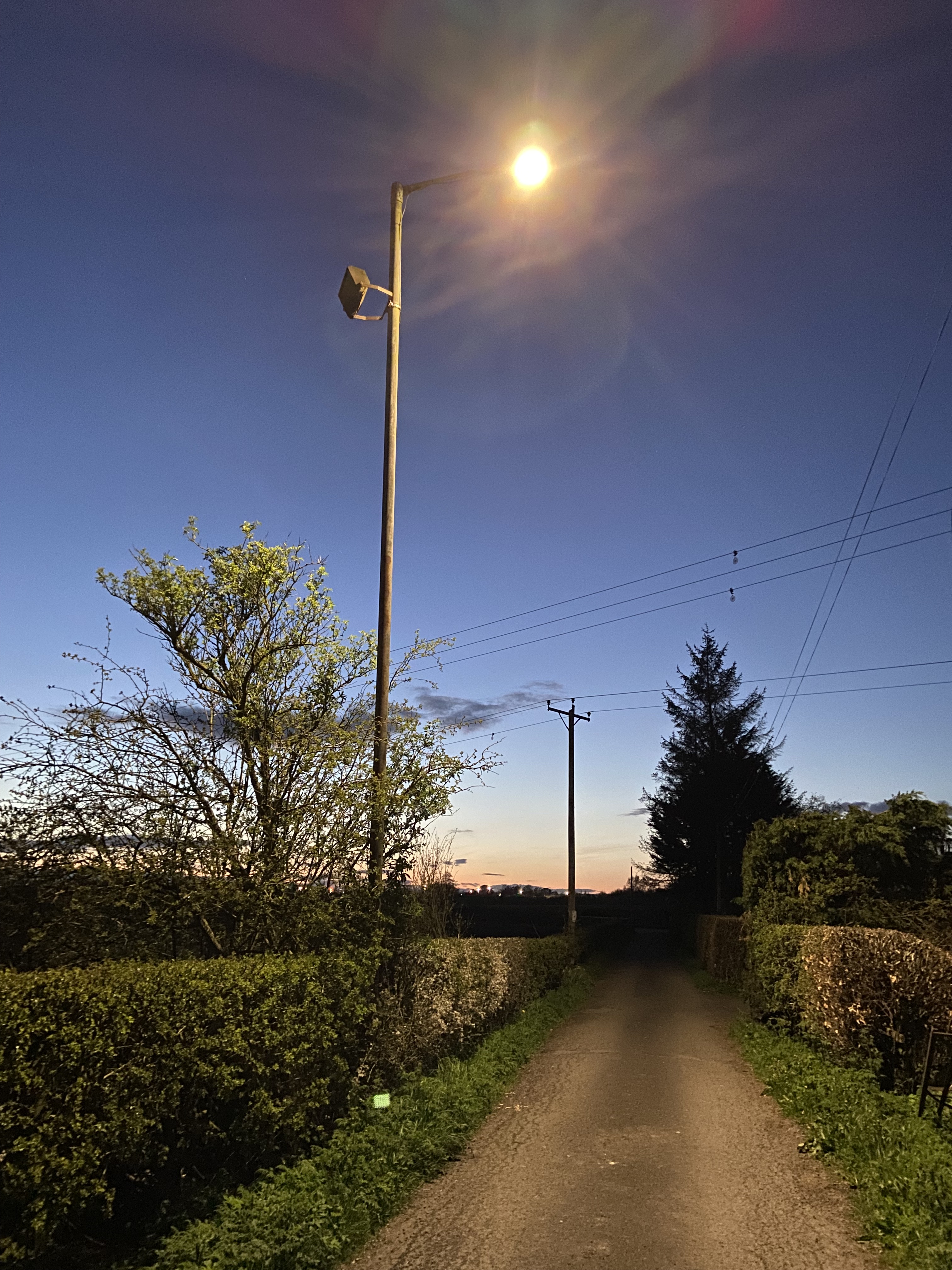
Anyway, I’ll leave you on that note. The pictures are from Blackbird lane, where Triar and I are still walking, morning and evening. This week’s unusual birds were a tree pipet and a mistle thrush, but the blackbirds haven’t deserted. Have a good week and thanks for reading!

 A Vet’s Life