
Sunrise/sunset: 03:04/22:29 Daylength: 19hr24min
A quick warning – this post contains details of the workings and meat processing in an abattoir, so if you don’t want to read about that, this probably isn’t for you!
The year is sliding on by at a great rate now. It’s only a couple of weeks until we will have twenty four hour daylight, though there is still snow on the ground and no sign of any plant life growing. It was lovely then, to fly down to Rogaland in south west Norway: my old stomping ground, where I lived for twelve years before moving north. I had a wonderful feeling of nostalgia when I saw the green fields and gently rolling landscape as we flew in to Sola and then later as I travelled down to Egersund by train.

There was a degree of nostalgia in visiting the abattoir in Egersund as well. I worked in a temporary, part time post with Mattilsynet in Rogaland, and though I never worked at Nortura Egersund, I had colleagues who worked there, and other colleagues from the area came along to take part in the audit, so it was lovely to catch up with a few old friends as well.
You have probably gathered from my posts over the past few months, that my entry into the world of responsibility for the goings on in Nortura Målselv (where I currently work) have been somewhat chaotic. There are things I am in charge of (including legal EU requirements for certain inspections and audits) that I still feel I am wading into, as they are not set out as clearly as I would like. It was good then, to see how my colleague, Inna, runs her abattoir, and I have returned home with a whole raft of new ideas and paperwork, that I will have to present to my colleagues in the north, so that we can work out what is useful and how we can implement it.
The key activity I was there to observe was a hygiene audit, and that was very interesting. I have carried out a lot of inspections, which examine how things are working on the ground, and whether any laws are being broken. An audit takes a step back from that. It examines the management processes within the slaughterhouse, firstly to check whether there are clear processes in place which, if followed correctly, would properly ensure hygiene is adequate, and secondly an assessment of whether those procedures are actually being put into practice. Obviously there’s no use in having wonderful paperwork, outlining how everything should be done, if that information is not then disseminated to the people doing the job.
I felt like there was a very thorough examination carried out. There was a lot of intensive reading of the operating procedures, which required those carrying out the audit to have a firm understanding of the laws underpinning the functionality of the abattoir, as well as a good knowledge of how things were being done along the line. I can see that the oversight of the latter is something that I am lacking at the moment. Inna told me that she had been advised by an earlier boss, that she should take a tour along the line most days and just observe what was being done at the different stations. I guess most people have never seen this process, but after the animal is killed, the carcase is hung up and travels along the line, where at various stations, removing the skin is followed by removing the inner organs, and gradually along until the carcase has been fully cleaned and is ready to be cut up for meat. There are lots of points in this where the meat could be contaminated, from contact with the skin at the beginning, to contact with the floor (generally with very oversized animals, such as large bulls) towards the end.
Any contamination, whether through soiling with gut contents or from an unsterilised knife, could mean that the meat ends up with too many bacteria on it, which could make the difference between a joint that is safe to eat and one that isn’t. As well as there being instructions on how contamination can be minimised, there also has to be recognition that sometimes, it does happen, so then there must be procedures for how to handle those affected carcases as well. This can include trimming of obviously soiled areas, wrapping and treatment of the surface with steam, or throwing away any parts that are considered not suitable for human consumption. Intermittent tests are also carried out for the presence of certain bacteria, such as salmonella, and if those are found, then the entire batch might be cooked (which kills the bacteria) and sold as a finished product, rather than sending out raw goods that might pose a public health risk.
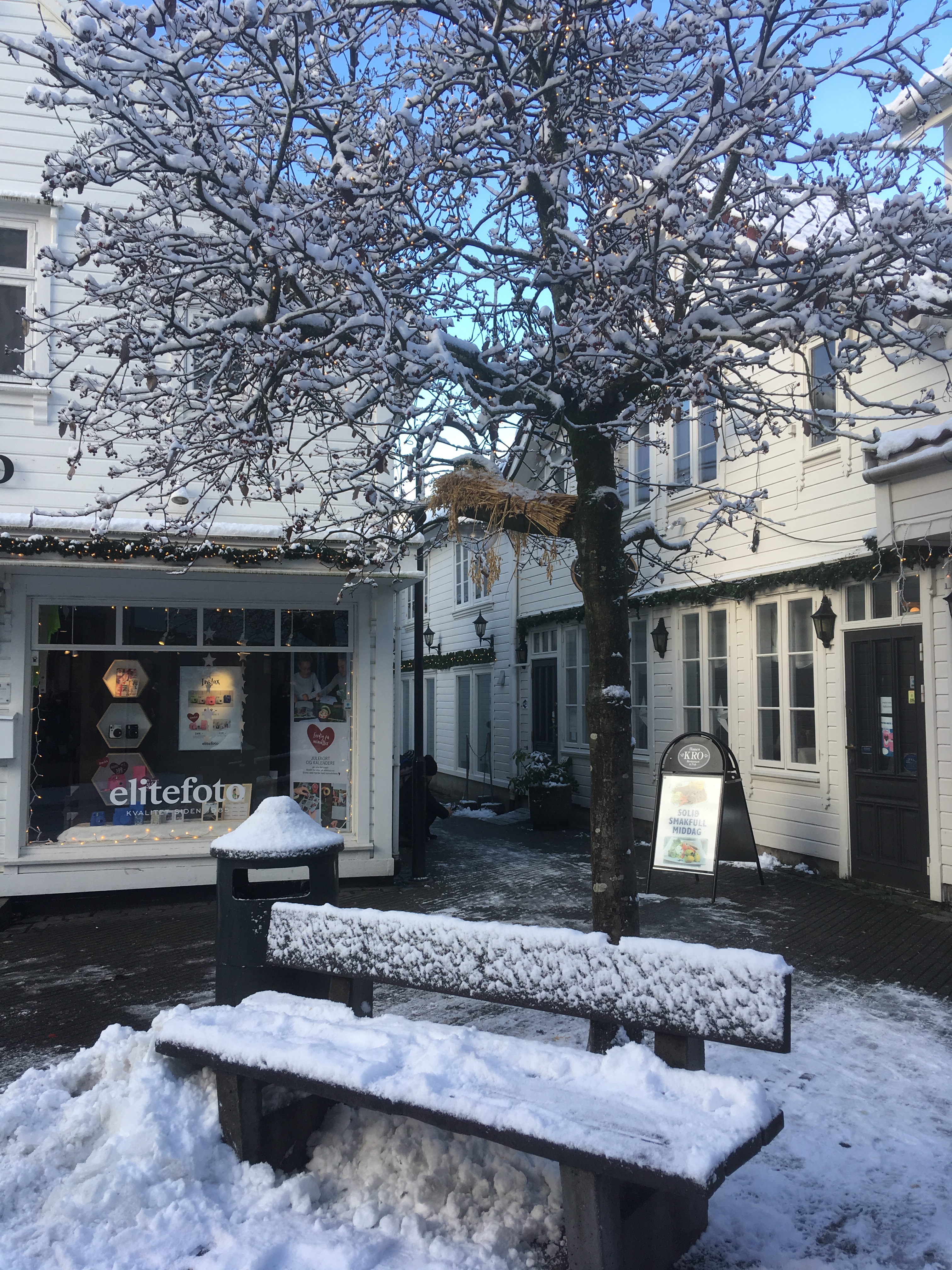
It was also a treat to stay in Egersund. It is a pretty little town, partly made up of narrow streets lined with painted wooden houses. The hotel I stayed in had been created from some of those wooden houses, which were now integrated as part of a more modern building.
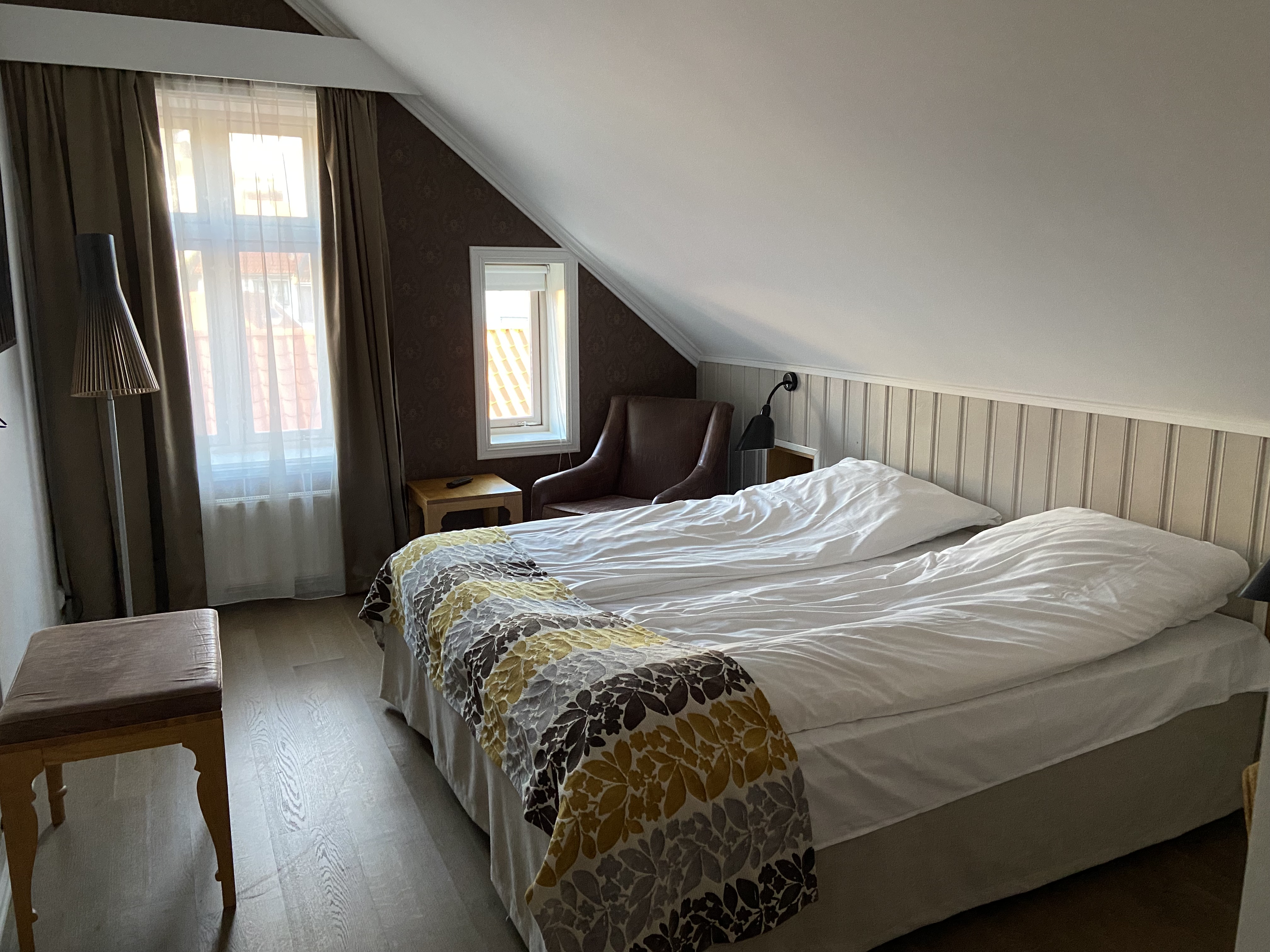
This is my room, with its lovely sloping ceiling. It was on the top floor of the green house on the outdoor picture – what looks like a row of houses has now been integrated inside into a medium sized hotel. The photo on the right, with its green walls and false windows, is part of the original external wall of the green house, which now makes up the decor in the inner well of the hotel within a glass walled stairwell, which winds around a lift.


Egersund is quite well served with good restaurants, and it was difficult to choose between Indian food, sushi and good quality pizza for the one evening meal I ate there. I chose Indian, in the end, as the nearest Indian to me in the north, is in Tromsø. Andrew is moving down to Stavanger in the summer though, so I think we will take a tour around when I travel down with him. Egersund will definitely be on the list of places to revisit.


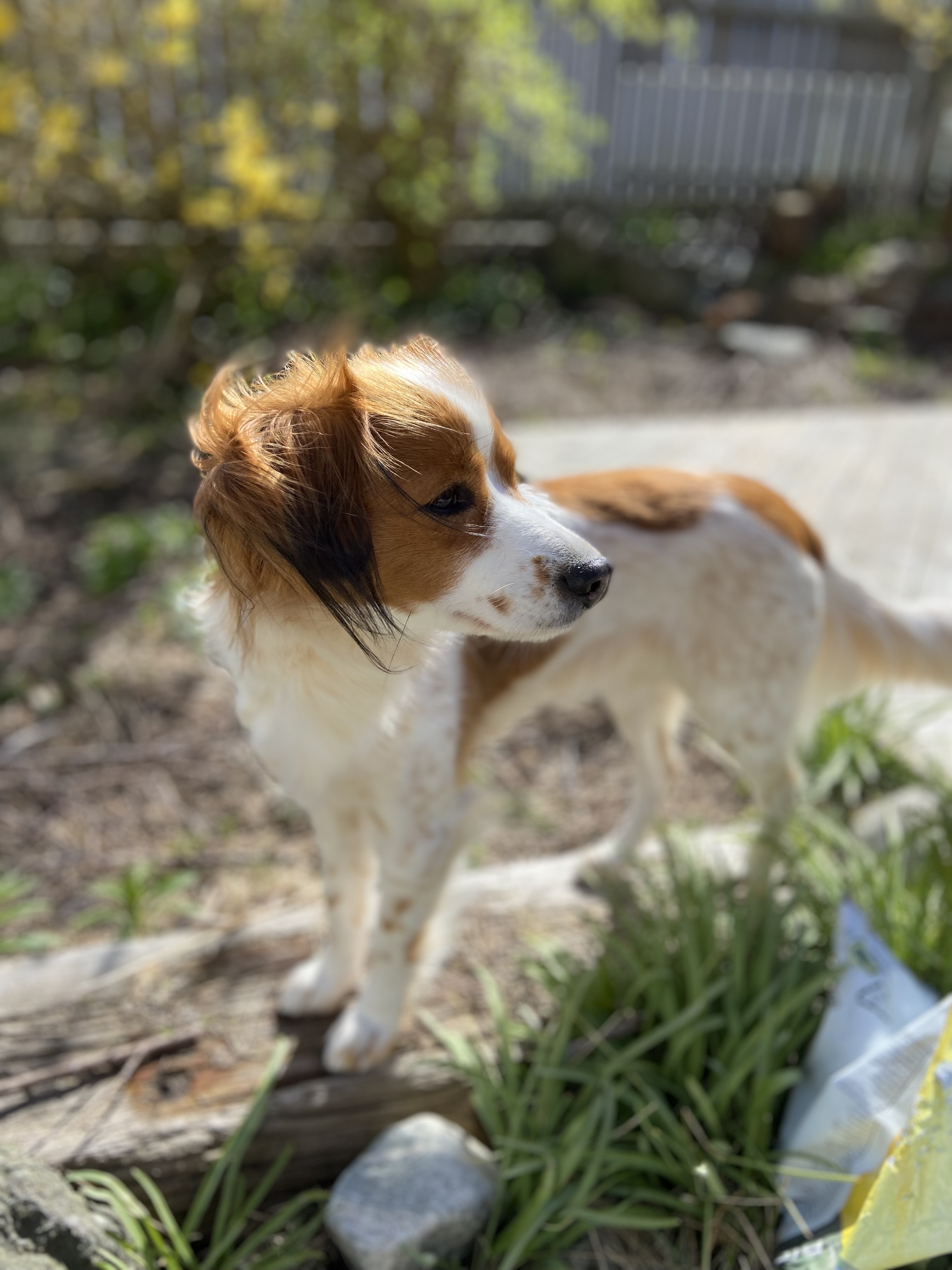
On my way back, I stayed overnight with Wivek, who owns Triar’s mum. It was lovely to catch up with her and her family, who made me feel very welcome.
All in all, it was a very useful visit. I have a much better grasp on what an audit entails, and specifically on how a hygiene audit should be carried out. I’m still not sure that I’m ready to have overall responsibility to carry out our own audit, but whether I will have to carry out the audit with help from knowledgeable local colleagues, or whether I can ask for support from one of my more experienced colleagues from the south west, will be up to my boss.











 A Vet’s Life